This month marks the 40th anniversary of Pink Floyd's Wish You Were Here. It's a good time to celebrate that moment, when the portals opened and a stream of cosmic creative force spilled into our reality.
Holly Salzman of Albuquerque, New Mexico went to court to resolve coparenting issues with her ex-husband. The judge ordered Salzman to attend 10 sessions with a counselor named Mary Pepper (Photo).
The Mr. Clean Magic Eraser is like TiVo. You don't "get it" until you get it. It's a plain looking white sponge that looks like a chunk of cheap mattress foam.
PsychGuides.com created the Miss America Morph, which shows how the winners' body mass index has declined over time, while the average American woman's body mass index has increased of the same period.
Adam Savage is becoming obsessed with this thing. He's created a "bomb" comprising a compressed #duckarmy that, when triggered, unleashes the collective moan.
Created by Bank of America Merrill Lynch's Chief Investment Strategist Michael Hartnett, this illustration shows "free-float equity market capitalization" in billions of dollars.
So chrome! So shiny! Soap dispensers work for him 100% of the time!
It’s invisibility! Various technological gadgets, like soap dispensers and facial recognition software, don’t detect them, because they were never properly tested with diverse users.
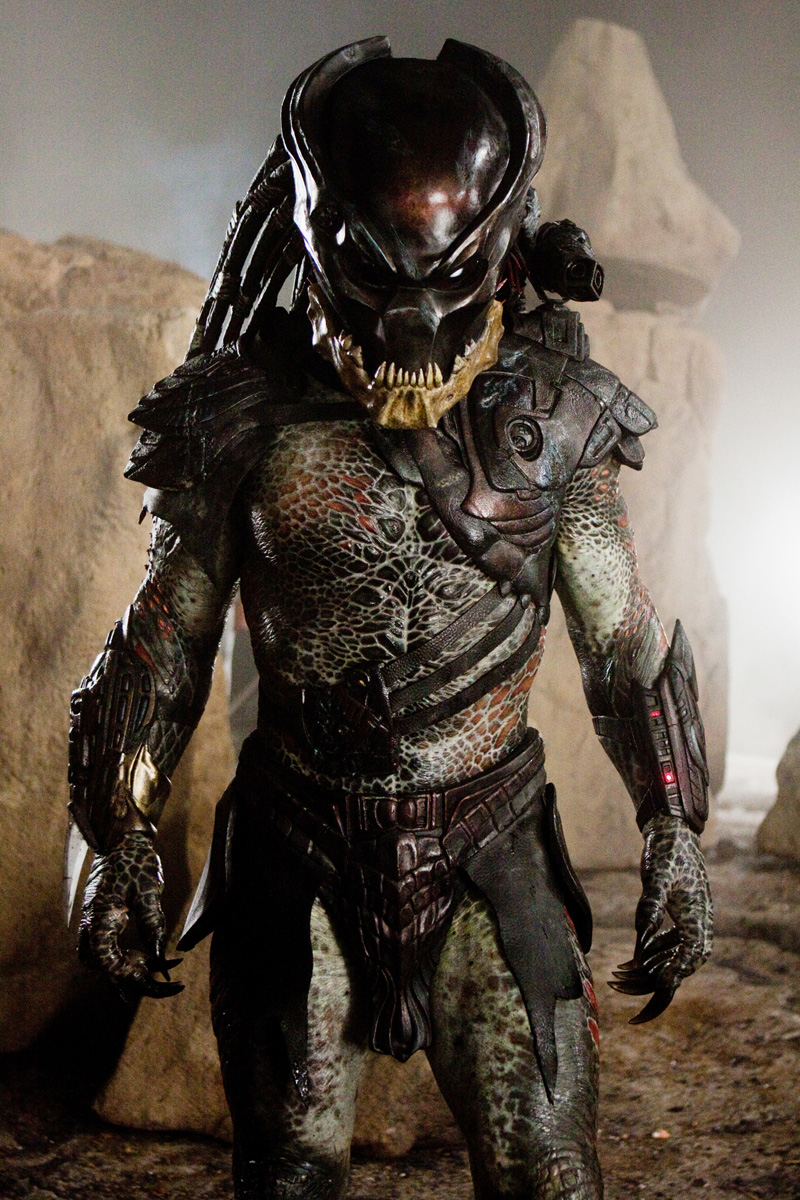
On the one hand, this is disgraceful — it tells us that biases in the tech sector lead to blind spots. On the other hand, when SkyNet takes over and decides to exterminate the population, it’s only going to shoot the white people.
So Scalzi has been ranting on Twitter about this proposal for a new F&SF award — it’s more fallout from the Hugo mess, and this person proposes more gatekeeping, requiring membership in a “web of trust” in order to vote for a new award. I’m not impressed with the idea — it seems to imply more a web of distrust, where someone in charge gets to decide who is the True Fan. But Scalzi is all over that part.
I don't need a fucking "Web of Trust" to be a science fiction and fantasy fan. I don't need a fucking gatekeeper. I'm a fan because I am.
Reading the thread in question, though, I came across a comment that surprised me.
It’s when the story is used to push the one particular viewpoint that I have an issue with it. See, for example, the protagonist in Lock In, whose gender is left unspecified throughout the entire book. Scalzi’s been praised for doing so, but to me, it leaves me unable to form a mental image of the character, and I have a much harder time reading a work if I can’t picture the characters involved. This is not the only reason I won’t buy it (Fuzzy Nation was the last Scalzi I intend to ever spend money on), but it’s a very large hump for me to get over.
What does that mean?
This is a fictional character. They don’t exist. This is true of every fictional character there has ever been: the author cannot possibly specify every single biological detail about the individual. Do they have an appendectomy scar or or a small scar they got at age 3 on one eyebrow? Do they have a large pore on their left cheek? Is there a mole above one kidney? Do they have an irrational distaste for spiders? Did they have a happy relationship with their mother? Do they know calculus? Can they cook? Unless it is relevant to the story, authors tend not to burden readers with extraneous detail — you have to imagine it.
For that matter, this is true of real live people, too. Unless you live with them for 20 years, there are always surprises. Are you unable to form a mental image of a character if you don’t know their position on abortion, or whether they are thrifty or wasteful?
You might argue that sex is rather obvious and important, but in the life of the mind and your relationships with the characters in a story, one thing we can be utterly certain about: you won’t be having sex with any of them, ever. They don’t exist in the physical world. And think about all the people you know: I have no idea of the sexual orientation of most of the people I’ve met. I manage to enjoy their company anyway.
This person seems to have the most superficial appreciation of what he’s reading. He won’t bother unless he can visualize breasts, or the absence thereof, in the characters.
That was one of the cool things I enjoyed in reading Ann Leckie’s books — after an initial confusion because I had no idea what the sex of the characters was, I found it liberating that I did not have the preconceptions of gender to distract from the characters. The primary feature of this person’s personality was honor and honesty, and that would be true no matter what their sex.
I’d like to see more of that, actually. It’s the least you’d expect of a good writer, that their imaginary characters ought to have attributes that transcend the merely physical.
Pakistan-born, Komal Ahmad, develops phone app to feed almost 600,000 homeless people in
San Francisco.
While she was walking near campus one fall day, a homeless man approached her, asking for money to buy food because he was hungry. Instead of giving him cash, Komal invited the man to lunch. As they ate, he told her his story. He was a soldier recently returned from Iraq and had a bad turn of luck. “He’d already gone on two deployments and now he’s come back, he’s 26 and on the side of the road begging for food,” Komal said. “It just blew my mind.”
It bothered her so she decided to do something about it. Within a few months, Komal set up a program at UC Berkeley that allowed the school’s dining halls to donate excess food to local homeless shelters. That program then expanded to 140 college campuses across the US in about three years.
Komal, now 25 years old and CEO of a nonprofit service called Feeding Forward, is looking to expand even more into what she calls on-demand food recovery. Through a website and mobile app, Feeding Forward matches businesses that have surplus food with nearby homeless shelters.
When companies or event planners have surplus food, they tap the Feeding Forward app and provide details of their donation. A driver is dispatched to quickly pick up the leftovers and deliver them to food banks.
“These are huge cities that have absurd amounts of food thrown away every day,” Komal said. “We are trying to make the Bay Area a case study to say ‘Hey, if it works here, it can work anywhere.’
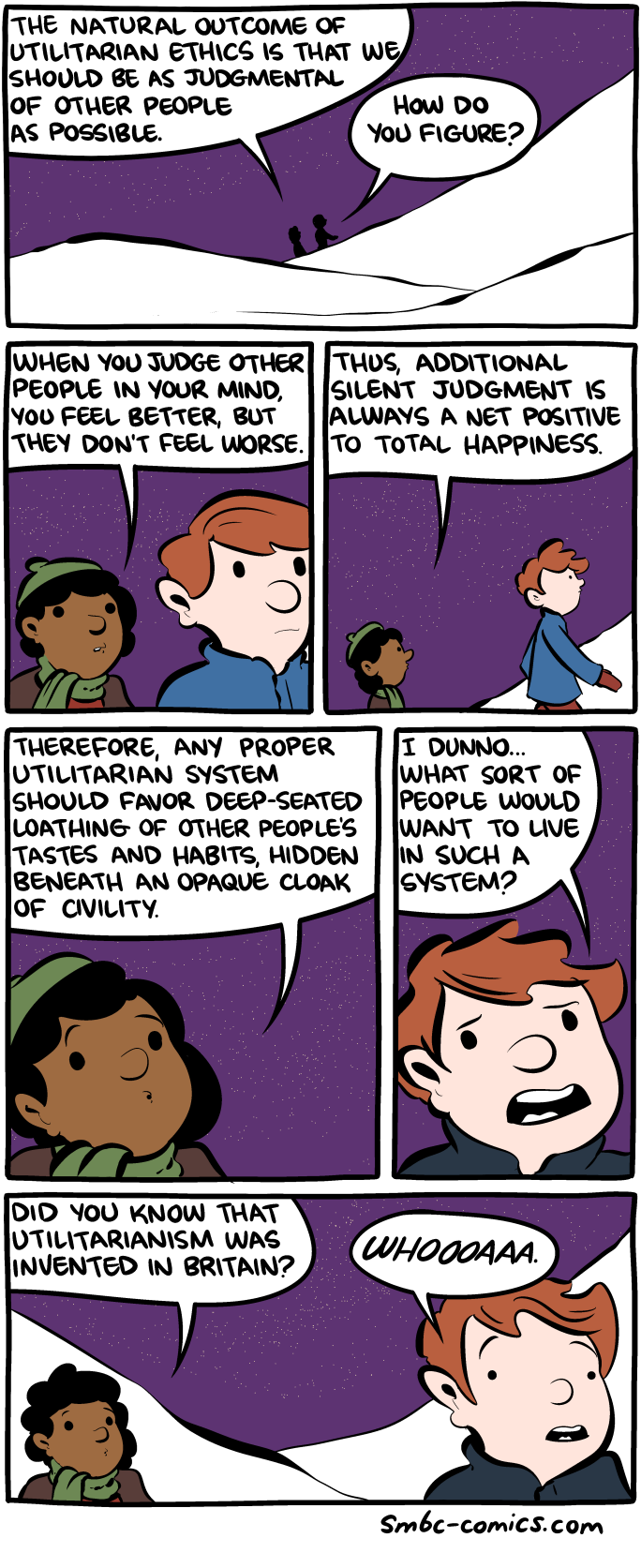
I quite annoyed one of the authors of that “Kill All The Predators argument, who butted heads with me on Twitter and told me I had to go read this longer essay by Jeff McMahan which would address all my objections, because philosophers all seem to think that if they can babble long enough, they’ll ultimately be persuasive. Spoiler alert: it just made the problems with their idea wordier.
In particular, I was told to read section 3 and 4, which deal with objections to their argument. So I’ll just address that bit here, because I think their defense is dead with the second sentence.
The challenge to this simple case for intervening against predation is that it must be able to withstand the many objections that have been urged against it, including those that consist of moral reasons not to intervene. The most common of these objections is that the complexity of any major ecosystem so far surpasses our understanding that an attempt to eliminate predators within it, however carefully planned and well intentioned, would have unpredictable and potentially catastrophic ramifications throughout the system, extending, perhaps, into other ecosystems as well. The most obvious scenario is that the elimination or even significant reduction in predation would produce a Malthusian dystopia in which herbivore populations would expand beyond the ability of the environment to sustain them. Instead of being killed quickly by predators, herbivores would then die slowly, painfully, and in greater numbers from starvation and disease. Rather than diminishing the suffering and extending the lives of herbivores, the elimination of predation might increase their suffering overall and even diminish their average longevity. We can call this the counterproductivity objection.
This purely philosophical exercise founders on empirical reality. They claim that an objection is that stripping the predators from an ecosystem would have unpredictable and potentially catastrophic ramifications — this is incorrect. It would have known, predictable, and definitely catastrophic effects. In case you hadn’t noticed, humans have been busily pauperizing biodiversity in various habitats for a long time, and the changes have been measured and are obvious: knocking out whole species has a devastating series of consequences on the environment. The MacAskills and McMahan are playing a game involving a fantasy universe with very little connection to the real world, which is fine…except when they start making policy recommendations for our universe.
They’re playing magic Jenga. Their proposed strategy is to, for instance, focus on removing all of the pieces from just the third row from the bottom. They know they can remove one piece and the tower won’t fall down, so hey, that implies that removing all of the pieces from that level will be safe, especially since in their philosophical universe gravity is irrelevant, the relationship between the different pieces doesn’t matter, and stability and balance are completely mysterious concepts.
They try to get away with it by casting doubt on known facts: they use “might” a lot. Well, if we remove that entire row, it might fall down. But maybe it wouldn’t! They get to ignore all the facts about the physics of this system because they’re bad philosophers, and all that matters is finding logical and rhetorical loopholes to permit their desired result to exist in their heads.
The way they get around ecological reality is to make the claim that someday Science might find a way to get around these current problems.
Given the state of our knowledge at present, this seems a decisive objection to almost any attempt to reduce predation now. But we should not be dismissive of Isaiah’s gifts as a prophet. Ecological science, like other sciences, is not stagnant. What may now seem forever impossible may yield to the advance of science in a surprisingly short time – as happened with Rutherford the first scientist to split the atom, announced in 1933 that anyone who claimed that atomic fission could be a source of power was talking “moonshine.” Unless we use Rutherford’s discovery or others like it to destroy ourselves first, we will almost certainly be able eventually to eliminate predation while preserving the stability and harmony of ecosystems. It will eventually become possible to gradually convert ecosystems that are now stabilized by predation into ones resembling those island ecosystems, some quite large, that flourished for many millennia without any animals with a developed capacity for consciousness being preyed upon by others. We should therefore begin to think now about whether we ought to exercise the ability to intervene against predation in an effective and discriminating way once we have developed it. If we conclude that we should, that may give us reason now to try to hasten our acquisition of that ability.
Has anyone read the short story, “Poor Superman”, by Fritz Leiber? That. It’s the idea that science is all about wish fulfillment, that we can get whatever we want if we just science the heck out of it, or if we can’t do that, we put up an illusion of sciencing in the expectation that someday reality will align with our desires. Some things are simply not possible, and that other things are does not imply that everything is.
I have to mention the reference to Isaiah. Jarringly, the essay cites a fucking prophecy by a Biblical patriarch as if it somehow adds credibility to their argument. It’s really weird.
This is not an empirical fact about biology.
The wolf will live with the lamb,
the leopard will lie down with the goat,
the calf and the lion and the yearling together;
and a little child will lead them.
The cow will feed with the bear,
their young will lie down together,
and the lion will eat straw like the ox.
That they keep bringing it up in the essay is a bit off-putting. I suspect some hidden religious bias in their ideas that they try to keep out of sight, because it’s stupid.
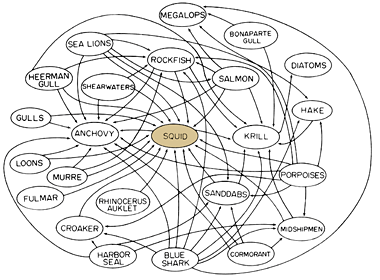
I also have an objection that they don’t address at all, because they don’t have enough awareness of the complexity of biology to even think of it. These are people who divide the biological world into wolves and sheep, and have no knowledge of any animals other than familiar domesticated mammals, and see themselves as readily able to reduce nature to a barnyard. Here, for example, is one simplified diagram of a food web.
Which predator species do you remove? Sharks are always the bad guy, so let’s pull out that Jenga piece. Hey, porpoises are eating the same things the shark does, better get rid of them, too. Seals and sea lions? Definitely big-time carnivores.
Then there are the difficult decisions. A huge number of different species are eating market squid — do they all go, too? All the birds and fish, as well as the mammals? They have one excuse in their essay, that they’ll have an exception for the eating of animals that are arguably nonsentient, such as oysters and clams. Are squid nonsentient? Where do they draw the line? Who draws the line? Is it OK to kill and eat anchovy or salmon? They do suffer when they’re bitten in half, they bleed and struggle, so the argument for ending pain ought to apply to them, too. And what about the krill? Will no one speak for the krill?
I’m not a fan of simple-minded utilitarian arguments, but I at least expect some consistency and appreciation of the difficulties and trade-offs that we always have to make. These particular philosophers read like people who learned all their biology from the Bible, and think that qualifies them to judge the way the world ought to work. If you need lovely prose to appreciate nature, read Aldo Leopold rather than Isaiah. At least Leopold gets his facts right.
Humor writers are inadvertently prophetic at times -- just ask The Onion, whose joke about five-bladed razors was all too prescient. And apparently, that translates to the world of tech-themed comics. Hijinks Ensue and Sharksplode creator Joel Wa...
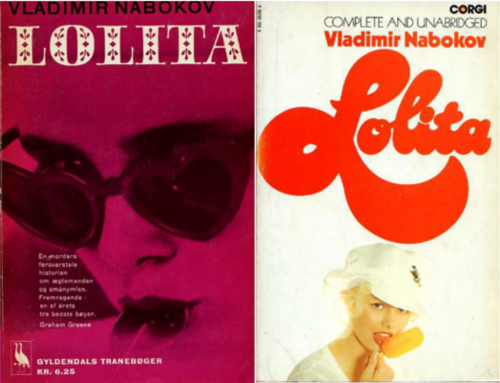
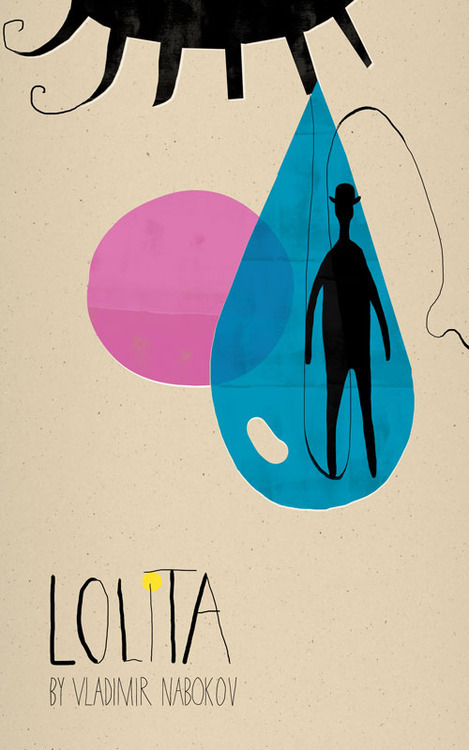
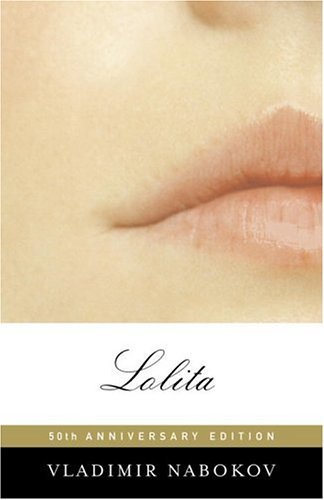
here’s a question: if vladimir nabokov’s “lolita” is truly the psychological portrait of a messed up dude and not the girl – let alone a sexualized little girl, as all of the sexualization happens inside humbert humbert’s head – then why do all the covers focus on a girl, and usually a sexy aspect of a girl, usually quite young, and none of them feature a portrait of humbert humbert?
here are nabokov’s original instructions for the book cover:
I want pure colors, melting clouds, accurately drawn details, a sunburst above a receding road with the light reflected in furrows and ruts, after rain. And no girls. … Who would be capable of creating a romantic, delicately drawn, non-Freudian and non-juvenile, picture for LOLITA (a dissolving remoteness, a soft American landscape, a nostalgic highway—that sort of thing)? There is one subject which I am emphatically opposed to: any kind of representation of a little girl.
and yet, the representations of the sexy little girl abound.
i became driven by curiousity. why did this happen? why is this happening?
i am not alone – there’s a book about this, with several essays and artists’ conceptions about the politics and problems of representation surrounding the covers of “lolita.” this new yorker article gives a summary of the book and its ideas, and interviews one of the editors:
Many of the covers guilty of misrepresenting Lolita as a teen seductress feature images from Hollywood movie adaptations of the book— Kubrick’s 1962 version, starring Sue Lyon, and Adrian Lyne’s 1997 one. Are those films primarily to blame for the sexualization of Lolita?
As is argued in several of the book’s essays, the promotional image of Sue Lyon in the heart-shaped sunglasses, taken by photographer Bert Stern, is easily the most significant culprit in this regard, much more so than the Kubrick film itself (significantly, neither the sunglasses nor the lollipop ever appears in the film), or the later film by Adrian Lyne. Once this image became associated with “Lolita”—and it’s important to remember that, in the film, Lolita is sixteen years old, not twelve—it really didn’t matter that it was a terribly inaccurate portrait. It became the image of Lolita, and it was ubiquitous. There are other factors that have contributed to the incorrect reading, from the book’s initial publication in Olympia Press’s Traveller’s Series (essentially, a collection of dirty books), to Kubrick’s startlingly unfaithful adaptation. At the heart of all of this seems to be the desire to make the sexual aspect of the novel more palatable.
here’s a couple of kubrick inspired covers:
which very well could have, after tremendous sales, have influenced the following covers:
…straying so far from the intention of nabokov that the phenomenon begins to look more like the symptom of something larger, something sicker.
after a lot of researching covers, it was here, in this sampling of concept covers for the book about the lolita covers, that i found an image that best represents the story to me:
[art by linn olofsdotter – and again, this is not an official cover]
but why aren’t all the covers like that? even the ones published by “legitimate” publishing companies, with full academic credentials, with no intended connection to the film; surely they must have read nabokov’s instructions for the cover. and yet, look at the top row of lolita covers: all legitimate publishing companies, not prone to smut. and yet.
my conclusion is that the lolita complex existed before “lolita” (and of course it did) – a patriarchal society is essentially operating with the same delusions of humbert humbert. nabokov did not produce the sexy girl covers of lolita, and kubrick had only the smallest hand in it. it was what people desired, requested and bought. the image of the sexy girl sells; intrigues; gets the hands on the books.
as elizabeth janeway said in her review in the new york review of books: “Humbert is every man who is driven by desire, wanting his Lolita so badly that it never occurs to him to consider her as a human being, or as anything but a dream-figment made flesh.”
isn’t that our media as a whole? our culture as a whole?
the whole lot of them/us – seeing the world through humbert-tinted glasses, seeing all others as Other and Object, as solipsistic dream-reality. as i scroll through the “lolita” covers i wonder: where’s the humanity in our humanity?
Photographer and art director Tatsuya Tanaka has a fascination with all things tiny and has an uncanny ability to repurpose everyday objects as set pieces or tools for the inhabitants of his miniature world. For his project Miniature Calendar, Tanaka has been stretching his imagination to its limits nearly every day for the last four years. A tape dispenser becomes the bar for a restaurant, a circuit board is suddenly a rice paddy field, and the notes of a musical score become the hurdles for a track race. Individually, the photos might invoke a smile or chuckle as you get the joke, but when viewed collectively they morph into a fascinating study on Tanaka’s breadth of creativity.
New photos from Miniature Calendar are published every day on Instagram and Facebook. Tanaka also published a book of earlier miniature photos in a book titled Miniature Life. (via Spoon & Tamago)
Hey geeks! If the site is loading wonky for you, just refresh. If that doesn't work, clear your cache then refresh. I promise it'll work!
Lately, thanks to the patreons, I've been going back through old comics and updating the votey buttons. I noticed that I used to post much longer, more personal, and at times remarkably stupid blogs. For the last 5 years or so, things have gotten incredibly busy between the growth of SMBC, all the new projects, and the growing family. I'd like to get back to where sometimes I talk about things here. I started saying more stuff on twitter, which is probably not the best place to just sit and talk with people. A comics blog post probably isn't either, but on the plus side, people can't really talk back.
Anyway, I just want to thank you all for reading all these years. I'm amazed that there are people who have stuck with the comic through all its many phases.
Zach
PS: For those asking, we hope to have the mobile version of the site complete in October!
When Fury Road came out, Laura Vaughn made an iconic post about how her left-arm transradial amputation gave her the potential to be the world's greatest Imperator Furiosa cosplayer -- and now she's done it, homebrew prosthetic and all.
Read the rest
Someone in JWZ's building put up a "THIS BUILDING IS MONITORED BY CLOSED-CIRCUIT CAMERAS" sign in the lobby where only the residents and their guests go, so he's been updating it with messages like "FEAR THE UNKNOWN - MONSTERS ARE REAL."
Read the rest
Simon Perry froze a can of Diet Coke solid and took it through security at London's Heathrow Airport to see whether he could find a loophole in the "no liquids" rule.
Read the rest
"It's a funny sort of war that produces a lower body count than there was before the war began," writes Jesse Walker for Reason's Hit & Run blog.
Read the rest
A couple of vegetarian philosophers with no knowledge of biology are alarmed…no, horrified at what’s going on out there in the wilderness.
The animal welfare conversation has generally centered on human-caused animal suffering and human-caused animal deaths. But we’re not the only ones who hunt and kill. It is true (and terrible) that an estimated 20 billion chickens were born into captivity in 2013 alone, many of whom live in terrible conditions in factory farms. But there are estimated 60 billion land birds and over 100 billion land mammals living in the wild. Who is working to alleviate their suffering? As the philosopher Jeff McMahan writes: “Wherever there is animal life, predators are stalking, chasing, capturing, killing, and devouring their prey. Agonized suffering and violent death are ubiquitous and continuous.”
By killing predators, we can save the lives of the many prey animals like wildebeests, zebras, and buffalos in the local area that would otherwise be killed in order to keep the animals at the top of the food chain alive. And there’s no reason for considering the lives of predators like lions to be more important than the lives of their prey.
To be fair, they consider other alternatives to killing predators.
…even if we care about preventing predators from killing other animals, it is surely better to do this humanely than to kill them. For example, we could take the predators out of their natural environment and give them good lives that don’t involve hunting prey.
Yes. The ethical thing to do would be to put all lions in cages and give them a healthy, nutritious diet made of soy protein.
They also recognize that other contributors to animal suffering are parasites and disease, so they think we should be treating wild animals for these problems as well. Apparently, the only suffering that counts is that of mammals and birds, so knocking off a lot of invertebrates has no ethical consequences, just as killing or otherwise neutralizing animals that eat other animals is acceptable, because they’re causing suffering. We need to turn the world into a giant children’s petting zoo, I guess.
It’s weird. It’s as if they are completely unaware of the fact that predation maintains and increases biodiversity, or that there’s more to wildlife than mammals and birds, or that life is a complex web of interactions — that bears killing salmon is a critical source of phosphorus for trees. Why do they hate forests?
This is a real problem, that dumbass ignorant philosophers can propose idiotic ideas in the guise of ethics — ideas that, if they were even attempted to be implemented, would cause immense destruction and suffering in the non-human world.
Now normally, I wouldn’t suggest this, since I’m usually sympathetic to the importance of philosophy, but when they threaten my biological world, there is only one rational response, and it’s inspired by the MacAskill’s essay. We need to kill all the philosophers. Or, at least, humanely pen them up with their own kind, throwing them occasional lumps of tofu and bales of sprouts, behind soundproof glass walls, so we can occasionally bring our children to the exhibit to watch. “See, kids, this is what will happen to you if you don’t do your biology homework.”
If you’re arguing that the authors intended a bit of Swiftian satire, stop. One of them has replied to me.
So you finally understood that the piece was serious.
Donald Trump is a mirror image of the conservative psyche, a perfect distillation of the Tea Party id: No ideas, no substance – just bluster and fiery platitudes. Everything that’s happened since has confirmed my initial suspicion. Trump has continued to repackage shopworn stupidities and beam them back at his audiences, and conservatives can’t get enough of it.
If you’ve followed Trump’s ongoing spat with Jeb Bush, you’ve probably noticed that Trump is winning. And the reason is simple: They’re fighting on Trump’s terrain. Trump’s appeal is mostly psychological. He rarely makes sense and he never bothers to explain himself; he just demonizes brown people and tells anxious white people that he’ll make their country great again. Because he’s tapping into something deep and dark, the specifics never quite matter – it’s the tone that counts.





 Humor writers are inadvertently prophetic at times -- just ask The Onion, whose joke about five-bladed razors was all too prescient. And apparently, that translates to the world of tech-themed comics. Hijinks Ensue and Sharksplode creator Joel Wa...