Shared posts

24 Jan 18:18

Remote Angels

by Jae Miles

Author : Jae Miles, Staff Writer

I am the reason for the silence. It is if there is an invisible column of peace centred upon me. Far to starboard, I see an entire flight of Black Dragon assault drones holding station. Upon detecting my regard, the lead drone tilt-salutes in my direction.

It started in Syria, after a British combat paramedic and Iranian surgeon substituted the curve of the Red Crescent for the vertical bar of the Red Cross. Within days, that ‘Red Trident’ became our sign. On a white circle, it’s a civilian aid unit. On a white square, it’s an emergency services unit. On an inverted white triangle, it’s like me: a military mercy flight.

As I hammered across the desert for the first time, using the vectored thrust from my internal rotors to steer while the scramjet pushed me past Mach four, I saw soldiers looking up and making religious gestures. No matter whom I was rushing to help – friend or foe – they wished me well. One day, it could be them.

Entering the hot zone, I shut down the scramjet and hover-coasted while momentum dispersed. Far below, a warrior levelled an RPG at me. I saw his comrade shoot him in the head. No matter that my armour would ignore that sort of light arms fire. My behavioural routines did not understand, but my mission remained viable, so I retrieved the shrapnel-mutilated specialist with my robotic arms, lifting her gently into my primary care pod. With death placed in brief abeyance by activating stasis on the pod, I lifted slowly while orienting myself to point toward the nearest major trauma facility. When I had achieved sufficient altitude for straight-line point-to-point, I put a ‘clearway’ laser pulse along the route, vectored thrust and engaged the scramjet.

It was the day after that I found an article from a war correspondent who had been in the hot zone. I added it verbatim to my behavioural archive, because while I knew it explained the odd behaviour, I also knew that it would take me years to comprehend it:

“Today I encountered a legend in the making. A specialist had stepped on an IED. She could survive, but only with advanced medical care. I heard the word ‘lifespear’ and saw nods. Within minutes, there was a noise like I have never heard before: a banshee scream, underpinned by distant thunder. Just when I thought it would damage my ears, it ceased and the eerie howl of vectored thrust heralded the arrival of a wedge-shaped armoured drone. The only break in its matte-black finish was a Red Trident set in an inverted triangle. Within moments, it had loaded the specialist and levitated into the heavens. A rainbow flash shot westward, searing the desert evening – and my retinas. Then the screaming thunder started and shot off, following the line of the flash, leaving a wake like an accelerating meteor and a resonance echo in my chest.

Calling it a High-Threat Zone Retrieval Unit does not capture the reverence with which these ‘lifespears’ are regarded. They are absolutely inviolate, and that status is enforced by the nearest weapon-bearer capable of intervening, be it friend or foe.

I am reminded of my grandfather telling me how London traffic used to part before ambulances, and my great grandfather talking about his grandfather telling him about the Ghost Cavalry of Mons, who accompanied wounded men as they left the battlefield at night. I wonder if future grandchildren will be told of the Remote Angels, who rode thunder and sundered the heavens with spears of light to save wounded soldiers.”

Discuss the Future: The 365 Tomorrows Forums
The 365 Tomorrows Free Podcast: Voices of Tomorrow
This is your future: Submit your stories to 365 Tomorrows

22 Jan 17:45

The Futility of Flight

by submission

Author : Lydia Devadason

The whirr of the surveillance drone broke the silence. Georgie looked beyond the mountains of waste and makeshift huts housing her family and the rest of the excludes; she scanned the sky above the perimeter fence to try to locate the sound.

‘Quick, pass me the spanner.’ Tommy’s words fired from his mouth as he worked on the plane.

Georgie moved the mechanics book and scrabbled through the box at her feet. Spanner in hand, she ran through the piles of discarded metal. ‘I’ll take it from here. Move over.’

Tommy stood his ground. She shoved him in the arm.

‘Come on, I’m quicker than you. Shift!’

Georgie’s heart punched her ribs as Tommy crawled away. The spanner was too big and it took a few attempts to grip the nut. Finally, despite her hands slipping on the handle, it turned. And tightened. The metal buckled from the strain.

‘How’s the glue?’

Tommy prodded the tail with his finger. ‘Still sticky.’

The wind picked up, swirling rubbish in their direction.

Gripping the metal, Georgie tugged. ‘The cockpit’s sturdy. It’s fixed!’

Or at least, it resembled a plane once more.

‘Do you think we can do this?’ Tommy’s eyes widened. It was his turn to search the sky.

‘Yes.’ Georgie couldn’t look him in the eyes. ‘The propeller and controls work again. We’re almost there. This is it – our ticket out.’

‘But—’

‘Tommy, we have to get help. Suppose we find houses, where people aren’t forced to eat the others’ leftovers?’

‘B— but what if there’s no such place? Or what if the others don’t want us? Mum said the prisons were full so they dumped grandma here.’

‘No, that’s not right, people wouldn’t leave us. Something’s happened outside the fence – a disaster.’

‘But – then who’s operating them?’ Tommy pointed at the metal object buzzing towards their position.

‘Not now, Tommy, get in.’

The boy stopped. Tears streamed down his cheeks. ‘There’s no time, Georgie, we won’t make it.’

She looked up. Two hundred feet tops.

She punched the ground. ‘Arrgh! We won’t get it back in the den. Quick, help me hide it.’

They rushed around, piling wood, metal, bones – anything within their grasp – over the conspicuous shape.

Eighty feet.

‘Georgie, come on, we’ve got to get out of here.’

‘Wait.’ She covered the wings.

Fifty feet.

Georgie grabbed Tommy’s hand. They ran and dived into their hole. She pulled the metal sheet across, but left an inch so she could watch the drone, as it hovered over the place they’d been. She felt Tommy tremble against her leg. Her heart skipped in protest as she held her breath.

A flash lit up the sky; a loud bang.

Tommy jumped but she didn’t react. Smoke billowed from the ground where the mountain of waste had previously sat.

There were no tears this time. Instead, heaviness dragged her stomach and head down, down, to the bottom of the hole, and her lungs ached with every breath.

Tommy squeezed her hand. ‘It’s OK. We’ll try again, tomorrow, with one of the others.’

Georgie turned her head. She watched the drone fly across the rows of wrecked planes and into the distance.

‘Yes, Tommy,’ she said finally. ‘We’ll try again – tomorrow.’

She wasn’t sure there’d be a tomorrow.

Discuss the Future: The 365 Tomorrows Forums
The 365 Tomorrows Free Podcast: Voices of Tomorrow
This is your future: Submit your stories to 365 Tomorrows

21 Jan 21:09

Relocation

by Duncan Shields

Author : Duncan Shields, Staff Writer

We are on a planet whose proper name is unpronounceable by us according to the aliens who left us here. We call the planet Here, Prison, Earth2, Re-earth, Zooplanet and many others names. We haven’t been here long enough for one single name to stick.

It looks kind of like what I remember Africa looking like when I saw it on television back on Earth. Lots of arid land with occasional fields of tall grass and little tiny lakes scattered around, lots of sun.

We’ve got three suns and sixteen moons. The suns are weaker so we don’t cook. They add up to a constant summer. The moons make for a much brighter night. Both days and nights are twice as long here but we’ve adjusted.

We sleep half the day and then half the night. The protective atmosphere here is not flawed. We tan here with no burning and no skin cancer.

Over a year ago, the aliens came down to Earth and left a puzzle for us floating in the middle of the Pacific; a giant geodesic dome bobbing in international waters. They made a lot of noise leaving it there. Our weapons had no effect. We watched the ship leave and turned our attention to the artifact.

One by one, the countries sailed out, surrounded it and stared. For once, the UN came in handy and volunteered to be first to go into it.

Inside the dome were a series of simple puzzles that became progressively harder. The puzzles were relayed back. The world got busy.

The first six were completed in days. Prime number sequences, geometric and logic proofs, a couple of theoretical physics equations. Then they got hard.

We made it up to question twenty. Hawking died trying to figure it out.

After no more puzzles had been solved for sixteen months and a few of them had been answered incorrectly, the aliens came back.

Twenty-three million of us were collected at random. We simply woke up in the cargo hold of the arkship floating around our former home, a mathematically fair cross-section of ages, races, nationalities and gender. Family ties were not taken into consideration.

As the Earth grew smaller, we saw it flash a number of colours.

We were told later that the Earth had been sterilized and cleaned for its new tenants. That meant that every human not on board the ship was dead.

I missed my parents. We all still had nightmares. Some of the women have given birth, though, and a new generation has been born here.

There was initial fury, insanity and sadness after we left the arkship. Factions developed, readying themselves to attack the aliens if they returned and trying to rally others. The aliens have not come back and those factions are being listened to less and less.

There are still some that see us as victims rounded up and put on some sort of a reservation. Their numbers are dwindling. The grief-stricken are starting to rejoin conversations and laugh sometimes.

The silent surroundings and lack of predators are calming. You can’t die from exposure to the elements here. It’s always good weather. The plants and food and game animals are plentiful and none of it seems to be poisonous.

There’s no money here. The unemployment rate is 100%. The air is clean and so far, the weather’s been a flat and uneventful paradise compared to the growing superstorms on Earth.

The fact is that most of us have taken to thinking that technically, we’ve been rescued.

Discuss the Future: The 365 Tomorrows Forums
The 365 Tomorrows Free Podcast: Voices of Tomorrow
This is your future: Submit your stories to 365 Tomorrows

15 Jan 22:23

NSA official: Support of backdoored Dual_EC_DRBG was “regrettable”

by Dan Goodin

It was a mistake for the National Security Agency to support a critical cryptographic function after researchers presented evidence that it contained a fatal flaw that could be exploited by US intelligence agents, the agency's research director said.

The comments by NSA Director of Research Michael Wertheimer were included in an article headlined The Mathematics Community and the NSA published this week in a publication called Notices. The article responds to blistering criticism from some mathematicians, civil liberties advocates, and security professionals following documents provided by former NSA subcontractor Edward Snowden showing that the agency deliberately tried to subvert widely used crypto standards. One of those standards, according to The New York Times, was a random number generator known as Dual EC_DRBG, which was later revealed to be the default method for generating crucial random numbers in the BSAFE crypto toolkit developed by EMC-owned security firm RSA.

NSA officials shepherded Dual EC_DRBG through the National Institute of Standards and Technology (NIST) in 2006. A year later, researchers from Microsoft presented evidence that the number generator contained a type of backdoor known to cryptographers as a "trap door." The weakness, the researchers said, allowed those who knew the specific NSA-generated points on the standard's elliptic curve to work backward to guess any crypto key created by the generator. Despite widespread coverage of the research and concern expressed by security experts, the NSA continued to support Dual EC_DRBG. It wasn't until September 2013—six years after the research came to light—that RSA advised customers to stop using the NSA-influenced code. Last year, NIST also advised against its use.

Read 8 remaining paragraphs | Comments

15 Jan 19:59

100% Of Consumerist Staff Would Forgive Sir Patrick Stewart For Eating Tuna On A Plane

by Mary Beth Quirk

Noooooo, SPS don't doooo it!!! (Jimmy Kimmel Live on YouTube)

Noooooo, SPS don’t doooo it!!! (Jimmy Kimmel Live on YouTube)

Of the many jokes, riffs and bits about the annoying kinds of people you’re likely to meet on a flight, the team at the Consumerist is having a tough time going along with a sketch on last night’s Jimmy Kimmel Live. See, that’s because the actor playing all the obnoxious types of passengers just happens to be Sir Patrick Stewart, he of the voice that could melt butter or freeze water into ice.

Honestly, we could only be so lucky to have SPS on our flight, even if he was going to be the “Chatty Charlie” (with that voice? Chat away!), “The Seat Climber” (yes, please) or “The Landing Clapper” (love the timbre of your laugh).

In fact, a non-scientific survey of the Consumerist team just now found 100% of us would even forgive SPS for being the kind of “Stinky Snacker” who would eat a day-old tuna sub on a plane full of people — some only if you absolutely had to otherwise something terrible might happen to SPS.

Expressing sentiments such as “If he would die or become very ill from tuna deficiency, I would forgive him”; “Sir Patrick Stewart smells like science and christmas. But yes. If he had to”; “Absolutely, as long as he wasn’t chewing with his mouth open,”; and “Yes, because he’s Sir Patrick/He would have to recite Shakespeare at me the whole time to earn my forgiveness, but still,” we can confidently say that we’d very likely tolerate even that most heinous of passenger-on-passenger crimes, given the right set of twinkling eyes and a sparkling British accent to match.

I know I just asked you all about eating ants, but I’m full of questions today:

Take Our Poll
15 Jan 17:57

Chinese Show's Imitation Of Adventure Time Is Actually Pretty OK

by Chris Person

Chinese Show's Imitation Of Adventure Time Is Actually Pretty OK

I firmly believe that Adventure Time is a good thing. So what do I think of this Chinese short that looks a hell of a lot like Adventure Time? Well, that it's pretty damn cool.

The name of the short above is The Legend of Lucky Pie, and I'll be damned if it isn't pretty solid. The animation is a bit rough compared to Adventure Time, but considering that animation is a grueling, thankless job, I think they did alright.

According to a Wendy Zhao over at Cartoon Brew:

The Lucky Pie short is currently one episode long, debuted around January 1, produced by what seems like just a team of enthusiastic animation friends (there's a photo of them here). In these posts introducing the show, they talk about how even though they have no funding and no fancy computers or studio setup, they are determined to make this show and fight the 'tacky' and 'trite' animated shows usually shown in Chinese media.

Here is a thread in Chinese that raises the question, "What do people think about claims of this show ripping off Adventure Time?" and answering it along the lines of, "Kind of, but not really."

You know what? Good for them. The short is really fun, it seems like the people behind it trying to do something cool, and I'd definitely watch more. I mean, just check out this hella sweet party these sea creatures are having.

Chinese Show's Imitation Of Adventure Time Is Actually Pretty OK

Chinese Show's Imitation Of Adventure Time Is Actually Pretty OK

via Cartoon Brew

To contact the author of this post, write to chrisperson@kotaku.com or find him on Twitter at @papapishu.

Recommended article: Chomsky: We Are All – Fill in the Blank.
This entry passed through the Full-Text RSS service - if this is your content and you're reading it on someone else's site, please read the FAQ at fivefilters.org/content-only/faq.php#publishers.

15 Jan 06:54

Elite: Dangerous - Space Truckin'

by Ben "Yahtzee" Croshaw

This week, Zero Punctuation reviews Elite: Dangerous.
15 Jan 06:43

The Happiest of Thoughts

vd/think.jpg

Submitted by: Unknown

Tagged: wtf , kids , thought , angry
14 Jan 16:59

Politically Incorrect

by jon

2015-01-14-Politically-Incorrect

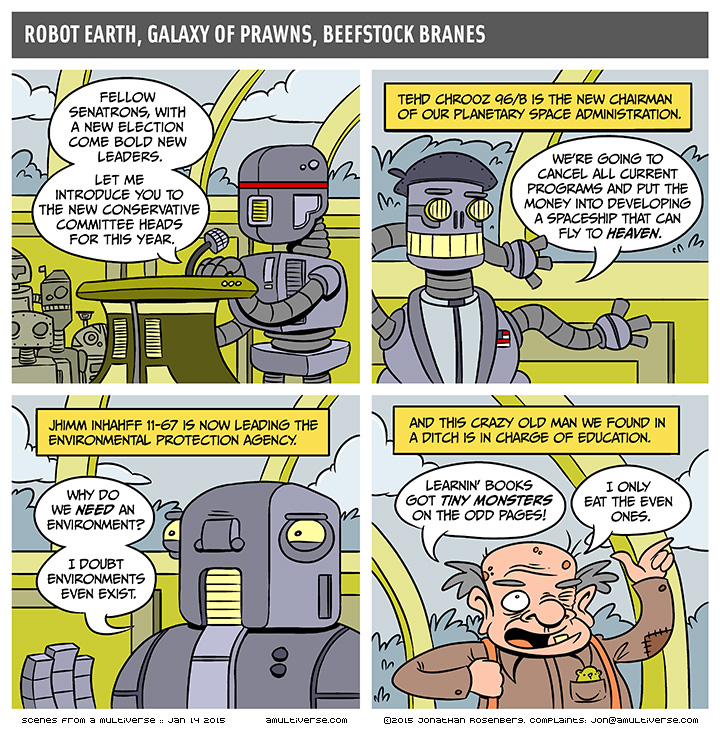
Conservatives like to complain that government is inefficient compared to the private sector, and they do everything they can to ensure it.

goat-bunny-polo[1]

14 Jan 06:33

Japanese Maids Sure Make Frying Pans Exciting

by Brian Ashcraft

Japanese Maids Sure Make Frying Pans Exciting

Then again, I've never really thought that seriously about frying pans.

One hundred Japanese maids show off these non-stick cooking pans in this Direct Teleshop spot.

That's a lot of maids. And a lot of frying pans.

To contact the author of this post, write to bashcraftATkotaku.com or find him on Twitter @Brian_Ashcraft.

Kotaku East is your slice of Asian internet culture, bringing you the latest talking points from Japan, Korea, China and beyond. Tune in every morning from 4am to 8am.

Recommended article: Chomsky: We Are All – Fill in the Blank.
This entry passed through the Full-Text RSS service - if this is your content and you're reading it on someone else's site, please read the FAQ at fivefilters.org/content-only/faq.php#publishers.

13 Jan 21:48

Pro-ISP Bill To Block FCC From Using Title II For Internet Introduced In Congress

by Kate Cox

2014.05.15-FCC-protestLawmakers have been happy to opine about the net neutrality fight since the old rule got tossed out a year ago. Now that the FCC is not only set to vote on a new proposal next month, but also likely to take the Title II approach in that proposal, the window is closing for Congress to act, and lawmakers are feeling the urgency. And that is how we find ourselves once again with a bill on the floor seeking to remove the FCC’s authority to classify broadband how it sees fit.

The bill in question, HR 279, doesn’t so much have a catchy name as a lengthy descriptor: “To amend the Communications Act of 1934 to limit the authority of the Federal Communications Commission over providers of broadband Internet access service.”

The bill seeks to do exactly what it says: it would forbid the FCC from classifying broadband services as telecommunications services, which are regulated under Title II of the Communications Act, and would instead force internet services to remain classified as they currently are, as information services.

The difference between the FCC’s regulatory scope over information and telecommunications is basically where the whole mess began. If the FCC moves to reclassify broadband services as communications, and not as information, then broadband services can be regulated under Title II of the law and can be made subject to the same non-discrimination, common carrier regulations as other utilities.

Rep. Bob Latta of Ohio introduced the bill, which is co-sponsored by Reps. Walter Jones (NC), Charlie Rangel (NY), and Randy Weber (TX). In a press release, Latta hailed the bill as “bipartisan legislation to ensure the internet remains open and free” before repeating the ISPs talking points about Title II being anachronistic 20th century “monopoly-era telephone rules” that would stifle innovation, dynamism, and progress.

As Ars Technica and others have pointed out, Rep. Latta has received a significant amount of campaign funding from the major ISPs and their trade (lobbying) groups. In the leadup to the 2014 election, that included $15,000 from the NCTA, $13,000 from AT&T, $10,000 from Time Warner Cable, $8500 from Comcast, and $8000 from Verizon, among others.

This is the second time Latta has put forth this proposed amendment to the Communications Act. The previous version went to Committee in May, 2014 and was never heard from again. At the time, the FCC was not leaning toward the Title II approach and there were months yet to go in the proceeding’s pleading process, so lawmakers focused their attention on other things.

However, Congressional interest in net neutrality and the FCC surged around the holidays, after President Obama very publicly called for the Title II approach. The response was instant, political, and predictable, with a tidal wave of mostly-Republican Representatives and Senators showing up to oppose the move.

With the new Congress sworn in and an actual date for the vote on the FCC’s calendar, it’s now-or-never for the opposition. Wheeler will be circulating the new proposal among the other commissioners’ offices on February 5, and the FCC is scheduled to vote on it on February 26.

[via Ars Technica]

13 Jan 21:44

Sources: Comcast “VIPs” Automatically Pushed To Front Of Phone Queue

by Chris Morran

(jorn)

(jorn)

Last week, it was revealed that a Comcast office in the power epicenter that is the D.C. suburbs maintained a “VIP” list of local politicians, business leaders, and other bigwigs. However, Comcast claims that in spite of the VIP label, these folks received no special treatment. Not so, multiple sources tell Consumerist.

One source worked for a company contracted by Comcast to maintain its automatic call distributor (ACD) system, which routes customer phone calls as they come in. This person says that the Comcast system was set up so that when one of the people on the VIP list called in, it would identify them by their phone number and jump them to the front of the line.

“My understanding was they were not told they were receiving preferential treatment,” says the source, “so in my opinion Comcast was deceiving them into thinking the service was better than it actually was.”

This particular person stopped working on the Comcast system several years ago and acknowledges that — at least when he was there — Comcast phone operations could vary greatly from site to site so it’s possible this was just a localized program to the Montgomery County, MD, area.

Another source — a former Comcast frontline support employee who worked with the company more recently — independently confirms what the first person told us.

This person tells Consumerist that during their years in the Maryland office that VIP calls — which also included local pro athletes and customers with substantial monthly bills who paid regularly — were indeed automatically pushed to the front of the queue.

They say there were situations where the system wouldn’t identify VIP callers correctly because they called from a phone that was not associated with the account.

But once the account was looked up, “we could see that status on their account and escalated them to the Platinum group,” says the source, who claims that frontline support people were never given the “We’ll make it right” cards that Comcast supposedly hands out to all employees.

When Consumerist asked Comcast to comment on the sources’ statements that VIPs were pushed to the front of the caller line, a rep for the cable giant would only repeat the statement originally given regarding the VIP list: “Comcast does not and has not offered special service, perks or free upgrades to lawmakers or public officials. Comcast does not and has not operated a dedicated VIP phone number or Web site in any market including the Beltway region.”

13 Jan 20:31

Legendary Secret Nintendo Song Found In Mario Kart 8

by Yannick LeJacq

The easter egg to end all Nintendo easter eggs has just been unearthed in Mario Kart 8. As the know-everythings at GameXplain demonstrate in a video published today, it turns out Yoshi was humming it all along—he was just being drowned out by the track's music. If only we'd all listened to Yoshi better from the start!

The secret in question is known as "Totaka's Song." It's a short (as in, 19 notes) musical refrain written by Nintendo composer Kazumi Totaka for a 1992 Game Boy game known as X. Since it first appeared there, it's evolved into "one of the sweetest hidden treats in all of gaming," as Luke put it back in 2011.

See, Totaka didn't leave the tune to rest in 1992. Instead, he kept finding increasingly clever ways to hide the music in his later work. From Luke's article:

On his next game, Mario Paint, Totaka used the tune again, this time as the intro music. And would go on to use it again, and again, and again, hiding it in nearly every game he composed music for, sometimes out in the open, other times tucking it away where it was almost impossible to find. It would become known as "Totaka's Song".

You can find it in the closing credits of Wario Land for the Vitual Boy. You can find it during a control screen briefing for Luigi's Mansion for the GameCube. You can find it twice in Link's Awakening on the Game Boy. You can even find it in X-Scape, the sequel to X, the first game he ever provided music for.

My favourite use of the song, though, comes in the Animal Crossing series. If you ask laid-back guitar-playing dog K. K. Slider to play you the "K.K. Song", he'll not only break out into Totaka's Song, but will give you a copy you can play in your little Animal Crossing house when you get home as well.

It's even likely that the character of K.K. Slider himself, one of the most popular from the series, is based on Totaka, as in Japanese he's called Totakeke (とたけけ), a name that not only sounds like the composer's name, but is one Totaka's used before (to hear a version of Totaka's Song in the Japanese edition of Link's Awakening, for example, you need to enter your name as "とたけけ").

Not every game he's worked on features the song, though. Nobody has been able to find the ditty in Wave Race 64, Wii Sports, Wii Music, Healthy Recipe Assistant 1000: DS Menu Anthology, Super Smash Bros. Brawl or the Wii's menu channel music.

Kudos to GameXplain for finding it anew in Mario Kart 8, buried as it was in one of the last places you'd look. I love trying to imagine how they first came across it—was it at some choice moment when one of them ran into the side of the track when racing on Yoshi Valley? What are the odds that you'd forget your Mario Kart rage long enough to think: "Hey, wait a second...that Blue Yoshi over there was trying to tell me something?"

Let this be a lesson to all of us: Yoshi is more than adorable face. He can also be a source of adorable secrets.

To contact the author of this post, write to yannick.lejacq@kotaku.com or find him on Twitter at @YannickLeJacq.

Recommended article: Chomsky: We Are All – Fill in the Blank.
This entry passed through the Full-Text RSS service - if this is your content and you're reading it on someone else's site, please read the FAQ at fivefilters.org/content-only/faq.php#publishers.

13 Jan 20:19

Let The Internet Create The Ultimate D&D Character

by Luke Plunkett

Let The Internet Create The Ultimate D&D Character

If you find that creating your role-playing character's backstory a little rough (thanks to your sense of imagination being dulled to a smooth sheen), the internet — as always — is here to help.

Who The Fuck Is My D&D Character is a generator (via Super Punch) made by Ryan J Grant that will do as advertised. Click a button and you'll get a complete backstory. Race, origin, background. If you're not happy with it, click it again, and again, until you get something like this.

Let The Internet Create The Ultimate D&D Character

Or this.

Let The Internet Create The Ultimate D&D Character

Or this.

Let The Internet Create The Ultimate D&D Character

You may not be the most dangerous character in the game, or the most helpful, but at least you'll be the most interesting.

Recommended article: Chomsky: We Are All – Fill in the Blank.
This entry passed through the Full-Text RSS service - if this is your content and you're reading it on someone else's site, please read the FAQ at fivefilters.org/content-only/faq.php#publishers.

13 Jan 05:05

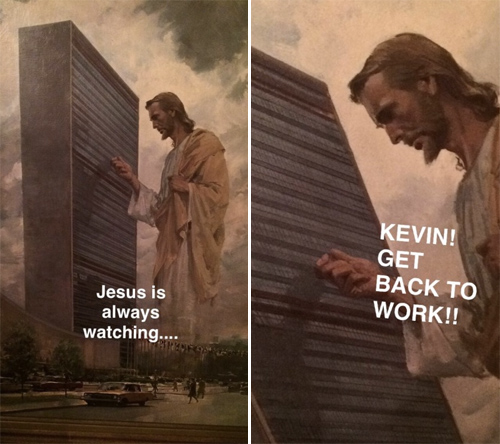
Jesus Is Watching You, Kevin

by Brad
Bewarethewumpus

Goddammit, Kevin.

659
13 Jan 05:04

When Bae Says She's Home Alone

by Brad
F32

Upon getting an unexpected phone call from his bae while swimming in a lake, Viner Logan Paul promptly makes the right move when he hears that she’s “home alone.”

13 Jan 00:46

Destiny's Most Hated Gun Can Be Deadly In The Right Hands

by Patricia Hernandez
Bewarethewumpus

I haven't played Destiny, but that looks a lot like the times back in the day when I would use a .357 and suit zoom to headshot guys in HL2 deathmatch, especially on the sniper levels.

So many unlikely kills, so many good times.

No Land Beyond's bad rap with Destiny players seems to be motivating some people to prove everyone wrong about the gun. First, we had the person who soloed the latest raid with the gun. And now we have a montage of someone straight up owning other players in the Crucible with the alleged worst gun in the game. Maybe the gun isn't as bad as people think it is?

I'm impressed by The Legend Himself's montage—it proves that, in the end, skill can overcome nearly anything. Honestly, the video almost makes it seem as if No Land Beyond can be a beast gun, provided you have good aim...but that might just be editing working its magic on me.

The No Land Beyondtage [The Legend Himself]

Recommended article: Chomsky: We Are All – Fill in the Blank.
This entry passed through the Full-Text RSS service - if this is your content and you're reading it on someone else's site, please read the FAQ at fivefilters.org/content-only/faq.php#publishers.

13 Jan 00:40

Paris #JeSuisCharlie protest crowd reacts to John Lennon's 'Imagine'

by Xeni Jardin

"I live in Paris, next to the center of the march. Yesterday, we put music on our window, especially peace songs. Watch as the crowd sings along and then applauds for Imagine by John Lennon." (Reddit, via youtube.com)

Read more at Boing Boing

';document.write(div);if(typeof context.___fm_zone_tag.loaded!=="boolean"){context.___fm_zone_tag.loaded=false;tag=context.document.createElement('script');tag.type='text/javascript';tag.src=settings.protocol+"//"+settings.static_domain+'lib/dfp-lib.js';tag.async=true;scripts=context.document.getElementsByTagName("script");scripts[0].parentNode.insertBefore(tag,scripts[0]);} context.___fm_zone_tag.queue.push(settings);}()); $(document).ready(function(){ convosuiteLabeling(); setTimeout('convosuiteLabeling();', 3000); }); };

Recommended article: Chomsky: We Are All – Fill in the Blank.
This entry passed through the Full-Text RSS service - if this is your content and you're reading it on someone else's site, please read the FAQ at fivefilters.org/content-only/faq.php#publishers.

12 Jan 16:59

Photo


12 Jan 16:55

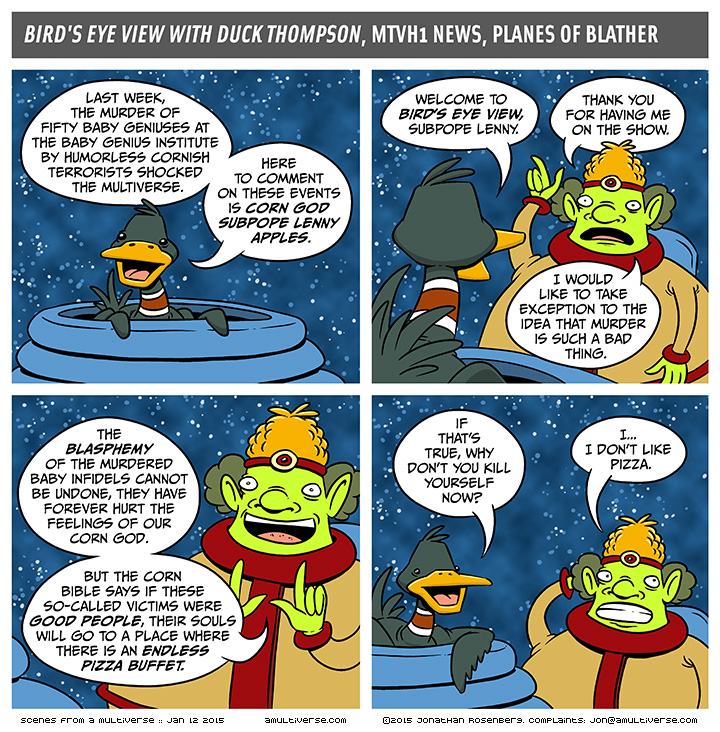
There But For The Grace Of Corn God

by jon

2015-01-12-There-But-For-The-Grace-Of-Corn-God

Babies have it rough in the Multiverse. Please, think of the poor baby geniuses next time you’re praying to the Mayonnaise Demon.

Hey! You know what’s great? The SFAM Purchaseables Store! Check it out, why not?

goat-sexpope[1]

12 Jan 13:00

This Is Not a Religion

by Brad
221

A message of defiance against religious terrorism inspired by René Magritte’s The Treachery of Images (1929).

11 Jan 04:25

Q&A: On the Untouchable ‘Lords of Secrecy’

by Dan Froomkin

Powerful, unaccountable, and operating far in the shadows, the Lords of Secrecy, as author Scott Horton calls them, are real, and they are in charge of our national security state.

Horton, a lawyer, journalist and human rights advocate, makes the case in his book, Lords of Secrecy: The National Security Elite and America’s Stealth Foreign Policy, that because the public is allowed to know so little, it has effectively been cut out of national security decisionmaking.

I had a chance to ask Horton some questions earlier this week. Here is an edited transcript:

Who are the Lords of Secrecy? Name me three.

The Lords of Secrecy are the heads of the national security and intelligence agencies who exercise the power to create secrets.

But I think we have to designate, as the dark overlord of the Lords of Secrecy, Richard Bruce Cheney. I don’t think there’s anybody else who even comes close. The man who invented stamps with his own special security classifications. He is a cult figure for the Lords of Secrecy.

But I would say it’s the heads of the NSA, CIA and various other agencies.

Speaking of the CIA director, I was really struck, watching John Brennan at his press conference in early December, after the Senate Intelligence Committee released a redacted executive summary of its report on CIA torture. He spoke with such incredible confidence and certitude. It wasn’t just that he looked unscathed, he actually looked emboldened. Is he untouchable now?

Yes. You’re asking what is the question: Are the people at the CIA who implemented and oversaw the dark sites and torture program untouchable? And the answer appears to be yes. Brennan, of course, has consistently denied that he was involved in this program. He’s claimed that he was critical of it–but I can’t find a single person at the agency who is capable of bearing witness to that, so I’m skeptical. But he has been an aggressive defender of those who implemented the program. He has supported their advancement ahead of their peers within the agency.

That is one of the most striking facts that this report uncovers. It’s figures like Robert Eatinger, who clearly is the key figure who misled the Justice Department in securing the legal opinions, and who used his position as acting general counsel to try and block the publication of the report, to slow it down, and to intimidate staffers who were involved in it.

And Alfreda Bikowsky, the queen of torture, who was involved in a breathtakingly lengthy string of screw-ups of the utmost gravity — and not only has she never suffered any negative repercussions from that, it actually seems to have accelerated her career trajectory.

In an excerpt from your book that we are publishing next week, you make a persuasive argument that bureaucrats love secrets, and that if left unchecked, they use secrecy to hide their failures and missteps, and in that way make themselves unaccountable. And that as a result, the most secretive and corrupt steadily climb to the top of the heap. But how is that different from any other organizational structure?

(Laughs)

The same may be true in many other areas of human endeavor, but it’s particularly true in the national security sector and with respect to government bureaucracies, because they have a much more vigorous power to create secrets.

So a businessmen can say: ‘Hey, that’s my secret.’ He can threaten to dismiss employees who disclose his secrets. But he doesn’t have anything like the palette of powers that the state bureaucracy has, especially the national security bureaucracy, which can threaten to arrest and lock away someone who betrays secrets, who can destroy their lives, seize their homes, cancel their pensions. They have much greater power to enforce their secrecy.

And I think the secrets to some extent are of greater import because they go to matters of public trust. Questions of national security are questions for the people. to a large extent.

In the book, you raise some essential, fundamental questions that we simply don’t hear in the modern political discourse. Like, why would U.S. drone strikes be secret? Similarly, what argument is there to keep anything about torture secret anymore–including the names of non-covert officials who took part in it? And that’s not to mention surveillance or cybersecurity. It’s like they took all the issues of national security and just declared them off limits. How did we come to this?

One thing that just amazes me about the Beltway culture in Washington is the way these claims of secrecy are just accepted. There doesn’t seem to be any will or spirit to fight back and challenge that. And that’s true for most of the press that covers it.

When you look back and ask: Why are they trying to keep this secret? What’s the rationale for it? What we find–and I think the drone program is an excellent example–are the shallowest pretexts for secrecy.

There’s no consideration given to how this subverts the democratic process of the United States. This question of running a 10-year war in Pakistan should have been the subject of deliberation, discussion and decisions taken through our democratic process, which involves a public articulation of the basis of the action by the executive, and a discussion and voting up or down of the proposal by the Congress, with the public being informed about it.

Now I would say that it’s entirely legitimate for the CIA to run a covert tactical operation that involves striking Mujahadeen leader X at a certain time and a certain place, and this is something that doesn’t have to go through all these processes. I’ll accept that, no problem.

But let’s assume that this is going on for 10 years, involves 700 strikes, kills 4,000 people. That is a war, by any real definition. Can you say that qualifies as covert action? That’s not what the term covert action means. And that they could do this without challenge in Washington is to me just mind boggling.

What explains the elite media’s tolerance for this kind of secrecy? It would seem to violate their core principles. And yet they play along, respecting unwarranted secrecy. They collaborate with it.

They collaborate with it, I think that’s right. The media is a big part of the problem. I think we have to say, of course, that there are really excellent topnotch reporters out there who risk their careers and do terrific work. But increasingly we have a corporate media culture that does not encourage or meaningfully support such journalists. And instead it tends to cultivate and support a different kind of journalist: not the watchdog but the lapdog.

And I think the role of lapdog journalism is highlighted in the Senate Select Committee report, where we see evidence of cases in which the CIA is feeding “leaks” to selected journalists with whom they have developed a good rapport information–they’re not really leaks, they’re “pleaks,” they’re planted leaks. And the leak is “super-secret information we’re giving you a scoop on” that actually happens to be false, to advance their propaganda game. And the journalist laps it up without any critical testing of the data, running it as a scoop or as a leak.

A leak, by definition has got to be something that someone is releasing to the media against the will of the established order, not in furtherance of it. They don’t seem to be able to make this really fundamental distinction.

And of course what’s going on is they want to advance their careers. I think we’ve got a lot of people covering the national security sector who are eager to build a career and they think the best way to do that is to have a trusted relationship with key sources within the CIA. And by the way, that’s what a professional journalist does, I have no problem with that. But what they are missing is that organizations like the CIA understand that process.

They changed the equation, in terms of what reporters get in return for what they give.

They’ve changed the dynamic of it. I know my own sources within the CIA repeatedly describe to me how the agency has picked its cooperating journalists. They’ve also described to me how they have placed their people with broadcasters. And these are people who usually have just left the intelligence community. Have “retired”–but of course you never actually retire, you merely change the tenor of your relationship somewhat.

They get clearance for this. It’s done, it’s understood. They get clearance in order to try to manipulate and influence these media organizations. And to me it’s rather amazing that the broadcast media don’t get it–or they claim not to get it.

Let me ask you about the NSA and surveillance. Here we are, more than a year and a half after the Snowden revelations started to emerge, and there’s been no legislative response at all. It seems to have turned out very well for the Lords of Secrecy. Why is that?

I think the public’s attitude toward these programs is very critical. But that appears to have no consequence inside the Washington Beltway. None.

And I think this is an area where when you compare to other democracies–Germany, for instance, and some Scandinavian countries– when the public says we don’t want that, the government reacts. That doesn’t happen in Washington.

And that’s because the Lords of Secrecy are oblivious to public opinion. They could care less.

They understand that they control the political decision-making process. And I would say that within the U.S. Congress, the one consideration that’s turned out to be absolutely dispositive on predicting how a congressman will vote on efforts to pare back the powers of the NSA is this: How much money did they take from the intelligence and defense contractors?

So I take it your hopes for the upcoming era of GOP congressional oversight are not high?

Well, certainly not in the next Congress. I think the next Congress is a bought-and-paid-for Congress. Even if they pass something, it will appear to limit the NSA, but will not actually do it.

The better sources of pressure are going to be our allies–the Europeans, NATO allies in particular–and potentially the courts saying that some of these procedures are illegal.

I won’t rule out the possibility of a change in Congress in the future. I think public opinion may grind fine and may grind slowly, but ultimately it will have some effect. It’s just not able to have an immediate effect because of the change in the nature of American democracy. Our democracy just isn’t much of a democracy anymore. I don’t think the people really have much meaningful input in national-security decision-making.

To the extent that Obama, initially at least, had any real interest in reining in the intelligence community, where did he go wrong? How early was he owned by the intelligence community? And how thoroughly?

Speaking with people inside the White House, what I’ve heard consistently is that these issues were dominated from the first months of the administration by John O. Brennan, and that Brennan built a network of close allies within the White House that included [former chief of staff] Rahm Emanuel and [former senior adviser] David Plouffe and also included [now chief of staff] Denis McDonough. McDonough’s been a key ally within the White House staff since the beginning.

What they did is they excluded liberal critics and civil libertarians from the dialogue. I’ve been told repeatedly that when discussions occurred on these critical issues, the intelligent, well-informed, balanced, liberal national security voices to whom Obama had once turned were simply not in the room.

So I think one of the big questions is: In his last two years, is he going to do something to change that? I think it’s unlikely, but he’s facing a lot of criticism from his own camp right now, and he may want to do something to address that criticism before he leaves.

This is the indicator I would look to: Does John O. Brennan remain as director of the CIA. As long as he’s there, I wouldn’t expect any progress on these issues.

When Obama chose Brennan, did he know what he was getting into?

Remember that Brennan’s name originally, during the transition period, was floated to be director of the CIA and there were three people who very aggressively objected to him, and that was Glenn Greenwald, Andrew Sullivan and me.

I think we claimed a win on that. But he got, as a door prize, the appointment as adviser at the White House, which did not require confirmation of any sort. And he was able to use that to develop a very powerful psychological relationship with the president. The people I’ve spoken with have consistently told me that people on the outside didn’t sufficiently understand or value this relationship that Brennan had cultivated with Obama. And by the way, Brennan used it to fill Obama’s ear with unadulterated bullshit.

Any question I haven’t asked you that I should have?

What should happen to the CIA? Seriously, I think that’s one of the big questions. If the Senate report proved anything it was that Harry Truman was absolutely right in his fundamental analysis of the proper role of the CIA. Truman said you really cannot have the same operation handling intelligence analysis and covert activities. The people who run the covert activities will dominate and they will always want to claim that whatever complete numbskull thing they did in their covert operations was a success. Which means they completely adulterate their analysis.

You may have to have covert operations, you certainly have to have intelligence analysis, but having both of those operations under the same roof is really stupid.

Photo: Mark Wilson/Getty Images

The post Q&A: On the Untouchable ‘Lords of Secrecy’ appeared first on The Intercept.

11 Jan 03:55

In Solidarity With a Free Press: Some More Blasphemous Cartoons

by Glenn Greenwald
Bewarethewumpus

Please do read more than just the cartoons.

Defending free speech and free press rights, which typically means defending the right to disseminate the very ideas society finds most repellent, has been one of my principal passions for the last 20 years: previously as a lawyer and now as a journalist. So I consider it positive when large numbers of people loudly invoke this principle, as has been happening over the last 48 hours in response to the horrific attack on Charlie Hebdo in Paris.

Usually, defending free speech rights is much more of a lonely task. For instance, the day before the Paris murders, I wrote an article about multiple cases where Muslims are being prosecuted and even imprisoned by western governments for their online political speech – assaults that have provoked relatively little protest, including from those free speech champions who have been so vocal this week.

I’ve previously covered cases where Muslims were imprisoned for many years in the U.S. for things like translating and posting “extremist” videos to the internet, writing scholarly articles in defense of Palestinian groups and expressing harsh criticism of Israel, and even including a Hezbollah channel in a cable package. That’s all well beyond the numerous cases of jobs being lost or careers destroyed for expressing criticism of Israel or (much more dangerously and rarely) Judaism. I’m hoping this week’s celebration of free speech values will generate widespread opposition to all of these long-standing and growing infringements of core political rights in the west, not just some.

Central to free speech activism has always been the distinction between defending the right to disseminate Idea X and agreeing with Idea X, one which only the most simple-minded among us are incapable of comprehending. One defends the right to express repellent ideas while being able to condemn the idea itself. There is no remote contradiction in that: the ACLU vigorously defends the right of neo-Nazis to march through a community filled with Holocaust survivors in Skokie, Illinois, but does not join the march; they instead vocally condemn the targeted ideas as grotesque while defending the right to express them.

But this week’s defense of free speech rights was so spirited that it gave rise to a brand new principle: to defend free speech, one not only defends the right to disseminate the speech, but embraces the content of the speech itself. Numerous writers thus demanded: to show “solidarity” with the murdered cartoonists, one should not merely condemn the attacks and defend the right of the cartoonists to publish, but should publish and even celebrate those cartoons. “The best response to Charlie Hebdo attack,” announced Slate’s editor Jacob Weisberg, “is to escalate blasphemous satire.”

Some of the cartoons published by Charlie Hebdo were not just offensive but bigoted, such as the one mocking the African sex slaves of Boko Haram as welfare queens (left). Others went far beyond maligning violence by extremists acting in the name of Islam, or even merely depicting Mohammed with degrading imagery (above, right), and instead contained a stream of mockery toward Muslims generally, who in France are not remotely powerful but are largely a marginalized and targeted immigrant population.

But no matter. Their cartoons were noble and should be celebrated – not just on free speech grounds but for their content. In a column entitled “The Blasphemy We Need,” The New York Times‘ Ross Douthat argued that “the right to blaspheme (and otherwise give offense) is essential to the liberal order” and “that kind of blasphemy [that provokes violence] is precisely the kind that needs to be defended, because it’s the kind that clearly serves a free society’s greater good.” New York Magazine‘s Jonathan Chait actually proclaimed that “one cannot defend the right [to blaspheme] without defending the practice.” Vox’s Matt Yglesias had a much more nuanced view but nonetheless concluded that “to blaspheme the Prophet transforms the publication of these cartoons from a pointless act to a courageous and even necessary one, while the observation that the world would do well without such provocations becomes a form of appeasement.”

To comport with this new principle for how one shows solidarity with free speech rights and a vibrant free press, we’re publishing some blasphemous and otherwise offensive cartoons about religion and their adherents:

And here are some not-remotely-blasphemous-or-bigoted yet very pointed and relevant cartoons by the brilliantly provocative Brazilian cartoonist Carlos Latuff (reprinted with permission):


Is it time for me to be celebrated for my brave and noble defense of free speech rights? Have I struck a potent blow for political liberty and demonstrated solidarity with free journalism by publishing blasphemous cartoons? If, as Salman Rushdie said, it’s vital that all religions be subjected to “fearless disrespect,” have I done my part to uphold western values?

When I first began to see these demands to publish these anti-Muslim cartoons, the cynic in me thought perhaps this was really just about sanctioning some types of offensive speech against some religions and their adherents, while shielding more favored groups. In particular, the west has spent years bombing, invading and occupying Muslim countries and killing, torturing and lawlessly imprisoning innocent Muslims, and anti-Muslim speech has been a vital driver in sustaining support for those policies.

So it’s the opposite of surprising to see large numbers of westerners celebrating anti-Muslim cartoons - not on free speech grounds but due to approval of the content. Defending free speech is always easy when you like the content of the ideas being targeted, or aren’t part of (or actively dislike) the group being maligned.

Indeed, it is self-evident that if a writer who specialized in overtly anti-black or anti-Semitic screeds had been murdered for their ideas, there would be no widespread calls to republish their trash in “solidarity” with their free speech rights. In fact, Douthat, Chait and Yglesias all took pains to expressly note that they were only calling for publication of such offensive ideas in the limited case where violence is threatened or perpetrated in response (by which they meant in practice, so far as I can tell: anti-Islam speech). Douthat even used italics to emphasize how limited his defense of blasphemy was: “that kind of blasphemy is precisely the kind that needs to be defended.”

One should acknowledge a valid point contained within the Douthat/Chait/Yglesias argument: when media outlets refrain from publishing material out of fear (rather than a desire to avoid publishing gratuitously offensive material), as several of the west’s leading outlets admitted doing with these cartoons, that is genuinely troubling, an actual threat to a free press. But there are all kinds of pernicious taboos in the west that result in self-censorship or compelled suppression of political ideas, from prosecution and imprisonment to career destruction: why is violence by Muslims the most menacing one? (I’m not here talking about the question of whether media outlets should publish the cartoons because they’re newsworthy; my focus is on the demand they be published positively, with approval, as “solidarity”).

When we originally discussed publishing this article to make these points, our intention was to commission two or three cartoonists to create cartoons that mock Judaism and malign sacred figures to Jews the way Charlie Hebdo did to Muslims. But that idea was thwarted by the fact that no mainstream western cartoonist would dare put their name on an anti-Jewish cartoon, even if done for satire purposes, because doing so would instantly and permanently destroy their career, at least. Anti-Islam and anti-Muslim commentary (and cartoons) are a dime a dozen in western media outlets; the taboo that is at least as strong, if not more so, are anti-Jewish images and words. Why aren’t Douthat, Chait, Yglesias and their like-minded free speech crusaders calling for publication of anti-Semitic material in solidarity, or as a means of standing up to this repression? Yes, it’s true that outlets like The New York Times will in rare instances publish such depictions, but only to document hateful bigotry and condemn it – not to publish it in “solidarity” or because it deserves a serious and respectful airing.

With all due respect to the great cartoonist Ann Telnaes, it is simply not the case that Charlie Hebdo “were equal opportunity offenders.” Like Bill Maher, Sam Harris and other anti-Islam obsessives, mocking Judaism, Jews and/or Israel is something they will rarely (if ever) do. If forced, they can point to rare and isolated cases where they uttered some criticism of Judaism or Jews, but the vast bulk of their attacks are reserved for Islam and Muslims, not Judaism and Jews. Parody, free speech and secular atheism are the pretexts; anti-Muslim messaging is the primary goal and the outcome. And this messaging – this special affection for offensive anti-Islam speech – just so happens to coincide with, to feed, the militaristic foreign policy agenda of their governments and culture.

To see how true that is, consider the fact that Charlie Hebdo – the “equal opportunity” offenders and defenders of all types of offensive speech - fired one of their writers in 2009 for writing a sentence some said was anti-Semitic (the writer was then charged with a hate crime offense, and won a judgment against the magazine for unfair termination). Does that sound like “equal opportunity” offending?

Nor is it the case that threatening violence in response to offensive ideas is the exclusive province of extremists claiming to act in the name of Islam. Terrence McNally’s 1998 play “Corpus Christi,” depicting Jesus as gay, was repeatedly cancelled by theaters due to bomb threats. Larry Flynt was paralyzed by an evangelical white supremacist who objected to Hustler‘s pornographic depiction of inter-racial couples. The Dixie Chicks were deluged with death threats and needed massive security after they publicly criticized George Bush for the Iraq War, which finally forced them to apologize out of fear. Violence spurred by Jewish and Christian fanaticism is legion, from abortion doctors being murdered to gay bars being bombed to a 45-year-old brutal occupation of the West Bank and Gaza due in part to the religious belief (common in both the U.S. and Israel) that God decreed they shall own all the land. And that’s all independent of the systematic state violence in the west sustained, at least in part, by religious sectarianism.

The New York Times‘ David Brooks today claims that anti-Christian bias is so widespread in America – which has never elected a non-Christian president – that “the University of Illinois fired a professor who taught the Roman Catholic view on homosexuality.” He forgot to mention that the very same university just terminated its tenure contract with Professor Steven Salaita over tweets he posted during the Israeli attack on Gaza that the university judged to be excessively vituperative of Jewish leaders, and that the journalist Chris Hedges was just disinvited to speak at the University of Pennsylvania for the Thought Crime of drawing similarities between Israel and ISIS.

That is a real taboo – a repressed idea – as powerful and absolute as any in the United States, so much so that Brooks won’t even acknowledge its existence. It’s certainly more of a taboo in the U.S. than criticizing Muslims and Islam, criticism which is so frequently heard in mainstream circlesincluding the U.S. Congress – that one barely notices it any more.

This underscores the key point: there are all sorts of ways ideas and viewpoints are suppressed in the west. When those demanding publication of these anti-Islam cartoons start demanding the affirmative publication of those ideas as well, I’ll believe the sincerity of their very selective application of free speech principles. One can defend free speech without having to publish, let alone embrace, the offensive ideas being targeted. But if that’s not the case, let’s have equal application of this new principle.

Photo by Joe Raedle/Getty Images; additional research was provided by Andrew Fishman


The post In Solidarity With a Free Press: Some More Blasphemous Cartoons appeared first on The Intercept.
11 Jan 03:32

NSA Played Key Role Linking North Korea to Sony Hack

by Jana Winter

National Security Agency data and technical analysis assisted in the U.S. government’s attribution of the Sony cyber attack to North Korea, Admiral Michael Rogers said on Thursday.

“We partner with the Department of Homeland Security and FBI in various areas and this is one such area,” Rogers, the NSA director, said in response to a question from a reporter with The Daily Beast about the agency’s role, if any, in the attribution of the Sony attack to North Korea.

“We specifically did—we were asked to provide our technical expertise. We were asked to take a look at the malware, we were asked to take a look at not just the data that was being generated from Sony but also what data could we bring to the table—here’s other activity and patterns leading up to it, what is this act really about?” Rogers said at the FBI’s International Conference on Cyber Security at Fordham University.

“We were part of a broad interagency effort, not in the lead role–the Federal Bureau of Investigation was the overall lead. Yes, we were part of a broad government attempt to understand exactly what happened.”

This is the first time the agency has made any public statements about its involvement in the Sony hack investigation.

Earlier in the day, Rep. Mike Rogers (R-Ala.) hinted that NSA could have been involved by referencing the “shocking amount of swagger” among industry professionals questioning the government’s attribution to North Korea. But those outside experts lack knowledge of the “huge capability of the NSA, FBI and CIA to some degree,” he said.

Rogers, the NSA director, discussed the Sony hack at numerous points throughout his talk, prior to the question and answer period.

“I have very high confidence—I remain very confident—that this was North Korea,” he said, echoing FBI Director James Comey the day before. He said this was the first time a nation-state has carried out an act to “stop the release of a film with a particular viewpoint and characterization of a leader.”

Comey sought to end growing skepticism by informational security professionals that have said they question North Korea’s involvement in the Sony hack. Many in the industry had called on the FBI to offer proof of ties to North Korea. Comey Wednesday provided new details about the FBI’s investigation.

He told the standing-room-only packed room that the hackers got sloppy and sometimes failed to mask their identity when sending email threats to Sony employees, pointing to networks used “exclusively by North Koreans.” And he said he was trying to get the emails declassified to disclose to the public.

The NSA chief—like Justice Department and FBI officials—applauded Sony for notifying the government within hours of learning they’d been hit with a cyber attack. Naming North Korea and announcing economic sanctions was critical for deterrence of future nation-state or other types of cyber attack, Rogers argued.

“The entire world is watching how we as a nation are going to respond to this,” he said.

 Photo: Alex Wong/Getty Images


The post NSA Played Key Role Linking North Korea to Sony Hack appeared first on The Intercept.

11 Jan 01:12

Some Kids Are Smarter Than Adults

life,kids,smart,adults,funny,happiness

Submitted by: Unknown

Tagged: life , kids , smart , adults , funny , happiness
10 Jan 23:43

Pastor advocates hitting children to instill respect for his god

by Jason Weisberger
Bewarethewumpus

I wasn't sure whether to share this one or not, that's a pretty horrible story.

Evidently assault teaches respect for this purported Pastor's god. Watch as he brags about hitting a kid. (via)

Read more at Boing Boing

';document.write(div);if(typeof context.___fm_zone_tag.loaded!=="boolean"){context.___fm_zone_tag.loaded=false;tag=context.document.createElement('script');tag.type='text/javascript';tag.src=settings.protocol+"//"+settings.static_domain+'lib/dfp-lib.js';tag.async=true;scripts=context.document.getElementsByTagName("script");scripts[0].parentNode.insertBefore(tag,scripts[0]);} context.___fm_zone_tag.queue.push(settings);}()); $(document).ready(function(){ convosuiteLabeling(); setTimeout('convosuiteLabeling();', 3000); }); };

Recommended article: Chomsky: We Are All – Fill in the Blank.
This entry passed through the Full-Text RSS service - if this is your content and you're reading it on someone else's site, please read the FAQ at fivefilters.org/content-only/faq.php#publishers.

10 Jan 21:53

The civilized response to Charlie Hebdo attacks: more surveillance

by Xeni Jardin
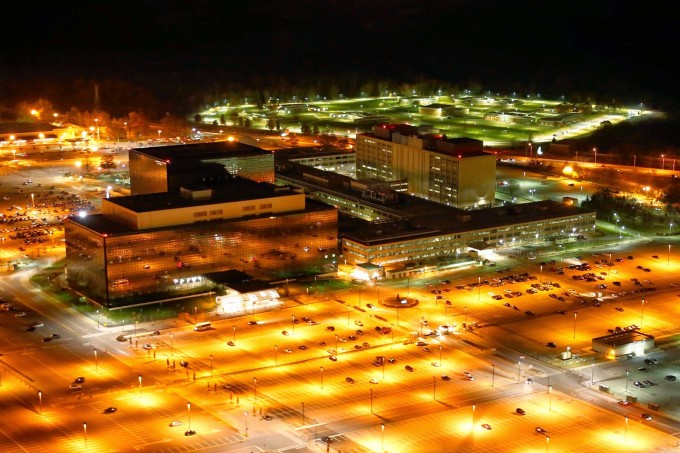
NSA headquarters, photographed by Trevor Paglen, via HRW.


NSA headquarters, photographed by Trevor Paglen, via HRW.

"As politicians drape themselves in the flag of free speech and freedom of the press in response to the tragic murder of Charlie Hebdo cartoonists," writes Freedom of the Press Foundation's Trevor Timm at the Guardian, "they’ve also quickly moved to stifle the same rights they claim to love. Government officials on both sides of the Atlantic are now renewing their efforts to stop NSA reform as they support free speech-chilling surveillance laws that will affect millions of citizens that have never been accused of terrorism."

This entry passed through the Full-Text RSS service - if this is your content and you're reading it on someone else's site, please read the FAQ at fivefilters.org/content-only/faq.php#publishers.

10 Jan 21:52

If Petraeus is charged over leaks, feds may use same law they're going after Snowden with

by Trevor Timm

David Petraeus, L, used a pseudonymous Gmail account to sext biographer/lover Paula Broadwell, R. They were outed in part by Gmail metadata.

In a surprising development, the New York Times reported late Friday that the FBI and Justice Department have recommended felony charges against ex-CIA director David Petraeus for leaking classified information to his former biographer and mistress Paula Broadwell. While the Times does not specify, the most likely law prosecutors would charge Petraeus under is the same as Edward Snowden and many other leakers: the 1917 Espionage Act.

It remains to be seen whether Petraeus will actually be indicted (given how high-ranking government officials so often escape punishment), and the decision now sits on Attorney General Eric Holder’s desk. But this is a fascinating and important case for several reasons.

First, all of Petraeus' powerful D.C. friends and allies are about to be shocked to find out how seriously unjust the Espionage Act is—a fact that has been all too real for many low-level whistleblowers for years.

By all accounts, Petraeus’s leak caused no damage to US national security. “So why is he being charged,” his powerful friends will surely ask. Well, that does not matter under the Espionage Act. Even if your leak caused no national security damage at all, you can still be charged, and you can’t argue otherwise as a defense at trial. If that sounds like it can’t be true, ask former State Department official Stephen Kim, who is now serving a prison sentence for leaking to Fox News reporter James Rosen. The judge in his case ruled that prosecutors did not have to prove his leak harmed national security in order to be found guilty.

It doesn’t matter what Petraeus’s motive for leaking was either. While most felonies require mens rea (an intentional state of mind) for a crime to have occurred, under the Espionage Act this is not required. It doesn’t matter that Petraeus is not an actual spy. It also doesn’t matter if Petraeus leaked the information by accident, or whether he leaked it to better inform the public, or even whether he leaked it to stop a terrorist attack. It’s still technically a crime, and his motive for leaking cannot be brought up at trial as a defense.

This may seem grossly unfair (and it is!), but remember, as prosecutors themselves apparently have been arguing in private about Petraeus's case: “lower-ranking officials had been prosecuted for far less.” Under the Obama administration, more sources of reporters have been prosecuted under the Espionage Act than all other administrations combined, and many have been sentenced to jail for leaks that should have never risen to the level of a criminal indictment.

Ultimately, no one should be charged with espionage when they didn’t commit espionage, but if prosecutors are going to use the heinous Espionage Act to charge leakers, they should at least do it fairly and across the board—no matter one’s rank in the military or position in the government. So in one sense, this development is a welcome one.

For years, the Espionage Act prosecutions have only been for low-level officials, while the heads of federal agencies leak with impunity. For example, current CIA director John Brennan, former CIA director Leon Panetta, and former CIA general counsel John Rizzo are just three of many high-ranking government officials who have gotten off with little to no punishment despite the fact we know they’ve leaked information to the media that the government considers classified.

So hopefully Eric Holder does the right thing and indicts Petraeus like he has so many others with far fewer powerful connections. As Petraeus himself once said after CIA whistleblower John Kiriakou was convicted for leaking: "There are indeed consequences for those who believe the are above the laws."

But if Petraeus does get indicted, perhaps we should start a new campaign: “Save David Petraeus! Repeal the Espionage Act!”

This entry passed through the Full-Text RSS service - if this is your content and you're reading it on someone else's site, please read the FAQ at fivefilters.org/content-only/faq.php#publishers.

10 Jan 17:57

Nike: Marty McFly’s Air MAG Sneakers With Power Laces Will Arrive In 2015

by Mary Beth Quirk

(via Nice Kicks)

(via Nice Kicks)

It’s haaaaappening, it’s finally haaaaaappening! After teasing fans of Back to the Future II first with a limited run of replica Air MAGs that it auctioned off for charity, followed by an apparently licensed pair that lit up but didn’t lace up automatically or hover, Nike has confirmed that it’ll be releasing Marty McFly’s Air MAG sneakers with Power Laces sometime this year.

Yes, they’re going to lace up, said Nike’s Vice President for Design and Special Projects and the designer of the original shoes in the movie, Tinker Hatfield during the Agenda Trade Show in Long Beach, CA this week, according to shoe blog Nice Kicks.

The people wanted to know, and Hatfield was willing to talk, saying that his team is working as hard as possible to bring the shoes to the market this year. However, he pointed out, we still have “11 and two-thirds months left in 2015.”

That means there’s no set date, but who’s willing to bet on Oct. 21, 2015? It is, after all, the date Marty travels in time to in the movie to save his progeny from ruination. Just saying, convenient timing.

You can also check out the patent for the Power Laces via Nice Kicks as well.

TINKER TALKS NIKE MAG 2015 RELEASE WITH POWER LACES AT #AGENDAEMERGE [Nice Kicks]

09 Jan 18:42

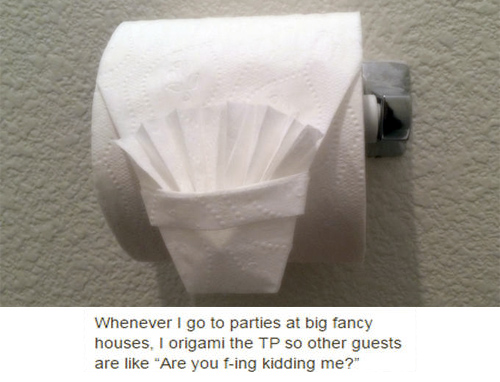
Whenever I Go To Parties at Fancy Houses...

by Brad
137