Shared posts

31 Jan 17:42

Too Many Coppers

by Jae Miles

Author : Jae Miles, Staff Writer

She’s screaming like her life is being dragged from her using blunt instruments. Occasionally she’ll stop, but after a series of ominous ‘thuds’, she’ll start again.

“We ‘ave control of zis street.” This from the blue-uniformed Avantacop.

“Rubbiz. The rezonink places this addrez within oor control perimeter.” Response from the black-and-orange uniformed Fourgeecop.

“City statutes give prioridee response t’us.” A riposte from a grey-uniformed Spartacop.

“How about we co-operate to cover the premises from all sides, achieve entry with precision and numbers, then use superior force to area-neutralise whatever threat is inside?” The suggestion comes from my partner, in Carabinieri black – just like me.

We’re one of the six official police forces that could be here, were it not for the mandated EU ‘open-market’ rulings on civil policing. Now, in addition to the five ‘resident’ national police forces and regional police forces, there are twenty-eight ‘guardian’ (corporate) police forces and countless franchise mobs. It used to be a nightmare with just five or six of us versus the Cosa Nostra and friends. This? This is a new ring of Dante’s hell in the guise of policing, and criminals rarely enter the equation – or get caught, for that matter.

The screams escalate again and Armand looks at me, his brows creasing. We both think back to the meeting we attended four days ago. This is it. The moment that was discussed and everyone agreed to.

He nods at me and we both cross-draw paired Webley & Scott Suppressors. Armand takes both of the Avantacops and I drop the standing Fourgee and Sparta. Their companions show their uselessness by trying to exit their cars and join the firefight, instead of securing their positions and calling for assistance.

Ignoring the downed pseudocops for a while, we retool with compressor-pulse shotguns and storm the building where screams continue. It seems that sudden, decisive action involving the direct application of violence was something that our little gang of drug-crazed torturers were not expecting. They were waiting for hostage negotiators and news crews. They continue waiting until their bodies hit the ground from three floors up. Some people are a waste of the judicial system’s time.

By the time the ambulances pull away and the coroner’s van is loading, the pseudocops are reclining in their neatly parked vehicles, in the car park of a local convenience store four blocks away.

Four days ago we agreed that we would be police, and any jurisdictional arguments from competing forces would be treated as interference with the execution of our duties, if co-operation was refused or ignored. The people deserve to be protected when the threat is nigh, not to wait until the bureaucracy is done.

Discuss the Future: The 365 Tomorrows Forums
The 365 Tomorrows Free Podcast: Voices of Tomorrow
This is your future: Submit your stories to 365 Tomorrows

30 Jan 19:30

All Right, Have It Your Way – You Heard a Seal Bark

by submission

Author : Theric Jepson

“Did you hear that?” Dave fiddled with these and those switches and dials and flung his hands across a dozen touchscreens. “Huh.”

Liz swallowed her water and let the bottle float across the cockpit. “Hear what?”

“I don’t know. Like a barking sound.”

“Like a dog.”

“No . . .” Dave frowned. “More like . . . a seal?”

“A seal.”

“Yeah. Kinda like a seal.”

Liz nodded. “Nope. No seals around here.”

Dave rolled his eyes and returned to the dash. “No kidding?” No seals in the asteroid belt? That’s why I love you.”

“Don’t be sarcastic. The bots are almost done with the extraction, then we’ll be full and we can detach and head home. Keep your seals till then.”

Dave flipped his visor and muttered, “I never said it was a seal.”

“And stop muttering.”

Dave exhaled and unlatched from his seat. He pushed himself through the cockpit locker and floated face up through the kitchen and into their sleeping quarters. He raised his head so his shoulders hit the padding, then pushed up into the machine room. From here he could pick up vibrations from the excavators. He listened carefully. Nothing. He opened the display to the molter—seemed to be running correctly—then shut it down again. He drummed his fingers on the wall and slipped back down and shot towards the cockpit.

“Any seals?”

“Hardy har.” Dave latched back in and, just following the click, there it was again. “There! There! You can’t tell me you didn’t hear that?”

“C’mon, Dave. You can’t gaslight me.”

“Can’t—what’s that?”

“Never mind.”

“There! Again!”

“Are you bored? Is that it? Should we break out the backgammon? Have some sex? Try to catch a signal?”

Dave paused and took a long look at Liz’s face. It showed mostly impatience. He strained for signs of amusement or even worry, but nothing. “You—you really think I’m messing with you?”

She rolled her eyes and scrolled up a book on her sleeve.

* * * * *

Five days later. Dave has held his ear to every surface of their ship. He’s floated absolutely still for ninety minutes at a time. Liz has ignored him.

He’d still only heard the sound in the cockpit, but Liz never gave any sign of hearing. Not that he’d ever been actually looking at her when the seal barked—because that’s exactly what it sounded like—but of course it wasn’t that—but nothing else made sense either. Nothing was coming from inside the ship and nothing could come from outside the ship. So why the hell not a seal?

* * * * *

Liz scrolled through the redundancy list. “You sure you checked all of these intentionally?”

“What kind of question is that? Of course I am!”

“Okay. Initializing countdown. Detach at eight minutes, launch at ten.”

“Sounds goo—” Dave felt the blood fall from his face. He couldn’t speak, but he shakily lifted a finger to the display. “S-s-s—”

Liz didn’t look up from the controls. “Okay. We’re set.”

Dave slammed a hand down, pausing the countdown. “Be right back. I’m going out for a sec.”

“What? Out? Dave! You can’t take our suits outside the ship! They’re barely rated for ten minutes! And were leaving! We’re leaving.”

“So five minutes won’t matter.”

“David! Gaaah!”

But he was gone. She heard him fumbling with the lock and closing it behind him. She waited until he’d closed the outer lock then restarted the countdown, bumping it up—detach in one, launch in two. She took the speaker from her hair and stashed it in a cubby, then attached her shoulder restraints. She glanced at the display to see David going over the edge, chasing nothing more than a carefully engineered trick of the light. She queued up his cord then popped it off.

“Hope I don’t get lonely,” she said to herself. “Too long alone in empty space can drive you mad.”

Discuss the Future: The 365 Tomorrows Forums
The 365 Tomorrows Free Podcast: Voices of Tomorrow
This is your future: Submit your stories to 365 Tomorrows

25 Jan 18:25

MeFi: That is *not* Harley Quinn. Harley Quinn wears clothes.

by young_son
What Taking My Daughter to a Comic Book Store Taught Me "All their..." ...and her voice dropped to a whisper... "boobies are hanging out, Dad."
22 Jan 01:04

Bus Driver Walks the Walk After Roadside Feud

by Brad
37a

In this recently captured mobile video from Santiago, Chile, a fed-up city bus driver opens up a huge can of road rage during an argument over a fender-bender accident with a group of college students after one of them smashes a window.

22 Jan 00:54

“The Facebook” in a TV commercial from 1995 that never actually was

by Xeni Jardin

[unable to retrieve full-text content]

By comedian Brent Weinbach.

(more…)

21 Jan 23:24

Today In Terrible Arguments Against Net Neutrality: Monopoly Eras And Fees On Bills

by Kate Cox

2014.05.15-FCC-protestIt’s been a busy day for tech talk in Washington. Today, both the House and the Senate held hearings on net neutrality and a proposed bill to regulate it. A parade of former regulators, lobbyists, business representatives, lawyers, and consumer advocates sat on Capitol Hill and once again hashed through the debate, while elsewhere in the District, a current FCC commissioner was giving a lunchtime speech about why the FCC shouldn’t regulate at all.

The three events broke down into the same general sides we’ve been used to for the last year: those who wish to see the FCC regulate broadband carriers as Title II communications services, and those who want the FCC to leave the poor put-upon broadband industry alone so it can keep making money hand over fist. But today the anti-Title II side used two main arguments that just don’t add up.

In remarks he gave at the American Enterprise Institute (PDF), FCC commissioner Michael O’Rielly focused not on the business side of things, but on the consumer. The poor consumer, he said, will have to pay more for broadband if Title II happens because of something that almost nobody’s been focusing on: the Universal Service Fund.

Services defined statutorily as telecommunications carriers are required to pay into the FCC’s Universal Service Fund, it is true. The USF is where money for programs to expand connectivity to underserved populations — like the e-rate program that brings internet access to schools and libraries, or programs that expand broadband access in rural areas — comes from.

“If the commission decides to reclassify broadband as a telecommunications service, broadband providers (as telecommunications carriers) will be required by statute to pay into the Fund,” O’Rielly said. “And providers will undoubtedly pass those fees on to consumers just as telecommunications providers do today. That means consumer broadband rates will go up” (emphasis his).

But O’Rielly’s observation, while accurate, really only tells half the story.

actual_comcast_bill_2015This is the fees, surcharges, and taxes section of a current (January, 2015) Comcast bill for one of our very own Consumerist staffers.

It’s showing all of the fees and charges Comcast, one of the nation’s biggest ISPs, charges a triple-play customer. Some of these vary by state, obviously. But note the “UCC recurring” and “regulatory recovery fee” charges.

The “UCC recurring” charge is the fee Comcast levies to recoup its mandatory contributions to the USF. So that one, as O’Rielly has it, is a direct pass-through to consumers.

The “regulatory recovery fee,” however, is entirely of Comcast’s own invention. It is, as they note down below, “neither government mandated nor a tax, but is assessed by Comcast to recover the costs of certain federal, state, and local impositions related to voice services.”

Note that it does not in fact appear under “voice,” but under “other charges.” In fact, a bill from a year earlier — when the account in question was a double-play package and not triple-play, with no phone or voice service associated with it — still includes both the UCC Recurring charge and the regulatory recovery fee on it.

In other words: ISPs like Comcast are already charging consumers whatever pass-through fees they darn well want, whether or not they actually relate in any way to the current services a subscriber is connected to, and regardless of the regulatory scheme that applies to those.

To adopt a stance of, “oh no, what about the poor consumers’ bills, won’t anyone think of the poor consumers’ bills” as it relates to approximately a dollar’s worth of already imposed fees that might magically manifest or increase at some point in the future, when cable and internet bills are already both increasing at many times the rate of inflation is not an honest position.

And why do consumers’ bills keep jumping in leaps and bounds? Basically, because they can. In a landscape without real competition, businesses have no compulsion to operate in consumers’ interest and instead, act only in their own. And that means charging more money whenever they want, for whatever they want, because the market will bear it.

And that brings us to the other argument lawmakers kept repeating about Title II today, in both the House and Senate hearings: that because Title II was developed in years past, to deal with a monopoly telephone system, it does not apply to the landscape we have today.

Senator Thune, in his opening remarks (PDF), said “We have now reached an unfortunate point where both the President and the chairman of the FCC feel compelled to move forward using a tool box built 80 years ago to regulate a literal monopoly,”  and in Congress’s other chamber Rep. Upton said (PDF) the similar, “Our thoughtful solution provides a path forward that doesn’t involve the endless threat of litigation or the baggage of laws created for monopoly era telephone service.”

This was the recurring theme, from senators, representatives, and witnesses giving testimony: Title II was developed for a world with a phone monopoly. Since we do not currently have a broadband monopoly, monopoly rules are overbearing and harmful.

Except, of course, that when it comes to broadband, most of us are subject to a local monopoly. Whether or not you have any options basically depends on which city block you happen to live in, if you’re an urban customer. If you’re a rural customer, good luck getting any service at all. And report after report has shown that for actual high speed connections, the idea of competition remains entirely mythical for tens of millions of Americans.

For download speeds of 25 Mbps or higher — which the FCC is likely to approve as the new baseline minimum for “broadband” later this month — only 37% of Americans have a choice of even two providers to ping-pong between (a duopoly), and only 9% of us can choose from three or more players.

So for witnesses like Michael Powell to say that Title II is only “for a monopoly era” is wrong in two ways. Not only does the FCC’s ability to use forbearance mean that Title II is actually reasonably flexible… but also, sad to say, this is indeed still a monopoly era for the vast majority of consumers.


21 Jan 21:00

British spy agency intercepted emails of journalists, considers them 'threats' alongside terrorists and hackers

by Trevor Timm
Edward Snowden.


Edward Snowden.

Newly disclosed documents from Edward Snowden, revealed by the Guardian, show that the British spy agency (and close NSA partner) GCHQ intercepted emails from many of the US and UK’s most well-known news organizations, including the New York Times, Washington Post, BBC, Reuters, the Guardian, Le Monde, the Sun, and NBC.

As the Guardian reported:

The journalists’ communications were among 70,000 emails harvested in the space of less than 10 minutes on one day in November 2008 by one of GCHQ’s numerous taps on the fibre-optic cables that make up the backbone of the internet.

Perhaps even more disturbing, an internal GCHQ “security assessment” document reportedly listed “‘investigative journalists’ as a threat in a hierarchy alongside terrorists or hackers.”

Internal security advice shared among the intelligence agencies was often as preoccupied with the activities of journalists as with more conventional threats such as foreign intelligence, hackers or criminals.

One restricted document intended for those in army intelligence warned that “journalists and reporters representing all types of news media represent a potential threat to security”.

This is yet another outrageous violation of press freedom by the British government, which has increasingly shown contempt for newsgathering and the rights of journalists.

We know from previous Snowden documents that the GCHQ essentially has no barriers when scooping up the communications of virtually anyone they want, including news organizations. The Intercept previously reported that the spy agency conducted surveillance on WikiLeaks and its readers, and that it has the authority to target journalists and lawyers in many situations. In addition, the UK government detained David Miranda, partner to journalist Glenn Greenwald, under the Terrorism Act, and have an active criminal investigation open on the Guardian for its reporting on the Snowden documents. 

It was also recently revealed that the UK police have been regularly spying on journalists phone records. (More than 100 editors have signed a letter in protest.)

We hope every news organization named in the report today strongly condemns the GCHQ’s actions and that representatives in the UK parliament act quickly to rein in this deplorable behavior. Spying on journalists has no place in democracy, and the UK has increasingly been taking anti-free speech positions that are usually reserved for some of the world’s worst authoritarian regimes.

The fact that the GCHQ can so easily intercept journalists' emails is yet another reminder that news organizations must better protect their security. As technologist Chris Soghoian notes, many of the organizations listed in the Guardian’s report do not use STARTTLS encryption on their email servers, which makes surveillance trivially easy for large spy agencies. None of the news organizations named in the GCHQ documents have yet to switch their websites over the HTTPS encryption by default either.

Recommended article: Chomsky: We Are All – Fill in the Blank.
This entry passed through the Full-Text RSS service - if this is your content and you're reading it on someone else's site, please read the FAQ at fivefilters.org/content-only/faq.php#publishers.

21 Jan 20:17

Shaolin Monk "Runs on Water" for Almost 400 Feet

by Brian Ashcraft

Shaolin Monk

This week in Quanzhou, China, a Shaolin monk showed it was possible to do more than walk on water.

The Shaolin monastery is famous for its kung-fu monks that undergo rigorous training to pull off amazing acrobatic and physical feats.

Last October, Shi Liliang from Quanzhou Shaolin Temple ran on thin plywood planks floating in water for 118 meters (387 feet), breaking his previous record of 100 meters (328 feet). In the video below, you can see his 118-meter run.

On Saturday, the monk again broke his previous record, running for 120 meters (394 feet). Below is a photo from the recent run:

Shaolin Monk

"You need to be fast but you should take only small steps," Shi, who's been practicing this stunt since 2005, was quoted as saying last fall.

According to Livedoor News, the monk has his eye on a new record: 150 meters (492 feet).

To contact the author of this post, write to bashcraftATkotaku.com or find him on Twitter @Brian_Ashcraft.

Kotaku East is your slice of Asian internet culture, bringing you the latest talking points from Japan, Korea, China and beyond. Tune in every morning from 4am to 8am.

Recommended article: Chomsky: We Are All – Fill in the Blank.
This entry passed through the Full-Text RSS service - if this is your content and you're reading it on someone else's site, please read the FAQ at fivefilters.org/content-only/faq.php#publishers.

21 Jan 20:14

New Game's Trailer Is The Most 90s Thing Ever

by Patrick Klepek

New Game's Trailer Is The Most 90s Thing Ever

Blood! Guts! Angry brothers! Screaming parents who just don't understand! While there's some tangible Kickstarter fatigue in video games right now, a good pitch is a good pitch, and Strafe's making an awfully strong argument for why it should have your attention.

You should just watch the full Kickstarter video, honestly. It's great.

Strafe describes itself as the "fastest, bloodiest, deadliest, most adjective-abusing, action-packed first-person shooter of 1996," and has the Geocities-era official website to back up its claims.

I mean, look at this!

New Game's Trailer Is The Most 90s Thing Ever

The only thing the website's missing is a link to a webring and construction site GIFs.

We've written about Strafe before, back when it was little more than a violent tech demo.

Strafe is directly pulling from DOOM, Quake, and other fast-as-hell shooters from a bygone era. There might be a story buried somewhere in Strafe, but something tells me it doesn't matter. You're here to blow stuff up as much as possible and as fast as possible. Sounds good to me!

The game's looking to raise $185,096 in the next 29 days, and should release in "early" 2016.

Recommended article: Chomsky: We Are All – Fill in the Blank.
This entry passed through the Full-Text RSS service - if this is your content and you're reading it on someone else's site, please read the FAQ at fivefilters.org/content-only/faq.php#publishers.

21 Jan 20:01

The Four Horsies Of The 'Pocalpyse: The End Is Neigh

by Mike Fahey

The Four Horsies Of The 'Pocalpyse: The End Is Neigh

Hot on the hooves of last year's successful Little Maddie Cthulhu Pony campaign, Bigshot Toyworks prepare to unleash the most adorable instruments of destruction ever. Meet the Four Horsies of the 'Pocalypse.

The adorably squid-headed Little Maddie (as seen on io9) was just the opening act to Bigshot Toys' tongue-in-cheek My Little Pony parody, the mentor to the four pale horses (well, three and a friend) that aim to bring about the end of the world.

First up is Raven, the equine embodiment of Famine.

The Four Horsies Of The 'Pocalpyse: The End Is Neigh

Nothing says evil like purple and green. They're the official colors of evil in the Marvel Universe for good reason. I guess the exposed muscle and bone help too. What a cutie.

Next up is Calamity, which is the most pony-name possible for an apocalyptic horse-person.

The Four Horsies Of The 'Pocalpyse: The End Is Neigh

Calamity is the embodiment of Pestilence, hence the gas mask. The CDC has nothing on her. The gas mask is removable, by the way, revealing a tasteful skinless skull beneath.

The least pale of the pale riders, Clash signifies War, and by "signify" I mean "is."

The Four Horsies Of The 'Pocalpyse: The End Is Neigh

I love the spiked tail band, and that helmet is to die for. Speaking of which...

The Four Horsies Of The 'Pocalpyse: The End Is Neigh

Ghost, the only male character of the bunch, can kill with a touch, a handy power considering his role as Death, but no fun at parties. Ghost is an alicorn — a combination unicorn and pegasus — which technically makes him a princess. And what a pretty, pretty princess he is.

Bigshot just launched a Kickstarter to bring these four to life (or as to life as dead-looking horses can be). They're looking for $60,000 to get things started, with a $100 pledge securing a set of four cuddly vinyl harbingers of the apocalypse, which isn't bad for a set of four limited edition custom vinyl figures. Each figure stands about four inches tall (their mentor is six inches), with articulated jaws and ball-jointed heads.

The Four Horsies Of The 'Pocalpyse: The End Is Neigh

I love these little monsters. Finally a way to combine my appreciation of happy ponies with my love of all things dark and mildly evil. They're going to be my friends until the very end of days.

Recommended article: Chomsky: We Are All – Fill in the Blank.
This entry passed through the Full-Text RSS service - if this is your content and you're reading it on someone else's site, please read the FAQ at fivefilters.org/content-only/faq.php#publishers.

21 Jan 18:58

Planets Sing About the Meaning of Life

by Don
Hqdefault

These singing planets are here to give you a healthy dose of reality.

21 Jan 18:56

How It Feels to Chew Five Gum

by Brad
586
20 Jan 19:34

“Jones Big-Ass Truck Rental and Storage Facility,” a very special TV commercial

by Xeni Jardin

“Now friends, I know many of you may be asking yourself, Now how in the hell can he store all this stuff for such a cheap price?” [via reddit]

Recommended article: Chomsky: We Are All – Fill in the Blank.
This entry passed through the Full-Text RSS service - if this is your content and you're reading it on someone else's site, please read the FAQ at fivefilters.org/content-only/faq.php#publishers.

20 Jan 19:31

Stan Lee on "To Tell The Truth" game show (1970)

by David Pescovitz
Bewarethewumpus

"Remember, ghetto-dwellers, don't trust your local drug pusher! Excelsior!"

Here's Stan Lee on a 1970 episode of To Tell The Truth, a fun game show where a panel of celebrities had to identify an individual with an unusual profession (in this case, comic book creator) among a group of impostors. Stan Lee is in the second segment, starting around 14 minutes in. (via Dangerous Minds)

Recommended article: Chomsky: We Are All – Fill in the Blank.
This entry passed through the Full-Text RSS service - if this is your content and you're reading it on someone else's site, please read the FAQ at fivefilters.org/content-only/faq.php#publishers.

20 Jan 19:23

Announcing Apollo 1201: Eradicate DRM within a decade!

by Cory Doctorow


I have gone back to the Electronic Frontier Foundation to work on a project called Apollo 1201, which will use a combination of code, law, norms and markets to eradicate DRM within a decade: we choose to do this not because it is easy, but because it is hard.

The details of the project are still under wraps, but in broad strokes, we will use the incredible skills of EFF's lawyers, technologists, and policy specialists to challenge the law that protects DRM, section 1201 of the Digital Millennium Copyright Act, and, in so doing, set in motion a chain of events that will discredit the whole idea of designing computers to control their owners, for any purpose.

We're the resistance in the War on General Purpose Computing, and we'll be asking for your help, stay tuned.

In the meantime, as of January, and until further notice, I'm half-time on Boing Boing, and mostly focusing on larger investigative pieces. Please make sure that you don't send suggestions or queries about Boing Boing to me (use this form for suggestions; and see this list for other queries).

For many years, EFF has fought the use of DRM technologies, explaining that such technologies—as well as the laws that support them—impede innovation, security, and basic user rights and expectations, while failing to inhibit copyright infringement. One example of this lose-lose proposition is Section 1201 of the Digital Millennium Copyright Act (DMCA), which generally prohibits unlocking "access controls" like DRM. That ban was meant to deter illegal copying of software, but many companies have misused the law to chill competition, free speech, and fair use. Software is in all kinds of devices, from cars to coffee-makers to alarm clocks. If that software is locked down by DRM, tinkering, repairing, and re-using those devices can lead to legal risk.

Section 1201 has also put a dangerous chill on security researchers, who face potential legal penalties for finding and disclosing critical flaws in systems—from smartphones to home automation. As a result, the public gets to find out about compromising vulnerabilities too late, or not at all.

"We've seen DRM misused again and again, whether it's to thwart competition in printer-ink cartridges, to prevent videogame fans from modifying their consoles, or to block consumers from reading the parts' specifications on their own cars," said EFF Intellectual Property Director Corynne McSherry. "Cory has an unparalleled ability to show the public how bad copyright policy tramples on everyone's rights."

Doctorow worked for EFF for four years as its European Affairs Coordinator, and in 2007, he won EFF's Pioneer Award for his body of work on digital civil liberties. He's the originator of "Doctorow's Law," which has helped many around the world understand the dangers of DRM: "Anytime someone puts a lock on something you own, against your wishes, and doesn't give you the key, they're not doing it for your benefit."

Cory Doctorow Rejoins EFF to Eradicate DRM Everywhere

Recommended article: Chomsky: We Are All – Fill in the Blank.
This entry passed through the Full-Text RSS service - if this is your content and you're reading it on someone else's site, please read the FAQ at fivefilters.org/content-only/faq.php#publishers.

20 Jan 19:15

Please don't use these passwords. Sincerely, the Internet

by Steve Dent
You may have protected your personal data with strong passwords, but when hackers seize control of other computers, the resulting "botnets" can cause plenty of collateral damage. The depressing part is that one of the biggest holes is the easiest to ...
20 Jan 08:15

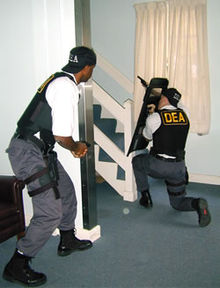
The DEA has been listening to Americans' phone calls for 15 years

by Mark Frauenfelder

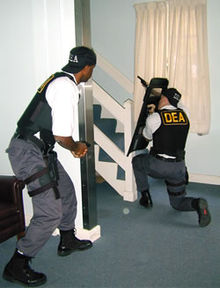
The Drug Enforcement Administration, one of the least useful and most corrupt law enforcement agencies in the United States, has been eavesdropping on "essentially all international phone calls made by Americans to a select list of countries."

(The DEA won't say which countries are on the list.) The Unconstitutional spying took place without judicial review, and was not designed for national security; "rather, the information gathered was used in domestic court cases."

Image: Wikimedia Commons

Recommended article: Chomsky: We Are All – Fill in the Blank.
This entry passed through the Full-Text RSS service - if this is your content and you're reading it on someone else's site, please read the FAQ at fivefilters.org/content-only/faq.php#publishers.

20 Jan 08:10

"A sign at my school." - Nathan8tr


"A sign at my school." - Nathan8tr

19 Jan 16:58

Roman Atwood's Residential Ball Pit Makeover

by Brad
Bc5

Ohio’s most dedicated YouTube prankster Roman Atwood surprises his girlfriend-slash-mother of his two kids by transforming their entire house into a gigantic ball pit.

18 Jan 19:10

Another Way to Defeat Diamond Dog

by Mato
Bewarethewumpus

kind of a blink-and-you'll-miss-it deal, the strat was to get the boss under a confusion debuff so it'll attack itself, which it did with an insta-kill.

Supergamerk sent me this video of a battle with Diamond Dog in EarthBound. It starts out normal but ends in a silly way:

I wonder if this would be useful for speedrunners in some way, or if there’s a quicker way to beat Diamond Dog.

18 Jan 17:31

Clustering

Bewarethewumpus

There's no arguing with those numbers.

http://oglaf.com/clustering/

18 Jan 17:26

Ecstatic NSA spooks delight in spying on spies who are spying on spies

by Cory Doctorow
Bewarethewumpus

Come on, the rest of the world, get pissed at the US. Make us be the good guys we claim to be.


A trenche of fresh Snowden leaks published in Der Spiegel by Laura Poitras, Jacob Appelbaum and others detail the NSA's infiltration of other countries' intelligence services, detailing the bizarre, fractal practices of "fourth-party collection" and "fifth-party collection."

"Fourth party collection" is the practice of spying on spy agencies to gather all the data they're taking in. "Fifth-party collection" is the practice of spying on spies who are spying on other spies. Really.

The tone of these leaks is jubilant, almost giddy, filled with jokey pop-culture references. Countries targeted for fourth-party collection include US/Five Eyes allies, like Germany, whose spy-services have been penetrated by the NSA.

It's absurd: As they are busy spying, the spies are spied on by other spies. In response, they routinely seek to cover their tracks or to lay fake ones instead. In technical terms, the ROC lays false tracks as follows: After third-party computers are infiltrated, the process of exfiltration can begin -- the act of exporting the data that has been gleaned. But the loot isn't delivered directly to ROC's IP address. Rather, it is routed to a so-called Scapegoat Target. That means that stolen information could end up on someone else's servers, making it look as though they were the perpetrators.

Before the data ends up at the Scapegoat Target, of course, the NSA intercepts and copies it using its mass surveillance infrastructure and sends it on to the ROC. But such cover-up tactics increase the risk of a controlled or uncontrolled escalation between the agencies involved.

It's not just computers, of course, that can be systematically broken into, spied on or misused as part of a botnet. Mobile phones can also be used to steal information from the owner's employer. The unwitting victim, whose phone has been infected with a spy program, smuggles the information out of the office. The information is then retrieved remotely as the victim heads home after work. Digital spies have even adopted drug-dealer slang in referring to these unsuspecting accomplices. They are called "unwitting data mules."

NSA agents aren't concerned about being caught. That's partly because they work for such a powerful agency, but also because they don't leave behind any evidence that would hold up in court. And if there is no evidence of wrongdoing, there can be no legal penalty, no parliamentary control of intelligence agencies and no international agreement. Thus far, very little is known about the risks and side-effects inherent in these new D weapons and there is almost no government regulation.

The Digital Arms Race: NSA Preps America for Future Battle [Jacob Appelbaum, Aaron Gibson, Claudio Guarnieri, Andy Müller-Maguhn, Laura Poitras, Marcel Rosenbach, Leif Ryge, Hilmar Schmundt and Michael Sontheimer/Der Spiegel]

(Image: Army, Marcos Leal, CC-BY)

Recommended article: Chomsky: We Are All – Fill in the Blank.
This entry passed through the Full-Text RSS service - if this is your content and you're reading it on someone else's site, please read the FAQ at fivefilters.org/content-only/faq.php#publishers.

17 Jan 06:15

A Dark Theory About The Origin Of Minecraft's World

by Nathan Grayson

A Dark Theory About The Origin Of Minecraft's World

Have you ever stared up into Minecraft's night sky? I mean, like, really taken a good, hard look into the frigid cosmos? You might notice that something's amiss. It's kinda empty, and the moon is always opposite the sun, and... this world doesn't work like ours, does it? Here's a shockingly bleak theory on why that is.

In the video, spumwack applies real-life astrophysics to Minecraft's world and comes away with a theory grand as the most formidable of block creations. The gist? Everything is orbiting around the world—not around the sun, as is the case in our solar system. The moon and the stars and even the sun.

But why? Well, it could be some weird, nearly impossible anomaly or, as spumwack suggests, perhaps the planet's inhabitants had something to do with it. He goes on to outline a theory in which a distant future saw the sun begin to die out, necessitating the creation of a new sun. Rather than face extinction, these people found a way to detonate their own planet and transform it into a new sun.

They then inhabited the surface of their old sun by coating it in stone, dirt, and life—thus creating a sort of giant, terrarium-flavored jawbreaker. That explains, among other things, the position of the planet relative to everything else in space and also why there's extremely dense rock not far beneath the planet's surface. You're not striking rock bottom. You're striking a dead sun. And when you look up? You're staring at your old home.

A Dark Theory About The Origin Of Minecraft's World

But perhaps you still have doubts. Well, spumwack also put together a handy FAQ:

Q: Sun's don't turn into black dwarfs until after they explode. Wouldn't this wipe out all life?

A: Indeed it would. However it's entirely possible for life to arise AFTER the explosion. In this case, intelligent life would have millions or billions of years to respond to this threat.

Q: Doesn't the moon having phases negate your "second planet" theory?

A: No. It's always roughly opposite the sun. There can be slight variations in orbit that affect its lighting.

Q: Wouldn't the gravity of the sun crush anything in its atmosphere?

A: Conventionally, yes. But we're assuming that a civilization has the technology to store energy and ignite their home planet, so it stands to reason that they would have the technology to negate that gravity. Maybe that's why there is a huge void under the bedrock.

Q: You can't just blow up a planet and turn it into a sun.

A: That's not a question. Anyways, this society had millions of years to adapt to a fading sun. This would likely lead to a plethora of creative ways to store and utilize energy, and I'm sure that given a million years to figure it out, they would come up with a solution. Maybe they ignited the atmosphere. Maybe they stripped the crust and exposed the core. Maybe they pulled energy from another dimension. A dying star gives you a long time to figure things out.

Q: How do you transport an entire planet's worth of "stone, dirt, and life"

A: Again, this isn't a fast process. Multiple trips over a few million years gives you enough time to get things done.

I highly, highly, highly doubt Mojang intended any of this, of course. It's just a theory, albeit an impressively elaborate one. But hey, it's fun to dream, to leave our own marks not just on the surface of these places, but within their very fabrics. So what do you think? And do you have any of your own theories about Minecraft's world and inhabitants?

Recommended article: Chomsky: We Are All – Fill in the Blank.
This entry passed through the Full-Text RSS service - if this is your content and you're reading it on someone else's site, please read the FAQ at fivefilters.org/content-only/faq.php#publishers.

17 Jan 06:07

Dick Pope

by jon

2015-01-16-Dick-Pope

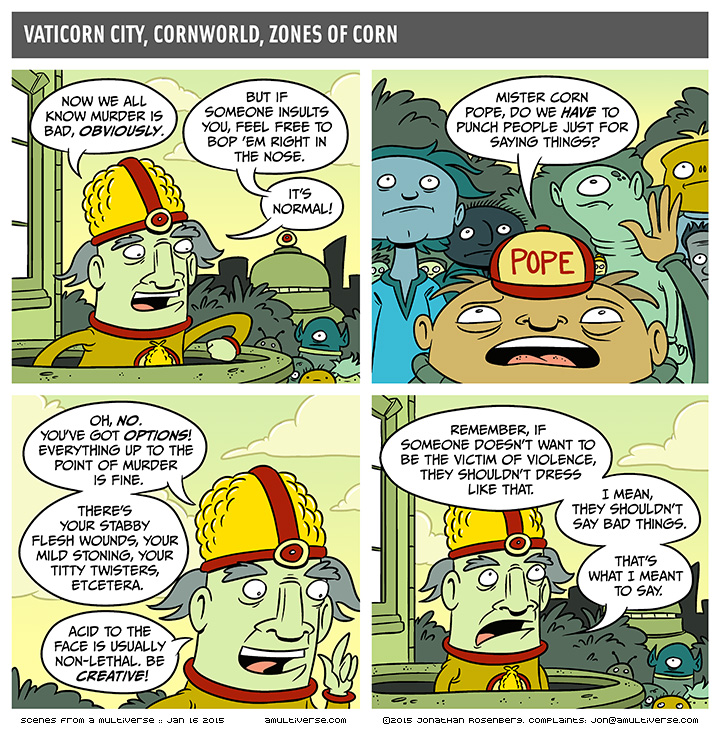
Popes are funny guys! One minute they seem harmless and kind, the next they’re justifying violence as a response to cartoons. You never know which pope you’re gonna get! They should package them in blind boxes.

If you’re seeing this message, you’re visiting our new server. Hooray!

kaGh5_patreon_name_and_message[1]

16 Jan 21:28

Surprise: Sprint Tells FCC That Title II Is Just Fine By Them

by Kate Cox
Bewarethewumpus

Well, now I know what telco I want to throw my money at.

Ever since the (current) net neutrality fight got started a year ago, the battle lines have been pretty predictable: the companies that sell you access to data don’t really want stronger regulations, and groups that sell things that need you to have access to someone else’s data plan do. But in a surprise move this week, Sprint just broke ranks with the AT&Ts and Verizons of the mobile world to tell the FCC that actually, they’re cool with Title II regulation.

Tech news site GigaOm spotted the filing, a letter from Sprint’s CTO Stephen Bye to FCC chairman Tom Wheeler and the rest of the commission. In stark contrast to the doom and gloom cries from the rest of the industry, Sprint’s letter says that light touch common carrier regulation in the past is what allowed their company to grow and innovate to begin with, and that they will be just fine going forward if the FCC continues that approach.

Specifically, Bye’s letter begins by saying that Sprint “does not believe that a light touch application of Title II, including appropriate forbearance, would harm the continued investment in, and deployment of, mobile broadband services.”

Sprint then references the origins of mobile service pointing out that the first attempt, a licensed duopoly in the early 1990s, was a flop of “slow deployment, high prices and little innovation.” Later regulation, allowing companies including Sprint to enter the mobile market, was more effective.

But, Bye continues, “some net neutrality debaters appear to have forgotten … that this light touch regulatory regime emanated from Title II common carriage regulation.” And yes, they do indeed seem to forget that whenever it’s convenient.

“So long as the FCC continues to allow wireless carriers to manage our networks and differentiate our products,” Sprint concludes, [we] will continue to invest in data networks regardless of whether they are regulated by Title II, Section 706, or some other light touch regulatory regime.”

Verizon and AT&T, the nation’s two biggest wireless companies by far, have both been extremely vocal opponents of any move by the FCC to regulate either wired or mobile broadband services as common carriers — despite admitting that Title II regulation would not actually harm their ability to invest in their network.

In surprise filing, Sprint endorses net neutrality [GigaOm]

16 Jan 18:29

3 Of The Many Times The Big ISPs Have Tried To Have It Both Ways

by Kate Cox

With the prospect of new regulations staring them in the face, big ISPs have been taking every possible opportunity to wail about how doomed they will be if anything changes. But every cable and telecom company that has spent 2014 and 2015 vowing that regulation is the worst thing ever has also spent years benefiting from exactly those regulations. Here are just a few examples.

AT&T: We can’t be sued or regulated

AT&T is currently being sued by the FTC. The gist of the lawsuit is that AT&T promised its unlimited-plan customers that they would, in fact, receive unlimited service, but that the company was misleading subscribers by throttling those customers’ data instead. The FTC is the agency that regulates false and misleading advertising and statements to consumers, so they’re the agency doing the suing.

AT&T, however, says that the FTC doesn’t have standing to sue them. Although the FTC Act says: “The Commission is hereby empowered and directed to prevent persons, partnerships, or corporations … from using unfair methods of competition in or affecting commerce and unfair or deceptive acts or practices in or affecting commerce,” there are several categories of businesses exempted from that mandate. Among those categories are banks, meat packers, and “common carriers subject to the Acts to regulate commerce.”

Telephone services are indeed regulated as common carriers, and communications common carriers are regulated under Title II of the Communications Act — FCC territory. Therefore, argues AT&T, the FCC, not the FTC, is the agency that should look into the matter if even there is a matter to be looked into. “[The FTC] asserts in this lawsuit that AT&T’s imposition of [data throttling] was unfair and that its disclosures were inadequate. But whether AT&T’s network management program is ‘unfair’ and whether its disclosures were ‘inadequate’ are issues for the FCC to decide,” AT&T’s filing says.

However, mobile phone data services are not currently considered common carriers. Like home broadband services, they are considered information services, not communications services, and are not subject to Title II common carrier regulation under the FCC.

Of course, one of the big stories of the last year is that data — both mobile and wired — may well become subject to Title II common carrier regulation in the very near future. The FCC is set to vote on a proposal to reclassify broadband, which may include mobile data, as a common carrier on February 26.

If the FCC does pass the proposal, and if mobile data is included, then AT&T will be correct that the FCC, and not the FTC, has standing to investigate the misleading “unlimited” plans. But AT&T has been arguing strenuously for months that their data services are not and should not be subject to common carrier regulation, and has threatened to sue the FCC if the commission moves forward with reclassification.

AT&T: A common carrier when they want to avoid being sued, and emphatically not a common carrier when they want to do the suing.

Verizon: We oppose and love Title II

Verizon: with AT&T, another one of Schrödinger’s common carriers. They, perhaps more than any other of the big ISPs, really hate it when the FCC tries to regulate them.

Verizon is the company that filed the suit that got net neutrality thrown out last year. Verizon was then the first company to threaten legal action again if any part of the new net neutrality proposal involves Title II classification or otherwise displeases them. Whenever there’s a chance for them to say how much they hate regulation, they take full advantage of it.

And all this time, while treating potential Title II status as the end of the world, Verizon has benefited enormously from the public assistance available to telecommunications common carriers, in order to install their wires.

Verizon relies very heavily on a technicality: while the FiOS service you subscribe to that lets you search Google and stream Netflix and upload cat videos is a Title I information service, the actual fiber cables they run under your lawn to plug you in to FiOS are regulated under Title II just like century-old copper phone wires.

A report released in late May looked at how Verizon’s FiOS rollout in New York and New Jersey relies heavily on being able to have it both ways. “It appears this was done for two reasons,” the report concludes. “It gets all of the powers of the utility, including the rights-of-way that are part of the telecommunications utility service, but it also may charge the copper-based POTS [plain old telephone service] utility customers for the development and deployment of FiOS.”

In short, Verizon gets to collect tax subsidies, rights-of-way guarantees, and fees from consumers phone bills under Title II utility regulations, but then gets to turn around and insist that they are not common carriers and that they’ll sue anyone who says they are.

Even Verizon’s own shareholders — those who benefit most when the company gets to make more money — are finding the telecom giant’s positions “inconsistent and contradictory” and are “confused by this ambiguity” that Verizon’s oscillating positions take.

Comcast: We’re buying the competition because we have no competition

Comcast doesn’t want internet service to be regulated under Title II any more than Verizon and AT&T do, but compared to their telecom brethren they’ve been moderately more circumspect with their objections. That’s because they have plenty of other things to be two-faced about, as they push hard to be allowed to buy Time Warner Cable.

Comcast’s greatest hypocrisy this year is not around whether their industry should be regulated as a common carrier or not, but rather around the entire nature and history of that industry.

The biggest claim? Comcast’s oft-repeated mantra that since they and Time Warner Cable do not have any geographic overlap, they are not in competition and therefore should be allowed to merge.

It’s true: there is no geographic overlap. But it’s not due to some fortunate quirk of gee-golly happenstance, as Comcast execs have enjoyed pretending: it was an entirely deliberate move on the part of Comcast and its smaller predecessors.

Back in March, Comcast chief executive Brian Roberts lamented to the New York Times that cable “is a relic of an antiquated model,” and that — oh, too bad, so sad — Comcast never had a chance to go compete in major Time Warner Cable towns like New York and Los Angeles.

But of course they didn’t. Cable has been a system of competition-free local monopolies entirely by design, and extreme industry consolidation has left only a very few players remaining.

The lack of geographic competition is disastrous for consumers, but for Comcast it’s absolutely a feature, not a bug. If consumers actually had any real choices, they wouldn’t be trapped in customer service nightmares or voluntarily putting up with the worst-rated companies in America.

16 Jan 18:02

The Creator Of Hotline Miami 2 To Australians: "Just Pirate It"

by Mark Serrels

The Creator Of Hotline Miami 2 To Australians:

In an email screencapped by a reddit user, Jonatan Söderströmm, co-creator of Hotline Miami, has told Australians that if they want to play the recently banned Hotline Miami 2 they should "just pirate it".

"If it ends up not being released in Australia," he wrote, "just pirate it after release."

"No need to send us any money, just enjoy the game!"

The email was confirmed as legitimate by Polygon's Ben Kuchera. Ars Technica also confirmed that the email was real with Devolver representatives.

Devolver currently has no plans to challenge the Classification Board's ruling on Hotline Miami 2, despite claiming that the Board was wrong to refuse the game classification. As per Devolver's official statement: "[W]e are concerned and disappointed that a board of professionals tasked with evaluating and judging games fairly and honestly would stretch the facts to such a degree and issue a report that describes specific thrusting actions that are not simply present in the sequence in question and incorrectly portrays what was presented to them for review."

At this stage it is looking unlikely that Hotline Miami 2 will be officially released in Australia.


This post originally appeared on Kotaku Australia , where Mark Serrels is the Editor. You can follow him on Twitter if you're into that sort of thing.

Recommended article: Chomsky: We Are All – Fill in the Blank.
This entry passed through the Full-Text RSS service - if this is your content and you're reading it on someone else's site, please read the FAQ at fivefilters.org/content-only/faq.php#publishers.

16 Jan 07:43

Screws

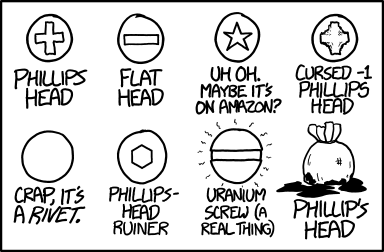
If you encounter a hex bolt, but you only brought screwdrivers, you can try sandwiching the head of the bolt between two parallel screwdriver shafts, squeezing the screwdrivers together with a hand at either end, then twisting. It doesn't work and it's a great way to hurt yourself, but you can try it!
16 Jan 03:39

'Swatter' Gets Five Years Jailtime

by Luke Plunkett

'Swatter' Gets Five Years Jailtime

Jason Allen Neff, who last year pleaded guilty to a variety of crimes related to his role in a group who thought "swatting" was a fun time, has this month been sentenced for his crimes. He'll be spending five years in a federal prison.

Neff was arrested back in 2011 (for crimes dating back a few years earlier), and has been in custody ever since. He was part of a group, along with six others, who spent years manipulating caller ID tech to call in swatting hoaxes. The other members were all arrested and sentenced between 2008-09.

CBSDFW reports that Neff - suspected of having been an online troublemaker since the 1990s - will also have to pay $79,440 in restitution.

Recommended article: Chomsky: We Are All – Fill in the Blank.
This entry passed through the Full-Text RSS service - if this is your content and you're reading it on someone else's site, please read the FAQ at fivefilters.org/content-only/faq.php#publishers.

15 Jan 18:15

The Modern Version of "Sock on the Doorknob"

by Brad
C4b

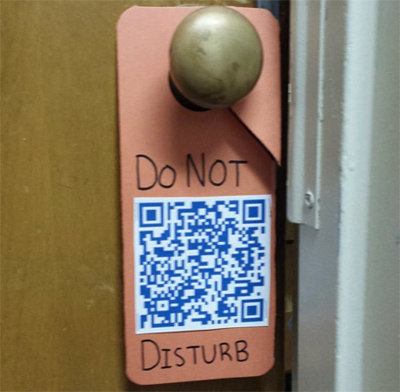
Scan the QR code depicted in the image or click through to find out what it leads to.