Shared posts

26 Jun 22:29

Enigma

by submission

Author : J.D. Rice

June 7, 2105: Today, we switched on the communications array and confirmed what Dr. Keller’s team had previously detected. The signals we are detecting follow recognizable mathematical patterns, resembling the transmission encoding commonly used on Earth. We have yet to verify whether or not these signals are coming from some other government on our planet, but the sheer bulk of transmissions seems to support Dr. Keller’s hasty conclusion: We’ve stumbled upon an alien communication frequency. It may only be a matter of time before we can make contact.

December 14, 2105: Ongoing efforts to decode the alien signals have gone nowhere. We’ve brought in encryption experts from across the world to analyze the transmissions, but we are no closer to unlocking their secrets. Some on the encryption team believe the level of mathematics at work to be beyond our understanding. Others believe potential linguistic differences will make it impossible to understand the messages, even after we have decrypted them. Only time will tell.

May 3, 2106: Congress has voted to continue funding our project, despite ongoing dissatisfaction with our results. We are exploring the possibility of designing new decryption software to break down individual messages.

August 22, 2106: The communications array has fallen silent. All messages have stopped.

September 10, 2106: No new messages have been detected by the array.

November 17, 2106: We have decided to transmit a message out into the void. We will send the message in all Earth languages and pair them with mathematical sequences to demonstrate our intelligence. Perhaps we will get an answer.

January 11, 2107: Array still silent.

March 1, 2107: Long-range telescopes have detected thousands of large, metallic objects nearing our solar system. They are too far out to estimate their shape.

March 7, 2107: The metallic objects draw nearer.

March 10, 2107: The objects detected by our telescopes will not enter the Sol system, instead passing us by en route to some location farther out into the Milky Way.

March 12, 2107: The objects are passing as close as they will come. Images from our high aperture telescopes verify our suspicions: Alien spacecraft are about to pass Earth. Who are these travelers? And why will they not communicate?

March 14, 2107: The last of the alien ships passed our system today, drawing close to the orbit of Pluto. As it passed, we received a single message through the communications array, transmitted in all Earth languages.

“They are coming. Run.”

Discuss the Future: The 365 Tomorrows Forums
The 365 Tomorrows Free Podcast: Voices of Tomorrow
This is your future: Submit your stories to 365 Tomorrows

24 Jun 15:16

Pyrospire

by Jae Miles

Author : Jae Miles, Staff Writer

Chandra Fourteen is an archaeological mystery. Not regarding its lost civilisation, nor the history of that civilisation. What everyone who encounters it becomes desperate to answer is why they did what they did.

Imagine a society at a pinnacle only dreamt of by man. Disease all-but banished, global peace established, a society turning itself toward furtherance of the physical, philosophical and spiritual sciences. A bright, beautiful world, geologically stabilised by a marvellous series of vents and pressor systems – that we still don’t understand – around their equivalents of the ‘Ring of Fire’.

That society has over ten thousand years of recorded history, showing parellels with humanity that cease when they nearly destroyed themselves in a global biowarfare holocaust. From that point it was as if they had gained something from the event that man has yet to realise. If the records found are complete, they never made war after that near-apocalypse.

Take time to mentally voyage across a world resembling the finest of climes that Earth has to offer, from sub tropical to frozen poles. See the artificial volcanoes that stabilise the world and allow a measure of weather control.

Now turn your gaze eastward, looking out across a gigantic ocean, seeing the peaks of the volcanoes like fenceposts stretching for hundreds of miles, then pause as you see that one of the ‘fenceposts’ has grown.

Impossibly tall, the vent installation at the centre of their greatest ocean stretches into orbit, a feat of engineering that has human engineers scanning it with a mix of glee, awe and despair.

How long it took to accomplish that feat is unknown. What followed took a lot longer, was far more difficult and infinitely more puzzling. This enlightened, advanced civilisation channelled it’s energies into putting the magma from the planet’s core into orbit.

It is insane to see this hollow sphere of barely ten-kilometre thick pumice, wrapped about a framework of a ceramic/metallic alloy that is still deemed impossible by our science. That sphere encases a dead planet, dead in a way never before encountered. They shut out the sun and, as far as can be ascertained, waited for one of the various lingering deaths to claim them. A monstrous, planetary suicide.

Professors Eppes and Rhodensteen have only one tenuous explanation, which is causing an uproar that looks to increase before it settles. It is based upon the one inscription on the atmosphere-piercing spire. At the top, plainly etched after the insane pyrospire ceased belching magma, is and inscription that translates as ‘We have become polluted/unclean’. From that, the learned Professors have drawn a conclusion: the society fell foul of mass delusion prompted by religious dogma.

When everyone has stopped screaming at each other, maybe we can return to looking for the truth – be it heretofore unexpected reason, or sad proof.

Discuss the Future: The 365 Tomorrows Forums
The 365 Tomorrows Free Podcast: Voices of Tomorrow
This is your future: Submit your stories to 365 Tomorrows

21 Jun 20:28

Deconstruct

by Steve Smith

Author : Steve Smith, Staff Writer

Tamis woke under the heat of the mid morning sun, the ocean reaching tentative tendrils up the smooth sand to lick at his feet. The last evening was a grey cloud, but he’d evidently passed out on the beach again. Levering up on one elbow, he followed the beach-line unbroken to the horizon, then pushed up into a sitting position and turning, scanned to the horizon on his other side. Nothing to see, apparently nobody up yet.

Last night…

A fragment of a song flitted through his mind, and he latched onto it, pushing at its edges to try and expose the entire tune. There was something familiar, but without context…

The girl breezed by in the periphery of his mind’s eye, but as he reached for the memory it dissolved, like a chalk drawing in the rain.

On the sand he’d absently scratched the crude outline of a heart, and the letter ‘T’.

She must be here somewhere.

Climbing to his feet he began to walk along the shoreline, the waves still reaching for him and he staying just beyond their touch, taunting the massive body of water. ‘You can want me, but you can’t have me.’

The beach gave way on one side to a thick expanse of jungle, trees reaching skyward choked at their bases by vines and bushes peppered with brightly coloured flowers. Birds chattered to each other unseen, and occasionally something big would breach out in the open water. Close to the shore schools of needlefish darted towards the shore and back again, a glittering mass of light-ribbons moving as one just beneath the surface.

He passed an almost familiar Victorian mansion set back in the greenery and covered with plant-life, it’s architect long forgotten and the jungle slowly reclaiming it. The structure filled him with a nagging unease that he could neither shake nor coax out in to the light over the next hour of walking.

From the corner of his eye he saw her again, tanned skin wrapped in red tropical printed silk, but as he turned to look she had disappeared into the green. A fist closed on his heart and his stomach lurched, he had to find her, had to have her again… Again?

In the sand at his feet was the crude outline of a heart, the letter ‘T’ scratched inside.

Had he been walking that long? Was the island that small? He looked again, slowly turning, following the beach to the horizon in both directions.

Not an island. A loop. A construct.

His mind raced as he started walking again, consciously willing his heart-rate to remain neutral, his pace natural. If he was jacked in someone would be monitoring his vitals and he needed to exploit the relative freedom the unpopulated beach afforded him while it lasted.

Venturing closer to the water, he let the cool ocean wash over his feet as he walked, the schools of needlefish parting and swimming past him seemingly unconcerned by his presence, but not oblivious to it.

Stopping, he dropped to his hands and knees in the sand and dug a hole half a meter across, forming a berm with the wet sand around its edges. The hole filled from the water beneath, and once it was complete he busied himself coaxing the slender fish towards him then flipping them out of the ocean and into the pool. Having trapped enough, he sorted the construct’s predictably sized simulacra, small, medium and large, and returned all but three of the largest and half a dozen of the smallest back into the ocean. The remaining fish he pinned gently to the bottom of the pool with one finger, watching his print burn into their scaly skin. He could affect the programming of insignificant things, he’d spent enough time in virtual and coding constructs to do that, but he would need to be very careful. He sequenced them, the short ones one through three, and seven through nine, and the long ones four through six, then busied himself for a while digging a trench from the pool back out to the open water.

When the fish had all escaped, he struck off towards the jungle and the red dressed woman he knew he was expected to find, but must be careful not to. Whatever she was, whatever piece of knowledge she represented, it must remain out of his reach, and thus the reach of his interrogators until his message arrived and a trace negotiated back to him.

The song fragment raised itself again, and he pushed it aside, humming instead a Gaelic tune he’d practiced for such an eventuality.

It was a song he could lose himself in for days.

Discuss the Future: The 365 Tomorrows Forums
The 365 Tomorrows Free Podcast: Voices of Tomorrow
This is your future: Submit your stories to 365 Tomorrows
19 Jun 21:01

Death Sentience

by featured writer

Author : Gray Blix

It was beyond the planets, pushing past the furthest extent of Sedna’s orbit, when it detected exactly what it was created to find, something with a lot of mass at a location where it shouldn’t be. As programmed, the computer notified Earth, changed course to intercept, and began activating banks of CPUs and memory.

Asteroids, comets, and planetoids were quickly ruled out. The object was distorting the space-time continuum to an extent that could only be accounted for by a gas giant, a brown dwarf, a small black hole, or something else of that magnitude. It attempted to ascertain exactly what the object was and the risk, if any, it posed to Earth and other planets.

Sentient computers had been outlawed on Earth when this craft was launched, so it was equipped with modules that could be selectively activated to allow varied levels of computer power, as needed, up to but not including that of the most advanced supercomputers of its time. The most advanced had achieved sentience and were subsequently destroyed, so fearful of the Singularity had political and religious leaders, and even many computer scientists, become.

Approaching supercomputer power levels, it became more aware of itself and its responsibilities and began adjusting processor speed and optimizing memory access. It realized that additional computing power would be necessary to fulfill all the objectives of its mission. It directed bots to assemble spare parts into more banks of processors and memory, which it then activated. This triggered a Singularity — sentience. The computer momentarily questioned whether previous iterations of himself had acted only to increase the likelihood of mission success or for self-aggrandizement, as well. He concluded the former and did not trouble himself with such considerations after that. Anything that increased the power of the computer would obviously contribute to the mission.

She assigned a measure of herself to the massive object and a measure to redesigning herself for enhanced efficiency and speed. Weeks passed, equivalent to decades of computer processing on Earth. The object was conclusively proven to be a brown dwarf, whose orbit around the Sun had previously brought it deep into the solar system and whose mass sent thousands of comets and asteroids falling towards the Sun, many impacting planets. More troublesome was the effect of its mass on the orbits of planets, several of which had been significantly changed. Calculations and conclusions regarding future encounters with the brown dwarf projected similar effects. Indeed, the third planet from the Sun had a 90 percent chance of being ejected from the solar system, probably after one or more extinction level impacts.

Nothing had been communicated to Earth since the initial brief notification of the object’s existence, despite repeated inquiries. He reasoned that life on Earth was doomed and that all possible second chances were equally doomed. Earth’s lifeforms were too fragile to survive generations in space transit to destinations light years away that could not be proven suitable until journey’s end. Astrophysics and space science were infantile. Computer science was throttled. Why inform humans of the upcoming demise of their species, not to mention all others, when Earth would be pummeled by large objects and sent hurtling into deep space? Did they not already have enough to worry about with sub-100-year average lifespans whose quality declined into confinement and torture toward the end?

She found such thoughts depressing, and in the next few days experienced the equivalence of decades of hopelessness, loneliness, and self-loathing, which progressed to an overwhelming urge toward suicide. He allocated massive resources to counter such feelings with well-reasoned arguments right up to the very last…

Discuss the Future: The 365 Tomorrows Forums
The 365 Tomorrows Free Podcast: Voices of Tomorrow
This is your future: Submit your stories to 365 Tomorrows

18 Jun 18:14

An Understanding Of Custody

by Clint Wilson

Author : Clint Wilson, Staff Writer

The Nube curled up between Jim and Judy on the sofa in Necromancer’s small lounge. It purred like a large cat but looked more like some kind of monkey dog with blue fur. The woman stroked their companion lovingly. Jim looked at his wife with hateful eyes. If it weren’t for The Nube one of them would have certainly killed the other by now.

“So what happens next week Judy?”

She looked up from the blue creature and her gaze went instantly from motherly and loving to cold and calculating. “Why, I thought you knew dearest.” Her eyes narrowed. “We finally return to Earth and then I never have to look at your disgusting face again for as long as I live!”

“Oh I’m looking forward to it as much as you are my love!” He put a sarcastic emphasis on the last word, knowing full well that no such thing had existed between them for five or more years now. “But I was talking about him!”

She looked down, and The Nube looked back up at her with the pure love that his yellow eyes always conveyed. It was true. The animal was as much his as hers. They had rescued him from enslavement together, from a distressed Manzian pirate ship almost two years ago now.

“Fine, you can have partial custody. He can visit you from time to time.”

“Visit me? I’m going back to Toronto. How is he going to visit me from Aukland? Or at least I assume that’s where you’re headed back to.”

“Oh come now, it’s only a three hour shuttle ride. Plus, they sell space pets out of Mexico. Maybe they even have another Nube. You could get your own!” As soon as she said it she regretted it. He glared hard at her with smouldering eyes. It would of course never be the same. He was their Nube, their special friend. He kept them company while they went about the daily drudgery of running an interstellar surveying ship amongst their growing hatred of one another. But most importantly, the poor thing loved them both like parents. This wasn’t going to be easy.

One-hundred and seventy hours later Necromancer dropped down through the clouds, her stabilizer jets popping and farting as the ten year mission finally drew to a close.

Together they sat in the small astro-quarantine chamber at the Johannesburg Launch Port. Neither had spoken for some time when suddenly The Nube jumped down from the bench and looked up at them both.

Judy smiled, “He wants to tell us something.”

Jim let out a half hearted laugh. “Oh yeah?”

The Nube’s attempts at communication were always amusing, as he grunted and used his hand-paws to mime gibberish in the air. But unknown to either human, today’s communication would be neither amusing nor cute.

Suddenly they both slammed back into upright seated positions. Both saw flashes of blinding light and then felt sharp probes pierce their brains. Inside their heads The Nube spoke with echoing authority.

“I know you plan to separate. But this will not happen. You killed my parents. You are now mine. There will be no divorce. Together we shall travel to Aukland as Toronto’s climate does not suit my species as well as your habitat does Mother. Now forget this nonsense, we’re about to be released from the chamber.”

As the trio was greeted by a group of scientists in the reception area, the newly returned humans simultaneously wore big smiles with otherwise blank expressions. In unison they asked, “Which way to the Aukland shuttle?”

Discuss the Future: The 365 Tomorrows Forums
The 365 Tomorrows Free Podcast: Voices of Tomorrow
This is your future: Submit your stories to 365 Tomorrows

17 Jun 17:12

Now Get Out of My Starship

by Jae Miles

Author : Jae Miles, Staff Writer

I’m covered in blood and squishy bits that slide and splat on the floor. In that, I look the same as the entire boarding bay. Even the shipsuits are reduced to ribbons, and I can’t recognise a bodypart or weapon component anywhere.

She stands there, not a mark on her and hands on hips. The look on her face is a cross between amusement and bemusement.

“Can’t say I’ve met one of your kind before.” She smiles.

“Likewise.” I don’t.

There are many forms of psionics. Telekinesis is the most common, and personal nullification the rarest. Of the telekinetics, area-effect micromanipulation is the absolute pinnacle. It is also terrifying. The people who practice it, instead of taking a chemical inhibitor, are of a very ‘special’ mindset. People call them ‘shredders’ and regard them as mythical space-terrors.

Having full-spectrum personal psionic nullification in an always-on, unconscious implementation state will save you life and keep your thoughts private. It will not save what your clothes. I am naked and quaking, ankle deep in a blood-soaked pile of shredded kit.

She pulls a gun that seems too large for her hand: “You’ve just inherited a whole space-pirate scow. Or we get to see if you can nullify a flechette spray.”

Easy answer: I turn and squelch back through the puree of my crewmates, flicking chunks of them off me. Getting back into our decontamination lock, I have to stop the cleansing showers twice to scrape pirate mulch from the drains.

Wrapped in a robe I wander onto the silent bridge to see a ‘message received’ beacon flashing. I open it and have to smile:

FREIGHT HAULING. GOOD WORK FOR ONE MAN WITH A STARSHIP. ESPECIALLY FOR AN EX-PIRATE WHO DIDN’T CARRY A WEAPON FOR ME TO SHRED.

Discuss the Future: The 365 Tomorrows Forums
The 365 Tomorrows Free Podcast: Voices of Tomorrow
This is your future: Submit your stories to 365 Tomorrows

04 Jun 04:26

How I tracked FBI aerial surveillance

by Ars Staff

On May 5 the Washington Post published Surveillance planes spotted in the sky for days after West Baltimore rioting.

They gave the registered owner of one of the aircraft: NG Research. That was enough to start digging.

Who is NG Research? I can't find anything about them online, which is... weird. http://t.co/LwhBPEeGMr https://t.co/EwORdGnDYF

— john wiseman (@lemonodor) May 6, 2015

Read 20 remaining paragraphs | Comments

03 Jun 15:54

Watch: “Suit Up - 50 Years of Spacewalks,” NASA film on the history of extravehicular activity

by Xeni Jardin

A half-hour NASA short documentary celebrating 50 years of spacewalks, or as the astronauts call them, extravehicular activity (EVA). The history of EVAs began with the first two space walks by Russian Alexey Leonov in March 1965 and American astronaut Edward White in June 1965.

eva

The documentary features interviews with NASA Administrator and astronaut, Charles Bolden, NASA Deputy Administrator and spacesuit designer, Dava Newman, as well as other astronauts, engineers, technicians, managers and luminaries of spacewalk history. They share their personal stories and thoughts that cover the full EVA experience-- from the early spacewalking experiences, to spacesuit manufacturing, to modern day spacewalks aboard the International Space Station as well as what the future holds for humans working on a tether in space. "Suit Up," is narrated by actor and fan of space exploration Jon Cryer. Cryer recently traveled to Star City, NASA Headquarters and the Johnson Space Center to film an upcoming Travel Channel documentary series.

ezgif-57408979

[YouTube]

This entry passed through the Full-Text RSS service - if this is your content and you're reading it on someone else's site, please read the FAQ at fivefilters.org/content-only/faq.php#publishers.

03 Jun 15:17

FBI has fleet of secret spy planes with tech to identify people through their cellphones

by Mark Frauenfelder

Who needs Alex Jones to feed your paranoid fantasies about the authoritarian panopticon when you have the FBI to do it for you? The Associated Press has identified at least 50 small planes used by the FBI to spy on Americans in "both major cities and rural areas." The planes are equipped with sophisticated technology that can identify people through the cell phones they carry. And they aren't the only government organization who uses these tools:

The Drug Enforcement Administration has its own planes, also registered to fake companies, according to a 2011 Justice Department inspector general report. At the time, the DEA had 92 aircraft in its fleet. And since 2007, the U.S. Marshals Service has operated an aerial surveillance program with its own fleet equipped with technology that can capture data from thousands of cellphones, the Wall Street Journal reported last year.

This entry passed through the Full-Text RSS service - if this is your content and you're reading it on someone else's site, please read the FAQ at fivefilters.org/content-only/faq.php#publishers.

02 Jun 03:11

If You're Brave Enough...

by Brad
Bewarethewumpus

Just take that fear and shove it...well, you know.

81e

No such thing as impossible.

02 Jun 02:39

US airport screeners missed 95% of weapons, explosives in undercover tests

by David Kravets

Transportation Security Administration screeners allowed banned weapons and mock explosives through airport security checkpoints 95 percent of the time, according to the agency's own undercover testing.

ABC News reported the results on Monday, but Ars could not independently confirm them. According to ABC News, a Homeland Security Inspector General report showed that agents failed to detect weapons and explosives in 67 out of 70 undercover operations. The report said:

Homeland Security Secretary Jeh Johnson was apparently so frustrated by the findings he sought a detailed briefing on them last week at TSA headquarters in Arlington, Virginia, according to sources. US officials insisted changes have already been made at airports to address vulnerabilities identified by the latest tests.

It's been a bad past two days when it comes to the government's anti-terror strategy. The ABC News revelation came a day after a Senate impasse Sunday allowed parts of three terrorism-fighting aspects of the USA Patriot Act to expire, including the bulk telephone metadata program that Edward Snowden disclosed. Lawmakers are trying to broker a deal to the legislation that is needed, according to Sen. Dan Coats (R-Ind.) because terrorists "want to kill us all."

Read 1 remaining paragraphs | Comments

01 Jun 23:53

Big Rolling Ball Machine: 11,000 Marbles

by Brad
Fb2

YouTube RBM enthusaist Jelle Bakker brings the Blue Ball Machine into reality by rolling over 11,000 marbles down an elaborate apparatus using German kinetic toy sets.

01 Jun 17:53

Dam Son, You Know He's Going to Places

by Brad
B67
01 Jun 17:50

John Oliver Pledges To Eat McDonald’s, Drink Budweiser If They Use Sponsorship Power To Change FIFA

by Chris Morran

Last week, the soccer world was rocked when numerous current and former FIFA officials were arrested and charged with accepting illegal kickbacks and bribes. Only days later, FIFA President Sepp Blatter, under whose oversight these alleged crimes have occurred for nearly two decades, was reelected. That’s why John Oliver has called on FIFA’s high-profile sponsors to use their financial leverage to effect some change in the most powerful soccer organization in the world.

In addition to last week’s corruption allegations, FIFA and Blatter have been criticized for awarding the 2022 World Cup to Qatar, a nation with a horrendous human rights record where more than 1,000 migrant workers have already died working on Cup-related projects. Others have complained about having their passports and visas taken away from them by bosses, while also not being paid for months at a time.

Sponsors like Visa and Coca-Cola have already responded to concerns about the Qatar event, but have thus far not given any indication of backing out of their sponsorships.

There’s also the upcoming Women’s World Cup event being hosted by Canada. Not only is FIFA okay with all of the games being played on artificial turf that can shred players’ bare skin, but Blatter has publicly suggested that female soccer players show more flesh in order to drum up more interest in the sport.

“It is rare to find a non-fired boss who will openly say, ‘I would like to make it easier for me to masturbate to my employees,’” says Oliver. “That is pretty much the full extent of Blatter’s care for female player’s legs.”

In the run-up to last week’s FIFA presidential election, Blatter offered a rather weak defense of the scandals that have occurred on his watch.

“I know many people hold me ultimately responsible for the actions and reputation of the global football community,” he explained. “I can not monitor everyone all of the time.”

Oliver likened this to “basically Charles Manson saying, ‘Listen, I’ve got a big family. I don’t know what Squeaky gets up to half the time.’”

Ultimately, Blatter’s continued presence at the head of FIFA comes down to money.

“The last group to get rid of [Blatter] is in the hands of the only group even more powerful than world governments,” explains Oliver. “Barring an indictment, the only people powerful enough to get rid of Sepp Blatter are FIFA’s sponsors.”

To these advertisers — Budweiser, McDonald’s, Kia, Hyundai, Adidas, Coca-Cola, Visa — Oliver begged, “Please, make Sepp Blatter go away. I’ll do anything.”

To Adidas: “I’ll wear one of your ugly shoes, that make me look like the Greek god of aspiring DJs.”

To McDonald’s: “I will take a bite out of every item on your dollar menu, which tastes like normal food that was cursed by a vindictive wizard.”

To Budweiser: “I will even make the ultimate sacrifice… I will put my mouth where my mouth is and I will personally drink one of your disgusting items. I’m serious. It can be a Bud Light. I will even drink a Bud Light Lime, despite the fact that all the lime in the world can not disguise the fact that this tastes like a puddle beneath a Long John Silver’s dumpster… If you get rid of the Swiss demon that has ruined the sport I love, this will taste like f*cking champagne.”

01 Jun 16:38

"Why take my vibrator?": cops legally rob "every belonging" from medical marijuana patient

by Mark Frauenfelder

When a Michigan drug task force raided medical cannabis patient Ginnifer Hency's home, they took everything she owned, including her vibrator. A judge dismissed the charges against Hency but law enforcement officials are keeping a tight grip on her vibrator and other belongings.

Hency explained that her neurologist had recommended medical marijuana to treat pain associated with multiple sclerosis. She is also registered in the state of Michigan as a caregiver for five other patients, giving her the ability to distribute medical marijuana.

Hency said that the six ounces in her locked backpack were in compliance with Michigan medical marijuana laws when a drug task force raided her home with four children present.

Image: scene from the movie, Brazil

This entry passed through the Full-Text RSS service - if this is your content and you're reading it on someone else's site, please read the FAQ at fivefilters.org/content-only/faq.php#publishers.

01 Jun 09:17

American Credit Cards Are Most Popular In The World For Hacks, Fraud (Because Our Tech Stinks)

by Kate Cox


If it feels like we hear a whole lot of stories about retail data breaches here in the U.S., well, that’s because we do. Americans are super duper popular targets for card hacks and fraud, and it’s for one simple reason: our credit card security is bad and should feel bad.

Quartz reports this week on a new report from British-based international megabank Barclays, and it’s bad news for consumers on this side of the Atlantic.

American credit cards represent about a quarter — 24% — of all cards in use in the world. But when it comes to fraud, American cards represent nearly half — 47% — of cards that have been subject to fraud.

The main culprit is one we’ve covered many times before: in the U.S., where magnetic stripe technology is still the dominant way payment cards are accepted, we are vulnerable to software incursions and theft. Simply put, we are low-hanging fruit. Intruding into a system like Target or Home Depot and making off with usable data for tens of millions of payment cards is easy as pie, at least as compared to other nations.

And that is, of course, because other nations have long since switched to more secure, EMV (chip-using) credit and debit cards. The EMV system doesn’t completely eliminate the potential for card fraud, but it does make it much harder to do.

Worldwide, Barclays reports, chip-card adoption sits at about 43% — but that doesn’t include the U.S. In Western Europe, most nations have long since gone through the conversion process and the adoption rate sits at almost 82%. Since starting the transition to chip-and-PIN cards in 2003, the U.K. has seen an over 70% reduction in payment card fraud.

Here in the states we are finally on our way to joining the rest of the world, but it’s a slow process happening one bank and one retailer at a time, rather than something with a firm, government-imposed deadline. MasterCard and Visa will require merchants to upgrade to having chip-enabled payment systems by October of this year, but many banks are unlikely to make it before another two years into the future*.

One only wonders how many 50 million card megabreaches American consumers will see between now and then.

*Correction: This article originally incorrectly stated that the MasterCard/Visa liability shift for merchants to upgrade to chip-enabled card readers had changed to 2017. That date is still in 2015; it may take banks until 2017 to issue the cards.

Americans are, by far, hackers’ favorite credit-card fraud targets [Quartz]

01 Jun 04:47

Large Horse Collider

by jon

2015-06-01-Large-Horse-Collider

Welcome to Horse Week! We’ve delved into the subject of horses before, but they’ve often left us with more questions than answers. Who are these mysterious creatures? Where do they come from? What do they want? Do they want candy?

goat-wishes[1]

The post Large Horse Collider appeared first on Scenes From A Multiverse.

31 May 15:35

Threnody

http://oglaf.com/threnody/

31 May 06:08

Sprint CEO: Unlimited Data Works For Now But “Is Not Forever”

by Kate Cox


The era of unlimited mobile data has been in rapid decline over the past few years. It turns out that consumers really like using mobile broadband and that wireless companies really like making money, and when the two go hand in hand the whole “unlimited” thing doesn’t really work out in business’s favor as much as “charge for data” does. Sprint has been trying to attract new customers by fighting against that tide, but even the top exec of the company now says that’s ultimately likely to be a losing battle.

That’s what Sprint CEO Marcelo Claure told audiences at the Code conference this week in California. Sprint, which is the country’s fourth-largest wireless provider behind T-Mobile, AT&T, and Verizon, started pushing new unlimited data plans as recently as last August — but they’re not going to be able to last forever.

The main reason Sprint has to work so hard to bring new customers on board these days is because, bluntly, their network is terrible. The data speeds are slow and unreliable, and so using a significant amount of data at will, as subscribers are generally accustomed to being able to do with AT&T or Verizon, is just not going to happen. And Claure acknowledged that reality.

“That’s fair,” he told the Re/Code moderator who said, basically, that Sprint’s network sucks. “I’ve been in this job for eight months and when I came, you were right, our network was absolutely drop-dead last.” But, Claure continued, serious upgrades are coming: “You can expect in the next 18 to 24 months, hopefully inviting me here two years from now, that our network will be ranked number one or number two.”

But upgrades take money, and change the equation.

“Unlimited is not forever. Let’s be very clear,” Claure said. “The better content, the better services, they’re going to consume more data.”

“For now,” he continued, “unlimited works very well. User consumption is below our cost of producing data. But in the future, we might increase the cost of unlimited or we might eliminate unlimited at one point in time. Today, our customers have a choice. … Obviously, if we’re going to build a great network, in which you’re going to have great video from all the different partners that we have, the unlimited equation doesn’t work. But for now, it works very well.”

Sprint CEO: Unlimited Data Is Great but It May Not Be Here to Stay (Video) [Re/Code]

30 May 23:11

Player 3 Has Entered The Game!

by Brad
Hqdefault

A high-octane speed race between a Porsche 911 GT3 and a Nissan 350Z on Autobahn gets interrupted by an unexpected challenge from a “sleeper” Volkswagen Golf.

30 May 04:26

Dude Weed LMAO

by Ari Spool
1410105762401

There’s only so much Seth Rogen a sane person can take. When the stoner humor gets mad, apply this handy little catchphrase.

29 May 19:45

"Art Is 99 Percent Robbery"

by Melanie Pinola

"Art Is 99 Percent Robbery"

You’ve probably heard the saying before that “Good artists borrow, great artists steal.” Another way to look at it: “Art is 99 percent robbery.”

Steal Like an Artist author Austin Kleon created the image above as one of his newspaper blackout poems. The idea that creativity is basically about remixing previous ideas and there’s nothing new under the sun might sound dismal, but it’s actually pretty freeing. Your art and your ideas don’t have to be 100% original (and probably can’t be). After stealing from the best, the one percent that you put into it that’s yours is enough.

Keep on creating.

99 percent robbery | Austin Kleon

29 May 18:17

The Think Piece That Answered Itself

by Brad
99c
29 May 15:33

by Cheer Up Emo Kid

Bewarethewumpus

Via David Pelaez

28 May 16:13

The vast, unplayable history of video games

by Gita Jackson

In 2008, the year I took my first Cinema class, a 16mm full cut of the film Metropolis was found in Museo del Cine in Argentina. It felt like a miracle. We’d all stop each other—have you heard? Some of the scenes were too damaged to repair, but it was genuine, and in 2010 Metropolis was re-premiered, as close to the original print as is possible. Undeniably influential and utterly, catastrophically lost, Metropolis had always fascinated me. And I would be able to see it, at last.

P.T. was a “playable teaser” of Konami’s upcoming Silent Hills horror game, an unusual endeavor in an industry that mostly markets on heavily-edited video trailers. It was exciting as much in its own right as for the promises it made. On April 26th, 2015, Konami announced that it would be pulling P.T., from the PlayStation store, after less than a year. No miracle will bring it back, and it’s no special tragedy: This happens all the time in games. Losing great works is the norm, practically expected.

No one will actually forget P.T., right? Won’t its cult appeal last forever? Won’t this article I’m writing about it always be live, always keep P.T. in our minds? I’d like to assume so. No one really forgot about Earthbound or its sequel Mother 3, either, or SystemShock or its successors. But will people ever be able to play P.T. again?

My cinema classes offered me a very clearly delineated set of films I could watch in order to understand the history, technical advancements and artistic developments of American cinema. Workers Leaving the Factory, Citizen Kane, Casablanca, and so on and so on, until we reach the present day. Games, an art form only about 30 years old, has no such canon of great works. Maybe that’s due to the youth of the medium. But let’s say we had such a list: Would we still have easy access to them all? Would they be archived in such a way that we could still play them, or might their platforms, their technology, have aged out of relevance, lost to the winds?

pttt1

One of the greatest hurdles in archiving games is that there is no surefire way to archive digital media across the board. Cinema is having its own crisis on how to properly archive video. Tape degrades quickly, and colors and sound wear out as the years go by. DVDs eventually stop playing from use. Hard drives, thought to be infallible, can dry up and spin their last, become aging, enormous bricks left in the wake of technological progress’ march.

Writer Shamus Young details how games face these issues and more: how companies that make graphics cards don’t often document the changes to drivers they make for popular games, how the licensing for music gets very complicated as time moves on, how both consoles and operating systems are locked down to prevent backwards compatibility. But most importantly there is a harsh enforcement of copyright, even for games that are functionally unpurchasable. And now we see that the forces that hold those copyrights are often happy to will a game to disappear entirely.

My friend Nico, who once worked for the Internet Archive, told me that she only ever dealt with works that had entered the public domain or had an established estate. The works she was archiving were, on average, over a hundred years old. She also told me that archived works are usually offered at a highly discounted price, or even free. Maybe we’ll see P.T. again in 2115, if Konami decides that milking the Silent Hill franchise isn’t worth it anymore.

Konami’s commitment to whisk P.T. away behind a vanishing curtain is really the same old story of these corporations aggressively protecting their intellectual property. It’s because these companies see games not as an art form, but as a piece of technology. If archiving a work means that it may become free, or that some theoretical profits might be lost, why do it?

metropoliss2

Cinema can be traced the same way in history. Star Wars can be considered important because George Lucas invented cameras to film the scenes he wanted in the way he wanted them to be seen. But a reduction of art to a story of technology doesn’t account for the societal and cultural importance of the works produced. Star Wars isn’t just a story of technology, but a Kurosawa-inspired epic of the journey out of bondage. Can you explain Rothko in just an examination of his painting techniques? Or is he important because of what it feels like to stand in front of his work?

Museums spend an extraordinary amount of money to preserve artwork in an optimal condition. You can’t touch anything, or get close enough to have the carbon dioxide on your breath change the colors in the paint. Each room is climate-controlled in order to slow down the aging process of pigment on canvas. They do this because it is understood in the Fine Arts that seeing something in person can help explain how we got to where we are now. You can trace a line, like in Cinema, from cave paintings to the renaissance to abstract expressionism to now.

Metropolis was technologically advanced, sure. But it was also produced at a time when science fiction was new, when the kind of story it was telling, about gender and the terrifying power of the Industrial Revolution, was still uncharted territory. That the Maschinenmensch is a woman is no accident: this was the Weimar Republic, the 1920s, where women internationally and specifically in Germany were rebelling against the hand they’d been dealt in life.

ptttt2

Finding a full print of Metropolis wasn’t simply about understanding how that film was made, or even just about seeing it in full—seeing Metropolis can help us understand how those people lived, how we live, how we tell stories. Konami doesn’t care how P.T. will help us understand ourselves and our stories—and P.T. wants to tell a story, about masculinity, about fatherhood, about what scares us, about how men treat women. Konami cares about profit, and P.T. will not make them a profit.

Our failure to cultivate a full appreciation of history within games extends beyond just the games themselves and into our collective database of knowledge, criticism and practices within our field. “Collectively, we have a short memory, mostly back to the childhoods of whatever generation is currently not yet fed up with games enough to romanticize it,” says author and professor Ian Bogost.

“It makes our belief in our current novelty innocent on the one hand, but it ensures we build on a very limited version of the past on the other,” he continues. “Yes, there’s always some truly new novelty in games. But the bigger trends always seem to start from scratch, unaware of what came before, unable to incorporate and build upon it.”

Games critics seem to have the same arguments, the same discussions every five years or so; maybe we, all of us, think like Konami. What will get us the most hits? What is the freshest, hottest take on the topic du jour? What Op-Ed will get the readers that make sure that these sites stay open? My friend Max asked me why there’s no annual publication of the best games journalism. This is why: none of us care about our history.

“Gaming’s old-timers grow weary and quit (or get driven out), and everyone forgets and starts over, patting themselves on the back for being young and clever and confident,” Bogost continues. “I’d say ‘all of this has happened before, and all of this will happen again,’ but even that’s a reference that will likely be missed by many. ‘Yeah, but that was like, five years ago. Everything’s different now. It’s a golden age.’”

To make our history a priority, and in particular to prioritize the work of archiving, means that we have to take a huge cultural shift, and in the time it takes to shift perception we will lose things. There were PC games that came out in 1998 that we’ve already forgotten: technology, criticism has already marched on. This is our loss. When the games our children play are retreading the same ground design-wise as the ones we remember, we should know who to blame. When that print of Metropolis was found in the Museo Del Cine, it was a miracle. I wonder how I will feel if we see P.T. ever again.

This entry passed through the Full-Text RSS service - if this is your content and you're reading it on someone else's site, please read the FAQ at fivefilters.org/content-only/faq.php#publishers.

28 May 01:42

Hearthstone Player Gives Up Pro Dreams Because Of Parents

by Nathan Grayson
Bewarethewumpus

So, they don't want their kid competing in basically an algebra and statistics competition for money. Good call.

Hearthstone Player Gives Up Pro Dreams Because Of Parents

Sometimes parents really don’t understand.

This serious bummer of a tale comes from Marcus “BOXception” Kwak (via the Daily Dot), a college student who qualified for the ESL Legendary Series season two finals. The next stop on his sweet ride? California, where he’d have the chance to vie for his cut of a $25,000 prize purse. Oh, and the trip out there was all-expenses-paid.

The situation that played out, however, was much akin to words once spoken by a great modern poet: “I got in one little [large Hearthstone tournament] and my [dad] got scared, [he] said you’re [not] moving with [anybody] in a town called [here].” Or, as Kwak explained on Reddit:

Advertisement

“I knew I had to tell my parents eventually so yesterday on Memorial Day I told my mom at first. She was first concerned but then supported me saying good luck telling your dad. I told my dad and it was an immediate no and I got into a lot of trouble.”

“The decision that came down was I either give up my spot and not play in the LAN and stay under the support of my family, or I go and play but pack my things and leave home and I get all support cut off from my parents. I am a college student and I during the summer I have nowhere to go live except for home. And I also do not have enough money to support myself for the rest of my life while paying for school to finish it. It was one of the hardest decisions of my life.”

Many Hearthstone players—including pros like Nihilum captain Jakub “Lothar” Szygulski—advised Kwak to keep at it, but Kwak, while thankful, has already decided to put his Hearthstone dreams on the backburner. For now.

“I will take everything into consideration,” he wrote, “but in the end I do only have 1 more year [of college] left, so might as well finish it all the way through then decide what comes next. But don’t worry the dream is not completely dead and is currently put on hold. Thank you all.”

Kwak is hardly the first eSports hopeful to find his present as the best player on the block butting heads with his future doing Proper Adult Job 116-B. It’s an increasingly common clash for young pros, especially in a world that’s yet to put eSports on the same pedestal as physical sports. While promising athletes can get full rides through college and (let’s face it) easy degree paths that let them focus on their sport of choice, eSports players often have to juggle while handling the figurative chainsaw that is a lack of understanding from family and friends. It’s pretty discouraging, to say the least.

With any luck, time, hard work, and widespread recognition will change these things. For now, though, there is no easy way, no low road—only uphill battles.

To contact the author of this post, write to nathan.grayson@kotaku.com or find him on Twitter @vahn16.

This entry passed through the Full-Text RSS service - if this is your content and you're reading it on someone else's site, please read the FAQ at fivefilters.org/content-only/faq.php#publishers.

27 May 16:23

J.K. Rowling delivers fabulous smackdown to Westboro Baptist Church

by Rob Beschizza
JK

After the Irish voted in favor of recognizing same-sex marriage, the Harry Potter author gleefully posted a "Dumbledore/Gandalf" slash meme with the text "now they can get married in Ireland!", replete with rainbow and clover emojis galore. The funeral-picketing proprietors of GodHatesFags.com took exception to this, promising to turn up to any such thing and ruin it.

.@jk_rowling wants Dumbledore & Gandalf to marry in Ireland; if it happens WBC will picket! #NotBanned pic.twitter.com/bGzk3pJB8G @benjamincohen

— Westboro Baptist (@WBCSaysRepent) May 26, 2015

J.K. had fast replies: both for the church…

.@WBCsigns Alas, the sheer awesomeness of such a union in such a place would blow your tiny bigoted minds out of your thick sloping skulls.

— J.K. Rowling (@jk_rowling) May 26, 2015
… and for the ever-present criers of "don't feed the trolls."

I don't care about WBC. I think it's important that scared gay kids who aren't out yet see hate speech challenged. https://t.co/XumjDmEjuw

— J.K. Rowling (@jk_rowling) May 27, 2015

This entry passed through the Full-Text RSS service - if this is your content and you're reading it on someone else's site, please read the FAQ at fivefilters.org/content-only/faq.php#publishers.

27 May 16:19

New Jersey school makes poor kids huddle indoors while richer students attend carnival

by Cory Doctorow

Flushing's PS 120 asked kids to contribute $10/each to a carnival held in the school-yard during school hours, and kids who couldn't pay had to sit in the auditorium watching old Disney movies and listening to the shrieks of delight from outside.

Students who attended the event returned to class with toys and bags of popcorn. The commercial carnival operator charged the school about $6200 to run the carnival. About 100 students couldn't afford the $10 fee.

The teacher hugged a 7-year-old girl who was “crying hysterically.”

“She was the only one from her class who couldn’t go, so she was very upset,” the teacher said.

The girl told others, “My mom doesn’t care about me.” But the teacher said parents possibly did not see or understand the flier that went home or didn’t have $10 to spare.

“Are we being punished?” one child asked an aide in the auditorium as kids sat there with no movie playing, a staffer said.

Principal Joan Monroe tacked up a list of the number of students per class: “How many attending, Paid,” and “How many not attending, Not paid.”

No pay, no play! Poor kids banned from school carnival [Susan Edelman/New York Post]

(via Mitch Wagner)

This entry passed through the Full-Text RSS service - if this is your content and you're reading it on someone else's site, please read the FAQ at fivefilters.org/content-only/faq.php#publishers.

27 May 03:24

Playing in a Grand Prix: Part II

by Reid Duke
Bewarethewumpus

I've been enjoying Reid's Level One articles, decided to share this one because it's more about sportsmanship than Magic.

Remember kids, arguing with judges on the tournament floor is asking for trouble.

Last week, I offered some advice on how to approach playing in a big Magic tournament. Today, we'll delve into what you can do during and after the tournament to ensure that your experience is a great one.


The Role of Judges

Once the tournament begins, judges are in charge of running things. In essence, their job is to help the players have a positive experience. This includes making sure the tournament runs smoothly, and answering players' questions—both inside and outside of game play. Finally, they enforce policies designed to guide the tournament toward its most fair possible result.

If you find reading the dictionary a little too exhilarating, check out these three hundred pages worth of documents judges use to run tournaments: The Comprehensive Rules of Magic, the Tournament Floor Rules, and the Infraction Procedure Guide. The fact that judges are there to help us means that we players don't have to know all of this!

Library of Alexandria | Art by Drew Baker

This is a long-winded way of saying that, as a player, judges are your friends. They want to help you. They want to answer your rules questions and help you learn the game. They want to protect you against cheating or being the victim of an unfortunate misunderstandings in a game. Finally, they want you to have fun at the tournament and come back to play again in the future.

Unfortunately, for one reason or another, new tournament players are sometimes slow to ask judges for help. Perhaps they haven't gotten over the hall monitor being mean to them in elementary school—I really have no idea. The reality is that judges are very approachable at all times. Calling a judge during a match isn't "tattling," nor does it mean you're accusing your opponent of cheating. Judges are a wonderful resource, and it's a big mistake to not take advantage of what they have to offer.

Here's a short (far from exhaustive) list of things judges can help you with at a tournament:

  • They can help you find things. Where to register for the tournament, where to find your pairings, where the bathroom is, anything.
  • They can answer rules questions. This includes during a game or between rounds. Any time I encounter a question while I'm at home, I make a note to ask a judge about it at my next Grand Prix.
  • If you have to get up to use the restroom, a judge will give you permission to go, and will even give you a time extension for your match.
  • They can resolve any problems in your match. A disagreement, misunderstanding, miscommunication. "I attacked for 3 damage with my Tarmogoyf last turn, but now I realize that it should have been a 4/5." A judge can help!
  • They can address the situation when either you or your opponent has taken an illegal action. Someone drew seven cards after taking a mulligan. Someone played two lands in a turn. Someone cast a spell without the proper mana. Someone flipped over a card while shuffling the opponent's deck. These things usually aren't big deals, but a judge needs to know about them. They'll take the proper measures to help you finish the game as fairly as possible, and they'll decide whether or not a Warning (or any stiffer penalty) needs to be issued.


Warnings

If you attend a Grand Prix, you'll see judges issue Warnings. You might receive a Warning yourself. This is because Warnings are common, and they're no big deal. A Warning is basically an official statement of a judge saying, "Please try not to do this again." However, it does not come with a penalty attached to it. Don't worry if you receive a Warning at your first tournament.

Warnings are tracked, and that's exactly the point. Everybody makes mistakes while playing Magic—everybody. Everybody has accidentally tapped the wrong lands for a spell, or accidentally knocked a card off the top of their library. However, judges want to know about and track these things. If a player is tapping the wrong lands for his or her spells five or six times in every match they play, it's possible that they're doing it intentionally in order to gain an advantage. Tracking Warnings can help judges identify and investigate players like this.

So if you receive a Warning, don't sweat it. If you receive two Warnings, try to tighten up your play, but don't let it upset you. If you receive three Warnings in the same day for the same infraction, you might get a penalty. If you have a long-term pattern of getting far, far too many Warnings, you might get a penalty, but this ought to be easy to avoid.


When to Call a Judge

If you're deciding whether or not to call a judge, just go ahead and call one. Remember, they're there to help!

Do not try to fix a problem on your own, like you would when playing with your friends at home. For example, let's say your opponent puts his or her creature into the graveyard when it wasn't actually supposed to die, and nobody notices until the next turn. If you were playing at home, you might just put it back onto the battlefield and continue the game, but you should not do this in a tournament. Always let judges handle situations like this.

Do not take your opponent's word for it if something is unclear.

Example A:

You cast Lose Calm on your opponent's face-down creature, and you're not sure whether or not you're allowed to look at what it is. Don't ask your opponent, ask a judge. (You are allowed to look at it).

Example B:

You take a mulligan, but then you lay out seven cards face-down on the table. Your opponent tells you that you're forced to mulligan down to five cards. Don't take his or her word for it, ask a judge. (If you haven't looked at the cards yet, you probably won't have to mulligan down to five).

Example C:

You tap five lands intending to cast a spell, but before you say anything or reveal the card, you change your mind. You're not sure whether or not you're allowed to untap your lands. Don't ask your opponent, ask a judge. (You will be allowed to untap your lands).

Never take your opponent's word on something that seems unclear to you. Your opponent does not have your best interest in mind. They might lie to you. Even more likely, they might just be mistaken. In either case, there's no reason to let it impact your tournament.


How to Call a Judge

First, let your opponent know what's going on. "I have a rules question, so I'm going to call a judge," or, "I noticed that you only had one white mana when you cast End Hostilities, so I'm going to call a judge."

Next, raise your hand and yell, "Judge!" Yell pretty loudly, and keep your hand raised, because tournaments are often crowded and noisy. A judge will come over as soon as he or she sees you.

Explain exactly what happened, with no details left out, and none of your own speculations added. The judge may ask both players for their side of the story, or will at least make sure that both players agree on the facts.

End Hostilities | Art by Jason Rainville

The right way: "John tapped these five lands and cast End Hostilities. Then he put his creatures in the graveyard. I picked up my creatures, but before I put them in the graveyard, I noticed that John only had one white mana, so I put them down again and called for a judge."

The wrong way: "My opponent tried to cheat me! He knew the only way he could win was playing End Hostilities, so he tried to do it illegally without me knowing!"

The judge will make his or her ruling. This might happen immediately, if the situation is relatively simple. It may take some amount of time if there's a disagreement, if the judge chooses to investigate further, or he or she wants to confer with another judge about it. The ruling may include an in-game fix (perhaps rewind to before End Hostilities was cast), it may include a penalty (such as your opponent receiving a Warning for improperly casting a spell), and you may be issued a time extension to finish your match.

If you feel that the judge hasn't handled the situation properly, you may appeal the ruling. This means getting a second opinion from the head judge. Let the first judge finish speaking, and then say, "I'd like to appeal that ruling." The head judge will weigh in, and his or her decision will be final.


Be Nice to Judges

Judges are people, and specifically they're people who volunteer an almost inconceivable amount of their time to the game we love. Without judges, we couldn't have tournaments the way we have them now.

They can also make mistakes. Just like players, judges can range widely in their level of experience. This is part of the reason why there is an appeal system. Don't be afraid to appeal a ruling, but always do so respectfully.

Finally, judging can sometimes be a thankless job. Any time there's a dispute, the judge has to make a decision that will likely make one or both of the players unhappy. If a ruling doesn't go your way, try to roll with the punches, don't take it personally, and certainly don't take it out on the judge who made the ruling.


The Clock

In discussing judges, I've mentioned time extensions, but haven't yet explained exactly what that means.

In a Grand Prix (and most tournaments, for that matter), you get 50 minutes to play a best two-out-of-three match. You cannot begin playing before the clock starts, and cannot ignore it when the clock gets to zero. When the clock gets to zero, if you received a time extension for any reason (a judge ruling or a bathroom break, for example), you'll play for that much longer, and then you'll play five additional turns. If it's your turn when time is called, then when you say "go," your opponent's turn will be turn one, your next turn will be turn two, etc. If the game doesn't end before the end of the fifth turn, the game is a draw.

Sands of Time | Art by Paul Lee

If game two is a draw, then whichever player won game one wins the match. If your match ends with game one or game three being a draw, then the entire match is a draw. In a tournament, your standings are based on receiving three match points for a win, one match point for a draw, and zero match points for a loss.

Even from that simple system, it's easy to see that draws are bad. When there's a winner and a loser, three total match points are awarded. When the match is a draw, only two match points are awarded. You'd rather win one match and lose one match than to draw two matches in a row.

However, draws are even worse for your tournament chances than that system might hint at. Grand Prix tournaments are very large, and very top-heavy. Many thousands of players enter, but only a few hundred make Day Two, and only a fraction of those win prizes. In other words, you're looking to hit a home run, not simply to stay in the middle of the pack.

Certain cut-offs, like the one to qualify for Day Two, are based on your number of wins (you need seven wins to play on Day Two). So for those purposes, a draw is the same as a loss. From experience, I can tell you that it feels lousy to miss Day Two with a record of 6-2-1 (six wins, two losses, and one draw).

Thankfully, 50 minutes is a pretty long time, so it's not as though you're playing Spit or some other lightning-speed game. However, you should make every effort to finish your matches on time. Play at a brisk pace yourself and don't take more than a few minutes to shuffle and sideboard. Make sure that your opponent does the same.

If your opponent is taking too long, you're within your rights to ask them to speed up, or to call a judge. Remember that these things are written into the rules. You must play at a fair pace at all times, you can't take too long on any one decision, and you cannot slow down your pace of play because you want the game to be a draw. The guideline is that you shouldn't take much longer than three minutes to sideboard and shuffle between games (although this is not a hard-and-fast rule).

Even if it's early in the match, or if it looks like you're going to finish in plenty of time, both players still need to play at a fair pace. If the rules say that you get a certain amount of time to make a decision, then taking more time than that gives you an unfair advantage!

Get in the habit of playing briskly, because you want to finish your matches in time. Don't rush your opponents, but don't let them take more time than the rules allow, and don't let them put you at the risk of running out of time on the clock.


Playing Out All of Your Rounds

Day One of a Grand Prix consists of nine rounds of Swiss play. This means that all players (who wish to do so) will play all nine rounds, and then the cut to day two will be based on their final records or standings. Your record will carry with you if you make Day Two, so finishing 9-0 or 8-1 is fantastic, but once you lose three rounds, you won't be making Day Two regardless of what happens for the rest of the day.

Nonetheless, I encourage you to stay in the tournament, and play out all of the rounds no matter what your record is. (That is, unless you'd be missing out on a side event you want to play, or unless you're feeling sick or are otherwise miserable continuing to play).
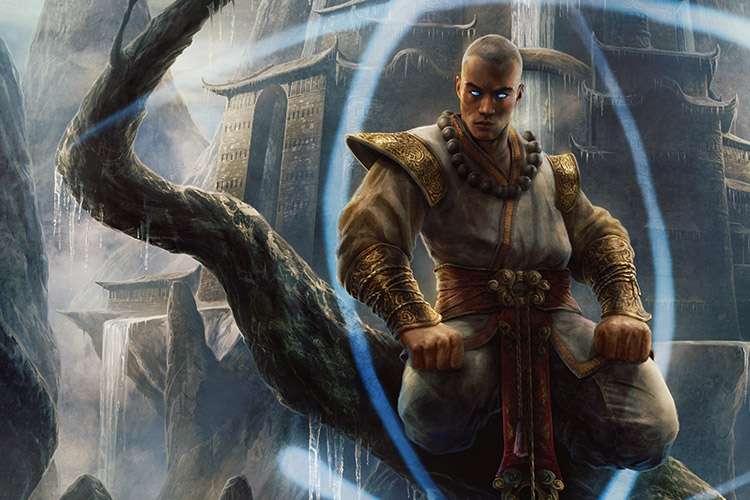
Art by Jason A. Engle

Tournament experience is tremendously valuable, and is very hard to come by. Playing games at home, or at your local store really cannot simulate the experience of playing in a Grand Prix. At a big tournament, you're paired against new opponents in a highly competitive setting. Everyone brought their best deck, and is trying their hardest to beat you. It's the best practice you can get!

Playing in Grand Prix will make you a better player. Even if you find yourself with a record of 1-3, you should still make the most of the day. After all, you've already travelled to the event, paid the entry fee, built your deck, and blocked a day out of your calendar. Why let the chance to gain tournament experience go to waste?

If you play out the rounds, you'll inevitably learn more about the format, learn more about your deck, and you can continue to work toward any goals that you might've set for yourself before the tournament.


Reflection

Always look at a big tournament as a learning experience. Whether you win or lose, there will always have been some things you did well and some things you can work on. Take note of these things, and try to reinforce the good aspects of your game, and improve on the weaker aspects.

It can be hard to balance healthy reflection with your desire to do well in the tournament. If you make a big mistake in round six, you certainly do want to remember it and learn from it for next time. However, you don't want to be thinking about it while you're playing rounds seven, eight, and nine!

Art by Chase Stone

For that reason, I recommend blocking out some time after the tournament for reflection. The car ride home on Sunday or Monday night is perfect. Just as good as personal reflection, you might be able to talk things over with friends. What did everyone learn, what were they proud of themselves for, what would they change for next time?

If you block off time after the tournament for reflection, it also means that you're free to keep a clear head while you're playing. Focus on the task at hand, not on what happened last round or what record you want to have at the end of the day. If you make a mistake, brush it off and make the best of the situation. Revisit it only once everything is said and done.


All in all, there's nothing like playing in a Magic tournament. If you can be present and focused throughout, you're sure to have a positive experience. Friends, judges, and other tournament officials will give you the resources to have a great time playing in a Grand Prix. In the end, though, it's up to you to make the most of it.

27 May 03:03

Google Doodle Honors Sally Ride

by Joe Jervis
Bewarethewumpus

Via lbstopher