Your score will be gastronomical.

Philip.paulsson11/14 and my food IQ is 145. Which is one point lower than my actual IQ! (as determined by one of those home testing kits my mom had lying around the house last time I went to visit her, soooo probably BS)
Philip.paulssonI am loving this show. Was a big fan of the books and am excited to see how far along the series goes. Lauren is not a fan, tho.

Enlarge / Frankie Adams as Bobbie Draper. (credit: Rafy/Syfy)
One of our favorite things about The Expanse is the way that—unlike many an epic TV show—it doesn't string out the plot needlessly. Season two is drawing to a conclusion, and things are moving along. On Earth, Gunny Draper is in trouble with her Martian higher-ups, and the feeling is probably mutual following the way Private Travis was offered up as a scapegoat for the battle of Ganymede. But she wants to see the ocean before they send her home in disgrace; she breaks out of the Martian embassy and finds that life for Earth's dispossessed masses isn't quite as groovy as she'd been led to believe.
She's not the only one in trouble. Errinwright owns up to his role in Jules-Pierre Mao's rogue protomolecule experiments once he realized that Mao may be in cahoots with Mars now.
Ganymede is in quite a mess. Three of the agriculture domes are gone, and while searching for his missing daughter, Prax notices that the artificial environment on the colony is dying. The problem is too little biodiversity; once a pathway gets damaged there aren't enough others to compensate. Or, as he explained to Amos, "the station's dead already, they just don't know it yet."
Read 5 remaining paragraphs | Comments
Philip.paulssonlol
| archive - contact - sexy exciting merchandise - search - about | |||
 |
|||
| ← previous | April 5th, 2017 | next | |
|
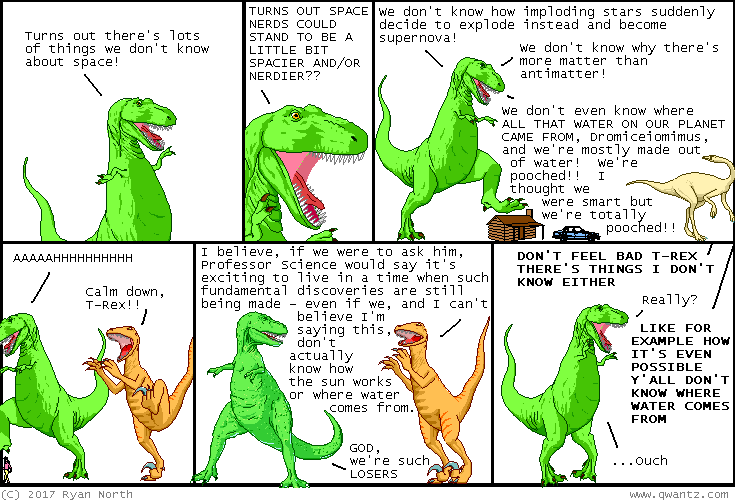
April 5th, 2017: I wanted to thank Thomas for the email about how French rap changed her life, drastically altering the course of her entire existence for the better!! I always suspected that these things were possible with French rap, but it was really nice to see it confirmed! – Ryan | |||
Philip.paulssonLOL

QUINCY, MA—Saying she would stop looking at her phone and tablet at least an hour before going to sleep, local woman Carina Anielski, who drinks six cups of coffee per day, told reporters Tuesday that she was trying to cut down on blue light around bedtime. “I heard that too much blue light can really mess with your circadian rhythm, so I’m going to keep it way down,” said Anielski, who consumes a full 12 ounces of highly caffeinated beverage roughly every two hours between the cup she has upon arriving at work and the cup she consumes after dinner. “I’ve also put a filter on all my devices that blocks out blue light, so I’ve got an added layer of protection. Seriously, one blast of that stuff at the wrong time and I’m wide awake till four in the morning. I have to take ...
Philip.paulssonI definitely need to try and pick up a Switch and Zelda. I'm hoping I'm able to get one at the Nintendo store in Rockefeller Center like I did with the Wii back in the day...
 I replayed the first 30 minutes of Rise of the Tomb Raider the other day. In it, I scaled a mountain, leaping from platform to platform while the environment around me crumbled. I then headed into a tomb, worked through a few puzzles, and triggered a...
Philip.paulssonHigh praise coming from all corners.
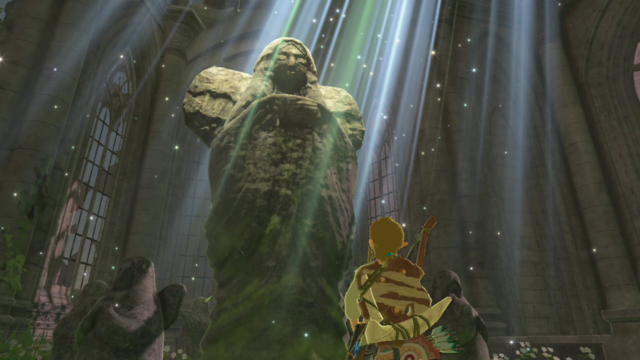
*Cue heavenly choir*
At this point, the Legend of Zelda series operates on a rhythm so predictable you can practically set your watch to it. In a Zelda game, after an extremely slow-paced tutorial, you progress from puzzle-filled dungeon to puzzle-filled dungeon, finding in each one a key item that—coincidentally—is crucial to beating the dungeon boss and to finding the next dungeon.
Between dungeons, you face perfunctory battles with simple enemies on a vast overworld map dotted with small towns and occasional mini-games and side-quests. Most of these give you rewards that are already so plentiful as to be practically worthless (oh, goodie, more rupees to fill my already full wallet). By the time you reach Ganon, your circuitous trip from point A to point B has given you a set of required powers that help you take on the big bad boss threatening the kingdom. Individual Zelda games each make slight variations to this formula, but the basic rhythm is there every time.
And then there's the new Breath of the Wild (BotW), a Zelda game that throws off this established rhythm so quickly, and with such force, that it practically feels like a whole new genre. In doing so, Breath of the Wild offers a compelling take on a stagnating series, bringing a sense of wonder and excitement back to Zelda that hasn't been felt this strongly since the original NES game.
Read 35 remaining paragraphs | Comments
Philip.paulssonI love this.
April 2, 2017
This is Peter Maddox. The 84-year-old had to scrap his bright yellow car after vandals wrote "move" on it and smashed in his windows causing £6,000 worth of damage in February.
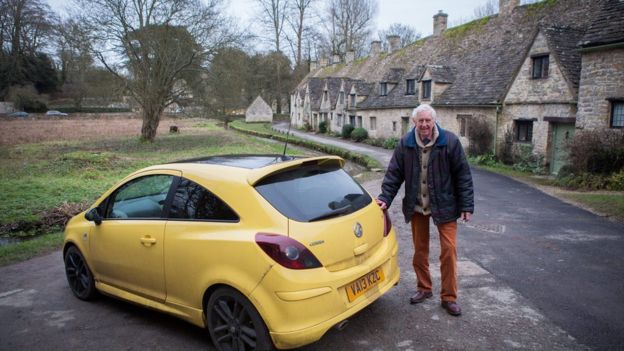
Photo credit: SWNS.com
Maddox had already been slammed by locals, who said his vehicle was an "eyesore" on the rural town of Bilbury, Gloucestershire - a place once described as "the most beautiful village in England".

Photo credit: SWNS
After hearing about his plight, hundreds of yellow car owners descended on the village for a rally.
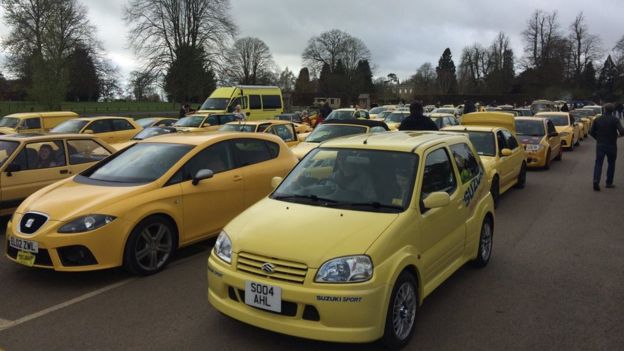
Photo credit: SWNS.com
The village's small car park was full to the point of bursting with bright yellow cars.
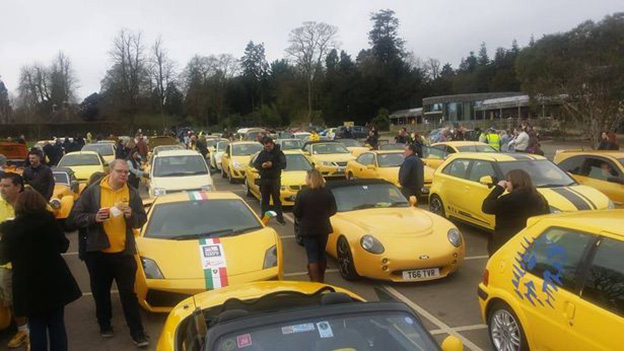
Photo credit: SWNS.com
"The response has been amazing and overwhelming; people from all over the country and all over the world have applied to join the group," said organizer Matty Bee.
"We've had everything here from a three-wheeler and a Mini to a Lamborghini super car...I've never seen so many yellow coloured cars in one place."
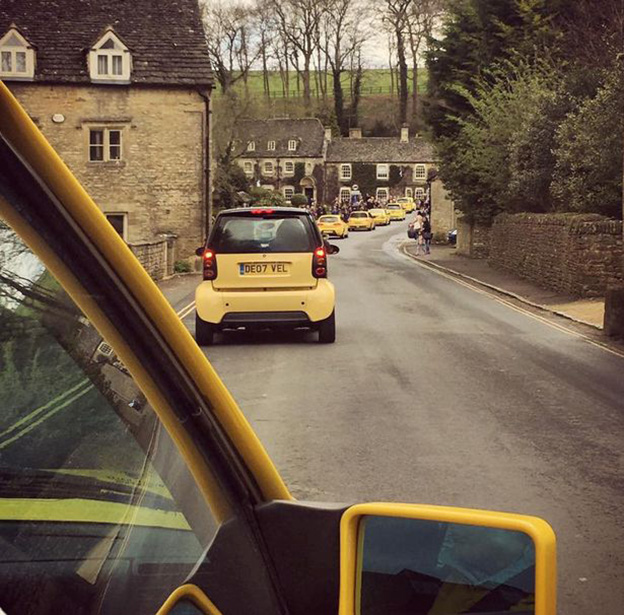
Photo credit: SWNS.com
Maddox, who was presented with a miniature version of his old car, said he was "overwhelmed" by the display of support, which he watched from his cottage.
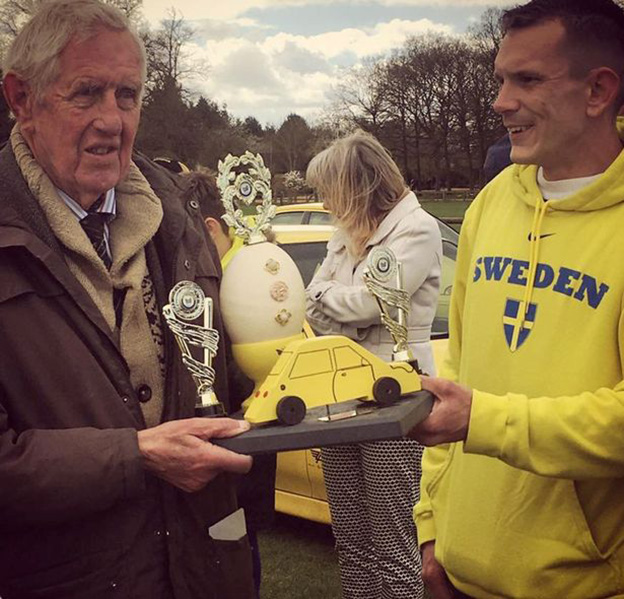
Photo credit: SWNS.com
Watch the video here:
Philip.paulssonHere are my results:
http://moralmachine.mit.edu/results/1572570534

Welcome to the Moral Machine! A platform for gathering a human perspective on moral decisions made by machine intelligence, such as self-driving cars.
We show you moral dilemmas, where a driverless car must choose the lesser of two evils, such as killing two passengers or five pedestrians. As an outside observer, you judge which outcome you think is more acceptable. You can then see how your responses compare with those of other people.
Philip.paulssonNot worth the click thru. But now I can ask you guys this:
What's the opposite of waterfall?
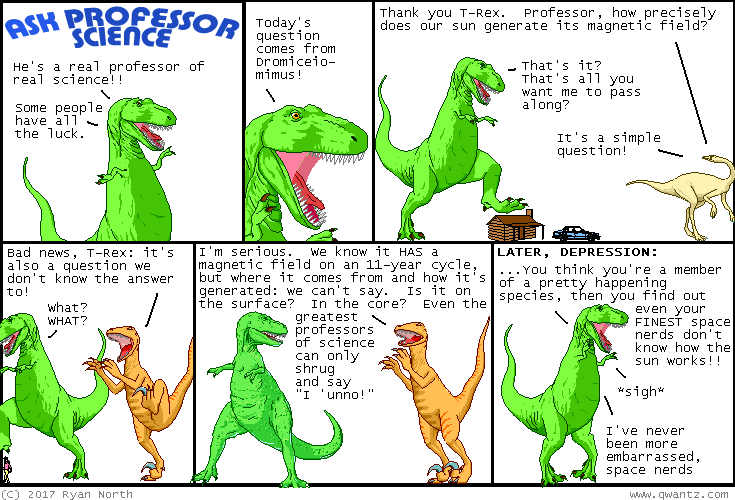
Philip.paulssonThanks for nothing, space nerds
| archive - contact - sexy exciting merchandise - search - about | |||
 |
|||
| ← previous | April 3rd, 2017 | next | |
|
April 3rd, 2017: I wanted to thank Thomas for the email about how French rap changed her life, drastically altering the course of her entire existence for the better!! I always suspected that these things were possible with French rap, but it was really nice to see it confirmed! – Ryan | |||
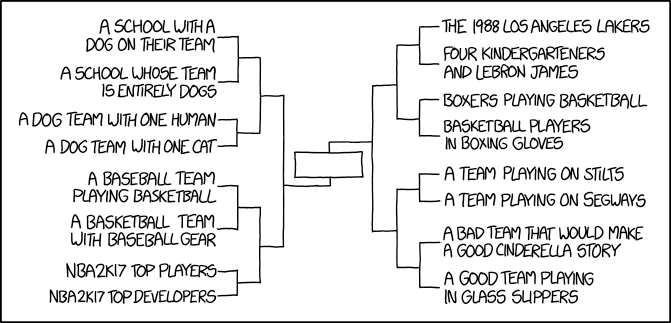
Philip.paulssonI'd watch these.
Philip.paulssonMmmmm I wonder what manatee tastes like?

With over 6,620 manatees recently estimated living in Florida waters, the U.S. Fish and Wildlife Service has downgraded manatees from “endangered” to “vulnerable.” What do you think?
Philip.paulssonWell that didn't take long...
 Who'd have thought that just days after the house rolled back privacy protections for internet users, ISPs would take advantage? The EFF did, pointing out that Verizon has already announced that it will install spyware, in the form of the launcher Ap...
Philip.paulssonOh no!! We're living on a dwarf planet!!!
(shouldn't it be "little person" planet?)
It turns out that Earth is not a planet. Asteroid 2016 H03, first spotted on April 27, 2016, by the Pan-STARRS 1 asteroid survey telescope on Haleakala, Hawaii, is a companion of Earth, too distant to be considered a true satellite.

“Since 2016 HO3 loops around our planet, but never ventures very far away as we both go around the sun, we refer to it as a quasi-satellite of Earth,” said Paul Chodas, manager of NASA’s Center for Near-Earth Object (NEO) Studies at the Jet Propulsion Laboratory in Pasadena, California.
Asteroid 2016 H03 is proof that Earth has not cleared the neighborhood around its orbit. Therefore, under the definition of a planet vigorously defended by the IAU since the adoption of Resolution 5A on August 24, 2006, Earth is a ‘dwarf planet’ because it has not cleared its orbit, which is the only criteria of their definition that Pluto fails. (I think we’ll eventually discover that very few of the ‘planets’ have cleared their orbits).
Most of us who were baffled by the IAUs declaration and outraged at the obvious discrimination of Pluto knew there was something wrong, even if we couldn’t put our finger on it — we just ‘knew’ Pluto was a planet, right?
Caltech scientist Mike Brown crowed about how he ‘was responsible for Pluto’s death’ and how important this decision was, because it emphasized the importance and number of ‘dwarf planets’ (huge coincidence: Mike Brown is known for his role in the discovery of the dwarf planet, Eris).
At the time Alan Stern, Kirby Runyon and others pointed out that the decision was unscientific, particularly the ‘orbit clearing’ criteria. Well, the IAU’s tortured logic has now come back to bite them in the plutoid.
Here’s what all of us non-scientists intuitively understood all along: “A planet is defined as an astronomical body that “has not undergone nuclear fusion, and having sufficient self-gravitation to assume a spheroidal shape” — in other words, it’s round and not on fire.
How could the distinguished scientists be so wrong?
Here are the 3 problems:
1. The definition of anything must rely solely on its own properties, or predictable interactions with other things. Alkali metals are shiny, soft metals at STP conditions, and highly reactive because they readily lose their outermost electron to form cations with charge +1. Orbital mechanics are so highly complex, that there’s no way to conclude an body can clear its orbit. How much space is that? what other bodies exert gravitational influence? What if there’s been a collision that produced new substellar bodies? How many years is a planet allotted to clear the orbit again? This definition is highly unscientific by its very construction.
2. What really gets ‘civilians’ upset is when they can tell there’s an agenda. It’s like how teens reach when their parents say something totally illogical and defend it by saying “become I’m your parent and I said so!” The IAU resolution was a process in which 400+ scientists debated and vied to ‘win’ adoption of their favorite definition, as if they were the bishops attending the Council of Nicaea debating the Nicene Creed. Mike Brown, the ‘Bishop of Dwarf Planets’ could declare victory if Pluto was assigned to his diocese. The obvious victim is scientific truth, when everyone in the room has something to win or lose, and the other 9000 members of the IAU weren’t even consulted.
3. Sampling error. We can observe alkali metals in innumerable conditions in nature, in the lab, interacting with thousands of other substances at all different temperatures and pressures. We can even observe their interactions at great distance with mass spectroscopy. This gives us great confidence that our classification is consistent with observed phenomena. However with only 9̶ 8̶ 7 planets to observe, and only under one planetary system, it’s ludicrous to arrive at a definition of planet that requires a predictable interaction with the bodies around it. It’s almost a given that not only will we find our own system doesn’t meet the definition, but since a planet is a planet regardless of what system it’s in (unless the IAU would like to vote against that?) we can’t possibly know that the thousands of extrasolar planets are clearing their orbital paths — meaning it’s a definition which is not only improbable but also untestable.
So Earth itself is now hostage to this ridiculous debate. So “No more funny business, or the hostage gets it!” Will Mike Brown be responsible for the death the Pluto AND Earth? Or will scientists drop the politics, put on their scientific thinking hats, and restore the faith children everywhere have in the scientific process they are taught, and the intuition we all have that Pluto, is in fact, a planet.
Philip.paulssonAwesome! I may yet make it to Mars before I die. :-)
 SpaceX just made history by launching the world's first reflight of an orbital rocket and landing its first stage on a barge again. The booster wasn't the only part of the rocket the company recovered from the SES-10 mission, though: it also managed...
Philip.paulssonEt tu, Samsung?
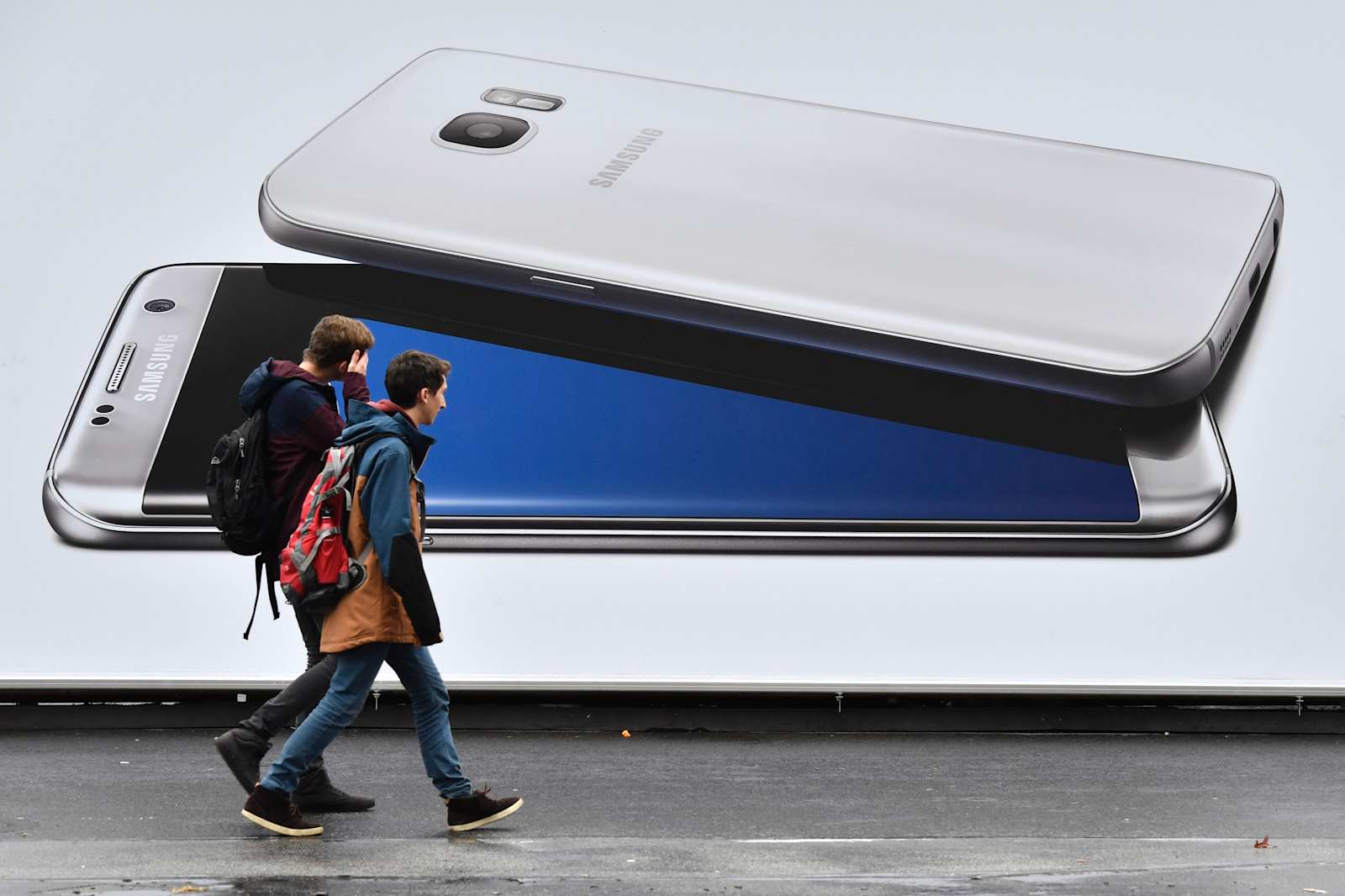 With Apple, Motorola and others releasing phones without 3.5mm headphone jacks this year, there's been a looming question: will Samsung follow suit? Like it or not, SamMobile sources claim the answer is yes. Reportedly, the Galaxy S8 will rely sole...
Philip.paulssonGodamnit.
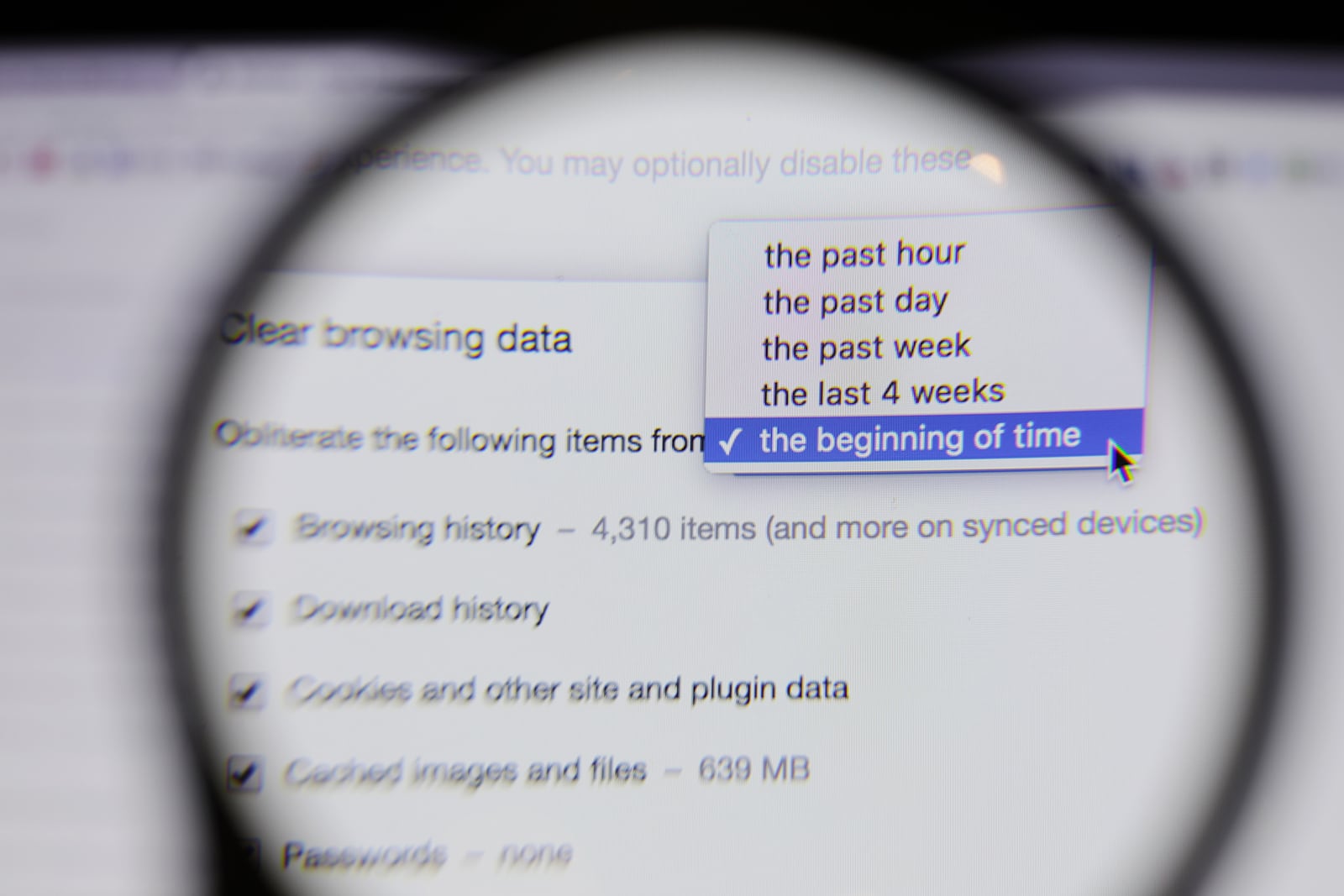 With a slim majority of 215 to 205, the US House of Representatives just passed a resolution rolling back FCC privacy regulations. Approved last year, the rules required that ISPs get your explicit permission before selling "sensitive data" like your...
Philip.paulssonWoah.
Philip.paulssonLOL

Philip.paulssonFor Robyn.
I was working for Microsoft’s typography team, which had a lot of dealings with people from applications like Publisher, Creative Writer and Encarta. They wanted all kinds of fonts – a lot of them strange and childlike. One program was called Microsoft Bob, which was designed to make computers more accessible to children. I booted it up and out walked this cartoon dog, talking with a speech bubble in Times New Roman. Dogs don’t talk in Times New Roman! Conceptually, it made no sense.
So I had an idea to make a comic-style text and started looking at Watchmen and Dark Knight Returns, graphic novels where the hand lettering was like a typeface. I could have scanned it in and copied the lettering, but that was unethical. Instead, I looked at various letters and tried to mimic them on screen. There were no sketches or studies – it was just me drawing with a mouse, deleting whatever was wrong.
I didn’t have to make straight lines, I didn’t have to make things look right, and that’s what I found fun. I was breaking the typography rules. My boss Robert Norton, whose mother Mary Norton wrote The Borrowers, said the “p” and “q” should mirror each other perfectly. I said: “No, it’s supposed to be wrong!” There were a lot of problems like that at Microsoft, a lot of fights, though not physical ones.
Comic Sans was developed too late for Microsoft Bob, but our office administrators started using it a lot in emails – mostly young women whose jobs were to make everything fun. They did birthday parties, organised events, and Comic Sans fitted with their cheery messages. As it became more well-known, it was eventually included in Windows 95.
I started to see it everywhere – and then the backlash began. A group called Ban Comic Sans was formed to educate people about the uses of typefaces, though they did email me to ask if it was OK to set it up. It seemed silly, but I said knock yourselves out. Though that backlash has calmed down, except on Twitter. People who come up to me are more likely to say they love it.
Type should do exactly what it’s intended to do. That’s why I’m proud of Comic Sans. It was for novice computer users and it succeeded with that market. People use it inappropriately: if they don’t understand how type works, it won’t have any power or meaning to them. I once heard a guy at a Rothko show say: “I could have done that.” He clearly doesn’t know anything about art. He’ll probably use Comic Sans without realising it’s wrong in certain circumstances.
I’ve only ever used Comic Sans once. I was having trouble changing my broadband to Sky so wrote them a letter in Comic Sans, saying how disappointed I was. I got a £10 refund. In those cases, I would recommend it. The basic theory is that typography should not shout – but Comic Sans shouts.
My job was to match products to fonts, sort of like a marriage broker. Comic Sans was designed for Microsoft Bob, which in many ways was a precursor to Cortana or Siri – for people who had problems with computers. A woman called Melinda French was helping to head it up. I wasn’t well connected and had no idea she was dating Bill Gates and would end up marrying him.
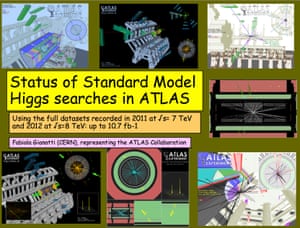
The magic is that people took to it on their own, rather than via any Microsoft marketing. It does get misused, usually because somebody just loves it. Things like the slideshow at Cern, where they announced the Higgs boson in Comic Sans, that was inappropriate. But the fact that people have the freedom to say, “This is my favourite font and I’m going to use it” is a marvellous thing. The backlash, the level of hatred, was just amazing – and quite frankly funny. I couldn’t believe people could be so worked up over something as simple as a font.
It’s almost an anti-technology typeface: very casual, very welcoming. It’s like going home, back to your childhood, getting letters from family members. Or somebody might use it to get away from the staid environment of their work. When you use Comic Sans, you’re making a statement: “I’m more relaxed, more creative. I may be working in this area, but this job does not define me.”
Philip.paulssonhah

ST. THOMAS, U.S. VIRGIN ISLANDS—Speaking Wednesday from the grounds of the lavish tropical estate where he plans to spend much of his downtime while in office, Donald Trump unveiled a new presidential retreat he hopes will allow him to escape from the grueling pace of life at Mar-a-Lago.
With its sunny climate, secluded setting, and luxurious accommodations, the 45-acre Caribbean hideaway known as Isola Vista—which sits on a pristine white-sand beach along the island of St. Thomas’ southern coast—will reportedly serve as a haven where the president can find respite from his five-star Palm Beach, FL resort and its many day-to-day pressures.
“After a while, all that time spent at Mar-a-Lago starts to take a toll,” Trump said of the relentless routine of recreation and extravagance he experiences at his oceanfront Florida club. “I’m there so much that sometimes I just need to get away ...
Philip.paulssonWater bears are pretty awesome.
 Tardigrade in Moss
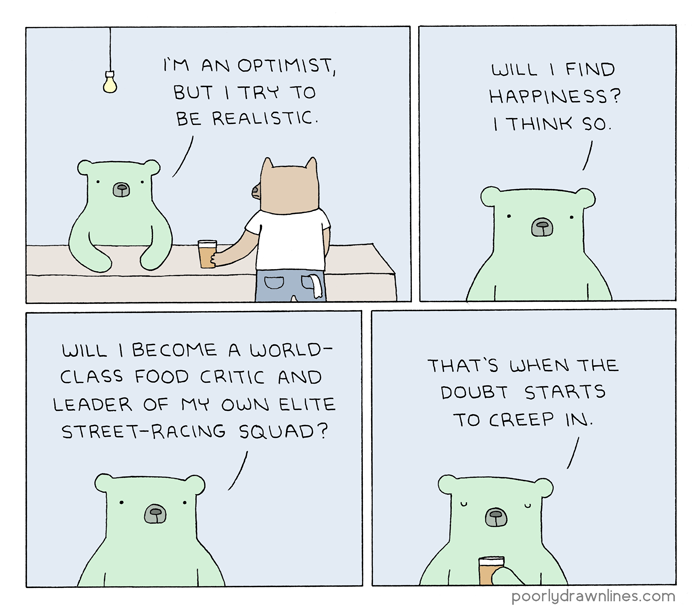
 Philip.paulssonI'm thinking of leading an elite street-racing squad myself...
Philip.paulssonInteresting.

The years 2015 and 2016 saw a distinct decline in e-book sales, while sales of physical books have risen steadily. What do you think?
Philip.paulssonfriggin Chad.
| archive - contact - sexy exciting merchandise - search - about | |||
 |
|||
| ← previous | March 24th, 2017 | next | |
|
March 24th, 2017: MARCH UPDATE: nothing horrible has happened so I guess those ol' Ides of March were just a fake idea!! Everyone do whatever you want and don't worry about any ides!! – Ryan | |||
Philip.paulssonInteresting.
Here’s a little parable. A friend of mine was so enamored of Google Reader that he built a clone when it died. It was just like the original, except that you could add pictures to your posts, and you could Like comments. The original Reader was dominated by conversation, much of it thoughtful and earnest. The clone was dominated by GIFs and people trying to be funny.
I actually built my own Google Reader clone. (That’s part of the reason this friend and I became friends—we both loved Reader that much.) But my version was more conservative: I never added any Like buttons, and I made it difficult to add pictures to comments. In fact, it’s so hard that I don’t think there has ever been a GIF on the site.
I thought about building new social features into my clone until I heard my friend’s story. The first rule of social software design is that more engagement is better, and that the way you get engagement is by adding stuff like Like buttons and notifications. But the last thing I wanted was to somehow hurt the conversation that was happening, because the conversation was the whole reason for the thing.
Google Reader was engaging, but it had few of the features we associate with engagement. It did a bad job of giving you feedback. You could, eventually, Like articles that people shared, but the Likes went into an abyss; if you wanted to see new Likes come in, you had to scroll back through your share history, keeping track in your head of how many Likes each share had the last time you looked. The way you found out about new comments was similar: You navigated to reader.google.com and clicked the “Comments” link; the comments page was poorly designed and it was hard to know exactly how many new comments there had been. When you posted a comment it was never clear that anyone liked it, let alone that they read it.
When you are writing in the absence of feedback you have to rely on your own judgment. You want to please your audience, of course. But to do that you have to imagine what your audience will like, and since that’s hard, you end up leaning on what you like.
Once other people start telling you what they like via Like buttons, you inevitably start hewing to their idea of what’s good. And since “people tend to be extremely similar in their vulgar and prurient and dumb interests and wildly different in their refined and aesthetic and noble interests,” the stuff you publish will start looking a lot like the stuff that everybody else publishes, because everybody sort of likes the same thing and everybody is fishing for Likes.
What I liked about Reader was that not knowing what people liked gave you a peculiar kind of freedom. Maybe it’s better described as plausible deniability: You couldn’t be sure that your friends didn’t like your latest post, so your next post wasn’t constrained by what had previously done well or poorly in terms of a metric like Likes or Views. Your only guide was taste and a rather coarse model of your audience.
Newspapers and magazines used to have a rather coarse model of their audience. It used to be that they couldn’t be sure how many people read each of their articles; they couldn’t see on a dashboard how much social traction one piece got as against the others. They were more free to experiment, because it was never clear ex-ante what kind of article was likely to fail. This could, of course, lead to deeply indulgent work that no one would read; but it could also lead to unexpected magic.
Is it any coincidence that the race to the bottom in media—toward clickbait headlines, toward the vulgar and prurient and dumb, toward provocative but often exaggerated takes—has accelerated in lock-step with the development of new technologies for measuring engagement?
You don’t have to spend more than 10 minutes talking to a purveyor of content on the web to realize that the question keeping them up at night is how to improve the performance of their stories against some engagement metric. And it’s easy enough to see the logical consequence of this incentive: At the bottom of article pages on nearly every major content site is an “Around the Web” widget powered either by Outbrain or Taboola. These widgets are aggressively optimized for clicks. (People do, in fact, click on that stuff. I click on that stuff.) And you can see that it’s mostly sexy, sexist, and sensationalist garbage. The more you let engagement metrics drive editorial, the more your site will look like a Taboola widget. That’s the drain it all circles toward.
And yet we keep designing software to give publishers better feedback about how their content is performing so that they can give people exactly what they want. This is true not just for regular media but for social media too—so that even an 11-year-old gets to develop a sophisticated sense of exactly what kind of post is going to net the most Likes.
In the Google Reader days, when RSS ruled the web, online publications—including blogs, which thrived because of it—kept an eye on how many subscribers they had. That was the key metric. They paid less attention to individual posts. In that sense their content was bundled: It was like a magazine, where a collection of articles is literally bound together and it’s the collection that you’re paying for, and that you’re consuming. But, as the journalist Alexis Madrigal pointed out to me, media on the web has come increasingly un-bundled—and we haven’t yet fully appreciated the consequences.
When content is bundled, the burden is taken off of any one piece to make a splash; the idea is for the bundle—in an accretive way—to make the splash. I think this has real consequences. I think creators of content bundles don’t have as much pressure on them to sex up individual stories. They can let stories be somewhat unattractive on their face, knowing that readers will find them anyway because they’re part of the bundle. There is room for narrative messiness, and for variety—for stuff, for instance, that’s not always of the moment. Like an essay about how oranges are made so long that it has to be serialized in two parts.
Conversely, when media is unbundled, which means each article has to justify its own existence in the content-o-sphere, more pressure than most individual stories can bear is put on those individual stories. That’s why so much of what you read today online has an irresistible claim or question in the title that the body never manages to cash in. Articles have to be their own advertisements—they can’t rely on the bundle to bring in readers—and the best advertising is salacious and exaggerated.
Madrigal suggested that the newest successful media bundle is the podcast. Perhaps that’s why podcasts have surged in popularity and why you find such a refreshing mixture of breadth and depth in that form: Individual episodes don’t matter; what matters is getting subscribers. You can occasionally whiff, or do something weird, and still be successful.
Imagine if podcasts were Twitterized in the sense that people cut up and reacted to individual segments, say a few minutes long. The content marketplace might shift away from the bundle—shows that you subscribe to—and toward individual fragments. The incentives would evolve toward producing fragments that get Likes. If that model came to dominate, such that the default was no longer to subscribe to any podcast in particular, it seems obvious that long-running shows devoted to niches would starve.
* * *
People aren’t using my Reader clone as much anymore. Part of it is that it’s just my friends on there, and my friends all have jobs now, and some of them have families, but part of it, I think, is that every other piece of software is so much more engaging, in the now-standard dopaminergic way. The loping pace of a Reader conversation—a few responses per day, from a few people, at the very best—isn’t much match for what happens on Twitter or Facebook, where you start getting likes in the first few minutes after you post.
But the conversations on Reader were very, very good.
Philip.paulssonHeh
Philip.paulssonThis is awesome. Definitely worth the click to watch the video.
No matter what preconceived notions you have about it being for little kids or whatever, Monster Jam is cool. And if it weren’t cool enough already, a driver landed a front flip in a monster truck on Saturday night.
The driver in the video above is Lee O’Donnell, who landed the first-ever front flip in Monster Jam competition during the Monster Jam World Finals at Sam Boyd Stadium in Las Vegas. The “Mad Scientist”—he’s mad alright!—floored it to get airborne and pull off a front flip. The crowd in the camera shot absolutely went wild during the two seconds of video that they’re shown in.
Really, in what universe is it possible to send some huge truck spinning into a front flip? What population produces people who will get into a truck and think the illogical thoughts of, “I’m going to run into a mound of dirt and flip this thing?” This universe and this population, despite all odds and the basic concept of gravity. Maybe there truly is hope for this world.
O’Donnell won the freestyle championship at the competition—his first—because really, who can top the performance of a person who pulled this off?
Philip.paulssonLOL @ the light dusting of snow comment