Adam walked in 27-town on silver spurs that jingled to the sound of a Lee Hazlewood and Nancy Sinatra classic. While we continue working on our new record, we give to you our "Summer Wine". Now available for download at our bandcamp page.

Adam walked in 27-town on silver spurs that jingled to the sound of a Lee Hazlewood and Nancy Sinatra classic. While we continue working on our new record, we give to you our "Summer Wine". Now available for download at our bandcamp page.
 I've had so much fun getting to know the great people behind Sabah shoes over the past few weeks that I wanted to also dedicate a post to the Sabah Traveler Bag. It's American-made from naturally tanned and minimally processed US leather in a small factory in Connecticut with high-quality brass hardware. The Sabah Traveler bag fits up to five days of clothing (depending on how you pack!), but because it's unstructured, it collapses down to work well for a weekend or overnighter, which is more my speed, I like wheels when I'm getting on a plane. What's really clever about this bag is the removable waterproof interior bag that can be used to hold wet or dirty clothes separately—genius.
 The Sabah Traveler runs at $750, which in comparison to other similar quality leather duffles in the market, like Lotuff or Ghurka, is a no brainer. Sabah Traveler Bags are available to purchase by following the Sabah ordering guide.



Russian Sledgesyessss

545,00 USD
Atemberaubende Vintage 40er Jahre marineblau Prinzessin Wollmantel mit Luxe geschert Pelz überdimensionalen Kragen, die rechts über die Schulter, eingekerbt Manschette Ärmel, ein Tasten Schließung, Prinzessin Nähte, voller Schwung und Marine Viskose Crepe Futter Vorhänge.
---M E A S U R E M E N T S---
passt wie: Klein/Mittel
Schulter: n/a
Büste: bis 36"
Taille: bis zu 29,5"
Hüfte: frei
Ärmel: 21"
Länge: 43,5"
Marke/Hersteller: Trylon | Huneck's NewYork
Zustand: ausgezeichnet
✩ Layaway ist für dieses Produkt verfügbar
➸ Hinweis: Diese verschicken des Artikels durch Priority Mail sowohl im Inland als & International
➸ Mehr Vintage Mäntel http://www.etsy.com/shop/DearGolden?section_id=5800175
➸ Besuchen Sie den Shop-http://www.DearGolden.etsy.com
_____________________
➸ Instagram | deargolden
➸ Twitter | deargolden
➸ facebook.com | deargolden
➸ Blog | www.deargolden.com

48,00 USD
Vintage 1950s blue satin boudoir heels with peeptoes with large rosette and wedge heel.
--- M E A S U R E M E N T S ---
fits like: us 8 | euro 38.5 | uk 5.5
insole: 10"
ball: 3"
heel: 3"
brand/maker: Luxurion
condition: excellent
➸ more vintage footwear
http://www.etsy.com/shop/DearGolden?section_id=5800174
➸ visit the shop
http://www.DearGolden.etsy.com
_____________________
➸ blog | www.deargolden.com
➸ twitter | deargolden
➸ facebook.com | deargolden
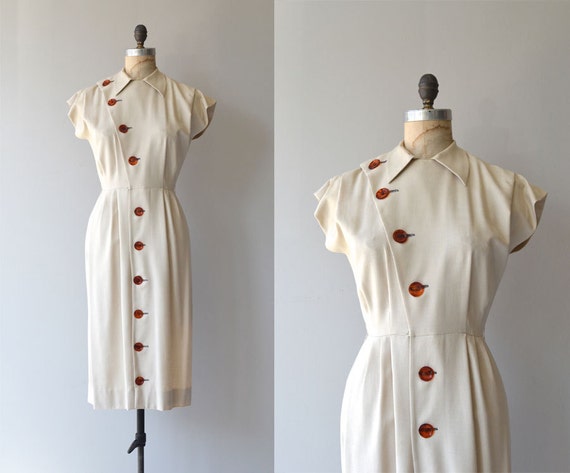
174,00 USD
Vintage 1950s almond linen dress with downturned collar, asymmetrical tortoise buttons and fitted waist.
✂-----Measurements
fits like: extra small
bust: 34"
waist: 25"
hip: up to 38"
length: 44"
brand/maker: n/a
condition: excellent
✩ layaway is available for this item
To ensure a good fit, please read the sizing guide:
http://www.etsy.com/shop/DearGolden/policy
➸ More vintage dresses ✩
https://www.etsy.com/shop/DearGolden?section_id=5986725&ref=shopsection_leftnav_3
➸ Visit the shop ✩
http://www.DearGolden.etsy.com
_____________________
➸ instagram | deargolden
➸ twitter | deargolden
➸ facebook.com | deargolden
➸ blog | www.deargolden.com

158,00 USD
Vintage 50er Jahre dunkelblau Baumwolle-Leinen-Mischung Mantel Kleid mit subtilen versammelten sich, Schultern, kurzen Ärmeln, Taille, passender Gürtel und double breasted zugeschnittenen Jacke ausgerüstet. Metall Reißverschluss hinten.
✂---Messungen passt wie: kleine Oberweite: 32-34" Taille: 26" Hüfte: bis zu 39" Länge: 43,5" Marke/Hersteller: Harry Epstein Zustand: sehr gut um eine gute Passform zu gewährleisten, lesen Sie bitte den Sizing Guide: http://www.etsy.com/shop/DearGolden/policy ➸ mehr Vintage Kleider ✩ https://www.etsy.com/shop/DearGolden?section_id=5986725&ref=shopsection_leftnav_3 ➸ besuchen Sie den Shop ✩ http://www.DearGolden.etsy.com ___ ➸ Instagram | Deargolden ➸ Twitter | Deargolden ➸ facebook.com | Deargolden ➸ Blog | www.deargolden.com
Russian Sledgesvia firehose
VR developers are usually pretty positive about our present reality, even if the experiences they build are things that are difficult or impossible in real life. Nobody, for example, sells the ISS spacewalk simulator by saying Earth is for losers. “Oh, you’re not a 10-mouthed alien in a nightclub? I’m so sorry.”
So it’s... interesting, to say the least, that SXSW held a panel titled “The Future of Porn Is 3D Virtual Reality” that hinged entirely on the idea that touching another human being, or paying attention to anything a woman does, is boring and horrible.
Brian Shuster is the CEO of Utherverse, which produces the sex-focused Second Life alternative Red Light Center. He believes that over the past few years, RedTube-style video sites have transformed not just the porn industry, but the very way we view sex. A few minutes into the panel, he laid out his reasoning:
“Basically, you're looking at exactly the women you want to look at at that moment, and they're doing exactly the sex acts that people have compared to” what you want, thanks to user curation. Then, after watching exceptionally desirable “sexual athletes,” you go back to a fumbling and less attractive partner. “Screw that jazz! Porn is better than sex! I’m in complete control, I’m experiencing vicariously exactly what I want, and it's really great.”
If you’re at all familiar with evangelical Christian anti-porn arguments, this might seem pretty familiar. Here’s how "accountability and filtering" software company Covenant Eyes puts it: "It’s easy to stare at a photo or movie of a nude woman and create the perfect fantasy with her. But where do you live? You live in real life, not in fantasy. So what happens when the way we view women is completely formed in fantasy, then we get up from the computer to interact with women in real life? Problems ensue, and ensue quickly." Both think modern porn destroys men’s ability to relate to women; Shuster just thinks that’s a good thing, or at least an inevitable one.
According to Shuster, this disconnection is why Japanese youth have supposedly stopped having sex, especially when "having sex with a Fleshlight is almost the same feeling." Either way, he says the Japanese attitude "is universal in all developed countries right now," and we’re heading towards the "sexual singularity," defined as "that point in time when people will prefer networked sex over real-world sex." His talk’s title is a slight misnomer: 3D virtual reality isn’t supposed to be the future of porn but the future of the vast majority of human sexual encounters, which will be "hardly recognizable" in 15 years.
"This entire speech I am going to discuss from a heterosexual male point of view."
While I probably should have stopped listening at "sexual singularity," SXSW had promised an expert take on VR and the "growing influence of the female audience." Fortunately, women did come up, but only so Shuster could talk about why he wasn’t going to talk about them. "This entire speech I am going to discuss from a heterosexual male point of view," he explained. "It has application for every other gender, every other orientation ... It's just easiest for me to discuss in that context." Except for a couple of short asides, that promise held.
When Shuster brought up his big historical chart of erotic media, it was interesting to see what didn’t make the grade — mentioning the massive but stereotypically feminine genre of written erotica might have actually undermined the common VR-futurist claim that deeper immersion always drives out shallower, for example. Shuster walked through a detailed comparison of VHS and DVD porn, but his accounting of the past 50 years of sex and tech included nothing about sexting, slash fiction, or anything else not almost totally focused on men who like women.
After deciding to ignore half (or more) of the human population, Shuster moved on to ignoring the other interesting part of the VR equation: technological barriers. Forget the careful hype deflation of Oculus and Sony, or the frustrating and fascinating climb towards each new milestone. We’re apparently on the cusp of high-quality, fully interactive virtual reality and a revolution in simulated touch — I believe the phrase Shuster used was "ready to explode onto the marketplace." Not that we actually got to hear about any of it, because it involved "new kinds of haptics that I am not allowed to talk about," comparable to "the Matrix and the Holodeck." I have no idea what kind of haptics are in The Matrix, but since they can kill people, I guess they must be pretty good.
As Shuster continued, I tried to figure out how putting people in virtual space and re-skinning them would solve his original problem — the issue of perfect control. If there’s a single, defining element of enthusiastically consensual sex, it’s that one person doesn’t get to dictate everything about it — there’s exploration, compromise, and occasionally disappointment. In VR, everybody involved might be better-looking, but you’re fundamentally just adding another layer of complexity.
Thinking this might just be an oversight, I figured I should give him a chance to address it. So after waiting through a lot of questions that I didn’t transcribe but recall largely as "VR porn will be awesome, but I’m not sure how awesome," I asked how "networked sex" with a real partner would satisfy the desire for always seeing exactly the right woman doing exactly the right thing. I didn’t get his response transcribed perfectly either, but here’s the general answer in slightly less explicit language:
Imagine you’re with a partner, but what she’s doing doesn’t feel good enough. You can hit a button, and suddenly it’s a haptic recording of Sasha Grey, or anyone else in a library of experiences you’ve stored. Or, if you get bored, you can flip through avatars of different partners to shake things up.
Isn’t that just better porn, not "networked sex"? I followed up. Why does it matter that there’s a human behind it, if you don’t actually see or feel them, and they don’t have a say in what happens? "That’s his point!" someone muttered behind me. When the talk was over a few minutes later, a random male audience member approached me and called me a "ball-buster." I told him that I just want people to be honest if they’d rather have sex with robots.
Maybe Shuster is a troll whose audience didn’t get the joke, or maybe he actually is just as blinkered and hyperbolic as he sounded. Even if it’s supposed to be ironic, why did SXSW promise The Future of VR Porn and deliver The Ridiculous Future of Sex for Straight Men who Hate Sex?
Let's talk about universal fandom plugins and post-human sensation
I’ve had a wonderful experience in the VR community, although I’m not the only one who’s uncomfortable with its extraordinarily large gender gap. I’ve never encountered Utherverse in that community, and the single host who appeared briefly before Shuster wasn’t affiliated with VR at all. It’s not SXSW or the VR world’s fault that terrible speakers exist. But there’s no reason to host a prime-time panel on an incredibly popular topic — one that crops up constantly in even the most family-friendly talks — and give it almost entirely to one man who admits he can’t or won’t speak to the desires of an entire gender, and whose ideal experience is one where he can control people of that gender completely.
It’s not just creepy, it’s boring and narrow. The height of eroticism is apparently just straight guys getting better versions of things straight guys already have an endless supply of. Is Sasha Grey, an actress whose adult career ended before Oculus was even founded, really our signpost to the future? Here’s a short list of much cooler things, for example, that we could have talked about:
Instead, SXSW gave us the worst pitch for virtual erotica since IGN described how to use it for homosexual aversion therapy.
I’ve discussed, and often critiqued, some extraordinary predictions about virtual reality. But this is the first time I’ve wondered why I bother to write about it at all. Even if nobody’s thinking about Utherverse specifically, it’s received wisdom that sex will be a huge driver of VR. It’s rare to meet a modern VR evangelist who won’t say, at some point, that the heart of virtual reality is the ability to make your fantasies come true. But unless a lot of people decide to actively fight the status quo, I’m increasingly sure that women like me will never be the "you" in that sentence — just the fantasy. If the medium actually does take off, it will be just as conservative as its predecessors.At this point, the best I can do is make sure nobody utters the words "sexual singularity" ever again.

Russian Sledgesvia rosalind

The 2015 Submarine Cable Map depicts the 278 undersea communication cables that carry telecommunication signals across the world’s oceans. The map also includes 21 cables that are planned or under construction. Created by TeleGeography, a telecommunications market research and consulting firm, the map takes its design inspiration from medieval and renaissance cartography. The map can be viewed in an interactive version. It is also available for purchase. We previously posted about the 2013 edition of the map–at the time, there were 232 in-service cables.

images via TeleGeography
via Christopher Mims
Russian Sledgesvia otters

The female highway hector: or, An account of a woman, who was lately arraign’d for robbing on the high-way in man’s apparel, 1690.
Houghton Library, Harvard University
Russian Sledgesbrother of a friend

"I’m a banker."
"What was your greatest moment of banking glory?"
"I discovered a former dictator was laundering money through our bank. So I got him kicked him out."
Russian Sledgesvia otters


"For the sake of brevity we will write this number as π; thus π is equal to half the circumference of a circle of radius 1.”
Euler, Leonhard, 1707-1783. Introductio in analysin infinitorum, 1748.
Houghton Library, Harvard University
Russian SledgesI may actually watch this

In many ways, Prune's Gabrielle Hamilton is the anti-celebrity chef: She's not on Twitter or Instagram or an iTunes app. She operates one tiny East Village restaurant and has no interest in expanding. She wrote a best-selling memoir, of course, but it took her 15 years to write a cookbook. In fact, in October, she told New York's Alex Morris that she'd never host a TV show. "I know how to do that shit, but I have no interest in being America's Next Iron Chef," she said.
But Zero Point Zero Production must have convinced Hamilton to change her mind: She has signed on to star in season four of The Mind of a Chef. Hamilton will follow in the footsteps of her well-respected peers — David Chang, Sean Brock, April Bloomfield, Edward Lee, and Magnus Nilsson. If there's any TV show that's a good fit for her, it's The Mind of a Chef.
Read more posts by Sierra Tishgart
Filed Under: food TV, gabrielle hamilton, mind of a chef, new york, prune, the mind of a chef
Russian Sledgesvia multitask suicide
Burzum only-man loves Aryan women, Papyrus font.
The post Varg Vikernes on “How to Attract a Good Wife” and the Benefits of Eugenics appeared first on MetalSucks.
Russian Sledgesvia firehose
 |
Courtney
shared this story
from  Sociological Images. Sociological Images.
|
I encourage everyone to go read this very smart and very sad essay from Alex Andreuo at The Guardian. It’s a condemnation of defensive architecture, a euphemism for strategies that make the urban landscape inhospitable to the homeless.
They include benches with dividers that make it impossible to lie down, spikes and protrusions on window ledges and in front of store windows, forests of pointed cement structures under bridges and freeways, emissions of high pitched sounds, and sprinklers that intermittently go off on sidewalks to prevent camping overnight. There is also perpetually sticky anti-climb paint and corner urination guards, plus “viewing gardens” that take up space that might be attractive to homeless people:
Here are some examples from a collection at Dismal Garden:





Here’s a picture of anti-encampment spikes featured at The Guardian:

Andreuo writes of the psychological effect of these structures. They tell homeless people quite clearly that they are not wanted and that others not only don’t care, but are actively antagonistic to their comfort and well being. He says:
Defensive architecture is revealing on a number of levels, because it is not the product of accident or thoughtlessness, but a thought process. It is a sort of unkindness that is considered, designed, approved, funded and made real with the explicit motive to exclude and harass. It reveals how corporate hygiene has overridden human considerations…
If the corporations have turned to aggressive tactics, governments seem to simply be in denial. They offer few resources to homeless people and the ones they do offer are insufficient to serve everyone. Andreuo continues:
We curse the destitute for urinating in public spaces with no thought about how far the nearest free public toilet might be. We blame them for their poor hygiene without questioning the lack of public facilities for washing… Free shelters, unless one belongs to a particularly vulnerable group, are actually extremely rare.
He then connects the dots. “Fundamental misunderstanding of destitution,” he argues, “is designed to exonerate the rest from responsibility and insulate them from perceiving risk.” If homeless people are just failing to do right by themselves or take the help available to them, then only they are to blame for their situation. And, if only they are to blame, we don’t have to worry that, given just the right turn of events, it could happen to us.
Lisa Wade is a professor of sociology at Occidental College and the co-author of Gender: Ideas, Interactions, Institutions. You can follow her on Twitter and Facebook.(View original at http://thesocietypages.org/socimages)
Russian Sledgesvia multitask suicide
it's like they can see into my soul
EDIT: Both of these orders are now sold out.
Our Alden x Leffot NST bluchers and our Alden x Leffot color 8 Naval boots are now available to pre-order online and in store. We are also accepting requests for non-stock sizes by email only. The deadline for non-stock size requests is Monday, March 16, 2015, or while space is available.
The number of pairs on these pre-orders is limited, and orders will be accepted while quantities last. Orders are on a first-come, first-served basis. We are unable to accept any requests before the launch time.
We suggest that you view the terms of our Alden pre-order policy. For more information on how the pre-order process works, view our Alden pre-order guide.


Russian Sledgesvia multitask suicide

Hans Gruber Die Hard Quotation 1.
“Nice suit. John Philips…London? I have two myself. I’m told Arafat shops there too…”
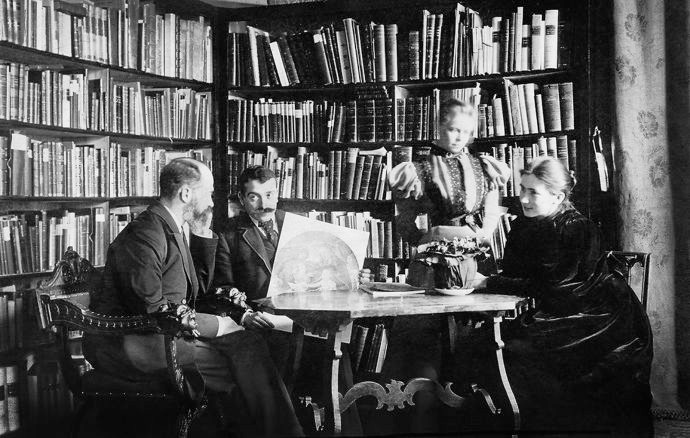
In this week's New Yorker, Adam Gopnik visits one of the more intriguing and strange European libraries, the Warburg Institute in London, a 115-year-old institution with a sadly uncertain future. Read the rest
Russian Sledgesvia firehose via lori
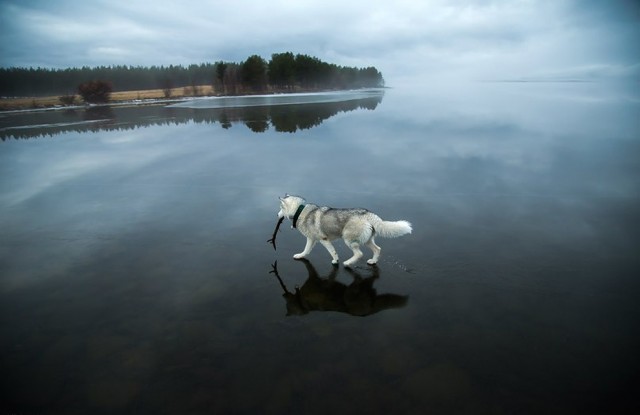
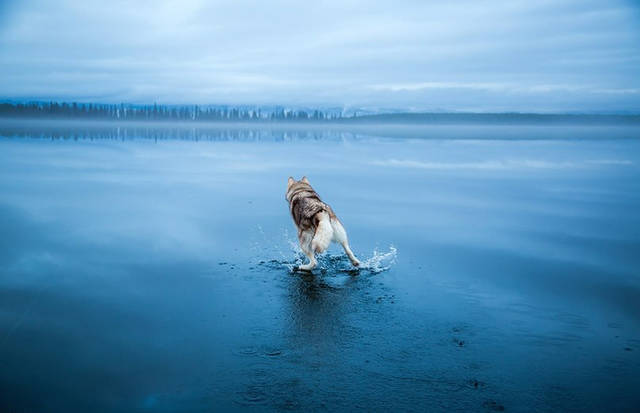
Fox Grom est un photographe russe né à Kirovsk. L’artiste détient deux magnifiques Husky qu’il s’amuse à photographier dans toutes sortes de situations. Dans cette série, l’homme s’est promené avec ses deux adorables bêtes sur un lac gelé. A découvrir en images dans la suite de l’article.



















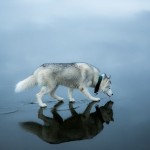
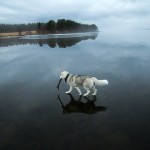

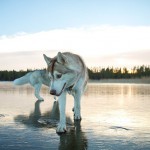



Russian Sledgesvia multitask suicide
Russian Sledgesvia otters
Russian Sledgesvia suburban koala

“No one expected me. Everything awaited me.”
Patti Smith
Russian Sledgesgot drawn into a conversation about this with a python guy in a yarn shop in new orleans
This is the second blog post of the “Towards Computational Craft” series.
This part is all about the process of knitting as seen through the lens of a computer scientist.
While the first part was a maifesto for structural rather than procedural knitting instructions, we will now take a look at hand-knitting as computation.
First off we can observe, that hand knitting needles both have a storage and a stitch processing function. For example when knitting socks, three or more needles may be used, only two of which are operated by the bi-manual human, while the other needles only serve to hold the stitches.
In terms of their storage function, knitting needles can be regarded as physical implementations of popular computer science concepts, namely the abstract data types referred to as stack and deque.
While straight needles with caps store and retrieve their stitches according to the principle of LIFO (last in – first out), double pointed and circular needles additionally implement the functions of a queue or FIFO (first in – first out), effectively forming a double ended queue, also known as deque.
While the needles constitute the main memory, there is an immense amount of external memory available. Free memory usually takes the form of the yarn ball, whereas allocated memory is constituted by the finished knitwork. Once a stitch is dropped off the needle it is automatically saved to the external memory. Every stitch can be modeled by a data structure with pointers to the subordinate stitches which it holds together.
There even is an automatic garbage collection accounting for dropped stitches: once the number of superordinate stitches referencing a stitch drops to zero, the whole stitch is dropped altogether, meaning that it is replaced by the null stitch, which only contains references to is neighbors but not to any subordinate stitch. This garbage collection mechanism gives rise to typical avalanche effects, generally known as runs or ladders.
To simulate loop formation and the slip-stitch-over operation, frequently encountered in hand knitting, the stack and dequeue functions are slightly extended by simple flip or “loop through” operator. This operator exchanges two stitches at the top of the stack or the end of the queue with the side effect, that the second stitch which takes over the prime position becomes subordinate to what was previously the first stitch.
The process of knitting is strictly sequential in nature, in contrast to the process of weaving, that may be considered an essentially parallel technique of fabric construction. In this respect knitting is similar to the Von Neumann architecture, but there are substantial differences in terms of the processing units: in the kind of computation performed by hand knitting there is no single CPU. Instead each needle point constitutes a decentralized processing unit, and pairs of such units operate in intimate interaction.
The fact, that straight needles do not have access to their very own working memory, explains the need for at least two needles in straight-needle based computation. The only notable exception to this “one hand washes the other” approach are some casting-on techniques, where the human hand performs functions that may also be taken over by a needle.
Although knitting needles have otherwise random access to the main memory both free and allocated, knitting operations are in practice mostly restricted to stitches that may be retrieved via the interface of the abstract data types and can be immediately released into the external storage.
The default stitch processing operation usually requires four clock cycles:
To allow for variants of the knit stitch, such as purl, twisted knit and twisted purl, the orientation or twisting of the stitch must be part of its data structure.
To construct such stitches, we might either introduce left- and right-handed versions for elementary stitch operations such as push, depending on the side from which the needle enters the stitch.
Alternatively an isolated twist operation can be used, that only changes the orientation of the first stitch on the needle. While the first approach provides a more realistic model of the hand knitting process, the second approach may be preferred from an information processing point of view. In any case this is a matter of taste, since both systems are computationally equivalent.
So far I have introduced a lot of crazy analogies. You may consider some of them adventurous and daring, or you might even wonder why one would go as far as to break down a knitting-stitch into even smaller actions.
The reason is that once we have identified the atoms of the knitting process, we can use them as building-blocks for all kinds of hand-knitting stitches and knitting instructions.
And this is exactly what we will do in the third part of this series.
Russian Sledgesvia rosalind
Russian Sledgesvia carnibore

Russian Sledgesvia otters
oh jesus christ this is freaking me out


Yuri Kuma Arashi Ep.1 & Suspiria
Click for (spoilery!) captions with some of the parallels, and more (spoilers) thoughts and speculations under the cut.
Russian Sledgesvia otters
Russian Sledgesvia saucie

Americans don't need a time machine to get a taste of the last Ice Age, when hulking icebergs routinely floated down the East Coast. They simply need to go to Cape Cod, where the beaches are littered with what look like chunks of exploded glacier.
The junior-bergs began washing ashore over the weekend and have since somewhat softened and shrunk, reports the Capital Weather Gang. Their gargantuan appearance is yet another reminder the Northeast just suffered an intensely raw February, with frigid temperatures body-slamming records and a historic five-plus feet of snow burying Boston. The region's conversion into The Lands of Always Winter is clear in this photo recently snapped by astronaut Sam Cristoforetti:
Cape Cod dressed in white last week. Hope it's getting warmer down there! #FrozenEarth pic.twitter.com/7LUyP4BHBg
— Sam Cristoforetti (@AstroSamantha) March 8, 2015
A local artist who goes by the pseudonym Dapixara was lucky enough to capture these frosty formations at the height of their immensity. In some cases, the blocks left grooves in the sand as they drifted onto the beaches, leading the photographer to comment, "Death Valley have sliding Rocks, We in Cape Cod (sailing) moving ice." Take a peek: