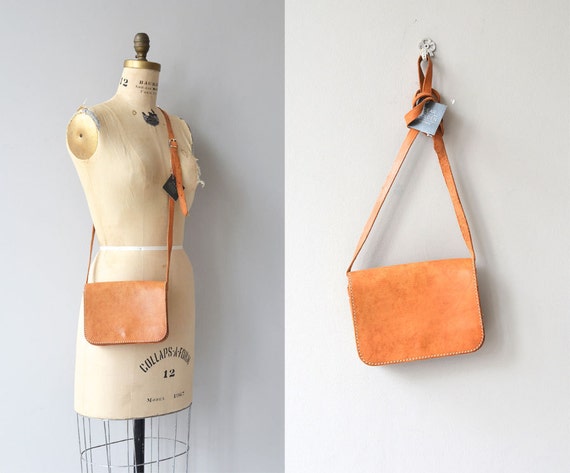
Vintage 70er Jahre light Tan Ledertasche mit Patte-Verschlüsse, zwei Innentaschen und eine RV-Innentasche.
---M E A S U R E M E N T S---8 "x 5,5" 2.5 "breiter Basis 44" langen Riemen Hersteller/Marke: n/a-Bedingung: große ➸ mehr Vintage Taschen http://www.etsy.com/shop/DearGolden?section_id=10308208 ➸ besuchen Sie den Shop http://www.DearGolden.etsy.com ___ ➸ Instagram | Deargolden ➸ Twitter | Deargolden ➸ facebook.com | Deargolden ➸ Blog | www.deargolden.com
Set decorator Roger Christian is the man behind such iconic Star Wars designs as the lightsaber, the Millennium Falcon interior, and the R2-D2 prototype. But the Oscar winner says that his toughest job was the trash-compactor scene. One of the oddest, best-loved, and most-nitpicked scenes from the original 1977 Star Wars, the six-minute sequence aboard the first Death Star finds Luke Skywalker (Mark Hamill), Han Solo (Harrison Ford), Princess Leia (Carrie Fisher) and Chewbacca (Peter Mayhew) trapped inside a deadly garbage chamber filled with space sewage, and inhabited by a mysterious tentacled monster called the Dianoga. Based on a new interview with Christian — and drawing from various remembrances of cast and crew members throughout the years — Yahoo Movies took a deep dive into the smelliest scene in the Star Wars galaxy.
In addition to the requisite vocal clips (“Houston, we’ve had a problem” and “The Eagle has landed”), you get a lot more. There are rocket sounds, the chirps of satellites and equipment, lightning on Jupiter, interstellar plasma and radio emissions. And in one nod to humanity, and not just American humanity, there’s the Soviet satellite Sputnik (among many projects that are international in nature).
Many of these sounds were available before; I’ve actually used a number of them in my own music. But putting them on SoundCloud makes them much easier to browse and find, and there are download links. Have a listen below.
Another thing: you’re free to use all of these sounds as you wish, because NASA’s own audio isn’t copyrighted. It’s meant to be a public service to the American people of their taxpayer-funded government program, but that extends to everyone. There are some restrictions – not everything NASA publishes is covered by the same license, though it appears to be on SoundCloud. And you aren’t free to use NASA’s name or logo or imply commercial endorsement. (The Eagle didn’t land on a bag of Doritos.) But that means just about any imaginable musical application is fair game. They do ask you to list NASA as source, but that’s only reasonable. Read their content guidelines for full details.
Let the space remixing begin.
European Space Agency, your move.
This image of a runner kissing an onlooker at the Boston Marathon went viral when the woman's daughter tried to find their mystery man. They got an answer, but it was from the man's wife.
Barbara Tatge locked lips with the man in Wellesley, where it's become tradition for supporters to give kisses to runners. When the man's wife heard about the quest to find her husband she reached out. Perhaps you'd think this would create an awkward situation, but the two women had a nice back-and-forth about it, according to the Associated Press.
"When this story aired on the news we were pretty surprised," the mystery man's wife wrote in a portion of the letter quoted by The Townsman. "For me, I'm not mad. Believe me, our friends have gotten a lot of mileage out of this story and I have thoroughly enjoyed watching them give my husband grief!"
The wife continued: "While this may not be the ending that you had hoped for, that spontaneous, silly moment in Wellesley captured the fun, energy and spirit of the Boston Marathon. I greatly admire your spunk and courage and wish you many happy races in the future. Congratulations on your Boston finish!"
Tatge may not have found the man of her dreams, but it created an unforgettable moment.
"The letter was so kind and good-hearted," she said. "She's a great sport, and he's fortunate to be married to someone like her."
She jokingly vowed to only kiss single men if she returns to the Boston Marathon.
bizwriter writes: Companies are trying to get around Equal Employment Opportunity Commission restrictions on age-discriminatory language (like "recent college graduate") by saying that they want "digital natives." So far, no one has complained to the EEOC, but that could change. "Since the 1990s dotcom boom, many employers have openly sought to hire young, tech savvy talent, believing that was necessary to succeed in the new digital economy. At the same time, age discrimination complaints have spiraled upward, according to the Equal Employment Opportunity Commission, with 15,785 claims filed in 1997 compared to 20,588 filed in 2014. Out of the 121 charges filed last year by the EEOC for alleged discriminatory advertising, 111 of them claimed the job postings discriminated against older applicants. The EEOC has said that using phrases like 'college student,' 'recent college graduate,' or 'young blood' violate the Age Discrimination in Employment Act of 1966. That federal law protects individuals who are 40 years of age or older from employment discrimination based on age."
tumblr's primary effect on me lately is to make me feel like I should watch some bergman films (I have watched none, as far as I can recall); this probably means something terrible about me, culturally
I can't decide whether I actually like this band that I accidentally saw twice this past weekend, but this is a fucking earworm for sure
Boston based country folk band, The Novel Ideas, play their new song "Old Ways"
Download audio here: http://soundcloud.com/hardwick-sessio...
Video filmed and edited by Danny Hoshino, Justine Bowe and Will Radin. Audio recording and mixing by Will and Daniel Radin.
The Novel Ideas:
http://thenovelideas.com
“The creative process is a series of highs and lows, and that’s just the nature of the beast.” -Emily Adams, Professional Help
“Developing a personal color palette allows you to sew clothes that always make you feel beautiful. Color then becomes an integral element in your design process that allows you to create garments that are a true reflection of your style and unique features.” -Elizabeth Farr, Design a Personal Color Palette
“Peasant blouses are prime examples of a commitment to creating beautiful clothing despite little resources. These blouses often used no more than a yard of fabric, but hours upon hours were poured into the needlework.” – Behind the Seams: The Peasant Blouse
And here are the two new quick-to-sew patterns in this issue:
Adelaide is a simple shift dress with a snap front closure, that is ideal for spring and summer. Sewn up in chambray or linen, this dress is the perfect throw on garment for the warm days ahead.
Sydney is a wrap-style layering piece, that perfectly tops off a sleeveless frock. Use a light weight woven like lawn or rayon to make a breezy topper for your summer sun dresses.
🆒🆕In October 2011, Apple added the emoji keyboard to iOS as an international keyboard. Since then, digital language has evolved such that nearly half of comments and captions on Instagram contain emoji characters. And earlier this week, Instagram also added support for emoji characters in hashtags, which allows people to tag and search content with their favorite emoji #🎉.
In Part 1 of this blog post series, we will take a deep dive into emoji usage on Instagram. By applying machine learning and natural language processing techniques, we’ll discover the hidden semantics of emoji.
Emoji on Instagram: Up and to the Right
It is a rare privilege to observe the rise of a new language. Instagram has always supported emoji, but they did not see wide adoption until the introduction of the emoji keyboard on iOS (October 2011) and on most Android platforms (July 2013). The graph below shows the percentage of text (comments and captions) containing emoji characters graphed over time 📈.
In the month following the introduction of the iOS emoji keyboard, 10% of text on Instagram contained emoji. The trend continued until the release of Instagram for Android in April of 2012, when many new users did not have emoji support. Afterwards, there was a clear upward trend which accelerated after Android received native support for emoji in July 2013.
Usage continued to grow and in March of this year, nearly half of text contained emoji 😱. In the future, will all text contain emoji? To help answer that question, we divided emoji usage by country and observed the differences between user cohorts.
The graph below shows that users from Finland are using emoji characters in over 60% of text! In contrast, the lower bound is in Tanzania with only 10% of text containing emoji. If the overall trend continues, we might be looking at a future where the majority of text on Instagramcontains emoji.
Natural Language Processing
Learning an Emoji Representation
We’re often asked about the meaning of emoji such as 🙇. Intuitively, substitutable words have similar meanings. For example, we might say that “dog” and “cat” are similar words because they can both be used in sentences like “The pet store sells _ food.” In the field of natural language processing, this intuition is called the distributional hypothesis 🎓. It can be applied to emoji by treating them as if they are normal words.
More formally, we can place (or embed) emoji and hashtags together with words into a common metric space where there are well-defined distances between elements. The representation of the words are chosen so that similar words have a small distance. In the scatter chart below, we embedded words, emoji, and hashtags into a 100-dimensional space of floating point numbers using 50 million English Instagram comments and captions from 2015.
We learn the floating point numbers using the Gensim library, which re-implements a tool called word2vec. In skip-gram mode, word2vec reads through text and predicts the context around a given word or emoji. If the algorithm predicts the context incorrectly, then it adjusts its internals to make a better guess in the next round. As part of that unsupervised training process, word2vec learns our 100-dimensional representation for words and emoji.
Emoji Translations
Having learned a good representation for emoji, we can begin to ask questions about similarity. Namely, for a given emoji, what English words are semantically similar? For each emoji, we compute the “angle” (equivalently the cosine similarity) between it and other words. Words with a small angle are said to be similar and provide a natural, English-language translation for that emoji.
Using our algorithm, we find that many of our popular emoji have meanings in-line with early internet slang:
And in answer to our question, we can find that the 🙇 emoji is associated with: #goodmorningtho,#yadigg,lbvs,#gn,#inmyfeelings,#latenightthoughts,#deletinglater. Personally, I like laughing but very serious (lbvs).
Changing the vocabulary
It seems that the most popular emoji have similar semantics to words like “lol/hehe” (😂), “xoxo” (❤️) and “omg” (😱). Are these emoji also replacing the usage of the words?
Precisely, we examine the usage of language in Instagram comments and captions by measuring the percentage of text containing emoji or internet slang. To control for natural changes in Instagram demographics, we examined four cohorts past the launch of Instagram for Android: those joining Instagram in the first week of July 2012, January 2013, July 2013, and January 2014. Each cohort contains millions of Instagram users. We defined internet slang as words matching variants of “xoxo”, “omg”, “muah”, “babe”, “bae”, “lol”, “haha,” and “hehe” with the following regular expression:
As shown in the chart below, all groups exhibit a similar pattern in the rise of emoji (with an upper bound around 45%) and a decline of internet slang (with a lower bound of around 5%). Correlation coefficients within the respective cohorts are all below -0.93, indicating a strongly negative correlation.
The vocabulary of Instagram is shifting similarly across many different cohorts with a decline in internet slang corresponding to rise in the usage of emoji.
The Hearts of Instagram
Having our vectorized representation opens up a wealth of semantic analysis. One of the purported advantages of word2vec representations are that they allow for algebraic operations in semantic space. For example, it can be particularly hard to distinguish the heart emoji 💙💚💛💜💖💗💌. We can isolate some of the effects by subtracting off the representation of ❤️ and finding similar concepts roughly corresponding to color. For example:
Naturally, there are some mistakes in this type of algebra. Nonetheless, subtracting off ❤️ often leaves us with events highly associated with a specific color like #goblue, #gogreen, peachy and purple.
A Semantic Map
A hundred dimensions are pretty hard for humans to visualize. To visually inspect the relationships between emoji, we can take our 100-dimensional representation for emoji, reduce it two dimensions, and then plot them on a grid. We do this using an algorithm called t-SNE, which attempts to preserve relationships in a visually meaningful way:
Many clusters emerge: food emoji on the left, opposite the work emoji in the top right. Shoes (bottom right) are associated closely to handbags while bathing suits are closer to the water and marine animals (top left). Alcoholic drinks (bottom left) cluster together with bowling. Towards the center, we see a large clustering of facial expressions bordered by sadness, shock, laughter, happiness and coolness. As we travel downwards, we can see happy, love leading all the way the family and wedding emoji.
One has to be careful not to read *too* much into the representation since it is an attempt to produce a 2D space out of a 100D one. But it’s clear that semantics are being approximated in our representation.
Part-1-ing Thoughts
On Instagram, emoji are becoming a valid and near-universal method of expression in all languages. Emoji usage is shifting the people’s vocabulary on Instagram and becoming an important means of expression: their use is anti-correlated with internet slang like “lol” and “xoxo.” By observing words and emoji together we were able to discern representations of both. These representations can help us better understand their semantics and find distinctive characteristics of similar symbols.
Stay tuned for Part 2 on how we actually implemented emoji hashtags. #😳
Thomas Dimson is a Software Engineer on the Instagram Data Team, and also created Instagram’s Hyperlapse app.
Meet the cavaliers and their rakish style (1625-1660: the most scallywagging era fashion history has ever seen.) These handsome knaves let it all hang out. Prancin’ around in their floppy boots, exposing their chemises all over the place, breaking hearts left and right…
Lord John Stuart and his Brother Lord Bernard Stuart, 1638, Anthony Van Dyck
…except these two didn’t ‘cause they died in some war. On an unrelated note, it looks to me like Bernie there might have had a touch of the ol’ Hapsburg Jaw.
Here’s a better example of the general floppiness and (affected) sloppiness of the cavaliers:
Break me of a piece of THAT. This knave’s got a lace collar, boots with da spurs, and “slops,” or huge baggy pants. When starched ruffs went out of fashion around 1620, men could finally wear their hair long. When they left it rakishly longer on one side than the other, it’s called a love lock.
James Stuart (1612–1655), Duke of Richmond and Lennox, 1635, Anthony Van Dyck
Gotta love and man and his dawg.
After thought: the ladies looked pretty okay, too I guess…
Here’s Henrietta Maria, Charles I’s wife. See how she’s cradling her arms together? That means she’s in the family way, if you know what I mean. HIGH FIVE.
And, now, the answer in our latest asking-rent guessing game.
Address: 33 Sleeper Street, #105 Rent: $2,950 The Skinny: This particular RentSpotter was one for the ages, all thanks to a truly funky condo. Let's count the ways, shall we? There's the sauna, of course. And then there's the hot tub in the bedroom next to the bed itself and on carpeting no less. And! Said hot tub is next to a changing corral with swinging doors (look closely). There's also a dais in the living room and some kind of odd storage set-up. Anyway. Nearly 40 percent of you went long on this one, guessing a rent of $3,350. Just over one-fifth voted for the correct asking. It was all so overwhelming, we know.
Block Paper Scissors is a patternmaking series featuring dart manipulation – no experience necessary to join in! Every month, we start with a basic bodice pattern (also called a “block” or a “sloper”) with an underarm bust dart and a waist dart. We use that as a jumping off point to create a different bodice design each time.
This month, we’ll be transforming our basic block into a bodice with a V-shaped princess seam detail. This would be a great project to use contrasting color blocking or striped fabric.
NASA’s Goddard Space Flight Center just shared these fascinating satellite photos taken in January 2014 over the shallow waters around Sisan Island, South Korea. The tiny patchwork of small squares are entire fields of seaweed that are held in place with ropes and buoys to keep the plants near the surface during high tide but off the seafloor in low tide. Via NASA Earth Observatory:
Since 1970, farmed seaweed production has increased by approximately 8 percent per year. Today, about 90 percent of all the seaweed that humans consume globally is farmed. That may be good for the environment. In comparison to other types of food production, seaweed farming has a light environmental footprint because it does not require fresh water or fertilizer.
You can see much more of what’s happening at NASA lately by following the Goddard Space Flight Center on Flickr.
Hullo, hullo! Gosh, doesn’t it feel like just yesterday…uh…nine months ago that I was here talking about fluorescent skirts.
I fell into a bit of a creative hole last year but sewing was always whirring away in my brain, pinkie swear. Especially since I had a project I knew I had an unmovable deadline for: a gift for my friend’s wedding.
A wearable on the day kind of gift.
Not her dress! Yikes! But a little jacket to keep her shoulders covered. I deliberated on this garment for even longer than I’ve been absent from here because I’ve never really had such an open brief with such an important outcome. The design was churning round my brain for so long that actually sewing it became even more intimidating. Have you ever had this kind of sewing performance anxiety?
I’m going to post more about the project because it’s ended up being quite a head-scratcher, in no small part because I used silk, lace and organza. But here’s a taster of how things have been looking recently:
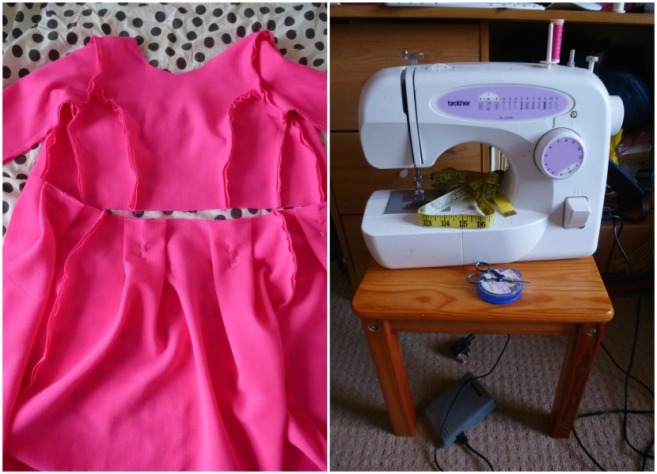
And then, because why not, how about sewing my bridesmaid dress for the same wedding? No pressure. The pic on the right is how you put an end to the terrible procrastination, set up a little workstation right next to your BED:
There’s beautiful fabrics and a bucket load of neon pink ahead, hells yeah!