So, I don’t know if this Theory & Practice thing will be a new feature but I thought it described perfectly what I’m about to explain in this post. I get a lot of questions about sewing the pockets on the Maritime Shorts. Specifically people want to know why the edges of the two pattern pieces aren’t the same length and how they are supposed to sew them together since they aren’t the same length. Basically this is a misunderstanding about sewing convex and concave seams together in regards to the outside edge of the pattern piece vs. the seamline. I apologize if this is super basic to you, but I get enough questions that I figured it wouldn’t hurt to address.
Lets start with Convex vs. Concave shall we?
Convex : curving outwards (as illustrated in the small pattern piece up top)
Concave : curving inwards (as illustrated in the large pattern piece at the bottom)
If you were trying to attach these two pieces together at the very edge of the pattern pieces you would want the lengths of both the convex and concave edges to measure the same amount. When sewing though, you are attaching the pattern pieces together along the seam line, a line that falls inside of the outer edge of the curve. Since the distance along the outer edge of the convex curve is longer than the seam line and the distance along the outer edge of the concave curve is shorter than the seam line, your outer edges will not match in length. Your seam lines, however, will be the same length as illustrated below.
By cutting the seam allowances off you can see that both seam lines are the same length, exactly what you want when trying to sew two things together – unless you’re easing or gathering but that’s another story entirely. If you’d like to see how to sew convex and concave curves together I have more photos and text after the jump.
This is what your pieces look cut in fabric.
Start by pinning both ends of the seam together.
Then pin the rest of the way around the curves. Don’t worry about the edges matching up, ease the extra fabric in, the seam lines are the same length so you don’t need to worry.
This is what you get when you’re done. For this pocket we’re pressing the seam downwards so we need to clip the seam allowance of the concave curve to get it to lay flat. Were we to press the seam up we would want to notch the seam allowance of the convex curve.
That’s it! Any questions just let me know in the comments below.
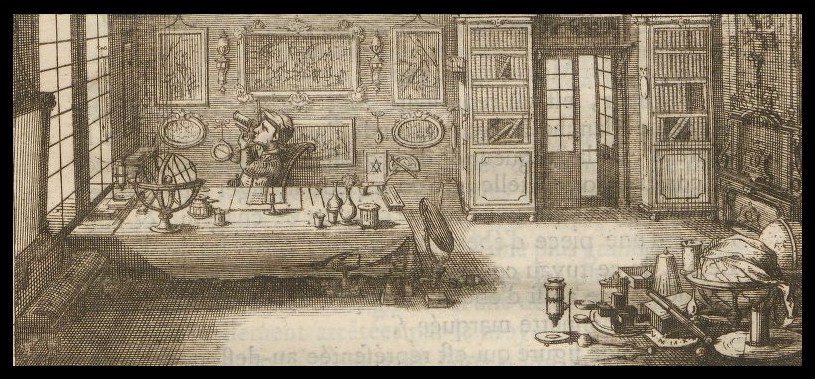
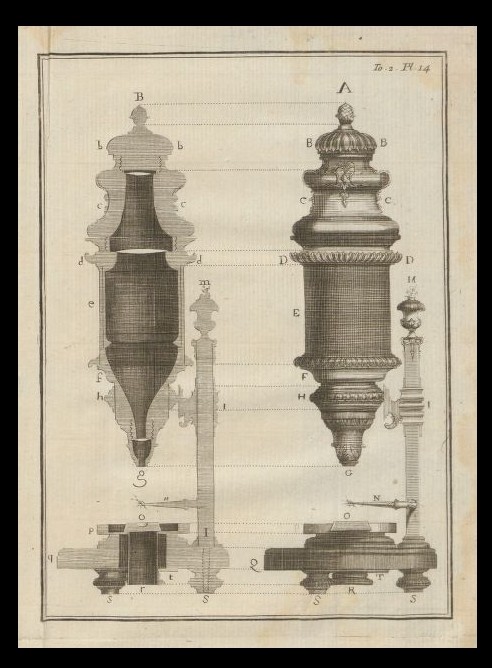
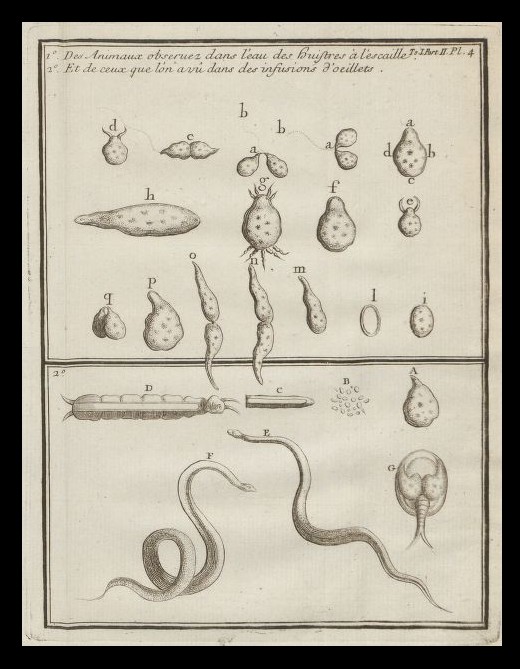
Louis Joblot (1645-1723) is often neglected in the history of microscopy. A contemporary of Leeuwenhoek, who is recognized as the first to observe and record microbes, Joblot, in his own right, was an equally innovative inventor and theorist. A professor of mathematics at the École Nationale des Beaux-Arts, Joblot explored and lectured on perspective, optics, and geometry, leading to his personal pursuit of microscopy during the period of 1680-1716. His landmark work from 1718 presented his own developments and modifications of the microscope, observations of protozoa, and his opposition to the theory of spontaneous generation. Joblot’s new microscope permitted precise focusing by eliminating stray light and enabling the mounting of a diverse array of specimens. The microbes became clearer and more visible. He would refer to the microbes he observed in terms such as “fishes” or “caterpillars”, or even provide mirthful names such as “slipper”, “gobbler”, or “bagpipes”.“
Public reaction to these microbes:
“In Paris, towards the end of the month of June of the same year, and all the rest of the summer, it was difficult to find vinegar in which there were no eels. Thus many people who had seen them with our Microscopes stopped eating salad. I told them that the eels were about a hundred thousand times smaller than they appeared with these instruments; that the heat of the stomach killed them in an instant…”—(translated from the French)
Joblot’s florid description of the creatures visible under the microscope:
“…in an instant a dozen fishes differing from each other and so strange to see and observe that I do not think that the entertainment of Comedy, of the Opera with all its magnificence, of rope dancers, acrobats or the animal fights that we can see in this superb City, could be preferred to it.” —(translated from the French)
Jablot’s compound microscope design
observations of the common fly
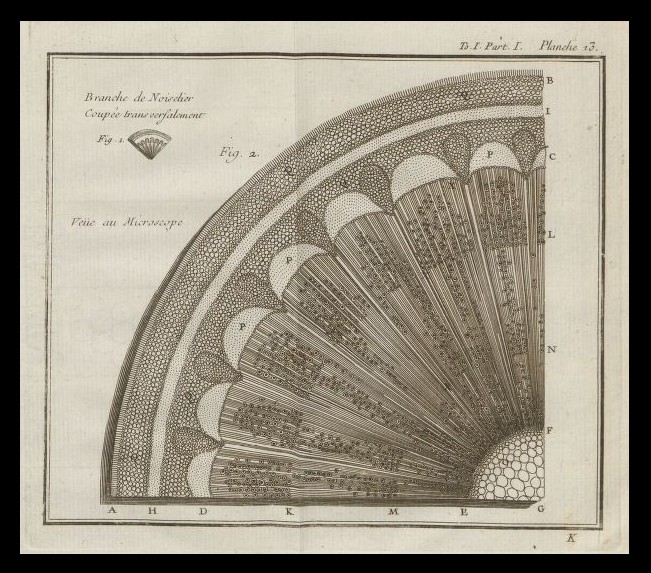
cross-section of a hazel branch
dancing microbes
Description:
Joblot, Louis. Observations d’histoire naturelle, faites avec le microscope :sur un grand nombre d’insectes, & sur les animalcules qui se trouvent dans les liqueurs préparées, & dans celles qui ne le sont pas, &c. avec la description & les usages des différens microscopes, &c. Paris : Briasson, 1754-1755.
Writer Mark Gatiss reveals the detective drama's series opener took inspiration from a 1960s episode of sci-fi show
There have always been links between the BBC's Sherlock and Doctor Who, what with the detective drama's co-creators, Steven Moffat and Mark Gatiss, both having also written for the sci-fi show (and in the former's case, being executive producer of it). Moffat even penned a Christmas special last year in which Matt Smith did a turn as Sherlock. Now Gatiss has has revealed that the Sherlock series opener – which is set in the London Underground – was inspired by a 1960s episode of the time-travel series. The Sun reports that Gatiss said: "I am obsessed with the tube and I think it all comes from that story when I was a kid. The first episode of Sherlock is explicitly about the London Underground for exactly that reason – because I love The Web of Fear!" Let's hope there are no complaints about Sherlock going down the tube.
The app’s focus is on reading bookmarked web pages—from your own ‘read later’ queue, Pinboard tag feeds, links saved by folk you subscribe to, &c.—but it’s really a solid all-rounder, letting you add and manage bookmarks easily, and offering sturdy support for x-callback-url.
Claire Cain Miller and Vindu Goel, reporting for the NYT:
On Friday, Google announced an update to its terms of service that allows the company to include adult users’ names, photos and comments in ads shown across the Web, based on ratings, reviews and posts they have made on Google Plus and other Google services like YouTube.
When the new ad policy goes live Nov. 11, Google will be able to show what the company calls shared endorsements on Google sites and across the Web, on the more than two million sites in Google’s display advertising network, which are viewed by an estimated one billion people.
Looking forward to hearing from Google fans how this is acceptable.
Etymology: < Byzantine Greek νηϕαλισμός (Suidas) < ancient Greek νηϕάλιος (of drink) unmixed with wine, in Hellenistic Greek also (of a person) sober (related to νήϕων sober, νήϕειν to be sober) + -ισμός -ism suffix. Compare French néphalisme, néphaliste (both 1873 or earlier). N.E.D. (1906) gives the pronunciation as (nī·făliz'm) /ˈniːfəlɪz(ə)m/ . Obs.
Total abstinence from alcoholic beverages; teetotalism.
1861 J. Miller (title) Nephalism, the true temperance of scripture, science, and experience. 1889 Lancet 6 Apr. 702 Some figures had been extracted from a report on Intemperance.., and had been misunderstood as implying that nephalism was more fatal than tippling.
Eight years after spending $5 billion on a heavily-criticized universal camouflage pattern, the Army is back at the drawing board looking for a new design that’s estimated to cost another $4 billion.
“Defaulting on our national debt is an impeachable offense, and any attempt by President Obama to unilaterally raise the debt limit without Congress is also an impeachable offense,” she wrote.
Combing though old copies of Sports Illustrated, I was surprised to find women on a what seemed like a decent amount of covers of the 1950s. That is, a good amount for the 1950s. When I looked into it more I discovered that in S.I.'s first decade of existence (1954-1965), female athletes were featured on 74 covers (12.6% of the total). Before you react to that number, know that in the past decade (2000-2011) women only appeared on 35 Sports Illustrated covers (4.9%)—and only 18 times (2.5%) as the primary or sole image [source].
All of a sudden the 1950s are feeling mighty progressive. And with much more appealing art direction.
You've heard the joke plenty of times. Person A says something totally innocuous, but person B gives it an entirely different slant by responding with, "That's what SHE said!" The joke is most likely too old for the actual origin to ever be found, but we may now have the earliest recording of it, or a reasonable facsimile that means the same thing. It was a young Alfred Hitchcock, helping actress Joan Barry Anny Ondra through a screen test with sound in 1929. "Talkies" were brand new, and the switch from silent films was not simple.
As production for Hitchcock’s early thriller Blackmail began, his studio, British International Pictures, decided to convert it. While all of Hitchcock’s classic film techniques made the transition easily, Czech actress Anny Ondra’s accent didn’t.
Enter Barry. A veteran of silent films in the Twenties, Berry had a bubbly, merry voice that made her attractive to Hitchcock as a vocal stand-in for Ondra. In an early sound test, which the British Film Institute (BFI) shared on YouTube four years ago, Barry confesses herself to be “terribly frightened,” while “Hitch” puts her at ease with a series of racy jokes.
And part of it was Hitchcock saying the line, “Stand in your place, otherwise it will not come out right—as the girl said to the soldier.” You can guarantee it wasn't the first time Hitchcock used that joke. It wouldn't have made it into any script of the era, but as a document on film, it's a classic. -via The Daily Dot
“Save us from the madness,” the chaplain, a Seventh-day Adventist, former Navy rear admiral and collector of brightly colored bow ties named Barry C. Black, said one day late last week as he warmed up into what became an epic ministerial scolding.
“We acknowledge our transgressions, our shortcomings, our smugness, our selfishness and our pride,” he went on, his baritone voice filling the room. “Deliver us from the hypocrisy of attempting to sound reasonable while being unreasonable.”
Hidden away down an overgrown road, in a village not far from Bangkok, there lies a curious museum known to many as the 'Thailand Hell Horror Park'. Built adjacent to a local temple, the Wang Saen Suk Hell Garden - as it is correctly named - brings to life Buddhist teachings about the torments of the underworld, in a series of increasingly gruesome scenes. Curious to learn more, I set out in search of Hell.
Wang Saen Suk Hell Garden
I first came across photos from the Wang Saen Suk Hell Garden a couple of years ago, after they had appeared in The Fortean Times. When I finally got to Thailand for myself, it was right up there on my 'to-do' list. After a little digging around I managed to find an address for Wang Saen Suk, apparently located at Sai 2, Soi 19, Saen Suk.
The village of Saen Suk is located close to Chon Buri - around 100km southeast of Bangkok - and while its pleasant beaches do attract their fair share of domestic tourism, the majority of foreigners pass this spot by in favour of nearby Pattaya or the spectacular islands to the south.
I didn't have much in the way of a plan; I simply woke up early one day and headed down towards Bangkok's hectic bus station beside Victory Monument. Getting there seemed to be a relatively simple affair. Regular coaches run from the capital to the infamous sex-tourism hotspot of Pattaya, and they would all be passing Chon Buri on the way. From there I guessed I'd taxi it to the Hell Garden. Getting back worried me more, but I decided to think about that later.
Sure enough, by 9am I was wedged into the back of an old bus between a couple of elderly Thai women, with a breakfast of noodles and a syrupy iced coffee. The journey took us just short of two hours, escaping the horrific Bangkok traffic to leapfrog the beach resorts which lie scattered along the coast east. One-by-one the other passengers got off, until I was alone with the driver. Every few minutes I'd ask him where we were, terrified of missing my stop.
"This Bang Saen!" he suddenly declared, then, pointing off to the right, "Saen Suk!" He hadn't heard of the Hell Garden (and my graphic mimery wasn't helping), but I only had to get to Saen Suk and look for the palace, or "Wang". I thanked him and hopped off the bus - into a bustling street of Chinese markets.
Getting from Bang Saen to the Hell Garden was not as easy as I had imagined. Taxis seemed non-existent here, so for the next four hours I walked up and down rural lanes flanked with high hedges, beside highways and past grocery shops, barbers and massage parlours [1].
To make things a little more interesting, the weather was fast deteriorating. As the locals were dashing for cover, many of them looked out in puzzlement at the stupid farang who had gotten lost in a fishing village during a thunderstorm.
"Go home!" a mechanic laughed at me, when I stopped to ask directions. "Khaosan Road that way!"
He was pointing at Bangkok, and its heaving tourist district. Later I stopped for a coffee at a roadside shack, and the woman running it made conversation while I drank. She spoke in Thai, and I understood around four words in as many minutes - but it was somehow flattering that she would try speaking to me in her own language. I did have to text a Thai friend to get the word for 'toilet' however... that was one thing I wasn't going to mime [2].
It was getting late in the afternoon by the time I reached Bang Saen Beach. I had been following a map copied by hand from the Internet, but it seemed to bear less and less resemblance to the arrangement of roads in reality. I was tired and soaking wet, wondering if I would ever find this place. I got talking to a bunch of youths outside a 7-Eleven. At first they made the same mistake that others had - directing me to the temple, or Wat Saen Suk instead of Wang Saen Suk. The palace was new to them.
I was almost beyond hope when a nearby man suddenly joined the conversation. He was smoking in the rain, his feet propped up high on the handlebars of his motorbike.
"I take you to Hell for 20 Baht," he said.
Naraka & The Hungry Ghosts
My Virgil left me by the entrance, where a great Buddha sat in watch over the gates of hell. From here it looked unremarkable; there were life-sized sculptures of men, women and animals, grouped to portray scenes of religious significance. A man was cutting off his hair in one diorama, while another man, presumably a saint of some sort, was slaying some mean-looking crocodiles. Here and there monks floated about, their orange robes wet from the storm, while a sign on the wall proclaimed, "Welcome to Hell!"
I followed the path around a corner, when suddenly the space ahead of me was opened up into a surreal tapestry of pain.
Two vast figures dominated the clearing, the emaciated forms of a man and a woman. At their feet, four sinners were boiling alive as guards jabbed at them with spears. Around the caul-dron and the giants, there danced 21 figures - all at a similar height to me. Their twisted human bodies were conjoined with the heads of animals, and arrayed in a variety of threatening poses: lunging, reaching and clawing, or prancing about like fools.
In Buddhism, Hell is known as 'Naraka'. It's not eternal damnation in the Abrahamic sense, but rather the punishments of Naraka continue until the sinner's negative karma is spent. Texts such as the Devadūta-sutta (a part of the Pāli Canon) give descriptive accounts of the tortures conducted here, which are decided by the particular crimes of the individual. The tormented are not 'cast' into hell, as is the case in other religions; but rather, it is the weight of their negative karma that brings them here.
According to the Traiphuum Phra Ruang, the newly-dead are brought before the 'Death King', Phya Yom. It is Phya Yom who informs you of your fate, after comparing your list of good deeds (inscribed on a gold plate) against any bad actions you have committed in life (listed on a scrap of dog skin).
The demon closest to me had the head of a savage pig, and a plaque between its feet that read:
"Ones who make a corruption are punished in the hell, they are named as the spirits of the pigs."
I walked through the dancing rows, reading the inscriptions as I passed. The ungrateful become tigers, the jealous rabbits, and those who instigate brawls become ducks. Stealing aquatic animals earns you a fish head, while those who steal cooked rice are named as the spirits of the birds. All are punished in the hell.
Ones who sell the habit-performing drugs are punished in the hell, they are named as the spirits of the cows.
Phya Yom, the Death King, was seated in a grotto to my left. Before him stood two freshly deceased souls, chained about their necks and awaiting judgement.
I wanted to find out more however, about the two figures that towered over all else: a male and a female form, with skeletal features and stretched tongues hanging halfway to the ground. A donation box was placed at the feet of each giant, while signs in English explained the fate of these two tortured beings. They had transgressed the five sacred precepts of Buddhism, and "plunged themselves into the four Causes of the Misfortunes". Namely, "the Connoisseur of Women, the Habitual Drinkers, the Habitual Gamblers the Fellowship with the knaves and behaving against the virtue or the moral principles".
These colossal figures were named as ghosts. The male was 'Nai Ngean-Nai Ngean', guilty in life of vice and disorderly conduct. The female ghost - 'Nang Thong-Nang Thong' - had made mistakes of "sexual intercourse, misconduct, mind without morality".
There are many ghosts described in Thai folklore; often inhabiting forests or coastal areas, they range in personality from the highly aggressive to lost and lonely souls. Nai Ngean and Nang Thong seemed to fit the description of Preta; or, 'the hungry ghosts'.
The concept of preta is common to Buddhist, Sikh, Hindu and Jain texts. These are spirits who have been greedy or jealous people in life, and by punishment are afflicted with insatiable hungers in the afterlife. In many traditions the object of their hunger is something repulsive, such as human faeces or cadavers.
Stories about the preta vary from culture to culture. Generally though, they are characterised as having great height combined with mummified skin, skeletal limbs and distended bellies. Their necks are long and thin, too narrow to allow them to fill their stomachs - and serving as a visual metaphor for their hunger.
Preta are highly sensitive to heat and cold, and unlike the tormented souls of hell they are free to wander the earth - forever searching for nourishment. Some traditions say that the ghost's food will burst into flames as it tries to consume it; other sources describe preta as being invisible, or visible only to humans in abnormal mental states.
Behind the hungry ghosts I examined another row of demons, some with less mammalian faces: a snake, a dragon, a lizard and a lobster.
I learned that those who exploit and cause suffering to others are named as the spirits of the dogs; vandals are rats and tortoises undermine the authority of others, while those who destroy the areas of wilderness are named as deer.
Ones who are employed to put fire on the others properties are punished in the hell, they are named as the spirits of the snakes.
The Bowels of Buddhist Hell
Thailand has a number of Hell Gardens, but the Wang Saen Suk Monastery Garden is the largest of them all. Entering the garden proper, I passed a sign which warned;
"If you meet the Devil in this life, don't postpone merit-making which will help you to defeat him in the next life."
Naraka consists of eight large pits, each of them attached to a further 16 areas, giving a total of 136 pits altogether. These regions vary in terms of punishment, and individuals are assigned to a pit based on the nature of their transgressions.
This formulaic system of torture shares much in common with the Christian traditions illustrated by Dante's Divine Comedy; unlike Dante's own Inferno however, the dead may be reborn from Naraka once their punishment has finished. Only one pit differs, and that is Avici: the 'non-returning hell'. This deepest region of the underworld is cold rather than hot like the others, and reserved for those who take the life of their parents, a Buddha or an enlightened 'Arhat'. Souls in Avici remain in torment until the birth of a new Buddhist era.
While Abrahamic religions focus on the Ten Commandments, the Buddhists live life by a series of 'Precepts'. According to the Pali Canon the Five Precepts forbid murder, theft, sexual misconduct, dishonesty and drunkenness. There are more precepts besides these however; novice monks must live by a series of 10 precepts, while an adult monk must uphold a total of 227.
As I walked around the garden, I was introduced to the various punishments prescribed for a range of different crimes. Stern men dressed in Buddhist robes were appointed the role of torturers. In the middle of the courtyard some naked figures were climbing up a thorny tree; the dogs of hell harassing them from beneath while ravens pecked at their eyes. Beside this diorama, a donation box explained:
"Ones who violate the third one of the Five Precepts "Infringing the sexual intercourse, being paramour with the others’ wives or husbands" receive the results of the bad action as shown in this picture."
Other punishments included a woman being penetrated with a spear, as recompense for "injection, aborticide, birth control"; "cheating and overreach" were punished with the removal of eyes, while a man who had undermined Buddhism was having his head savagely beaten off with a metal bar.
Some of these punishments were conducted singularly, while others were meted out on larger groups of sinners. One particularly gruesome scene featured a corrupt man and a rice thief (with the heads of a pig and a bird, respectively) being hacked apart with axes; an undutiful ascetic (toad) was having his intestines torn out by a bird, whilst a bull-headed drug dealer had his throat crudely slashed.
A human-headed sinner was being sawn in half beside them, another had a throwing star embedded in his forehead. It was interesting to note one other figure, which bore a strong resemblance to a 'Blemmye'; a mythical tribe of cannibals reportedly discovered in Africa, headless and with a face growing from their torso. The Blemmyes were described as early as the 1st century AD [3], and have appeared in notable works of fiction throughout the middle ages and since [4].
Beside this group an inscription read: "Ones who violate the second of the Five Precepts "Stealing, Cheating or destroying the others' Properties" receive the results of the bad action as shown in this picture."
Another scene depicted a woman who had killed her husband (a good father), having a spear thrust through her heart. A woman who had committed the sin of abortion was being slowly crushed in a vice, by two of the hell guards. A nearby rapist had been chained to a post and was having a trident shoved at his genitals.
I made my way towards the back of the garden, through the throng of twisting figures. All along I kept spotting faces out of the corner of my eye; many of these cement and plaster figures were surprisingly life-like, and I would often look up to find their eyes meeting mine directly. It was an unnerving sensation.
Other articles I had read about the Wang Saen Suk Hell Garden have reported its popularity amongst Thai families and domestic tourists; the park was abandoned on my visit however, as the rain continued to fall and thunder rumbled ominously over the horizon. Once or twice I saw the giant ghosts lit up by bolts of bright lightning. The electricity seemed to give life - just for a brief moment - to their hungry, withered faces.
At the other end of the garden I met the alcoholics. These men were still clinging to their bottles, as the hell wardens poured boiling oil down their throats.
The Path of Prayer
The Wang Saen Suk Hell Garden is not intended merely to frighten, but rather to instruct. In addition to the vicious punishment it details, there are also illustrations of the reward for good karma.
In the furthest corner of the garden, some figures were grouped about a tree. A nearby donation box read: "Ones who give alms and Yellow robs to the Buddhist Monks and build the Buddha’s immages will be born in the religious period of the next Bodhisattaya (Sri – Araya mettaraya). In his religion, there will have been a Kalapapluek Tree growing in the future world yielding which contain every thing one may wish for."
In fact, having now walked the length of the torture fields it was a relief to find such a positive message waiting at the end. Nearby, in the shade of another tree perched an image of the Buddha. He smiled down benignly, at the sinners who raised their hands in desperate prayer before him.
I returned towards the entrance, taking an open path that ran parallel to the hell garden. The statues here were not as violent, but rather showed scenes of appeasement. I did note however, that the macabre streak remained... as I contemplated a man peacefully feeding his own entrails to birds.
Thai Buddhism is fascinating, in that it embraces so many different ideas. Their extended cosmology incorporates an underworld structured much like that of Christianity in the Middle Ages, while themes from Vedic Hinduism have been absorbed into the religion through Cambodia to the north; Hindu gods such as Vishnu and Ganesha are commonly adopted here as personal and household deities.
Further illustrating the point, near the exit I came upon a series of twelve figures which corresponded with the signs of the Chinese zodiac. Collection boxes urged for a donation to the visitor's protective spirit, and so I located mine. The storm was still blowing, and it was just beginning to get dark. Soon I would need to venture out of the relative shelter of the Hell Garden, and try to find a way back to Bangkok. I was going to need all the protection I could get.
The sign read: "Who was born in the year of the pig has an influence on the twelfth, sixth month and year of the small snake. He must drive away the evil spirit by donating one Baht per age."
I fed a handful of Baht into the slot, and gave a little bow to the female spirit who rode before me upon a giant pig. I wasn't sure if that was the correct procedure, but it seemed to please a passing monk. I looked up to see him smiling kindly at me, as he arranged potted plants around a nearby Hindu shrine.
I left the Hell Garden behind me, and headed back out towards the main road. It was early evening, and the dark clouds made it appear darker still. I hadn't seen a taxi all day, and I was already formulating a back-up plan; perhaps the monks would take pity on me, and let me sleep on the temple floor.
As I walked the long road between Wang Saen Suk and the village of Bang Saen, I was joined by a pair of stray dogs who trotted beside me, one on either side. After around 10 minutes I reached the main road, and tentatively waved at the first passing vehicle.
To my surprise, the van pulled over. I tried to mime a bus, alternately asking for "Bangkok" and "Krung Thep" [5]. The driver was amused, but he seemed to understand what I needed. He drove me straight to the nearest bus station, and five minutes later I was sitting on a coach headed back to the capital; pondering on the nature of karma.
[1] I don't usually like to travel with a smartphone, although I'll admit that on this occasion I would have murdered for Google Maps.
[2] "ห้องน้ำ" or "hông náam".
[3] "It is said that the Blemmyes have no heads, and that their mouth and eyes are put in their chests." - Pliny the Elder (c75 AD) 'Natural History', Book V.
[4] "And of the Cannibals that each other eat, The Anthropophagi, and men whose heads Do grow beneath their shoulders." - William Shakespeare (1603) 'Othello'.
[5] "Krung Thep" is the traditional Thai name for Bangkok.
Professor Hawking devised an ingeniously simple experiment to prove whether time travel to the past was possible. He held a reception for time travellers, but didn’t publicise it until after it had happened. This way, only those who could travel back in time would be able to attend.
As congress and President Obama continue to mull over their tactical options in the midst of a government shutdown and a looming debt ceiling deadline, the Financial Times reported last week that one US bank, which has chosen to remain anonymous, is overstocking its automated teller machines with cash in case of a national credit default. In a similar story, the New York Times reported that many major US banks are considering stopgap measures, such as cash advances for people on Social Security, just in case Congress decides not to pay its debt.
"To guard against possible mayhem from a debt ceiling crisis, some of the nation’s largest banks are deploying plans that were developed in 2011 — when the government first looked as if it were on the verge of surpassing its debt ceiling limits. One senior bank executive said his bank’s plan includes stocking retail branches with at least 20 percent more cash," the Times reported, suggesting that "confidence in Washington has waned." Today Bloombergtook that assertion to its next logical step: If the debt ceiling is not raised, "global markets will see the U.S. government as grossly and dangerously incompetent." An explanation follows:
"Refusing to raise the debt ceiling is fundamentally different from cutting the government’s funding. It’s as if Congress were sending the Treasury two contradictory and legally binding orders -- one that requires it to make hundreds of billions of dollars a month in payments, another that prevents it from borrowing the money it needs to do so. Which order is the Treasury supposed to obey? This is the stuff of absurdist theater. Confidence matters, and this event would destroy confidence."
"The Night Wolves, or Nochnye Volki, are bikers who have found a Russian God. In an act of patriotism they have changed all the words on their leathers from Latin lettering to a gothic Cyrillic. One of the Hells Angels symbols, a ‘1 per cent’ inside a diamond, is still etched on a great stone at the entrance to their kingdom. In Hells Angels lore it stands for the 1 per cent who are outlaws. But the Night Wolves have engraved a new text around the diamond, transforming its meaning: ‘In heaven there is more joy at the 1 per cent of sinners who confess than the 99 per cent who have no need of salvation.’"
In the Moscow compound of the Night Wolves, ships’ conrods have been refashioned as crosses ten feet high. Broken plane parts have been bolted to truck engines to make a giant stage; crushed Harley-Davidsons have been beaten into a bar; boats’ hulls have been moulded into chairs; and train parts into Valhalla-sized tables.
via firehose ("tl;dr: Self-employed, he actually needed healthcare and couldn't get it")
Though he initially supported repealing the law, Joshua Pittman became curious about Obamacare in the days and weeks before it launched. For years, he had gone uninsured, thinking he’d be able to “get over anything with a bandaid and a six pack of beer.” But a lead poisoning incident earlier this year shook his confidence and bank account, leading him with tens of thousands of dollars in medical bills.
Peoples of the Whoniverse, do not fear: Peter Capaldi’s Doctor will be nothing like the foul-mouthed Malcolm Tucker from The Thick of It, owing to the fact that, actually, Capadldi is quite a nice chap!
According to the Thick of It‘s creator, Armando Iannucci , the 55 year-old actor will display a range of likeable qualities when he takes up the Time Lord mantle in December.
The thing about Peter as Malcolm is he is very angry, but he is actually a very gentle, funny guy. I imagine you will see that range of him going from being gentle to quite a strong and powerful personality and I am really looking forward to it.
This is indeed welcome news, as the thought of a red-faced Capaldi exchanging expletives with a pack of enraged Plasmatons isn’t a good one. Iannucci definitely thinks he’s the right man for the job, though. In fact, he’s surprised he wasn’t offered the job sooner.
I was slightly nervous when I thought he might get it and we were still making The Thick of It. There was a time when David Tennant stood down and I knew Peter would be really good, so when it did finally happen I was pleasantly surprised but it wasn’t a huge surprise because he would be tremendous.
It’s hard to disagree – Peter Capaldi will, indeed, be tremendous in the role, although we doubt he’ll be meeting any Plastmatons.
It's being reported that a group of Doctor Who fans have uncovered a cache of 106 long-lost Doctor Who episodes in Ethiopia. But what do we know for sure, and what's just hearsay?





![In a cavern deep below the Earth, Ayn Rand, Paul Ryan, Rand Paul, Ann Druyan, Paul Rudd, Alan Alda, and Duran Duran meet together in the Secret Council of /(b[plurandy]+b ?){2}/i.](http://imgs.xkcd.com/comics/ayn_random.png "In a cavern deep below the Earth, Ayn Rand, Paul Ryan, Rand Paul, Ann Druyan, Paul Rudd, Alan Alda, and Duran Duran meet together in the Secret Council of /(b[plurandy]+b ?){2}/i.")


 (
(