
Shared posts
10 Aug 15:50
When She Talks, Banks Shudder
by By BINYAMIN APPELBAUM
In a quest for tougher rules on banking, Anat R. Admati, an industry gadfly, is rapidly gaining a broader audience.
08 Aug 13:41


A tobacco deal got Gov. Chris Christie $92 million for his budget, but rating agencies downgraded New Jersey’s credit anyway for its reliance on “one-time” fiscal fixes. (Scott Olson/Getty Images)

Former Washington Gov. Christine Gregoire objected to borrowing against tobacco revenues but lost. Her state shied away from high-risk bonds. (Joseph Taylor/Getty Images)

Tom Miller, Iowa Attorney General (Andrew Harrer/Bloomberg via Getty Images)

As Ohio's state treasurer in 2007, Richard Cordray advocated for a $5.5 billion tobacco bond deal, Wall Street's largest. (Chip Somodevilla/Getty Images)


How Wall Street Tobacco Deals Left States With Billions in Toxic Debt
This story was co-published with Marketplace.
In November 1998, attorneys general from across the country sealed a historic deal with the tobacco industry to pay for the health care costs of smoking. Going forward, nearly every cigarette sold would provide money to the states, territories and other governments involved — more than $200 billion in just the first 25 years of a legal settlement that required payments to be made in perpetuity.
Then, Wall Street came knocking with an offer many state and local politicians found irresistible: Cash upfront for those governments willing to trade investors the right to some or all of their tobacco payments. State after state struck deals that critics derided as “payday loans” but proponents deemed only prudent. As designed, private investors — not the taxpayers — would take the hit if people smoked less and the tobacco money fell short.
Things haven’t exactly worked out as planned.
A ProPublica analysis of more than 100 tobacco deals since the settlement found that they are creating new fiscal headaches for states, driving some into bailouts or threatening to increase the cost of borrowing in the future.
One source of the pain is a little-known feature found in many of the deals: high-risk debt that squeezed out a few extra dollars for the governments but promised massive balloon payments, some in the billions, down the road.
Tobacco Bonds May Be Dangerous to Your State's Financial Health
After a bruising legal fight, tobacco companies agreed in 1998 to compensate 46 states, the District of Columbia and five U.S. territories for the health-related costs of smoking. Wall Street helped turn their annual payments into upfront cash by selling bonds to investors. Some of the deals included a form of high-risk debt, capital appreciation bonds, which obligated governments to pay out billions of their tobacco income in the future. Explore »
(by Cezary Podkul and Yue Qiu, ProPublica)
These securities, called capital appreciation bonds, or CABs, have since turned toxic. They amount to only a $3 billion sliver of the approximately $36 billion in tobacco bonds outstanding, according to a review of bond documents and Thomson Reuters data. But the nine states, three territories, District of Columbia and several counties that issued them have promised a whopping $64 billion to pay them off.
Under the deals, the debts must be repaid with settlement money and not tax dollars. Still, taxpayers lose out when tobacco income that could be spent on other government services is diverted to paying off CABs. And states can’t simply walk away from the debt — bondholders have a right to further tobacco payments even after a default.
“It’s going to cost taxpayers, either directly or indirectly,” said Craig Johnson, an associate professor of public finance at Indiana University in Bloomington who has studied tobacco bonds and CABs. “I don’t doubt that at all.”
ProPublica’s analysis is the first to measure the magnitude of the high-risk debt involved in the tobacco deals and to calculate how much Wall Street’s dealmakers earned. It also shows how much of the tobacco money has been securitized — that is, turned into payments that go to investors. As of this year, at least one out of every three dollars coming in under the settlement is pledged to investors, according to bond disclosures and payment data from the National Association of Attorneys General, which tracks the flow of funds.
The sure winners so far: Investment bankers from Citigroup, the now defunct Bear Stearns and others who, along with consultants and lawyers, have pocketed more than $500 million in fees for their financial engineering, ProPublica estimates. They now stand to make more as the governments look to rework old deals and try to get even more tobacco cash upfront.
In part, the troubles in the tobacco bonds arise from the same kind of miscalculation that led to the housing bubble.
Reporter Cezary Podkul talks with Marketplace’s Kai Ryssdal about Wall Street and the predicament of states that borrowed against the 1998 tobacco settlement.
Just as mortgage lenders bet that home prices would keep rising, the tobacco deals relied on optimistic predictions of how much Americans would smoke. Forecasters rightly saw that cigarette sales would continue to decline, but now the yearly drop — about 3 to 3.5 percent — is nearly double what was cooked into the deals.
Because the bonds sold to investors can stretch 40 years or more, the outdated estimates mean an ever-widening gap between what states expected to collect under the settlement and the payments they promised investors.
The CABs promise gigantic payouts — as high as 76 times what’s borrowed — because nothing is due on them for decades. Meantime, interest compounds on both the principal and accumulating balance.
Defaults by state and local governments are rare, but rating agencies have been warning that tobacco bonds in general could go under en masse. Moody’s said in May that up to 80 percent of the tobacco issues it tracks are likely to default.
For CABs, defaults appear certain.
“They’re doomed,” said Jim Estes, a finance professor at the California State University, San Bernardino, who helped ProPublica analyze the bond documents. “It’s not a question of whether or not, it’s a question of when.”
Wall Street firms are already pitching their services to help unwind deals they helped create.
The first state to act was financially strapped New Jersey. In March, it rescued two CABs that were part of a larger 2007 deal. The CABs promised to repay $1.3 billion in 2041. To pay off that giant tab before it comes due, the state agreed to hand over $406 million of its remaining tobacco proceeds beginning in 2017, money that otherwise would have gone into state coffers.
Barclays handled the transaction for New Jersey and earned $4.5 million. The state also got $92 million in upfront cash out of the deal to help Gov. Chris Christie and lawmakers plug a budget deficit. Still, rating agencies weren’t impressed: They downgraded the state anyway, making it costlier for New Jersey to borrow.
In late July, Rhode Island announced a plan to buy out some holders of $197 million of CABs it sold in 2007. The deal would shave $700 million off a $2.8 billion tab due on the bonds in 2052 and let the state refinance some of its older tobacco bonds at more attractive interest rates. Now, some bondholders are suing to block the deal.
Most of the deals involving CABs sold right before the 2008 financial crisis, ProPublica found. As the horizon darkened, the market for them began falling apart, with one lone buyer keeping Wall Street’s CAB machine going. Pitch documents show that bankers pressed the states to act fast before the window shut.
“We are confident that we can stimulate demand,” Bear Stearns bankers told Ohio prior to a $5.5 billion tobacco bond package championed in 2007 by then state Treasurer Richard Cordray, who these days heads the U.S. Consumer Financial Protection Bureau.
Ohio’s tobacco deal was the largest ever. It included CABs that brought in $319 million in return for an eventual $6.6 billion balloon payment — a nickel on the dollar. Bear Stearns, Citigroup and other Wall Street firms made about $23 million in fees on the transaction, according to the bond offering document.
Then there is Puerto Rico, a government with a long history of financial woes.
In April 2008, as Bear Stearns was collapsing, it closed a $196 million tobacco bond sale that saddled the Puerto Rico Children’s Trust, a fund set up to benefit island families, with an eventual $8.6 billion balloon payout. Bear Stearns and Citigroup made $1.4 million in fees.
This year, Puerto Rico’s tobacco settlement receipts fell 13 percent below what was forecast when the deal was done. The commonwealth is also struggling to prevent default on a mountain of other debt. Officials there did not respond to written questions, phone calls or interview requests.
Critics have repeatedly lambasted the states and other jurisdictions for violating the intent of the tobacco settlement by spending the money on uses other than anti-smoking programs and health care.
“The securitization scheme not only accelerated the expiration of the usefulness of that money, but basically guaranteed that it would never be used for its conceived purpose,” said Dave Dobbins, an executive with the American Legacy Foundation, a nonprofit created under the settlement to fund smoking-prevention programs.
“Now the money’s gone, the securitization scheme is sort of coming home to roost for some people … and the tobacco problem is still there: 480,000 people [are] expected to die this year due to tobacco-related disease,” Dobbins said.
“It’s a grim story.”
“Turbo” Tobacco Cash
Whenever governments get access to a stream of money, Wall Street bankers pitch deals to turn it into a one-time payment. Bonds are sold to investors, who give the governments cash in exchange for the income stream, similar to a loan. Bankers earn fees based on a deal’s size, giving them every incentive to maximize the value.
The 1998 tobacco settlement was no ordinary revenue stream: It was the biggest financial settlement in legal history, projected to net states and other governments $206 billion just through 2025. “The money is huge,” Iowa Attorney General Tom Miller said at the time.
A cottage industry immediately sprouted up on Wall Street. The goal: Convince states to pawn the revenues.
Citigroup, JPMorgan, UBS, Goldman Sachs, Morgan Stanley and now-defunct firms like Bear Stearns, Lehman Brothers and Merrill Lynch all dedicated bankers to the cause, pitch documents show. Bear Stearns even had its own, 21-strong “Tobacco Securitization Group” devoted to monetizing the settlement.
“The ink on the document was barely dry before these folks started coming at us, suggesting the idea of securitization,” said Christine Gregoire, who as Washington’s attorney general helped lead the tobacco settlement talks and later, as governor, opposed securitization.
“I was just like, ‘Wow, I can’t believe that they have immediately thought about how to get one-time money and be indebted to the revenue stream.’ And I remember from the very beginning being offended at the idea,” she said.
Part of Gregoire’s objection is the same reason it doesn’t make sense to buy groceries on credit: You end up spending more — and getting less — by paying interest over time on goods you quickly consume.
“It’s not good fiscal management of public money to give away 75 cents on a dollar of income,” she warned in 2002, when her state debated raising $450 million to fill a budget hole by cashing out tobacco income.
Washington lawmakers pushed ahead anyway. The plan securitized 29.2 percent of the state’s expected tobacco cash, the equivalent of $40 million to $50 million a year. Investors were promised that money until the debt was fully repaid, sometime around 2025.
Kym Arnone, Bear Stearns’ senior tobacco banker, advised the state against using CABs.
“At the present time, no market has emerged for tobacco CABs since investors are unwilling to defer all of their income until the final maturity of a bond when there is significant chance of payment interruption or payment delay,” a 2002 pitch document signed by Arnone states.
The state followed that advice. By issuing traditional bonds that regularly pay interest and principal, Washington sold what turned out to be one of the less-costly deals crafted by Bear Stearns. Through last year, when the state was able to refinance on favorable terms, investors were paid $848 million from tobacco settlement money, a little under twice the $450 million the state got.
But Washington was one of the early deals. As the securitization trend continued — with Bear Stearns alone leading $23 billion of transactions from 2000 through 2007, according to Thomson Reuters data — bankers reached for ways to fatten the deals and their fees.
Chief among these was the CAB. By 2005, investment bankers had found willing buyers for this type of bond, thanks in part to a repayment structure first suggested by Goldman Sachs: the “turbo” bond.
With a turbo bond, governments agreed to make earlier payments if they had surplus cash from the tobacco settlement. The prepayments were not an ironclad promise — they could be skipped without triggering default. Turbos were already being built into regular bonds like those sold by Washington, and they appealed to CAB investors who might want some money before a final payoff decades away.
“That’s why they call them turbos — because they pay down faster,” said John Lampasona, an analyst at Standard & Poor’s who rates tobacco bonds.
Reassuring forecasts of cigarette sales also aided the market for CABs.
IHS Global Insight, a consulting firm, earned millions of dollars providing its forecast on almost every deal done in the sector. The projections persuaded investors there would be extra cash available to prepay CABs. Since then, smoking bans and hefty tax increases have nearly doubled IHS’s projected rate of decline in cigarette sales.
“I take all the credit and take all the blame,” James Diffley, IHS’s lead forecaster for cigarette sales told ProPublica. “It’s a forecasting exercise. The world will not turn out exactly like anybody imagined.”
A 2005 deal involving Puerto Rico was the first CAB sale, according to the bank that arranged it. That year, Merrill Lynch convinced the Puerto Rico Children’s Trust to issue $108 million of CABs that wouldn’t come due until 2045 and 2050 — when many of the officials deciding to sell the debt might well be dead and a $2.5 billion payment would be owed.
Merrill Lynch estimated that Puerto Rico could pay off the debt early, however, by shelling out some $372 million in turbo repayments from 2024 to 2028. That prediction, tucked inside the 2005 bond offering, was based on industry payments coming in line with IHS’s basic expectation of cigarette sales.
Mutual fund managers Oppenheimer Funds, BlackRock, Eaton Vance, Dreyfus, Nuveen and Goldman Sachs Asset Management all bought Puerto Rico’s turbo CABs, according to a Merrill Lynch pitch document. A spokesman for Merrill Lynch, now part of Bank of America, declined comment for this article.
After that deal, bankers started layering CABs into many tobacco issues. In all, ProPublica identified 92 CABs that incorporated turbo repayments, raising nearly $3 billion between 2005 and 2008.
The $64 billion payoff for these bonds is about 21 times the amount borrowed. Even in the unlikely scenario that all of them get repaid early, the payoff would be about five times, ProPublica estimates. By comparison, traditional bonds like those Washington sold typically repay about three times what’s borrowed, said Estes, the finance professor.
Steep repayment terms have made CABs controversial in other arenas. In the mid-1990s, for instance, Michigan limited the ability of school districts to sell CABs precisely because they can create giant debt burdens far into the future.
Nevertheless, in 2006, Michigan sold a $55 million CAB that Bear Stearns tucked into a larger, $490 million tobacco issue. The CAB promised to repay $1.5 billion, or 27 times the amount borrowed, in 40 years.
Asked about the transaction, Michigan treasury spokesman Terry Stanton said, “CABs can be a useful structuring tool when the risks and costs are properly understood and analyzed.” The state sold the bonds, he said, because there were investors interested in buying them.
As Wall Street manufactured more turbo CABs, a dominant buyer emerged: Oppenheimer Funds, the Rochester, New York, mutual fund manager. The firm gobbled up hundreds of millions of dollars in CABs, sometimes buying entire issues in one gulp and sprinkling the debt throughout at least 17 of its municipal bond funds, according to data from Lipper, which tracks mutual fund holdings.
Oppenheimer Funds declined to comment for this story. But in May, Michael Camarella, senior portfolio manager for the firm’s municipal team, told Bloomberg News the tobacco sector presented a buying opportunity for investors willing to hold on to the debt. “We’ve been willing to take those risks,” he said. “Tobacco and Puerto Rico are the two cheapest sectors right now.”
Oppenheimer Funds declined to make Camarella available for an interview.
As of May, the firm was the largest owner of turbo CABs, according to Lipper data. The holdings were large enough that, were they all to pay off in full at maturity, Oppenheimer Funds would collect some $40 billion. With the 1998 settlement proceeds declining, however, that appears highly unlikely. In May, the firm valued these CABs at only about $700 million, or about 1.8 cents on the dollar, according to Lipper.
“I have yet to see a capital appreciation bond that I think is going to get paid,” said Dick Larkin, credit analyst at brokerage firm Herbert J. Sims & Co. in Florida, who has been warning for a decade that tobacco bonds are headed for trouble.
Some of the early investors have come to the same conclusion.
“We don’t want to have any bonds in this sector overall,” said Tom Metzold, senior portfolio adviser for Eaton Vance, one of the mutual funds to buy into the Puerto Rico CABs sold by Merrill Lynch. A $6.6 million chunk of that 2005 deal was the last CAB standing in one of the firm’s funds as of May, according to Lipper.
But as investors like Metzold cut their losses, hedge funds are stepping in. By scooping up the debt at distressed prices, they may still be able to make money. Tobacco bonds of all stripes have been a favorite playground for speculators this year, returning 10.83 percent and making it one of the top performing sectors of the municipal bond market, according to S&P Dow Jones Indices.
The “Max Out” Strategy
Analysts say states agreed to the CABs' steep repayment terms to squeeze the tobacco settlement money for all it was worth. “They were designed to milk every last dime,” said Dean Lewallen, a senior research analyst at investment manager AllianceBernstein in New York.
By layering in CABs, states got more upfront cash than they otherwise would. Once standard 30-year bonds were paid off, it would free up tobacco money to cover any CABs included in the package. They could then be prepaid before the big balloon payments came due at maturity.
The scenario assumed that settlement revenues would come in as predicted. But when many of the securitizations sold in 2007, the bankers and politicians were more concerned about another aspect of the deals: their size.
In February of that year, soon after he took office, Richard Cordray, Ohio’s newly elected treasurer, began trumpeting the idea of securitizing the state’s tobacco money, according to news reports from the time.
Ohio’s then-governor, Ted Strickland, backed the idea, and it sailed through the legislature that June. The plan was to sell all of Ohio’s tobacco money to finance new school buildings and cover tax cuts for the elderly.
By July, Cordray and then-Budget Director Pari Sabety had the sale process in full swing. In public statements promoting the deal, Cordray said it made sense because tobacco payments might shrink in the future.
“Five years from now, 10 years from now, smoking bans are kicking in, taxes may change, maybe court decisions. If the tobacco companies are not profitable, Ohio would be out its money. But if we cash in now, we will have our money and we will shed the risk,” Cordray was quoted saying in a July 2007 report by The Associated Press.
The state requested proposals from investment banks on how to generate $5.05 billion from a bond sale — including “CABs, subordinate CABs, or any other proposed element.”
“Bear Stearns is pleased to present its qualifications,” opened a letter from Arnone, who by then had done 26 tobacco deals worth $25.3 billion, according to the document.
Bear Stearns warned that it was getting pricier to sell CABs. The bank said Puerto Rico halted a CAB sale that Bear was leading because of “sticker shock” at the “dramatically higher” interest rates needed to get the deal done. But Bear put CABs into its recommended Ohio deal structure anyway.
“CABs are increasingly difficult and costly to sell,” JPMorgan chimed in. Yet it, too, proposed them as part of a “max out” strategy for Ohio to raise about $5.4 billion — and added that it now had a “leading tobacco bond résumé” because it had hired away executives from UBS, Goldman Sachs and Merrill Lynch to work on its team.
The major purchasers of CABs — including Oppenheimer Funds — had their portfolios “relatively full” of the debt, Morgan Stanley warned, but added that it could use its “unique insight” to sell the bonds anyway, a pitch document states.
Eventually, Ohio chose Bear Stearns and Citigroup to lead the sale. The firms packed $319 million of CABs into the overall $5.53 billion deal. The state received $5.05 billion after fees and setting aside reserves.
The CABs were costly. They accrue interest at even higher rates, 7.25 and 7.5 percent, than the “sticker shock” rate of 6.5 percent that had caused Puerto Rico to pull its CAB sale. At their respective maturities in 2047 and 2052, $6.6 billion will come due on them. Absent any turbo payments that might pay off the debt early, that’s a final repayment ratio of about 21 times the amount borrowed.
Interest rates on the other, less-risky, Ohio tobacco debt ranged from a low of 4 percent to 6.5 percent.
Just a few months after the deal closed, Bear Stearns went under, foreshadowing the financial crisis ahead. Shortly after, Arnone moved to Lehman, which filed for bankruptcy in September 2008 and had its North American operations bought out by Barclays Capital.
Two weeks later, Arnone was pitching another tobacco deal: “Individuals make the difference — not firms, which have unfortunately proven to be transient in this environment,” she wrote to Iowa officials on Barclays' letterhead.
By then the run had finally stalled. Oppenheimer Funds — which had been the “sole source” of liquidity in the CAB market — was no longer buying in the wake of the Lehman collapse. Arnone recommended the state not use CABs. Unable to hit its target amount, Iowa pulled the deal.
Citigroup, Morgan Stanley and JPMorgan declined to comment for this story. Arnone and Barclays also did not respond to requests for comment or to a list of specific questions.
Asked about the wisdom of Ohio’s transaction, the state’s Office of Management and Budget said in a statement, “The decision to move forward with the transaction was made by Ohio’s leadership in 2007. We can’t speak to their thinking at the time.”
Strickland did not respond to a request for comment, but Cordray told ProPublica the state made the right decision. The decline in tobacco payments means they were riskier than believed, he said, and CABs helped the state maximize its proceeds. If payments decline further, he said, investors should pay the price, not Ohio.
“Obviously, they are always going to want to come back, cup in hand, saying to the state, ‘Put some money in it,’” Cordray said. “But it’s not necessary; it’s not legally required and in fact was the whole purpose of this deal.”
“We Basically Burned It All”
By using the tobacco bond money to build schools, Ohio didn’t have to sell general obligation bonds, which are repaid with taxes, to cover construction costs. But not all states used tobacco debt for such long-term investments.
New Jersey stands as the prime example. The state first issued tobacco bonds in 2002 and 2003, spackling holes in the state budget with the $3.5 billion they raised. “We basically burned it all in two years,” said David Rousseau, a deputy treasurer at the time who became state treasurer from 2008 to 2010. “It was not one of New Jersey’s better financial moves.”
In 2007, the state raised another $3.6 billion to repay those bonds. The deal, brokered by Arnone’s Bear Stearns team, had one silver lining: It let New Jersey keep about 24 percent of its tobacco payments, as opposed to the 100 percent it had given up in the earlier deal. That left up $50 million to $60 million a year in payments for the state instead of investors.
But not for long.
Staring at another $800 million budget gap this year, state officials again turned to Arnone. The two CABs issued in 2007 and their $1.3 billion payoff were now a concern, too. The solution was to sign over the untapped tobacco money expected from 2017 to 2023 — an estimated $406 million— to repay the debt early and get some new cash from investors in exchange.
The state said it came out ahead in the deal, largely because it also brought in $92 million for the budget. Still, Standard & Poor’s downgraded New Jersey’s taxpayer-backed debt a notch, citing the state’s “reliance on one-time measures that are contributing to additional pressure on future budgets.” The Moody’s and Fitch rating agencies followed suit, citing the same concern.
The downgrade shows how CABs can do damage despite legalities designed to shield the state and taxpayers.
Like most states that sold tobacco bonds, New Jersey did so through a shell entity. The New Jersey Tobacco Settlement Financing Corp. exists “in, but not of” the state’s treasury, its authorizing legislation states. The corporation’s only assets are the tobacco revenues the state signed over to pay back its debts.
“It’s only those monies, and no other monies, that the bondholders have a claim on,” said David Narefsky, a municipal bond lawyer at law firm Mayer Brown in Chicago.
But if the CABs aren’t paid back in time, they don’t go away. Barclays told the state that in a default, the bondholders would still be in line ahead of taxpayers for subsequent tobacco income. The bonds would continue to earn interest and would have to be paid back at an even higher cost — $1.6 billion from 2041 through 2049.
In a statement explaining the March deal, New Jersey made clear the CAB bondholders couldn’t be ignored.
The statement said that while New Jersey is “not legally compelled” to prevent a default, it did not want the corporation’s financial troubles to flow onto its books — or upset its creditors: “The State sees an advantage in maintaining good relations with the tobacco bond investors, as they are likely to invest in other bonds of the State.”
Rhode Island also decided it couldn’t simply ignore its CABs. The state wants to refinance its 2002 tobacco settlement bonds to take advantage of lower interest rates. But the deal, which involves selling $594 million in new tobacco bonds to pay off the old ones, can’t go forward without the approval from the owners of its 2007 CABs.
As a result, Rhode Island proposes to spend more than $60 million to buy them out and get their permission. “All of the CAB bondholders are getting something,” according to a person familiar with the transaction.
Rhode Island had hoped to collect at least $20 million out of the transaction for its budget. But the deal is on hold after Oppenheimer Funds, which holds some of the tobacco debt, filed a lawsuit this week alleging that it would “siphon off” money from bondholders to the state.
Money ‘Out Of Heaven’
As CAB debt piles up on state balance sheets, hopes of repayment — turbo or otherwise — are fading.
Of the four jurisdictions with scheduled CAB turbo prepayments so far, only one has made them, ProPublica found: Placer County, California, which has a relatively small, $14.3 million issue promising a $68 million payoff. The other three, pooled tobacco CABs sold by New York counties, have not.
Even on traditional bonds, making those turbo prepayments has proven difficult. Ohio has fallen about $70 million behind on prepayments toward its regular tobacco bonds, which must be paid off before any money goes to the CABs. Kurt Kauffman, the state’s debt manager, said it’s too early to tell how Ohio’s CABs might be repaid.
“We just don’t know,” he said. “That’s going to be up to kind of the future leaders.”
Others are watching to see how their peers deal with the problem.
In California, which has promised to repay nearly $3.7 billion on $350.5 million of CABs sold by its Golden State Tobacco Securitization Corp. in 2007, the entity’s debts are a concern. The corporation is behind schedule on early turbo repayments for its 2007 bonds.
“Hopefully it doesn’t come to the point of default because this office would be concerned about a negative fallout in the market,” said Tom Dresslar, spokesman for Treasurer Bill Lockyer.
Lockyer in the past has referred to CABs used by school districts as the equivalent of “payday loans” because of their ability to pile up future debts. Asked why California sold tobacco CABs under his tenure, Dresslar said Lockyer had just entered office in 2007 and the bond deal already was in the works.
The debt is much easier to manage in states that avoided CABs. Last October, Washington refinanced the tobacco bonds it sold in 2002, selling $334.7 million of new, lower-cost debt. Arnone led that deal as well, which netted $2 million in fees for Barclays and other firms. As before, the state avoided CABs.
Washington now expects to repay its tobacco debt two years earlier, by 2023. At that point, 100 percent of its tobacco dollars will again flow to taxpayers instead of investors.
“The money from the tobacco settlement was supposed to go into research and education to prevent people from getting into smoking and, of course, we want that to happen,” said Kim Herman, who heads the state’s tobacco securitization authority.
Smoking’s toll, after all, was the reason states fought Big Tobacco for the money in the first place. But when the final legal settlement was signed in 1998, it did not require states to spend at least some money on smoking prevention.
“That was a mistake,” said Iowa Attorney General Tom Miller, who helped lead the settlement negotiations and is still in office. Miller said he did not oppose securitizing a large slice of Iowa’s proceeds, 78 percent, as long as it still left a portion remaining for tobacco prevention programs.
But Michael Moore, who as Mississippi’s attorney general filed the initial lawsuit that led to the settlement, says the states that securitized made a “sucker bet” that diverted the winnings of the fight away from their intended purpose.
“The people making the decisions think that this money fell out of heaven,” Moore said. “No. This money was related to a public health battle, probably the biggest public health battle in our nation’s history, trying to combat the No. 1 cause of death and disease.”
The Centers for Disease Control and Prevention estimates that to make a real dent in smoking states should collectively be spending $3.3 billion a year on anti-tobacco programs.
The Campaign for Tobacco Free Kids, a smoking-prevention group, said tobacco companies spend $8.8 billion a year on marketing. By comparison, states together spent $481 million on prevention in their most recent fiscal years, the campaign’s latest report said.
The state that spent the least?
Update: Official statement from the New Jersey Treasury Department.
Additional research contributed by Claire Kelloway, ProPublica.
03 Aug 06:22
Reanimating Bertha, a Mechanical Behemoth Slumbering Under Seattle
by By KIRK JOHNSON
The world’s biggest tunnel-boring machine, nicknamed Bertha, is awaiting repairs, and getting it going again will be an engineering feat in itself.


01 Aug 20:32
Filed under: Congress, Constitutional Law, Criminal law, Media, Politics, Society


CIA Admits Hacking Senate Computers After Months of Denials
by jonathanturley

 In the same week as the State Department report endorsing findings that the CIA lied to Congress and brutalized suspects, the CIA is now admitting that its recent denials of hacking Senate computers was also false. Once again, however, there is not even a suggestion of discipline, let alone criminal charges, for CIA officials who lied to Congress (or allowed others to lie) and hacked into congressional computers.
CIA Director John Brennan used the type of Orwellian speech that we have come to expect when discussing CIA abuses. He admitted that employees “acted in a manner inconsistent with the common understanding” between the agency and the Senate. That “inconsistency” just happened to involve hacking into computers during an investigation of the CIA itself on Bush-era interrogation practices.
Keep in mind that it was Brennan who just a few months ago mocked the allegations and said “As far as the allegations of the CIA hacking into Senate computers, nothing could be further from the truth. … That’s beyond the scope of reason.” Now one of two possibilities exist. First, Brennan lied to the Senate and then lied to the American people. Second, high-ranking CIA officials lied to Brennan and then sat back as he lied to the Senate and the public. I am not sure which is worse but both would seem a logical basis for a criminal investigation.
The Obama Administration last year struggled with questions of why it has blocked any investigation, let alone prosecution, of James Clapper, director of National Intelligence, who previously acknowledged lying before the Senate. Not only has Clapper not been fired, but Obama has asked him to help oversee the “reforms” of the very abusive program that he helped run and then lied about to Congress. It is part of America’s Animal Farm where government officials can commit crimes with impunity while pursuing others like Snowden for arrest. Yet, the questions persist about Clapper so the Administration sent forth National Intelligence general counsel Robert Litt, who promptly made it far worse.
You may recall that when Clapper appeared before the Senate, he was asked directly, “Does the NSA collect any type of data at all on millions or hundreds of millions of Americans?” Clapper responded, “No, sir. … Not wittingly.”
We now know that was a lie. Later, Clapper admitted to giving a false answer to Congress but explained that his testimony was “the least untruthful” statement he could make. Yet, of course, that would still make it an untrue statement — which most people call a lie and lawyers call perjury. Indeed, when Roger Clemens was prosecuted for untrue statements before Congress, he was not told of the option to tell the least untrue statement on steroid use.
The scandal followed the Clapper false testimony but the CIA did not hesitate to deny the allegation in the face of bipartisan criticism. Brennan reportedly apologized in private but of course such admissions are not made in public –just between members of what appears a ruling elite in this country. In a truly Orwellian twist, Dianne Feinstein (who has not commented on the admission) issued a statement . . . thanking the Administration for not opening a formal investigation of her staff. That’s right. Feinstein was thankful that the Administration that hacked Senate computers and lied to its members did not proceed to investigate the victims of the hacking. That passes for progress today in our new massive national security system.
So let just keep score. We have the recent admission of Clapper lying to Congress in testimony. He is allowed to keep his position and even put on the board reviewing the very program that he lied about. We have the CIA lying to Congress about torture and destroying evidence. No one is charged and the man who ordered the destruction is allowed to retire with full honors. We have the hacking of Senate computers and lies to Congress by CIA officials. The Senate then thanks the Administration for not investigating the victims and no investigation is ordered of the CIA officials.
It appears, as explained by the pig Squealer in Animal Farm, “all animals are equal, but some animals are more equal than others.”
Source: National Journal
Filed under: Congress, Constitutional Law, Criminal law, Media, Politics, Society

28 Jul 18:39
Science: The Quest for Symmetry
by Yohan
TimBVery niiiiiice!
Yohan, are you getting feedback from strangers? I hope it's been fun to discuss as well as to write!

My latest 3QD post is up. This time I’m talking about symmetry and its relationship with science.
Here’s a snippet:
Attitudes toward science in the public sphere occupy an interesting spectrum. At one extreme there are the cheerleaders — those who seem to think that science is the disembodied spirit of progress itself, and will usher us into a brave new world of technological transcendence, in which we will merge with machines and upload our minds to the cloud. At the other extreme there is decidedly less exuberance. Science in its destructive avatar is often called scientism, and is seen as a hegemonic threat to religions and to the humanities, an imperial colonizer of the mind itself.
The successes of science give the impression that it has no limitations, either in outer space or inner space. But this attitude attributes to science somewhat magical powers. The discourse surrounding science might benefit from an awareness that its successes are closely tied to its limitations. The relationship between scientists and the rest of society needs mutual understanding and constructive criticism, rather than a volatile mix of reverence, fear, and mistrust. The veil of the temple of knowledge must be torn in two — or at least lifted up from time-to-time.
To this end, it might be illuminating to see scientific ideas as tools forged in workshops, rather than spells divined by wizards in ivory towers. The tool metaphor also reminds us that science is not merely an outgrowth of western philosophy — it is also the result of the painstaking work of “miners, midwives and low mechanicks” whose names rarely feature in the annals of Great Men. [1]
So what sort of toolbox is science? I’d like to argue that it’s a set of lenses. These lenses allow us to magnify and clarify our perceptions of natural phenomena, setting the stage for deeper understanding. The lenses of science reveal the symmetries of nature, so we might call them the Symmetry Spectacles. The Symmetry Spectacles are normally worn by mathematicians and theoretical physicists, but I think that even laypeople interested in science might find that the world looks quite interesting when viewed through them.
Read the rest at 3QD.
21 Jul 21:44
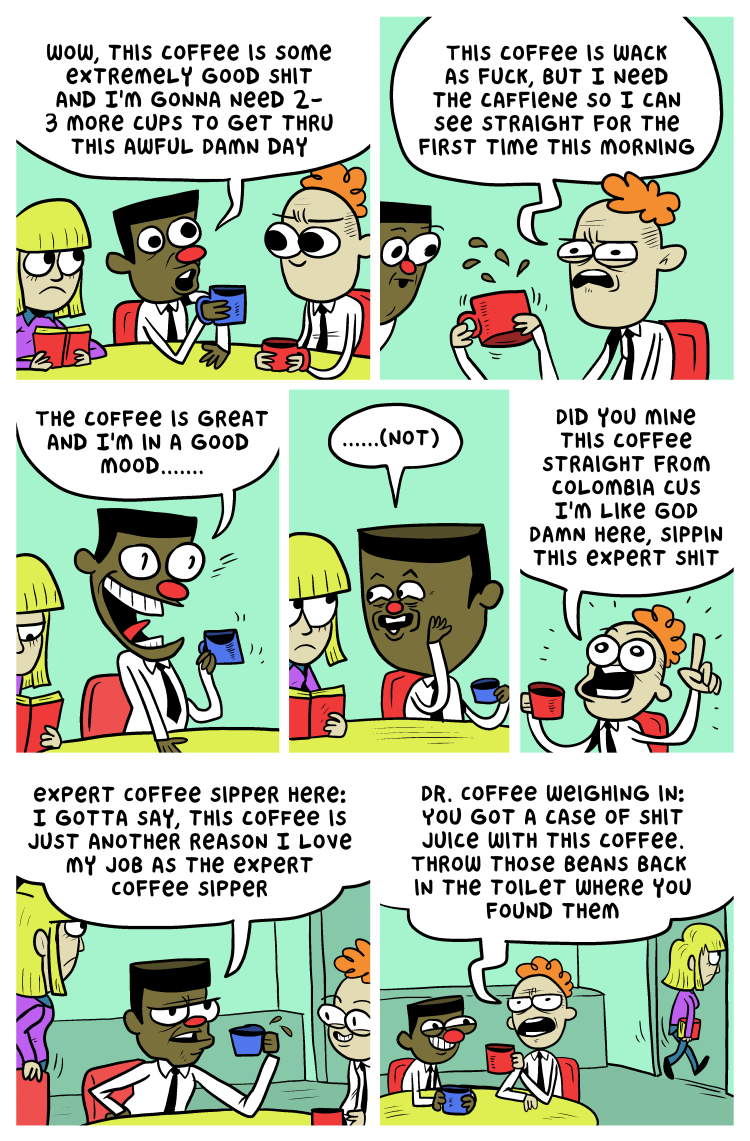
This Coffee...
TimBThis is what I do now in Seattle
Next next weekend, August 2 & 3, I am going to Providence, RI for RIPExpo! It's the first year of the show and it's lookin' to be HOTTT. I'll have the usual books and trinkets plus the new LAIDAD book that should be finished and hot of the presses by then! Come by! Please!
Edenovellis, Mitch Laue likes this

 facebook
 reddit
12 Jul 02:02
Reviewing Krauthammer
by thuudung
TimBStill catching up on some old things... shared for the article capstone: "He floats like a vulture, stings like a jellyfish." BABOOOOM!
I remember reading a Time op-ed by Krauthammer in high school and being impressed by how smart he was: "oh yeah, look at that, lots of federal money goes to welfare, that's so much..." It's strange to hear his words again almost fifteen years later, having changed so much of my own worldview in the meantime. It brings a moment of feeling like a stranger to my younger self.
What happens when a talented thinker composes too many 800-word op-eds and 20-second sound bites? The shrinking of Charles Krauthammer… more»
03 Jul 19:08
Filed under: International, Religion, Society


Perfect Aryan Baby Selected By Nazis Was . . . You Guessed It . . . Jewish
by jonathanturley

Hessy Taft was a gorgeous baby by any measure in 1935. Her picture was so adorable it was reportedly selected by Nazi propaganda minister Joseph Goebbels as the cover for the Nazi family magazine Sonne ins Hause as the very ideal of an Aryan child. The problem is that Hessy is Jewish, a story that is both hilarious and unnerving. Goebbels’ perfect Gerber baby proved an elegant rebuttal to Nazi fanaticism.
Hessy’s parents, Jacob and Pauline Levinsons, were singers and took her to photographer Hans Ballin to her six-month old photo. They were astonished when their beautiful Jewish baby ended up on the cover of a Nazi magazine. Ballin later explained that he knew that they were Jewish but wanted to make the Nazis look ridiculous. It was a dangerous joke for the family and frankly quite reckless given the growing violence against Jews in Germany.
The family hid their baby to avoid people recognizing her and then uncovering the truth. Her father lost his job at an opera company because he was Jewish. He was later arrested on a trumped up charge and was only saved by when his accountant (who was a Nazi party member) came to his defense at the Gestapo headquarters. The family fled to Latvia and then to Paris. However, the city was then taken over by the Germans so they escaped again with the help of the French resistance. They went to Cuba and finally in 1949 to the United States.
Now 80, Hessy is a chemistry professor at St. John’s University.
It is a story that captures the insanity of the time. For those who wish to forget the struggle of Jews during this period, the innocence of this picture and the evil of the times are powerfully portrayed in Professor Hessy’s story.
Source: Telegraph
Filed under: International, Religion, Society
03 Jul 02:13

An Abandoned Bangkok Shopping Mall Hides a Fishy Secret
by Christopher Jobson

Photo © Jesse Rockwell

Photo © Jesse Rockwell

Photo © Jesse Rockwell

Photo © Jesse Rockwell

Photo © Jesse Rockwell

Photo © Jesse Rockwell

Photo © Jesse Rockwell
In most post-apocalyptic films when the camera pans down the abandoned streets of New York or Tokyo, long after people have disappeared and the buildings have fallen into disrepair, we see nature again thriving. Trees and plants take hold in the sidewalks and wild animals like deer, bears, and lions stalk the ruins left behind by humans. But after descending the staircase at a vacant shopping mall in Bangkok, professional cook and photographer Jesse Rockwell discovered a wholly different take on beasts inheriting the Earth: fish. Specifically exotic koi and catfish, teeming by the thousands in a secret subterranean aquarium. Rockwell shares via his blog:
New World shopping mall, a four storey former shopping mall. Originally constructed as an eleven storey building. It was found to be in breach of old town Bangkok’s four storey limit on building heights. The top seven floors were demolished to adhere to building codes in 1997. In 1999 the mall burned due to suspected arson committed by a competitor in the area. The disaster resulted in several casualties, and the building has remained abandoned ever since. Not having a roof, the basement floor remains under several feet of water year round.
At some point in the early 2000s an unknown person began introducing a small population of exotic Koi and Catfish species. The small population of fish began to thrive and the result is now a self-sustained, and amazingly populated urban aquarium.
What an amazing discovery. It makes you wonder what else lurks in abandoned places around the world? You can see more of Rockwell’s photography over on 500px and on his website, Taste of the Road. (via James Theophane, The Verge)
Bunker.jordan, Cooper Griggs and 2 others like this
30 Jun 19:56
Filed under: Congress, Constitutional Law, Politics, Religion, Society


Supreme Court Rules For Hobby Lobby In Major Blow To Obama Administration
by jonathanturley
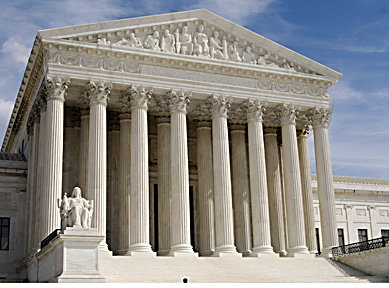
 The Supreme Court finished its term with its usual dramatic flair with the release of the long-waited decision in Sebelius v. Hobby Lobby Stores (which is consolidated with Conestoga Wood Specialties Corp. v. Sebelius). The two cases represent a classic split in the circuits with the Tenth Circuit agreeing with Hobby Lobby as to the religious claims of the company while the Third Circuit ruled against such claims by Conestoga Wood Specialities Corp. The Court ruled that the Hobby Lobby does have religious rights, but limited the decision to closely-held corporations. Where Citizen’s United recognized that corporations have free speech rights like individuals, Hobby Lobby would do the same thing for religious rights. I will be running a column in the Los Angeles Times in the morning not just addressing this ruling but, once again, highlighting what I consider a far more important case that will be decided just a couple blocks away in the D.C. Circuit — Halbig v. Sebelius. I will be discussing the decisions today at CNN starting at 10 am and continuing to the discussion at 1 pm with Wolf Blitzer.
Hobby Lobby is a fascinating case involving the retail arts and craft chain founded by David Green and owned by his family, which also happen to be Evangelical Christians. The Greens actually do not object to all of the 20 forms of birth control under the ACA. However, they are religiously opposed to supplying four methods: morning-after pills Plan B and Ella as well as two kinds of inter-uterine devices (or IUDs). (The Conestoga company is smaller and owed by Hahn family, who are Mennonite Christians) At a running fine of $100 per employee, Hobby Lobby estimates that the federal mandate would cost it about $1.3 million a day, or roughly $475 million a year.
The religious beliefs of the family are formally integrated into their company: Green family members signed a formal commitment to run the stores according to Christian religious principles, including closing on Sunday, advertising their religious orientation. The company even plays religious music inside their stores.
The Greens challenged the provisions under the and the Religious Freedom Restoration Act, which imposes a high standard of strict scrutiny for the government to meet when a neutral law “substantially burden[s] a person’s exercise of religion”. (Note some amicus briefs suggest that the mandatory plan should also be barred for these purpose under the Establishment Clause). In 2013, United States District Court Judge Joe Heaton granted the company a temporary exemption from the contraceptive-providing mandate. (Conestoga directly raises free exercise arguments).
In an interesting wrinkle, an April article in Mother Jones alleged that Hobby Lobby’s employee retirement plan has more than $73M invested in mutual funds which include manufacturers of some fo the very contraception devices or drugs cited in the complaint.
The decision has sweeping application – well beyond these companies or the 49 for-profit corporations that have claimed such exemptions. The ruling addresses the very essence of a religious claim and the very essence of a corporate entity.
Closely-held corporations are not as limited as it might seem. I agree with Ginsberg that the implications are sweeping. The closely-held corporations represent a huge number of businesses. As I mentioned on CNN, the large corporations are the least likely to demand such exemptions. There are millions of family businesses that may not object not just to the ACA but renew objections to discrimination laws that force such businesses to serve same-sex weddings or engage in other activities that violate their religious beliefs. This is much like Heller and the recognition of individual gun rights. We are still working out the details on how far that goes years after the decision.
This is a major blow to the Administration which in the last ten days have been found to have violated the fourth amendment and privacy and then found to be in violation of the separation of powers and now found in violation of the first amendment and religious freedom.
Filed under: Congress, Constitutional Law, Politics, Religion, Society
30 Jun 19:56
Filed under: Constitutional Law, Courts, Criminal law, Free Speech, Politics


Harris v. Quinn: The “Other” Supreme Court Decision Today
by jonathanturley
 Today’s ruling in Hobby Lobby is the type of decision that tends to suck the oxygen out of the room. For that reason, the important decision in Harris v. Quinn could be overlooked. At issue in the case is the viability of Abood v. Detroit Board of Education— the 1977 opinion held that the government could constitutionally condition a person’s employment in the public sector on the paying fees to a union. As I mentioned on CNN last night, this is a major decision that is being pushed from the coverage but deserves more attention. As anticipated, Justice Alito wrote the decision and ruled against the union.
The fear going into this week was an ominous head count by the union. There is an effort on the Court historically to spread out the opinions. Every Justice had written majority opinions from the January calendar. All except the justice that the unions least wanted available: Justice Alito. Alito had written the decision two years ago in Knox v. SEIU, that the government violates the first amendment in allowing public-sector unions to force nonmembers to pay a special fee for the purpose of financing the union’s political activities. Most worrisome was the statement in Knox that, while the Court would not “revisit” the first amendment issues more generally raised in this area, it did say that the objection that nonmembers were being allowed to “free ride” on due paying members is “generally insufficient to overcome First Amendment objections.”
This could be a major blow for unions. The Court could use this decision to drive a serious wedge into the labor force and seriously undermine the financial position of unions. The unions argue that they are required to negotiate the best deal for non-union members like these home-care workers. Since they benefit from such union representation, they should have to pay their fair share according to the union. The State of Illinois also supports this arrangement because it allows for a more efficient single-negotiating party in these talks. However, these workers advance an array of claims from petition claims to free speech claims to associational claims in being effectively forced to support the union.
While the ruling is limited to home-care workers, it has broader implications for unions. This is one of the fastest growing segments of the workforce and the new model for future labor forces. The unions just lost that potential for growth as well as the dues that are being lost to these new forms of employment.
Filed under: Constitutional Law, Courts, Criminal law, Free Speech, Politics
27 Jun 20:02
US court blocks Argentina debt payout
TimBWhat.
US federal court decides not to let most recent installment of Argentina's debt payment through.
27 Jun 16:43
Court Rejects Zone to Buffer Abortion Clinic
by By ADAM LIPTAK
TimBGoodbye, yellow paint circle on Packard's Corner
The unanimous decision struck down a Massachusetts law enacted in 2007 that created 35-foot buffer zones around entrances to abortion clinics.


26 Jun 22:01
Language hoax
by thuudung
The discredited notion that language determines thought refuses to die. John McWhorter wants to settle the matter once and for all… more»
26 Jun 21:24
Pepper Spray Drones
by schneier
Coming soon to a protest near you: drones that fire pepper spray bullets.
Desert Wolf's website states that its Skunk octacopter drone is fitted with four high-capacity paintball barrels, each capable of firing up to 20 bullets per second.In addition to pepper-spray ammunition, the firm says it can also be armed with dye-marker balls and solid plastic balls.
The machine can carry up to 4,000 bullets at a time as well as "blinding lasers" and on-board speakers that can communicate warnings to a crowd.
24 Jun 00:37

Art Meets Mathematics: Dizzying Geometric GIFs by David Whyte
by Christopher Jobson
TimBMore elevation of animated gif's as an art form = better


In 2011, Dublin-based physics student David Whyte began a Tumblr called Bees & Bombs where he posted humorous images and quirky GIFs of his own creation, borrowing heavily from videos and pop culture icons. One day he decided to start playing with Processing, a popular open source programming language designed to help create images, animation, and various computer interactions. His background in mathematics and physics greatly enhanced his understanding of motion and geometry and it wasn’t long before he was churning out some of the most popular animations shared on Tumblr.
Whyte’s minimalistic use of shapes and color places an increased emphasis on motion, and leaves one somewhat dumbstruck at how he conceives of each image. In a somewhat rare move he happens to be quite open about his methods and frequently posts source code and tips to help other artists. See much more of his work on Bees & Bombs.
Matthew McCormick, Randy Laue and 11 others like this
21 Jun 20:15
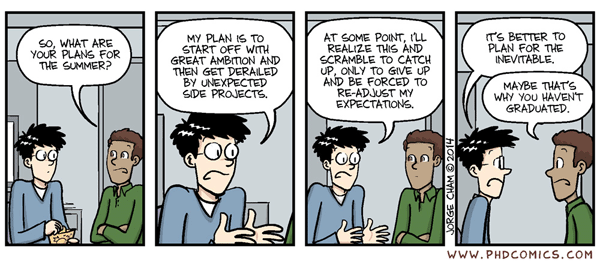
06/16/14 PHD comic: 'Summer Plans'
| Piled Higher & Deeper by Jorge Cham |
www.phdcomics.com
|
|
 |
||
|
title:
"Summer Plans" - originally published
6/16/2014
For the latest news in PHD Comics, CLICK HERE! |
||
Rhiannon.sowerbutts, byron lewis and 2 others like this
06 May 20:49

‘Mobile Lovers’ & ‘Spy Booth’: New Murals from Banksy
by Christopher Jobson
TimBFor Sohrob. 'Mobile lovers' is, admittedly, perfect.


After a brief hiatus from his whirlwind New York residency last October, Banksy emerged with at least two new pieces over the weekend. The first depicts a trio of shady government officials crowding around a phone booth using analog recording devices to eavesdrop on conversations. That piece popped up in Cheltenham, a borough of Gloucestershire, England which is not coincidentally home of the Government Communications Headquarters (GCHQ). The second piece which depicts two lovers basking in the light of their mobile devices just appeared on Banksy’s website and is also presumably in the UK.
Roumen.ganeff, Leo Elizabeth Rosenstein and 4 others like this
17 Apr 21:37
Space Teriyaki 7
by 50 Watts
TimBThis one's pretty good, but definitely check out the others in the series if you haven't already...
Visions of space and the future in Japan in the 70s and 80s
See the full series.
 Gan Hosoya, 1973, “Silence” poster
The standard spiel:What you are seeing here is a selection of scans from my still-growing stash of books and catalogs on Japanese illustration and design.
I apologize for the stupid series name. I didn't realize it would be a series when I did the first post on a whim three years ago. I may airbrush it out at some point.
Gan Hosoya, 1973, “Silence” poster
The standard spiel:What you are seeing here is a selection of scans from my still-growing stash of books and catalogs on Japanese illustration and design.
I apologize for the stupid series name. I didn't realize it would be a series when I did the first post on a whim three years ago. I may airbrush it out at some point.
 Ikuo Niida, 1975, record cover
 Tadami Yamada, c.1975
 Genpei Akasegawa, c.1975
 Koichi Sato, 1986, Housing Company Calendar
 Hajime Sorayama, c.1975
 Hiroshi Manabe, early 70s
 Hiroshi Manabe, early 70s
 Hiroshi Manabe, early 70s
 Hisashi Saito, 1983, catalog illustration
 Hiroshi Morishima, 1985, handmade folding screens
 Katsuji Isaka, c.1975
 Kazuyuki Goto, c.1975
 Masatoshi Toda, 1986, poster
 Mitsuo Katsui, 1986, poster
 Mitsuo Katsui, 1986, poster
 Sadao Sato, 1983, original work
 Goto Shimaoka, 1981, poster
 Kenkichi Satao, early 80s
(one of these per installment, 4eva)
Kenkichi Satao, early 80s
(one of these per installment, 4eva)
 Yusaku Kamekura, 1986, poster
 Tadanori Yokoo, 1976, Amnesty International Poster
See the full series
This post first appeared on April 14, 2014 on 50 Watts
Tadanori Yokoo, 1976, Amnesty International Poster
See the full series
This post first appeared on April 14, 2014 on 50 Watts


Gan Hosoya, 1973, “Silence” poster
The standard spiel:What you are seeing here is a selection of scans from my still-growing stash of books and catalogs on Japanese illustration and design.
I apologize for the stupid series name. I didn't realize it would be a series when I did the first post on a whim three years ago. I may airbrush it out at some point.
Ikuo Niida, 1975, record cover
Tadami Yamada, c.1975
Genpei Akasegawa, c.1975
Koichi Sato, 1986, Housing Company Calendar
Hajime Sorayama, c.1975
Hiroshi Manabe, early 70s
Hiroshi Manabe, early 70s
Hiroshi Manabe, early 70s
Hisashi Saito, 1983, catalog illustration
Hiroshi Morishima, 1985, handmade folding screens
Katsuji Isaka, c.1975
Kazuyuki Goto, c.1975
Masatoshi Toda, 1986, poster
Mitsuo Katsui, 1986, poster
Mitsuo Katsui, 1986, poster
Sadao Sato, 1983, original work
Goto Shimaoka, 1981, poster
Kenkichi Satao, early 80s
(one of these per installment, 4eva)
Yusaku Kamekura, 1986, poster
Tadanori Yokoo, 1976, Amnesty International Poster
See the full series
This post first appeared on April 14, 2014 on 50 Watts
Leo Elizabeth Rosenstein and -1 others like this
16 Apr 21:31
Iraq Shuts Down the Abu Ghraib Prison, Citing Security Concerns
by By DURAID ADNAN and TIM ARANGO
The Iraqi government said it had closed the prison, the site of an abuse scandal during the American occupation, because of fears that it could be overrun by Sunni insurgents.
16 Apr 21:27
New York police scrap Muslim spy unit
Police department ends undercover operation which rights groups said targeted people solely on basis of their religion.
22 Mar 17:43
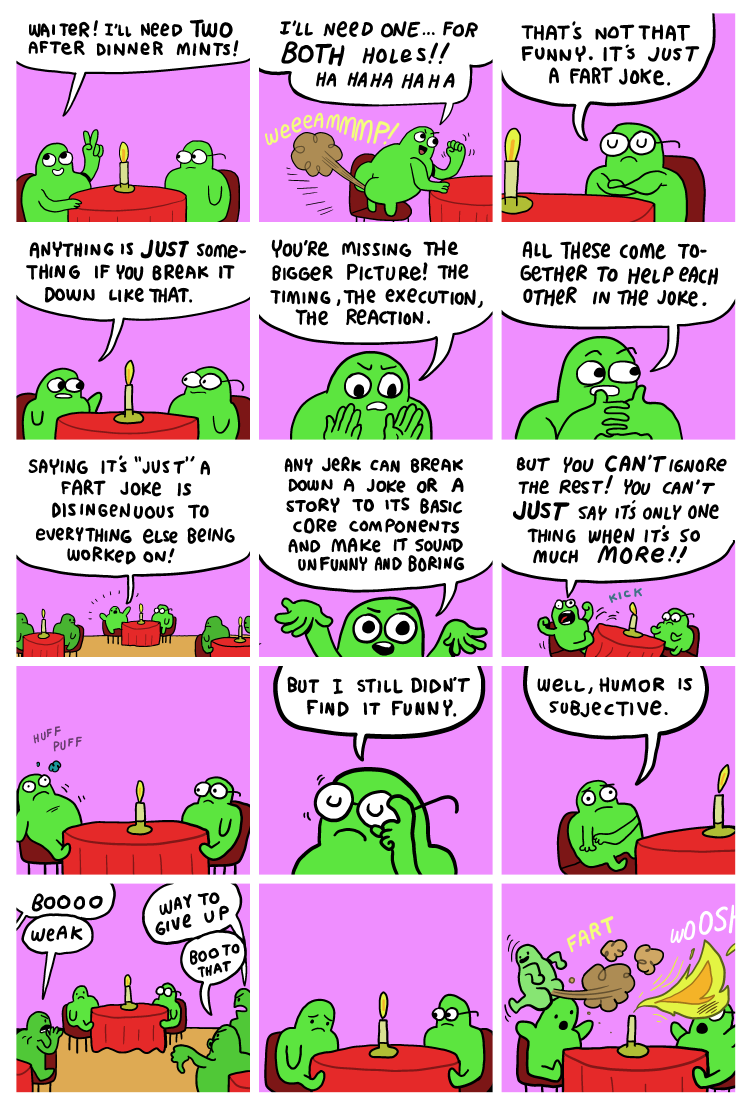
Just a fart joke...
TimBEmergence = life
The rest is just details
Damiani.guilherme, Duane and 3 others like this
22 Mar 15:39
Filed under: Bizarre


Proof That Someone Is Good With God?
by jonathanturley
If you watch closely, this bizarre hit and run involves a truck that first hits the man and then a mattress flies off the truck and cushions the man before he hits the ground. If this was staged, it was an impressive piece of work.
Clearly, this guy is right with the Almighty. He seems to have fulfilled that Irish Blessing: “May the road rise up to meet you . . . May God hold you in the palm of His hand.”
Filed under: Bizarre
20 Mar 21:32
President James Madison cautions about the downside of war
by Minnesotastan
Since I live in a city named after him, and since yesterday was his birthday, it's appropriate for me to honor his memory by citing this prescient quotation:
“Of all the enemies to public liberty war is, perhaps, the most to be dreaded, because it comprises and develops the germ of every other. War is the parent of armies; from these proceed debts and taxes; and armies, and debts, and taxes are the known instruments for bringing the many under the domination of the few. In war, too, the discretionary power of the Executive is extended; its influence in dealing out offices, honors, and emoluments is multiplied; and all the means of seducing the minds, are added to those of subduing the force, of the people. The same malignant aspect in republicanism may be traced in the inequality of fortunes, and the opportunities of fraud, growing out of a state of war, and in the degeneracy of manners and of morals engendered by both. No nation could preserve its freedom in the midst of continual warfare,”Via The Dish.– James Madison, “Political Observations” from Letters and Other Writings.
Nosimpler likes this
11 Mar 00:19

Fr. John Dear, Dismissed from Jesuits: "It Is So Strange to Be Hated by So Many Church Leaders"
by Megan Sweas
TimBRadical
"If you are going to be a Catholic—or any type of Christian—you are going to have to get rid of your guns, withdraw from any military, have nothing to do with weapons manufacturing or killing, and practice nonviolence at every level."






03 Feb 19:12
The Dangers of Certainty: A Lesson From Auschwitz
by By SIMON CRITCHLEY
How a single episode of a 1973 BBC series taught a young boy one of the most powerful moral lessons of the 20th century.
Nicholae Cline likes this
02 Feb 21:04
Effects of asymmetric coupling and self-coupling on metastable dynamical transient rotating waves in a ring of sigmoidal neurons
TimBThinking of you, Rob. Definitely worth a quick scan, I thought it was nice to see a bifurcation plot of a pretty well-parametrized network. It's not very general, but still, nicely done...
Publication date: May 2014
Source:Neural Networks, Volume 53
Author(s): Yo Horikawa
Transient rotating waves in a ring of sigmoidal neurons with asymmetric bidirectional coupling and self-coupling were studied. When a pair of stable steady states and an unstable traveling wave coexisted, rotating waves propagating in a ring were generated in transients. The pinning (propagation failure) of the traveling wave occurred in the presence of asymmetric coupling and self-coupling, and its conditions were obtained. A kinematical equation for the propagation of wave fronts of the traveling and rotating waves was then derived for a large output gain of neurons. The kinematical equation showed that the duration of transient rotating waves increases exponentially with the number of neurons as that in a ring of unidirectionally coupled neurons (metastable dynamical transients). However, the exponential growth rate depended on the asymmetry of bidirectional coupling and the strength of self-coupling. The rate was equal to the propagation time of the traveling wave (a reciprocal of the propagation speed), and it increased near pinned regions. Then transient rotating waves could show metastable dynamics (extremely long duration) even in a ring of a small number of neurons.
Source:Neural Networks, Volume 53
Author(s): Yo Horikawa
Transient rotating waves in a ring of sigmoidal neurons with asymmetric bidirectional coupling and self-coupling were studied. When a pair of stable steady states and an unstable traveling wave coexisted, rotating waves propagating in a ring were generated in transients. The pinning (propagation failure) of the traveling wave occurred in the presence of asymmetric coupling and self-coupling, and its conditions were obtained. A kinematical equation for the propagation of wave fronts of the traveling and rotating waves was then derived for a large output gain of neurons. The kinematical equation showed that the duration of transient rotating waves increases exponentially with the number of neurons as that in a ring of unidirectionally coupled neurons (metastable dynamical transients). However, the exponential growth rate depended on the asymmetry of bidirectional coupling and the strength of self-coupling. The rate was equal to the propagation time of the traveling wave (a reciprocal of the propagation speed), and it increased near pinned regions. Then transient rotating waves could show metastable dynamics (extremely long duration) even in a ring of a small number of neurons.