Shared posts

31 Aug 13:09

John James Baddeley, Die Sinker

by the gentle author

“I haven’t time in my life for much else than work”

These photographs show Sir John James Baddeley, Baronet – known colloquially as ‘JJ’ – taking a Sunday morning walk with his wife through the empty City of London in 1922, when he was Lord Mayor and residing at the Mansion House.

With his top hat, cane and Edwardian beard, the eighty-year-old gentleman looks the epitome of self-confident respectability and worldly success, yet there is a poignancy in his excursion through the deserted streets, when the hubbub of the week was stilled, pausing to gaze into the windows of the shabby little printshops that competed to supply letterheads and engraved stationery to the banks, stock-brokers and insurance companies of the City.

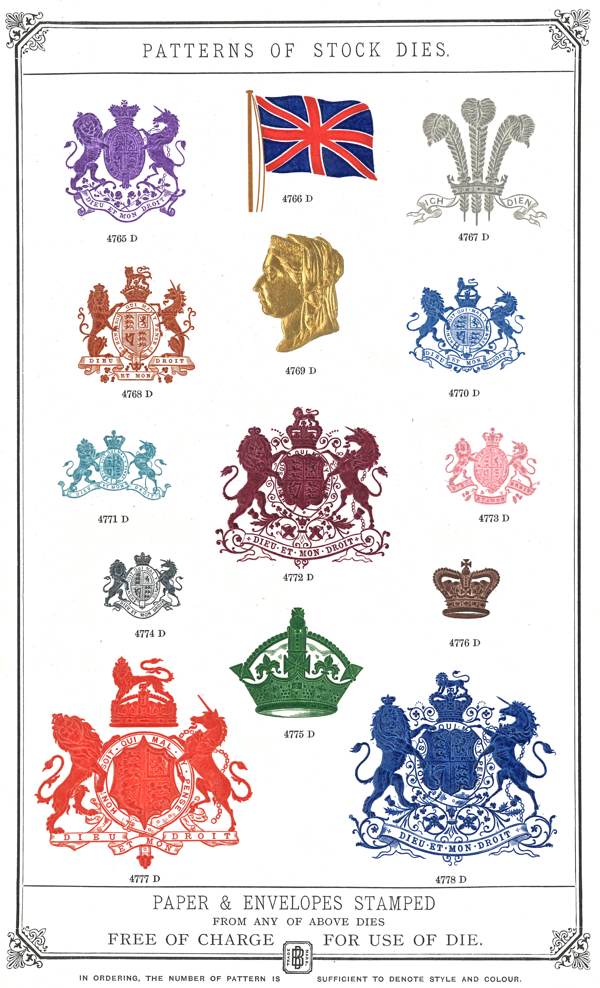
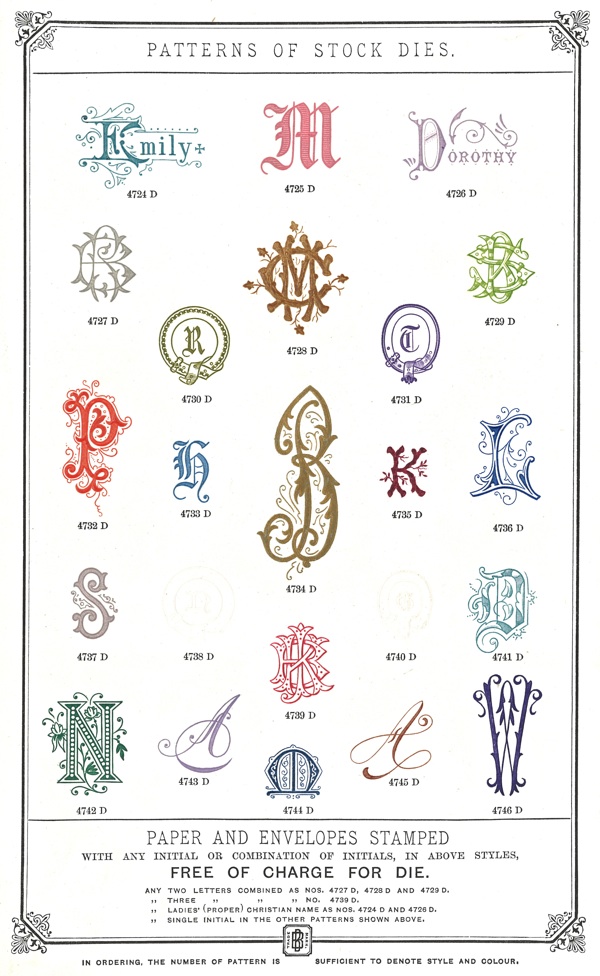
In those days, all transactions and share issues required elaborately-engraved forms and there was a legal obligation to list all the directors on business notepaper which needed constant reprinting and adjustment of the dies whenever there were staff changes. Consequently, the City of London teemed with small highly-specialised companies eager to fulfil the constant demand for all this printed paper.

At the time of these photographs, nearly sixty years had passed since, at the age of twenty-three in October 1865, JJ had set up independently as a die sinker in a shared workshop in Little Bell Alley at the back of the Bank of England under entirely inauspicious circumstances. The eldest of thirteen children, JJ had already acquired plenty of experience of the long hours of labour required to scrape a modest living in the trade of die-sinking and engraving when he was apprenticed to his father at fourteen years old in Hackney.

Even by the standards of nineteenth century fiction, it was an extraordinary story of personal advancement. JJ oversaw the transformation of his business from an artisan trade to an industrialised process employing hundreds in a single factory. Born into an ever-increasing family that struggled to keep themselves, he inherited a powerful work ethos and a burning desire to overcome the injustice his father had suffered. JJ can only have been a driven man, the eldest brother who set his own modest industry in motion and then drew in his younger siblings to assist with spectacular results.

“In January 1857, I started my business life with my father in his workshop in Hackney at the back of the house at the Triangle in Mare St where I first donned a white apron, turned up my shirt sleeves and did all sorts of jobs,” he wrote of his apprenticeship in the trade of die sinking, “sweeping up and lighting the forge fire, warming the dies and later forging them on the anvil, then annealing them and afterwards filing them to shape and, when engraved, hardening them and tempering them.”

“During the whole time there, I was the errand boy, taking the dies and stamps to the few customers that my father had, Jarrett at No 3 Poulty being the chief one,” he recalled at the end of his life, “Many a time have I trudged – in winter with my feet crippled with chilblains – to the Poultry and at night to his other shop in Regent St. During the time I was at work with my father I had very good health, but we were all poorly-clad and none of the children had overcoats.”

In 1851, Griffith Jarrett exhibited his popular embossing press at the Great Exhibition in Hyde Park, ordering the dies from JJ’s father who took on a larger house for his growing family and more apprentices on the basis of this seemingly-endless new source of income. Yet Griffith Jarrett exploited the situation mercilessly, inducing JJ’s father to make dies for him alone, then driving the prices down and eventually turning JJ’s father into a mere journeyman who worked like a slave and found he had little left after he had paid his production costs, impoverishing the family.

When, as a boy, JJ walked through the snow at night to deliver the dies for his father to Griffith Jarrett’s Regent St shop at 8pm or 10pm, Jarrett sometimes gave JJ tuppence to ride part of the way home. It was an offence of meagre omission that JJ never forgot.  “These two pennies were the beginnings of my savings which enabled me to set up in business for myself and to defy the man who for more than twenty years had my father in his clutches,” admitted JJ in later years.

“I began work by doing simple dies for my father at journeyman prices and began making traces, stops, commas, letter punches and other small tools. By the end of the year, I managed to get a few orders for dies from Messrs John Simmons & Sons who had a warehouse in Norton Folgate,” he recorded, looking back on his small beginnings in the light of his big success, “I turned out my work quicker than my competitors and gave better personal attention to my customers, trusting to this rather than obtaining orders by quoting lower prices.”

“These were very strenuous and hard working times, I commenced work at nine and seldom leaving before ten o’clock at night,” he confessed – but twenty years later, in 1885, the company occupied a six storey factory at the corner of Moor Lane and employed more than three hundred people. It was an astonishing outcome.

Yet, while embracing the potential of technological progress so effectively, JJ possessed an equal passion for craft and tradition – especially the history of Cripplegate where he became a Warden. “In 1889, an attempt to take down the St Giles Church Tower, after a good fight I saved it,” he wrote with succint satisfaction. Later, devoting a year of his life to writing an authoritative history of Cripplegate, he prefaced it with the words – “Let us never live where there is nothing ancient, nothing to connect us with our forefathers.”

No wonder then that, as an old man, John James Baddeley chose to stroll through the empty streets of London on Sunday mornings, pausing to look into old print shop windows, and consider his own place in the long history of printing and the City.

John James Baddeley’s business card

Over 300 hands were employed at Baddeley Brothers in Moor Lane, 1888

Engineering & Press Making Dept in the basement

Paper & Envelope Department on the first floor where over fifty hands are employed in envelope making, gumming, black and silver bordering, scoring etc

Die Sinking & Engraving Dept – The largest in the trade, twenty-one die sinkers are employed alongside twenty-one copperplate engravers and eight wood engravers.

Litho Dept on the second floor with fourteen copperplate presses, three litho machines, nine litho presses and three Waddie lithos

The view from the Mansion House in 1922

JJ in the Venetian Parlour at the Mansion House

You may also like to read about

Roger Pertwee, Manufacturing Stationer

Terry Smith, Envelope Cutter

11 May 11:49

themaninthegreenshirt:Nick Cave and the Bad Seeds in Wings of...


themaninthegreenshirt:

Nick Cave and the Bad Seeds in Wings of Desire, 1987

11 May 11:41

Photo


11 May 02:55

Mother’s Day brawl breaks out on Revere Beach - Massachusetts news - Boston.com

by russiansledges
Massachusetts State Police turned out after a fight was reported near the beach’s bandstand around 6:15 p.m., Revere Police Sgt. Charlie Ovino told Boston.com. He estimated about 300 to 400 people congregated around the scene of the fight, making it hard for officers to intervene.
11 May 02:53

▶ LERA LYNN // WOLF LIKE ME // TV ON THE RADIO - YouTube

by russiansledges
We love TV ON THE RADIO. While learning this song, we learned that Gerard Smith, TVOTR's bass player, passed away from a long battle with cancer on April 20. We offer this song as a Tribute. We hope we did it justice. Please enjoy.
11 May 02:47

Photo

Russian Sledges

via firehose


11 May 00:24

Raul Castro Says Pope Inspiring Him To Return To Church

by Scott Neuman
Russian Sledges

via overbey

The Cuban leader, who went to Jesuit schools as a child, says he might "resume praying and turn to the Church again" if Francis "continues in this vein."

» E-Mail This

10 May 21:25

Yvo on Instagram: “This dish? This dish is EVERYTHING. Unless you don't like #garlic in which case move along. Razor #clams topped with glass #noodles and brown garlic with scallions, then roasted all together. The noodles absorb all of the delicious fl

by russiansledges
Russian Sledges

who's going to chinatown with me?

This dish? This dish is EVERYTHING. Unless you don't like #garlic in which case move along. Razor #clams topped with glass #noodles and brown garlic with scallions, then roasted all together. The noodles absorb all of the delicious flavors and each bite is a flavorbomb delight. The kicker? The entire platter cost us $14. Whaaaaaat?
10 May 12:59

Photo

Russian Sledges

via willowbl00

autoreshare forever


10 May 12:57

What Can We Do About Online Harassment? Danielle Citron and Brianna Wu on Legal and Technical Responses

by natematias
Russian Sledges

via willowbl00

What legal routes are available to people facing online harassment, and what policies might need to be changed to better address this issue?

Today at the MIT's Comparative Media Studies/Writing Colloquium, we were joined by Danielle Keats Citron (@daniellecitron), author of Hate Crimes in Cyberspace, a book that describes the harms experienced by victims of online harassment and outlines the related legal issues. Danielle is the is Lois K. Macht Research Professor of Law at the University of Maryland Francis King Carey School of Law. Her work focuses on information privacy, cyber law, automated systems, and civil rights. Citron is also an advisor on the California Attorney General's Task Force Against Cyber Exploitation.

Citron is also joined by game developer Brianna Wu (@spacekatgal), head of development at Giant Spacekat games, whose game Revolution 60 received wide critical acclaim. Brianna is also creator of Isometric, a podcast with a focus on equity of participation in gaming. Wu has also notably received particularly violent and intense threats over the last year, in relation to the GamerGate controversy. After Danielle presented her talk, Wu offered a response.

Special thanks Wang Yu and the anonymous contributors who helped write this post.

What is cyber-harassment, asks Danielle? It's a course of conduct targeted at a particular person that causes emotional distress and the fear of physical harm. It's often perpetrated in four ways. The first mode of attack is to do whatever you can to terrorize someone: threatening physical violence, impersonating someone online or putting up their address. The second mode of attack is to do what you can to hijack someone's career. The third way we see harassers attack victims is to invade privacy, hacking someone's computer to obtain confidential information and then posting that information, often posting nude images. Finally, attackers use technology to shove people offline, whether through Distributed Denial of Service attacks or false claims that someone's behaviour is abusive -- thereby knocking them offline.

Danielle illustrates this with two examples, starting with the story of Anita Sarkeesian. Two years ago, Anita Sarkeesian was a media critic who had posted YouTube videos about sexism in video games. Anita wanted to fund a documentary series on Kickstarter. About a week after the announcement of the Kickstarter campaign, a cybermob "descends" sending her graphic images in her inbox. A game was created called "beat up Anita Sarkeesian" that invited gamers to harm a virtual image of her. The cybermob decided to attack her campaign, Kickstarter received hundreds of complaints, false reports that her work was hate speech, spam, or terrorism. Because Anita was well-known at the time, people at Facebook and other platforms got in touch with her, and she was able to forestall the knocking down of her campaign. However, her website was subject to DDOS campaigns that set out to take down the site, which were often successful for days at a time.

During the GamerGate controversy in 2014, Anita started to receive texts and emails, not only with graphic descriptions of how people would harm her, but also with her home address. Two days before a talk at a Utah State University, the dean received an anonymous note saying that if Anita Sarkeesian were to speak at the school, there would be a school shooting. The event was cancelled.

This issue isn't limited to prominent women. Danielle, who interviewed over 60 people for her book, notes that they're primarily everyday women and men - from nurses or dentists to a stay-at-home mom. One example is Holly Jacobs, a graduate student who broke up with her longtime boyfriend after several months of graduate school. Holly started to get strange texts and emails saying that they were following up with her advertisement. When Holly googled her name, she found was that there were over 300 revenge porn and adult singles sites that had posted nude photos, a video of them having sex that she wasn't even aware of, her address, cell-phone number, and text saying that she was interested in sex. Other sites claimed that she was sleeping with her students. Holly was devastated.

Based on the information in the sites publishing this unsolicited information, someone sent an email purporting to be from her to her employer with links to the sites. The dean of the school received anonymous emails accusing her of sleeping with her students. The dean gave the advice: "change your name. I can't have a graduate student teaching students that can Google you and this is what they see." Danielle can talk about her because now Holly runs the Cyber Civil rights Initiative and an anti-harassment campaign to End Revenge Porn. When Holly attempted to take down the material, most of the sites ignored her. Some of the sites wrote back and said "we'll take down the nude photos if you pay us 400 dollars." Only a few sites took down the photos.

Stories like this aren't unusual, says Danielle. Based on a 2006 study from the Bureau of Statistics, over 800,000 people experience some kind of cyber harassment. According to a nationally-representative study on online harassment by Pew, 25% percent of women between 18 and 24 experience some kind of cyber stalking, as defined. Men also experience these kinds of threatening or humiliating speech, photos, and personally-identifying information.

What can law do right now about this?

Victims could potentially sue their harassers for a variety of civil tort claims. But it's incredibly expensive to sue. Even if you have the resources, it's often true that harassers don't have deep pockets, and it's not worth your time and energy to sue them. Furthermore, we know that platforms are immune from liability under the section 230 of the Communications Decency Act. There's no one with deep pockets to sue.

Under criminal law, we have laws about threats, stalking, and harassment that we can enforce today. But part of the problem is underenforcement says Danielle. When victims go to law enforcement, officers are unfamiliar with the technology or law and say, "eh, turn your computer off and ignore it." It's really hard for victims when you have to admit you don't know something and you don't know when to start. That's why Danielle has been working with law enforcement in California to create checklists for law enforcement.

In 40 percent of states, says Danielle, harassment laws don't cover cases where content is published widely on third party sites. They only cover what’s sent directly from perpetrator to victim. Danielle describes a case where the abuse was sent to employers and family members -- the State of New York didn't count that harassment. In 32 states, it's not a crime to invade someone's privacy by posting their nude photos in violation of their trust and confidence.

We also must understand online harassment as civil rights violations, argues Danielle, alongside its connection to torts and crimes. When a cybermob goes against Anita Sarkeesian, what motivates them? When we try to take away someone's fundamental life opportunities because they're part of a protected group, that's a civil rights violation. When people harass someone like Anita Sarkeesian, it's a message to all women, not just Anita.

Danielle argues that online harassment is fundamentally a first-amendment issue. The first amendment does not operate in absolutes. We protect speech because we want to give breathing room to speech, but there are certain categories of speech that the Supreme Court have long held that get no protection, and speech that is given less rigorous protection.

Law is a blunt instrument, says Danielle. It moves slowly and it takes time to support people to use it. Another approach is to work with companies, something that Danielle has also been involved in. Although platform companies technically have no responsibility over user generated content, Danielle argues that companies have to take a stand, referring to recent policy changes by Reddit and new Twitter policies as examples. Danielle also to companies like Microsoft, who says are working hard at getting enforcement right to create systems that value fairness. She wanted to hear big shots at big gaming companies and say "this is not okay." Danielle draws an analogy to the Mothers Against Drunk Driving, a campaign started in the 1980s by an advocacy group that is now "baked into who we are." She argues that it's important for companies to say that harassment is not okay, make clear to users what they consider harassment, and explain to users what happens if they violate terms of service and community guidelines. It doesn’t mean the stop of speech, only a sign that what’s accepted there.

Let's not despair, says Danielle. In the 1960s and 1970s, women in the workplace were told that if they didn't like workplace harassment they should leave. When the law stepped in, we started to understand culturally that women shouldn't have to leave if they didn't like abuse. We can make the same shift today, and we're early in the history of our networked tools, and it's something that we need to do together as digital citizens. To the audience at MIT, she encourages designers need to build privacy and safety into our systems from the very first.

Response by Brianna Wu

Brianna Wu also gave a presentation at the event, noting that the problem of online harassment is "multi-factoral," with a need for a wide variety of people involved and taking a wide set of approaches.

Brianna opens by arguing that GamerGate and the forces associated with it began in 2012 with Anita Sarkeesian. When Anita launched FeministFrequency, she received horrible rape and death threats-- "all sorts of abusive behaviour." Brianna started to wonder, "what if that was me?" She described Anita Sarkeesian as patient zero, with the tactics used against her evolving into a "playbook" that others have used against women.

The July Incident - Critiquing Giant Bomb

The gaming industry had been burning for a while, Brianna says. She mentions a "July Incident" experienced by a gaming journalist in 2014. There aren't many prominent women in games. That year, this journalist sent out a tweet critiquing "Giant Bomb," a website that caters to a particular kind of player, non-inclusive of people who aren't straight, white, cisgendered, or male. After this tweet, people followed the "playbook," going through her life, publishing information and shaming her. The reason people do this is to turn the person into a monster, using information from their past to justify targeting that person. This journalist eventually left the industry and isn't coming back-- depriving the industry of one of the best and brightest voices.

The Zoe Quinn Incident - The Start of #GamerGate Hashtag

Brianna next describes the experience of Zoe Quinn, whose ex-boyfriend published private information expressly to destroy her life and career. Brianna calls this the most sexist incident in the history of videogames because it involves destroying a women as form of entertainment.

The Playbook

Where is this hatred coming from? Brianna explains that women used to be a small percent (3%) of game players, but they are now 52% of game players. The average gamer is now a 36 year-old woman and not a teenage boy. GamerGate comes from a past where some people feel threatened by these changes, she argues. All year long, GamerGate have been attacking women one-by-one with the same playbook. They look into information from someone's past, publish it, and try to threaten them out of the industry. "Imagine how it is not just for me but for all the people out there" says Brianna, citing Leigh Alexander and Mattie Brice as two more examples of women who stepped back from the industry to some degree after facing harassment. "I run a company and I see my friends being picked up one by one," Brianna says. The outcome of this playbook is fear and terror at what might come next.

Brianna's Experience

Brianna next tells the story of what happened to her, telling us the story of Isometric, a podcast that featured women in videogames. Brianna had also been critiquing GamerGate publicly, not caring if they came after them. After someone from the show created a meme of claims from the podcast, the website 8chan (an offshoot of 4chan) saw it and got involved. Participants on 8chan spent an entire day creating new, dehumanizing memes that threatened her with rape and murder.

This moment presented Brianna with a choice. One option was to step away, hoping that the problem would go away. Would she stay silent and let them continue, or would she stand up for what she believed in? She expected that if she continued to speak out, what happened to Zoe would also happen to her. Yet Brianna decided to stay around and keep making games. After making that choice, participants in 8chan decided to dox her, mixing the threats with information about her address. When she called the police, they visited her, took a report, and told her to "turn your electronic devices off for the rest of the evening." At that point, she and her husband left their home.

One response is to reach out to the press. After the games industry continued chosen to stay silent about the problem of harassment in the summer of 2014, Brianna decided that games companies and games press were never going to say anything and reached for wider media coverage in the New York Times, CNN, MSNBC, The Guardian, and many other outlets.

Another approach is to work behind the scenes with the companies involved. As a CEO, Brianna is able play a role behind the scenes, talk to people and bring about change. Brianna argues that there's a role that lawyers can play. Activists and media critics like Anita Sarkeesian can also bring this criticism more widely. "We need you," says Brianna. "We need people to stand up and say, this is not acceptable any more." She argues that it's not enough to believe that women are equal; we need to challenge the unconsciousness biases that reinforce the problem.

09 May 20:46

▶ The Mountain Goats - Autoclave (piano version) - YouTube

by russiansledges
Live at Caprichos de Apolo - October 19, 2013
09 May 19:04

foou666foou:Stamp pattern

Russian Sledges

via overbey


foou666foou:

Stamp pattern

09 May 18:09

rynnyrae: staythatswhatimeanttosay: ink-phoenix: katsuko1978: ...

Russian Sledges

via TheFiriestHose


rynnyrae:

staythatswhatimeanttosay:

ink-phoenix:

katsuko1978:

missmirandaaraee:

puukani:

The Waitressing Chronicles: Wherein Dani does not refill your soda 20 times just because she thinks it’s SO MUCH FUN.

Tonight was one of the worst kinds of nights you can have in the restaurant industry. It was a pretty busy Saturday night, the kitchen was running smoothly, my coworkers and I were coexisting peacefully, and 99% of my tables were awesome, and I really had fun serving them. (Yes, I did say ‘worst’. I’m getting to that part, hold on….).

Some of them were a little needy, but after you’ve served for a few years, you start developing a sort of spidy-sense about which guests are going to require 30 diet coke refills, 5 servings of chips and salsa and roughly 2 gallons of ranch before they even crack there menus open (seriously…I think some people have such an addiction to ranch, that if it isn’t constantly on their table, regardless of the presence of any other actual food, they start to develop anxiety. Some people need to carry around EPI pens in case of emergency….I carry around ranch dressing. You’re welcome), so I was prepared. Even my needy tables didn’t rattle me too much this evening.

Generally speaking, all of the components necessary for a pretty kick-ass shift were present and accounted for.

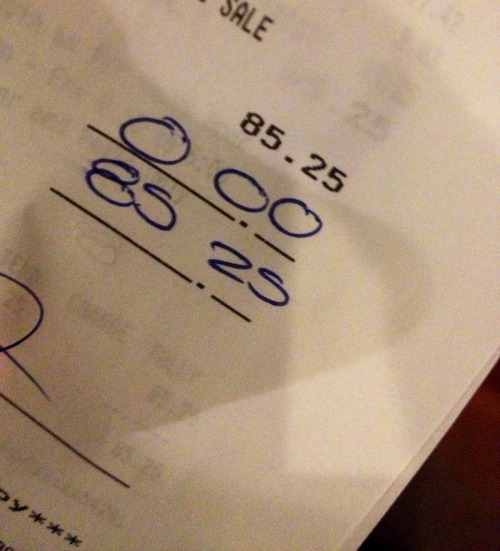
And then my tables started cashing out. 10%tip, 5% tip, no tip, no tip, 10%….20%, FINALLY! Oh…wait…they didn’t do their math correctly, that’s actually only a $2 tip. Wonderful.

My enthusiasm for my job and my shift plummeted rapidly and I was ready to stuff my hot towel in my apron and go home faster than the cheapskate at table 7 could say “Keep the Change” as he handed me $40 for his $38.64 tab.

Some people just genuinely don’t know any better, and I recognize that. Sometimes I’m a little off my game, and I fully own up to that as well. But tonight was not one of those nights. I was on point…and I’m good at what I do.

So let me deviate a little bit from my normal Chronicling to give something of a PSA on behalf of waitstaff everywhere.

80% of servers make under minimum wage. This is a fact. A miserable, lamentable fact. The hourly wages that our employers provide are essentially just so that the government has something to take as far as immediate taxes on our tip money, and we don’t get slammed with having to pay it all back at once in April. Our “paychecks”, therefore, are usually somewhere in the neighborhood of $30. If that. It’s a pretty crummy system, and believe me when I say that we’d probably rather be making a steady and reliable hourly wage instead of depending on tips, but unfortunately that’s not the society we live in.

So. Your tip. How much do you tip, and who gets it?

A lot of that depends on the restaurant you’re in. Look around you. Do you see hosts and hostesses? Is there a bartender? A busser? If any/all of these people are present, rest assured that your server does not get to keep all of their tips.

We “tip out” to all of the other support staff (busser, host, QA expo, bartender, etc.) at the end of every shift. The amount of money we tip out to these staff is determined, not by how much money we make, but by how much we’ve sold. For example, at Chilis, I tip out 3% of my total sales at the end of the night. (So if I sold $100 worth of food and drinks, my tip out would be $3. Last night, I had $1100 in sales, and had to leave behind $33).

What does this mean? This means, that if you don’t leave a tip, or only leave $1 or $2 (assuming your total tab wasn’t $10.) your server actually loses money on your table. We still have to pay taxes and tip out based on the amount of food YOU ordered, not to mention that you sat there, and took up one of my tables for 2 hours, which I could easily have flipped twice in that time had you not felt the need to camp out and then leave me $2 (I’M TALKING TO YOU, TABLE 36.)

It pretty much boils down to this: a 10% tip is the bare minimum. It means mediocre service, and relates a relatively neutral - bordering on negative message to your server about how they did their job.  15% indicates that you’re content and happy, and your server was proficient at taking care of you. 20% is excellent. Excellent food, excellent service, excellent everything. That’s how we read your tips.

Also, you can basically write whatever you want in the tip line. If your total bill was $45.67, and you write in a $5,000 tip, and then write “$45.67” on the total line, and sign it…..guess how much I’m authorized to charge your card for? That’s right. $45.67. So please (PLEASE PLEASE PLEASE) double check your math when you’re totaling out your bill. I lost no less than $27 in tips last night simply because people couldn’t Math correctly.  Perhaps ranch dressing in excess has an adverse affect on people’s ability to do basic arithmetic. Or perhaps it’s a complication of margarita-induced brain freezes. Either way. It sucks. Please don’t suck.

Tipping is not optional, and it is not a privilege for the server. Back in the day, it probably was, but unfortunately, that’s no longer the case. When you sit down at a restaurant there is an unspoken understanding between you and your server. It’s their responsibility to make sure you have a stellar, enjoyable and relaxing meal, and it’s your responsibility to make sure they can afford to pay their rent. And before you start in on me (because I can hear the rumbling of offended restaurant goers from here, like distant thunder…calm yourselves, beasts!) about how entitled you are to not-tip, let me tell you now, honey child, I’ve heard every retort in the book.

"Your restaurant should pay you better, that’s not my fault" - Well. Yes. I agree. But they don’t. So it sucks for both of us. But until it’s announced that tipping is no longer needed in the service industry, the burden of determining my “paycheck”falls on you Trust me, I’m not happy about it either.

"You should just be happy that I left anything at all." - If your tip was in addition to the $10/hr my restaurant was paying me, you bet your left shoe I’d be happy for any little bit you wanted to throw my way. But they don’t. And I know you know that, faithful restaurant eater. So when you walk out, leaving me $3 after having waited on your family of 6’s $130 meal, I’m going to interpret that as a direct and intentional personal insult. You may have thought you were coming out on top by not leaving the appropriate $13-$26 that your bill merited, but really now you’re just a dick. And I can promise you that every server who was working that night will know about it. Good luck getting chipper service next time you try to come to our restaurant. We remember.

"Tips are dependent upon how well you do. That’s what TIPS means. ‘To Insure Proper Service." - I almost don’t even want to respond to this one, but unfortunately it’s a very popular notion. First off, lemme just lay it out there that if you believe this, you’re a dumbass. For multiple reasons. If that acronym was in fact true, they would be called “teps” (to…ENSURE….proper service. English, for the win!) and you would give them to be at the beginning on the meal. Because that’s what “to ensure proper service” implies. How comfortable would you be if you had to tip your server at the beginning of the meal, knowing full well that you had to sit there for the next 45 - 60 minutes facing the person you just handed $2 as you ask for 3 more sides of Barbeque sauce, a 5th coke and some ranch.(Just because of reasons. Everyone needs ranch. ) You’d probably be a little uncomfortable, wouldn’t you? You’d probably shell out a lot more were that the case, wouldn’t you? How great is it for you that you get to demand special ordered food and request exactly 45 napkins one at a time from your server and then immediately slip away into the night after leaving your server $1.63. You’re such a champ, a real stand-up type of person. I hope your kids leave legos in the hallway tonight, and you step on three of them as you stumble to the bathroom at 3am.

"Why don’t you just get a real job. You’re choosing this lifestyle" - Whoa buddy, whoa. Did you really just say that to me? Let’s rewind this a little bit. I’m on my feet, running, squatting, lifting trays, clearing dishes, entertaining table after table, pretending to love being regaled by the intricacies of your oh-so-fascinating life and reassuring you that your baby IS the most adorable baby I’ve ever seen for 6-10 hours a day. Usually, unless I have time to take a bathroom break (please note that I didn’t say “need” to take a bathroom break. If. I. Have. Time.) , the first time I get to sit down after walking through those doors and clocking in is when I get back in my car to go home at the end of the night. Someone please tell me how that’s not a “real” job? Or how it’s any less “real” than your 9-5 office job? I bet that desk chair does a real number on your lower back. Your office manager should really look into providing you with the lumbar support you deserve. Please, tell me more about it as I stand at your table side balancing 30lbs of dishes on one hand that you seem to be oblivious to, as you continue to complain about your cushy job.

   You have a valid point though, in that I did choose this job. For me, personally, I know that waiting tables is only temporary. The tips I earn go towards food, gas, insurance, cell phone, car payments, my gym membership, student loans, text books and other basic life-needs (shampoo is expensive ommgggg). I’m also trying to save up so I can afford to move to New York after I finish my Master’s Degree. I’ve got a lot on my plate, but not nearly as much as some of the other wonderful people I work with. Take, for example, the 20 year old single mother of 2 who was in the section next to mine last night. I’m not sure if she finished high school or not, but her kids are her life now. She started waiting tables at 16 so that she could afford to buy diapers and formula every night before she went home. Waiting tables isn’t just her “get me through school” job. It’s her career. It’s how she feeds her kids. So go ahead, leave her no tip on your $120 check, table 23. I hope that pasta you inhaled gives you heartburn. And she’s not the only one. Every single server in any restaurant you eat in is at your mercy to provide for themselves and their family. That is the responsibility you sign up for when you walk into a dine-in restaurant. It is an unfortunate part of American culture.

Don’t like it? Go to a drive-through. That’s what they’re there for. Better yet….stay home. Cook for yourself.

If you can’t afford to tip, you can’t afford to eat out. I know that sounds harsh, but it’s completely true.

Thank you to those of you who are awesome. Awesome people and fun tables actually make this a pretty kickass job a lot of the time. Keep up the awesome. If you doubt your level of restaurant awesome, never fear! It’s totally something you can build up over time, kind of like distance running or heavy lifting. Baby steps. You’ll get there.

YES THIS THANK YOU

Italics re: affording a tip are mine. Mother. Fucking. Word. I gots bills to pay, people.

If you can’t afford to tip, you can’t afford to eat out. I know that sounds harsh, but it’s completely true.

IF YOU CAN’T AFFORD TO TIP, YOU CAN’T AFFORD TO EAT OUT.

i still firmly believe everyone needs to wait tables for at least 6 months, preferably a year.  i honestly miss waiting tables sometimes, but i don’t miss this bullshit.  If you can’t afford to tip, you can’t afford to eat out.

09 May 17:46

How the Bay Area’s last slaughterhouse dodged the axe

by Heather Smith
Russian Sledges

via Ibstofire Hosepher

Originally published on Grist.

An hour north of San Francisco is where you’ll find the last slaughterhouse in the Bay Area. I drove right by it at first — it’s just a low-slung collection of one-story rectangular buildings and prefab trailers behind a high fence. It was sandwiched between a Bikram yoga franchise, a block of condos, and an outlet mall. The Bikram franchise seemed to have taken the lack of signage outside the slaughterhouse as an open invitation, because someone had hung a large banner across the slaughterhouse fence that read "Certified Organic Yoga."

(Grist)

The place once known as Rancho Veal and now called Marin Sun Farms Petaluma is the only slaughterhouse that lies between the Sonoma and West Marin grasslands and the socially conscious eaters of San Francisco. Without it, the history of the local food movement in the Bay Area would have been very different. There were plenty of idealistic pastoralists willing to fight to protect the grasslands for agriculture instead of letting them turn into suburbs. There was an equally idealistic cabal of chefs willing to pay a premium to buy their meat from locally and ethically raised animals. But there was only one Rancho. And all it took to keep it open was the collapse of the entire American real estate market — that, and 8.7 million pounds of recalled beef.

For all its importance, Rancho has kept a low profile. When I wrote an article about it back in 2008, my requests to visit were flatly denied. "You will never get inside here" is the phrase I remember the receptionist using.

But a lot can change in seven years. On a bright spring morning recently, I just walk through the front gate, past the office that the slaughterhouse is obligated to provide for its local USDA inspector, and into another boxy, prefab office trailer that looks like it and its wood paneling have sat here, completely unchanged, since the early ’70s.

Inside, David Evans, the facility’s current owner, is discussing complicated meat orders. A dot-com startup that delivers cook-your-own-meal kits has just called out of the blue begging for a rush order of several thousand tiny packages of organic ground beef, individually bagged. Is it possible to do an order like that so quickly? There’s a brief debate. Later, they figure out how to make it happen.


San Franciscans of the olden days, like most other urban Americans, ate animals that were killed within city limits. In the early 1900s, cattle were herded up Third Street and met their fate in working-class industrial neighborhoods like the Bayview (aka Butchertown, aka Putrid Row) and Dogpatch (named for the packs of feral dogs that roamed the neighborhood looking for slaughterhouse scraps). Islais Creek, which was unfortunate enough to pass through the Bayview, often ran red with blood, and had a nickname of its own: Shit Creek.

The railroad and the refrigerator made city slaughterhouses obsolete, for the most part. Years ago, I interviewed Roger Horowitz, a historian who has written a lot about Chicago’s stockyards, for Meatpaper magazine. What surprised me in Horowitz’s stories was how proud the stockyards, slaughterhouses, and meat-packing plants of Chicago were of what they did. There was nothing like them anywhere else in the world — they were the high-tech firms of their day.

When Upton Sinclair researched the slaughterhouse scenes in The Jungle, he didn’t need to go undercover — he just had to join a group of visiting tourists, who made sure to check out the Chicago stockyards the way that modern Chicago tourists check out the Cloud Gate or the Institute of Art. Horowitz sent me a copy of a tour booklet that the Armour Plant produced as a souvenir for visitors. "Hog-killing and the subsequent treatment of pork products offer to the average visitor a most interesting and unique field of observation," the pamphlet read, next to a line drawing of squealing pigs suspended from chains being killed by a man in an apron. "It would seem as if this department had been brought to a state of absolute perfection." Henry Ford was a guest on one of those tour groups and claimed that the slaughterhouse line was his inspiration for the automobile assembly line. He just took the stockyard’s innovation in systematically and repetitively breaking animals down into cuts of meat and reversed it into building cars up.

In Northern California, as in the rest of the country, cattle ranchers became a part of this system. Ranchers raised their calves on pasture and then, once the calves had reached about 800 pounds, they would sell them to whoever offered the best price — usually a buyer for one of the major meat companies. Whoever purchased the calves would ship them out to the vast feedlot and slaughterhouse complexes of the Great Plains. With each decade, the cattle industry in particular seemed to consolidate a little more, and the number of buyers dwindled.

This was great if you liked to eat a lot of steer; the price of beef fell by half between the 1970s and the 1990s. But it was not great if you liked to raise them. While a drought-exacerbated cattle shortage has kept prices high recently, today, four companies buy 85 percent of the cattle on the market.

"When you get consolidation like that, it can actually be great," says Evans, whose company, Marin Sun Farms, took over Rancho last year. "Because people start to look for alternatives."

Evans was one of those people. He started Marin Sun Farms in 1999, as a fourth-generation member of a ranching family and a freshly minted graduate in agricultural science from CalPoly. Evans had decided his niche would be selling cattle that had grazed on local pasture for their entire lives, instead of being fattened in a feedlot. He would raise maybe 10 cattle a year — about the minimum he needed to turn any kind of a profit, period — and sell them as whole, halves, and quarters to locals in West Marin, who had the kind of local purchasing ideology and freezer space necessary to buy at that scale.

Evans had big dreams, but what he was doing wasn’t especially radical. The experience of Bill Niman, a West Marin schoolteacher turned rancher, had proved that there were a lot of people out there who were willing to pay a premium for meat from animals that had been treated well and raised locally. And a determined group of local activists had seen to it that, despite being just an hour’s drive from San Francisco, Marin and Sonoma Counties were a place where small-scale agriculture could still happen.

Beginning in the ’60s, the orchards south of San Francisco were steadily replaced by residential developments and office parks. (A small plum grove that was reportedly the last working orchard in the area was reportedly sold to a real estate developer two years ago.) The dairies and ranches to the north of the city fought back — hard — against residential development.

The same thing was set to happen north of the city — and, in some places, it did. But a detailed plan to turn West Marin into a suburban bedroom community of 241,000 people was foiled in the late ’60s and early ’70s by an unlikely alliance between ranchers and environmentalists. The alliance’s poster child was the Marin Agricultural Land Trust (MALT), founded in 1980 by dairy farmer Ellen Straus and biologist Phyllis Faber. MALT was the first organization in the United States to use land trusts — historically a tool for the wealthy to keep taxes low on large estates — to preserve land for agricultural use. The land that was saved wasn’t necessarily the best farmland the Bay Area had, but it was good for grazing.

During the same time, nearby Petaluma — once the egg capital of the world — had fallen on hard times, but was equally determined not to turn into a residential suburb. City residents voted to limit residential development to 500 new units a year and were promptly sued by the Construction Industry Association. In 1975, much to everyone’s surprise, Petaluma won the case. The city went on to grow into what it is today — a place where strip malls, feed mills, condo developments, and the last slaughterhouse in the Bay Area somehow all manage to be neighbors to one another.

Rancho might not look like anyone’s idea of bucolic country living, but local government had its back. "If we’re going to maintain the pastoral lands of these two counties," Bill Kortum, environmentalist and former Sonoma County supervisor, told the Santa Rosa Press Democrat in 2006, "we better have a slaughterhouse."

(Grist)

Like nearly every rancher in Marin, Evans sent his animals to Rancho. While a few ranchers did a complicated legal dance that allowed them to use the on-farm slaughtering services of a legendary entrepreneur known as "One-shot Johnny," if you wanted to sell through farmers markets or to restaurants, Rancho was the only game in town. That poached beef on your plate at Chez Panisse, that burger at Zuni? All passed through Rancho.

Rancho may have been critical to the local ranching economy and to Bay Area foodie culture, but the reverse wasn’t true. I talked to Bob Singleton, Rancho’s former owner, once back in 2008, for an article that I wrote for San Francisco Magazine. Singleton was sharp and opinionated over the phone, but leery of any press coverage — he feared attracting the attention of animal rights activists and later told the magazine’s fact-checkers that he’d never talked to me at all. At the time, Singleton explained that, yes, he did custom work for local ranchers like Evans, who raised odd breeds of animals and made strange requests like "Save me the ox tails" or "Can I have my cow’s head back?" He also explained that no slaughterhouse, even in the Bay Area, could survive as a business on that alone. Singleton’s bread and butter, as it were, was dairy cattle.

The average dairy herd culls a third of its cows every year and all of its male calves, and because dairy cattle don’t travel well, they tend to be killed closer to where they were raised. Singleton bought them and shipped them in, from as far away as Nevada and Twin Falls, Idaho, before turning around and selling the meat on the commodities market. By 2008, his business had been in a slow decline for decades; Rancho was operating at half the capacity that it had in the 1980s. Cattle ranching in Sonoma was on the wane, too, as many ranchers discovered that vineyards were more profitable. Rancho had been bought for a song after the former owner went bankrupt in the 1960s, but the land it stood on was too valuable for that to ever happen again.

None of this deterred Evans. He was continuing to pursue the slow-growth plan for Marin Sun Farms when, in 2002, something unexpected happened. The New York Times Magazine published an article by a then relatively obscure nature writer named Michael Pollan. Titled "Power Steer," it described the life of a feedlot steer and ended with the author eating a steak from a grass-fed steer raised in the Hudson Valley — and pronouncing it tough, but way more delicious. Suddenly, everyone who read the New York Times Magazine wanted to try a grass-fed steak, too. Evans’ niche product had just vaulted into a larger niche.

Because he was buying cattle from like-minded ranchers in the area and selling it under the Marin Sun Farms label, Evans was also better poised to meet the sudden demand than individual ranchers with small herds. And he found that he was getting the hang of marketing, which he had decided was something that local ranching really needed. He felt pretty good at dealing with the more fussy Bay Area customers — including the ones that insisted that he grow biologically impossible livestock, like grass-fed pigs. "When you get to be a mid-sized rancher," Evans told me, "you have to decide if you’re going to raise cattle, or sell them. I love raising cattle, but what the ranching community needed was someone who could sell them."

Over the next few years, Evans invested heavily in customer service. He began moving from selling frozen meat to selling the fresh kind. He didn’t think it was necessarily any better, and it certainly wasn’t easier, but that was what grocery stores, restaurants, and local butcher shops wanted. He opened a cut-and-wrap facility, so that Marin Sun Farms could start packaging and selling smaller cuts. He worked a lot on inventory. "If someone comes to the farmers market and you don’t have a chicken for them that week," Evans said, "they may say they believe in seasonality, but they’ll go buy that chicken from somewhere else."

And he tried to buy Rancho, unsuccessfully, many times. In 2006, Pollan released The Omnivore’s Dilemma, which built on the reporting that went into the "Power Steer" article and further propelled the grass-fed craze. 2006 was also the year that an attempt to build a slaughterhouse in Ukiah, California, was blocked by local animal rights activists and residents concerned about air and water quality. The slaughterhouse had been backed by Phyllis Faber, one of the co-founders of MALT, and many in the local food movement had hoped that it would be a fallback in case Rancho ever shut down.

Rancho itself was so old that the city of Petaluma had no records of it ever being constructed. But it was becoming clear that proposing a new slaughterhouse in any community was going to be a tough sell, even in the local-food-loving Bay Area.

At that point, Singleton had already sold the option to replace Rancho Veal to a real-estate developer for $3 million. The general attitude in the Bay Area local food scene was one of controlled panic, but Singleton seemed pretty happy about it. He said that some people might see Rancho’s central location as an advantage, but it had some drawbacks. He had come to work to find animal rights activists chained to the front of the building, and the facility had been firebombed twice. "I guess they figured out that we were killing a whole lot of veal calves," Singleton said. "Which you can pretty much figure out from the name." Singleton insisted that local ranching was doomed, no matter what anyone told me. What the suburbs didn’t take, the wineries would.

Then, a few months later, in December 2008, everything changed: The housing market tanked with a velocity never before recorded in American history. The developer backed out; Rancho Veal stayed open. In San Francisco, the artisanal meat craze built into a meat tsunami, little aware of the abyss it had narrowly skirted. A new creature known as the "rock-star butcher" emerged. In the years that followed, I saw more dead pigs at parties than I could count. I wondered sometimes how much of this was due to a genuine commitment to local ag and how much of it was a wealthy city swooning over animal husbandry the way that Marie Antoinette did over dairy maids. But in the meantime, there was money to be made.

Despite its challenges — some of the most expensive farmland in the world, for starters — Sonoma and Marin continued to be as much of an incubator for food startups as Silicon Valley had been for tech. A cattle rancher could still stop in Petaluma and pick up ear tags and equipment from Jay’s Dairy Supply. Petaluma’s three remaining feed mills were going gangbusters cranking out new types of feed — organic feed for organic farmers, local feed for farmers who cared about that, local organic feed for people who were concerned about the fact that most organic feed on the market these days was grown in China. "People flock to opportunity," said Evans. "This is a rural community, but close to a metropolitan area with lots of money. You can come here, lease a small plot, drive to San Francisco, and find people to buy your product."

The Rancho story might have kept on as before, but in early 2014, scandal erupted: All the meat from animals that had been killed at Rancho in the year 2013, some 8.7 million pounds, was recalled. A federal investigation found that Singleton, Amaral, and two senior employees at Rancho had been working together to hide the fact that they were sending meat from diseased dairy cattle out into the meat supply.

Prosecutors alleged that Singleton had been buying up dairy cows with signs of possible eye cancer on the cheap. Those cattle were slaughtered while the federal meat inspectors were on lunch break, and their heads were swapped with the heads of different, healthier cattle, so that the inspectors wouldn’t notice that anything was amiss. Singleton, then 77, pled guilty. During the recall, he had already quickly sold Rancho to David Evans.

It was both the opportunity that Evans had been waiting for for years and something that he’s still waiting to live down. Nearly every small rancher in the Bay Area was hit hard by the recall. While they argued that their animals never touched Rancho’s dairy herd and were slaughtered on a completely different day, the feds would not exempt them.

"We’re so tired of talking about the recall," said AnnaRae Grabstein, Marin Sun Farms’ director of operations — though, she adds, Marin Sun Farms couldn’t have bought Rancho without it.

It’s been a year since Marin Sun Farms reopened the slaughterhouse. In that time, the company has gotten Animal Welfare Approved certification. It shut down its cut-and-wrap operation in San Francisco, where butchers broke down carcasses into more sellable cuts, and moved it onsite. The sale was viewed with a mixture of relief and trepidation by some ranchers. Now that it owned the only slaughterhouse in town, would Marin Sun Farms use its newfound monopoly for good? Would ranchers who chose to sell direct instead of through Marin Sun Farms be penalized?

So far, the answer is good. Sending animals to the slaughterhouse was more expensive than it had been with Rancho’s old owners, but the butchers did better work. Marin Sun Farms polled ranchers about what new services they wanted from their ideal slaughterhouse, and the responses led it to start a service that delivers from Rancho to restaurants and grocery stores as far away as Los Angeles.

What remains now is to figure out how to do what Rancho’s former owners thought couldn’t be done and make a slaughterhouse that is by locals, for locals. In the past, those local clients only took up one day a week on Rancho’s schedule. National trends may be in Marin Sun Farms’ favor, though — because of the drought, the massive slaughterhouses that once killed off their smaller competitors are now going under themselves, freeing up more business for those small and mid-sized operations that managed to survive the last few decades.

In order to survive in the long term, Marin Sun Farms Petaluma is going to have to go much further to re-localize Bay Area eating habits. I mention to Evans, offhand, that if the much-beloved Straus Dairy, which was the first certified organic dairy on the West Coast, started packaging the meat from its dairy cows under the Straus label, the vegetarians of San Francisco might have an aneurysm. Evans disagrees. He thinks that Straus hamburger would be awesome — that the Bay Area has more people who care about buying meat from animals that were raised locally and ethically than it does people who want to keep whatever pastoral illusions they may have intact.


"So that’s where it happens," says Grabstein. We’re perched at the edge of a corrugated metal fence, looking out over the winding path that animals take to the slaughterhouse. Two cow skulls, bleached by the sun, look over the way to the knock box, where the animal in question arrives and is killed — hopefully — before it even suspects anything is amiss. "It’s like No Country for Old Men," says Grabstein. "You know, when Javier Bardem kills people with that air gun."

Today is pig day, and, inside, 100 hogs are already dead and being parceled out by a crew of guys in blue hairnets and white lab coats. While the outside of the slaughterhouse looks dingy and inconspicuous, inside it’s sleek and well-maintained. It reminds me of the clean rooms in some of the factories that I’ve seen — except with way more dead pigs hanging from the ceiling. The pigs have been a useful hedge against the drought that California has been in for the last three years, since they’re not grass eaters. Many local ranchers have chosen to sell off their cattle herds early instead of risking a grass shortage.

(Heather Smith/Grist)

A few bulls stand in a paddock behind us. Two of them are Scottish Highlands, with long, sharp horns that would cause them to get rejected by most slaughterhouses. The Highlands prance around each other and flip their long, rust-colored bangs over their eyes like supermodels.

They’re scheduled for tomorrow. I feel a pang of sadness for them, because where they really should be is on the cover of French Vogue. But I realize that I’m also sad because I’ve seen the bulls at mega feedlots and know that they look stoic at best, miserable at worst — nothing like these Scottish divas.

At this point, the local food movement has relearned the art of raising domestic animals so that they have good lives. It has made strides toward protecting the land where agriculture happens. The Marin Sun Farms Petaluma slaughterhouse is part of the next piece of the puzzle: protecting the infrastructure, like slaughterhouses, that are necessary to keep local food going as a functioning business, not just a hobby for gentleman farmers.

The Rancho saga is full of near-misses. A lot had to go right — and wrong — before the last slaughterhouse in the Bay Area was saved. But Evans is sure that, within the next few years, another slaughterhouse will open up within an hour or two of the city.

It won’t be easy. A competitor would have to figure out how to afford the land and how to win over the neighbors. But it’s inevitable, Evans says. And that’s when he’ll know that he’s really succeeded: the day that the competition shows up.

Grist is a nonprofit news site that uses humor to shine a light on big green issues. Get their email newsletter here, and follow them on Facebook and Twitter.

09 May 17:35

Neko atsume ねこあつめ Guide (Masterpost)

It is long, please take your time on reading!

Preface
Introduction
How to download Nekoatsume in iOS
How to download Nekoatsume in Android
How to download and update Nekoatsume in Android (directly from app store)  (No data loss) (New!)
Guide by Anonymous - How to update/download if I can't access Japanese Play Store by tutorial above (New!)
How to go through Nekoatsume's Tutorial

Inside the Game
How to play
Menu in English (New!)

Cats
Rare Cat - part 1
Rare Cat - part 2.1
The Complete List of Rare's Cat

The complete list of cats in Nekoatsume (New!)

Toys and Fishes
A toys that receive many fish
Is it possible to collect all item?
Collecting fishes - part 1
Collecting fishes - part 1.1
Collecting fishes - part 2

The complete list of toys and how many fishes it received (New!)

Foods
The complete information of refilling food in Nekoatsume
Food refill time
Does expensive food have higher chance to get golden fish back? Pt. 1
Does expensive food have higher chance to get golden fish back? Pt. 2
Does expensive food have higher chance to get golden fish back? Pt. 3
Does expensive food have higher chance to get golden fish back? Conclusion

Features
Change the cat's name!
Meaning of cat's profile
How to delete cat's photo in their album
What is たからもの (takaramono) or treasure?
What does 'Combat Power' in cat's profile mean?


Misc.
(News) Thank you so much!
Nekoatsume ねこあつめ ver.1.2.0 released! (New!)
The cat on menu, Yuuresu 夕ーレス (New!)


F.A.Q

Q: How do you get the fish?
A: When the cat leave your backyard after playing with toys/eat, they will give you fish

Q: How do you get inside the house/2nd floor?
A: You have to buy the inside house/2nd floor first. It cost 180 golden fish, on the last (18th) page of shopping store

Q: How do you keep the fat cat (まんぞくさん or Manzoku-san or Mr. Satisfaction www) from eating everything?
A: He will literally eat every expensive food if you put it in the backyard. If you want to keep him away from eating everything, I suggest to put the food inside the house/2nd floor. So far, I have never encounter moment where Manzoku-san came inside the house and eat it.

Q: How long does it takes you to buy 2nd floor?
A: This answer is still under construction. But I have gotten 155 golden fish by 7 days and 15 hours since I start (Yes, I even counted the hour www). So far I exchange 500 silver fish to 10 golden fish for 3 times. 8 days and 17 hour (without buying anything; either using silver or golden fish). I have exchange 500 silver fish to 10 golden fish for 4 times (Updated 25/03)

Q: Do I have to leave the app open (with the screen on and everything) so that the cats can visit?
A: You don't need to leave the app open! You can close it or even kill the app in task manager and the cat will still come! (Golden rule: as long as there is food!)

Q: How long until a new cat visit my backyard?
A: It is depending on the cat themselves. In my experiences, using normal pink food (without cost) takes 8 hours to be finished/empty, Which mean the cat will come by slowly during that hours. If you want to cat to come as soon as possible, and fill your backyard, I suggest to try giving expensive food. Depending on which food, they will come within 3h to 7h (More detail, click here).

Q: Why the cat doesn't want to play inside my house/2nd floor?
A: You have to first put the food first! No food = No cat.

Q: The new version 1.2.0 have multiply background. Can I use both at the same time or only one?  (New!)
A:  You can only use one at the time! (Thank you for answering it, Xeya-san!

Q: (iOS user) I have to update to version 1.2.0, but the problem is, it doesn't have makeover button, how can I do? (New!)
A: Please refer to this post (click here)

I would like to say thank you to Brianna-san, Anchovy-san, Jamie-san, Xeya-san, Chibi-san, Max-san, Yeyeming-san, Jeedjad-san, Jennie-san, and Darc-san for the questions!


Question I am still unable to find answer..

(1) I have a problem taking cat photos. Whenever I tried, it's all black. Do you know how to fix it?

(2) I already install it, but when i open it everything is white.. Is it because my screen to small? :< Mine Samsung Galaxy Young btw.

I have yet found way to fix it. If anyone know how, please help us by comment below! You don't need to fill the email/you can leave it blank!

Announcement 19 April 2015

ねこあつめ's topic is officially closed from the blog and posts will not be updated (New FAQ, or announcement is exception).

Post that will not be updated such as the new played good or the new information of the receiving fish (unless there is bulk of them)

But, everything will still be working like usual.

  • Reader is free to comment on the new played goods/toys of (cat's name)
  • Reader is free to comment on the goods/toys how many fishes they received
  • Reader is free to comment their question or confusion on the post. I will answer like usual.

But:

  • It is strongly suggested to check the comment section on cat's post for new played goods. Since the post will not be updated, the comment from other reader is the latest information.
  • It is strongly suggested to read through the master post first. If you do not find the answer toward your question, please don't hesitated to leave a comment!

Lastly, I hope you have fun on playing ねこあつめ! Since the creator themselves aimed for "The cats that gather in our backyard, just looking at them is comforting. It is basically that kind of app."

ありがとうございます。ねこあつめ楽しみください!

(From this post)


This post is last updated at 20 April 2015
09 May 10:16

janvranovsky:Pedestrian underpass in Kanazawa | © Jan Vranovsky,...


janvranovsky:

Pedestrian underpass in Kanazawa | © Jan Vranovsky, 2015 

09 May 10:07

jamicarignan: Here Lies Saturn Bomberman

Russian Sledges

via firehose

saturn bomberman autoreshare


jamicarignan:

Here Lies Saturn Bomberman

09 May 10:06

Natalie Portman To Play Supreme Court Justice Ruth Bader Ginsburg In Movie

Russian Sledges

via firehose

Natalie Portman is set to play Supreme Court Justice Ruth Bader Ginsburg in "On The Basis Of Sex." The script, which follows the travails of Ginsburg as she faced numerous obstacles to her fight for equal rights throughout her career, was on the 2014 Black List and written by Daniel Stiepleman.
09 May 03:37

brand-upon-the-brain: Happy Together (Wong Kar-wai, 1997)


brand-upon-the-brain:

Happy Together (Wong Kar-wai, 1997)

08 May 18:13

San Francisco Cops' Racist Texts Prompt Review Of 3,000 Arrests

by KRISTIN J. BENDER

SAN FRANCISCO (AP) — Authorities have identified 3,000 arrests that could have been influenced and resulted in wrongful convictions as the result of bias by 14 San Francisco police officers being investigated for racist and homophobic text messages, the district attorney announced Thursday.

Read More →
08 May 17:26

What Would You Expect Him To Say?

by David Kurtz
Russian Sledges

via overbey

I'm not sure how much you can really credit the Secretary of Defense denying that Jade Helm is cover for a military takeover of Texas.

08 May 15:31

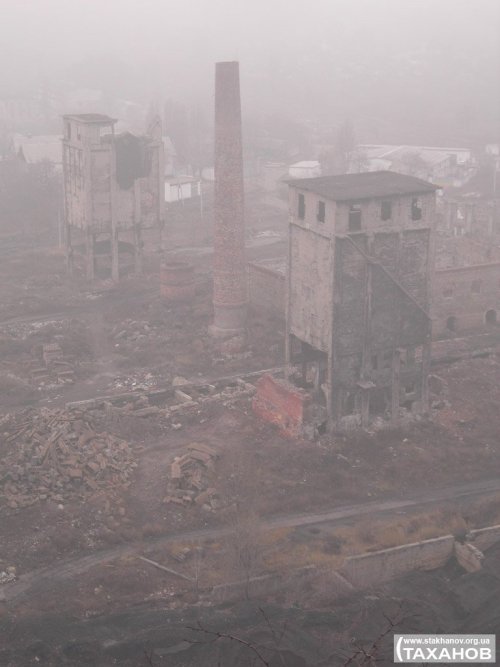
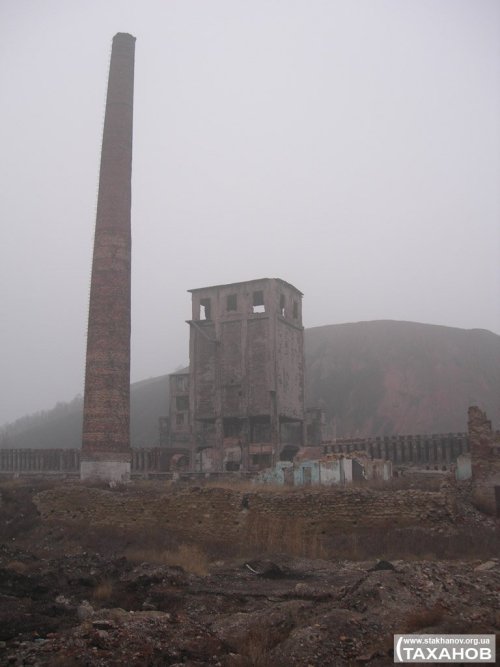
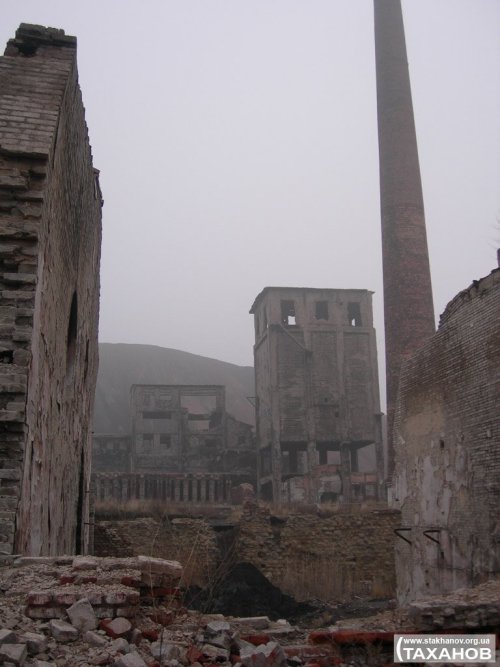
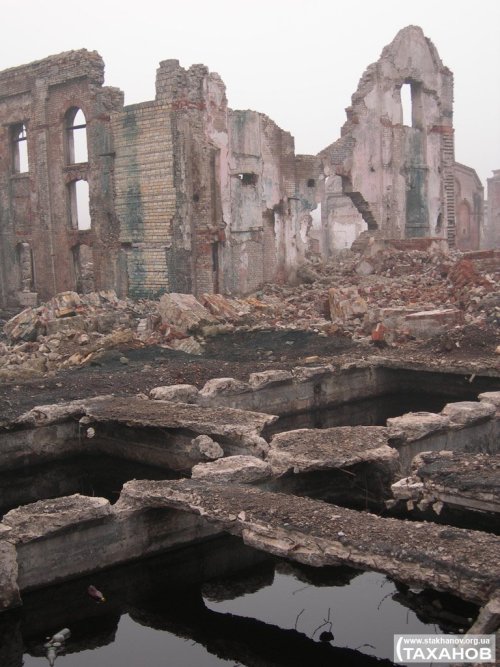
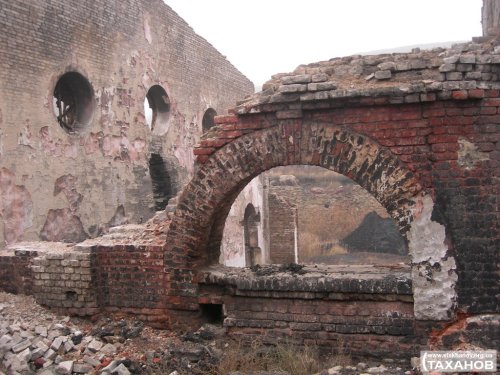
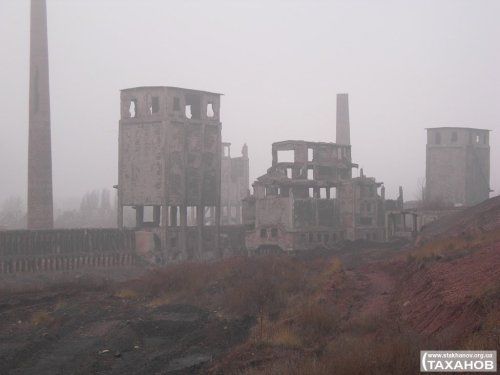
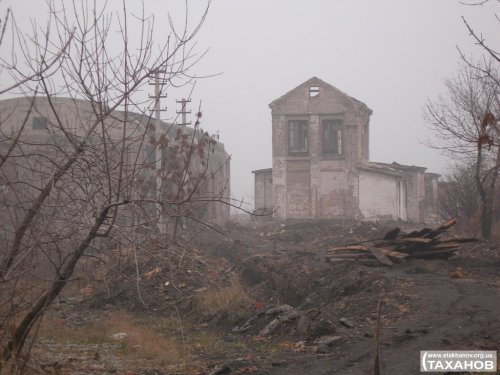
Заброшенный коксохимический завод. Стаханов, Луганская...

Russian Sledges

via Nathan Fhtagn ("I remember this quest from Fallout III.")


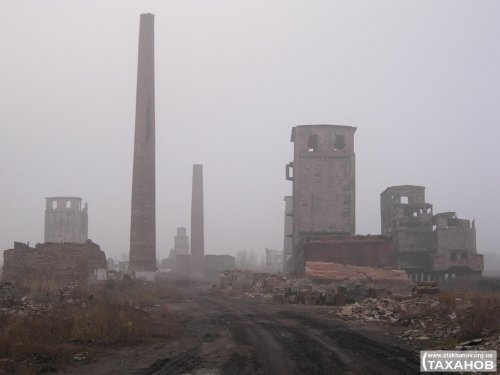
Abandoned coke-chemical plant. Stakhanov, Lugansk region


Заброшенный коксохимический завод. Стаханов, Луганская область. часть 3.
здесь 1-я и 2-я части
08 May 14:15

“Maccarony Cheese”

by alyssaconnell
Russian Sledges

via bernot

MACCARONY CHEESE

For our inaugural recipe, we thought, why not start with an eighteenth-century mac-and-cheese?  It’s a modern-day American classic and perhaps the ultimate comfort food.

This recipe comes from UPenn Ms. Codex 1038, a collection of recipes most likely written and bound between 1765 and 1830. (Thanks to Mitch Fraas for pointing us to this particular “maccarony cheese.”)

The Recipe

Maccarony Cheese

Two Ounces of best Glocester Cheese, 4 Ounces Cheshire Do. grated – put it into a Stone Mortar with two Eggs, two or three Spoonfulls of Sack or Mountain Wine, beat it ’till it’s well mixt and Light – Boil the Maccarony in Water very tender, then drain it well, put it on a Dish or Plate and lay the prepared Cheese all over it and brown it with a Salamander.
This recipe, unlike some others to be featured, discussed, and puzzled over here in the next few months, features no ingredients that are mysterious, challenging to obtain, or downright unappetizing. Cheese, eggs, and macaroni are all familiar. Even sack wine can be approximated. Defined in Samuel Johnson’s 1737 Dictionary as “A kind of sweet wine, now brought chiefly from the Canaries.” Also known as “Canary wine,” sack identified a few varieties of sweet, fortified light wine. One of these later became known as “sherry,” so sherry is what we turned to here. For Gloucester cheese, we substituted a sharp, aged cheddar; for Cheshire, a milder cheddar.

Note that although the recipe provides specific measurements for all ingredients of the cheese sauce, the amount of macaroni is left unspecified. Based on the amount of cheese sauce, we determined that approximately half a pound of pasta (ex. fusili) would most likely have been used.

Early modern cooks used salamanders to brown dishes. A salamander was a piece of cast iron with a handle attached; it would be heated in the fire and then held on top of a dish to warm it. Essentially, a salamander was a hand-held broiler. We debated using a culinary torch but decided that an oven would provide more even cooking.

So, our modern version of the recipe looked like this:

2 oz. sharp/dry cheddar

4 oz. mild cheddar

2 eggs

2 tsp. sherry

8 oz. dried pasta

Heat oven to 350F.

Grate the cheeses and beat together with eggs and sherry. Add salt and pepper to taste. Cook and drain pasta.

Transfer pasta to oven-proof dish and evenly distribute cheese sauce over the top. Bake for 15-20 minutes, until cheese is melted and lightly browned.


cheese and eggs at the ready nicely browned mac & cheese serves 2-4 perhaps best paired with something green

The Results

In a word: delicious. The eggs cooked with the cheese to form a dense, satisfying mac-and-cheese that was remarkably easy to make. And the sherry flavor came through in a unique, rich way. We both agreed that this would be an easy way to throw together a pasta dish for one or two people, using up any scraps of cheese. Even more impressive: unlike many modern recipes for mac-and-cheese, this one does not involve any milk or heavy cream.


08 May 12:49

GitHub + Jupyter Notebooks = <3

by sshirokov

Communicating ideas that combine code, data and visualizations can be hard, especially if you're trying to collaborate in realtime with your colleagues.

Whether you're a researcher studying Wikipedia, an astronomer investigating the movements of galaxies in our cosmic neighborhood or a data-scientist at fashion retailer Stitch Fix, producing insights from data and sharing is a common challenge.

Jupyter notebooks solve this problem by making it easy to capture data-driven workflows that combine code, equations, text and visualizations and share them with others. From today Jupyter notebooks render in all their glory right here on GitHub.

Jupyter Notebook toggle

With Git Large File Storage and Jupyter notebook support, GitHub has never been a better place to version and collaborate on data-intensive workflows. With more than 200,000 Jupyter notebooks already on GitHub we're excited to level-up the GitHub-Jupyter experience.

Looking to get started? Simply commit a .ipynb file to a new or existing repository to view the rendered notebook. Alternatively if you're looking for some inspiration then check out this incredible gallery of Jupyter notebooks.

08 May 12:18

Dreaming big, JJ Gonson turns Cuisine en Locale into Somerville rock club - Music - The Boston Globe

by russiansledges
Russian Sledges

I should have figured out that JJ Gonson is Claudia Gonson's sister

Gonson recently connected with the folks at Bowery Boston, who have started to book shows in the ballroom, including Saul Williams on Saturday (see next page) and the Front Bottoms and Ceremony, both in June. Her band wish list includes Sleater-Kinney, Luscious Jackson, Portugal. The Man, and maybe Built to Spill. (Oh, and she wasn’t joking about Leonard Cohen, either. She submitted a bid, which was declined.)
08 May 01:56

madeofcelluloid: ‘Солярис’ (Solaris), Andrei Tarkovsky...


madeofcelluloid:

‘Солярис’ (Solaris), Andrei Tarkovsky (1972)

There is only one bad thing about sound sleep. They say it closely resembles death.

08 May 01:56

lunalovelight: “Our lives are just spectacles. We are like...


lunalovelight:

Our lives are just spectacles. We are like dolls, in a sense, to be observed and played with - often with cruel and deceitful intentions - in an unreal world.” 

-Marie Antoinette: Princess of Versailles, Austria - France, 1769 (Royal Diaries) by Kathryn Lasky

08 May 01:39

Cherry 2000 | Radcliffe Institute for Advanced Study at Harvard University

by russiansledges
Russian Sledges

see you tonight otters

(1987, Directed by Steve De Jarnatt) Starring Melanie Griffith, David Andrews, and Laurence Fishburne. 93 min. A quarter century before a man fell in love with an artificial woman in Spike Jonze’s Her, Melanie Griffith starred as a bounty hunter hired to find a replacement for a man’s beloved Cherry 2000 model android. Although this campy B-movie is almost forgotten by all but the most devoted fans of cult science fiction flicks, it raises complex questions about gender roles, sexual commodification, and emotional intimacy between men and women. Part of the 2014–2015 film series at the Schlesinger Library. Admission is free and open to the public.
08 May 01:38

How Facebook’s Algorithm Suppresses Content Diversity (Modestly) & How the Newsfeed Rules the Clicks — The Message — Medium

by russiansledges
Russian Sledges

"There are no gods in this world. The only thing ruling us is the invisible atmosphere." http://www.themarysue.com/wp-content/uploads/2015/01/tumblr_inline_nii1a6gPKM1sdgkr8.png

Today, three researchers at Facebook published an article in Science on how Facebook’s newsfeed algorithm suppresses the amount of “cross-cutting” (i.e. likely to cause disagreement) news articles a person sees. I read a lot of academic research, and usually, the researchers are at a pains to highlight their findings. This one buries them as deep as it could, using a mix of convoluted language and irrelevant comparisons.
07 May 23:08

scenereport: Frustration level: Bowie NASA.

Russian Sledges

via firehose

Courtney shared this story from Super Opinionated.


scenereport:

Frustration level: Bowie + NASA.