×You need to sign in to continue.

Shared posts

05 May 18:14

Why it makes sense to bike without a helmet

by Howie Chong

As I was cycling home the other night I came across a few of my fellow students from the Yale School of Forestry and Environmental Studies. Several of them asked me: Where is your bike helmet?

I get this question a lot. I have made a careful and conscientious choice to not wear a helmet when I’m cycling in urban areas because I strongly believe that it will help improve the overall safety of cycling in the long run.

It’s an unintuitive position to take. People have tried to reason with me that because I’ve spent so much money and time developing my brain, and the cost of an injury would be so devastating, it’s clearly more important to wear a helmet. But if we start looking into the research, there’s a strong argument to be made that wearing a bike helmet may actually increase your risk of injury, and increase the risk of injury of all the cyclists around you.

Why doesn’t everybody wear a helmet?

Let’s first get one thing out of the way: if you get into a serious accident, wearing a helmet will probably save your life. According to a 1989 study in the New England Journal of Medicine, riders with helmets had an 85% reduction in their risk of head injury and an 88% reduction in their risk of brain injury. That’s an overwhelming number that’s backed up study after study. Nearly every study of hospital admission rates, helmeted cyclists are far less likely to receive serious head and brain injuries. These studies confirm what we feel when we’re out for a spin on our bikes: We are exposed. Vulnerable. Needing of some level of protection.

Sharing (or wrestling) road space from a never-ending stream of one-tonne metal vehicles can be very intimidating. As a cyclist you are completely exposed. Cars and trucks are constantly zipping around you and there is no metal cage around you to protect yourself. So a helmet provides a level of protection from this danger. It makes you feel safer.

But a broader look at the statistics show that cyclists’ fear of head trauma is irrational if we compare it to some other risks. Head injuries aren’t just dangerous when you’re biking—head injuries are dangerous when you’re doing pretty much anything else. There’s ample evidence showing that there’s nothing particularly special about cycling when it comes to serious head injuries.

In 1978 a team of scientists undertook an epidemiological study of head injuries in the San Diego area. As part of that study they looked at the overall causes of head injury by transportation type.

Here’s what they found:


Over half of all head injuries occur in motor vehicles and more people were hospitalized after walking down the street than riding on a bicycle. Consider another statistic: According to a 2006 French study, pedestrians are 1.4 times more likely to receive a traumatic brain injury than unhelmeted cyclists. We can also approach it from the perspective of injuries per million hours from a 1996 Australian study looking at head injury risk before the beginning of any helmet laws:

Risk of head injury per million hours travelled

  • Cyclist - 0.41

  • Pedestrian - 0.80

  • Motor vehicle occupant - 0.46

  • Motorcyclist - 7.66

In each of these three examples we see that cyclists are not the group at highest risk for serious head injury.

Let's be clear. I am NOT trying to say that studies definitively show that cycling is safer than driving or walking. The studies that are out there give us mixed messages about the relative safety of the different modes of transport. What I am saying is that these statistics raise an interesting question: If we're so concerned about head injuries, why aren't we wearing helmets all the time? Why do places that have mandatory helmet laws for cyclists not have them for drivers or pedestrians? The same 1996 Australian study suggests that a mandatory helmet law for motor vehicle occupants could save seventeen times more people from death and serious head injury than a similar law for cyclists.

Yet, despite the clear threat of fatal head trauma from these other activities, virtually nobody insists that people wear helmets in these situations. In fact, doing so is openly mocked. Consider a sentence from this recent article from Forbes magazine that reports that vehicle accidents are the number one cause of fatal head injuries among teenagers : 

Short of suggesting all teen drivers and their passengers wear helmets, the survey determined that states which maintain the strictest graduated driver licensing laws (GDL) are the most effective in reducing both brain injuries and fatalities among young motorists.

Did you catch that? Despite the fact that car accidents are the number one cause of all fatal head trauma among teenagers, the suggestion that teens wear helmets when they drive is simply brushed off. The passage treats the idea of mandatory driving helmets as completely preposterous. Yet we insist that children wear bike helmets (in fact, in some places, it's the law) despite data that shows kids are more likely to die of head injuries riding in a car than riding on a bike. Children and toddlers on foot are far more likely to receive traumatic brain injuries than cyclists, yet parents who place protective headwear on their walking toddlers are openly ridiculed.

In other words, if the reason we are supposed to wear helmets while biking is to prevent serious head injury on the off-chance we get into an accident, then why is it socially acceptable for pedestrians and drivers to go about bare-headed? Why has cycling been singled out as an activity in need of head protection?

There's an important caveat to the results of that 1989 New England medical study: It shows that bike helmets may reduce the risk of head and brain injury by 85-88%—but only for those who get into accidents.

If we take a closer look at the article we see that both the experiment and the control groups studied are those who have already been hospitalized for bike injuries. If one were to examine the medical and epidemiological literature on bike helmet effectiveness, you'll find the exact same condition over and over: Studies show that helmeted cyclists who are hospitalized are far less likely to have serious head trauma than bare-headed cyclists that have been hospitalized.

But wouldn't this be true, regardless of the activity? Logically, helmeted drivers should also receive significantly fewer head injuries than bare-headed drivers. Similarly, helmeted pedestrians should be less likely to receive serious head trauma than bare-headed ones.

But studies that compare head injuries for drivers and pedestrians simply don't exist as there aren't enough helmeted drivers or pedestrians to make a comparison.  Science, after all, can only be accomplished on observable phenomena. If no one wears a helmet when they walk down the street, how can we measure the effectiveness of helmets on pedestrians? In other words, one of the reasons we think helmeted cyclists are safer than unhelmeted ones may be due to availability of information more than actual levels of head safety.

Maybe that explains why there's no comparable fear of driving or walking without a helmet.

How bike helmets may be harmful

But say you are someone who is concerned enough about head injury to wear a helmet while you're driving or while walking down the street. Is there an argument that says that wearing a helmet actually increases risk of injury?

Turns out that there is. There is some evidence that wearing a helmet may directly increase your chance of getting injured in the first place. In 2001, an article in the New York Times reported that the rate of bicycle head injuries had risen sharply — an increase of 51% — during a ten-year period when bicycle helmet use became widespread. This during a time when statistics showed an overall decrease in bicycling in the United States. No one knows for sure why head injuries among cyclists increased, but there are a few theories.

First, wearing a helmet changes how drivers perceive the cyclist. A University of Bath study showed that drivers, when overtaking cyclists, gave helmeted cyclists significantly less space than they gave cyclists who don't wear head protection. The study found that drivers were twice as likely to pass closely to a helmeted cyclist, and that drivers passed an average of 8.5 cm (3 1/3 inches) closer when the researcher was helmeted than when he was not. Not only does this increase the chance of being clipped by a vehicle, it leaves cyclists with far less maneuvering room to avoid other potentially injurious road hazards like potholes and icy patches.

Second, the design of the helmets themselves may increase the chance of some types of injuries when incidents do occur. Three separate studies have shown that bike helmets may increase the probability of certain types of neck injuries. There's some evidence that having an enlarged piece of plastic and foam on your head increases the probability of hitting an object that you'd be able to avoid in the first place, or that otherwise glancing contact with a surface becomes a full-on blow when the head is helmeted.

Finally, wearing a helmet may create a false sense of security and induce risk-taking that cyclists without head protection might not make. Those wearing helmets may take risks that they wouldn't otherwise take without head protection.

There are even some startling statistics that show helmets may have little to negative effects on the incidence of head injuries outside of the cycling world as well. A recent study from the National Ski Areas Association found that, despite a tripling of helmet use among skiers and snowboarders in the United States since 2003, there has been no reduction in the number of snow-sport related fatalities or brain injuries. On the contrary, and 2012 study at the Western Michigan University School of Medicine found an increase in head injuries between 2004 and 2010 despite an increase in helmet use, while a 2013 University of Washington study concluded that snow-sports related head injuries among youths and adolescents increased 250 percent from 1996-2010, a timeframe that also coincides with the increased use of head protection.

Donate

Helmets = fewer cyclists = more danger

So as much as helmets decrease the chance of head injury when you get into an accident, they may actually increase your chance of getting into an injury in the first place.

There is another significant way that the use of helmets harm cyclists: Bike helmets discourage cycling. An Australian study on mandatory helmet laws concluded that laws that required cyclists to wear head protection actually decreased the number of cyclists on the road. The implication of this study? The fewer cyclists on the road, the less likely drivers will be accustomed to sharing road space with cyclists, ultimately increasing the hazards faced by cyclists and further dissuading people from hopping on their bikes. 

As an environmentalist, this is very troubling. To improve public health and the environment, we need to do the exact opposite. People should be encouraged to take a quick bike ride, not the other way around. Unfortunately our society has conditioned cyclists to feel unsafe without a helmet, even though wearing one might actually increase the chance of a collision with a vehicle; and even though other activities capable of inflicting serious head wounds are enjoyed bare-headed without stigma.

The ultimate way to make cycling safe is to promote a culture of cycling, not bike helmet use. Helmet use is very uncommon in bike-friendly cities like Copenhagen and Amsterdam, where cyclists have been socialized to see cycling as a safe activity and where there is the infrastructure to support it. In order to promote the same culture here, we need to encourage people who don't bike that they should give it a try. If my biking without a helmet can help with that, then great. Especially since it's not conclusive that cycling with a helmet reduces your chance of getting injured.

If there was conclusive proof that bike helmets reduce the total number of serious head injuries compared to other normal activities, then I'd reconsider my stance. But if I'm not the kind of person who wears a helmet when I take a walk or get behind the wheel of a car, then there's no logic to me wearing one when I'm on a bike, particularly if I'm confident in my urban bike safety ability.

Meanwhile the proof is pretty strong that vehicles give me more space when I'm biking without a helmet. In a city biking, that's the kind of injury I'm most concerned about. And I want to encourage more people to get on their bicycles, because the more cyclists are out on the road, the safer I'll be.

Says Chris Bruntlett in Hush Magazine:

... it is hard to overstate how our unnatural obsession with head protection is stifling the growth of our bicycle culture. It achieves little, except deterring the most casual cyclists, who also happen to be the slowest and safest ones on the road.
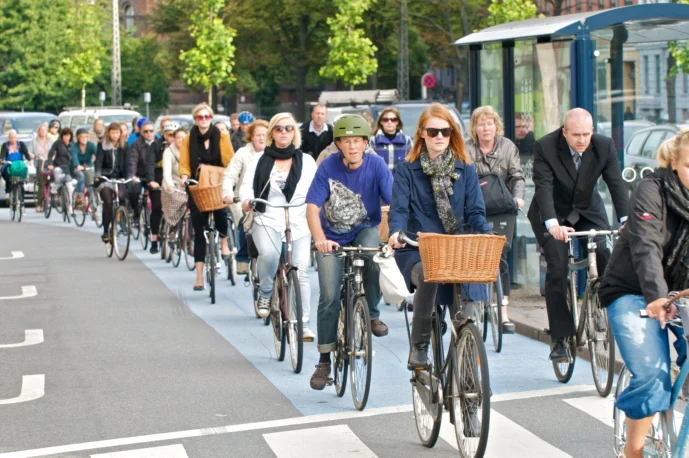
A critical mass of cyclists improves the safety for everyone. (Source)

Pedalling forward

I'm not saying that adults should not wear bike helmets. The main point I'm trying to make is that, when compared to other forms of transportation, the fear of head trauma from cycling is likely out of proportion to the actual risk — and that fear is leading many advocates to admonish bare-headed cycling, contributing to a culture that's counter-productive to the overall safety of all cyclists.

If you're not comfortable biking without a helmet, then by all means, you should wear one. In fact, some studies suggest that those in demographics that have had less biking experience (like children) should, indeed, wear protective head gear (as should teenaged drivers). I, for one, would put on a helmet if I were ever to take on long-distance biking, since I'm not as familiar with sharing traffic patterns with fast-moving cars.

But let's not believe that helmets are the panacea of bike safety. It's probably far more helpful that cyclists learn how to assert their road rights while also safely interacting with traffic. Understanding how to navigate your bike through the streets is far more important to a cyclist's safety than the helmet on their head.

If you do choose to wear a helmet when biking, don't stop there: Learn how to properly and safely interact with vehicles. Share the road. Know your rights. Learn to take the lane and feel comfortable about it. Not only do motorists treat you differently when you're wearing a helmet, studies show that helmets may be giving you a false sense of safety. I've seen cyclists speed through red lights, ride at night with no lights, pass between the curb and traffic into the path of a turning vehicle, and treat stopped automobiles as if they were permanently immobile. Those are all dangerous maneuvers, regardless as to whether or not you're wearing a helmet.

For me, perhaps future studies will show that wearing a helmet actually reduces the chance of injury, or that vehicles will start giving helmeted cyclists more leeway, or that seeing helmeted riders does not discourage others from hopping onto a bike.

Until then I ride the streets of New Haven without head gear hoping that it will encourage more people to get out on two wheels.

Donate $1  

Image Source - P.M. Lydon / CC BY-SA)

Did you learn something? Want to support more think pieces like this one? Donate $1

19 Mar 18:38

I like to watch “Hedwig and the Angry Inch” on...


I like to watch “Hedwig and the Angry Inch” on repeat after a breakup… What do you like to do?

19 Mar 18:08

Working on the layout

by sharhalakis

by secondhype

18 Mar 19:30

Claudia Silva Ferreira, 38 anos, auxiliar de limpeza, morta arrastada por carro da PM

by Camilla de Magalhães Gomes

Texto de Camilla de Magalhães Gomes.

2014 ainda está no início mas, após três meses, parecem proliferar as notícias que criam em nós a sensação de: “nunca vi coisa tão horrível”. Nunca vi, até que a próxima barbárie seja cometida e nos convença que isso deve mesmo ser apenas parte do cotidiano. Nesse caminho, ficamos anestesiados e acostumados, até que não se tenha mais nada a dizer, apenas um suspiro e um muxoxo: “mais um”.

Na manhã do dia 17 de março, começa a ser divulgado na internet o link de um vídeo com o título: Viatura da PM arrasta mulher por rua da Zona Norte do Rio. Apertei o play e não passei de dois segundos. Não recomendo. Mas a leitura da notícia é essencial. Mais do que isso: a leitura crítica do que ela representa é essencial.

Na descrição:

Eram cerca de 9h desse domingo, quando uma viatura do 9º BPM (Rocha Miranda) descia a Estrada Intendente Magalhães, no sentido Marechal Hermes, na Zona Norte do Rio, com o porta-malas aberto. Depois de rolar lá de dentro e ficar pendurado no para-choque do veículo apenas por um pedaço de roupa, o corpo de uma mulher foi arrastado por cerca de 250 metros, batendo contra o asfalto conforme o veículo fazia ultrapassagens. Apesar de alertados por pedestres e motoristas, os PMs não pararam. Um cinegrafista amador que passava pelo local registrou a cena num vídeo.

A mulher arrastada era Claudia Silva Ferreira, de 38 anos, baleada durante uma troca de tiros entre policiais do 9º BPM e traficantes do Morro da Congonha, em Madureira, enquanto ia comprar pão. Em depoimento à Polícia Civil, os PMs disseram que a mulher foi socorrida por eles ainda com vida, e levada para o Hospital Carlos Chagas, em Marechal Hermes, mas não resistiu. Já a secretaria Estadual de Saúde informou que a paciente já chegou à unidade morta. Ela levou um tiro no pescoço e outro nas costas.

Identidade de Claudia da Silva Ferreira. Foto: Jornal Extra.

Identidade de Claudia Silva Ferreira. Foto: Jornal Extra.

Uma polícia que atira sem quê nem porquê, que, ao ser interpelada sobre a brutalidade de arrastar uma mulher pendurada no carro, responde: “ela já estava morta”; perdeu sua legitimidade há muito tempo.

Essa também é a mesma polícia que debocha e produz factóides para justificar seus atos, como afirmar que Claudia estava em posse de quatro armas, quando todos afirmam que ela tinha ido comprar pão.

No mesmo fim de semana, também no Rio de Janeiro, um vídeo mostra um policial militar arrastando uma jovem pelos cabelos na Cidade de Deus. Nessa mesma operação, a gari Vânia Ferreira da Silva Corrêa, de 42 anos, foi baleada no quadril esquerdo quando estava na porta da sala de casa. Assim como Claudia, todas mulheres negras, moradoras de bairros pobres.

Quando o menino João Hélio foi arrastado e morto por criminosos, a comoção social gerada era de ensurdecer. Anos depois, dedicaram a ele o projeto do novo Código Penal — alvo de muitas críticas pela expressão do punitivismo e da indignação seletiva que viraram quase regra sobre o tema no país.

Quem vai gritar por Claudia? Quem vai saber seu nome além dos familiares e das pessoas de sua comunidade? Quem vai se insurgir contra os criminosos fardados, agentes do estado? Quem pedirá a responsabilização desses agentes? Por que o barulho diante dessa brutalidade perpetrada por agentes públicos é tão menor?

Por quanto tempo mais serão justificadas violências como essa, com falas como “o estado tem o monopólio da violência”, “o tráfico faz pior”, “temos uma guerra”? Quem ainda não consegue ver a responsabilidade do Estado e da Polícia na criação, fomento e manutenção dessa “guerra”?

A Polícia Militar do Rio de Janeiro divulgou, na tarde de segunda-feira, os nomes dos três policiais militares do 9º BPM (Rocha Miranda) que estão presos em flagrante. Eles prestaram depoimento e foram encaminhados para o presídio Bangu 8. Também serão desligados do 9º BPM (Rocha Miranda). Uma perícia feita na viatura em que o corpo de Claudia ficou preso e foi arrastado, constatou que a tranca da mala do veículo não estava com defeito.

Aqueles que argumentam usando as cartas da segurança pública e da política criminal deveriam se envergonhar de jogar a cartilha da lei e da ordem contra as garantias constitucionais.

Aqueles que argumentam dizendo que a crítica enfraquece a esquerda e dá elementos para a crítica da direita não perceberam que, nessa matéria, direita e esquerda tem tido historicamente as mesmas respostas repressoras e policialescas quando o assunto é segurança pública.

Os que rebatem a crítica perguntando o que colocaremos no lugar da Polícia Militar, deveriam começar desnaturalizando a militarização como essencial para a segurança e olhar para experiências que funcionam independente desse critério.

Vi tanta gente gritar por Santiago Andrade — o cinegrafista morto em uma manifestação. Queria vê-los gritar por Claudia Silva Ferreira. Mulher negra, 38 anos, auxiliar de limpeza num hospital, mãe de 4 crianças que ficaram orfãs, que cuidava de outros 4 sobrinhos para a irmã ou cunhada poderem trabalhar. Queria saber porque seu corpo vale menos ou porque poucos sabem seu nome.

—–

Por Niara de Oliveira no Facebook:

Ao se referirem à negra faxineira de 38 anos e mãe de quatro filhos assassinada pela PMERJ e arrastada por três bandidos numa viatura policial pela Intendente Magalhães na manhã desse domingo em Madureira, Zona Norte do Rio de Janeiro, usem o seu nome: CLÁUDIA SILVA FERREIRA. Não lhe neguem sua história, sua identidade, sua memória, como está fazendo/fará a grande imprensa (e agiu diferente no caso do menino João Hélio). Lembremos sempre de sua história através de seu nome. E sempre que virem algum veículo da imprensa se referindo à Cláudia como “a mulher arrastada”, chamem a atenção e peçam a correção. Fiz isso hoje no twitter com a EBC na Rede e funcionou.

Por Silvia Badim no Facebook:

E andam ressaltando pelas notícias internet afora que Cláudia era mãe de 4 filhos, casada, e cuidava de mais 4 sobrinhos. Uma mulher de “respeito”. Uma mulher “correta”. Preocupa-me esse argumento porque não importa se Cláudia era mãe, auxiliar de enfermagem, prostituta, traficante, dona de loja, se tinha ou não filhos, se dava pra todo mundo, dançava até o chão no baile funk ou era casada. Cláudia era um ser humano que merecia respeito. Não porque era casada ou tinha filhos. Mas porque era uma cidadã deste país, que deveria zelar pela sua integridade e dignidade.

Por Camila Pavanelli de Lorenzi no Facebook:

Mais cedo eu disse: devemos sempre pressupor que declarações da PM são, pura e simplesmente, MENTIRAS. Mas isso não quer dizer, naturalmente, que todas as declarações da PM sejam efetivamente (ou necessariamente) mentiras. Este é apenas um pressuposto do qual devemos partir. Uma vez estabelecido tal pressuposto, há que se analisar caso a caso. Vejamos, então, o que disse a PM sobre Claudia Ferreira, de acordo com o relato do irmão dela:

- “Depois disseram na delegacia que estava com quatro armas, mas isso é mentira. Ela só estava com um copo de café na mão e seis reais para comprar pão.”

Repetindo: a PM disse que Claudia tinha quatro armas. Dizer que Claudia tinha quatro armas é uma mentira? Não exatamente. Mentira, penso eu, seria dizer que Claudia tinha UMA arma. Mas dizer: “Claudia tinha quatro armas”. Responda rápido: você já viu alguma pessoa portando quatro armas? Ao mesmo tempo? Não precisa ter sido pessoalmente. Também não precisa ter sido num documentário. Pode ter sido num filme de ficção. Você já viu? Alguém? Quatro armas? Duas em cada mão?

Agora imagine que sua irmã, uma mulher de 38 anos, faxineira, foi assassinada ao sair de casa para comprar pão. Aí te dizem que ela – não um agente altamente treinado da CIA, mas a sua irmã – estava portando quatro armas na ocasião. Isso, bem, isso já não é mais uma mentira – uma historinha plausível na qual se possa acreditar. Isso é de um DEBOCHE e de uma CRUELDADE que só encontram páreo nas cenas de Claudia sendo torturada.

A mentira é o pressuposto do qual devemos partir ao ouvir qualquer declaração da PM. Mas nem sempre esse pressuposto se confirma. No caso de Claudia e suas quatro armas, não se estava tentando mentir para acobertar o crime (afinal, quem seria capaz de acreditar nesta versão?). Afirmar que Claudia tinha quatro armas é nada menos que estender a tortura aos seus familiares.

Vídeo – Matéria do Jornal A Nova Democracia

+ Textos sobre o assunto:

[+] Dos extermínios por Silvia Badim.

[+] Quando a palavra seca por Cidinha da Silva.

Bibliografia indicada:

- Legalidade Libertária de Luiz Eduardo Soares. Editora Lumen Juris.

- A Política Criminal de Drogas no Brasil de Salo de Carvalho. Editora Saraiva.

- Difíceis Ganhos Fáceis – Drogas e Juventude Pobre no Rio de Janeiro de Vera Malaguti Batista. Editora Revan.

- A Face Oculta da Droga de Rosa Del Omo. Editora Revan.

- Depois do Grande Encarceramento. Organização de Vera Malaguti Batista e Pedro Vieira. Editora Revan.

17 Mar 12:49

Oops! nm... I got this

by sharhalakis

image

by coffee&brotein

17 Mar 12:48

Manual failover

by sharhalakis

by Christopher

16 Mar 20:51

Futebol, carnaval e machismo.

Vamos por nosso bloco na rua e nos acabar de folia? Eu quero também. Mas antes vamos por a mão na consciência para pensar umas coisinhas?

A começar, se beber não dirija. Isso é óbvio, não é? Mas as pessoas fazem. Ah, e não pode canibalizar o amiguinho no bloco também. Mas isso você pode ficar tranquilo que ninguém faz (eu pelo menos nunca ouvi falar).

O que é muito estranho não é? Isso das pessoas ignorarem certos pontos e terem assimilado tão bem outros.

O Brasil, por exemplo, tem uma identidade nacional que o mundo todo conhece: carnaval e futebol.


Brasileiro gosta de pelada

Futebol é o esporte mais praticado, o mais bem sucedido e mais difundido da nossa sociedade. E por ser tão amplo e fundido com a sociedade, ele tem caracteristicas dela, como por exemplo, machismo e homofobia.

Não é raro ver o tipo de xingamentos que os torcedores usam para ofender seus adversários, não é? E como eles são exatamente o retrato, se não maior, de como é nossa sociedade.

O time para que eu torço é taxado de “Bambi” pelos adversários, buscando ofender e criar o estigma de que pessoas que torcem para o São Paulo são afeminadas (porque ser gay, como todos aprendemos desde criança, é algo horrível e condenável)

E todo adversário cria um estigma racista, machista ou homofóbico para o seu adversário.

Esse meu mesmo time, em um jogo recente, houve uma discussão entre o treinador e um dos jogadores onde o técnico disse que “aqui não tem lugar pra menina”.

Bem, tirante o fato que a partida era de futebol masculino, de fato, as regras não permitem que mulheres entrem em campo. Mas todos nós sabemos que não foi isso que ele quis dizer, não é?

Tony Porter (que estava no primeiro post desse blog e está de novo em um dos últimos, vejam só) comentou sobre isso no seu vídeo do ted. Ele contou a história sobre um jovem rapazinho de um time de baseball:

“ (…) Cheguei a ver isto, este medo que nós homens temos, este medo que nos deixa paralisados, nos prendendo a esta "caixa do macho”.

Lembro de ter falado com um jogador de futebol de 12 anos e eu perguntei a ele, “Como se sentiria se, em frente aos outros, seu técnico falasse que joga como uma garota?”

Esperava que ele falasse algo como, “ficaria triste, bravo, com raiva,” ou algo assim. Não. Ele disse, o garoto disse para mim, “Iria me destruir.”

E eu disse a mim mesmo, “Deus, se iria destruí-lo ser chamado de uma garota, o que estamos ensinando a ele em relação as garotas?”

Eu acho curioso o técnico brasileiro dizer isso. Porque no Brasil “futebol é coisa de macho”, né? Sabe o que eles pensam do futebol nos EUA? “Que é coisa de mulher”. Porque lá mulheres jogam muito mais esse esporte que homens.

E viva a percepção social das pessoas. Enfim…

Mas daí, você não se surpreende quando a marca oficial da copa joga no mercado uma camiseta onde diz que “o objetivo no brasil é marcar gols/pegar mulheres” e que faz de um coração uma bunda de mulher

image

Aí o governo brasileiro reclamou, as pessoas nas redes sociais reclamaram, as roupas pararam de serem vendidas e aí me chega o Sérgio Malbergier e me escreve uma coisa dessas em um jornal:

“O Brasil ficou muito ofendido com as camisetas de apelo sexual que a Adidas fez para a Copa do Mundo. Caímos no raro conforto da certeza absoluta: deve-se combater o turismo sexual, ponto. Da presidente para baixo, todo mundo atirou. E a multinacional patrocinadora da Copa suspendeu a produção.

Muito justo.

Dito isso, as camisetas eram divertidas, politicamente incorretas como os torcedores de futebol. Criadas, segundo a empresa, para vendas só no mercado americano, uma estampava a frase "I coração Brazil”, com o coração transformado em corpão de mulher de fio dental; a outra trazia um mulherão segurando bola, paisagem carioca e a frase “Lookin’ to Score” (duplo sentido para “querendo marcar” ou “querendo arrumar mulher”).

Perto daquela moça-vinheta dançando nua todo dia na TV (minha filhinha de 5 anos outro dia perguntou: por que a mulher tá nua, pai? eu disse que era o calor!) e da cobertura carnavalesca focada nos atributos femininos, as camisetas são até suaves.

As camisetas eram divertidas para quem, Jovem Padawan? Não para você que teve seu corpo objetificado como algo a ser "pontuado” por gringos que virão visitar nosso nobre país que sofre com machismos e exploração sexual, não é?

Quase me retorci no chão quando ele diz que “as camisas são politicamente incorretas, como torcedores de futebol”.

Um belo eufemismo para “Machista e misógino, como torcedores de futebol”.

Mas aí ele levantou um ponto interessante: nossa “querida” Globeleza e o carnaval.


Carnaval é tudo liberado!

Um amigo meu tem uma frase muito boa para definir o carnaval: Carnaval é a época do ano em que as formigas podem se fantasiar de cigarras.

Carnaval, vocês sabem, é aquele momento em que o amor é mais amor, quebrar paradigmas e outras sacangens, não é mesmo?

Ahn… não. Não é.

Carnaval é tudo, menos isso. Carnaval é a permissão que a sociedade dá para que as pessoas se permitam minimamente. Mas de uma maneira ainda machista em relação “caça x caçador”, onde homens podem “admirar” corpos femininos e puxar cabelos, “pegar o máximo de mulher” possível para o seu panteão de macho.

“Ai Diogo, claro que não. Carnaval é uma festa bem antiga. "Carnaval” é originado do latim medieval carnem levare (“leve se embora a carne”) ou carnem levarium (“remova a carne”). É um festejo que antecede a Quaresma, quando a Igreja católica recomenda a abstinência de carne.“

É mesmo, jovem Padawan?

Me diga então, que festa democrática é essa em que as pessoas estão fazendo uma campanha como essa?

image

Você já viu alguma campanha pedindo para mulheres não puxarem, tentarem beijar a força ou puxar o cabelo dos homens?


"Ha, ha, ha. Claro que não, se a mulher quiser, pode me beijar a força à vontade” (imaginem isso sendo dito com o sotaque tipo do Boça)

Ha, Ha, Ha, é mesmo… seu babaca.

Vamos ver o que diz o textículo da Juliana do Think Olga?

“(…) ‘No carnaval, pode tudo’ é uma frase que deveria dar arrepios em qualquer um. A festa, por vezes, mascara a violência sexual que muitas mulheres sofrem durante a celebração do feriado. Puxões, encoxadas, beijos forçados, mão boba, um tapinha que “não dói”…

Quem nunca ouviu falar dessas histórias? E ela é sempre contada do ponto de vista do, hmm, “galanteador”, seja em filmes, anúncios publicitários ou mesmo na boca de um amigo. A graça da conquista é a protagonista, merecedora de aplausos, risadas, high fives. O consentimento, por outro lado, não tem espaço neste roteiro.

Se você cortar a cena e jogar luz para quem foi esquecida como figurante, vai enxergar coisas que talvez não gostaria: medo, aborrecimento, vergonha e traumas. “Ao ignorar um grupo de homens que me cantavam, levei um tapa na bunda. Eles riram. Eu chorei de dor e humilhação.” Este é um dos milhares de depoimentos reais que recebi desde que comecei, em julho do ano passado, a Chega de Fiu Fiu, uma campanha que luta contra assédio sexual em locais públicos no Brasil. Tem mais: “um homem de moto diminuiu a velocidade ao passar por mim e enfiou a mão no meio das minhas pernas”, “de repente, um cara se aproximou de mim com o pau pra fora”, “um motoqueiro gritou ‘sobe aqui e eu te mostro como se trepa’.

(…) Infelizmente, tal comportamento é visto com normalidade por grande parte das pessoas. Também é legitimado por propagandas e formadores de opinião (!) equivocados, que confundem as relações românticas naturais humanas com a violência e agressividade do assédio sexual. No carnaval, caia na farra, mas não caia nessa. E respeite as mulheres.

Resumindo tudo o que eu querida dizer com esse post: basicamente, nossas duas grandes identidades nacionais são estupidamente machistas.

É triste que isso é celebrado como o que é ser brasileiro. Esse povo festivo, de bem com a vida, que chama de “viado” para ofender e encoxa desconhecidas no carnaval porque “tudo é permitido”. Tudo é permitido, menos pedir permissão.

Bonito seria se educássemos as pessoas para que machismo fosse algo tão impensado a se cometer com outro ser humano quanto… sei lá… canibalismo.

Oxalá. E ziriguidum…


—————————————————————————

Toda terça e sexta escrevo sobre o que aprendi com as mulheres da minha vida. Não esqueçam de curtir também a page do facebook. Vai ter bastante conteúdo por lá :)  - Só clicar aqui!

12 Mar 03:04

Development Studio Attempts to Create Non-Gendered Characters [Pic]

by Lauren Berkley

Aware of female representation in video games, game developer QCF went back to the drawing board when it came to developing its characters for Desktop Dungeons.

desktop dungeons_nongendered

From QCF:

It wasn’t good enough for us [at QCF] to simply react with deliberate ugliness or typically masculine factors – the idea was for Desktop Dungeons to remove the gender binary entirely instead of just making everyone a man. In de-emphasizing sex as much as possible, we hoped that players would be able to enjoy a more gender agnostic environment in general.

Shorthands for the feminine kept crawling into our work when we weren’t paying attention – smooth skin, homogenized facial structures, evidence of makeup, you name it. Even characters who we thought would easily sidestep trouble (like the female wizard) simply looked like young, pretty women in grunge costume rather than hardboiled dungeoneers. Portraits for some species went through several drafts just to deprogram our subconscious idea of what felt normal and right.

It’s definitely a step in the right direction. QCF was also forthcoming, however, with the flaws they will work on in the future, such as “whitewashing” much of the cast, relying on “secondary markers” to identify female goblins from male ones, and predominantly male enemies and main story characters.

There’s hope for the gaming industry yet!

[Via The Mary Sue]

10 Mar 20:37

Eight Things You Might Not Know About The N64

by Patricia Hernandez

Just because you've used the N64 before doesn't mean you know everything about it, hotshot. The 18 year old console has a curious history behind it, after all.

Read more...


10 Mar 11:02

My top 12 favorite coffee quotes

07 Mar 19:26

Junior changing my changes

by sharhalakis

image

by fox

07 Mar 19:26

Deploying on the brand new powerful hardware.

by sharhalakis

by dtsomp

28 Feb 00:08

02.19.2014

Cyanide and Happiness, a daily webcomic

Copy this into your blog, website, etc.
<a href="http://explosm.net/comics/3470/"><img alt="Cyanide and Happiness, a daily webcomic" src="http://www.flashasylum.com/db/files/Comics/Kris/next.png" border=0></a><br />Cyanide & Happiness @ <a href="http://explosm.net">Explosm.net</a>

...or into a forum
[URL="http://explosm.net/comics/3470/"]
[IMG]http://www.flashasylum.com/db/files/Comics/Kris/next.png[/IMG][/URL]
Cyanide & Happiness @ [URL="http://explosm.net/"]Explosm.net[/URL]
<—- Share this comic!

27 Feb 22:38

February 21, 2014


GaymerX2 is kickstarterizing!


This is the first time I've ever shared billing with a pro wrestler.
27 Feb 22:33

Now

This image stays roughly in sync with the day (assuming the Earth continues spinning). Shortcut: xkcd.com/now
18 Feb 00:25

Frequency

Frequency Frequency Frequency Frequency Frequency
17 Feb 23:37

Kola Borehole

Tonight's top story: Lucifer, the Prince of Darkness, died in his home this morning at the age of [unintelligible rune]. Due to the large number of sharks inhabiting his former kingdom, no body could be recovered.
13 Feb 23:10

Short: The Beard

12 Feb 18:13

e se fôssemos nós?

by alexcastro

e se fôssemos nós andando todos cobertos?

e se fôssemos nós tendo o corpo controlado?

e se fôssemos nós sofrendo assédio nas ruas?

e se fôssemos nós enfrentando descrença da polícia?

e se fôssemos nós recebendo elogios só pela aparência?

e se fôssemos nós apalpados contra a vontade?

e se fôssemos nós ouvindo comentários condescendentes?

e se fôssemos nós sempre em segundo plano?

pois é. não somos nós. mas são nossas colegas de trabalho, nossas mães, nossas irmãs, nossas filhas.

como se sente uma mulher

10 Feb 17:45

Towering Ignorance

Tech Support | NY, USA

(I work in tech support for cell phones. A coworker is having a conversation with a customer whose phone isn’t working.)

Agent: “Okay! Have you tried checking out the settings on your phone? You may have turned those services off.”

Customer: “No, I didn’t. Definitely didn’t do that.”

Agent: “Hmm, I see! Well, you could always give our customer service department a quick call to see if something is up! How’s that sound?”

Customer: “I’m at my cousin’s house and the elevation is very high so I made sure to turn ‘airplane mode’ on. It’s pissing me off that this isn’t working.”

Agent: “Oh! Airplane mode is actually going to disable your phone from using those features. Take that off for me, please, and try again.”

Customer: “Wow! Do you think I’m going to be fooled like that? You’re lying. How do people talk to each other on airplanes? DUH! Sucks when I know more than an employee…”

Agent: “I’m not entirely sure what you mean. Could you elaborate, please? ”

Customer: “Uhm, wow. I can’t believe I’m doing this: Airplane mode is for when you need to call someone while up high in the air to connect to satellites and stuff rather than towers. How do you think pilots and astronauts contact ground control? You’re a complete idiot. Goodbye.”

10 Feb 15:16

New feature description

by sharhalakis

by uaiHebert

10 Feb 13:22

February 08, 2014


Just a reminder, I have an exclusive comic this week over at The Nib.
06 Feb 01:34

There’s No Sugar-Coating Some Stupidity, Part 2

Restaurant | Germany

(Four guests on one table order a bottle of sweet red wine.)

Me: “Do you want four glasses with that?”

Guest #1: “No, thanks. Not for me.”

Guest #2: *to Guest #1 “What? You are not drinking the wine with us? The bottle is on me.”

Guest #1: “No, thanks. That wine is far too sweet for me, and it contains loads of sugar. I am just not into sugary drinks. I’ll have something else instead.” *to me* “I would like to order a large Coke.”

Related:
There’s No Sugar-Coating Some Stupidity

06 Feb 01:22

A Man Asked the Internet to Name his Baby Girl: These are the Results so Far [Pic]

by Geeks are Sexy

names

A man launched a website to ask the Internet to name his upcoming baby girl, which should enter the world on April 2nd, 2014. The current winning name? Cthulhu All-Spark McLaughin. You can also check some of the other awesome combinations above.

Hi, My name is Stephen and much to the disbelief of my wife, I have decided to let the internet name* my daughter.

Yeah that is an asterisk, Unfortunately internet I know better than to trust you. We will ultimately be making the final decision, Alas my daughter shall not be named WackyTaco692. Sorry guys the wife wouldn’t go for a free for all.

[Name My Daughter]

06 Feb 01:21

Handcrafted Furry, Fluffy, Realistic Plush Toys

by Lauren Berkley

Moscow, Russia resident Santani, 23, not only creates super-cute-slash-possibly-creepy plush dolls, but she sells them, too!

She uses materials like Fimo polymer clay, Cernit polymer clay, Sculpey, Sonnet art supplies, and fabric fur.

real life dolls 1

real life dolls 2 real life dolls 3 real life dolls 4 real life dolls 5 real life dolls 6 real life dolls 7

[Satani on Etsy]

The post Handcrafted Furry, Fluffy, Realistic Plush Toys appeared first on Geeks are Sexy Technology News.

06 Feb 01:21

The Most Geektastic Valentine’s Day Cards You’ll See This Year [Pics]

by Geeks are Sexy

Gollum-Lord-of-the-Rings-Valentine's-Day-card-PJ-McQuade

Every year artist PJ McQuade comes out with very special cards for Valentine’s Day, and this year is no exception. Apart from those he ws offering in 2013, he now has a few extra ones, which you can all purchase over at his online shop.

Darth-Vader-Valentine's-Day-card-PJ-McQuade

IMG_4989

Lando Stars Valentine's-Day-Card-PJ-McQuade

[Source: PJ McQuade]

06 Feb 01:19

Look What DJ Deadmau5 Did with his $300,000 Ferrari 458 Spider [Pic]

by Geeks are Sexy

deadmau5

DJ Deadmau5 recently posted this picture of his $300,000 Ferrari 458 Spider on Facebook along with this explanation:

“If you think the car’s bad, you should see what I did to my bathroom wallpaper. Isn’t it fun to do things your own way and just not give a f***? Try it, you’ll like it, I promise.”

[Source: Deadmau5 on Facebook | Via CB]

06 Feb 01:17

Messing with PAM

by sharhalakis

by @srdan

29 Jan 16:33

Watching the new team deploy to prod

by sharhalakis

by rockstarcode

28 Jan 00:13

Super Old School Gaming Achievements [Pic]

by Geeks are Sexy

achievment

A patch that was awarded to someone who went from Super Mario Bros world 1 to 9 without warping, the old school equivalent of today’s xbox achievements or Playstation’s trophies.

[Source: Videogameauctions.com | Via Dorkly]