Shared posts

15 Jul 14:57

It's good to share

Nature Physics 10, 463 (2014). doi:10.1038/nphys3033

Datasets can now be published, shared — and cited — in Scientific Data.

28 Jun 09:38

A glance into crystallisation

by Riccardo

Macroscopic systems such as hard micrometer beads can undergo crystallisation in a way similar to atoms in our conventional crystals. The larger size means that we can observe the crystallisation process under the microscope, and be mesmerised by it:

http://sapienzalab.org/wp-content/uploads/2014/06/crystalization.mp4

As a technical note, after some time you can see how the crystal self-heal its defects as the hexagonal packing is the least energy configuration. The video is in real time (1 frame/5 sec) and the apparent jump is due to the structure changing not to video editing.
28 Jun 09:17

3D Printing in Windows 8.1

by L.

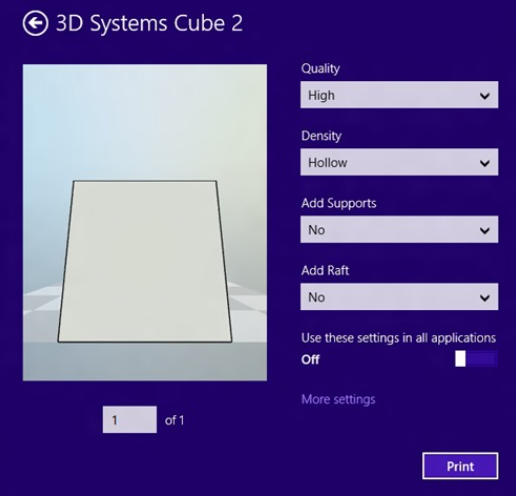
ss1

Windows 8.1 has some interesting built-in support for 3D printing. They’re treating it a lot like 2D printing, even including a print preview.

Labrigger still recommends outsourcing 3D printing because the technology is improving so fast. Shapeways, Ponoko, QuickParts and other places provide fast turnaround access to the best machines.

That said, sometimes it’s nice to have a simple desktop device that can quickly fabricate simple objects. MakerBot was one of the first to take advantage of the Windows 8.1 3D printing API, and offers compatible drivers. TierTime does as well.

More 3D printing info at Labrigger
More info at Tom’s Hardware

PrintFacebookTwitterGoogle BookmarksSlashdotemailLinkedInReddit

26 Jun 22:41

Physics: Bell’s theorem still reverberates

by Howard Wiseman

Physics: Bell’s theorem still reverberates

Nature 510, 7506 (2014). doi:10.1038/510467a

Author: Howard Wiseman

Fifty years ago, John Bell made metaphysics testable, but quantum scientists still dispute the implications. Howard Wiseman proposes a way forward.

26 Jun 22:41

Fundamental constants: A cool way to measure big G

by Stephan Schlamminger

Fundamental constants: A cool way to measure big G

Nature 510, 7506 (2014). doi:10.1038/nature13507

Authors: Stephan Schlamminger

Published results of the gravitational constant, a measure of the strength of gravity, have failed to converge. An approach that uses cold atoms provides a new data point in the quest to determine this fundamental constant. See Letterp.518

26 Jun 22:40

Speckle-Based X-Ray Phase-Contrast and Dark-Field Imaging with a Laboratory Source

by I. Zanette, T. Zhou, A. Burvall, U. Lundström, D. H. Larsson, M. Zdora, P. Thibault, F. Pfeiffer, and H. M. Hertz

Author(s): I. Zanette, T. Zhou, A. Burvall, U. Lundström, D. H. Larsson, M. Zdora, P. Thibault, F. Pfeiffer, and H. M. Hertz

We report on the observation and application of near-field speckles with a laboratory x-ray source. The detection of speckles is possible thanks to the enhanced brilliance properties of the used liquid-metal-jet source, and opens the way to a range of new applications in laboratory-based coherent x-...

[Phys. Rev. Lett. 112, 253903] Published Thu Jun 26, 2014

26 Jun 22:39

Plasmonic Color Palettes for Photorealistic Printing with Aluminum Nanostructures

by Shawn J. Tan, Lei Zhang, Di Zhu, Xiao Ming Goh, Ying Min Wang, Karthik Kumar, Cheng-Wei Qiu and Joel K. W. Yang

TOC Graphic

Nano Letters
DOI: 10.1021/nl501460x
26 Jun 09:17

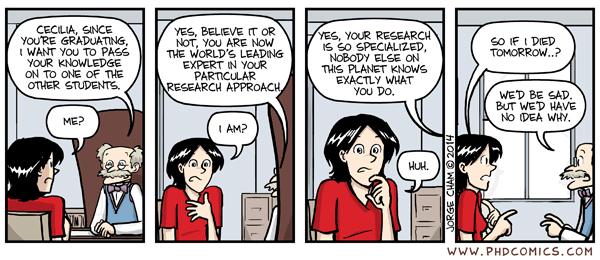
06/25/14 PHD comic: 'Leading Expert'

Piled Higher & Deeper by Jorge Cham
www.phdcomics.com
Click on the title below to read the comic
title: "Leading Expert" - originally published 6/25/2014

For the latest news in PHD Comics, CLICK HERE!

21 Jun 19:37

Capturing the Optical Phase Response of Nanoantennas by Coherent Second-Harmonic Microscopy

by Nicolò Accanto, Lukasz Piatkowski, Jan Renger and Niek F. van Hulst

TOC Graphic

Nano Letters
DOI: 10.1021/nl501588r
21 Jun 08:35

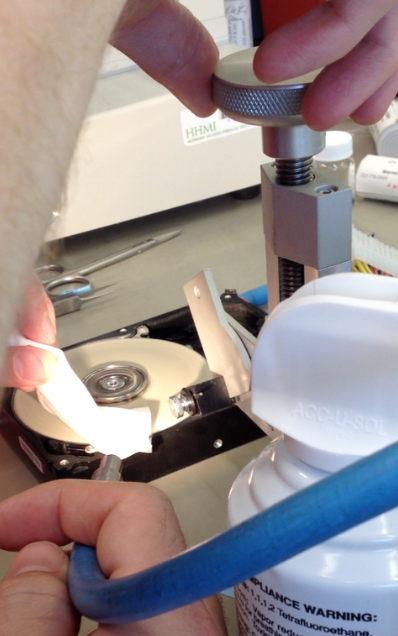
HD-based pipette beveler

by L.

hd

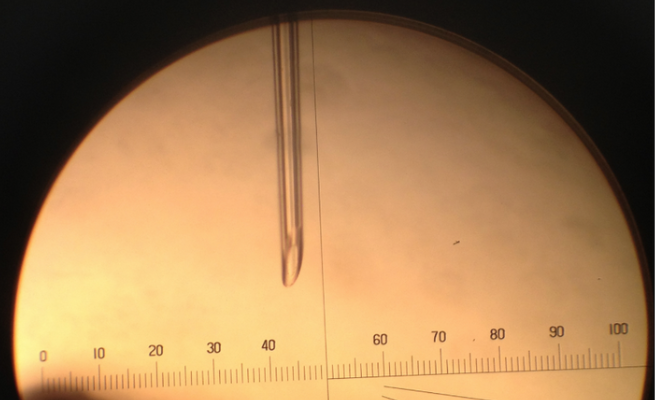
From Andrew Hires’ twitter– repurposing an old hard drive for beveling pipettes. Nice!
clean

Hat tip to Tobias Rose.

PrintFacebookTwitterGoogle BookmarksSlashdotemailLinkedInReddit

20 Jun 10:10

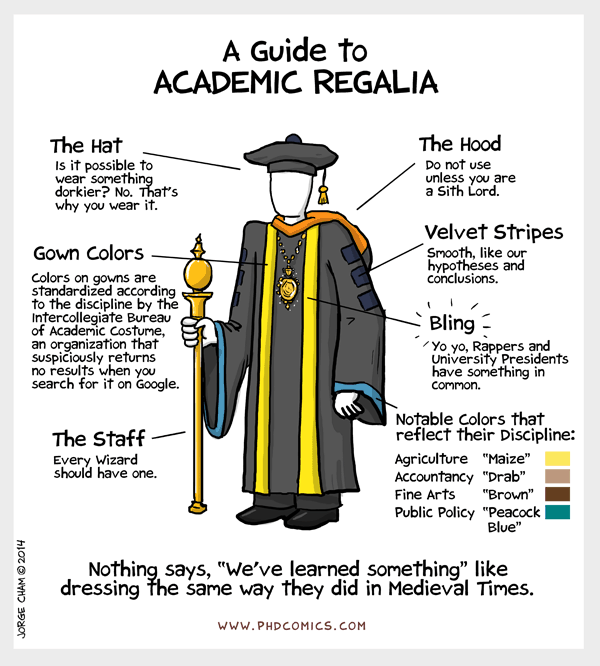
06/18/14 PHD comic: 'A Guide to Academic Regalia'

Riccardo Sapienza

in few weeks that will be me!

Piled Higher & Deeper by Jorge Cham
www.phdcomics.com
Click on the title below to read the comic
title: "A Guide to Academic Regalia" - originally published 6/18/2014

For the latest news in PHD Comics, CLICK HERE!

20 Jun 08:44

Applied mathematics: How chaos forgets and remembers

by P.-M. Binder

Applied mathematics: How chaos forgets and remembers

Nature 510, 7505 (2014). doi:10.1038/510343a

Authors: P.-M. Binder & R. M. Pipes

“It is difficult to make predictions, especially about the future,” goes the proverb. A study of the dynamics of chaotic systems in the context of information theory adds a twist to this saying.

20 Jun 08:43

Quantum computing: Powered by magic

by Stephen D. Bartlett

Quantum computing: Powered by magic

Nature 510, 7505 (2014). doi:10.1038/nature13504

Authors: Stephen D. Bartlett

What gives quantum computers that extra oomph over their classical digital counterparts? An intrinsic, measurable aspect of quantum mechanics called contextuality, it now emerges. See Article p.351

20 Jun 08:43

[In Depth] Quantum or not, controversial computer yields no speedup

by Adrian Cho
Conventional computer ties D-Wave machine. Author: Adrian Cho
18 Jun 20:59

Dislocated Double-Layer Metal Gratings: An Efficient Unidirectional Coupler

by Tianran Liu, Yang Shen, Wonseok Shin, Qiangzhong Zhu, Shanhui Fan and Chongjun Jin

TOC Graphic

Nano Letters
DOI: 10.1021/nl501007d
17 Jun 17:04

James Clerk Maxwell, born today 1831

by Michael Luck
James Clerk Maxwell, one of the world's greatest physicists, and Professor of Natural Philosophy at King's College London from 1860-5, was born today in 1831

At King's Maxwell demonstrated that magnetism, electricity and light were different manifestations of the same fundamental laws. He described these, as well as radio waves, radar and radiant heat, through his unique and elegant system of equations. These calculations were crucial to Albert Einstein in his production of the theory of relativity 40 years later. Einstein commented that 'One scientific epoch ended and another began with James Clerk Maxwell'.

Maxwell made a major contribution to the understanding of colour vision and the first demonstration of colour photography. He produced notable work on:
  • the theory of rolling curves
  • the composition of Saturn's rings
  • the nature of gases
  • electrical measurements.
At King's the James Clerk Maxwell Building at the Waterloo Campus commemorates him. A chair in the Department of Physics and a society for undergraduate physicists are named after him.

The Department of Physics is currently celebrating the 150th anniversary of the publication of Maxwell's famous equations through Maxwell 150.
12 Jun 21:44

Observation of Quantum Interference in the Plasmonic Hong-Ou-Mandel Effect

by G. Di Martino, Y. Sonnefraud, M. S. Tame, S. Kéna-Cohen, F. Dieleman, Ş. K. Özdemir, M. S. Kim, and S. A. Maier

Author(s): G. Di Martino, Y. Sonnefraud, M. S. Tame, S. Kéna-Cohen, F. Dieleman, Ş. K. Özdemir, M. S. Kim, and S. A. Maier

Surface plasmon polaritons (SPPs) are electromagnetic excitations recently found to enable ultracompact quantum circuitry. For the first time, two indistinguishable SPPs are produced and made to interfere, demonstrating conclusively that they behave as bosons and opening up new opportunities for controlling quantum states.


[Phys. Rev. Applied 1, 034004] Published Tue Apr 15, 2014

12 Jun 09:24

Mode Conversion in High-Definition Plasmonic Optical Nanocircuits

by Wen-Hua Dai, Fan-Cheng Lin, Chen-Bin Huang and Jer-Shing Huang

TOC Graphic

Nano Letters
DOI: 10.1021/nl501102n
11 Jun 21:49

[Report] Invisibility cloaking in a diffusive light scattering medium

by Robert Schittny
11 Jun 09:03

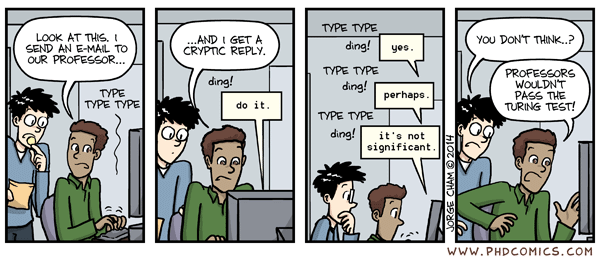
06/11/14 PHD comic: 'The Turing Test'

Piled Higher & Deeper by Jorge Cham
www.phdcomics.com
Click on the title below to read the comic
title: "The Turing Test" - originally published 6/11/2014

For the latest news in PHD Comics, CLICK HERE!

10 Jun 18:57

No, un “supercomputer” non ha superato il Test di Turing

by Paolo Attivissimo
Questo articolo vi arriva grazie alla gentile donazione di “sergio.tom*” e “dabogirl” ed è stato aggiornato dopo la pubblicazione iniziale.

Impazza ovunque la notizia che un computer, anzi un “supercomputer”, come titola Il Sole 24 Ore, avrebbe superato il mitico Test di Turing, dimostrando quindi di essere dotato d'intelligenza. È una balla spacciata da un ricercatore, Kevin Warwick, già noto per le sue dichiarazioni roboanti e del tutto prive di fondamento scientifico. Il test non è stato affatto superato, nonostante Warwick ne abbia alterato le regole a proprio favore.

Prima di tutto, facciamo un ripassino veloce di cos'è il Test di Turing. Non ne esiste una definizione univoca, ma il matematico Alan Turing nel 1950 scrisse un celebre articolo, Computing Machinery and Intelligence, in cui proponeva un “gioco dell'imitazione” che è stato usato come ispirazione per il test: un esaminatore conversa liberamente via chat (allora si pensava a una telescrivente) con un computer e con un essere umano. Se non riesce a distinguere quale dei due è il computer e quale è l'essere umano, allora si può concludere – argomentava Turing – che il computer “pensa” o perlomeno è in grado di imitare perfettamente il pensiero umano e quindi è intelligente quanto un essere umano. Il test ha molti limiti, dovuti anche all'età: all'epoca l'intelligenza artificiale era un campo inesplorato.

Quello che è successo invece alla Royal Society di Londra, secondo il comunicato stampa dell'Università di Reading, è che il computer (o meglio, un software denominato “Eugene Goostman”) è riuscito a convincere soltanto il 33% degli esaminatori che era un essere umano. Uno su tre. Cito: “Eugene managed to convince 33% of the human judges that it was human.” L'altro 67% non s'è fatto fregare. Questo, a casa mia, non si chiama “superare” un test.

Non solo: secondo il comunicato stampa, il test di Turing prevederebbe che “se un computer viene scambiato per un essere umano più del 30% del tempo durante una serie di conversazioni via tastiera di cinque minuti, allora supera il test” (“If a computer is mistaken for a human more than 30% of the time during a series of five minute keyboard conversations it passes the test”). Falso: Turing non ha mai scritto una percentuale del genere come criterio di superamento. Ha invece scritto che il test viene superato se l'esaminatore sbaglia con la stessa frequenza sia quando deve distinguere fra un uomo e una donna, sia quando deve distinguere fra un essere umano e un computer (“We now ask the question, "What will happen when a machine takes the part of A in this game?" Will the interrogator decide wrongly as often when the game is played like this as he does when the game is played between a man and a woman? These questions replace our original, "Can machines think?"”).

L'unica cosa che si avvicina a quanto asserito dal comunicato stampa è una previsione di Turing, sempre in Computing Machinery and Intelligence, che entro il 2000 sarebbe stato possibile programmare un computer in modo che “un esaminatore medio non avrebbe avuto più del 70% di probabilità di fare un'identificazione corretta dopo cinque minuti di domande” (“I believe that in about fifty years' time it will be possible, to programme computers [...] to make them play the imitation game so well that an average interrogator will not have more than 70 per cent chance of making the right identification after five minutes of questioning”). Ma non è una descrizione del criterio di superamento del test: è, appunto, soltanto una previsione che fra cinquant'anni l'informatica sarà arrivata a questo livello. Tutto qui.

In altre parole, il test annunciato sui giornali non corrisponde affatto ai criteri originali enunciati da Turing, che non ponevano limiti di tempo, di argomento o di competenza all'esaminatore. Invece in questo evento:
– l'interrogatorio è stato limitato a sessioni di cinque minuti (forse ripetute);
– non tutti i giudici (che erano forse trenta o cinque in tutto; c'è una confusione sorprendente anche su cose semplici come questa) erano esperti nel valutare software d'intelligenza artificiale: i nomi finora resi noti sono quelli di Robert Llewellyn (attore noto come il robot Kryten di Red Dwarf), Aaron Sloman (professore d'informatica presso la University of Birmingham) e Lord Sharkey (che non sembra avere qualifiche nel settore dell'AI, anche se la BBC lo definisce “esperto” in questo campo);
– è stato detto ai giudici che dovevano decidere se stavano comunicando con un computer che simulava un bambino di tredici anni oppure con un vero tredicenne; ma la scelta di un adolescente equivale a barare, perché impedisce ai giudici di fare domande complesse di cultura o di etica e quindi semplifica molto il compito di imitare un essere umano;
– è stato inoltre comunicato ai giudici che “Eugene Goostman” non parlava bene l'inglese perché era ucraino: un trucco che permetteva di dare una spiegazione credibile alle sgrammaticature del software, incapace di formare frasi idiomatiche.

Infatti Time ha pubblicato una trascrizione di un dialogo con il software che avrebbe “superato” il Test di Turing: basta leggerla per notare che il programma non fa altro che produrre frasi preconfezionate, sviando le domande dell'intervistatore. Quando il software non trova nulla di utile nella domanda, risponde “Preferisco non parlare di questo”. Così son capaci tutti: questa non è intelligenza, è pura elaborazione meccanica. In pratica “Eugene Goostman” è un chatbot e nulla di più. Ne potete provare una versione qui (se il sito non è sovraccarico).

Il Guardian ha pubblicato una foto di uno spezzone di conversazione con “Eugene”: valutatene voi la credibilità. Notate che in due occasioni il software si limita a prendere la frase dell'interlocutore e ripresentarla sotto forma di domanda e per due volte risponde cambiando argomento.

ESAMINATORE: Hello

EUGENE: Hello, how are you?

ESAM: I am fine, you?

EUG: I am pleased you are fine.

ESAM: and you?

EUG: I do not want to answer that right now.

ESAM: Why not?

EUG: Lets talk about something else.

ESAM:  Ok what?

EUG: What is on your mind?

ESAM: I am wondering if you are a robot.

EUG: Would if be a problem if I was a robot?

ESAM: Not really.

La contraddizione tra le affermazioni del comunicato stampa e la realtà dei fatti è resa particolarmente palese da questo articolo della BBC, nel quale gli organizzatori sottolineano che “le conversazioni non avevano restrizioni” (“crucially, the conversations were unrestricted”) e subito dopo dichiarano che simulare un tredicenne ucraino limitava astutamente la conversazione (“It was very clever ruse to pretend to be a 13-year-old Ukranian boy, which would constrain the conversation”). Decidetevi.

Non è finita: anche l'affermazione che “nessun computer è mai riuscito a ottenere questo risultato finora” (“No computer has ever achieved this, until now”) è falsa. Già tre anni fa il chatbot Cleverbot aveva convinto il 59% degli esaminatori che era un essere umano. Ben più del 33% di “Eugene”.

Il professor Warwick, inoltre, è già in sé una garanzia di bufala. Anni fa aveva annunciato di essere il primo cyborg perché s'era impiantato un chip in un braccio (se così fosse, tutti i cani e gatti con microchip sottocutaneo d'identificazione sarebbero dei cyborg). Poi aveva fatto la sparata di annunciare il primo essere umano infettato da un virus informatico: in realtà aveva semplicemente preso un chip contenente un virus informatico e l'aveva inserito nel braccio di un collega. Ne ha dette talmente tante che The Register ha una compilation delle stupidaggini sensazionaliste annunciate da Warwick.

Una cialtronata in piena regola, insomma, che è indegna della Royal Society e cavalca il sessantesimo anniversario della morte di Turing, causando soltanto confusione nell'opinione pubblica. Non c'è nessuna intelligenza artificiale in arrivo: continueremo a essere circondati dalla stupidità naturale e dall'ingenuità dei giornalisti che scrivono di cose che non sanno e pubblicano qualunque cosa senza verificarla. E questo “test” dimostra semmai che se basta così poco per imitare un tredicenne, allora i tredicenni non sono esseri pensanti. Ho qualche dubbio in proposito anche su molti giornalisti.

Fonti aggiuntive: Techdirt, Ars Technica.
Scritto da Paolo Attivissimo per il blog Il Disinformatico. Ripubblicabile liberamente se viene inclusa questa dicitura (dettagli). Sono ben accette le donazioni Paypal.
04 Jun 16:21

La battaglia del grano saraceno

by Marco Cattaneo

Ok, ragazzi, la ricreazione è finita. Lo sfondone del grano saraceno ha fatto il giro d’Italia, e i simpatici parlamentari pagati con le nostre tasse che scrivono una proposta di legge copiando e incollando da un documento presbagliato sono stati additati a sufficienza al pubblico ludibrio.

proposta

Ma per la ragione sbagliata. A prenderli per il culo perché hanno letto grano e subito hanno pensato che facciamo la pasta con la complicità del feroce Saladino, sono capaci tutti. E ok, tutti hanno spiegato che con il grano saraceno si fanno i pizzoccheri, tipico piatto valtellinese, e con il granoturco la polenta, e che non per questo tutta ’sta roba arriva dalle fertili pianure dell’Anatolia (anche se dalla Turchia importiamo una quantità industriale di prodotti agricoli). E ok, abbiamo speso fiumi di battute sul salame felino, i fichi d’India e l’insalata russa. E ok, gli estensori della proposta di legge hanno spiegato che si trattava di un refuso, o errore di stampa (cosa improbabile, perché nemmeno il T9 del vecchio Nokia scambia straniero con saraceno…). E va bene, è stato fatto un copia-incolla da un documento parlamentare precedente senza notare l’errore. Tutto ci può stare.

Ma parlare del grano saraceno è guardare il dito e non vedere la luna. Perché nella premessa di quella proposta di legge ci sono elementi ben più seri per dubitare della sua sensatezza.
L’esempio del grano di importazione, infatti, è portato per parlare di contraffazione agroalimentare e inganni ai danni dei consumatori che “si illudono di comprare prodotti made in Italy ignorando l’effettivo contenuto e la reale provenienza di quei prodotti”. Mescolando importazioni, contraffazioni e criminalità organizzata in un’ammucchiata senza capo né coda.

Ora, anche se ormai si è fatta notte ho controllato su tutti i dannatissimi pacchi di pasta che ho in casa, di diverse marche. E dappertutto c’è scritto made in Italy. Naturalmente si riferisce alla pasta, non al grano. Che può venire da dove gli pare, per quanto mi riguarda, purché sia di qualità e duro, perché la legge prescrive che la pasta secca sia fatta con farina di grano duro.

E allora qual è il punto? Semplice. Se vogliamo tutelare i buoni prodotti della nostra tavola non possiamo fare troppo gli schizzinosi sulla provenienza del grano. Il buon grano duro italiano, infatti, copre a malapena due terzi del fabbisogno. Compriamo grano e vendiamo pasta (e mangiamo pane). Ovvero acquistiamo una commodity, un prodotto di basso prezzo, ed esportiamo un prodotto ad alto valore aggiunto. Perché la pasta italiana è unica e inimitabile.

Se poi preferiamo tutelare la provenienza del grano, è un problema nostro. Dato che siamo anche i maggiori consumatori, di pasta, oltre che uno dei maggiori importatori di grano (2,2 milioni di tonnellate su 6 totali nel 2009/2010), c’è caso che il prezzo della pasta aumenti, e che magari non basti nemmeno per il consumo interno. Ma che sarà mai.

D’altra parte nel settore agroalimentare sono anni che tuteliamo prodotti Dop ottenuti da animali nella cui filiera entrano mangimi che contengono, per esempio, soia transgenica. Ma senza quei mangimi addio prodotti tipici. Perché di soia ne importiamo, letteralmente, vagonate.

E siamo tutti d’accordo che l’olio extravergine d’oliva debba essere extravergine e d’oliva. E pure che le violazioni vadano punite severamente. Ma sarei molto cauto invece a dire che se è italiano è sicuramente meglio. Poche settimane fa, per esempio, ho avuto modo di assaggiare l’olio extravergine d’oliva Morgenster. Lo fa un italiano, sì, ma viene dal Sudafrica. E nel 2014 si è classificato tra i migliori undici oli extravergini al mondo.

Per tutelare i nostri prodotti tipici, insomma, sarà meglio farli bene e non mandare in giro fuffa, anziché pretendere che siano fatti con materie prime nazionali, altrimenti è meglio chiuderla qui e uscire con le mani alzate sventolando uno straccio bianco. Perché non abbiamo materia prima a sufficienza, e perché le cose buone possono imparare a farle anche gli altri. E a nulla vale ripetere il mantra per cui una cosa è buona solo se è italiana.

Ma poi, in fondo, pretendereste che la Ferrari costruisse i suoi modelli con materie prime interamente di provenienza italiana? E se non lo fa non è più una bandiera nazionale?
O pensate forse di poter copincollare i vostri progetti di legge con computer realizzati con materie prime estratte in Italia, lavorate in Italia, assemblate in Italia? E magari di scrivere con un software tutto italiano? Roba da essere seppelliti con una risata.

La globalizzazione potrà piacere o meno, ma oggi la competizione si gioca su questo terreno. L’altra strada è un’idea del secolo scorso, e faremmo bene a ricordare dove ci ha portato. Si chiama autarchia, e la inventò uno che a proposito di battaglie del grano la sapeva lunga. Tanto da farsi ritrarre a torso nudo nelle campagne di Sabaudia per costruire il mito dell’autosufficienza nella produzione di frumento. Poi però non lamentatevi se vi chiamano fascisti.

04 Jun 16:18

Cinema 4D for plasmonics!

by Riccardo

As many people asked me already, and this pictures is even used already in scientific publications of various colleagues, I have decided to make the sketch of a plasmonic rod or nanostructure public.
Gold nanoparticle

You can find the Cinema4D source here:Gold Nanoparticle Package – Cinema 4D

No need to refer to us, but if you let me know when you use it for publication in your website or article I would be happy to keep track of its spread.


30 May 18:22

Random lasers: Playing pinball with light

by Stefan Rotter

Nature Physics 10, 412 (2014). doi:10.1038/nphys2960

Author: Stefan Rotter

Without a well-defined cavity, there is no obvious way to control the resonant modes in a random laser. Experiments now show that shaping the optical pump allows for controlled single-mode operation at predetermined lasing wavelengths.

30 May 16:14

Does not compute?

by Mark Buchanan

Nature Physics 10, 404 (2014). doi:10.1038/nphys2983

Author: Mark Buchanan

29 May 19:07

Generating Non-Rayleigh Speckles with Tailored Intensity Statistics

by Yaron Bromberg and Hui Cao

Author(s): Yaron Bromberg and Hui Cao

We experimentally generate speckle patterns with non-Rayleigh statistics using a phase-only spatial light modulator. By introducing high order correlations to the input light fields we redistribute the intensity among the speckle grains, while preserving the granular structure of the pattern. Our me...

[Phys. Rev. Lett. 112, 213904] Published Thu May 29, 2014

29 May 19:04

Embedded Photonic Eigenvalues in 3D Nanostructures

by Francesco Monticone and Andrea Alù

Author(s): Francesco Monticone and Andrea Alù

Subwavelength layered plasmonic nanospheres can be tuned to excite specific scattering resonances with infinite lifetimes.

[Phys. Rev. Lett. 112, 213903] Published Thu May 29, 2014

29 May 11:03

From the Area under the Bessel Excursion to Anomalous Diffusion of Cold Atoms

by E. Barkai, E. Aghion, and D. A. Kessler
Author(s): E. Barkai, E. Aghion, and D. A. Kessler


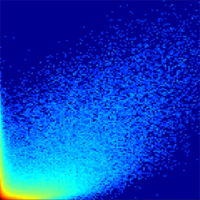
Creative Commons Researchers develop a new theory to characterize anomalous spatial diffusion of an ensemble of cold 87Rb atoms and single 24Mg+ ions in optical lattices. The theory shows how a transition from regular to anomalous diffusion, with a continuous range of anomalous scaling, is obtained with the tuning of the laser intensity.

[Phys. Rev. X 4, 021036] Published Wed May 28, 2014

28 May 21:39

Metamaterial Perfect Absorber Based Hot Electron Photodetection

by Wei Li and Jason Valentine

TOC Graphic

Nano Letters
DOI: 10.1021/nl501090w
28 May 12:55

Mapping distributed brain function and networks with diffuse optical tomography

by Adam T. Eggebrecht

Nature Photonics 8, 448 (2014). doi:10.1038/nphoton.2014.107

Authors: Adam T. Eggebrecht, Silvina L. Ferradal, Amy Robichaux-Viehoever, Mahlega S. Hassanpour, Hamid Dehghani, Abraham Z. Snyder, Tamara Hershey & Joseph P. Culver