05 Dec 19:06
by Alain Cohn
Business culture and dishonesty in the banking industry
Nature 516, 7529 (2014). doi:10.1038/nature13977
Authors: Alain Cohn, Ernst Fehr & Michel André Maréchal
Trust in others’ honesty is a key component of the long-term performance of firms, industries, and even whole countries. However, in recent years, numerous scandals involving fraud have undermined confidence in the financial industry. Contemporary commentators have attributed these scandals to the financial sector’s business culture, but no scientific evidence supports this claim. Here we show that employees of a large, international bank behave, on average, honestly in a control condition. However, when their professional identity as bank employees is rendered salient, a significant proportion of them become dishonest. This effect is specific to bank employees because control experiments with employees from other industries and with students show that they do not become more dishonest when their professional identity or bank-related items are rendered salient. Our results thus suggest that the prevailing business culture in the banking industry weakens and undermines the honesty norm, implying that measures to re-establish an honest culture are very important.

03 Dec 21:52
by Michele Celebrano, Xiaofei Wu, Milena Baselli, Swen Großmann, Paolo Biagioni, Andrea Locatelli, Costantino De Angelis, Giulio Cerullo, Roberto Osellame, Bert Hecht, Lamberto Duò, Franco Ciccacci, Marco Finazzi
Boosting nonlinear frequency conversion in extremely confined volumes remains
a key challenge in nano-optics, nanomedicine, photocatalysis, and
background-free biosensing. To this aim, field enhancements in plasmonic
nanostructures are often exploited to effectively compensate for the lack of
phase-matching at the nanoscale. Second harmonic generation (SHG) is, however,
strongly quenched by the high degree of symmetry in plasmonic materials at the
atomic scale and in nanoantenna designs. Here, we devise a plasmonic
nanoantenna lacking axial symmetry, which exhibits spatial and frequency mode
overlap at both the excitation and the SHG wavelengths. The effective
combination of these features in a single device allows obtaining unprecedented
SHG conversion efficiency. Our results shed new light on the optimization of
SHG at the nanoscale, paving the way to new classes of nanoscale coherent light
sources and molecular sensing devices based on nonlinear plasmonic platforms.
03 Dec 21:50
Experiments explain why certain birds, beetles, and photonic glasses, which derive their colors from interference effects, can be blue but not red.

Published Wed Dec 03, 2014
03 Dec 21:01
by A. A. Fernández-Marín, J. A. Méndez-Bermúdez, J. Carbonell, F. Cervera, J. Sánchez-Dehesa, and V. A. Gopar
Author(s): A. A. Fernández-Marín, J. A. Méndez-Bermúdez, J. Carbonell, F. Cervera, J. Sánchez-Dehesa, and V. A. Gopar
Experimental evidence demonstrating that anomalous localization of waves can be induced in a controllable manner is reported. A microwave waveguide with dielectric slabs randomly placed is used to confirm the presence of anomalous localization. If the random spacing between slabs follows a distribut…
[Phys. Rev. Lett. 113, 233901] Published Wed Dec 03, 2014
02 Dec 21:18
by Francesca Santoro, Gregory Panaitov and Andreas Offenhäusser

Nano Letters
DOI: 10.1021/nl502922b

02 Dec 21:14
by Alessandro Attanasi, Andrea Cavagna, Lorenzo Del Castello, Irene Giardina, Stefania Melillo, Leonardo Parisi, Oliver Pohl, Bruno Rossaro, Edward Shen, Edmondo Silvestri, and Massimiliano Viale
Author(s): Alessandro Attanasi, Andrea Cavagna, Lorenzo Del Castello, Irene Giardina, Stefania Melillo, Leonardo Parisi, Oliver Pohl, Bruno Rossaro, Edward Shen, Edmondo Silvestri, and Massimiliano Viale
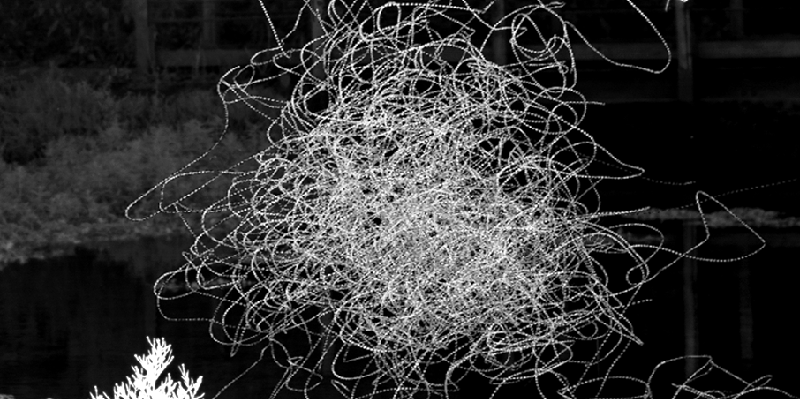
 The seemingly erratic motion of insects in a swarm exhibits the correlated behavior of particles near the critical point of a phase transition.
[Phys. Rev. Lett. 113, 238102] Published Mon Dec 01, 2014
02 Dec 21:13
The seemingly erratic motion of insects in a swarm exhibits the correlated behavior of particles near the critical point of a phase transition.
Published Mon Dec 01, 2014
01 Dec 10:24
by C. Lafargue, M. Lebental, A. Grigis, C. Ulysse, I. Gozhyk, N. Djellali, J. Zyss, S. Bittner
We investigated experimentally the ray-wave correspondence in organic
microlasers of various triangular shapes. Triangular billiards are of interest
since they are the simplest cases of polygonal billiards and the existence and
properties of periodic orbits in triangles are not yet fully understood. The
microlasers with symmetric shapes that were investigated exhibited states
localized on simple periodic orbits, and their lasing characteristics like
spectra and far-field distributions could be well explained by the properties
of the periodic orbits. Furthermore, asymmetric triangles that do not feature
simple periodic orbits were studied. Their lasing properties were found to be
more complicated and could not be explained by periodic orbits.
30 Nov 21:30
| Piled Higher
& Deeper by Jorge
Cham |
|
www.phdcomics.com
|
 |
|
|
28 Nov 19:02
Nature Physics 10, 891 (2014).
doi:10.1038/nphys3195
As the debate on immigration in the UK becomes increasingly visceral, British science risks being caught in the crossfire.

27 Nov 16:50
by Alireza Marandi
Nature Photonics 8, 937 (2014).
doi:10.1038/nphoton.2014.249
Authors: Alireza Marandi, Zhe Wang, Kenta Takata, Robert L. Byer & Yoshihisa Yamamoto
Finding the ground states of the Ising Hamiltonian maps to various combinatorial optimization problems in biology, medicine, wireless communications, artificial intelligence and social network. So far, no efficient classical and quantum algorithm is known for these problems and intensive research is focused on creating physical systems—Ising machines—capable of finding the absolute or approximate ground states of the Ising Hamiltonian. Here, we report an Ising machine using a network of degenerate optical parametric oscillators (OPOs). Spins are represented with above-threshold binary phases of the OPOs and the Ising couplings are realized by mutual injections. The network is implemented in a single OPO ring cavity with multiple trains of femtosecond pulses and configurable mutual couplings, and operates at room temperature. We programmed a small non-deterministic polynomial time-hard problem on a 4-OPO Ising machine and in 1,000 runs no computational error was detected.

27 Nov 16:48
by Claude Fabre
Nature Photonics 8, 883 (2014).
doi:10.1038/nphoton.2014.292
Author: Claude Fabre
A network of optical parametric oscillators has been harnessed to find solutions to a complex problem in statistical physics that is difficult to solve using numerical computing algorithms.

27 Nov 16:48
by Martijn Arns
Open access is tiring out peer reviewers
Nature 515, 7528 (2014). http://www.nature.com/doifinder/10.1038/515467a
Author: Martijn Arns
As numbers of published articles rise, the scholarly review system must adapt to avoid unmanageable burdens and slipping standards, says Martijn Arns.

27 Nov 16:48
by Cat Ferguson
Publishing: The peer-review scam
Nature 515, 7528 (2014). http://www.nature.com/doifinder/10.1038/515480a
Authors: Cat Ferguson, Adam Marcus & Ivan Oransky
When a handful of authors were caught reviewing their own papers, it exposed weaknesses in modern publishing systems. Editors are trying to plug the holes.

26 Nov 09:12
by Nicolas Bachelard, Rémi Carminati, Patrick Sebbah, Christian Vanneste
We use time-domain numerical simulations of a two-dimensional (2D) scattering
system to study the interaction of a collection of emitters resonantly coupled
to an Anderson-localized mode. For a small electric field intensity, we observe
the strong coupling between the emitters and the mode, which is characterized
by linear Rabi oscillations. Remarkably, a larger intensity induces non-linear
interaction between the emitters and the mode, referred to as the dynamical
Stark effect, resulting in non-linear Rabi oscillations. The transition between
both regimes is observed and an analytical model is proposed which accurately
describes our numerical observations.
26 Nov 09:10
by B. le Feber, N. Rotenberg, L. Kuipers
Controlling photon emission by single quantum emitters with nanostructures is
crucial for scalable on-chip quantum information processing. Nowadays
nanoresonators can affect the lifetime of emitters and ultimately induce strong
coupling between the emitters and the light field, while nanoantennas can
control the directionality of the emission. Expanding this control to the
manipulation of the emission of orbital angular momentum-changing transitions
would enable coupling between long-lived solid-state qubits and flying qubits.
As these transitions are associated with circular rather than linear dipoles,
such control requires detailed knowledge of the spatially dependent interaction
of a complex dipole with highly structured optical eigenstates containing local
helicity. Using a classical analogue, we experimentally map the coupling of
circular dipoles to photonic modes in a model structure, a photonic crystal
waveguide. We show that depending on the local helicity the dipoles can be made
to couple to modes either propagating to the left or to the right. The maps are
in excellent agreement with calculations. Our measurements, therefore,
demonstrate the coupling of spin to photonic pathway with near-unity (0.8 $\pm$
0.1) efficiency.
26 Nov 09:10
by Mihail I. Petrov
In this paper we report on numerical study of plasmonic nanoparticle chains
with long-range dipole-dipole interaction. We have shown that introduction of
positional disorder gives a peak in the density of resonant states (DOS) at the
frequency of individual nanoparticle resonance. This peak is referred to Dyson
singularity in one-dimensional disordered structures [Dyson F., 1953] and,
according to our calculations, governs the spectral properties of local DOS.
This provides disorder-induced Purcell enhancement that can found its
applications in random lasers and for SERS spectroscopy. We stress that this
effect relates not only to plasmonic nanoparticles but to an arbitrary chain of
nanoparticles or atoms with resonant polarizabilities.
26 Nov 09:07
by Riccardo
Last week I had the chance to discuss colours from a nanophotonics point of view, at a meeting about Fundamentals of Space: Colour and Line organised at the Biennale of Architecture, and invited by the energetic Ivana Wingham.
I am always fascinated by cross-contamination like these, and despite the large differences in method and language (my first live performance of dance and art during the talks) nothing brings more new ideas than talking to the other side of the brain, to a different audience. Very often we risk of forgetting the world outside the lab, as we put so much efforts in solving the scientific puzzles, and events like these bring me back to real life.
I really enjoyed learning about colour in architecture, to form space, to affect our brain. I also discovered interferential painting done by coated mica crystals, much more interesting than titanium dioxide powders! Still nothing from Mie resonators or plasmonic particles though…
Will this start a new architectural-artistic-scientific project? Will keep you posted.
Fundamentals of Space: Colour and Line
23 Nov 17:55
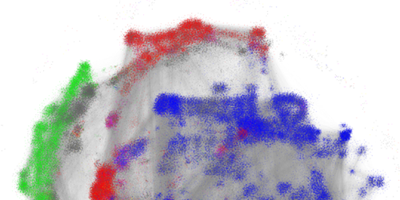
An automated analysis of the words in 117 years worth of the Physical Review selects scientific memes—significant ideas that emerge and spread through the literature.
Published Fri Nov 21, 2014
23 Nov 17:38
by Maxim N. Makhonin, James E. Dixon, Rikki J. Coles, Ben Royall, Isaac J. Luxmoore, Edmund Clarke, Maxime Hugues, Maurice S. Skolnick and A. Mark Fox

Nano Letters
DOI: 10.1021/nl5032937

23 Nov 17:38
by L. Gil and G. L. Lippi
Author(s): L. Gil and G. L. Lippi
For many years, the apparent absence of a phase instability has characterized lasers as peculiar nonlinear oscillators. We show that this unusual feature is solely due to the approximations used in writing the standard models. A new, careful derivation of the fundamental equations, based on codimens...
[Phys. Rev. Lett. 113, 213902] Published Fri Nov 21, 2014
23 Nov 08:28
by Roman Barankov
Article
Imaging through a single optical fibre offers attractive possibilities in applications such as micro-endoscopy or remote sensing. Using spread-spectrum encoding, Barankov and Mertz demonstrate two-dimensional imaging of self-luminous objects with high throughput, in theory independent of pixel number.
Nature Communications doi: 10.1038/ncomms6581
Authors: Roman Barankov, Jerome Mertz

18 Nov 12:53
by Yulu Chen
Yulu Chen, Jason A. Newman, Kevin J. Webb
We present a family of circular Bessel probability density functions that are capable of describing the intensity, amplitude, and field statistics of waves in any random medium, with only the assumption of circularity. The well-known zero-mean circular Gaussian statistics break down in the Anderson ... [J. Opt. Soc. Am. A 31, 2744-2752 (2014)]
17 Nov 21:17
by Douglas Natelson
Yesterday I came across
this video series, put up by "EngineerGuy"
Bill Hammack. It shows a mechanical analog computer originally designed by
Michelson for building up Fourier series (sums of sinusoids) of up to twenty integer multiples of a fundamental frequency. Moreover, you could use this machine to go
backwards, and mechanically do Fourier decomposition of periodic waveforms. It's really wonderful. I would love to have one to use as a teaching tool, and I'm sure some enterprising person will figure out how to 3d print all the relevant parts (except the springs and cables), or perhaps build one out of Lego.
I also wanted to point out Hammack's
other videos. This is great outreach - really accessible, clear, well-produced content.
17 Nov 08:53
by Daniel Giovannini, Jacquiline Romero, Vaclav Potocek, Gergely Ferenczi, Fiona Speirits, Stephen M. Barnett, Daniele Faccio, Miles J. Padgett
That the speed of light in free space is constant is a cornerstone of modern
physics. However, light beams have finite transverse size, which leads to a
modification of their wavevectors resulting in a change to their phase and
group velocities. We study the group velocity of single photons by measuring a
change in their arrival time that results from changing the beam's transverse
spatial structure. Using time-correlated photon pairs we show a reduction of
the group velocity of photons in both a Bessel beam and photons in a focused
Gaussian beam. In both cases, the delay is several microns over a propagation
distance of the order of 1 m. Our work highlights that, even in free space, the
invariance of the speed of light only applies to plane waves. Introducing
spatial structure to an optical beam, even for a single photon, reduces the
group velocity of the light by a readily measurable amount.
15 Nov 11:04
by Mark D. Huntington, Lincoln J. Lauhon and Teri W. Odom

Nano Letters
DOI: 10.1021/nl5040573

13 Nov 13:06
by Robert Dall, Michael D. Fraser, Anton S. Desyatnikov, Guangyao Li, Sebastian Brodbeck, Martin Kamp, Christian Schneider, Sven Höfling, and Elena A. Ostrovskaya
Author(s): Robert Dall, Michael D. Fraser, Anton S. Desyatnikov, Guangyao Li, Sebastian Brodbeck, Martin Kamp, Christian Schneider, Sven Höfling, and Elena A. Ostrovskaya
A spiral pattern of light imparts angular momentum to a quantum condensate in a semiconductor.
[Phys. Rev. Lett. 113, 200404] Published Wed Nov 12, 2014
13 Nov 13:05
by J.-P. Martikainen, M. O. J. Heikkinen, P. Törmä
We study arrays of plasmonic nanoparticles combined with quantum emitters,
quantum plasmonic lattices, as a platform for room temperature studies of
quantum many-body physics. We outline a theory to describe surface plasmon
polariton distributions when they are coupled to externally pumped molecules.
The possibility of tailoring the dispersion in plasmonic lattices allows
realization of a variety of distributions, including the Bose-Einstein
distribution as in photon condensation. We show that the presence of losses can
relax some of the standard dimensionality restrictions for condensation.