Beautiful Chemistry is a new collaboration between Tsinghua University Press and University of Science and Technology of China that seeks to make chemistry more accessible and interesting to the general public. Their first project was the creation of several short films that utilize a 4K UltraHD camera to capture a variety of striking chemical reactions without the usual clutter of test tubes, beakers or lab equipment. I definitely would have paid a bit more attention in chemistry class if we’d had the opportunity to watch some of these. Filmed and edited by Yan Liang.


Product designer Marcel Dunger conceived of this fascinating and elegent way of creating small rings, pendants, and earrings by “repairing” broken pieces of maple wood with colored bio-resins. The resin is first poured onto a larger piece of broken wood and after the hardening process the piece is then machined into pieces of jewelry.
We’ve seen so many different projects using resin lately from sculptures of aquatic life to hair ornaments, but what’s probably more interesting, as pointed out by The Fox is Black’s Bobby Solomon, is the trend of visibly incorporating repairs into new or improved objects. We’ve seen it with Japanese Kintsugi pieces, furniture created by fusing tree trunks with cast aluminum, and even another wood/resin combo resulting in glowing kitchen shelves. As far as turning waste products into functional objects, or extending the life of something broken, it’s a visually striking idea that will hopefully be incorporated by more artists and designers. You can see more of Dunger’s work in his online portfolio. (via The Fox is Black, Behance)
Update: Jewelry designer Britta Boeckmann creates a similar form of jewelry and has quite a few pieces available in her shop.


Stockholm-based illustrator, printmaker, and artist Nina Lindgren was been working with cardboard to build a series of stacked geometric cityscapes that look like small architectural islands. The works are assembled like puzzles from carefully cut cardboard panels with internal lights for some of the houses. Her most recent piece, “Floating City” was recently on view at ArtRebels Gallery. You can see more over on her website. (via Hi-Fructose)


If you want to create detailed and imaginative flying machine sculptures that look like they’re about to take flight, cardboard is hardly the material to use. Unless of course you’re artist Daniel Agdag (previously), who has been toiling away creating a series of new works each more detailed and fascinating than the next. “The Principles of Aerodynamics” is Agdag’s first solo exhibition where his series of cardboard contraptions that portray his “ongoing pursuit of escape through the metaphor of flight” will be on display through Aug 31, 2014.
As he’s done in the past, Agdag forfeits all blueprints, drawings and plans choosing, instead, to work only from mind and scalpel. His industrial beasts–get close and you can almost smell the oil and smoke; hear the clanking and buzzing–come together only from sliced cardboard hinged with glue.


Illustrator and designer Akihiro Mizuuchi designed a modular system for creating edible chocolate LEGO bricks. Chocolate is first poured into precisely designed moulds that after cooling can be popped out and used as regular LEGOs. It’s hard to determine exactly how functional they are, it seems like he had success in building a number of different things, though I can only imagine how quickly they might melt in your hands, but I suppose that’s beside the point; this is two of the greatest things in the world fused together. If you google around there are numerous attempts at creating various forms of LEGO in chocolate or other food, but this appears to be the most detailed and well-designed of anything out there. (via Legosaurus)


Photographer Oleg Oprisco (previously) who lives and works in Kiev, continues to wow us with his vivid style of conceptual photography that places subjects in the middle of surreal and fantastic tableaus. Oprisco spends large amounts of time scouring flea markets and resale shops to collect props, costumes, and other items for each shot which he often sketches beforehand in a sketchbook, with the final shoot requiring 2-3 days of preparation. I love this bit from an interview with 500px earlier this year where he was asked to give advice to amateur/student photographers:
I strongly advise to use your time wisely. Laziness is your worst enemy. Enough looking at photographs taken by your idols. You’ve commented on enough work that you hate. It’s time to take photos. Your best photos. Let go and shoot, shoot, shoot!
All of Oprisco’s work is available as prints which you can inquire about directly. You can see more of his recent work on Flickr and Facebook. (via 500px)


Collector’s Space Shuttle Screenprints!
I’ll be debuting 3 new screenprints at Comic Con next week commemorating the amazing Space Shuttle program which spanned 30 years! These will be available indivudually or as a set. Each one is 10”x28”.
Come visit me and my friends Jasmin Lai and Tiffany Ford at Booth #5007!
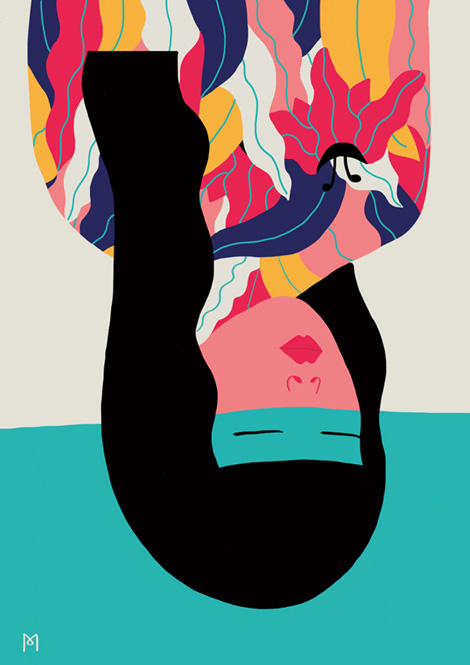
Beautiful illustration work from Berlin-based designer Michela Picchi.
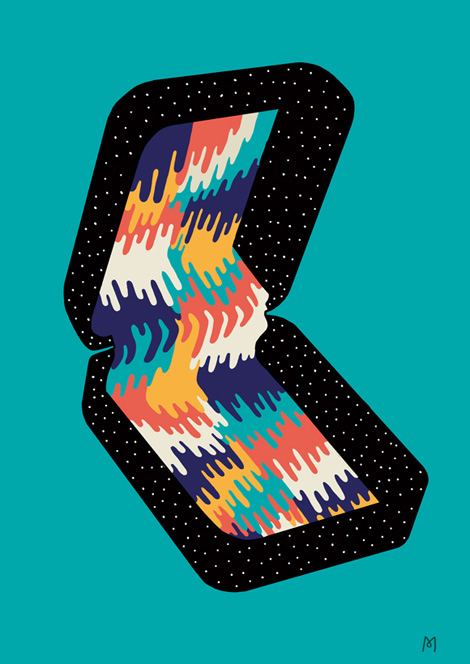
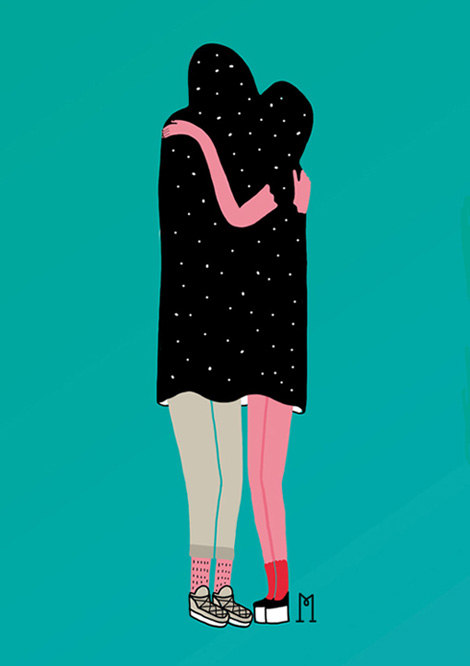

——————–
Also worth viewing:
Vicki Turner
Timothy Hunt
Tom haugomat
Follow us on RSS, Instagram, Pinterest, Wanelo, Luvocracy
——————–
Thanks to this week's Sponsor // ThemeIsle: WordPress themes
30 Day Challenge // Day 24 // Something That Represents Your Favorite Culture
I’m Buddhist and I’ve always loved the imagery even before I was. The wrathful deities from Tibetan and Mahayana art always fascinated me as a kid. They were like transformations the gods took on in battle. Like a monster magical girl I guess. His is name is Mahakala. Power Prism Make Up.



30 Day Challenge // Day 23 // Something That Makes You Happy
I’ve learned how to cook since I moved out to California. It’s therapeutic. And delicious~ I garnish everything with a fried egg, and I never regret it.


As a quick follow-up to our video from Keith Skretch yesterday, here’s a similar concept from two years ago by Laurin Döpfner who used an industrial sander to grind down logs, electronics, and even a skull in thin layers which he then photographed to create this amazing stop motion video. Each object is comprised of about 100 different photos, a process I can only image was extremely labor intensive.
This will be trending on /r/ThingsCutInHalfPorn/ by the end of the day if it hasn’t already. While you’re at it see also @HalfPics, and for the not so faint of heart there’s the Visible Human Project. (via Jason Sondhi)

If you’re a young creative, you’re not going to be Don Draper or Peggy Olson or even Stan Rizzo. You’re definitely not going to be Alex Bogusky.
You have no new truly original ideas in your portfolio. You’re lucky if you have even one mildly interesting idea amongst all the hackneyed, derivative dogshit. I know this: I’ve seen your portfolio. 100 fucking times.
Ad students have been sending me their portfolios—nearly daily, unsolicited—for 8 years, asking for advice. I never write them back.
This is my mass response.
If you want a “cool” ad agency creative department job, it’s there, waiting for you (at least at the big mega-merged bloated shops) if you happen to be one of those few young creatives with one (better, two) of those mildly interesting ideas in your portfolio. Because agencies these days are as desperate as a virgin male 2nd semester college senior.
If you work at an ad agency, worked at an ad agency, or especially, if you're planning on working at an ad agency: read it. It is well worth your time.
Meanwhile, as Mutlu says:
"Agencies...are happy to keep trying to live in a world which is ceasing to exist. Clinging onto the same ideas, tools, and ways of working with CEOs who are either oblivious to the current mindset or too frightened to instigate change. It's the perfect storm of increasing entrepreneurialism, decreasing loyalty and an industry reveling in mediocrity."
Of course, all the creative directors at all of ad agencies of all sizes will still use the "C" (creative) and "I" (innovative) words in your interview. If you're a "hotshot" who they're hot to hire and you've got a good feeling about the place, tell them you'd like to freelance for a couple of months first. Facades are easy to erect.
Unless you have inside info, it’s hard to tell how “creative” an ad agency’s work environment is. One clue is to look at is the agency’s own self-promo stuff.
I've gathered together some recent agency self-promo and recruitment ads/videos/staff press photos—instances where ad agencies try to show the world just how fucking cool they really are.
Take a look, and see if these seem like the kind of places you'd like to spend working 10, 12 (or more, depending on the shop) hours a day.
The Ungar Group: "No Regrets"
Chicago's Ungar Group aired this spot, locally, during an April episode of last season's Mad Men.
Copy: "If you're looking for an advertising agency and don't meet with The Ungar Group. you will regret it for the rest of your lives."
SapientNitro "Idea Engineers"
SapientNitro has 37 offices worldwide, and is considered a "hot" "edgy" digital ad agency. What happened here with this auto-tuned "rap" song, I'm educatedly guessing, is one of the upper management guys desperately wanted to show off his guitar "skills".
"We're thinking not sinking..." Idea Engineers...
Planet Earth deserves to be destroyed by the Volgons because of this video.
DigitasLBi: "Inheritance"
This is the shop where every young "digital" creative wants to work. Their logo is a unicorn.
From the press note about the ad:
"...we're firm believers in practicing what we preach. And what we preach is that creating content that intrigues, engages and even entertains is a much better way of getting noticed than slavishly manufacturing marketing messages. We also believe in being brave (how quaint) and giving new things a try...Inheritance isn't about who we are, what we do or even what we think about the world. It is however meant to be so very us (what?)."
I'm disappointed they didn't slip "storytelling" in there somewhere.
Do you want your two minutes back? Write them, and ask them to get their magical fucking unicorn to make it happen.
How bout some print promo ads.
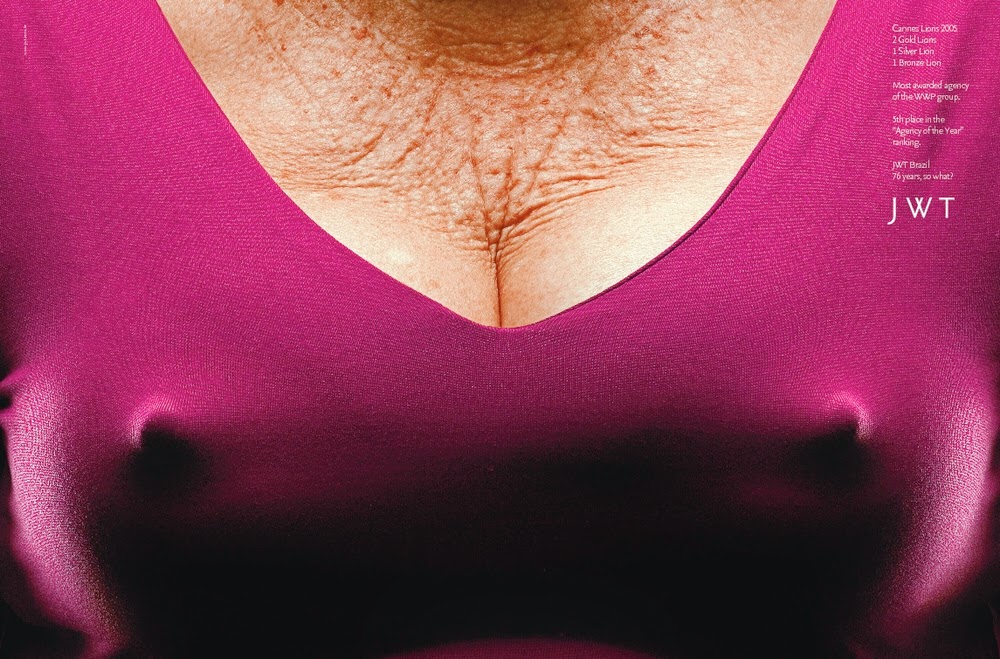
"JWT Brazil. 76 years (old), so what?"
(sigh)

TBWA Poland.
WHERE IDEAS ARE BORN. SEE, BECAUSE, A "LIGHT BULB" IS THE UNIVERSAL SYMBOL FOR "IDEA". Bloody brilliant.
Now, some staff press photos (click for closer looks).

Press photos from two firms considered "hot" and "creative". L—El Segundo's David & Goliath. GET IT? R—NYC's Sagmeister & Walsh. They're wearing space helmets because they're "explorers". They're naked because they're morons.

Both Philadelphia's Red Tettemer & Partners (L) and BBH NYC (R) go the hadouken route. WHO HAD IT FIRST?
In conclusion: stop sending me your portfolios, and drop out of ad school.
 [Image: Photo by Benjamin Halpern, courtesy of the U.S. Library of Congress].
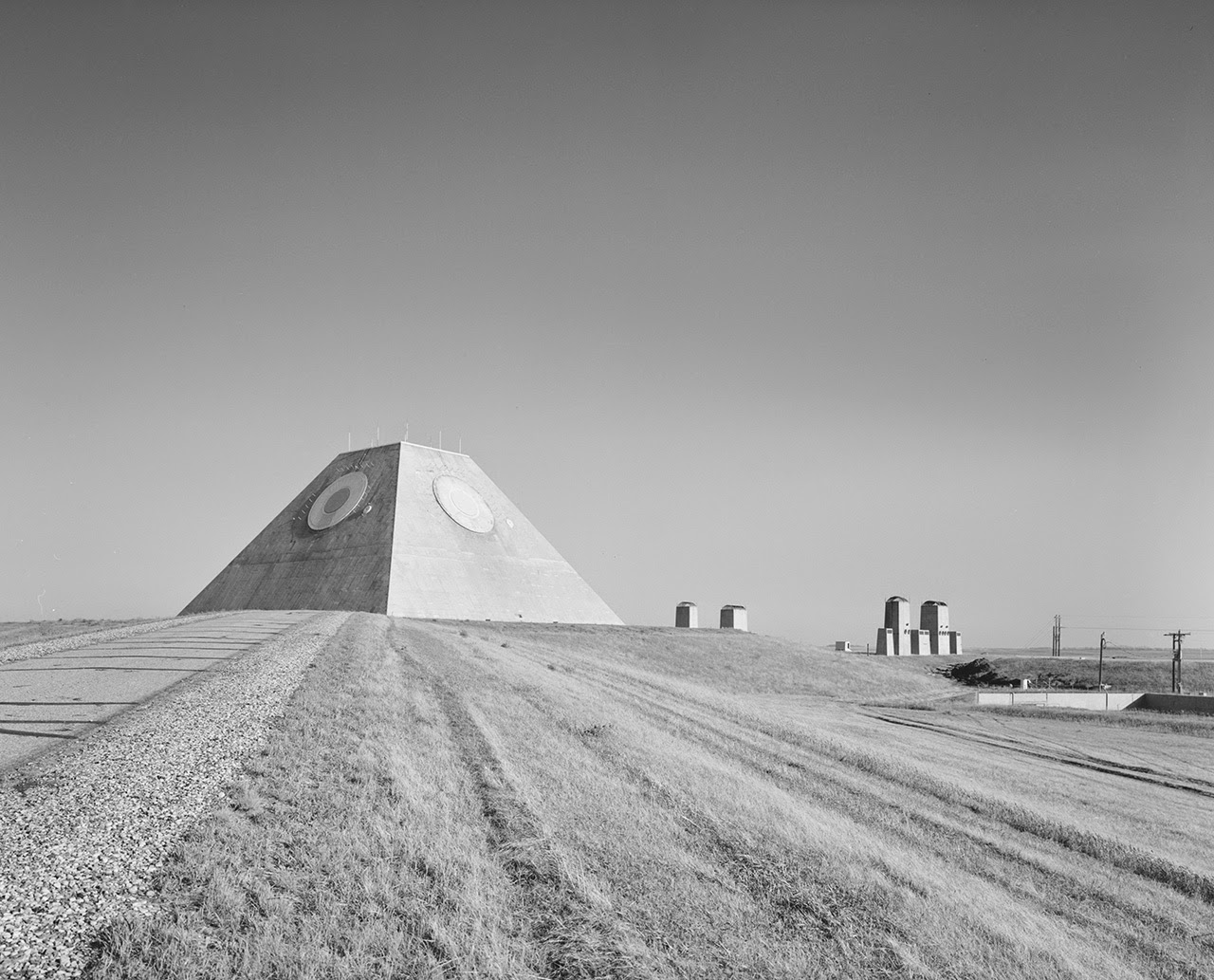 [Images: Photos by Benjamin Halpern, courtesy of the U.S. Library of Congress].
 [Images: Photos by Benjamin Halpern, courtesy of the U.S. Library of Congress].
 [Image: Photo by Benjamin Halpern, courtesy of the U.S. Library of Congress].
 [Image: The pyramid, seen somewhat jarringly in full color, via Google Street View].
 [Images: (top) Photo by Benjamin Halpern, courtesy of the U.S. Library of Congress; (bottom) photo by Henry Sweet, courtesy of the UNC-Chapel Hill].
 [Image: Photo by Benjamin Halpern, courtesy of the U.S. Library of Congress].


 [Images: Photos by Benjamin Halpern, courtesy of the U.S. Library of Congress].
 [Images: Photos by Benjamin Halpern, courtesy of the U.S. Library of Congress].


To explore the photography of French art director and concept designer Nicolas Bouvier is to become lost in strange new world, the inhabitants of which are dwarfed by the towering silhouettes of tree and mountains, or swallowed completely by eerie fog and haze. Though these landscapes are indeed real, shot in locations mostly in the Pacific Northwestern U.S., it may not be surprising that Bouvier’s day job is pure science fiction: he creates stunning concept art and illustrations for video games like Halo and Assassin’s Creed. While his concept art has gathered wide acclaim (he’s currently publishing a third book of his own illustrations), his photographic work has also flourished, garnering a significant following over on Flickr. We’ve featured his images several times right here on Colossal as part of our Flickr Finds series.
Currently based in Seattle, Bouvier first picked up a camera in the 1990s while in school, but it wasn’t until 2007 that he began shooting again in earnest. He has since amassed a collection of nearly two dozen cameras (he mentions he picked up a Lumix ZS40 just yesterday), all of which he experiments with as he explores locations around California, Washington, Oregon, Mexico, and France with his family who often appear as subjects in his surreal photos.
It was nearly impossible to make a selection of work for this post, so I strongly urge you to click this link, grab some coffee, and then press the right arrow on your keyboard about 1,100 times. You won’t regret it.