Shared posts

07 Jul 17:01

Live fast, die young, bad girls do it well

Kesh Angels est une série du photographe Hassan Hajjaj qui a pour sujet ces jeunes filles de Marrakech fans de motos et de scooters. Son travail est actuellement exposé dans une gallerie à New York.

07 Jul 17:01

Chiara Goia - Sculptors’ Village Link to images sent to me...


Chiara Goia - Sculptors’ Village

Link to images sent to me by Efedra.

For all who’ve mailed me wanting a list of my favorite “curatorial” art blogs, Efedra is & has long been in my top 5. Check it out and follow for a consistently top-class addition to your dashboards.

26 Jun 11:26

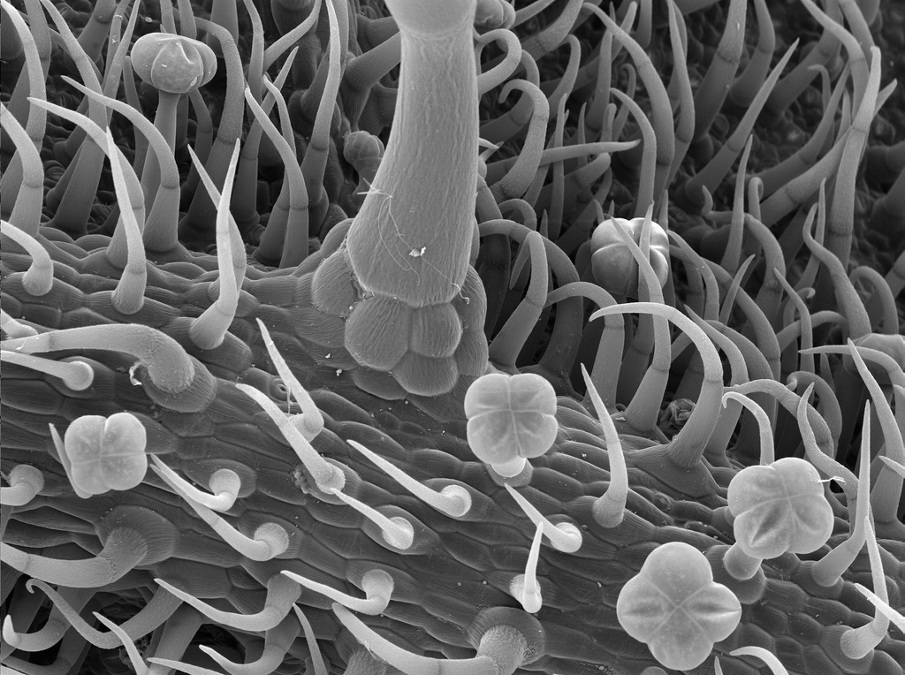
Light held together by moisture

by but does it float
Scanning electron microscope images of of trichomes Title: Galileo Galilei Folkert
26 Jun 11:24

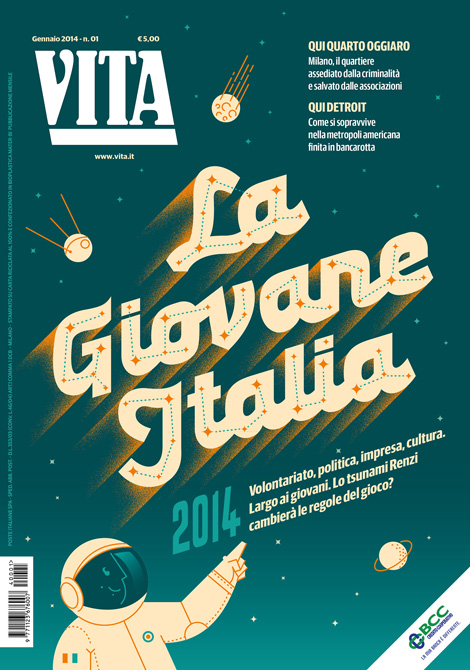
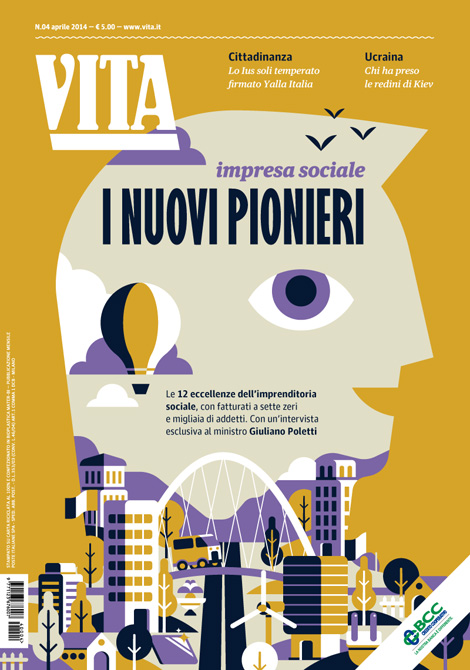
Vita Magazine

by Dave

Vita Magazine on grainedit.com

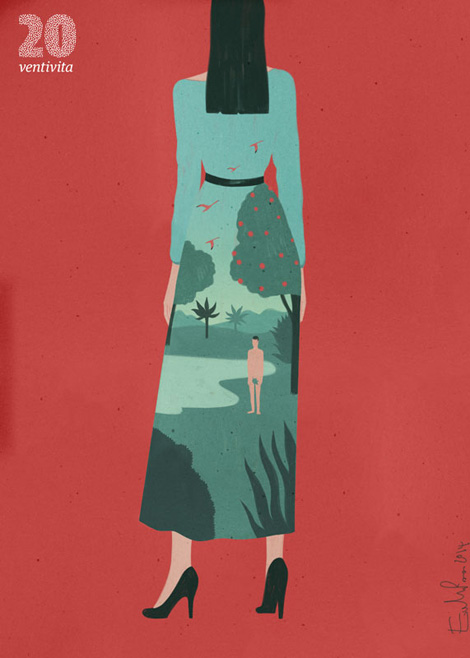
Design by Emiliano Ponzi

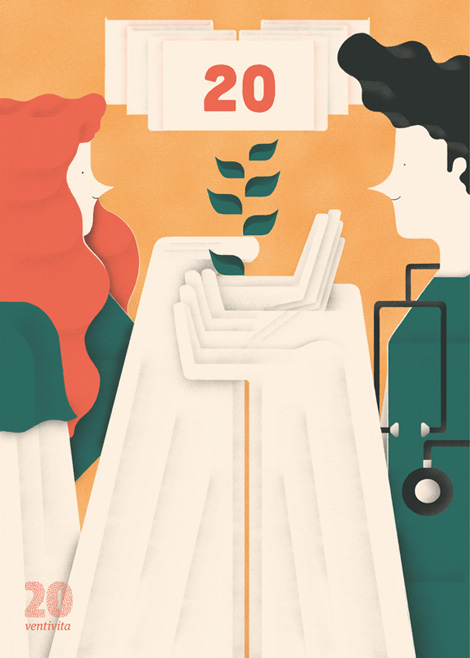
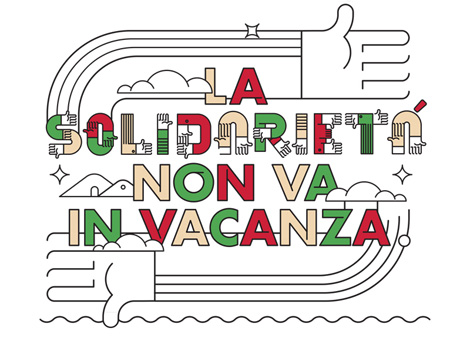
Milan-based Vita magazine recently launched a blog to highlight the artwork created for the journal. Of special interest is the Ventivita category which features a series of posters that celebrate Vita’s 20th anniversary.

 

Vita Magazine on grainedit.com

Giacomo Bagnara

Vita Magazine on grainedit.com

Sergio Membrillas

Vita Magazine on grainedit.com

Stefano Marra

Vita Magazine on grainedit.com

Marco Goran Romano

Vita Magazine on grainedit.com

Marco Goran Romano

Vita Magazine on grainedit.com

Francesco Poroli


——————–

Also worth viewing:
Laura Cattaneo aka Half Past Twelve
Francesco Franchi / Intelligence in Lifestyle
Marco Goran Romano

Not signed up for the Grain Edit RSS Feed yet? Give it a try. Its free and yummy.

Share on FacebookShare on Facebook

Thanks to this week's Sponsor // RetroSupply - Vintage inspired design resources for Photoshop and Illustrator.


26 Jun 11:22

Q&A: Throne: “Tharsis Sleeps”

by Andrew Montague

British duo Nicos Livesey & Tom Bunker have created this face-melting music video for the track “Tharsis Sleeps” from metal band Throne.

To achieve the finished look, the team combined cel and embroidery techniques, creating over 3,000 finished frames — a feat that would push any hard-nosed animation team to their limits.

Along the way they reached out for support via a Kickstater campaign that helped get them over the line. We caught up with Nicos to get some insight into their process.

How did you come up with the concept for the video?
Straight up inspired by heavy metal band patches and the denim “Battle” jackets metal heads wear.
 
Can you tell us a bit about the way this was made?
So the whole film was animated frame by frame into the computer using Flash. Each shot was then exported as an image sequence, taken into Wilcom DecoStudio to be converted to a stitch format. This is so the embroidery machines can read the images.
Then each image was taken to 1 of 3 Brother Pr 1000e embroidery machines, stitched out, then neatened up by a wonderful team of interns, who cut out little jump stitches to make sure each frame was perfect. Finally each frame was shot under a rostrum and then dropped back in the edit to create the final film. Basically repeat that over 3000 times.

How did you decide on the technique?
I tested the process out on a friends sewing machine that could do one colour embroidery at a very small-scale. I was in fact just making band patches and during the process, it clicked I could animate it.
 
TharsisSleeps-1 TharsisSleeps-5 TharsisSleeps-3 TharsisSleeps-2 TharsisSleeps-4
 
Was there much trial and error getting the workflow right?
There was a huge amount of trial and error. Many things where going wrong from things going missing in the digitizing process. To the wrong colours being read by the embroidery machines and each frame coming out different sizes. Problem with tension of material, the list goes on and each process can effect the process further down the line and dealing with the sheer number of frames we were, things can get confusing.
 
How many people did you have working on the project?
It was Tom and myself full-time (after about 6 months of me working out the process and getting Brother, Wilcom & Madeira on board). Then once some funding came in we had two pretty much full-time animators. Otherwise we had people from all over the world working wirelessly trying to help with animation whenever they could. Alongside the impeccable Jen Newman who took complete charge of the embroidery with two months remaining on the film. We ended up with quite a large credits list as so many people helped here and there as much as they could.
 
What was the timeline for the project?
Initial pitch to Channel 4 was well over a year ago, I then developed the idea and process for a further 6 months between working other jobs, making sure it was possible. Then once I had worked it out and Tom jumped on board the whole thing rattled off in about 7 – 8 months.
 
How did you find the crowd funding experience?
Brilliantly. I really didn’t expect it to work at all. It’s such a great way to gauge if your project is even worth doing. The sheer amount of help people were willing to give was incredible. It really helped keep us going.
 
You can now go here and pick up your own original embroidered frame from the video. Sweet!
 
Credits:
Created by: Nicos Livesey

Directed by: Nicos Livesey & Tom Bunker
Executive Producer: Harry Hill
Producers: Posy Dixon, Dan Keefe, Nicos Livesey
Lead 2D Animator: Blanca Martinez De Rituerto
2D Animation: Tom Bunker, Elisa Ciocca, Anne-Lou Erambert, Duncan Gist, Dan Hamman, Nicos Livesey, James Martin, Azusa Nakagawa, Nuno Neves, Joe Sparkes, Joe Sparrow, James Turzynski
3D Animation & Modelling: Luke Howell, Sam Munnings
Rostrum Camera Operators: Stefan Iyapah, Michalis Livesey, Theo Nunn
Embroidery Department: Liz Barlow, Rosy Maddison, Julia Owen, Victor Jakalfabet
Head Of Embroidery: Jen Newman
Interns: Daniela Alvarez, Daniel Matczak, Annalotta Pauly, Polina Sologub, Anna Streit, Lynn Yun, Jennifer Zheng
Sound Design: Alex Pieroni
Song: Throne “Tharsis Sleeps”
Graphic Design: Toby Evans
Digitzing: Tim Gomersall, Nicos Livesey
Supported By: Brother Sewing UK
A Lucky Features production in collaboration with Channel 4 & Dazed Digital
Special Thanks to: Steve Bliss, Martina Bramkamp, Amy Leverton, Ebru Oz, Clapham Road Studio, Kickstarter & All Our Backers.
Sponsored by: Bosh, Madeira Threads, Mother, Orta Anadolu, Wilcom Embroidery

26 Jun 11:16

Art Meets Mathematics: Dizzying Geometric GIFs by David Whyte

by Christopher Jobson

Art Meets Mathematics: Dizzying Geometric GIFs by David Whyte gifs geometric animation

Art Meets Mathematics: Dizzying Geometric GIFs by David Whyte gifs geometric animation

Art Meets Mathematics: Dizzying Geometric GIFs by David Whyte gifs geometric animation

Art Meets Mathematics: Dizzying Geometric GIFs by David Whyte gifs geometric animation

Art Meets Mathematics: Dizzying Geometric GIFs by David Whyte gifs geometric animation

Art Meets Mathematics: Dizzying Geometric GIFs by David Whyte gifs geometric animation

Art Meets Mathematics: Dizzying Geometric GIFs by David Whyte gifs geometric animation

Art Meets Mathematics: Dizzying Geometric GIFs by David Whyte gifs geometric animation

Art Meets Mathematics: Dizzying Geometric GIFs by David Whyte gifs geometric animation

In 2011, Dublin-based physics student David Whyte began a Tumblr called Bees & Bombs where he posted humorous images and quirky GIFs of his own creation, borrowing heavily from videos and pop culture icons. One day he decided to start playing with Processing, a popular open source programming language designed to help create images, animation, and various computer interactions. His background in mathematics and physics greatly enhanced his understanding of motion and geometry and it wasn’t long before he was churning out some of the most popular animations shared on Tumblr.

Whyte’s minimalistic use of shapes and color places an increased emphasis on motion, and leaves one somewhat dumbstruck at how he conceives of each image. In a somewhat rare move he happens to be quite open about his methods and frequently posts source code and tips to help other artists. See much more of his work on Bees & Bombs.

03 May 16:28

Girls! Girls! Girls! (1962)


Girls! Girls! Girls! (1962)

03 May 16:22

New Absurd Animated Portraits by Romain Laurent

by Christopher Jobson

New Absurd Animated Portraits by Romain Laurent portraits humor gifs

New Absurd Animated Portraits by Romain Laurent portraits humor gifs

New Absurd Animated Portraits by Romain Laurent portraits humor gifs

New Absurd Animated Portraits by Romain Laurent portraits humor gifs

New Absurd Animated Portraits by Romain Laurent portraits humor gifs

New Absurd Animated Portraits by Romain Laurent portraits humor gifs

New Absurd Animated Portraits by Romain Laurent portraits humor gifs

Photographer Romain Laurent (previously here and here) continues to create a new looping animated portrait each week. The photographer began the project as a way to break free from the pressure of commercial work, and we’re glad to see the project is still ongoing. These are some of the best portraits since the new year, but you can see lots more on his Tumblr.

17 Apr 17:31

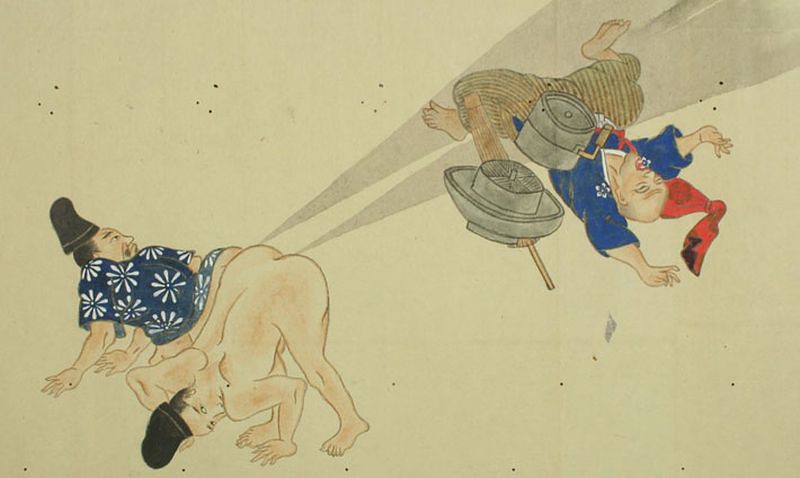
Japanese Fart Scrolls

by noreply@blogger.com (P-E Fronning)
17 Apr 17:28

chubbytown: The Tiny Tiddlers by Jack. I’ve started...


chubbytown:

The Tiny Tiddlers by Jack.

I’ve started making Chubby comics

19 Mar 14:00

Les affiches de Boris Vallejo

Boris Vallejo, c'est le mec qui a développé l'esthétique des affiches des films d'heroic fantasy, identifiables parmi toutes. Composition pyramidale, hyperréalisme, avec un certain sens de l'épique et du corps "bien fait". Il a bossé pour des films aussi cultes que Barbarella, des comédies grand public comme le génial National Lampoon Vacations de feu Harold Ramis et plus récemment Rubber de Quentin Dupieux.


(Source)

19 Mar 13:57

Mulder & Scully

Série de polaroids de Gillian Anderson et David Duchovny sur le tournage de The X-Files.
 

04 Mar 10:31

Edgar Bak

by Dave

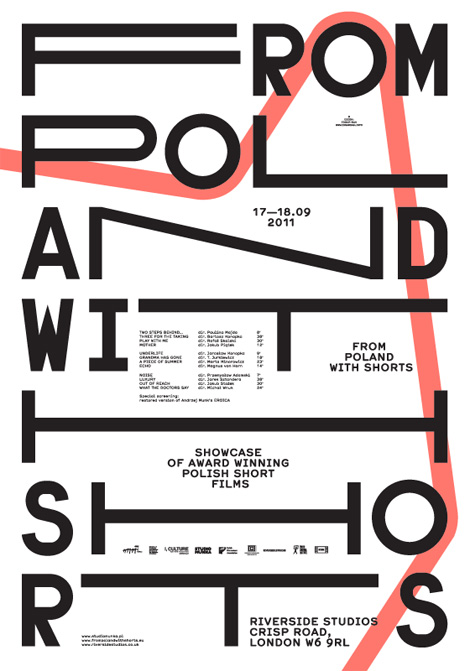
Edgar Bak via http://grainedit.com

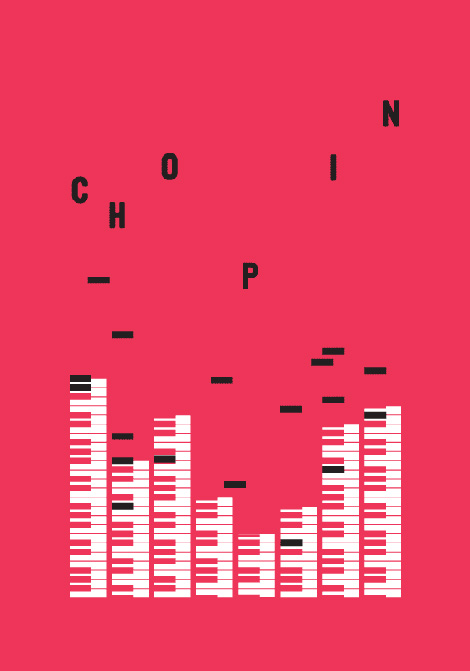
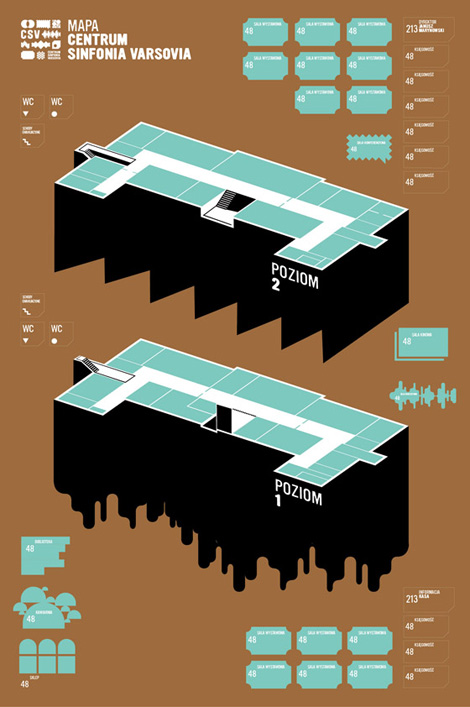
Edgar Bak is a talented designer based out of Poland. A graduate of the Academy of Fine Arts in Warsaw, he can now be found art directing for various magazines and teaching typography and information architecture classes at the School of Form in Poznan. He was also a driving force behind Projekt: The Polish journal of visual art and design published by United Editions.
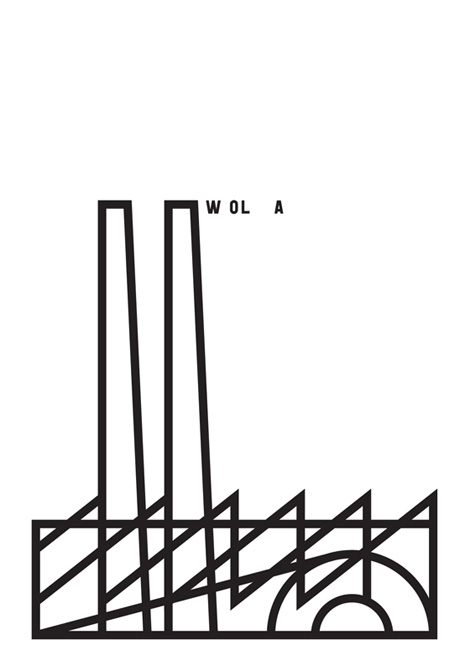
Edgar Bak via http://grainedit.com

Edgar Bak via http://grainedit.com

Edgar Bak via http://grainedit.com


——————–

Also worth viewing:
Peak 21
Polish Book Covers
Polish Arts and Crafts Store Bag

Not signed up for the Grain Edit RSS Feed yet? Give it a try. Its free and yummy.
——————–

Share on FacebookShare on Facebook

Sponsor // 100 Infographics


03 Mar 17:34

10 moments d'histoire bizarres


Anie Edison Taylor, la première personne a avoir descendu les chutes du Niagara en tonneau et survécu (1901).


Test de nouveaux gilets pare-balles (1923).


Des mannequins en maillot de bain lors d'un défilé (1923).


"Cage bébé" destinée à donner air et espace aux nouveaux-nés dans les appartements (Californie, 1937).

De l'alcool est déversé par les fenêtres durant la Prohibition à Détroit (1929).


Un distributeur automatique d'auto-bronzant (1949).


Une mère et son fils regarde un essai nucléaire (Las Vegas, 1953).


Ronald McDonald en 1963.


Un directeur d'hôtel verse de l'acide dans une piscine pour en chasser des Noirs (Californie, 1964).


Le premier jour de traffic en Suède après la décision de conduire à droite et non plus à gauche (1967).

(source)

26 Feb 12:21

Roentgen Objects, or: Devices Larger than the Rooms that Contain Them

by Geoff Manaugh
[Image: Photo courtesy of the Rijksmuseum Amsterdam and the Metropolitan Museum of Art].

An extraordinary exhibition closed at the Metropolitan Museum of Art last year, featuring mechanical furniture designed by the father and son team of Abraham and David Roentgen: elaborate 18th-century technical devices disguised as desks and tables.

First, a quick bit of historical framing, courtesy of the Museum itself: "The meteoric rise of the workshop of Abraham Roentgen (1711–1793) and his son David (1743–1807) blazed across eighteenth-century continental Europe. From about 1742 to its closing in the early 1800s, the Roentgens' innovative designs were combined with intriguing mechanical devices to revolutionize traditional French and English furniture types."

Each piece, the Museum adds, was as much "an ingenious technical invention" as it was "a magnificent work of art," an "elaborate mechanism" or series of "complicated mechanical devices" that sat waiting inside palaces and parlors for someone to come along and activate them.

If you can get past the visual styling of the furniture—after all, the dainty little details and inlays perhaps might not appeal to many BLDGBLOG readers—and concentrate instead only on the mechanical aspect of these designs, then there is something really incredible to be seen here.

[Image: Photo courtesy of the Rijksmuseum Amsterdam and the Metropolitan Museum of Art].

Hidden amidst drawers and sliding panels are keyholes, the proper turning of which results in other unseen drawers and deeper cabinets popping open, swinging out to reveal previously undetectable interiors.

But it doesn't stop there. Further surfaces split in half to reveal yet more trays, files, and shelves that unlatch, swivel, and slide aside to expose entire other cantilevered parts of the furniture, materializing as if from nowhere on little rails and hinges.

Whole cubic feet of interior space are revealed in a flash of clacking wood flung forth on tracks and pulleys.


As the Museum phrases it, Abraham Roentgen's "mechanical ingenuity" was "exemplified by the workings of the lower section" of one of the desks on display in the show: "when the key of the lower drawer is turned to the right, the side drawers spring open; if a button is pressed on the underside of these drawers, each swings aside to reveal three other drawers."

And thus the sequence continues in bursts of self-expansion more reminiscent of a garden than a work of carpentry, a room full of wooden roses blooming in slow motion.

[Images: Photos courtesy of the Rijksmuseum Amsterdam and the Metropolitan Museum of Art].

The furniture is a process—an event—a seemingly endless sequence of new spatial conditions and states expanding outward into the room around it.

Each piece is a controlled explosion of carpentry with no real purpose other than to test the limits of volumetric self-demonstration, offering little in the way of useful storage space and simply showing off, performing, a spatial Olympics of shelves within shelves and spaces hiding spaces.

Sufficiently voluminous furniture becomes indistinguishable from a dream.

[Image: Photo courtesy of the Rijksmuseum Amsterdam and the Metropolitan Museum of Art].

What was so fascinating about the exhibition—and this can be seen, for example, in some of the short accompanying videos (a few of which are archived on the Metropolitan Museum of Art's website)—is that you always seemed to have reached the final state, the fullest possible unfolding of the furniture, only for some other little keyhole to appear or some latch to be depressed in just the right way, and the thing just keeps on going, promising infinite possible expansions, as if a single piece of furniture could pop open into endless sub-spaces that are eventually larger than the room it is stored within.

The idea of furniture larger than the space that houses it is an extraordinary topological paradox, a spatial limit-case like black holes or event horizons, a state to which all furniture makers could—and should—aspire, devising a Roentgen object of infinite volumetric density.

A single desk that, when unfolded, is larger than the building around it, hiding its own internal rooms and corridors.

Suggesting that they, too, were thrilled by the other-worldly possibilities of their furniture, the Roentgens—and I love this so much!—also decorated their pieces with perspectival illusions.

[Image: Photo courtesy of the Rijksmuseum Amsterdam and the Metropolitan Museum of Art].

The top of a table might include, for example, the accurately rendered, gridded space of a drawing room, as if you were peering, almost cinematically, into a building located elsewhere; meanwhile, pop-up panels might include a checkerboard reference to other possible spaces that thus seemed to exist somewhere within or behind the furniture, lending each piece the feel of a portal or visual gateway into vast and multidimensional mansions tucked away inside.

The giddiness of it all—at least for me—was the implication that you could decorate a house with pieces of furniture; however, when unfolded to their maximum possible extent, these same objects might volumetrically increase the internal surface area of that house several times over, doubling, tripling, quadrupling its available volume. But it's not magic or the supernatural—it's not quadraturin—it's just advanced carpentry, using millimeter-precise joinery and a constellation of unseen hinges.

[Images: Photos courtesy of the Rijksmuseum Amsterdam and the Metropolitan Museum of Art].

You could imagine, for example, a new type of house; it's got a central service core lined with small elevators. Wooden boxes, perhaps four feet cubed, pass up and down inside the walls of the house, riding this network of dumbwaiters from floor to floor, where they occasionally stop, when a resident demands it. That resident then pops open the elevator door and begins to unfold the box inside, unlatching and expanding it outward into the room, this Roentgen object full of doors, drawers, and shelves, cantilevered panels, tabletops, and dividers.

And thus the elevators grow, simultaneously inside and outside, a liminal cabinetry both tumescent and architectural that fills up the space with spaces of its own, fractal super-furniture stretching through more than one room at a time and containing its own further rooms deep within it.

But then you reverse the process and go back through it all the other direction, painstakingly shutting panels, locking drawers, pushing small boxes inside of larger boxes, and tucking it all up again, compressing it like a JPG back into the original, ultra-dense cube it all came from. You're like some homebound god of superstrings tying up and hiding part of the universe so that others might someday rediscover it.

To have been around to drink coffee with the Roentgens and to discuss the delirious outer limits of furniture design would have been like talking to a family of cosmologists, diving deep into the quantum joinery of spatially impossible objects, something so far outside of mere cabinetry and woodwork that it almost forms a new class of industrial design. Alas, their workshop closed, their surviving objects today are limited in number, and the exhibition at the Metropolitan Museum of Art is now closed.
24 Feb 22:51

Vitra Map Table.

by noreply@blogger.com (Celyn)

Animated film for Barber Osgerby & Vitra. A time-lapse extravaganza in glorious 2D.  

Below is the link for more photos from the production: http://www.flickr.com/photos/39988192@N02/sets/72157640833106484/


 Below is the early development work. I started the designs over 2 years ago. Originally I based the concept on a children's book. The intended age group was young adults and children.  


24 Feb 22:51

The Creators Project did an in-depth interview with me and David...


The Creators Project did an in-depth interview with me and David O’Reilly about the development and production of our video games for “Her”! You can read it here.

Above are two of my concept paintings for the “Perfect Mom” game!

24 Feb 22:09

Women of the Stage #16

by Testify
'Coming in Person Feb 24'

23 Feb 19:14

A vos agendas

23 Feb 18:58

"Des proxénètes se battent à l’arbalète dans le bois de Boulogne"

“Des proxénètes se battent à l’arbalète dans le bois de Boulogne”

- Direct Matin (à cause de Quite et Bouille)
13 Feb 12:05

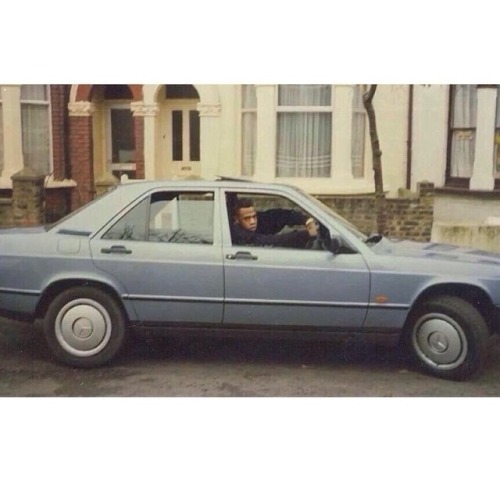
Jay-Z 1988, London.


Jay-Z 1988, London.

13 Feb 12:04

Attaque vicieuse

(Source)

11 Feb 11:01

Behind the Scenes #43

by Testify
Harrison Ford relaxes on The Millenium Falcon during a break in shooting The Empire Strikes Back

11 Feb 10:18

Ingenious Door Opens and Closes Like Folded Paper

by Christopher Jobson

Ingenious Door Opens and Closes Like Folded Paper kinetic doors

Ingenious Door Opens and Closes Like Folded Paper kinetic doors

Ingenious Door Opens and Closes Like Folded Paper kinetic doors

Like the design of functional objects such as chairs or tables, it would seem new ideas for the humble door would be completely exhausted, and then along comes Austrian artist Klemens Torggler. This 4-panel entryway called the Evolution Door opens and closes in a surprisingly elegant way at the slightest touch, folding in on itself like pieces of paper. Torggler calls this system a “flip panel door” (Drehplattentür), and it’s almost more of a kinetic sculpture than functional door, but I would be happy to have one in every room of my house. And for those of you who envision a crushed finger or hands, he’s already solved that problem.

Currently the door is meant as a prototype, an extension of his artistic practice where Vienna-based Torggler has been creating similar kinetic doors for many years, several of which are available through Artelier Contemporary. (via hajohinta, nsfw)

10 Feb 11:22

The King #10

by Testify

10 Feb 11:22

Giant Inflatable Balloons Transform Interior Spaces into Otherwordly Environments

by Christopher Jobson

Giant Inflatable Balloons Transform Interior Spaces into Otherwordly Environments installation architecture
El Claustro, 2011. Querétaro, México. 10 x 10 x 11m

Giant Inflatable Balloons Transform Interior Spaces into Otherwordly Environments installation architecture
El Claustro, 2011. Querétaro, México. 10 x 10 x 11m

Giant Inflatable Balloons Transform Interior Spaces into Otherwordly Environments installation architecture
El Claustro, 2011. Querétaro, México. 10 x 10 x 11m

Giant Inflatable Balloons Transform Interior Spaces into Otherwordly Environments installation architecture
El Claustro, 2011. Querétaro, México. 10 x 10 x 11m

Giant Inflatable Balloons Transform Interior Spaces into Otherwordly Environments installation architecture
El Claustro, 2011. Querétaro, México. 10 x 10 x 11m

Giant Inflatable Balloons Transform Interior Spaces into Otherwordly Environments installation architecture
La Capella, 2009. Piera, Spain. 5.5 x 6 x 15m.

Giant Inflatable Balloons Transform Interior Spaces into Otherwordly Environments installation architecture
El Sótano de la Tabacalera, 2011. Madrid, Spain. 13 x 15 x 7m.

Giant Inflatable Balloons Transform Interior Spaces into Otherwordly Environments installation architecture
Sala Buit, 2011. Barcelona, Spain. 12.5 x 5 x 2.5m.

Giant Inflatable Balloons Transform Interior Spaces into Otherwordly Environments installation architecture
Palazzo Ducale, 2011. Genova, Italy.
15.5 x 12 x 4m

Giant Inflatable Balloons Transform Interior Spaces into Otherwordly Environments installation architecture
Espaço 180, 2013. Lisbon, Portugal. 18 x 15 x 8m.

Giant Inflatable Balloons Transform Interior Spaces into Otherwordly Environments installation architecture
Cerveira Creative Camp, 2012. Vilanova de Cerveira, Portugal. 13.2 x 9.5 x 7.7m.

Barcelona-based Penique Productions is an artist collective founded in 2007 that creates transformative installations in public spaces. To do this the group utilizes massive plastic balloons that are inflated inside buildings and other interior areas. Coupled with exterior lighting that illuminates the colored plastic, the results can be beautifully dramatic, making the new environment almost unrecognizable from the actual space.

You can see many more views of several installations on their website, and almost all of them are accompanied by videos that document the process. Penrique has upcoming projects next month at both the UB University in Barcelona, and at Galeria N2.

06 Feb 15:31

Marilyn in Action #87

by WillyC

Marilyn dances (with Truman Capote)
27 Jan 13:52

kimiaki yaegashi

27 Jan 13:49

Transistors

by CH2P
Source: Tout L’univers
(Le Livre de Paris 1958-1975)
adaptation italienne
Illustrateur: inconnu
27 Jan 13:49

Amplificateurs à circuit intégré

by CH2P
Source: Tout L’univers
(Le Livre de Paris 1958-1975)
adaptation italienne
Illustrateur: inconnu