Shared posts

03 Jul 17:06

Kit Harington’s Wimbledon sadface & Jon Snow Hair: what does it all mean?!

by Kaiser

Here’s what I love about these photos: EVERYTHING. I love that even at Wimbledon, Kit Harington still has Permanent Sadface. I love that he’s wearing a beautiful suit to watch a summer tennis match. I love that he’s wearing a tie! But most of all, I love that our Sadface Harington still has his Jon Snow Hair.

In case you think I’m just being crazy or nerdy or both, let me just say… other people noticed it too. The internet blew up as soon as these photos of Kit at Wimbledon came out on Thursday. Part of the excitement was simply “Yay, Kit Harington!” But most of the excitement was truly about his hair and how he still hasn’t cut it, despite the fact that Kit swore up and down that Jon Snow is dead and he (Kit) would not be filming anything next season for Game of Thrones. So why – if Jon Snow is deader than dead and Kit is done with Game of Thrones – does Kit still have Jon Snow’s signature hairstyle? IS IT BECAUSE KIT’S HAIR IS MADE OF LIES?

Speaking of conspiracy theories and how Jon Snow’s Hair Knows Nothing, there’s a beautiful and crazy new explanation for why Jon Snow is “dead” but Jon Stark-Targaryen lives. Basically, the explanation come down to “some people think Jon Snow’s eyes changed colors when he was ‘dying’.” As in, Jon Stark has dark brown eyes but as he was bleeding out in the snow, his eyes seemed to turn… Targaryen purple? MTV tried to explain it here. Could be. At this point, I’ll cling to any explanation.

Photos courtesy of WENN, Getty.
wenn22653464 wenn22653466

01 Jul 14:55

Château de Salses in Salses-le-Château, France

Le Château de Salses

A relic from the old border between France and Spain, la Fortresse de Salses (as it is also known) stands as evidence of the transitional and innovative military architecture from the 15th century.

The castle (or more accurately, fortress) was built between 1497 and 1504 by the Catholic Monarchs: Queen Isabella I of Castile and King Ferdinand II of Aragon with the purpose of defending the border with France, specially after the last French incursion left a nearby village totally destroyed. The Monarchs commissioned the design of the fortress from Commander Rodriguez (the King's Grand Artilleur), and the engineer Francisco Ramiro Lopez who placed it near the Castle of Leucate, built by the French almost one century before.

Rodriguez and Lopez came out with an innovative structure that looks like an hybrid between a castle and a fortress, a sort of link between medieval military architecture and the modern fortification style, combining three traditions of military construction from Europe: Spanish, Italian and Burgundy.

The fortress saw many sieges during its life as a military bulding, the first in 1503, a year before works were completed on the structure. With growing tensions between Spain and France for the control of the region, the role of the fortress was totally justified, but in 1544, a peace agreement between Charles V and Francis I gave the fortress some good decades of relief and peace.

However, it was the Thirty Years' War that saw a change of ownership over the Fortress: during the last siege of the structure in 1639, the French managed to take possession of the building after 40 days of resistance by the Spanish; it was finally claimed for the French crown in 1642 but in less than 20 years there was a new peace agreement between both kingdoms (the Treaty of the Pyrenees) and the Spanish border was moved south, leaving the castle quite useless as it was now in the middle of French territories.

After the end of the war, the local governments asked the king for permission to demolish useless fortresses that were costly to maintain, ironically, the French-built Castle of Leucate was demolished in 1664, while the higher cost of demolishing Salses actually saved the structure from oblivion.

The magnificent building was declared a French historical monument in 1886, after serving as a gunpowder magazine, prison, and garrison in its post-war life. Le Château de Salses, currently acts as the Museum of History of Salses, is definitely worth to visit when traveling by the motorway A9.


30 Jun 21:35

Gorgeous string installation in cathedral courtyard

by Andrea James
Installation_in_Courtyard

Atelier YokYok installed this beautiful geometric string sculpture in the cloister of St. Stephen’s Cathedral in Cahors, France. The vaulted shapes echo the surrounding 11th-century architecture. Read the rest

30 Jun 16:08

‘Screen Time’ For Kids Is Probably Fine

by Emily Oster
Malady579

I added fivethirtyeight.com to my feed.

When I was a kid, my parents had strict television rules: no more than an hour a day, and the content must be educational. This meant a lot of PBS. I did briefly convince my mother that the secret-agent show “MacGyver” was about science, but that boondoggle ended when she watched an episode with me. These restrictions seemed severe at the time, but my parents were just following the orders of the American Academy of Pediatrics (AAP): Children and teens should have no more than one to two hours of screen time per day, with children under 2 having no screen time at all. Those orders remain the same today.

Relative to my childhood, limits on screen time have become increasingly restrictive and confusing. The iPad (and Kindle, and various other tablets) has opened up a world of “educational” screen time. If my 4-year-old is doing a workbook on the iPad, does that mean she learns less than if we used a physical workbook? The AAP advocates for newspapers and physical books over iPads, computers and other screen options.

The AAP statement on media seems opposed to screens per se (quote: “young children learn best when they interact with people, not screens”) without really differentiating among various uses and types of screens. But, not surprisingly, when you look at the research, the screen matters less than what you do with it.

Of all the possibilities for screen time, television watching clearly gets the most negative attention. It’s not hard to see why. Unlike educational games on a tablet, which at least can be argued to have some interactive value, television and movie watching are largely passive. Those who oppose TV for children worry about many downsides, but chief among them are declines in test scores (or other cognitive ability) and increases in obesity.

Let’s consider a few examples. This paper relates television viewing among preschoolers to measures of “executive function” — basically, whether a kid can focus and accomplish a goal — and finds that more television exposure is associated with lower executive function. This one looks at a large sample of children and associates television viewing at younger than 3 years with lower test scores at ages 6 and 7. And this one relates television watching to obesity among children.

These are a small number of the many, many studies that show associations between time spent watching television and health and development outcomes. But all these studies have an obvious problem: the amount of TV children watch is not randomly assigned. In the general population, kids who watch a lot of TV — especially at young ages — tend to be poorer, are more likely to be members of minority groups and are more likely to have parents with less education. All these factors independently correlate with outcomes such as executive function, test scores and obesity, making it difficult to draw strong conclusions about the effects of television from this research.

There are a few studies with better designs, and these have mixed results. There does seem to be some evidence to suggest that lowering media consumption, including television, can help combat obesity in children (see here and here for examples).

The impacts of TV on IQ and test scores have not been subjected to large randomized trial evaluation. Perhaps the best causal evidence on this question comes from a 2008 paper by two media economists.48 The researchers take advantage of the fact that television was introduced to different areas of the United States at different times. This variation meant that, when television was first introduced in the 1940s and 1950s, some kids had access to TV when they were children and some did not. The researchers could then see how having TV access as a young child — what the AAP is most worried about — related to test scores when kids were in school at slightly older ages.

The researchers find no evidence that more exposure to television at an early age negatively affected later test scores. The contemporary applicability of this research is subject to various concerns — television in the 1940s and ’50s differs from the TV of today, for example — but it does suggest that such concerns about test scores may be overblown.

A second set of concerns with television — and these extend to all other screen time — is that there is something inherently bad about exposure to a screen per se. There really isn’t anything in the research to make us think this is a concern. Even the AAP, the ultimate screen time naysayer, focuses in its warnings on attention and learning difficulties, obesity and risky behaviors resulting from screen time.

Some parents worry about eye strain from looking at screens, but, again, there is simply no evidence for this. Looking for “iPad and vision” (or “tablet and vision”) in the medical literature results primarily in papers about using iPads to help people with poor vision read better. If you’d rather read your kid a book on the Kindle than on paper, there should be nothing to give you pause.

Based on my read of the evidence, I’d say there’s absolutely no reason to think there’s anything worse about using a screen to do activities you would otherwise do on paper. When it comes to passive screen time — TV and movies — it seems that, on average, watching more TV has limited (if any) impacts on test scores, but maybe has some small impacts on obesity among children. However, the key phrase here is “on average,” and fleshing this out makes clear why the effect of television is such a difficult issue to study.

To judge what impact TV has on children, we have to think about tradeoffs — what would kids be doing with their time if they weren’t watching television? There are 24 hours in a day. If your kid watches one less hour of TV, she does one hour more of something else. The AAP guidelines imply that this alternative activity is something more enriching: reading books with dad, running on the track, discussing current events with grandma, etc.

But a lot of kids and families may not use an additional hour in these ways. An hour of TV may be replaced by an hour of sitting around doing nothing, whining about being bored. Or, worse, being yelled at by an overtired parent who is trying to get dinner ready on a tight time frame. If letting your kids watch an hour of TV means you are better able to have a relaxed conversation at the dinner table, this could mean TV isn’t that bad for cognitive development.

With this insight, it’s easy to see why less television is likely to decrease obesity. The process of weight gain and loss is pretty simple: if you burn more calories than you take in, you’ll lose weight. Watching television is mostly done sitting. And most other activities involve at least some moving around. So pretty much no matter what else they do, watching less TV is likely to be associated with kids burning more calories and losing weight.

Similarly, it is easy to see why TV might not affect test scores. If the alternative use of an hour for most families is not in highly enriching parent engagement, television may be just fine.

30 Jun 12:49

Being Famous Doesn't Make It Easier

25 Jun 21:38

Wood furniture that unzips in a delightful way

by Mark Frauenfelder

Sebastian Errazuriz’s Wave Cabinet is made of connected movable slats that can be arranged by brushing your hand against them. Beautiful! I want a desktop sized model to fiddle with.

[via]

25 Jun 21:34

Supreme Court explained in infographic

by Rob Beschizza
supremecourt Recent rulings at the Supreme Court of the United States have left some people confused at its ideological composition, traditionally held to be perfectly balanced between four liberals and four conservatives, with a “swing vote” in the middle. In order to help explain what’s going on, I prepared this useful info-graphic.
19 Jun 13:31

White terrorist bingo

by Rob Beschizza
11406768_10204731780998136_6474945432494468003_n This game's too easy! Who created it?
19 Jun 13:29

NPR snobs are so angry about Kim K.’s presence on NPR’s ‘Wait, Wait’

by Kaiser

km1

E tu, Mickey?

Remember how we talked about Kim Kardashian’s appearance on NPR’s Wait Wait… Don’t Tell Me over the weekend? That was the same interview where Kim said the idea of naming her second child “South West” was “the stupidest thing ever” and “just ridiculous.” Well, funny story: NPR got CRAZY backlash for allowing Kim to appear on that show. NPR’s ombudsman had to compile all of the hate mail they got from NPR snobs after Kim’s appearance. Here’s just part of NPR’s ombudsman’s post:

Kardashian’s presence on the show sent several hundred listeners over the top. By the dozens, they say they are “disgusted” and “disappointed,” and a handful are sure the show has “jumped the shark.” Paula Poundstone’s “exposition on the proper preparation of Pop Tarts” is OK, wrote Gary Miller of Charles Town, W.Va., but Kardashian? “She has no business in any civilized forum,” he wrote.

The listeners are self-aware and unapologetic about their outrage. “I have enjoyed your show for years, but I found the inclusion of Kim Kardashian so misguided and offensive, I fear I will never be able to listen again (hyperbolic, yes, but vapid, talentless, and shallow individuals who have not earned fame or fortune through an ounce of hard work have no place on a show of such caliber),” wrote Brianna Frazier of Laguna Beach, Calif.

They are threatening to pull their donations, or claim they have already done so. Kerry Castano, of Burlington, Vt., wrote, “I recently gave a small gift to my local NPR station. Had I heard your Saturday show before I made my gift, I wouldn’t have donated. The Kardashians represent much of what is wrong with America today — and I listen to NPR to get AWAY from Kardashian-like garbage.”

Monthly sustaining donor Sharonn Flaucher of Tuftonboro, N.H., is “seriously thinking about dropping my membership. I thought NPR had a certain class/values and it looks like we might be heading in another direction that I’m not willing to go with you. Just thought I’d give you a heads up. Have a sparkling day!”

[From NPR.org]

Bless their hearts. I love NPR snobs. I’m more of a PBS snob – I watch Nature, Frontline, American Experience and of course, Masterpiece. I would be devastated if American Experience did an episode about the Kardashians (although it would probably be bizarrely fascinating). But I was raised by two NPR snobs. I’ll never forget my dad’s excitement when he realizes we not only got NPR but PRI (Public Radio International), with tons of news from the BBC. So what I’m saying is that I feel the NPR snobs’ pain. It’s funny, but I feel you.

FFN_Kardashian_Kim_FF10FF2_060915_51768334

Photos courtesy of Fame/Flynet and Kim’s Instagram.
FFN_Kardashian_Kim_FF3FF13FF9_061115_51770477 FFN_Kardashian_Kim_FF10FF2_060915_51768329 FFN_Kardashian_Kim_FF10FF2_060915_51768334 kim2 km1

18 Jun 19:25

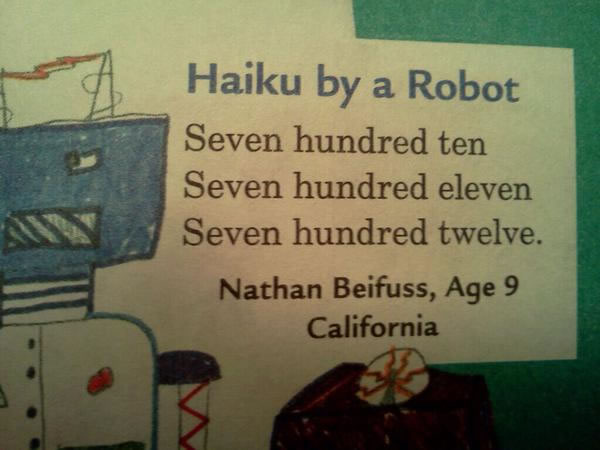
Haiku by a Robot

by Alex Santoso
Malady579

This is fucking genius for a 9 year old.

At the tender age of 9, Nathan Beifuss of California showed that his creation, aptly titled "Haiku by a Robot," fulfilled all of the requirements of a haiku, namely that it has a five-seven-five syllable structure and that it makes no sense whatsoever. Genius!

17 Jun 15:30

San Pedro Claver Museum and Cloisters in Cartagena, Colombia

The domes of San Pedro Claver Cathedral

San Pedro Claver, the first person to be canonized in the New World, dedicated his life to tending to the enslaved from literally the instant they arrived in the Americas.

In life, Claver became known as “Apostle of the Blacks" – or more derisively by his slavery-approving Jesuit brothers "Slave of the Slaves"– after arriving in Colombia from his birthplace in Verdú, Spain.

Born to a prosperous Catholic family in 1581, the bright and pious Claver became a Jesuit at age 20 and promptly shipped off from his birthplace in Verdú, Spain, never to return to his homeland. Upon arrival in Cartagena, Claver found it essential to his ministry to meet the slave ships as they pulled into port. For nearly 40 years, he would board the ships before they’d been emptied of their living contents, navigating cargo holds full of terrified slaves in order to be the first, lone face of kindness they would see in the New World. From there, he would follow their path to the holding pens, providing sustenance in tangible forms as well as spiritual.

After his death in 1654 inside a small room within the Jesuit cloisters at the church that would later come to bear his name, word of his life spread around the world. A modest museum adjacent to the church dedicated to Claver has become a place of reflection and contemplation for all those who have been touched by the saint’s work, directly or otherwise.

Under the church’s altar, the bodily remains of Claver rest in an illuminated case. Throughout the museum, religious works of art that date back centuries are displayed alongside Pre-Colombian archeological pieces. Many rooms and open air halls are lined with paintings and other creations either inspired by or featuring Claver himself.

Visitors are permitted access to the rooms where he spent his final days, and firsthand accounts report an eerie feeling of being observed for the duration of one’s visit, though were this true, a more benevolent watcher seems hard to imagine.


09 Jun 19:23

Coming soon: George RR Martin's Game of Thrones (adult) coloring book

by David Pescovitz
gameofthrones15_186

This fall, Bantam will publish George RR Martin’s Game of Thrones "adult coloring book." According to Bantam, it will feature black-and-white original "art by world renowned fantasy illustrators Yvonne Gilbert, John Howe, Tomislav Tomic, Adam Stower and Levi Pinfold." (Time)

As I've previously posted, coloring books for adults are apparently all the rage these days!

09 Jun 19:22

Average Masters thesis lengths charted by discipline

by Rob Beschizza
thesis

Those medicinal chemists do go on. (more…)

04 Jun 20:35

Ferret babies follow mommy

by Xeni Jardin

Following mom is generally a good idea, whether you're a ferret or not. (more…)

28 May 17:13

Back to the ’80s, because we never left them

by Fred Clark
Malady579

Dude. spot fucking on.

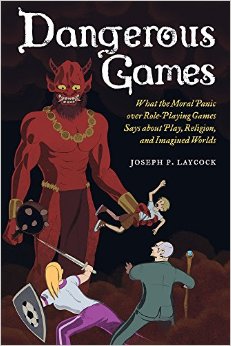
Item One: “Dangerous Games”

At The Revealer, Don Jolly reviews Dangerous Games: What the Moral Panic over Role-Playing Games Says About Play, Religion and Imagined Worlds, by Joseph P. Laycock. Here’s a description of the book from its publisher, University of California Press:

The 1980s saw the peak of a moral panic over fantasy role-playing games such as Dungeons and Dragons.

LaycockA coalition of moral entrepreneurs that included representatives from the Christian Right, the field of psychology, and law enforcement claimed that these games were not only psychologically dangerous but an occult religion masquerading as a game. Dangerous Games explores both the history and the sociological significance of this panic.

Fantasy role-playing games do share several functions in common with religion. However, religion — as a socially constructed world of shared meaning — can also be compared to a fantasy role-playing game. In fact, the claims of the moral entrepreneurs, in which they presented themselves as heroes battling a dark conspiracy, often resembled the very games of imagination they condemned as evil. By attacking the imagination, they preserved the taken-for-granted status of their own socially constructed reality. Interpreted in this way, the panic over fantasy-role playing games yields new insights about how humans play and together construct and maintain meaningful worlds.

Ding. Yes. That. After a long and amusingly weird introduction, Jolly’s review focuses on this part of Laycock’s argument:

In D&D and similar role-playing games, the fun lies in giving some measure of “belief” to a fantasy contrived by the imagination of your friends: “For a few hours, everyone agrees to accept that world, to accept the pretense that you are a magician who can throw exploding balls of fire from one hand,” said the game designer John Eric Holmes in an article on the subject for Psychology Today. “The fantasy has become a reality, a sort of folie á deux, or shared insanity.”

Ironically, outsider perceptions of this “shared insanity” have spawned insanities of their own.

In the context of the game, this “shared insanity” is contained, proportional, and kept in perspective. It’s people at play for the purpose of fun, amusement and entertainment. In the context of the “moral entrepreneurs” and their moral panic in backlash against such games, the “shared insanity” was not kept in perspective or contained — it was unleashed in an attempt to reshape the culture and politics of the real world.

The same elements of play, seeking the same emotional rewards — the fun of pretending to be valiant heroes battling fantastical monsters — were at work in that moral panic. But, unlike the gamers, these folks were less conscious of the fact that they were just pretending, just enjoying a role-playing game.

The D&D backlash of the 1980s wasn’t sustainable because the unreality of the imagined threat eventually became impossible to deny. But while this particular form of symptom spiked and dissipated, the disease remains — with the moral entrepreneurs continuing their role-playing fantasy by concocting and warring against ever-new sets of imaginary monsters.


26 May 16:30

Official IKEA “Hack” Kits Will Let You Pretend To Get Creative With Your Furniture

by Chris Morran
Malady579

rather wise business move for them.

While IKEA products are intended by the company to only be assembled in the way their designers prescribe, that hasn’t stopped countless individuals from modifying and repurposing IKEA furniture to create something more useful, attractive, or idiosyncratic. Finally realizing that its designs aren’t sacrosanct — and that there is a lot of money to be made in their customization — IKEA is working on official “Hack” kits so that millions of customers can all make the same company-approved tweaks to their fiberboard furniture.

Gizmodo’s Adam Clark Estes was at the recent IKEA Democratic Design Day event at IKEA HQ in Sweden, where the company unveiled its idea of cashing in on customers’ desire to have more individualized furnishings without having to look around on the Internet for suggestions.

It’s a pretty simple idea. Say you buy a FROSTA barstool from IKEA. There are an awful lot of things you can do with the parts for this item, from fashioning them into a bedside table to a coat rack to a tree swing.

But rather than have you go online — perhaps to a website that IKEA tried to shut down — and get these ideas or dream one up yourself, IKEA wants to sell you a Hack kit that includes some extra parts for you to modify the FROSTA into a FROSTA with a canvas seat back.

It’s a good idea, from a business standpoint, as much of what the company would put into these kits are just going to be parts that it already has made. In addition to advertising on the showroom floor which products have Hack kits, IKEA will have a website featuring Hack concepts — and of course selling kits — in the hopes of getting people with IKEA furniture already in their homes to spend a little more to change things up.

But is this kit really a “hack”? To us, the idea of a furniture hack is to see new possibilities in a pile of laminate wood pieces and plastic-baggied bolts. While it’s nice to see IKEA encouraging customers to go beyond the drawing on the side of the box, the kit idea may just be giving them another set of diagrams and instructions to follow to assemble an IKEA-approved product.

26 May 16:14

Keep Talking, We Gotta Feed the Snakes

26 May 16:11

Game of Thrones' creepy cult was inspired by Catholic reformers, says G.R.R. Martin

by Rob Beschizza
highsparrow

The current season of Game of Thrones saw the rise of a powerful sect in King's Landing, led by a down-to-Earth but ruthless leader bent on imposing religious law on Westeros's corrupt aristocracy. Read the rest

23 May 17:36

Tees, stickers and totes to benefit NARAL Pro-Choice Texas

by Cory Doctorow


Kyle from Bumperactive writes, "NARAL Pro-Choice Texas has a new tee supporting reproductive rights in the Lone Star State: "Texas, We Need To Talk About The Elephant In The Womb" -- a sly dig at the sharply partisan politics that drive the anti-choice movement." Read the rest

22 May 16:08

The Getty Recaps Game of Thrones

by Miss Cellania
Malady579

This is so cool

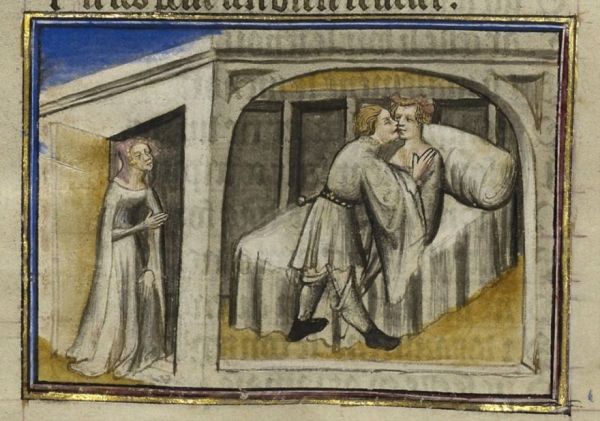
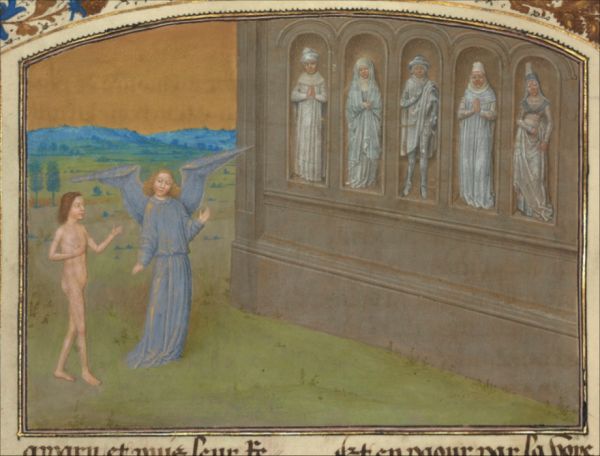
The J. Paul Getty Museum has a Tumblr blog, and each week they post a recap of the latest Game of Thrones episode. Now, many pop culture blogs do that, but the museum adds a twist: they tell the story using their own works of art to illustrate the action, which works hilariously well. They post medieval art as illustrations that evoke an image of what happened and give links to more information on them. The two images here are from the latest installment, season 5 episode 6.


Check out the archive of all The Getty’s GOT recaps here. Some images are gory and explicit- just like the show, except you can see these works in a museum. -via HuffPo

20 May 17:41

The Quantified Baby

by Laura June
Malady579

This is a bit insane how much we could be tracking here, but I have heard the praises of this app quite a few times. If we need to track her at some point, this seems to be a good one. That said, seems a bit obsessive to me.

Last week, I was sitting on the couch at the end of a long day. I had an itch. I pulled out my phone. I opened my email, nothing new; Instagram, no baby photos to post; I didn't even bother opening Twitter. "Oh right, Baby Connect," I said to myself. I opened the app, which I have used to track Zelda's sleeping and eating since she was just a few months old, and saw its familiar home screen. No recent entries. For three days, I had entered nothing. A new phase of life, one where my daughter's sleep-wake cycles are quantified only our heads, had begun.
20 May 17:06

When the oil runs out, what do we do with all the tankers?

by Rob Beschizza
3046359-inline-i-1-these-beautiful-floating-copy

They are innumerable, immortal and enormous. Let's turn them into beachfront villages!

18 May 23:03

Tentetsutou, The Sword Of Heaven: A Katana Forged From An Iron Meteorite

meteorite-katana-1.jpg This is 天鉄刀 (Tentetsutou, The Sword Of Heaven), a traditional Japanese katana forged entirely from an iron-alloy meteorite. Obviously, it's the perfect weapon for a space ninja like myself. "You are not a space ninja." Then how am I writing this FROM THE MOON? "You aren't." I could be. "But you aren't." Man, I hate playing pretend with grownups.
The renowned blacksmith Yoshindo Yoshiwara crafted the katana using fragments from Gibeon, an iron-alloy meteorite that landed near a town in Namibia after which it was named.
Do you think you can channel the force of the universe when you wield it? Because in my mind you can. Needless to say, this is a very powerful sword and I must have it. If for no other reason than to keep it from falling into the wrong hands. "Your hands ARE the wrong hands." They're webbed like a frog's and double as cereal bowls! Keep going for a couple more shots, including a raw piece of Gibeon.
11 May 00:48

Weekend link dump for May 10

by Charles Kuffner
Malady579

The second to last link "unnecessary medical care" was a very nice article by New Yorker.

Don’t buy me any peanuts or Cracker Jack, I’m allergic to them.

“This is important, because even if you’re a hard-ass law-and-order type, you should understand that we no longer need urban police departments to act like occupying armies. The 90s are gone, and today’s teenagers are just ordinary teenagers.”

Why you can cross giant ants off of your list of things to worry about.

RIP, Grace Lee Whitney, best known as Ensign Rand from the original Star Trek.

Very nice sendoff of David Letterman by Conan O’Brien.

Also, some of the craziest jokes and sketches that never made the air on the Letterman show.

The right to be offensive is still broadly supported. Also, what Josh Marshall says. This, too.

Tip the schools.

What if that state-imposed waiting period for an abortion violates your sincerely held religious belief?

12 tips to appear smarter in email. If you still use email, anyway. My inbox is too full for that.

Celebrating Star Wars Day Cake Wrecks-style.

I for one welcome our cursive-writing robot overlords.

“To be honest, I can imagine the kind of comparison you can make between the Charlie Hebdo attack of January 7 and this event, but there is nothing to do [with one another], there is no comparison, absolutely no comparison.”

“Yes, Simpson and Soofi were more dangerous and evil. But in terms of clownishness and buffoonery, Geller and Co and their would-be attackers are really two sides of the same coin, a collision of two clown cars who paradoxically need each other to justify their existence. Happily, no one but the attackers were seriously hurt.”

On behalf of The Heterosexuals, I’d like to apologize to The Homosexuals for this. Fortunately, it didn’t go very far.

“There’s no new news. We have a very strong statute, the regulations that interpret that statute are really clear, and we have case law that says unequivocally and repeatedly that equal means equal. And yet you have, every way you measure it, these great big disparities.”

Good for Elizabeth Banks. Olivia and I are looking forward to Pitch Perfect 2.

RIP, Jim Wright, former Speaker of the House from Fort Worth. See here for more.

Best use of the Pizza Hut app ever.

“In the aggregate, we almost don’t have public education anymore now that tuition is contributing more than half of all revenue. Really we have subsidized private education.”

In case further evidence was needed that abstinence-only education is a terrible idea.

“And that, in a nutshell, is pretty much the state of America’s gun debate.”

It’s not 1968 any more.

Would you like some McKale with that?

On unnecessary medical care and what can be done about it. Really good stuff.

And this. All of it.

10 May 00:18

Texas Tea Party rep wants legal weed

by Mark Frauenfelder

Texas State Rep. David Simpson has introduced a bill to remove all references to marijuana from the state’s legal code. And he has the best argument I've heard: "Rattlesnakes are dangerous, but we eat ’em for meat. And some people, you know, they eat other rodents. But we don’t ban them."

09 May 23:36

X-ray scan at border reveals child stashed in suitcase

by Matthew Williams

Screen Shot 2015-05-09 at 5.02.05 PMGuardian: "An eight-year-old boy has been handed over to Spain’s child protection services after he was found curled up in a suitcase as a woman attempted to smuggle him across the border from Morocco."

05 May 21:17

This is what Americans *don't* want in their president

by Mark Frauenfelder

Near the top of the list of undesirable qualities: Evangelical Christian and Leader in the Tea Party. That means Ted Cruz has a great shot of winning the Republican primary and a terrible chance of winning the election.

11 Apr 13:07

EPIC TIME PARADOX

paradox,Pure Awesome,time,traveler

EPIC TIME PARADOX one time traveler is making it

Submitted by: Unknown

26 Mar 21:48

Madrid becomes no-kill city

by Heather Johanssen
150323-NoKill

On March 13, Madrid became a no-kill city, making the euthanasia of stray or abandoned animals illegal. That means all animals—even homeless ones—are free to live their lives.

20 Mar 20:00

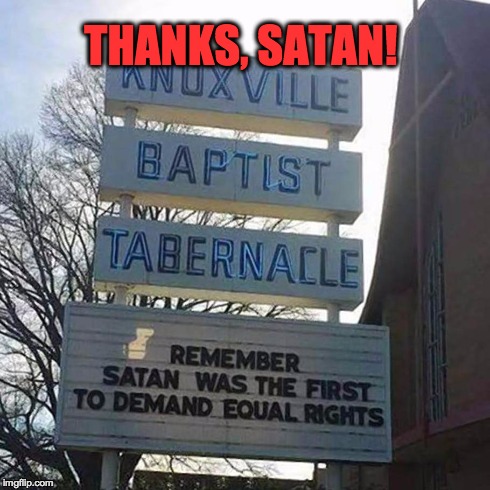
Pastor says sign comparing gays to Satan "did not mean to offend"

by Mark Frauenfelder
Malady579

you know. I don't know where it is in The Bible.

Following complaints, the Knoxville Baptist Tabernacle Church in Tennessee has taken down a sign that read, "Remember Satan was the first to demand equal rights." (more…)