When you think of buildings that stand at a slant, the Leaning Tower of Pisa probably comes to mind first. But many other famous leaning buildings around the world attract visitors who cherish their off-kilter charm. Atlas Obscura created this list showcasing wonderful leaning landmarks that people travel to see and photograph. — Read the rest
We have a company Discord now. Technically, we've had it for a while, but it has been closed except during FnordCons. It's now open 24/ 7 and we'd love to see you! (I like Discord.)
Current discussion categories are New & Upcoming, Munchkin, Car Wars, Ogre/GEV, Roleplaying Games, and Other Games. We announce when we launch crowdfunding/preorder campaigns, and we announce when we're going live on stream.
We find ourselves talking about things like RPG campaign overviews, 3d printing projects and strategies, Car Wars game recaps and analysis, discussions of favorite Munchkin sets, and favorite weird promos found over the years.
We have no regularly scheduled live events . . . yet . . . but we'll see how things grow. Our staff irregularly appears on the Discord and makes brilliant comments, and sometimes the other kind too.
PS - FnordCon 6 will be happening on the Discord on November 11-12!
PPS - Looking for more fan involvement! If you are familiar with community management/moderation, especially Discord, and want to help the Illuminati take over the world one pixel at a time, drop a note to community@sjgames.com and we will talk!
A 2011 xkcd comic popularized the idea of using memorable but nonsensical words as passwords. The comic provided the example "correct horse battery staple," which is easy to remember but difficult to crack through brute force methods.
Scaly, feathered, toothed, or beaked—long-necked, spike-tailed, tiny, or gargantuan—dinosaurs are a wildly diverse group. But certain dinos stand above the rest, both literally and on the plinth of our imagination. Here’s my definitive ranking of the best dinosaurs; I’ll be mightily impressed if you’ve heard of every creature on this list.
13. Tarbosaurus
A T. bataar on display in Maryland.
Let’s get this predator out of the way immediately. Tarbosaurs were a genus of tyrannosaurids that thrived in Asia during the Cretaceous Period. One particular species—Tarbosaurus bataar—made headlines 10 years ago when a U.S. Federal Court found that a 24-foot-long specimen was smuggled into the United States from Mongolia. On the whole, tarbosaurs were quite cool and fearsome. Sure, it’s basically T. rex Lite, but that’s enough to squeak onto my list.
12. Psittacosaurus
A Psittacosaurus model.
This is the type of dinosaur that doesn’t often make it into children’s books—and that’s not just because the animal’s preserved “butthole” was recently found in China. To the untrained eye, Psittacosaurus looks like an average herbivorous dinosaur, which isn’t great fodder for non-expert illustrations.
But fossils of the animal (whose name means “parrot-resembling lizard”) reveal a substantial amount about dinosaur ecology and anatomy. Researchers studying the Liaoning fossil found that the animals were countershaded, a type of coloration that many animals employ today. And that’s even before you get to its preserved cloaca, the soft-tissue multipurpose opening the animal used for defecation, urination, and laying eggs.
No preserved dinosaur penis has ever been found. But the psittacosaurus deserves some recognition for getting as close as we’ve come to one.
11. Parasaurolophus
A Parasaurolophus skeleton at the ROM Toronto.
This wouldn’t be an honest dinosaur ranking if it didn’t include at least one duck-billed dinosaur (a hadrosaur), which went extinct along with nearly all other dinosaurs 66 million years ago. Parasaurolophus is recognisable for its pronounced head crest. The head crests were hollow, and paleontological consensus is that they likely were used for making noise, as well as being visual ornaments. I like parasaurolophus because it looks like a dinosaur that had sinus issues, something I relate to deeply.
10. Deinonychus
A Deinonychus model in Leiden, The Netherlands.
As far as small-but-scary predators go, the petite theropod Deinonychus is one to look out for. In all likelihood a feathered dinosaur like Archaeopteryx, Deinonychus had formidable 5-inch talons on its feet, which it would have used to grab prey. The animal probably weighed about 150 pounds, according to Britannica, but that didn’t stop this raptor from being absolutely terrifying. I’ve included it here as a great example of a small predator being just as scary as the big ones, which tend to get more fanfare.
9. Argentinosaurus (and all titanosaurs)
An Argentinosaurus skeleton. Big!
It’s difficult to say whether Argentinosaurus or Patagotitan was the largest-known land animal of all time, but the titanosaurs definitely deserve a place on this list. The massive herbivorous sauropods lived until the Late Cretaceous, and the largest individuals may have weighed over 100 tons (elephants typically weigh around 6 tons).
Any list that overlooks the largest animals—with necks so long that the tallest individuals would be able to peer into windows seven stories up—is falling short. You can’t help but wonder how many Deinonychus it would take to bring down one massive sauropod.
8. Tyrannosaurus
A T. rex model on display in New York.
Tyrannosaurs aren’t that great. There, I said it. Yes, animals like T. rex were huge and ferocious, but there’s a silly amount of clamour about the billions of these reptiles that roamed Earth.
Part of the issue is that tyrannosaurs (and theropods in general) tend to control public attention; it’s a predator-driven consumer market. Tyrannosaurs dominated their environments like tyrants, indeed, but their silly little arms and lack of any armoured plates puts them down the pecking order for me.
7. Pachycephalosaurus
A Pachycephalosaurus cast.
Before humankind invented the hard hat, dinosaurs invented very, very, very hard hats. That’s right—Pachycephalosaurus (pack-ee-keffa-lo-saurus) was a dinosaur with the defining characteristic of a skullcap that could double as a battering ram.
According to the American Museum of Natural History, that ram probably wasn’t used in head-to-head combat, though, as the bony dome was too weak for those impacts. Rather, males may have hit opponents on their sides when fighting over females.
Long considered a strictly herbivorous dinosaur, a recent study of Pachycephalosaurus teeth indicated that the animals may have eaten meat, too. These dinosaurs had the most dragon-like skulls, in my opinion, so they’ve well earned their place on this list.
6. Triceratops
A Triceratops fossil. Note the horns.
According to Britannica, when the first Triceratops was found in 1887, it was thought to be a giant, extinct species of bison. You can’t fault the misconception too much: squint, and it makes sense. The prominent horns provided defence against predators—some Triceratops have been found with bite marks that match the maws of tyrannosaurs—but they were also used to fight each other, as Gizmodo recently reported. Simply put, the hornier the dinosaur, the better. So the three-horned Triceratops is one of the best.
5. Archaeopteryx
Archaeopteryx lithographica.
I love Archaeopteryx because it blew the fossil record of dinosaurs wide open. With its discovery in 1861—just two years after the publication of Darwin’s On the Origin of Species—paleontologists could begin to connect the evolutionary dots between purely landlubbing dinosaurs and their flying relatives, birds.
Archaeopteryx could fly, but exactly how remains uncertain. Regardless, its importance in our understanding of dinosaurs and their evolution gives Archaeopteryx its rightful place in the top five best dinosaurs—even if the feathers of the animal are still controversial.
4. Spinosaurus
A Spinosaurus skeleton in Barcelona.
The highest-ranking carnivore on this list, spinosaurs have been having a research renaissance lately. Recently published research on the animal’s tail and bone structure indicates that the meat-eater was a proficient swimmer and that at least some species hunted prey while completely submerged.
Like other dinos on this list, spinosaurus’ sail may have been used for display or for thermoregulation. What is clear is that the look is fantastic; as glad as I am that these things are no longer around, they definitely deserve their place near the final podium.
3. Borealopelta (and all ankylosaurs)
The Borealopelta holotype. Isn’t it awesome?
Few armoured dinosaurs loom quite as large as the ankylosaurs and nodosaurs, animals known for their intense dorsal plating. They’re absolutely badass, and among those animals Borealopelta markmitchelli is the standout. The type specimen of this species is a ridiculously well-preserved individual from what is now Alberta, Canada, an individual whose last meal was a combination of moss, ferns, and flowering plants.
Ankylosaurs in general have hardcore anatomies. A recently named species, Spicomellus afer, had spikes that sprouted directly out of its ribcage. It would’ve made a tricky meal for any predator. My hat is off to the ankylosaurs, who made defence look way cooler than offence.
2. Chickens
A hen with chicks.
Since birds are the only dinosaurs still alive, I could make the case for ranking them No. 1 on this list. But they’re second place, and what better bird to enshrine in the pantheon of great dinosaurs than Gallus domesticus, the not-so-humble chicken? Statista estimates that there were nearly 26 billion chickens worldwide in 2021. Talk about coming home to roost—when other dinosaur species faltered, chickens stayed the course. And now, for many, they’re a main course.
1. Stegosaurus
This is the best dinosaur and you know it.
A dinosaur with giant kite-shaped plates protruding from its back is the best kind. And stegosaurs didn’t stop there: They also had huge spikes sticking out of their tail.
The use of stegosaur plates is still unknown. As the Natural History Museum in London states, they could have deterred predators, been a species identifier, regulated body temperature—or perhaps some combination of these. Whatever the plates’ use, this is what peak performance looks like. The stegosaur is a classic dinosaur—it’s from the Jurassic, meaning it went extinct nearly 100 million years before T. rex and Triceratops. Stegosaurus is spiky, big, and confusing in all the best ways. Number 1 all day long.
The website archive.today (also accessible at archive.is) has become a backbone of the internet, providing on-demand archives of specific pages and access to paywalled sites that play the SEO game of revealing the full text of articles to non-human viewers. — Read the rest
One of the best parts of buying a new PC is deleting all the bloatware and replacing it with your favorite programs. Of course, you probably have a list of apps you install by default. But if you only stick with what you know, there are likely some hidden gems you’re missing out on. Here are 16 such apps everyone…
A big part of my job is staring at the latest deep-field images from space telescopes, images that remind me that our planet is less than a speck in the universe, and I’m just a speck on that speck. But photos of life on Earth up close flip the script, reminding viewers like me how much drama is happening even at tiny scales.
The annual Close-up Photographer of the Year competition’s winners have just been announced, showcasing the best photography of the small world from the past year. Here are the top three winners in each of the 11 categories.
“Little Predator”
A stalked jellyfish in the White Sea off Russia.
“Beauty and the Beast”
A klipfish sits amid mussels off the shore of South Africa.
“The Martian”
A small octopus looks truly alien in this intimate view of the creature 91.44 m beneath the ocean’s surface.
“Mayan Derriere”
A species of Triangular Spider spotted in Brisbane, Australia won first place in the Invertebrate Portrait category.
“Gordian worm knot”
The photographer and farmer Ben Revell spotted this worm emerging from the abdomen of a spider. It is a Gordian worm, so-called for the inextricable knots the worms appear to become.
“Shining Snail”
A snail inches along a vertical blade of grass. This shot won third place in the Invertebrate Portrait category.
“Hemitrichia Calyculata”
Slime molds producing sporangia on a rotten log in the UK.
“Demoiselle Wing”
The wing of a banded demoiselle up close, covered in water droplets.
“Doner Kebab and Pizza”
Starlings outside a pizza place in Germany.
“Next To My Tree”
“Thawing Beauty”
A flower thaws from an overnight frost in Britain.
“Sun Worshippers”
The flowers at sunrise in Australia. A rare event of Saharan dust floating in the atmosphere gave the sunrise a reddish tint.
“Batrachospermum Red Algae”
The winner of the Micro category was this shot of a red algae species.
“Pollen Tubes Growing Through the Pistil of Arabidopsis Thaliana”
A fluorescence microphotograph reveals the tubes of pollen growing in a cress’ pistil.
“Schistidium Capsule”
A species of moss that lives on rock exposures in Sweden. The capsule is just about 1 millimetre, making a truly microscopic inclusion in this list.
“Oil & Water 44″
Drops of oil merging. This shot was the winner of the Manmade category.
“Fishing Nets”
A bundle of blue fishing nets on the Kent Coast of England.
“Colour Study 35″
This shot took third place in the Manmade category. “The images are layered and blended in the computer to create abstractions that reference contemporary art, including pointillism, colour fields, transparencies, collage, and painterly techniques,” wrote photographer Paul Gravett in a press release.
“Frequency”
This shot was taken of a water body reflecting a distorted image of a building Canary Wharf, London.
“Artwork of Nature II”
Taken in Marmorslottet, Norway, this shot is an arresting look at the flow of water through rock formations, themselves formed by the relentless movement of the water.
“Sea in Fan”
A sea fan holds small inclusions of seawater, which act as lenses for the landscape and sea in the blurry background.
“Little Naughty Draw Circle”
The beetle Aplosonyx nigriceps consumes a plant by nibbling circles on the leaves to stop the transmission of secreted toxins into the section of the leaf the beetle wishes to eat.
“Violet Ghost”
A beetle scuttles across a road in the forest in Italy in this blurry shot. “My aim was to have an image showing enough movement to illustrate the speed of the beetle, while illustrating the elegance of the beetle with its superb violet and turquoise colours,” said photographer Bernard Van Elegem, in a release.
“Intruder”
Not bats, not birds, but termites are shown flying around the night sky near Cooch Behar, India, in this artful shot.
“Slime Mould Didymium Squamulosum on Holly Leaf”
Three sprouting slime moulds look like miniature mushroom clouds on the thorn of a holly leaf.
“Scarlet Waxcap in Early Morning Dew”
A waxcap grows amid the early morning dew of Ebernoe Woods in England. The misty morning and dew make everything but the waxcap look white and grey, allowing the fungi’s scarlet hue to pop all the more.
“Ice Encrusted Comatricha”
A slime mould growing from a rotten fence post is frozen in ice, giving it an otherworldly look.
“Common Winter Damselfly”
In this shot, a damselfly clings to a plant. The fly’s wings — tucked in along its body — make it look like an extension of the plant.
“Atlas Moth”
The moth’s maximum wingspan is nearly 10 inches across, and its vivid colours are on full display in this close-up shot.
“Veiled”
This photo is the winner for the Butterflies & Dragonflies category. It shows a male Banded Demoiselle covered in dew in the morning light.
“A Tale in the Sand”
A Sahara sand viper winds past a tasty dune gecko, laying low at the bottom of this image. The photo is an intimate look at the do-or-die nature of life for creatures in the Negev desert.
“The Footprint Friend”
This image was captured after a pond had dried up, leaving hundreds of tiny toads without sanctuary. This photographer found a couple of spunky amphibians taking refuge in the depressions left in a large dog’s toeprints.
“Nature’s Pitfall”
Rest in peace, little amphibians. This image — evoking Sondheim’s Little Shop of Horrors — depicts two juvenile Spotted Salamanders decaying inside a carnivorous Northern Pitcher Plant.
People movements at Energy Catalyst, Iberdrola, WA govt, Jemena, NSW DCCEEW, Aula Energy, AMSL Aero, Eku Energy, AEC, Solar Citizens, North Harbour, 5B, ERAC, Sundrive.
Publically available EV chargers are essential to Australia’s EV uptake, just as they have been overseas, however it’s not as easy as picking a carpark and throwing down a charging box.
While governments at the state and federal level have been enthusiastic about rolling out EV chargers across Australia this year, it’s not an easy process. Actually, there are a lot of things to consider before the work can be done.
While chargers in Australia range from 7kW ( slow chargers, usually what you’d use at home or in emergencies) to 350kW (ultrafast chargers, what you’d find on highways, provided by networks from Evie and Chargefox), and with more popping up over time, there are so many variables to consider when installing a charging station, different from place to place, charger to charger.
“The process to roll out a charging station involves a number of different disciplines. It’s not just about dropping a box on a site,” Chris Mills, the CEO of Evie, one of Australia’s largest EV charging network companies, told Gizmodo Australia.
If you have an EV in Australia, you may have used one of Evie’s stations. If you don’t have an EV, you may have seen an Evie charger being built or operational in a shopping centre or at a highway stop.
They’re one of only two EV networks currently using ultra-fast 350kW chargers in Australia (the other being Chargefox) and are an Australian company, buying chargers from Tritium, another Aussie startup making a name for themselves on a global stage.
Despite the obvious connection, the name ‘Evie’ is also tied to the Stevie Wright song, Evie, Part 1 (Let your hair hangdown), with Mills saying the song is about freedom and being out on the open road. The ‘open road’ is where Evie has prioritised much of its work, with “highway chargers” capable of a 350kW charge, along with 50kW chargers for shopping centres.
This speed isn’t actually available with any EVs in Australia at the moment, with most cars limited to charging speeds of under 150kW (the max speed of Tesla superchargers), but eventually, cars will be developed with the higher charging speed capability (and that’s not to say that these chargers can’t be used by most EVs in Australia right now anyway).
So far, Evie has installed only 77 EV chargers of its 350-large charging station inventory, mostly at sites with two boxes for two charging spots. Those chargers were all purchased when Evie was awarded a grant from the Future Fuels Fund back in 2020, with other state-level grants awarded since.
The company plans to have 2,000 chargers rolled out by 2033, capturing 25 per cent of the market.
Left: Chris Mills, the CEO of Evie. Right: AMP Capital Head of Retail and Investment, Marco Ettorre, announcing an initiative to bring charging stations to shopping centres across Australia. Image: Evie
Charging up
Electric vehicle charging sites are simple: they require the charging station, the box that you plug your car into and car parking spots for the vehicle to charge in. Most sites right now are comprised of two boxes with one car parking spot each. Mills said that the price can run up to $1 million before the site is turned on, which can take up to 12 weeks to construct.
“It’s not generally a quick process,” Mills said.
“A highway site typically costs us between $750,000 and a million dollars, of which $250,000 of that is the power.
“As the use of the site grows and the congestion at the site increases, then we would bring on the third charger and the fourth charger.”
That’s afterfinding an ideal spot, renting the land, building the equipment and configuring it appropriately.
Evie has done things to minimise the complication, such as using units solely sourced from Tritium, whereas some other networks tend to use units from several manufacturers. This way there’s only one source of parts and no incidents where parts are mixed up.
“There are a number of sites where we have actually deployed the infrastructure for six chargers and taken the lease on six parking bays but only deployed the first two charging bays,” Mills added.
Evie has also developed a load management system to make sure that car charging doesn’t negatively impact the power usage of the installed site.
Say, for example, the Mcdonald’s at the site just turned on all the machines in the kitchen and the EVs parked at the charging bay just started charging: the load management system would limit charging speed for a time until the danger of a fault can be avoided.
Additionally, if Evie wanted to upgrade a metropolitan site, such as giving a shopping centre a greater charging speed, Mills said that the price is “disproportionately more expensive than the cost to upgrade the power at a highway site”.
So, yes, it’s fraught with complexities, but it’s a challenge that the Australian company sees as manageable.
The Polestar 2 uses an Evie charger in Taree. Image: Zachariah Kelly/Gizmodo Australia
Over-charging
Mills was quick to cite fuel efficiency standards as the biggest problem affecting EV uptake in Australia.
Fuel efficiency standards are rules put in place on automakers to reduce the emissions used by the vehicle. They’re a cap placed on a fleet of cars, incentivising the development of more efficient vehicles, strictly regulating their emissions output.
Basically, if Australia had fuel efficiency standards, automakers would be incentivised to bring electric cars to Australia. We’ve discussed this in detail before, but it remains a concern for EV stakeholders (although standards are being considered by the government).
But what about the electric charging station sector in particular, a space that needs to be fleshed out in its own way? Well, it has its own unique problems.
“It costs me more to buy the energy than it does to sell to you as the driver,” said Mills.
Business energy tariffs are broken down into two components: the amount of energy you consume and the maximum power you draw at any one time. Energy providers charge for the maximum power draw on top of the amount of power used because their networks need to be able to satisfy this high level of demand if they were to come under stress.
Because electric vehicle charging stations tend to use more power when initiated, Mills says that he pays for power at a “disproportionately” higher rate than other businesses and that changes will need to be made for the charging industry.
“The tariffs that exist today have typically been in existence for about 40 or 50 years … They were designed to meet the use cases that were in place 40 or 50 years ago,” Mills added.
“I’m not asking for a free ride, I’m not asking for special treatment, but I am asking for a tariff that is appropriate for public electric vehicle charging.”
Mills thinks that “volumetric, time of use tariffs” could be the answer. These are tariffs that cost more during peak periods like 4pm and 8pm, but lower costs during shoulder periods, such as between peak and off-peak periods.
But ultimately, Mills wants there to be a conversation about this topic at a government level.
“If we’re not careful with the tariffs that are being applied, what I call a blind application of historical tariffs that really aren’t appropriate for electric vehicle use, then you can find yourself killing the golden goose before it has laid the egg,” said Mills, describing the EV market as an opportunity for energy grids that are currently being shunned.
Changes to energy tariffs would need to come in at a government level, so perhaps this could, down the line, be another area where lawmakers can assist in the uptake of electric vehicles.
Additionally, another problem is the expectation of free charging infrastructure from rivals. Mills said that, while free-to-use chargers being built (available in some locations) may promote electric vehicle uptake, these chargers pose an unfair threat of competition to private EV charging companies.
Free EV charging is good, sure, but it’s difficult for Evie to compete with free chargers which, in all likelihood, probably aren’t making a return on their investment anyway.
“Those chargers that are being deployed for free will never be sufficient to actually provide a meaningful, balanced Australia-wide network of chargers that will support the needs of the general public,” added Mills.
“It makes it much more difficult for me to build a network that is commercially viable when I’m competing against all these chargers that are being deployed out there for free.”
If you’re an EV driver, you’ve likely used a free public charger before. Such chargers exist on the Chargefox and NRMA networks, however it’s unlikely that this will stay this way. NRMA, after all, has said that it will start charging for its station use next year.
Charging forward
“I don’t look at Chargefox or any of these guys as being competitors. My competitor is the petrol car,” Mills said.
“Because the more people who move from petrol to EVs, then the more cars that are on the road is going to be beneficial for all of us.”
We’re bound to see more electric vehicle chargers in the future, but for now they’re the subject of a nationwide (and international) rollout through private companies.
It’s instrumental for this shift to happen, frankly, and much will need to be done if we’re going to see EV infrastructure truly supported across Australia.
Electric motorcycles tend to be either extremely capable and unforgivably expensive, or affordable and really closer to scooter territory. The Ox Patagonia, coming out of Madrid, aims to find an attractive middle ground: a usable electric adventure experience for less than US$7200.
Under new rules, telcos in Australia must consider if their customers are in vulnerable circumstances and proactively tailor their service accordingly.
What does that mean, exactly? Well, telecommunications providers will be expected to already identify customers in vulnerable circumstances and take that into consideration before demanding a payment they may not be able to make. It means that the way telcos deal with customers in such vulnerable situations has to have a little more care. That is, they have to make things easier, not harder, and can’t go around pushing a higher-priced product (as one example).
The directive comes via a new industry Statement of Expectations released today by the Australian Communications and Media Authority (ACMA). The expectations cover all key aspects of customer interactions, from selling practices and customer service to the provision of financial hardship support.
The idea is that people experiencing vulnerability should be supported and not further disadvantaged.
“Many Australians will experience vulnerable circumstances in some form or another during their lifetime. The devastating effects of the COVID-19 pandemic and natural disasters such as fires and floods show just how quickly and unexpectedly people’s circumstances can change,” ACMA chair Nerida O’Loughlin said.
“It’s important that telcos have processes in place to recognise and provide appropriate customer care and service to people in these situations.”
The rules follow an audit the ACMA conducted last year that found some telcos were not training staff regularly enough to recognise or deal appropriately with vulnerable consumers. O’Loughlin hopes the rules being set in stone will go a long way to addressing this.
The statement is 22 pages long and covers five priority areas. The first one tackles culture within the telco itself. The ACMA is asking that telcos embed a “culture and operating environment that encourages an increased focus on and support for identifying, interacting with and assisting consumers experiencing, or at risk of experiencing, vulnerability”.
The second requires telcos to only sell products appropriate to their needs and circumstances, while the third asks for a more “accessible and inclusive telecommunications market”, one where telcos understand, identify and assist consumers who may benefit from additional or specialised support.
Rather than sending debt collectors, or being heavy with requests for payment, the fourth priority requires telcos to be supportive of consumers struggling with their bills, with the goal of still having access to services even if hardship is being experienced. Lastly, the ACMA wants credit and debt management processes to be “fair, accurate, flexible and proportionate”, with disconnection as a last resort.
So, you’ve just bought a new car, you’re loving it, but something goes wrong and you’re not sure what to do with it (like an essential part stops working or the panels are misaligned). It could be time to claim the car warranty.
Your instinct might be to just take it down to the mechanic to have it repaired, but it’s often better to contact the manufacturer or dealer in the case of newer cars. Older cars, however, should definitely stick to the local mechanic.
So what do you do if your car turns into a lemon? That is a car that has manufacturing defects that affect its safety, utility or value. Well, we have some handy steps for you to follow below.
Laws designed to help your car warranty claim
Now, before you go off to plead your case to the customer support worker on your manufacturer’s phone line, just know what laws protect you in Australia. The ACCC provides some solid guidelines on buying a car and knowing your rights, according to the Australian Consumer Law.
As outlined by the ACCC, the warranty period for a new vehicle is three years. If your car encounters a major failure within that period of time, the consumer gets the choice between a repair, a replacement or a refund. Alternatively, the consumer can ask for compensation for the drop in value for the vehicle or part from the supplier. It’s also noted that damages can be recovered from the supplier for any loss or damage.
However, if it’s a minor issue, then it becomes the job of the supplier to choose between a repair, a replacement or a refund. If a repair is chosen, then it’ll be handled within a reasonable time and without charge. Also, when we talk about the supplier, we’re talking specifically about the dealer, just so you know who to go to.
Additionally, extra protections may apply depending on the state you live in.
For example, in New South Wales, under the Motor Dealers and Repairers Act 2013, a dealer is required to guarantee a vehicle that has driven less than 15,000 km when purchased, up to 20,000 km after manufacture, or 12 months after purchase (less one month for each 2,000 km that the vehicle was driven before purchase) whichever occurs first.
The dealer guarantee for a new motor vehicle which has driven more than 15,000 km when purchased is limited to 5,000 km after purchase, or three months after purchase, whichever occurs first.
Firstly, you’ll need to establish a good description of the problem. If you go into the dealer saying “Sometimes it makes a loud bang”, the description might be too vague and you’ll likely need to elaborate on the problem further. Consider:
What the problem is in a basic sense
What its symptoms are
What the problem causes (as in, does the car turn itself off, slow down, does a part stop working or does a weird noise start happening, just to name a few things)
How long the problem persists within an instant
How often it occurs
With a good idea of what your problem is, get in contact with your dealer. While the ACCC refers to claiming your warranty from a “supplier”, as we mention in the previous section, you’ll actually need to go through your dealer.
There might be different avenues for getting in touch with your dealer for a warranty claim and different hoops you need to jump through depending on your car manufacturer, so below we’ve outlined warranty claiming information from some big car brands in Australia.
Claiming a warranty through Toyota
To claim a warranty on a Toyota vehicle, you’ll need to get in touch with your authorised Toyota dealer. You’ll also need to visit the Toyota Owner’s Portal if your address or name have changed, or if you’ve just purchased a new Toyota. Toyota vehicles purchased after January 1, 2019 are entitled to a five-year manufacturer warranty (terms apply).
Claiming a warranty through Mazda
Like Toyota, Mazda offers a five-year unlimited-kilometre warranty, covering any defect in material or workmanship. If you need to claim a warranty, get in touch with your authorised Mazda dealer. Provide your full name, address, phone number and details of what’s wrong with the vehicle. Once this has been provided, Mazda will book you in for an inspection and repair for the next available time.
Claiming a warranty through Ford
Ford also offers a five-year unlimited-kilometre warranty for vehicles collected after May 1, 2018. If you need to claim the warranty on your vehicle, contact your Ford dealer and take it in to be serviced and reviewed. Owner and vehicle details will be required.
What if your dealer isn’t cooperating with you?
If your warranty claim isn’t progressing as smoothly as you would have hoped, don’t fret – you’re not powerless. Always remember that you’re protected by the Australian Consumer Law provided you’re operating within its terms.
While the ACCC doesn’t offer a resolutions and complaints service, you can find resources on their website if your car dealer isn’t honouring the warranty. It also wouldn’t hurt to get legal advice if you run into any concerns in undertaking the warranty claims process.
The chip shortage has also brought upon some serious concern – what if my vehicle has a defect within the warranty purchase and I want a replacement? It might not actually be possible for the manufacturer to provide a replacement vehicle while chip shortages persist, so you might be locked into either a refund or a repair, if that’s even available.
Alternatively, as a consumer, you are empowered to negotiate – just make sure you’re not getting ripped off. You might want to consider replacing the faulty car with a different vehicle from the manufacturer, which might cost more or less. Make sure you’re either paying the right amount of difference for a more expensive car or being paid the right amount if you’re accepting a less-expensive car.
This article isn’t intended to be legal advice, rather treat it as a guide for where to start when your new car is being a bit of a lemon.
by Zachariah Kelly, Germain Lussier and James Whitbrook
When you think of Star Wars, you think of lightsabers. Sure, you think of spaceships and the Force and stuff like that too. But, in terms of iconic visuals, few things in science fiction at large, let alone Star Wars, are as iconic as the lightsaber.
And over the years there have been a lot of lightsabers.
Some you know very well. Others you may not. And we decided to rank as many as we could remember. We’ve also decided to add in the lightsabers from Star Wars: Visions, which brought an incredible new level of creativity to the weapon.
Also a note: just by being a lightsaber, a lightsaber is inherently amazing. So even the “bad” ones here are still pretty great. Don’t yell at us. If you think we’ve forgotten a lightsaber, let us know. Obvious spoiler warning for Star Wars stuff.
1. Darth Maul inStar Wars Episode I: The Phantom Menace
From 1977 until 1998 we all thought lightsabers were one thing. Then, a trailer for a movie was released, a second blade popped out of Darth Maul’s lightsaber, and the weapon was changed forever. That historical reveal helps put this saber at number one on the list, but its sleek, simple, iconic look — and, frankly, the fact that it disappears so quickly, helps as well.
The saber that changed sabers. Image: Lucasfilm2. Luke Skywalker inReturn of the Jedi
After losing his father’s saber on Bespin, Luke built himself this one. The now Jedi Knight opted for a green blade, the first we’d seen in Star Wars. Its construction is a little wider at the bottom, before getting skinny again and then getting wider at the top. It’s almost as if the saber itself is building up to something special.
3. Kara in Star Wars: Visions
Kara’s lightsaber is incredible, tied to the wielder and their force sensitivity. Depending on the wielder, the blade is able to change its length and shift its colour. When someone who isn’t a full-blown Jedi or Sith wields the blade, the saber becomes a dull hard light. It’s an incredibly creative approach to the weapon.
Image: Production I. G, Lucasfilm, Disney4. The Sith Dark Lord’s Umbrella Saber in Star Wars: Visions
It took a while for creativity to come back to Star Wars once The Rise of Skywalker was released, but one of the more creative things came from studio Kamikaze Douga. The Umbrella Saber from The Duel is a powerful multi-bladed lightsaber, incredibly deadly and matching the black and white pallet of the episode well. The episode only indulges in colour through some background elements and the lightsaber hues, which makes The Sith Dark Lord’s presence all the more sinister. It’s also amazing to watch in action.
5. Darth Vader’s First Lightsaber
Did you know that Darth Vader’s first lightsaber wasn’t the one he used in the original movies? As part of a Sith initiation right seen in Charles Soule and Giuseppe Camuncoli’s Darth Vader comic series, Palpatine tasks Vader with finding a kyber crystal to corrupt from its base colour into the blood-red associated with the Dark Side.
To do that, he needs to hunt down one of the few remaining Jedi and kill them — he does so to a poor survivor of Order 66 named Kirak Infil’a. After the tragic process is complete, Vader keeps Infil’a’s intricate hilt for a while, until it’s destroyed on a mission and he simply replaces it with the iconic hilt seen in the movies. But just look at it. It was stunningly gorgeous.
Vader’s original, stolen lightsaber hilt. Image: Giuseppe Camuncoli, David Curiel, and Cam Smith, Marvel Comics6. Qui-Gon Jinn inStar Wars: Episode I: The Phantom Menace
Few Jedi were as suave as Qui-Jon Ginn and his lightsaber, with its striking black ridges from top to bottom, really felt that way too. It looks like a lightsaber put on a tuxedo.
7. Count Dooku inStar Wars Episode II: Attack of the Clones
Much like Darth Maul’s lightsaber changed our perception of the weapon, so too did Count Dooku’s elegant curved lightsaber. An extended emitter on the end made it look more like a piece of jewellery than a weapon.
8. Karre in Star Wars: Visions
The protagonist of Star Wars: Visions episode The Twins, Karre weilds a blue lightsaber that is enhanced by a powerful kyber crystal, allowing him to extend and retract the blade at will. It makes for an incredible light show. The grip, pommel and hilt of the weapon are also pretty amazing to look at, although the blade steals the show.
Image: Studio Trigger, Lucasfilm, Disney9. F’s lightsaber katana in Star Wars: Visions
A yellow lightsaber katana. Need I say anything more? Basic in design from the pommel to the tip, apart from its curved blade and its rectangular hilt, F’s lightsaber does incredible work for the character, demonstrating the ability to kill an enemy without hesitation while also remaining lowkey.
Image: Kinema Citrus, Lucasfilm, Disney10. The Grand Inquisitor inStar Wars Rebels
This was the Swiss Army knife of lightsabers. It can be used as a traditional, one bladed saber. You can ignite the other side and use it as a two-bladed saber. You can make those two blades spin and, when spinning, you could use it not only to inflict damage or block blasters, but float, if needed. What a saber.
11. Lop from Star Wars: Visions
Animated in a way that lightsaber blades are rarely drawn, Lop’s lightsaber beams out a beautiful green hue marked by a white beam in the middle. The grip, pommel and hilt are also adorned with beautiful characteristics that match the character.
Image: Geno Studio, Lucasfilm, Disney12. General Grievous in Star Wars
General Grievous’ lightsabers are basic in style, but they’re iconic for their story. Grievous doesn’t use his own lightsabers and instead uses those from Jedi he has slain. He spins them in a really cool way too.
SPIN. Image: Disney13. Darth Vader inStar Wars
You know how they say a coat of paint can make anything look new? That’s what Darth Vader’s saber is. It’s basically just Anakin’s old saber with black highlights but hot damn does it look that much more intimidating and impressive.
14. Am from Star Wars: Visions
The Twins in the episode The Twins were terrific characters, bringing a sibling twist to the forces of good and evil within the Star Wars universe. Originally, Am’s blades are long with well-detailed grips, however once enhanced by a large kyber crystal, lightsaber tentacles are sprouted from the blades. It makes for terrific action and really goes to show the rage of the dark side.
Image: Studio Trigger, Lucasfilm, Disney15. Obi-Wan Kenobi inStar Wars
The lightsaber Obi-Wan Kenobi had in his days as a Jedi Master looks very much like the one Luke Skywalker built for himself when he attained the same rank. So, it’s very cool with that same anticipatory feel, but Obi-Wan’s just feels a little less involved.
16. The Elite Praetorian Guards from Star Wars
Snoke’s bodyguards from The Last Jedi made for worthy opponents to Rey and Kylo Ren, armed with a range of lightsaber-like weapons. Their fight scene from the eighth movie remains one of the best in the saga.
Lots of red. Image: Disney17. The Inquisitor from Star Wars: Visions
Alright alright, so Star Wars answered the question “Would glowing swords be cool?” in 1977. In 2021, Star Wars: Visions answered the question “What if the grip and pommel glowed too, would that be cool?” Yes. Yes it would be cool. It looks advanced in a way that Star Wars rarely delves into, almost referential to The First Civilisation from the Assassin’s Creed franchise. It lacks the jagged design of other Sith lightsabers, instead thinking outside of the box by glowing in places the saber has never glowed before.
Image: Science SARU, Lucasfilm, Disney18. Asajj Ventress inThe Clone Wars
Like her master, Dooku, Ventress had a penchant for fancy curved lightsaber hilts. Unlike Dooku, Ventress went one step further and had a pair of curved hilts. As if that wasn’t enough, even though she mostly dual-wielded them, Ventress could actually combine her weapons into a double-bladed lightsaber, made far more swanky than most other double sabers we’ve seen in Star Wars by the curved hilts. Needlessly extra? Sure. Very cool? Absolutely. That’s Asajj Ventress for you!
Image: Disney19. The Ronin’s sheathe lightsaber, Star Wars: Visions
The first episode of Star Wars: Visions (The Duel) saw The Ronin’s sheathe lightsaber come into play and boy was it an incredible weapon. Long bladed with no flare to its design, this lightsaber is elegant without being extra.
Image: Kamikaze Douga, Lucasfilm, Disney20. The Cursed Sabers of Darth Atrius
An ancient Sith Lord actually left unseen in Star Wars — but we see their lightsabers and their fearsome effect in Marvel’s Star Wars Annual #4, by Cullen Bunn, Ario Anindito, Roland Boschi and Marc Laming. Similar in design to the crossguard lightsaber built by Kylo Ren (itself based on lightsaber designs from the Old Republic era), what made Atrius’ twin sabers really stand out was the fact they were… err, cursed?
Atrius’ Sith hate was so powerful, it imbued his weapons with Dark Side energy that, even thousands of years after his death, could dominate anyone who came in contact with the blades and send them into a violent rage, feeding the weapon’s power. Not even Luke Skywalker and Darth Vader could resist!
21. The Darksaber
This weapon might not look like a lightsaber as we know it, but it was: the blade was made by Mandalorian Tarre Vizsla, the first of his species to be inducted into the Jedi Order. Looking more like a traditional sword than most lightsabers — even with its crackling, black energy blade — Vizsla’s family eventually liberated the weapon from the Jedi Order after Tarre’s death, passing it down through generations as a symbol of leadership. The weapon also appeared in The Mandalorian, wielded by Moff Gideon.
22. Jay’s Micsaber, Star Wars: Visions
A creative approach that converts the lightsaber from a weapon to a microphone, Jay’s Micsaber from Tatooine Rhapsody doesn’t harm a fly. Instead, it’s all about singing a song.
Image: Studio Colorido, Lucasfilm, Disney23. Jocasta Nu’s Lightsaber Rifle
Most Jedi don’t really care for blasters — but that didn’t stop this particularly bonkers use of a lightsaber from existing as it did in Charles Soule and Giuseppe Camuncoli’s Darth Vader comic. A special weapon secreted away in a secluded part of the Jedi Archives by none other than former librarian Jocasta Nu, the rifle was actually more of an accessory: you loaded a lightsaber into its frame, and it then turned the kyber energy into powerful blaster bolts. It only took a few rounds before the lightsaber was melted into slag, however, so… incredibly impractical, but very cool. And very silly.
24. The Elder’s short lightsaber katanas in Star Wars: Visions
The Elder’s medium-length katana-like lightsabers in Star Wars: Visions episode The Elder carry a lot of weight for the character, while also being dangerous and deadly tools. The pommels and grips are decorated with wraps and trinkets, with excess kyber energy spewing out of the hilt of the blade. These are the weapons of a seasoned master.
Image: Studio Trigger, Lucasfilm, Disney25. Ahsoka Tano inStar Wars Rebels
By the time of Rebels, Ahsoka has cast aside her former Jedi title, and in the years since leaving the order, actually replaced her lightsabers with a pair of much fancier blades.
Intricately designed compared to her original set — with delicately curved hilts and an influence of real-world Japanese design to go with her “roaming ronin” status — what really made them stand out was their pure white blades. Uncoloured kyber crystals were extremely rare, but Ahsoka made hers by purifying two kyber crystals that had been previously corrupted by an Imperial Inquisitor, changing them from blood red to pure white.
26. Kylo Ren inStar Wars: The Force Awakens
With the Jedi and Sith all but gone, young Ben Solo took it upon himself to construct a very unique lightsaber. And, without much formal direction, the result was an almost incomplete, mean-looking piece of weaponry with two short hilt blades to help the main one.
27. Tsubaki’s sheathed lightsaber in Star Wars: Visions
A basic design makes up Tsubaki’s lightsaber: The blue blade and the grey grip, along with a sheathe. This is it — that’s all that is needed. We love a minimalist.
Image: Science SARU, Lucasfilm, Disney28. Darth Maul inStar Wars Rebels
By the time of Rebels, Maul’s original lightsaber was long destroyed (even after it was lopped in half by Obi-Wan Kenobi in Phantom Menace). Befitting his crafty, outcast state, the saber he replaces it with — and is even briefly glimpsed in his Solo cameo — is battered and scrappy, just like the Sith survivor himself. Featuring what looks like carved scrap from the spinning lightsaber hilts of Imperial Inquisitors, Maul’s second saber could also be disguised as a cane, as he used it while deceiving Ezra Bridger when they first encountered each other on Malachor.
29. Pong Krell inThe Clone Wars
This four-armed, Clone-hating arsehole of a Jedi (spoilers: he ended up being a secret traitor working with the Separatists!) wielded two double-bladed lightsabers, thanks to his extra limbs. What made them stand out next to Darth Maul’s however, was that Krell’s actually had a nifty, foldable function for when he wasn’t using them. Points for practicality, even if he loses those points for being a massive jerk overall.
30. Rey’s yellow lightsaber
The first yellow lightsaber to be shown in the live-action movies, although with only a few seconds of screentime, Rey’s lightsaber signifies the end of the journey, unique in colour and fascinating in construction.
Rey’s yellow lightsaber. Image: Disney31. The Jedi Temple Guard’s Lightsaber Pike
An ornate order of elite Jedi Guards needs an ornate lightsaber to stand out, and they got it with the Lightsaber Pike. A weapon that could be utilised as essentially a spear-like weapon with a lightsaber on one end, the Lightsaber Pike’s elongated hilt was actually another variation on the double-bladed lightsaber — if push came to shove, a Temple Guard could ignite the other blade in the pike’s bottom half.
32. Tajin in Star Wars: Visions
Tajin’s blade is perfect for a master. Imposing, green-hued and slightly off the path in terms of standard lightsaber hilt conventions, Tajin’s weapon is memorable yet simple. Then again, when I first saw it, I mistook it for a rolled-up newspaper.
Image: Studio Trigger, Lucasfilm, Disney33. Young Obi-Wan in the Prequels andClone Wars.
Obi-Wan had two lightsabers before the one we saw in A New Hope. They are not exactly the same but look similar enough that we’re going to bundle them up as well. The sabers each look very much inspired by the sleek, tuxedo saber of his master, Qui-Gon, but with wide, ball on the end. And the ball brings the whole thing down.
34. Anakin/Luke/Rey inStar Wars
The first saber we saw in Star Wars also happens to be the most significant, as its one of the few still prominent in the film series. And yet, as crucial as this saber is, and because it’s the one that made us all fall in love with lightsabers, it’s just been overshadowed in style in the years since. It’s just rather simple. Sleek, but vanilla.
35. T0-B1 in Star Wars: Visions
A young droid named T0-B1 is the owner of this blade, this lightsaber is an extension of its owner, with the essential kyber crystal hidden inside of him his entire life. It’s a well-constructed blade to match a heartwarming coming-of-age story.
Image: Science SARU, Lucasfilm, Disney36. Ahsoka Tano inThe Clone Wars
Ahsoka’s original lightsaber set — one standard, one “shoto” style, shortened to be utilised with her dual-wielding style — as seen in the Clone Wars animated series are much like the young Jedi herself: practical, stylish, and more than capable of slicing through battle droid after battle droid. They’re simple, as befitting a padawan’s first weapons, but Ahsoka makes great use of them on the front lines of the Clone Wars.
37. Tera Sinube’s Lightsaber Cane
A Jedi must always have a lightsaber, even as they grow older. So Tera Sinube, a crusty old Jedi who specialised in detective work with the Coruscant Security Forces, decided to make his lightsaber infinitely more practical by turning it into a cane too. Sinube’s blade is hidden inside the hilt of his eccentrically designed walking stick, which means he can disguise that he’s armed and ready to fight — even in his advanced age — at any time.
38. Masago’s lightsaber machete in Star Wars: Visions
A creative approach to the lightsaber without branching too far from the core concept, Masago’s lightsaber in Star Wars: Visions is a machete saber. Masago’s lightsaber is less about being deadly and more about Masago herself being an imposing threat, which it definitely gives the impression of.
Image: Science SARU, Production I.G, Studio Trigger, Lucasfilm, Disney39. Yoda inStar Wars Episode II: Attack of the Clones
If the Anakin/Rey saber, was half the size, it would be Yoda’s saber. And it has the same issue. It’s cool, but just so average, especially when all these other Jedi who aren’t as powerful as Yoda have ones that are so much more intricate.
40. Ezra Bridger inStar Wars Rebels
Ezra Bridger’s saber suffers because it doesn’t have its own identity. At first, it doubled as a blaster which is cool but made it look like a staple gun. And by the time he ditched that for just the saber, it looked more like a screwdriver than a sword.
41. Kanan Jarrus inStar Wars Rebels
Is that a satellite dish on your hip or are you just happy to see us, Kanan? It was more practical for the character — he had to hide the fact that he was a Jedi — but, detaching in the middle makes it feel more like a toy and less like a lightsaber.
42. Padawan Dan in Star Wars: Visions
Enhanced by a beautiful blue blade, Padawan Dan’s lightsaber from Star Wars: Visions episode The Elder does the job of a lightsaber all too well, offering an honestly boring hilt reminiscent of Obi-Wan and Qui-Gon Jinn’s blades. We’re moved by this lightsaber, but it’s a bit derivative.
Image: Studio Trigger, Lucasfilm, Disney43. Mace Windu inStar Wars Episode II: Attack of the Clones
Actor Samuel L. Jackson famously picked his own lightsaber when making Star Wars and, we think, he choose… poorly. Windu’s saber is too bright and gaudy and the purple blade simply doesn’t make sense for the character. Windu personifies the idea of the Jedi sticking to order over everything which ultimately leads to their demise. And yet, he’s the only one at this point with a purple saber?
44. Evil Rey’s double-ended lightsaber
Although it looks cool and has two modes of use, this lightsaber was largely only included in The Rise of Skywalker to shock people into watching the film, originally revealed in a trailer and then appearing in a vision sequence in the film. Yeah, it’s cool, but one of its modes of use is really impractical and it really only exists as filler. It’s a jumpscare lightsaber.
Evil Rey’s lightsaber. Image: Disney45. Darth Sidious inStar Wars Episode III: Revenge of the Sith
Do we need to say it? You’re going to make us say it? Are you sure? Fine. It looks like a dildo.
And there you have it. We’re done.
Every Star Wars TV show, film and short is available to stream on Disney+.
This article has been updated since its original publication.
Watabou's Perilous Shores draws maps of fantastic lands in a handsome hand-made style that understates the growing sophistication of the generator. Each map has a selection of interesting locales—towns, dungeons, geographic features—to ignite the imagination. And various options allow you to tweak all of it, including the stylization. — Read the rest
I’m up at 4:30, and I don’t even have the excuse of going fishing. I’m just a jangly ball of stress right now, and also, we’ve got the bathroom taps open a little to prevent freezing, so all night long it’s drip-drip-trickle-gurgle, and it gets to you after a while. So I gave up trying to sleep and got up to get some work done and check my email.
A few weeks ago, I sent you a copy of my theory on human genetics and Noah’s Ark. Today, I am sending you a second part to my theory that gives special attention to the Scythian Horse Riders that I believe descend from Rosh the son of Benjamin. The theory will only take a few minutes of your time and could dramatically alter your view of the world. Next week, I plan on uploading my theory to youtube and I hope that it will get a lot of views.
This is what he sent me.
Sorry, I’m not going to bother uploading the “figures”, which seem to be random images extracted from various publications. This is not a theory. This is a guy plucking something out of Bin A, the Bible, and something out of Bin B, various scientific publications he barely understands, and declaring “Ha ha! They fit!” even if they don’t.
My view of the world continues on unaltered, my idea that there are a lot of loons out there sadly unperturbed. Confirmed, even.
He might actually succeed and get a lot of views on YouTube, since the YouTube algorithm is undiscriminating, except in the sense it seems good at launching talentless hacks into bewildering heights of popularity.
Yeah, I’ve told the Noah’s Ark/DNA guy to go away and stop sending me his lunacy, but another property of the deeply delusional is that they can’t imagine you wouldn’t be interested in their ravings.
I used to drive around with my dogs loose in the back of my Vanagon. I then watched a few doggie crash test videos. Horrified, I did a bunch of research.
Dandelion Chocolate in San Francisco doesn't offer chocolate "chips," they offer artisanal chocolate "facets." This chocolate redesign is a three-year-long side project of Tesla senior industrial designer, Remy Labesque, who says the "80-year-old teardrop shape" is "ill-suited to its function."
“The chip isn’t a designed shape,” Labesque said. “It’s a product of an industrial manufacturing process.”
The baking standby is optimized for mass production, not for baking in cookies, whose broad surface area is better suited to maximize taste and melt-in-your-mouth texture. Labesque’s redesign for artisanal Dandelion Chocolate is a square, faceted pyramid, kind of like a flattened diamond. Two edges are thick, and two exceedingly thin, for even more textural pleasure...
Dandelion currently sells its “facets” in three distinct, 70% single-origin, types: from Ecuador, Costa Rica, and Madagascar. Additional single-origin styles are planned for the future. The lengthy research and development and ingredient sourcing comes at a cost: a 17.6 oz. bag of the chips goes for $30.
In this helpful video, Brent of Goobertown Hobbies recreates one of his painting ah-ha moments when he first realized how to paint highlights on objects that don't have edges.
Everyone new to miniature painting knows the joys of finally figuring out how to successfully paint undercoats/shading, basecoats, and highlights. And then the next level of being able to do competent edge highlighting and other final highlighting.
But then there's the next level of things like painting dimensionality on large, smooth surfaces and surfaces that don't really have discernible edges. In the video, Brent shows his process for tackling this aspect of mini painting. He runs through it (using some shield-wielding Warhammer lizardmen) in a way that should make it easy for painters of any intermediate skill to master.
I love Brent's calm and quiet demeanor (he's been called the Bob Ross of mini painting) and his chill approach to what can seem a daunting process: "We might not end up with exactly what we had in mind, but we'll probably end up someplace cool."
Cast iron is a favorite tool for serious home cooks. But what most people find really serious is the proper way to maintain their heavy metal cookware. Some people swear that soap is the enemy of a properly seasoned pan. Others hold firm that the correct method for seasoning a pan takes five hours.
As work continues on a new demo table for The Fantasy Trip (see this post for a look at the table we used at FnordCon), we set out in search of nifty dungeon terrain and accessories to use in the construction of the new table. Multiple searches soon led us to Galladoria Games and their resin offerings, from which I ordered several different bits to paint and incorporate in the new table.
Some of the pieces that caught our eye, and that I can report look as incredible in person as in the pics, include the Obelisk Set, Skull Pile, and the Mimic Trap Door Set. Great stuff. I'm looking forward to seeing how these fit in with the new demo table!
With GURPS, it's straightforward to put things into numbers, which makes it easy to create just the world you want. As two humble examples, consider GURPS City Stats, perfect for codifying any community from the smallest hamlet to the biggest metropolis; and GURPS Boardroom and Curia, which lets you create and compare organizations. Download both today from Warehouse 23!
After a winter dump that left an area of Durango, Colorado with 80" of snow, one small dog got stuck. No matter what he did (including high jumps) he couldn't move forward. But that's what buddies are for. His bigger canine friend clears a trail for him, leading him back to his human.
Patrik Hermannson is a young Swedish man who went undercover to explore the American alt-right movement. He works with a group called Hope Not Hate, and they’re working on a movie, My Year in Kekistan.
It doesn’t sound like he had a good time. I also hope he’s now taking precautions — he was dealing with dangerous, horrible people, and they’re not going to be happy about being exposed. He’s got video of these people saying vile things and revealing their true plans. And now they’re getting written up in the New York Times.
Mr. Hermansson and Mr. Jorjani met at an Irish pub near the Empire State Building, where the baby-faced Mr. Jorjani imagined a near future in which, thanks to liberal complacency over the migration crisis, Europe re-embraces fascism: “We will have a Europe, in 2050, where the bank notes have Adolf Hitler, Napoleon Bonaparte, Alexander the Great. And Hitler will be seen like that: like Napoleon, like Alexander, not like some weird monster who is unique in his own category — no, he is just going to be seen as a great European leader.”
More shockingly, Mr. Jorjani bragged about his contacts in the American government. “We had connections in the Trump administration — we were going to do things!” he said at one point. “I had contacts with the Trump administration,” he said at another.
His connections, fortunately, seem to have been indirect and tangential, but it does reveal the grandiose delusions of importance these people have. Another guy he met with was always wearing a Hitler Youth-style outfit. They are backwards-looking dipshits, but don’t underestimate them.
This Jorjani fellow, though…I’d recently run across that name in the Chronicle of Higher Ed as the subject of criticism.
We especially write in response to news reports that have identified Iranian-American Jason Reza Jorjani, who received his Ph.D. in philosophy from Stony Brook University, as one of the co-founders of the white nationalist website altright.com and a member of its board of directors. It is clear to us that Jorjani uses his training in higher education to promote a controversial cultural and historical platform that connects Iranianness with Aryanness. Unfortunately, Jorjani’s position has a long-standing grip in our communities. This belief is animated by claims made by 19th century philologists about linguistic affiliations between Persian and European languages, as well as the narratives of the Avesta and the Gathas, which describe Aryans as a group of ethnically distinct people settling in the Iranian plateau.
Speaking of delusional…I don’t think an Iranian is going to be very popular among American hate groups. He can protest all he wants about 19th century philosophers classifying his people, as well as the Indians of South Asia, as belonging to the fictitious category of the “Aryans”, but these haters aren’t sophisticated enough to make that distinction. Brown and foreign is all they’re going to see.
So how are they going to get Adolf’s picture on our currency? Simple. Undermine people’s trust in the system, and radicalize the youth. Promote people who lean their way. Shuffle the gullible off farther and farther to the right (yeah, if you’re on /pol or r/theDonald, are flaunting Pepe memes and think torch-lit marches with white nationalists are cool, you’re just a gullible fool, a sheep following a goat).
The extreme alt-right are benefiting immensely from the energy being produced by a more moderate — but still far-right — faction known as the “alt-light.”
The alt-light promotes a slightly softer set of messages. Its figures — such as Milo Yiannopoulos, Paul Joseph Watson and Mike Cernovich — generally frame their work as part of an effort to defend “the West” or “Western culture” against supposed left-liberal dominance, rather than making explicitly racist appeals. Many of them, in fact, have renounced explicit racism and anti-Semitism, though they will creep up to the line of explicitly racist speech, especially when Islam and immigration are concerned.
This apparent moderation partly explains why they tend to have much bigger online audiences than even the most important alt-right figures — and why Hope Not Hate describes them as “less extreme, more dangerous.” Alt-light sites like Breitbart, formerly home to Mr. Yiannopoulos, as well as Prison Planet, where Mr. Watson is editor at large, draw millions of readers and are key nodes in a hyperkinetic network that is endlessly broadcasting viral-friendly far-right news, rumors and incitement.
Wait. Yiannopoulos and Watson and Cernovich are light messengers of fascism? They always sound insanely regressive and rotten to me. Intellectual light-weights, maybe, but they spread a terribly vile message. Shying away from using the N-word while still advocating for oppression, deportation, and exploitation isn’t much of a softening.
If we accept this hypothesis of media being used to gradually radicalize people (which I do), it’s unfortunate that there isn’t more mention of YouTube. There’s a bit, but in my experience, YouTube has been an important potentiator of alt-right lies and arrogance.
This goal of mainstreaming is an abiding fixation of the far right, whose members are well aware of the problems their movement has had with attracting young people in recent decades. At one point in Mr. Hermansson’s footage, Colin Robertson, a far-right YouTube personality who goes by the name Millennial Woes, explained to an older extremist the importance of putting forward a friendly, accessible face: “If we don’t appear like angry misfits, then we will end up making friendships with people who don’t agree with us,” he said.
There are people with the confidence to make videos openly endorsing anti-feminism and anti-immigration sentiments, but even more chilling, there are hordes of hateful losers who turn the comment sections of virtually every video into a churning mess of misogyny and racism. There’s the easy on-ramp to alt-right radicalism. It’s a slippery slope well-greased with pictures of Pepe the Frog and kekistani flags.
That old Jesuit motto, “Give me a child until he is seven and I will give you the man” is significant, although the age is arbitrarily specific. Shape them early and you can do all kinds of rotten things to the adult. Fundamentalist Christians also know this; we’ve seen the consequences here in the US, where they’ve invested a huge amount of time, money, and effort in school boards and corrupting the educational system. Creationists don’t just spontaneously appear, they are the product of years of indoctrination.
So what do we do about College Republicans? The school year has started, my university has over a hundred clubs (anyone can start one, for any cause or reason), and there are first year students signing up this week for the College Republicans, in a sincere belief in conservative values, and they’re going to stumble right into a toxic atmosphere.
Racial resentment has been a driving force behind College Republican recruitment for years, but at this point it’s really all they have left to offer. In the age of President Donald Trump, what inspires a young person not merely to be conservative or vote Republican, but to get active in organized Republican politics? Do you think it’s a fervent belief that Paul Ryan knows the optimal tax policy to spur economic growth? Or do you think it’s more likely to be something else?
Ha ha, no.
Our two-party system has us locked into this weirdly limiting binary dynamic, where power is driven entirely by the party qua party, both for the Democrats and the Republicans — we might as well rename the factions the Blues and the Greens. Unfortunately, it means party membership is driven more by gamesmanship and identity and hatred of the opposition than by policy and civil service and sensible leadership. The next generation is not looking any better, either.
Meanwhile, the only people entering the Republican Party candidate pipeline in the Trump era almost have to be allied with the alt-right, because the alt-right absolutely comprises the only effective and successful youth outreach strategy the GOP currently employs. The future leaders of the GOP aren’t the hooded Klan members or Nazi-tattooed thugs who presented the most cartoonish faces of hate in Charlottesville, but they are their clean-cut fellow marchers, and the many young right-wingers around the nation who sympathize with their cause.
Alex Pareene makes a terrifying prophecy.
This is the state of the GOP leadership pipeline. In a decade, state legislatures will start filling up with Gamergaters, MRAs, /pol/ posters, Anime Nazis, and Proud Boys. These are, as of now, the only people in their age cohort becoming more active in Republican politics in the Trump era. Everyone else is fleeing. This will be the legacy of Trumpism: It won’t be long before voters who reflexively check the box labeled “Republican” because their parents did, or because they think their property taxes are too high, or because Fox made them scared of terrorism, start electing Pepe racists to Congress.
It’s sad. There are some optimistic young people entering the university, and one of the mistakes they’ll make is to join CR and breathe the mind-rotting poison, and next thing you know, they join the staff of the Morris North Star (or its equivalent; it seems to have gone belly-up, but we’ve had a succession of right-wing rags with different names and different editors, all the same) and start writing bigoted drivel to qualify themselves for the wingnut welfare program.
And I can do nothing. The people who ought to be cracking down on this malignancy are the mythical Responsible Republicans, who believe in cautious conservative values, but who, it seems, don’t actually exist. Conservative has become a code word for racism and misogyny.
This is my promised column on data security and the Internet of Things (IoT). The recent Dyn DDoS attack showed the IoT is going to be a huge problem as networked devices like webcams are turned into zombie hoards. Fortunately I think I may have a solution to the problem. Really.
I’m an idiot today, but back in the early 1990’s I ran a startup that built one of the Internet’s earliest Content Distribution Networks (CDN), only we didn’t call it that because the term had not yet been invented. Unlike the CDNs of today, ours wasn’t about video, it was about the daily electronic delivery of PDF editions of newspapers and magazines. Canon told us that if the New York Times, say, would make a PDF version of its daily paper, the Japanese company would give an ink jet printer to every electronic subscriber, making their money solely on replacement ink cartridge sales. Communication would be between the CDN and printer with no PC involved. It was effectively an Internet of Things, circa 1994. Obviously, we failed, but learned a lot along the way.
Our network was called Pronto and had a few features so far ahead of their time that they still aren’t generally available in other products. It was my idea and general architecture but the actual network was designed by Paul Tyma before he built his own products that include Dash-O and Dotfuscator at PreEmptive Systems, a total redesign of Gmail for Google, Home-Account (my mortgage startup from 2008 — great timing with that one), Mailinator, Refresh, and most recently whatever they are doing at Lendingtree, where Paul is now the CTO.
Pronto was designed as a global delivery system using massive numbers of simple networked devices that worked together to deliver the newspaper no matter what. To Pronto nuclear war would have been a minor inconvenience.
Does this sound to you like a bot-net? That’s exactly what it was only we never thought of Pronto being used for evil. In fact I can argue pretty strongly that we designed evil out of it completely.
What made Pronto unique for the time was that it made only the most primitive use of Internet infrastructure, replacing services like DNS, for example, with something similar but different and unique to Pronto The system had publishers and clients but everything in-between was a peer-to-peer network where identities didn’t matter so much as proximities and loads determined by ping times using a bastardized multicast protocol. We didn’t even use IP addresses in the sense that Vint Cerf would have recognized them. If we could use today’s vocabulary to describe what we built 22 years ago, it was a Software Defined Network (SDN).
Part of the technical inspiration for Pronto came from a conversation I had with Roger Boisvert, a Canadian who was also a pioneering ISP in Japan. Roger ran Global OnLine (GOL), an early broadband ISP in Tokyo that specialized in English Language support. GOL supplied our test network in Japan.
NTT, Japan’s largest telco and ISP, was an investor in Pronto, but they couldn’t provide infrastructure for less than $75,000 per month, they said, because of regulations. Roger hosted us for free.
One day over lunch Roger explained his novel method of containing half a dozen Yokohama customers who used vastly (often 100X) more data than the average GOL member: he put each in his own bandwidth-constrained Virtual Private Network but never told them. Each of these customers got all the data they were paying for and no more. I thought it was brilliant so I simply applied the principle globally to Pronto! which became a VPN the size of the Earth.
We could do the same thing today with the Internet of Things. There is no reason at all why the IoT has to share address space with IPV4 or V6. The point is networking these things together, not networking them to mess with CNN or Facebook. As an SDN the IoT could use a radically different addressing scheme along with packets unrecognizable to most NICs and all built to overlay the regular Internet using the same fiber and routers. The bits would still flow through the same network, but it wouldn’t be evident what they were for until they reached their final destination, which would be a relatively rare gateway between the two networks.
Key here is the idea that the IoT has to be dirt cheap so that means microcoding the network in a way that’s super-cheap to build in volume but inevitably super-expensive to change (or co-opt). I’m not saying it would be impossible to turn a Pronto-ized IoT into a malicious bot-net, but I am saying it would be a lot easier to find your bots somewhere else.
Normally we’d say “the bad news in this is that everything currently in use for IoT has to be thrown away” but given the dire possibilities for data security of current IoT hardware the scenario shifts into an OPPORTUNITY to replace all six billion IoT nodes operating today, because doing so saves the future. And what hardware industry doesn’t want an opportunity to be paid again to replace 100 percent of its already large installed base?
The flat-math design of D&D 5th Edition simplifies monster customization to change their behavior or increase their power. Like reskinning, attribute modification is simple enough to be done at the table. You don't need to write anything down, all you need to do is know how an increased stat will affect a creature.
For this article, we'll be looking at monsters from the D&D 5e DM Basic Rules. If you don't have a copy, go download it now so you can follow along.
Let's look at some examples.
A Gnoll As Strong As An Ogre!
Let's start with the basic gnoll on page 30 of the basic rules. As listed the gnoll has a strength of 14 (+2). What if we want to make a champion gnoll among his tribe? Maybe he's personally touched by Yeenoghu. Instead of a strength of 14, this champion of Yeenoghu has a strength of 19 (ogre strength). How does that affect his performance in combat? If his strength started at 14 (+2) and we modified it to 19 (+4) we add +2 to his attacks and +2 to his damage.
Tweaking the Primary Attribute
You can tweak monster attributes like this for any monster you choose. In general, if you want to see an attribute have an affect at the table, modify the primary attribute of the monster. For example, let's say you want a tougher named mage. With a base intelligence of 17, you might boost her intelligence to 20 instead of 17, giving her +2 to DCs and spell attacks. As her primary stat, intelligence will have a big effect when tweaked.
Tweaking Constitution
Returning to our Yeenoghu-touched gnoll, he's likely to be tougher than a normal gnoll so we'll increase his constitution on top of his strength. A baseline gnoll has a con of 11. What if we give him a constitution of 16 and give him +3 hit points for every hit die (15 extra hit points). Now the gnoll has HP of 37 instead of 22. If you want something a bit simpler, just double the hit points. The difference won't matter too much during the game.
Changing Weapons and Armor
Now, with strength like that, this particular Yeenoghu-touched Gnoll might want a better weapon so let's take away his shield (-2 AC) and give him a greataxe (1d12 instead of 1d6). Now his attack is +6 for 1d12+4 damage on a hit. Powerful!
Note that instead of just tweaking the math directly, we actually have a story-based reason for the changes in mechanics. Our powerful gnoll dumped his crappy shield and picked up a great axe that most normal gnolls couldn't lift. This gives us flavor reinforced by mechanics instead of mechanics strictly for the sake of gameplay.
Adjusting Challenge
With all of these tweaks our new gnoll is likely to need a boost in its challenge rating as well. For the changes above, it's probably a CR 1 creature instead of the CR 1/2 creature we've seen before. It's roughly double what a normal gnoll is.
If you're only increasing or changing one stat, you can probably get away with it and not change the CR. If the creature poses a much greater threat by increasing more than one stat, you might want to increase its CR. If it's roughly twice as powerful, like our gnoll, double the CR.
Jotting It Down
In the beginning of this article we said that you could likely alter a monster and not have to write anything down. Even with the changes above we can likely keep it in our head but with enough of these changes we might as well jot it down on a 3x5 card. For our Yeenoghu-touched Gnoll we only have to write down the following:
Yeenoghu-touched Gnoll: AC 13, 37 hp, +6 to hit, 1d12+4 dam
That's it!
Just the Tip of the Iceberg
This is just one way we can tweak monsters to fit the theme of our adventure and keep our players on their toes. Tweaking attributes and changing out equipment is just the beginning. Next time you want a monster to stand out from the rest, play with its attributes and describe the story of the results!



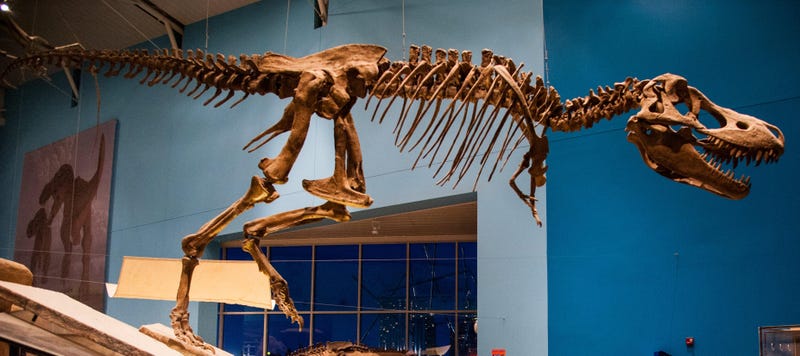
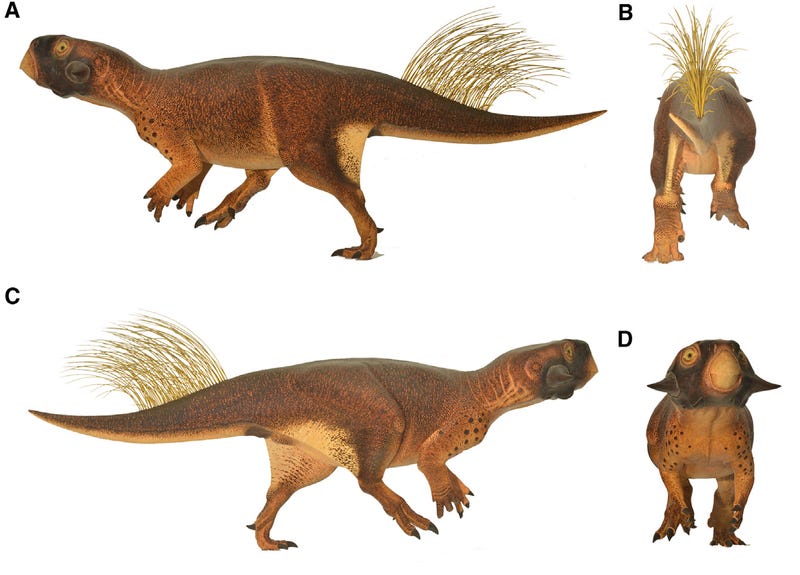
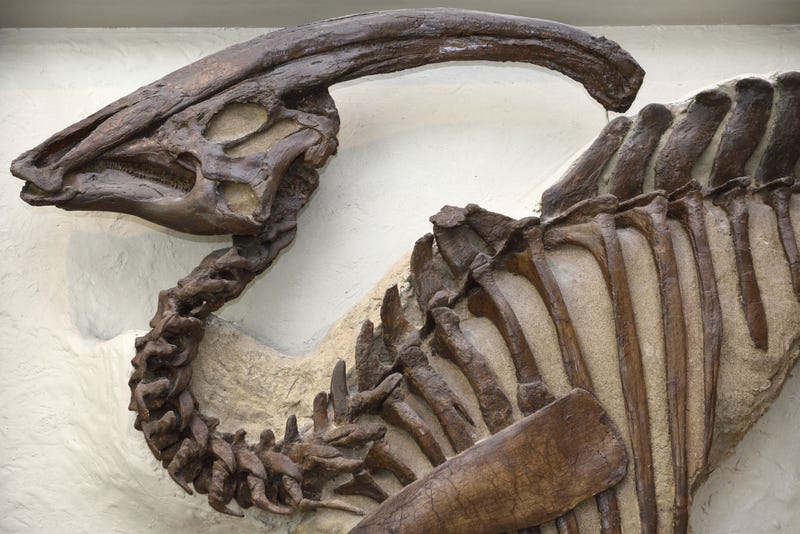
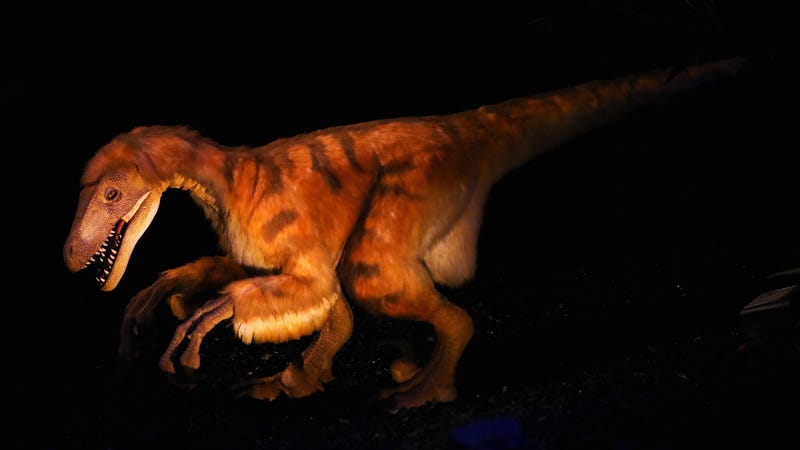
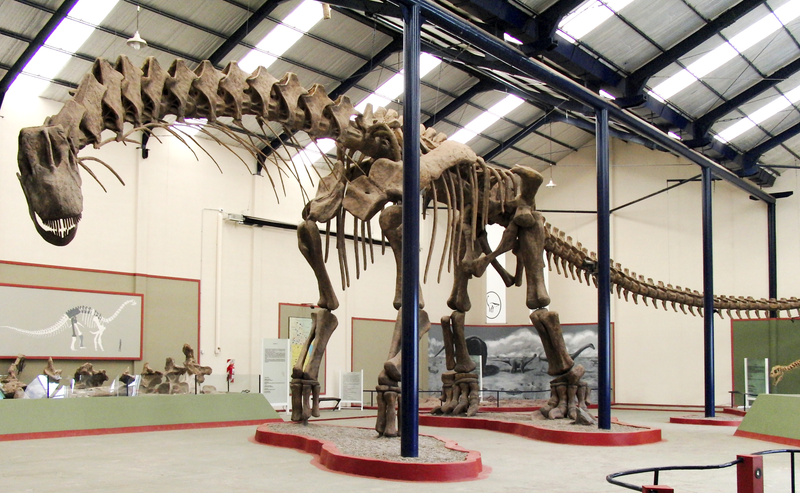
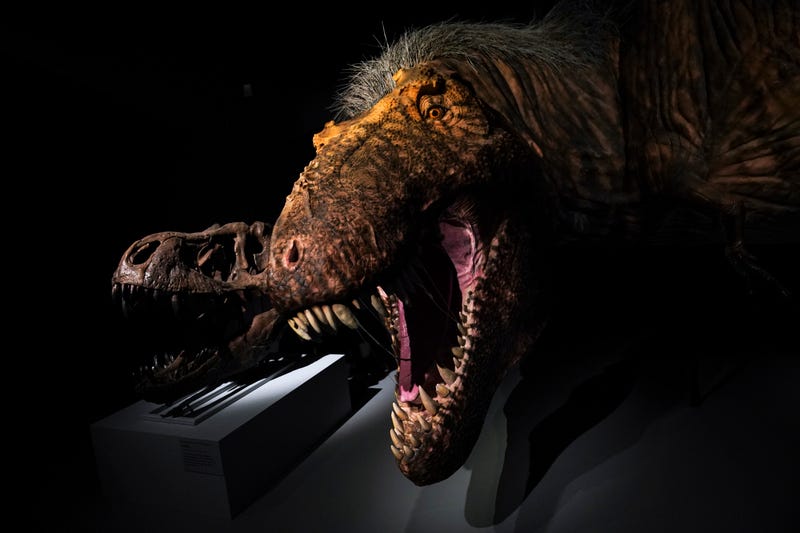
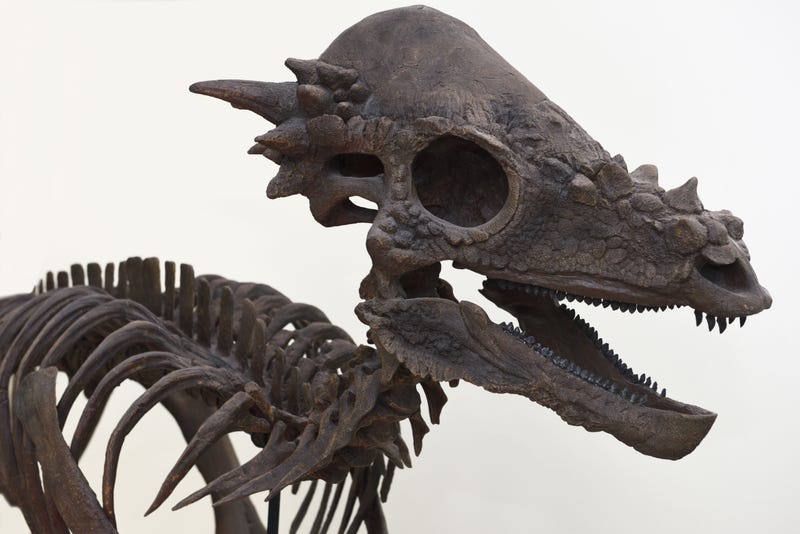
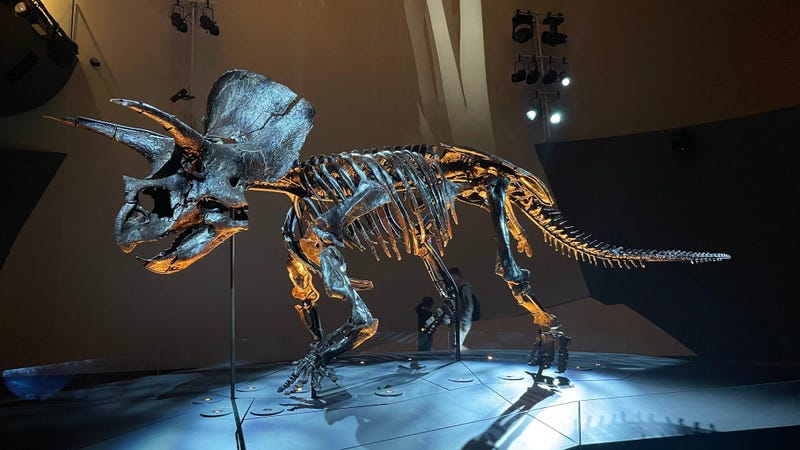
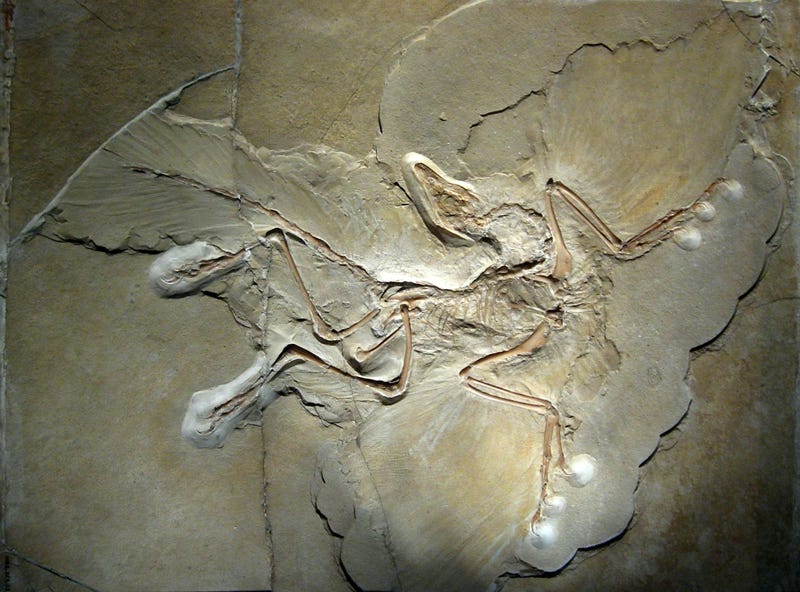
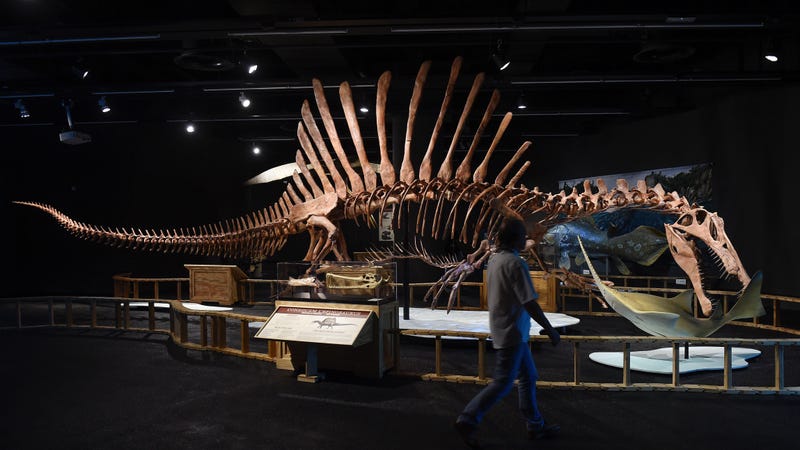
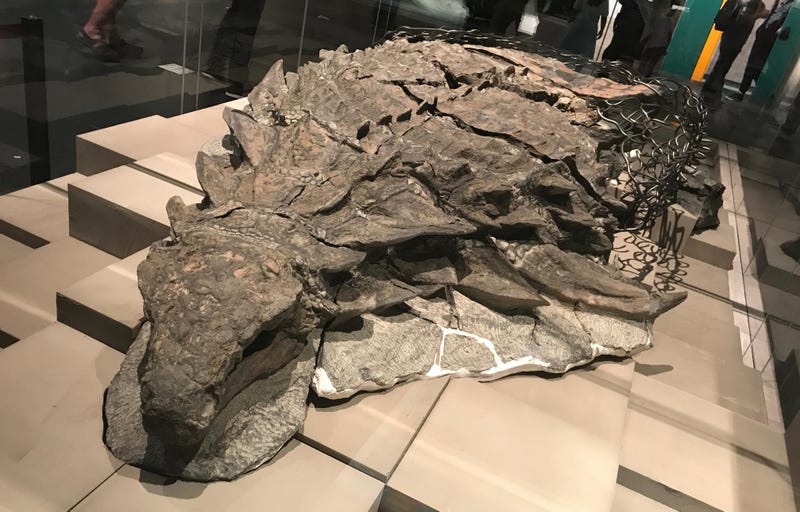
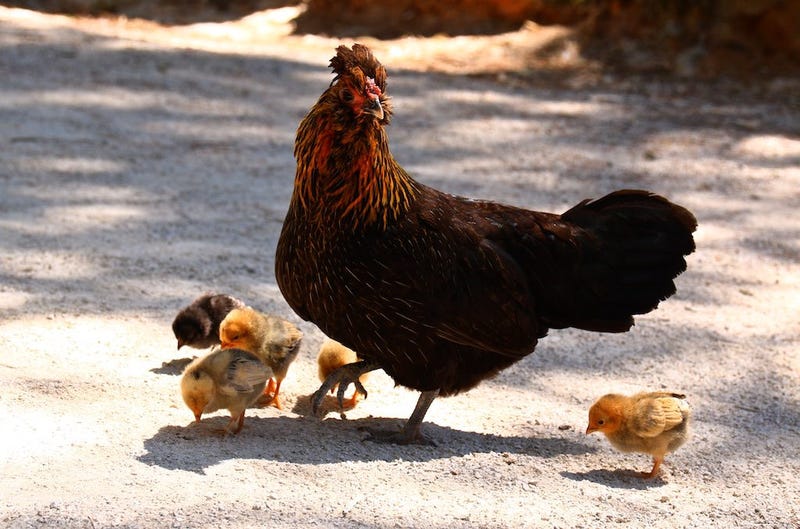
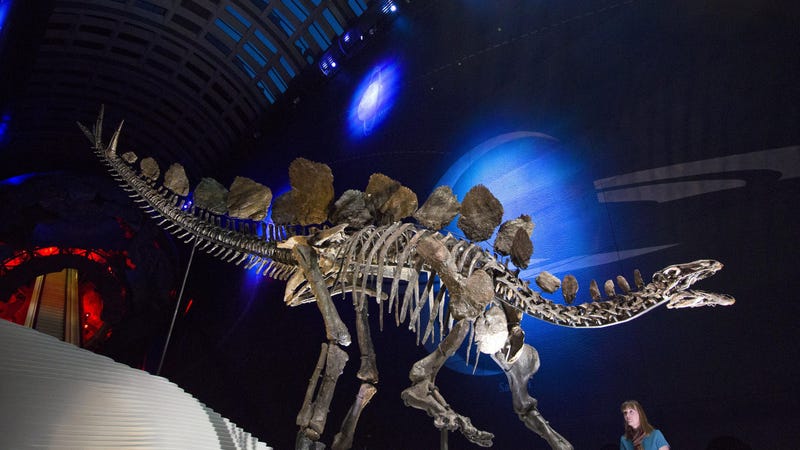




 People movements at Energy Catalyst, Iberdrola, WA govt, Jemena, NSW DCCEEW, Aula Energy, AMSL Aero, Eku Energy, AEC, Solar Citizens, North Harbour, 5B, ERAC, Sundrive.


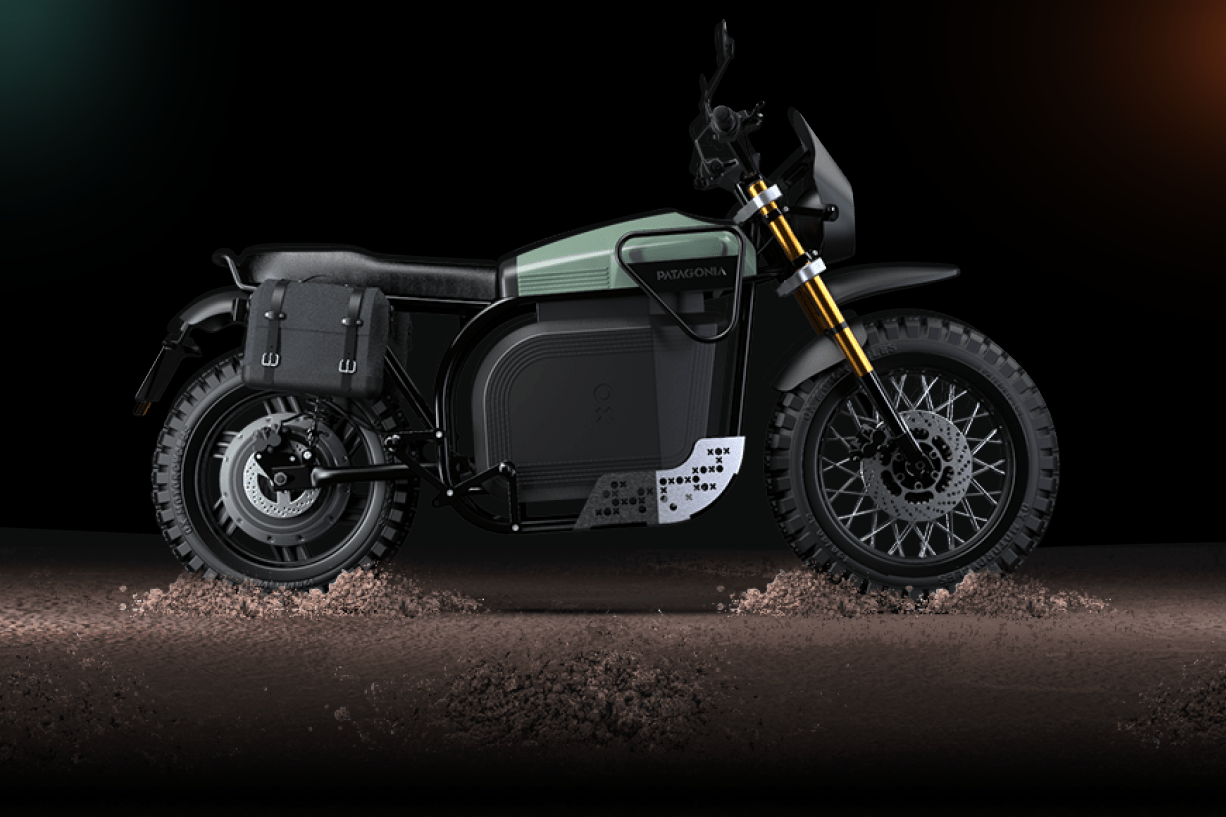






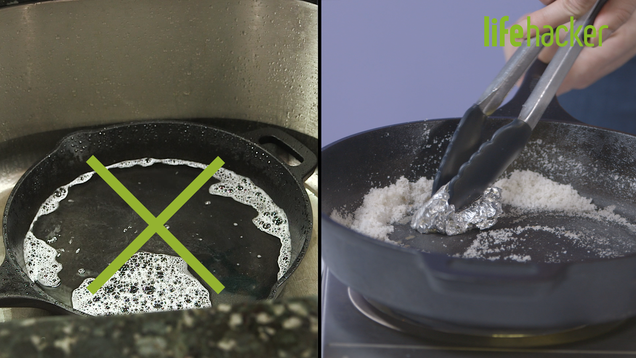

![[Image]](http://www.sjgames.com/img/newsq/illq/2019/galladoriaThumb.png)