With the leaked Supreme Court ruling indicating the court is poised to effectively overturn Roe V. Wade, you can expect a new wave of worry about the weaponization and abuse of consumer location data, as states increasingly seek to criminalize abortion — and those aiding others seeking such services.
As if on cue: Motherboard’s latest scoop indicates that data brokers have been busily collecting and selling the location data of users who visit Planned Parenthood abortion clinics, including “aggregated” data on how long visitors were at the clinic and which census block(s) they traveled from:
The company selling the data is SafeGraph. SafeGraph ultimately obtains location data from ordinary apps installed on peoples’ phones. Often app developers install code, called software development kits (SDKs), into their apps that sends users’ location data to companies in exchange for the developer receiving payment. Sometimes app users don’t know that their phone—be that via a prayer app, or a weather app—is collecting and sending location data to third parties, let alone some of the more dangerous use cases that Motherboard has reported on, including transferring data to U.S. military contractors.
Safegraph works with all manner of organizations and companies interested in tracking user movements in significant detail, including, it was also revealed this week, the CDC. Motherboard didn’t find it particularly difficult to purchase its own data trove, including recent visitors to Planned Parenthood, for $160:
SafeGraph classifies “Planned Parenthood” as a “brand” that can be tracked, and the data Motherboard purchased includes more than 600 Planned Parenthood locations in the United States. The data included a week’s worth of location data for those locations in mid-April. SafeGraph calls the location data product “Patterns.” In total, the data cost just over $160. Not all Planned Parenthood locations offer abortion services. But Motherboard verified that some facilities included in the purchased dataset do.
Again, this data can be helpful to everybody from epidemiologists to city planners. But it’s also so incredibly lucrative, we haven’t implemented much in the way of any standards as to how it can be used (as to not stifle innovation, wink wink). As a result, it’s routinely collected without user knowledge or consent, sold without much in the way of safeguards, and distributed widely across countless industries.
As we’ve noted repeatedly, telecom, tech, app, and adtech companies all really enjoy claiming this kind of granular data collection and sale is no big deal because the data being collected is “anonymized.” But studies have repeatedly made it clear that “anonymization” is a meaningless term, since users can be easily identified with just a few additional datasets.
The same was true here, with the privacy impact of aggregation and anonymization being overstated:
SafeGraph’s data is aggregated, meaning it isn’t explicitly specifying where a certain device moved to. Instead, it focuses on the movements of groups of devices. But researchers have repeatedly warned about the possibilities of unmasking individuals contained in allegedly anonymized datasets.
Sections of the SafeGraph dataset Motherboard purchased handle a very small number of devices per record, theoretically making deanonymization of those people easier. Some had just four or five devices visiting that location, with SafeGraph filtering the data by whether the person used an Android or an iOS device as well.
Safegraph didn’t want to respond to a request for comment.
Journalists have been documenting this specific threat to the safety of those seeking abortions for several years. Broader concerns about the harm of location data over-collection and sale aren’t theoretical. There’s been a parade of scandals by a wide variety of companies and services showcasing how the rampant over-collection and sale of location data causes immeasurable harm.
Scandals at Securus, LocationSmart, T-Mobile, Grindr, and others have all brutally illustrated how cellular carriers, app makers, tech companies, and location data brokers routinely collect, buy and sell your daily movement records with only a fleeting effort to ensure all of the subsequent buyers and sellers of that data adhere to basic privacy and security standards. That data is then abused by stalkers, criminals, law enforcement, and anybody with a few nickels to rub together.
While there’s often a lot of pretense to the contrary, U.S. lawmakers didn’t do anything meaningful to tackle this problem not because it’s difficult, but because a long list of industries and companies found the broken and dangerous status quo to be more profitable. And because those companies collectively lobbied a corrupt Congress into a state of perpetual dysfunction and apathy.
The check for that apathy continues to come due. And the idea that this location data won’t be abused by a surging U.S. authoritarian movement seeking to criminalize, vilify, and harass not just those seeking abortion — but those helping and caring for them — seems relatively naïve.
ProPublica is a nonprofit newsroom that investigates abuses of power. Sign up to receive our biggest stories as soon as they’re published.
If the U.S. Supreme Court does as its leaked draft opinion says and strikes down Roe v. Wade, researchers expect that in the following year, roughly 75,000 people who want, but can’t get, abortions will give birth instead.
They’ll do so in a country where pregnancy and childbirth continue to become more dangerous.
Government data released this year shows that U.S. maternal deaths increased significantly in the first year of the pandemic, going from 754 in 2019 to 861 in 2020, a 14% jump. The death rate for Black women was almost three times higher than that for white women.
The stats for 2020 were no surprise. As ProPublica detailed in 2017, the U.S. has fallen behind other wealthy nations and many less affluent ones where deaths linked to pregnancy and childbirth have plummeted over the past two decades. Deaths are only one yardstick for measuring maternal health. For every U.S. woman who dies as a result of pregnancy or childbirth, up to 70 suffer dangerous and sometimes life-threatening complications.
The landscape for maternal health post-Roe would change swiftly, and not for the better, many public health officials and experts say. Some 25 states would likely move to ban abortion, according to the Center for Reproductive Rights. A brief submitted in the case on which the court is ruling, signed by about 550 public-health and reproductive-health researchers, draws a straight line between lack of abortion access and increased risk of maternal death.
“Put simply,” the brief says, “women living in states with the most restrictive abortion policies — and thus the least abortion access — were found to be more likely to die while pregnant or shortly thereafter than women living in states with less restrictive abortion policies, regardless of state-to-state differences in poverty, race/ethnicity, and education.”
Middlebury College economics professor Caitlin Knowles Myers, whose work focuses the effects of limits on abortion access, said her research shows that in the year after the ruling, about 100,000 women seeking abortions won’t be able to get them from providers. Some may be able to obtain pills for self-managed abortions, but about three-quarters will give birth.
Those women are likely to be disproportionately poor, young, of color and concentrated in the Deep South, parts of the Midwest and some Western states, often in places where social safety nets are weakest, she said. “Overwhelmingly, it is the poorest and most vulnerable women who are the most affected.”
Dr. Katy Kozhimannil, a health policy professor who directs the University of Minnesota’s Rural Health Research Center, said the loss of abortion access will be a compounding factor in rural communities where contraceptives are hard to get and hospitals have closed or no longer have obstetrics departments.
“I think we’re going to see a lot more emergency obstetric needs in rural communities that are not at all equipped to handle them,” she said.
Many of the states with trigger laws that will outlaw abortion once the Supreme Court has ruled have larger rural populations and a higher percentage of Black and Indigenous residents in those areas, Kozhimannil added.
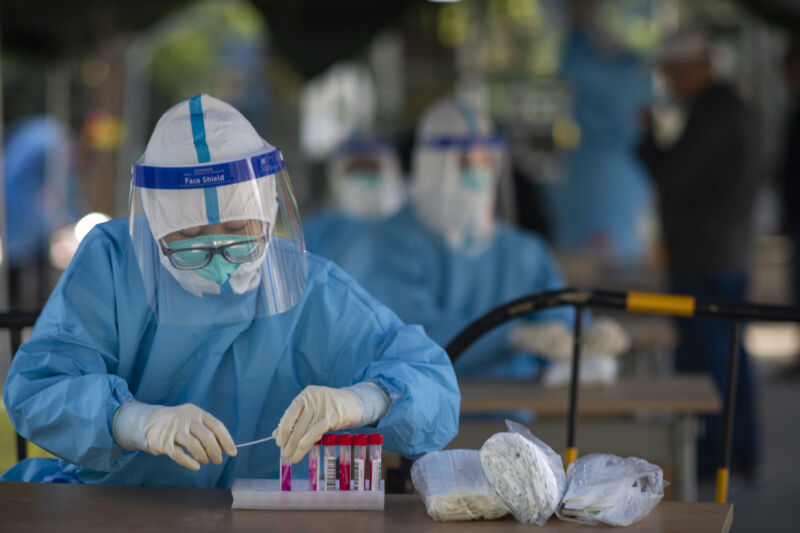

Enlarge / A medical worker arranges nucleic acid samples at a makeshift nucleic acid testing site on May 3, 2022, in Beijing, China. (credit: Getty | Pang Songgang)
The omicron subvariant BA.2.12.1 is poised to become dominant in the US, currently accounting for an estimated 36.5 percent of all US SARS-CoV-2 cases, according to the latest estimates released Tuesday by the Centers for Disease Control and Prevention.
The subvariant's ascent is the latest rapid succession of omicron subvariants, from the sky-scraping peak of cases from the initial omicron subvariant BA.1 in January, to the current bump driven by the subvariant BA.2, which achieved dominance in March. As before, the reason for the viral usurping is that omicron subvariants continue to evolve advantages: BA.2.12.1 has a transmission advantage over BA.2, which had a transmission advantage over BA.1, which had a significant advantage over delta.
The imminent reign of BA.2.12.1 raises concern for yet another wave of infections. It also calls into question the effectiveness of future omicron-specific vaccines against symptomatic infections.
Senate Majority Leader Chuck Schumer speaks about the leaked Supreme Court draft decision to overturn Roe v. Wade as Democratic Senate members listen on the steps of the U.S. Capitol May 3, 2022, in Washington, DC. | Alex Wong/Getty Images
Limited by the filibuster and conservative members of Congress, lawmakers are zeroing on holding the Senate as one way to defend reproductive rights.
Whether or not the draft copy of a Supreme Court opinion published by Politico Monday night ends up being the final victory conservatives have sought in overturning Roe v. Wade, the pressure now shifts to elected Democrats to do something — anything — to protect abortion rights. They have few options in Congress, but Senate Democrats are preparing to take their pro-abortion rights message to voters. Party officials and elected Democrats told Vox on Tuesday they are planning to make abortion, and protecting reproductive rights, a central part of their efforts to hold on to their Senate majority — and contrast the party’s support of abortion rights with Republican efforts to restrict abortions, regardless of whether the Supreme Court strikes down Roe.
The Politico report Monday night caught many lawmakers by surprise. The decision reached them through texts and phone calls at home and on the road and, in one case, halted the conversation as a group of bipartisan senators dined. Sen. Alex Padilla (D-CA), who was at that dinner, said he saw a news alert on Sen. Chris Coons’s (D-DE) phone. “It got quiet pretty quickly,” Padilla said.
Conservative Justice Samuel Alito’s draft opinion made clear what had long been expected on Capitol Hill: that the high court seems poised to overrule Roe and Planned Parenthood v. Casey, the two landmark cases that affirmed a constitutional right to an abortion.
But suddenly, the clock had sped up.
“It was almost impossible to fathom,” Sen. Tina Smith (D-MN) told Vox about reading the draft. Smith is a former Minnesota Planned Parenthood executive, who has a long track record of advocating for abortion access. Justice Alito was “essentially saying to all of those women, ‘I know better than you, what’s best for you,’” she said.
But that’s the kind of message that Smith and other Democratic senators think voters need to be hearing right now. Smith said plainly that Democrats do not have the votes in the Senate to codify abortion rights as law (even if they were to abolish the filibuster, which they also don’t have the votes to do). But electing pro-abortion rights Democrats at the local, state, and national level could provide some safeguards against further attacks on reproductive rights, like the strategy anti-abortion activists are reportedly preparing to push for a nationwide abortion ban.
“This is a moment of accountability,” Smith said. “But what we have to do now is to organize. We have to elect more Democrats. We have to take this case to voters in every state in the country and help them understand the stakes.”
Those stakes extend beyond Roe, since the draft opinion suggests an opening for conservative attacks on other protections, like same-sex marriage, and rights rooted in the right to privacy.
This portion of Alito’s opinion striking down the right to abortion (about Due Process rights under the 14th Amendment) would also apply to the right to contraceptives, interracial marriage, sexual freedom, same sex marriage. All are at risk if 4 justices join Alito. Stunning. pic.twitter.com/IO041UGJeV
Alito's draft opinion explicitly criticizes Lawrence v. Texas (legalizing sodomy) and Obergefell v. Hodges (legalizing same-sex marriage). He says that, like abortion, these decisions protect phony rights that are not "deeply rooted in history." https://t.co/4690k0KG1Fpic.twitter.com/urF7A02INU
“If this draft opinion becomes the final ruling of the court, it has far-reaching implications for family planning, the right to use contraception, and the right of LGBTQ people to love who they choose to love,” Sen. Catherine Cortez Masto (D-NV) said.
Cortez Masto, who is running for reelection in a state where President Joe Biden underperformed in 2020, sees abortion rights as a galvanizing issue for Nevada voters and is making it a central part of her campaign. (She was preparing remarks to be delivered at a gala for the pro-abortion rights group EMILY’S List when she learned about the draft opinion.) In 1990, the state reaffirmed the right to an abortion in a ballot measure that passed with the support of more than 60 percent of voters — support that has only grown since then, according to recent surveys. Together, these factors could lend her additional support, which she needs as an incumbent with low polling numbers in a midterm year.
Smith sees a similar picture in Minnesota, where Democrats are defending the state House of Representatives (where they hold a four-seat majority) and governorship. Though the state constitution protects abortion rights through the right to privacy, Smith said she worries that could change under Republican control. “I will be doing everything I can to make sure that candidates who support this fundamental freedom and autonomy for women around abortion rights win those elections,” she said.
That strategy to bring abortion rights to the front of Senate campaigns may unfold in battleground states like Arizona, Nevada, and New Hampshire, where support for abortion rights remains high, and in other states where Democratic incumbents are already vulnerable. The ambivalent reaction of many Republican lawmakers and conservative figures on Tuesday also suggests that the decision might come back to haunt the GOP.
But not all Democrats are united in vocal support for abortion rights, or on the same page of a unified Democratic strategy to campaign on and codify Roe. House Democratic leadership is still backing an anti-abortion Democrat’s reelection effort in Texas, and Sens. Joe Manchin (WV) and Kyrsten Sinema (AZ) have reaffirmed their commitment to the filibuster as more progressive members of their caucus like Sen. Elizabeth Warren (D-MA) have called for an exception to the rule to protect abortion rights. Manchin and Sen. Bob Casey (D-PA) have also signaled opposition to codifying Roe, given their anti-abortion stances. Those obstacles, and an absence of a plan outside of winning elections, could also dampen the energy of the most activist wing of the Democratic Party, including young people frustrated by a seemingly disconnected Democratic leadership.
Enlarge / Kindles still won't directly open ePub files, but there's one less hoop to jump through now. (credit: Andrew Cunningham)
Amazon's Kindles are some of the best dedicated e-readers you can buy, but a longstanding criticism from users of DRM-free books from non-Amazon sources is that they don't support the open ePub standard. That has changed at some point in the recent past, as spotted by Good E-Reader: Amazon's Kindle Personal Documents Service will now accept ePub files sent to your device's Send to Kindle email address, the same way it currently handles PDF files, Word documents, and other image and text files.
Kindles still don't natively support sideloading ePub files—the Send to Kindle service converts the documents to AZW3 files, something users could already do themselves using a variety of free tools. But official support from Amazon removes a step from the process and will help users avoid shady ad-riddled third-party conversion sites. We've tested it with an 11th-generation Kindle Paperwhite running the latest version of the Kindle software, and the conversion process seemed to go off without a hitch.
If using the Send to Kindle email address is still too onerous, Amazon's support document says it will add the same ePub conversion support to its Send to Kindle apps at some point in late 2022. Amazon also says that it will discontinue Send to Kindle support for MOBI files in late 2022, since those files "won't support the newest Kindle features for documents." MOBI files already on your device will remain there and will continue to work as they currently do.
Early Monday morning, staff arrived at the Bird House at Smithsonian’s National Zoo to find 25 flamingos dead. They spotted a fox in the outdoor flamingo yard, but it escaped. The dead flamingos were part of a flock of 74 American flamingos. A Northern pintail duck was also killed, the zoo said in a press […]
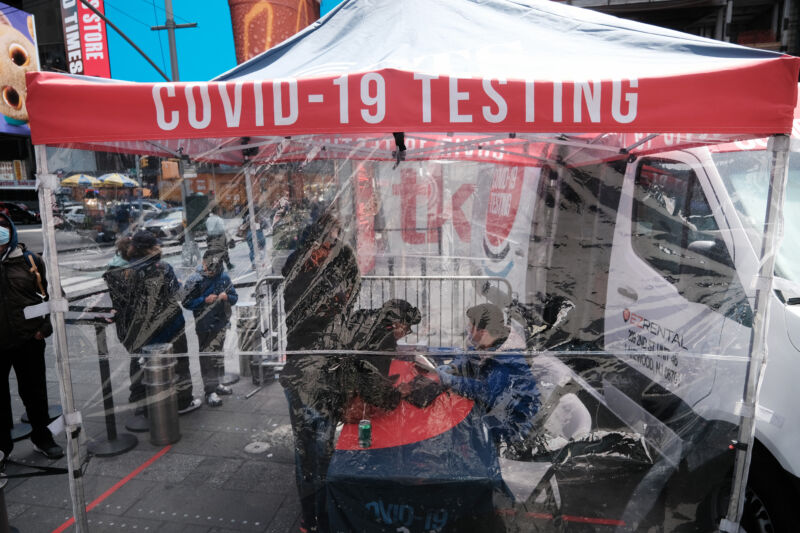
Enlarge / A COVID-19 testing tent stands in Times Square on April 27, 2022, in New York City. (credit: Getty | Spencer Platt)
Enduring an initial omicron infection may not spare you from omicron's subvariants, according to preliminary data from South Africa.
The country is currently at the start of a new wave of infections, primarily driven by two omicron coronavirus subvariants, BA.4 and BA.5. Despite a towering wave of cases from the initial BA.1 omicron variant in December that infected a large chunk of the country, new omicron cases increased 259 percent in the last two weeks, according to data-tracking by The New York Times. Hospitalizations are also up, and deaths have increased by 18 percent.
Preliminary data posted online last week helps explain why cases are once again surging—the BA.4 and BA.5 omicron subvariants can evade neutralizing antibodies generated by infections from BA.1. For the study, led by virologist Alex Sigal of the Africa Health Research Institute, researchers pitted neutralization antibodies from people infected with BA.1 up against BA.4 and BA.5 in a lab. They had samples from 24 unvaccinated people infected with BA.1 and 15 vaccinated people who had also had a BA.1 infection (eight people were vaccinated with the Pfizer/BioNTech vaccine, and seven had the Johnson & Johnson vaccine).
Sixteen people who took part in the trucker convoy protests around Washington earlier this year filed suit against the DC government Monday, claiming that police violated their First Amendment rights by blocking highway exits. The blockades were highly effective, the plaintiffs argue: They say people associated with the People’s Convoy were turned away from entering […]
After its extended protest failed to accomplish anything earlier this spring, the People’s Convoy appears set to return to the Washington area, according to videos posted on Facebook over the weekend. It’s still not clear what the convoy’s actionable complaints are or what they hope to accomplish during a second trip to the DC area. David […]
Enlarge / Liver lesions in patient with chronic active hepatitis C. (credit: Getty | BSIP)
The US Centers for Disease Control and Prevention has ruled out the pandemic coronavirus, SARS-CoV-2, as a possible cause of the puzzling, international outbreak of severe hepatitis (liver inflammation) in children, according to a statement released Friday.
The outbreak has sickened more than 170 children in more than a dozen countries in recent months, with case counts ticking up by the day. Around 10 percent of the children—mostly under the age of 10—have required liver transplants. The World Health Organization has reported one death.
In the US, officials in at least five states have reported at least 25 confirmed or possible cases: Alabama (9), North Carolina (2), Wisconsin (4), Illinois (3), and California (7). At least three of the US cases have required liver transplants and officials in Wisconsin are investigating a possible death linked to the outbreak.
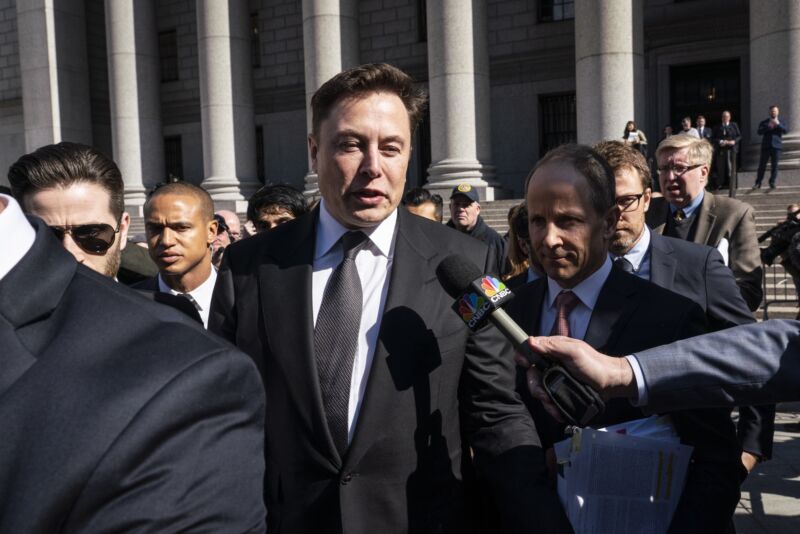
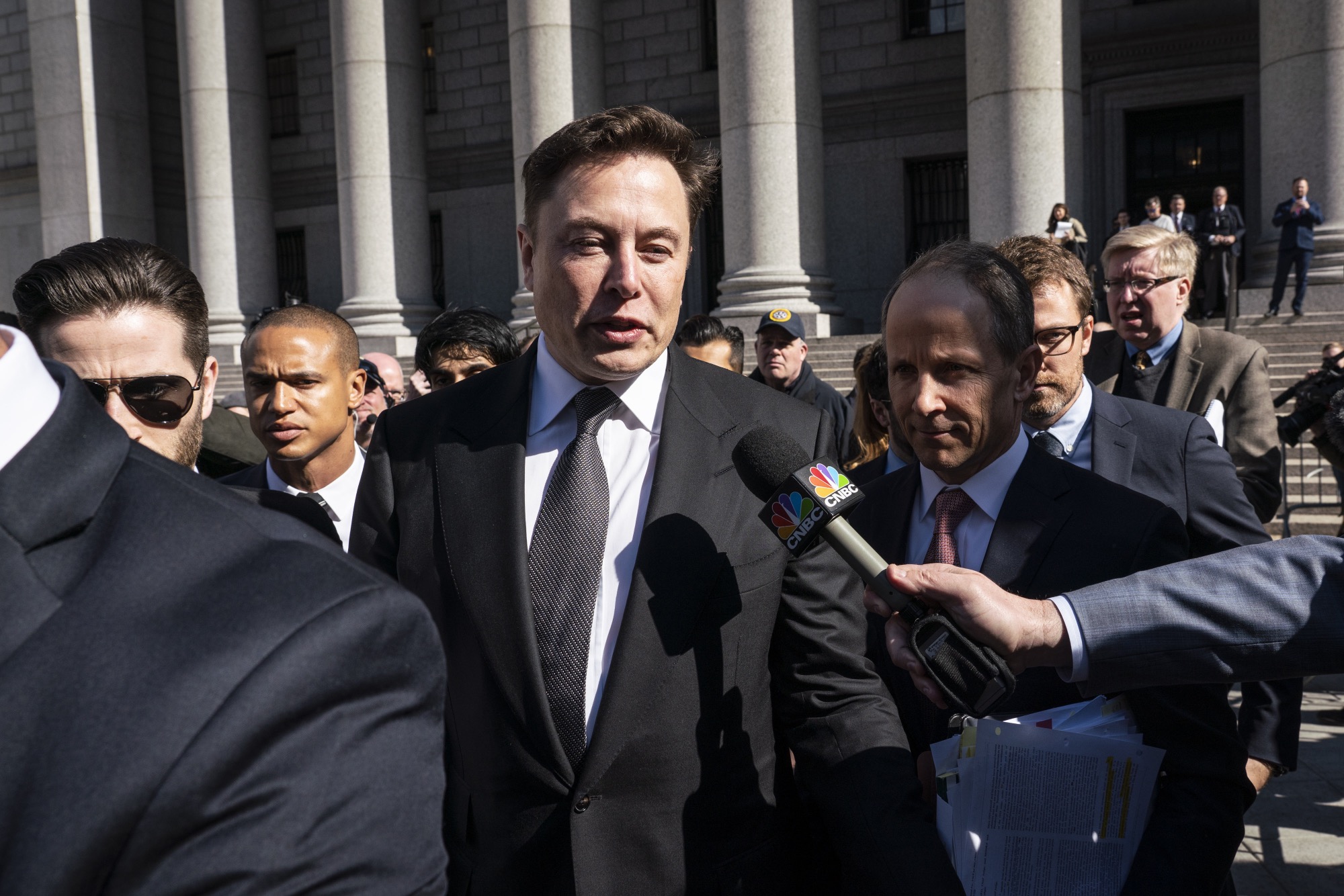
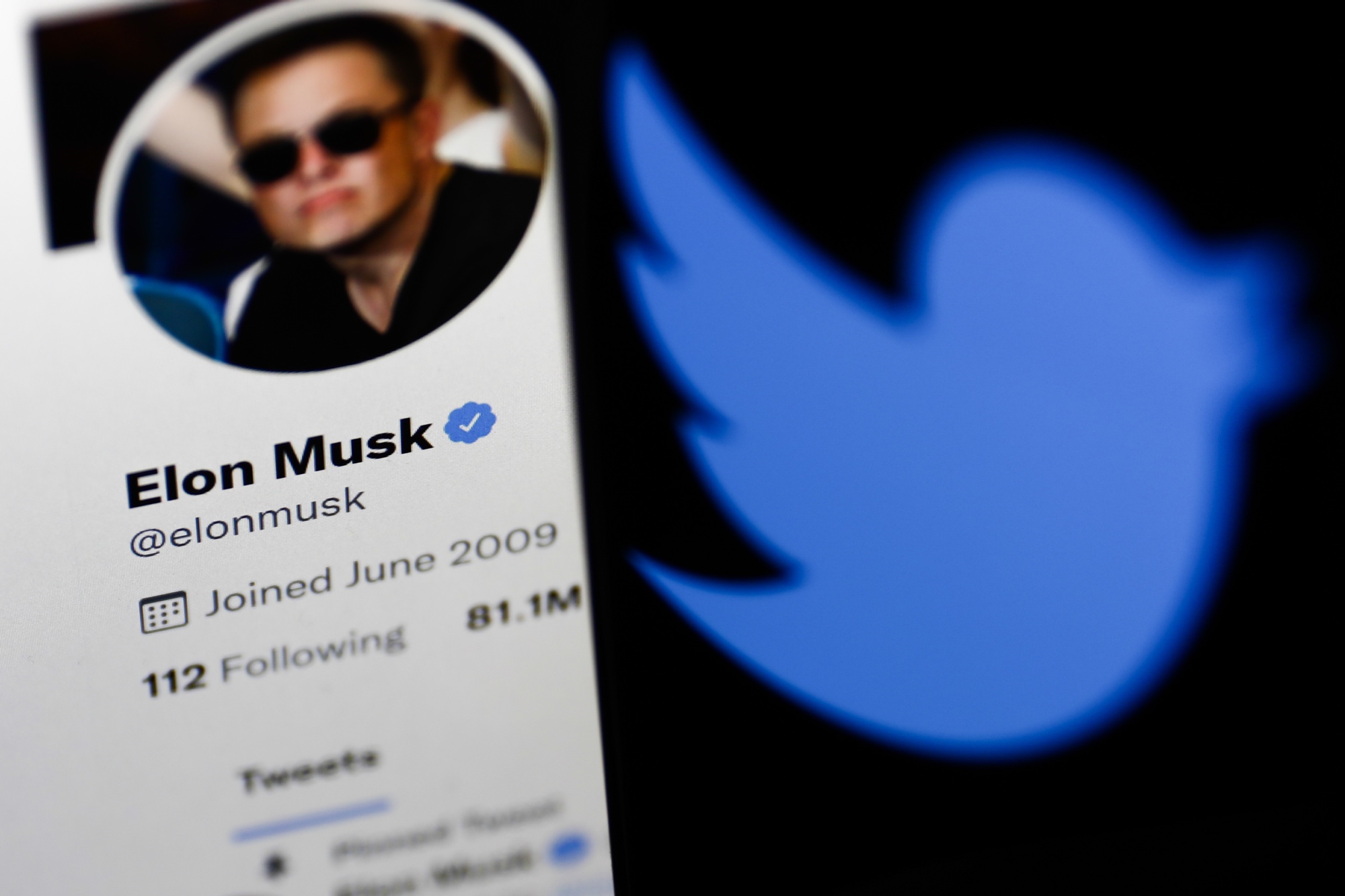
Enlarge / Elon Musk talks to members of the media while leaving federal court in New York on Thursday, April 4, 2019.
A federal judge has rejected Tesla CEO Elon Musk's attempt to get out of a settlement with the Securities and Exchange Commission that requires Tesla to impose limits on Musk's social media statements.
The judge also rejected Musk's request to quash portions of an SEC subpoena that seeks documents related to whether he got pre-approval before posting a recent tweet about Tesla stock sales. The ruling against Musk was issued Wednesday by Judge Lewis Liman in US District Court for the Southern District of New York.
"Musk was not forced to enter into the consent decree" with the SEC, and he "cannot now seek to retract the agreement he knowingly and willingly entered by simply bemoaning that he felt like he had to agree to it at the time but now—once the specter of the litigation is a distant memory and his company has become, in his estimation, all but invincible—wishes that he had not," Liman wrote. The judge also called Musk's claim that the SEC is harassing him "meritless."
Enlarge / In the case of the samoyed, selection for physical characteristics produced a dog that sure looks happy. (credit: Zhao Hui)
Many dog breeds are purely about appearance—think poodles and the Pekingese. But plenty of other breeds, like racing greyhounds, are devoted to specific tasks. For many of these tasks, physical appearance isn't enough; behavior also matters, like herding by sheepdog breeds or fetching by various retrievers.
It's not surprising that many people ascribe these behaviors—and a wide variety of other, less useful ones—to their dog's breed and its underlying genetics. Now, a large team of US-based researchers has looked into whether this belief is accurate. And, with a few exceptions, they find that it's not. With a huge panel of volunteer dog owners, they show that the genetics of dog behavior is built from lots of small, weak influences, and every breed seems to have some members that just don't behave as we expect.
Dogs, meet Darwin
The work is based on a citizen science project called Darwin's Ark. Participants were asked to give details about their dog, including whether it belonged to an established breed (either certified or inferred). They were also asked to fill out short surveys that collectively asked about 117 different behaviors. Overall, they obtained data on some 18,000 dogs, about half of them purebreds.
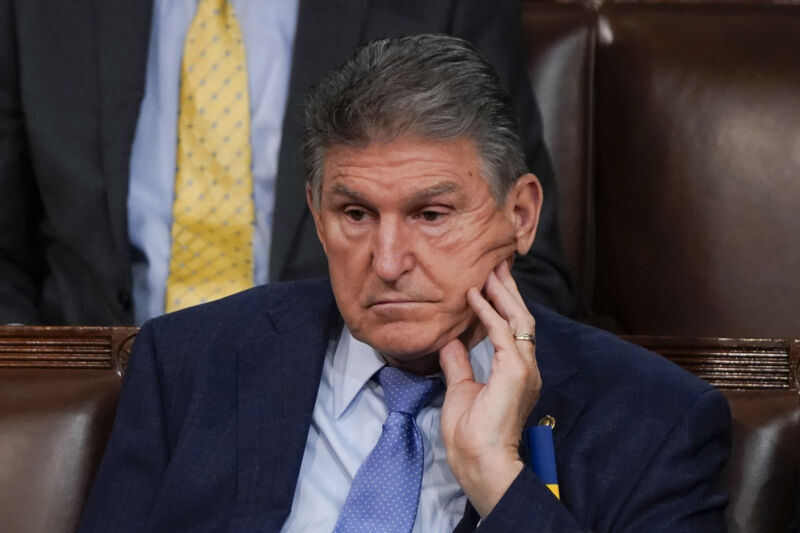
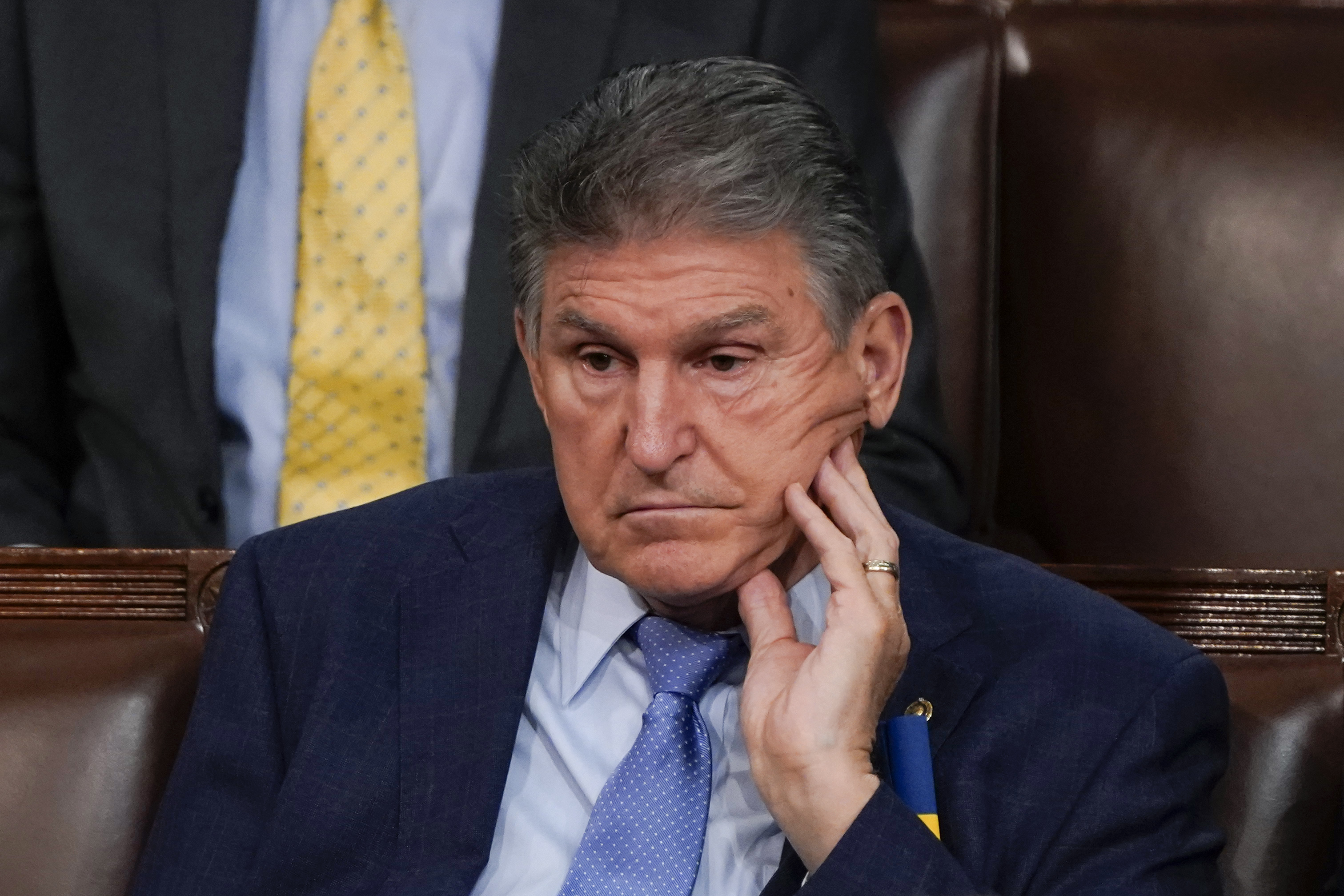
Enlarge / US Senator Joe Manchin likes the coal industry, doesn't like electric vehicles. (credit: J. Scott Applewhite-Pool/Getty Images)
Senator Joe Manchin called federal tax credits for electric vehicles "ludicrous" in a Senate hearing on Thursday. The West Virginia politician, who continues to make millions from the coal industry, has been a regular critic of subsidies for EVs, which have played a key role in the Democratic Party's plan to decarbonize the transport sector.
Since 2009, the US has used federal tax credits as a way to offset the higher price of EVs thanks to their battery packs.
Currently, the credit is for any plug-in vehicle (both battery EVs and plug-in hybrid EVs) with at least 5 kWh of battery capacity and ranges from $2,917 to $7,500, depending on the exact kWh total. But it's a credit, not a rebate, so to receive the full $7,500, an EV buyer has to have at least $7,500 in tax liability that year. The tax credit also sunsets once a car manufacturer has sold 200,000 plug-in vehicles, although, so far, only Tesla and General Motors have crossed that threshold.
First announced in November, Apple is now selling and renting parts to customers who want to repair their iPhones.
In a blog post, Apple describes the program, which closely matches what was previously announced. You can now visit an online "Self Service Repair Store" to read repair manuals and order tools and ports. The store is only available in the United States for now, but it's coming to other countries later this year. The first additional countries will be in Europe, Apple says.
The store offers more than 200 parts and tools. Apple says the parts are the same as those used in Apple's network of authorized repair providers.
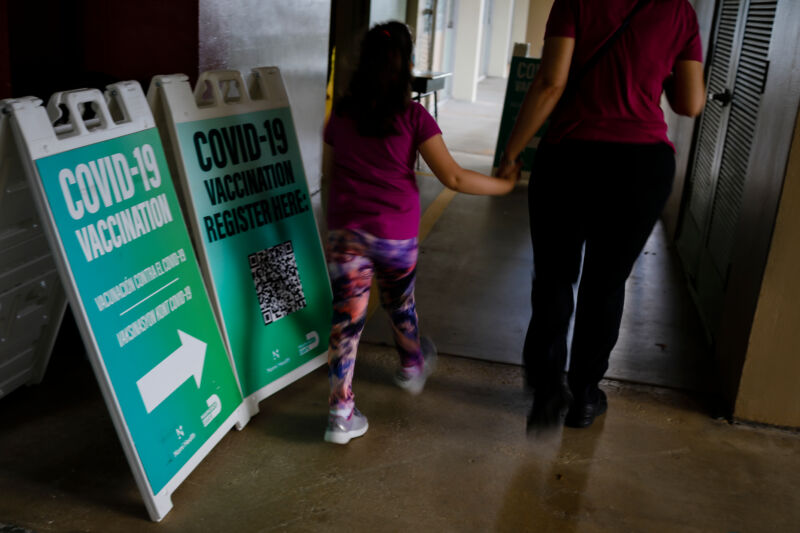
In a move highly anticipated by parents the country over, Moderna announced Thursday that it has requested FDA authorization for its two-dose COVID-19 vaccines for children 6 months to 2 years, and 2 years to under 6 years.
If the Food and Drug Administration issues an emergency use authorization (EUA) for the vaccines, they will be the first such vaccines available to the age groups in the now nearly two-and-a-half-year-long pandemic. Parents of young, vaccine-ineligible children have been anxiously awaiting the availability of such vaccines, particularly as much of the country tries to move on from the pandemic even as the number of cases of the extremely contagious omicron subvariants continue to tick upward.
"We are proud to share that we have initiated our EUA submission for authorization for our COVID-19 vaccine for young children," Moderna CEO Stéphane Bancel said in a statement Thursday morning. "We believe mRNA-1273 [the COVID-19 vaccine] will be able to safely protect these children against SARS-CoV-2, which is so important in our continued fight against COVID-19 and will be especially welcomed by parents and caregivers."
Hoping to bring what he’s called a border crisis to DC’s doorstep, Texas Governor Greg Abbott began to send migrants to the District, via a 33-hour bus trip, in April. And he hasn’t stopped since. In fact, Arizona Governor Doug Ducey joined in on the plan in May. So far, roughly 100 buses have pulled up […]
Children in the age groups of 0 to 11 and 12 to 17 have the highest infection rates and saw the most significant increases during the omicron wave compared with any other age group. About a third of all children in the country were newly infected during the omicron wave. Together, the data showcases just how poor of a job the country has done at shielding children—including those not yet eligible for vaccination—from the pandemic virus.
The new data dovetails with a study published by the CDC in February, which found that the peak rate of pediatric hospitalizations during the omicron wave was four times higher than the peak seen during the delta wave last fall. The largest increase was seen in children ages 0 to 4, who had a peak hospitalization rate five times higher than the peak amid delta.
Twitter's board of directors is reportedly on the verge of accepting Elon Musk's offer to buy the company, according to news reports.
"Twitter is poised to agree [to] a sale to Elon Musk for around $43 billion in cash" and "may announce the $54.20-per-share deal later on Monday once its board has met to recommend the transaction to Twitter shareholders," Reuters wrote in a story with the headline, "Twitter set to accept Musk's original $43 billion offer." Reuters cited "people familiar with the matter."
The Wall Street Journal reported that "Twitter is in advanced discussions to sell itself to Elon Musk and could finalize a deal Monday," after "the two sides worked through the night to hash out a deal." Bloomberg similarly wrote that Twitter and Musk are "in the final stretch of negotiations... and could reach an agreement as soon as Monday if negotiations go smoothly." Bloomberg also wrote that "the situation is fluid, and talks could drag on longer or fall apart."
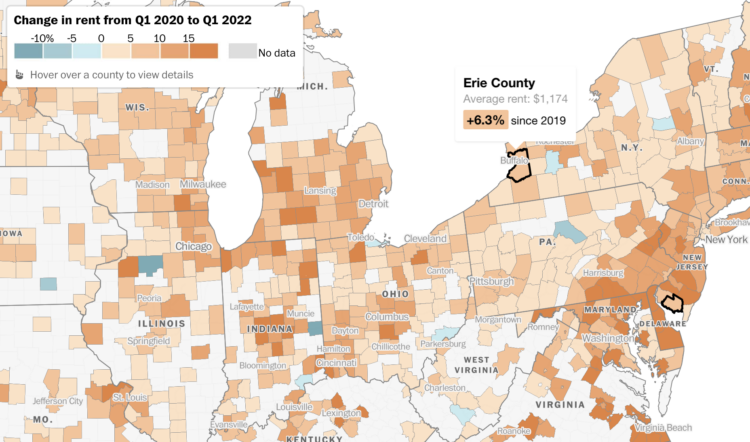
Rent increased pretty much everywhere in the United States over the past year. Abha Bhattarai, Chris Alcantara and Andrew Van Dam for The Washington Post use a map to show you by how much:
Nationally, rents rose a record 11.3 percent last year, according to real estate research firm CoStar Group. That fast pace of growth remained elevated in the first months of 2022, as many parts of the country continued to notch double-digit jumps in rent prices.
Families live in tents at a shelter for refugee migrants from Central and South American countries in Tijuana, Mexico, on April 9. | Patrick T. Fallon/AFP via Getty Images
Elected presidents, and not unelected judges, should decide America’s foreign policy.
Elections have consequences. Or at least, they are supposed to.
When the American people voted to replace former President Donald Trump with now-President Joe Biden, that should have meant that many of Trump’s policies — including policies governing the US-Mexico border — could be abandoned and replaced by policies supported by Democrats. That is, after all, how democratic republics work.
But, nearly a year and a half into Biden’s presidency, a Trump immigration policy known as “Remain in Mexico” is still in effect. It’s in effect despite the fact that the Biden administration has twice taken the legal steps necessary to rescind it — or at least, the steps that were necessary before one of Trump’s judges got involved.
The fate of this Remain in Mexico policy is now before the Supreme Court in Biden v. Texas, a case that the Court will hear on Tuesday, April 26.
“Remain in Mexico” is the colloquial name for Trump’s Migrant Protection Protocols, which require many immigrants who seek asylum in the United States to stay in Mexico while they wait for a hearing. The Biden administration first announced that it was suspending this program in a June 1, 2021 memo from Secretary of Homeland Security Alejandro Mayorkas.
Mayorkas’s June memo argued that Remain in Mexico drained limited border security resources, required diplomatic negotiations with Mexican officials that “draws away from other elements that necessarily must be more central to the bilateral relationship,” and forced many migrants to live in squalid conditions without “stable access to housing, income, and safety.”
Kacsmaryk is a Trump judge and former lawyer for a Christian conservative law firm. Before his elevation to the bench, he labeled being transgender a “mental disorder,” claimed that gay people are “disordered,” and denounced what he called a “sexual revolution.” In August of 2021, he ordered the Biden administration to reinstate Remain in Mexico.
Kacsmaryk’s opinion rested on the improbable claim that a 1996 immigration law required the federal government to implement an even stricter version of Remain in Mexico than the one that was in effect under Trump — meaning that, if Kacsmaryk is correct, every president since Bill Clinton violated the law, and somehow no one noticed until 2021.
Nevertheless, a week after Kacsmaryk’s decision, the Supreme Court rejected the Biden administration request to block it — over the dissent of the GOP-controlled Court’s three Democrats. The Supreme Court’s order, however, was narrow. It did not weigh in on Kacsmaryk’s creative reading of federal immigration law, and instead faulted Mayorkas for not adequately explaining why the Biden administration chose to end Trump’s policy.
Since then, two significant things have happened. One is that Mayorkas issued a second memo in October, which offers a fuller explanation of the administration’s decision to end Remain in Mexico (the June memo was just seven pages; the new memo is 39 pages). The second is that a Republican panel of appeals court judges embraced Kacsmaryk’s reading of federal immigration law, and effectively declared Mayorkas’s October memo a nullity.
And so it’s now up to the Supreme Court to untangle this mess, and the stakes are enormous. Biden v. Texas will not simply determine whether the Remain in Mexico program can end. It could also allow Trump’s judges to entrench one of Trump’s policies — even when the American people voted to reject Trump.
Kacsmaryk’s reading of federal immigration law is egregiously wrong
The crux of Kacsmaryk’s opinion is that federal immigration law only gives “the government two options vis-à-vis aliens seeking asylum: 1) mandatory detention; or 2) return to a contiguous territory.” That is, when a person arrives at the Mexican border seeking asylum, the government must either lock that person up, or require them to stay in Mexico until their asylum case is resolved.
Under this incorrect reading of immigration law, no president — including Donald Trump — has ever had a border policy that complies with the 1996 law. Trump’s version of the Remain in Mexico policy exempted non-Spanish speakers. But Kacsmaryk’s reading of federal law would not permit such exceptions.
Many problems with Kacsmaryk’s opinion should be obvious to anyone who has actually read the relevant statutes. Federal law explicitly gives the government many options when deciding how to handle a particular asylum seeker, and detention or a temporary stay in Mexico are only two of those options.
One statute, for example, provides that the government may grant parole to someone seeking admission to the United States “for urgent humanitarian reasons or significant public benefit.” Parole permits the immigrant to remain in the United States while their case is pending. Another statute permits an immigrant to be released on “bond of at least $1,500.”
Kacsmaryk placed a great deal of weight on a provision of federal law which states that many asylum seekers “shall be detained for further consideration of the application for asylum,” and another provision saying that immigrants arriving from Mexico or Canada “may” be returned to that country while their case is pending. This was the basis for Kacsmaryk’s conclusion that the government only has two options.
But even setting aside the fact that federal law gives the government other alternatives, such as parole or bond, the government still has a a fifth option that Kacsmaryk disregarded: nonenforcement. That’s rooted in a doctrine known as “prosecutorial discretion,” which permits the government to decide how it uses limited law enforcement resources.
The idea behind prosecutorial discretion is that law enforcement officers, prosecutors, and similar officials do not have sufficient resources to target literally every single violation of the law — imagine how difficult it would be, for example, for police to issue a ticket to every single person who drives even a single mile per hour over the speed limit — so they must have discretion to decide when to let things go.
If you’ve ever been pulled over and then let off with a warning, then congratulations! You’ve benefited from prosecutorial discretion.
As a general rule, courts should not second-guess these decisions not to enforce a particular law against a particular individual. As the Supreme Court held in Heckler v. Chaney(1985), “an agency’s decision not to take enforcement action should be presumed immune from judicial review.” This presumption is especially strong in the immigration context. The Court explained in Arizona v. United States (2012) that “a principal feature of the removal system is the broad discretion exercised by immigration officials.”
Indeed, the Court has maintained for more than a century that law enforcement officials retain this broad discretion even when faced with a statute that uses mandatory language — such as the statute Kacsmaryk relied on, which provides that certain asylum seekers “shall be detained.” Hence the Court’s holding in Railroad Company v. Hecht (1877) that “as against the government, the word ‘shall,’ when used in statutes, is to be construed as ‘may,’ unless a contrary intention is manifest.”
All of which is a long way of saying that Kacsmaryk’s reading of federal law is so clearly wrong that it’s hard not to attribute his decision either to incompetence or bad faith.
The outcome of the Texas case is likely to turn on a paperwork issue
The Supreme Court’s decision last August to allow Kacsmaryk’s decision to temporarily remain in effect was genuinely shocking. That decision effectively forced the United States government to approach the Mexican government and try to strike a deal reinstating a policy that President Biden opposes — because Mexico had to agree to let asylum seekers remain in that country while their cases are pending in the United States.
Judges, the Supreme Court warned in Kiobel v. Royal Dutch Petroleum Co. (2013), should be “particularly wary of impinging on the discretion of the Legislative and Executive Branches in managing foreign affairs.” But the Court abandoned this respect for the democratic branches when it ordered an elected president to bow to the foreign policy preferences of a Trump judge.
The Supreme Court’s August decision, however, was only temporary. And it rested on narrow grounds. When a federal agency changes a policy, it typically must provide an explanation of why it did so. And a majority of the justices determined that Mayorkas’s June memo did not provide a sufficient explanation.
In theory, this should be an easy problem to fix. The Supreme Court did not rule in August that Biden could never end the Remain in Mexico program, as Kacsmaryk effectively did. It simply held that Mayorkas must produce a new memo offering a more fulsome explanation, which Mayorkas did in October.
But then the case reached the United States Court of Appeals for the Fifth Circuit, a court dominated by Trump appointees and other right-wing Republicans who think similarly to Kacsmaryk. And a Republican panel of Fifth Circuit judges determined that the October memo has “no present legal effect.”
So, to summarize, the Supreme Court held that the Biden administration cannot end the Remain in Mexico policy until it fleshes out why it did so. But, when the Biden administration issued a new memo complying with the Supreme Court’s order, a Republican appeals court deemed that compliance irrelevant.
The justices, in other words, must answer two important questions in Texas. One is whether Kacsmaryk’s misreading of federal immigration law should stand. But the other is even more basic: whether federal judges who disagree with an administration's policy can keep that policy on ice by constantly erecting new procedural barriers.
Can Republican judges block a policy because it was inadequately explained, then continue to block it after the administration produces a 39-page memo explaining the policy?
If the answer to this question turns out to be “yes,” then we need to ask who actually wields the power of the presidency right now. If the courts can place new procedural barriers between Biden and his preferred policies on the fly, then Biden ceases to be president in any meaningful policymaking sense.
For what it’s worth, I think it is more likely than not that a majority of the justices will side with Biden in this case, and allow his administration to end Remain in Mexico. Among other things, the Biden administration asked the Supreme Court to expedite its handling of the Texas case, and the Court agreed to do so — had it not, the Court might not have decided this case until June of 2023.
This willingness to decide Texas relatively quickly suggests that the Supreme Court isn’t looking to extend Remain in Mexico indefinitely by drawing out this case forever, as the Fifth Circuit seemed to do in its decision.
But even if the justices move quickly, handing down a decision in June that reinstates the Biden administration’s power to set border policy, much of the damage will already be done. Kacsmaryk issued his decision last August. So for the last eight months, Judge Matthew Kacsmaryk, and not an elected president, has dictated US-Mexico policy on immigration.
The Federal Communications Commission unanimously voted to launch an inquiry into poorly designed wireless devices that receive transmissions from outside their allotted frequencies. The Notice of Inquiry (NOI) approved Thursday could result in new receiver regulations and is the first major step in the FCC's quest to prevent future conflicts like the high-profile battle between the aviation and cellular industries, in which a 5G rollout was delayed because airplane altimeters receive transmissions from the wrong spectrum band.
The FCC said it will "explore options for promoting improvements in radio frequency (RF) receiver performance, including through use of incentives, industry-led voluntary approaches, commission policy and guidance, or regulatory requirements." The inquiry will also "gather up-to-date information on receiver performance, advances in receiver technologies, and various approaches for promoting development and adoption of more interference-resilient receivers while fostering innovation in the marketplace."
In her statement before the vote, FCC Chairwoman Jessica Rosenworcel said, "Receivers that are not sufficiently resilient [to interference] can make it more difficult to introduce additional services in the same or adjacent airwaves [and thus] diminish the spectral environment and shut out new uses before they even begin."
Six years ago, Rwanda had a blood delivery problem. More than 12 million people live in the small East African country, and like those in other nations, sometimes they get into car accidents. New mothers hemorrhage. Anemic children need urgent transfusions. You can’t predict these emergencies. They just happen. And when they do, the red stuff stored in Place A has to find its way to a patient in Place B—fast.
That’s not a huge problem if you live in a city. In the United States and the United Kingdom, 80 percent of the population clusters around urban hubs with high-traffic hospitals and blood banks. In African nations like Libya, Djibouti, and Gabon, about 80 to 90 percent of the populations live in cities, too. But in Rwanda, that number flips: 83 percent of Rwandans live in rural areas. So, traditionally, when remote hospitals needed blood, it came by road.
That’s not ideal. The country is mountainous. Roads can be hot, long, and bumpy. If kept cool, donated blood can be stored for just a month or so, but some components that hospitals isolate for transfusions—like platelets—will spoil in days. A turbulent drive is not a perfect match for such finicky cargo.
The Food and Drug Administration is considering holding off on reviewing Moderna's COVID-19 vaccine for children under age 5 until it has data from Pfizer and BioNTech on their vaccine for young children. The plan would push back the earliest possible authorization for a vaccine in the age group from May to June—yet another blow to parents who are anxious to protect their young children as the rest of the country ditches pandemic precautions, despite recent upticks in cases.
The FDA's plan to delay the review was first reported by Politico Thursday morning, with sources telling the outlet that FDA officials worry about green-lighting Moderna's vaccine, only to find out just a few weeks later that Pfizer's offers superior protection.
In an interview with CNN's Kasie Hunt later in the day Thursday, top infectious disease expert Anthony Fauci confirmed that the regulator is considering waiting until summer, likely June, to authorize vaccines for kids under 5. Fauci said the delay was intended to avoid confusion about the vaccines, but he emphasized that he was not involved in the regulators' decisions and couldn't explain their thinking further.
There has been a push over the last few months by some pro-patent academics and (of course) the pharmaceutical industry to insist that high drug prices and high healthcare costs have nothing whatsoever to do with our broken patent system that grants drug and device makers a full on monopoly. That claim doesn’t just defy logic, it defies all evidence and reality. As we noted last year, an investigation by the House Oversight Committee found some incredibly damning examples of how drug companies exploited the patent system to jack up prices — with the most damning being the story of how AbbVie hired McKinsey to come up with a sneaky plan to effectively extend the patent monopoly of Humira, an important drug for many, many Americans.
They deliberately did some shady stuff to extend the life of the patent monopoly while jacking up prices to insane levels.
Anyway, it appears that the Editorial Board at the NY Times has been paying attention to all of this as well, and has published a fantastic piece calling for significant fixes to the patent system to stop this nonsense and to lower drug and healthcare costs. The article is called “Save America’s Patent System,” but it might just as easily have been called “Save America’s Healthcare.” Because it can do both.
Drugmakers for decades have argued that patents are essential to American innovation. For all that lip service to medical advancement, though, a recent investigation by the House Oversight Committee concluded that market share is more likely the point. Twelve of the drugs that Medicare spends the most on are protected by more than 600 patents in total, according to the committee. Many of those patents contain little that’s truly new. But the thickets they create have the potential to extend product monopolies for decades. In so doing, they promise to add billions to the nation’s soaring health care costs — and to pharmaceutical coffers.
And for all the hand-wringing over how to lower prescription drug costs in recent years, little has been said about the patent system or its many failings. Put simply: The United States Patent and Trademark Office is in dire need of reform.
The editorial comes up with some pretty straightforward suggestions for fixing the patent system. First, stop granting patents for minor changes. The law requires that a patent be new and nonobvious to those skilled in the art. Yet it regularly approves new patents on very minor updates to long-existing ideas.
The pharmaceutical industry is a good example. Nearly 80 percent of the drugs associated with new patents between 2005 and 2015 were not new. But the issue is not confined to drugmakers. The Theranos debacle, to take just one other example, was touched off by officials who granted scores of patents for a device that had never been built and that turned out not to work. The company was able to secure those patents without disclosing almost any technical information about its product.
It also suggests a move that I’ve been arguing for for many years: there needs to be a point at which patent rejections are final. While there is something called a “final rejection,” it’s not actually final. Patent applicants can adjust and keep appealing. And this bogs down the system, and actually encourages patent examiners to eventually approve a patent just to get it off of their pile. We’ve been calling out this problem for nearly two decades, and it hasn’t yet been fixed.
Importantly, the NY Times also highlights that the process to challenge bad patents needs to be improved:
Bad patents have steep costs. They gum up the wheels of innovation by making it harder for would-be inventors to proceed with their work. They strain budgets by preventing cheaper products from entering the market. And they leave honest inventors vulnerable to patent trolls — people who buy up weak patents not to create anything new or useful but to hold legitimate inventions ransom. But the process of weeding these patents out once they’ve been granted remains fraught: It can take years and many thousands of dollars to challenge a bad patent in court, and even when the case seems obvious, success is never guaranteed.
This is big and important for a number of reasons. In the US’s last big patent reform, they enabled some better methods of invalidating bad patents, via the Patent Trial and Appeal Board (PTAB) and the “inter partes review” process, allowing for at least some path to revisiting granted patents to see if they should have never been granted in the first place.
Yet, many in Congress are actually looking to go in the other direction, and to make it much, much harder to challenge bad patents. So it’s great to see the NY Times pushing Congress to actually move the needle in the other direction and to strengthen the PTAB process.
The next suggestion is really great, and surprising. It notes that too many Patent Office directors come directly from industries that rely heavily on patent monopolies, and that they’re biased towards ever more patents, regardless of the quality. And that should stop.
Too many patent office directors have come from or gone to industry jobs within months of holding the federal post. This revolving door poses a real risk to the integrity of the patent office. The most recent example of that comes from the Trump administration appointee Andrei Iancu. During his tenure, the patent office used its discretionary powers to deny a challenge to a patent held by a company that his former law firm represented. He then returned to that firm as soon as his time in government was up.
And then my favorite suggestion of them all — recognizing that under the Constitution, the patent system is supposed to be for the benefit of the public, not the corporations holding the patents. And thus, the public should be a part of the process:
For too much of its history, the patent office has treated inventors and companies as its main customers while all but ignoring the people whose lives are affected by patenting decisions. That needs to change. Officials can start by appointing more public representatives to the patent office’s public advisory committee. Right now, six of the committee’s nine members are attorneys who represent commercial clients or private interests; only one works in public interest.
Officials should also establish a public advocate service similar to the one that exists at the Internal Revenue Service and should make a concerted effort to ramp up their public outreach. “The patent system has gotten so complicated that it’s impossible for anyone who’s not an inventor or a lawyer to penetrate it,” said Mr. Duan.
There’s much more in the piece, but it’s one of the rare NY Times editorials that I think is 100% on point, and hopefully the Patent Office and Congress move towards doing what’s in there to not only help save the patent system, but to fix America’s continuing healthcare debacle.
Now, regulators are leaning toward postponing any action until the early summer, arguing that it would be simpler and less confusing to simultaneously authorize and promote two vaccines to the public, rather than green-lighting one on a faster timetable and the other down the road.
The FDA’s plan is tentative and could still change, the people cautioned, especially if the current Covid surge accelerates. In a statement, an agency spokesperson said its decision making is based on “when the data are provided to FDA and fully support a regulatory action.”
But the deliberations represent the latest instance where the administration has struggled to align scientific considerations with political realities.
The pressure on President Joe Biden to get an under-five vaccine online is acute and growing as deeply frustrated parents are either seeking to resume a wider range of everyday activities or living in communities where others are dispensing with protective measures. An extended delay threatens to further dent his political standing with those voters who question how they can get back to normal with unvaccinated children at a time when the White House itself urges much of the nation to move past the crisis.
The administration is also under rising pressure to move on a vaccine for the youngest children from members of its own party, including Colorado Gov. Jared Polis, who on Tuesday called for “more urgency and action” on the issue.
“It is immoral to wait any longer,” he wrote in a letter sent to Biden. “Many parents of young children feel left behind, and are rightfully displeased that the FDA’s lack of action and urgency has left them unable to protect their children and loved ones like everyone else.”
Inside some quarters of the administration, there is similar uneasiness about the appearance of the FDA sitting on a vaccine that it otherwise expects to authorize, particularly if cases continue to increase, two of the people with knowledge of the matter said. The U.S. is now averaging roughly 40,000 new Covid cases per day, up from about 25,000 at the beginning of April, according to the Centers for Disease Control and Prevention.
Yet FDA officials have argued it’s a more complicated calculation. They worry that authorizing a single vaccine and then, soon thereafter, another one might make it harder for the administration to promote the shots and undermine confidence in their effectiveness. Fewer than 30 percent of children ages five to 11 are fully vaccinated so far, CDC data shows, and polling indicates there could be similar hesitation among parents with very young kids.
The situation presents more complexities than the process the agency went through when it authorized different vaccine shots for elder populations on a non-simultaneous schedule.
The drug company Moderna plans to formally request authorization for its vaccine for children under six by the end of the month, meaning regulators could conceivably clear it for use by mid-May. But the two-dose vaccine’s ability to prevent symptomatic Covid cases underwhelmed some outside experts, splitting the public health community over whether the FDA should wait for data on a prospective third shot or just authorize the vaccine in an effort to get young children some level of protection.
Further complicating the situation is that the FDA already rebuffed a competing two-shot vaccine regimen for young people from Pfizer, telling the company to test a three-shot regimen instead. Pfizer is now unlikely to officially seek authorization until June.
That leaves the FDA with the prospect of green-lighting Moderna’s vaccine, only to potentially find out several weeks later that Pfizer’s vaccine performs far better.
At the very least, this is going to be messy. Try to explain that to parents.
A senior Biden official
Health officials worry that scenario would spark backlash from parents who had rushed out to get the Moderna shot — compounding the existing confusion inherent in explaining why one vaccine is two shots and the other is three, and worsening the misinformation swirling around the broader vaccination campaign.
“At the very least, this is going to be messy,” one senior Biden official said. “Try to explain that to parents.”
In response to a request for comment on its deliberations over the vaccine, the FDA spokesperson said the agency’s “approach has always been to conduct a regulatory review that’s responsive to the urgent public health needs created by the pandemic, while adhering to our rigorous standards for safety and effectiveness.”
The White House has largely left the final decision to the FDA, wary of violating the “follow the science” pledge Biden made at the outset of his presidency. The White House referred questions for this story to the FDA. Still, the delays have vexed officials who see the vaccine as key to convincing Americans that the administration has successfully reined in the pandemic.
Biden and his top advisers have insisted that the nation now has the tools needed to live safely with Covid, pointing to the availability of vaccines and therapeutics. But the roughly 19 million children under five have access to neither, while other precautions like widespread masking and social distancing are quickly evaporating.
“The actions have not supported the language,” Kavita Patel, a primary care physician and former senior Obama-era health official, said of the administration’s vaccine messaging. “It is hard to imagine how any parent can continue to have blind faith in the administration as each day passes without any options.”
The concerns inside and outside the administration ratcheted up this week after a federal judge invalidated the mask mandate for public transportation, raising the odds of Covid exposure for children too young to properly mask themselves on planes, subways and buses. The CDC, on Wednesday, said that it believed the mandate should be kept in place and the Department of Justice subsequently announced that it would be appealing the judge’s ruling.
A day after the judge’s ruling, new data from the CDC found unvaccinated children ages five to 11 were twice as likely to be hospitalized as those who were vaccinated during the recent Omicron wave.
In a sign of the urgency on the ground, a Wednesday meeting of outside advisers to the CDC was dominated by parents eager for a vaccine, with one mother tearfully describing her child to the panel as a “sitting duck” for infection.
“We’ve seen, with the more highly transmissible variants, the more kids get infected and hospitalized,” said Peter Hotez, a virologist at the Baylor College of Medicine. “Now you’ve got all the masks coming off everywhere.”
In most people’s heads, electric vehicles are going to very quickly supplant gas-powered vehicles in the next few years, resulting in massive disruption and a massive boost to climate change mitigation. But there’s trouble in paradise: experts continue to warn that we lack the elements and supply chain necessary to ramp up production of electric vehicles at the scale that exists in everybody’s imagination.
Oddly, this is usually some kind of weird footnote in EV discourse. But last week, Rivian CEO RJ Scaringe clearly pointed out that we’re facing a massive battery shortage (warning: paywall) as companies engage in a mad dash to lock down supplies of cobalt, lithium, battery-grade graphite, and nickel needed for batteries:
Good morning, and good luck to everyone who has been ignoring this exact warning for years now… EVs are still a premium niche market in the US, and we don't even have the battery supply to keep that growing. https://t.co/2CrAOGBjps
“All the world’s cell production combined represents well under 10% of what we will need in 10 years,” Scaringe noted. “Meaning, 90% to 95% of the supply chain does not exist.”
I imagine that as a smaller player, Scaringe is nervous about all the bigger players engaged in a mad dash to lock down already limited resources, and his call could be construed as a call for some government help. Though that doesn’t make his concerns any less true. The scale of the challenge is fairly massive:
A single Tesla battery weighing 1,000 pounds requires extracting and processing some 500,000 pounds of materials. At this rate, over the next thirty years we will need to mine more mineral ores than humans have extracted over the last 70,000 years. #GreenEnergypic.twitter.com/4FXcYHlSFt
Battery evolution will continue and engineering may lift some of this strain in time, but it’s pretty clear that the speedy EV timeline that exists in many people’s heads isn’t realistic. Such restrictions should also probably result in a re-assesment of what kind of vehicles get build priority, since you can build a dozen smaller vehicles with the components and minerals needed to build one Hummer EV:
More. A Pacifica PHEV battery is only 16kwh, you could build 13 of them for each Hummer EV.
This being America, the demand side of the equation isn’t likely to want to meaningfully integrate those considerations.
Granted this is occurring at the same time as folks are finally realizing the massive weight of some of these much larger EVs is going to pose a notable safety threat on the road to smaller vehicles, incentivizing Americans who already like big stuff to prioritize bigger EVs for family safety, therefore accelerating supply constraints.
Addressing that cycle will require more actual engineering innovation, and less… innovation performance art.
In February, cash transport business Empyreal Logistics sued the DOJ and a California sheriff for the lifting of nearly $1.2 million in cash from its drivers during two traffic stops. Empyreal, which notes that it follows all federal guidance for the transport of cash generated by legal marijuana sales, was hit twice in California, resulting in officers walking away with a whole lot of legal cash (and bringing in the feds to ensure they could take home up to 80% of the take). Other Empyreal drivers were pulled over in Kansas, during which $165,000 was seized by law enforcement and handed over to the DEA.
The sued sheriff, Shannon Dicus, claimed (without presenting evidence) that nearly all marijuana sold by dispensaries is grown illegally, thus justifying his decision to take cash that had been earned legally. He also claimed he and his deputies were doing the lord’s drug war work and “would prevail” in this lawsuit.
The U.S. Department of Justice agreed Wednesday to return all cash seized from an armored car company used by legal marijuana dispensaries during several traffic stops in California last year.
The California seizures occurred based on what authorities learned in Kansas during a May traffic stop of an Empyreal Logistics car. Conversations between state and federal law enforcement agencies stemming from this stop resulted in a series of events in which Kansas and California officers seized more than $1.2 million.
Note how quickly the DOJ folds when challenged during forfeitures. The DOJ — along with state and local law enforcement agencies — tend to play the odds, assuming that not everyone relieved of cash or property will sue. And if the dollar amount is low enough, it’s almost guaranteed they won’t be sued.
But when the DOJ (and others) are sued, they tend to return property pretty damn quickly. Empyreal was represented by the Institute for Justice in this case, an entity that has successfully secured several returns of property illegally seized by government employees.
And this isn’t the end of the litigation, even though it has resulted in the return of almost all of the money seized by law enforcement officers in two states. As the Institute for Justice notes, the sheriff who claimed he would prevail is still being sued and Empyreal is still seeking the return of $165,000 seized in Kansas.
In exchange for the return of the funds, Empyreal will dismiss its case against the federal government over the seizures. The settlement announced today does not include the San Bernardino County Sheriff and does not affect a separate civil forfeiture action in Kansas in which Empyreal is represented by separate counsel.
The seizures in California expose the bad faith activities of local law enforcement. Weed sales are legal in California but illegal under federal law. Seizing the cash and sending it to the feds laundered the forfeiture, allowing it to be represented as illegal earnings under federal law when the same earnings would be considered legal under state law. This is a crime of opportunity. And it’s being perpetrated by law enforcement officers who’d rather have other people’s cash than a pristine reputation or a healthy relationship with the people they serve.
Electronic signs are a common sight on US highways. These dot-matrix displays date back to at least the 1950s and were first used to alert drivers to changing speed limits or hazards ahead; they now usually exhort us to drive safely.
But targeting drivers with safety messages when they're driving may actually be counterproductive, according to a study published this week in Science. In fact, giving drivers an update on the current year's road death total actually led to an increase in crashes.
Jonathan Hall and Joshua Madsen used Texas to study the impact of safety messages on highway safety, thanks to a unique feature of the state—it only displays the state-wide road death count on electronic highway signs in the week leading up to each month's Department of Transportation meeting. That allowed the researchers to compare crashes downstream of an electronic sign during those weeks with the rest of the month, and to look back to crashes on the same stretch of road during the years before the safety campaign started in 2012.