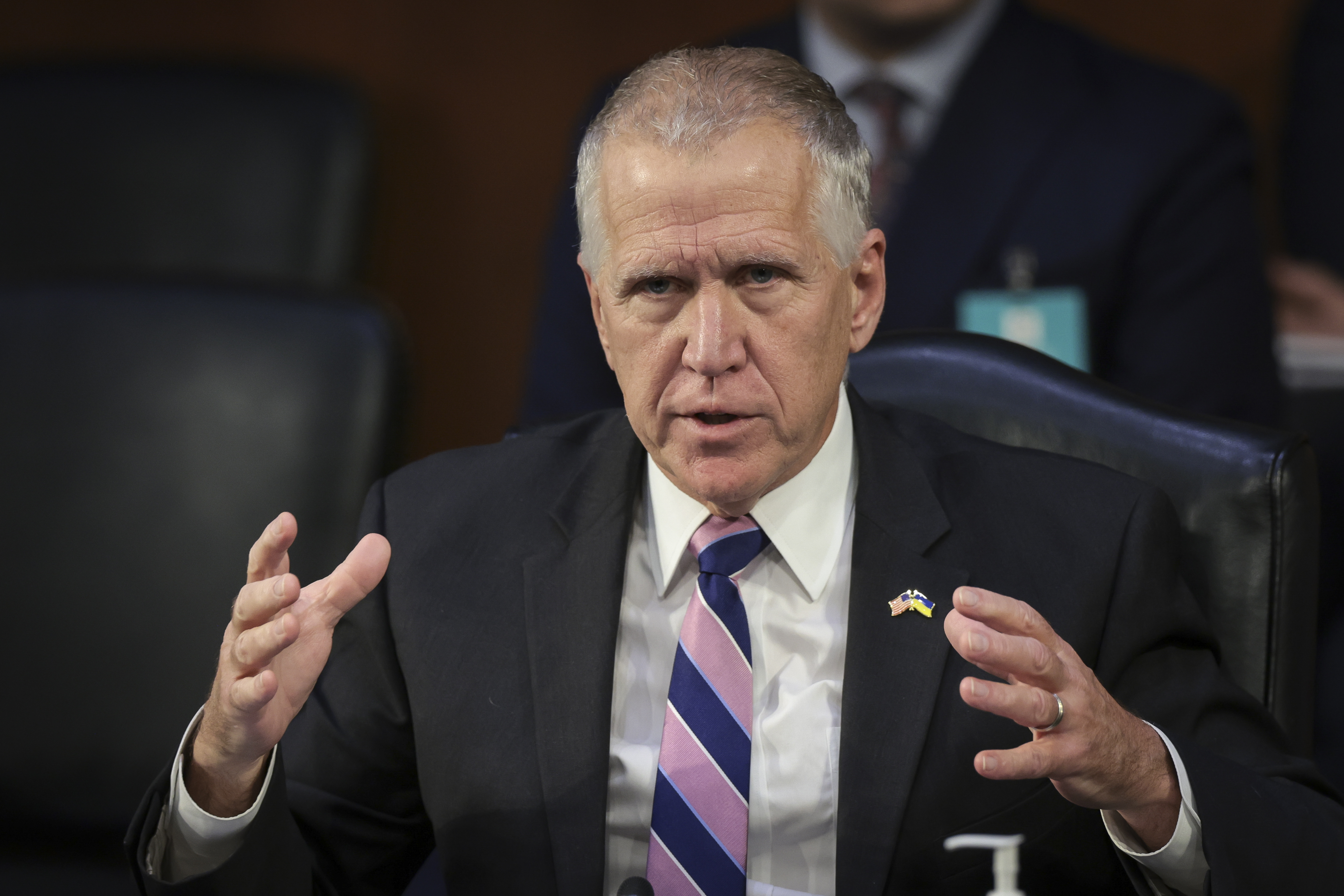
Enlarge / Sen. Thom Tillis (R-N.C.) is the co-sponsor of the SMART Copyright Act. (credit: Win McNamee/Getty Images)
Two senators have introduced legislation that would give the US Copyright Office power to mandate the adoption of anti-piracy technology across the Internet. Websites that failed to comply would face damages as high as $150,000 on the first offense. The bill, known as the SMART Copyright Act, is co-sponsored by Sen. Thom Tillis (R-N.C.) and Vermont Sen. Patrick Leahy, one of the Senate's most senior Democrats.
"In the fight to combat copyright theft, there is currently no consensus-based standard technical measures and that needs to be addressed," Tillis said in a press release last month.
But opponents dispute that. A letter signed by a coalition of public interest and tech industry lobbying groups argues that "this proposal would also put an agency with no engineering or other relevant expertise in charge of how digital products are designed." Moreover, they said the legislation "risks corruption and capture from specific businesses and vendors pitching their own products."
Google has announced a bizarre policy that effectively bans call-recording apps from the Play Store. As part of Google's crackdown on apps that use Android's accessibility APIs for non-accessibility reasons, Google says call recording is no longer allowed via the accessibility APIs. Since the accessibility APIs are the only way for third-party apps to record calls on Android, call-recording apps are dead on Google Play.
NLL Apps—the developer of a call-recording phone app with a million downloads on the Play Store—has been tracking the policy change. The Google Play support page lays down the new law, saying: "The Accessibility API is not designed and cannot be requested for remote call audio recording." Google's ban kicks in on May 11, the first day of Google I/O, oddly.
There's no clear reason why Google is banning call recording from the Play Store. Many jurisdictions require the consent of one or more members of a call in order to start recording, but once you meet that requirement, recording is entirely legal and useful. The Google Recorder app is a product built entirely around the usefulness of recording conversations. Google doesn't seem to have a problem with call recording when it comes to its own apps, either—the Google Phone app on Pixel phones supports call recording in some countries. Google just doesn't provide the proper APIs to let third-party app developers compete with it in this market, and now it's shutting down their attempted workarounds.
A 31-year-old woman in Spain caught Covid twice within 20 days, the shortest known gap between infections, scientists have reported.
Researchers in Spain gave details of the healthcare worker, who tested positive a few days before Christmas in December 2021 and again in January 2022. The case is further evidence that the Omicron variant can evade immunity from even recent previous infections.
The woman, who was fully vaccinated and had received a booster shot 12 days earlier, tested positive in a PCR staff screening test at work on 20 December. She didn’t develop any symptoms, and self-isolated for 10 days before returning to work.
On 10 January 2022, just 20 days after first testing positive, she developed a cough, fever and felt generally unwell and did another PCR test. This was also positive.
Whole genome sequencing showed that the patient had been infected by two different Covid variants. Her first infection was with the Delta variant and the second was with the Omicron variant, which is known to be more infectious and can evade immunity from past infections and vaccination.
Dr Gemma Recio, of the Institut Català de la Salut in Tarragona and one of the study’s authors, said: “This case highlights the potential of the Omicron variant to evade the previous immunity acquired either from a natural infection with other variants or from vaccines.”
She added that the case underlined the importance of genomic surveillance. “Such monitoring will help detect variants with the ability to partially evade the immune response,” she said.
Reinfections are recorded in the UK, but require 90 days between positive tests. Official figures suggest that nearly 900,000 people in England had potentially been infected twice with Covid up to the start of April. However, the number is not exact because only whole-genome sequencing can pinpoint whether infections are caused by different variants, and not all infections are reported.
Paul Hunter, a professor in medicine at the University of East Anglia, said: “This case is not particularly surprising, though the gap between infections is particularly short. We have known for some months that reinfections will occur. The Omicron variant with its escape mutations has made reinfections even more likely.”
Now that Omicron is the dominant variant, it is possible that prior infection with Omicron will make reinfection – especially so quickly – less likely. Previously scientists had predicted that as Covid-19 moves into an endemic phase, reinfections are likely to occur within a range of three months to five years.
“We can expect further waves of infection especially during winter even without new variants,” said Hunter. “Fortunately the evidence is that immunity to severe disease is more robust than immunity to infection. So even though reinfections will continue to occur for many years, we will see fewer and fewer severe illnesses and deaths with time.”
Prof Lawrence Young, a virologist at the University of Warwick, said: “While it is difficult to extrapolate from a single case, this report highlights the ability of the Omicron variant, and its sub-variants, to reinfect even in those individuals who are fully vaccinated … This accounts for the extremely high levels of infection we have experienced in the UK.”
7:45 pm ET update: The Centers for Disease Control and Prevention decided to appeal a Florida judge's ruling Monday that abruptly vacated the federal travel mask mandate. The Department of Justice said Tuesday that it would appeal the ruling if the CDC determined that the mask mandate was still necessary.
In a media statement late Wednesday afternoon, the CDC said it determined that masks are necessary and told the DOJ to proceed with the appeal. "It is CDC’s continuing assessment that at this time an order requiring masking in the indoor transportation corridor remains necessary for the public health," the statement said. "CDC will continue to monitor public health conditions to determine whether such an order remains necessary. CDC believes this is a lawful order, well within CDC’s legal authority to protect public health," the agency added.
Apparently, it’s not enough to prevent hundreds or thousands of people with “no known affiliation” with terrorist groups from flying — a list that includes children who have yet to enter kindergarten. Even though the TSA long ago admitted (albeit, not publicly) the threat to airline flights was almost nonexistent, it still needs to look like it’s doing something useful to ensure continued funding.
So, it’s moving on to Amtrak, according to this report from WLKY, which obtained the TSA’s Privacy Impact Assessment [PDF] that discusses its decision to start running passenger manifests against the DHS’s highly questionable “no fly” list. We are moving on to “no rail” for Muslims and an assortment of brown people most likely described as “swarthy” and “suspicious” by people who couldn’t find an explosive device if you paid them to.
Amtrak has asked the TSA to start screening some of its passengers against the Terrorist Screening Database watchlist maintained by the Threat Screening Center to see if known or suspected terrorists have been riding the rails, according to a U.S. Department of Homeland Security privacy impact document obtained by the Hearst Television National Investigative Unit.
The program, part of the Amtrak Rail Passenger Threat Assessment and which has not been previously reported, would compare personal passenger information from Amtrak – which may also later include a traveler’s “publicly available social media” profiles viewed by DHS personnel – to the government’s terrorist screening database.
According to the Privacy Impact Assessment, the TSA believes hardly any privacy will be impacted. The sharing will be one way: Amtrak will hand over passenger manifests and the TSA will run names against watchlists.
To the extent it is available, Amtrak will provide historical passenger manifests for several months on routes in the Northeast corridor to TSA. The manifests will contain first and last name and date of birth for passengers who have provided that data to Amtrak. In addition, where available, Amtrak may also provide additional data elements that passengers have provided on an optional basis or as part of frequent passenger Guest Rewards accounts. These additional data elements may include but not exceed: middle initial; billing address; phone; email; ticketed origin/destination; and actual origin/destination. TSA will match the passenger information against the Terrorist Screening Database to identify possible known or suspected terrorists
The TSA claims — at least, at this point — that the information will only flow to the TSA. But if it finds matches, it’s inconceivable the information won’t be relayed back to Amtrak to flag passengers for the TSA to approach and/or track. While this appears to be exploratory at the moment (seeing how many hits on watchlists passenger manifests rack up), the end goal is obviously the implementation of a version of the “no fly” list that means no more traveling by rail for the hundreds of people the DHS has determined too dangerous to fly despite their apparent lack of ties to terrorist organizations.
And, like anything else the government chooses to do in bulk while securing the homeland, innocent people will be negatively affected.
There is a risk that limited information provided by Amtrak will result in inaccurate watchlist match results.
The mitigation factors the TSA lists only apply for as long as the TSA continues to do nothing but research historic data. Since the data doesn’t flow back to Amtrak at the moment, people mistakenly flagged by the system will still be able to travel via Amtrak. But it’s inevitable that this data will start flowing back to Amtrak, even as the TSA determines the threat to rail transportation is, like the threat to air travel, almost nonexistent. And once that happens, people who’ve never done anything wrong will lose another option for traversing the Land of the Free.
Laurel Coates had been working for two years at a grocery store in Oakland, California, when the pandemic began. She took voluntary medical leave out of concern for vulnerable relatives and received unemployment insurance payments.
She was in good financial shape, but she eventually found that she missed the work. “I need the social interaction,” she said recently. “I was creating projects at home. I was just finding myself reading the news, and my anxiety level was getting crazy.”
A year later, after vaccines became widely available, she returned to the job. “Going back to work helped my mental state, seeing my friends and even customers,” she said. Now, she works 30 hours a week and takes satisfaction in writing a perfect produce order, the soothing task of stacking apples, and the help she can offer. “It’s pretty simple,” she said of her job. “You’re able to have these little interactions with people, and help them find their little jar of chili flakes.”
We often begin to understand things only after they break down. Your furnace fails, or your marriage does, and you suddenly have to address elementary questions. This is why, in addition to being a worldwide catastrophe, the pandemic has been a large-scale philosophical experiment. It shook up our lives and forced us to ask why we travel, why we go to school, why we touch each other.
American working life suffered its greatest breakdown since at least the Great Depression. Now, offices are reopening even as quit rates are near record highs and millions of workers remain out of the labor force. But the questions raised by mass layoffs, remote work, and the risks borne by front-line workers remain unsettled: What good is work? How should it fit into our lives?
There is a surprising skepticism toward work in the US today — surprising because Americans have for centuries valued hard work and identified themselves with their jobs. From Ben Franklin’s “time is money” to pre-pandemic hustle culture, Americans have viewed work as essential to human value. Now, the “antiwork” movement — most visible on the r/antiwork and r/workreformReddit forums, where people discuss abstruse Marxist philosophy and celebrate workers who tell off their petty bosses — has grown more prominent as the labor market churns. Some opinion-makers are staking claim to “anti-ambition,” a cold-eyed view of work as little more than an economic transaction: no more doing what you love, no more turning work into a religion.
I find this skepticism encouraging. For years, I have written about the bad bargain work has become in the United States, with workers often enduring insecurity, crummy wages, and burnout. Alongside writers like David Graeber, Miya Tokumitsu, and Jenny Odell, I have argued that work is so miserable, we ought to reimagine our society so that we can live decent lives while doing as little of it as possible — ideally, none at all.
But when I listen to Coates talk about her job, or when I consider work’s role in my own life, I think there’s something about it that’s worth saving: the social, psychological, and moral structure that, at its best, work can provide us.
An automated, post-work utopia is worth striving toward. There’s no telling, however, when such a dream might be realized; we currently have neither the civic institutions nor the cultural values to have a leisure society. And in the meantime, most adults, myself included, have to earn money and depend on others’ labor.
Many critics of American work culture are not in a position to change federal or corporate policy. They can, however, provide the vision and energy to push for change. To do so, they will need to reckon with what people get out of their work, figure out ways to preserve the good while eliminating the bad, and ultimately envision a society in which people can get those benefits, both material and moral, by other means.
Coates’s coworker Joey Fry has worked for the grocery chain for 20 years. “I always thought about my job as just money and separated it from a passion,” he told me. His true passion is making ceramic art. He works 35 hours a week at the store and earns “just barely enough” to support himself.
Money is the most obvious thing people want from work, and so higher wages must be at the center of any effort to make work better, with some sort of basic income a feature of the postwork world. People, however, also work in pursuit of more abstract goods, such as meaning or purpose. That is not just a luxury for elite workers. Although workers without a college degree put more importance on salary and security when making career decisions than workers with degrees do, as the sociologist Erin Cech has found, there is no difference in the value workers place on finding meaningful work.
Stocking shelves may not be Fry’s passion, but over the course of our conversation, he kept bringing up social and ethical aspects of his job at the grocery store. “There has to be some integrity behind my job,” he said. “I find it there.” He enjoys the physical nature of the work, and he likes the fact that he works in his neighborhood. “I want to go to work, doing something that’s good for the community, providing food,” he said.
Covid-19 posed a moral challenge to Fry. When the pandemic arrived and shelves emptied of toilet paper and pasta, Fry, who is 39, stayed on the job out of a sense of duty. “A lot of my coworkers chose to not work,” he said. “I just didn’t feel like I had any good reason not to.” He noted that he could have made more money on unemployment. “But I thought I would get bored, and I thought it was the right thing to do,” Fry said. The store was “struggling,” he added. “I felt like they needed me there.”
Work is a social arrangement. It mediates countless relationships, both casual and intimate. Go to the tailor often enough, and you’ll become part of each other’s lives, sharing jokes and complaints about the weather or, where I live, the Dallas Cowboys. I still miss the regulars at the restaurant where I worked many years ago. Even at a workplace with high employee turnover, Fry has made friendships that have lasted for two decades. Or as Coates put it, “We all have our work wives.” Sometimes, a coworker becomes your actual wife. One of mine did.
The tight weave between work and society is why it’s so worrisome that customers’ angry outbursts at retail, restaurant, and airline workers have become more common lately. Both Coates and Fry said that customers not masking — even in an area like the East Bay, where vaccination and masking rates were high — were a source of stress.
Still, not even a pandemic can erase societal goodwill altogether. Fry said some customers expressed genuine appreciation for his work. “There was a super sweet couple,” he recalled, “that stopped by every morning and thanked every single person who worked there.”
Even as the antiwork counterculture grows, so do calls to “get back to work.” Conservative politicians have been saying this all along, but now President Joe Biden has joined the chorus, saying in his State of the Union address this year, “It’s time for Americans to get back to work and fill our great downtowns again.”
Looming large in such arguments are the supposed perils of idleness. The political economist Nicholas Eberstadt told the Wall Street Journal’s Mene Ukueberuwa in January that working-age adults who chose to stay out of the workforce were inviting a “fundamentally degrading” purposelessness into their lives. Out-of-work men, Eberstadt’s research suggests, spend their time not in contributing to their communities but in front of screens: watching TV, playing video games. “By and large,” Eberstadt said, “nonworking men don’t ‘do’ civil society.” Work is their main link to it, and when it’s severed, they become more isolated and despondent.
I have to admit, I know firsthand what Eberstadt is talking about. After I burned out and quit my dream job as a college professor in Pennsylvania, I followed my wife’s career to Texas and decided I would try freelance writing. The work felt very lonely. She went off to work, and I stayed home, ostensibly to write, with nothing to anchor my time. Ideas and words — and thus money, too — came to me slowly. I spent a lot of time lying on the couch. I was the sort of person Eberstadt is talking about. Even as I was writing about the problem with relying on work for your life’s meaning, it became clear I needed a job.
After a year and a half, I returned to a familiar place: the classroom. I’m now a part-time writing instructor at the nearest university, a 30-minute walk from my house. The 10 or 12 hours a week I spend on teaching don’t earn me much money, and they cause me mild stress during grading periods, but I also get back many intangible benefits. Students are counting on me to show up at a specific place and time and teach them. That schedule gives shape to my days. In class, I exercise skills I spent decades building. When I go to meetings of my program, I feel like I am part of a worthy enterprise. I’ve made friends with a few colleagues. I can walk across campus and know I belong there. And if anyone asks what work I do, I have a straightforward answer.
Coates’s anxiety and my boredom pose a challenge to antiwork advocates. True, with less work, everyone would be free to structure their lives however they wanted, but in fact, few people are good at that. I certainly am not. I’m much less happy in summers, when I don’t have the routine and obligation of classes to focus my time and effort.
One reason work has so much power to shape our lives is that adults lack alternative social structures. Work is just the default mode of engaging with society for anyone who’s out of school, especially if they are not caring for young children. This helps explain why, prior to the pandemic, many retirees who didn’t need the money went back to work anyway. Habits of social engagement built up over decades do not disappear on your 65th birthday.
The antiwork vision may seem far-fetched, but it has never really been given a chance. Early in the pandemic, some people glimpsed a postwork society because the $600-a-week unemployment supplements meant they could support their families without work. Because everything else shut down, however, there were limited opportunities to create new institutions that could order our time and effort. It’s no surprise, then, that 70 percent of remote workers reported working on the weekends in 2020, or that 45 percent reported working more than they did before. What else was there to do?
It’s true that work can contribute the structure and resources people need to live satisfying lives. But how big a role does work need to play? Can’t we get what we need from work without it dominating our lives?
If the most obvious benefit of work is money, then the most obvious cost is time. Or, to put it another way, work costs us our lives. This is why work that feels pointless or pays too little is such an insult. “We tend to speak of our having a limited amount of time,” writes Oliver Burkeman in his book, 4,000 Weeks: Time Management for Mortals. “But it might make more sense … to say that we are a limited amount of time.” If our lives are time, then understanding how the costs and benefits of work play out over time is the key to figuring out how work ought to fit into our lives.
Some of the goods of work increase with the length of the workday. Most notably, this is true of earnings for most workers. But with most other goods, you don’t get more as you work more. In fact, many of the social and psychological benefits come from having a job rather than putting in long hours. That is, you have an answer to the “What do you do?” question even if you only work a few hours a week. You don’t get a better answer with more hours. You don’t get more of the feeling that people are counting on you, that you are contributing to society. You probably don’t make more friends.
And at some point, you stop getting the benefit of a schedule to your time, because you have less and less time when you aren’t at work. Your productivity slows, too, past 40 or 50 hours a week. Meanwhile, stress rises with time spent working. A Korean study found that younger workers’ risk of stress, depression, and suicidal thoughts dramatically increased when they worked longer than a standard schedule.
For workers to reap the social, moral, and even spiritual goods US culture promises them, and to avoid the drawbacks, they certainly should be able to cap their hours at 40 per week, and ideally would be working somewhat fewer. That isn’t realistic for many people unless wages increase accordingly. For this reason, shorter-hours policies — like California Democratic Rep. Mark Takano’s proposed four-day workweek bill, which would require overtime pay after 32 hours — need to be coupled with higher-wage policies.
Higher wages and shorter hours: The way to tame work is almost too obvious.
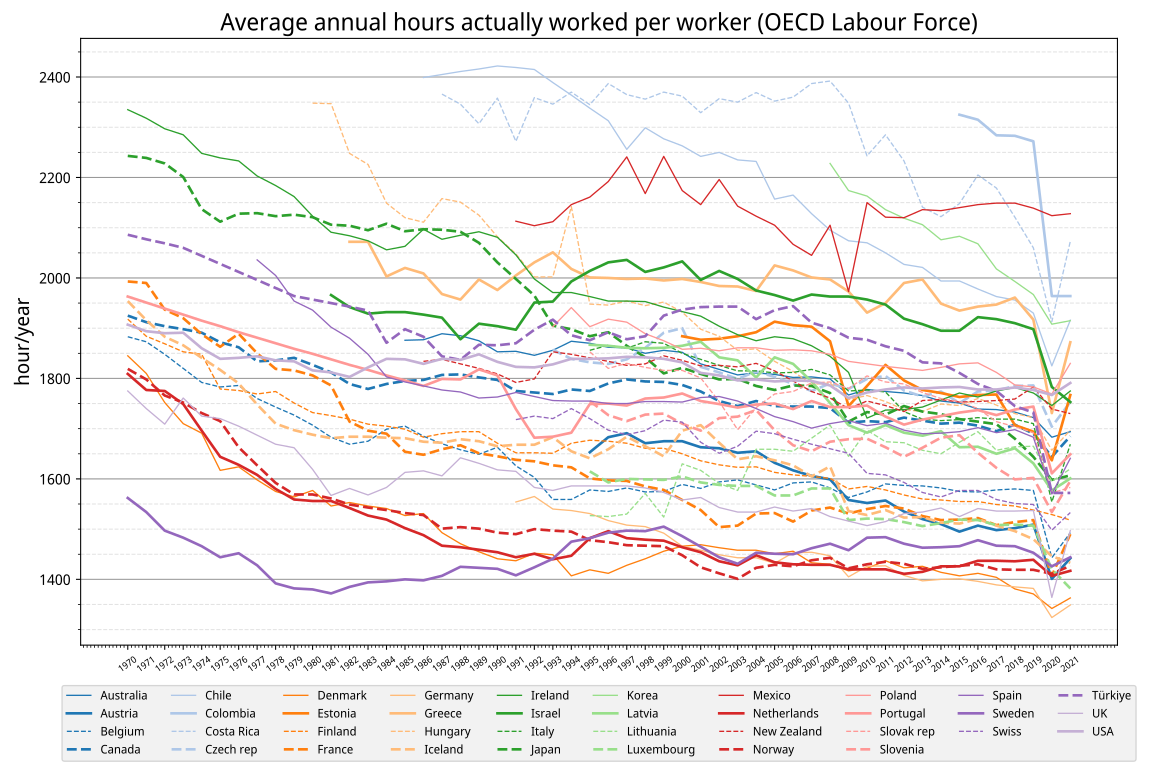
Yet in the context of US history, it’s revolutionary. Real wages have been flat for decades. And the standard workweek hasn’t changed in 85 years. Average working hours in the US have declined slightly since 1980, but not nearly as fast as they have in economic peer countries like Canada, France, or Japan.
We will also need policy to break the vicious cycle between work and social alternatives to it: If everyone is working, then there’s no time to build civic institutions like social clubs or activist groups, but if there are no civic institutions, you may as well keep working. As Sunday-closing laws have relaxed in the US, there is no longer any common time free from work, no period when you can count on others to be available to get together and build social connections. Free time is a human right, argues the political scientist Julie Rose. It’s a necessary condition for attaining the other rights, like freedom of association, expression, and worship, that liberal democracies are meant to guarantee. And so time away from work and weekly restrictions on commerce should be protected by law.
But policy alone will not solve the problem of work. Culture needs to change, too, and antiwork advocates can push for it to happen. They have the vision and can encourage the building of institutions that will provide an off-ramp from our total work society. We need to make time away from work appealing not just as the absence of toil but as a mode of flourishing and fulfilling our human needs for camaraderie, moral growth, and purpose. That may be the only way we’ll convince people like Nicholas Eberstadt that those who opt out of the labor market, even if they aren’t caring for children or others, are making a positive, worthy choice. That will require foregrounding models of activity and civic engagement — retirees, student activists, disabled people, members of religious orders —that don’t put work at the center. If the antiwork movement can emphasize the positive appeal of not-work, then employers will feel pressure to improve work in turn, if they’re going to lure us back.
Both Laurel Coates and Joey Fry told me they wished they were paid more, but they also said they appreciated the limits on their work, and how they never have to take their work home with them. “My philosophy is, it’s okay to be a little settled,” Fry said. “I’m 70 percent happy at my job most of the time.”
And when it’s over, it’s over. A good job is one you can leave at the end of a shift and then get started doing something better.
Jonathan Malesic is the author of The End of Burnout: Why Work Drains Us and How to Build Better Lives. He is a former sushi chef and parking attendant.
Editor’s note: A version of this article originally appeared on Strong Towns and the Dear Winnipeg blog and is republished with permission. It is focused on Winnipeg, Canada, but the policies and infrastructure it discusses are relevant to the United States as well.
It seems like every time there’s a news piece about a traffic collision involving a pedestrian, it’s followed by a flurry of discussion over the words used to describe the incident.
Take for instance a crash on Portage Avenue in Winnipeg, Canada that took place just over a week ago. This was the original headline:
Understandably, people reading were upset that the broken bus shelter and hydro pole got higher billing than the actual human being that had to be taken to hospital. CBC quickly corrected the headline:
Much better. Yet, still not good enough. Because some people will point out, rightly, that vehicles have drivers. And for the same reason we don’t ever see headlines such as “Man shot by gun”, or “Chris Rock slapped by hand”, the headline here should have read “Driver crashes into pedestrian, bus shelter, hydro pole on Portage Avenue in Winnipeg”.
It makes sense. Using “vehicle” or “car” is very neutral language, and it tends to remove personal responsibility from the situation. Using “driver” reminds us of the human behind the crash, and subconsciously makes it easier to attribute blame for it.
And I completely understand that urge. Except I don’t think it’s that helpful, because in the overwhelming majority of cases, the driver is not to blame for the carnage. The traffic engineers who designed the street are, because drivers can only do what the design lets them.
Let me be clear: this was no accident. Massive property damage and pedestrians being injured (or killed) is our transportation system functioning precisely as designed. This is how it was designed to work. To understand that, we’ll need to explain a few traffic engineering concepts. So let’s get into it!
The traffic engineering profession understood a long time ago that humans are imperfect and will always make mistakes. It’s inevitable, and if you can’t change the users, change the system. So traffic engineers came up with the concept of “forgiving design” which was a way of designing the transportation system to “forgive” errors by drivers, so that when they made the most common mistakes, whether unintentional or through carelessness, the results didn’t end up being catastrophic.
One of those elements is the development of the “clear zone”. Now, I’ve talked about clear zones before, but this is worth repeating, so bear with me if you know all this already.
The total roadside border area, starting at the edge of the traveled way, that is available for an errant driver to stop or regain control of a vehicle.
Manual on Uniform Traffic Control Devices (MUTCD), Section 1A. 13
Basically, it’s a buffer zone on the edge of the road to allow for out-of-control stray cars. Of course, the Manual says you want to keep this zone clear of any fixed objects, things like signs, trees, light standards, etc., because vehicles slamming into immovable objects at high speeds is really dangerous for the occupants of those vehicles.
So how big does this buffer need to be? The answer is it depends on the speed of traffic. The faster the vehicles are travelling, the larger the clear zone you need. And lucky for us, traffic engineers have gone through the trouble of doing those calculations.
On page 77 of Winnipeg’s Transportation Standards Manual are the guidelines for our own city’s “clear zones”. City engineers say that at traffic speeds of 60 km/h, the clear zone should be a minimum of 3.5m from the face of the curb, but that 5.0m is desirable.
Now, it’s important to pause here to recognize that these concepts were developed for highways. And they saved a lot of lives in that context. But, when you don’t acknowledge that urban areas are fundamentally different places than highways, you get some pretty messed up results.
For example, here’s what the required clear zone looks like on a typical block of Henderson Hwy in my neighborhood:
The red zones, which are the “minimum” clear zones, cover the entire sidewalk. And the yellow zones, which extend to the “desirable” clear zones, go well into the storefronts.
If you want to see an example in 3-D, here’s what the site of that aforementioned crash on Portage Avenue looks like with the clear zone delineated:
These are the “zones” that are supposed to stay “clear” of any immovable objects because of the very real possibility of cars leaving the roadway. And yet, this is where we tell people to walk, wait for the bus, and access local businesses. You can see the inherent conflict.
But surely cars leave the roadway so infrequently as for this to be insignificant, right?
My friend, surely you jest.
This is an occurrence so common that traffic engineers had to invent a whole new technology in order to keep “forgiving” the mistakes of drivers. Ladies and gentlemen, I present to you: the breakaway base!
The breakaway base was devised as a way to still be able to put objects in the clear zone without endangering the lives of vehicle occupants. Instead of a vehicle leaving the road, smashing into a stationary, immovable street light and killing everyone on board, the bases are equipped with shear pins that are designed to break when hit with any real force. The result is the pole snaps off its base at the moment of collision, and most of the kinetic energy of the collision is dissipated away from the occupants of the vehicle.
Pretty genius, actually.
But that leads to an obvious question regarding the placement of this bus bench:
If vehicles leave the roadway often enough that we need street lights to have breakaway bases to keep vehicle occupants safe, how can it be safe for pedestrians and transit riders to sit, stand or walk in that same space?
The answer is, it’s not. [Even though you could argue that pedestrians have breakaway bases themselves…]
From 2012 to 2020, there were 179 (reported) collisions where a vehicle left the roadway in urban areas in Manitoba, according to Manitoba Public Insurance collision statistics. In 36% of those, someone was injured. In 6% of them, someone died.
But those weren’t accidents. Traffic engineers designed urban streets that required a clear zone, designed breakaway bases for the infrastructure in those clear zones due to the expected frequency of collisions, and then placed their professional seal on a plan that puts people, sidewalks, bus stops and businesses in the very same clear zones.
Of course people get hurt. Of course people die. That’s the design.
As well-known traffic safety advocate Tom Flood has said, “these aren’t accidents, these are results.”
And the only reason it’s not even worse is because of congestion. Congestion slows traffic to a speed where clear zones shrink to zero, which solves this entire problem for us. Unfortunately, the traffic engineering profession seems to have taken it as its raison d’être to alleviate congestion, which just puts people back into the clear zone, and back into mortal danger.
But, try talking to a traffic engineer about making sure people aren’t forced to walk, wait for the bus, or access local businesses while in the clear zone, and you’ll get blank stares.
You could call it unethical. You could call it gross negligence. I might even go as far as to call it sociopathic.
And it is probably at least some of those things.
But it’s not like there’s no solution here. A common suggestion is to line the sidewalks with bollards.
And that would work… for the pedestrians and transit riders. But remember the whole reason for the breakaway bases? That vehicles smashing into immovable objects at high speeds is dangerous for the occupants of those vehicles?
Yeah, simply installing a bunch of bollards and calling it a day is just shifting the risk of death from people outside vehicles to those inside vehicles. That’s hardly ethical either.
But we could design our streets for slower speeds, just like congestion has shown us works. That’s actually what the World Health Organization recommends, and not just in residential areas. They recommend maximum speeds of 30 km/h wherever “people and traffic mix“. It’s a policy that recognizes that there are places for high speeds, and there are places for slow speeds. And the places for slow speeds are wherever people walk, live, work and play, which has advantages far beyond just safety, such as economic activity, climate action, livability, and as we’ve measured here before many times, financial sustainability for the City.
To do otherwise is to ask people to spend time in the clear zone, literally putting their lives at risk just to wait for a bus, or buy a jug of milk, or walk to the dentist. An ask so egregious, that any engineer who would agree to affix their seal to that should lose their license to practice. Yet somehow they don’t.
Because most people don’t know about clear zones and breakaway bases. So there’s no one to call them out on it.
But now you know.
So the next time you’re walking down the street, or waiting for a bus, or walking up to a local shop, and you walk by a pole with a breakaway base, remember that means you’re standing where out-of-control cars have been designated to go: in the clear zone.
Knowing this, you can choose to stay silent and be complicit, as the City spends $50,000 on marketing to attract more people to stand in the clear zone take the bus. You can choose to say nothing as the City prepares to spend $10 million on amenity upgrades to get more people to walk, sit, eat, drink, shop and spend more time in the clear zone in public spaces Downtown.
Or you can choose to speak up about the deadly design of our streets for anyone outside of a vehicle. You can’t be for climate action without addressing this. You can’t be for active transportation without addressing this. You can’t be for Downtown, for local business, for economic recovery, for municipal solvency, without addressing this.
So talk to your friends about it. Talk to your family, your colleagues, your Councillor. Just as importantly, talk to any candidate seeking your vote in this fall’s election. This abhorrent practice has to end, and ending it starts with you.
Finally, one last request for those of you who work in the media: consider changing how you report on this stuff in the future.
A long-running Japanese TV show that challenges young children to navigate their cities without adult supervision is prompting a conversation about why American cities are so comparatively hostile to kids — and not just because of the dangerous way our cities are built.
On April 1, streaming giant Netflix re-released a 2013 season of the reality show “Old Enough!” in which Japanese kids ranging from 2- to 5-years old are sent out on foot alone to complete simple household errands in their local communities. Along the way, those intrepid tots have to cross busy streets, find their way through labyrinthine neighborhoods, and know when it’s time to ask for help from the friendly strangers they meet (and, occasionally, the cameramen whom they’ve clearly been instructed to ignore). One even manages to ride the bus by himself.
Give or take a few delays, most of which can be blamed on the toddlers’ own microscopic attention spans, the kids all make their way home safe.
A predictable flurry of think pieces followed the show’s release, from journalists on the urbanism and parenting beats alike.
The New York Times’s Jessica Grose mourned how America’s car-focused streets limit children’s opportunities to develop a sense of independence, effectively stripping them of the “sense of triumph” that their Japanese counterparts experience every time they successfully make their way home with an offering for the family Shinto shrine. (Child development researchers, by the way, share that concern; some of them even attribute increases in childhood depression and anxiety rates to the increasingly autoentric neighborhoods in which most North American kids are raised.)
Slate’s Henry Grabar, meanwhile, pointed out that “if the show were set in the United States, the parents would be under investigation by child protective services,” because the roads they’d be forced to navigate are so often dominated by fast automobiles and other dangers. Car crashes top the list of the leading causes of death among U.S. children and adolescents, claiming an average of 1,139 young lives every year since 2010; per capita, more than nine times as many American kids are killed by traffic violence than Japanese kids, even though Japanese kids, who walk for four out of five of their weekday trips, are only occasionally ensconced in a safety-rated automobile.
People recommend 'Old Enough' on Netflix but I can't watch it. I will get too upset that I live in the most walkable, dense city in America yet don't feel safe letting my kids walk places alone, even #OpenStreets, because of aggressive drivers & hazardous car infrastructure pic.twitter.com/EcEOEV0vLe
— ?? wants a Green New Deal ?? ? (@SusanLKang) April 13, 2022
Writers like Grabar and Grouse are right that community design is the major differentiator between the American and Japanese approaches to childhood mobility.
Japan’s 19-mile-per-hour neighborhood speed limits, ample shared-used paths, and near abolition of on-street parking all make walking the common-sense choice for most trips, as do the prevalence of “15-minute neighborhoods” that put essential destinations within a toddler’s feasible walking distance. (A study last year also found that Japanese cities also have some of the highest rates of women cycling of anywhere in the world, for much the same reasons.)
And while the the country’s “greeting culture,” or aisatsu, certainly deserves some credit for making these communities so child-friendly, it’s important to remember all the ways that culture is physically reinforced by design. Japan’s ultra-dense, mixed-use neighborhood designs all but guarantee that even the smallest tots will find themselves surrounded by the watchful eyes of friendly grown-ups almost everywhere they go — a feature of daily life that is rarely found in American cities.
But one of the lesser-discussed miracles of “Old Enough!” is that those grown-ups are almost never behind a wheel of a car so big they literally cannot see small bodies walking in front of it — or so heavy that they’ll all but certainly kill those children if they crash.
In 2017, the average U.S. vehicle weighed 3,820 pounds, a staggering 41 percent more than the 2,711-pound Japanese average. And by 2020, America’s average had ballooned to 4,156 pounds, fueled by automakers’ refusal to manufacture less-profitable small cars and the raft of regulatory loopholes that allow them to keep doing it — a 9-percent spike in just five years.
Japan’s relatively minuscule vehicle fleet is the result of policy choices, too.
Since creating the ultra-light vehicle class known as “kei cars” in 1949, the country has been known as the global capital of tiny vehicles designed to hold little more than their passengers. Kei cars top out at a little over 11 feet long and 6.5 feet high, and unsurprisingly, they cost a lot less than full-sized automobiles: the going price is about $10,000, about half the cost of a Corolla at a Japanese dealership. They’re also taxed at a lower rate, in addition to being held exempt from annual vehicle registration fees, and they cost thousands fewer yen to insure and maintain every year — a package of incentives that helped kei cars claim 40 percent of the Japanese vehicle market last year.
Most U.S. states, meanwhile, forbid the import of kei cars to America, and the ones that do generally require them to be registered as all terrain vehicles, which aren’t always allowed to operate on shared roads.
A kei “van” awaits its passengers; standard size sedan for scale. Photo: Nicolás Boullosa, CC
Even Japanese cars that aren’t so teensy are still safer for pedestrians than their US counterparts — and that’s by design, too.
Since its founding in 1995, the Japanese New Car Assessment Program has been internationally recognized for having some of the most forward-thinking federal vehicle safety ratings around, thanks in no small part to the country’s early efforts to evaluate the safety of people outside cars as well as in.
In hopes of reducing the Japan’s pedestrian fatalities, 60 percent of which involve a head injury, the ratings system has incorporated a “pedestrian head protection performance test” since 2003 to measure how likely a vehicle is to strike walkers at neck level and above, with special tests specifically for kids on foot. That test has prompted many Japanese automakers to design cars with more sloping front-end designs and lower bumpers, which experts say can save lives.
In November of 2021, Japan also became the first country in the world to require pedestrian detection-equipped automatic emergency braking systems on all new cars. By 2024, bicycle-detecting systems will also be mandatory.
American regulators recently announced that they will soon recommend that all new cars come equipped with automatic braking, but won’t actually require it — and they’ve so far made no recommendations against vehicle heights, weights and front-end styles that are known to be be a major ingredient in the country’s accelerating pedestrian death crisis. And while those failures might not be well known among American families, they certainly subconsciously effect the likelihood that any parent in their right mind would ever let their kid walk to the grocery store, whether they’re going it alone or not.
The children of “Old Enough!” certainly deserve credit for the bravery it takes to complete grown-up errands, as do the generations of adults that designed and cultivated such family-friendly places. But let’s not forget to celebrate the Japanese auto regulators who made sure that only the most people-friendly cars ended up on those neighborhood roads — and let’s not stop pushing for American regulators to follow their lead.
Katherine Lantigua, center, is the owner of KColorful Daycare in Bridgeport, Connecticut, where she cares for a dozen children on any given day. Pictured, Lantigua sings along to a musical track with the children under her care on a recent March day. | Photographs by Tim Tai for Vox
Why so many are giving up on child care work and what it will mean for everyone else.
The first children arrive at 5 am. It’s still dark out, and they’re sleepy, but their mom has to get to New York for her shift in the emergency room. Katherine Lantigua gives each of the kids a bottle or a sippy cup, and then they nap until the others start to arrive, around 7. From there, it’s a whirlwind.
Lantigua and her husband, Diogenes del Rosario, take care of 12 children, plus their own two kids, who range from 7 months to 12 years old, at KColorful Daycare, the in-home child care center they started in Bridgeport, Connecticut, in 2019.
On a recent morning, that means: teaching the kids about the letter N, pivoting the children to blocks when they’re not paying attention to the letter N, snagging a plastic cucumber from someone’s mouth and putting it aside for cleaning, asking Messiah to stop running, comforting Anaya, cuddling baby Kamiyah when she got up from her nap, teaching all the kids what an eggplant is, asking Messiah to stop running, helping Amir name the colors of the balls he’s putting into a box, putting on the babies’ shoes for outside time, pushing Zaid in the swing, brokering a dispute over a push toy, and, of course, asking Messiah to stop running.
Michelle Ortiz drops off her children, Messiah, 4, and Kamiyah, 7 months, with Lantigua at KColorful Daycare.
Then it’s hand-washing time, then lunch, then nap, then the older kids start to arrive for after-school care. The day care closes at 6 pm, but then Lantigua has paperwork, grocery shopping for the next day’s meals, and helping her own kids with homework and bedtime.
“I am exhausted at the end of the day,” Lantigua said during a brief break while the children napped. “I have to toughen up and say, ‘I got this,’ because after I finish day care, then it’s time for my own kids.”
The long days are hard on Lantigua, but her work is what allows Messiah’s family, and Anaya’s, and so many others, to go to their jobs every day knowing their kids are somewhere safe where they can learn and grow. Care work like Lantigua’s is often called “the work that makes other work possible,” a truth made especially clear during the pandemic, when many day cares and schools closed, leaving millions of parents struggling to watch their kids while still doing their jobs.
One analysis found that moms spent an average of eight full hours a day on child care in 2020, the equivalent of an extra full-time job — and a reminder of how labor-intensive, and how necessary, work like Lantigua’s is.
Lantigua works on a lesson with 1-year-old Gianalyize.
From left, Messiah, Amir, 2, and Tyshawn, 4, wash their hands after lunch.
Lantigua (left) feeds Kamiyah as (from rear) Tyshawn, Anaya, and Messiah, all 4, feed themselves lunch.
Lantigua places a blanket over Anaya as she prepares for a nap after lunch.
Lantigua herself, however, is barely making ends meet. After she pays her mortgage and the salary for her one employee, she said, she has to choose: “This month I’m going to pay the light, next month I’m going to pay the gas.” Saving for retirement is out of the question for now. Neither she nor her husband takes a salary. “We can’t afford that,” Lantigua says. Instead, they try to cover expenses as best they can with whatever the day care makes in a month.
For their long hours spent in a difficult, always-on environment, child care providers like Lantigua often make poverty-level wages — an average of just $13.22 an hour in May 2021, when the median hourly wage for all workers was $22. They are disproportionately likely to lack benefits and to need public assistance.
“Child care workers, the people providing this labor and this service that is absolutely vital to the continuing of our economy and families, are so underpaid that they can’t afford to cover their basic needs,” said Asha Banerjee, an economic analyst at the Economic Policy Institute, a nonprofit think tank.
The job has gotten even harder during the pandemic, with new risks, like the possibility of contracting Covid-19, and new requirements, like making a room full of toddlers keep their masks on at all times, constantly sanitizing toys and surfaces, and coping with lost enrollment as parents pull their kids out over Covid fears or because they’ve lost their jobs. Inflation is driving up the cost of basic supplies and stretching providers’ budgets even further. “Our plastic cups and our materials actually cost more,” said Reena Abraham, owner of the Learning Experience, a Brooklyn child care center.
There’s a limit to how much providers can raise prices, though. Child care costs more than college tuition in many states — in Connecticut, it averages $15,501 per year — and many families can’t afford to pay much more. Indeed, experts in the field say the only way to fix the system is for the government to dramatically scale up its investment, increasing subsidies to help families afford care and make sure workers earn a living wage. However, with President Joe Biden’s big social spending package, which included funding for child care and preschool, stalled in Congress, it’s not clear when — if ever — such help will arrive.
Meanwhile, the sector is rapidly losing workers. More than 560,000 people worked in child care in 2019, but one-third of those jobs were lost at the start of the pandemic. The industry hasn’t recovered, dropping 4,500 jobs between September and November 2021 and another 3,700 jobs in December alone. In a lot of cases, workers are leaving for better pay as elementary school teachers, or in other sectors, such as hospitality or warehouse work. “We are competing with restaurants and Amazon for staffing,” Abraham said.
The situation threatens the entire economy — all those jobs that child care work makes possible. One data analysis found that about 700,000 parents of young children left the labor force in 2020, many because of a lack of child care.
Lantigua, left, and assistant Bienvenida de la Cruz enjoy a sunny day with the children in the yard outside the day care. De la Cruz is the only employee Lantigua can afford to hire; though Lantigua owns the day care, she cannot afford to pay herself, she says.
Lantigua, for her part, has big dreams for her day care. She’d love to hire more staff so she could provide more individualized attention to each child. She could design separate activities for the babies and toddlers, rather than having them all do the same thing. She could spend more one-on-one time with each child, attending to their unique challenges and needs.
Instead, she’s left trying to make the math work, providing a service that families desperately need but that lawmakers and society at large consistently fail to prioritize. “I feel that we are ignored,” Lantigua said. “I feel that we are neglected. I feel that we don’t matter.”
Lantigua hasn’t always been a child care provider.When she and her husband moved to Connecticut four years ago, she was a medical assistant. But the family couldn’t find affordable care for their daughter. It’s a common problem: 51 percent of Americans live in child care deserts, areas where there are more than three times as many children as there are available care slots, according to the Center for American Progress.
For Lantigua and her husband, that meant splitting the day in half: She worked the day shift at a clinic while her husband drove for Uber at night. It wasn’t working, she said. “He almost got into a car accident because he was exhausted.”
So they saved up money until they had enough to open a day care in their home, launching a career they hoped would allow them to take care of their daughter and their baby son, born in 2018, while still earning an income.
Starting a day care isn’t easy. Would-be providers have to complete a lengthy state licensing process, which can include anything from background checks to inspections of the facility’s boiler and fire extinguishers. In Connecticut, it typically takes 60 to 90 days and costs about $3,000.
Then there’s the challenge of the work itself. When Lantigua opened her doors and saw all the kids together for the first time, “I was like, ‘what in the world did I get myself into?’” Lantigua remembers. “I have to be insane.”
Now, however, she projects an image of calm, even when six kids need six different things at once. A bright pink house with a picket fence, wreaths on the door, and a decorative sign reading, “family,” the day care is welcoming even before the children walk in. The kids spend much of the morning playing downstairs, where the play area includes blocks, baby dolls, a truly impressive array of plastic foods, and a reading corner full of picture books.
Anaya, 4, stands next to a group of dolls during playtime.
Lantigua works on a lesson about circles with Messiah, 4, and Gianalyize, 1.
Lantigua walks outside with Gianalyize to play in the yard. “I like them to be independent,” she says. “It helps me, and it helps the families.”
Lantigua has taught a lot of the kids how to put on their own coats and shoes. “I like them to be independent,” she said. “It helps me, and it helps the families.”
The families can use the help. Some work long hours. Some are single parents. All receive subsidies, a combination of state and federal funds designed to help lower-income families afford child care.
These subsidies are supposed to help with the punishing cost of care, but there’s not enough money to go around: Only about one in six US families who are eligible for subsidies in a federal-state program actually get them, while many families languish on subsidy waitlists for years with no assistance.
The affordability problem affects millions of Americans, worsening as the cost of care skyrocketed during the pandemic. As of 2019, more than half of working families with children under 5 — about 5.1 million households — were paying for child care. The average family spent 10 percent of its income on care, which is about 40 percent more than the Department of Health and Human Services considers affordable. Low-income families, meanwhile, spent a full 35 percent of their pay on child care.
Even still, providers are squeezed. Lantigua, for example, said she only receives about $5 per hour per child in subsidy payments. At that rate, she can only afford one employee, her assistant, Bienvenida de la Cruz.
Over the last two years, when someone needs a diaper change or a potty trip or some water, de la Cruz has been the one to handle it. Throughout the day, she’s constantly stepping in to help, grabbing someone’s coat or holding a fussing baby while Lantigua tends to the older kids. De la Cruz also cooks the meals for the day care from an open kitchen where the savory smells — of beef stew with carrots and potatoes, for example — can waft into the playroom. When the kids inevitably throw the food on the floor, she’s there to pick it up, too.
For all this, she’s paid $13 per hour, the minimum wage in Connecticut. She doesn’t have health insurance. “I love my job,” de la Cruz said through an interpreter. At the same time, with three kids of her own to support, “it’s hard to make it to the end of the month.”
De la Cruz prepares a breakfast of pancakes and fruit for children at the day care. The work pays her $13 an hour — minimum wage in Connecticut, but far below the median hourly wage for American workers, which is $22.
De la Cruz, left, and KColorful co-owner Diogenes del Rosario feed lunch to three toddlers in their care. Del Rosario used to drive for Uber at night before opening the day care with Lantigua, his wife.
Del Rosario, Lantigua’s husband, doesn’t have health insurance, either. Lantigua and her kids get theirs through the state’s Medicaid program, but she was recently told that her income is above the threshold and she no longer qualifies. “According to them, that’s it,” she said. “I’m down the drain.”
Lack of benefits — and low wages — are typical of the child care field. Only about 20 percent of child care workers have employer-sponsored health insurance, compared with 52 percent of all workers, according to a November 2021 report by the Economic Policy Institute (EPI). Just one in 10 child care workers has retirement benefits.
The low compensation is a result of centuries of devaluing care work in America. Proposals in Congress to create universal child care programs, which could have increased worker pay, have stalled because they were painted as anti-family. “We’re still to some degree fighting the idea that children of a certain age, and really the younger they are, should be at home with their mothers,” said Caitlin McLean, director of multi-state and international programs at the Center for the Study of Child Care Employment.
Moreover, child care has historically been performed by women, and especially women of color, dating back to slavery. Today, the child care workforce is 94 percent female and disproportionately Black and Latina. A disproportionate share are also immigrants. The low pay of these workers is inextricably bound up with misogyny, racism, and xenophobia, said Banerjee, one of the co-authors of the EPI report. “Care work is undervalued because care workers are also undervalued.”
That devaluation has translated to serious hardship in a country where basics like food and housing are getting more expensive, while wages — especially in child care work — fail to keep pace. One in three child care workers experienced food insecurity in 2020. More than 10 percent of workers in one 2021 University of Oregon survey said they’d been evicted during the pandemic; almost 30 percent said they struggled to pay their rent or mortgage. Meanwhile, child care workers are often unable to afford care for their own children, Banerjee said.
Lantigua talks with parent Christine Wilson as Wilson’s daughter Anaya, 4, looks on in the yard outside the day care.
In addition to financial struggles, child care workers contend with long hours, intense physical and emotional demands, and, especially in the case of day care owner-operators, myriad responsibilities beyond just taking care of kids. “Child care teachers are doing all the things that you might realize, like leading a group of kids through lessons and activities and those types of things during the day, but they’re also doing all of these business activities to try to keep their program afloat,” McLean said.
That’s become even more difficult during the pandemic, when thousands of day cares had to close their doors to help stem the spread of Covid-19. Even after they were able to reopen, many struggled with low enrollment, which cut into their already precarious bottom line. Meanwhile, early educators found themselves thrust into the role of front-line workers overnight, caring for kids who were often too young to wear masks or keep a safe distance. “The six-feet-apart situation was a complete disaster,” Lantigua said.
“They want to play with each other, they want to interact with each other, and they can’t.”
Lantigua worried that one of the kids would bring Covid-19 into the day care. “My son has asthma, I have bronchitis,” she said. “It was scary.”
Such fears led some day care operators to close permanently. Others had to close because they could no longer pay the bills. Nearly 16,000 providers shut down permanently between December 2019 and March 2021, according to a report by the nonprofit Child Care Aware of America.
That has made affordable care even harder to find than it was when Lantigua was looking, four years ago. Child care in America today is “just a complete market failure,” Banerjee said. “And without some sort of intervention, it won’t change.”
Many experts and providers say that intervention has to come in the form of increased government funding. “What folks really need is sustainable base funding for their programs,” McLean said.
For programs like Lantigua’s that serve low-income families, that would mean higher subsidies. She’d like to see a standard of at least minimum wage per hour per child. “I’m working with six different characters,” she said — different personalities, different needs, different ways of learning and being in the world. “So why don’t I deserve to get paid at least $13 per hour, per child?”
Lantigua puts a sock back onto baby Kamiyah’s foot as older children play around them. Unlike many day cares nationwide, KColorful has weathered the pandemic, but it has not been easy, as child care workers were thrust into the role of front-line workers overnight, looking after kids who were often too young to wear masks.
More broadly, it means a reimagining of America’s child care system as a public good supported by taxpayers on behalf of everyone, much like K-12 schools.
With public schools, “there’s a recognition that this is an expensive but crucial service, and so it’s going to be paid for with public funds, to make sure that costs can be covered and quality can remain high,” McLean said. With child care, by contrast, “really just whatever parents can afford is what they get. And often, that means that teachers are really shortchanged.”
The pandemic has done a lot to focus public attention on the problem — perhaps depressingly, many Americans began to recognize the value of child care when it was no longer available. The CARES Act, HEROES Act, and American Rescue Plan all included funding to help care providers weather some of the enrollment losses and increased costs associated with the pandemic. Last spring, President Biden unveiled the American Families Plan, a proposal that included universal free preschool for 3- and 4-year-olds, along with a $225 billion investment to make infant and toddler care more affordable for families making up to 1.5 times their states’ median income. The plan also called for raising child care workers’ wages to $15 per hour, or to parity with those of kindergarten teachers.
It wasn’t perfect — there were questions about how the plan would phase in, and whether it might drive up costs for middle-class families. Still, many workers and advocates hailed it as an important step in the right direction, and a sign that the government was finally taking child care seriously. Biden’s agenda reflected a recognition that “care is as important as roads and bridges to our economy,” Banerjee said.
Then it stalled. The Build Back Better Act, which included many provisions of the American Families Plan, floundered in the Senate last winter when the White House couldn’t get centrist Sen. Joe Manchin (D-WV) on board. It’s unclear when or if it will be revived, or whether the child care provisions will be part of any revival.
For now, providers and families are still on their own, with some exceptions. Lawmakers in Louisiana are pushing for a $115 million annual investment over the next 10 years to improve the state’s child care system, including raising pay for workers. Washington, DC, began expanding public preschool for 3- and 4-year olds in 2008, and now pays teachers in the program on par with teachers of older children, McLean said. More recently, the city established a pay equity fund to improve the pay of infant and toddler educators as well. And in New York, state legislators have proposed measures to expand families’ access to subsidies and to increase subsidy rates.
Nonprofits have also stepped in. The Connecticut-based group All Our Kin, for example, offers child care providers business training and licensing support; during the pandemic, the group has helped providers get PPE and apply for Paycheck Protection Program loans, and advocated for stabilization grants to help programs remain afloat. As a result of their help combined with federal and state aid, more than 90 percent of All Our Kin-affiliated child care programs have weathered the pandemic so far and remain open, said Jessica Sager, the group’s chief executive.
Lantigua relied on All Our Kin to help her transition from medical assistant to child care provider. “They sit down, they explain to you, they help you fill out these applications,” she said. “When you’re completely lost, it’s like you have a backbone.”
“I’m working with six different characters,” says Lantigua — different personalities, different needs, different ways of learning and being in the world. “So why don’t I deserve to get paid at least $13 per hour, per child?”
Today, Lantigua is paying some of that help forward by training and organizing other providers. She teaches CPR on the weekends, and recently helped organize a rally called a “Morning Without Child Care” to call for higher subsidies from the state. Such advocacy may be producing results: Five bills recently introduced in the Connecticut legislature would include more funding for child care, including one that would boost subsidy rates and fund 13,000 additional care slots for infants and toddlers. “We are seeing a real surge of public will around potentially investing in family child care,” Sager said.
It remains an uncertain time for Lantigua and for providers across the country. No one knows when or if another Covid-19 surge will force another round of quarantines and closures. No one knows when the price of paper cups will come back down. No one knows when or if policymakers will step in with the funding to boost worker pay and make child care more affordable for parents.
What Lantigua does know is that the status quo is untenable.
“It’s not fair for the child care providers, it’s not fair for the families,” she said, “and it’s definitely not fair for the children.”
Anna North reports for Vox on work and education in America, including the politics and policy around child care, schools, reproductive health care, and paid leave. She is the author of the novel Outlawed.
Coral Getino contributed reporting translation for this story.
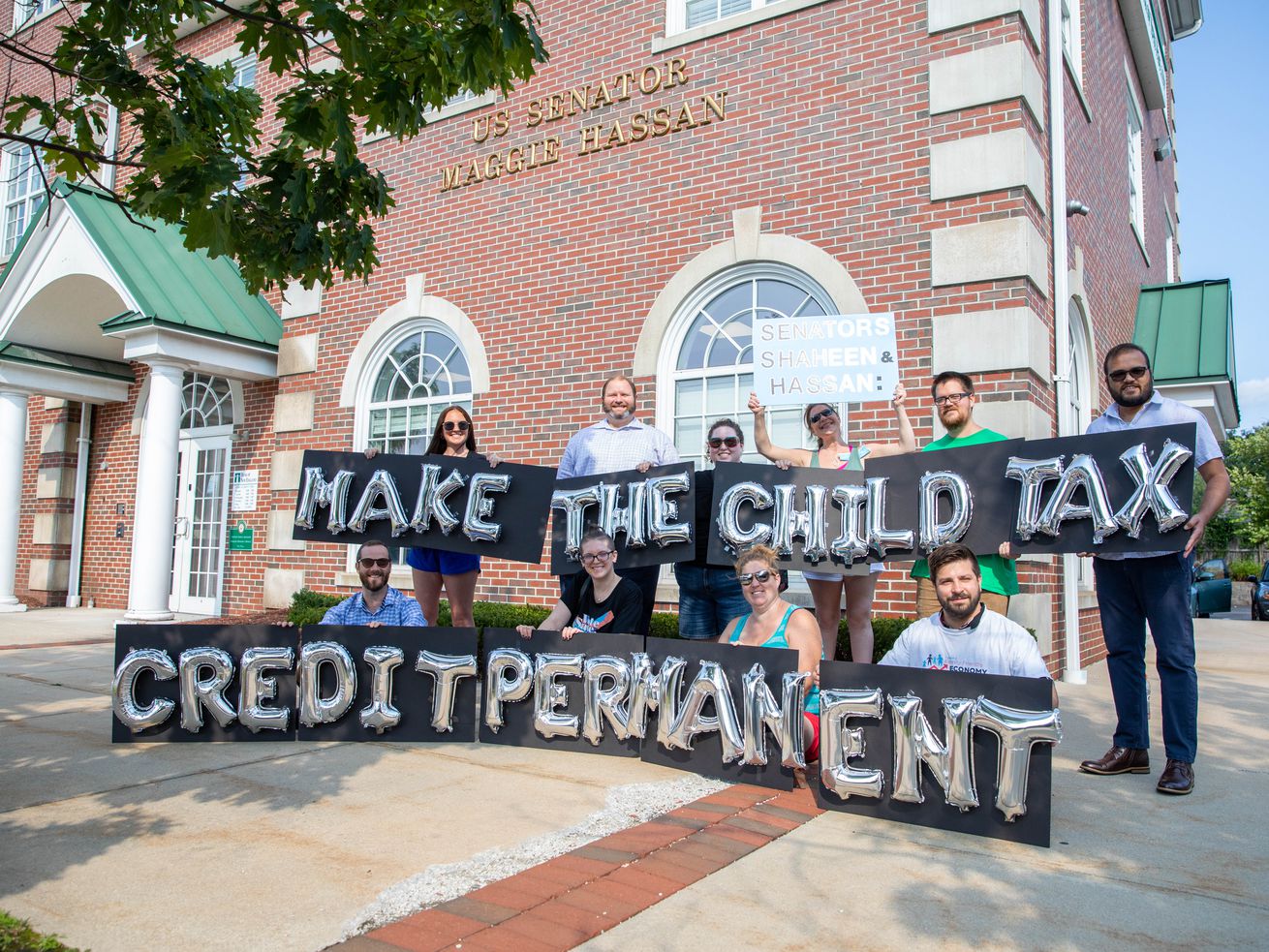
Protesters push to make the expanded child tax credit permanent last September in Manchester, New Hampshire. | Scott Eisen/Getty Images for ParentsTogether
Joe Manchin dealt the final blow. But the reasons it lapsed are deeper than one man.
Before Biden came into office, the credit maxed out at $2,000 per child ($1,400 for kids in families too poor to owe income tax), was bundled with tax refunds, and specifically left out families with little or no earnings. About one-third of children were excluded from the full credit, including over half of Black and Hispanic children, as well as 70 percent of kids raised by single moms. That’s precisely the population in most need of financial help.
The Biden changes dramatically increased the credit to $3,000 per kid aged 6 and over, and $3,600 per kid under 6; paid it out monthly; and made the full credit available to all poor children, eliminating the previous “phase-in” rule that capped the credit at 15 percent of a family’s income.
So why did Congress let one of the most important child poverty policies ever enacted lapse?
The Joe Manchin failure, and the larger failure
There’s a very simple answer to why the child credit didn’t continue: there weren’t 50 senators willing to support its extension. And most public reporting suggests the main holdout was Sen. Joe Manchin.
Axios’s Hans Nichols, the DC press corps’ premier Manchin-whisperer, reported last October that the West Virginia Democrat was demanding that the credit include a “firm work requirement” and not go to families making over $60,000 a year.
That’s a huge departure from the Biden CTC, whose major attraction was that it didn’t phase in with income and went to all poor households. The credit also went to many families with six-figure earnings, and changing that as Manchin desired would force a de facto tax increase on upper-income folks.
Some reports have also suggested that Manchin thought the money would go to buy drugs — an evergreen concern about cash programs for the poor (Manchin’s office declined to confirm or rebut that he expressed this concern privately). This suspicion is ill-founded; the best evidence review on the question I know of concluded there’s little reason to believe cash transfers increase drug or alcohol abuse.
Manchin’s fear that the credit would disincentivize work is more credible, and the subject of some scholarly disagreement. The old child credit “phased in” with income, with beneficiaries getting 15 cents for each extra dollar in earnings. That in theory encouraged people to work, and University of Chicago economists Kevin Corinth and Bruce Meyer argued that getting rid of the phase-in would lead many people to drop out of the labor force. Other economists disagreed. But even if you think the credit mildly disincentivizes work, it still substantially reduces poverty. I’d argue that even if Corinth and Meyer are right, the policy was still worthwhile.
So why does Manchin oppose it anyway? I suspect it has a lot to do with being a Democratic senator from a state that Donald Trump won in 2016 and 2020 by about 40 points. Manchin barely hung onto his seat in 2018 during a heavily Democratic year, and it’s understandable he doesn’t want to go too far out on a limb for a big government spending program. Millions of West Virginians benefited from the policy, but it’s ultimately a very conservative state skeptical of liberal policy initiatives. (Not to mention voting against your immediate economic interests is pretty common — plenty of wealthy people in blue states like California and Connecticut vote for candidates who’ll raise their taxes.)
The structural challenge
At some point, though, focusing too much on one man can mislead more than it informs.
The bigger questions, I think, are a) why beneficiaries weren’t able to fight to keep the benefit, like the beneficiaries of Obamacare successfully did in 2017, and b) whether doing this kind of legislation on straight party lines is viable.
The 2017 rescue of Obamacare was a great illustration of a classic political science theory from Berkeley’s Paul Pierson. Pierson noted that even conservative leaders like Margaret Thatcher and Ronald Reagan hadn’t been able (or even really attempted) to roll back foundational welfare state programs like the National Health Service and Social Security. He argued that beneficiaries became invested in these programs and would revolt against any politicians who threatened them.
That’s basically what happened in 2017: Republicans should have had the votes to repeal Obamacare after Trump took the White House, but the prospect of throwing millions of people off Medicaid started to look so politically poisonous that several GOP senators bolted and killed the effort.
I thought this would happen in 2021: letting the child tax credit expire would so enrage parents benefiting that Congress would be forced to extend it.
That wasn’t so.
Maybe the three rounds of stimulus checks primed voters to think of the child credit payments as temporary, that, like pandemic aid, the money would naturally come to an end. Maybe the people for whom the credit mattered most were too poor to have the time or resources to organize. Maybe the pandemic inhibited organization. Maybe it’s a matter of status quo bias: the credit was set to expire, and it’s always easier for Congress to do nothing than to pass new legislation to extend a program.
Whatever the reason, beneficiaries couldn’t and didn’t save the credit. And this kind of policy reinforcement is the main reason Democrats have been able to expand the welfare state on party lines in the past (see, again, Obamacare, or Bill Clinton’s earned income tax credit expansion in 1993). Normally, Republicans could just repeal policies like this when they next take power, just as they reversed Obama’s upper-income tax hikes of 2012; but because the policies create their own constituencies, Republicans can’t actually do that.
But if that kind of constituency doesn’t develop, it means policies like this are inherently vulnerable and can be cut off the next time there’s a change in party control.
That suggests to me that the only path forward is some kind of bipartisan deal on the child tax credit. The Niskanen Center’s Samuel Hammond and Robert Orr have a great piece on what this would look like. It’d probably entail keeping an income phase-in and excluding households with absolutely no earnings. Hammond and Orr suggest keeping a very-young-child credit that’s fully available to people with no earnings, but concede that even this might have to fall by the wayside to earn Republican votes.
That’s tragic, to me, because it excludes people who profoundly need help. But it might be the only way to make a policy like this work in America.
A version of this story was initially published in the Future Perfect newsletter. Sign up here to subscribe!
Amtrak is seeking to take control of DC’s Union Station through eminent domain, which it says will enable it to modernize and expand the facility. Union Station is owned by the US government, but most of the station has been subleased to Union Station Investco, a subsidiary of New York-based private real estate investment firm […]
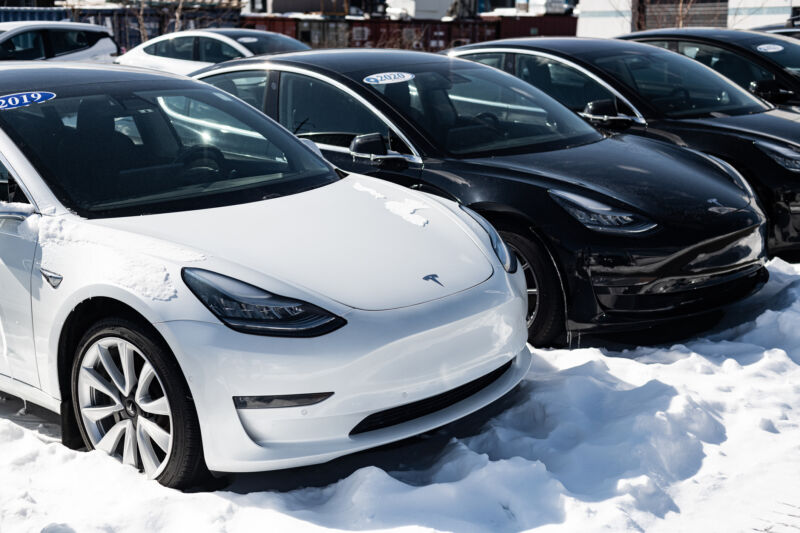
Enlarge / Used Tesla model 3 sedans available to purchase at an all-EV dealership. (credit: shaunl | Getty Images)
David Cottrell got his $39,999 Tesla Model Y last February. The compact electric hatchback was a fantastic car, he says. But just a few months later, he decided to input the make and model into the website of an online used car retailer. Surprise! The Tesla was already worth $10,000 more than he and his wife had paid for it. They were thinking of buying a house in their hometown of Seattle, and the extra cash felt like a no-brainer. By June they had sold for $51,000—a tidy profit.
Now, Cottrell looks back at the transaction with a twinge of regret. He loves his new home and is excited about his reservation for a roomier Rivian electric truck, which is set to be delivered this summer. But when he plugged the same Model Y into the online used retailer again this month, he found the car would be worth only about $2,000 less than what he sold it for—even after factoring in the 20,000 miles he’s driven since then. “If we could have kept it, I could have driven for a year here and could have come out pretty equal,” he says.
This is not the way a car’s life span is supposed to work. They’re supposed to lose their value over time. This is why used cars are, generally, less expensive than new ones. But right now, everything is topsy-turvy. A toxic mix of pandemic-era supply shortages and inflation have spiked prices of used cars and trucks, which were up 35 percent in March compared to the same time last year, according to the US Bureau of Labor Statistics. It’s not unusual for certain used luxury cars, like Porsches and Corvettes, to go for more than their original sticker prices, says Luke Walch, the owner of Green Eyed Motors, a dealership outside Boulder, Colorado, that specializes in electric and hybrid vehicles. Now, “it’s trickled down into the commoner’s car,” he says.
Enlarge / The Space Launch System rocket rolls out of the Vehicle Assembly Building in mid-March, 2022. (credit: Trevor Mahlmann)
After three attempts to complete a critical fueling test of the Space Launch System rocket, NASA has decided to take a break.
On Saturday night the space agency announced plans to roll the large SLS rocket from the launch pad at Kennedy Space Center to the Vehicle Assembly Building in the coming days. This marks a notable step back for the program, which has tried since April 1 to complete a "wet dress rehearsal" test, during which the rocket is fueled and brought to within 10 seconds of launch.
The decision comes after three tries during the last two weeks. Each fueling attempt was scuttled by one or more technical issues with the rocket, its mobile launch tower, or ground systems that supply propellants and gases. During the most recent attempt, on Thursday April 14, NASA succeeded in loading 49 percent of the core-stage liquid oxygen fuel tank and 5 percent of the liquid hydrogen tank.
Ed Sheeran has made it onto Techdirt’s radar many, many times. What started as his reasonable views on how “piracy” actually kickstarted his career has unfortunately turned into several posts on how he’s been targeted himself or sticking up for others in copyright disputes. While Sheeran has settled such disputes out of court before, he recently successfully defended himself in court and then put out a fantastic statement on the problem copyright law is creating in hampering creativity. At the end of that statement, he said:
Me, Johnny, and Steve, are very grateful for all the support sent to us by fellow songwriters over the last few weeks. Hopefully, we can all get back to writing songs, rather than having to prove that we can write them. Thank you.
I kept that penultimate sentence bolded from the last post for a reason: Sheeran is apparently not willing to take the chance that the world will be more sane. Instead, in a move that feels more like PTSD from these lawsuits than anything reasonable, Sheeran now records all of his writing sessions on video in order to prove in future disputes how he came up with his songs and lyrics.
Speaking further on both claims, Sheeran adds, “I just film everything, everything’s on film and we’ve had claims come through and we go, ‘well here’s the footage and you can watch and you’ll see that there’s nothing there’.” He also revealed how he didn’t play Photograph for a long while following the first claim, stating it made him “feel dirty”, and that he personally regrets paying settlement after being advised to do so.
That’s right. Thanks to the ridiculous levels of copyright protection and entitlement due to ownership culture, one of the top recording artists in the world has to film his creative sessions just to help protect against future accusations of copyright infringement. One has to wonder aloud whether this practice of putting cameras in the room hampers the creative process. It sure would for me. Or change it at the very least.
Which means that the end result is that copyright may actually be tamping down the creative output of an artist in this case. You know, the exact opposite effect desired by the originators of copyright laws. Not to mention how completely depressing it is that Sheeran feels he has to do this.
The InspectIR COVID-19 Breathalyzer offers highly accurate test results in about three minutes, without the need for uncomfortable swabbing or collection of hazardous samples. But, before you get your hopes up for a handheld device you can huff into as you head out the door, it's not quite that convenient. The test requires a high-tech device about the size of a carry-on suitcase—demo versions are literally housed in hard-shelled roll-aboard cases—and it requires a trained technician to operate. To take the test, a person has to sit next to the traveling instrument and blow into it through a straw for about 10 seconds.
The instrument inside the luggage is actually performing gas chromatography-mass spectrometry (GC-MS), which is a gold-standard analytical technique to finely separate out the components of a mixture. Generally, GC-MS samples are vaporized and mixed with an inert carrier gas before going through a capillary column, which separates out components by their boiling point and polarity. Then those components are ionized and fragmented and further separated out by their mass-to-charge ratios. The end readout is various peaks on a gas chromatogram, with each peak having a unique mass spectrum, allowing for the unambiguous identification of specific compounds.
Students in Walpole, Massachusetts, protest anti-LGBT proposals in Florida and Texas. | Jonathan Wiggs/The Boston Globe via Getty Images
Why anti-LGBTQ laws and accusations of “grooming” children seem to be everywhere now.
The past month hasn’t been great for queer and trans Americans.
In March, after Florida Gov. Ron DeSantis signed a bill restricting the kind of discussions and instruction public school teachers can have that involve “sexual orientation or gender identity,” copycat proposals popped up in at least three Republican-run states. Conservative proponents of these bills then launched new broadsides against LGBTQ people, accusing teachers of “grooming” school-age kids and queer allies of enabling pedophilia in their criticism of the bills and the chilling effects on school discussions.
In the span of what seemed like a week, old-school bigotry felt mainstreamed. Sitting members of Congress, cable news hosts, and conservative intellectuals coalesced around “ok, groomer” discourse as a new way to attack LGBTQ Americans — not just the teachers these bills are targeting. Their attacks come in a country that is more accepting of queer Americans than at any other time in history; about eight in 10 Americans back nondiscrimination laws protecting LGBTQ people. But suddenly, it seemed, 20th-century homophobia acquired a modern, QAnon-esque edge.
“If you’re against the Anti-Grooming Bill, you are probably a groomer or at least you don’t denounce the grooming of 4-8 year old children,” Christina Pushaw, DeSantis’s press secretary, tweeted at the beginning of March. On his talk radio show last week, conservative activist Charlie Kirk tied same-sex marriage and the acceptance of LGBTQ Americans to corrupting children: “We’re talking about gay stuff more than any other time. Why? Because they are not happy just having marriage. Instead, they now want to corrupt your children.”
The feedback loop of anti-LGBTQ legislation and “grooming” discourse reveals new dimensions to the conservative movement’s efforts to stymie the progress of recent years: Some members of the political right see opportunities to wield their advantages in the nation’s increasingly conservative courts against LGBTQ people — and opportunities to claw back the ground they’ve lost in the culture war as Americans’ opposition to discrimination grows.
What “Don’t Say Gay” and its conservative backers hope to win
Florida’s education law is couched in the language of parental rights and uses vague language to implicitly threaten LGBTQ teachers and allies with lawsuits. Though supporters had said the law bans inappropriate conversations about sexual activity with young students, the text never explicitly referencesdiscussionsof sex — only explicitly forbidding conversations about “sexual orientation or gender identity.” The ban applies from kindergarten through third grade but leaves an opening for “age-appropriate” restrictions beyond those grades, while also not defining what “age-appropriate” means.
The legislation never uses the words “gay” or “trans,” but advocates argue that queer and trans Americans would be the primary targets of lawsuits by parents and officials behind the restrictions. Echoing the model of Texas’s abortion ban, Florida’s law deputizes parents as watchdogs, providing a path through the courts to punish schools and staff that violate the statute.
Legislatures in Alabama, Ohio, and Louisiana have since advanced similar proposals; Texas’s lieutenant governor is looking at introducing a bill when its next legislative session starts, and lawmakers in six other states, mostly in the South, have supported iterations of restrictions on LGBTQ identity in schools.
Some of these proposals are more explicit than Florida’s — Tennessee’s proposal seeks to ban books or material that support or promote LGBTQ “issues or lifestyle” altogether — but all offer a window into how social conservatives see opportunities to roll back protections for queer and trans people: score victories in the courts and make the cultural fight more extreme.
Their path to win legal fights looks more promising, with Republican majorities in these statehouses passing these bills on to Republican governors, expecting fights in lower courts, and biding time until a conservative majority on the Supreme Court reviews the challenges, Carl Charles, a senior attorney with the civil rights organization Lambda Legal, said.
Drawing on pandemic-era anger over school closures, mask-wearing, and the specter of critical race theory, state Republicans see an opportunity to rile up their most conservative constituents ahead of primaries, general elections, and a new Supreme Court term.
But what these bills communicate coyly, its supporters in media and politics have been sayingout loudfor quitesome time: The way to win back lost ground in the culture war over LGBTQ people is to cast them as morally corrupt villains — and use schools as a starting point for a bigger cultural shift.
The extreme right’s “grooming” line reveals a note of desperation
Radical right-wing activists and commentators in recent weeks have been making literal accusations of pedophilia (in a callback to a trope from the 1970s and earlier) and grooming (which in its true sense means to “gain access to a potential victim, coerce them to agree to the abuse, and reduce the risk of being caught,” according to the Rape, Abuse, and Incest National Network). But they’ve also been increasingly using “grooming” as a casual insult to try to create a vague link between all LGBTQ people and cases of child abuse.
What started on the fringes, with conservative activists riding the coattails of last year’s anti-critical race theory moral panic, crossed over into mainstream media during the Supreme Court confirmation hearings for Judge Ketanji Brown Jackson last month. Sens. Josh Hawley (R-MO), Ted Cruz (R-TX), and Marsha Blackburn (R-TN) questioned the future justice’s thinking on gender, child abuse, and race. As Georgetown professor Don Moynihan wrote about Hawley’s line of attack, the point was “to create an association between Jackson and this broader trope” of child predators running rampant in public institutions. That spawned a universe of outrage in conservative media, further buoying the legislative action underway in Republican states.
Historical examples abound for how these kinds of moral panics bolstered discriminatory action against LGBTQ people since the 1970s. In that decade, California conservatives rallied against gay and and lesbian people to prevent them from working in public schools and anti-gay rights activist Anita Bryant led an effort to repeal anti-discrimination protections in Florida with her “Save Our Children” campaign.
Today’s “anti-grooming” line bears a resemblance to these old activist efforts, but it is becoming prevalent at a time when conservatives have lost many of the cultural and legal battles over gay rights and anti-discrimination protections, Cathryn Oakley, a senior counsel at the Human Rights Campaign, told me. Support for same-sex marriage has broad bipartisan support; a large majority of the country believes gay and lesbian people are “morally acceptable.” And those numbers have grown year over year.
“It’s very frustrating to see that we are having the same fight over and over again … but I believe that these folks are desperate. They have lost every fight they have picked on LGBT issues. They lost on trying to criminalize sodomy, they lost on marriage equality, they lost on bathroom bills, they lost on wedding services refusal — and we’re at 75 to 80 percent support for nondiscrimination laws,” she said.
Some of the loudest supporters of this effort have admitted this: “The alternative to the culture war is a culture surrender. There is no neutral option,” one reads. “The right needs to go scorched earth with ‘groomer,’” says another. “We are building a new model of conservative activism” with the grooming messaging, argues Christopher Rufo, a leading anti-critical race theory activist.
The rhetoric complements the institutional work that conservative think tanks are doing in pushing these bills. Lawmakers in these states have consulted organizations like the Alliance Defending Freedom, the Heritage Foundation, and American Principles Project in crafting proposals, Vice reported. (The Alliance Defending Freedom confirmed its involvement in a statement to Vox.) The progressive advocates I spoke with told me they see this feedback loop between radical activists, lawmakers, and think tanks as part of a more desperate ploy to use transgender people as a wedge issue to open the door to more mainstream attacks on trans and queer people in public life.
“We’re at this all-time high with people who are saying, ‘I don’t like anti-LGBT discrimination, I’m pro-nondiscrimination, this is my deal.’ And [conservatives] are losing their foothold,” Oakley said. “Where do they go from here? They pick on trans kids in the first place, because there are lots of well-meaning people who don’t totally understand what it means to be trans.”
This tension between well-meaning or naive Americans and their uneasiness with newer understandings of gender identity comes through in polling, which shows Americans remain a divided public on acceptance of trans people. Even a recent survey asking about Florida’s law shows one in four Democrats supports the policy. That gap worries advocates like Brandon Wolf, an activist with the group Equality Florida, who told me these bills are meant to exploit the general public’s lack of knowledge on trans people — and create an opening for further attacks on queer and trans rights. So far, the scorched-earth strategy is working, but its staying power is being tested.
“Part of the strategy of the extremist right is to make so much noise that there isn’t space to have a really deep conversation about who people are,” he said. “We’re so busy trying to fight for the basic dignity and humanity of people, that it becomes difficult to find the bandwidth or the spaces to share people’s stories. But that’s our challenge. That’s our job right now.”
If you want to know how worried an industry is about a piece of pending legislation, a decent metric is how apocalyptic its predictions are about what the bill would do. By that standard, Big Tech is deeply troubled by the American Innovation and Choice Online Act.
The infelicitously named bill is designed to prevent dominant online platforms—like Apple and Facebook and, especially, Google and Amazon—from giving themselves an advantage over other businesses that must go through them to reach customers. As one of two antitrust bills voted out of committee by a strong bipartisan vote (the other would regulate app stores), it may be this Congress’ best, even only, shot to stop the biggest tech companies from abusing their gatekeeper status.
Enlarge / A scanning electron micrograph of Neisseria gonorrhoeae. (credit: NIH)
An existing vaccine that prevents meningococcal disease may also be up to 40 percent effective at preventing gonorrhea infections, which are becoming increasingly resistant to antibiotics, with some strains completely incurable. This discovery is according to a series of studies and commentaries published Tuesday in The Lancet Infectious Diseases.
Though the estimated effectiveness is modest, shots of the vaccine—4CMenB aka Bexsero—could still prevent many infections, researchers reported. The vaccine could prevent more than 100,000 gonorrhea infections over 10 years in the UK, saving an estimated $10.4 million. In the meantime, the vaccine's effectiveness could provide significant clues for vaccine developers to make a more effective gonorrhea-specific shot.
The need for such a vaccine is clear. Not only is gonorrhea quickly becoming more drug-resistant, but it also is on the rise in the US and other countries. The World Health Organization estimates there were more than 82 million gonorrhea cases worldwide in 2020. The US Centers for Disease Control and Prevention estimates there were nearly 680,000 cases in the US in 2020, up 10 percent from 2019 and up 45 percent from 2016.
Microsoft has escaped the recent backlash against the power and wealth of the biggest US tech companies.
Despite a stock market value that has soared to more than $2 trillion on its dominance of various parts of the business software market, it has avoided a repeat of the complaints that made it the most prominent target of antitrust action in the US and Europe at the end of the 1990s.
Enlarge / OnLeaks' render of the Pixel 6a. Here you can see the flat screen and the low-profile camera bump. (credit: OnLeaks x 91Mobiles)
As pointed out by Droid-Life, Google's next midrange phone, the Pixel 6a, has popped up at the FCC.
What's most surprising about the listing is the timing. The Pixel 6a's April FCC arrival is the earliest we've seen for the A series in a long time. The Pixel 5a was listed at the FCC in July 2021 and launched a month later in August, while the Pixel 4a hit the FCC in June 2020 and was also released in August. The first Pixel A phone, the Pixel 3a, had a February FCC listing and launched at Google I/O in May. This year, Google's (virtual) I/O event is May 11, 2022, so that day is currently the odds-on favorite release date for the phone.
There are four different models at the FCC, with only one unit having mmWave functionality. mmWave adds $50-$100 to the price of a phone and has almost no real-world use because carriers haven't rolled out mmWave to many places. Given the immense cost of mmWave, we'd rather save the money.
One of the main lawyers in California's ongoing discrimination and harassment case against Activision Blizzard has resigned, citing "interference" by the office of Governor Gavin Newsom.
Bloomberg reports that Melanie Proctor, the assistant chief counsel for California’s Department of Fair Employment and Housing (DFEH), said in a resignation email Tuesday that Newsom's office "repeatedly demanded advance notice of litigation strategy and of next steps in the litigation." That interference, which Proctor says increased with her agency's "wins" in state court, "mimick[ed] the interests of Activision’s counsel," Proctor wrote.
The resignation letter noted that Chief Counsel Janette Wipper previously combatted this interference by "attempt[ing] to protect" the agency's autonomy to prosecute, but Proctor alleges that her efforts directly led to Wipper being "abruptly terminated." In response, Proctor filed her own resignation notice on Wednesday—which she claims is "in protest of the interference and Janette's termination."
Although the loss of smell and taste became apparent symptoms of COVID-19 early in the pandemic, researchers are still working out why that happens—is the virus directly infecting and destroying the cells responsible for these critical senses, or is it collateral damage from our immune systems fighting off the invading foe?
According to a postmortem study out this week in JAMA Neurology, it's the latter. The study—which dove deep into the noses, nerves, and brains of 23 people who died of COVID-19—is the most detailed look at the coronavirus's effects on our sniffers. Researchers concluded that inflammation—not the virus—is behind the loss of smell and taste during a bout of COVID-19, which is good news in some ways. It suggests that treatments with anti-inflammatory drugs could prevent severe or long-term damage to those critical senses.
The finding follows a mix of data on the effects of SARS-CoV-2 on our sense of smell. Some data suggested that the virus can infect the nerves that carry smell signals to the brain—olfactory neurons. Thus, the lost senses could be caused by direct infections. But others found that the virus wasn't present in those neurons at death.
Amazon said it will impose a 5 percent "fuel and inflation surcharge" on third-party sellers who ship through Amazon starting on April 28. The new fee for shipments in the US was detailed on Amazon Seller Central and applies to the Fulfillment by Amazon (FBA) service in which sellers rely on Amazon to store products in its warehouses and ship them to customers.
The 5 percent charge will be applied to fulfillment fees on products shipped on April 28 or later, including products purchased before that date. Amazon also said that this "surcharge is subject to change." Amazon reportedly told sellers that the "surcharge will apply to all product types."
In a "notice sent to sellers Wednesday, the company said its costs had gone up since the beginning of the COVID-19 pandemic due to increases in hourly wages, the hiring of workers, and construction of more warehouses," the Associated Press wrote.
Health officials in Scotland on Thursday published early findings from a burgeoning international investigation into dozens of puzzling cases of severe liver inflammation among children. A few cases have already led to acute liver failure and liver transplants.
Thursday's report detailed 13 severe cases in Scotland, mostly in children between the ages of 3 and 5 and nearly all occurring in just March and April this year. Scotland usually tallies fewer than four such cases of unexplained liver inflammation—aka hepatitis—in children over the course of an entire year. Of the 13 cases this year in Scotland, one has led to a liver transplant and five are still in the hospital. No deaths have been reported.
Meanwhile, health officials in England reported approximately 60 unexplained severe hepatitis cases in 2022, most of which were in children ages 2 to 5. Some of those cases progressed to acute liver failure, and a few have also led to liver transplantation. Again, no deaths have been reported.
TikTok is under investigation by US government agencies over its handling of child sexual abuse material, as the burgeoning short-form video app struggles to moderate a flood of new content.
Dealing with sexual predators has been an enduring challenge for social media platforms, but TikTok’s young user base has made it vulnerable to being a target.
The US Department of Homeland Security is investigating how TikTok handles child sexual abuse material, according to two sources familiar with the case.
Twitter's board of directors approved a poison pill to prevent a hostile takeover in response to Elon Musk's offer to buy the firm. "The company on Friday adopted a so-called poison pill that makes it difficult for him to increase his stake beyond 15 percent," The Wall Street Journal wrote.
In a press release, Twitter said its board unanimously "adopted the Rights Plan following an unsolicited, non-binding proposal to acquire Twitter."
"The Rights Plan will reduce the likelihood that any entity, person or group gains control of Twitter through open market accumulation without paying all shareholders an appropriate control premium or without providing the Board sufficient time to make informed judgments and take actions that are in the best interests of shareholders," the announcement said.
iFixit has signed a deal with Google to make Pixel repairs much easier. iFixit.com will sell genuine Google parts individually and in kits later this year. Bothcompanies published blog posts about the collaboration.
Google says that parts will be offered for the "Pixel 2 through Pixel 6 Pro, as well as future Pixel models, in the US, UK, Canada, Australia, and EU countries where Pixel is available." iFixit is the leading site for consumers wanting to find parts and instructions on how to fix devices, and soon, it will sell Pixel screens, batteries, cameras, and more. If you don't want to fix the phone yourself, Google points out that it also has authorized repair deals with uBreakiFix in the US and Canada and "similar partnerships with walk-in support providers in Canada, Germany, Japan, and the UK."
Google's deal with iFixit comes on the heels of a similar agreement with Samsung, which is also planning to offer smartphone parts through the repair site. Samsung's partnership with iFixit starts this summer and only covers the S20, S21, and Tab S7+, though Samsung says it wants to expand the program over time. Google's deal with iFixit covers everything back to the 2017 Pixel 2, which is surprising given that many earlier Pixels were made in partnership with Android manufactuers like LG or HTC. Apple is also embracing the DIY repair market with its own in-house parts service.
Obsessive Pac-fans of a certain age may remember Ms. Pac-Man's cameo appearance in Pac-Land, the 1984 side-scrolling spin-off that first gave Pac-Man legs. This week's re-release of the game on the Switch seems to have thrown the "miss" down the memory hole, though, an odd retcon that may be the result of the complicated legal history surrounding Ms. Pac-Man's creation.
Pac-Man book contributor Ryan Silberman and artist Nick Caballero were among the first to note the apparent change on Twitter this week. They highlighted Pac-Land Switch screenshots in which Ms. Pac-Man's iconic bow and high, red boots have been replaced with a character sporting pink high heels and a matching hat. The sprite for the baby-sized Jr. Pac-Man has been similarly changed to remove the trademark red bow that was first seen in 1983's Jr. Pac-Man.
Ms. Pac-Man and Jr. Pac-Man as they appeared in the original release of Pac-Land. The pair have been edited out of this week's Switch re-release. (credit: @nickisonlinet / Twitter)
Leaving the sprites in their original form would have obviously been the simpler choice for Hamster, which publishes the Arcade Archives series on Switch. And the description for Pac-Land's Arcade Archives re-release notes that the "series has faithfully reproduced many classic Arcade masterpieces," making such a minor change even more bizarre. What's going on here?
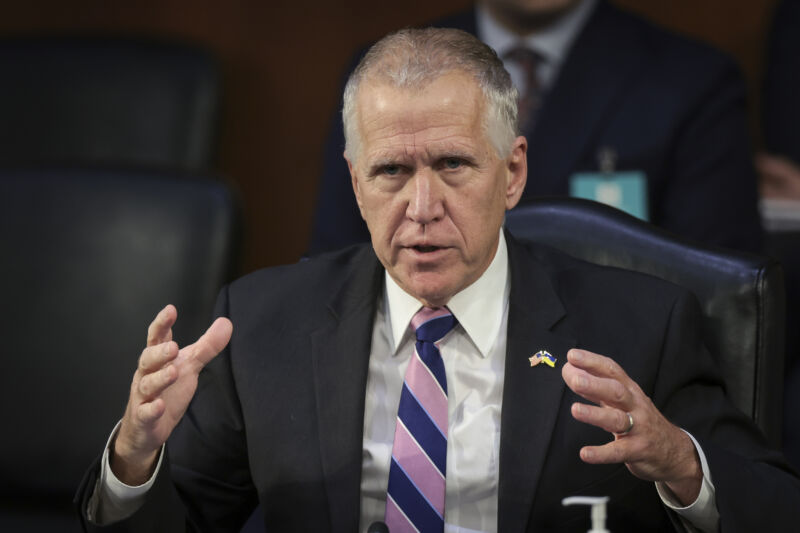

![CDC decides to appeal to restore travel mask mandate; DOJ files notice [Updated]](https://cdn.arstechnica.net/wp-content/uploads/2022/04/GettyImages-1392398100-800x533.jpeg)

/cdn.vox-cdn.com/uploads/chorus_asset/file/21899595/VOX_The_Highlight_Box_Logo_Horizontal.png)


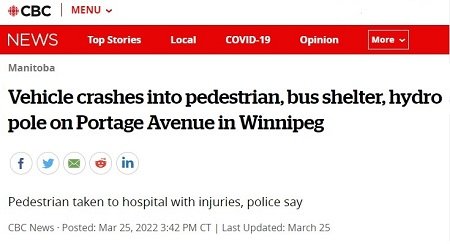

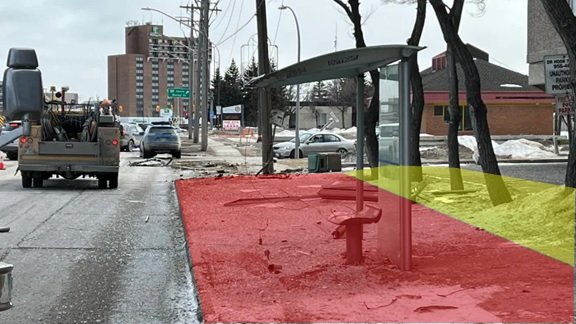

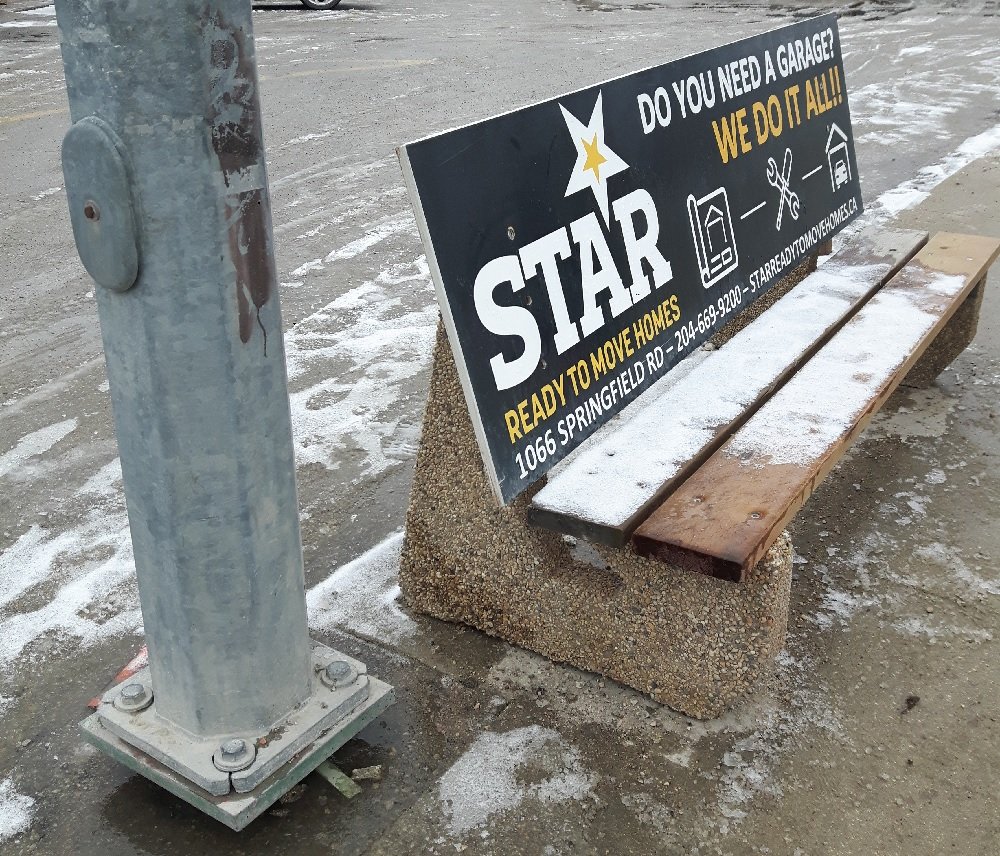
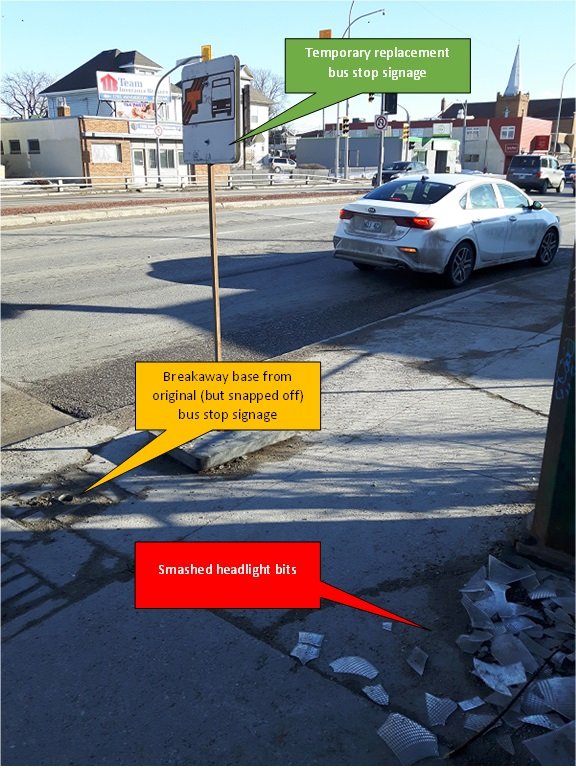



/cdn.vox-cdn.com/uploads/chorus_asset/file/23372836/20220322_highlight_childcare_06.jpg)
/cdn.vox-cdn.com/uploads/chorus_asset/file/23372923/20220322_highlight_childcare_10.jpg)
/cdn.vox-cdn.com/uploads/chorus_asset/file/23372842/20220322_highlight_childcare_37.jpg)
/cdn.vox-cdn.com/uploads/chorus_asset/file/23372841/20220322_highlight_childcare_33.jpg)
/cdn.vox-cdn.com/uploads/chorus_asset/file/23372843/20220322_highlight_childcare_39.jpg)
/cdn.vox-cdn.com/uploads/chorus_asset/file/23372838/20220322_highlight_childcare_22.jpg)
/cdn.vox-cdn.com/uploads/chorus_asset/file/23372938/20220322_highlight_childcare_30.jpg)
/cdn.vox-cdn.com/uploads/chorus_asset/file/23372889/20220322_highlight_childcare_18.jpg)
/cdn.vox-cdn.com/uploads/chorus_asset/file/23372837/20220322_highlight_childcare_20.jpg)
/cdn.vox-cdn.com/uploads/chorus_asset/file/23372981/20220322_highlight_childcare_04.jpg)
/cdn.vox-cdn.com/uploads/chorus_asset/file/23372593/20220322_highlight_childcare_34.jpg)
/cdn.vox-cdn.com/uploads/chorus_asset/file/23373247/20220322_highlight_childcare_26.jpg)
/cdn.vox-cdn.com/uploads/chorus_asset/file/23372864/20220322_highlight_childcare_31.jpg)
/cdn.vox-cdn.com/uploads/chorus_asset/file/23372728/20220322_highlight_childcare_42.jpg)