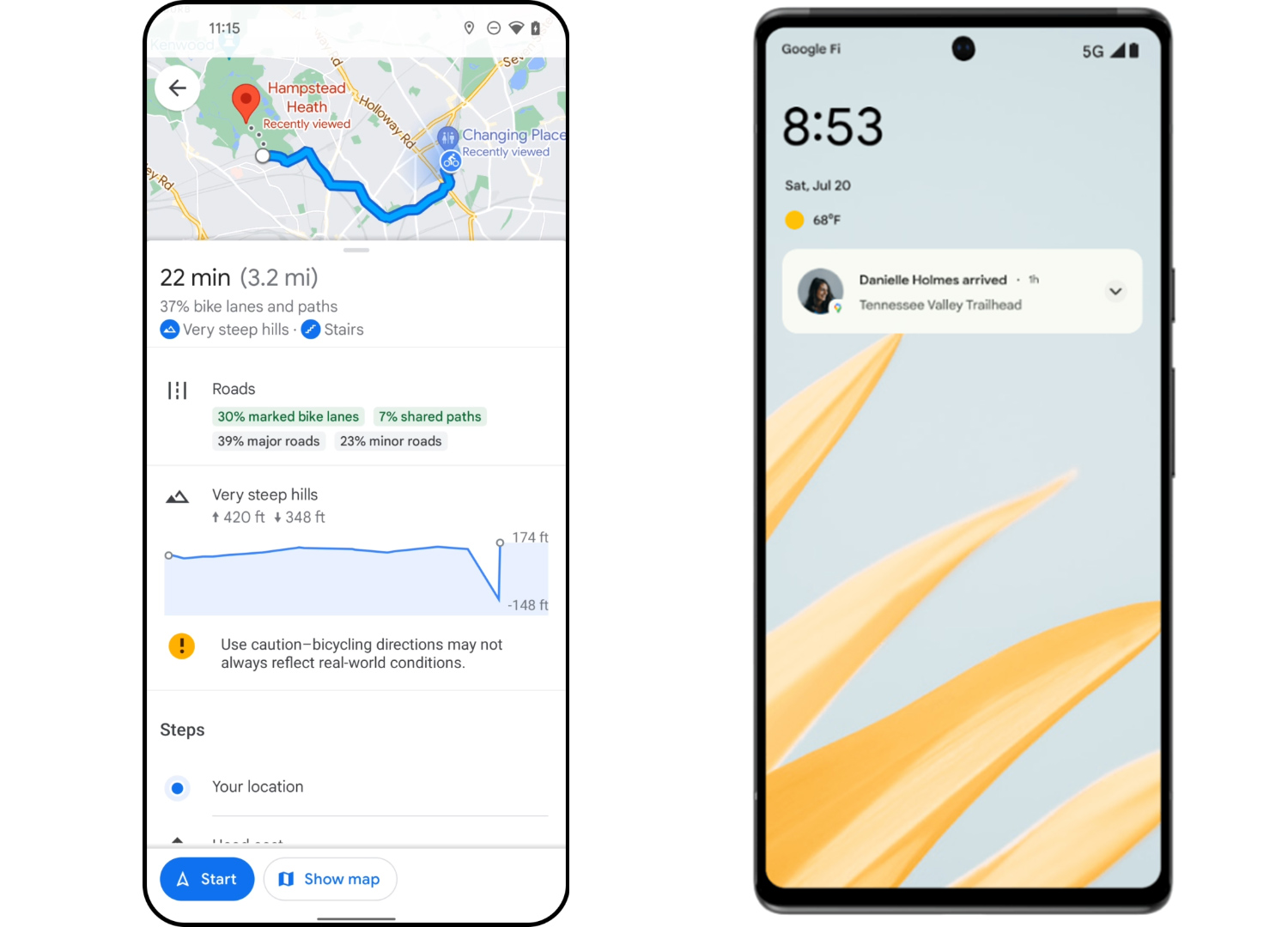
Enlarge / Left: Google Maps bike info shows detailed information about hill size and bike lane quality. Right: A location-sharing notification. (credit: Google)
Google Maps is launching a few new features today, and, after a decade of trying, Google is finally launching Street View in India. What took so long?!
First up, we have a few new features from Google's latest blog post. Cyclists will now see a lot more information explaining what a route will be like. Maps now breaks down a route by percentages, showing how long you'll be in a marked bike line, a shared path, on a steep hill, or on a major road. The route selection screen is also able to break down routes into categories like "more bike lanes" and "less turns."
Location sharing is now getting notifications. If any friends or family members share their location with you, you'll soon be able to watch a certain area and get notified when they arrive or leave. Google imagines that if you're all meeting up somewhere, you can flag that location and get a push notification when each person arrives. This would also be great to know when someone lands at an airport.
The CHIPS Act will subsidize US semiconductor manufacturing and research with billions in funding — but it may not do much for the ongoing chip shortage. | Doug Mills/Getty Images
The US is betting billions to spur semiconductor manufacturing.
In a 64-33 vote on Wednesday, the Senate finally passed the CHIPS Act, a $52 billion package that aims to boost semiconductor manufacturing in the United States. The House is likely to approve the funding by the end of the week, and President Joe Biden is expected to sign the legislation soon afterward. But while its biggest champions have connected the CHIPS Act to the ongoing chip shortage, the legislation won’t really help, at least in the short term.
“Semiconductor chips are the building blocks of the modern economy — they power our smartphones and cars,” said President Biden in a tweet before the legislation was formally approved by the Senate. “And for years, manufacturing was sent overseas. For the sake of American jobs and our economy, we must make these at home.”
The bulk of the CHIPS Act is a $39 billion fund that will subsidize companies that expand or build new semiconductor manufacturing facilities in the US. The Commerce Department will determine which companies receive the funding, which will be disbursed over five years. More than $10 billion is allocated to semiconductor research, and there’s also some support for workforce development and collaboration with other countries. The bill also includes an extensive investment tax credit that could be worth an additional $24 billion.
It’s been a long journey for the CHIPS Act, which has been renamed the CHIPS and Science, or CHIPS+, Act: Democrats had originally planned to incorporate support for domestic semiconductor manufacturing within a much broader package that focuses on American competitiveness with China. Sen. Mitch McConnell said Republicans would oppose Democrats’ plans to use reconciliation to pass the bill, and negotiations between the two parties, and across the two chambers, ultimately failed to produce a compromise. The CHIPS+ Act was only approved after Congress separated semiconductor funding from those other measures, and after several chipmakers warned that they might scale back their plans for new factories in the US. Intel even delayed groundbreaking at its chip mega-factory in Columbus, Ohio, which the company could invest more than $100 billion in over the next decade.
On its face, the idea of increasing semiconductor manufacturing in the US seems like it would help address the global supply crunch for computer chips, which has made it harder to buy everything from cars and laptops to sex toys and medical devices during the pandemic. Senate Majority Leader Chuck Schumer (D-NY) has even suggested that the funding package could help fight inflation, presumably by making these goods cheaper.
But while it’s certainly fair to call the legislation a victory for bipartisanship, this plan is primarily focused on keeping up with China’s growing investment in its own domestic chip industry — not solving the present issues with the tech supply chain. The chip factories produced by this package won’t be complete for years, and the bulk of the funding won’t necessarily go toward basic chips, also known as legacy chips, which account for much of the ongoing shortage. And that shortage may be nearing its end anyway.
The CHIPS+ Act is about America
America’s supply of advanced chips, which are sometimes defined as chips with transistors that are less than 10 nanometers wide, is the primary motivation for passing the CHIPS+ Act. These chips are extremely difficult to manufacture, and they’re also critical for certain types of technology, including weapons that the US military depends on. Right now, almost all of these chips are made in Taiwan, and none are made in the US. This has US officials worried about the possibility of China trying to invade Taiwan and threaten America’s supply of advanced chips.
“So if, God forbid, China were to — in any way — disrupt our ability to buy these chips from Taiwan, it would really be an absolute crisis in our ability to protect ourselves,” warned Commerce Secretary Gina Raimondo this week.
These advanced chips are a far cry from basic chips that perform simple functions, like power management. Basic chips are typically not a major priority for some of the biggest chip companies, since they don’t have a particularly high profit margin. Still, these chips are necessary components for most electronics, so when consumers originally rushed to buy new tech at the height of the pandemic, there weren’t enough basic chips to meet demand. As a result, there were shortages, delays, and price hikes for all sorts of technology, including home appliances and cars.
About $2 billion of the overall package is specifically allocated to basic chips. The bill also includes a provision that would allow companies that accept CHIPS+ Act funding to manufacture legacy chips in China, but not advanced chips.
Regardless, the new factories funded by the CHIPS+ Act likely won’t produce chips until long after the current shortage ends. Chip factories are major industrial plants that usually take years to design and construct before production starts. Semiconductors made at the mega-factory that Intel is planning in Ohio — which will focus on advanced chips — may not end up in consumer devices until 2026, though the company’s CEO has said the shortage might end sometime in 2024. Other experts have said the shortage will end sooner, possibly by next year.
There are already signs that chip demand is slowing down. While there was a surge in demand for electronics during the first two years of the pandemic, inflation-wary consumers are scaling back their purchases. Some chip manufacturers have said that their sales are starting to wane. Device makers are reportedly cutting back on orders from the world’s biggest chip manufacturer, Taiwan Semiconductor Manufacturing Company, and South Korea’s national chip stockpile had its largest jump since 2018 this past June.
Still, US politicians think they’re making a long-term bet on American chip manufacturing. It’s not the first time, as the government funded some of the first semiconductor companies in the mid-20th century. In more recent decades, however, federal support for the American chip industry has declined, while other countries, including China and Japan, have invested heavily in their domestic manufacturing capabilities. Just 12 percent of the world’s chips are made in the US today, compared to about 37 percent in 1990, according to the Semiconductor Industry Association, a US semiconductor trade group that lobbied for the CHIPS+ Act.
Not everyone thinks reversing this trend is worth $76 billion. Sen. Bernie Sanders (I-VT) has called the legislation a “bribe” and has argued that chip companies are, in effect, extorting American taxpayers. Sen. Ron Johnson (R-WI) said the CHIPS+ Act amounts to “corporate welfare” and suggested imposing tariffs on imported tech instead. Some Republicans, including Sen. Marco Rubio (R-FL), said the legislation was too soft on China, and officials from China’s US embassy encouraged some business executives to oppose the legislation, according to a Reuters report.
There’s good reason to believe that the CHIPS+ Act won’t be enough to spur a long-term chip renaissance in the US. Other countries, including China, South Korea, and the member states of the European Union, are also ramping up chip manufacturing and investing tens of billions of dollars in the industry.
“This is a very, very good first step,” John Neuffer, the CEO of the Semiconductor Industry Association, told Recode. “But as long as the rest of the world has the subsidy programs in place, we need some kind of incentives to get close to what those subsidies are.”
It’s not clear that there’s political will to give the chip industry even more money, though. After all, it took months for US political leadership to cobble together the CHIPS+ Act incentive package, and they may not be able to do so again. In that sense, it might be fairest to say that with this latest legislation, America is simply catching up.
By their reasoning, lawmakers don’t need to consider this legislation, which has already passed the House and is known as the Respect for Marriage Act, because the Supreme Court will treat the Obergefell v. Hodges decision that established this right as settled law.
In his concurrent opinion in the recent Dobbs v Jackson Women’s Health Organization decision, however, Justice Clarence Thomas saidthat Obergefell was among the decisions he was interested in reconsidering. Previously, multiple justices also said they believed Roe was an established precedent only to vote to overturn it in Dobbs. That’s left Democrats arguing that the marriage bill Congress is weighing is vital to enshrine these protections into federal law in case the Supreme Court reverses the precedent set in Obergefell.
“I think it’s completely unnecessary,” Sen. John Cornyn (R-TX) told Vox. “The Supreme Court has held that the Constitution protects same-sex marriage. It’s under no threat of being reversed or overruled so this is all part of our Democratic colleagues’ attack on the Supreme Court, which has had dangerous consequences.”
Cornyn is among a number of Republicans, including Sens. Marco Rubio (R-FL), Bill Cassidy (R-LA), and Mitt Romney (R-UT) who’ve argued that taking the bill up is superfluous, as the GOP seeks to keep the focus on other issues like inflation.While Cornyn and Rubio oppose the bill, however, Cassidy and Romney are among the Republicans who have yet to say where they stand.
“I think it’s completely made up, this controversy,” Cornyn told Vox, arguing that even if Congress were to pass the bill, the Supreme Court could just overturn it. That’s a risk, however, Congress takes with every piece of legislation it passes. Nancy Marcus, a law professor at California Western, told Vox it would be unlikely the Court could nullify a law like this due to the difficulty of finding a plaintiff with the standing needed to bring a case and the lack of grounds to challenge it.And if the bill were simply redundant, there would be little harm in taking a vote and reaffirming protections on the issue.
Ultimately, the Republican position is about deflection. GOP lawmakers would be taking an unpopular position if they opposed the bill, so they are instead claiming to be opposed to legislative redundancy and overreach. Additionally, this framing helps them avoid what some GOP lawmakers see as a lose-lose scenario: Opposing the measure could prompt backlash from moderate voters, while supporting it could enrage socially conservative members of their base.
This legislation is putting pressure on Senate Republicans
During a House vote last week, the Respect for Marriage Act was opposed by most Republicans, but it garnered backing from roughly a quarter of the conference, which marked an increase in GOP support compared to a vote on the Equality Act in 2021, which would have added protections for LGBTQ people to the Civil Rights Act.
It’s one of several bills the House has recently approved in order to send a message about Democrats’ position on issues including traveling across state lines for abortions, contraception access, and same-sex marriage. All of those bills would be significant if they became law, but the Respect for Marriage Act looks like the most likely to actually do so, given the Republican support it received in the House.
The act is a very short, simple bill: It would repeal the Defense of Marriage Act, which defined marriage as a legal union between a man and a woman, and guarantee recognition of same-sex marriages and interracial marriages under federal law.
Now that it’s in the upper chamber, Senate Majority Leader Chuck Schumer has said he’ll put the bill on the floor once it has 10 Republican votes, the number that’s needed for legislation to overcome a filibuster.
While certain Republicans have questioned the need for this legislation at all, others have avoided putting forth a position thus far. “I got to read it first,” said Sen. Mike Crapo (R-ID). “I don’t have a comment on that just yet,” said Sen. Pat Toomey (R-PA). “No comment,” said Sen. Tom Cotton (R-AR).
So far, four Republicans have said they would likely support the legislation, including Sens. Susan Collins (R-ME), Lisa Murkowski (R-AK), Rob Portman (R-OH), and Thom Tillis (R-NC). Sen. Ron Johnson (R-WI), a fifth Republican, has also signaled that he will probably support the bill, putting out a statement that says he sees “no reason to oppose” the legislation if it hits the floor.
Given the strong support for same-sex marriage from the American people, Republicans would be taking a very unpopular position if they vote against the bill. According to a June report from Gallup, 71 percent of Americans believe same-sex marriages should be recognized by the law, a major uptick from 50 percent roughly 10 years ago. A July Politico/Morning Consult poll also found that 58 percent of people believe Congress should pass a bill that codifies this right into federal law, with 75 percent of Democrats, 62 percent of independents, and 36 percent of Republicans in favor of this policy.
Why Senate Republicans are using distraction tactics
A vote on this issue is forcing Republicans to weigh a decision that could upset some members of the GOP base.
The June Gallup report found the people who are still most opposed to same-sex marriage are weekly churchgoers, some of whom make up a key contingent of socially conservative Republican supporters. And concern about backlash from these voters is likely driving some Republican hesitancy on this bill, the Hill reported last week. The Politico/Morning Consult poll found, for example, that while a majority of Democrats and independents were in favor of federal legislation, 51 percent of Republicans opposed it.
“It is a less difficult issue than they think it is but I understand it’s a difficult issue because there’s a portion of the Republican base that is strongly opposed to same-sex marriage. In my view, same-sex marriage is an accepted part of American life and it’s not going to be changed,” Vin Weber, a Republican strategist, told the Hill.
Sen. Tammy Baldwin (D-WI), the Democrat leading consensus-building efforts in the Senate, told Vox that she expects the legislation to ultimately get the 10 Republican votes it needs.
“We’re just dealing with some of the absentees because of Covid right now, but I think we’re going to be good,” she said. Currently, multiple key votes including Sens. Joe Manchin (D-WV) and Lisa Murkowski (R-AK) are temporarily out because they tested positive for Covid-19 earlier this week. Cornyn, meanwhile, said he wasn’t sure if the Republican votes were there.
The Senate is on a tight timeline. It’s preparing to leave for recess beginning August 5, and Senate leaders have not indicated whether they’ll be able to vote on this legislation before lawmakers skip town.
The vote on the bill, or lack thereof, will ultimately send a clear message about Republicans’ stance on same-sex marriage, even if some refuse to grapple with the policy itself.
“I think the American public, Republican and Democrat, are with us on the issue. Let’s hope folks here will be able to support as well,” Sen. Cory Booker (D-NJ) told Vox.
This week, Sen. Joe Manchin (D-WV) announced his support for a version of Build Back Better. | Al Drago/Bloomberg via Getty Images
What we know about the Inflation Reduction Act so far.
After months of back and forth, Sen. Joe Manchin (D-WV) has found a version of Build Back Better he likes.
On Wednesday, Manchin put out a statement in support of a new compromise, the Inflation Reduction Act of 2022, which addresses everything from prescription drug costs to corporate taxes to the climate. The new bill, which Democrats released a one-page factsheet for, contains significantly less than what the party previously pushed for in Build Back Better, but is far more expansive than the reconciliation package Manchin signed onto a few weeks ago.
As of earlier this month, Manchin was only on board for a bill that would lower prescription drug costs and extend ACA subsidies. He’d argued that doing anything more would increase inflation and hurt the economy.
Now, Manchin says, he has found a way to decrease inflation (whether that’s correct is unclear) and advance Democrats’ legislative agenda.
What’s in the Inflation Reduction Act of 2022
The latest compromise includes the previously agreed upon health care provisions as well as a 15 percent corporate minimum tax, a proposal to close the carried interest tax loophole, and a provision for IRS enforcement. Additionally, it contains spending for “energy security and climate change” with few specifics about what that entails. Manchin, in his statement, alluded to investments that help the US “decarbonize” and new funding for multiple energy sources including fossil fuels and renewable energy.
All told, Democrats estimate the bill will bring in $739 billion in revenue and will invest $433 billion in spending. It also addresses Manchin’s goal of reducing the deficit and would do so by $300 billion or more.
Manchin made his announcement shortly after the CHIPS+ bill passed the Senate with bipartisan support. Senate Minority Leader Mitch McConnell had threatened to hold that bill hostage if Democrats pursued reconciliation. With CHIPS+ over to the House, Democrats seemingly became free to make progress and put forth this new version of Build Back Better.
For now, the agreement, as has been the case with several of Manchin’s statements during the reconciliation negotiation process, is still extremely vague. Schumer has confirmed, however, that Democrats intend to vote on the bill next week and will do so via the budget reconciliation process, which allows them to pass the legislation with just 51 votes. That would suggest Schumer believes all members of the caucus will be on board by then.
According to Schumer, Democrats are on track to submit this iteration of Build Back Better to the Senate parliamentarian, Elizabeth MacDonough, for review Wednesday evening. She’ll determine whether the policies in the bill have sufficient impacts on taxing and spending to qualify for a vote via budget reconciliation.
This latest deal comes more than a year after Senate Democrats first reached a $3.5 trillion agreement on a reconciliation package. Several false starts later, they now seem ready to bring a much skinnier version of that bill to fruition.
Enlarge / There are many good reasons why an EV charger should be networked, but it does come with vulnerabilities. (credit: Aurich Lawson | Getty Images)
The Infrastructure Investment and Jobs Act, as passed by Congress last November, authorizes $7.5 billion to help meet US President Joe Biden's goal of installing 500,000 stations by 2030. Biden aims to have EVs represent half of all new vehicles being sold in the US by 2030. But as the number of stations increases, the number of vulnerabilities does as well.
For the past several years, hackers have been busy aiming their attacks at electrical system vulnerabilities. In the case of charging stations, some of these soft spots are located inside the stations; some are located inside the equipment that controls connections between the grid and the station; and still, others are inside assets that sit on the grid side of the relationship, and these are mostly owned by utilities. Europe-based wind power companies (Deutsche Windtechnik AG, Enercon GmbH, and Nordex SE) have suffered attacks focused on stopping the flow of electrons, identity theft attacks, and stolen payments. In most cases, the results can be service disruptions affecting customers and revenue reductions for the providers of electrons and/or asset owners.
Hackers perpetually seek out ways to use any and all system vulnerabilities to their maximum advantage. This is a problem for the consumer, just as it is for commercial enterprises. Added to the stresses created by several types of hacker disruptions—physical destruction; electronic jamming; creating a "Denial of Service"—are concerns about weak control systems. From his perch at PlugInAmerica.org, Ron Freund worries that the existing supervisory control and data acquisition hardware is primate.
The first is No Language Left Behind, where we are building a new advanced AI model that can learn from languages with fewer examples to train from, and we will use it to enable expert-quality translations in hundreds of languages, ranging from Asturian to Luganda to Urdu. The second is Universal Speech Translator, where we are designing novel approaches to translating from speech in one language to another in real time so we can support languages without a standard writing system as well as those that are both written and spoken.
The No Language Left Behind technology could have a major impact on how people around the world use the Internet, particularly in the way they access key scientific and medical resources. It would allow people to translate material in one of the more prevalent languages used online, such as English or Spanish, into their own local language once it has been included in the No Language Left Behind project. There’s a crying need for this, for reasons the following Wikipedia article makes clear:
Slightly over half of the homepages of the most visited websites on the World Wide Web are in English, with varying amounts of information available in many other languages. Other top languages are Russian, Spanish, Turkish, Persian, French, German and Japanese.
Of the more than 7,000 existing languages, only a few hundred are recognized as being in use for Web pages on the World Wide Web.
Unfortunately, Meta’s grand vision is unlikely to be realized – because of copyright. Unless online material is released under a permissive license such as the ones devised by Creative Commons, it will be necessary to obtain permission from the copyright holder before a full translation can be made using Facebook’s new tools. It will only take a few high-profile lawsuits from bullying publishers to frighten people away from daring to translate mainstream online articles into their own, poorly-served language without a license.
And so, once again, copyright maximalism will throttle an exciting chance to make the world a better, fairer place by improving access to knowledge – and all to preserve the sanctity of an outdated intellectual monopoly.
The bad news keeps pouring in. No doubt, the United States (and US law enforcement) will ultimately walk this debacle off, but it’s going to take just a bit longer this time.
The school shooting in Uvalde has undermined law enforcement’s self-portrayal as the thin line between the public and the criminal element. Hundreds of officers were on the scene, but after a brief exchange of gunfire, the officers retreated for more than an hour as the shooter fired dozens of shots into students and teachers at Robb Elementary.
There’s no single thing that was done wrong. Instead, there’s a long list of failures that cover everything from an inexplicable search for a room key (ridiculous, considering officers routinely destroy entire houses to gain access when they want to) to the simple fact that quality matters more than quantity when no one seems willing (or even capable) of responding efficiently to an active shooter situation.
One uniquely local contributing factor may have made this worse. Uvalde schools are apparently in lockdown mode frequently. When lockdowns are common, lockdowns just become another annoyance — a thing treated as an inconvenience, rather than a necessity.
When a majority of school lockdowns address no real threat to school safety, the tendency to view the procedure as an annoyance (if not possibly optional) increases. That’s what appears to be the case in Uvalde, Texas, which is about an hour north of the Mexican border. (That would also explain the overabundance of Border Patrol and state police officers at the scene of the shooting.)
An entire generation of students in America has grown up simulating lockdowns for active shooters, or worse, experiencing the real thing. But in South Texas, another unique kind of classroom lockdown occurs along the state’s 1,200-mile southern border: hunkering down because Border Patrol agents or state police are chasing migrants who are trying to evade apprehension.
Uvalde is uniquely positioned to become a victim of complacency. Not only is it only an hour from the border, it is within minutes of several large immigrant detention centers. When immigrants escape facilities or avoid capture when spotted by border enforcement officers, lockdowns are triggered at nearby schools.
Even the first officers on scene at Robb Elementary wondered whether the threat was a so-called “bailout” — the term used by law enforcement along the border to describe suspected migrants or drug traffickers who have fled. Pete Arrendondo, the embattled Uvalde school police chief who has become the target of angry demands by parents to resign or be fired, told the House committee the thought crossed his mind since it happens so often.
This is apparently standard procedure despite there being no evidence migrants on the run have ever sought to use schools as hideouts or committed any violence on school campuses.
Making things even worse is that school alert systems do not specify the reason for a lockdown. That may have led teachers and administrators to believe the Robb Elementary lockdown was just another “migrant in the area” reaction, further delaying police response and/or making officers believe they were looking for a (non-dangerous) person simply trying to avoid being deported.
And it’s apparently not going to get any better or any less stupid. This irrational fear of undocumented immigrants may have contributed to the botched response to this shooting. That this form of tragic lightning rarely strikes twice doesn’t justify the city’s mayor deciding — even after reviewing this report — that local schools need more lockdowns in response to non-threats, rather than fewer.
Uvalde Mayor Don McLaughlin, who said he has not spoken to (Governor) Abbott for nearly a month, has called on the governor to do even more on the border to curb migrant crossings. With classes set to re-start in less than two months, he worries about “the bailouts by the schools and so forth” and said “it needs to stop.”
The problem isn’t the “bailouts.” It’s the response. An alert system that generates panic without info isn’t helping. Pretending every mobile brown person without proper papers poses a threat to schools despite there being no evidence of this ever happening just stokes irrational fears and makes actual threats tougher to detect and even tougher to respond to.
Remember Judge Alan Albright? He was the former patent litigator who became a federal judge (the only federal judge) in Waco, Texas, which is part of the Western District of Texas. You may remember, going further back, that the Eastern District of Texas became quite infamous for being the favored venue for of patent trolls, after a bunch of judges there made it clear that they were super friendly to them. That resulted in two courts in the district, Marshall and Tyler, being flooded with patent cases. The Supreme Court cut back on that a little bit, by saying that such cases should be filed in the proper venue. And, even though the West Texas judges tried their best to ignore the Supreme Court, things began to finally settle down a bit.
That seemed like a problem to Albright who, upon being appointed as the only federal judge in Waco, realized that he had gold on his hands, and literally went on a tour telling companies to file patent cases in his district. Since he was the only judge in that district, the cases were guaranteed to be assigned to him. In late 2020, two professors, Jonas Anderson and Paul Gugliuzza, called this out in a paper and referred to the concept as “forum selling,” as an alternative to the concept of “forum shopping” (plaintiffs searching for the most favorable venue to file suit in) that people have known about for years.
Just the fact that a judge was directly advertising for litigants to file in his court seemed pretty damn corrupt. That he was then flooded with cases, and appointed a patent troll lawyer to help him handle the load as a magistrate judge, seemed even more sketchy. At one point, one out of every four new patent cases in the entire country was going to Judge Albright — who was then basically resisting efforts by other courts to force him to transfer those cases. As Senators Thom Tillis and Pat Leahy noted last year, Waco would previously get about one or two patent cases every year, but after Albright became a judge there, it got nearly 800 such cases in 2020 and around 900 in 2021.
It got so crazy that Supreme Court Chief Justice John Roberts weighed in at the end of last year, listing Judge Albright’s forum selling as one of the three biggest issues he saw facing the US judicial system.
Many of us have been waiting for the other shoe to drop, and it appears that the Western District of Texas federal courts have finally stepped in to try to solve their Judge Albright problem. Not by firing him, of course, because the US has a weird aversion to getting rid of even the worst judges.
However, on Monday, somewhat out of the blue, the Western District of Texas announced that, for patent cases, no matter which division you filed the case in, the case would be randomly assigned to a judge somewhere in the Western District but not necessarily the district you filed in. The order, from Chief Judge of the Western District Orlando Garcia, doesn’t try to hide what this is about. Everyone knows this is about Albright and his court in Waco:
Upon consideration of the volume of new patent cases assigned to the Waco Division, and in an effort to equitably distribute those cases, it is hearby ORDERED that, in accordance with 28 U.S.C. § 137, all civil cases involving patents… filed in the Waco Division on or after July 25, 2022, shall be randomly assigned to the following district judges of this Court until further order of the Court.
Basically, no more choosing Judge Albright for your patent cases. Yes, Judge Albright is one of the listed judges, but there are now 11 other judges who might get the cases as well, which massively diminishes the likelihood of any patent plaintiff of getting Judge Albright on their case.
This needed to be done. But the fact that this needed to be done seems like a condemnation of the entire system that allowed a Judge Albright situation to occur in the first place. The fact that it took two years to even attempt to fix it, during which time a ton of patent defendants were forced into Judge Albright’s court, should be seen as a real problem.
This fix is a band-aid. An important one, but one that should still call into question how we got here in the first place.
A worldwide shortage of fiber-optic cable has driven up prices and lengthened lead times, endangering companies’ ambitious plans to roll out state-of-the-art telecommunications infrastructure.
Europe, India, and China are among the regions most affected by the crunch, with prices for fiber rising by up to 70 percent from record lows in March 2021, from $3.70 to $6.30 per fiber km, according to Cru Group, a market intelligence firm.
Although the pandemic prompted some of the biggest tech and telecoms groups to slash their capex, there has been a surge in demand for Internet and data services, leading to a shortfall in availability of the crucial but often overlooked material.
Enlarge / Liver lesions in patient with chronic active hepatitis C. (credit: Getty | BSIP)
Researchers in the United Kingdom have come up with the most detailed, complex hypothesis yet to explain the burst of mysterious cases of liver inflammation—aka hepatitis—in young children, which has troubled medical experts worldwide for several months.
The cases first came to light in April, when doctors noted an unusual cluster of hepatitis cases in young children in Scotland. The illnesses were not linked to any known cause of hepatitis, such as hepatitis (A to E) viruses, making them unexplained. Though unexplained cases of pediatric hepatitis arise from time to time, a report that month noted 13 cases in Scotland in two months when the country would typically see fewer than four in a year.
We’ve explained the details of Twitter’s case against Elon Musk and the legal issues at play multiple times, but for reasons I don’t fully understand, the general narrative on Twitter seems to be that Elon is likely to win the case, and it’s because “Twitter lied about spam.” This is not even close to accurate, so I thought I’d lay out the details here in a format that can be sent to people if they start spouting off about how “Twitter lied about spam!” This post, by the way, was inspired by this tweet, which Elon promoted (he responded to the same guy who re-upped the post a few hours later).
If you can’t see the image, it’s a screenshot of a tweet by some dude named Pranay Pathole, who seems to exist only to tweet nonsense that fluffs up Musk’s projects, and it says:
Why is it that everyone is talking about @elonmusk waiving his right to due diligence & he now has to face the consequences or buy Twitter, but no one is talking about how Twitter omitted or didn’t publicly disclose the actual number of bots on the platform? Seems dubious
So, let’s break apart this tweet, and some other similar claims, and show why they’re all misleading at best, or just outright lies at worst.
Did Twitter lie about spam on the platform?
There is little to no evidence to support this claim. The argument people are making is that Twitter “lied” about there being only 5% bots on the platform. Here’s another version of the same kind of argument from another account that seems to only tweet pro-Musk content, showing what this guy claims (incorrectly) is “visualizing the change in Twitter fake/spam accounts over the past 30 quarters (7.5 years)” and showing a flat line at 5%:
Elon also promoted this tweet, and one has to assume that at least one of Elon’s lawyers has explained to him why this is not what he seems to be pretending it is, which leads me to believe that Elon doesn’t care and enjoys misleading his rather vocal fanbase.
So, let’s get this out of the way: Twitter does not report “the number of spam accounts on the platform.” The 5% number is not, and has never been, the number of spam accounts on the platform. What Twitter reports, and what the 5% actually is, is a review of how much spam is left after Twitter removes tons of spam accounts through a variety of automated and other means. As Twitter’s CEO explained, they have processes in place that remove over half a million potential spam accounts every day, and often lock others until they can prove they’re real (e.g. by providing a phone number for verification).
Then, AFTER the company has already removed all that spam, it regularly (basically every day) conducts a sample, reviewed by humans, to see how much spam is left on the platform. And while Musk insists this process is ineffective, he’s wrong. As we’ve explained, using basic statistical design practices, if you want a 95% confidence interval with Twitter’s population size, sampling 100 random accounts per day gets you 9000 per quarter, which gives you a margin of error of 1%.
Next, what Twitter actually reports in its filing never comes even remotely close to saying “we have 5% spam on the platform.” Here’s what the company actually says in its SEC filings:
While these numbers are based on whatwe believe to be reasonable estimates for the applicable period of measurement, there are inherent challenges in measuring usage and engagement across ourlarge number of total accounts around the world. Furthermore, our metrics may be impacted by our information quality efforts, which are our overall efforts toreduce malicious activity on the service, inclusive of spam, malicious automation, and fake accounts. For example, there are a number of false or spam accountsin existence on our platform. We have performed an internal review of a sample of accounts and estimate that the average of false or spam accounts during thefourth quarter of 2021 represented fewer than 5% of our mDAU during the quarter. The false or spam accounts for a period represents the average of false orspam accounts in the samples during each monthly analysis period during the quarter. In making this determination, we applied significant judgment, so ourestimation of false or spam accounts may not accurately represent the actual number of such accounts, and the actual number of false or spam accounts couldbe higher than we have estimated. We are continually seeking to improve our ability to estimate the total number of spam accounts and eliminate them from thecalculation of our mDAU, and have made improvements in our spam detection capabilities that have resulted in the suspension of a large number of spam,malicious automation, and fake accounts. We intend to continue to make such improvements. After we determine an account is spam, malicious automation, orfake, we stop counting it in our mDAU, or other related metrics. We also treat multiple accounts held by a single person or organization as multiple mDAUbecause we permit people and organizations to have more than one account. Additionally, some accounts used by organizations are used by many people withinthe organization. As such, the calculations of our mDAU may not accurately reflect the actual number of people or organizations using our platform.
There’s a lot to unpack here. However, first off, it’s all full of very clear caveats. It is quite clear that they are not, in any way, saying that it is definitive that 5% of the accounts are spam. The company admits that the number could be higher, while also detailing how it is calculating this number.
Also, it notes that mDAU — monetizable daily active users — is only a subset of overall users and (importantly) once the company identifies spam accounts (again, around half a million per day), it immediately removes them from mDAU. So let’s emphasize this again: the “less than 5%” number is AFTER the company has already removed hundreds of thousands of spam accounts per day from that calculation. It’s what remains after the company has used other methods to find and remove spam.
Then, the company is pretty clear that after it’s gone through that process, it samples randomly on an ongoing basis. And, as we showed above, this presents a very statistically robust setup. Given the 1% margin of error, what this almost certainly means is that each quarter, as Twitter manually reviews 9000 accounts, it finds that the amount of spam that it missed is likely anywhere between 2 and 4%, and that it varies over time (contrary to the tweet above). With a 1% margin of error, the company could feel confident just putting that 5% upper bound and noting that its review indicates less than 5% of mDAUs are spam, and it has fundamental statistics to back that up.
When put into context, what this all means is that:
Contrary to claims you’ve heard, Twitter does not actually report how many spam accounts are on the platform.
Instead, Twitter uses a variety of automated and other processes to remove a ton of spam every single day. Whenever a spam account is removed from the platform, it is also removed from the company’s mDAU calculation
AFTER all that spam is removed, THEN Twitter (on a daily basis) has human experts randomly sample a bunch of accounts, in a statistically meaningful way, to see if any spam accounts remain. It consistently finds less than 5% of accounts that get through their earlier anti-spam processes are still spam accounts, and does so at a statistically significant rate, with a margin of error of 1%.
It then reports that, based on this statistically rigorous process, less than 5% of the remaining accounts are found to be spam.
It carefully caveats all of this in its SEC filing, and explains the many ways in which there could be problems with this process, and why no one should rely on it as an accurate measure of spam on the platform. That’s not why it’s there.
So, again, just to emphasize this: Twitter does not actually report the “amount of spam” on its platform, because that’s meaningless. Instead, it has extensive systems in place to try to delete spam, and then after it does that (averaging about half a million accounts per day), it goes further and runs a sample with human review every day to find out how much spam still slipped through the process. It then tracks that number.
Also, again, as soon as it identifies spam, it removes that from the mDAU count.
So, no, Twitter does not appear to have misled anyone about how much spam is on the platform.
The only argument you could make about the original tweet is that, for reasons the guy did not intend, he’s correct that Twitter “didn’t publicly disclose the actual number of bots on the platform” because that number is meaningless. Twitter does publicly disclose a reasonable measure of how many fake accounts sneak through all of their other systems designed to catch and stop fake accounts from being monetizable.
Does any of this matter for the lawsuit?
Again the answer is no, not really, for multiple reasons, many of which look really bad for Musk. First off, even before Musk purchased Twitter, both in public and in private (as revealed in the lawsuit), Musk made it clear that he, personally, believed that Twitter had a lot more spam than the company publicly revealed. Indeed, he insisted that it was his number one priority to rid the platform of that spam. So, in general, it’s sort of laughable for him to then try to get out of the deal by claiming there was more spam, when his initial explanation for why he was buying it was to get rid of the spam.
Next, a part of the made up narrative (not actually in the lawsuit) is that Musk “relied on” Twitter’s SEC statements regarding how much spam was on the platform. That seems unbelievable given the paragraph above and his public and private comments. But, even if that were true, that would mean that Musk would have to admit having read Twitter’s SEC filings… which explicitly say not to rely on those numbers as an accurate accounting of spam on the platform. So, that already looks bad for Musk, since he either read the details which say “don’t rely on this” or he didn’t… and relied on the numbers he didn’t actually read as a basis to agree to spend $44 billion. And that seems even more dubious in light of the next part:
If the amount of spam being much higher than he believed was actually an issue of concern to Musk, then there were multiple steps he could have taken prior to the deal being signed. First, Musk had every opportunity to ask Twitter if he could conduct due diligence on the amount of spam on the platform. If he were actually concerned about the percentage of spam, that would be not just the most logical step to take, it would be a necessary condition on the deal. There was no indication of an alternative buyer. Musk had all the time in the world to conduct the necessary due diligence.
Second, purchase agreements often have representations and warranties on issues like this — effectively having the purchase agreement say something to the effect of “Twitter represents that the amount of spam counted in our mDAU is less than 5%” and then there would be a warranty or indemnity if that turned out to be untrue, enabling Musk to force Twitter to make him whole for misrepresenting the number.
Musk chose not to do this.
In other words, there were multiple ways that Musk could have easily baked into the purchase agreement an effective guarantee on Twitter’s counting of fake accounts in the mDAU calculations (again, not the total spam on the platform). But he explicitly waived the right to examine that issue in more detail and to his own satisfaction before the deal, and also chose not to include a basic rep and warranty in the final deal, which is something anyone actually concerned about this number would absolutely do.
Given those two (conceivably very bad) choices by Musk, he is left with no “out” on the contract over the amount of spam in the mDAU calculation (which, again, as we showed above, has not been shown in any way to be inaccurate). Even if it were inaccurate, Musk left on the cutting room floor his opportunities to contractually deal with higher-than-believed spam.
So, nothing in the lawsuit is actually about how much spam is on the platform.
But Twitter amended their filings right after the deal! Isn’t that material? Doesn’t that change things?
This is part of the argument that Musk makes in his response to the lawsuit, and I’ve seen his fans harp on it as well. But even in the lawsuit they don’t make that much about it, because there’s not much to make. You can see the details in the filing, on page two. It notes that the company had revised how it was calculating mDAO after discovering an error in the earlier calculation, and they explained what the error was:
In March of 2019, we launched a feature that allowed people to link multiple separate accounts together in order to
conveniently switch between accounts. An error was made at that time, such that actions taken via the primary
account resulted in all linked accounts being counted as mDAU. This resulted in an overstatement of mDAU from
Q1’19 through Q4’21.
So, basically, the mDAU calculations were just slightly off because of one type of account, one that is rarely used — where an account holder links together multiple accounts (for something like a corporate account, for example) and that counting error slightly inflated the mDAUs. Was it material? Uh, not really. In the last quarter accounted for, Q4 of 2021, the global mDAU was 214.7 million instead of 216.6 million. So, the corrected method decreased mDAU by… wait for it… less than 1%.
This was no big secret plot to overstate spam accounts. It’s not even about spam accounts. It was about a calculation error of one kind of account, that had a miniscule impact on overall mDAU.
The restatement was not misleading, was not a material misstatement, and does not actually have a meaningful impact on Twitter’s ability to monetize. It also has fuck all to do with spam accounts.
So what is the lawsuit actually about?
It seems clear that at some point, Musk decided he wanted out of the deal. His lawyers scoured the agreement, and must have slapped their heads at Musk’s initial failures to ask for due diligence, let alone the lack of reps and warranties on this issue. The only thing they picked up on was a clause that said that Twitter had to provide Musk with information necessary to close the deal, if Twitter felt it was reasonable and safe to provide that info to Musk.
Here’s the language in the original merger agreement. The key part is Section 6.4, and just to be clear “Parent” is Elon Musk and “the Company” is Twitter.
Section 6.4 Access to Information; Confidentiality. Upon reasonable notice, the Company shall (and shall cause each of its Subsidiaries to) afford to the representatives, officers, directors, employees, agents, attorneys, accountants and financial advisors (“Representatives”) of Parent reasonable access (at Parent’s sole cost and expense), in a manner not disruptive in any material respect to the operations of the business of the Company and its Subsidiaries, during normal business hours and upon reasonable written notice throughout the period commencing on the date of this Agreement until the earlier of the Effective Time and the termination of this Agreement pursuant to Article VIII, to the properties, books and records of the Company and its Subsidiaries and, during such period, shall (and shall cause each of its Subsidiaries to) furnish promptly to such Representatives all information concerning the business, properties and personnel of the Company and its Subsidiaries as may reasonably be requested in writing, in each case, for any reasonable business purpose related to the consummation of the transactions contemplated by this Agreement; provided, however, that nothing herein shall require the Company or any of its Subsidiaries to disclose any information to Parent or Acquisition Sub if such disclosure would, in the reasonable judgment of the Company, (i) cause significant competitive harm to the Company or its Subsidiaries if the transactions contemplated by this Agreement are not consummated, (ii) violate applicable Law or the provisions of any agreement to which the Company or any of its Subsidiaries is a party, or (iii) jeopardize any attorney-client or other legal privilege. No investigation or access permitted pursuant to this Section 6.4 shall affect or be deemed to modify any representation or warranty made by the Company hereunder. Each of Parent and Acquisition Sub agrees that it will not, and will cause its Representatives not to, use any information obtained pursuant to this Section 6.4 (or otherwise pursuant to this Agreement) for any competitive or other purpose unrelated to the consummation of the transactions contemplated by this Agreement. Parent will use its reasonable best efforts to minimize any disruption to the respective business of the Company and its Subsidiaries that may result from requests for access under this Section 6.4 and, notwithstanding anything to the contrary herein, the Company may satisfy its obligations set forth above by electronic means if physical access is not reasonably feasible or would not be permitted under applicable Law as a result of COVID-19 or any COVID-19 Measures. Prior to any disclosure, the Company and Parent shall enter into a customary confidentiality agreement with respect to any information obtained pursuant to this Section 6.4 (or otherwise pursuant to this Agreement).
Again, note how carefully caveated this is. Musk is allowed to request information, but that information can only be requested “for any reasonable business purpose related to the consummation of the transactions” AND on top of that, the agreement makes clear that the Company, Twitter, gets to decide not to share that information if it believes it might harm Twitter.
That puts Musk in a pretty tough spot. He can ask for information, but it has to be for the purpose of consummating the transaction. And there is no evidence that Musk needs details on spam accounts to consummate the transaction. If he did, he should have put that into the purchase agreement. But he didn’t.
Also, the purchase agreement makes it clear that Twitter gets to decide if it feels Musk is going to use the information for malicious purposes — including anti-competitive purposes — and thus refuse to provide the info to Musk without violating the deal.
In Twitter’s complaint, the company notes that Musk stated both publicly and privately to Twitter execs and board members that he was also considering just starting up a competitor. So, demanding access to all sorts of proprietary info from Twitter could easily raise concerns that Musk was just fishing for useful information for a would-be competitor, rather than using this info to consummate the deal.
That said, Twitter still provided Musk with all sorts of information anyway, so it’s difficult to argue that it didn’t live up to this clause in the agreement. Musk claims that some information requested wasn’t delivered, but much of that information likely doesn’t exist. This is likely on purpose. If the reason for these information requests were not to consummate the deal, but rather to search for an excuse to bail on the deal, it would make sense that Musk would keep asking for more and more ridiculous and impossible-to-obtain info.
And that’s what he did. Musk’s information requests were increasingly ridiculous, including the “daily measures of mDAU for the past 8 quarters” with “access to the sample set used and calculations performed” by the human reviewers to determine if accounts (again, out of the random sample of all who made it through the more aggressive culling process) were spam. But it seems likely that Twitter is not keeping track of the daily detailed notes of every single one of these human reviews. Because that would be silly.
Either way, note that the supposed breach of this clause (which again, does not appear to have actually been breached) is what the attempted termination, and thus the lawsuit, is actually about. Musk has to show that he requested information that was necessary for completing the deal and that Twitter didn’t give it to him.
Twitter just has to show that (1) it gave him what he asked for and (2) anything it didn’t give him either didn’t exist or in Twitter’s estimation was either not necessary for consummating the deal or could be abused by Musk.
Note that “how much spam is on the platform” doesn’t even remotely play into any of this.
A note on terminology:
There’s a lot going on here, but I also did want to note that the terminology here is also somewhat confusing, because people seem to be using “spam,” “bots,” and “fake accounts” interchangeably, even though they’re not all the same. There are human spammers. There are (often useful!) non-spam bot accounts. There are satirical fake accounts. Lumping all three categories together can lead to some problems.
The real concern for Twitter (and Musk) should be about what percentage of spam bots (not just “bots”) are making it through Twitter’s big list of defenses. Otherwise the conversation gets weird fast.
Final thoughts:
I’ve seen plenty of very smart people getting confused by all of this and insisting that the number of spam accounts must be the crux of the issue here. So don’t feel bad if you were confused. Musk has not helped things by continuing to push this false narrative (I have no clue if he doesn’t understand it, or just doesn’t care and wants to push the false narrative because it works in the court of public opinion). I’m not even sure what giving him the benefit of the doubt looks like here. Either he doesn’t understand his own case (doubtful) or he is deliberately misleading his most loyal fans (disgusting).
But the key points here are that (1) there is not, in fact, evidence that Twitter is misleading in spam counts. The methodology used appears to be sound, but even if it’s not, Twitter more than adequately disclaims the possible issues with this number. (2) Musk had ample opportunity prior to the deal to raise this issue and do due diligence or put in a contractual term in the purchase agreement to account for potential differences. He did none of that. (3) Musk’s own statements completely erase the idea that he was somehow taken by surprise by the amount of spam on the platform. (4) The actual reasons for the termination, while the lawyers try to connect it to the spam issue, are not actually about the spam issue at all, but rather about what information Twitter is providing Musk after the agreement was signed. (5) Based on the purchase agreement it appears that Musk is asking for information way beyond the scope of what is required in the agreement and Twitter has adequate contractual protections for refusing to share some of it (again, something Musk could have negotiated on but didn’t). Even so, it appears that Twitter still went above and beyond and provided Musk with a lot more information that he was entitled to under the contract.
So, no, the amount of spam on the platform is really not at issue in this case, even if Musk and his fans will continue to pretend otherwise.
Please feel free to share this article widely whenever you see people spreading misinformation about the lawsuit and, in particular, the claims about Twitter spam.
It’s a high-stakes gambit that will test whether the Supreme Court actually meant what it said in Whole Woman’s Health v. Jackson (2021), which held that because of SB 8’s unique style of enforcement, it was immune from meaningful judicial review — and thus would take effect despite very strong arguments that the law was unconstitutional at the time.
Shortly after Jackson was decided last December, Newsom announced that he disagrees with the Supreme Court’s conclusion that states can dodge judicial review of unconstitutional laws. But Newsom also said that, if the Court’s Republican-appointed majority would give this power to states, then he would use it to limit access to firearms.
If states can shield their laws from review by federal courts, then CA will use that authority to help protect lives.
We will work to create the ability for private citizens to sue anyone who manufactures, distributes, or sells an assault weapon or ghost gun kit or parts in CA. pic.twitter.com/YPBJ00vN6z
— Office of the Governor of California (@CAgovernor) December 12, 2021
Indeed, California’s new gun law, known as SB 1327, is explicit that the new law’s fate is tied to SB 8’s. SB 1327 provides that its SB 8-like provisions “shall become inoperative” if SB 8 is struck down “in its entirety by a final decision of the United States Supreme Court or Texas Supreme Court.”
The state of California, in other words, appears to be trolling the Supreme Court. SB 1327 should force the justices to either overrule Jackson and admit that they were wrong to let states evade the Constitution, or give California’s new gun ban the same immunity from judicial scrutiny that five justices gave SB 8.
Whole Woman’s Health v. Jackson is an attack on every constitutional right
To understand why Jackson is such a troubling decision, it helps to understand some of the details of how SB 8 — and now, SB 1327 — operate.
As a general rule, someone who wants to challenge an unconstitutional state law in federal court may not sue the state itself. Instead, under Ex parte Young (1908), they must sue the specific state official charged with enforcing that state law. So, for example, if a state passes a law requiring the state police to blockade abortion clinics, a plaintiff might sue the chief of the state police to seek an injunction prohibiting the state’s police force from enforcing the law.
SB 8 effectively bans abortions after the sixth week of pregnancy — a ban that, at the time the law was enacted, violated the Supreme Court’s now-overruled decision in Planned Parenthood v. Casey(1992). The law also provides that this ban “shall be enforced exclusively through ... private civil actions” that can be filed by anyone who is not a state employee. So the idea is that, since no state employee enforces the law, no one can be sued to block it. SB 1327 contains similar language providing for private enforcement.
An abortion provider who is successfully sued under SB 8 must pay the plaintiff a bounty of at least $10,000, and there is no upper limit on this bounty. Similarly, SB 1327 provides for “statutory damages in an amount of not less than ten thousand dollars.”
In Jackson, the Supreme Court blessed this method of getting around the Constitution. Under Jackson, a law which is enforced solely by private lawsuits cannot be challenged in federal court. Instead, anyone accused of violating the law must wait until they are sued by a bounty hunter, and then argue that the law is unconstitutional in state court.
But this is not an adequate remedy against an SB 8-style law for two reasons. One is that literally any person who is not an employee of Texas may seek a bounty under SB 8, so an abortion provider could potentially be hit with thousands of lawsuits seeking such bounties. Additionally, because there is no limit on the amount of the bounty, an SB 8 defendant who does not defend against every single lawsuit filed against them could be ordered to pay a bounty of a million dollars, or a billion dollars — or whatever amount is enough to bankrupt the provider.
SB 8 does provide that only one plaintiff may collect a bounty from an abortion provider for each alleged violation of the law. But, again, the penalty for even a single violation is potentially unlimited.
In effect, this means that someone bombarded with SB 8 lawsuits has only two choices: hire an army of lawyers at enormous cost to defend against a barrage of lawsuits, or consent to paying a bounty that could be even more expensive than paying these legal fees.
Nothing in Jackson, moreover, prevents states from enacting an SB 8-style law that targets literally any constitutional right. A state could theoretically pass a law sending bounty hunters against anyone who criticizes the state’s governor, or against any Black child who attends a majority-white public school.
SB 1327 enables the Supreme Court to correct its error in Jackson
It’s hard to exaggerate just how much of a threat Whole Woman’s Health v. Jackson is to the US constitutional order. If states can evade constitutional rights through SB 8’s Rube Goldbergesque enforcement mechanism, then those rights cease to function in any meaningful way.
At oral arguments in Jackson, two justices who eventually joined the Jackson majority — Brett Kavanaugh and Amy Coney Barrett — seemed bothered by the idea of SB 8-style laws neutralizing constitutional rights that conservatives actually care about. Kavanaugh even pointed to an amicus brief filed by the Firearms Policy Coalition, which argued that, if SB 8 survives, “it will undoubtedly serve as a model for deterring and suppressing the exercise of numerous constitutional rights,” including the Second Amendment.
Nevertheless, Kavanaugh and Barrett’s anti-abortion sentiments appear to have prevailed over their desire to live in a country where state governments are required to respect constitutional rights. Both joined the Jackson majority opinion in its entirety.
Now, however, the Court’s anti-abortion majority does not need to fear that a decision striking down SB 8-style laws would lead to a flowering of abortion rights. The Court’s decision in Dobbs v. Jackson Women’s Health Organization (2022) overruled Roe v. Wade. States are now free to ban abortions the old-fashioned way — through laws that are enforced by police, prosecutors, and other state officials.
There is, in other words, no good reason for Jackson to remain good law — even from the perspective of the anti-abortion movement — unless, of course, a majority of the justices want states to have the power to ignore the Constitution.
While YouTube has started deleting videos promoting false information on abortion, the South Carolina Senate introduced a new bill that strives to block Internet users from talking about abortion truthfully online.
Known as the "Equal Protection at Conception—No Exceptions—Act," the bill would ban any website from hosting or publishing any information about accessing or self-inducing abortion "knowing that the information will be used, or is reasonably likely to be used, for an abortion."
Specifically, the bill restricts "providing information to a pregnant woman, or someone seeking information on behalf of a pregnant woman, by telephone, Internet, or any other mode of communication." That includes restrictions against providing abortion referral services, including to doulas performing abortions, as well as hosting or maintaining a website that's "purposefully directed to a pregnant woman" living in South Carolina. Less specifically, the bill notes that further restrictions will apply once the law becomes enforced.
Enlarge / The two newly imaged galaxies, with the older one at right. (credit: Naidu, et. all.)
One of the design goals for the James Webb Space Telescope was to provide the ability to image at wavelengths that would reveal the Universe's first stars and galaxies. Now, just a few weeks after its first images were revealed, we're getting a strong indication that it's a success. In some of the data NASA has made public, researchers have spotted as many as five galaxies from the distant Universe, already present just a few hundred million years after the Big Bang. If confirmed to be as distant as they appear, one of them will be the most distant galaxy yet observed.
Opening up
For many of its observatories, NASA allows astronomers to submit proposals for observation and allows those users to have exclusive access to the resulting data for a time afterward. But for its newest instrument, NASA has a set of targets where the data will be made public immediately, for anyone to analyze as they wish. Some of these include locations similar to one of the first images released, where a large cluster of galaxies in the foreground acts as a lens to magnify more distant objects.
(You can look at the details of one of the datasets used for this analysis, called GLASS, which used the cluster Abell 2744 to magnify distant objects, which were further magnified by the telescope.)
Rep. Peter Meijer (R-MI), who voted to impeach Trump, is facing a right-wing challenger boosted by Democrats. | Anna Moneymaker/Getty Images
Is this reverse psychology a little too clever?
John Gibbs, who defended a notorious anti-Semitic troll banned by Twitter, got over $400,000 in ad dollars. Pennsylvania state Sen. Doug Mastriano, who compared gun control to policies under Nazi Germany and shared an image saying Roe v. Wade was “so much” worse than the Holocaust, got more than $800,000. Maryland state Del. Dan Cox, who has associated with QAnon conspiracy theorists, got $1.2 million. And Illinois state Sen. Darren Bailey, who pushed to evict Chicago from the state, got $35 million.
National Democrats, party-aligned nonprofits, and some of their candidates have together spent millions to elevate the most extreme positions of far-right candidates in races in Pennsylvania, Illinois, Colorado, and Maryland, and it’s a strategy that’s divided party operatives. The total investment this cycle was over $44 million as of last quarter, according to an Open Secrets analysis.
Party representatives have claimed it’s because they want to highlight the extremism of today’s GOP, knowing that even candidates who are running as “moderates” will feel pressure to appeal to voters on their right flank. They have denied that it’s with the intent of making extremist candidates more appealing to a Republican primary base and because they think it will be easier to beat those kinds of opponents in November.
But that’s what it looks like to some Democratic operatives, who have mixed reviews of that strategy. Some think it’s too dangerous and that it could lead to some of those extremist candidates actually getting elected. Democratic strategist Howard Wolfson told Politico that the strategy of “putting people into positions where they may actually get elected and have control over the election system in this country — people who don’t believe in democracy — is a very, very risky strategy.”
But others have said that Democrats are simply doing everything they can to give their candidates the best shot at winning in a tough cycle nationally, and also head off the need for major spending in the general election.
They’re not outright telling Republican voters to back extremist candidates. Rather, their ads are trying to employ reverse psychology and attacking candidates for being too extreme, which they know the GOP base will take as a high compliment.
“This is not a strategy that you deploy in every race,” said Jared Leopold, a Democratic consultant based in Virginia. “But the whole argument that Democrats shouldn’t be running ads in the primary is predicated on the idea that Republicans are not fully rotted with Trumpism. It’s clear that, no matter what Republican is nominated, they are going to get pushed to move to where their base is. So the best path is to do what you can to set up the best environment for Democrats to win.”
Has the strategy worked to make races easier for Democrats to win?
It’s not the first time Democrats have tried to manipulate GOP primaries. In 2012, then-incumbent Sen. Claire McCaskill ran a $1.7 million ad campaign designed to boost one of her Republican challengers, Rep. Todd Akin, by running ads that said he was too conservative for Missouri, knowing that “too conservative” would be a virtue in the eyes of many Republican primary voters. “I had successfully manipulated the Republican primary so that in the general election I would face the candidate I was most likely to beat,” she later wrote in a memoir, excerpted in Politico. “As it turned out, we spent more money for Todd Akin in the last two weeks of the primary than he spent on his whole primary campaign.”
Some of the extremist Republican candidates boosted by Democrats this cycle have already gone on to win their party’s nomination.
In Maryland, the Democratic Governors Association launched an ad campaign in the final weeks before Tuesday’s primaries that linked Cox, one of the Republican gubernatorial candidates, to Trump and played up his far-right positions. The campaign criticizes him for being “100 percent pro-life” and for “refusing to support any federal restrictions” on guns. Politico reported that the DGA had reserved at least $1.2 million worth of airtime, which is more than Cox himself and the other Republican primary frontrunner, Kelly Schulz, had spent on advertising combined.
Cox won the nomination, though it’s not clear whether the DGA campaign pushed him over the edge. He will face Democrat Wes Moore, a bestselling author backed by Oprah Winfrey. Democrats believe Cox is too far to the right to win, and that he has no chance of winning over the Democrats and Democratic-leaning independents who previously voted for Republican Gov. Larry Hogan, who is term-limited.
In the Illinois Republican primary for governor, incumbent Democratic Gov. J.B. Pritzker and the DGA, which he helps fund using his billion-dollar fortune, spent almost $35 million total trying to paint Bailey, a pro-Trump Republican, as the most conservative candidate in the race. Ultimately, Bailey handily won the nomination.
And in Pennsylvania, state Attorney General Josh Shapiro, who is running for governor, spent more than $840,000 on TV ads ahead of the primaries saying that if Mastriano, one of his Republican opponents, prevailed, it would be a “win for what Donald Trump stands for.” Mastriano has been a fervent proponent of Trump’s 2020 election lies and was subpoenaed by the House committee investigating the January 6, 2021 insurrection for his involvement in busing rallygoers to the Capitol. He also ended up winning the nomination.
But the strategy wasn’t successful in Colorado or California. In the GOP primary for Colorado’s US Senate seat, Democratic groups spent roughly $4 million on ads designed to make far-right candidate Ron Hanks more appealing to GOP voters over his more moderate opponent, Joe O’Dea, who nevertheless won the nomination.
The Democratic-aligned PAC Colorado Information Network, which is primarily funded by the DGA, and the liberal nonprofit ProgressNow Colorado also sank almost $2 million on ads painting former Parker Mayor Greg Lopez, who has embraced Trump’s 2020 election lies, as the ultra-conservative candidate in the Republican gubernatorial primary. And in Colorado’s Eighth District, House Majority PAC and other Democratic-aligned PACs spent nearly $300,000 on ads boosting Lori Saine over the more moderate frontrunner state Sen. Barbara Kirkmeyer. Both Lopez and Saine lost by considerable margins.
Democrats similarly tried to boost Chris Mathys in California’s newly drawn 22nd District, spending $110,000 on ads playing up his support for Trump, but his opponent Rep. David Valadao, who voted to impeach Trump following the Capitol insurrection, pulled through.
Democrats are still waiting to see whether their investments in the August 2 Michigan primaries pay off. The Democratic Congressional Campaign Committee dropped $425,000 on ads boosting Gibbs, who’s been endorsed by Trump, in his challenge to first-term GOP Rep. Peter Meijer, who voted to impeach the former president earlier this year. The ads say Gibbs is “too conservative for West Michigan” and tout his “hard line on immigrants at the border.”
“I’m sick and tired of hearing the sanctimonious bullshit about the Democrats being the pro-democracy party,” Meijer told Politico.
The DCCC declined to comment on the ad.
David Turner, a spokesperson for the DGA, pushed back on the idea that the organization is replicating McCaskill’s strategy this cycle with far-right candidates. He told Vox that, by making these investments in the primaries, the organization has merely “started the general election early and educated voters about the extremism of their positions on all sorts of things.”
He said that Cox and Mastriano were already among the frontrunners in their respective races by the time Democrats ran their ads, and that they’d also benefited from Trump’s endorsement. In April, before Shapiro’s May 5 ad boosting Mastriano aired, Mastriano was already leading the primary field, according to a poll by Eagle Consulting Group, a Republican consulting firm based in Harrisburg, Pennsylvania. And prior to the DGA’s July 1 ad, Cox also had a slight lead over Schulz in Maryland, according to a June Goucher College poll.
So to the extent that DGA’s ads might have made them more appealing to Republican primary voters, it’s because Republican primary voters were already energized behind far-right candidates, Turner said.
“Republican primary voters, again and again, are saying, ‘This is what we want,”’ he said.
Will Democrats’ strategy backfire in the general election?
Democrats’ assumption that it’s easier to beat a more extreme right-wing candidate is a risky one. Former Democratic presidential candidate Andrew Yang, who has since left the party, called it “bad for the public and a symptom of how perverse our current system is.”
Certainly, it might be easier for a Democrat to run against a candidate who has been endorsed by Trump, who proved an effective villain in 2020, and especially so in left-leaning states like Illinois, Colorado, and Maryland. The strategy could pay off as a shrewd investment that will avert the need for heavier spending in the general election, freeing up funds that could be put toward more competitive races elsewhere.
But as history has shown, there’s still a risk that these far-right candidates will put up a fight and even get elected. In 2016, Hillary Clinton’s campaign made the mistake of seeking to elevate Trump and other “Pied Piper” Republican presidential candidates with extreme conservative views in the primaries over the more establishment Republicans then perceived as her true rivals.
The poll numbers in Pennsylvania — a state where Republicans hold a 2 percentage point advantage, according to the 2022 Cook Partisan Voting Index — aren’t encouraging for Democrats hoping to avoid a repeat of 2016. Mastriano is trailing Shapiro by no more than 4 percentage points across three separate polls conducted in June by Cygnal, Suffolk University, and Fabrizio, Lee, and Associates/Impact Research.
That said, Mastriano still faces an uphill battle in the state, where he’ll need to broaden his appeal beyond the GOP base. So far, he’s not getting much help from the party establishment: Nine current and former Republican state officials have endorsed Shapiro over Mastriano. The Republican Governors Association has yet to announce plans to come to his aid, despite Mastriano’s pitch at an RGA meeting in Colorado earlier this week where he said, “We must all hang together, or, most assuredly, we shall all hang separately.” Shapiro has also spent more than $4.7 million on ads since the primary, whereas Mastriano has not spent anything.
Though there hasn’t been general election polling conducted in Maryland, there’s reason for Democrats to be confident heading into the fall. President Joe Biden won Maryland by more than 30 percentage points in 2020, and there are more registered Democrats in the state than Republicans.
The message that Democrats are going to deliver in the general election in those races is the same as the ads they’ve been running in the primaries: that the Republican Party has “gone off the rails,” Turner said.
My point is, unless you are here with some kind of innovative new color that is clearly hotter than red and won’t create these ambiguities, our only alternative is to stop climate change. If you won’t do it for the charismatic megafauna or the less charismatic fauna of normal size, or for your grandchildren, or for yourselves, do it for me, the guy who designed the heat scale for weather maps.I know this is a stupider reason than the reasons that already exist for you to take action, but people often do things for asinine reasons that they would not do for good ones, so maybe if you think about me having to color the map a confusing shade of vermilion or cochineal or, I guess, go back around? I have nothing! you will take pity in a way that you didn’t when human beings were literally dying? I don’t know, man. I’m not sure how many more heat waves like this my map can take. And that is the problem, of course. My map.
Scroll down on a Google Play app listing and you'll soon see this new privacy section. [credit:
Google ]
Last week, Google started more widely rolling out the new "Data Safety" screen in the Play Store, and it made waves in the tech world when we found out that the new section was a replacement for the normal app permissions display, not a new screen in addition to it. After the negative public reaction to the news, the official Android Developers Twitter account promised to revert the change and let the permissions screen display side by side with the new Data Safety display.
"Data Safety" is a new Play Store section that lets developers list what data an app collects, how that data is stored, and who the data is shared with. You can see how Google came to the conclusion that Data Safety was an acceptable replacement for an app permissions list. The two sections have a lot of overlap—for instance, you'll probably see "location" on both screens if an app requests your location. The problem is with Google's implementation of these two screens. The app permissions list is a factual, computer-generated record of what permissions an app can request, while the Data Safety section is written by the developer. You can't cheat the app permissions list, while Data Safety runs on the honor system.
Enlarge / A negative stain electron micrograph of a monkeypox virus virion in human vesicular fluid. (credit: Getty | BSIP)
Update 7/23/2022 11:00am ET: The World Health Organization on Saturday declared the multinational monkeypox outbreak a public health emergency of international concern (PHEIC), the agency's highest level of alert.
On Thursday, the WHO convened an emergency committee of experts to assess the situation. The committee was unable to reach a consensus on whether to declare a PHEIC, WHO Director-General Tedros Adhanom Ghebreyesus said in a Saturday morning press briefing.
But Tedros, describing himself as a "tie-breaker," noted that under the International Health Regulations he had to consider several elements in deciding whether to declare a PHEIC, in addition to the emergency committee's assessment. Those elements included the scientific unknowns, risks to human health, and risks of further international spread.
Enlarge / We have pretty clear evidence that declining ozone levels were something more than liberal scare tactics. (credit: NASA)
Conservative political commentator Matt Walsh took to Twitter last Wednesday to say that the widely held belief that humans are causing climate change is, in fact, a crock. The podcaster and Daily Wire columnist apparently knows this because previous environmental issues we were concerned about in the past—namely acid rain and holes in the ozone layer—disappeared, never to be heard about again.
“Remember when they spent years telling us to panic over the hole in the ozone layer and then suddenly just stopped talking about it and nobody ever mentioned the ozone layer again?” Walsh tweeted. “This was also back during the time when they scared school children into believing that "acid rain" was a real and urgent threat,” Walsh tweeted again.
It’s true that you don’t hear much about acid rain anymore, and discussions about humanity’s long-standing propensity to metaphorically kick the planet in the groin have largely moved away from the ozone layer to newer, flashier issues like sea level rise, rising global temperatures, and mass species die-offs served with a side of ecosystem collapse. (Although, if you know where to look, you can still find mention of the ozone hole.)
Enlarge / No, this isn't a rendering from a Pixar film; it's what the new USPS mail delivery vehicle will look like. (credit: USPS)
In 2021, the United States Postal Service picked a new delivery vehicle to replace its fleet of aging Grumman LLVs. However, the USPS drew immediate criticism, as the vast majority of a potential 165,000 Next Generation Delivery Vehicles, which will be built by Oshkosh Defense, would not be electric.
But on Wednesday, the USPS changed its mind and says it will now limit its NGDV purchase to 50,000 NGDVs, at least half of which will be battery-electric vehicles. Additionally, it says it will purchase 34,500 commercial off-the-shelf vehicles, "including as many BEVs as are commercially available and consistent with our delivery profile" according to the Federal Register.
Oshkosh's NGDV has been designed to be fitted with either an internal combustion engine or a battery-electric powertrain. When the USPS first selected the NGDV, it said that only 10 percent of the order would be for BEV mail vans—Postmaster Louis DeJoy pleaded poverty on behalf of the Postal Service, which he said could not afford to purchase more BEVs.
Enlarge / Kids line up to get their polio vaccines at the Woodbury Avenue School in Huntington, New York, on April 27, 1954. (credit: Getty | Newsday LLC)
Health officials in New York have detected a case of polio, marking the first case of the dangerous viral disease in the United States in years.
The case was detected in Rockland County, which in 2019 struggled with an explosive measles outbreak fueled by pockets of the community with low vaccination rates. Health officials in Rockland, neighboring New York City, and the state are now urging unvaccinated residents, particularly children, to get vaccinated, and those vaccinated, but at high risk, to get boosted.
"Many of you may be too young to remember polio, but when I was growing up, this disease struck fear in families, including my own," Rockland County Executive Ed Day said in a statement. "The fact that it is still around decades after the vaccine was created shows you just how relentless it is. Do the right thing for your child and the greater good of your community and have your child vaccinated now."
Workers in Amsterdam spray water on a bridge to prevent metal parts from expanding and jamming the bridge shut, on July 19. Much of Europe is experiencing unprecedented heat that is pushing infrastructure to the breaking point. | Peter Dejong/AP
The world wasn’t built for this heat.
Europe is baking under heat so extreme that it’s causing train tracks to bend and roads to buckle.
The heat wave, which brought record-breaking temperatures to the UK, France, and elsewhere in the past two weeks, is exposing a frightening reality: Much of Europe isn’t built for extreme heat, or for a climate that’s swiftly changing.
While severe heat waves, fueled by climate change, have become the new reality of summer, the extreme temperatures now rolling through Europe seem especially catastrophic. On Tuesday, temperatures in the UK broke the national record, reaching 40.3 degrees Celsius (104.5 degrees Fahrenheit), and the weather agency declared itsfirst-ever “red warning” for exceptional heat — the highest level of weather warning possible.France, meanwhile, saw more than 100 record-breaking temperatures across the country in the last week.
“Even as a climate scientist who studies this stuff, this is scary,” said Hannah Cloke, a professor at the University of Reading who studies natural hazards. “We have had heat waves in the UK before,” she added, but the severity of the forecasted heat “is enough to kill people and animals, damage property, and hobble the economy.”
Part of the problem is that many buildings, highways, and other infrastructure in Europe are old and built with outdated temperature extremes in mind, said Mikhail Chester, a professor of engineering at Arizona State University. They simply can’t tolerate the new normal, he said. Hence things like railway fires in London.
Thank you to @NetworkRailSE and the London Fire Brigade for responding promptly to a lineside fire this morning and allowing services to safely resume to Victoria pic.twitter.com/9ZYibliuyF
Cities like Dubai and Phoenix, Arizona, in contrast, can withstand higher temperature extremes because their infrastructure was built more recently and with heat in mind. While these places may face issues related to water and energy usage, 100-degree weather isn’t as big of a problem for them, Chester said.
It’s important that urban planners and politicians who oversee city budgets recognize that so-called temperate places can get really hot as the climate warms. It’s not just Europe, either. Roughly 40 million Americans living around the Great Plains were under heat alerts Tuesday, and last week the Texas power grid took emergency measures to avoid heat-related blackouts.
“It’s becoming so tough to ignore the reality that stuff just isn’t working as well as it has in the past,” Chester said. “You can’t hide from this.”
Images that popped up on social media this week are a warning of what the future holds — and a stark reminder that climate adaptation is essential.
The record temperatures warped metal rails and set train tracks on fire
You know it’s hot when steel railroad tracks start to warp.
This week, soaring temperatures caused steel rails in London to expand and buckle, as temperatures on the tracks reached nearly 120°F, according to Network Rail, an organization that manages the railway infrastructure in England, Scotland, and Wales.
“For some of our track, such high temperatures are more than our track is designed to cope with,” the organization explains on its website. “The problem is that when steel rails get hot, they expand, which can cause a buckled rail.”
In a tweet Monday, Network Rail said it was painting the rails white to keep them as cool as possible during the heat wave.
We've found a kink in the rail at Vauxhall, London due to extreme heat.
️ The rail temperature here is over 48 degrees Celsius so we're painting the rails white to prevent them from getting hotter.
Railways aren’t only bending, but also catching fire under the extreme heat. Early last week, the network shared a photo of its tracks on fire, warning that the heat would be “a serious challenge.”
It’s also caused roads and runways to buckle
Scorching temperatures can also start to soften or warp roads. Earlier this week, a major road in Cambridge called A14 closed after it developed a large kink from the heat (you can see an image of it here).
Intense heat can even soften asphalt, Chester, the engineering professor, said. So when you drive a heavy vehicle like a garbage truck or school bus on a road during a severe heat wave, it can cause the road to “rut,” he said, or warp.
— London Luton Airport (@LDNLutonAirport) July 18, 2022
Extreme heat can also be a problem for runways (which are basically big roads). On Monday, Luton, a major airport in London, suspended flights after the heat caused a section of runway to “lift,” the airport said on Twitter. (It resumed flights later that day.)
Heat-fueled wildfires threaten buildings and transit infrastructure
Extreme temperatures can suck moisture out of vegetation, turning it into a tinderbox. So it’s no surprise that wildfires have erupted in recent weeks across France, Spain, and the UK, where tens of thousands of acres have burned, causing transit delays and threatening homes and buildings.
Pablo Blazquez Dominguez/Getty Images
Firefighters try to control a forest fire in Avila, Spain on July 18. Wildfires have broken out across southern Europe in a heat wave bringing record temperatures to the region.
Early this week, a passenger on a train traveling through Zamora, Spain, captured a terrifying scene: Outside the window — where the train had temporarily stopped — a bright red wildfire raged near the tracks. Train services in the area were suspended for a day and a half because of the fire.
— Francisco Seoane Pérez (@PacoSeoanePerez) July 18, 2022
Air conditioning isn’t standard in much of Europe. Commuters felt the heat.
Air conditioning is relatively rare in most of northern Europe, especially compared to the United States. The same is true of the London Tube — only 40 percent of the train network has air conditioning, and authorities warned commuters in the British capital to carry water with them if they traveled.
As Vox’s Umair Irfan has explained, extreme heat is an immense health risk:
Extreme heat is one of the deadliest weather phenomena in the world. There are direct health effects like heat stroke, which occurs when body temperature rises to 104 degrees Fahrenheit, leading to organ failure, and heat exhaustion ... But high temperatures can also worsen conditions like high blood pressure and can limit the effectiveness of certain medications.
European commuters face tough choices. They must either bear the heat and suffer, or avoid (perhaps important) travel. And they need to make that choice because the system was simply not designed for the heat.
Aaron Chown/PA Images via Getty Images
Commuters walk by a sign warning them not to travel due to the heat in a London train station on July 18.
Angel Garcia/Bloomberg via Getty Images
Paramedics help a patient into an ambulance in Barcelona, Spain on July 18. More than 500 people have died from the heat in Spain.
To protect vital infrastructure, cut back carbon emissions
Heat waves are a symptom of the larger problem of climate change, and the best way to safeguard our highways, railways, and buildings is to tackle the root cause by lowering greenhouse gas emissions. Climate-fueled disasters are likely to get worse before they get better.
But emissions reductions take time and money, and there are some things cities can do in the interim, Chester said. The most obvious one is to update infrastructure to reflect the reality of climate change. “We probably need to be designing well past what the minimum regulation tells us, which, by the way, is often based on historical temperatures,” he said.
In other words, architects and civil engineers should be building like it’s, say, 2060, rather than 1960.
Revamping infrastructure is expensive, so we should also be turning to other solutions to make cities more resilient, Chester said, such as green infrastructure. Planting trees, for example, could help reduce urban heat islands (though they also require water).
These solutions are clearly urgent, considering what this week has brought. The start of the summer has been a signal of what’s to come, and there are still two months left.
Europe is just the beginning. Heat waves are the new baseline, and countries around the world will have to decide quickly whether they wish to take real climate action or accept a future of extreme heat and the pain that comes with it. Neither path is easy. Only one will lead to less suffering.
Enlarge / There's not a lot to see in Google Wallet, just the usual NFC interface and a few loyalty cards.
Today is apparently the launch day for Google Wallet—Google's fourth rebrand of its payment system. Users on Reddit report the app has rolled out to them, and a version has popped up on APKMirror if you want to sideload. Google also launched a ton of support pages today relating to Wallet.
Google Wallet was announced at Google I/O 2022 and brings back the original Google payments product name. Wallet was originally around from 2011 to 2015, then it became Android Pay, then Google Pay in 2018, and now Wallet is back in 2022. Google's turbulent payment products have never been worse than right now, where the sort-of-outgoing product, Google Pay, has been on the market for just over a year.
While the Google Pay brand has been around longer than a year, Google pushed out a completely new codebase in March 2021. This new version of Google Pay used the codebase of "Google Tez," a payments product developed for India. Compared to the older Google Pay, New Google Pay had a ton of feature regressions, like losing support for logging in to multiple devices, no support for multiple accounts, and no compatibility with anything that didn't have a SIM card, which meant the Google Pay website had to be stripped of functionality.
Emily Badger and Eve Washington for NYT’s The Upshot show how the housing shortage, which was mostly thought of as a west and east coast problem, has grown into a country-wide problem. The tables that compare metro areas between 2012 and 2019, while the most simple, are the most informative in this piece.
Enlarge (credit: Aurich Lawson | Photo by Jim Watson/AFP via Getty Images)
Elon Musk urged the Delaware Court of Chancery to reject Twitter's motion for an expedited trial, saying he needs extensive time to analyze Twitter's spam-account data. While Twitter's motion sought a four-day trial to be completed in September 2022, Musk's court filing on Friday said the trial should begin on or after February 13, 2023.
"Twitter has engaged in tactical delay for two months by resisting Defendants' information requests... Twitter's sudden request for warp speed after two months of foot-dragging and obfuscation is its latest tactic to shroud the truth about spam accounts long enough to railroad Defendants into closing," Musk's motion said. Musk's legal team argued that the "core dispute over false and spam accounts is fundamental to Twitter's value," and that resolving "these issues will require complex, technical discovery—including the forensic review and analysis of large swaths of data."
Twitter sued Musk on July 12, demanding that he complete the $44 billion purchase he agreed to in April. Twitter's motion for a September 2022 trial cited the contract's "presumptive drop-dead date of October 24, 2022 for completion of the merger."
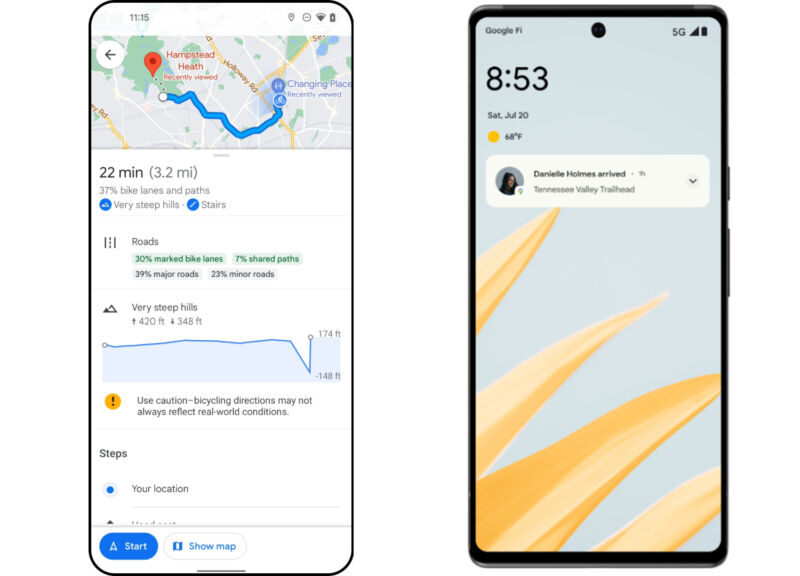


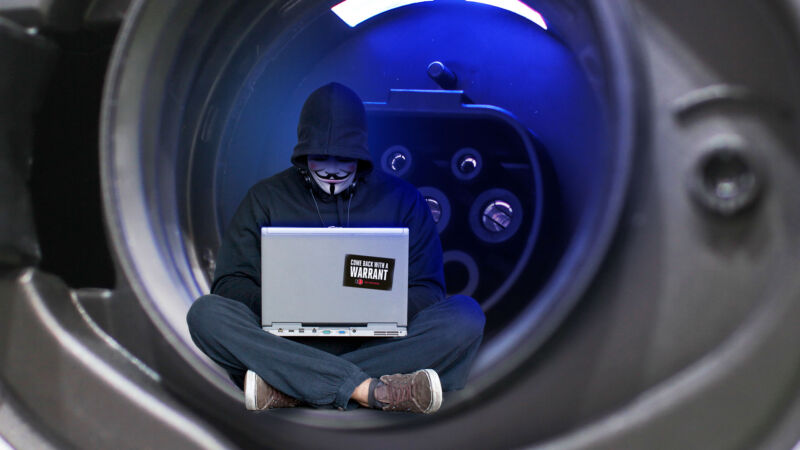





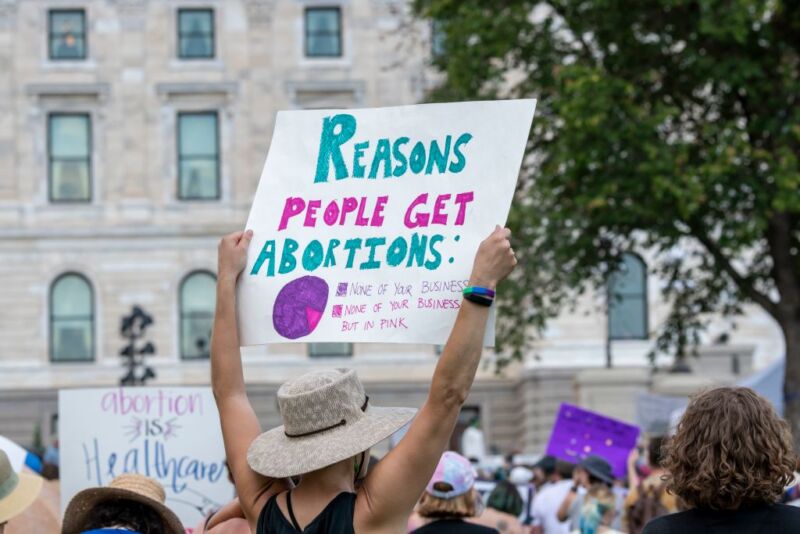


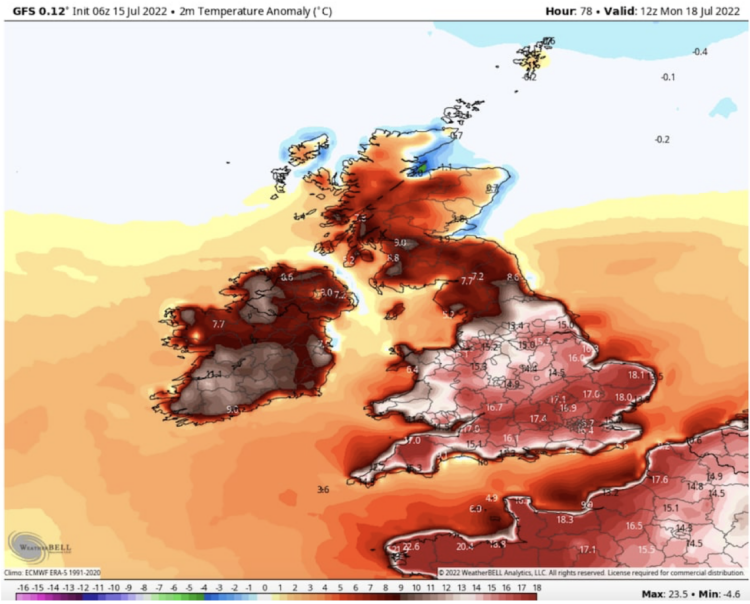

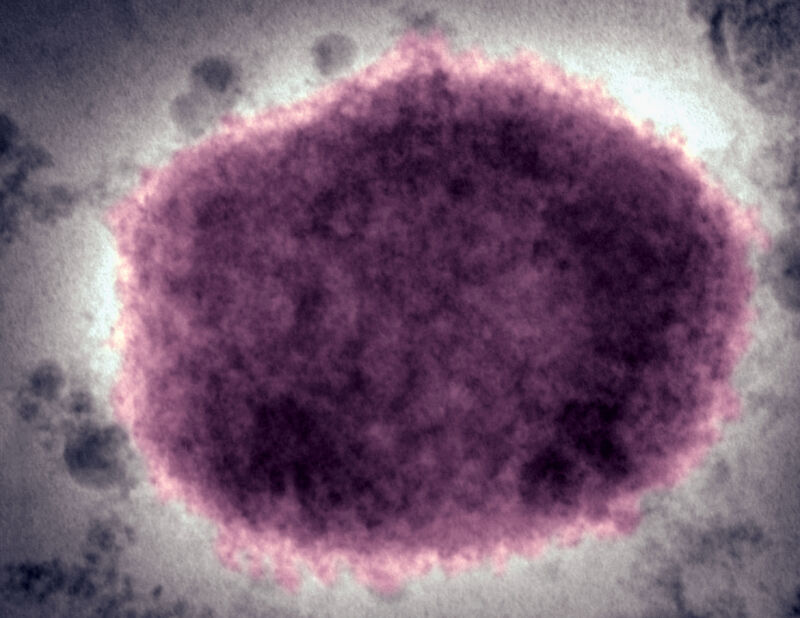





/cdn.vox-cdn.com/uploads/chorus_asset/file/23887733/GettyImages_1409603369.jpg) Pablo Blazquez Dominguez/Getty Images
Pablo Blazquez Dominguez/Getty Images
/cdn.vox-cdn.com/uploads/chorus_asset/file/23886800/GettyImages_1241976831.jpg) Aaron Chown/PA Images via Getty Images
Aaron Chown/PA Images via Getty Images
/cdn.vox-cdn.com/uploads/chorus_asset/file/23886892/GettyImages_1241979455.jpg) Angel Garcia/Bloomberg via Getty Images
Angel Garcia/Bloomberg via Getty Images