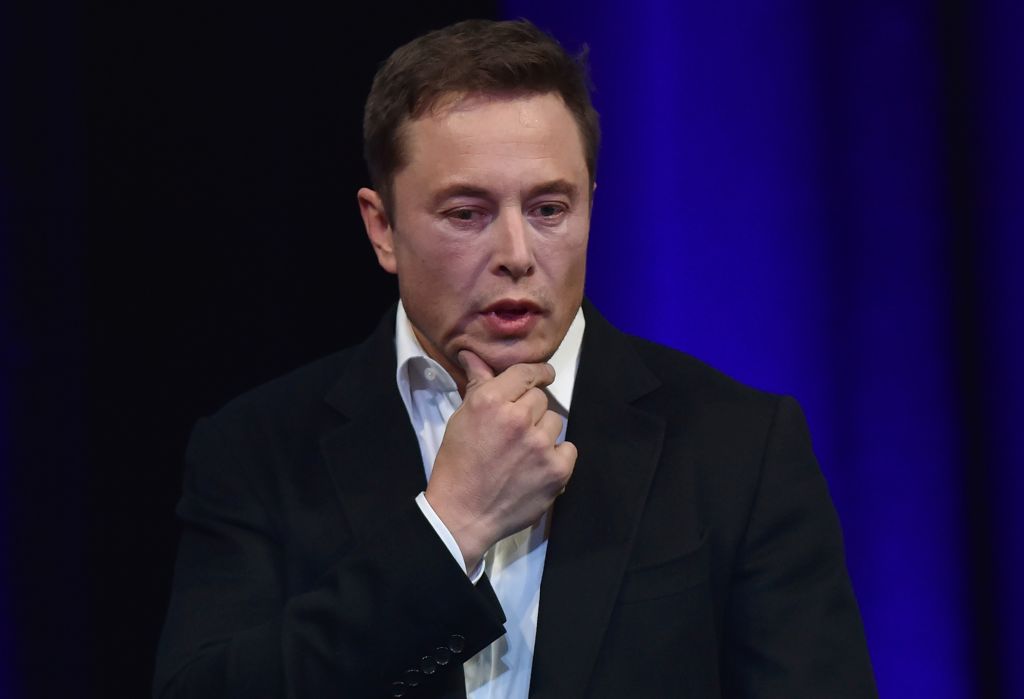
Having gutted Twitter's staff, Elon Musk told remaining employees he plans to hire new engineers and salespeople, The Verge reported Monday. "During an all-hands meeting with Twitter employees today, Musk said that the company is done with layoffs and actively recruiting for roles in engineering and sales and that employees are encouraged to make referrals, according to two people who attended and a partial recording obtained by The Verge," the report said.
Musk completed his $44 billion purchase of Twitter on October 27 and laid off about half of the company's 7,500 employees. He sent an ultimatum to the remaining staff last week, saying they must commit to "working long hours at high intensity" to keep their jobs; the ultimatum came with the choice of staying at the company or resigning with three months of severance.
Some sales employees who opted to stay after Musk's ultimatum were reportedly laid off shortly after. With the latest departures, Twitter was reportedly left with about 2,700 employees. Musk also laid off about 5,000 contractors and banned remote work, while warning staff of a "dire" economic outlook.
Enlarge / An astronomical clock in Prague, Czech Republic. (credit: Getty Images)
There are not many things you can get Facebook, Google, the United States, France, and Linus Torvalds to agree on, but one of them has come to pass.
A near-unanimous vote on Friday in Versailles, France, by parties to the International Bureau of Weights and Measures (BIPM in its native French) on Resolution 4 means that starting in 2035, the leap second, the remarkably complicated way of aligning the Earth's inconsistent rotation with atomic-precision timekeeping, will see its use discontinued. Coordinated Universal Time, or UTC, will run without them until 2135. It was unclear whether any leap seconds might occur before then, though it seems unlikely.
The assumption is that within those 100 years, time-focused scientists (metrologists) will have found a way to synchronize time as measured by humans to time as experienced by our planet orbiting the Sun. But most people will not notice any difference at all, even as the time difference could reach up to one minute by the end of that 100 years.
Enlarge / Pfizer CEO Albert Bourla talks during a press conference with the European Commission president after a visit to oversee the production of the Pfizer-BioNtech COVID-19 vaccine at the factory of US pharmaceutical company Pfizer, in Puurs, on April 23, 2021. (credit: Getty | John Thys)
Pfizer CEO Albert Bourla claimed at a news event last week that the company's COVID-19 vaccines will continue to be "free to all Americans," despite the company's plan to raise the price of the vaccine roughly 400 percent—a price difference that will be picked up by health insurers.
The company said in October that it plans to raise the price of a dose of its COVID-19 vaccine from about $30 to somewhere between $110 and $130 as it moves the shots to the commercial market next year.
Until now, all COVID-19 vaccines in the US have been bought by the US government, which paid $30.48 per dose in its latest vaccine supply agreement from June. The US government had previously paid $24 per dose in July 2021 and $19.50 per dose in July 2020. The government offered all the doses to Americans for free.
Chris Dalla Riva analyzed key changes in songs that made the Billboard Hot 100, between 1958 and 2022. Key changes are near non-existent after 2010. The most interesting part is why:
Thus, if you changed the key of “Juicy,” Biggie wouldn’t necessarily have to change how he raps, but if you changed the key of “Over the Rainbow,” Judy Garland would have to sing different pitches. If you picked the wrong key, those pitches might be outside of her vocal range. In short, key doesn’t matter as much in hip-hop.
As hip-hop grew in popularity, the use of computers in recording also exploded too. Whereas the guitar and piano lend themselves to certain keys, the computer is key-agnostic. If I record a song in the key of C major into digital recording software, like Logic or ProTools, and then decide I don’t like that key, I don’t have to play it again in that new key. I can just use my software to shift it into that different key. I’m no longer constrained by my instrument.
Earlier this week, we wrote about how the EU seemed to practically be salivating over getting its hands on Elon Musk now that he owned Twitter. The first half of that post was about how he was at risk of running afoul of his GDPR commitments, potentially allowing the jurisdiction over GDPR enforcement to fall away from just the Irish data protection authority and to any other EU authority. That’s notable because many people believe that the Irish DPC is way too friendly to the companies they regulate. For the time being, Musk may have staved off the GDPR issue by naming an “acting data protection officer” (DPO) to be the main point of contact with the Irish.
However, much of the article talked about the upcoming Digital Services Act in the EU, and how Elon had (ridiculously, stupidly) said publicly that he completely agreed with its approach, even as Twitter had been actively pushing back on the problems with the DSA.
Some aspects of the DSA have now officially entered into force, though it’s all really in a preliminary state, as the really serious stuff doesn’t kick off until early 2024. But there are some requirements in the meantime, including Twitter needing to report how many active users it has to the European Commission to determine if it’s designated as a “Very Large Online Platform” (VLOP), though I prefer the comment a friend in the space recently made calling them ROUS (from The Princess Bride).
As TechCrunch is reporting, it’s unclear how much Twitter has done to be ready to comply, as the entire drama with Musk and the takeover going back many months likely stalled some of the decision-making. And… that might be a problem if no one is left to pay attention:
TechCrunch has also heard concerns about Twitter’s ability to comply with the DSA from another direction. A source familiar with how Twitter was preparing for dialled up EU regulation — pre-Musk takeover — told us “lots” of work had been done but said it’s all been “stymied” by the transition.
As if on cue, the European Parliament (not the European Commission…) has now decided to summon Musk to show up and explain what the fuck he’s doing.
While much of this is just grandstanding, not unlike when Congress summons tech CEOs, it’s not at all clear that Musk has any clue how to actually deal with the EU, and the fairly complex nature of the DSA and what’s expected of him (if you’re interested in understanding just how messy the DSA is, listen to our recent podcast with two DSA experts).
Musk, of course, will say that he has plenty of experience dealing with foreign regulators and policymakers (and enforcers) as he’s had to deal with them at Tesla and SpaceX. But everything he’s said and done to date suggests he has no clue about the details and nuances (and political realities) as it pertains to regulations around speech, the internet, and social media. I can’t imagine any of this will end well.
With a lack of national and local precautionary guidance, individuals are now on their own to gauge risk and protection. However, Americans have more tools in their arsenal when it comes to protecting themselves against Covid this holiday season: vaccines, boosters, tests, masks, knowledge of how the virus spreads. Keep these best practices in mind, experts say, and you can celebrate like it’s 2019. “This is going to be the first year we’re actually going to go visit our family for Christmas because we haven’t done it the previous two years because I’ve been too nervous,” says Sarah Ruff, a family medicine physician at UNC Family Medicine.“There’s really no reason to not do it this year because we do have all these tools.”
Keep your most vulnerable guests top of mind
The amount of risk the group is willing to take should depend on the guest list. Think about the people who will attend each gathering this season. Elderly people, those who are immunocompromised or who have other medical conditions, or newborns (vaccines are available to babies 6 months or older) are most susceptible to severe cases of Covid-19. Take precautions in order to best protect them. “It does make sense to think of the most vulnerable person when you’re trying to make decisions about what precautions to take,” Ruff says.
Make a plan with attendees on precautions. Maybe you’ll all take a rapid test before coming inside, maybe you’ll wear masks when you’re near Grandma, maybe your host will keep the windows open, or maybe you’ll all choose to gather outside. Getting vaccinated, boosted, and wearing masks in public places prior to the gathering should be sufficient protection for most families, even those with older relatives, Ruff says.
Make sure you’re up to date with your Covid booster (and flu shot)
The most effective way to avoid Covid-19 this holiday season is to stay up-to-date on your vaccines, says Bernard Camins, the medical director for infection prevention at the Mount Sinai Health System. Most people are eligible for a bivalent booster at least two months after completing their first two shots, according to the Centers for Disease Control and Prevention.
In an October press briefing, White House Covid-19 response coordinator Ashish Jha recommended Americans receive their boosters before Thanksgiving in order to gain the most protection this holiday season. If you recently recovered from Covid, wait three months before getting boosted, Camins says. Schedule your annual flu shot, too, which you can get the same day as your Covid booster.
Be strategic with your masking
While nationwide mask mandates have expired, it’s still a good idea to keep N95 or KN95 masks on hand for travel purposes. Wear a mask at the airport and during takeoff and landing or if the flight is short, keep it on for the entire flight, Camins says. “It’s relatively safe if you’re up in the air because the air is HEPA-filtered,” he says. “When you’re taxiing, when you’re deplaning, when they turn off the engines, you want to make sure your mask is on.”
For train or bus travel, where the air isn’t as well-ventilated as on planes, Camins suggests masking for the entire trip.
Ensure all guests test for Covid-19 before the event
According to CDC guidelines, if you have symptoms of Covid-19, test immediately. If you’ve been exposed, wait five days and then test. However, if you’ve been around other people lately in any capacity, “you can no longer tell who among your vicinity was positive for Covid,” Camins says. “You just assume you were exposed prior to your event.” He suggests serial testing in the days leading up to your party. For example, if you’re gathering for Thanksgiving, do a rapid test on the Sunday and Tuesday before the holiday, and then once more on Thanksgiving, he says.
If you’re showing symptoms such as fever, body ache, sore throat, cough, and chills, but are still testing negative for Covid-19, you should consider staying home. Because RSV and flu are circulating, it’s possible you could risk infecting a loved one with another respiratory virus. “You shouldn’t be going anywhere if you have a fever,” Ruff says. “You want to make sure you’re at least 24 hours [without] having a fever.”
For people with common colds, Camins says as long as they wear a mask, they can attend. Ruff says to be transparent with your family in such a case and ask them if they’re comfortable with you coming.
Stay aware of certain Covid trends
Since reported case data isn’t released as regularly as in the past, and is likely an undercount due to rapid tests taken at home, Ruff says to keep an eye on the CDC Community Level, which measures hospitalizations and cases and offers prevention strategies for each tier of community spread. You can enter the state and county where you’ll be having Thanksgiving to check community levels and determine what amount of precaution you’ll take. “If we’re going to a higher-risk area, it may be worth putting your mask on when you’re going out in public around people you don’t know, and maybe you choose not to wear your mask around your family who’s all vaccinated,” Ruff says, “but when we all go out as a big group, maybe you do.”
For all intents and purposes, Camins says this holiday season is a return to form. Just take a little extra care in the days leading up to your gathering and you can celebrate like years past. “Can people sit around the table again instead of having the grandma and grandpa eating by themselves in another room?” Camins says. “I think we can.”
Even Better is here to offer deeply sourced, actionable advice for helping you live a better life. Do you have a question on money and work; friends, family, and community; or personal growth and health? Send us your question by filling out this form. We might turn it into a story.
Over the last week or so, I keep hearing about a big push among activists and lawmakers to try to get the Kids Online Safety Act (KOSA) into the year-end “must pass” omnibus bill. Earlier this week, one of the main parents pushing for the bill went on Jake Tapper’s show on CNN and stumped for it. And, the latest report from Axios confirms that lawmakers are looking to include it in the lameduck omnibus, or possibly the NDAA (despite it having absolutely nothing to do with defense spending).
The likeliest path forward for the bills is for them to be added to the year-end defense or spending bill. “We’re at a point where a combination of the victims, and the technology, make it absolutely mandatory we move forward,” Sen. Richard Blumenthal (D-Conn.), a sponsor of the Kids Online Safety Act, told reporters on Capitol Hill Tuesday.
“I think it’s going to move,” Stephen Balkam, CEO of the Family Online Safety Institute, said this week at an event in Washington. “I think it could actually go — it’s one of those very rare pieces of legislation that is getting bipartisan support.”
Anyway, let’s be clear about all this: the people pushing for KOSA are legitimately worried about the safety of kids online. And many of those involved have stories of real trauma. But their stumping for KOSA is misguided. It will not help protect children. It will make things much more dangerous for children. It’s an extraordinarily dangerous bill for kids (and adults).
Back in February, I detailed just how dangerous this bill is, in that it tries to deal with “protecting children” by pushing websites to more actively surveil everyone. Many of the people pushing for the bill, including the one who went on CNN this week, talk about children who have died by suicide. Which is, obviously, quite tragic. But all of it seems to assume (falsely) that suicide prevention is simply a matter of internet companies somehow… spying on their kids more. It’s not that simple. Indeed, the greater surveillance has way more consequences for tons of other people, including kids who also need to learn the value of privacy.
If you dig into the language of KOSA, you quickly realize how problematic it would be in practice. It uses extremely vague and fuzzy language that will create dangerous problems. In earlier versions of the bill, people quickly pointed out that some of the surveillance provisions would force companies to reveal information about kids to their parents — potentially including things that might “out” LGBTQ kids to their parents. That should be seen as problematic for obvious reasons. The bill was amended to effectively say “but don’t do that,” but still leaves things vague enough that companies are caught in an impossible position.
Now the end result is basically “don’t have anyone on your platform end up doing something bad.” But, how does that work in practice?
Advocates for the bill keep saying “it just imposes a ‘duty of care'” on platforms. But that misunderstands basically everything about everything. A “duty of care” is one of those things that sounds good to people who have no idea how anything works. As we’ve noted, a duty of care is the “friendly sounding way” to threaten free speech and innovation. That’s because whether or not you met your obligations is determined after something bad happened. And it will involve a long and costly legal battle to determine (in heightened circumstances, often involving a horrible incident) whether or not a website could have magically prevented a bad thing from happening. But, of course, in that context, the bad thing will have already happened, making it difficult to separate the website from the bad thing, and making it impossible to see whether or not the “bad thing” could have been reasonably foreseen.
But, at the very least, it means that any time anything bad happens that is even remotely connected to a website, the website gets sued and has to convince a court that it took appropriate measures. What that means in practice is that websites get ridiculously restrictive to avoid any possible bad thing from happening — in the process limiting tons of good stuff as well.
The whole bill is designed to do two very silly things: make it nearly impossible for websites to offer something new and, even worse, the bill looks to offload any blame on any bad thing on those websites. It especially seeks to remove blame from parents for failing to do their job as a parent. It is the ultimate “let’s just blame the internet for anything bad” bill.
As I noted a couple months ago, the internet is not Disneyland. We shouldn’t want to make it Disneyland, because if we do, we lose a lot. Bad things happen in the world. And sometimes there’s nothing to blame for the bad thing happening.
I don’t talk about it much, but in high school a friend died by suicide. It’s not worth getting into the details, but the suicide was done in a manner designed to make someone else feel terrible as well (and cast a pall of “blame” on that person — which was traumatic for all involved). But, one thing that was an important lesson is that if you spend all your time looking to blame people for someone’s death by suicide, you’re not going to do much good, and, in fact, it creates this unfortunate scenario where it encourages others to consider suicide as a way to “get back” at others. That’s not helpful at all. For anyone.
Unfortunately, people do die by suicide. And we should be focusing more effort on helping people get through difficult times, and making sure that therapy and counselling is available to all who need it. But trying to retroactively hold social media companies to account for those cases, because they enabled people to talk to each other, throws out so much useful and good — including all of the people who were helped to move away from potential suicidal ideation by finding a community or a tribe who better understood them. Or those who found resources to help them through those difficult times.
Under a bill like KOSA all of that becomes more difficult, while actively encouraging greater surveillance and less privacy. It’s not a good approach.
And it’s especially ridiculous for such a bill to be rushed through via a must-pass bill, rather than having the kind of debate and discussion that such a serious issue not only deserves, but requires.
But, of course, almost no one wants to speak out against KOSA, because the media and politicians trot out parents who went through a truly traumatic experience, and no one wants to be seen as the person who is said to be standing in the way of that. But the simple fact is that KOSA will not magically prevent suicides. It might actually lead to more. And it will do many other damaging things in the meantime, including ramping up surveillance, limiting the ability of websites to innovate, and making it much more difficult for young people to find and connect with actual support and friends.
Enlarge / Winding up to catch a ninth (!) generation of Pokémon. (credit: Andrew Cunningham)
The Pokémon franchise has been nudging closer and closer to a fully open world since Sword and Shield appeared on the Switch in 2019. Those games and their DLC packs introduced a few dedicated free-range areas where you could roam around mostly at your leisure, but towns and caves and other areas were still strictly linear.
Pokémon Legends: Arceus came even closer. Nearly all of its world map was a free-roaming open area, but the sections were still cordoned off from one another by way of a central hub town. More importantly, progression was still largely linear—the game still introduced you to each area in a set order based on the story quests you had accomplished.
Pokémon Scarlet and Violet, both coming to the Switch on November 18, finally make the transition to a fully open world. After accomplishing a handful of introductory quests, the vast majority of the world map opens up to you, and you can accomplish most of the game's quests in whatever order you want.
House Speaker Nancy Pelosi acknowledges applause from lawmakers after speaking on the House floor at the US Capitol on November 17. | Carolyn Kaster/AP
Pelosi is stepping down as Democratic leader. Her successor has big shoes to fill.
“With great confidence in our caucus, I will not seek reelection to Democratic leadership in the next Congress,” Pelosi said in remarks announcing the move. “For me, the hour has come for a new generation to lead the Democratic caucus I so greatly respect.”
Pelosi’s decision, while somewhat anticipated, still marks a seismic change for the caucus.
When the party won back the House in 2018, Pelosi said she wouldn’t stay in the role of Democratic leader for more than four years. Back then, she promised to be a bridge leader, paving the way for a new generation of talent. In recent days, it was unclear whether she’d stand by this position given Democrats’ stronger-than-expected performance in the midterms and calls from some members for her to keep her role.
Her shoes, ultimately, will be exceedingly tough ones to fill. Pelosi has led her caucus since 2007, when she was the first woman ever elected as speaker. Since then, she’s become an outsized presence, synonymous with her unwillingness to give in to Republican threats on issues like government shutdowns, and her effectiveness shepherding a fractious caucus through significant legislative achievements, including the Inflation Reduction Act. Republicans, in turn, have vilified her throughout her tenure as the top Democrat, making Pelosi one of their favorite political targets.
Following her decision to leave this role, the question turns to who will replace Pelosi, how they’ll be able to unite a still-divided group of Democrats in the House, and whether they can provide the same formidable opposition to the GOP.
Who will replace her?
The next leader could well be Rep. Hakeem Jeffries (D-NY), who’s long been the rumored favorite for the role and is Pelosi’s handpicked successor, according to Puck News. Jeffries, a New York lawmaker who was just elected for his sixth term, has been reaching out to fellow Democrats about his interest in the position and consolidating support. Currently, he’s the fifth-ranking Democrat as the head of the House Democratic Caucus, and is perhaps best known for serving as a manager during Trump’s first impeachment trial.
Jeffries, along with Reps. Katherine Clark (D-MA) and Pete Aguilar (D-CA), compose a younger trio of lawmakers who could take on the leadership roles currently held by Pelosi, House Majority Leader Steny Hoyer (D-MD), and House Majority Whip Jim Clyburn (D-SC).
Younger members in the House, like 52-year-old Jefferies, have been waiting years for changes at the top in order to allow a new generation of lawmakers to take on these positions. Given Democrats’ lack of term limits for leadership positions, Pelosi’s retirement marks their best chance — and perhaps only chance for years to come — to move up.
What’s next for Pelosi herself?
Pelosi is leaving her job as leader, but she’ll stay on as a House representative, offering counsel both to her own members as well as President Joe Biden. As a speaker emeritus, Pelosi will help guide the transition to her successor and help Democrats navigate their roles in the minority countering House Republicans and likely Speaker Kevin McCarthy. Historically, there’s been frustration about the lack of pipeline for ambitious Democrats to rise, and Pelosi’s decision now enables her to pass on knowledge and strategy while allowing new leaders to take the helm.
Will the divisions in the party be containable?
One of the challenges of leadership is uniting a wide-ranging Democratic caucus that includes both staunch progressives like the Squad and more moderate members like Rep. Josh Gottheimer, one of the heads of the bipartisan Problem Solver’s Caucus.
Although Democrats have had their fair share of differences, Pelosi managed to build trust and influence across the different factions in the caucus and keep people united on tough votes.
Pelosi’s record and experience enabled her to establish these ties: As Ella Nilsen explained for Vox, she was an early member of the progressive caucus and one of the most outspoken lawmakers against the Iraq War. That history, combined with the more left-leaning politics of newer progressives helped her find a middle ground: Among Democrats, she was seen as neither overly radical nor too conservative. In past contests for the speakership, she was described by progressives like Rep. Alexandria Ocasio-Cortez as the most progressive option on the docket.
Always pragmatic, Pelosi also doled out committee assignments and fundraising support as a way of speaking to various lawmakers’ interests and concerns. She stood her ground in the face of pressure from both wings of Democrats as well, helping them deliver on key priorities. In 2020, for example, Pelosi helped secure a Covid-19 aid deal after moderates inked out a compromise and made it one of their chief issues.
During the last two years, Pelosi’s kept her caucus united to advance the American Rescue Plan, the IRA, and the infrastructure bill, the last of which a handful of progressives voted against. Previously, she helped secure votes for the Affordable Care Act in 2010, another effort that involved extensive negotiations with different lawmakers aimed at focusing on their policy interests.
Her successor will have to do the same to present a united front against Republicans and to advance Democratic policies should they find themselves back in the majority.
Will the new leader effectively push back on Republicans?
Pelosi has established herself as unafraid to call out Republicans, including during the Trump presidency when she was one of his chief antagonists. During his administration, Pelosi notably worked to put the responsibility for one of the longest government shutdowns in American history on his shoulders, and steered the House through two impeachment trials confronting the former president on his abuse of power related both to foreign policy and the January 6, 2021, insurrection.
This year, she’s been a champion of the January 6 committee, with video from the panel highlighting her role in criticizing Trump and attempting to call for National Guard back-up from surrounding states.
Pelosi’s outspoken critiques of the GOP and the prominence of her position have made her a prime target of Republican political attacks. For years, Republicans have sought to vilify Pelosi in campaign ads and rhetoric that have treated her as one of their biggest opponents on the left. She’s historically embraced this role, encouraging members to use her as a foil, and to highlight their opposition to her to win reelection when necessary.
Recently, the attacks took a more sinister turn, seemingly inspiring the assault of her husband, and underscoring the connection between Republican rhetoric and political violence. “We are all grateful for all the prayers and well wishes as [Paul] continues his recovery,” Pelosi said in her remarks.
The new leader will have to demonstrate that they’re able to stand their ground against the GOP, which is set to mount an aggressive and chaotic series of investigations against the Biden administration in the next two years. That’s likely to include outspoken pushback against these inquiries, and a focus on criticizing bad-faith efforts to investigate and even impeach administration officials.
UPSIDE Foods’ cultivated chicken made from growing animal cells. | Terry Chea/AP Photo
The FDA has given a California startup approval to sell its lab-grown “cultivated” chicken. Now the USDA has to weigh in.
On Wednesday, the US Food and Drug Administration (FDA) gave approval to Upside Foods, a startup based in the San Francisco area, to sell its lab-grown, or “cultivated,” chicken. The product — which is biologically indistinguishable from chicken meat taken from a slaughtered bird — is made by growing animal cells in bioreactors, which are fed a mix of nutrients to develop into fat and muscle tissue. Though the company still needs USDA approval before it can sell to consumers, it’s a major step forward in the race to what could be an ethically and environmentally superior form of meat.
“We evaluated the information Upside Foods submitted to the agency and have no further questions at this time about the firm’s safety conclusion,” the FDA announced in a statement Wednesday. “The firm will use animal cell culture technology to take living cells from chickens and grow the cells in a controlled environment to make the cultured animal cell food.”
In a press release, Upside Foods said it will now work with the USDA to finalize the approval process before it can finally be sold to consumers. If granted USDA approval, their chicken will likely first be sold in small quantities at Atelier Crenn, a restaurant run by Michelin-starred chef Dominique Crenn, who announced a partnership with Upside Foods late last year.
According to Wired, Upside’s cultivated chicken has been approved through the FDA’s “generally recognized as safe” process, or GRAS, in which the FDA reviews a food company’s production process and final product and gives it a “no further questions” letter if it’s deemed safe to consume.
“Today we are one step closer to your dining tables as Upside Foods becomes the first company in the world to receive the US FDA green light — that means the FDA has evaluated our production process and accepts our conclusion that our cultivated chicken is safe to eat,” Upside wrote on its website.
In late 2020, Singapore became the first country to approve the sale of cultivated meat, a chicken product from the US-based startup Eat Just, which has been sold at a loss in small quantities at a high-end restaurant, a hotel, and through a food delivery service in the Southeast Asian city-state.
The taste of cultivated meat
Earlier this year, I had an opportunity to taste Upside’s cultivated chicken, and a few of its other products, at the company’s Emeryville, California, production facility outside San Francisco. I’ve been vegan for 15 years, but it reminded me of the poultry of my youth — gamy and crispy. Upside Foods’ production facility can produce around 50,000 pounds of cultivated meat a year, and the startup plans to eventually expand to produce 400,000 pounds of meat a year.
The novel meat goes by many names: lab-grown, cultivated, cell-based, and cell-cultured, to list just a few. For years, the “lab-grown” descriptor was accurate, given that efforts hadn’t gone much further than the lab. Now, some of the 100 startups around the world working to get it on your dinner plate are moving out of the lab and into small production facilities as they gear up for regulatory approval. But their offerings are wholly distinct from the vast array of plant-based meat products already on the market, like those from Beyond Meat and Impossible Foods, which are made with plant ingredients like soy, wheat, peas, beans, starches, and oil.
Cultivated meat, on the other hand, is real meat, but made without slaughtering or harming any animals. Startups take a biopsy of a living animal, a minimally invasive procedure, and create cell lines to avoid the need for continual biopsies. The cells are then grown in bioreactors — large stainless steel tanks — meant to mimic the inside of an animal, meaning the cells are kept at a certain temperature and fed a mix of nutrients, like amino acids, sugars, salt, and proteins, to help them proliferate and develop into fat or muscle tissue.
The FDA approval is the culmination of seven years of R&D for Upside Foods, formerly known as Memphis Meats, which has attracted more than $600 million in investments, including from Bill Gates, Richard Branson, and the meat giant Cargill. And the approval comes almost a decade after the cultivated meat field held its unofficial kickoff in London, when Dutch scientist Mark Post, a pioneer in the industry who co-founded the startup Mosa Meat, debuted a $325,000 cultivated hamburger in 2013.
Since then, cultivated meat companies have sprouted up around the world, concentrated in the US, Europe, Israel, and Singapore, armed with billions in venture capital funding.
Designing the meat of the future
Despite the pending US regulatory approval and enormous R&D war chest, you won’t find slaughter-free meat on grocery store shelves or fast food menus anytime soon; it’s still highly expensive to produce. Since the $325,000 burger in 2013, many startups have claimed they’ve been able to make it at a fraction of that cost, with estimates ranging from the tens of thousands of dollars per pound in the late 2010s down to thousands or hundreds of dollars per pound in the last few years.
Cultivated meat has long been promoted by its boosters as a technology that, if affordably produced at scale, could reduce our dependence on conventional animal agriculture and its multitude of social costs: environmental degradation, animal cruelty, and looming public health threats such as antibiotic resistance and zoonotic risk.
But as the hype around cell-cultured meat has been building over the last decade, so too has the skepticism. Some experts say startups will never be able to produce the stuff in large-enough quantities and at a low-enough price to ever displace conventional meat production. It’s a question of economic, manufacturing, and biological constraints.
Even some startups making cultivated meat are skeptical about the possibility of making 100 percent cultivated meat efficiently enough to compete with slaughtered meat on price, and are going the route of making “hybrid meat” products — that is, products mostly made from plants, with enough cultivated fat or muscle tissue sprinkled in to make it taste meatier than your average veggie burger.
Today’s announcement brings cultivated meat startups a step closer to testing the viability of their technology — and the prescience of their skeptics.
House Minority Leader Kevin McCarthy speaks at an election night event celebrating GOP gains in the 2022 midterms. | Tom Williams/CQ-Roll Call, Inc./Getty Images
Get ready for more oversight, investigations, and maybe even impeachment.
Democrats have lost control of the US House of Representatives and are now staring down at least two years of gridlock — and even more animosity — in Congress.
Republicans won’t have the large majority they hoped for ahead of Election Day, however. Democrats were projected to lose at least 10 seats in the House, according to the Cook Political Report. The wind appeared to be under the GOP’s wings in the final weeks of the campaign, as concerns about inflation dominated in the polls and their closing message on crime appeared to resonate. Republicans needed just five seats for control. With some races still uncalled, they’re not on track to get too many more than that.
It’s an unusual margin for the party of the incumbent president, which typically fares poorly in midterm elections, and especially so given President Joe Biden’s approval ratings, though slightly up from their previous low, are still underwater. But seemingly buoyed by their defense of abortion access, pro-democracy stance, and stylistic differences with the GOP, Democrats managed to run ahead of expectations.
The small Republican majority will mean the likelihood that major legislation is passed in the new Congress is slim, particularly because Democrats held the Senate — and Biden still has veto power, though he indicated on Twitter that he’s willing to work with Republicans if they come to the table to address “the need to lower costs, protect the right to choose, and preserve our democracy.”
But even with a small majority, Republicans will still have power over what comes up for votes, investigations, and oversight.
“They don’t hand the gavels out in small, medium, and large size. There’s one size gavel with the ability to subpoena and hold this government accountable,” current House Minority Leader Kevin McCarthy, who is in line to be the new House speaker, said on Fox News Wednesday night. “I believe that this conference will rally together.”
McCarthy has also already indicated that he intends to refuse any increase to the debt ceiling absent cuts to programs that are priorities for Democrats, including clean energy investments and Social Security.
The most significant consequence of Republican control in the House might be even more partisan ugliness than we’ve seen over the last two years. In August, before the attack on House Speaker Nancy Pelosi’s husband, McCarthy gave a preview of what’s to come: “I want you to watch Nancy Pelosi hand me that gavel. It will be hard not to hit her with it,” he said in audio posted to Twitter by a Main Street Nashville reporter.
Republicans are ready to take revenge
Republicans are coming into power ready to get back at Democrats for what they perceive as four years of overreach, including their two impeachments of former President Donald Trump (with 10 Republican votes on the second occasion) and their investigation of the attack on the US Capitol on January 6, 2021.
Biden and his family — including the business dealings of the president’s son, Hunter Biden — are Republicans’ top targets. They also want to probe the origins of Covid-19 and the US’s messy withdrawal from Afghanistan last year. Rep. Jim Jordan (R-OH) is expected to lead a broad investigation of the Justice Department and the FBI following the August raid on Mar-a-Lago, which led to calls from Trump-aligned candidates to “defund the FBI.”
In July, some Republicans were also pushing for an investigation of the House select committee investigating January 6, suggesting it might involve subpoenaing members of that committee, including outgoing Reps. Liz Cheney of Wyoming and Adam Kinzinger of Illinois once they are private citizens next year. They were also considering whether to investigate Pelosi’s role in Capitol security enforcement; intelligence and security failures; and the treatment of insurrectionists who have been jailed for their involvement, seemingly in a bid to rewrite the narrative of what happened that day.
Trump allies have also reportedly advocated for hearings and investigations into his groundless claims of fraud in the 2020 election.
A big question is whether Republicans will move to impeach Biden. Republicans have already filed nine impeachment resolutions against Biden and officials in his administration, with Rep. Marjorie Taylor Greene (R-GA) alone accounting for five of them. But party leadership is hesitant to act on them too hastily. The GOP could also pursue the impeachment of members of Biden’s Cabinet, including Vice President Kamala Harris and Attorney General Merrick Garland, among others.
Still, all of that doesn’t have the White House too worried. Officials are reportedly hoping that Republican efforts will backfire and allow Biden to contrast himself against the party in the lead-up to 2024, should he choose to run.
Exactly how much House Republicans are able to accomplish will depend on their ability to remain relatively unified. Their caucus will have a lot of ideological diversity, and there are likely to be vocal members of the far right calling for even more aggressive action on impeachment and investigations, as well as more moderate members demanding the party avoid overreach. McCarthy already faced the first test of his ability to cater to various segments of his caucus in his bid for speakership, and it is unlikely to be his last.
Update, November 17, 10:22 am: This story was originally published on November 16 and has been updated to include comments from McCarthy and Biden reacting to Republicans capturing the House.
Enlarge / Parents work on their computers while their son entertains himself at their home in Boston in April 2020. (credit: Getty | Boston Globe)
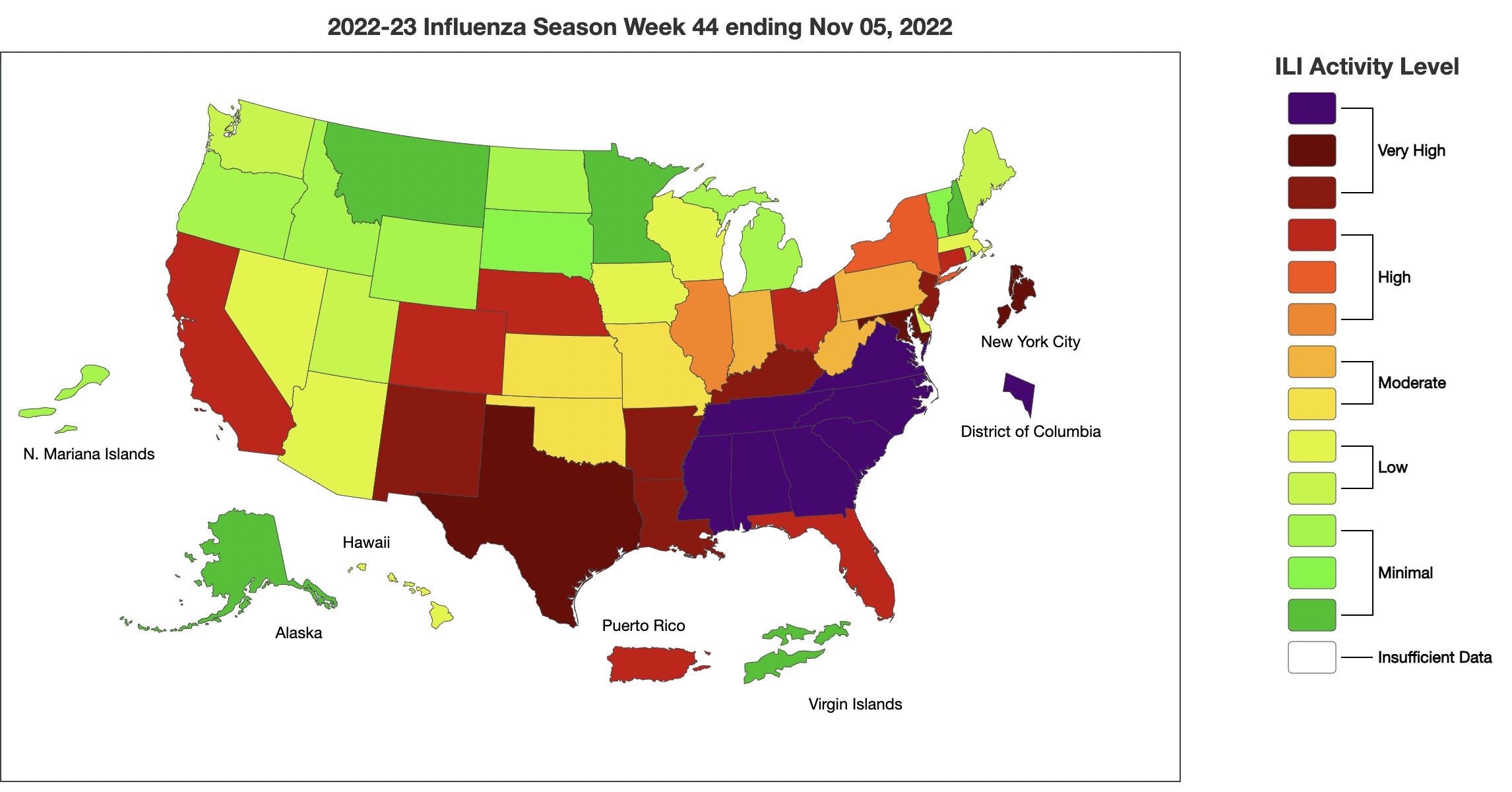
Respiratory illnesses are raging this fall, slamming children particularly hard. Cases of influenza-like illnesses are off to a startlingly strong and early start this season. RSV—respiratory syncytial (sin-SISH-uhl) virus—continues to skyrocket. A stew of SARS-CoV-2 variants is still simmering in the background. And the rabble of usual cold-season viruses, such as rhinoviruses and enteroviruses, is also making the rounds.
With the surge in infections, children's hospitals around the country have reported being at capacity or overwhelmed, as Ars has reported before. But another effect of the crush of viruses is a squeeze on the workforce. As The Washington Post first reported Tuesday, the US broke its record last month for people missing work due to childcare problems—such as having children home sick and childcare facilities or schools shuttered due to staffing shortages and sickness.
In October, more than 100,000 employed Americans missed work for childcare-related problems, according to data from the US Bureau of Labor Statistics. That is more missing workers than in any other month in recent records, including the entirety of the COVID-19 pandemic, during which many childcare facilities and schools closed down for extended periods. At the height of pandemic-related shutdowns in 2020, the number of Americans missing work for childcare problems only reached the low 90,000s.
We’ve already pointed out that the new Twitter under Elon Musk may be facing some big challenges from the FTC in the US. The company is under a consent decree, and it’s not clear that Musk is complying with the terms of the consent decree. And unlike SEC violations, violating an FTC consent decree can hurt. Between the FTC and the DOJ, they can make it hurt. The fact that basically all of the remaining Twitter execs whose necks were on the line for potentially violating the FTC consent decree quit at the same time should tell you something (I guarantee it told the FTC something).
That said, the FTC may be the least of Musk’s problems once the EU gets ahold of him. Natasha Lomas, over at TechCrunch, has an interesting article detailing how the Musk-run Twitter may be falling out of compliance with the GDPR in the EU. That’s potentially a big deal, given that the GDPR can lead to pretty massive fines.
Under the EU’s GDPR, meanwhile, Twitter is obliged — in just one very basic requirement — to have a data protection officer (DPO) to provide a contact point for regulators.
Hence the departure of Kieran, its first and only DPO since the role was created at the company in 2018, has not gone unnoticed by its data protection watchdog in Ireland — as we also reported Friday. But the Irish Data Protection Commission (DPC)’s concerns are already spiraling wider than Twitter’s compliance with notifications about core personnel: Last week, the authority — currently Twitter’s lead EU DPA under the GDPR’s OSS — put the social media firm on watch by signaling public concern when it said it would be putting questions to the company about the status of its main establishment in Ireland at a meeting scheduled for early this week, to discuss all the recent privacy changes since the Musk takeover.
Twitter has not commented publicly on the DPC’s warning nor on the departures of senior regulator-facing staffers. Indeed, since Musk took over, its communications department appears to have been dismantled and the company no longer responds to press requests for comment — so it was not possible to obtain an official statement from Twitter about these departures or on the substance of our report.
Not great! And, timing wise, it’s potentially much, much worse. Though, to understand why you need to know a bit of what’s been happening in the EU under the GDPR (something I’d pretty much guarantee that Musk has no idea about, though Twitter’s mostly departed legal team most likely did).
Right now there’s a bit of a turf war over the GDPR. You see, as it stands, under this “one-stop shop” (OSS) policy, Twitter really only has to deal with the Irish data protection authority (DPA). Indeed, a bunch of American tech companies have all basically done the same thing in the (possibly correct!) belief that the Irish DPC is probably the most business/innovation friendly of the various DPAs out there.
And that’s been pissing off Brussels. As we reported earlier this year, EU officials in Brussels have been whining that the GDPR has been a mess, but reading between the lines, they’re really complaining that the Irish DPC simply hasn’t been willing to stand up to American tech companies and fine them for things that the folks in Brussels are mad about. The technocrats in Brussels have been making noises about updating the GDPR to effectively take power out of the hands of the local DPAs, and to stop tech companies from forum shopping for DPAs.
So… that means, right now, the Irish DPC has tremendous incentive to find a head to scalp to prove that it’s up to the task of regulating data protection issues within American tech companies.
Enter Elon Musk (and exit everyone who could have explained this to him).
It could get even worse, as described above in the TechCrunch article, because by screwing up the OSS process, Twitter could open itself up to facing regulatory scrutiny from other, much, much, less forgiving DPAs:
If the DPC assesses (or is informed by Musk) that it no longer has its main establishment in Ireland, the company will crash out of the OSS — opening it up to being regulated by the data protection authority across the bloc’s 27 Member States, which would become competent to oversee its business.
In practice, that means any EU data protection authority would be able to act directly on concerns it has that local users’ data is at risk — with the power to instigate their own investigations and take enforcement actions. So Ireland’s more business-friendly regulator would no longer be leading the handling of any GDPR concerns about Twitter; probes could be simultaneously opened up all over the EU — including in Member States like France and Germany where data protection authorities have a reputation for being quicker to the punch (and/or more aggressive) in responding to complaints compared to Ireland.
If Twitter loses its ability to claim main establishment in Ireland, it would therefore drastically amp up the complexity, cost and risk of achieving GDPR compliance. (Reminder: Penalties under the regulation can scale up to 4% of annual global turnover — so these are not rules a normal CEO would ignore.)
So, all this fucking around seems likely to turn into “finding out” no matter what. The Irish DPC has strong incentives to make an example of Twitter… and if it does not, then lots of others may pile on instead.
That said, the TechCrunch article also includes some kind of eye-opening details that I don’t recall being mentioned publicly before:
The structure Twitter was relying upon to participate in the GDPR’s OSS includes a system of mandatory privacy and security reviews for new products — to enable the Irish entity to insert its feedback and exert influence over product development.
Under this framework, the board of the Irish company was able to raise concerns about planned new features ahead of launch, with input then fed back to U.S. product development teams to be incorporated into products before launch — thereby, assuming the protocol was correctly followed, empowering a local decision-making capacity inside the EU.
However, per our source, the situation at Twitter since Musk took over is that no information is being provided about what products are being worked on in the U.S. to the Irish entity’s management — nor is the Irish entity’s management able to provide any input into any product Musk is working on since it is not being kept apprised of what’s being developed.
Products in development at Twitter are not even being submitted into review pipelines anymore, much less getting reviews before being shipped, according to our source, who told us the system has essentially stopped operating.
So… that seems… not great? I mean, it is very much inline with the EU view of regulation where they often believe regulators should be seen as “partners” with the tech companies, but it still seems highly questionable that the company would allow Irish regulators “to insert… feedback and exert influence over product development.” If that’s an accurate portrayal of the situation, then it would be a good thing for Musk to cut it off, though it’s unclear if this was done on purpose or through sheer cluelessness.
And, of course, things are only likely to get worse for Elon in the EU. The DSA is coming into effect on January 1, 2024. And it’s going to be a huge mess. Like a tremendously big mess. But as we discussed on the podcast in that link, over the next year, there is still a lot of work to be done, often by the big tech companies, to define the exact parameters of how the DSA will work in practice.
Yes, there is some nonsense in the fact that the law is already passed and set to go into effect, but the actual rules are still being written, but that’s the process, so you have to deal with it. For the past few years, as we’ve pointed out, Twitter has been a vocal participant in the dialogue around the DSA, and has done a fair bit to push the final rules in better directions (it could have been much, much worse).
It’s unclear how (or if) an Elon-run Twitter will continue participating. Yes, back in May, Elon met with Thierry Breton, who is leading the process for the DSA, and made some monumentally stupid remarks saying he completely agreed with the DSA’s approach, which will lead to tremendous government-induced censorship. And Breton has been salivating ever since, even gleefully (and somewhat obnoxiously) tweeting about how the EU will control Twitter’s content moderation going forward:
None of that bodes well for Twitter in the EU going forward. Right now is when Twitter should be heavily engaged in helping to define the actual rules under the DSA and how the company will interact with EU enforcers. But I can’t imagine there are many people left at Twitter who even know this is happening.
Yes, I’m sure when the EU comes down on Elon’s Twitter, he’ll whine about the unfairness of government regulations. And, in some cases with the EU, he’s not wrong. But, he should at least be aware of the fucking process, and how it’s playing out right now, rather than just ignoring it entirely and then complaining when they crush him later.
Senate Minority Leader Mitch McConnell (R-KY) speaks to reporters after meeting with Senate Republicans at the Capitol on November 15, 2022, in Washington, DC. | Drew Angerer/Getty Images
They’re mad about the midterms, and the party’s lack of clear policy agenda.
After facing his first leadership challenge in 15 years, Senate Minority Leader Mitch McConnell has won reelection to that role, defeating a last minute bid from Sen. Rick Scott (R-FL).
Republicans elected McConnell 37-10-1, with one senator voting present, according to CNN. That vote followed a contentious lunch discussion on Tuesday as members of the party tried to reckon with a disappointing midterms performance that some blamed on the minority leader.
Those who opposed McConnell had a number of grievances: They saw him as responsible for Republicans’ failure to win any new seats in the upper chamber, arguing that he didn’t give candidates enough of an agenda to run on. They also wanted more control over policy going forward, saying he hasn’t been inclusive enough when it comes to establishing legislative priorities.
In an attempt to express his frustration, Scott, the head of the Republicans’ campaign arm, announced his challenge on Monday. “The status quo is broken and big change is needed. It’s time for new leadership in the Senate,” Scott said in a post that followed a vigorous three-and-a-half-hour lunch discussion, during which Republicans discussed what they needed to do differently in order to win in the future.
Scott’s candidacy was always a long shot. To win the minority leader position, he needed a majority of the 49-member conference, or at least 25 votes. In the end, he fell short, with just 10 Republicans — including Sens. Josh Hawley (R-MO), Mike Braun (R-IN), and Ron Johnson (R-WI) — supporting his candidacy. Some lawmakers, like Sen. Lindsey Graham (R-SC), had called for the leadership vote to be delayed until after the Georgia runoff, but a motion to push the vote failed as well.
McConnell was widely expected to win given the support he had from many members and his record as leader, including his success in stacking the courts with Republican judges. “I have the votes. I will be elected. The only issue is whether it will be sooner or later,” he emphasized during a press conference on Tuesday.
The Republican dissent — much like the conflict in the House, however — is a clear sign that certain lawmakers aren’t fully satisfied with how the party is being run, and signals more soul-searching about its direction ahead of 2024.
Why some Republicans are mad at McConnell
The frustration with McConnell centered on a few issues: First, that Republicans didn’t have a pitch to voters other than that they aren’t Democrats, and second, that the process for developing policy has been top-down.
“What leadership didn’t do on our side was give our candidates any affirmative agenda to run on that would actually appeal to working-class and independent voters,” Hawley, one of the vocal Scott supporters, told Vox.
Because they were in the minority during the current Congress, Republicans didn’t have legislative wins to emphasize like Democrats did, leading to disagreements between McConnell and Scott over what approach to take when it came to messaging.
The two have long clashed over whether Republicans should put forth a specific policy agenda explaining what they would do with a majority, or focus more broadly on attacks on Democrats and issues like people’s discontent with inflation. McConnell has favored the latter, while Scott introduced his own policy wish list earlier this year. Scott’s list included many policies that the party’s most traditional conservatives were against, and he garnered blowback, including a public rebuke from McConnell, for pushing unpopular proposals like sunsetting Social Security and Medicare.
This cycle, Republicans had a decent chance of winning back Senate control, but failed to do so after losing key states like New Hampshire, Pennsylvania, and Arizona, where candidates that the party chose were further to the right and dinged for being of poor quality. Since then, Republicans have been reflecting on the cause of such losses, as well as who is responsible for them.
McConnell this week emphasized, as he has before, that candidate quality was a serious problem for the conference, a subject he and Scott have also differed on previously. The National Republican Senatorial Committee, which Scott headed this past cycle, has been reluctant to get involved in Republican primaries,arguing that doing so disregards the will of the voters, while McConnell has advocated for steering voters toward candidates with the best chance of being competitive in general elections.
Separately, Republicans expressed concerns that the legislative process wasn’t an open one that factored in different members’ input. Multiple lawmakers noted that this experience could be improved to add in different people’s suggestions. Hawley said, too, that Republicans should stop supporting deals that give Democrats legislative wins.
“You’ve got to make your case clearly of what we’re for. I just believe that that has to be very interactive with all senators, it can’t be laid upon our lap in 2,000-page bills that none of us have any idea [of] or input in how we got that,” Braun, a Scott backer, told reporters.
There have been critiques in both parties about how the legislative process currently works, with policies often created by small groups sanctioned by party leaders, or designed by leaders themselves.
There have also been plenty of complaints about how last-minute deals between party bosses lead to sudden votes on massive bills like the bipartisan infrastructure package and the Inflation Reduction Act, which can force lawmakers to make a quick decision on lengthy policies they haven’t had time to review or debate.
Scott promised he wouldn’t surprise members with legislation, and that he wouldn’t pressure people to vote in a way that’s counter to their constituents’ interests.
McConnell — and others — pointed to his record
In his own defense, McConnell pointed to his record leading the conference in both the majority and minority — experience that’s included confirming multiple Supreme Court Justices and conservative judges.
“Obviously he got a lot of judges confirmed, three confirmed in the Supreme Court,” Sen. Tommy Tuberville (R-AL), who backed McConnell, told Vox. “Leadership roles are hard and you got 49 different personalities in there that everybody wants to do it their way, you’re herding cats.”
McConnell’s experience was clearly sufficient for many Republicans, who acknowledge that things could be improved, but say they’re still satisfied with the general leadership they have now. “I think a lot of it is people are disappointed with the outcome of the election,” Sen. John Cornyn (R-TX) told reporters regarding the discontent some members have expressed.
While McConnell decisively won Wednesday’s election, Republicans said they welcomed the discussion about how things were being run and how they could potentially be improved in the future. Many indicated that the party needed to do some self-reflection ahead of 2024, when they have a more favorable map and hope to avoid the losses they experienced this cycle.
“We’ve not been hitting it out of the park … for a couple of decades and that’s because we don’t have a game plan for Americans,” said Braun.
Update, November 16, 3:25 pm: This story has been updated to reflect that Sen. Mitch McConnell has won the race for GOP Senate minority leader against Sen. Rick Scott.
In-N-Out is In-N-At it again. In our many posts on the burger chain, we’ve discussed the company’s habit of what I’ll call trademark tourism. In posts that have focused primarily on its trademarks in Australia, we’ve detailed out how In-N-Out will conduct a popup restaurant in these countries that it otherwise has zero brick and mortar presence in, usually once a year or so, simply to satisfy the use-in-commerce requirements to retain its registered trademarks. This allows the company to lock up language and branding in a country it refuses to operate in generally, other than these bullshit events designed solely to allow it to keep these trademarks active and registered.
It should be obvious to everyone that this sucks. It wasn’t the point of trademark laws in general and it’s a naked attempt to game the system on a technicality. But In-N-Out keeps getting away with it, and not just in Australia.
Way back in 2019, Tim Horton’s asked asked Canada’s trademark office to review the trademark In-N-Out has for “double-double,” the chain’s famous burger order. As in Australia, In-N-Out has no permanent storefronts in Canada. But, just as in Australia, the company shows up with its popup trucks every once in a while to keep its registered mark.
In 2019, Tim Hortons Canadian IP Holdings Corporation requested a review of In-N-Out’s ownership of the trademark. If a company holds a trademark, but cannot show that it has been used over the last three years, the trademark can be expunged, leaving the word or phrase free game for another user to register. But the Canadian Intellectual Property Office decided that In-N-Out Burger had been actively using the trademark, because of the company’s annual burger sales at the Langley Good Times Cruise-In.
“In addition to using its cookout trucks in certain locations in the United States, the owner [In-N-Out Burger] has also used its cookout trucks to sell food products in Canada for many years,” wrote Timothy Stevenson, a member of the Trademarks Opposition Board, in a Nov. 1 ruling.
There’s a reason Tim Horton’s has an interest in this particular trademark. In Canada, a double-double is best known as a coffee order with two creams and two sugars.
Now, Tim Horton’s probably doesn’t want to risk a trademark infringement suit from In-N-Out, especially when the latter doesn’t even truly operate within the country other than this one event it does. An event in which In-N-Out makes no profit, by the way. The company covers its own costs and then the rest goes to charity. There’s nothing wrong with that, obviously, but I’m driving the point here that In-N-Out isn’t clinging to this trademark because it wants to do business in Canada. It clearly doesn’t.
The annual burger sale is not for profit. It covers its costs, and then any money above that goes to the Cruise-In Society, which distributes the cash to local charitable causes.
But according to the trademark office, that doesn’t matter. All that In-N-Out needs to do is participate in this charity event once every three years and it gets to keep its trademark.
Again, that isn’t what trademark laws are designed for. The public is very much not being served by allowing the company to retain the mark. For 364 days a year, there’s no public confusion even possible in Canada.
Trademark tourism of this kind simply shouldn’t be allowed, full stop.
Well, well, well. As you may recall, back in 2019 Devin Nunes and his bumbling lawyer Steven Biss sued Esquire magazine and reporter Ryan Lizza because Nunes really did not like this article about Nunes’ parents and their family farm, which is actually in Iowa, rather than California as many people believed. It’s an interesting article, in large part because of the way the town sort of freaked out when they realized Lizza was working on an article. The headline of the article talks about a “politically explosive secret,” and I took it to mean the fact that the farm that Nunes’ regularly talked about had (very quietly) moved to Iowa, rather than staying in California. But, there is at least a vague suggestion that the farm might hire undocumented workers, since that was standard practice for farms in that part of Iowa. Lizza’s article doesn’t come out and say that, but it does note this:
Other dairy farmers in the area helped me understand why the Nunes family might be so secretive about the farm: Midwestern dairies tend to run on undocumented labor. The northwest-Iowa dairy community is small. Most of the farmers know one another, and most belong to a regional trade group called the Western Iowa Dairy Alliance (though WIDA told me NuStar is not a member). One dairy farmer said that the threat of raids from ICE is so acute that WIDA members have discussed forming a NATO-like pact that would treat a raid on one dairy as a raid on all of them. The other pact members would provide labor to the raided dairy until it got back on its feet.
In every conversation I had with dairy farmers and industry insiders in northwest Iowa, it was taken as a fact that the local dairies are wholly dependent on undocumented labor. The low unemployment rate (it’s 2 percent in Osceola County), the low profit margins in the dairy business, and the global glut of milk that keeps prices low make hiring outside of the readily available pool of immigrants from Mexico and Guatemala unthinkable.
“Eighty percent of the Latino population out here in northwest Iowa is undocumented,” estimated one dairy farmer in the area who knows the Nunes family and often sees them while buying hay in nearby Rock Valley. “It would be great if we had enough unemployed Americans in northwest Iowa to milk the cows. But there’s just not. We have a very tight labor pool around here.” This person said the system was broken, leaving dairy farmers no choice. “I would love it if all my guys could be legal.”
And, at the time, you could see how Nunes, as a high ranking Republican Congress member, thought that… might not look good, given the GOP’s stance on undocumented workers and immigration.
So, Nunes sued. And then, his family and their farm also sued (also using Biss). The cases weren’t going well for Nunes or his family (they were going really poorly actually), but they got a reprieve thanks to a truly bizarre 8th Circuit ruling that argued that a tweet Lizza made after the lawsuit had been filed could be defamatory in “republishing” the article while on notice that Nunes claimed its false. You can read that link to understand why that ruling is bad and wrong, but the case has continued.
That said, there has been some craziness around the depositions in the case including one involving an attempted deposition of an employee of the Nunes’ farm, NuStar Farms. The employee showed up with a lawyer hired by the farm, who advised the employee to plead the 5th regarding questions about his documents. Steven Biss then interrupted the deposition, paused it, and when they came back the lawyer said he was no longer representing the employee. There was a lot more of this kind of thing as well. Just go read the original post.
Anyway, that case has continued, and as Liz Dye over at Above the Law first noted, if you’re going to sue someone claiming it’s defamation to merely suggest that all the farms around where your family’s farm is hire undocumented workers, well, whether or not your farm has undocumented workers is one of those things that’s going to come out in court.
Lizza and Hearst have filed quite an incredible motion for summary judgment. And, at the very least it suggests you’d have to be not very smart at all to sue for defamation over a claim regarding whether or not there were undocumented workers on your farm. While parts of the motion are redacted, it’s not too difficult to see that much of what’s in there suggests that the Nunes family not only likely hired undocumented workers, but they knew about it. Specifically, NuStar, after submitting an employee roster to the Social Security Agency was informed that the majority of their employees received “no match” notices, which does not definitively prove that they are undocumented, but certainly raises… concerns about their documentation.
NuStar produced a verified employee roster with their names, proffered SSNs, dates of
employment, and dates of birth… In response to the Court’s order, the SSA reported that
data for 76%, or 243 of 319, of NuStar employees listed did not match its records….
This data is consistent with two so-called “no-match” letters the SSA sent NuStar in November 2019 and December 2020… The letters state that, for tax year 2018, 20 of 27 NuStar employees (74%) did not match SSA records , and for tax year 2019, 14 of 19 employees (74%) did not match….
Also, during Nunes’ testimony, he revealed that he, personally had first-hand knowledge of his family’s hiring practices.
The Congressman testified that he has “firsthand knowledge” of how his family hires farm workers, from when he worked with them in California on ventures they “all… shared”:
I mean, I do have obviously firsthand knowledge… about when I did it way back in the day, the way that we did it. I was trained by my mother and my grandmother… on what to do. … I can’t imagine that they changed when they went there.”
As the lawyers note in the filing, the claim that the farm couldn’t possibly know whether or not the workers were undocumented is at odds with the law:
Perhaps, like the Congressman, the NuStar Plaintiffs will persist in claiming ignorance
until an employee has said out loud that they are unauthorized. But that is not even the standard
the government must meet to prosecute knowing hire violations under federal immigration law….
Nunes also claimed that as an employer to look into whether or not someone here is undocumented is not allowed. But the motion points out that there is, in fact, a E-Verify tool provided by the government that tons of employers used. Nunes, during deposition, dodged questions about using E-Verify, but the motion points out that he didn’t seem to feel that way as a Congressman who talked about verification all the time.
The Congressman’s position in this case is that any employer verification to “find out
whether somebody’s here illegally” is “discriminatory and illegal.”… (“Even if the
[verification] tool existed, [employers] can’t use it.”). His reasoning extends to the government’s
tool E-Verify, which is authorized by statute, allows instant comparison of the I-9 to government
records, and is used by over a million employers…. When asked if E-Verify may be
used lawfully, he would not answer directly, citing its “discriminatory nature” and saying “it is
unlawful to use E-Verify to target people . . . .” … (“Q. Would it surprise you to learn that
the United States government uses it? A. That’s your opinion.”). [REDACTED]
Because “there is no way” to verify someone’s status, he claims the only way one could
know a worker is undocumented is if the worker admits it—he has never known an “illegal”
worker because although he has “worked with people in agriculture . . . [his] whole life[,] [n]ot
one person ever came up to [him] and said, oh, I’m illegal. Not one.”
The above testimony is at odds with the Congressman’s 19-year career as a legislator,
when he continually tried to pass laws that addressed I-9 verification requirements for dairy
workers and confronted the reality that unauthorized workers are ubiquitous on dairy farms.
Between 2003 and 2019, the Congressman co-sponsored eight bills (voting for a ninth)
on the shortage of authorized farm workers, particularly in dairies….. The bills sought
to amend a visa (H-2A) that applies only where “there are not sufficient workers who are able,
willing, and qualified” in the U.S.—i.e., only where there is a labor shortage—to cover farm and
dairy workers. … These efforts mirror his public
statements where, [REDACTED] he approvingly cited the “Bracero Program,” which until 1964
allowed Mexican nationals to work in the United States on short contracts in agriculture…. The Congressman has said in interviews that “security along with a permit system
of some kind, and then a verification system” has “always been the solution.”
The Congressman’s legislative record and public statements belie his testimony that
verifying work eligibility is “illegal,” and “there is no way . . . to know” authorization status…. As a lawmaker, far from treating E-Verify as “illegal,” he tried three times to make an
electronic verification “system modeled after . . . E-Verify” mandatory, publicly lauding it.
… (saying on Fox News, E-Verify has “worked really, really well” and
should be mandatory).
Ooops.
Also, this:
The Congressman’s bills also contradict his testimony that “nobody’s hiring unauthorized
workers.” … The Farm Workforce Modernization Act (“FWMA”) of 2019 (which he cosponsored) and 2021 (which he voted for) would give status to unauthorized workers already
working in the U.S. yet who are “inadmissible or deportable from the United States,” i.e.,
unauthorized…. This would make little sense if “nobody” hired unauthorized workers
because it is “impossible,” as the Congressman claimed at his deposition…. (in Fox
News interview, saying, “[E]veryone knows that, in this country, we have got millions of people
that are here on either expired permits, or they never had a permit in the first place.”).
Oh, and this:
Six times, the Congressman tried to eliminate penalties for farm workers who falsified SSNs.
Huh. They also mention nine other bills he worked on regarding farm workers. Yet, in deposition when asked if he recalls any bills he co-sponsored related to labor in the agriculture industry, Nunes answered “No.” The filing notes that this deposition took place just a few months after he had voted for just such a bill.
There’s a lot more in the filing, but, really, it’s kind of astounding that this case was ever filed in the first place. It’s equally astounding that Biss and Nunes didn’t think that all of this would come out.
The government of India continues to increase its monitoring of residents’ day-to-day lives. Like pretty much every other country in the world, India relies on the internet to handle communications, data, and multiple services used by residents.
The government, under Prime Minister Narendra Modi, has become less democratic and more authoritarian. To keep dissent to a minimum, the government has repeatedly expanded its power to surveil internet traffic and communications, under the theory that doing so will somehow make the nation more secure.
Expansions of government power are codified with alarming regularity — much of it focused on controlling narratives, snooping on residents, and bending foreign social media platforms to its will.
Under Modi’s government, platforms and service providers have been stripped of safe harbor protections in order to be held directly responsible for user-generated content. In addition, the government has added compelled assistance mandates, which force service providers to log tons of user data continuously and provide government on-demand access to this information. The end result has been proactive removal of questionable content by service providers in order to avoid being punished by the Modi government for allowing “illegal” content to be spread by India’s internet users.
The government’s cyber law continues to morph, stripping protections and expanding government power with each iteration. Expansive mandated access to internet data and communications have resulted in ever more proactive activity from service providers — something inadvertently exposed in public records obtained by Entrackr.
“All ILD [international long distance] and ISP [internet service provider] licensees are mandated to connect their systems to the CMS [Centralized Monitoring System] facility,” and “law enforcement agencies are provided facility for on-line and real-time monitoring of traffic,” the Internet Service Providers Association of India said in a filing with the Department of Telecommunications obtained by Entrackr under the RTI [Right to Information] Act.
“This facility makes the obligation of providing physical space (10 work stations with access control) a redundant real estate facility at the Licensee gateway locations,” ISPAI said.
Whoops. There’s a lot of quiet parts being said out loud here. First off, the service providers group is admitting it gives the government on-demand and real-time access to traffic flowing through their servers and services. But the second part is even worse: the data the government already has access to (thanks to these mandates) makes in-house access by government surveillance entities redundant. The overall point seems to be that ISPs are already at max compliance, so there’s no need to mandate on-location access points.
Not only is this remote access so easy to use ISPs and long distance providers feel on-site access would be redundant, it’s also so easy to use the government doesn’t even need to inform or otherwise involve the entities housing this data. As early as 2015, the Indian government was already accessing this data without service providers’ knowledge. All that appears to have changed is that this access is now codified.
“Interception through LIS happened by interception requests which were made by law enforcement agencies to the Nodal Officers of the TSPs,” the Internet Freedom Foundation said in 2020. The CMS, however, undercuts these requests by letting the government access data in real time without individual requests.
Entrackr says the scale of the government’s access is “unclear.” Well, when service providers aren’t even given notification that their data and traffic are being accessed, it’s left up to the government to be honest about how often it’s using these powers. Cutting ISPs out of the equation allows the government to keep its own set of books, so to speak. And when government surveillance is almost completely discretionary, it’s highly unlikely the data collected by the government on its internet surveillance activities will be accurate.
All of this makes Indian residents little more than data generators the government can surveil at will. They’re not really citizens. They’re just open wallets and open books to a government that, under its current leadership, considers citizens something to be governed, rather than something it serves.
You’ve likely read plenty of think pieces about the future of office space by now. One trend that’s emerged as a way to deal with much of the now-empty, older office buildings that dot the DC area is to convert them to residential spaces. It turns out that our region is paving the way when […]
Elon Musk has seemingly decided that one way to inspire confidence in Twitter as an advertising platform is to become an advertiser himself. Yesterday, CNBC reported that SpaceX purchased one of Twitter’s premium advertising packages—when typically SpaceX rarely invests in Twitter advertising—as Musk's other company plans to begin advertising Starlink satellite Internet to customers in Spain and Australia. According to internal documents CNBC reviewed, SpaceX has so far spent $160,000 on the Twitter ad campaign and in total could end up investing up to $250,000.
According to Musk, SpaceX buying this advertising package is nothing special. The CEO of both SpaceX and Twitter took issue with CNBC describing the advertising investment as “large.”
“SpaceX Starlink bought a tiny—not large—ad package to test effectiveness of Twitter advertising in Australia & Spain,” Musk tweeted. “Did same for FB/Insta/Google.”
I work at Twitter and have been there for many years. As I’m sure you’ve seen, Twitter was just bought by Elon Musk and ever since the deal closed two weeks ago, the company has been literally falling apart.
I was fortunate enough to survive the round of layoffs in his first week that cut 50% of the company, but since then things have gotten exponentially worse day by day. We learn of new changes when Elon tweets them. We were told just before midnight on Wednesday that we were required to be in the office at least 40 hours per week — starting Thursday. My manager resigned this week, along with several other managers and members of the senior leadership team. I’m a manager and I don’t know how to support my team — our partner teams are all gone and I no longer have the resources to lead the team the way that I need to.
I’m now realizing that the folks who got laid off and received severance packages may have been (in general) the more fortunate group.
My question is, a lot of people are resigning right now, but I’m wondering if it would be better to wait to be laid off.
If I wait, is there a risk that I could get fired (without severance) instead of laid off (with severance) because I cannot meet the demands of our new owner? I’ve been a high performer during my entire tenure at the company and have never had a negative performance review, but that was under our former leadership. Could current leadership simply decide to fire me to prevent me from receiving severance? As much as I want to resign, I’m trying to stay until I have another job lined up since my family is on my healthcare plan.
First, for any readers who haven’t been following the situation at Twitter, some background:
Okay, back to the letter. This is a complicated question.
Let’s take the “what could Elon do?” parts of the question first.
Anything! The answer, he’s made clear, is that he could do anything! He could demand your team create a product that charges users $8 to turn them into actual flying birds and ship it next week, and then fire you if you say you can’t do it. He could parachute nude into your cafeteria tomorrow and demand you all bow before him while singing Gregorian chants. Really, to any question about whether there’s a risk Elon will do X, the answer at this point has to be yes.
Which is utterly unhelpful to you, so let’s answer this in more pragmatic terms.
In general, at any company, there is always a risk that you could get fired instead of laid off because you can’t meet the demands of a new owner. At this particular company, you also have to worry that those demands will be unreasonable and that the decision will be made without thought. Is it likely? I don’t know; I wish I did; I’m sorry about that. Is it possible? Yes. Might you have legal recourse if that happens? Possibly. Is legal action a pain to pursue? Yes, although sometimes it’s worth it. Will you be the only one this happens to, if it does happen? No, and that would make legal action easier to pursue.
Could you be fired simply to prevent you from receiving severance? Yes, in theory. In practice, there is a huge spotlight on your employer right now and it would be much harder to pull that off. (On the other hand, Elon seems to enjoy flouting the law … although it does seem like he mostly attempted to follow it with the first round of layoffs … and there are still some questions about the legality of some of those details, so one would assume he wouldn’t want to add additional legal problems … although it’s not nearly as easy to be confident about that with a chaos goblin in charge as it would be with a more prudent owner.)
In a normal situation, I’d say you’re unlikely to be fired rather than laid off unless your performance changes drastically. In this situation, if I had to guess, I’d say chances are better than not that you won’t be randomly fired (as opposed to laid off at some point). But that’s a guess, and it’s heavily informed by how this stuff normally works … while you’re in a situation that won’t necessarily be governed by those norms.
There’s also the risk that even if you’re laid off, the company might be in so much financial trouble at that point that they won’t have the money for severance that they have right now.
As for whether it would be better to resign now rather than waiting to be laid off (which may or may not happen) or waiting until you get another job … If you can stomach it, you’re probably better off waiting, especially because your family depends on the health insurance. And really, if you’re weighing (a) resigning now (no severance) against (b) the risk of being fired without severance … well, in both of those cases you’d be out of work with no severance. Staying at least gives you the option of severance down the road (if you’re part of a future layoff) and gives you an ongoing income and health insurance.
Assuming, of course, you can stomach it. But as long as you’re not actively doing harm, there’s no ethical imperative to quit on the spot and no shame in staying if you need to.
Good luck, and I’m sorry something you helped build is being needlessly destroyed.
Senate Majority Leader Chuck Schumer speaks during a press conference at the US Capitol on September 28. | Anna Moneymaker/Getty Images
There’s one big reason this still matters even though they may still lose the House.
Democrats will maintain a narrow majority in the Senate for at least the next two years, according to the results from this week’s elections.
Exactly how many seats Democrats ultimately will hold depends on the results of the Georgia runoff elections, set for December 6. But with Sen. Catherine Cortez Masto’s win in Nevada, Democrats now hold 50 seats. That means, at the very least, the balance of power will remain the same as it is now, with Vice President Kamala Harris serving as a tie-breaker. Should the party prevail in Georgia, they’ll have ended the midterms with a net gain of one seat.
“This election is a victory; a victory and a vindication for Democrats, our agenda, and for America and the American people,” Senate Majority Leader Chuck Schumer said in a victory speech in New York Saturday evening. “There are three things that helped [Democrats] secure the majority: One, our terrific candidates; two, our agenda and our accomplishments; and three, the American people rejected the anti-democratic, extremist, MAGA Republicans.”
Democrats’ wins in the upper chamber come as Republicans appear poised to retake the House, a situation that would set up a split Congress, and likely see standoffs over must-pass bills like funding the government and increasing the debt ceiling. Should Democrats control one chamber while Republicans control the other, the likelihood of more ambitious legislation passing is exceedingly slim. There is a very narrow path for Democratic victory in the House, but even if the party keeps its majority there, having tiny margins in both chambers would probably temper their policy ambitions.
No matter what happens in the House, Democrats’ Senate majority preserves the party’s pivotal ability to continue confirming judges and executive nominees, including any theoretical pick for the Supreme Court. That’s a hugely significant power — which could have implications for decades — despite the limitations lawmakers will likely face when it comes to legislation.
What can Democrats do with their Senate majority?
If the GOP wins the House, as seems likely, the main thing Democrats can continue to focus on is confirming judicial nominees, roles that are especially important for the party to fill after Republicans sought to stack the courts in their favor during the Trump administration.
“The main difference between a split Congress and one controlled by Republicans completely would be Biden’s ability to fill judicial and other vacancies,” says Kyle Kondik, managing editor of Sabato’s Crystal Ball at the University of Virginia.
According to Demand Justice, a progressive advocacy group focused on the courts, there are 118 federal judicial vacancies that still need to be filled, including 62 that do not yet have a nomination. Over the next two years, Democrats can make important progress on these vacancies: In the first two years of President Joe Biden’s administration, they’ve already confirmed 84 judges in total, including Supreme Court Justice Ketanji Brown Jackson. Biden’s nominees have included more women, more people of color, and more public defenders than his predecessors, a trend that Democrats could continue in the new term.
And that’s not the only benefit: Keeping the Senate majority also means that Democrats would still set their own floor agenda and be able toreject bills approved by a GOP-led House. Democrats will have more leverage on issues like government funding, for example, since the Senate will be able to craft its own version of these bills. Plus, upper-chamber leaders could ensure that hearings and committee time aren’t used on investigations of Biden and other members of his administration, a key prerogative of a Republican-controlled House.
Depending on the investigations a GOP-controlled House decides to put forth, Senate Democrats could also try to avoid any impeachment pushes that come out of the lower chamber. “The House could go ahead and vote to impeach, but there is some ambiguity about whether or not the Senate is compelled to hold a trial,” said George Washington University political science professor Sarah Binder.
Should Democrats keep the House — a scenario that’s increasingly unlikely, but not impossible — their narrow majorities in both chambers would probably force them to pass most legislation through reconciliation (unless the party decided to end the filibuster, something many Democratic senators have been opposed to in the past). Targets for reconciliation could include improvements to the Affordable Care Act, new climate regulations, as well as child care, educational, and tax policies that didn’t make it into Democrats’ Inflation Reduction Act.
In general, a Democratic Senate majority means that even if they can’t pass major legislation should Republicans have control of the House, they can continue to use the Senate for important nominations, and for countering attempts by the House to increase scrutiny on the Biden administration and force spending fights over routine bills.
Update, November 12, 10:25 pm ET: This story has been updated to include comments from Senate Majority Leader Chuck Schumer.
The US continues to see a dramatic and early surge in respiratory illnesses, which is hitting young children particularly hard and setting records for the decade.
The Southeast region is the most affected by the surge, which is driven by cases of flu, RSV (respiratory syncytial (sin-SISH-uhl) virus), and other seasonal respiratory viruses. Seven southern states—Alabama, Georgia, North Carolina, South Carolina, Mississippi, Tennessee, and Virginia—have reached the highest level of respiratory-illness activity on the scale from the Centers for Disease Control and Prevention. The states are colored a deep purple on the national map, representing the highest of sub-level of "Very High" activity.
Overall, 25 states are experiencing "High" or "Very High" levels of respiratory illness activity, while six have reached the moderate category.
Space poses some massive dangers for humans, from black holes to the heat death of the universe. But as humanity considers long-haul space travel, there are other, smaller potential hazards that some researchers say may deserve more attention: microbes from Earth.
Astronauts face numerous known health problems in space, including a loss in bone density, muscle atrophy, and psychological issues. And on Earth, researchers are increasingly discovering how the various bacteria and other microorganisms that live inside and outside of people—the human microbiome—affect physical and mental health.
Space, of course, is an entirely different environment from Earth, with high radiation levels and microgravity. Although the science is far from certain, these vast differences may cause unexpected changes in the microbiome of astronauts. In turn, this could result in a range of health problems, which may be more pronounced on long-haul stints in space, like traveling to another planet.
University students in Atlanta applaud as they listen to Election Day 2022 remarks by Sen. Raphael Warnock (D-GA). Warnock’s race against Republican Herschel Walker will be decided in a runoff next month. | Megan Varner/Getty Images
Enough with the young voter savior complex.
When President Joe Biden touted the Democrats’ better-than-expected performance in the midterms, he had a special shout-out for young voters: “I especially want to thank the young people of this nation, who I’m told — I haven’t seen the numbers — voted in historic numbers again,” Biden said, “just as they did two years ago.”
He wasn’t alone. Other Democrats have praised young voters for helping the party avoid being crushed by a “red wave.”
With votes still being counted in multiple states, and reliable voter data weeks if not months away from being available, it’s too early to say definitively what role Gen Z and young millennials played in the midterms. Without more solid data to go on, pollsters and pundits are already in disagreementwith one another over what to make of the limited data we do have.
Early analysis based on exit polling suggests that voters ages 18-29 didn’t turn out in the same numbers they did in the 2018 midterms, when they voted at levels not seen since the 1980s. That’s led some political observers to reject the idea that young voters may have swayed this election. But when considered in context with recent election cycles, a clearer picture of young voters’ habits is starting to emerge: Young people, when they turn out, seem to strongly favor Democrats — making them a decisive voting bloc that can determine who wins in key races across the country.
In some of the most important races this cycle, young voters’ support for Democrats might have helped provide the edge the party needed to win, according to an analysis from CIRCLE, the Center for Information & Research on Civic Learning and Engagement at Tufts University, which studies the voting behavior and beliefs of young voters.
In the Pennsylvania Senate race, for example, Democratic Lt. Gov. John Fetterman beat Republican Mehmet Oz by just over 4 percentage points (as of Friday morning). CIRCLE found young people backed Fetterman by a wider margin than the national average, with 70 percent favoring the Democrat. In the Wisconsin governor’s race, CIRCLE’s analysis showed young voters also favored the incumbent Democrat, Tony Evers, 70 to 30 percent — and Evers also won by a narrow, 3 percentage point margin as of Friday morning. That early data suggests that young voters may have helped stave off Republican challengers in important battleground races.
Young voters (ages 18-29) turned out at or near historic numbers in 2018 and 2020. Both years, they heavily favored Democrats, helping to send Biden to the White House and ultimately giving Democrats control of both chambers of Congress.
At the moment, it seems that Tuesday’s young voter turnout didn’t reach 2018 levels, which matched the broader trend: Voter turnout was down overall compared to the last midterm cycle. But youth turnout, even when it lags behind other age groups, matters to both parties for one major reason: Young voters favor Democratic candidates more consistently, and with wider margins, than all other age cohorts.
CIRCLE estimates that 27 percent of eligible young voters cast ballots this election, the second-highest turnout for a midterm in nearly 30 years.
“This is a continuation of young people showing up to do the work,” says Abby Kiesa, CIRCLE’s deputy director.
CIRCLE’s analysis is based on vote tallies and Census survey data, as well as exit polling from the Edison Research National Election Pool survey, the nonpartisan research center says. (Exit polls, it’s worth noting, are early and limited in how much they can tell us about voter turnout.) More robust voter data is usually available in the months following an election.
According to CIRCLE’s analysis, young voters preferred Democrats this cycle by a 28-point margin, or 63 to 35 percent. That trend is in keeping with other recent election cycles, but it’s still a relatively recent one: Young voters were more evenly divided in their voting preferences in the late 1990s and early 2000s.
This cycle, they appeared to be the only voting group with a clear, strong preference for Democrats. As the chart below shows, the split became more even between parties for voters ages 30-44, and voters older than that tended to favor Republicans:
Younger generations are also more diverse than their older counterparts, and when you begin to break them down by race, the preference for Democrats is even stronger.
“Black young people have been really consistent in that they’re 90 percent-ish, if not higher, in supporting Democrats in midterms and presidential elections,” says CIRCLE director Kei Kawashima-Ginsberg. Young Hispanic voters, she says, also favor Democrats.
Other sources, like APVote Cast, have the number of young voters favoring Democrats closer to 53 percent.
There’s still more vote counting that needs to be done — along with a lot more analysis — to determine just how big of a role young voters played this cycle. But with the first member of Gen Z getting elected to Congress, and young voters breaking decisively for Democrats, the party has lots of reason to celebrate the youth vote — and work on getting more of them out in 2024 and beyond.
Enlarge / Stadia is circling the drain. (credit: Aurich Lawson)
Google Stadia has been marked for death, and as part of the four-month shutdown process, Google has mercifully promised full refunds for any purchased games or hardware from the moribund service. An updated FAQ on the Google support site now explains how this process will work. Google says refunds started yesterday, November 9, and the company expects "the majority of refunds" will be completed by Stadia's shutdown date, which is January 18, 2023.
Google will refund almost everything except the monthly "Stadia Pro" service fee. Here's the full refund description:
We will be offering refunds for all Stadia hardware purchases (Stadia Controller, Founder's Edition, Premiere Edition, and Play and Watch with Google TV packages) made through the Google Store and software transactions (games and add-on purchases) through the Stadia store. Stadia Pro subscriptions are not eligible for refund, however you will be able to continue playing your games in Pro without further charges until the final wind down date.
The company added that in-game currency purchases through the Stadia store would also be refunded. Notice that the above description only includes hardware purchases made from the online Google Store. If you bought a Stadia kit from Walmart, Best Buy, or even a brick-and-mortar Google Store, you're out of luck.
Refunding three years of purchases across 20-plus countries will be a complicated logistics problem. People move and change banks and credit cards, and some people even delete their Google accounts. Just hunting down everyone who ever made a Stadia purchase will be tough. The first step is easy, though: Google will "attempt to automatically refund each transaction to the form of payment used to make the purchase."
People were asked to score their life satisfaction from 0 to 10, where 10 is the best possible life and 0 is the worst possible life. This is the average score by age. It might be time to rethink life.
Jeff German, a forty-year veteran investigative reporter residing in Las Vegas, Nevada, was murdered earlier this year, allegedly by a local government official whose actions had received recent criticism in articles bylined by German.
A prosecutor told a judge last Thursday that Telles left his own cellphone at home and waited in a vehicle outside German’s home until the attack. It was characterized as a planned response to articles that German wrote about “turmoil and internal dissension” in the county office that handles the property of people who die without a will or family contacts.
After articles appeared in May airing claims of administrative bullying, favoritism and Telles’ relationship with a subordinate staffer, Telles lost his bid for reelection in the June primary. County lawmakers also appointed a consultant to address complaints about leadership in the office.
The murder of a journalist in the United States isn’t unheard of, but it’s still fairly uncommon, at least when compared to the killing of journalists in other parts of the world. This relative rarity means shield laws — meant to protect journalists’ sources and source materials from government snooping — have rarely been tested, at least as far as criminal investigations go.
The prosecution of Robert Telles is taking things in a dangerous direction, as Alanna Madden reports for Courthouse News Service. Although Nevada has one of the most robust journalist shield laws (one made even stronger after the state’s top court extended this protection to independent journalists), the law has (fortunately) never been tested quite like this.
Police matched Telles’ DNA under German’s fingernails, located evidence in his home and identified his car near the crime scene, and since his arrest on Sept. 7, Telles has remained jailed without bail for murder. However, Telles has pleaded not guilty, and the defense and prosecutors are attempting to access German’s seized property.
The state law definitively protects journalists who are still alive. Those who are deceased or, in this case, murdered, don’t appear to be quite as covered. There may still be some coverage, but it’s unclear what it covers, who can invoke it, or how it will be applied to the German’s possessions and recordings, which are being targeting by both prosecutors and Telles’ defense team.
“What’s interesting about this situation is the fact that number one, the journalist’s phone was seized, in part at least, to investigate his murder,” said professor of media ethics and law at the University of Minnesota Jane Kirtly. “And number two, that the Nevada shield law does not explicitly seem to protect the notes and other documentary materials of people once they have died. The statute does make reference to former journalists. So, I suppose an expansive interpretation of that might include somebody who has passed away.”
Since no one seems to know exactly how the judge handling the case will read the law, German’s employer is doing what it can to protect information gathered by the murdered journalist. It has filed a motion indicating it retains legal possession of German’s finished and unfinished work, including everything used to create that work. It then had to go back to the court to request an emergency protective order after law enforcement threatened to search German’s devices by October 4 if no court order had been obtained.
The injunction was granted but the presiding judge has ordered all parties to reach some sort of agreement. The Las Vegas Review-Journal says any agreement approved by all parties would let the government do things the state’s shield law says it can’t. Here’s George Freeman of the Media Law Center paraphrasing the current conundrum:
“It would be tragic and backward if, after a journalist gets murdered by a government official who he’s about to do a story on, the same government that the murderer was part of, is able to get the confidential records and information from the murdered journalist,” said Freeman.
Should a shield law prevent the prosecution from gathering evidence that might secure a conviction simply because the victim was a journalist? Should someone accused of a crime involving a journalist be restricted in their defense by a law that might provide access to exculpatory evidence? Can the government be trusted to not abuse its access if it’s granted? And will permission to search in this case encourage the government to ignore the shield law if it can plausibly argue a journalist is either close enough to a criminal act to justify a search or a victim of crime necessitating the search of their possessions?
All of this is up in the air at the moment. And there are no easy answers. While it may be easy to blithely state the government doesn’t need this access, any denial would have to extend to the person accused of a crime, which would implicate their rights to a fair trial. But neither should this tragedy give the government (and a former government employee) a blank check to root around in a journalist’s protected work material simply because he’s no longer living.
Whatever the solution ends up being, it has to be better than the one proposed by the judge handling the murder trial, which would give the Metro PD full access as part of the so-called “taint team.” Loading a taint team up with cops doesn’t do much to limit the chance of abuse. The team should be far more impartial and not composed of current members of law enforcement. The newspaper has suggested a two person taint team composed of the judge and a former district attorney — neither of whom should have any reason to root around for information they shouldn’t have access to.
Above all, everyone involved needs to remember that unique tragedies tend to result in bad laws and bad rulings. First and foremost, the victim was a journalist. And that should be the watchword as the prosecution moves forward. Serving the cause of justice should be no excuse for introduction of new injustices.
We’ve noted for a while that the laws of physics would prohibit Elon Musk’s satellite broadband service from being truly disruptive at any real scale. Analysts had been quietly noting for a while that Starlink lacked the capacity to handle its projected user load. That recently resulted in obvious slowdowns, raising the question of when the company would inevitably examine throttling and usage caps.
That time has arrived. Last week hints began to surface that usage caps and throttling would soon be hitting Starlink users, who currently pay $110 a month (plus a $600 first month equipment charge) for what’s usually sub 100 Mbps service.
This week Starlink unveiled more details about how the caps will work. Basically, Starlink users will now see a 1 terabyte monthly usage cap. Once that’s exceeded, users will find their connection “deprioritized” for the remainder of that billing cycle, with connection speeds throttled if they reside in congested areas. Users can pay $0.25 for each additional GB downloaded if they want to avoid the limits.
As with most broadband ISPs, Starlink insists this is no big deal because most people won’t hit the limit:
SpaceX didn’t immediately respond to a request for comment. But in an email(Opens in a new window) sent to customers, the company said the high-speed data caps will be enforced in December for customers in the US and Canada. The email adds that less than 10% of Starlink users exceed 1TB in monthly data usage.
In addition to the restrictions, the company has lowered its advertised speeds from an estimated 50 to 200Mbps, down to 20 to 100Mbps. The price will remain the same.
Musk wants to maximize revenue and keep the service in headlines despite these capacity constraints, so he keeps on expanding the potential subscriber base, whether that’s a tier aimed at boaters (at $5,000 a month), the specialized tier aimed at RVs ($135 a month plus a $2,500 hardware kit), the aid to Ukraine, or the new plan to sell service access to various airlines to help fuel in-flight broadband services.
As things get more congested, you can expect more restrictions — especially if there are any delays in getting the second generation Starlink satellites launched at any scale. These inevitable restrictions are why so many telecom policy folks supported the FCC walking back subsidies thrown at Starlink, to instead focus on funding future-proof fiber networks with no such capacity issues.
Again, Starlink is great if you have no other options, can afford it, don’t mind the year long wait for it, and don’t care that the company can’t answer emails. But Starlink can’t really touch the scale of the US broadband problem (20-40 million without access, 83 million living under a monopoly), which is largely going to be fixed by creatively expanding fiber as widely as possible, then filling in much of the rest with 5G.


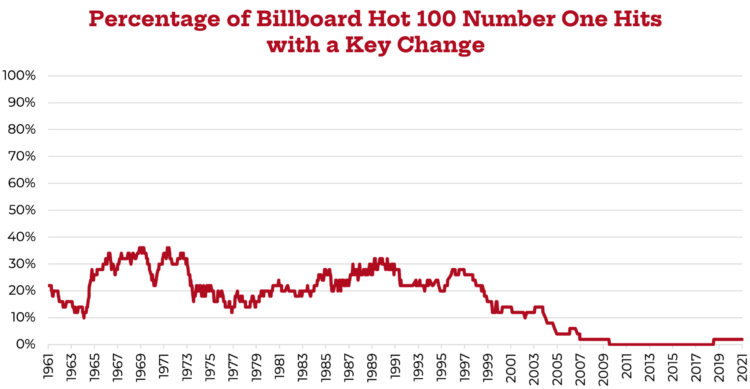







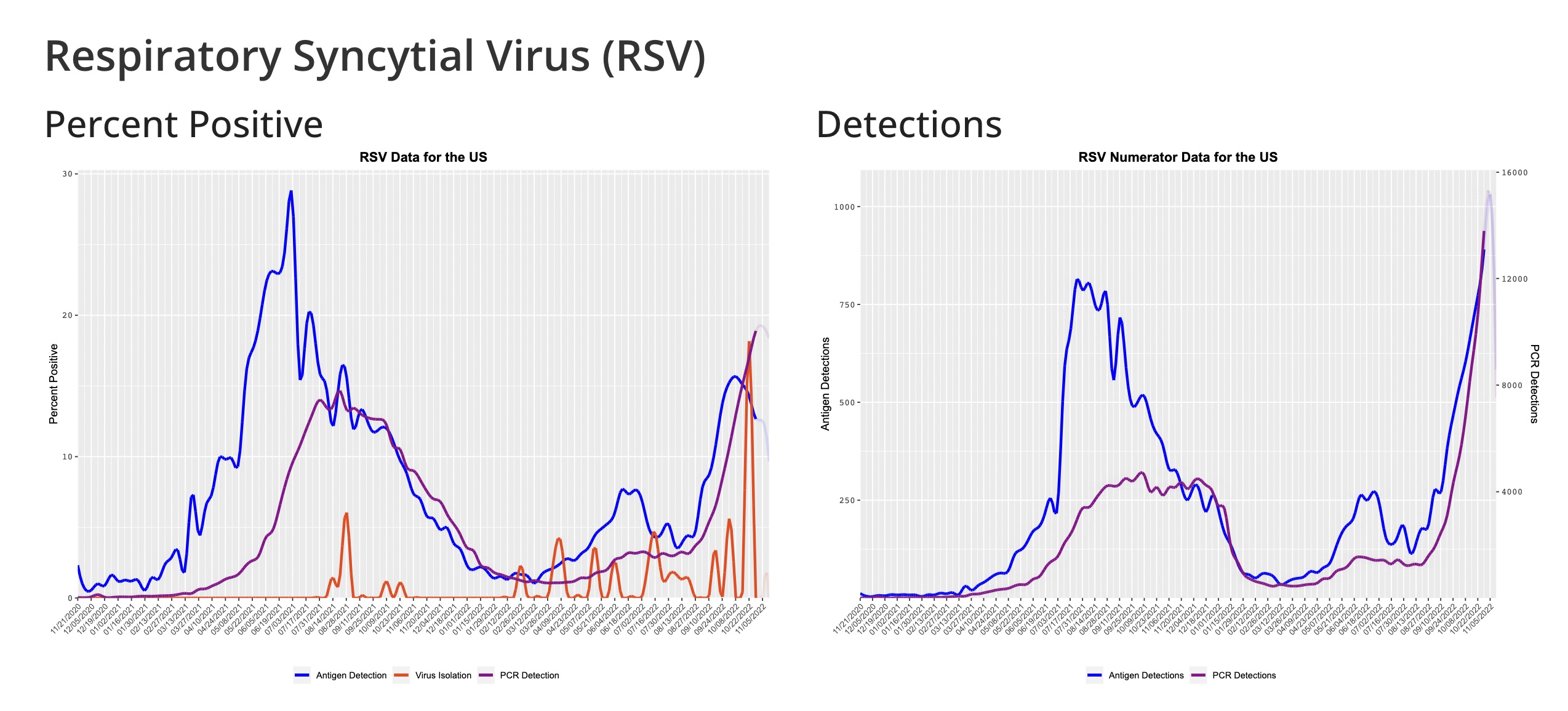




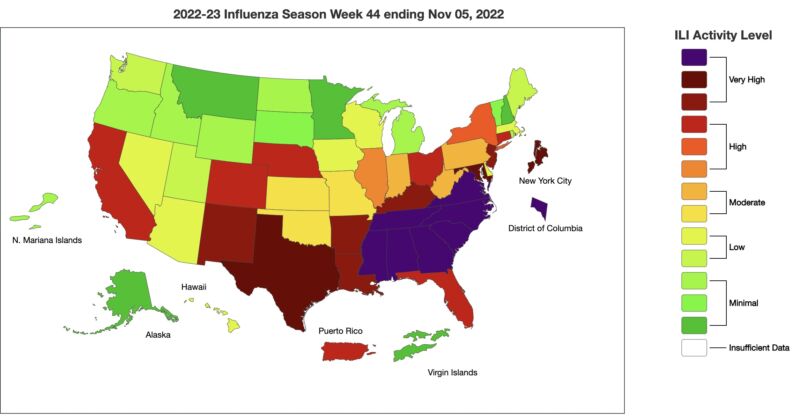


/cdn.vox-cdn.com/uploads/chorus_asset/file/24187902/age_groups_national_youth_vote_choice_for_the_house_of_representatives_in_the_2022_midterm_election.png)
/cdn.vox-cdn.com/uploads/chorus_asset/file/24187909/race_ethnicity_national_youth_vote_choice_for_the_house_of_representatives_in_the_2022_midterm_election.png)