Shared posts

17 Jun 15:32

Bark Kent: Man’s Best Friend Man of Steel, arguably the...

firehose

via Snorkmaiden
journalists: the original fedora bros


Bark Kent: Man’s Best Friend

Man of Steel, arguably the biggest action movie of the summer dropped this weekend and MWD wanted to pay homage to America’s favorite hero the only way we know how. With menswear! Here’s our nod to our favorite take on the character, Christopher Reeve’s version of Supes and his surprisingly dapper alter ego, Clark Kent.

The debate rages on with whether or not newcomer Henry Cavill lives up to the hype, but I think we’ll always prefer the oldschool version, red undies and all.

Fedora: Stefano (From Pork Pie Hatters NYC)  |  Glasses: Vintage Frames (Warby Parker alternative)

17 Jun 15:31

The Most Amazing Map You'll See Today (No Matter What Day It Is)

firehose

via multitasksuicide
direct link to video: http://vimeo.com/64868713

There are many way to celebrate your 70th birthday. You could sit down in front of a cake packed tight with flaming candles. You could go bowling with your buds wearing a T-shirt that says, "Over the hill--and picking up speed." Or you could help put together the most amazing, three-dimensional map of the universe ever created. Brent Tully opted for door #3. Tully, a cosmologist at the University of Hawaii's Institute for Astronomy, has probably done more than any other single living s
17 Jun 15:29

fuckyeahcracker: badass-bharat-deafmuslimpunkstar: spunkmate: ...

by experimentaltimeorder
firehose

via Jonmunger
2009, context:

Ahead of a visit to Ghana at the weekend, he said: "Ultimately, I'm a big believer that Africans are responsible for Africa.

"I think part of what's hampered advancement in Africa is that for many years we've made excuses about corruption or poor governance, that this was somehow the consequence of neo-colonialism, or the West has been oppressive, or racism – I'm not a big – I'm not a believer in excuses.

Mr Obama, the son of a Kenyan, added: "I'd say I'm probably as knowledgeable about African history as anybody who's occupied my office. And I can give you chapter and verse on why the colonial maps that were drawn helped to spur on conflict, and the terms of trade that were uneven emerging out of colonialism.

"And yet the fact is we're in 2009," continued the US president. "The West and the United States has not been responsible for what's happened to Zimbabwe's economy over the last 15 or 20 years.

"It hasn't been responsible for some of the disastrous policies that we've seen elsewhere in Africa. And I think that it's very important for African leadership to take responsibility and be held accountable."


fuckyeahcracker:

badass-bharat-deafmuslimpunkstar:

spunkmate:

kemetically-afrolatino:

Obama tells Africa not to blame colonialism for problems

“I think part of what’s hampered advancement in Africa is that for many years we’ve made excuses about corruption or poor governance, that this was somehow the consequence of neo-colonialism, or the West has been oppressive, or racism – I’m not a big – I’m not a believer in excuses.

“The West and the United States has not been responsible for what’s happened to Zimbabwe’s economy over the last 15 or 20 years.

oh yea cuz two decades erases 500+ years of Maafa African Holocaust colonialist, racist, white supremacist, capitalist slavery

YES WE CAN OPPRESS!

Let’s just talk about the IMF and World Bank for a minute, Mr. President…

wow Obama really needs to STFU his fucking ass. Let’s talk about Standard Adjustment Policies, too, shall we?

The “The West” comment isn’t even just hurtful, it’s literally wrong. Like that isn’t even true or correct, Obama. It isn’t true at all.. Why would he say something so stupid?

17 Jun 15:24

Data's uniform has CAT HAIR on it! #spotthecat #empmuseum

by Webstagram
firehose

via Rosalind

@rosalindofarden

Data's uniform has CAT HAIR on it! #spotthecat #empmuseum

LIKES:7  COMMENTS:3

tags#spotthecat,#empmuseum,

»WEBSTAGRAM

17 Jun 15:24

amajor7: All black all the time.

firehose

via Rosalind


amajor7:

All black all the time.

17 Jun 15:23

hellotailor: f-l-e-u-r-d-e-l-y-s: Screams my name inside and...

firehose

via Rosalind
tildashare


hellotailor:

f-l-e-u-r-d-e-l-y-s:

Screams my name inside and out.
Gareth Pugh FW13
photos via models.com

therealfoxxcub: is this what the inside of tilda swinton’s closet looks like?

me: no, the inside of tilda swinton’s closet looks like this:

17 Jun 15:22

"I’m going to make a store called “Build-a-Bra” where girls can go and make bras that are for them if..."

firehose

via Snorkmaiden

“I’m going to make a store called “Build-a-Bra” where girls can go and make bras that are for them if they have different shaped boobs. And really big boobs. And really small boobs. And bras for boys that they can stuff if they want them. And really any kind of boobs. And you’ll choose the size of each cup and then you can choose the color and pattern and shape. And it’ll be really cheap. But lace and diamonds will cost a little extra”

-

my 12 year old “niece” Lila on her business idea.

I love that little girl.

(via marrymejasonsegel)

17 Jun 15:21

tastefullyoffensive: [bevinbarbarian]

17 Jun 14:51

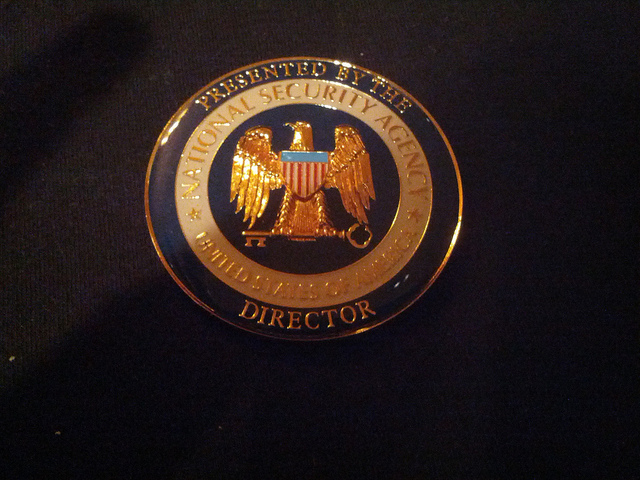
NSA admits it listens in on US phone calls and reads US emails without a warrant

by Cory Doctorow
firehose

via Snorkmaiden


It's a pity that so many senators skipped the NSA's classified briefing on its secret spying program, because if they'd attended, they'd have heard something shocking: the NSA can and does access the content of emails and phone calls of Americans on US soil without a warrant. It's an important insight into the President's secret interpretation of FISA, one of America's most notorious spying laws.

Rep. Jerrold Nadler, a New York Democrat, disclosed this week that during a secret briefing to members of Congress, he was told that the contents of a phone call could be accessed "simply based on an analyst deciding that."

If the NSA wants "to listen to the phone," an analyst's decision is sufficient, without any other legal authorization required, Nadler said he learned. "I was rather startled," said Nadler, an attorney and congressman who serves on the House Judiciary committee.

Not only does this disclosure shed more light on how the NSA's formidable eavesdropping apparatus works domestically, it also suggests the Justice Department has secretly interpreted federal surveillance law to permit thousands of low-ranking analysts to eavesdrop on phone calls.

Because the same legal standards that apply to phone calls also apply to e-mail messages, text messages, and instant messages, Nadler's disclosure indicates the NSA analysts could also access the contents of Internet communications without going before a court and seeking approval.

The NSA is supposed to only spy on us dirty foreigners. As sketchy as it is to divide the world into the spied-upon and the un-spied-upon, it is nevertheless the law, and should be comforting to those the latter category. This revelation confirms that the Obama administration has doubled down on GW Bush's project of lawless, authoritarian surveillance, treating the Constitution and Congress's laws as mere formalities. So much for "the most transparent administration in history."

NSA admits listening to U.S. phone calls without warrants [Declan McCullagh/Cnet]


17 Jun 14:50

CHRISTOPHER KANE SS 2010

firehose

via THANKGODYOUREHERE
sheer beat


CHRISTOPHER KANE SS 2010

17 Jun 14:49

My attitude towards what other people think about me

In high school:

Now:

17 Jun 14:46

astonishedcelery submitted: i hope this goat cheers you up and...

firehose

via Russian Sledges: "#goatsthatlooklikeianmckellen"


astonishedcelery submitted:

i hope this goat cheers you up and i hope your day turns out fantastic in the end, elis

This kindly wizard makes me feel I can do anything

thank you ♥

17 Jun 14:40

http://theremina.tumblr.com/post/53108107408


17 Jun 02:03

Drug Cartel Hit Man Confesses To More Than 30 Murders In California, Florida

firehose

never go to Florida

A self-described debt collector for Mexican drug cartels says he has slayed more than 30 people across the United States, according to investigators.
17 Jun 01:57

cineraria: セキセイインコが走って来る来る!! - YouTube

firehose

via Rickatyahoodotcom
majesty and grace

16 Jun 23:06

The Cultural Explanation For Why The West Loves Sci-Fi And Fantasy

firehose

tl;dr: Max Weber, framed using India's low returns on western fantasy and sci-fi films

The world's largest film industry—that'd be India's—is largely barren of the superhero and spaceship films that dominate Hollywood. What, exactly, accounts for the difference?
16 Jun 20:05

girlofchaos: Surfaces from the three days workshop. Right Left...


girlofchaos:

Surfaces from the three days workshop. Right Left one is mine. 3d modelled after Fibonacci’s logarithmic spiral because I’m a nerd.

16 Jun 19:57

theremina: Selections from KNAPP’s Post War Collection.

firehose

via Nathan Fhtagn

16 Jun 19:54

Caveat emptor

http://oglaf.com/caveat-emptor/

16 Jun 19:48

"Man of Steel" Sets New Record for June Openings

The latest Superman film takes the No. 1 spot at the North American box office this weekend, bringing in $125.1 million since Thursday to become the biggest June opening of all time.
16 Jun 19:46

Bill Would Reverse Green Initiatives for New Federal Buildings

by Eric Katz
firehose

via multitasksuicide

Lawmakers want to undo plans to reduce coal and natural gas consumption in federal government.
16 Jun 19:46

Flask Tie, A Necktie That Conceals a Drinking Pouch

by EDW Lynch

Flask tie

The Flask Tie is an innocent-looking necktie that conceals a “TieBladder,” a pouch that can hold up to six ounces of refreshing beverage. The pouch features a mouthpiece valve that opens when bitten for hands-free drinking (though it does make you look like you’re sucking on a necktie). The Flask Tie is available in a variety of perfectly innocent patterns.

Flask Tie

submitted via Laughing Squid Tips

16 Jun 19:46

Scientist Figures Out How Those Big-Ass 'Sailing Stones' Move Themselves Across Death Valley

firehose

via Tertiarymatt

sailing-stones-01.jpg

"Racetrack Playa" sounds like the screenname of an online teenager you're competing against in Need for Speed, but scientists recognize it as the name of a dried-up lake in Death Valley. For a century, scientific minds have been puzzled by a well-documented, poorly-understood phenomenon occuring at Racetrack Playa: Enormous stones, some up to 700 pounds, appear to have somehow moved themselves across the lakebed floor in random patterns, leaving a furrowed trail behind them.

sailing-stones-02.jpg

No one had ever seen these "sailing stones" move, but many photographed the end result. The original thought was that the lakebed forms a thin sheet of ice on it, and that the wind then blows the rocks across it; but that theory was discounted after researchers calculated it would take wind speeds of hundreds of miles per hour to move the rocks, while the wind at the Racetrack maxes out around 90 m.p.h. And if you're wondering why they don't just strap a GoPro camera onto a rock to see what's going on, scientists returning to the site over the years have calculated that the rocks move for short periods of time, just once every three years. That's a bit longer than your battery's likely to last.

However, a fortunate collision between two of these magic rocks provided planetary scientist Ralph Lorenz with an interesting discovery:

(more...)


16 Jun 18:40

Marco Rubio Embarrasses Himself While Trying to Bash Obama on Syria - PoliticusUSA


ABC News

Marco Rubio Embarrasses Himself While Trying to Bash Obama on Syria
PoliticusUSA
Sen. Marco Rubio embarrassed himself yet again on national television by putting his ignorance on full display while trying to bash President Obama on Syria. Video from ABC News: Unfortunately your browser does not support IFrames. US News
Britain and Syria: prisoners of historyTelegraph.co.uk (blog)

all 36 news articles »
16 Jun 18:40

Mark Millar honored by Queen Elizabeth II

firehose

welp

The "Wanted" and "Kick Ass" writer has been recognized by Queen Elizabeth II as a Member of the Most Excellent Order of the British Empire for services to film and literature.
16 Jun 18:39

The Stayhold: Simple Industrial Design to Secure Items in Your Car Trunk

firehose

via Tertiarymatt

stayhold-01.jpg

Sometimes you don't realize your behavior is actually compensating for a design flaw. That is, until you see the solution. When borrowing a car and carrying anything heavy or delicate—a full toolbox, a few bottles of booze, a birthday cake—I always place it in the rear seat footwell. It would be much more convenient to load into the hatch, but I don't want those things sliding around because I took the corner too hard after watching Fast & Furious 6.

That's where the Stayhold comes in. The Velcro strip on the bottom adheres it firmly to the carpeting inside your car, allowing you to wall things off against the edges or build your own little fort.

stayhold-02.jpg

As humble as this device is, to me it represents the ideal of what industrial design has to offer: It's simple, largely monomaterial, addresses a valid need, and is relatively inexpensive. Sure it's not going to wind up in the MoMA, but then again, neither is anything in the trunk of my car.

(more...)


16 Jun 18:38

Holy Hell, Batman!  geekmythology: Medieval Bat Man Armor by...

firehose

via Jonmunger


Holy Hell, Batman! 

geekmythology:

Medieval Bat Man Armor by =Azmal

16 Jun 18:38

Owning Two of a Certain Object Indicates Your Kids Will Do Well in School. Can You Guess What It Is?

firehose

via Tertiarymatt
tl;dr: bookcases

Education-1.jpg

In the original Miami Vice television series, Detective Zito is murdered in Season Three. After learning of his death, co-cops Crockett, Tubbs and Switek visit his house, where they discover Zito's collection of snow globes. They look at them in bewilderment, and the clear message delivered by their faces—in as ham-fisted a way as only '80s American television can do it—is "Wow, I guess we didn't really know this guy at all." Cue violins. An as hackneyed as that moment was, it was the first time your adolescent correspondent understood the usage of physical objects as a narrative device in storytelling.

Years later in ID school, professors who apparently knew each other as well as Zito and Switek delivered conflicting messages on this front. One professor would tell you that "Objects exist to tell stories—they tell us about ourselves!" while others said objects were mere intermediaries that we should design to be unobtrusive; the whole "People don't want a toaster, they just want toast" mentality.

It's easy to see the "Objects tell us about ourselves" bit as a bunch of hooey, as with iPhone and Android users—upon spotting the competing product on an acquaintance's desk, they'll tiresomely begin projecting qualities of the most vociferous proponent of that product onto the user. Ditto Mac and PC users. But it does fascinate me that some objects tell tales we never see coming. Case in point: Stanford economist Eric Hanushek, and his research partner Ludgar Woessman from U. of Munich, put together a study where they found a specific object in certain family's homes that served as a reliable indicator that a child from that family would do well in school.

Any guesses as to what that object is? A computer? A television? An iPad?

What if we told you it's a piece of furniture?

(more...)


16 Jun 18:22

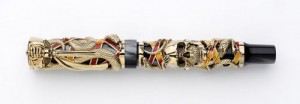
$69,350 pen

by drew
firehose

via multitasksuicide

"reptiles representing the early forms of life on Earth, and the skull signifying death. The ultimate defining detail, bearing both a fist and a skull, is the pen's clip in the form of a sword."

clickthrough for helpful reviews

pen

If you’re still writing with a pen that draws lines of ink, why not trample the heads of the world’s poor while you do it? This $69,350 pen should do the trick. It’s made of 18-karat gold and, for some reason, was designed by Sylvester Stallone.

16 Jun 18:22

More on Feudal Security

by schneier

Facebook regularly abuses the privacy of its users. Google has stopped supporting its popular RSS feeder. Apple prohibits all iPhone apps that are political or sexual. Microsoft might be cooperating with some governments to spy on Skype calls, but we don't know which ones. Both Twitter and LinkedIn have recently suffered security breaches that affected the data of hundreds of thousands of their users.

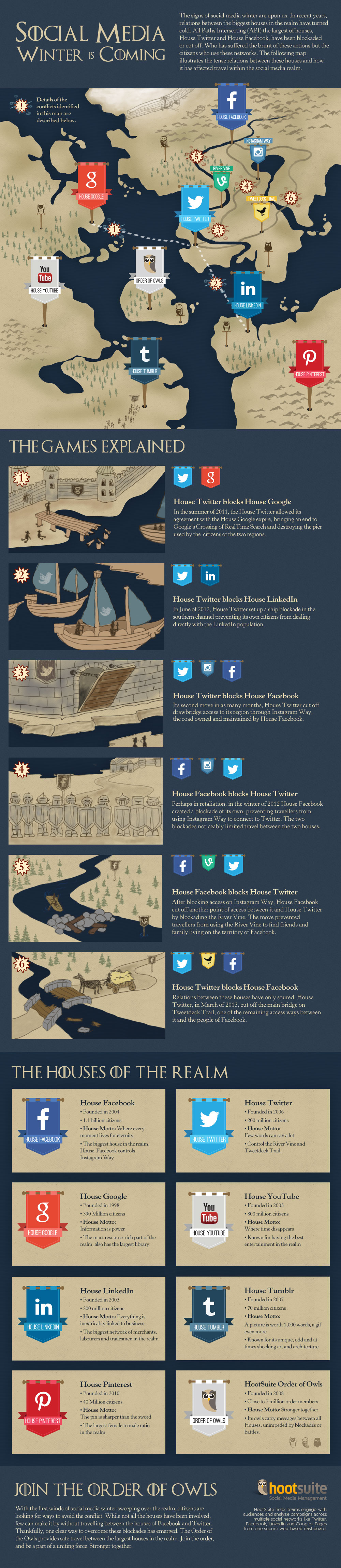
If you've started to think of yourself as a hapless peasant in a Game of Thrones power struggle, you're more right than you may realize. These are not traditional companies, and we are not traditional customers. These are feudal lords, and we are their vassals, peasants, and serfs.

Power has shifted in IT, in favor of both cloud-service providers and closed-platform vendors. This power shift affects many things, and it profoundly affects security.

Traditionally, computer security was the user's responsibility. Users purchased their own antivirus software and firewalls, and any breaches were blamed on their inattentiveness. It's kind of a crazy business model. Normally we expect the products and services we buy to be safe and secure, but in IT we tolerated lousy products and supported an enormous aftermarket for security.

Now that the IT industry has matured, we expect more security "out of the box." This has become possible largely because of two technology trends: cloud computing and vendor-controlled platforms. The first means that most of our data resides on other networks: Google Docs, Salesforce.com, Facebook, Gmail. The second means that our new Internet devices are both closed and controlled by the vendors, giving us limited configuration control: iPhones, ChromeBooks, Kindles, BlackBerry PDAs. Meanwhile, our relationship with IT has changed. We used to use our computers to do things. We now use our vendor-controlled computing devices to go places. All of these places are owned by someone.

The new security model is that someone else takes care of it -- without telling us any of the details. I have no control over the security of my Gmail or my photos on Flickr. I can't demand greater security for my presentations on Prezi or my task list on Trello, no matter how confidential they are. I can't audit any of these cloud services. I can't delete cookies on my iPad or ensure that files are securely erased. Updates on my Kindle happen automatically, without my knowledge or consent. I have so little visibility into the security of Facebook that I have no idea what operating system they're using.

There are a lot of good reasons why we're all flocking to these cloud services and vendor-controlled platforms. The benefits are enormous, from cost to convenience to reliability to security itself. But it is inherently a feudal relationship. We cede control of our data and computing platforms to these companies and trust that they will treat us well and protect us from harm. And if we pledge complete allegiance to them -- if we let them control our email and calendar and address book and photos and everything -- we get even more benefits. We become their vassals; or, on a bad day, their serfs.

There are a lot of feudal lords out there. Google and Apple are the obvious ones, but Microsoft is trying to control both user data and the end-user platform as well. Facebook is another lord, controlling much of the socializing we do on the Internet. Other feudal lords are smaller and more specialized -- Amazon, Yahoo, Verizon, and so on -- but the model is the same.

To be sure, feudal security has its advantages. These companies are much better at security than the average user. Automatic backup has saved a lot of data after hardware failures, user mistakes, and malware infections. Automatic updates have increased security dramatically. This is also true for small organizations; they are more secure than they would be if they tried to do it themselves. For large corporations with dedicated IT security departments, the benefits are less clear. Sure, even large companies outsource critical functions like tax preparation and cleaning services, but large companies have specific requirements for security, data retention, audit, and so on -- and that's just not possible with most of these feudal lords.

Feudal security also has its risks. Vendors can, and do, make security mistakes affecting hundreds of thousands of people. Vendors can lock people into relationships, making it hard for them to take their data and leave. Vendors can act arbitrarily, against our interests; Facebook regularly does this when it changes peoples' defaults, implements new features, or modifies its privacy policy. Many vendors give our data to the government without notice, consent, or a warrant; almost all sell it for profit. This isn't surprising, really; companies should be expected to act in their own self-interest and not in their users' best interest.

The feudal relationship is inherently based on power. In Medieval Europe, people would pledge their allegiance to a feudal lord in exchange for that lord's protection. This arrangement changed as the lords realized that they had all the power and could do whatever they wanted. Vassals were used and abused; peasants were tied to their land and became serfs.

It's the Internet lords' popularity and ubiquity that enable them to profit; laws and government relationships make it easier for them to hold onto power. These lords are vying with each other for profits and power. By spending time on their sites and giving them our personal information -- whether through search queries, e-mails, status updates, likes, or simply our behavioral characteristics -- we are providing the raw material for that struggle. In this way we are like serfs, toiling the land for our feudal lords. If you don't believe me, try to take your data with you when you leave Facebook. And when war breaks out among the giants, we become collateral damage.

So how do we survive? Increasingly, we have little alternative but to trust someone, so we need to decide who we trust -- and who we don't -- and then act accordingly. This isn't easy; our feudal lords go out of their way not to be transparent about their actions, their security, or much of anything. Use whatever power you have --- as individuals, none; as large corporations, more -- to negotiate with your lords. And, finally, don't be extreme in any way: politically, socially, culturally. Yes, you can be shut down without recourse, but it's usually those on the edges that are affected. Not much solace, I agree, but it's something.

On the policy side, we have an action plan. In the short term, we need to keep circumvention -- the ability to modify our hardware, software, and data files -- legal and preserve net neutrality. Both of these things limit how much the lords can take advantage of us, and they increase the possibility that the market will force them to be more benevolent. The last thing we want is the government -- that's us -- spending resources to enforce one particular business model over another and stifling competition.

In the longer term, we all need to work to reduce the power imbalance. Medieval feudalism evolved into a more balanced relationship in which lords had responsibilities as well as rights. Today's Internet feudalism is both ad hoc and one-sided. We have no choice but to trust the lords, but we receive very few assurances in return. The lords have a lot of rights, but few responsibilities or limits. We need to balance this relationship, and government intervention is the only way we're going to get it. In medieval Europe, the rise of the centralized state and the rule of law provided the stability that feudalism lacked. The Magna Carta first forced responsibilities on governments and put humans on the long road toward government by the people and for the people.

We need a similar process to rein in our Internet lords, and it's not something that market forces are likely to provide. The very definition of power is changing, and the issues are far bigger than the Internet and our relationships with our IT providers.

This essay originally appeared on the Harvard Business Review website. It is an update of this earlier essay on the same topic. "Feudal security" is a metaphor I have been using a lot recently; I wrote this essay without rereading my previous essay.

EDITED TO ADD (6/13): There is another way the feudal metaphor applies to the Internet. There is no commons; every part of the Internet is owned by someone. This article explores that aspect of the metaphor.