firehose
Shared posts
A WWII Propaganda Campaign Popularized The Myth That Carrots Help You See In The Dark
SparkOfJade says FML
Today, my superior gave me a box of ethernet cables which were previously attached to mainframes storing classified data. He requested I cut them in half so that the residual data would leak out. Not only does this guy make twice my salary, there was no convincing him otherwise. We cut them up. FML
Getty Museum's Open Content project makes 4,600 pieces of art freely available to download
firehose!
Much of the world's great artwork is tightly controlled, but the Getty Museum just announced a significant initiative to open things up — its new Open Content Program has made some 4,600 pieces of art from the museum's collection free to use. Users can visit the Getty Search Gateway to browse through the entire collection of high-resolution images, and they can all be used for commercial and non-commercial purposes so long as they're properly attributed to the museum. When downloading an image, the site also asks for you to share why you're using it — information the museum wants to see the many reasons that people have for downloading its content.
Amongst the many freely-available pieces of art released by Getty are a number of quite famous images, including work by Claude Monet, Vincent van Gogh, Rembrandt, and Leonardo da Vinci. The 4,600 pieces of artwork available are just the beginning, as well. Getty says that its actively exploring the possibility of releasing much more art into the public domain, both from the museum's collection as well as materials from the Getty Research Institute's special collections. While Getty isn't the first museum to push forward with an open artwork initiative (the museum cited a number of institutions like the Walters Art Museum as inspirations for the movement), it's the latest example of how the internet is making classic, famous works more accessible.
Image credit:
Vincent van Gogh (Dutch, 1853 - 1890)
Irises, 1889, Oil on canvas
Unframed: 71.1 x 93 cm (28 x 36 5/8 in.)
Framed: 95.3 x 115.6 x 7.9 cm (37 1/2 x 45 1/2 x 3 1/8 in.)
The J. Paul Getty Museum, Los Angeles
- Via Hyperallergic
- Source The Getty Iris
- Image Credit Vincent van Gogh / The Getty Center Los Angeles
- Related Items getty getty museum open content open content project art artwork museum van gogh money leonardo da vinci

Some Kind Of Smart-Ass Wearing Kevin Kolb Jersey
Microsoft’s new ergonomic keyboard is just plain weird looking
Microsoft has released a new ergonomic split keyboard and mouse combo, and it looks downright weird.
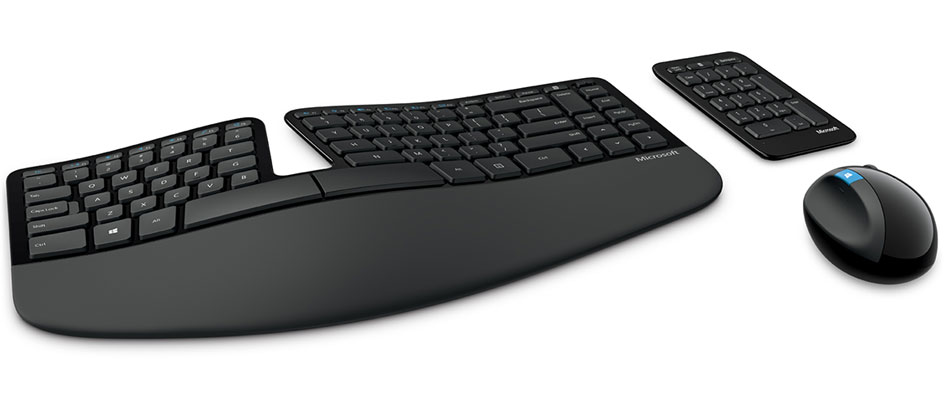
The Sculpt Ergonomic Desktop kit pairs a new keyboard, the Sculpt Ergonomic Keyboard, and a new mouse, the Sculpt Ergonomic Mouse. The purpose of both is to encourage you to hold your arms "just so" and keep your wrists healthy.
The mouse has a new, asymmetric shape—no good for lefties, as is so often the case with this kind of thing. Like some of Microsoft's other recent mice, it includes a dedicated Start button so that you can bring up the Start screen or Start menu with, er, just the click of a button.
Read 5 remaining paragraphs | Comments

    
|
CIA admits it has drone documents, but refuses to publish them
The US Central Intelligence Agency has finally come forward and admitted it does have documents about US drone strikes, but says it can't share them with the public because doing so would pose a massive security risk to the country. As the CIA stated in document filed in federal district court in Washington, DC last week (and made public today): "The details of those records, including the number and nature of responsive documents, remain currently and properly classified facts exempt from disclosure."
The agency also spells out what would happen were it to reveal the documents, which many transparency advocates have sought:
Official CIA disclosure of such details would reveal sensitive national security information concerning intelligence activities, intelligence sources and methods, and the foreign activities of the United States. It would provide important insights into the CIA’s activities to terrorist organizations, foreign intelligence services, or other hostile groups, and could affect the foreign relations of the United States.
The CIA cites several exemptions to the Freedom of Information Act (1 and 3) as reasons why it should not be legally forced to turn over these documents, despite the fact that the American Civil Liberties Union (ACLU) filed a lawsuit back in 2010 to get them.
Still, the fact that the CIA is finally admitting it even has any documents about drones whatsoever is progress from the stance it's taken previously, which is to refuse to confirm or deny the existence of these materials. In fact, the only reason the CIA is opening about the fact that it has any drone records at all now is thanks to a federal court ruling back in March that said the agency should, at the very least, be forced to declare whether or not it has documents about drones.
"Official CIA disclosure of such details would reveal sensitive national security information."
The CIA says it complied with that court order as best as it could without revealing classified information. The agency points to President Obama's big drone speech back in May and a letter from Attorney General Eric Holder, in which both officials admitted that a US drone strikes were used to kill four US citizens abroad, though only one of those killed — Al-Qaeda propagandist Anwar al-Awlaki — was the target. The CIA says the fact that both Obama and Holder admitted to a drone strike is evidence that the Obama Administration is lifting the veil on drone secrecy per the ACLU's request, albeit slightly. But the agency says that's all the public is going to hear about drones from its side. "Notwithstanding these additional official disclosures, it remains the case that no authorized Executive Branch official has disclosed the precise nature of the CIA’s involvement in the use of targeted lethal force," the court filing states.
Whether the DC District Court decides that this is enough to satisfy the legal requirements for responding to the ACLU remains to be seen. But for those looking for increased transparency surrounding the use of drones for targeted killings, the disclosures are cold comfort indeed.
- Via Wired
- Image Credit US Air Force photo/Tech. Sgt. Erik Gudmundson
- Related Items washington lawsuit court foia cia transparency intelligence aclu justice department uav obama administration district court drones yemen american civil liberties union unmanned aerial vehicle freedom of information central intelligence agency eric holder anwar al-awlaki uas drone policy unmanned aerial vehicles unmanned aerial systems classified information drone strikes drone killings targeted killings drone legality freedom of information request
Welcome to the future: New Zealand approves permit for jet pack

We could all be flying around on jet packs sometime soon—we just have to pony up $150,000.
New Zealand and Australian media reported Tuesday that the country’s Civil Aviation Authority (CAA) has granted approval to the Martin Aircraft Company for an “Experimental Flight Permit,” which could pave the way for broad commercial sales.
"The test flying was subject to strict limitations covering required safety procedures," the CAA said, according to TVNZ. "Other restrictions included that it may not be flown more than 20 feet above the ground or 25 feet above water and is limited to two specific test flight areas over uninhabited land."
Read 3 remaining paragraphs | Comments

|
|
Batman Is Done With Crime Fighting, Prefers To Sit Back With A Good Book

Looking For Help With Rape Threats On Xbox Live? Prepare To Be Frustrated.

The World of Lisa Frank
 OnlyMrGodKnowsWhy
Been a while since I checked in on SwissMiss…
Wow, Lisa Frank is for real.
Submission - Aerial Photo Transit Map of Portland,...
firehosemeanwhile, in Portland
"successful"

Submission - Aerial Photo Transit Map of Portland, Oregon
Submitted to the Transit Maps Facebook page by Taylor Gibson. While nowhere near as complex as the New York system featured previously, it’s still an interesting look at a successful rail transit system.
For those unfamiliar with Portland, the thicker lines (Yellow, Green, Blue and Red – shown here as pink for visual clarity, I think) are the MAX light rail, while the thinner aqua and lime green lines are the Portland Streetcar, which has recently expanded to the eastern side of the Willamette River (the top half of this photo).
Eventually, the aqua “Loop” streetcar line will cross back over to the western side of the Willamette at the extreme right of this photo via the new transit-only bridge that is currently being constructed. The bridge will also carry buses, pedestrians, cyclists and the new Orange MAX line.
(Photo Source: DubbaG/Wikipedia – Creative Commons License)
pondercat: todisneywego: SHE FUCKING GLANCES DOWN! THIS IS...


Israeli Public Bus Turned Into Luxury Home


Skip iTunes and Add Video Files to VLC for iPhone with Wi-Fi Uploads

VLC was released back into the iTunes App Store last month, and that means one of the best media players out there is finally back on the iPhone and iPad. If you don't want to use iTunes just to use VLC, How-To Geek points out that tucked away within VLC's settings is a way to upload files from your computer to your phone without using iTunes as long as both devices are on the same network.

|
|
THIS JUST IN: Goldie Overload ACTION
From the Who Knew? file- there’s a Golden Retriever Festival in Scotland!
Ah, we missed out! It wuz last month @ Guisachan Estate, Tomich, Invernesshire, Scotland. (Muttering: ‘Must find on Google Maps & book airfare for 2014…’)


Photos by Gordon Richardson. Thanks to Cuteporters Tamara H., Christine K. and Sofia C.
Filed under: Uncategorized Tagged: Golden Retrievers, This Just In!


130+ Essential Vim Commands
How To Make a Letterpress Texture Effect in Photoshop
firehosetl;dr: same as every other photoshop tut
slap a shitty texture on it
I’ve received a few questions recently about how I create the letterpress style texturing that appears on pretty much every retro/vintage design I make. Today’s tutorial will show you a quick and easy way to give your logos and typography that ink stamp style effect that originated from the old letterpress style printing technique.

Letterpress printing is an old printing method that transfers ink from a press onto paper, essentially like a rubber stamp. As we all know from playing with rubber and potato stamps as kids this kind of basic printing technique can result in some cool texturing, especially if areas of the printing surface lacks ink. Originally this would be seen as a mistake or flaw in the print, but nowadays we actively seek to fake this kind of texturing to give our artwork an aged and nostalgic appearance.
Letterpress Texture Effect in Photoshop

I’m going to be using one of my freely downloadable hipster logos as the base of this tutorial. Download this design and 5 other customizable retro/vintage logos & emblems.
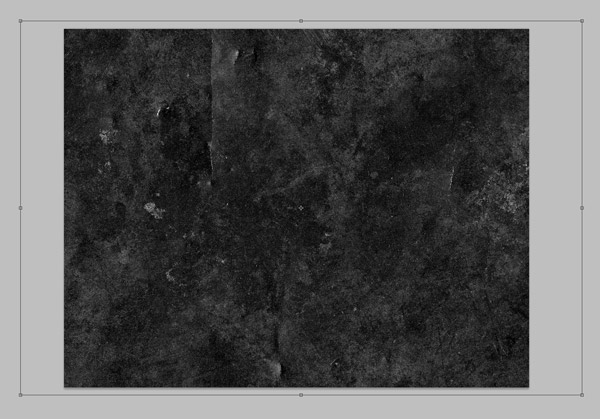
The actual letterpress effect is created from a texture file. The subject of the texture can really be anything with plenty of fine grainy detail. Concrete, rust or grunge textures all work well. Here I’m using a free dark grunge texture from LostandTaken. Paste the texture onto a new layer and scale it to size.
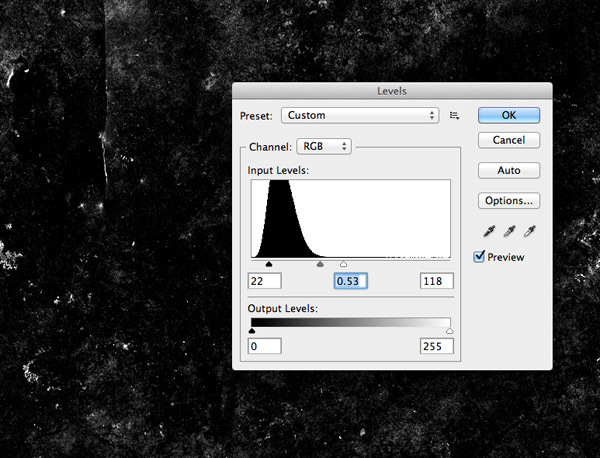
Press CMD+Shift+U to Desaturate the texture then open up the Levels window (CMD+L) and alter the handles to increase the contrast of the image. The aim is to generate harsh white details that will represent the paper showing through the ink.
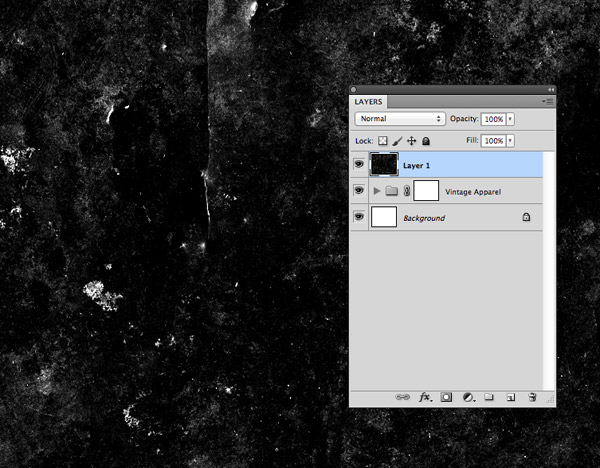
Select your main logo layer or group of layers and add a Layer Mask.
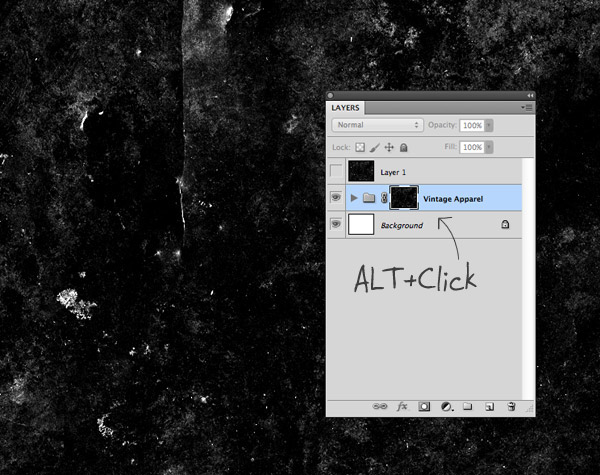
Select the texture layer and press CMD+A to Select All, then CMD+C to Copy. Toggle off or delete the texture layer then ALT+click the Layer Mask’s little thumbnail. This will take you into the Layer Mask in order to edit its contents. Press CMD+V to paste the texture then click elsewhere in the Layers palette to exit out of the layer mask.
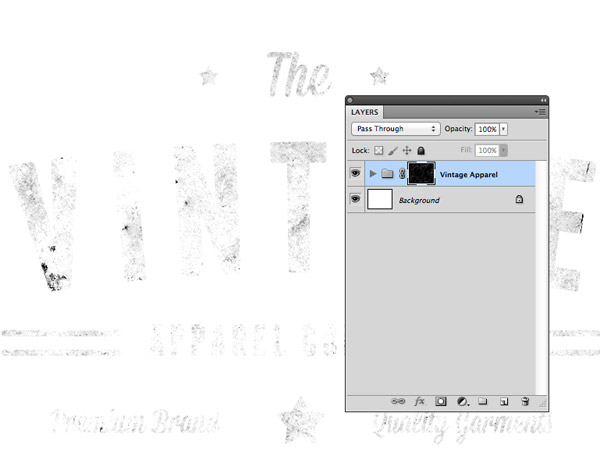
The texture has now been applied as a mask and is rendering black areas of the mask transparent and white areas opaque. Depending on the original texture file you might need to Invert the mask. Too much of the artwork is currently being erased so inverting it from ‘white on black’ to ‘black on white’ will result in a much better effect.
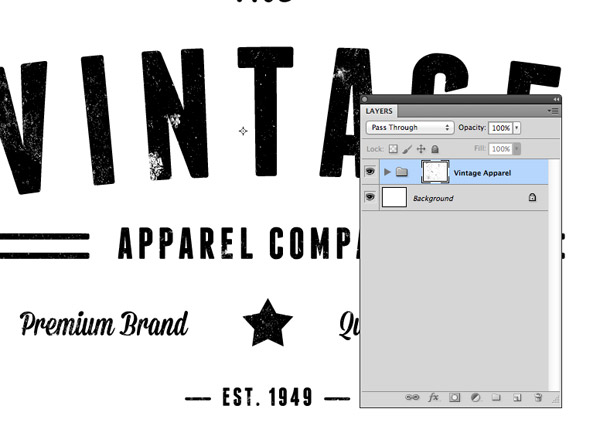
You can even unlink the mask from its layer and move the texture around independently to fine tune the placement over your artwork.

The final effect gives the artwork that popular vintage look by mimicking the pressed ink appearance of those old letterpress prints.
What about Illustrator?
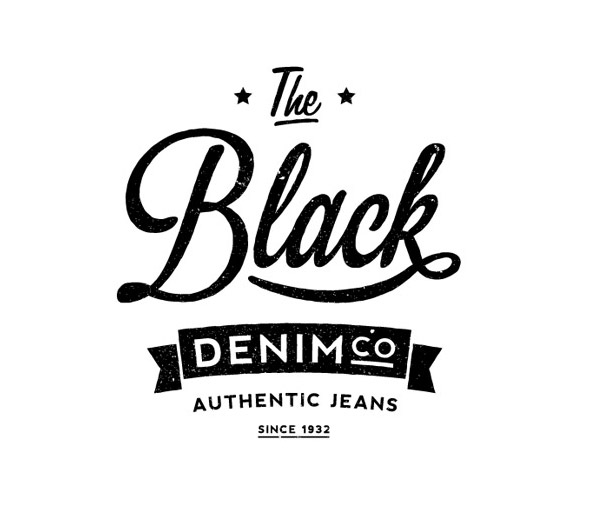
Texturing in Photoshop offers you the most detail and realistic effects, however similar effects can certainly be created in Illustrator to maintain a complete vector format. Check out my older tutorials such as How To Create a Vector Sponge Art Effect in Illustrator or how to use the textures from my Vector Bumper Pack to create an aged vintage style logo design.
Unless I’m specifically creating a vintage style logo with texturing as part of the design, I’ll often copy across my artwork to Photoshop and quickly use this textured Layer Mask technique.
Update: Illustrator Opacity Masks
I’ve just discovered another technique that can be used texture your artwork directly in Illustrator: Opacity Masks. Just like Photoshop Layer Masks, Opacity Masks render your artwork’s visibility according to the black and white areas of the contents of the mask. Raster texture or vector textures can be used as Opacity Masks, but more impressively they’re non-destructive, unlike my previously mentioned Pathfinder process.
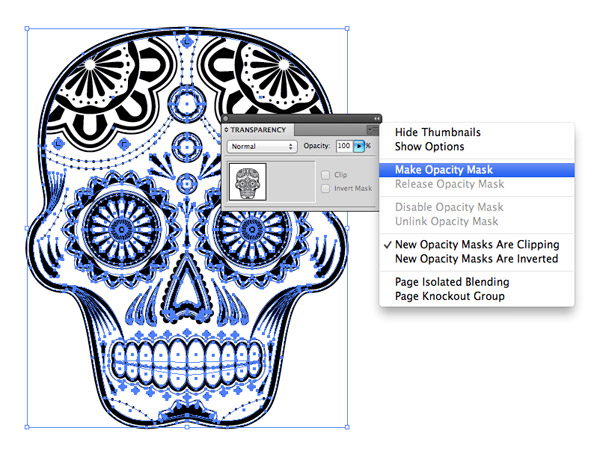
Select your artwork in Illustrator and head to the Transparency panel. Open up the slide out menu and select Make Opacity Mask.
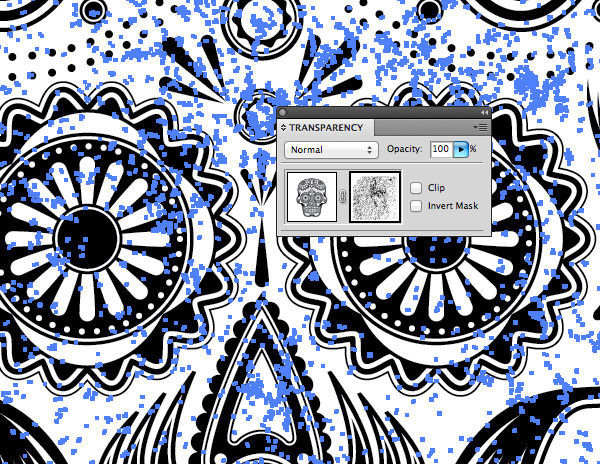
Deselect the Clip option, then click the thumbnail of the mask to activate it. Paste in any kind of texture file to erase out portions of your design. Raster textures can be used for fine details, but remember they won’t be scalable. Use vector textures to maintain that scalability while preserving your original artwork.
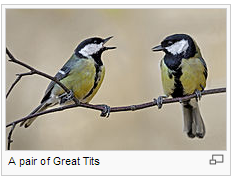
janoskifags: basedgosh: im 5 years old i dont care i laughed at this bird
im 5 years old i dont care i laughed at this bird





Voice controlled home automation uses Raspberry Pi and LightwaveRF

It’s not quite artificial intelligence, but saying “Jeeves, lights!” will switch on the bulbs in the room. [Chipos81] built the voice-activated home automation around a Rapsberry Pi board with LightwaveRF devices switching lights and outlets.
The LightwaveRF system offers a WiFi link which provides Internet connectivity for all of those devices in your house. This makes it a snap for [Chipos81] to control them from the RPi. To provide speech recognition he’s using CMU Sphinx. It’s an open source speech recognition library developed by researchers at Carnegie Mellon University and released under a BSD license. It seems to do a great job in the video of quickly parsing several sets of commands.
“Jeeves” will even talk back to you to confirm a command. This is generated by Festival, a package developed by the University of Edinburgh. This provides some entertainment in the last seconds of the video as we detect a distinct Scottish accent when it says “See you tomorrow”.
The GPIO pins provide a bit of feedback, using three colored LEDs to let you know what is going on with the system. There’s even an IR LED used to add voice control to your Television.
Filed under: home hacks, Raspberry Pi


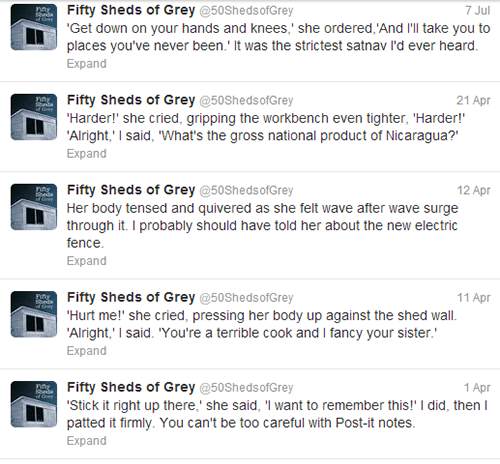
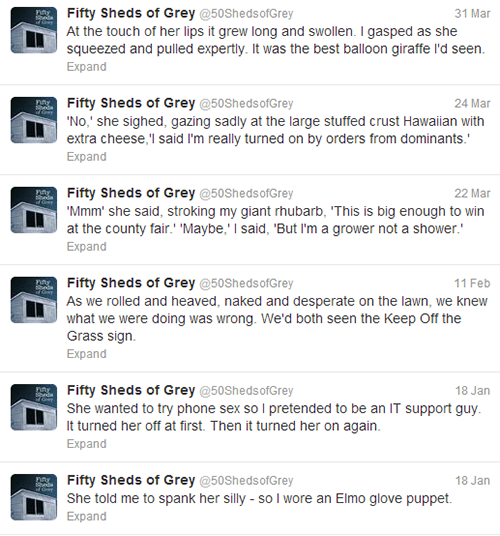
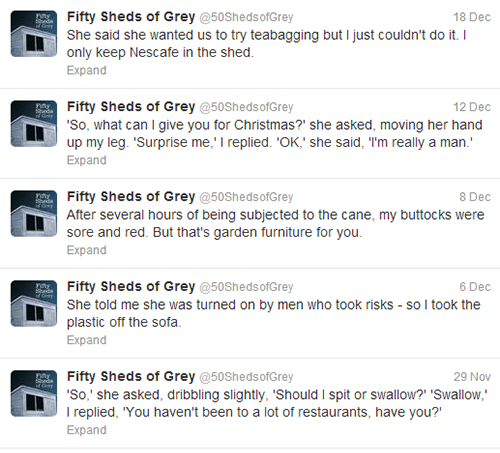
So What Else is New?
Submitted by: Unknown
Hacking Transcend Wifi SD Cards

[Pablo] is a recent and proud owner of a Transcend WiFi SD Card. It allows him to transfer his pictures to any WiFi-enabled device in a matter of seconds.
As he suspected that some kind of Linux was running on it, he began to see if he could get a root access on it… and succeeded.
His clear and detailed write-up begins with explaining how a simple trick allowed him to browse through the card’s file system, which (as he guessed correctly) is running busybox. From there he was able to see if any of the poorly written Perl scripts had security holes… and got more than he bargained for.
He first thought he had found a way to make the embedded Linux launch user provided scripts and execute commands by making a special HTTP POST request… which failed due to a small technicality. His second attempt was a success: [Pablo] found that the user set password is directly entered in a Linux shell command. Therefore, the password ”admin; echo haxx > /tmp/hi.txt #” could create a hi.txt text file.
From there things got easy. He just had to make the card download another busybox to use all the commands that were originally disabled in the card’s Linux. In the end he got the card to connect a bash to his computer so he could launch every command he wanted.
As it was not enough, [Pablo] even discovered an easy way to find the current password of the card. Talk about security…
Filed under: hardware, linux hacks


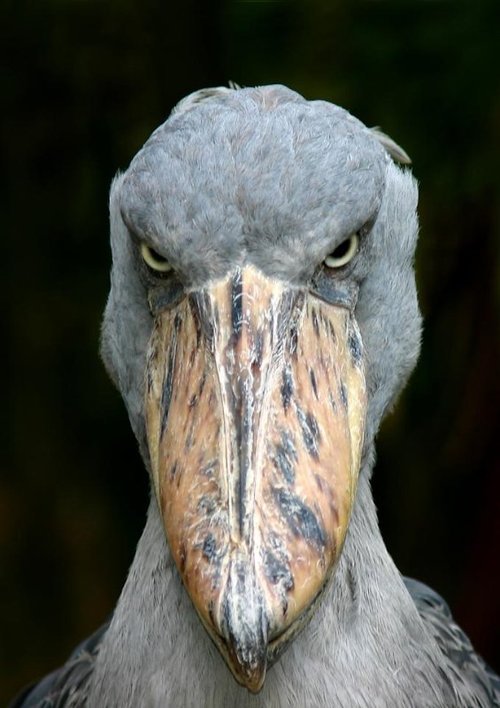
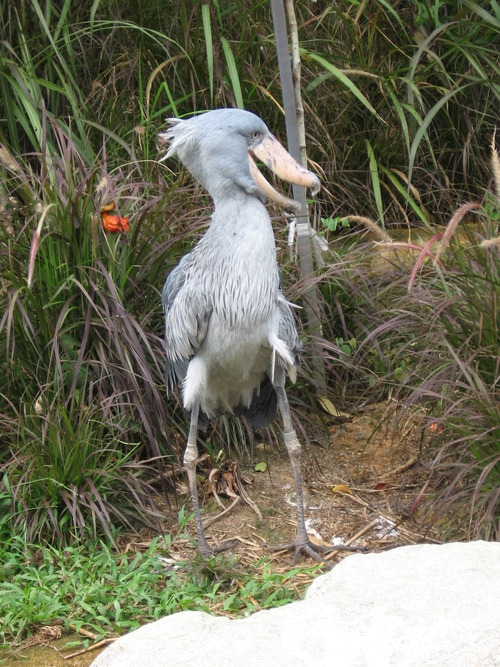
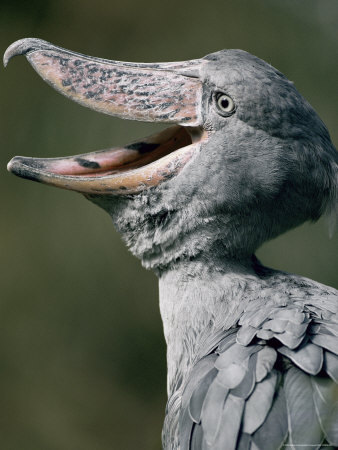
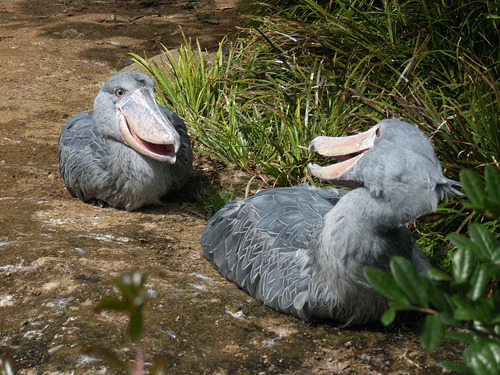
yowhosedogisthat: Shoebills look very scary from the front But from other...
firehoseeyyyyyyyyyy
Shoebills look very scary from the front
But from other angles…
eeeeeeyyyy
eeeeyyyyyy
eeeeeyyyy
eeeeyyyyyy
eeeeeyyyy
eyyyyyyyy

Tiny Shiba Inu Toy Gives a Real Dog a Relaxing Massage
firehoseno god only shiba
A little Shiba Inu toy gives a real Shiba Inu a relaxing massage in this cute video.
video via aemhamc2