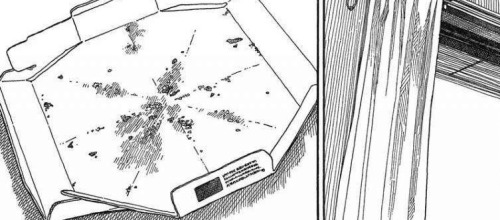
dogs in space - Cowboy Bebop (Bandai - PSX - 1998)
requested by fergzilla

There’s another Hobbit movie out, and lo, people have started hitting the Out of Ambit blog in search of recipes for seed cake.
So I thought I’d save the Tumbrites (in particular) a few clicks by crossposting the recipe over here.
[Bilbo] had a horrible thought that the cakes might run short, and then he — as the host: he knew his duty and stuck to it, however painful — he might have to go without.
“Come along in, and have some tea!” he managed to say after taking a deep breath.
“A little beer would suit me better, if it is all the same to you, my good sir,” said Balin with the white beard. “But I don’t mind some cake — seed-cake, if you have any.”
“Lots!” Bilbo found himself answering, to his surprise; and he found himself scuttling off , too, to the cellar to fill a pint beer-mug, and then to a pantry to fetch two beautiful round seed-cakes which he had baked that afternoon for his after-supper morsel.
And there you have it. Clue-finder and web-cutter, friend of bears and guest of eagles, Ringwinner, Luckwearer, Barrel-rider: Bilbo Baggins bakes, too. Here is the all-round Hero in potentia, waiting for the Call… but with one eye on the oven timer. (And the appetite obviously heroic, as well. Only a hobbit would consider two whole seedcakes “a morsel”.)
…It’s been hanging about in British children’s literature for a while now, the seed cake. The appearance in The Hobbit is hardly the first one: seed cake turns up as comfort food often enough, sometimes in strange disguises (the reference in Winnie the Pooh to “crustimoney proseedcake” is one of these).
I woke up this morning (completely irrationally) with the yen for it and went to check what recipes were to be found. (And the results are under the cut.)
There are quite a few seedcake recipes out there in the Webby part of the world at the moment: apparently the cake is having a mini-renaissance due to people rereading The Hobbit in the wake of the film, or in prep for it. Now, we’ve had a recipe for something similar over at European Cuisines for a while now, but it’s more along toward the Irish-influenced “tea bread” end of the spectrum due to the chopped candied fruit in it. So I checked the classic recipe from Beeton, had a look at Delia and Nigel Slater, and then wandered about a little bit more (discovering along the line that we’re out of baking parchment [makes a note on the kitchen chalkboard]) and assessed a few others.
The recipe that looked best to me was this one over at the HobbitsSecondBreakfast site. …And typically, once I started working with it I started to get a bit adventurous with it, with an eye to maximizing its strengths. The changes are moderately significant, so let’s change the title a bit to signal this.
Took Family Seed Cake
Preheat oven to 180C / 350F.
Butter, and ideally line with buttered greaseproof paper / baking parchment (assuming you haven’t just discovered you’ve run out of the damn stuff) a one-pound loaf pan / tin.
Sift together (or just stir together, if you couldn’t be arsed) the flour, baking powder and salt.
Get out the electric mixer and cream together the softened butter and sugar until light and fluffy. (If you can’t wait that long, cream them together until you can no longer feel granularity in the mixture when a little is rubbed between finger and thumb. Do not do this so many times that people start suspecting you’re only testing the consistency because you really like eating just-butter-and-sugar.)
Add the eggs one at a time to this mixture and beat like crazy. Add the vanilla extract and lemon zest.
Slow the mixer down and add in the flour mixture tablespoonful by tablespoonful until about half of it is gone. Add the milk. Then continue slowly adding the rest of the flour. Don’t overbeat this. Just beat gently until combined.
Slow the mixer to a crawl and stir in the caraway seeds.
With a spatula, fill the loaf pan / loaf tin with the mixture. Smooth the top a little. Use a knife to draw a line down the center the long way. (This really does work a little the way it does with bread, to make a path-of-least-resistance for the cake to rise along.)
Bake for 50 minutes. Test for doneness. (A skewer should come up almost entirely dry. A few crumbs sticking to it are OK.)
When done, remove the cake and let it sit in the tin for another ten minutes.

Then remove it and stand on a wire rack to cool.
Slice and serve. This toasts brilliantly, by the way. Be careful of toasting temperatures, as the sugar makes it likely to scorch if the temperature’s too high.
If expecting dwarves: make about six more.
 Athena's Daughters is an upcoming anthology written, edited, and illustrated entirely by women, and it's looking for a little crowdfunding support. You can also pledge your dollars toward 3D scanned skull jewelry, a massive zombie taxonomy poster, and a series of beautifully illustrated art books.

    
|


Read more of this story at Slashdot.

Valve's Linux-based SteamOS has been out for a couple of days now, and we've been busily hammering away on our own Ars Technica Steam Machine. We'll be bringing you a short video tour of the operating system later today, but actually creating that video tour required a bit of command line tomfoolery. We ended up with a working technique to capture video and wanted to share it.
There isn't a screen recorder or FRAPS-like video capture equivalent bundled with SteamOS, so we can pick and choose from a number of different open source applications that fit the bill. After a bit of digging, we went with RecordMyDesktop, which can do audio and video from any attached Linux display. Rather than worry about compiling it from source, SteamOS's Debian heritage comes to the rescue: there's a package available on the Debian Wheezy repository.
SteamOS comes configured to pull packages only from Valve's repositories, but that's all right—we're going to download the package directly and install it. However, there are a couple of things to do first.
Read 34 remaining paragraphs | Comments

|
|
http://www.change.org/petitions/a-stand-for-democracy-in-the-digital-age-3
A STAND FOR DEMOCRACY IN THE DIGITAL AGE
Petition by Writers Against Mass Surveillance
On International Human Rights Day, 562 authors, including 5 Nobel Prize laureates, from over 80 countries have joined…
firehose'simply edit the /boot/grub/grub.cfg file and remove the traces of nomodeset from the kernel lines in that file. With nomodeset references removed from the file, reboot and your system should be in good shape. The more long-term approach is to edit the /etc/default/grub file and remove nomodeset and then run sudo update-grub. This second approach will ensure that even when performing kernel upgrades or other updates to SteamOS, the disabling of kernel mode-setting doesn't happen.'
might actually get Gone Home working this weekend then?
firehoseNellie Bly autoshare

Publicity photo of the American journalist Nellie Bly, who traveled around the world in seventy-two days in 1889/90, beating Jules Verne’s sixteen year old fictional account by eight days.
A model for every reporter on Doubt Street.
No but this lady was 110% amazing. She got her start in journalism after writing an impassioned letter to the editor refuting a misogynist column in the Pittsburgh Dispatch. The editor was so impressed with her letter that he invited the man who wrote it to join the paper, and she managed to talk him into following through with the invitation once he realized that she wasn’t a man.
She wrote a lot about the plight of working women (especially factory workers), and when the paper tried to move her to the society pages, she went to Mexico and worked as a foreign correspondent, only leaving after she was threatened with arrest for protesting the jailing of a local journalist who had criticized the government.
In 1887 she took an undercover assignment for the New York World to write about abusive conditions in the Women’s Lunatic Asylum on Blackwell’s island, which led to a grand jury investigation in which she acted as consultant.
Also her trip around the world was some Amazing Race type stuff, where she was racing against a reporter from another New York newspaper who went around the world the opposite way. The end of the race was full of missed connections and having to take different ships than intended.
Not content to have won The Amazing Race before it even existed, she went on to become the president of the Iron Clad Manufacturing Company and invented a novel milk can and a type of stacking garbage can.
She wrote stories on the Eastern front during WW1 and covered the Women’s Suffrage Parade in 1913.
I know this sounds like five people or someone’s historical AU Mary Sue but she was a real person.
A mainstay of drive-up bank tellers for decades, a New Zealand cafe is finally taking the pneumatic tube to its logical conclusion: as a delivery mechanism for delicious, nutritive sliders. The Press reports the story of Christchurch's C1 restaurant, which is in the midst of installing a network of vacuum tubing to connect its kitchen with every single table; when the system is complete late next year, cooks will be able to shoot burgers directly to their customers at over 80 miles per hour inside reinforced aluminum canisters.
Over 80 mph
C1 already uses pneumatic tubes to get order tickets to and from the kitchen — but obviously, sending a full meal requires quite a bit more suction, so the system is being redone at the rate of roughly three tables a month until the entire restaurant is ready to go. Trials are already underway, and it's expected to be ready for its first customers at a limited number of tables in January.
The best part, though, is the story of how C1's owner got the idea to send food faster than a car traveling at highway speeds: from Futurama, which is where most of the world's best ideas originate.

firehosethe only way to stop a bad guy with a gun
Read more of this story at Slashdot.

firehosefuck the falcons
This is the end.
We interrupt your NFL viewing with the following news update.
Cotton candy has taken over. There is no escape. Attempts to wash off the intergalactic invader has been met with a sticky mess, and there is no current update from within the Georgia Dome.

Please hold your loved ones close, and await word from the authorities. There is no indication why spun sugar decided to attack our liberties, but there is no hiding. Cotton candy will find its way to your town.
Thank you humanity. It was fun while we lasted.
firehosevia Snorkmaiden
firehosevia Albener Pessoa

A rare example of what architectural historians refer to as a “fertility window”.
Follow on Twitter @BadRealtyPhotos
firehosevia Russian Sledges
Where countries prohibit homosexuality
IT HAS been a bad week for gay rights. An Australian court struck down a recent state law allowing same-sex marriage. In India the Supreme Court upheld an 1860 law that criminalises homosexual acts, overruling a 2009 judgment by a lower court. The guilty face a possible maximum sentence of life imprisonment. Worldwide, countries are increasingly providing legal protections for people to chose with whom they wish to be intimate. Still, more than 80 countries criminalise homosexuality. A majority are former European colonies, particularly of Britain, which exported its anti-gay laws. (India’s 1860 act is a legacy of British rule; the government says it is looking at how to restore the 2009 decision.) Russia penalises homosexuality as part of its "anti-propaganda" rules. In five countries and areas of Nigeria and Somalia, people face the death penalty for sharing private moments with those of the same sex.

firehosevia Russian Sledges

Historical Diagram: Charing Cross/Embankment Tube Station Cutaway, 1914
Simply stunning cutaway cross-section of the London Tube station now known as Embankment in 1914. This drawing shows the station just after the opening of the new deep tube extension of the Charing Cross, Euston and Hampstead Railway (now part of the Northern Line) from their previous terminus to the north at Charing Cross station. The extension was a single line that headed south from Charing Cross, looped back around underneath the Thames and had a single platform heading northbound here at Embankment.
The diagram shows the C+E&H tube at the bottom right: it looks like a train has just left, heading back northwards to Charing Cross. To the left, the twin tubes of the Bakerloo line can be seen. Above, the shallow cut-and-cover tunnel of the District line runs at right angles to the deeper lines, built into the actual river embankment from which the station received its name. Above them all sits the grand old Charing Cross main line railway station, with The Strand just visible at its far end (a helpful caption, “This is The Strand”, points the way).
More than anything, it’s the detail of this cutaway that I like the most. Busy people enter and exit the station, read newspapers and ride the escalators between levels. A double-decker omnibus and Edwardian car can be seen chugging along the street, and trains belch steam in the station above. Advertisements adorn the walls, and the red carriages of the Tube fairly rattle along the tracks. An early version of the Underground roundel – a red circle with a blue bar across it – can be seen above the station’s building and on the District line platform.
If the naming of the station seems a little confusing, that’s because it was. In 1914, the District line platforms were named Charing Cross (for the main line station almost directly above), while the two separate deep tube lines were both called Embankment. The C+E&H station directly to the north, which was previously just Charing Cross, became Charing Cross (Strand). By 1915, everyone had had enough of this nonsense and all the platforms at this station took on the District line name of Charing Cross, while Charing Cross (Strand) became simply Strand. At the same time, the separate Strand station on the Piccadilly line was renamed as Aldywch to prevent even more confusion.
In June 1973, the newer Northern line Strand station was closed to allow construction of Jubilee line platforms. These platforms were constructed between the Bakerloo line and Northern line platforms together with the long-missing below-ground interchange between those two lines. In anticipation of the new interchange station, Charing Cross (this station) was renamed Charing Cross Embankment. The Jubilee line platforms and the refurbished Northern line platforms opened in May 1979, when the combined station (including Trafalgar Square on the Bakerloo line) was given its current name of Charing Cross; simultaneously, Charing Cross Embankment (this station) reverted to its original name – Embankment.
(Source: Wikimedia Commons)