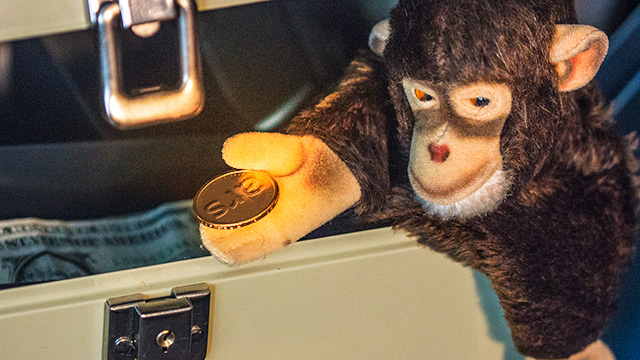
All good things must come to an end, and the time is approaching when Arscoin, our experimental cryptocurrency, will soon be joining Susan B. Anthony dollars in the great retired currency bank in the sky. It's been a fun experiment—both to set up and to watch—but it has served its purpose.
And what, exactly, was that purpose? Certainly not to create a new form of money invested with actual value; Arscoins have fungibility, but not liquidity (not inherently, anyway). We wanted to explore the actual process of creating a cryptocurrency. Unlike a physical fiat currency like US dollars, which require both expensive means of production and also substantial assurances of value ("the full faith and credit" of the United States government), dashing off a cryptocurrency based on the Bitcoin or Litecoin source code requires essentially no effort or capital investment. We spent more time setting up servers and applications than we did actually doing anything resembling traditional banking.
Value, though, is where you find it. We took steps to keep Arscoin behind a "glass bubble," ensuring that the blockchain remained only on our servers rather than setting it free (which is arguably a fundamental requirement for any "real" cryptocurrency to thrive—that lack of centralized control and massive decentralized transaction verification). Instead of a currency exchange, we set up a store where users could buy hats and colored usernames. "Withdrawing" Arscoins from the system wasn't really possible—you could certainly send them to other Ars users' online wallet addresses, but we didn't make offline wallets available. The only way to turn them into "real" money would be by a physical trade, and even then, Arscoins would only move between online wallets on Ars Technica-controlled servers.
Read 11 remaining paragraphs | Comments