Adam Victor BrandizziPus para tocar aqui e fui fazer outras coisas. Quando começou a tocar, veio-me um sorriso automático :)
Adam Victor BrandizziLi esse artigo uns dias atrás, deveras interessante.
Anarchism, once the philosophy of terrorists and assassins, has mellowed. It’s now the creed of professors eager to see the state disappear – just not yet… more»

photo: leandroarthropodsclub44

photo: Michel Ehrhardt

photo: D_Mar

photo: Chris
Habitat: Eurasia; In the UK, this endangered beetle is currently known only from Caernarvonshire in Wales; since 1980 it has been recorded from Snowdon and Cwm Idwal. Elsewhere the species is found in northern, central and southern Europe
Status: Classified as Endangered in the UK and protected under Schedule 5 of the Wildlife and Countryside Act, 1981
You don’t usually hear about insects being endangered since they’re typically found in huge numbers. However, the Rainbow Leaf Beetle (Chrysolina cerealis) is an extremely rare species of bug that is only found in a few small populations (though they are considered very difficult to locate, so maybe there are more out there we don’t know of!) in Eurasia. It’s interesting that such a vividly colored beetle is found in Europe; I would imagine this being found in the jungles of Borneo or some other extremely tropical location instead!
At only 5.5 – 10 mm in length, the Rainbow Leaf Beetle is arguably the most beautiful beetle in all of Britain. It has long bands of red, green, and purple running down its wing cases, or “elytra.”
The species is being monitored and it seems that there hasn’t really been a decline in population numbers per se; it might just be that this species was always rare! Makes sense – rainbows are, after all, are a special treat. It makes sense that a rainbow beetle would be just as coveted as the natural weather phenomenon it is named after!

photo via: myscienceacadamy.org
The post The Extremely Rare Rainbow Leaf Beetle Is A Major Treat For The Eyes appeared first on The Featured Creature.

































Adam Victor BrandizziBoa sorte a eles!
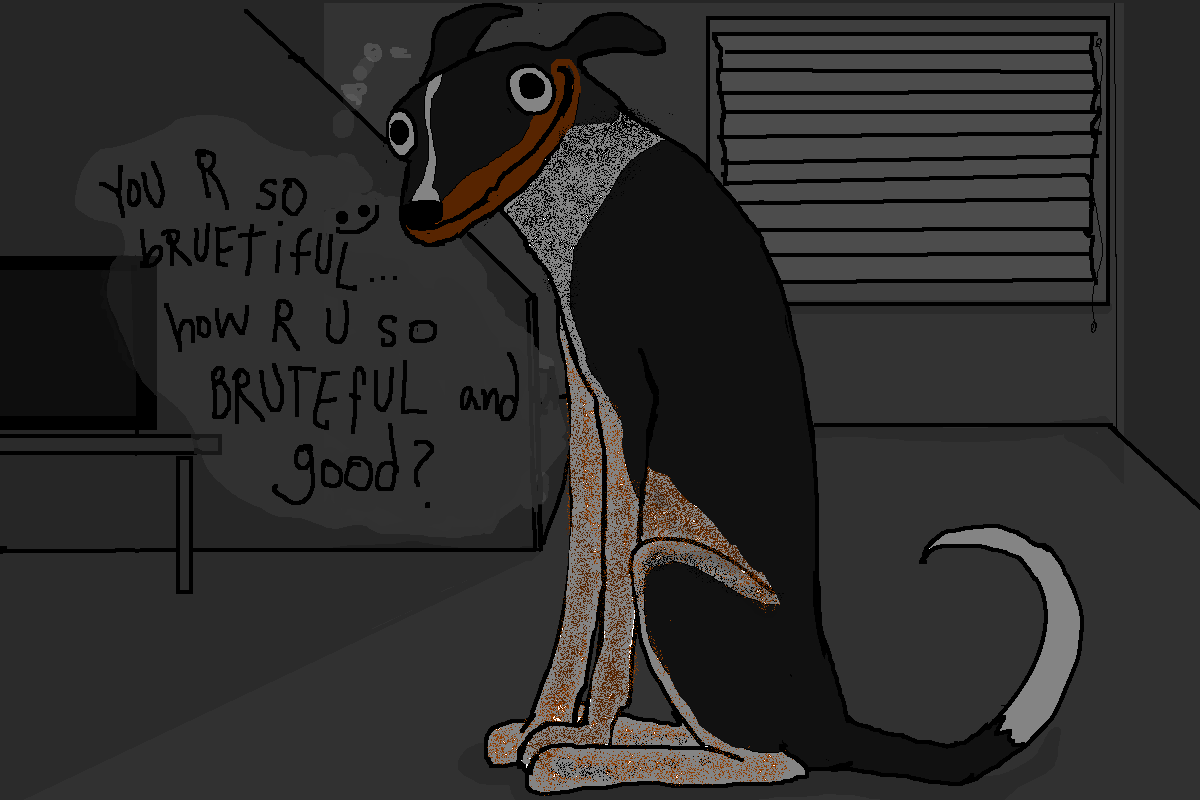
 Cuteporter Becky C. fills us in: “I work at the Sloth Sanctuary of Costa Rica and we desperately need help in order to continue our work rescuing sloths. We’ve recently launched the Save Our Sloths campaign to try and raise enough funds to return rescued baby sloths to the wild. There is lots more information on our campaign page!” (Becky also supplied these photos late last night. Awesome.)

!BONUS REPEAT OF PHOTO #1 WITH NOMMING HIGHLIGHTS!


Adam Victor BrandizziPQP, viu?
* * *
O TLP sempre me deixa com a sensação de que não há solução, de que na verdade tentar solucionar é o problema.
* * *
Eu achava que ele falava como alguém que se via acima de tudo; na verdade, eu é que ouço como alguém abaixo de algo.
 the only way to win is not to play
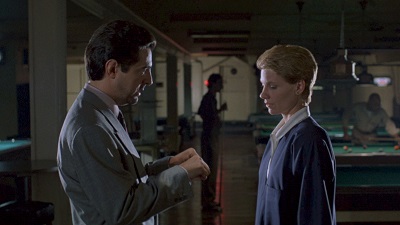
"Dude, are you doing the Dove ad now? That was so April 15th...?" Yes, I realize I missed the meme train, but it's better to be right than part of the debate, especially when there is no debate, this is all a short con inside a 50+ year long con. Remember House Of Games? "It's called a confidence game. Why, because you give me your confidence? No: because I give you mine."
"What's with you and fin-de-Reagan David Mamet?" It's not my fault Dove cast Joe Mantegna as the sketch artist, and anyway if you want to understand the world today, you have to understand how the Dumbest Generation of Narcissists In The History Of The World was educated. See also: 9 1/2 Weeks.
Here's how you run a short con, pay attention:
Everyone likes to know the secrets of the game, and this scene certainly satisfies. Joe Mantagena shows a famous psychiatrist (played, tellingly, by David Mamet's future ex-wife) how a short con is done, how it's improvised, and he makes it look so easy. Really easy, except for the part where you have to connect with a perfect stranger and make them like you. Did you find yourself wondering if you had the skills to pull it off? Better watch it again, sucker.
Quick test for a con: what questions does it not occur to you to ask? While you were memorizing the language and the pacing of the scam, you didn't ask yourself, why didn't Mantegna take that guy's money at the end? Why did he let him off the hook? "He was just doing it as an example." Oh, like when a guy says he'll put in just the tip, "I want to see if it fits"? It's not like the psychiatrist doesn't know he's a thief-- that's why they were there in the first place. So he purposely didn't steal the money to make the psychiatrist feel at ease, feel closer to him. To earn her confidence by first giving her his. She's the mark. The aborted short con is part of an unseen long con.
But the genius of the scene is that while you, the viewer, are criticizing the stilted dialogue or the improbability of the success, "dude, that would never work in real life!" if you search your sclerotic heart you will find that you yourself felt good that Mantegna didn't take that guy's money, that he let him go. It endeared you to Joe, it made you feel more sympathetic to him, like he's an ethical thief, like he's Lawful Neutral. In other words, he's given you his confidence.... which means that the true mark is you.
Women are their own worst beauty critics.... At Dove, we are committed to creating a world where beauty is a source of confidence, not anxiety... That's why we decided to conduct a compelling social experiment that proves to women something very important: You are more beautiful than you think.
"Oh my God," you might say, "I know it's just an ad, but it's such a positive message."
If some street hustler challenges you to a game of three card monte you don't need to bother to play, just hand him the money, not because you're going to lose but because you owe him for the insight: he selected you. Whatever he saw in you everyone sees in you, from the dumb blonde at the bar to your elderly father you've dismissed as out of touch, the only person who doesn't see it is you, which is why you fell for it. Even mirrors fail you. Hence a sketch.
II.
The gimmick that propels the Dove ad is a comparison between subjectivity and objectivity, though in this case objectivity is defined as however well Mantegna can use a charcoal pencil. Why not just use a photograph?
Because when it comes to beauty, we all know photographs can be manipulated, especially in ads, especially by Dove. So the ad frees you from your cynicism and goes with a new standard of beauty, one that, like yoga or genetics, has been around for a long time AND you know very little about it; it hasn't been over-critiqued, you haven't watched it fail over and over, and thus seems pure, fantastical, true. The artist's sketch. How can anything this lovingly and precisely created not be the real thing? And nothing makes a middle aged neurotic happier than 45 minutes alone in a loft with a good looking man who requires no sexual contact and just wants to listen to you talk about yourself, unless he's also sketching you attentively in natural light. "Can I offer you a Pinot Grigio?" Slow down, Christian, you're making me woozy. There is not enough quantitative easing in the universe to prop up this fantasy, but at $3000000000000 you can't say America's not committed to the attempt.
The mistake in interpreting this ad is in assuming the ad is selling based on the women and their beauty. If that were true, it would be counterproductive: if they are naturally beautiful, if the problem is actually a psychological one, then they certainly don't need any beauty products. A beauty ad operates by creating a gap between you and an ideal: by creating an anxiety that can only be mitigated by the product. But this ad reduces anxiety and avoids cynicism. Therefore, it is not a beauty products ad. It is selling something else. This is why there aren't any products in the ad.
Dove is telling you you don't need to do anything to be beautiful, but it knows full well women must do something to themselves to feel good about themselves, and if they don't need makeup then at least a moisturizing soap. All Dove needs to solidify this is to be recognized as an authority on beauty-- real beauty, not fake, Photoshopped, eyeliner and pushup bras beauty.
It is the sketch artist who is the most important character in the ad, the ad is selling him. That's why he doesn't just draw the sketches, he sticks around to chaperone these women to self-awareness. By the way he is depicted you understand that he knows beauty, inner and outer; he is part father, part lover, expert in what makes a woman valuable. For you to accept him, he can't be married; but since in real life he is, they only show you the right hand-- the part of him that almost autonomously draws beauty. He is an authority on appearance, he is the "other omnipotent entity" that decides whether "you are beautiful."
The ad lets the women become beautiful without selling them anything. It lets them win. It lets them win. It endears them and you to Dove, it makes you feel more sympathetic to Dove, like it's an ethical beauty products company, like it's Lawful Neutral. It gave these women its confidence; it gave you, the viewer, its confidence.
And then-- spoiler alert-- it will screw you and take your money.
III.
That Dove wants you to think of it as the authority on beauty so it can sell you stuff makes sense, there's nothing underhanded about it and hardly worth the exposition. The question is, why do they think this will work? What do they know about us that makes them think we want an authority on beauty-- especially in an age where we loudly proclaim that we don't want an authority on beauty, we don't like authorities of any kind, we resist and resent being told what's beautiful (or good or moral or worthwhile) and what's not?
You may feel your brain start trying to piece this together, but you should stop, there's a twist: where did you see this ad? It wasn't during an episode of The Mentalist on the assumption that you're a 55 year old woman whose husband is "working late." In fact... it's not even playing anywhere. You didn't stumble on it, you were sent to it, it was sent to you-- it was selected for you to see. How did they know? Because if you're watching it, it's for you.
Here you have an ad that was released into the Matrix, it is not selling a product but its own authority, and it is not targeting a physical demo, age/race/class, it is targeting something else that operates not on demography but virality. Are you susceptible? So while you are sure you most certainly don't want an authority on beauty, the system decided that you, in fact, do very much want an authority on beauty. The question is, which of you is the rube?
"But I hated the ad!" Oh, I know, for all the middlebrow acceptable reasons you think you came up with yourself. Not relevant. The con artists at Dove didn't select these women to represent you because you are beautiful or ugly, any more than the street hustler selected you for your nice smile. They were selected because they represent a psychological type that transcends age/race/class, it is characterized by a kind of psychological laziness: on the one hand, they don't want to have to conform to society's impossible standards, but on the other hand they don't want the existential terror of NOT conforming to some kind of standard. They want an objective bar to be changed to fit them-- they want "some other omnipotent entity" to change it so that it remains both entirely valid yet still true for them, so that others have to accept it, and if you have no idea what I'm talking about look at your GPA: you know, and I know, that if college graded you based on the actual number of correct answers you generated, no curve, then you would have gotten an R. Somehow that R became an A. The question is, why bother? Why not either make grades rigorous and valid so we know exactly what they mean, or else do away with them entirely? Because in either case society and your head would implode from the existential vacuum. Instead, everyone has to get As AND the As have to be "valid" so you feel good enough to pay next year's tuition, unfortunately leaving employers with no other choice but to look for other more reliable proxies of learning like race, gender, and physical appearance. Oh. Did you assume employers would be more influenced by the fixed grades than their own personal prejudices? "Wait a second, I graduated 4.0 from State, and the guy you hired had a 3.2 from State-- the only reason you didn't hire me is because I'm a woman!" Ok, this is going to sound really, really weird: yeah. The part that's going to really have you scratching your head is why did either of you need college when the job only requires a 9th grade education?
Which is why those that yelled "Unilever owns Dove and Axe!" like it was an Alex Jones tweet, those who felt tricked/used/violated that Unilever has a sexist side to it, those who thought the ad was hypocritical or "anti-feminist" are still being duped, detecting hypocrisy is 100% the play of the rube, go ahead and yell indignantly as you continue to be fleeced. Figuring out the short con is part of the long con, see also House Of Games, for a non-spoiler example if the street hustler is shifting the cards and you think you're able to follow them, then you're still going to lose AND your pocket is being picked. "Can't bluff someone who isn't paying attention," Mantegna told the shrink helpfully-- he's telling her the scam, no, she didn't listen either. So let's go to the places where people pay attention, go to the "intelligent" media outlets where all the suckers hang out, and observe the most common criticism about this Dove ad: it has no black women in it. Never mind it does, that's a very telling criticism: why would you want black women in it? It's not the Senate, it's an ad, no, don't you hang up on me, why do you want blacks in the ad? Because it would represent the diversity of beauty? Because without them, it sends black women the wrong message about society's standards? Your answer is irrelevant, the important part is that whatever your answer, it is founded on the assumption that ads have the authority to set standards. Which is why, in your broken brain, the reflex is to complain about the contents of the ad, not assert the insignificance of ads. The con worked. Of course it worked: they selected you.
"Well, not authority-- power. You can't deny their power is massive, but of course I'm not a stupid, I don't think it's legitimate." I'm sorry, no, you are stupid. You'll let it have power over you in exchange for the right to brag that you know its not legitimate.
This is the same problem with people who want to ban Photoshopping in magazines or want bigger women to be featured in ads. You all have the internet, right? It seems crazy to worry about how beauty is portrayed on TV and ads when there are blonde billions (rated on a scale of one to ten) getting double penetrated literally underneath your gmail window, but that obsessive worry about what's on TV or what's in an ad is completely predicated on the assumption that the ad, the media, has all the power to decide what's desirable. And therefore, of course, it does. But the important point is not that you believe this to be true, the point is that you want this to be true. You want it to be true that advertising sets the standard of beauty because in the insane calculus of your psychology you have a better chance of changing Dove than you have of changing yourself, turns out that's true as well.
Dove, et al sympathize with your powerlessness, so since you can't get anywhere near those impossible standards, ads give you a chance of making some kind of progress: a little moisturizing soap and a positive message and maybe you get closer to the aspirational images of the women in the ad. "Those women are aspirational?" Of course: they're happy, Dad told them they're good. It feels like improvement, it feels like change, and I hope by now you understand it's only a defense against change.
The obvious retort is that ads are everywhere, you can't ignore them. But there are rats in the ceiling of your favorite restaurant, and you ignore them no problem, you don't even look up. That's the real Matrix you make for yourself continuously, in analog, not digital-- overestimate this, disavow that, a constant transduction of reality into a safe hue of green, until by the time you get to bed you're physically exhausted but your brain can't downshift. "I have insomnia." Time for a Xanax. Yes, it's Blue.
"Everybody gets something out of every transaction," said Joe, explaining why people want to be conned. That's what ads do for you. They'll let you complain that they are telling you what to want, as long as you let them tell you how to want.
"Shouldn't my parents have taught me how to want, instead of yelling at me about what to want?" You'd think that, let's check in: have you shown this ad to your 14 year old daughter yet? Oh, you sent it to her on Facebook, that was helpful. What did you tell her about the ad? "Well, even though it's an ad and they're trying to sell you Dove soap, there's a positive message in it." No other ways to deliver positive messages? "Well, the ad is really well made, and it communicates the message more powerfully than I ever could." But if the medium is the message, shouldn't you NOT show her this ad?
David Mamet has some excellent insights, but for practice what you preach wisdom you have to defer to a Wachowski sister: stop letting the Matrix tell you who you are.
IV
Did the way the sketching sessions were conducted remind you of anything? The women aren't in yoga casual, no one's wearing sneakers-- they got a little dressed up for the appointment. Observe the way they talk about themselves, trying to find just the right words because, you know, their inner experience is very complicated; and the unfinished, hesitating haste with which they take their handbags and walk out at the end leaving the artist behind. The loft is certainly an inviting, comfortable setting, warm and safe, but it doesn't belong to them. They know they are merely visitors in a shared space. That setting is exactly like therapy.
You may think this is merely my (a psychiatrist's/House Of Games viewer's) biased perception of this, except that a) they're in San Francisco, where the main output is crematorium roast coffee and cash-only psychiatry, and b):
My father was emotionally very distant-- and so was my mom. And I didn't get the emotional comfort I needed...
It's been really clear to me over my life that I've made really bad choices, and that's a reflection of my self esteem. I chose the wrong jobs, the wrong husbands...
I use a toolbox of things I tell myself.... whenever I hear negative thoughts about myself, I remind myself I have to use what's inside me, my authentic self, to feel good about how I am.
This isn't every woman I've ever been stuck next to on the A train who spotted me with a psych journal or a flask, this monologue is in the ad. Let's find out why: anybody watching this ad in therapy? Anybody watching this ad ever fantasize about what it would be like being in therapy? What a coincidence.
This woman is roots deep in therapy, she thinks about herself in the language of "insight oriented therapy," how has this strategy worked out for her?
Yikes, an Oscar Wilde novel. But the thing to notice here is not that this thinking has failed but that this thinking has BOTH failed AND she thinks it has worked amazingly well for everything else EXCEPT her perception of her physical appearance, her self-esteem; only in that one single area does she "have more work to do on myself." If you ask her about her capacity for empathy or her social/political beliefs or her "values"-- those aren't evolving, those are evolved, they are unassailable. "I have a lot of love to give." How do you know?
I'm not picking on her, any woman who has to raise two kids on her own or with a husband has my unconditional support, but truth hurts, that's how you know it's true. The confidence with which she knows how her perception of self-esteem affects everything in life, "it couldn't be more crucial" is not an insight, it is not wisdom gained from years of therapy: she has been conned, it is society's long con so her pocket can be picked.
The ad's association to therapy here was probably not planned but it was inevitable, just as Mantegna selecting a psychiatrist and not an engineer or a cook or a stripper as the mark in House Of Games was inevitable. It is the only system of rules based on self-deception, it encourages the illusion of "self" separate from behavior. And as long as psychiatry uncritically elevates identity over behavior, it makes it-- not the patients, it-- an easy mark for con men with their own agenda: SSI, the justice system, gun control, schools, whatever. "It's called a confidence game. Why, because you give me your confidence? No: because I give you mine." Take a minute, think it through.
Self esteem is sold to you as an inalienable right, not something to be earned; and if you don't have self-esteem it's because fake society made you feel bad about yourself. But fake society also made you feel good about yourself, it propped you up. The reason you got an A and not an R and believed it is because you actually believe you are an A kind of guy, Math, English, History, Science, PE, and Lunch notwithstanding. A, not R. But if everyone deserves it, it has no value. Which is why getting it is unsatisfying.
Self-esteem is relative, advertising knows this, which is why it operates on comparisons between you and the aspirational people in the ad that seem better because they own the product. The Dove ad dispenses with the aspirational people and actually compares you to you. But that's not you, it's aspirational you, "wouldn't it be great if people saw me in an idealized, sketchy kind of way?" But even as it does this, it pretends self-esteem is innate.
One of the great insights of psychoanalysis is that you never really want an object, you only want the wanting, which means the solution is to set your sights on an impossible ideal and work hard to reach it. You won't. That's not just okay, that's the point. It's ok if you fantasize about knowing kung fu if you then try to actually learn kung fu, eventually you will understand you can never really know kung fu, and then you will die. And it will have been worth it.
You can't see it, but since this is America, the problem here is debt. Not credit card debt, though I suspect that's substantial too, but self-esteem debt. They're borrowing against their future accomplishments to feel good about themselves today, hoping they'll be able to pay it back. Melinda's 26, at that age some self-esteem debt is reasonable as long as you use it to hustle. But what happens if you overspend now and can't pay it back by the time you're 40? Look above. Time for therapy or a moisturizing soap. There's not enough quantitative easing in the universe to prop up this fantasy, but you can't say America's not committed to the attempt.
http://twitter.com/thelastpsych
Luxury Branding The Future Leaders Of The World
This is the secret to life.
Politicalprof: David Foster Wallace explains it all to you. Listen.
There is no way to overstate how much we recommend taking 10 minutes to watch this video.
falar “mas” zera a oração anterior.

During the blanket coverage of the Cleveland kidnapping story, when TV anchors Ashleigh Banfield of CNN interviewed TV commentator Nancy Grace of Headline News, the split-screen satellite simulcast implies that the interviewer and interviewee were at a different location (after all, why would they need satellite, otherwise?), but eagle-eyed viewers pointed out that they were actually both at the same parking lot!
At first it seems like a normal TV "remote," as Banfield interviews Grace from another location. Then the channel's graphics alert viewers: both anchors are in Phoenix. That's odd. Also: They're both outdoors, sitting in what looks to be a parking lot. And is that same building behind them? [...]
It seems that Grace and Banfield are sitting in the same parking lot, facing in the same direction, and judging by the speed of the vehicles in their shots, they cannot be sitting more than 30 feet away from each other. Yet, they're behaving as if the are on opposite sides of the world.
Dashiell Bennett and Philip Bump of of The Atlantic Wire has more: Link
scalariform
adj. resembling a ladder
Above the facade of the Church of the Holy Sepulchre in Jerusalem is a ladder that has remained in place since the 19th century. At that time an edict was passed holding that the church’s doors and window ledges are “common ground” for the various Christian orders; as a result, no church can move anything near the window — including the ladder. It’s visible in the engraving below, which was made in 1834.
(Thanks, Randy.)



"When you embrace your lover, sometimes you wish to melt right into them.
To realize this wish, I've been photographing couples in small, or even cramped spaces like motels and bathtubs.
As my work has become more and more intense, I've noticed that communication is indispensable.
This time, I reached the point of photographing couples in vacuum-sealed packs, on a set that I've constructed in my own kitchen. The lights are in the ceiling, so I just flip one switch and have everything ready.
I have a few different colored paper backgrounds, which I can leave rolled up in the corner until there's none left. This gives me 10 seconds to take the shot.
In this extremely limited time I can't release the shutter more than twice." -- (Excerpts from the author's postscript)


As he enters the room, he knows what awaits him. Resistance is useless. He cannot escape; there are simply too many of them, and there is nowhere to hide anyway. Hands take hold of him and strap him tightly. Now he cannot move. They have total control over him. They set to work quickly, efficiently, and without malice. They follow a strict protocol, their actions being exquisitely coordinated toward a single end. They begin to kill him, deliberately and methodically. This is not their first time to take life. They make no attempt to conceal their intentions or their actions. On the contrary, they do everything in public, before an audience who watch as his life ebbs away.
“If premeditation is central to the handling of homicide, this killing ought to evoke considerable severity. But it does not,” write University of Georgia sociologist Mark Cooney. “In fact, the law tolerates it, and some people even praise it highly. The words ‘homicide’ and ‘killing’ are rarely used to describe it. Instead it goes by another name: ‘capital punishment.’”
(From Cooney’s 2009 book Is Killing Wrong?)
We guarantee you’ll go out of your Vulcan mind watching this new car commercial starring Spock … and Spock.
The Audi ad shows Leonard Nimoy (Spock from Star Trek‘s original series) and Zachary Quinto (Spock from Star Trek: Into Darkness, which premieres May 17) looking for new challenges after Nimoy wins a chess match.
“You want to play a round of golf in the club and get some lunch? Whoever gets to the club last buys lunch,” Quinto says to his predecessor.
“Stand by to have your wallet emptied by a tractor beam,” responds Nimoy.
(...)
Read the rest of Spock Vs. Spock: New Commercial Full of ‘Star Trek’ Gems (98 words)
© Elizabeth Howell for Universe Today, 2013. |
Permalink |
7 comments |
Post tags: leonard nimoy, Star Trek, star trek: into darkness, zachary quinto
Feed enhanced by Better Feed from Ozh

The mother of Simpsons creator Matt Groening passed away recently. This is sad, and I do not intend to make light of it. Writing about famous people all day — especially online, from the comfort of your living room — can make it easy to forget that they’re also bags of skin that are filled with bones and muscles and feelings, and that they do not exist purely to provide us with things to discuss and/or yell about. So, yeah, first and foremost, condolences to the Groening family. Let’s not skip over that part.
The reason I bring all this up is because her obituary, which ran in her local Portland, Oregon newspaper, highlights just how much her son used his own life to develop one of the greatest television shows of all-time. The names really jump out at you once you know to look for them, especially her maiden name: Wiggum. I imagine Matt’s decision to use his mother’s family name for an inept, overweight police chief and his crayon-eating son may have led to some, uh … interesting conversations at one point or another.
The full obit is below.

The post The Obituary For ‘Simpsons’ Creator Matt Groening’s Mother Features A Lot Of Familiar Names appeared first on UPROXX.

Not sure what you guys see but I see my life flashing.
I had to break my hand punching the wall just to reclaim my manliness.
Animals Trying To Stay Awake Compilation is a post from: The Inquisitr
Adam Victor BrandizziEu sempre imaginavam o Evgeny Morozov fazendo cara de "meh" quando lia os textos dele. Aí vi o TED talk dele e realmente ele fazia a cara de meh que eu imaginava.
* * *
Ainda assim, acho muito importante.
How should an automated society function? Jaron Lanier sees a way for everyone to profit. Evgeny Morozov sees an example of digital sophistry… more»
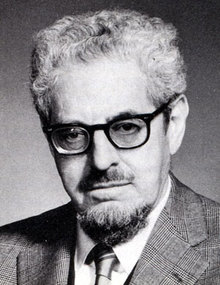
During an appearance on The Dick Cavett Show in 1971, publisher and organic gardening advocate J.I. Rodale boasted, “I’m in such good health that I fell down a long flight of stairs yesterday and I laughed all the way.” When Cavett’s next guest, New York Post columnist Pete Hamill, joined them on the couch, Rodale made a snoring sound. Hamill told Cavett, “This looks bad.”
“The audience laughed at that. I didn’t, because I knew Rodale was dead,” Cavett wrote later in the New York Times. “To this day, I don’t know how I knew. I thought, ‘Good God, I’m in charge here. What do I do?’ Next thing I knew I was holding his wrist, thinking, I don’t know anything about what a wrist is supposed to feel like.”
Rodale had died of a heart attack. The episode was never aired.
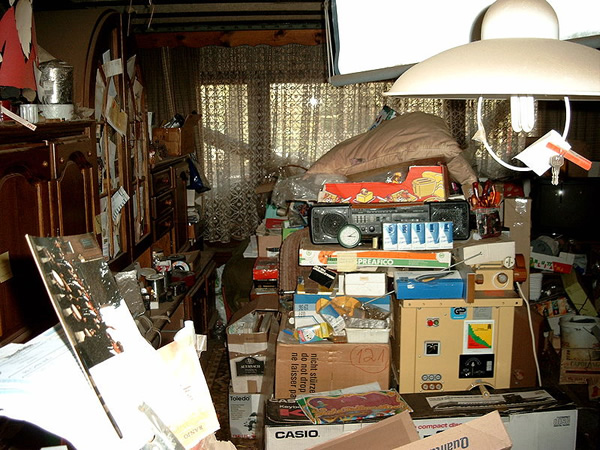
Image: Grap/Wikimedia
The next time your mom complains that you don't throw junk away, tell her that you're in good company: nearly 15 million people suffer from varying degrees of hoarding disorder. But what causes hoarding?
A few years ago, Samson (not his real name) unplugged his refrigerator. It had, he says, “got out of hand.” He didn’t empty it, and he hasn’t opened it since.
That's how Bonnie Tsui's journey to understanding the science of hoarding began:
In a National Public Radio interview a couple of years ago, Frost talked about the reasons hoarders might collect certain items: a decades-old newspaper because it could be useful in the future; an array of bottle caps purely for their fascinating physical characteristics; a seemingly insignificant postcard because it reminded the owner of a loved one or a specific event. Frost saw universality in the way the beliefs seem to be tied to information processing. “There are some problems with attention—that is, distractibility and sometimes a hyper focus, problems with categorization, the ability to organize things,” he explained. “People who hoard tend to live their lives visually and spatially instead of categorically, like the rest of us do.” One of his patients, Irene, would put an electricity bill on top of a pile; if she needed it again, she would remember where it was in space, rather than filing it away—mentally and physically—in a “bills” category.
“We don’t know the nature of the emotional attachments that people who hoard have to objects,” Frost told me. “How do they form, and why are they so? What are the vulnerabilities that lead up to it?”
Read the rest of Bonnie's article over at Pacific Standard Magazine: Link

News outlets are struggling. They are earning less revenue from ads and steadily losing readers and viewers.
As more people turn online to get their news, it’s a common assumption that news outlets need to adapt to the new ways of consuming news. The extent to which The New York Times and CNN, the thinking goes, adjust to the pace of breaking news over social media and the 24 hour news cycle, will determine whether they survive.
But this thinking may have it all wrong. A look at the problems Britain experienced with its currency in the 16th century suggests why.
A post from Foreign Policy explains how British currency began losing its value due to sloppy coinage practices. In response, a wealthy merchant suggested that Queen Elizabeth I mint new coins, distinct from the old coins but more trustworthy.
But no one used the new coins. The problem was that the old and new coins had different values, but equal power as legal tender:
“If coins containing metal of different value enjoy equal legal-tender power, then the ‘cheapest’ ones will be used for payment, the better ones will tend to disappear from circulation.”
This resulted in the maxim that “Bad money drives out good.”
As the article points out, this is equally applicable to breaking news stories.
During the search for the Boston Marathon bombers, people shared false news on social media. This included incorrect reports of an early arrest of the bomber (it was actually an innocent Saudi man questioned out of pure prejudice) to false accusations of the bombers’ identities based on an attempt to crowdsource the investigation on Reddit. This did not just consist of individuals on Twitter sharing false news. In their rush to match the pace of speculation on social media, outlets like CNN misreported breaks in the story.
In other words, bad news drove out the good.
So what should news outlets do? Maybe they should stop trying to compete. Blogs and other sources willing to “report” news without verification or a thought to the consequences will always beat CNN and The New York Times when it comes to pleasing people seeking a shot of dopamine every minute in the form of an update - no matter how inaccurate or poorly presented.
Instead, news outlets need to differentiate by focusing on presenting news cohesively and in a trustworthy manner. Despite the avalanche of Boston coverage, this author, a Massachusetts native, found himself wishing for more summaries of the events from a trusted source - rather than minute to minute updates that assumed a knowledge of every prior break in the story.
Trust is the biggest factor setting traditional news outlets apart from other online sources. Social media is a key way to distribute news. But maybe news outlets don’t need to hire peppy young kids to compensate for crusty old journalists’ lack of social media savvy. Instead, maybe they need to double down on reporting, slowly and carefully, with the solemn and trusted gravitas of Walter Cronkite.
This post was written by Alex Mayyasi. Follow him on Twitter here or Google Plus. To get occasional notifications when we write blog posts, sign up for our email list.