Shared posts

26 Nov 09:49

The Argentines who speak Welsh

Welsh house Chubut,

Nearly 150 years ago a group of intrepid Welsh settlers headed to Patagonia in South America. Prof E Wyn James of the School of Welsh, Cardiff University, asks what lessons they might offer about migration and integration.

I've recently returned from a visit to Patagonia - to the province of Chubut in southern Argentina. Although very memorable and enjoyable, it was also rather surreal.

Indeed, it was a little like visiting a parallel universe. That was not just because I was leaving a Welsh autumn for a Patagonian spring, because Chubut is very different from Wales in so many ways. Yet, in the Chubut Valley, I found myself singing Welsh hymns, eating a Welsh tea, watching Welsh folk dancing, and witnessing the traditional ceremony of the "chairing of the bard" in a cultural festival we in Welsh call an eisteddfod.

The reason for this rather incongruous scenario is that 150 years ago, in 1865, just over 150 Welsh people sailed from Liverpool intent on establishing a Welsh settlement in the Chubut Valley. And although Spanish is now the main community language, there are perhaps as many as 5,000 people in Chubut today who still speak Welsh, and in recent years there has been a significant revival of interest in all things Welsh.

But why was this Welsh outpost established, and why in Patagonia of all places? The main reasons people emigrate are economic, but there are others, especially those linked to the desire for political and religious freedom, which in turn are closely linked to identity.

In the mid-19th Century, a period of political radicalism and growing Welsh national consciousness, most of the population of Wales were Welsh in language and Protestant Nonconformist in religion, all of which contrasted sharply with the ruling classes.

One of the most prominent among the radical Nonconformist leaders in Victorian Wales was Michael D Jones. A man of strong religious and political convictions, he placed much emphasis on the importance of nation and community. In 1848, on a visit to family members who had emigrated to America, he noticed that Welsh immigrants assimilated quite quickly into the English-speaking world around them, gradually losing their language, customs and religion.

Michael D Jones
Michael D Jones (1822-1898) by Ap Caledfryn

Many immigrants, in all periods, are happy, indeed often anxious, to put the old world behind them and forge a new identity. But for others, as we can see today, this loss of culture and identity can be a matter of great concern.

This loss of Welsh identity was a matter of great concern to Jones, and he began arguing strongly that, if Welsh emigrants were to retain their language and identity, Welsh emigration would have to be channelled to a specific Welsh settlement somewhere remote from English influences, where the Welsh would be the formative, dominant element.

He became the leader of a group of like-minded people, who attempted to realise this objective of a Welsh-speaking, self-governing, democratic and Nonconformist Wales overseas. A number of locations were considered, including Palestine, and Vancouver Island in Canada, but they eventually agreed upon the Chubut Valley in Patagonia - a remote area of South America, with no European settlements, only nomadic indigenous peoples.

Jones didn't settle there himself - he didn't really approve of emigration - the better option, in his view, was to stand one's ground in Wales itself. But he accepted that emigration was a universal phenomenon, and if it was inevitable then he was strongly of the opinion that it should be channelled to create a new Wales overseas.

Despite a very difficult start, by the end of the 19th Century the Welsh settlement in Chubut was experiencing something of a golden age, both economically and culturally. During that period Welsh was the language of education, religion, local government, commerce and cultural life in general, and it looked as if the vision of a new Welsh-speaking Wales overseas would be realised.

The first Welsh settlers landed in 1865 living in the caves in the cliffs
The first Welsh settlers landed in 1865 and lived in caves in the cliffs

But with economic success came the seeds of failure. People from other parts of the republic began to move in, the Argentine government began to involve itself increasingly in the life of the settlement, insisting in 1896, for example, that schools changed from being Welsh to being Spanish. Immigration from Wales more or less ceased with World War One, and with no injection of new Welsh-speakers from the old country, and the increasing emphasis by the Argentine Government on assimilation, the Welsh language and its culture went into steep decline in the mid-20th Century - Welsh becoming excluded from public life, and restricted to all intents and purposes to the home and to chapel. Things looked very bleak for the fortunes of the Welsh language in Chubut.

However, celebrations of the centenary of the settlement in 1965 brought increased contact with Wales, and this has grown steadily ever since. There have been changes in government policy, with less emphasis on assimilation and more on cultural diversity, and a new appreciation of the pioneering role played by the Welsh settlers. As a result, recent years have seen a significant revival of interest in Welsh language and culture in Chubut.

Brecon Beacons, Wales
Chubut, Patagonia

And in some ways, Chubut today is a mirror-image of Wales. Welsh is still used, but now (as in Wales) by a minority rather than the majority of the population. There is (as in Wales) a flourishing Welsh learner movement. You still have Welsh place-names, Nonconformist chapels, the eisteddfodau and other elements of traditional Welsh culture - but all in a very different geographical and cultural setting, and with Spanish now rather than English as the dominant, all-pervasive language and culture.

But it is important to emphasise that what we have in Chubut is a mirror image of Wales - it is not Wales.

As in all immigrant communities there are examples of descendants of the original immigrants who have embraced their Welsh roots with the zeal of the convert. However, most Argentines of Welsh descent are emphatic that they are Argentine, even though they may be very proud of their Welsh roots and supportive of Welsh-Argentine cultural activities.

Prof Wyn James (left) Prof Bill Jones and Dr Walter Brooks, Cardiff University, outside Bethel Welsh chapel, Patagonia
Prof Wyn James (left) Prof Bill Jones and Dr Walter Brooks outside Bethel Welsh chapel, Patagonia

It is also important to emphasise that Welsh-Argentine culture, although in one sense a hybrid, is ultimately Argentine and not Welsh. One small example of the way a Welsh tradition has adapted to a very different cultural context is the "chairing of the bard" ceremony. At the National Eisteddfod of Wales, those taking part in that ceremony wear quasi-druidic robes - in the Patagonian equivalent they wear blue ponchos.

Patagonia, then, is a place where Welsh is spoken with a Spanish lilt, and where the guitar and the asado, the gaucho and the siesta are part and parcel of Welsh Argentine culture.

Identity is a complex, fascinating affair, a core element of what it is to be human, and the Welsh settlement in Chubut abounds in interesting questions about it.

The preservation of their separate identity was of sufficient importance to make many of those early settlers not only venture 7,000 miles from their homeland in Wales to the uncertainties of an unfamiliar and undeveloped region, but they were also willing to suffer untold hardships in the early years.

Their aim was to replicate Wales in South America. Ultimately that failed, partly because of the Argentine government's policy of assimilation, and partly because the numbers of Welsh immigrants never reached the critical mass needed for Chubut to develop into a self-governing, Welsh-speaking province.

Welsh tea house in Gaiman

But even during the early years the culture of the settlers had begun to diverge from that of the old country because of their very different social, cultural and geographical context, and this divergence would accelerate from generation to generation. As is the case with immigration worldwide, ultimately the draw of the new country is too great. Immigrant communities eventually and inevitably adapt to their new context.

Ironically the long survival of the Welsh language in Patagonia only emphasises that inevitability, because Welsh is now spoken there by people who regard themselves as Argentine, and not Welsh. And yet they are Welsh-Argentines, highlighting another aspect of identity, whether of an individual or a community.

Identity is a multi-layered and fluid matter. For while the new country ultimately prevails, the immigrant brings to the new country a flavour of the old, much as Welsh-Argentine culture enriches the mosaic of Argentine identity.

Immigration and multiculturalism are high on the agenda in many countries around the world today, including the UK. There are concerns about assimilation and identity, as there were in the time of Michael D Jones.

Jones was right in regarding immigration as a universal inevitable phenomenon. What he failed to realise was that assimilation was also inevitable, that the new country ultimately claims its own, and forges a new identity.

More from the Magazine

Ruined fort at Darien

In the late 1690s an independent Scotland launched an ambitious but ultimately doomed plan to create a colony in what is now Panama. The BBC's Allan Little visited Darien, Panama, to reflect on the story.

You can listen to Migration, Separation and Wales on BBC iPlayer.

Subscribe to the BBC News Magazine's email newsletter to get articles sent to your inbox.

Bookmarked at brandizzi Delicious' sharing tag and expanded by Delicious sharing tag expander.
22 Oct 12:39

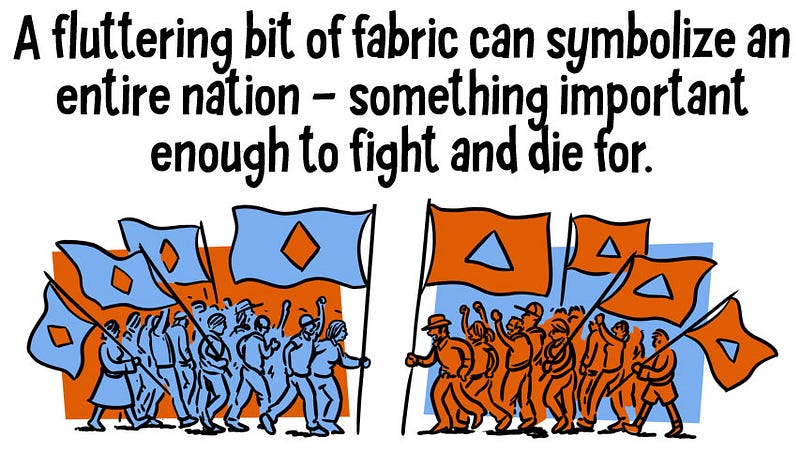
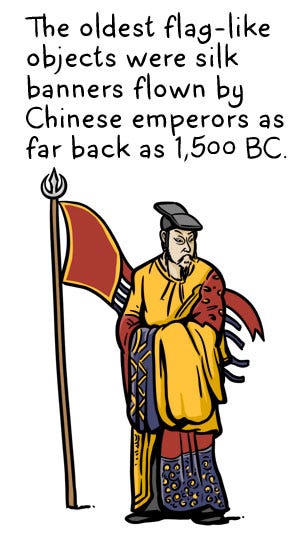
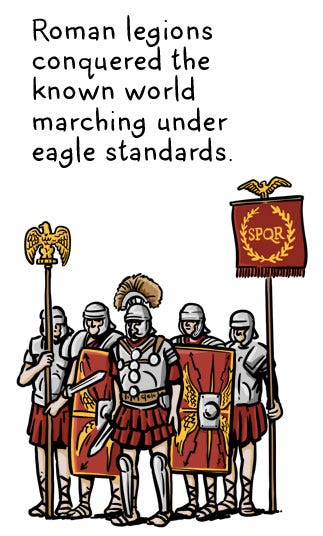
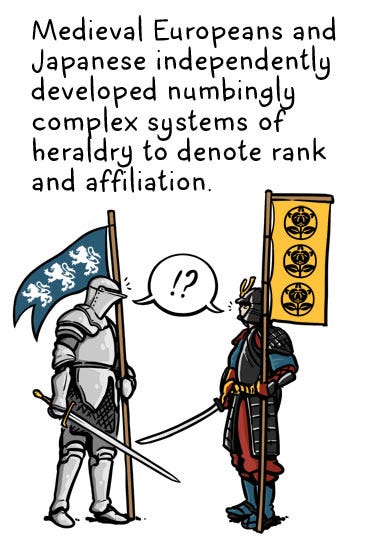
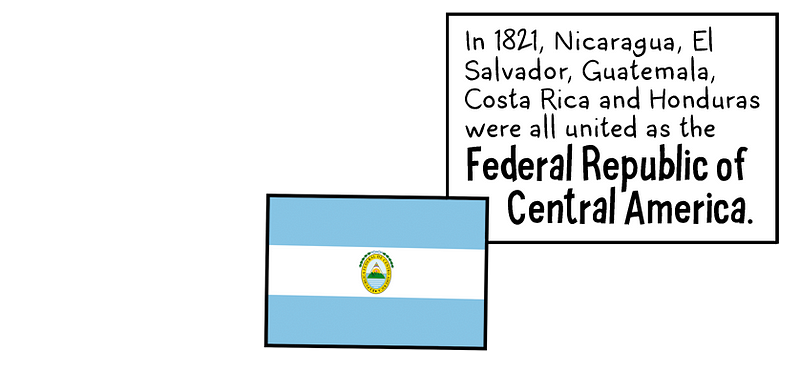
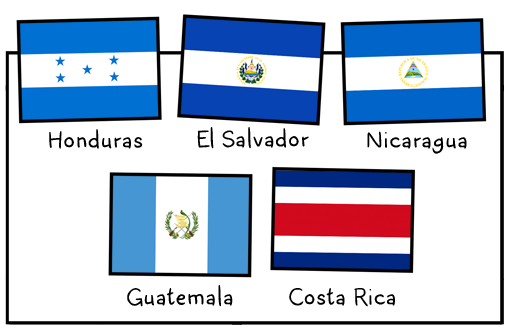
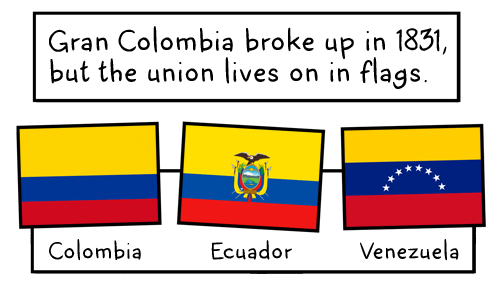
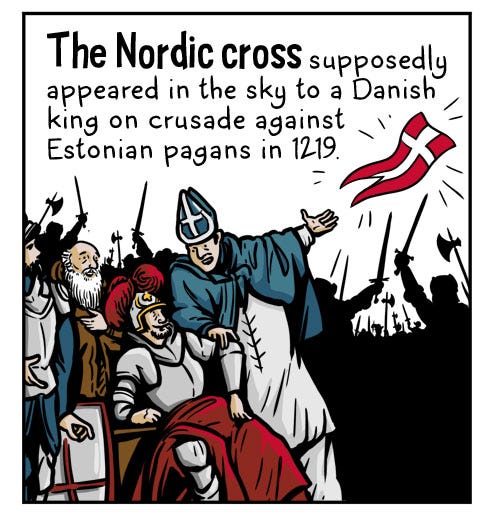
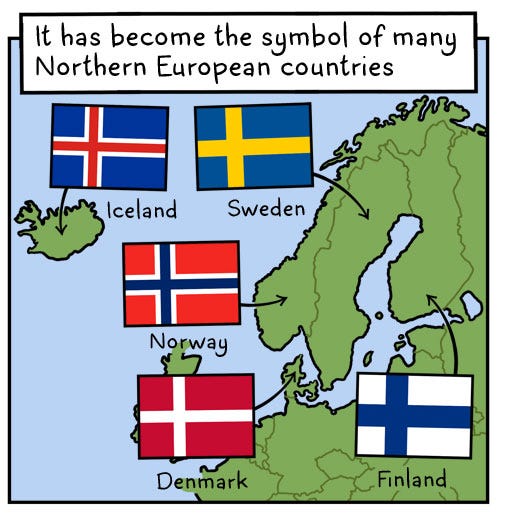
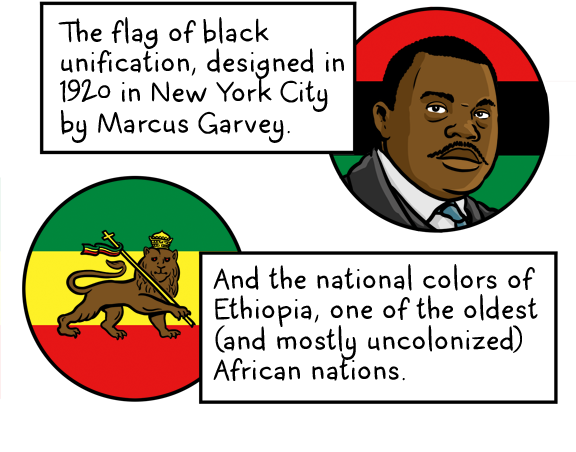
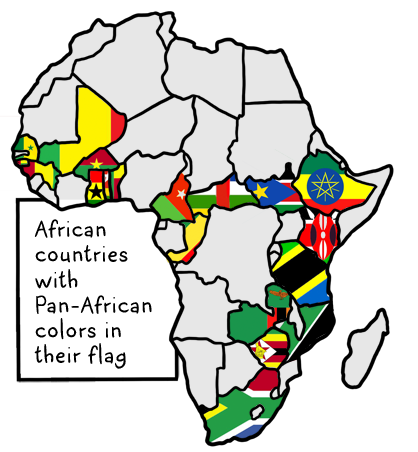
What the Flag Says

re:formAndy Warner on Oct 13

5 min

    Change the title or subtitle to customize how your story is presented across Medium.

    Don’t write alone

    Copy and send this draft link to anyone. They’ll be able to leave you notes before you publish.

    Set as featured in collection


    Go to re:form

    re:form

    Written by Andy Warner

    Email me when re:form publishes stories

    21 Oct 15:31

    Pra que serve um Banco Central independente

    by Alexandre Versignassi


    The-parent-Piggy-Bank 2

    Pra que serve um Banco Central independente? Não sei. Mas me bota lá que eu te conto. Brincadeira. Para entender pra que serve um BC independente a gente tem que entender pra que serve o BC at all. E um Banco Central serve para imprimir dinheiro e dar de graça para os bancos de verdade. Virtualmente de graça: a juros que você nunca vai ver na sua vida – hoje, de menos de 1% ao mês.

    Mas o Banco Central também serve para passar a perna nos bancos de verdade. Pode chegar um dia em que você, banqueiro, está precisando de um cascalho emprestado para fechar as contas do mês. Onde é que você, que já é dono de banco, vai pegar emprestado? Com o Tio Patinhas? Mais ou menos. Você pega com outro banco.

    Vamos dizer que você é o dono do Itaú, e pediu um bilhãozinho emprestado para o seu amigo do clube de golfe, o Sr. Bradesco. Vocês acertam um juro, tipo, de 0,5% ao mês. Aí, quando estão para apertar as mãos e selar o negócio, vem o Banco Central e estraga a festa. Ele chega para o Bradesco e diz: “Opa. Quer dizer então que você está com um bilhão sobrando para emprestar para o seu amigo? A 0,5%? Empresta pra mim que eu te pago 1%”.

    O que o Sr. Bradesco, que não é besta, faz? Empresta para o BC, lógico. Muito mais negócio. Rapidinho, a notícia de que o Banco Central está pegando emprestado geral e pagando o dobro de juros no mercado de empréstimo entre bancos começa a se espallhar. E você, probre dono do Itaú, fica na mão: quando for pedir em outro banco, vai ter que pagar no mínimo os 1% ao mês. O dinheiro fica mais caro para você do dia para a noite.

    O que você leu aqui não é uma alegoria. Os bancos pegam dinheiro emprestado uns com os outros o tempo todo. Não todo mês. Todo dia. É normal qualquer banco não ter fundos no fim do dia para pagar todas as despesas que tem em 24 horas. O fluxo de dinheiro que eles recebem, na forma de quitação de empréstimos ou de dinheiro de correntistas novos, é inconstante. Uma hora, um banco está com dinheiro faltando, e outro, com dinheiro sobrando. E no dia seguinte o cenário se inverte. Tanto a coisa é normal que a taxa de juros que um cobra do outro nessa ciranda tem um nome bem conhecido: DI (Depósito Interfinanceiro): empréstimos entre os caras lá de cima, os bancos. A própria ciranda de empréstimos também tem um nome relativamente popular: overnight, já que os empréstimos acontecem de um dia para o outro, então é como se taxa de juros corresse só ao longo de uma noite. Overnight.

    Bom, essa festa do overnight acontece porque a poupança que as instituições financeiras fazem para si mesmas não é em dinheiro vivo, mas em títulos públicos (normal, a sua também é, caso você tenha dinheiro num fundo DI ou de renda fixa). E não vale a pena sair vendendo títulos para pagar as despesas do dia a dia – eles perderiam dinheiro. O que os bancos fazem, então, é pegar emprestado uns com os outros, deixando os títulos como garantia.

    No fim do dia, depois que um monte de banco pegou emprestado deixando títulos como garantida, um sistema calcula qual foi a taxa média que um cobrou do outro. O nome de sistema é Selic (Sistema Especial de Liquidação e Custódia; mas não importa o nome: é só um termo tecnicista para o toma-lá-dá-cá).

    O outro nome que a Selic tem é menos impenetrável: “juros básicos da economia”. “Básicos” porque trata-se do preço que os bancos pagam pelo dinheiro que vão te emprestar depois, quando você financiar um carro ou ou uma casa. E “básico”, também, porque é o menor juro que pode existir dentro do sistema financeiro. Claro: de outra forma, nem valeria a pena ser dono de banco. O importante aí é que, no fim das contas, quanto maior a Selic, maior o juro que você paga lá na frente.

    Mas e quando vem o Presidente da República e diz que vai “baixar a Selic”? Ele está dizendo que vai colocar um revólver na cara do Bradesco e do Itaú e impor as taxas que um cobra do outro? É quase isso. Mas não. O governo não tem poder para impor taxas de juros no grito. Na prática, o Bradesco e o Itaú cobram o que bem entenderem. Se um quiser extorquir 1.000% ao mês do outro, problema deles. Eles que são grandes que se entendam.

    Mas na prática a teoria é outra. No mundo real, o governo tem uma arma mais eficiente que qualquer revólver para influenciar nas taxas que um banco cobra do outro: o Banco Central.

    O BC é um banco mágico. Ele não precisa ter dinheiro em caixa para conceder emprétimos. Ele cria dinheiro. Se achar que os bancos estão muito pobres, ele vai lá, imprime, e empresta. Fácil. Nisso, a taxa de juros que o Banco Central estiver cobrando vira a referência para todos os bancos. Ninguém vai ser louco de cobrar menos, nem estúpido de cobrar mais, já que não dá para concorrer com um banco que tem caixa mágico, ilimitado.

    Mas aí fica a pergunta: por que é que existe uma coisa dessas? Não dava para deixar os bancos se virarem e pronto? Não dá. Por causa do seguinte: quando a economia está mal das pernas, com muita gente desempregada, ninguém tem dinheiro para por no banco. Os bancos ficam com poucos fundos também, e começam a regular demais o dinheiro que têm para bancar os nossos financiamentos. Aí, com menos gente comprando carro, casa, e TV de 64 polegadas em 12 vezes, as montadoras, construtoras e as Casas Bahia ganham menos dinheiro. Começam a demitir, e o começa tudo de novo, num ciclo vicioso rumo ao inferno econômico – é exatamente o que aconteceu na Grande Depressão, nos anos 30, em escala planetária, e que nos deu de presente a Segunda Guerra Mundial.

    Os Bancos Centrais de qualquer país, então, são máquinas anti-Depressão. Se começa a faltar dinheiro na ciranda diária de empréstimos entre bancos, é sinal de que a coisa pode estar ficando feia nos andares de baixo da economia. Para cortar o mal pela raiz, o BC vai lá e começa a emprestar no overnight a juros mais baixos. Se não for o bastante, baixa mais ainda. Vai para zero se for necessário – e é justamente o que o Banco Central Europeu tem achado necessário, já que a Selic deles está basicamente em zero há um bom tempo. Nos EUA, é a mesma coisa.

    Bom, com os bancos recebdendo dinheiro praticamente de graça, eles podem bancar financiamentos cobrando menos. Aí mais gente vai financiar casas, carros e TVs. O Dr. Casas Bahia vai contratar mais gente, e as coisas começam a voltar aos eixos.

    Lindo. Mas por que então não deixara Selic no zero paras sempre? Ou abaixo de zero, para deixar tudo tinindo de uma vez?

    Porque existe uma coisa chata que sempre chega para atrapalhar: as leis da física. Se tiver dinheiro demais circulando, a demanda por apartamentos, carros e TVs vai ficar maior do que a capacidade que os próprios empresários têm de montar carros, fabricar TVs e distribuir tudo isso em concessionárias e lojas. Prédio, então, nem se fala. Levantar um já demora. Fazer um novo nos Leblons e Jardins da vida, é quase impossível, já que Deus não tem aberto novos terrenos baldios nesses bairros nas últimas centenas de milhões de anos – na verdade, a deriva continental só tem aberto terrenos novos do outro lado do continente, no Chile, ainda assim, a uma taxa de 2 cm ao ano… Mas vamos voltar ao que interessa.

    Existe um limite físico para a produção. Para fazer um carro, você precisa de matérias primas como minério de ferro e gente formada em engenharia. Minério a gente até aranja, ainda que haja um limite obvio para a velocidade da extração. Engenheiro não. Entre a noite de sexo que forma o embrião do futuro engenheiro até o fim da faculdade são 20 e tantos anos. Sem falar que levantar faculdade que preste, ou escolas públicas capazes de alfabetizar o sujeito antes de qualquer outra coisa, também não é simples, você sabe.

    Aí a gente chega numa sinuca de bico. Se você, Banco Central, pega e fica injetando dinheiro mágico de graça nos Bradescos e Itaús indefinidamente, uma hora vai esse limite físico para a produção vai chegar. E provavelmente ser ultrapassado. E o que acontece, então, quando o BC atravessa essa linha vermelha? Os preços sobem. Se a quantidade de dinheiro na praça cresce sem parar, e a produção de novos apartamentos, carros e TVs trava, esses produtos entram em leilão. Os empresários vão vender mais caro, já que existe demanda. E você tem inflação. Mal negócio.

    O que o Banco Central faz, então, para frear a inflação? Produz mais terrenos no Leblon e engenheiros? Infelizmente não dá. O jeito, então, é sugar dinheiro do mercado. Passar geral o aspirador, de modo a diminuir o total de dinehiro em circulação. Com menos dinheiro girando, os preços têm que baixar. Xô inflação.

    E o BC faz isso como? Lá na ciranda do overnight. Em vez de emprestar dinheiro mais barato, ele vira a chave. Dá aquela passada de perna do começo do texto: começa a pagar mais juros do que todo mundo. Nisso, o banco disposto a emprestar vai e empresta para o BC mesmo. Não que o BC precise, lógico. O que ele quer é tirar dinheiro de circulação.

    No começo do Plano Real, em 1994, o aspirador de dinheiro teve de funcionar na potência máxima. A inflação tinha sido de 2.708% em 1993. Chegou 1994 e a danada já ameaçava fechar o ano em 8.000% (44% ao mês, já que naquela época ninguém falava em “inflação anual” – era só por mês mesmo, para economizar dígitos).

    Já que a ideia era tirar dinheiro de circulação como se não houvesse amanhã, o BC começou pagando juros de cartão de crédito rotativo: 145% ao ano. Isso não está registrado nos anais da nossa economia porque naquela época só divulgavam as taxas mensais de juros. Em  1994 essa média foi de 3,2% ao mês. Ou seja: 145% anuais. Uma pornografia perto dos 11% de agora, e mesmo dos 45% que do último pico histórico, em 1999.

    Seja como for, as notas coloridas com bichos estampados que você tem na carteira estão de prova: a coisa deu certo. A drenagem de dinheiro (mais uma dedetização nas finanças do governo, que tinha como tradição bancar obras públicas imprimindo dinheiro) mataram a inflação de quatro dígitos.

    Mas inflação é que nem ebola. Quando você acha que matou a bichinha aparece de volta. É que um pouco de inflação é bom para a economia. Se nenhum preço jamais subisse, significaria que nenhum mercado tem para onde crescer. Só faz sentido abrir uma segunda sorveteria no seu bairro se a primeira tem fila. E se a primeira tem fila, provavelmente ela aproveitou para aumentar os preços. Se a sorveteria do seu bairro contar para o índice de inflação do governo, no fim do mês o William Wack vai dizer no Jornal da Globo que a inflação subiu. Mas beleza. Você vai lá, aproveita a oportunidade, e abre a segunda sorveteria para aproveitar a onda, cobrando um pouco menos para arranjar clientes. Depois, com a competição entre vocês, o preço médio do sorvete volta para o chão. Tudo isso enquanto o PIB cresce – já que agora são duas sorveterias, oferecendo o dobro de empregos no ramo sorveteiro.

    Inflação zero, ou abaixo de zero, é algo tão ruim quanto inflação descontrolada. No Japão, faz vinte anos que tentam acabar com a deflação, para que alguém se sinta estimulado a abrir a segunda sorveteria do bairro. O governo lá instituiu como meta uma inflação de 2,5%, para ver se o PIB engrena. O BC deles joga dinheiro a rodo no overnight japonês apostando nisso.

    Aqui também tem meta de inflação. No nosso caso, um pouco maior, de 4,5%. Mas o problema aqui, você sabe, é o oposto: nossa inflação fica consistentemente acima disso. E tem sido um péssimo negócio, porque não tem tido efeito nenhum no crescimento do PIB. Tem é atrapalhado, já que está carcomendo devagar e sempre o nosso poder de compra. O desafio, agora, é fazer essa trolha voltar para a meta – até por isso os nossos juros agora estão num patamar relativamente alto, 11%, contra 7,25% em 2013.

    Só tem um problema. Quando a taxa era de 7,25%, a inflação já estava bem fora da meta. Qualquer presidente de Banco Central do mundo teria começado a subir os juros bem antes, para drenar dinheiro do mercado e segurar a inflação no braço – inclusive Alexandre Tombini, o presidente do nosso. Mas o Poder Executivo vetou. Mandou que os juros continuassem baixos para bombar o PIB.

    Não funcionou. E acabamos com o pior dos dois mundos: crescimento zero e inflação desembestada. Se o Banco Central fosse independente, a história poderia ser outra.

    Essa independência consiste do seguinte: o Presidente da República nomeia um presidente do BC no meio do mandato. E o cara tem um mandato fixo de quatro anos, até o meio do governo seguinte – é o que acontece nos EUA, na Inglaterra, no Japão. Nesse meio tempo, ele só pode ser demitido por justa causa – lembrando que desobedecer uma ordem como a que Dilma deu quando os juros estavam em 7,25% não, não conta como justa causa. O sujeito tem poder de fato.

    Mas é um poder restrito a ditar a taxa básica de juros da economia. Ele manda na Selic, mas não na economia. Quem dita a meta de inflação, que é o que importa, continua sendo o Presidente.

    É um sistema que tem funcionado bem nos países que o adotaram. A ideia de Banco Central independente só existe por porque um governo, qualquer governo, de qualquer país, tende a cometer o mesmo erro: jogar mais dinheiro na economia do que deveria, e depois acabar com uma inflação insustentável no colo. Não importa a competência ou o caráter de quem esteja lá em cima. O sujeito sempre vai focar mais no crescimento do PIB do que na ameaça de inflação. É humano. Normal que um político, qualquer político, seja alguém mais afobado que um presidente de Banco Central, um técnico por natureza. Normal que esse político seja alguém mais propenso a fazer besteira, a cair na tentação de imprimir dinheiro demais. Os países que preferem deixar o Banco Central banco-centrar, na dele, fazem isso porque sabem que deixar esse poder na mão do Executivo é amarrar cachorro com linguiça.

    Mas no Brasil não. Nem dá para falar nessa ideia – e quem falou acabou escorraçado. Sabe quando o Ahmadinejad disse que não tem gay no Irã? Então. Aqui, pelo jeito, o que não tem é Presidente que não seja gênio da economia. Nossa tradição continua imutável desde Dom Pedro I: o mandatário da nação, seja ele quem for, faz questão de exercer o Poder Moderador, inclusive nas áreas em que não tem capacidade técnica para moderar nada. Lula acertou ao deixar Henrique Meirelles, seu presidente do BC, trabalhar tranquilo. Dilma errou. Aécio é uma incógnita, mas o desprezo que ele mostra pela ideia de tornar o BC independente por lei, como é nos países que adotam o modelo, depõe contra a ideia de mudança que ele promete. Agora é ver se essa conversa evolui. Em 2018.


    crash


    17 Oct 18:18

    Five Case Studies On Politicization

    [Trigger warning: Some discussion of rape in Part III. This will make much more sense if you've previously read I Can Tolerate Anything Except The Outgroup]

    I.

    One day I woke up and they had politicized Ebola.

    I don’t just mean the usual crop of articles like Republicans Are Responsible For The Ebola Crisis and Democrats Try To Deflect Blame For Ebola Outbreak and Incredibly Awful Democrats Try To Blame Ebola On GOP and NPR Reporter Exposes Right Wing Ebola Hype and Republicans Flip-Flop On Ebola Czars. That level of politicization was pretty much what I expected.

    (I can’t say I totally expected to see an article called Fat Lesbians Got All The Ebola Dollars, But Blame The GOP, but in retrospect nothing I know about modern society suggested I wouldn’t)

    I’m talking about something weirder. Over the past few days, my friends on Facebook have been making impassioned posts about how it’s obvious there should/shouldn’t be a quarantine, but deluded people on the other side are muddying the issue. The issue has risen to an alarmingly high level of 0.05 #Gamergates, which is my current unit of how much people on social media are concerned about a topic. What’s more, everyone supporting the quarantine has been on the right, and everyone opposing on the left. Weird that so many people suddenly develop strong feelings about a complicated epidemiological issue, which can be exactly predicted by their feelings about everything else.

    On the Right, there is condemnation of the CDC’s opposition to quarantines as globalist gibberish, fourteen questions that will never be asked about Ebola centering on why there aren’t more quarantine measures in place, and arguments on right-leaning biology blogs for why the people opposing quarantines are dishonest or incompetent. Top Republicans call for travel bans and a presenter on Fox, proportionate as always, demands quarantine centers in every US city.

    On the Left (and token libertarian) sides, the New Yorker has been publishing articles on how involuntary quarantines violate civil liberties and “embody class and racial biases”, Reason makes fun of “dumb Republican calls for a travel ban”, Vox has a clickbaity article on how “This One Paragraph Perfectly Sums Up America’s Overreaction To Ebola”, and MSNBC notes that to talk about travel bans is “borderline racism”.

    How did this happen? How did both major political tribes decide, within a month of the virus becoming widely known in the States, not only exactly what their position should be but what insults they should call the other tribe for not agreeing with their position? There are a lot of complicated and well-funded programs in West Africa to disseminate information about the symptoms of Ebola in West Africa, and all I can think of right now is that if the Africans could disseminate useful medical information half as quickly as Americans seem to have disseminated tribal-affiliation-related information, the epidemic would be over tomorrow.

    Is it just random? A couple of Republicans were coincidentally the first people to support a quarantine, so other Republicans felt they had to stand by them, and then Democrats felt they had to oppose it, and then that spread to wider and wider circles? And if by chance a Democrats had proposed quarantine before a Republican, the situation would have reversed itself? Could be.

    Much more interesting is the theory that the fear of disease is the root of all conservativism. I am not making this up. There has been a lot of really good evolutionary psychology done on the extent to which pathogen stress influences political opinions. Some of this is done on the societal level, and finds that societies with higher germ loads are more authoritarian and conservative. This research can be followed arbitrarily far – like, isn’t it interesting that the most liberal societies in the world are the Scandinavian countries in the very far north where disease burden is low, and the most traditionalist-authoritarian ones usually in Africa or somewhere where disease burden is high? One even sees a similar effect within countries, with northern US states being very liberal and southern states being very conservative. Other studies have instead focused on differences between individuals within society – we know that religious conservatives are people with stronger disgust reactions and priming disgust reactions can increase self-reported conservative political beliefs – with most people agreeing disgust reactions are a measure of the “behavioral immune system” triggered by fear of germ contamination.

    (free tip for liberal political activists – offering to tidy up voting booths before the election is probably a thousand times more effective than anything you’re doing right now. I will leave the free tip for conservative political activists to your imagination)

    If being a conservative means you’re pre-selected for worry about disease, obviously the conservatives are going to be the ones most worried about Ebola. And in fact, along with the quarantine debate, there’s a little sub-debate about whether Ebola is worth panicking about. Vox declares Americans to be “overreacting” and keeps telling them to calm down, whereas its similarly-named evil twin Vox Day has been spending the last week or so spreading panic and suggesting readers “wash your hands, stock up a bit, and avoid any unnecessary travel”.

    So that’s the second theory.

    The third theory is that everything in politics is mutually reinforcing.

    Suppose the Red Tribe has a Grand Narrative. The Narrative is something like “We Americans are right-thinking folks with a perfectly nice culture. But there are also scary foreigners who hate our freedom and wish us ill. Unfortunately, there are also traitors in our ranks – in the form of the Blue Tribe – who in order to signal sophistication support foreigners over Americans and want to undermine our culture. They do this by supporting immigration, accusing anyone who is too pro-American and insufficiently pro-foreigner of “racism”, and demanding everyone conform to “multiculturalism” and “diversity”, as well as lionizing any group within America that tries to subvert the values of the dominant culture. Our goal is to minimize the subversive power of the Blue Tribe at home, then maintain isolation from foreigners abroad, enforced by a strong military if they refuse to stay isolated.”

    And the Blue Tribe also has a Grand Narrative. The Narrative is something like “The world is made up of a bunch of different groups and cultures. The wealthier and more privileged groups, played by the Red Tribe, have a history of trying to oppress and harass all the other groups. This oppression is based on ignorance, bigotry, xenophobia, denial of science, and a false facade of patriotism. Our goal is to call out the Red Tribe on its many flaws, and support other groups like foreigners and minorities in their quest for justice and equality, probably in a way that involves lots of NGOs and activists.”

    The proposition “a quarantine is the best way to deal with Ebola” seems to fit much better into the Red narrative than the Blue Narrative. It’s about foreigners being scary and dangerous, and a strong coordinated response being necessary to protect right-thinking Americans from them. When people like NBC and the New Yorker accuse quarantine opponents of being “racist”, that just makes the pieces fit in all the better.

    The proposition “a quarantine is a bad way to deal with Ebola” seems to fit much better into the Blue narrative than the Red. It’s about extremely poor black foreigners dying, and white Americans rushing to throw them overboard to protect themselves out of ignorance of the science (which says Ebola can’t spread much in the First World), bigotry, xenophobia, and fear. The real solution is a coordinated response by lots of government agencies working in tandem with NGOs and local activists.

    It would be really hard to switch these two positions around. If the Republicans were to oppose a quarantine, it might raise the general question of whether closing the borders and being scared of foreign threats is always a good idea, and whether maybe sometimes accusations of racism are making a good point. Far “better” to maintain a consistent position where all your beliefs reinforce all of your other beliefs.

    There’s a question of causal structure here. Do Republicans believe certain other things for their own sake, and then adapt their beliefs about Ebola to help buttress their other beliefs? Or do the same factors that made them adopt their narrative in the first place lead them to adopt a similar narrative around Ebola?

    My guess it it’s a little of both. And then once there’s a critical mass of anti-quarantiners within a party, in-group cohesion and identification effects cascade towards it being a badge of party membership and everybody having to believe it. And if the Democrats are on the other side, saying things you disagree with about every other issue, and also saying that you have to oppose quarantine or else you’re a bad person, then that also incentivizes you to support a quarantine, just to piss them off.

    II.

    Sometimes politicization isn’t about what side you take, it’s about what issues you emphasize.

    In the last post, I wrote:

    Imagine hearing that a liberal talk show host and comedian was so enraged by the actions of ISIS that he’d recorded and posted a video in which he shouts at them for ten minutes, cursing the “fanatical terrorists” and calling them “utter savages” with “savage values”.

    If I heard that, I’d be kind of surprised. It doesn’t fit my model of what liberal talk show hosts do.

    But the story I’m actually referring to is liberal talk show host / comedian Russell Brand making that same rant against Fox News for supporting war against the Islamic State, adding at the end that “Fox is worse than ISIS”.

    That fits my model perfectly. You wouldn’t celebrate Osama’s death, only Thatcher’s. And you wouldn’t call ISIS savages, only Fox News. Fox is the outgroup, ISIS is just some random people off in a desert. You hate the outgroup, you don’t hate random desert people.

    I would go further. Not only does Brand not feel much like hating ISIS, he has a strong incentive not to. That incentive is: the Red Tribe is known to hate ISIS loudly and conspicuously. Hating ISIS would signal Red Tribe membership, would be the equivalent of going into Crips territory with a big Bloods gang sign tattooed on your shoulder.

    Now I think I missed an important part of the picture. The existence of ISIS plays right into Red Tribe narratives. They are totally scary foreigners who hate our freedom and want to hurt us and probably require a strong military response, so their existence sounds like a point in favor of the Red Tribe. Thus, the Red Tribe wants to talk about them as much as possible and condemn them in the strongest terms they can.

    There’s not really any way to spin this issue in favor of the Blue Tribe narrative. The Blue Tribe just has to grudgingly admit that maybe this is one of the few cases where their narrative breaks down. So their incentive is to try to minimize ISIS, to admit it exists and is bad and try to distract the conversation to other issues that support their chosen narrative more. That’s why you’ll never see the Blue Tribe gleefully cheering someone on as they call ISIS “savages”. It wouldn’t fit the script.

    But did you hear about that time when a Muslim-American lambasting Islamophobia totally pwned all of those ignorant FOX anchors? Le-GEN-dary!

    III.

    At worst this choice to emphasize different issues descends into an unhappy combination of tragedy and farce.

    The Rotherham scandal was an incident in an English town where criminal gangs had been grooming and blackmailing thousands of young girls, then using them as sex slaves. This had been going on for at least ten years with minimal intervention by the police. An investigation was duly launched, which discovered that the police had been keeping quiet about the problem because the gangs were mostly Pakistani and the victims mostly white, and the police didn’t want to seem racist by cracking down too heavily. Researchers and officials who demanded that the abuse should be publicized or fought more vigorously were ordered to attend “diversity training” to learn why their demands were offensive. The police department couldn’t keep it under wraps forever, and eventually it broke and was a huge scandal.

    The Left then proceeded to totally ignore it, and the Right proceeded to never shut up about it for like an entire month, and every article about it had to include the “diversity training” aspect, so that if you type “rotherham d…” into Google, your two first options are “Rotherham Daily Mail” and “Rotherham diversity training”.

    I don’t find this surprising at all. The Rotherham incident ties in perfectly to the Red Tribe narrative – scary foreigners trying to hurt us, politically correct traitors trying to prevent us from noticing. It doesn’t do anything for the Blue Tribe narrative, and indeed actively contradicts it at some points. So the Red Tribe wants to trumpet it to the world, and the Blue Tribe wants to stay quiet and distract.

    HBD Chick usually writes very well-thought-out articles on race and genetics listing all the excellent reasons you should not marry your cousins. Hers is not a political blog, and I have never seen her get upset about any political issue before, but since most of her posts are about race and genetics she gets a lot of love from the Right and a lot of flak from the Left. She recently broke her silence on politics to write three long and very angry blog posts on the Rotherham issue, of which I will excerpt one:

    if you’ve EVER called somebody a racist just because they said something politically incorrect, then you’d better bloody well read this report, because THIS IS ON YOU! this is YOUR doing! this is where your scare tactics have gotten us: over 1400 vulnerable kids systematically abused because YOU feel uncomfortable when anybody brings up some “hate facts.”

    this is YOUR fault, politically correct people — and i don’t care if you’re on the left or the right. YOU enabled this abuse thanks to the climate of fear you’ve created. thousands of abused girls — some of them maybe dead — on YOUR head.

    I have no doubt that her outrage is genuine. But I do have to wonder why she is outraged about this and not all of the other outrageous things in the world. And I do have to wonder whether the perfect fit between her own problems – trying to blog about race and genetics but getting flak from politically correct people – and the problems that made Rotherham so disastrous – which include police getting flak from politically correct people – are part of her sudden conversion to political activism.

    [edit: she objects to this characterization]

    But I will also give her this – accidentally stumbling into being upset by the rape of thousands of children is, as far as accidental stumbles go, not a bad one. What’s everyone else’s excuse?

    John Durant did an interesting analysis of media coverage of the Rotherham scandal versus the “someone posted nude pictures of Jennifer Lawrence” scandal.

    He found left-leaning news website Slate had one story on the Rotherham child exploitation scandal, but four stories on nude Jennifer Lawrence.

    He also found that feminist website Jezebel had only one story on the Rotherham child exploitation scandal, but six stories on nude Jennifer Lawrence.

    Feministing gave Rotherham a one-sentence mention in a links roundup (just underneath “five hundred years of female portrait painting in three minutes”), but Jennifer Lawrence got two full stories.

    The article didn’t talk about social media, and I couldn’t search it directly for Jennifer Lawrence stories because it was too hard to sort out discussion of the scandal from discussion of her as an actress. But using my current unit of social media saturation, Rotherham clocks in at 0.24 #Gamergates

    You thought I was joking. I never joke.

    This doesn’t surprise me much. Yes, you would think that the systematic rape of thousands of women with police taking no action might be a feminist issue. Or that it might outrage some people on Tumblr, a site which has many flaws but which has never been accused of being slow to outrage. But the goal here isn’t to push some kind of Platonic ideal of what’s important, it’s to support a certain narrative that ties into the Blue Tribe narrative. Rotherham does the opposite of that. The Jennifer Lawrence nudes, which center around how hackers (read: creepy internet nerds) shared nude pictures of a beloved celebrity on Reddit (read: creepy internet nerds) and 4Chan (read: creepy internet nerds) – and #Gamergate which does the same – are exactly the narrative they want to push, so they become the Stories Of The Century.

    IV.

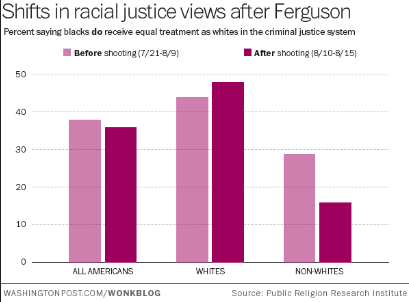
    Here’s something I did find on Tumblr which I think is really interesting.

    You can see that after the Ferguson shooting, the average American became a little less likely to believe that blacks were treated equally in the criminal justice system. This makes sense, since the Ferguson shooting was a much-publicized example of the criminal justice system treating a black person unfairly.

    But when you break the results down by race, a different picture emerges. White people were actually a little more likely to believe the justice system was fair after the shooting. Why? I mean, if there was no change, you could chalk it up to white people believing the police’s story that the officer involved felt threatened and made a split-second bad decision that had nothing to do with race. That could explain no change just fine. But being more convinced that justice is color-blind? What could explain that?

    My guess – before Ferguson, at least a few people interpreted this as an honest question about race and justice. After Ferguson, everyone mutually agreed it was about politics.

    Ferguson and Rotherham were both similar in that they were cases of police misconduct involving race. You would think that there might be some police misconduct community who are interested in stories of police misconduct, or some race community interested in stories about race, and these people would discuss both of these two big international news items.

    The Venn diagram of sources I saw covering these two stories forms two circles with no overlap. All those conservative news sites that couldn’t shut up about Rotherham? Nothing on Ferguson – unless it was to snipe at the Left for “exploiting” it to make a political point. Otherwise, they did their best to stay quiet about it. Hey! Look over there! ISIS is probably beheading someone really interesting!

    The same way Rotherham obviously supports the Red Tribe’s narrative, Ferguson obviously supports the Blue Tribe’s narrative. A white person, in the police force, shooting an innocent (ish) black person, and then a racist system refusing to listen to righteous protests by brave activists.

    The “see, the Left is right about everything” angle of most of the coverage made HBD Chick’s attack on political correctness look subtle. The parts about race, systemic inequality, and the police were of debatable proportionality, but what I really liked was the Ferguson coverage started branching off into every issue any member of the Blue Tribe has ever cared about:

    Gun control? Check.

    The war on terror? Check.

    American exceptionalism? Check.

    Feminism? Check.

    Abortion? Check

    Gay rights? Check.

    Palestinian independence? Check.

    Global warming? Check. Wait, really? Yes, really.

    Anyone who thought that the question in that poll was just a simple honest question about criminal justice was very quickly disabused of that notion. It was a giant Referendum On Everything, a “do you think the Blue Tribe is right on every issue and the Red Tribe is terrible and stupid, or vice versa?” And it turns out many people who when asked about criminal justice will just give the obvious answer, have much stronger and less predictable feelings about Giant Referenda On Everything.

    In my last post, I wrote about how people feel when their in-group is threatened, even when it’s threatened with an apparently innocuous point they totally agree with:

    I imagine [it] might feel like some liberal US Muslim leader, when he goes on the O’Reilly Show, and O’Reilly ambushes him and demands to know why he and other American Muslims haven’t condemned beheadings by ISIS more, demands that he criticize them right there on live TV. And you can see the wheels in the Muslim leader’s head turning, thinking something like “Okay, obviously beheadings are terrible and I hate them as much as anyone. But you don’t care even the slightest bit about the victims of beheadings. You’re just looking for a way to score points against me so you can embarass all Muslims. And I would rather personally behead every single person in the world than give a smug bigot like you a single microgram more stupid self-satisfaction than you’ve already got.”

    I think most people, when they think about it, probably believe that the US criminal justice system is biased. But when you feel under attack by people whom you suspect have dishonest intentions of twisting your words so they can use them to dehumanize your in-group, eventually you think “I would rather personally launch unjust prosecutions against every single minority in the world than give a smug out-group member like you a single microgram more stupid self-satisfaction than you’ve already got.”

    V.

    Wait, so you mean turning all the most important topics in our society into wedge issues that we use to insult and abuse people we don’t like, to the point where even mentioning it triggers them and makes them super defensive, might have been a bad idea??!

    There’s been some really neat research into people who don’t believe in global warming. The original suspicion, at least from certain quarters, were that they were just dumb. Then someone checked and found that warming disbelievers actually had (very slightly) higher levels of scientific literacy than warming believers.

    So people had to do actual studies, and to what should have been no one’s surprise, the most important factor was partisan affiliation. For example, according to Pew 64% of Democrats believe the Earth is getting warmer due to human activity, compared to 9% of Tea Party Republicans.

    So assuming you want to convince Republicans to start believing in global warming before we’re all frying eggs on the sidewalk, how should you go about it? This is the excellent question asked by a study recently profiled in an NYMag article.

    The study found that you could be a little more convincing to conservatives by acting on the purity/disgust axis of moral foundations theory – the one that probably gets people so worried about Ebola. A warmer climate is unnatural, in the same way that, oh, let’s say, homosexuality is unnatural. Carbon dioxide contaminating our previously pure atmosphere, in the same way premarital sex or drug use contaminates your previously pure body. It sort of worked.

    Another thing that sort of worked was tying things into the Red Tribe narrative, which they did through the two sentences “Being pro-environmental allows us to protect and preserve the American way of life. It is patriotic to conserve the country’s natural resources.” I can’t imagine anyone falling for this, but I guess some people did.

    This is cute, but it’s too little too late. Global warming has already gotten inextricably tied up in the Blue Tribe narrative: Global warming proves that unrestrained capitalism is destroying the planet. Global warming disproportionately affects poor countries and minorities. Global warming could have been prevented with multilateral action, but we were too dumb to participate because of stupid American cowboy diplomacy. Global warming is an important cause that activists and NGOs should be lauded for highlighting. Global warming shows that Republicans are science denialists and probably all creationists. Two lousy sentences on “patriotism” aren’t going to break through that.

    If I were in charge of convincing the Red Tribe to line up behind fighting global warming, here’s what I’d say:

    In the 1950s, brave American scientists shunned by the climate establishment of the day discovered that the Earth was warming as a result of greenhouse gas emissions, leading to potentially devastating natural disasters that could destroy American agriculture and flood American cities. As a result, the country mobilized against the threat. Strong government action by the Bush administration outlawed the worst of these gases, and brilliant entrepreneurs were able to discover and manufacture new cleaner energy sources. As a result of these brave decisions, our emissions stabilized and are currently declining.

    Unfortunately, even as we do our part, the authoritarian governments of Russia and China continue to industralize and militarize rapidly as part of their bid to challenge American supremacy. As a result, Communist China is now by far the world’s largest greenhouse gas producer, with the Russians close behind. Many analysts believe Putin secretly welcomes global warming as a way to gain access to frozen Siberian resources and weaken the more temperate United States at the same time. These countries blow off huge disgusting globs of toxic gas, which effortlessly cross American borders and disrupt the climate of the United States. Although we have asked them to stop several times, they refuse, perhaps egged on by major oil producers like Iran and Venezuela who have the most to gain by keeping the world dependent on the fossil fuels they produce and sell to prop up their dictatorships.

    A giant poster of Mao looks approvingly at all the CO2 being produced…for Communism.

    We need to take immediate action. While we cannot rule out the threat of military force, we should start by using our diplomatic muscle to push for firm action at top-level summits like the Kyoto Protocol. Second, we should fight back against the liberals who are trying to hold up this important work, from big government bureaucrats trying to regulate clean energy to celebrities accusing people who believe in global warming of being ‘racist’. Third, we need to continue working with American industries to set an example for the world by decreasing our own emissions in order to protect ourselves and our allies. Finally, we need to punish people and institutions who, instead of cleaning up their own carbon, try to parasitize off the rest of us and expect the federal government to do it for them.

    Please join our brave men and women in uniform in pushing for an end to climate change now.

    If this were the narrative conservatives were seeing on TV and in the papers, I think we’d have action on the climate pretty quickly. I mean, that action might be nuking China. But it would be action.

    And yes, there’s a sense in which that narrative is dishonest, or at least has really weird emphases. But our current narrative also has really some weird emphases. And for much the same reasons.

    VI.

    The Red Tribe and Blue Tribe have different narratives, which they use to tie together everything that happens into reasons why their tribe is good and the other tribe is bad.

    Sometimes this results in them seizing upon different sides of an apparently nonpolitical issue when these support their narrative; for example, Republicans generally supporting a quarantine against Ebola, Democrats generally opposing it. Other times it results in a side trying to gain publicity for stories that support their narrative while sinking their opponents’ preferred stories – Rotherham for some Reds; Ferguson for some Blues.

    When an issue gets tied into a political narrative, it stops being about itself and starts being about the wider conflict between tribes until eventually it becomes viewed as a Referendum On Everything. At this point, people who are clued in start suspecting nobody cares about the issue itself – like victims of beheadings, or victims of sexual abuse – and everybody cares about the issue’s potential as a political weapon – like proving Muslims are “uncivilized”, or proving political correctness is dangerous. After that, even people who agree that the issue is a problem and who would otherwise want to take action have to stay quiet, because they know that their help would be used less to solve a problem than to push forward the war effort against them. If they feel especially threatened, they may even take an unexpected side on the issue, switching from what they would usually believe to whichever position seems less like a transparent cover for attempts to attack them and their friends.

    And then you end up doing silly things like saying ISIS is not as bad as Fox News, or donating hundreds of thousands of dollars to the officer who shot Michael Brown.

    This can sort of be prevented by not turning everything into a referendum on how great your tribe is and how stupid the opposing tribe is, or by trying to frame an issue in a way that respects or appeals to an out-group’s narrative.

    Let me give an example. I find a lot of online feminism very triggering, because it seems to me to have nothing to do with women and be transparently about marginalizing nerdy men as creeps who are not really human (see: nude pictures vs. Rotherham, above). This means that even when I support and agree with feminists and want to help them, I am constantly trying to drag my brain out of panic mode that their seemingly valuable projects are just deep cover for attempts to hurt me (see: hypothetical Bill O’Reilly demanding Muslims condemn the “Islamic” practice of beheading people).

    I have recently met some other feminists who instead use a narrative which views “nerds” as an “alternative gender performance”, ie in the case of men they reject the usual masculine pursuits of sports and fraternities and they have characteristics that violate normative beauty standards (like “no neckbeards”). Thus, people trying to attack nerds is a subcategory of “people trying to enforce gender performance”, and nerds should join with queer people, women, and other people who have an interest in promoting tolerance of alternative gender performances in order to fight for their mutual right to be left alone and accepted.

    I’m not sure I entirely buy this argument, but it doesn’t trigger me, and it’s the sort of thing I could buy, and if all my friends started saying it I’d probably be roped into agreeing by social pressure alone.

    But this is as rare as, well, anti-global warming arguments aimed at making Republicans feel comfortable and nonthreatened.

    I blame the media, I really do. Remember, from within a system no one necessarily has an incentive to do what the system as a whole is supposed to do. Daily Kos or someone has a little label saying “supports liberal ideas”, but actually their incentive is to make liberals want to click on their pages and ads. If the quickest way to do that is by writing story after satisfying story of how dumb Republicans are, and what wonderful taste they have for being members of the Blue Tribe instead of evil mutants, then they’ll do that even if the effect on the entire system is to make Republicans hate them and by extension everything they stand for.

    I don’t know how to fix this.

    17 Oct 12:06

    A beautiful video about poop transfer. (Yes, no irony here, I...


    A beautiful video about poop transfer. (Yes, no irony here, I swear!)

    17 Oct 11:29

    October 16, 2014


    Hey geeks! We're having a hell of a time getting an ASL translator for for BAHFest East. If you know a professional in the area, please put us in touch! You can mail us here. This would be a paying gig on Sunday. Thanks!
    16 Oct 20:48

    The Latest On Legalization

    by Andrew Sullivan
    Adam Victor Brandizzi

    Versão positiva de "Because I got high". Os tempos estão mudando mesmo.

    The marijuana sanity movement gets a new anthem:

    Recent polling suggests that “Oregon is likely to be the third state to legalize marijuana”:

    The poll found 52 percent of likely voters plan to support the initiative while only 41 percent plan to vote against it. The remaining 7 percent are undecided or refused to answer.

    Meanwhile, the marijuana market in Colorado continues to grow:

    New figures from the Colorado Department of Revenue show that recreational marijuana sales continued to climb in August, the most recent month for which data are available. Recreational sales totaled approximately $34.1 million in August, up from $29.3 million the previous month.

    But Sullum spotlights a problem facing Colorado’s cannabis tourists – they often don’t have legal places to toke up:

    Public officials who do not welcome marijuana tourists have ways of making marijuana tourists feel unwelcome, most conspicuously when it comes to finding a place to legally enjoy the cannabis they are legally allowed to buy. Because Amendment 64 prohibits consumption of cannabis on the premises of the state-licensed stores that sell it, Colorado does not have anything like Amsterdam’s famous “coffee shops,” where you can buy and consume marijuana along with soft drinks and snacks.

    The Colorado Clean Indoor Air Act, which has been amended to cover marijuana as well as tobacco, bans smoking inside bars and restaurants. Outdoor areas of those businesses are exempt from the smoking ban, but that does not necessarily mean tourists can enjoy their newly purchased pot there. The section of Amendment 64 that eliminated penalties for marijuana use does not apply to “consumption that is conducted openly and publicly,” which remains a petty offense under state law. Last year Denver, the state’s largest city and the center of marijuana retailing, passed an ordinance defining “openly and publicly” broadly enough to foil the plans of visitors who thought they could legally smoke pot on the patio of a bar or restaurant.


    16 Oct 20:09

    Seven Worst-Case Scenarios for Iraq

    by Peter Van Buren

    You know the joke? You describe something obviously heading for disaster—a friend crossing Death Valley with next-to-no gas in his car—and then add, “What could possibly go wrong?”

    Such is the Middle East today. The U.S. is again at war there, bombing freely across Iraq and Syria, advising here, droning there, coalition-building in the region to loop in a little more firepower from a collection of recalcitrant allies, and searching desperately for some non-American boots to put on the ground.

    Here, then, are seven worst-case scenarios in a part of the world where the worst case has regularly been the best that’s on offer. After all, with all that military power being brought to bear on the planet’s most volatile region, what could possibly go wrong?

    1. The Kurds

    The lands the Kurds generally consider their own have long been divided among Turkey, Iraq, Syria, and Iran. None of those countries wish to give up any territory to an independence-minded ethnic minority, no less find a powerful, oil-fueled Kurdish state on their borders.

    In Turkey, the Kurdish-inhabited border area with Iraq has for years been a low-level war zone, with the powerful Turkish military shelling, bombing, and occasionally sending in its army to attack rebels there. In Iran, the Kurdish population is smaller than in Iraq and the border area between the two countries more open for accommodation and trade. (The Iranians, for instance, reportedly refine oil for the Iraqi Kurds, who put it on the black market and also buy natural gas from Iran.) That country has nonetheless shelled the Kurdish border area from time to time.

    The Kurds have been fighting for a state of their own since at least 1923. Inside Iraq today, they are in every practical sense a de facto independent state with their own government and military. Since 2003, they have been strong enough to challenge the Shia government in Baghdad far more aggressively than they have. Their desire to do so has been constrained by pressure from Washington to keep Iraq whole. In June, however, their military, the Peshmerga, seized the disputed, oil-rich city of Kirkuk in the wake of the collapse of the Iraqi army in Mosul and other northern cities in the face of the militants of the Islamic State (IS). Lacking any alternative, the Obama administration let the Kurds move in.

    The Peshmerga are a big part of the current problem. In a near-desperate need for some semi-competent proxy force, the U.S. and its NATO allies are now arming and training them, serving as their air force in a big way, and backing them as they inch into territory still in dispute with Baghdad as an expedient response to the new “caliphate.” This only means that, in the future, Washington will have to face the problem of how to put the proverbial genie back in the bottle if the Islamic State is ever pushed back or broken.

    Mosul, Iraq’s second largest city and now under the control of the Islamic State, is the most obvious example. Given the woeful state of the Iraqi army, the Kurds may someday take it. That will not go down well in Baghdad and the result could be massive sectarian violence long after IS is gone. We were given a small-scale preview of what might happen in the town of Hassan Sham. The Kurds took it back last month. In the process, some Shia residents reportedly sided with their enemies, the Sunni militants of IS, rather than support the advancing Peshmerga.

    Worst-case scenario: A powerful Kurdistan emerges from the present mess of American policy, fueling another major sectarian war in Iraq that will have the potential to spill across borders. Whether or not Kurdistan is recognized as a country with a U.N. seat, or simply becomes a Taiwan-like state (real in all but name), it will change the power dynamic in the region in ways that could put present problems in the shade. Changing a long-held balance of power always has unintended consequences, especially in the Middle East. Ask George W. Bush about his 2003 invasion of Iraq, which kicked off most of the present mess.

    2. Turkey

    You can’t, of course, talk about the Kurds without discussing Turkey, a country caught in a vise. Its forces have battled for years against a Kurdish separatist movement, personified by the PKK, a group Turkey, NATO, the European Union, and the United States all classify as a terrorist organization. Strife between the Turks and the PKK took 37,000 lives in the 1980s and 1990s before being reduced from a boil to a simmer thanks to European Union diplomacy. The “problem” in Turkey is no small thing—its Kurdish minority, some 15 million people, makes up nearly 20% of the population.

    When it comes to taking action in Syria, the Turks exist in a conflicted realm because Washington has anointed the Kurds its boots on the ground. Whatever it may think it’s doing, the U.S. is helping empower the Kurdish minority in Syria, including PKK elements arrayed along the Turkish border, with new weapons and training.

    The Turkish ruling party has no particular love for those who run the Islamic State, but its loathing for Syrian ruler Bashar al-Assad is such that its leaders have long been willing to assist IS largely by looking the other way. For some time, Turkey has been the obvious point of entry for “foreign fighters” en route to Syria to join IS ranks. Turkey has also served as the exit point for much of the black-market oil—$1.2 to $2 million a day—that IS has used to fund itself. Perhaps in return, the Islamic State released 49 Turkish hostages it was holding, including diplomats without the usual inflammatory beheading videos. In response to U.S. requests to “do something,” Turkey is now issuing fines to oil smugglers, though these have totaled only $5.7 million over the past 15 months, which shows the nature of Turkey’s commitment to the coalition.

    The situation in the IS-besieged town of Kobani illustrates the problem. The Turks have so far refused to intervene to aid the Syrian Kurds. Turkish tanks sit idle on hills overlooking the hand-to-hand combat less than a mile away. Turkish riot police have prevented Turkish Kurds from reaching the town to help. Turkish jets have bombed PKK rebels inside Turkey, near the Iraqi border.

    Meanwhile, U.S. air strikes do little more than make clear the limits of air power and provide material for future historians to write about. American bombs can slow IS, but can’t recapture parts of a city. Short of destroying Kobani by air to save it, U.S. power is limited without Turkish ground forces. Under the present circumstances, the fighters of the Islamic State will either take the city or it will slowly burn as they slug it out with the Kurds.

    The Turkish price for intervention, publicly proclaimed, is the creation of a U.S.-enforced buffer zone along the border. The Turks would need to occupy this zone on the ground, effectively ceding Syrian territory to Turkey (as a buffer zone occupied by Kurds would not do). This would involve a further commitment from Washington, potentially placing American warplanes in direct conflict with Syria’s air defenses, which would have to be bombed, widening the war further. A buffer zone would also do away with whatever secret agreements may exist between the U.S. and Assad. This zone would represent another open-ended commitment, requiring additional U.S. resources in a conflict that is already costing American taxpayers at least $10 million a day.

    On the other hand, Washington’s present policy essentially requires Turkey to put aside its national goals to help us achieve ours. We’ve seen how such a scenario has worked out in the past. (Google “Pakistan and the Taliban.”) But with Kobani in the news, the U.S. may yet succeed in pressuring the Turks into limited gestures, such as allowing American warplanes to use Turkish airbases or letting the U.S. train some Syrian rebels on its territory. That will not change the reality that Turkey will ultimately focus on its own goals independent of the many more Kobanis to come.

    Worst-case scenario: Chaos in Eastern Turkey’s future, while the sun shines on Assad and the Kurds. An influx of refugees are already taxing the Turks. Present sectarian rumblings inside Turkey could turn white hot, with the Turks finding themselves in open conflict with Kurdish forces as the U.S. sits dumbly on the sidelines watching one ally fight another, an unintended consequence of its Middle Eastern meddling. If the buffer zone comes to pass, throw in the possibility of direct fighting between the U.S. and Assad, with Russian President Vladimir Putin potentially finding an opening to reengage in the area.

    3. Syria

    Think of Syria as the American war that never should have happened. Despite years of calls for U.S. intervention and some training flirtations with Syrian rebel groups, the Obama administration had managed (just barely) to stay clear of this particular quagmire. In September 2013, President Obama walked right up to the edge of sending bombers and cruise missiles against Assad’s military over the purported use of chemical weapons. He then used an uncooperative Congress and a clever Putin-gambit as an excuse to back down.

    This year’s model—ignore Assad, attack IS—evolved over just a few weeks as a limited humanitarian action morphed into a fight to the finish against IS in Iraq and then into bombing Syria itself. As with any magician’s trick, we all watched it happen but still can’t quite figure out quite how the sleight of hand was done.

    Syria today is a country in ruins. But somewhere loose in that land are unicorns—creatures often spoken of but never seen—the Obama administration’s much publicized “moderate Syrian rebels.” Who are they? The working definition seems to be something like: people who oppose Assad, won’t fight him for now, but may in the meantime fight the Islamic State, and aren’t too “fundamentalist.” The U.S. plans to throw arms and training at them as soon as it can find some of them, vet them, and transport them to Saudi Arabia. If you are buying stock in the Syrian market, look for anyone labeled “moderate warlord.”

    While the U.S. and its coalition attacks IS, some states (or at least wealthy individuals) in that same band of brothers continue to funnel money to the new caliphate to support its self-appointed role as a protector of Sunnis and handy proxy against Shia empowerment in Iraq. Vice President Joe Biden recently called out some of America’s partners on this in what was billed as another of his famous gaffes, requiring apologies all around. If you want to see the best-case scenario for Syria’s future, have a look at Libya, a post-U.S. intervention country in chaos, carved up by militias.

    Worst-case scenario: Syria as an ungoverned space, a new haven for terrorists and warring groups fueled by outsiders. (The Pakistani Taliban has already vowed to send fighters to help IS.) Throw in the potential for some group to grab any leftover chemical weapons or SCUD-like surface-to-surface missiles from Assad’s closet, and the potential for death and destruction is unending. It might even spread to Israel.

    4. Israel

    Israel’s border with Syria, marked by the Golan Heights, has been its quietest frontier since the 1967 war, but that’s now changing. Syrian insurgents of some flavor recently seized border villages and a crossing point in those heights. United Nations peacekeepers, who once patrolled the area, have mostly been evacuated for their own safety. Last month, Israel shot down a Syrian plane that entered its airspace, no doubt a warning to Assad to mind his own business rather than a matter of military necessity.

    Assumedly, the Obama administration has been in behind-the-scenes efforts, reminiscent of the 1991 Gulf War when Iraqi SCUDS began raining down on Israeli cities, to keep that country out of the larger fight. It is not 1991, however. Relations between the U.S. and Israel are far more volatile and much testier. Israel is better armed and U.S. constraints on Israeli desires have proven significantly weaker of late.

    Worst-case scenario: An Israeli move, either to ensure that the war stays far from its Golan Heights frontier or of a more offensive nature aimed at securing some Syrian territory, could blow the region apart. “It’s like a huge bottle with gas surrounded by candles. You just need to push one candle and everything can blow up in a minute,” said one retired Israeli general. Still, if you think Israel worries about Syria, that’s nothing compared to how its leadership must be fuming over the emergence of Iran as an ever-stronger regional power.

    5. Iran

    What can go wrong for Iran in the current conflict? While in the Middle East something unexpected can always arise, at present that country looks like the potential big winner in the IS sweepstakes. Will a pro-Iranian Shia government remain in power in Baghdad? You bet. Has Iran been given carte blanche to move ground forces into Iraq? Check. Will the American air force fly bombing runs for Iranian ground troops engaged in combat with IS (in a purely unofficial capacity, of course)? Not a doubt. Might Washington try to edge back a bit from its nuclear tough-guy negotiations? A likelihood. Might the door be left ajar when it comes to an off-the-books easing of economic sanctions if the Americans need something more from Iran in Iraq? Why not?

    Worst-case scenario: Someday, there’ll be a statue of Barack Obama in central Tehran, not in Iraq.

    6. Iraq

    Iraq is America’s official “graveyard of empire.” Washington’s “new” plan for that country hinges on the success of a handful of initiatives that already failed when tried between 2003-2011, a time when there were infinitely more resources available to American “nation builders” and so much less in the way of regional chaos, bad as it then was.

    The first step in the latest American master plan is the creation of an “inclusive” government in Baghdad, which the U.S. dreams will drive a wedge between a rebellious and dissatisfied Sunni population and the Islamic state. After that has happened, a (re)trained Iraqi army will head back into the field to drive the forces of the new caliphate from the northern parts of the country and retake Mosul.

    All of this is unrealistic, if not simply unreal. After all, Washington has already sunk $25 billion dollars into training and equipping that same army, and several billion more on the paramilitary police. The result: little more than IS seizing arsenals of top-notch Americans weaponry once the Iraqi forces fled the country’s northern cities in June.

    Now, about that inclusive government. The United States seems to think creating an Iraqi government is like picking players for a fantasy football team. You know, win some, lose some, make a few trades, and if none of that works out, you still have a shot at a new roster and a winning record next year. Since Haider al-Abadi, the latest prime minister and great inclusivist hope, is a Shia and a former colleague of the once-anointed, now disappointed Nouri al-Maliki, as well as a member of the same political party, nothing much has really changed at the top. So hopes for “inclusiveness” now fall to the choices to lead the key ministries of defense and the interior. Both have been tools of repression against the country’s Sunnis for years. For the moment, Abadi remains acting minister for both, as was Maliki before him. Really, what could possibly go wrong?

    As for the Sunnis, American strategy rests on the assumption that they can be bribed and coerced into breaking with IS, no matter the shape of things in Baghdad. That’s hard to imagine, unless they lack all memory. As with al-Qaeda in Iraq during the American occupation years, the Islamic State is Sunni muscle against a Shia government that, left to its own devices, would continue to marginalize, if not simply slaughter, them. Starting in 2007, U.S. officials did indeed bribe and coerce some Sunni tribal leaders into accepting arms and payments in return for fighting insurgent outfits, including al-Qaeda. That deal, then called the Anbar Awakening, came with assurances that the United States would always stand by them. (General John Allen, now coordinating America’s newest war in Iraq, was a key figure in brokering that “awakening.”) America didn’t stand. Instead, it turned the program over to the Shia government and headed for the door marked “exit.” The Shias promptly reneged on the deal.

    Once bitten, twice shy, so why, only a few years later, would the Sunnis go for what seems to be essentially the same bad deal? In addition, this one appears to have a particularly counterproductive wrinkle from the American point of view. According to present plans, the U.S. is to form Sunni “national guard units”—up-armored Sunni militias with a more marketable name—to fight IS by paying and arming them to do so. These militias are to fight only on Sunni territory under Sunni leadership. They will have no more connection to the Baghdad government than you do. How will that help make Iraq an inclusive, unitary state? What will happen, in the long run, once even more sectarian armed militias are let loose? What could possibly go wrong?

    Despite its unambiguous history of failure, the “success” of the Anbar Awakening remains a persistent myth among American conservative thinkers. So don’t be fooled in the short term by media-trumpeted local examples of Sunni-Shia cooperation against IS. Consider them temporary alliances of convenience on a tribe-by-tribe basis that might not outlast the next attack. That is nowhere near a strategy for national victory. Wasn’t then, isn’t now.

    Worst-case scenario: Sunni-Shia violence reaches a new level, one which draws in outside third parties, perhaps the Sunni Gulf states, seeking to prevent a massacre. Would the Shia Iranians, with forces already in-country, stand idle? Who can predict how much blood will be spilled, all caused by another foolish American war in Iraq?

    7. The United States

    If Iran could be the big geopolitical winner in this multi-state conflict, then the U.S. will be the big loser. President Obama (or his successor) will, in the end, undoubtedly have to choose between war to the horizon and committing U.S. ground forces to the conflict. Neither approach is likely to bring the results desired, but those “boots on the ground” will scale up the nature of the ensuing tragedy.

    Washington’s post-9/11 fantasy has always been that military power—whether at the level of full-scale invasions or “surgical” drone strikes—can change the geopolitical landscape in predictable ways. In fact, the only certainty is more death. Everything else, as the last 13 years have made clear, is up for grabs, and in ways Washington is guaranteed not to expect.

    Among the likely scenarios: IS forces are currently only miles from Baghdad International Airport, itself only nine miles from the Green Zone in the heart of the capital. (Note that the M198 howitzers IS captured from the retreating Iraqis have a range of 14 miles.) The airport is a critical portal for the evacuation of embassy personnel in the face of a future potential mega-Benghazi and for flying in more personnel like the Marine Quick Reaction Force recently moved into nearby Kuwait. The airport is already protected by 300-500 American troops, backed by Apache attack helicopters and drones. The Apache helicopters recently sent into combat in nearby Anbar province probably flew out of there. If IS militants were to assault the airport, the U.S. would essentially have to defend it, which means combat between the two forces. If so, IS will lose on the ground, but will win by drawing America deeper into the quagmire.

    In the bigger picture, the current anti-Islamic State coalition of “more than 60 countries” that the U.S. patched together cannot last. It’s fated to collapse in a heap of conflicting long-term goals. Sooner or later, the U.S. is likely to once again find itself alone, as it eventually did in the last Iraq war.

    The most likely outcome of all this killing, whatever the fate of the Islamic State, is worsening chaos across Iraq, Syria, and other countries in the region, including possibly Turkey. As Andrew Bacevich observed, “Even if we win, we lose. Defeating the Islamic State would only commit the United States more deeply to a decades-old enterprise that has proved costly and counterproductive.” The loss of control over the real costs of this war will beg the question: Was the U.S. ever in control?

    In September, Syria became the 14th country in the Islamic world that U.S. forces have invaded, occupied, or bombed since 1980. During these many years of American war-making, goals have shifted endlessly, while the situation in the Greater Middle East only worsened. Democracy building? You’re not going to hear that much any more. Oil? The U.S. is set to become a net exporter. Defeating terrorism? That’s today’s go-to explanation, but the evidence is already in that picking fights in the region only fosters terror and terrorism. At home, the soundtrack of fear-mongering grows louder, leading to an amplified national security state and ever-expanding justifications for the monitoring of our society.

    Worst-case scenario: America’s pan-Middle Eastern war marches into its third decade with no end in sight, a vortex that sucks in lives, national treasure, and Washington’s mental breathing room, even as other important issues are ignored. And what could possibly go wrong with that?

    Peter Van Buren blew the whistle on State Department waste and mismanagement during the Iraqi reconstruction in his first book, We Meant Well: How I Helped Lose the Battle for the Hearts and Minds of the Iraqi People. A TomDispatch regular, he writes about current events at his blog,We Meant WellHis new book, Ghosts of Tom Joad: A Story of the #99Percent, is available now.

    Copyright 2014 Peter Van Buren

    16 Oct 08:42

    On the set of The Shining, 1980.


    On the set of The Shining, 1980.
    15 Oct 21:25

    The Danger Of Not Smelling, Ctd

    by Andrew Sullivan

    A particularly great email from a reader:

    Thanks for your post on anosmia, or loss of smell. This really hit home for me. I completely lost my sense of smell following a sinus infection a few years back. Mercifully, it was a temporary loss that lasted a couple of months. But I can honestly report that that was one of the darkest periods of my life, and it nearly drove me insane.

    In this state, life becomes flat and inescapable in a profound way. I had no idea how central this sense is to our well being. Everything big and small loses its luster. My anosmia nightmare would begin every morning with my coffee tasting like nothing more than hot water and would continue to torture me throughout the day. Beer tasted like carbonated water. Food? Well, I was lucky if I could get a hint of cardboard out of any of it.

    People whom I would confide in would casually respond, “yeah, I had a cold once and food tasted weird.” “No!” I would snarl. That didn’t begin to capture the experience. There was NO taste. Zero. There isn’t any flavor or any sense that you’re addressing your hunger. I actually gained weight, since the failure to get that emotional satiation drove me to stuff more food in my mouth.

    Additionally, as your post highlighted, intimacy really suffered, as I couldn’t smell my girlfriend’s skin, perfume, or hair. And the simple pleasure of walking outside was considerably dulled by the fact that I couldn’t smell the fragrance of grass or leaves or flowers. Yes, I had the benefit of not smelling auto fumes, but they were killing me regardless.

    The only consolation was that I didn’t have to smell my cat’s offerings in the kitty litter (nor my own in the toilet). But I’ll tell you this: the first time I noticed my sense of smell coming back was while taking a dump, and to paraphrase Hitchens, the odor was like a breath of fresh air. In all my life I had never imagined that I would be so excited to smell shit! I was ecstatic.

    To this day, I relish scents no matter how foul – garbage, kitty litter, my kid’s diaper, rotting cheese in the back of my car (don’t ask) … it doesn’t matter. It reminds me that I am alive and that good smells and flavors are to be had just around the corner. I thank my lucky stars for the return of this sense and have no shortage of empathy for those who never regain it.

    Again, thanks so much for this post and your blog!


    15 Oct 21:22

    Where Do Birds Go

    Water/ice has a lot of weird phases. Maybe asking 'where do birds go when it rains' is like asking 'where does Clark Kent go whenever Superman shows up?'
    15 Oct 21:03

    Sound and Sorrow

    by Greg Ross

    In 2004, listeners of the BBC’s Today program voted Samuel Barber’s “Adagio for Strings” the “saddest classical” work ever written, earning 52.1% of the vote and surpassing “Dido’s Lament” (20.6%) from Henry Purcell’s Dido and Aeneas, the Adagietto (12.3%) from Gustav Mahler’s fifth symphony, Richard Strauss’ Metamorphosen (5.1%), and “Gloomy Sunday” as sung by Billie Holiday (9.8%).

    During the funeral service for Princess Grace of Monaco in 1982, the New York Times noted, “while a part of Samuel Barber’s soaring Adagio for Strings was being played, Prince Albert, who is 24, covered his face in his black-gloved hands. Princess Caroline, who wept, turned towards her father, who sat next to her by the altar, but the Prince [Rainier], partly slumped, eyes half-closed, did not raise his head.” A friend of the prince described him as experiencing “one of the most deep, most total sadnesses” at the loss of his wife.

    Barber’s “Adagio” was played at the prince’s own funeral in 2005, and it memorialized the deaths of Sen. Robert A. Taft in 1953, Albert Einstein in 1955, and John Kennedy in 1963. One friend of Barber’s said he heard the music on the radio within 10 minutes of Kennedy’s assassination.

    Why do we do this to ourselves? Life is already full of pain; why do we design art to exacerbate it? “If we enjoy the sadness that we claim to feel, then it is not plainly sadness that we are talking of, because sadness is not an enjoyable experience,” writes philosopher Stephen Davies. “On the other hand, if the sadness is unpleasant, we would not seek out, as we do, artworks leading us to feel sad.” How is it possible to enjoy sadness?

    (Thomas Larson, The Saddest Music Ever Written, 2012; Stephen Davies, “Why Listen to Sad Music If It Makes One Feel Sad?”, in Jenefer Robinson, ed., Music and Meaning, 1997.)

    15 Oct 21:03

    Appalling Slave Punishments

    by Greg Ross

    From A Narrative of the Adventures and Escape of Moses Roper, From American Slavery, 1848:

    “A large farmer, Colonel McQuiller in Cashaw county, South Carolina, was in the habit of driving nails into a hogshead so as to leave the point of the nail just protruding in the inside of the cask; into this, he used to put his slaves for punishment, and roll them down a very long and steep hill. I have heard from several slaves, (though I had no means of ascertaining the truth of this statement,) that in this way he had killed six or seven of his slaves.”

    Roper himself escaped from slavery at least 16 times throughout the American South, most often from the prolifically sadistic South Carolina cotton planter J. Gooch. Examples:

    “Mr. Gooch had gone to church, several miles from his house. When he came back, the first thing he did was to pour some tar upon my head, then rubbed it all over my face, took a torch with pitch on, and set it on fire; he put it out before it did me very great injury, but the pain which I endured was most excruciating, nearly all my hair having been burnt off.”

    http://docsouth.unc.edu/neh/roper/roper.html

    “This instrument he used to prevent the negroes running away, being a very ponderous machine, several feet in height, and the cross pieces being two feet four, and six feet in length. This custom is generally adopted among the slave-holders in South Carolina, and other slave States. One morning, about an hour before day break, I was going on an errand for my master; having proceeded about a quarter of a mile, I came up to a man named King, (Mr. Sumlin’s overseer,) who had caught a young girl that had run away with the above machine on her. She had proceeded four miles from her station, with the intention of getting into the hands of a more humane master. She came up with this overseer nearly dead, and could get no farther; he immediately secured her, and took her back to her master, a Mr. Johnson.”

    http://docsouth.unc.edu/neh/roper/roper.html

    “This is a machine used for packing and pressing cotton. By it he hung me up by the hands at letter a, a horse, and at times, a man moving round the screw e, and carrying it up and down, and pressing the block c into a box d, into which the cotton is put. At this time he hung me up for a quarter of an hour. I was carried up ten feet from the ground, when Mr. Gooch asked me if I was tired? He then let me rest for five minutes, then carried me round again, after which, he let me down and put me into the box d, and shut me down in it for about ten minutes.”

    “To one of his female slaves he had given a doze of castor oil and salts together, as much as she could take; he then got a box, about six feet by two and a half, and one and a half feet deep; he put this slave under the box, and made the men fetch as many logs as they could get; and put them on the top of it; under this she was made to stay all night.”

    Roper finally escaped to the North in 1834 and moved to England, where he published the book and toured making abolitionist speeches. He died in 1891.

    15 Oct 11:07

    bunnyfood: (via becausebirds)

    15 Oct 10:09

    Small Gods

    by boulet
    15 Oct 10:02

    How to Talk Someone out of Making a Wretched Mistake (rerun)

    by Scott Meyer

    As always, thanks for using my Amazon Affiliate links (USUKCanada).

    14 Oct 21:28

    “The Sons of Our Sons”

    by Greg Ross

    https://commons.wikimedia.org/wiki/File:Capture_of_Carency_aftermath_1915_1.jpg

    In 1919 Russian author Ilya Ehrenburg wrote a message to posterity:

    The sons of our sons will marvel,
    Paging the textbook:
    “1914 … 1917 … 1919 …
    How did they live? The poor devils!”
    Children of a new age will read of battles,
    Will learn the names of orators and generals,
    The numbers of the killed,
    And the dates.

    They will not know how sweetly roses smelled above the trenches,
    How martins chirped blithely between the cannon salvos,
    How beautiful in those years was
    Life.

    Never, never did the sun laugh so brightly
    As above a sacked town,
    When people, crawling out of their cellars,
    Wondered: is there still a sun?
    Violent speeches thundered,
    Strong armies perished,

    But the soldiers learned what the scent of snowdrops is like
    An hour before the attack.
    People were led at dawn to be shot …
    But they alone learned what an April morning can be.
    The cupolas gleamed in the slanting rays,
    And the wind pleaded: Wait! A minute! Another minute!
    Kissing, they could not tear themselves from the mournful mouth,
    And they could not unclasp the hands so tightly joined.
    Love meant: I shall die! I shall die!
    Love meant: Burn, fire, in the wind!
    Love meant: O where are you, where?

    They love as people can love only here, upon this rebellious and
    tender star.

    In those years there were no orchards golden with fruit,
    But only fleeting bloom, only a doomed May.
    In those years there was no calling: “So long!”
    But only a brief, reverberant “Farewell!”
    Read about us and marvel!
    You did not live in our time — be sorry!
    We were guests of the earth for one evening only.
    We loved, we destroyed, we lived in the hour of our death.
    But overhead stood the eternal stars,
    And under them we begot you.

    In your eyes our longing still burns,
    In your words our revolt reverberates yet
    Far into the night, and into the ages, the ages, we have scattered
    The sparks of our extinguished life.

    14 Oct 16:05

    Happy Columbus Indigenous People’s Day!

    by Andrew Sullivan

    That’s what residents of Seattle and Minneapolis, and schoolchildren in Portland, Oregon, are celebrating today. Daniel Beekman reports that “Native American activists laughed, wept and sang their way out of Seattle’s City Hall on Monday after watching the City Council unanimously approve a resolution designating the second Monday in October as ‘Indigenous Peoples’ Day'”:

    “It’s beautiful to see,” said Matt Remle, a Seattle resident of Lakota heritage who wrote the first draft of the resolution, “the people walking out with smiles on their faces. Bringing that good energy and spirit to the people is what this was all about.” The legislation provoked some opposition because October’s second Monday also is Columbus Day, a federal holiday named for explorer Christopher Columbus and widely marked by the celebration of Italian-American history and culture. In the council chambers [last] Monday, a half-dozen people held Italian flags to demonstrate their support for Columbus Day. … But for each Italian American activist at City Hall there were scores of Native American activists, many wearing pieces of traditional garb and some carrying drums.

    Brian Braiker adds:

    [I]t turns out that opposition to Columbus Day is nothing new.

    As far back as the 19th century, activists sought to ban celebrations of the day (which was made an official holiday in 1934) because of the Italian diaspora’s association with the Knights of Columbus — a then-secretive organization that some feared was working to expand Catholic influence. “The move to replace Columbus Day with indigenous peoples day has its roots in one of the first indigenous advocacy groups, the Society of American Indians, nearly a century ago,” [Cultural Movements and Collective Memory: Christopher Columbus and the Rewriting of the National Origin Myth author Timothy] Kubal said.

    This debate is not unique to North America, either. And it doesn’t have to be an either/or question. There is a near-exact parallel debate unfolding Down Under. “Australia Day” celebrates Captain Cook’s arrival there in 1788. Some people now derisively call the holiday “Invasion Day,” points out Christine Outram, vp, invention director at DeutschLA.

    [The Colbert video initially embedded above - which was autoplaying for many readers - here]


    14 Oct 13:53

    Suspeita de ebola leva inquietação a imigrantes africanos no Paraná

    JULIANA COISSI, EM CASCAVEL (PR)

    Modu Beyé, 31, esteve mais calado do que de costume nos últimos dias. O senegalês é figura conhecida pela animação nas conversas com amigos brasileiros no entorno da antiga rodoviária, ponto de reunião de imigrantes em Cascavel, no oeste do Paraná.

    A preocupação era sobre como ele e conterrâneos seriam vistos por moradores após o anúncio de que um outro imigrante na cidade é o primeiro caso suspeito de ebola detectado no país.

    “As pessoas confundem tudo, Guiné, Senegal. Falam África como se fosse um país. É um continente”, aborrece-se Modu, num bom português de três anos em Cascavel.

    Imigrantes em Cascavel

    O guineano Souleymane Bah, 47, foi atendido numa unidade de saúde da cidade na quinta (9), após ter entrado no país em 19 de setembro. Antes, esteve por 17 dias num albergue local, onde dividiu espaço com imigrantes.

    Transferido para o Rio, deve ter nesta segunda (13) a confirmação final do exame negativo para a doença, que, no atual surto, já contaminou mais de 7.000 africanos e matou mais da metade deles.

    O caso em Cascavel somou mais um fator de inquietação à comunidade de imigrantes haitianos e africanos no oeste do Paraná.

    Atraídos por ofertas de trabalho em frigoríficos e na construção civil, eles são 2.000 só em Cascavel –90% deles haitianos da diáspora pós-terremoto de 2010.

    LUTA DIÁRIA

    Passada a tensão da suspeita, a comunidade de imigrantes, que já enfrenta episódios isolados de preconceito, retoma o cotidiano em busca de adaptação e melhores condições de trabalho.

    Hoje o salário médio dos imigrantes varia de R$ 900 a R$ 1.200 por até dez horas de trabalho, muitas delas em pé, dentro de frigoríficos. “Dói ficar tanto em pé”, lamenta-se Simone Junlen, 36, do Haiti.

    Para os africanos, a jornada ao Brasil começa em escalas de voos na Espanha ou Portugal, de onde seguem para São Paulo ou Recife.

    Alguns tomam ônibus para o Sul e outros —como teria feito o guineano— pegam voos para a Argentina e cruzam a fronteira pelo Rio Grande do Sul ou Santa Catarina.

    No caso dos haitianos o trajeto é sempre o mesmo: voos até o Equador, estradas pelo Peru e entrada por terra pelo Acre, de onde se espalham.

    O destino comumente é definido por referências —o senegalês Modu, por exemplo, recebeu um irmão de 23 anos há uma semana em Cascavel.

    Muçulmano, o senegalês Bassiro Diop, 25, desembarcou sozinho em São Paulo e buscou apoio numa mesquita da capital. Sem achar emprego, um dos religiosos lhe sugeriu: “Vá para Cascavel”.

    Na cidade paranaense, como outros muçulmanos, frequenta uma casa de oração, onde, todas as sextas-feiras à noite, africanos, árabes e brasileiros convertidos atualizam a prática religiosa.

    Alguns, como o senegalês Abdou Lat Diop, 22, conseguiram negociar pausas no trabalho para as cinco orações diárias em direção à Meca.

    No albergue noturno André Luiz, que recebe estrangeiros e locais, a oração noturna foi vetada pelo o barulho — o quarto é coletivo.

    Os haitianos são cristãos, muitos evangélicos. Para Wilfrid Aristé, 31, que vive com outros sete haitianos, um dos poucos momentos de lazer é o culto adventista nas manhãs de sábado, que assistem mesmo sem compreender bem o idioma.

    COMUNICAÇÃO

    O grupo tenta descobrir a frequência de uma rádio local criada por haitianos, com músicas da terra natal e locuções em francês e créole.

    “Outro dia fui à livraria, quis comprar um livro, mas não havia nenhum em francês”, lamenta Harland Joinville, 29.

    Para conversar com a família, visitam hotéis para usar a internet sem fio nos celulares.

    Em Cascavel levam vida econômica, instalados em hotéis baratos e casas modestas. O objetivo de quase todos é conseguir enviar dinheiro para parentes em casa.

    Um obstáculo para isso, dizem, é a taxa de câmbio no país, desconhecida pela maioria até a chegada.

    “Economizo R$ 1.000 e só consigo enviar US$ 300 para minha mulher e meus dois filhos”, afirma o haitiano Jon Saint Vema, 27, que se diz arrependido da mudança após três anos em Cascavel.

    “Saí do Haiti por uma vida melhor. Foi muito sacrifício para chegar até aqui. Mas hoje não sei se compensou.”

    Siga o blog Brasil no Twitter (@Folha_Brasil) e no Facebook (www.facebook.com/BlogBrasil)

    14 Oct 13:47

    Governo de (des)união

    by Jose Roberto de Toledo
    Adam Victor Brandizzi

    "Os entraves no caminho do Brasil não são fulano ou beltrano. São as estruturas que reproduzem milhares de fulanos e beltranos. A começar por um sistema eleitoral que estimula a multiplicação partidária via aparelho excretor. Não há risco de dar certo."

    O eleitorado está dividido como nunca esteve em uma eleição presidencial brasileira (não creia em nada além de 51% a 49%). O Congresso Nacional virou uma S.A. de 28 acionistas minoritários. A eleição de governador é a volta dos que não foram. Ou seja, o poder federal ainda mais disperso frente ao poder concentrado dos caciques regionais. O que esperar do(a) presidente nesse cenário? Depende de quanta decepção se está disposto a sofrer.

    Em caso de eleição de Aécio Neves (PSDB), muitos de seus eleitores se darão por satisfeitos em apear o PT do poder. À comemoração do setor empresarial e promessas de investimento se seguirão alguns meses de “boom” do mercado financeiro.

    Há uma bolha de crédito barato no mundo, esperando uma janela de oportunidade se abrir em algum canto. Se Dilma Rousseff (PT) perder, a vidraça vai ser pequena para a quantidade de dólares que deve assolar o país. A Bolsa vai subir, e o dólar deve cair. Mas, como diz um dos maiores investidores na Bovespa, toda vez que se dá muita moleza para o mercado a coisa não acaba bem.

    Passados os 100 dias de lua-de-mel a que todo novo presidente tem direito, será a hora de arrumar a casa, colocar as contas em ordem, como prometido em campanha. É aí que as coisas complicam. Eleitor de Aécio e especialista em gasto público, Mansueto Almeida não se cansa de repetir que a margem de manobra para o ajuste das contas federais é menos do que estreita.

    Cortes de investimento e custeio tem lá seu apelo simbólico, mas são insuficientes para produzir o tamanho do ajuste que os próprios defensores desse ajuste julgam necessário. Para isso, só com reformas estruturais: tributária, previdenciária, trabalhista. O tipo de reforma que precisa ser aprovada pelo Congresso. Na Câmara onde o PSDB terá 54 dos 513 deputados. No Senado onde haverá 10 tucanos e 73 aves de plumagens diversas.

    Impossível? Fernando Henrique Cardoso (PSDB) provou que quando o presidente quer muito alguma coisa – no seu caso, aprovar o direito à reeleição -, ele é capaz de consegui-la. Tudo depende do preço que está disposto a pagar. Com o PMDB no comando das duas Casas parlamentares, não será nenhuma pechincha.

    Também é bom lembrar que o poder presidencial não é ilimitado. Ao eleger-se, ele ganha um cacife que tem que durar quatro anos. Se gastar muitas fichas de uma vez só, arrisca-se a ficar descoberto e depender de empréstimos dos caciques que comandam os partidos aliados – a juros que fariam Armínio Fraga corar.

    Tudo isso sem falar do Brasil real, onde vai continuar faltando água, energia e – se der azar – sobrando gás lacrimogêneo.

    E se Dilma for reeleita? Esqueça o “boom” do mercado financeiro e descarte a comemoração do empresariado. O resto é quase igual.

    Quando uma eleição presidencial fica muito polarizada, como esta e tantas que a antecederam, o foco vai todo para os defeitos do adversário. Os dois lados começam a acreditar na própria propaganda negativa: o problema é o outro, basta retirá-lo de cena que tudo se resolve. Se fosse assim, não estaríamos onde estamos, pois os dois lados já passaram pelo poder.

    Os entraves no caminho do Brasil não são fulano ou beltrano. São as estruturas que reproduzem milhares de fulanos e beltranos. A começar por um sistema eleitoral que estimula a multiplicação partidária via aparelho excretor. Não há risco de dar certo.

    A eleição para deputado federal aumentou de inacreditáveis 22 para impossíveis 28 os partidos com representação na Câmara. É a fisiologia do fisiologismo. A pregenitora do toma lá dá cá.

    Para começar a reverter esse processo, basta proibir coligações partidárias nas eleições para a Câmara. Pelas contas de Daniel Bramatti e Rodrigo Burgarelli, do Estadão Dados, seis legendas não teriam eleito deputados sem pegar carona nos votos dos partidos coligados, e a Câmara ficaria com 22 partidos. Inacreditável, mas não impossível.

    14 Oct 13:40

    The Pen Cap

    by boulet
    Adam Victor Brandizzi

    Hahah pqp isso é muito bom :)

    14 Oct 11:38

    We live in a world ruled by fictions of every kind

    by but does it float
    Adam Victor Brandizzi

    Always reblog

    The Bus by Paul Kirchner Title: J.G. Ballard Atley
    14 Oct 11:34

    Batemos um Papo Retíssimo com o Goleiro Aranha

    Adam Victor Brandizzi

    Como não curto futebol nem conhecia ele direito, só ouvia de relance as histórias do caso. Agora digo, que mente privilegiada, que homem guerreiro.

    Discreto para os moldes dos boleiros, um carro preto para dentro do CT Rei Pelé, em Santos. De dentro dele, sai Mário Lúcio Duarte Costa. Calça de moletom e camiseta preta, crocs azuis nos pés e um cordão de ouro descendo do pescoço ao umbigo escrito ARANHA. O goleiro do Santos Futebol Clube nos recebeu para quase uma hora de papo reto sobre o tumultuado caso de racismo que ele sofreu na Arena Grêmio, em Porto Alegre. O atleta falou também sobre o preconceito fora dos gramados, a torcida tricolor, a imprensa, Pelé, Felipão, Peninha e, de quebra, como o rap o preparou para lidar com esse tipo de adversidade.

    No dia 30 de setembro, além de Patrícia Moreira, reconhecida no dia do jogo, mais três torcedores gremistas foram indiciados pela polícia gaúcha sob a acusação de injúria racial, o que pode tornar a pena mais branda do que a acusação de racismo. O caso, que rola na justiça e nos debates de boteco, deve demorar algum tempo até sair um veredicto.

    VICE: Num histórico recente, tivemos alguns jogadores brasileiros que sofreram racismo dentro de campo. Em fevereiro deste ano, o Tinga ouviu injúrias raciais no Peru. Em março, o Arouca, também do Santos, ouviu algo parecido contra o Mogi Mirim. Teve o caso do Daniel Alves na Espanha também. Por que você acha que isso é tão reincidente no futebol?
    Aranha: 
    Primeiro, eu acho que não é reincidente e não tá acontecendo agora. Sempre aconteceu. Só que hoje a gente tem as redes sociais e a internet. Quase todo mundo tem acesso à internet; então, uma notícia que aconteceu lá no Norte, quem tá lá no Sul fica sabendo. De um extremo a outro, uma notícia corre com uma velocidade muito grande. Tudo o que acontece agora toma uma dimensão maior e mais rápida, por isso talvez tenha tomado a dimensão e a repercussão que deu.

    Numa entrevista, você comenta que o rap te preparou para situações como essa. 
    Normalmente – era até um período atrás –, o rap era uma forma de protesto e ele falava somente daquilo que ele via e daquilo que tava dentro da realidade dele. Ele não falava de coisas que ele não conhecia. As coisas que eles não tinham acesso, até falavam, mas como sonho, sonho de consumo. E hoje acabou se tornando realidade pra muitos. Então, o que acontece? Muitas coisas que o pessoal do rap falava nas suas letras eram coisas que, pelo cotidiano, a gente se identificava. Eu sou de Minas, de Pouso Alegre, e falava: ‘Pô, então isso acontece em São Paulo também?’, porque tem rap no Brasil todo. Então, quando você ia pra São Paulo, você já sabia mais ou menos como é que a banda tocava lá, porque eles falavam. As histórias dos condomínios. Na minha cidade, agora tem um condomínio fechado, mas a gente só tinha ouvido falar, porque como não tinha internet e não dava pra você ver foto e ver como era e tal, mas a gente sabia que existia o tal do condomínio. Então, muitas coisas que acontecem hoje na minha vida, eu já sei e, de certa maneira, eu sei lidar, porque eu ouvia muito rap, e não é uma surpresa.

    E quando começou a ouvir rap?
    Acho que desde que eu começo a entender as coisas. Uns treze, catorze anos. Eu sou de 80, mesma época em que o rap se consolidou.

    Das histórias da São Bento, aqui em São Paulo, né?
    É, foi nessa época aí que eu nasci.

    O que você ouve hoje em dia?
    Hoje, eu escuto bem menos do que eu escutava antes, até porque também não só a minha vida, mas o rap em geral mudou; então, tem coisas que eles falam em algumas músicas ou alguns grupos que eu não acho interessantes, que não servem pra mim. Outras servem. E a minha vida também mudou, melhorou bastante. Então, eu acabo não me identificando ou entendo bem aquele recado. Ouço bem menos que antes, mas curto muita gente, principalmente os caras mais antigos também.

    E quem são esses caras?
    Racionais, eu curto o GOG, escuto Thaíde, Comando DMC, Câmbio Negro. Da antiga assim, praticamente todos, eu tô ouvindo.

    E o que você ouve antes de um jogo?
    São várias, várias. Porque o pessoal vê a galera com o fone de ouvido indo pro jogo e acha que é onda, que o cara tá indo na onda com um fone bacana. Cada um gosta do seu estilo de música e procura ouvir o que vai motivar ainda mais, pra se concentrar.

    E antes do primeiro jogo contra o Grêmio?
    Eu não tinha nenhuma música específica, porque era uma coisa que sempre acontecia, mas, ao mesmo tempo, eu nunca imaginei que ia acontecer tudo aquilo que aconteceu.

    Mas, assim, lembrando da cena, tem alguma música que venha à sua cabeça? Tem várias músicas que daria pra citar: por exemplo, aquele diálogo do policial em “Qual Mentira Vou Acreditar?”, dos Racionais (“O primo do cunhado do meu genro é mestiço, Racismo não existe, comigo não tem disso”).
    É difícil falar, porque é tanta música que eu gosto, escuto e tem temas parecidos, mas “A Vida é Desafio” é uma que encaixa pra muitas situações, principalmente essa. Depois do que aconteceu, eu escutei muito Câmbio Negro também. Tem muita música, não teve uma específica.

    E teve alguém do hip-hop que te ligou pra prestar solidariedade?
    Sim, teve uma galera bacana. Acho que praticamente todos. Até porque eu não tenho rede social, não mexo com nada desses negócios, mas, através de amigos e de outras pessoas, acabaram chegando até mim. Então, praticamente todos acabaram abraçando também a causa, porque sabem da minha intenção e de como as coisas aconteceram. O Emicida, eu tenho falado com ele. É um cara bacana também que já fez uns vídeos legais, com umas entrevistas muito bacanas. Eu o acho um cara muito bacana, e [ele] tem me dado umas ideias muito boas sobre a visão geral da situação. Ontem, teve aqui o Batoré, o Batora da ConeCrew. Apesar de ter um estilo diferente, a origem é praticamente a mesma. Ele tem feito nos shows um freestyle sobre o assunto e me falou que o público tem aceitado e feito até um barulho.

    No dia seguinte, a galera dos Racionais postou uma ilustração com uma foto sua com a camisa do Malcom X. Você tem lido as coisas que saíram?
    Não muitas coisas, mas as coisas que eu acho que têm a ver, as coisas que estão abordando o assunto de uma maneira mais séria. Eu entendo o lado de quem trabalha com imprensa, porque o cara que está escrevendo é cobrado pra ter o resultado. E, às vezes, ele acaba escrevendo coisas que ele não queria – e, pelo emprego, o cara faz. Às vezes, o título é errado, eu não gosto, mas a matéria é bem feita. Só que muitas vezes, na pressa de ficar vendo muita coisa, tem muita gente que vê só o título e acaba formando a opinião na cabeça dela.

    Por que o hip-hop é tão importante para o negro no Brasil?
    Foi. Eu não posso dizer que é ainda, mas como começou como uma forma de protesto que alcançava muita gente - mesmo não tendo o apoio da imprensa e da mídia. E quem tinha mais a protestar era o povo pobre, consequentemente uma maioria negra; acho que, por isso, acabou tendo essa raiz, esse lado mais forte, que hoje tem se desfeito, e eu acho muito legal que isso aconteça, porque o problema não é só da cor. Tem muitos outros fatores.

    Você estava falando sobre a imprensa. Parece que os jornalistas estavam de prontidão para registrar o seu encontro com a Patrícia, mostrar o perdão e virar a página. Por que você não se prestou a esse papel?
    Porque eu sabia que muita coisa que eu falasse seria usada contra mim. Tem quem me apoia, mas tem muita gente que não me apoia. Até mesmo negros que não me apoiam. Então, eu tinha que ter muito cuidado pra não dar esse tipo de brecha. Mesmo, às vezes, eu querendo falar. Se eu não falar pras pessoas certas, no momento certo, eu acabo prejudicando até a causa. Nem tanto por mim, porque eu tenho a vida praticamente resolvida, mas muita gente bacana me mandou mensagem, me ligou, me procurou e, quando me encontra na rua, fala sobre isso. Tudo isso acaba fazendo com que eu tenha mais cuidado também pra tomar essas decisões. Por isso, eu não tomo essas decisões sozinho, sempre tem o pessoal do Santos. A gente vê qual é o melhor caminho pra não ter problema, entendeu?

    Você destacaria algum jornalista ou algum veículo?
    Talvez se eu falar de um, eu posso estar sendo injusto com tanta gente que escreveu, mas tem um em especial, que é um cara que eu era fã dele. Na verdade, ainda sou, porque o que o cara fez tá feito e ninguém tira, que é o Pena (o historiador Eduardo Bueno). Aquele que me xingou lá e falou aquelas coisas todas. Eu sou fã dele, por quê? Ele é um historiador fudido, um cara ferrado que tem aqui no Brasil sobre a construção e a história do país. Eu via muito, acompanhava os vídeos dele e esses negócios todos. E num dos vídeos, ele fala mais ou menos assim: ‘Se a gente não quer cometer os mesmos erros que os nossos antepassados, a gente tem que conhecer a nossa história’, entendeu? Aí, por paixão do futebol, uma paixão tola, ele me ofendeu e falou um monte de besteira, caindo em contradição com tudo aquilo que ele passa nos livros dele, que é livro escolar, livro didático e nos vídeos que ele faz.

    Ele colocou as cores do time à frente do bom senso e de muitas outras coisas.
    E um cara com a inteligência dele, com o preparo dele, não deveria ter feito isso. Porque se um cara desse pode fazer isso, imagina outra pessoa ignorante, que não tem o mesmo preparo que ele? E por que eu falo isso? E por que me cobraram muito esse negócio da punição, do perdão, de não sei o quê? Porque a gente já deixou passar muitas coisas. Sempre é no perdão: eu perdoo e fica por isso mesmo, e tudo mais. As coisas não funcionam assim, porque se a gente for deixar crescendo, for deixar crescendo, daqui a pouco vai ter cruz pegando fogo num lugar, vai voltar tudo de novo.

    Não é a primeira vez que você sofre preconceito em campo, né? Você comentou em uma entrevista que no Sul isso é quase normal, que você até comentava com os companheiros no vestiário. Como costuma ser o clima antes das partidas contra o Grêmio ou até contra o Inter? Você já vai preparado pra ouvir esse tipo de coisa?
    Com a minha experiência, a gente vai pra ouvir de tudo. Não importa o que o torcedor fale, a gente vai fazer o nosso trabalho. Tanto é que, nos dois jogos que tiveram na Arena do Grêmio, eu fiz o meu trabalho normalmente, independentemente da situação toda que estava acontecendo, mas tem casos que a lei permite que você tome uma atitude, e aí eu acho importante tomar. Para, se não acabar, evitar crescer um movimento desse. E eu, naquele ponto, naquele dia, não tive medo de tomar uma posição.

    Antes do jogo, você fazia o que os demais jogadores fazem, que é ignorar.
    Na verdade, não é a maioria dos jogadores. O que acontece? O negro, desde a época da escravidão, foi doutrinado a quê? A não discutir, não reagir, fingir que não é com ele, achar graça do sarro, das piadas, porque assim ele vai estar inserido na sociedade, ele vai passar batido. Antigamente, ele não ia apanhar, não ia pro tronco e hoje ele mantém o emprego dele, ele mantém aquele círculo de amizade, que, às vezes, é até tolo sendo desse jeito. Sendo pacato, fingindo que não é com ele. Às vezes, até ele faz piada pra poder passar despercebido como se não fosse negro mais. O respeito vai além da cor; então, muita gente, por estar condicionada lá dos antepassados, dos avós, dos pais, veem dessa maneira. Porque o cara não consegue nem enxergar mais como racismo, como injúria racial. Ele não toma uma atitude nem tanto porque ele não tem coragem, mas porque ele já não entende que aquilo seja mais, ele não sabe mais. O pessoal de hoje em dia, os mais jovens, muitos não sabem nem o que se passou, por que que chegou. Hoje é até moda o cara falar: ‘Eu sou negão, sou pagodeiro, sou do hip-hop e tal’, mas não sabe todo o processo que levou pra chegar até ali.

    O que mudou nesse jogo? Foi a proximidade dessas arenas novas? Foi isso que te fez reagir?
    Pensei depois com calma; realmente com essas arenas, não só naquele jogo do Grêmio, as ofensas, em geral, estavam muito próximas. E por mais que você seja profissional, que você já sabe que vai acontecer tudo aquilo, você se incomoda. Ninguém gosta de ser xingado, ninguém gosta de ser humilhado. Como tava aquele tipo de manifestação tão próxima e as pessoas ficavam me olhando, acho que aquilo foi me irritando e foi passando, e chegou uma hora em que não aguentei. Para a maioria das pessoas, eu exagerei, porque tadinha da menina e tadinho daqueles cinco. Mas não eram só os seis, os cinco. Era muita gente. Eram mais de mil pessoas. E eu falei: ‘Pô, isso aqui não é do futebol’. Uma coisa é: eu tô lá no gol e eles estão me xingando, tentando me desestabilizar, mas agora o movimento que tava sendo criado atrás do gol ali era outro. Tanto que ficou comprovado no segundo jogo. Você entendeu? A torcida do Grêmio teve, não digo todos, mas a grande maioria teve uma oportunidade muito grande de mostrar que foi um fato muito isolado, e, mais uma vez, a ignorância mostrou pra todo mundo que não foi um fato isolado. Eles pensam daquela maneira mesmo.

    O que fica muito claro é que você está preparado pra falar disso e, mais do que isso, está disposto a falar sobre o tema. Como você acompanhou o crescimento dessa história?
    Foi difícil, porque o assédio foi muito grande. Logo depois do jogo, eu fui pro antidoping e [lá] tem TV. Nela, já tava repercutindo aquele negócio todo. Como é um assunto que, de certa forma, eu conheço bem, então pra mim foi mais tranquilo falar. O mais difícil mesmo foi conter a euforia da notícia. Porque muita gente queria a notícia, o ibope e tudo mais. Então foi mais difícil conter o assédio da imprensa do que falar, porque é como falar de futebol: é um tema que eu conheço.

    Quando começaram as ofensas, o que passou na sua cabeça? Você teve vontade de chorar, vontade de pegar alguém e capotar no soco? O que rolou?
    Às vezes, se você não der uma de louco, você não é ouvido. Então, quando começou aquela manifestação, eu tive muita calma, não tava irado. Porque eu falei: ‘Bom, na quantidade e no volume que tá, pelo jeito que tá acontecendo, vão filmar. E vai ter todo um processo pra poder resolver isso, pra poder culpar quem for culpado’. Então, eu tava muito tranquilo, porque eu tava me sentindo na razão.

    As suas ações ali também sugeriam isso, né? O jeito que você apontava, como você gesticulava…
    Mas aí o que acontece? Quando fui expor a situação para o árbitro, ele falou pra mim o contrário. Quando ele inverteu a situação e eu voltei pro gol de frente pro torcedor, eu vi que eles comemoraram.

    Acharam que não ia dar nada.
    Na minha cabeça, já veio assim: ‘Pô, igual antigamente’.

    Igual a um negro escravizado ou recém-liberto?
    Isso, o cara tava certo, mas as pessoas diziam que ele tava errado e ficava por isso mesmo. Aí veio esse negócio na minha cabeça, e eu fiquei mais puto e revoltado por isso. Porque eu não ia sair do gol, ir lá no árbitro e levantar uma questão dessa do nada.

    Depois disso, então eles continuaram mais ainda?
    Sim. Tanto que as imagens que foram pegas, se eu não me engano, foram depois que eu falei com o árbitro, porque aí eles se sentiram. Tá liberado, se ferrou. Talvez por isso eu tenha perdido um pouco a linha.

    Você teve medo de apanhar ali?
    De apanhar, não. Eu não me senti acuado.

    E depois do jogo, você teve medo de alguma reação?
    Eu fico mais receoso pela minha família, porque não dá pra gente medir o nível do fanatismo do torcedor. Não pode desacreditar de nada, só que a gente já toma os cuidados do dia a dia.

    O que te incomodou mais: o que aconteceu em campo ou o ódio que muita gente incorporou depois? Muita gente falou que você estava tentando se promover com isso.
    Bom, várias coisas me incomodaram. O que aconteceu no campo foi o que menos me incomodou, porque eu sabia que aquilo teria uma punição, aquilo ia ser resolvido, como tá sendo resolvido. O Grêmio foi punido, a torcida foi punida, as pessoas que foram flagradas ali estão sendo punidas. Se é leve, se não é a pena, se vai ser só chamada a atenção, se vai ser cesta básica, não compete a mim, não sou eu que resolvo. Uma das coisas que me incomodou mais é que muita gente tava me colocando como coitado. Em momento algum, eu falei ou me comportei como um coitado, como um cara que tava sofrendo, querendo me aproveitar da situação como um coitadinho. Tanto é que, até na entrevista do Fantástico , eu falei que pra mim é muito mais fácil. Tenho um bom emprego, tenho um carro bonitinho, tenho um salário bom. Agora, o problema é pros outros que não têm como se defender. Não têm como reagir, bater de frente. Então, me incomoda bastante essa situação. Se você não tem nada produtivo pra falar, não entra no assunto. Ou se vai entrar, pelo menos vê. Eu vi outros jogadores de futebol, que são amigos meus, fazendo comentários que não tinham nada a ver com a história. Vi treinador. Teve jogador que falou assim em programa de televisão: ‘Pô, mas eu e os - não vou citar os nomes dos jogadores -, a gente se chama de macaco. Uma coisa é você ter afinidade e amizade e você brincar, outra coisa é você não conhecer a pessoa e usar isso pra diminuí-la. E, até nesse programa, ele falou assim: ‘Ó, o apelido dele é Aranha, é pior do que macaco´. Não é. Porque que não é? Porque esse tipo de apelido era usado porque o negro não era considerado como ser humano, ele não era considerado gente. Ele era igual a um cachorro, às vezes até menos que qualquer animal, um porco. Agora o cara que escuta esse tipo de xingamento e acha normal e acha engraçado, esse cara tá errado. Esse cara não sabe da história dele. Outra coisa é você ter amizade, estar no círculo de amigos e você brincar um com o outro.

    Que ainda assim pode ser considerado mau gosto.
    Mas é compreensível, porque você tem afinidade suficiente. Se eu tenho amizade com um cara branco e chamo: ‘Ô, seu alemão’, e o cara ‘Ah, seu negão, seu tiziu’. É uma brincadeira, porque você tem afinidade com aquela pessoa.

    Nas imagens do jogo, dá pra ver que alguns jogadores do Santos vão em sua defesa. Como foi o pós-jogo?
    Depois do jogo, eu fui pro exame antidoping.

    Aí separa, né?
    Separa. Então, eu não tive contato. Fui ter contato depois só no hotel, bem mais tarde. O pessoal tava lá na janta comentando, mas não tinha – não tem – conhecimento de como as coisas funcionam, como é, como não é. Pra muitos, é assim: ‘Ah, ele foi xingado e denunciou’. E aí eu não entro em debate, em querer dar aula de nada, porque eu não sei mais do que muita gente. Se eu falar que eu não sei mais que ninguém, eu tô mentindo, mas dava pra perceber que os caras tavam sentindo pelo que aconteceu comigo, que tavam preocupados e, mesmo sem entender bem os motivos, tavam do meu lado, me apoiando.

    No time do Grêmio, tem o Zé Roberto, Fernandinho, Biteco, Wallace e outros jogadores negros. Como eles se comportaram depois? Alguém falou com você?
    Não, não falei com nenhum deles. Não me procuraram também, não procurei nem saber nada. Até porque eles estão no dia a dia na cidade, e é aquele negócio que eu te falei do emprego, da convivência social. Às vezes, uma palavra de algum desses jogadores, a gente não sabe o que poderia acontecer. Tanto no trabalho quanto fora do trabalho, então não se manifestaram.

    Talvez por segurança?
    Por segurança também.

    No seu caso, foram indiciadas quatro pessoas, a menina (Patrícia Moreira) e mais três. Dava pra ter punido mais gente? Se você olhasse depois, você reconheceria mais pessoas que te ofenderam?
    Não sei, tanto que na delegacia eu não quis. Mesmo o cara me mostrando fotos, eu não quis apontar ninguém, mesmo com alguns eu achando que lembrava, que era. Não quis apontar ninguém, porque não quis ser injusto com ninguém. Na minha cabeça, naquele momento, valia mais a ação de mostrar que aquilo era errado e que tem punição do que punir alguém especificamente. É que algumas pessoas foram muito infelizes de aparecerem nas imagens e pagaram o pato por geral.

    O que você espera que aconteça com essas pessoas?
    Bom, não sei o que vai acontecer. Se eu falar que eu espero que não dê em nada, eu tô mentindo; tem que ter a punição, porque é assim que as coisas andam. Não tem esse negócio de conscientização, porque todo mundo já é consciente do que pode e do que não pode. Todo mundo sabe que racismo é crime. É punição pra evitar a prática. Em momento algum, eu falei que a mulher era racista, sempre falei que ela teve uma atitude e foi flagrada. Não precisava eu dizer, todo mundo viu. Eu escuto muito: ’Ah, o Aranha ferrou a vida da garota’. Não, quem ferrou com a vida dela foi ela mesma. Tanto que ela mesma disse que, quando o irmão dela ligou, falou: ‘Pô, que é que tu fez da sua vida?’. Não foi: ‘Pô, você viu o que o Aranha tá fazendo com a sua vida?’. Isso foi palavra dela. Por isso, depois, eu falei: ‘Ela tá dando entrevista, tá indo em programa de televisão e tá se complicando’. Ela errou lá; na mesma hora, vai na rede social, já pede desculpa, já resolve isso aí, cabô. Já ficou mais do que provado que ela não é racista, mas ela mesma disse que foi na onda e teve essa atitude e se ferrou, porque se todo mundo for usar a onda como desculpa pra fazer as coisas.

    Depois do jogo, rolou uma avalanche de ódio e foram muito agressivos com ela. Ameaçaram-na de estupro e teve até um incêndio em sua casa. O que você acha dessa intolerância?
    Em todas as entrevistas que dei, fiz questão de dizer que um erro não justifica o outro e que a gente não poderia fazer justiça com a própria mão, porque estaríamos sendo errados também. Daria uma guerra. Se têm leis, é pra isso, pra gente não precisar fazer justiça com as próprias mãos. Achei de mau gosto, burrice da parte de alguns. E muitas das ameaças que ela tem recebido não foram por causa do racismo, da injúria somente; foi porque ela, numa entrevista numa emissora que tem uma audiência muito grande, falou que era Inter e se vendeu por uma bicicleta. Cê tá entendendo? Quando você não tem noção das coisas que você fala e vai despreparado na televisão pra falar. Aí você imagina: tanto o torcedor do Inter quanto o do Grêmio criaram uma birra com ela. Você não tem coisa boa pra falar, não fala.

    Muita gente destacou a sua coerência no discurso; só que, hoje em dia, isso não é muito comum em jogadores no Brasil. Você se vê como uma exceção dentro do esporte?
    Eu conheço vários caras bons de conversa, de entendimento.

    Quem são esses caras?
    Muita gente, cara. Mas o que acontece? É o que acontecia comigo: eu tenho recebido muitos elogios dessa parte, porque as pessoas ouviram e viram o Aranha fora do futebol. Fora do esporte. Não tem como eu, numa entrevista de esporte falando de futebol, falar de outras coisas. É por isso que não quis participar, não fazia sentido ir em programa de esporte falar de um tema que extrapolou, que não era mais de esporte. Não quero ser conhecido no esporte mais do que pelo o que faço dentro de campo, não dá pra misturar. Lógico que uma coisa tá ligada à outra, mas o foco principal não é o futebol. Uma coisa é você ir a um programa de televisão que não é um programa de esporte, em que eu não vou levar vantagem na minha carreira: pra mim, tudo bem. Até porque se você não explica, se você não fala, vem outro e fala besteira. E aí aquela besteira prevalece.

    Que foi um pouco do que aconteceu no segundo jogo com os jornalistas tentando te pressionar a dizer que aquela era uma vaia comum, né?
    Sim, mas só que a maioria ali é repórter de esporte. Apesar de ter formação, de ter estudo, eles estão preparados pra coisa de jogo. Só que o que acontece? Como o assunto não era do jogo, eu respondi de uma maneira que não era de jogo. E isso aí, às vezes, agrada uns e desagrada outros. No meio do futebol, no meio da mídia, você pode sofrer retaliação. Depois a sua nota no jogo pode não ser tão boa, a sua defesa pode não ser tão valorizada e o seu erro pode ser supervalorizado. Até nisso aí eu tive que pensar muito se eu ia aguentar.

    Mas coincidentemente nos dois jogos contra o Grêmio você jogou muito bem. E a cada defesa que você fazia no primeiro jogo enfurecia ainda mais os caras, e no segundo jogo a mesma coisa. Nesse caso, não teria como diminuir a sua nota.
    Era um jogo muito visado. Era o jogo da rodada por tudo o que tinha acontecido e porque era notícia, porque a gente vive hoje num momento em que a desgraça tá rendendo, a desgraça tá vendendo jornal e dando ibope, e, nesse momento, não tinha acontecido nenhuma desgraça maior, felizmente, pra cobrir aquilo. Então eu sabia que ia ser explorada aquela situação.

    E no segundo jogo, a torcida te chamar de branquelo é tão racista quanto te chamar de macaco. Não é o que se fala, mas a intenção…
    Isso, a intenção. Tem uma situação que define bem isso. No avião, teve uma mulher que falou pra um amigo meu: ‘Pô, o Aranha achou ruim de terem chamado ele de macaco, mas o macaco é um bicho tão bonitinho’. Ele falou pra ela: ‘Então tá, vamos começar de novo. Tudo bem, sua vaca, sua piranha, sua galinha? Você vai gostar?’ Ela respondeu: ‘Não, aí não’. ‘Mas por quê? São animais bonitinhos também’. Não é o animal, é a maneira como você usa aquela palavra pra ofender alguém. Aí ela repensou. Às vezes, precisa ir alguém lá e mostrar o sentido certo das coisas para as pessoas não tomarem um rumo diferente.

    Tivemos algumas declarações, digamos, infelizes. O Felipão falou, o vice-presidente do Grêmio foi irônico ao falar do caso, o Peninha, que você já citou também, foi infeliz e o próprio Pelé. Como você viu isso? Eu sei o quanto é difícil falar do Pelé sendo jogador do Santos, mas o que você achou?
    Cada pessoa dessa é uma situação: no caso do Pelé, ele é um cara que eu conheço de ir na casa dele almoçar, posso dizer que a gente tem uma amizade. Mas o que eu entendi disso e até depois em conversa: ele achou, como eu também acho, que não era necessária aquela situação toda, e a situação tomou toda essa dimensão por causa das redes sociais e tudo mais. Se o árbitro tivesse me ouvido: ‘Ó, para a partida, vai lá’. Ou relata na súmula, acabou. As pessoas seriam punidas, ia dar na mesma coisa sem todo o circo. Foi nesse sentido. Aí expliquei pra ele. Não é que briguei com torcedor, eu extravasei por tudo o que aconteceu. Só que ele não tava lá e ele não sabia de todos esses detalhes, e por isso ele deu aquela declaração. O Felipão, eu fiquei surpreso, porque logo depois a assessoria do Grêmio mandou uma carta assinada por ele em nome de todos os jogadores pedindo desculpa por tudo o que aconteceu, e logo depois ele falou aquilo. Ficou uma interrogação, mas cada um tem o direito de pensar o que quer, tanto é que não foi uma declaração dele, falaram que o ouviram falando. O vice do Grêmio é outro que perdeu uma grande oportunidade de se mostrar superior à situação. Ele poderia sair, tanto ele quanto o Grêmio, poderia ter saído muito bem dessa situação, aceitando o que aconteceu e se mostrando contra aquela atitude. E não foi o que eles fizeram; talvez por isso ficou tão ruim pro time e por isso também tomou essa proporção toda. Eles queriam lutar contra as imagens, contra o que todo mundo tava vendo.

    E fora de campo: você costuma sofrer preconceito? Como ele aparece?Tem em todo canto, em todo lugar. Às vezes, a pessoa nem sabe que tá passando ou que está cometendo, mas acontece em todo lugar. Quando a pessoa entra numa loja de tênis e o atendente olha a sua roupa, olha o seu tênis e vai te atender de acordo com o que você tá vestindo.

    Ou quando você entra no mercado e fica o segurança te seguindo.
    Isso, são várias situações. Comigo acontece muito, como eu não vou muito em lugar público, em prédio, acontece de as pessoas não darem bom dia, de dificultarem a minha convivência no prédio até chegar ao ponto de eu querer mudar. Vaga de garagem, coisas pequenas que são dificultadas mesmo.

    Da sua infância em Pouso Alegre até aqui, você tem ideia da quantidade de vezes que sofreu preconceito racial?
    Ah, não tem nem como contar. Foram muitas vezes. De você tá vindo na calçada e a pessoa atravessar pro outro lado. E o mais engraçado disso, pra você ver como vai passando de pai pra filho pra neto e tal: muitas vezes, a pessoa que atravessava a calçada pro outro lado não tinha dinheiro nenhum, ela não era rica. Porque se fosse rica, ela não tava andando a pé ali, tava dentro do carro. Já é um hábito, um vício, um preconceito que ela carrega, às vezes sem saber que tá carregando. De atravessar a calçada, de segurar a bolsa. Às vezes de você sentar na poltrona de um ônibus e ficar dois, três bancos vazios do lado. Tem mil maneiras e, às vezes, eu nem culpo, porque a pessoa faz sem saber o que tá fazendo; algumas sabem o que estão fazendo, mas já é um vício.

    Você acha que conseguiu ajudar nessa questão? Acha que mais gente terá consciência da postura?
    Acredito que, depois daquilo que aconteceu, teve um debate. Esse debate foi geral, não foi na classe A, B, C. Foi com pessoas de todas as cores, de todas as religiões, todas as classes sociais. E, nesse debate, as pessoas vão relembrando aquilo que é correto e o que não é correto. ‘Pô, será que eu tô fazendo alguma coisa que não tô percebendo? Pô, não cabe mais esse tipo de atitude que eu faço. Não vou fazer isso perto do meu filho, porque vai ficar feio’. Eu acho que [se] ganhou muito com isso daí e ganhou também em algumas entrevistas que eu dei, como essa que eu tô fazendo agora, porque quem lê vai começar a enxergar com outros olhos as coisas. Não tô dizendo que eu sou o dono da verdade, mas ele vai ter uma outra opinião, uma outra visão, e ele vai conflitar com os conhecimentos que ele tem e vai tirar as suas conclusões. Isso acaba ajudando no crescimento de todo mundo.

    Bookmarked at brandizzi Delicious' sharing tag and expanded by Delicious sharing tag expander.
    13 Oct 23:34

    The fatal attraction of lead

    Adam Victor Brandizzi

    Uma história do chumbo.

    By Laurence Knight BBC News
    Wine decanter

    For millennia lead has held a deep attraction for painters, builders, chemists and winemakers - but it's done untold harm, especially to children. And while it's no longer found in petrol, you've still got several kilograms of it in your car.

    Element number 82 is one of a handful that mankind has known for millennia. The oldest pure lead, found in Turkey, was made by early smelters more than 8,000 years ago.

    That's because lead is very simple to produce. It often comes mixed up with other more coveted minerals, notably silver. And once the ore is out of the ground, thanks to its low melting point, the lead can easily be separated out in an open fire.

    One place lead has long been mined is the Derbyshire Dales, at the southern end of the UK's Peak District National Park.

    Lead mine Derbyshire Disused lead mine in Derbyshire

    As well as its tourist-friendly natural beauty, the area's volcanic and limestone geology also provided the perfect conditions for mineralising the lead sulphide ore called galena.

    For 100 million years the lead just sat there harmlessly, locked up in the rock. Then, 3,000 years ago, people began to dig it up. And then the Romans arrived. And soon enough boatloads of Derbyshire ingots were being shipped back to the Continent.

    The Romans were the first to exploit lead on an industrial scale. Ice cores in Greenland contain traces of lead dust from 2,000 years ago, carried on the wind from giant Roman smelters. One of the largest, located in Spain, was operated by tens of thousands of slaves.

    Lead found dozens of uses throughout the Empire. Being apparently insoluble, it was used to line aqueducts and make water pipes - the word "plumber" derives from the Latin for lead, plumbum.

    Lead pipes - Herculaneum The Romans excelled at plumbing, unfortunately they used lead pipes

    "I think of it as the plastic of the past," explains Derbyshire lead mining historian Lynn Willis. "It's flexible, you can cast it into thin sheets, solder it into pipes."

    The metal was malleable and seemingly impervious to corrosion, and so - just like modern plastics - it became ubiquitous. And not just in Roman times.

    "In a large house in the 17th Century you might find the table covered with [lead tableware], the cisterns holding the water, the drains, the pipes."

    Lead has a long association with the building trade, providing a waterproof material for roofing, window frames, and for sealing stone walls. And a heavy lump of lead on a string formed the plumb-line builders used to ensure those walls were vertical.

    Peeling lead paint Peeling lead paint

    The metal was found to have other magical properties. Lead carbonate, for example, has provided a cheap, durable paint since ancient times. Known today as "flake white", it was prized by Old Masters such as Rembrandt because of the steadfastness of its colour and the beautiful contrasts it would bring to their oil portraits.

    Meanwhile, glassmakers learned that adding in some lead oxide would yield glassware such as wine decanters that would glisten, because the lead refracted the light in a distinctive way.

    Unfortunately, a leaded crystal wine decanter turns out to be a singularly bad idea, according to Andrea Sella, chemistry professor at University College London, especially if the wine (or sherry, port or brandy) is held in it for a long time.

    "The lead slowly dissolves out into the wine itself. The intriguing thing is that you get a compound that used to be known as 'the sugar of lead'."

    This compound, lead acetate, not only looks like sugar, it also has an intensely sweet flavour, Prof Sella explains.

    "One of the curious things is that the drink that you would put into your decanter would over time gradually become sweeter."

    But lead, of course, is also toxic. Once inside the body, it interferes with the propagation of signals through the central nervous system, and it inveigles its way into enzymes, disrupting their role in processing the nutritious elements zinc, iron and calcium.

    And so history is littered with examples of people, often unwittingly, enhancing the flavour of their beverages with lead, with horrendous consequences for the health of the end-consumers.

    The citizens of Ulm in Germany were plagued by agonising stomach cramps in the 1690s. But it was soon noted at a local monastery that some of the monks, who happened to abstain from drinking the popular local wine, were being spared by God.

    The source was eventually identified as a lead oxide sweetener added to the wine - and then eliminated via what was possibly the world's first formal ban on the use of lead.

    In England, these same stomach cramps became known as "Devon colic" after a similar 17th Century outbreak, this time caused by the lead used in local cider presses.


    Gout could also be brought on by lead poisoning, and became a hallmark of the English nobility in the 18th Century. The apparent cause this time was the 1703 Methuen Treaty between England and Portugal, better known as the "Port Wine Treaty".

    It cemented military friendship and favourable trade terms between the two nations, stimulating a booming trade in port. Guess what the wine came laced with? Lead acetate.

    Lead-induced gout was all too familiar to the Romans too. They associated it with the morose god Saturn, who ate his own children.

    The link was apt. Chronic lead exposure causes depression, headaches, aggression and memory loss. It can also cause sterility, and some suggest this explains the common failure of Roman aristocrats, such as Caesar Augustus, to produce a natural heir.

    How were the Romans poisoned? Tiny amounts of lead in water pipes dissolve into soft water (the lime-scale from hard water stops this process). The Romans also handled lead in the form of coins, pots and dishes. And they used it in paints and cosmetics.

    However, the biggest probable source was once again wine, specifically a sweetener-cum-preservative the Romans called sapa or defrutum.

    Roman banquet Did lead poisoning help bring down the Roman Empire?

    The Romans boiled concentrated grape juice down in lead pots into a syrup that helped extend the life of wines. Why lead pots? According to the winemaker Columella, "brass vessels give off copper rust, which has an unpleasant flavour."

    The outcome is clear from bones in ancient Roman cemeteries, which contain lead levels more than three times the modern safe limit recommended by the World Health Organization.

    Lead: Key facts

    Lead in the periodic table
    • The Babylonians used the metal for plates on which to record inscriptions
    • Malleable, ductile, and dense, it is a poor conductor of electricity
    • Symptoms of lead poisoning include abdominal pain and diarrhoea followed by constipation, nausea, vomiting, dizziness, headache, and general weakness
    • Resistant to corrosion

    Source: Encyclopaedia Britannica

    Whether this contributed to the apparent madness of emperors such as Caligula and Nero, and the eventual collapse of the Empire remains a contentious question among classical scholars.

    But it's clear that the Industrial Revolution unleashed a new wave of lead poisoning far greater than anything in ancient times, and this time it was the working classes rather than aristocrats who bore the brunt.

    Derbyshire lead miners for example were often marked by a black line across their gums - brought on apparently by the chemical reaction between lead in the miners' blood and sulphur released by bacteria in the mouth, after they had eaten certain kinds of food, including eggs.

    The worst affected were those employed in smelting or in the manufacture of lead-based paints, who found themselves surrounded daily by lead fumes.

    Person suffering from lead poisoning A black line on the gums is one sign of lead poisoning

    Take the Sheffield paintworks, for example. After three months at the works, employees typically developed a skull-like complexion of pallid skin and dark recessed eyes, Willis says. Melancholy, pain, infertility and death followed.

    "In the 1870s, the doctor reported that six people out of 70-80 had died the previous year," says Willis. But he also noted that in his father's time in the 1830s they had died "like sheep".

    Given that lead poisoning had been around so long, the actions of the chemist Thomas Midgley Jr appear to have been reckless in the extreme. He is the man who put lead in petrol.

    In 1921 as a brilliant young chemist at General Motors he discovered that adding the compound tetra-ethyl lead made engines run more efficiently, eliminating the uncontrolled knocking of early motorcars.

    The product was marketed as the benign-sounding "ethyl". When challenged about the dangers of the lead content, Midgley called a press conference at which he poured the chemical over his hands and breathed in its vapour for a full minute, claiming he could do so every day without ill effect.

    In reality, both before and after this incident Midgley spent months plagued by the effects of lead poisoning. GM's ethyl plant in New Jersey, meanwhile, was forced to close after several workers went mad and some died. The press renamed ethyl "looney gas".

    Midgley was a tragic individual.

    Thomas Midgley at work Thomas Midgley, creator of tetraethyl lead

    Later in life he contracted polio and became bed-ridden, so he designed a system of pulleys to raise himself up - only one day he became entangled in them and died of asphyxiation.

    However, the greatest tragedy was his legacy. It was Midgley who invented chlorofluorocarbons - CFCs - the refrigerant gases later found to be responsible for opening up the hole in the ozone layer and increasing the incidence of skin cancer. And cars - far more of them than Midgley could have conceived of in the 1920s - would continued to belch out lead bromide fumes for decades.

    Although this was a far more dilute source of poisoning than Roman sapa or the fug of a Victorian paintworks, it was incomparably more far-reaching, affecting every city on the planet. And this time the victims were children.

    It was another American, the paediatric psychiatrist Herbert Needleman, who was responsible for finally getting the lead taken out of petrol.

    In the 1970s and 1980s he discovered that even very low levels of lead exposure did irreversible damage to infants, including unborn babies. As they grew up, their IQs were lower, they had trouble concentrating, and often dropped out of school.

    As young adults, data suggested, they were more likely to become bullies, delinquents, criminals, teenage parents, drug addicts, unemployed, and so on. Needleman concluded that the lead had permanently weakened their ability to resist dangerous impulses.

    Thanks in large part to Needleman's work, the US began phasing out tetraethyl lead in 1975, and most of the planet followed suit. Yet it is only now that the possible scale of the harm done by lead poisoning is becoming apparent.

    That's because many academics now believe leaded petrol was responsible for a global crime wave that peaked in the 1990s.

    One such is economist Jessica Wolpaw Reyes of Amherst College in the US. "When we had leaded generations in the 1960s and 1970s, they would have been far more likely to commit crimes, especially violent crimes, in the 80s and 90s," she says.

    She found that the timing of when petroleum companies phased out leaded petrol in individual US states between 1975 and 1996 mapped closely to when their respective crime statistics peaked two decades later.

    Graph showing correlation between lead exposure and violent crime in USA

    Other studies looking at the difference between countries worldwide found similar results. However, the link between lead and crime is still disputed, with plenty of other explanations forwarded for the global drop in crime rates.

    Meanwhile, the drive to eliminate lead from the environment continues. Lead paint is also on the way out. Needleman claimed that it was almost as big a source of poisoning as petrol in the modern world.

    All paints, even durable lead-based ones, are prone to crumble eventually. But being a chemical element, the lead never breaks down or disappears. Instead, the dust can be inhaled, or the sweet-tasting flakes can be consumed by a curious toddler.

    In the UK the ban has extended beyond bulk household paints to include artists' suppliers, such as the 150-year-old L Cornelissen in London's Bloomsbury.

    "It is a traditional paint and has passed the test of many, many centuries," says the shop's owner, Nicholas Walt, ruefully. "Petrol's pretty dangerous too, but we've learned how to handle it, and it's a shame that we can't do the same with flake white."

    Lead can still be found as a radiation shield at your doctor's surgery, or as a roof lining material in northern Europe. It's also being used to waterproof and immobilise subsea electric cables for offshore windfarms.

    But the biggest use by far is, ironically enough, still in your car. Almost 90% of lead is used to make batteries. Some of them sit in hospitals or mobile phone beacons to provide back-up power in case the grid goes down. But most of them are used to start people's cars every morning.

    Lead is not the most obvious metal for a car battery. Coming from the bottom of the periodic table, it is exceptionally dense, and a great weight to carry around - about as far from a lithium battery as you can get.

    However, unlike other batteries, it will provide the initial surge of energy needed to get your engine moving, again and again for years, without breaking. Even hybrid and fully electric cars typically contain a lead acid battery to complement their main lithium or metal-hydride one.

    And now for the good news: Unlike a can of leaded petrol, a lead-acid battery is a sealed unit. The lead never escapes. And that remains true even at the end of the battery's life.

    "Lead has the highest recycling rate of any metal," says Dr Andy Bush, head of the International Lead Association. "The recycling rate in Europe and North America [for batteries] is 99%."

    He says this isn't just because of environmental regulations. Lead is a very easy metal to recycle.

    Batteries for recyclingRecycled batteries

    That much is clear from a visit to the HJ Enthoven recycling plant at Darley Dale - a last vestige of the Derbyshire lead mining industry.

    They take lead batteries, then smash them to pieces in a contained unit. That makes extracting the metallic lead a simple task as it just sinks to the bottom. Lead is also recovered from the sulphurous electrolyte fluid.

    All that molten lead is then poured into ingots that can be sent straight back to a battery manufacturer. Even the recovered plastic gets turned back into battery casings.

    "It's a completely closed loop," says the plant's manager, Peter Allbutt. "This is a material that is recyclable again and again and again."

    All the same, you may still be surrounded by lead that doesn't form part of this loop. It remains in some old pipes and in older layers of household paint.

    Amazingly, a handful of countries - Iraq, Yemen, Burma, North Korea - continue to use leaded petrol. And there are many more countries in the world, including India and China, which are still getting to grips with the pollution from their lead smelting industries.

    And in some places it's found its way into the earth.

    In the Derbyshire Dales, the average lead content in the region's soil, at 0.05%, is 10 times the UK national average. In some hotspots - downwind from old smelters, or where miners dumped their spoils - it can be as high as 3%.

    And it will just continue to sit there, until someone cleans it up.

    Subscribe to the BBC News Magazine's email newsletter to get articles sent to your inbox.

    Bookmarked at brandizzi Delicious' sharing tag and expanded by Delicious sharing tag expander.
    13 Oct 21:02

    The Mailman Mapping Brazil's Largest Favela by Hand

    I am with Carlos Pedro, on a dirt road one kilometer up the Gavea Road in Vila Verde, Rocinha, the largest favela in Brazil. Alongside us, a dirty stream of sewage and precarious stairs lead to all three sides. Above the stream there is a two-story brick house, suspended on concrete piers. "It won’t fall," Pedro assures me.

    "Most of Rocinha's founders were construction workers from the northeast," Pedro says. "Each slum has a different feature and Rocinha is known for the quality of its buildings. But tell me something: Where are we? What’s the name of this street? Is it a street? Our map will answer all these questions."

    Pedro is a former amateur bodysurf champion born and raised in Rocinha. In 2000, along with his friends Eliane Ramos and Silas Viera, Pedro got a job with the Census bureau. It was a frustrating gig, because in this community of over 60,000 people almost nobody could explain where they lived. In other words, nobody had an address.

    This is a typical problem in countless Brazilian slums. The government is not required by law to create streets for buildings with untitled land tenure, and the Post Office is not required to deliver mail to homes without a legal address.

    Without an address, it is very hard to get letters. This causes a series of problems. Potential solutions to the problem included keeping mail at the community centers, or at some street business. But this would never work very well—imagine getting the notice that your son was accepted at some school too late to be able to take the opportunity. Think about wanting to buy something on the internet, or waiting for a new credit card to arrive, and not knowing how anything would ever get to you.

    Carlos Pedro, the man behind the Friendly Mailman. Photo: Matias Maxx

    Pedro, Ramos, and Viera decided to take matters into their own hands, and make some money in the process. The first step was to make a map of the community and create virtual addresses that they could use to create a company to deliver the Post Office mail.

    The task was much more complex than they had thought. If you typed 'Rocinha' in Google Maps a few months ago, you would only get the Gavea Road when, in fact, there are hundreds of streets, alleys, back-alleys, and stairs throughout the community. 

    One of the problems for mapping a slum via satellite is that many buildings create tunnels over the alleys and stairs below. Another problem is that sometimes the concrete slabs used for roofs are used as streets.

    They gave up on the idea of a visual map and started a logic map by generating algorithms. Algorithms are a set of instructions for specific operations; a good example of a simple algorithm is a recipe for lasagna.

    The data, daily updated, was used to create the map Photo: Matias Maxx

    The algorithms created by Pedro and his partners are way more complicated than a lasagna recipe, of course. Without a visual image, they created a pseudo-code, an informal language of categories to explain each fixed structure, natural or built, which is on each street, stairs, or alley inside the huge Rocinha community. For example, a “condominium” is defined as a blind alley with less than 12 homes.

    As there are no official names for most of the streets in Rocinha, the residents make them up. A street usually has at least two to three names. The streets do not start in an arbitrary way; depending on who you are speaking with, a street can begin on the upper side of the slum and come down, or vice versa, or even somewhere in the middle. Pedro and his friends had to create a virtual beginning and end for each street. 

    The end result is an algorithm for each street, stairs, or alley. Together, these hundreds of handwritten pages turned into a huge map, chock full of lines and codes, impossible for anyone without understanding of its logic to decipher.

    A typical sequence goes like this: Wall, stone, henhouse, STORE, house, building, condominium.

    A typical sequence goes like this: "Wall, stone, henhouse, store, house, building, condominium," Pedro explains. Each one of these concepts has the same specific definition that makes their work easier. "Rocinha is constantly under construction," he adds. "It is possible that a month from now a henhouse is gone and there is a house there instead. For this reason we need to register everything; it’s easier to make changes when we need to."

    When they finished the map, they patented it, and after this, they created a service to deliver Post Office mail called Friendly Mailman. It was a success, and also the first franchise in Brazil’s history born in a slum. Currently, Friendly Mailman acts in eight slums in Rio.

    Each residence using the service pays a monthly fee—currently R$16 in Rocinha, or $6.64 USD. Their houses get an address, a number based on the order the service was hired. Every day the Post Office van stops by the Friendly Mailman office and leaves all mail for the community. The employees sort out those for their thousands of customers. Later, the Post Office van stops by to get whatever was left and then they park on top of the hill and allow people to look in the boxes to check if they have any mail.

    The cartographic – and secret– version of the map of the old mailman. Photo: Matias Maxx

    Back on the trail at the Vila Verde community, we snake through a hole in the middle of two buildings and up a long stairway.

    "What is this?" Pedro asks. "Is it a street? Where does it start?" He shows the page on the map that refers to this part of the stairway. "Look at this. Is it a building or a house? And this here, is it a street or a condominium? The map tells you all."

    Pedro indicates the doors on the houses. "This one here is a customer of the Friendly Mailman," he says, pointing to a sticker with the Friendly Mailman’s logo and the number 1166.

    "You’ll notice that the numbers do not appear in order," he goes on. "Look at this house here: 8044. This is because they get their addresses according to the date when they hire the service. No one can locate these houses without our map. And no one will understand the map unless we explain how to use it."

    Photo: Matias Maxx

    Pedro explained the map in a general way, but there are certain elements that are secret. It also changes every day. 

    "Each time one of our mailmen go on duty, he will update it," he explains. "It could be that there was a wall the week before, and now something else is being built. We have made our map digital and we want to create an app so that our mailmen can do the updating in their smart phones."

    No one will understand the map unless we explain how to use it.

    "Are there problems with drug trafficking?" I asked.

    "None," he said. "Do you think the drug lords don’t want to get their mail? Do you think they don’t want to buy tennis shoes over the internet? Everybody likes it. After the Friendly Mailman, sales bursted all over in Rocinha. And as you can see, there is a lot of money in this community, a lot of trade, most people living here are middle class. This is a characteristic of Rocinha. If you go to the Juramento hill, for instance, you won’t see trade. It’s a poorer community, and for that reason we charge less over there. If you look over the world, it is full of slums, and everybody needs mail service. So we are making money, which is good, but also supplying a service for the betterment of the community.”

    We went back to the Friendly Mailman’s headquarters for coffee. There is a large traditional map on the wall, showing all the alleys in the community. "Look at this," Pedro says. "We made this based on all our mapping. Google came by here last month. They asked if they could take a photo of our map. I said: 'No way.' Let them do their own."

    Bookmarked at brandizzi Delicious' sharing tag and expanded by Delicious sharing tag expander.
    13 Oct 21:02

    Photo


    13 Oct 21:02

    unclemother: IM SCREAMING


    unclemother:

    IM SCREAMING

    13 Oct 15:10

    Why Amazon Has No Profits (And Why It Works) | Andreessen Horowitz

    Adam Victor Brandizzi

    Uma excelente maneira de ver sentido na Amazon.

    Amazon has a tendency to polarize people. On one hand, there is the ruthless, relentless, ferociously efficient company that’s building the Sears Roebuck of the 21st Century. But on the other, there is the fact that almost 20 years after it was launched, it has yet to report a meaningful profit. This chart captures the contradiction pretty well – massive revenue growth, no profits, or so it would seem. But actually, neither of these lines gives you a good sense of what’s really going on.

    1

    Source: a16z

    Amazon discloses revenue in three segments – Media, Electronics & General Merchandise (‘EGM’) and ‘Other’, which is mostly AWS. As this chart shows, these look very different (this and most of the following ones use ’TTM’ – trailing 12 months, which smooths out the seasonal fluctuations and makes it easier to see the underlying trends). The media business is still growing, but it’s the general merchandise that has powered the explosion in revenue in the past few years. Meanwhile, the ‘Other’ line is growing but is still much smaller.

    2

    Source: a16z

    Splitting out the detail, we can see this trend both in North America (NA) and internationally…

    3

    Source: a16z

    Though the takeoff is particularly strong in the USA.

    4

    Source: a16z

    Media overall was only 25% of Amazon’s revenue last quarter, and 20% of North America.

    5

    Source: a16z

    And if we go back to ‘Other’ and zoom in, the growth is pretty dramatic there too.

    6

    Source: a16z

    It seems pretty likely that these businesses, selling very different products bought with different bargaining positions to different people with different shipping costs, have different margin potential.

    This still doesn’t really give an accurate picture, though. Amazon is in fact organized not just in these segments, but in dozens and dozens of separate teams, each with their own internal P&L and a high degree of autonomy. So, say, shoes in Germany, electronics in France or makeup in the USA are all different teams. Each of these businesses, incidentally, sets its own prices. Meanwhile, all of these businesses are at different stages of maturity. Some are relatively old and well established. And while these mature businesses are growing slower, they are profitable. Others are new startups building their business and losing money as they do so, like any other new business. Some are very profitable, and some sell at cost or as loss-leaders to drive traffic and loyalty to the site. Books are a good example. There’s a widespread perception that Amazon sells books at a loss, but the average sales price actually seems to be very close to physical retailers – it discounts some books, but not all, and despite all the argument in the Agency lawsuits, quite how many and how much is (deliberately) as clear as mud.

    Amazon is a bundle.

    The clearest expression of this is Prime, in which (amongst other things) entertainment content is included at a high fixed cost to Amazon (buying the rights) but no marginal cost beyond bandwidth, as a way to enhance the appeal of being a Prime ‘member’. Prime membership in turn draws people to switch more and more of their online and offline spending to Amazon. Trying to look at the profitability of the video alone misses the point.

    And then there are the third party sales. Just as AWS is a platform both for Amazon’s own internal technologies and for thousands of startups, so too the logistics and commerce infrastructure themselves are a platform for lots and lots of different Amazon businesses, and also for lots of other companies selling physical products through Amazon’s site. Third party sales of products through Amazon’s own platform are now 40% of unit sales, and the fees charged to these vendors are now 20% of Amazon’s revenue.

    7

    Source: a16z

    This means, in passing, that for close to half of the units sold on Amazon.com, Amazon does not set the price, it just takes a margin. This alone should point to the weakness of the idea that Amazon’s growth is based on selling at cost or at a loss.

    The tricky thing about these third party (‘3P’) sales is that Amazon only recognizes revenue from the services it provides to those companies, not the value of the goods sold. So if you buy a pair of shoes on Amazon from a third party, Amazon might collect payment through your Amazon account and ship them from its warehouse using its shipping partners – but only show the shipping and payment fees it charged to the shoe vendor as revenue. It does not disclose the gross revenue (‘GMV’). Given that (as it does disclose) third party sales tend to have a higher unit value, this means that the total value of goods that pass though Amazon with Amazon taking a percentage is perhaps double the revenue that Amazon actually reports. The revenue line is not really telling you what’s going on, and this is also one reason why gross margin is pretty misleading too. Gross profit has risen from 22.4% in 2011 to 27.2% in 2013, but this does not really reflect a change in consumer pricing and margins thereof, but rather this change in mix.

    So, we have dozens of separate businesses within Amazon, and over two million third party seller accounts, all sitting on top of the Amazon fulfillment and commerce platform. Some of them are mature and profitable, and some are not. And someone at Amazon has the job of making sure that each quarter, this nets out to as close to zero as possible — at least as far as net income goes. That is, the problem with net income is that all it tells us is that every quarter, Amazon spends whatever’s left over to get the number to zero or thereabouts. There’s really no other way to achieve that sort of consistency.

    If you listen closely, Amazon itself tells us this. The image below comes straight from Amazon – originally it was a napkin sketch by Jeff Bezos. Note that there’s no arrow pointing outwards labeled ‘take profits.’ This is a closed loop.

    Amazon cycle

    Source: a16z

    In any case, profits as reported in the net income line are a pretty bad way to try to understand a business like this – actual cash flow is better. As the saying goes, profit is opinion but cash is a fact, and Amazon itself talks about cash flow, not net income (Enron, for obvious and nefarious reasons, was the other way around). Amazon focuses very much on free cash flow (FCF), but it’s very useful to look also at operating cash flow (OCF), which is simply what you get adding back capital expenditure (‘capex’). In effect, OCF is the bulk of running the business before the costs of the infrastructure, M&A and financing costs. This shows you the effect of selling at low prices. As we can see here, Amazon’s OCF margin has been very roughly stable for a decade, but the FCF has fallen, due to radically increased capex.

    8

    Source: a16z

    In absolute terms, you can therefore see a business that is spinning out rapidly growing amounts of operating cash flow – over $5bn in the last 12 months – and ploughing it back into the business as capex.

    9

    Source: a16z

    Charting this as lines rather than areas shows just how consistent the growth in capex has been.

    10

    Source: a16z

    One might suggest that in a logistics business with rapid revenue growth, rapid capex growth is only natural, and one should look at the ratio of capex to sales by itself. But in fact, the increase here is even more dramatic. Starting in 2009, Amazon began spending far more on capex for every dollar that comes in the door, and there’s no sign of the rate of increase slowing down.

    11

    Source: a16z

    If Amazon had held capex/sales at the same ratio from 2009, before it exploded, then FCF would look like this. That difference adds up to just over $3bn of cash in the last 12 months. That is, if Amazon was spending the same on capex per dollar of revenue as it was in 2009, it would have kept $3bn more in cash in the last 12 months.

    12

    Source: a16z

    So where’s all the extra capex going? And, crucially, does it need to stay at these new, higher levels to support Amazon’s business, or can it come back down in the future?

    It’s pretty apparent that the money is going into more fulfillment capacity (warehouses, to put it crudely) and to AWS. Hence, this chart shows an enormous increase in Amazon’s physical infrastructure, as measured in square feet – this is almost all fulfillment rather than data centers, though Amazon no longer gives a split.

    13

    Source: a16z

    Pulling apart precisely where the money’s going, though, is a little fiddlier. The increase is driven by some combination of four things:

    1. More capacity for more products, including 3P products
    2. Proximity – as Amazon builds warehouses closer to customers, the shipping time goes down and so too does the shipping cost, a further flywheel effect for Prime
    3. AWS
    4. More expensive warehouses – that is, the existing business is becoming more expensive to run

    The first two of these are straightforward investment in the future, often delivering higher future margins. AWS is a black box and a much debated puzzle, but it is also pretty much the definition of a new business that requires investment to grow. The real bear case here would be the last point – that the existing business is becoming more capex-intensive – that more dollars of capex are needed for every dollar of current revenue.

    Just to make life harder for those looking to understand Amazon’s financials, the warehouse expansion, capex expansion and AWS build-out all started at roughly the same time, and at that same moment Amazon changed the way it reports to make it very hard to pick them apart. Until 2010 it split both property and asset value between fulfillment and data centers, but at that point it stopped, probably not by co-incidence (in 2010 Amazon had just 775k square feet for data centers and customer service combined). In the meantime, there are various metrics (capex per square foot, for example) that would show a shift of spending from cheap warehouse to expensive data centers – but they would also show a shift from maintaining existing warehouses to building new ones. So there is no direct, easy way we can see the split.

    We can still, though, get something of a sense of the key warehouse question – has the business got more expensive to run? It looks like the answer is no. First, the third party sales do not seem to be the issue: ratio of 3P units has not gone up at anything like the way the capex/sales has over the same period (here’s that chart again).

    14

    Source: a16z

    Neither is there any sign of a shift in the fulfillment costs over the period (Amazon seems to have forgotten to stop disclosing these). The physical product mix hasn’t got dramatically more expensive to ship, so would it get dramatically more capex-intensive to warehouse? This is obviously not an exact proxy, but it seems unlikely.

    15

    Source: a16z

    So, though we can’t be sure, it looks like the capex is not going up because Amazon’s existing business has become more expensive to run, but because Amazon is investing the growing pool of operation cash flow into the future. All of this brings us back to the beginning – Amazon’s business is delivering very rapid revenue growth but not accumulating any surplus cash or profits, because every penny of cash is being ploughed back into expanding the business further. But, this is not because any given business runs permanently at a loss – it is because the profits from what is already there are spent on making new businesses. In the past, that was mostly in operations, but in recent years the investment firehose has again been pointed at capex.

    How long will this investment go on for? Well, do we believe that the conversion of products and businesses to online commerce is finished? Let’s rebase that revenue chart, and look at it as share of US retail revenue. Excluding gasoline, food and things like timber and plants,all hard to ship, at least for now, Amazon has about 1%.

    16

    Source: a16z

    Overall, US commerce is growing very consistently:

    17

    Source: a16z

    And Amazon is taking an accelerating share of it.

    18

    Source: a16z

    Amazon has perhaps 1% of the US retail market by value. Should it stop entering new categories and markets and instead take profit, and by extension leave those segments and markets for other companies? Or should it keep investing to sweep them into the platform? Jeff Bezos’s view is pretty clear: keep investing, because to take profit out of the business would be to waste the opportunity. He seems very happy to keep seizing new opportunities, creating new businesses, and using every last penny to do it.

    Still, investors put their money into companies, Amazon and any other, with the expectation that at some point they will get cash out. With Amazon, Bezos is deferring that profit-producing, investor-rewarding day almost indefinitely into the future. This prompts the suggestion that Amazon is the world’s biggest ‘lifestyle business’ – Bezos is running it for fun, not to deliver economic returns to shareholders, at least not any time soon.

    But while he certainly does seem to be having fun, he is also building a company, with all the cash he can get his hands on, to capture a larger and larger share of the future of commerce. When you buy Amazon stock (the main currency with which Amazon employees are paid, incidentally), you are buying a bet that he can convert a huge portion of all commerce to flow through the Amazon machine. The question to ask isn’t whether Amazon is some profitless ponzi scheme, but whether you believe Bezos can capture the future. That, and how long are you willing to wait?

    Bookmarked at brandizzi Delicious' sharing tag and expanded by Delicious sharing tag expander.
    13 Oct 12:01

    Mental Health Break

    by Andrew Sullivan
    Adam Victor Brandizzi

    Não é possível, devem ter posto alguns efeitos especiais aí :O

    Watch the world go by with this space station timelapse:


    13 Oct 01:58

    Crime e corrupção marcaram construção do mito de Nossa Senhora Aparecida

    Adam Victor Brandizzi

    Velho, esse livro deve ser muito massa.
    * * *
    Inclusive, eis aí (parte de) um ótimo argumento para não misturar religião e Estado.

    Amanhã é dia dela. A padroeira do Brasil deve atrair 160 mil fiéis à sua basílica, o segundo maior templo católico do mundo, no interior paulista. Nossa Senhora Aparecida é representada por uma escultura negra de 36 centímetros e pouco mais de 2 quilos, feita com um barro fino e encontrada em 1717 sem cabeça. Desde sua descoberta, quando foi pescada no Rio Paraíba do Sul, a santa angariou fama nas mãos de devotos, mas peregrinou também entre prefeitos, tesoureiros e bandidos que a usaram como fonte de renda. As doações a Aparecida eram furtadas e vendidas, o dinheiro da obra de sua primeira basílica multiplicou o patrimônio de seus guardadores, partidos políticos negociavam os cargos de administradores. Desde sempre, Aparecida é uma santa “à brasileira”.

    Em duas ocasiões, no início do século XIX, os cofres de Aparecida foram saqueados por ordem imperial. Nas décadas seguintes, a construção da basílica enriqueceu construtores, que deixaram projetos inacabados, provocando a ira da população.

    — A história de Aparecida é uma história brasileira. Existem grandes paralelos — conta o jornalista Rodrigo Alvarez, autor do livro “Aparecida” (ed. Globo Livros), lançado no mês passado. — Sentimos afeto porque ela é um retrato de nosso povo. É mestiça, foi maltratada pelos políticos, testemunhou obras mal planejadas e desvio de dinheiro. A corrupção da administração pública é a mesma de hoje.

    IMPÉRIO CONFISCA DOAÇÕES

    O primeiro a se apropriar dos cofres divinos foi o príncipe regente Dom João VI, afundado em dívidas com a Inglaterra. Portugal pôs aliados políticos à frente de igrejas e capelas da Colônia, até então comandadas por padres. Em 1805, dom João ordenou o primeiro confisco, antes mesmo de aportar no Brasil. Quatro anos depois, quando já estava alojado no Rio, ele apelou novamente para a doação dos romeiros.

    Na Vila de Guaratinguetá, onde ficava a primeira igreja de Aparecida, o emissário do Império era Jerônimo Francisco Guimarães. Em mais de 20 anos, ele acumulou três cargos: era prefeito, esmoleiro — o responsável por receber as doações — e tesoureiro, aquele que deveria cuidar das terras, casas, escravos e do cofre da diocese. As eleições fraudadas perpetuaram o seu poder e permitiram que comprasse uma das maiores mansões da região.

    — Aparecida e seus milagres eram conhecidos há décadas. Sua localização também contribuiu para aumentar a fama da santa. Ela estava à beira da Estrada Real, que ligava o Rio às minas de ouro. Mesmo longe das grandes cidades, a santa estava no caminho do poder — lembra Alvarez. — E, ainda que tivesse acumulado popularidade, o século XIX foi, para ela, um período das trevas. O Império afastou os padres e deixou a diocese na mão dos civis, que se aproveitaram da imagem positiva da santa para ganhar projeção política.

    Até João VI, o idealizador dos saques, foi enganado por seu pupilo. A arrecadação real minguou quando Jerônimo aperfeiçoou suas técnicas de desvio das arrecadações endereçadas a Aparecida. Um de seus truques era bloquear a caixa de doações, obrigando os romeiros a deixarem dinheiro à vista. Em seguida, um funcionário da capela guardava tudo no bolso. O caixa dois já dava as caras no Brasil.

    Jerônimo acumulou tanto poder que só entregou a chave da igreja e do cofre um ano e meio depois de ser demitido pelo imperador Dom Pedro I. Os motivos da demissão, em 1824, não são claros. Sem pôr a mão nas doações de romeiros, ele foi obrigado a vender sua mansão.

    A decadência de Jerônimo não inibiu seus sucessores, que seguiram o mesmo caminho. A Coroa criou uma Mesa Administradora para a igreja, sempre composta por um tesoureiro, um escrivão — ambos nomeados por padrinhos políticos — e um padre. O religioso era tão impotente que, em todos os documentos, seu nome era seguido pela inscrição “voto vencido”.

    — Durante quarenta anos, até 1884, a Mesa teve 25 tesoureiros — destaca Alvarez. — Nove duraram poucos meses no cargo. Essa rotatividade estava ligada a indicações políticas, principalmente de senadores provinciais. Eram cargos muito cobiçados, eles se sentiam livres para agir como quisessem.

    Entre os ocupantes estava um Antônio Theodósio, que se notabilizou na vila por roubar até a cera da vela dos romeiros. Antes um humilde professor, ele era rico quando deixou seu cargo.

    No entanto, talvez o caso mais escandaloso tenha sido o de Joaquim Carlos Fragoso. Ele ganhou o comando da igreja depois que um influente político de Guaratinguetá disse ao juiz da vila que trocaria de partido se Fragoso, a quem devia dinheiro, não fosse nomeado tesoureiro.

    Além de vender as doações de romeiros a comerciantes locais, Fragoso usou o dinheiro dos fiéis para construir encanamentos e desviar a água, destinada à igreja, para as casas de seus aliados.

    O desvio de recursos comprometeu a formação de novos religiosos.

    — O seminário local ficou vazio, porque o Império deixou de financiá-lo. Em muitas igrejas, como em Aparecida, sobraram apenas um ou dois padres — denuncia Alvarez. — Foi preciso trazer 13 padres da Alemanha, e eles choraram quando viram o estado da igreja.

    A diocese da santa arrecadava cerca de 40 contos de réis, mas apenas dois eram destinados à obra da basílica, que começou em 1845 e se arrastou por 43 anos. Só para construir a primeira torre foram necessários 14 anos. Os empreiteiros logo desistiam da obra, porque não eram pagos.

    A única figura imperial que não virou as costas para Aparecida foi a princesa Isabel. Católica devota, ela visitou a santa em 1868 e a presenteou com uma coroa com 300 gramas de ouro e 40 diamantes. Isabel nunca recebeu o mesmo presente. Em 1889, a Proclamação da República levou-a para o exílio em Paris.

    Na mesma época, a santa presenciou um milagre — sua basílica finalmente ficou pronta. A façanha só foi possível com a intervenção da figura quixotesca de Dom Joaquim do Monte Carmelo. O religioso denunciou os tesoureiros corruptos na imprensa, pediu empréstimos de negociantes e freiras, vendeu sua chácara para pagar tijolos e mármore e discutiu com bispos e juízes até concluir os trabalhos.

    A REPÚBLICA ‘SALVADORA’

    Mas a melhor notícia para Aparecida foi a derrubada do Império. Ao contrário da família real, a República não demonstrou interesse em administrar os santuários ou entregá-los a grupos políticos. O primeiro presidente, o marechal Deodoro da Fonseca, publicou um decreto separando a Igreja do Estado.

    — A República foi considerada a salvação da basílica — avalia Alvarez. — O regime queria se mostrar afinado com os anseios do povo. Por isso, Aparecida foi coroada padroeira do Brasil em 1904.

    Desde então, diversos presidentes ergueram a escultura, a ditadura militar levou-a para passear em uma peregrinação nacional — entre 1966 e 1968, ela percorreu 45 mil quilômetros em 508 dias de viagem — e, em 1980, a santa ganhou uma basílica nova. Três papas beijaram seus pés, um gesto que nasceu no século XVIII. Depois de João Paulo II e Bento XVI, veio Francisco, em junho do ano passado. Inicialmente, o pontífice deveria visitar apenas o Rio. No entanto, preferiu esticar a viagem em um dia para ir ao interior paulista e conhecer a santa brasileira.

    Da exploração de sua imagem à aclamação popular, da negligência imperial à cessão de uma coroa de diamantes, Aparecida trilhou um caminho tão torto como seu molde de barro. Prestes a completar seu tricentenário, a santa livrou-se de tesoureiros corruptos e viu padres deixarem de ser “votos vencidos” em documentos sobre seu patrimônio. A cobiçada santa feia e sem cabeça viveu o que seus fiéis brasileiros ainda vivem.

    Bookmarked at brandizzi Delicious' sharing tag and expanded by Delicious sharing tag expander.