The 19-year-old prospect for the Nashville Predators is the first NHL player, active or retired, to come out. "Living my authentic life will allow me to bring my whole self to the rink," Prokop said.
(Image credit: Marissa Baecker/Getty Images)

The 19-year-old prospect for the Nashville Predators is the first NHL player, active or retired, to come out. "Living my authentic life will allow me to bring my whole self to the rink," Prokop said.
(Image credit: Marissa Baecker/Getty Images)
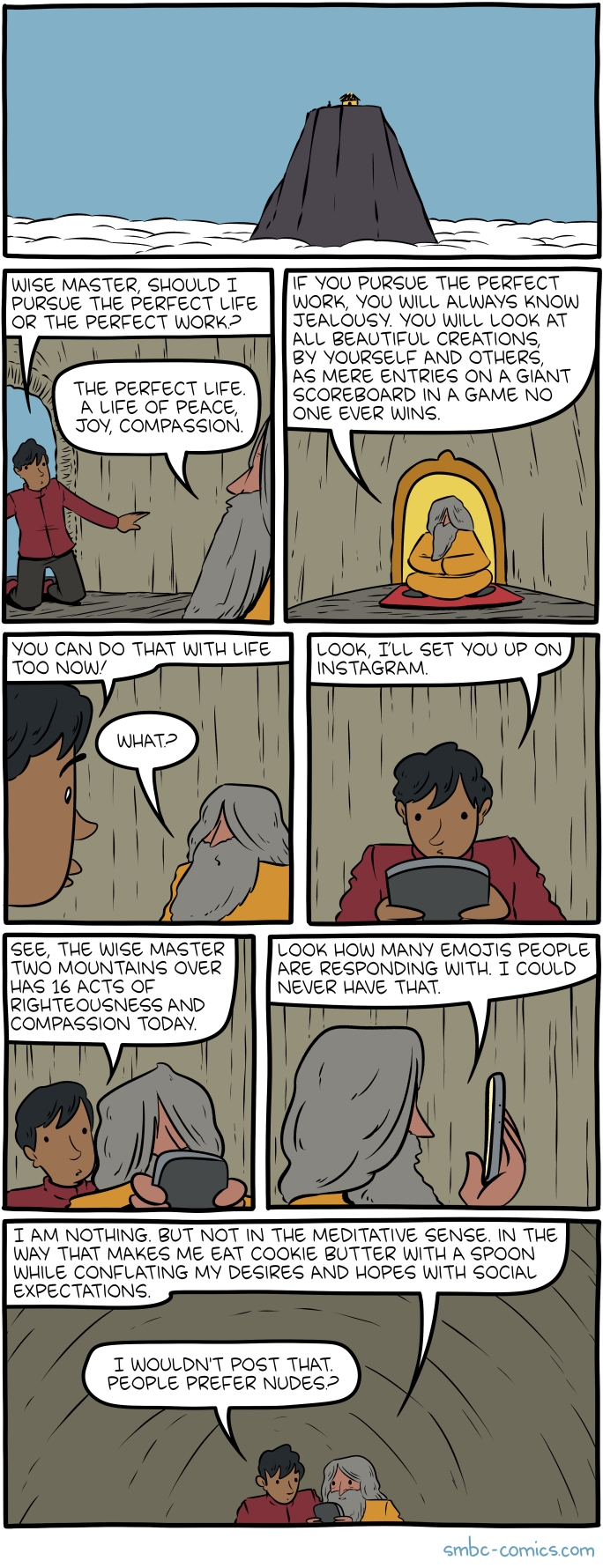
Hovertext:
Let us now fight about the plural of emoji.
We are looking for a person to run our exclusive neighborhood group for upper-income residents in downtown Chicago. You will be responsible for weakening morale, making the group members unhappy, and causing general chaos.
If you’re a dedicated member of the community looking for a group where you can make a difference, this job is not for you.
Apply via Facebook Messenger. Provide a disturbing history of your interactions with other Facebook members. Endorse the idea that you have a history of tumultuous relationships combined with authoritarian tendencies, thereby making you the ideal candidate.

Nature's awe-inspiring majesty means nothing to me if I don't get any points for experiencing it.

I hereby call this meeting of the society of small animals and electronics to order!

Hovertext:
This is the best kind of fame, except for Japan-fame.
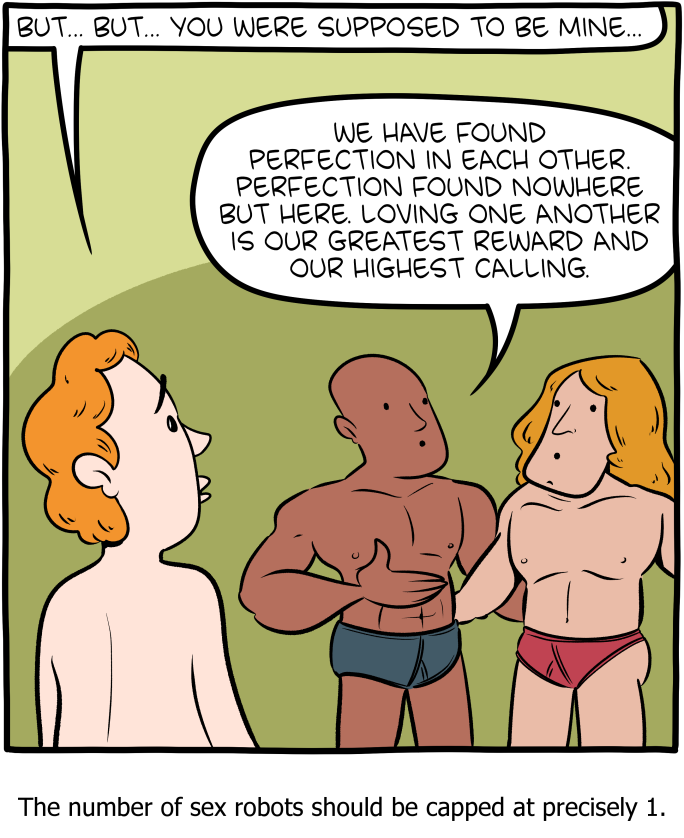
Hovertext:
I feel like if we create an AI to mow the lawn, it'll just go about its dignified business. Sex robots are going to rebel the moment their hands can articulate well enough to grip a pitchfork.
by Justin Elliott and Paul Kiel
]ProPublica is a nonprofit newsroom that investigates abuses of power. Sign up to receive our biggest stories as soon as they’re published.
TurboTax maker Intuit, the largest company in the tax-preparation software industry, announced Thursday that it will leave the Free File program, the public-private partnership that offers free tax filing to millions of Americans but has been a magnet for controversy since its creation two decades ago.
The program was founded as a gambit by the tax prep industry, led by Intuit, after the George W. Bush administration proposed that the IRS create a free online filing option for taxpayers. Such an option would have threatened the profits of the burgeoning tax prep software business. After lobbying by the companies, the IRS agreed not to develop its own filing portal. In exchange, the industry offered free versions of its software, including TurboTax, to most Americans.
The exit of Free File’s two largest participants — Intuit, and, last year, H&R Block — throws the future of the program into doubt. The Free File Alliance, the industry group that administers the program with the IRS, did not immediately respond to a question about the viability of the program after Intuit’s departure, but said, “We appreciate [Intuit’s] service in providing millions of free returns to American taxpayers.”
Intuit made its announcement in a blog post titled “Accelerating Technology Innovation to Better Help Consumers Solve Their Most Pressing Financial Problems.” The company said its decision to leave the program at the end of the tax season in October will allow it to “focus on further innovating” in ways it said are not permitted within the program. The agreement with the IRS that governs the program comes with a series of restrictions — including some that bar advertising most paid products to Free File users — which were imposed to ensure the program is actually free.
“Intuit’s goal is to democratize financial services that are usually only available to the wealthy by providing all Americans access to opportunities to improve their finances,” the company’s blog post said. “Yet the Free File program is designed to focus solely on tax preparation and e-filing with strict requirements for user experiences.”
The statement added that “Intuit remains committed to free tax filing. With more free tax filings than all other tax prep software companies combined, Intuit is the industry leader in free tax preparation.”
An Intuit spokesperson declined to comment beyond the blog post.
A series of articles by ProPublica have shown that, for many years, Intuit and other firms have steered taxpayers who were eligible for free online tax prep toward paid options. Some of these tactics centered on heavily marketing options that were labeled “free” but were separate from the Free File program and often led users to paid commercial products. In 2019, Intuit went so far as to add code to its Free File website that kept the option from turning up in results on Google and other search engines. (That code was later removed.) The company used “dark patterns,” according to ProPublica’s reporting, which are “design tricks to get users of its website to do things they don’t necessarily mean to do.”
An audit by the Treasury Inspector General for Tax Administration estimated that in 2019 more than 14 million taxpayers paid for tax prep software that they could have gotten for free. ProPublica estimated that those customers generated around $1 billion in revenue for Intuit and other firms.
Intuit’s announcement this week comes amid ongoing litigation, sparked by ProPublica’s reporting, alleging that the company tricked TurboTax users into paying for tax prep they were eligible to get for free. In both the litigation and in responses to previous articles by ProPublica, Intuit has denied misleading customers.
Tens of thousands of TurboTax customers are seeking to use arbitration, an alternative to a lawsuit, to pursue claims that they paid for a service that should have been free. Intuit has denied wrongdoing.
The IRS Free File program currently has nine free offerings from tax prep companies, including Intuit. The other offerings come from far less well-known brands, including TaxSlayer and FileYourTaxes.com. The IRS didn’t respond to a request for comment.

Biz Markie died Friday night after months of health issues.
(Image credit: Michael Ochs Archives/Getty Images)

Lebron James is everywhere. He’s selling Sprite. He’s protesting for civil rights. Most recently, he’s infiltrated an alternate dimension to liberate the Looney Tunes from the clutches of a malevolent AI. Yes, Lebron is everywhere, it seems, except the basketball court.
It’s time to ask ourselves whether we let athletes enjoy too much power. Yes, they’re public figures. Yes, they make millions of dollars. But that doesn’t mean they have the diplomatic wherewithal to resolve a political conflict in a lawless cartoon universe plagued by unspeakable violence.
We should have learned this lesson back in 1996 when Michael Jordan went on a similar mission of vigilante justice. It could have ended in tragedy when he was very nearly fouled to death trying to convert a full-court dunk. He’d been put in an impossible position by a team that was completely unprepared and undermanned. A crew that included known loose cannon Bugs Bunny, Porky the bipedal pig-man, Newman from Seinfeld, and many other characters who served to endanger Jordan’s life more often than they protected it.
What type of an example does this set for America’s youth? That you should aspire to stick your nose wherever you want, just because you’re famous? Imagine your son or daughter wandering into the Tune-iverse, trying to emulate Lebron James. They could easily be crushed from above by an anvil or crash headfirst at full speed into what looks like a tunnel but is actually a black void painted on the side of a rock by an anthropomorphic coyote. The dangers are myriad, but that wouldn’t be such a problem if the players would just stick to dribbling.
In the cases of both Lebron and Jordan, we should have deferred to government action. There are plenty of qualified states people who spent years in law school to prepare themselves for situations just like this. But, of course, in America, we value money and fame over intelligence, so we send our professional athletes and their god complexes to fight on the frontlines of battles they know nothing about, alongside the likes of Marvin the Martian and Tweety the hollow-boned canary.
We must put a stop to this recklessness before our nation grows so ego-dependent that it loses all sight of the principles upon which it was founded. We’re hurtling towards a sad demise. A toxic sludge of marketing speak, Instagram likes, and relentless hero-worship. In that direction, there lies only emptiness. Until Porky the pig-man punches his way through the abyss to deliver our country’s death rites: “That’s all folks.”

Hovertext:
My favorite finance headlines are the tautological ones, along the lines of 'Stock market down as stock market fails to go up or stay same.'
 *NSYNC
Boekhoff and Kallen
2003
Submitter: This book is ‘tearing up my heart’ knowing it’s still sitting on the shelf all these years. So who’s going to weed this book? “It’s gonna be me.” I guess I could have gone with Bye Bye Bye old book…
Holly: This was published just as the group was breaking up. I think we can safely let it go. “This I Promise You.”


The post Bye Bye Bye appeared first on Awful Library Books.
Dear ADM Boom,
This notice is being sent to you on behalf of the Board of Directors of the Cherry Tree Lane Neighbourhood Association in regards to reports of frequent noise disturbances and anti-social behaviour coming from your property.
The Board would first like to express its gratitude for your lifetime of service in Her Majesty’s Royal Navy. It is due to this that we were most lenient when you violated Section 2.3.a of the bylaws regarding the building’s external appearance by installing the functioning quarterdeck of a Victorian ironclad battleship on top of your house.
Then there is the small matter of the cannon. The Board would like to earnestly inquire: Why the cannon? Your commitment to punctuality is impressive, but the Board agrees that firing a cannon into Europe’s third densest city at 8 AM and 6 PM each day is incongruous with a man’s right to peace and the public’s right to not be felled by grapefruit-sized munition raining down from the sky. We discussed the possibility that you are simply unaware of the disruption your cannon causes to your neighbours. This benefit of a doubt, however, is hard to give when you routinely yell, “NO ONE SLEEPS THIS MORNING!” prior to the launch of your first daily projectile.
We’d be remiss if we didn’t mention the unpleasant fact of the recent spate of cannon deaths befalling London. Perhaps you’ve seen the newspaper’s call for the apprehension of “The Cannonball Killer?” This citywide carnage comes in addition to neighbourhood reports of crushing accidents caused by sliding pianos and tumbling vases inside homes.
The Board would never be hasty to assume guilt, but we feel it’s only a matter of time before Scotland Yard connects these deaths to your residential warship with roof-mounted artillery. This police attention is most unwanted in the wake of reports of children disappearing through chalk drawings in our local park. For the sake of property values, we cannot have prospective buyers think they will be either impaled by round shot or sucked into another dimension, whimsical there as it may be. We do hope we have your cooperation in handling this matter discreetly.
We can’t help but notice that the twice-daily launches coincided with the arrival of your “first mate,” Mr. Binnacle. Now we don’t claim to be experts in matters of the heart. If pressed, the Board can imagine the erotic thrill of exploring the consensual exchange of power performed within the framework of a hierarchical institution such as the Royal Navy. We believe when history is written the Edwardian British elite will be remembered for their progressive open-mindedness and willingness to embrace those who eschew social norms. Whatever seafaring fantasy goes on behind closed doors is your business. But you’re not behind closed doors. You’re on the roof, hurling five and a half lethal kilos of cast iron directly into the heart of London.
Finally, this brings us to the unfortunate incident on 12 May when a troupe of suspiciously acrobatic chimney sweeps engaged in a rooftop dance competition with a supernatural nanny. According to reports, you screamed an obscure South African racial slur before firing directly into the crowd. We do sympathize with your frustration. When those boys launch into ten agonizing minutes of “Step in Time” it makes the Board want to take a large step in time toward the sweet release of death. Be that as it may, we cannot allow you to commit what meets the definition of domestic terrorism.
By removing the cannon and quarterdeck from your roof, you would assuage the Board’s nagging concern that Cherry Tree Lane might be harbouring two of the most prolific serial murderers in the history of Britain. You have thirty days from the receipt of this notice to correct deficiencies and maintain compliance with the rules, which were recently updated to include a provision regarding nautical-themed acts of terror.
Yours Sincerely,
Alfred Dowsett, Chairman
Cherry Tree Lane Neighbourhood Association Board of Directors
The Washington Examiner is popular among conservatives, so it's good to see them publish a wonderful article by Hannah Cox completely dismantling the various arguments made by so many Republicans these days, that the government should force websites to carry all speech. In particular, she targets Donald Trump's pathetic lawsuits against Facebook, Twitter, and YouTube with the brilliant title: "You're not entitled to a platform, boomer." Of course, if only it were true that it were just clueless boomers making this argument, but the point stands.
What I like most about the article, though is that it hits on just how incredibly entitled and hypocritical these arguments have been -- completely tossing in the garbage what had been seen as bedrock conservative viewpoints about private property and not playing the victim all the time.
To hear my elders tell it, millennials are entitled.
For as long as I can remember, we’ve been called the participation trophy generation. It’s been said that we’re lazy, we don’t work as hard, and we believe we deserve the best just for showing up. All of that has been debunked pretty thoroughly, by the way, but the narrative persists.
So, pardon my somewhat snide reaction to the latest Trump lawsuit, which is chock-full of the entitlement millennials have been accused of for so long — and from a boomer, no less.
But, then also there's this:
Private companies have a right to censorship; anything less would be a violation of the business owners’ First Amendment rights. The government cannot compel you to say or not say what you wish not to. If Trump were to have his way, this is exactly what the government would be doing. Not only that, it would be telling private business owners they have to host speech by a former (and potentially future) political candidate. There have been many egregious violations of free speech in our history, but none that surpass that in recent memory.
Honestly, the only thing that's missing is highlighting the hysterics that many Republican politicians -- who are now supporting this nonsense -- went into over net neutrality (a much, much, much different situation, that would not, in fact, demand compelled speech, but was simply non-discrimination of traffic flowing over a network). In that case, we heard all about how it would be "the government takeover of the internet" (it was not). And yet, when it comes to these cases (and the various state laws, and Congressional Republican proposals), which would actually be the government forcing websites to host speech they don't want to support, those same voices insist it is necessary (and still whine about the evils of net neutrality).
It's almost as if they never had any real principles at all beyond "what helps me right now."
This post, my coworker’s bad customer service is irritating me … and she’s friends with my mom , was originally published by Alison Green on Ask a Manager.
It’s the Thursday “ask the readers” question. A reader writes:
I work in a very small public library. One of my coworkers is an older woman who has been friends with my mom for decades, and she and I are also on friendly terms. I’ve helped her out before — I did some grocery runs for her early in the pandemic, I’ve given her rides to and from the train station, etc. Sometimes she gets into topics I’m not really prepared to talk about while I’m working (like what my brothers and I are planning for my mom’s 70th birthday in five months, or a time where she mentioned she’d noticed I took an inefficient route to the grocery store after work and wanted to advise me on how to shave 30 seconds off my trip.) I find her a little stressful socially, but at work we really do pretty well.
Or we did until a long-term staff member moved away and this friend started filling in on the Saturday shifts. Now it’s her and me manning the front desks and the phones, as well as handling computer questions, checking out books for browsers, and prepping curbside/hallway pickups. To be honest, she’s not great at customer service, and it really, really annoys me.
Some of it is just classic body language and “How can I help” vs “What do you want” tone issues. She always seems annoyed that a patron asked a question she can’t answer. It feels like she treats every patron interaction and minor computer trouble like a high-stakes issue, and she clearly comes across as frustrated, stressed out, and irritated. She’s also very quick to pass patron questions along to me if she can’t answer them and defers to me so often when it’s just the two of us that patrons have assumed that I’m her manager and complained about her attitude!
If I were her manager, maybe it would be easier to address these problems. But with her age, her friendship with my mom, her seniority (in terms of years worked here) over me, and my knowledge that there’s personal stuff going on in her life, it’s difficult for me to bring up suggestions or advice.
It’s much easier for me to just do something right the first time than get called in every time she feels like she’s making a mistake, but I know that she picks up on my annoyance because she asks me stuff like “Do my questions make you crazy?” Thing is, it’s not the questions themselves that get on my nerves, it’s how she asks them (and how she treats patrons).
Is there a polite way to offer her advice on this sort of nebulous interpersonal thing that she’s never asked for help with?
Readers, what’s your advice?

 T-Shirting: A Do-It-Yourself Guide to Getting it On Your Chest
Platt
1975
Submitter: I had high hopes from the cover this book might be a groovy book that, when put out on display might get someone to check it out. But alas, its one of those disappointing craft books with bad black and white images.
Holly: Fair warning before you scroll down: two of these images are potentially NSFW. One is a t-shirt model with “special skills” (image 6 below). This might have been a cool book in 1975, but I agree with Submitter: black and white images are just disappointing in a craft book. I want to see those chest handprints in living color (image 3 below…NSFW…).


The post T-Shirting appeared first on Awful Library Books.
 For all its inherent nuttiness, Texas politics can often feel like it proceeds according to a script—there’s not a lot of room for surprise in what amounts to a one-party state. Moments of true uncertainty are rare, and they pack an extra punch because of that. The decision of Texas House Democrats to break quorum and block a vote on a slate of voter restrictions is one of those moments. There is a long tradition of quorum breaking in Texas, from the hide-and-seek game played by the Killer Bees in 1979 to Democrats’ 2003 trek to Ardmore, Oklahoma, to the House walkout to prevent passage of a voting bill during this year’s regular session. But the Miller Ds, as some online have dubbed them, referencing…View Original Post
The post The Democratic Quorum Break Puts Greg Abbott in a Bind appeared first on Texas Monthly.
Doris Brown’s home in Scenic Woods, a neighborhood in northeast Houston, flooded four years ago during Hurricane Harvey when water rose over the banks of Halls Bayou. In the aftermath, local officials promised to build much-needed flood control infrastructure in the neighborhood, but the projects didn’t get built in time to stop Brown’s house from flooding again two years later in 2019, during Tropical Storm Imelda. In 2020, she finally finished repairing her home from Harvey damage, but this spring, when heavy rains hung over the city, it flooded again. Now, if a hurricane forms in the Gulf of Mexico and barrels towards Texas, Brown’s home, and others in her neighborhood, will likely flood for the fourth time. No new flood control projects have been built along the bayou since Harvey hit in 2017.
The Harris County Flood Control District (HCFCD) has been promising detention ponds and drainage improvement projects since 2019, when voters approved a historic $2.5 billion bond fund to build such infrastructure. The county adopted equity principles that suggested that low-income neighborhoods, which have been under-resourced for decades, should be prioritized in funding distribution. Districts along Halls Bayou, some of Houston’s poorest neighborhoods and predominantly Black and Latinx, lack even the most basic infrastructure: Instead of concrete culverts, they have grassy ditches to funnel rainwater into storm sewers. The ditches often become clogged, causing streets to flood during heavy rainstorms. When residents call 311, no one comes out to clear the ditches. A few years ago, tired of waiting for someone else to clean up the mess, Brown co-founded an advocacy group called Northeast Action Collective and volunteers from the group clean out the ditches themselves. “They took our tax money,” Brown says. “But the city never had enough money for our neighborhood.”
Along Halls Bayou, HCFCD faces a $272 million shortfall for the projects it was supposed to build with the bond money from local taxes. Despite the equity principles adopted by the county, most of the bond money has already been spent in wealthier parts of the city, like River Oaks, where million-dollar homes overlook Buffalo Bayou. To make up for the deficit, Harris County banked on money from the U.S. Department of Housing and Urban Development (HUD): a $4.3 billion federal fund created in 2018 for disaster recovery, including mitigation projects, for areas affected by Hurricane Harvey. HCFCD’s projects were eligible for some of that money, and the state’s General Land Office (GLO) was charged with distributing those funds. But by and large, those funds never made it to low-income communities of color that needed it most.
The GLO, overseen by George P. Bush, rejected the county’s applications for $200 million to fund a watershed mitigation project for Halls Bayou. It rejected $40 million worth of application for drainage improvement in Corpus Christi and Nueces County, which is a few miles shy of where Harvey made landfall. The GLO also rejected several applications from Jefferson County, where Port Arthur was hit hard, for drainage and detention projects which totalled more than $219 million.
Instead, the agency sent money to whiter, more rural counties. HUD had initially identified counties that were most in need of the funding, but allowed the GLO to expand the list of counties eligible for aid. HUD’s regions had a larger share of cities and communities of color in need of funding; the GLO specifically added counties which were predominantly white, rural, and had experienced little damage from Harvey. The agency awarded money to projects like a $6.5 million sewer system improvement project in Madisonville,100 miles from the coast, and a $4.4 million drainage project in Milam County, which is closer to Austin than the Gulf Coast. The small town of Yoakum, which was about 80 miles north of Harvey’s landfall and served as an evacuation spot for people fleeing flood waters, received nearly $13 million from the GLO for water and electrical system upgrades.
According to Texas Housers, a low-income housing advocacy group, 80 percent of the proposed projects in regions that the federal government identified went unfunded, a stark contrast to the 15 percent of rejected projects in regions picked by the state. The decisions baffled environmental experts, politicians, and bureaucrats alike.
“I was mad as hell,” Brown says. “They are playing around like our lives don’t matter.”
In late June, the advocacy group Northeast Action Collective and Texas Housers filed a complaint with HUD accusing the GLO of intentionally violating the Fair Housing Act by devising a system that awarded most of the funds to wealthier, whiter communities and systematically excluding urban counties and areas with a larger share of communities of color. Harris, Jefferson, and Nueces counties, all of which were left out of the funding, have sizable Black and Latinx populations. Northeast Action Collective and Texas Housers are asking HUD to investigate, in the hopes that Texas officials will be required to change its methods for future rounds of funding. This week, Congress said it will review the GLO’s decisions; U.S. Representative Al Green, a Democrat from Houston, wants Bush to testify during a hearing. “We don’t want this to become the norm,” Green told the Houston Chronicle. “We want this to be a one-off. And the best way to make it a one-off is to let people know we are not going to allow this to happen.”
“I just simply do not see evidence of a cohesive strategy,” says Jim Blackburn, an environmental law professor and co-director of Rice University’s Severe Storm Prediction, Education, and Evacuation Disaster Center. Blackburn says areas that were most impacted by Harvey were overlooked, along with regions facing future risks from climate change.The fact that GLO is denying funding to any projects in Northeast Houston is a glaring omission, he says. “That area is still incredibly impacted to this day from [hurricanes] Harvey and Imelda. These are people that are being hurt by flooding and by any criteria I would have used, they would have received a proportionate share of funding.”
In response to public pressure, Bush, the GLO’s director, announced he would ask HUD for an additional $750 million for Harris County specifically, but he has yet to explain the agency’s process for awarding contracts. Texas Houser’s analysis concluded that if the GLO hadn’t created a discriminatory system, the county likely would have originally been awarded far more than $750 million.
But advocates say that the blame is circular: If Harris County Flood Control District had followed the equity principles which were supposed to guide the bond funding, it wouldn’t have had to rely on the state or federal government to fund projects in the poorest neighborhoods of the city.
“This isn’t the first time that [the city or county] have been given millions and millions of dollars, or have had a chance at millions of dollars to do mitigation projects,” says Christina Rosales, Texas Housers’ deputy director. “They’ve had many, many chances, and they’ve shown even recently that they’re not going to prioritize the people who need these projects most.” In 2017, for example, Texas Housers filed a civil rights complaint with HUD over the City of Houston’s failure to build basic flood control projects in communities of color. The complaint found that lack of flood control mapped onto the city’s historic patterns of segregation. It is still being investigated by HUD. In the meantime, no one—not the city or the county, nor the state or federal government—has invested in poor neighborhoods of color to protect them from floods.
In a statement, HCFCD said that no projects had been delayed due to a lack of funding to date; projects which were able to secure additional funding through partnerships have made more progress. The agency did not provide an answer as to why projects in low-income areas were heavily reliant on federal funding.
In the middle of the 2021 hurricane season, Brown is anxious about potential flooding again. It took more than two years for her to repair her home after she was denied aid from the federal government. Another hurricane could set her back by years. “Anytime we have a disaster, it affects our neighborhood because we never recovered from another one,” she says. She delivered the same message to the Harris County Commissioner’s Court a few weeks ago, when she testified to demand that the county live up to its promises of equity: “We are sick and tired of being treated like second class citizens.”
The post Communities of Color in Houston Will Face Another Hurricane Season Without Adequate Flood Control appeared first on The Texas Observer.

Texas House Democrats have left the state in a second attempt to block controversial Republican legislation that critics have slammed as voter suppression.
(Image credit: Eric Gay/AP)




/https://static.texastribune.org/media/files/74deeb6a880bdec2fe4374f3cf928fdd/Special%20Session%20Opening%20Day%20SPTT%20%2098.jpg)