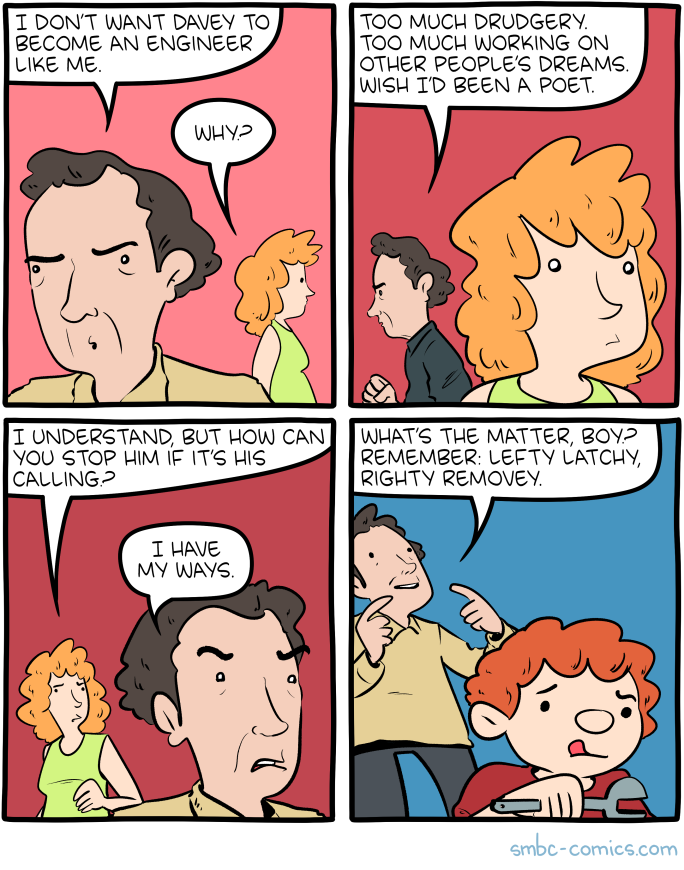
I had the question about my supervisor being annoyed with me on how I seem to know when we are working a Saturday and I request vacation.
Reiterating what I said in my response after the question was posted: First, EVERYBODY in the daily work rotation has the same access to the information I have found. They just have not discovered how to use it or have not found the schedule like I have. Second, if I have the vacation time to use, and the time is available to use it, my supervisor would need a very good reason to deny it. HR would need to approve the reason. Her not liking that I happen to take the Friday off before a Saturday work day would not be a good reason.
But I did work a Saturday! The one for the 4th of July weekend. The vacation request log was filled up and I had to work. My wife was able to take the time off for child care.
The update. I went and talked to the plant manager. I mentioned that I didn’t know the correct term but it was like harassment or hostile work environment and bullying by my supervisor in the form of “over supervision” and questions about how and when I was using my vacation. (Note from Alison: Legally, it is not harassment nor hostile workplace.) He said “interesting” and that he, along with HR, would look into it. I also mentioned the (relatively) sudden increase in working Saturdays, going from one or two a year to many more now and seemingly increasing. He said they conducted an investigation/audit and found that the automated ordering program that was implemented a few years ago could not be fine-tuned enough or lacked common sense in ordering the different sub-components and the line would switch products more than needed, adding down time. If it saw one sub-component less than the inventory limit, it would schedule production even though the items were not going to be used for another five weeks. So they are now having a real person look over the suggestions of the program and then make a decision on what the production schedule will be. He said by the end of the year our schedules should be back to normal.
The following weeks, my supervisor said nary a word to me and seemed to be more withdrawn than normal, and other than our start-of-work meetings I didn’t see too much of her. I found out several other people had talked to management about her. One lady named Leslie got a really short haircut and my supervisor started caller her “Lester” or “Leslie the lesbian” behind her back. (Note from Alison: WTF.) Another coworker has intermittent FMLA and she was demanding proof of his condition when she has no right to ask. I guess management had a talk with her about all this and said anything outside of the job at hand was not to be discussed.
I didn’t see her at all at the end of last week. I found out through my brother-in-law, who found out through the rumor mill at the office while together over the holiday, that she was fired. During the investigation/audit of why we working (and being paid) so much overtime, it was discovered that she was coding several of her work friends’ pay rate higher than the job they were doing. Instant termination. So the supervisor’s job is open at the moment. I have absolutely no interest in pursuing it.
We just got a new team member a few months ago, “Lucy.” Lucy makes no secret about it that she’s a trust-fund kid: private schools, Ivy League, owns a fancy horse, the works. She’s like a stereotype from a bad sitcom.
She’s in a role parallel with mine and we have to work together pretty frequently. We’re about the same age but I have a higher level of education (masters’s) and more time in our field than she does and this seems to annoy her. She always makes comments about “working hard” and “picking yourself up by your boot straps” and gets frustrated about “hand-outs.” She usually brings this stuff up in tandem with someone’s work she thinks is poor quality and it has nothing to do with the situation at hand — “Ted better fix this software glitch. Some people are just afraid of hard work and want handouts.” … “Laurie better not keep buying that Starbucks if she wants to save cash. Makes sense though with her work ethic.” Just awful, ignorant stuff.
We all live and work in a smallish city that’s been predicted to become a start-up boomtown but it’s very blue-collar and the median income is about $40k a year. The company we work for doesn’t pay more than $10 an hour at entry-level. None of us are making what we should be, but that’s a different story. I can’t help but feel like Lucy took a job here to lord her money over the poors. She makes it really clear she’s just gracing us with her presence and that she doesn’t need the paycheck.
In the beginning, it was annoying but now it’s downright baffling and infuriating. Our manager, “Sally,” hangs on her every word and has started mirroring Lucy’s socioeconomic ideas. Before Lucy came, Sally used to be very kind and well, normal.
People in our area struggled during the lockdown and a lot of my friends and family are in a financial bind through no fault of their own. My husband and I got by on luck and the skin of our teeth. Lucy overheard me make a comment about my landlord in conversation with another coworker and she gave me a disgusted look and said, “Oh my god, you still RENT? At YOUR age? That explains so much.” She then immediately ran to Sally and they spent the day whispering and looking over at me. For the record, Lucy owns three houses, two condos, and a beach house. There’s been rumbling that she’s given Sally keys to one of her vacation homes — a subordinate lending her expensive vacation home to her boss. That’s a problem.
Lucy and Sally now both make comments about people’s clothes, the cars they drive, and what they bring for lunch and have dismissed it all as obviously trashy or poor. Someone had ramen for lunch the other day and Lucy gagged and said, “Oh, gross.” It’s enough to make me start bleeding from the eyes, I’m getting so frustrated and angry. There is no reason for this kind of behavior ever. Is this a bad 80s movie?
Before I go to HR (because I have a lot of this documented), I want to make sure I don’t sound over-sensitive. I grew up poor and on food stamps. My husband was homeless as a teen. I’ve seen the drastic emotional, physical, and fiscal impact of poverty and am still recovering from it as an adult. To come to my place of work and hear someone like Lucy talk about her beach house and then call someone’s lunch “poor people food” makes me see red.
How can I approach this like a professional and not like my blood is boiling?
What the actual F.
Lucy is a terrible person and I want to banish her to a small and unpleasant island surrounded on all sides by oceans of ramen as far as the eye can see. (Although personally, I would love that island because ramen is delicious and eventually she would end up learning that out of desperation, so maybe that’s an insufficient penalty.)
And no, you are not overreacting or being overly sensitive.
It would be one thing if Lucy were just clueless — like if she were surprised to learn a colleague rented. That would still be quite obnoxious, but what takes this to a new level of awfulness is that she’s nasty about it. She’s gagging when someone eats inexpensive food. She’s giving people disgusted looks for renting and calling others trashy. She’s obsessed with the idea of “hand-outs.” She’s like a caricature of a villain in a teen movie, one that you’d roll your eyes at for being portrayed so unrealistically.
(Ironically, the only trashy thing here is Lucy’s behavior. She sounds like someone who thinks she herself is the epitome of class and taste, while daily showing herself to be classless.)
Has anyone tried calling her out on it? Like just saying, “Wow, you are really rude” or “What an grossly uneducated thing to say” the next time she makes one of these comments? If you haven’t, you should feel free to. Sometimes social shaming is warranted and effective. If nothing else, it might just feel good.
Of course, the more troubling part is that she’s sucked your boss into this now. If that weren’t the case, you could talk to your boss and ask her to tell Lucy to stop being hateful and obnoxious. But since Sally is apparently enjoying her proximity to wealth (or something?) in a truly screwed up way, you’re right to go to HR. I’m not normally a big fan of HR for interpersonal stuff — normally you should handle that stuff with the person directly or, if it needs to be escalated, with your boss — but in this case your boss is participating in really gross, classist, offensive behavior and has compromised her ability to effectively lead your team.
When you talk to HR, frame it this way: “Sally and Lucy have both been mocking employees’ clothes, food, and housing, and making fun of people for being what they consider poor. Some examples are X and Y, and this is happening daily. It’s made the working environment unpleasant and it’s difficult to trust Sally as a manager. I figured the company wouldn’t want this happening, especially from a manager. Is there a way for you to intervene and make it clear this isn’t okay?”
Hippie Crafts: Creating a Hip New Look Using Groovy ’60s Crafts
O’Sullivan
2005
Submitter: This book has not circulated since being purchased back in 2005. From the looks of it, I can see why! Maybe Mary can delight us in some of her 60’s threads.
Holly: Mary is cool, but not this cool.
Mary: I am quite certain I sported a few similar items, but I am going to say no to the vests in the 5th picture. Some of these should have stayed put in the 1960s.
On January 19, 2018, shortly before 10 a.m., Robin Lafleur exited Texas Highway 290 at South First Street, as she did every morning on her way to work at Austin Habitat for Humanity. It was a cold, cloudy morning but Lafleur was in a good mood. She finally felt settled in her new home, which she’d bought less than a year before in Cedar Park, a suburb northwest of Austin. It was a Friday and she had happy hour plans with friends after work, so she was wearing one of her favorite outfits—maroon jeggings and a new mauve sweater with matching boots.
She doesn’t remember much about what happened next. As she merged onto the frontage road, a car stopped abruptly in front of her. She slammed into it. When she woke up, she was in a hospital gown at St. David’s South Austin Medical Center—nurses had cut her clothes off her body to take a CT scan. The concussion she suffered kept her out of work for more than three months. “I was told that to heal, I needed to sit in a quiet room and let the time go by,” she says. “It was horrific because the days went by so slowly.”
Before she moved, Lafleur had been renting an apartment less than 10 minutes from her office, but she wanted to own a home in the city where she grew up. She soon realized her nonprofit salary wouldn’t get her very far. If you can’t afford to buy in Austin, Lafleur says, “You’re left up a creek without a paddle. Or you use that paddle and you travel to Cedar Park.”
As the price of housing in Austin has skyrocketed, low- and middle-income people like Lafleur have left the city in droves, seeking cheaper housing in the suburbs strung along Interstate 35—Round Rock and Pflugerville to the north, Buda and Kyle to the south, all of which have at least doubled or tripled in population since 2000. After she closed on her house, Lafleur joined the thousands of other people who crowd I-35 every day to get home, sitting in traffic for nearly 90 minutes to travel 25 miles. “At this point, driving on 35, which I still do every day, it’s a very, very stressful and anxiety-causing event,” she says.
Brontë Wittpenn
I-35 separates East Austin from downtown.
The Texas Department of Transportation (TxDOT) wants to fix Lafleur’s commute. In early 2020, after nearly three decades of planning, discussion, and community input, the Texas Transportation Commission, which oversees TxDOT, voted to allocate $7.5 billion to the I-35 Capital Express Project, which includes plans to expand an 8-mile segment of I-35 through central Austin.
The stretch of I-35 that passes through downtown Austin is both the most congested stretch of highway in the state and the most dangerous roadway in the city—1 in 4 traffic fatalities in Austin occur on the highway or its frontage roads. The goal of the expansion, says Susan Fraser, the program manager for the I-35 project, is to make the highway safer and more efficient for the more than 200,000 vehicles that use it every day. TxDOT plans to do that by adding managed lanes, restricted to vehicles with two or more people in them.
“I know there’s the mindset that if you build it, they will come,” says Diann Hodges, a spokesperson for TxDOT’s Austin district. “Well, they have come. Anybody who lives or drives in Austin knows the congestion that we’re dealing with. So we’ve got to make improvements to the road that is there to make it accessible to everyone.”
Texas’ population is projected to nearly double by 2050. Most of that growth will happen in urban areas like Austin, which has been the fastest-growing major metropolitan region in the country over the past decade. Texas leaders have decided that to accommodate that growth, the state urgently needs “to get new roads built swiftly and effectively,” as Governor Greg Abbott has promised. Despite the fact that it is much more efficient, sustainable, and safe to move people through crowded cities by other modes—like buses and trains—TxDOT spends essentially all of its funding on enabling seamless car travel. Since 2015, TxDOT has committed more than $25 billion to “congestion relief” projects across the state and has plans to expand highways in Houston, San Antonio, Dallas, Fort Worth, and El Paso.
This is how transportation departments across the country have functioned for decades—building ever bigger highways to fix traffic—despite the reams of evidence that it doesn’t work. Between 1993 and 2017, the 100 largest urbanized areas in the United States spent more than $500 billion adding new freeways or expanding existing ones. In those same cities, congestion increased by 144 percent, significantly outpacing population growth. “I think traffic engineers tend to think traffic is like a liquid. If the pipes aren’t big enough, then it gets plugged up and overflows,” says Robert Goodspeed, a professor of urban planning at the University of Michigan. “The solution is building bigger pipes. But all of the evidence says that that’s not true, that instead [traffic] is much more like a gas, meaning the volume of traffic congestion will expand to take up the capacity allowed.”
If traffic can expand, it can also contract. Advocates in Texas are at the epicenter of a national movement asking: What if, instead of building our aging roads back wider and higher—doubling down on the displacement that began in the 1950s and the climate consequences unfolding now—we removed those highways altogether? What if we restored the scarred, paved-over land they inhabit and gave it back to the communities it was taken from?
*
On a breezy, warm day in April, State Representative Armando Walle appeared before the House Transportation Committee to introduce House Joint Resolution 109, a measure that would put to a public vote whether to allow for state highway funds to be spent on things other than roadways, including sidewalks, bike lanes, and public transportation. Dozens of Texans testified in support of the bill. About an hour into the hearing, Jack Finger, a member of the advocacy group Texans for Toll Free Highways, testified against the measure. “Do not take my gas tax dollars for the bus, nor for bike paths, nor for sidewalks,” he said. “The local municipalities can pay for their own. To me it smacks at a socialistic attempt to get me out of my vehicle.” HJR 109 was left pending in committee.
The idea that public transit is for socialists and that highways enable free-market capitalism pervades the state’s politics. According to Farm&City, a nonprofit that advocates for sustainable development across the state, Texas is one of only a few states in the country without dedicated state funding for public transportation in major metro areas. Over the past two decades, surveys have found that people who live in these urban areas, as 85 percent of Texans do, have consistently said they would prefer investments in public transit instead of bigger highways. Even the outgoing CEO of TxDOT, James Bass, said earlier this year that he’d like to see more investment in transit: “With the projected population and growth in the state of Texas, I think as we move forward in time, we’ll need to consider investment in additional modes.”
But the Legislature has refused. State law requires roughly 97 percent of TxDOT’s roughly $15 billion annual budget to be spent on roadways. For decades, Texas Republicans have contended that highways are the engine that powers the state’s economy. “Everything we’re doing for transportation infrastructure feeds into keeping Texas number one in the nation for economic development,” Abbott said in January.
It’s the same argument advanced by the Associated General Contractors of Texas (AGC), which represents 85 percent of the state’s highway contractors. Between January 2013 and December 2020, AGC contributed more than $2.5 million to Texas officeholders, most of that to powerful Republicans, and another $2.2 million to Texas Infrastructure Now, a pro-road-building political action committee, according to Texans for Public Justice. In that time span, the group donated $375,200 to Texans for Greg Abbott, $334,950 to Texans for Dan Patrick, and $303,100 to Senator Robert Nichols, the chair of the Senate Transportation Committee. Terry Canales, the Democratic chair of the House Transportation Committee, received just $4,000.
“As TxDOT considers how to rebuild I-35 through central Austin, we wonder, Why don’t they consider other modes?” says Bo McCarver, a community activist in East Austin who worked for TxDOT from 1980 to 1999. “Well, AGC is not going to let you. The Legislature’s not going to let you.” AGC did not respond to multiple requests for comment for this story.
Ivan Armando Flores/The Texas Observer
The Dewitt C. Greer State Highway Building, on 11th Street across from the state Capitol.
“TxDOT and AGC have formed a symbiotic relationship over the years,” writes Gary Scharrer, a former journalist turned AGC spokesperson, in his 2020 book, Connecting Texas: True Tales of the People Who Built Our Highways and Bridges. Doug Pitcock, the founder and CEO of Williams Brothers Construction, the company responsible for expanding Houston’s Katy Freeway to 26 lanes, told Scharrer that mass transit “is not a solution for solving the congestion problem on the highways. … In my opinion, you will never do away with cars.” Pitcock himself has donated nearly $5 million to Texas officeholders since 2013, according to the Texas Ethics Commission, with most of that going to Republican candidates or PACs.
The assertion that a Texan will always require a car is a self-fulfilling prophecy. In 1967, DeWitt Greer, the head of the Texas Highway Department—as TxDOT was known until 1975—said upon his retirement that mass transit was not the answer for Texas. “It would take a generation to break Texans of the comfortable and convenient habit of riding in the automobile. If we are to please the taxpayers,” he said, “then we must develop more adequate thoroughfares in the urban areas.”
Two generations later, the costs of that habit have come due.
Even as cars have become more fuel-efficient and electric vehicles have trickled into the market, greenhouse gas emissions from passenger vehicles have continued to climb. In Austin, the average driver emitted 12 percent more greenhouse gases in 2017 than they did in 1990, according to a New York Timesanalysis of road emission data. In Dallas-Fort Worth, the average driver emitted 27 percent more. “Suburban driving, including commuting, has been a major contributor to the expanding carbon footprint of urban areas,” the project’s lead researcher concluded.
In 2018, the last time TxDOT did an analysis of the greenhouse gases generated on its roads, it found that road emissions in Texas account for 0.48 percent of total worldwide carbon dioxide emissions, even as the state accounts for only 0.38 percent of the world’s population. Today, TxDOT insists that fixing congestion will help reduce emissions, arguing that cars run more efficiently at higher speeds, despite research that shows emissions are more closely tied to distance traveled. Meanwhile, taking public transit can reduce average greenhouse gas emissions per mile by half, according to the U.S. Department of Transportation—and cut your chances of dying or being seriously injured in a car crash by 90 percent, according to a study by the American Public Transportation Association.
*
In Round Rock, 20 miles from Lafleur’s home, a limestone brick wall edges a rolling green golf course tucked just west of Texas Highway 130. Behind the wall, two-story homes sprout along streets with names like Asher Blue Drive and Lady Swiss Lane. Polyethylene wrapping flaps in the wind as workers install roofing shingles and hammer in siding. Some homes have cars parked in driveways and plants spilling out of terra-cotta pots; others are still plywood skeletons.
In 2015, this area—traffic analysis zone (TAZ) 1797—had a population of 6,879, according to the Capital Area Metropolitan Planning Organization (CAMPO). By 2045, the agency predicts the population will more than quadruple.
This projection doesn’t match the on-the-ground reality, says Cole Kitten, a planner in the City of Austin’s Transportation Department, because population growth is not linear. Some TAZs may have experienced rapid growth over the past decade as subdivisions were built on vacant land and people moved into new homes, but once those areas are built out, that growth should effectively get shut off. In March 2020, Kitten wrote an email to Ann Kitchen, a member of Austin’s city council and the vice-chair of CAMPO’s transportation policy board, to express his concerns. “This is not how demographic forecasting is done, anywhere,” he wrote.
Most urban areas are required under federal law to create regional planning organizations that study and predict future travel demand based on population growth. These plans become the basis for how TxDOT prioritizes projects and allocates funding across Texas. “We do build to projections. So we look forward to say, ‘OK, what do we anticipate the traffic will be in so many years?’” says Hodges, the TxDOT spokesperson. “We are trying to accommodate what is going to be there.”
But the act of predicting itself can shape the future. “A lot of people want to avoid the conversation of what is desirable and they just say, ‘Well, the number says this, and so we’ve got to accommodate it,’” says University of Michigan professor Robert Goodspeed. He calls this “colonizing the future.” If you plan for a future of car-centric sprawl, that’s what you’ll get. If you don’t build bus lanes or light rail stations, people won’t take public transit. If you don’t build enough housing to enable people like Lafleur to buy homes near their jobs, those people will climb in their cars and drive until they can afford one.
In 2019, an outside consulting firm hired by TxDOT for a different project looked at CAMPO’s long-term population growth rates and registered similar concerns as Kitten, concluding the growth rates were “outside the range used in most studies.” If that population growth didn’t materialize, the company wrote, “the roadway configuration could be overdesigned at a higher monetary cost, with more disruption to the local community, and potentially include a greater environmental impact.”
These concerns went unaddressed. CAMPO formally adopted the 2045 plan in May of last year, projecting significant population growth in Williamson County, where Round Rock and Cedar Park are located. Now, Kitten worries the same flawed growth models will be used to plan the I-35 corridor. If TxDOT engineers use CAMPO’s population growth forecasts, as they’ve said they will, they might conclude that a much wider highway in Austin is required to accommodate the booming population growth projected in Williamson County—even if the only way to make that growth materialize is by building a bigger highway.
*
Adam Greenfield powers up a blue decibel meter the size of a cell phone. Greenfield, a longtime activist and the founder of a grassroots campaign called Rethink35, stands on a hill overlooking Interstate 35, where East Ninth Street ends at a guardrail and tumbles sharply down a grassy slope toward the highway. It’s a brisk January morning, and Austin’s downtown glistens in a spread of glass and steel, a dozen cranes perched above. Traffic roars below, and the screen flickers as the foam-covered microphone registers a reading: 82. Anything over 85 decibels can cause permanent hearing damage, Greenfield says—one of many ways the highway harms people who live nearby. He makes note of the recording, part of his campaign to turn I-35 back into a boulevard.
What is now I-35 was once East Avenue, a four-lane boulevard split by a wide grassy median dotted with impeccably manicured bushes and trees. Families picnicked in the shade between the northbound and soundbound lanes. In 1943, the Austin Chamber of Commerce released a film welcoming newcomers to what it called “the Friendly City.” Among scenes of Austin’s treasures—Congress Avenue, the University of Texas, the 340-acre Zilker Park—the video included a shot of East Avenue. “Would you believe this was once a cow pasture?” the narrator intones with a Texas twang. “Under a program of civic improvement, it was changed into East Avenue, a pleasure to the eye and a major north-south thoroughfare.” A stone-lined drainage ditch crosses the foreground; in the background is a row of red-brick buildings. Two skinny-limbed kids sprint across the frame.
Courtesy Huston-Tillotson University Downs-Jones Library Archives and Special Collections, Downs-Jones Library, Huston-Tillotson University
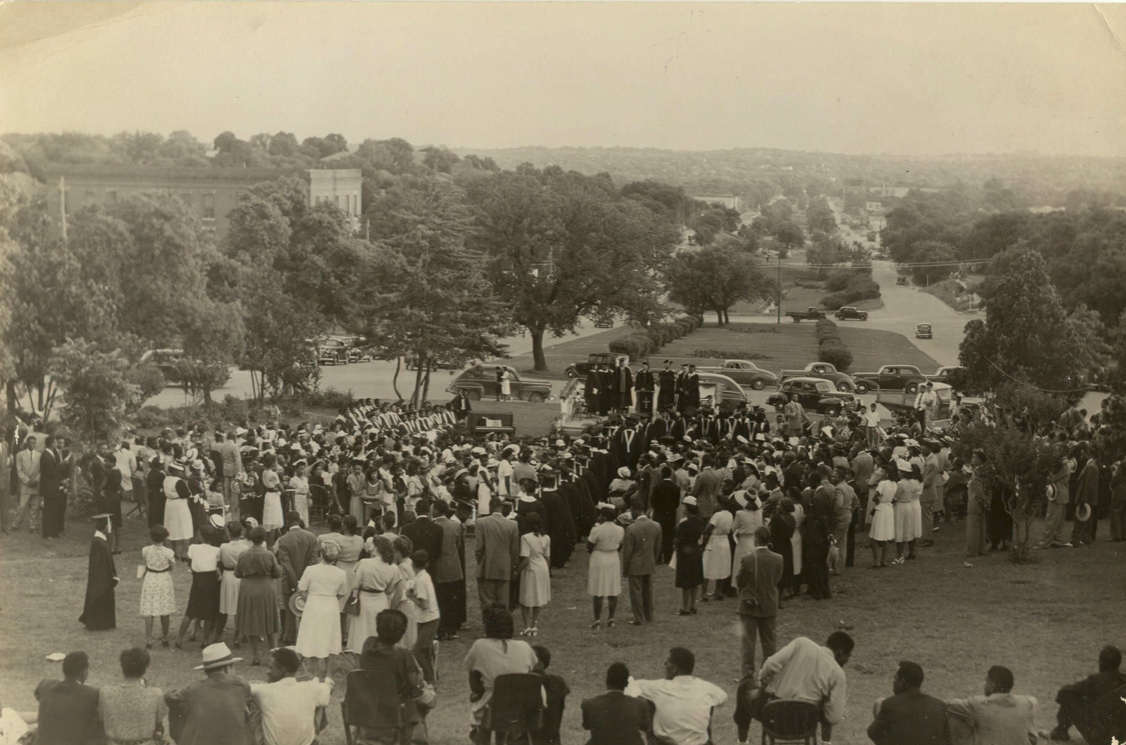
In 1947, students and their families gathered in the median of East Avenue, now I-35, and received diplomas from Samuel Huston College. Today, advocates want to return I-35 to a boulevard.
In 1928, the city’s first comprehensive plan created a 6-square-mile “Negro District” on the east side of town, effectively prohibiting Black people from living west of East Avenue. Starting in the 1950s, the construction of I-35 consumed the boulevard, demolishing hundreds of homes and businesses and erecting a physical barrier between neighborhoods of color and the heart of the city. There is essentially no urban highway in the United States that didn’t unleash similar violence on Black and Hispanic people so that white people could get home faster. Even before the Federal-Aid Highway Act passed in 1956, highway builders and car manufacturers promised not only to revitalize downtowns by connecting suburban commuters to city centers, but also to “displace outmoded business sections and undesirable slum areas,” according to a General Motors promotional video made in 1939. According to Eric Avila, an urban planning professor at the University of California Los Angeles, between 1956 and 1966, highway construction consumed 37,000 units of housing in cities across the country annually, displacing hundreds of thousands of people.
Greenfield wants TxDOT to tear down I-35 through central Austin and replace it with a modernized version of East Avenue: a boulevard with space for cars but also bike paths and bus lanes and wide sidewalks, lined with apartments and offices and restaurants, trees shading courtyard cafes. His proposal is a more radical version of a campaign called Reconnect Austin, which would have TxDOT tear down the elevated decks that clatter over the city, depress the highway belowground from Lady Bird Lake to Martin Luther King Jr. Boulevard, and cover most of it with a boulevard and parks, stitched into the street grid. Heyden Black Walker, an architect and urban planner who leads Reconnect Austin, says the city could reclaim nearly 74 acres of land currently occupied by frontage roads and highway barriers where it could build thousands of units of affordable housing near jobs, thus removing some of the demand on the highway.
Removing I-35 “is a chance to right a very, very grievous wrong,” Greenfield says. “I feel very mixed when I look at it. I feel the full force of its social, environmental, economic impacts, which are dire. But then I look at it and I’m like, wow. This could be more incredible than any of us could ever fathom.”
The idea of highway removal has been around almost as long as highways themselves. In the mid-1950s, the California Highway Commission started construction on Interstate 480, known as the Embarcadero Freeway, to connect the Bay Bridge on San Francisco’s east side with the Golden Gate Bridge. More than a mile was built, obstructing views of the bay and cutting off Telegraph Hill from the waterfront. In 1959, after thousands of people organized, San Francisco’s board of supervisors voted to cancel further construction, citing “the demolition of homes, the destruction of residential areas, [and] the forced uprooting and relocation of individuals, families, and business enterprises.” In the mid-1980s, local leaders proposed tearing it down; voters rejected the proposal, convinced that it would cause gridlock. Then, on October 17, 1989, the Loma Prieta earthquake rocked the city, damaging the highway structure beyond repair. As city leaders dithered about what to do, drivers simply maneuvered around the highway and got where they were going without noticeable delays. Bus ridership increased 15 percent. Public opinion turned—maybe the highway wasn’t so necessary after all. Demolition was completed in 1993; by 2002, the space was transformed into an airy, populated, palm tree-lined boulevard, surrounded by apartments, restaurants, and offices.
In 2004, Milwaukee Mayor John Norquist, who had successfully campaigned to remove a mile-long spur of the elevated Park East Freeway in his hometown, stepped down to lead a nonprofit called Congress for New Urbanism (CNU), where he began a campaign for the removal of urban highways across the country. By 2020, CNU had active campaigns in nearly 30 cities, from Pasadena, California, to Syracuse, New York. Some campaigns call for full demolition, replacing highways with boulevards like in San Francisco. Others propose a vision like Reconnect Austin—depressing a highway and covering it with a park at street level, as Dallas did over the Woodall Rodgers Freeway in 2012. Although more than a dozen highways have since been removed, the idea has remained mostly an aspirational one, promulgated by urbanist nonprofits like CNU and the occasional mayor.
That is until President Joe Biden appointed Pete Buttigieg to lead the U.S. Department of Transportation. Seemingly overnight, the harms wrought by urban highways became mainstream news. In January, Senate Majority Leader Chuck Schumer introduced his sweeping Economic Justice Act, with $10 billion of funding specifically earmarked for highway removal or retrofit, and a directive for agencies “to focus on improvements that will benefit the populations impacted by or previously displaced by the infrastructural barrier.” At the end of March, Biden doubled down on this pledge when he unveiled a $2 trillion infrastructure plan that included a proposed $20 billion to “redress historic inequities and build the future of transportation infrastructure.” That same month, the Federal Highway Administration intervened to stop the expansion of I-45 in Houston, citing civil rights concerns.
*
When you’re in a car, I-345 is a blink-and-you’ll-miss-it highway. It’s a quick swoosh through downtown Dallas, connecting I-45 with U.S. Highway 75. You don’t even see a sign for I-345 until you’re on it. By that time, you’re halfway through the 1.4-mile stretch, suspended 25 feet in the air by concrete. A billboard welcomes you to the historic neighborhood of Deep Ellum as you speed past. Traveling at 70 miles per hour, your experience of I-345 lasts for less than a minute.
Down on the ground, however, the experience of the highway is generational. Deep Ellum was originally settled by former slaves after the Civil War and became the cultural heart of Black Dallas. Businesses like La Conga Cafe and Gypsy Tea Room formed the backbone of a thriving Black community. Dozens of theaters and clubs along Elm Street would launch the careers of jazz and blues musicians in the 1920s and 1930s. As European immigrants settled in the neighborhood and opened grocery stores and pawnshops, Deep Ellum became one of the city’s few integrated communities. But starting in the 1950s, urban renewal came for Deep Ellum. By 1973, the elevated highway cut the neighborhood in half and consumed 54 city blocks, including the historic Harlem Theater in the heart of the community. By the late 1970s, most businesses had shuttered, and the neighborhood slowly emptied out.
I-345 crosses Commerce Street in Dallas’ historic Deep Ellum neighborhood. Megan Kimble
In 2002, when Patrick Kennedy moved to Dallas, fresh with a degree in landscape architecture from Pennsylvania State University, he rented a place in Deep Ellum and walked to work. He’d wanted to live near his new job downtown, so every day, he’d walk along cracked sidewalks, past public storage facilities, boarded-up buildings, and surface parking lots, the black asphalt radiating heat in the summer. He’d walk under I-345, the canopy casting a long shadow blocks beyond its physical reach. And he’d wonder: Couldn’t this be something better?
Almost a decade later, the City of Dallas published a master plan for downtown that concluded that the inner highway loop was “a significant barrier to surrounding neighborhoods” but that fixing it was a “long-term and expensive proposition.” TxDOT had announced plans to rebuild every other highway that encircled downtown, save for I-345. Kennedy and a friend studied the traffic flows on the eastern edge of the city and saw that, while the highway was often congested during peak hours, the city streets that surrounded it sat empty. The highway had scrambled the local grid, disrupting the north-south flow of streets, which were built to carry much more traffic than they did.
“So we said, ‘OK, hypothetically, what if we just remove the thing?’” Kennedy says. They mapped the highway’s right of way and the underdeveloped land that surrounded it and found that it affected hundreds of acres representing billions of dollars in developable land and millions in property tax revenue, in a city that desperately needed the money to fund basic services like schools and sewage. “I had to pitch it to the power structure of Dallas. What do they care about? They care about money,” Kennedy says. The financial pitch was the Trojan horse for other, harder-to-quantify benefits, he says—equity, environment, quality of life.
Kennedy got the ear of an unconventional member of the Texas Transportation Commission, Victor Vandergriff, who commissioned a 2016 study called CityMap that, for the first time in the agency’s history, included the full removal of an elevated highway as an option. TxDOT engineers talked to hundreds of people across the city, and public feedback was decisive: People didn’t care all that much about congestion. They cared a lot about community and connectivity and parks and housing. Removing I-345, the study found, would increase congestion delays on nearby thoroughfares by just 1 minute.
CityMap was unlike any document TxDOT had ever produced, representing an inflection point in how some TxDOT engineers, at least in Dallas, considered their work. “We’re not here to move cars,” says Mo Bur, TxDOT’s Dallas district engineer. “We’re here to have a project that will address all kinds of transportation. And then, once we leave, what does it do to the community that the highway went through?”
According to a 2021 report, 377 acres of land in the core of the ninth-most-populous city in the country had either been subsumed by I-345 or depressed by its presence. This represented more than $9 billion in developable land and $255 million in total annual property tax revenue. Removing the highway could create the capacity for 59,000 new jobs and as many as 26,000 housing units, the report found. For years, job growth has clustered in the suburbs north of Dallas while most of the affordable housing has stayed south of I-30. “The typical response has been, ‘Well, how do we help low-income people drive and access jobs that are going increasingly farther to the north?’” says Kennedy, who also serves on the board of Dallas Area Rapid Transit (DART). “My response has been, ‘Why don’t we bring housing and jobs closer together and reorient downtown as the center of job growth?’”
The business community got on board immediately. “Buy land,” Mark Twain famously wrote. “They aren’t making it anymore.” Removing I-345 would do just that—make land, and very valuable land at that. But who would profit from this new land, ripped from a thriving Black community a generation before?
In St. Paul, Minnesota, the construction of I-94 through a predominantly Black neighborhood called Rondo claimed more than 700 homes. In 2020, a nonprofit called Reconnect Rondo calculated that the loss of that home equity represented at least $157 million of generational wealth taken from Black families—the equivalent of 4,800 four-year college degrees. Policies to repair the harms wrought by a highway like I-345, which disproportionately impacted Black families and businesses, cannot be race-neutral, says Jerry Hawkins, the executive director of Dallas Truth, Racial Healing & Transformation. Removing the highway is great, he says, “but for who?”
He’s skeptical that the land created by removing the highway will actually help the people—or their descendants—who were so violently displaced by its construction. “There are a lot of larger conversations in urban development about what reparations would look like,” says Ben Crowther, a program manager for CNU’s Highways to Boulevards program. “As we think about removing things like highways, what are ways that we could provide benefits to community members for whom the highway was a barrier—who are no longer there?”
Amy Stelly, an architect and the founder of the Claiborne Avenue Alliance in New Orleans, is one of many advocates pushing to put the land liberated by a highway removal into a community land trust, which separates the ownership of a structure—like a single-family home or an apartment complex—from the land beneath it, to create permanently affordable housing. “What a land trust must do now is put that affordable housing back so that the people who make New Orleans New Orleans can move back into the neighborhood,” says Stelly, who is Black and grew up within blocks of the highway she’s fighting to tear down.
Because of a 1995 state law governing the sale of highway right of ways, the City of Dallas—or a nonprofit community land trust—would have to buy any “surplus” land created by the removal of I-345 from TxDOT at fair market value, likely out of reach for anyone but for-profit developers. “The majority is going to be folks who have money and opportunity to develop it. That’s definitely not Black and brown folks,” Hawkins says. But that’s where federal funding—the $10 billion earmarked by Senator Schumer in his Economic Justice Act, the $20 billion in Biden’s American Jobs Plan—could potentially be transformative, putting that land back into community control. “Thankfully, highway removal is glamorous now,” Stelly says.
*
Like so many others, Robin Lafleur was grounded at home for most of 2020. In some ways, it was a relief. “It was refreshing to not be on the road in all of the hustle and bustle of I-35,” she says—a gift to get three hours of her day back. In November, she started commuting again, three to four days a week, 50 miles a day. She looked into taking transit, hoping she would be able to work on the way, but it would have added two hours to her round-trip journey.
In 2013, the Texas A&M Transportation Institute modeled seven scenarios to solve congestion on I-35 as Austin boomed. “Congestion will be severe even if a substantial amount of roadway capacity (typically as lanes) is added,” the study concluded, recommending that planners focus on managing demand on the highway—shifting 40 percent of commuters to work-from-home, creating virtual classes for university students, replacing in-person retail shopping with online shopping.
In March 2020, those recommendations became reality. After stay-at-home orders for COVID-19 went into effect, vehicle trips dropped by roughly 40 percent on I-35 and congestion all but disappeared. “One of the things about the virus that I think is so important is that up until now that’s been a theoretical model, which might have been wrong,” says Heyden Black Walker of Reconnect Austin. In May 2020, anyone could go for a drive and see it for themselves—the fact that you don’t have to get rid of all cars to solve most traffic. “I think we should use the pandemic as a time to really learn and reevaluate what we’re doing.”
In late 2020, TxDOT released renderings for I-35 that showed a 20-lane highway, including frontage roads, an increase of eight lanes. “To spend $7 or $8 billion dollars on a project like that, to me, just doesn’t make sense when a better solution would be to figure out a way to improve commuter options, getting us from one spot to another in a safer vehicle,” Lafleur says. “In a bus or on a train where you don’t have to worry about people that aren’t paying attention while they’re driving.” Lafleur loves her job, helping people find homes in Austin. She just hates getting there.
Italy overcame England's dream start to capture the European Championship with a shootout victory in the final of Euro 2020 at Wembley Stadium on Sunday.
The dream of sitting in a backyard paradise may seem far away, but starting a beautiful garden sanctuary of your very own doesn’t have to be expensive. You just have to start thinking outside the garden centre.
Authors of the legislation are moving to ban drive-thru and 24-hour voting options, enhance access for partisan poll watchers and prohibit local election officials from proactively distributing applications to request mail-in ballots. Both bills also include language to further restrict the state’s voting-by-mail rules, including new ID requirements for absentee voters.
For thirty years, Sandra Lord all but lived in Houston’s tunnels. By day, she led tours of the six-and-a-half-mile underground system, a labyrinthine mall that connects City Hall with Discovery Green and the largest downtown office buildings. She bought the first of her two parakeets, Bonnie and Clyde, in a defunct pet store under the old Woolworth building (now a parking garage), ate Vietnamese dumplings almost every day for lunch in the Houston Center on McKinney Street, and got her hair done at Red’s Barber Shop under Fannin. Now in her eighties and in a wheelchair, she entered the tunnel loop last month for the first time in five years. Uncharacteristically, she was speechless. In the central connection of the entire tunnel system, at 919…View Original Post
One Black geocacher writes about harrowing encounters, such as being called "boy" and finding a cache hidden inside a flagpole flying the Confederate flag.
Glasstire’s 20th Anniversary Auction will begin on July 10th at 9 AM CST and will close on July 17th at 9 PM CST.
If you would like to donate to Glasstire in honor of our 20th anniversary, you can do so here.
About the Auction
The Glasstire Auction is a celebration of visual art in Texas. This year, on the occasion of our 20th anniversary, we’re happy to share with you wonderful works by artists from across the state. Featured in this auction are artists who are new to the scene; artists who we’ve known for years; artists who are educators; artists who write for Glasstire; and many others.
Glasstire is a nonprofit, and we rely on this fundraiser to help support our operations. Proceeds from this auction are split between the donating artists and Glasstire, meaning that by purchasing a piece, you’re directly supporting both our publication and independent Texas artists. We hope you enjoy this selection of poignant, funny, wild and beautiful artworks.
Thank you for your support.
Pickup, Delivery & Shipping Information
Pickup, shipping, and delivery will be arranged by Glasstire and the winning bidder. The buyer is responsible for shipping costs, if applicable. Pickup is available at Glasstire’s office in Houston, Texas.
Jorge Alegría, 200520.03 (Heaven), 2020, Graphite and ink on paper, mounted on panel, 8 x 8 inches, Courtesy of the artist
Jorge Alegría, 290420 (Heaven), 2020, Graphite and ink on paper, mounted on panel, 8 x 8 inches, Courtesy of the artist
Jorge Alegría, Noman (Heaven), 2020, Graphite and ink on paper, mounted on panel, 8 x 8 inches, Courtesy of the artist
Jorge Alegría, Dark Stars (Heaven), 2020, Ink and colored pencil on paper, mounted on panel, 8 x 8 inches, Courtesy of the artist
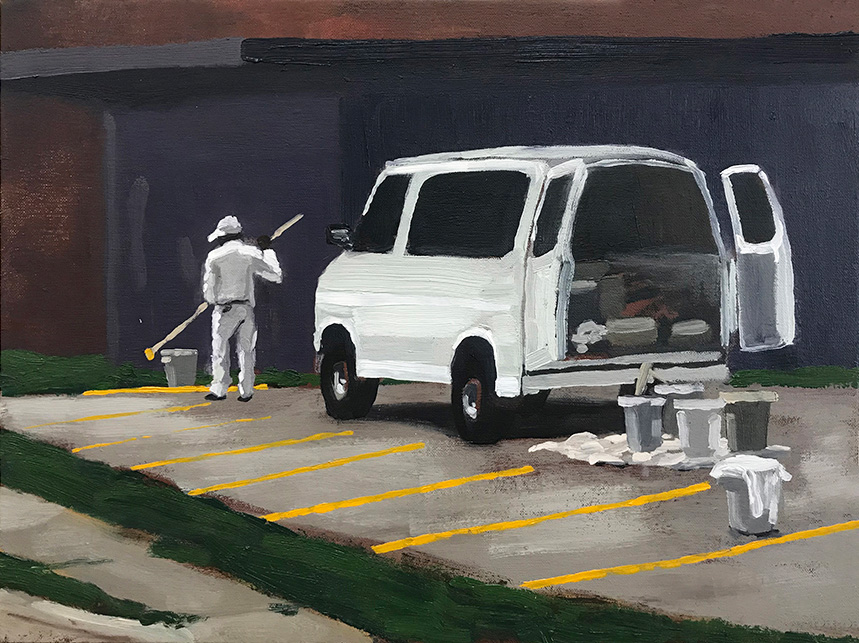
Charis Ammon, The Painter, 2018, Oil on canvas, 12 x 16 inches, Courtesy of the artist and Inman Gallery, Houston
Kalee Appleton, Desert Sunset (Purple & Coral), 2018, Archival inkjet print with wood frame, 17 1/2 x 25 inches (approximate dimensions), Courtesy of the artist and Erin Cluley Gallery, Dallas
David Aylsworth, Now and then Ring, 2016, Oil on canvas, 12 x 12 inches, Courtesy of the artist and Inman Gallery, Houston
Michael Bise, Mom & Dad, 2011, Graphite on paper, 42 x 42 inches, Courtesy of the Artist and Moody Gallery, Houston
Shannon Cannings, I Shot the Figure Five, 2015, Oil on panel, 26 x 38 inches, Courtesy of the artist and Anya Tish Gallery, Houston
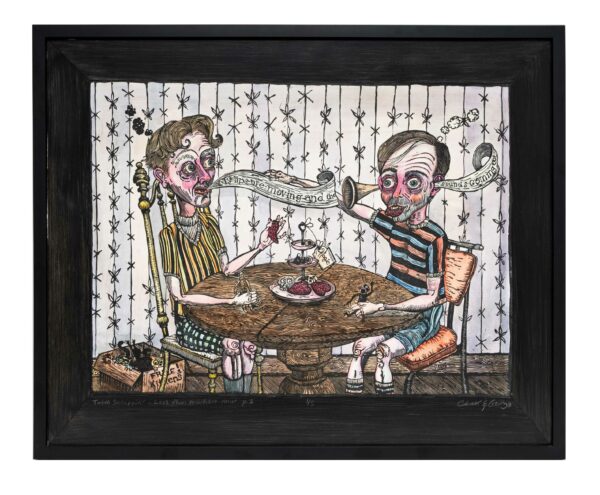
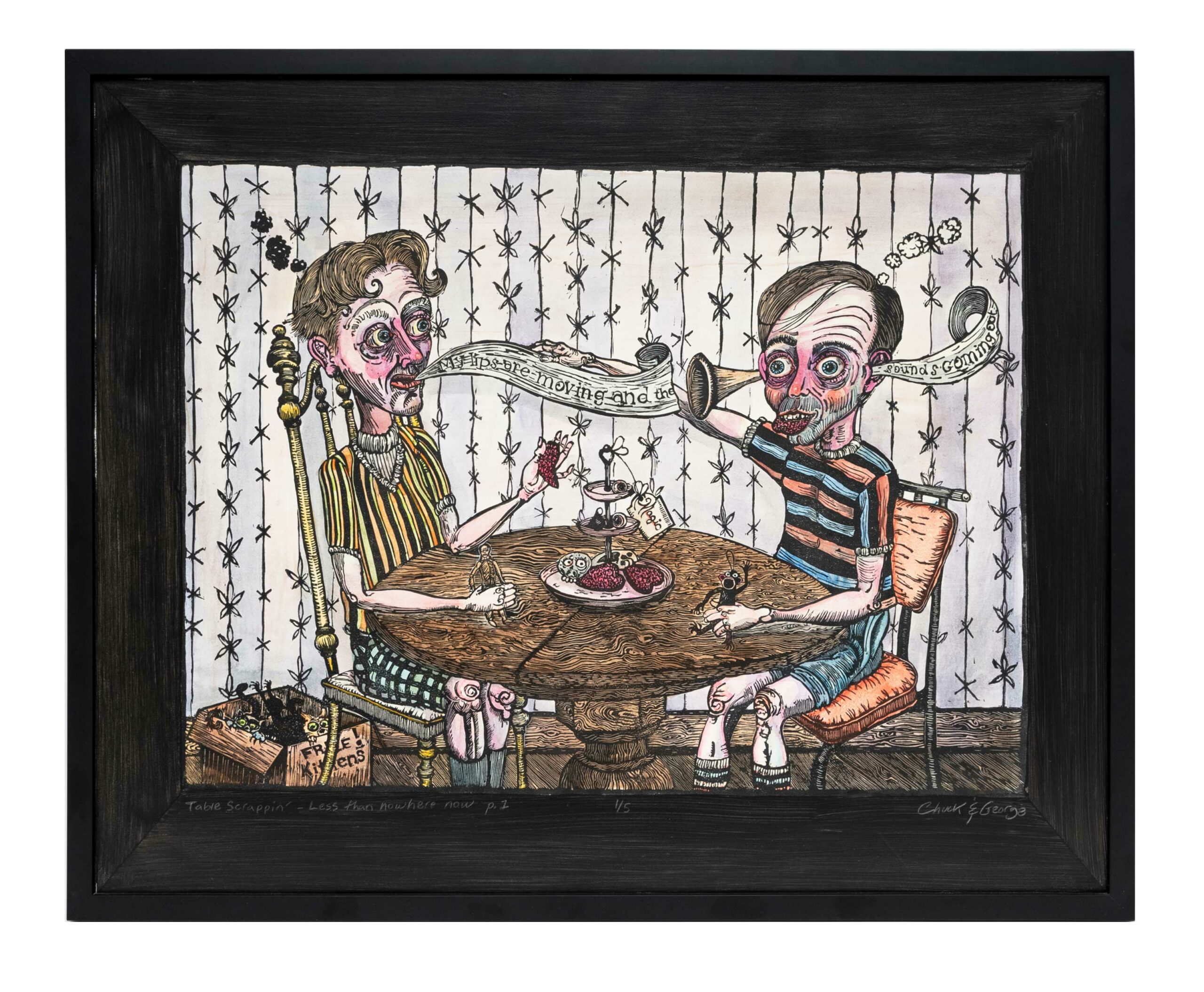
Chuck & George, Table Scrappin’ Vol. 1 Pg 1, 2014, Hand-colored linoleum cut on board, edition 1/5, 24 3/4 x 30 1/4 inches, Courtesy of the artists
Ryan Thayer Davis, Semaphore, 2020, Oil on canvas, 22 x 30 inches, Courtesy of artist and Ivester Contemporary, Austin
Clark Derbes, Squaredance, 2016, Gouache on canvas, 36 x 30 inches, Courtesy of the artist and Devin Borden Gallery, Houston
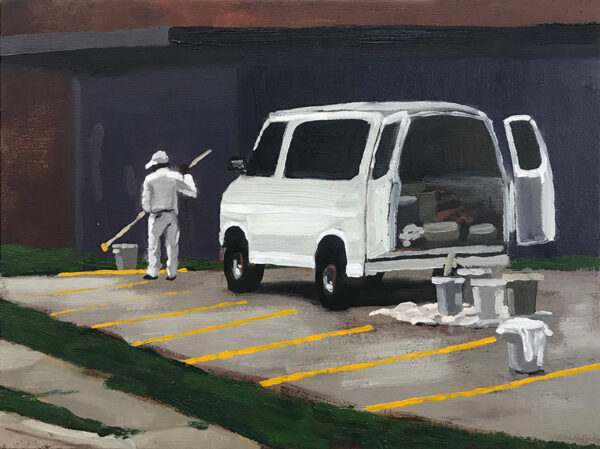
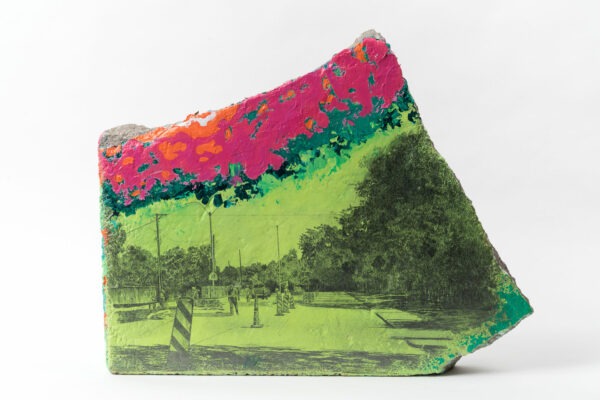
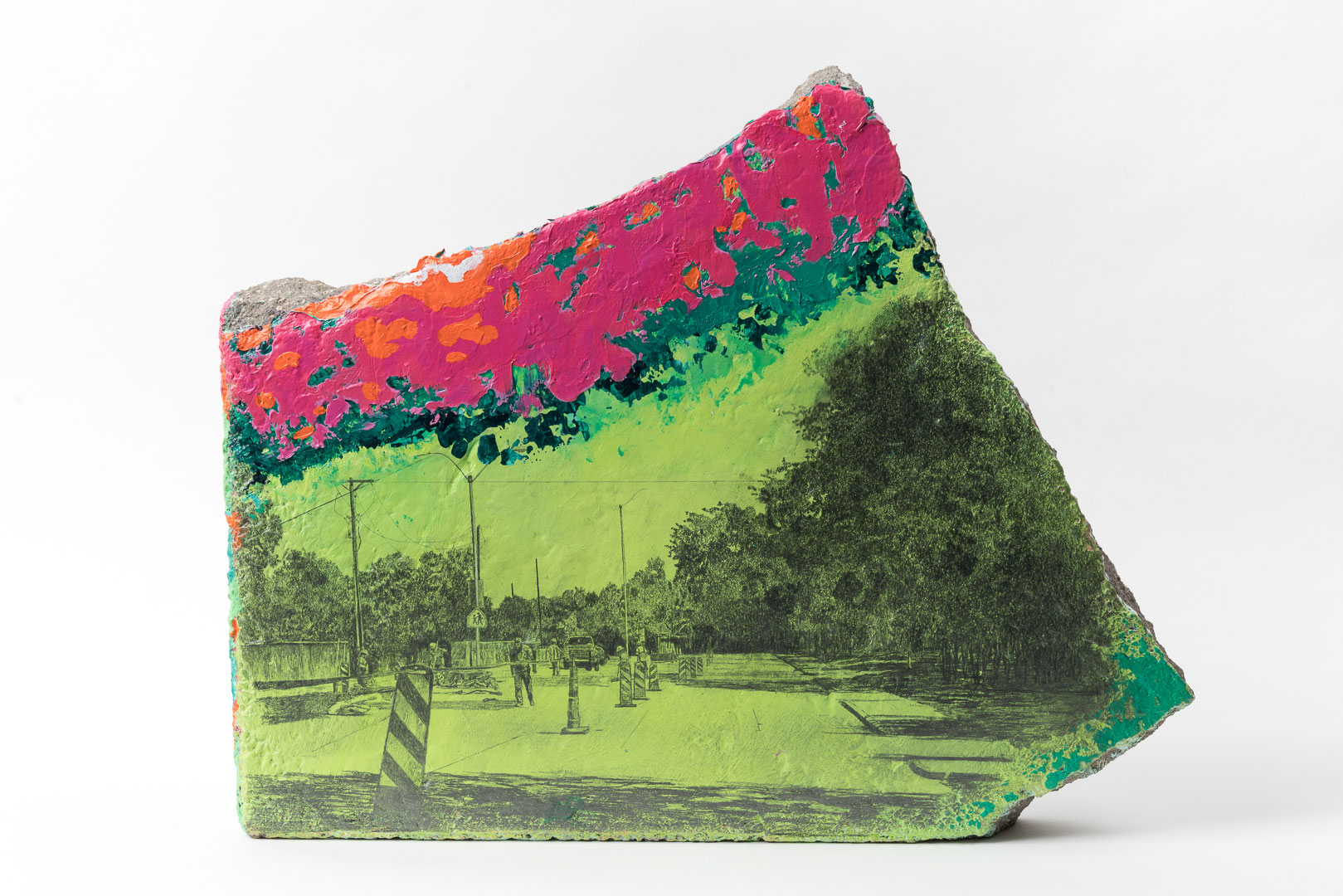
Raul Rene Gonzalez, Street Scene (Back to Back) (Front view), 2017, Acrylic, graphite, house paint, archival ballpoint pen, and reflective tape on concrete, 15 x 19 x 4 inches, Courtesy of the artist
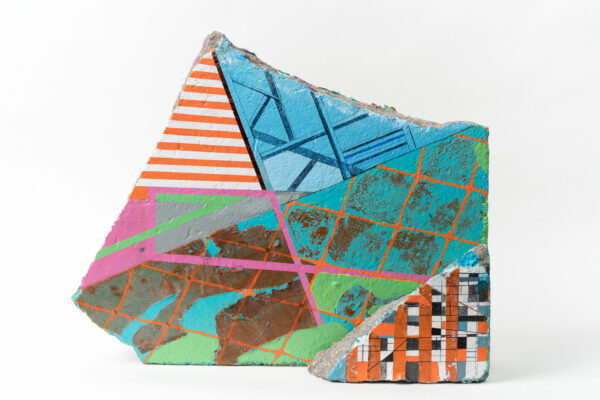
Raul Rene Gonzalez, Street Scene (Back to Back) (Back view), 2017, Acrylic, graphite, house paint, archival ballpoint pen, and reflective tape on concrete, 15 x 19 x 4 inches, Courtesy of the artist
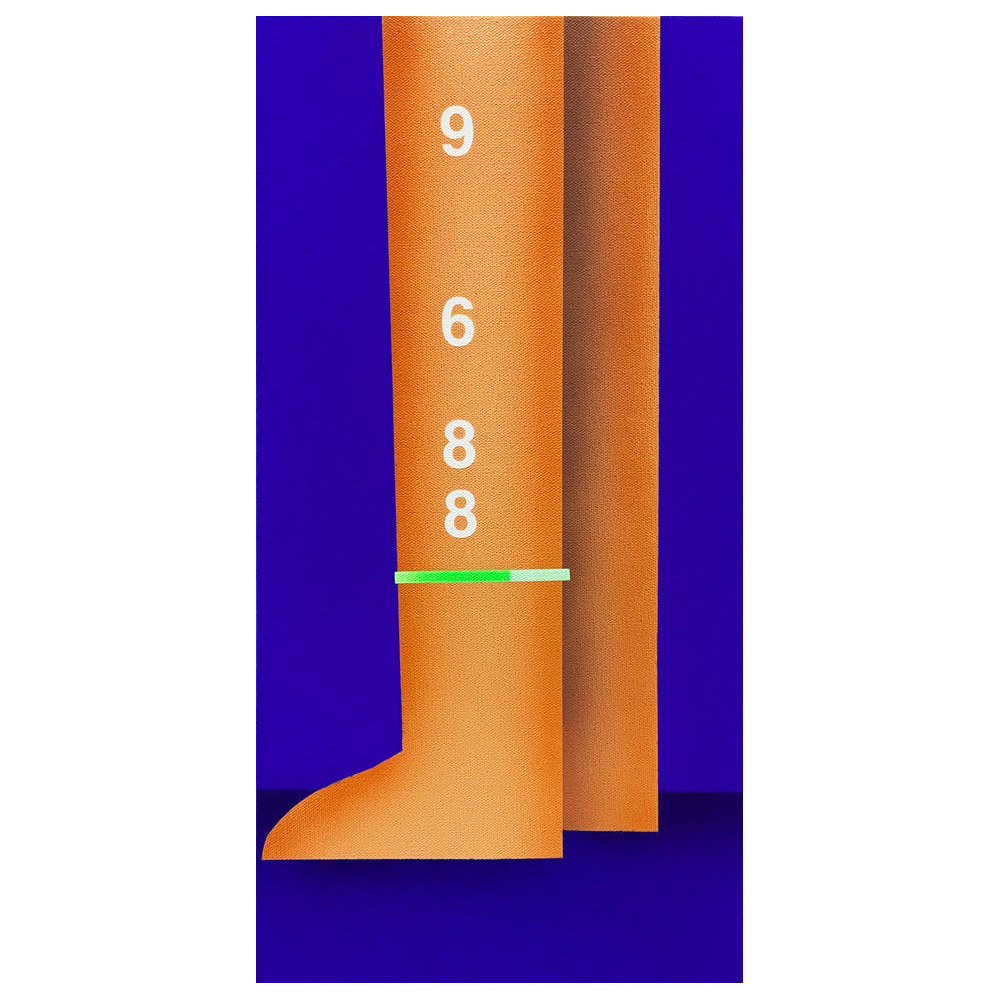
Gao Hang, The Boss, 2021, Acrylic on canvas, 20 x 10 inches, Courtesy of the artist and Anya Tish Gallery, Houston
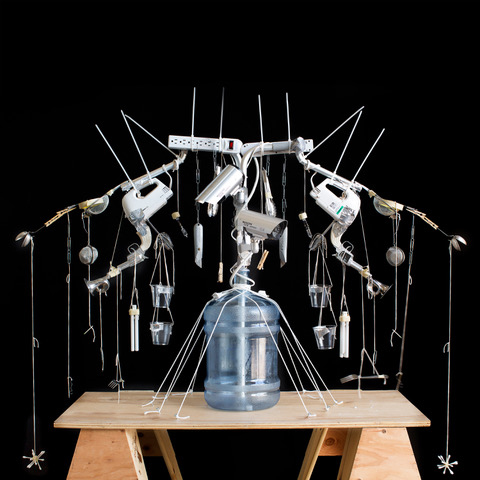
Hillerbrand+Magsamen, A Device for Integrated Principles, 2018, Archival inkjet print, Print: 18 x 18 inches; framed: 25 1/2 x 25 1/2 inches, Courtesy of the artists
Letitia Huckaby, Studies for Koinonia, 2020, Set of five pigment prints on cotton fabric, 10 x 5 7/8 inches each, Courtesy of the artist
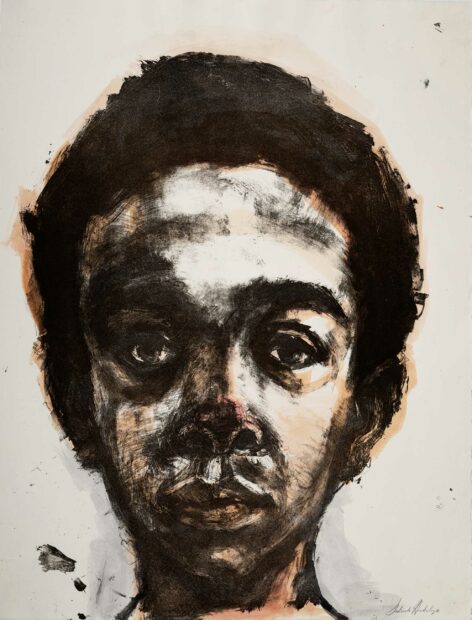
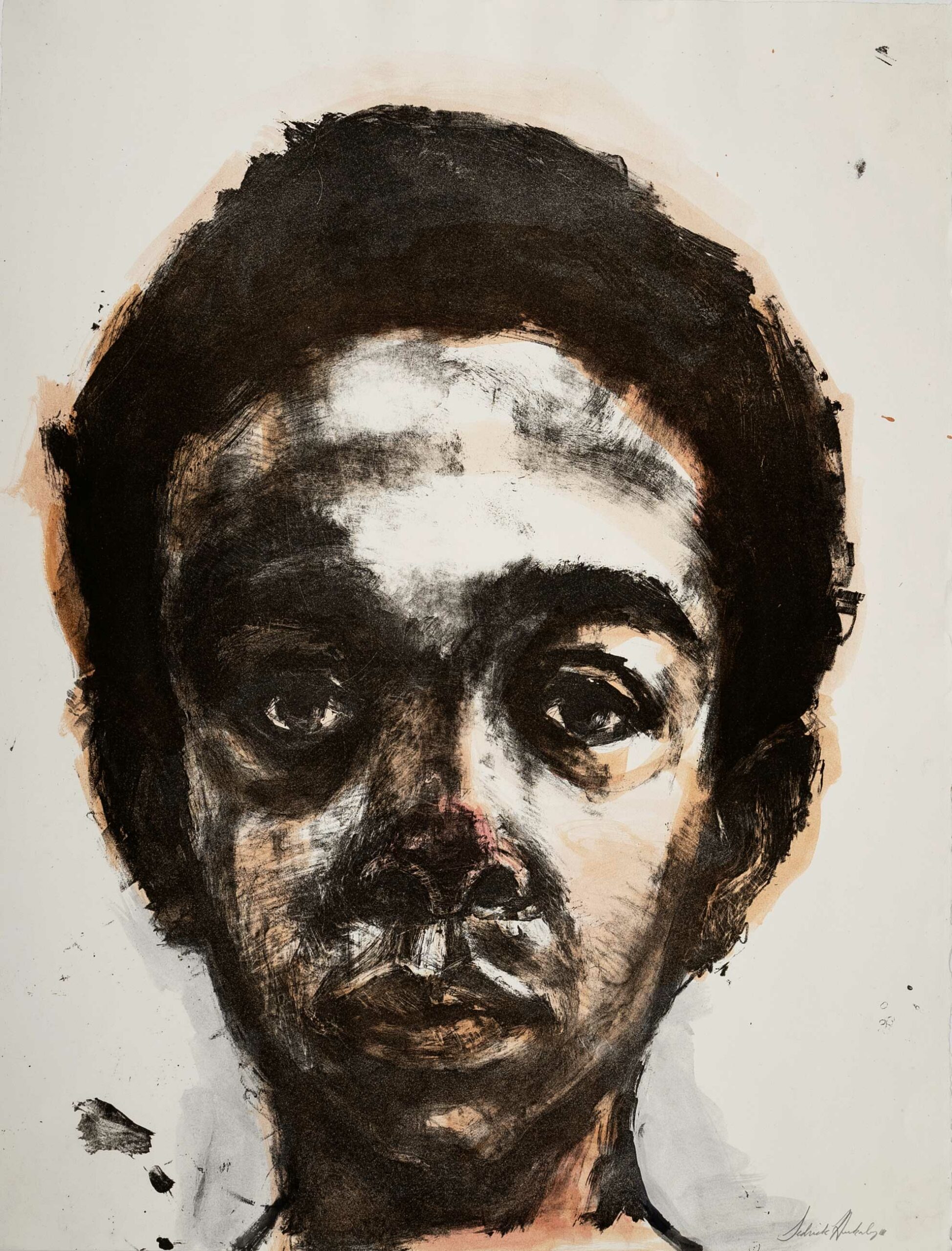
Sedrick E. Huckaby, America’s Son, 2016, Lithograph with watercolor on paper, 26 1/2 x 20 1/4 inches, Courtesy of Huckaby Studios
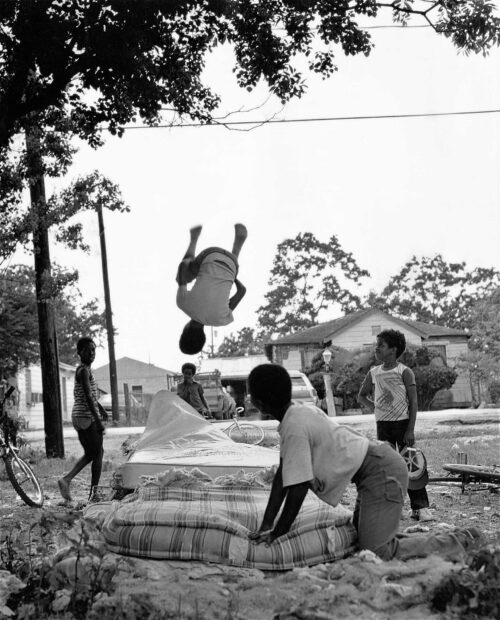
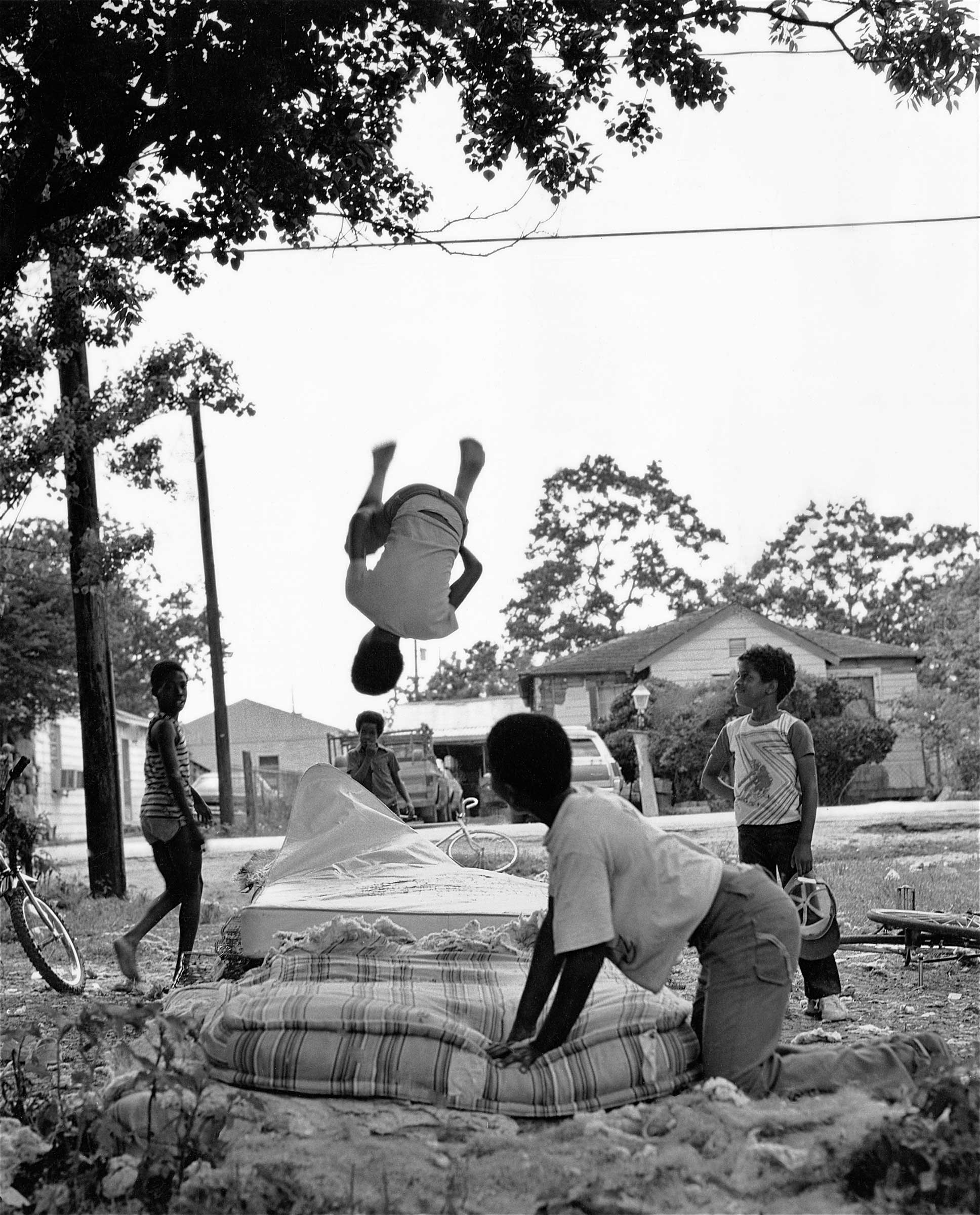
Earlie Hudnall, Jr., Bouncing Boys, 1980, Gelatin silver print, Print: 12 x 10 1/2 inches; framed: 22 x 17 1/2 inches, Courtesy of the artist and PDNB Gallery, Dallas
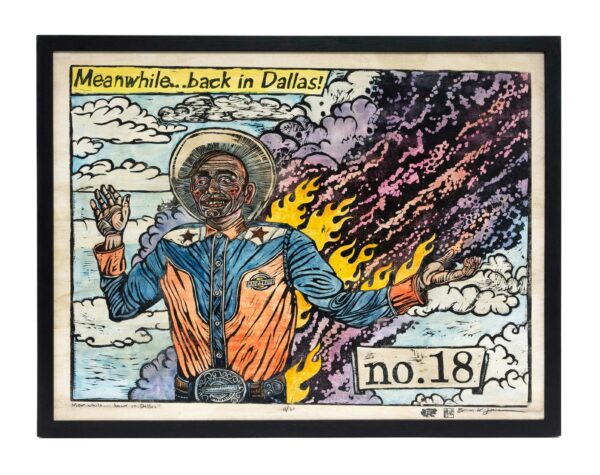
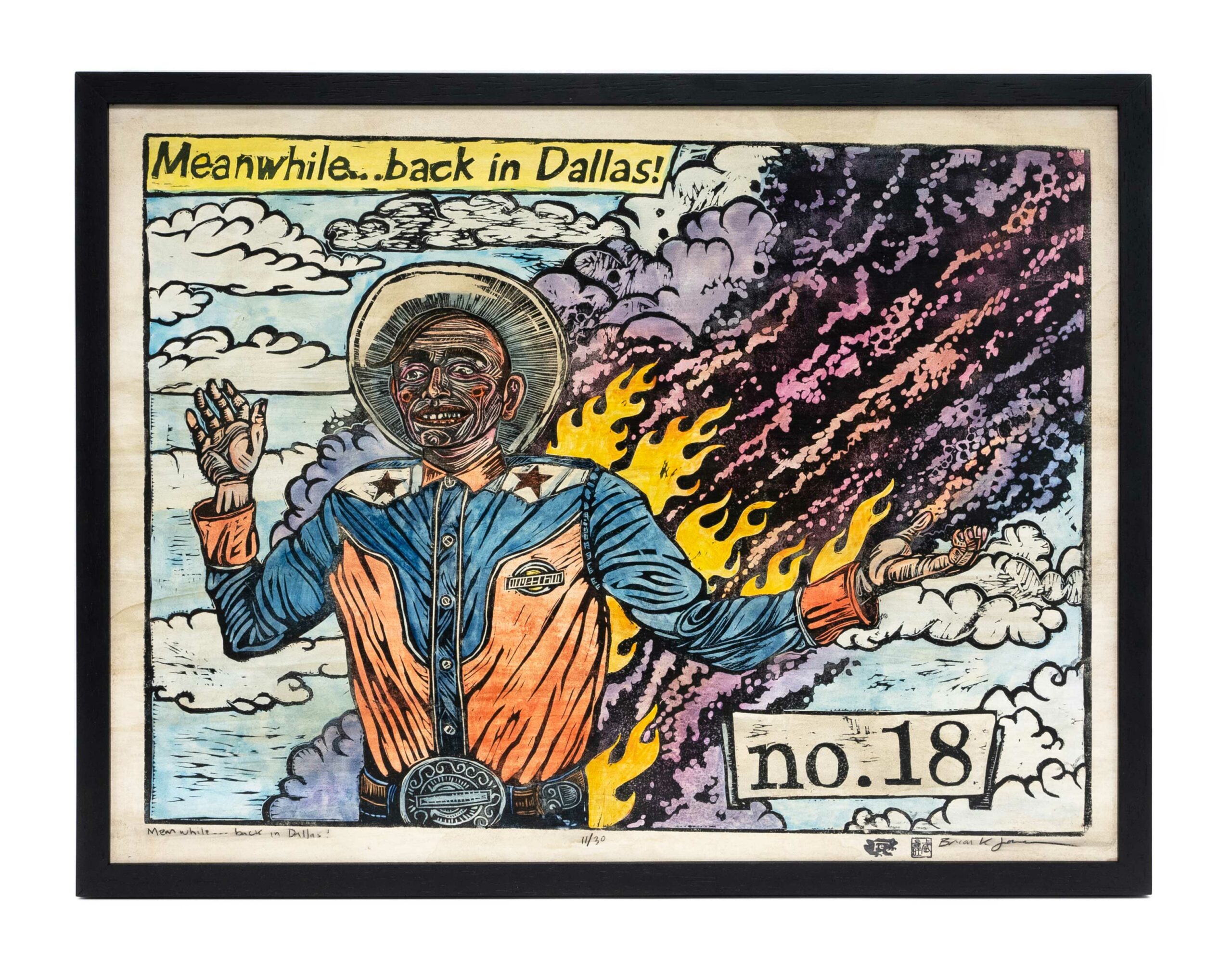
Brian Keith Jones, Meanwhile…back in Dallas, 2014, Hand-colored linoleum cut on board, edition 11/30, 21 x 27 inches, Courtesy of the artist and Ro2 Art, Dallas
Calder Kamin, Plastic Perennials, 2019, Plastic cutlery, cups, straws, and bits, Mardi Gras beads, and koozies on wood, 11 x 29 x 8 inches, Courtesy of the artist
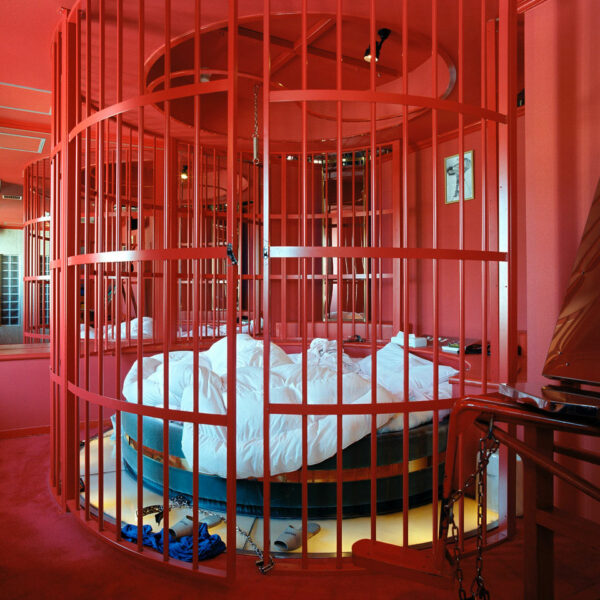
Misty Keasler, Round Caged Bed (Dirty), Hotel Pamplona, Osaka, 2005, C-print, edition 4/10, 30 x 30 inches, Courtesy of the artist and Holly Johnson Gallery, Dallas
Patrick L. Kelly, Glacier 1966, 2016, Color pencil on synthetic paper, 9 x 12 inches, Courtesy of the artist
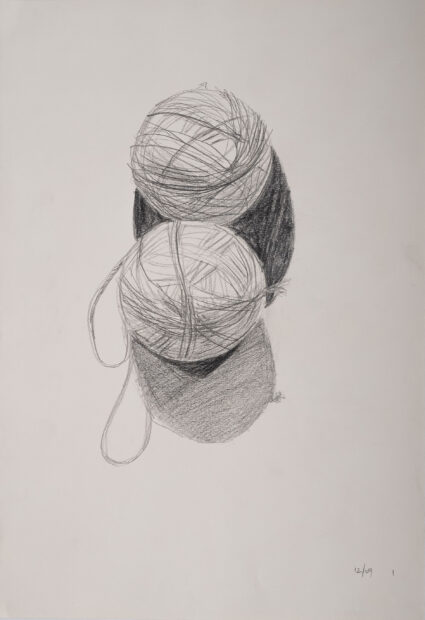
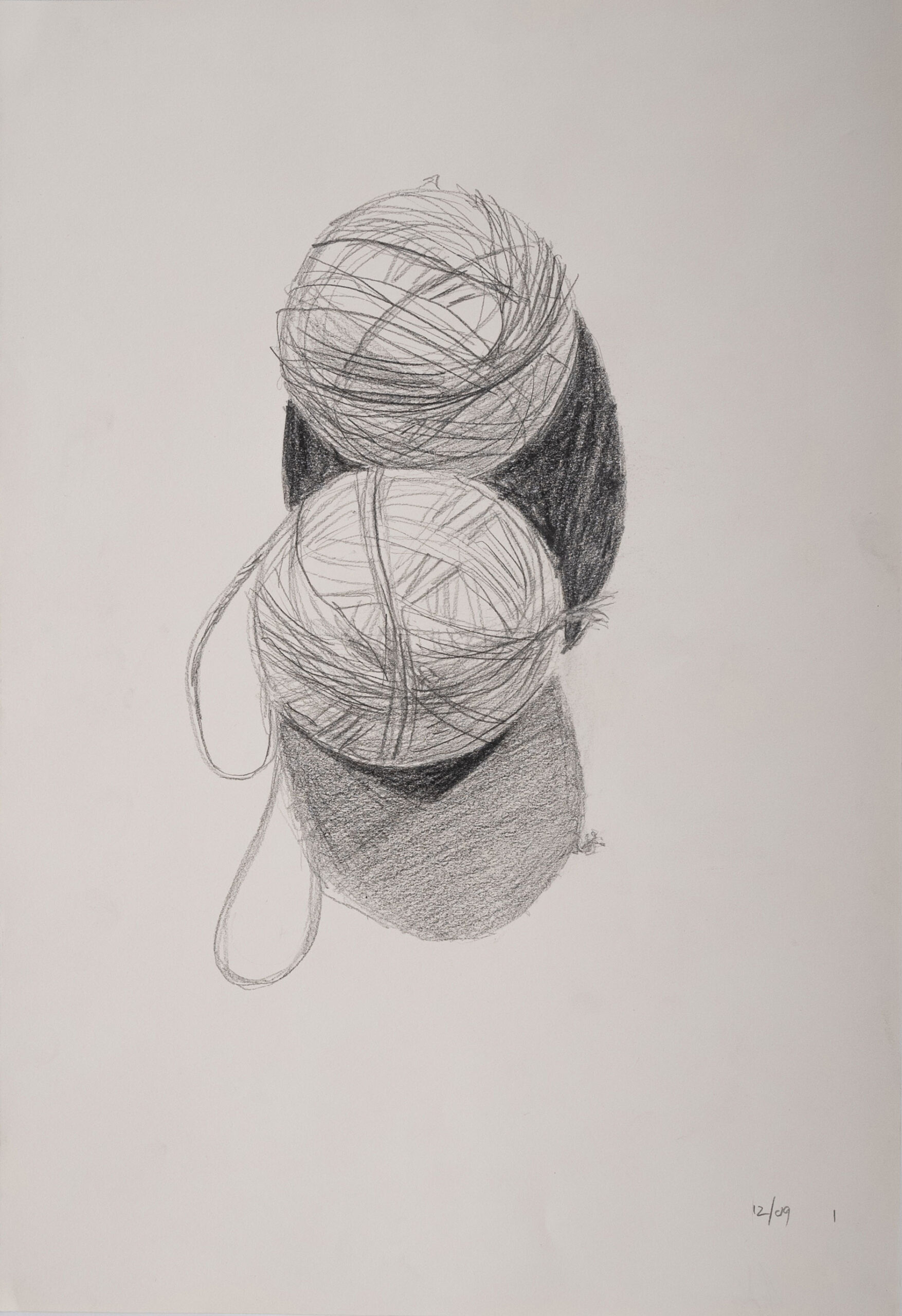
Annette Lawrence, 12/09-1, 2009, Graphite on paper, 17.5 x 12 inches, Courtesy of the artist and Conduit Gallery, Dallas
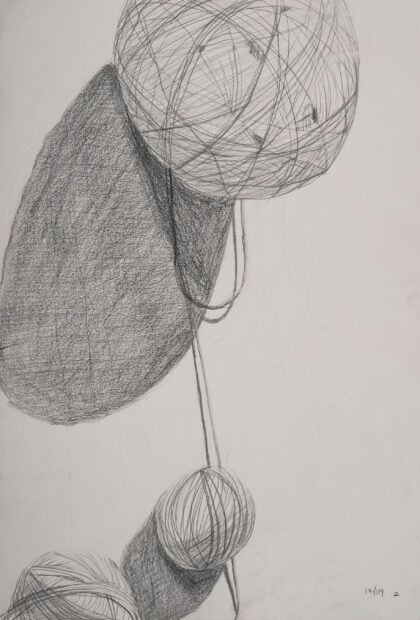
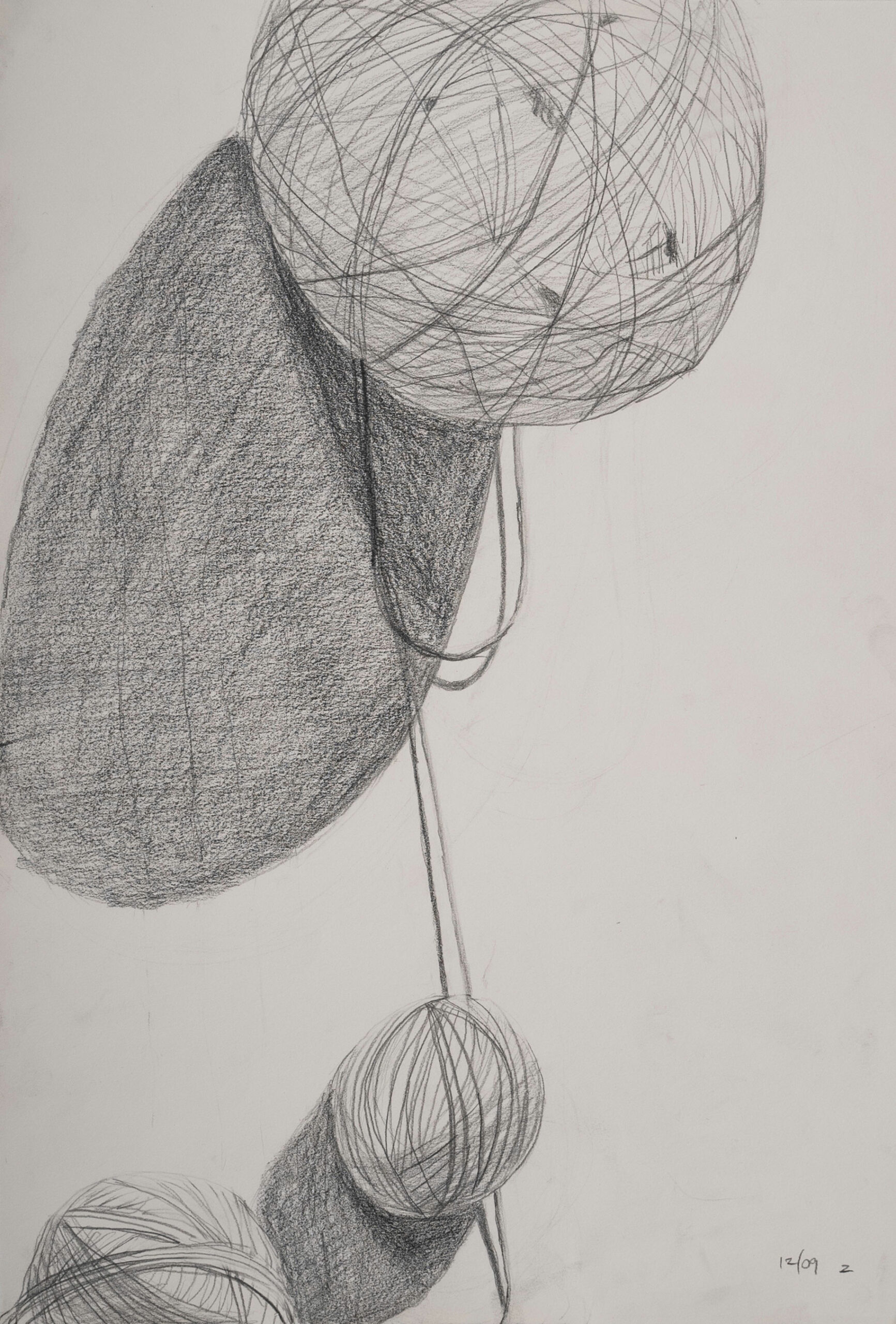
Annette Lawrence, 12/09-2, 2009, Graphite on paper, 17.5 x 12 inches, Courtesy of the artist and Conduit Gallery, Dallas
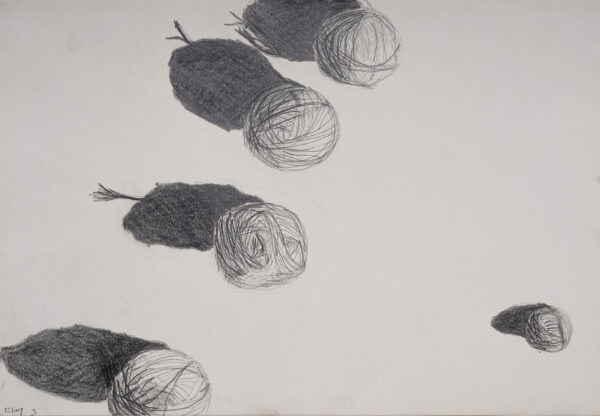
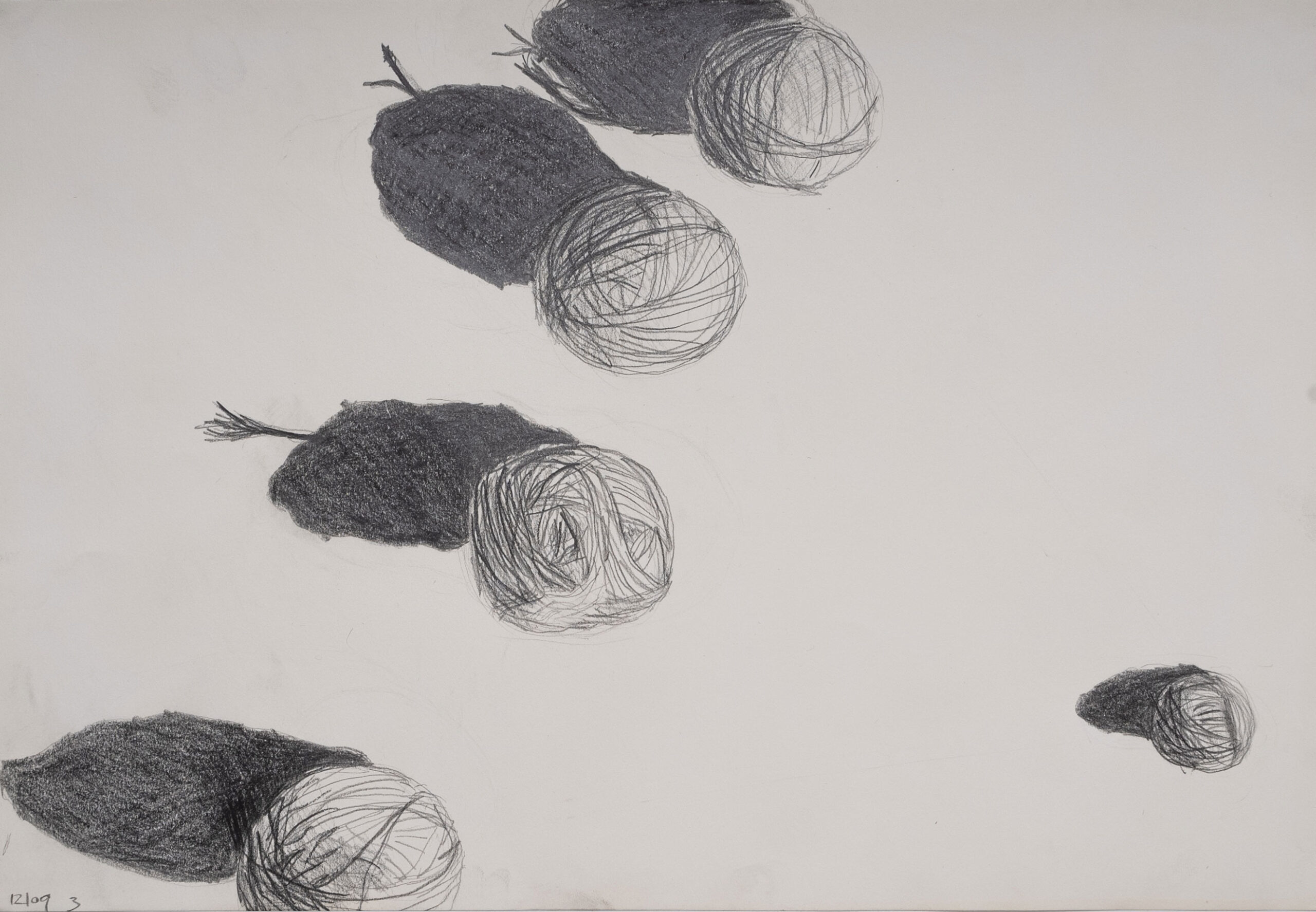
Annette Lawrence, 12/09-3, 2009, Graphite on paper, 12 x 17.5 inches, Courtesy of the artist and Conduit Gallery, Dallas
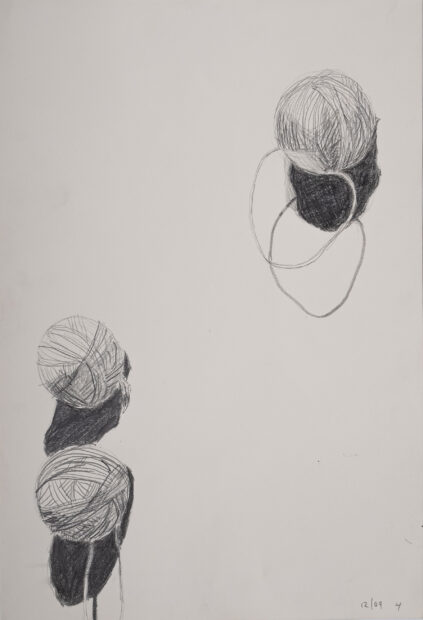
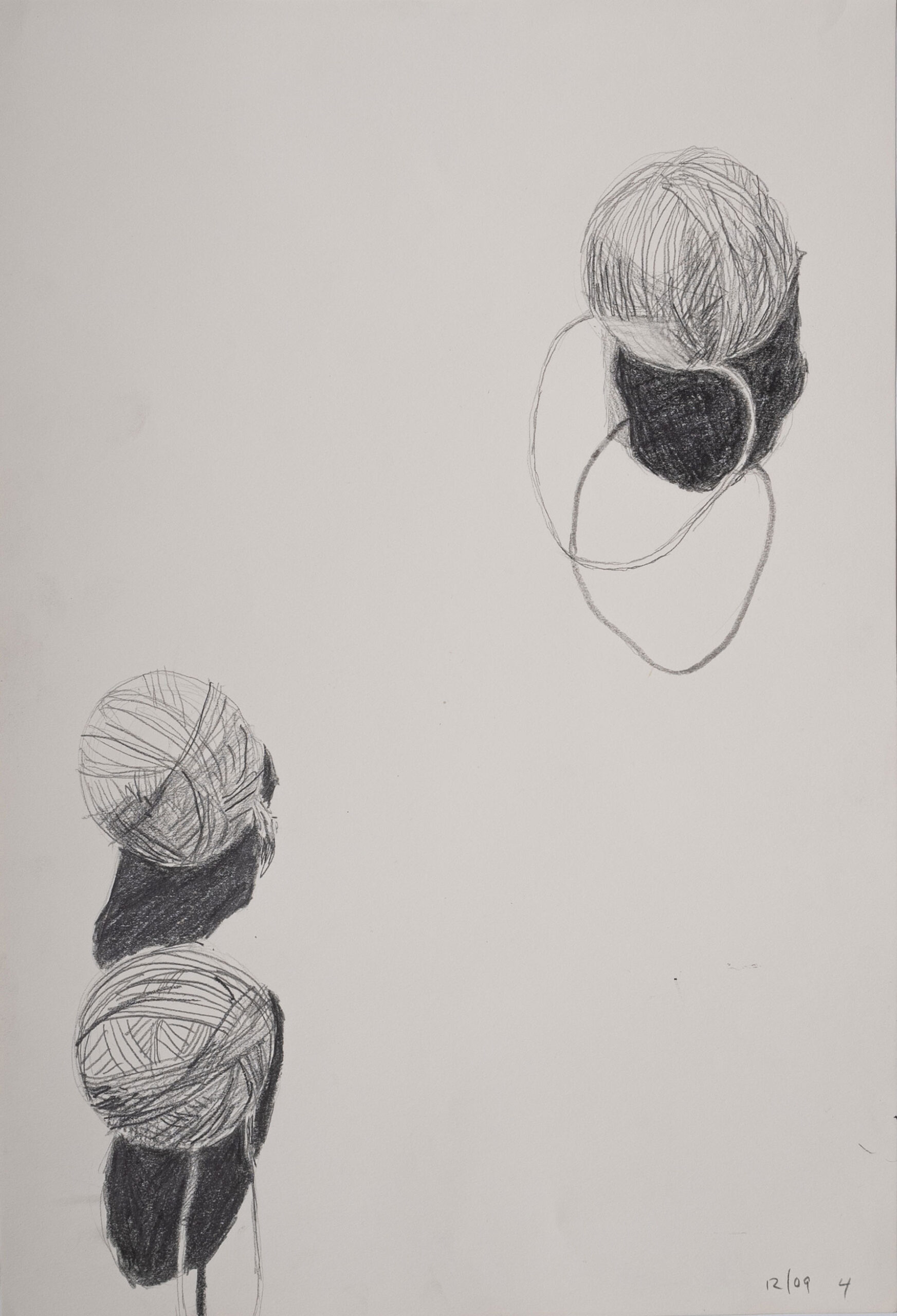
Annette Lawrence, 12/09-4, 2009, Graphite on paper, 17.5 x 12 inches, Courtesy of the artist and Conduit Gallery, Dallas
Alejandro Macias, Ongoing (II), 2020, Oil and acrylic on canvas, 24 x 18 inches, Courtesy of the artist and Presa House Gallery, San Antonio
Paho Mann, Spiderman Camera, 110mm Film Camera, 2019, Archival pigment print, edition 1/5, 31 x 40 inches, Courtesy of the artist and Galleri Urbane, Dallas
Yasuyo Maruyama, Morgan 2, 2020, Oil on panel, 12 x 12 inches, Courtesy of the artist and Ro2 Art, Dallas
Mark Menjivar, Midwife, 2008, Archival pigment print mounted to archival board, 30 x 24 inches, Courtesy of the artist
Mark Menjivar, Migration Stories and Various Books, A collection of the artist’s printed matter from various projects, stored in a clamshell box. Courtesy of the artist
Leigh Merrill, Storefront, 2019, Pigment print, edition 2/5, Print: 20 x 20 inches; framed: 21 x 21 inches, Courtesy of the artist and the Liliana Bloch Gallery, Dallas
Nic Nicosia, Real Pictures #11, 1988/2010, Archival inkjet on Hahnmülle paper, edition 101/150, 11 x 9 inches, Courtesy of the artist and Erin Cluley Gallery, Dallas
Deborah Roberts, The Front Lines, 2019, Pigment print on paper with collage element, artist proof, numbered 00/10, 24 x 17 inches, Courtesy of the artist
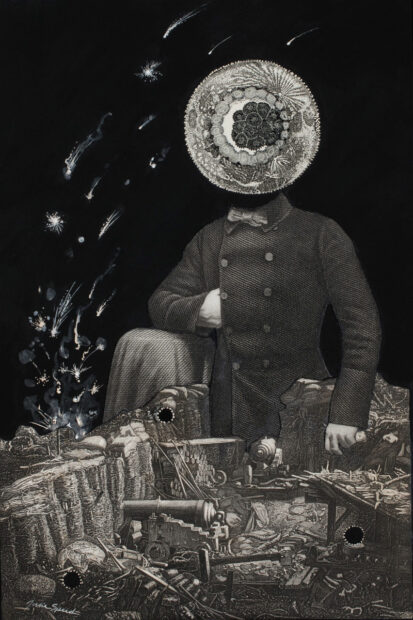
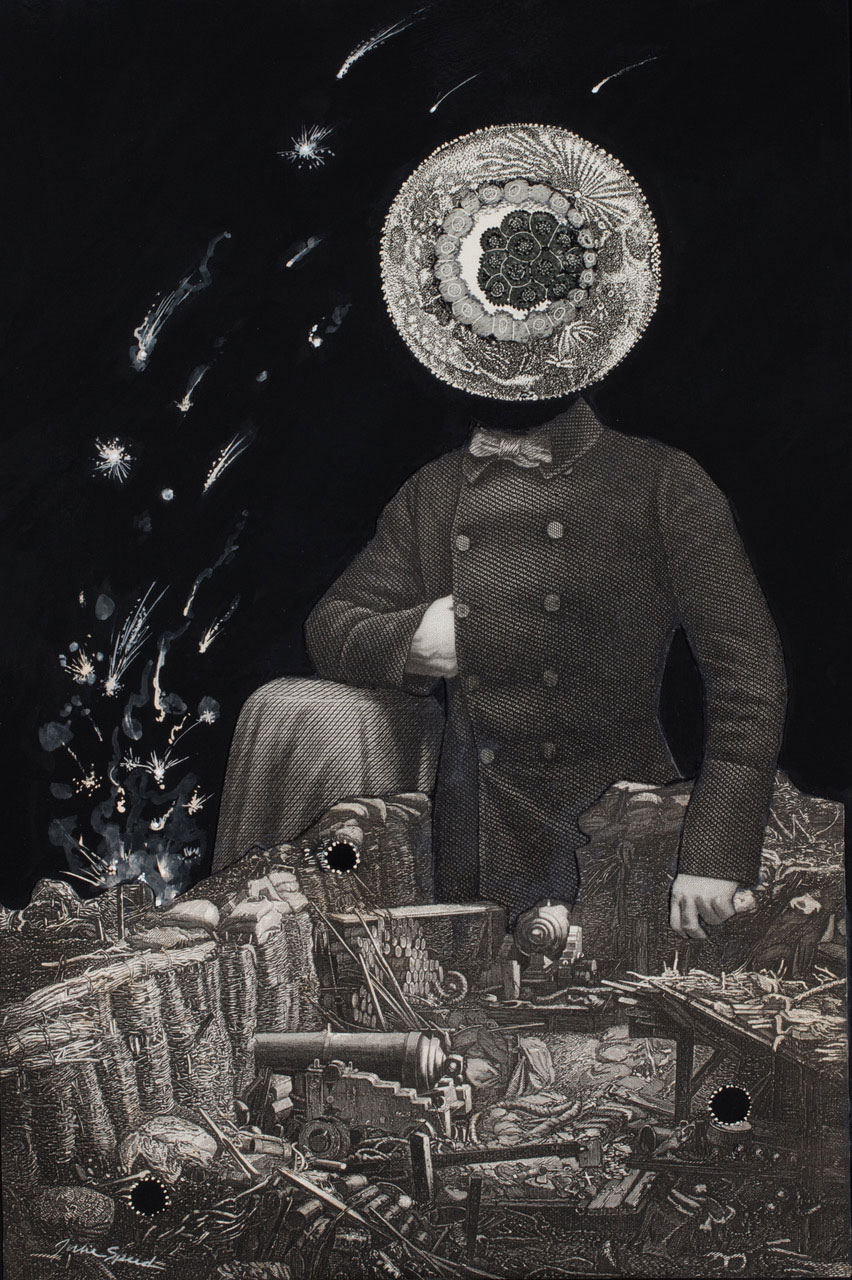
Julie Speed, The Last War, 2020, Gouache and collage on paper, 10 1/2 x 7 inches, Courtesy of the artist
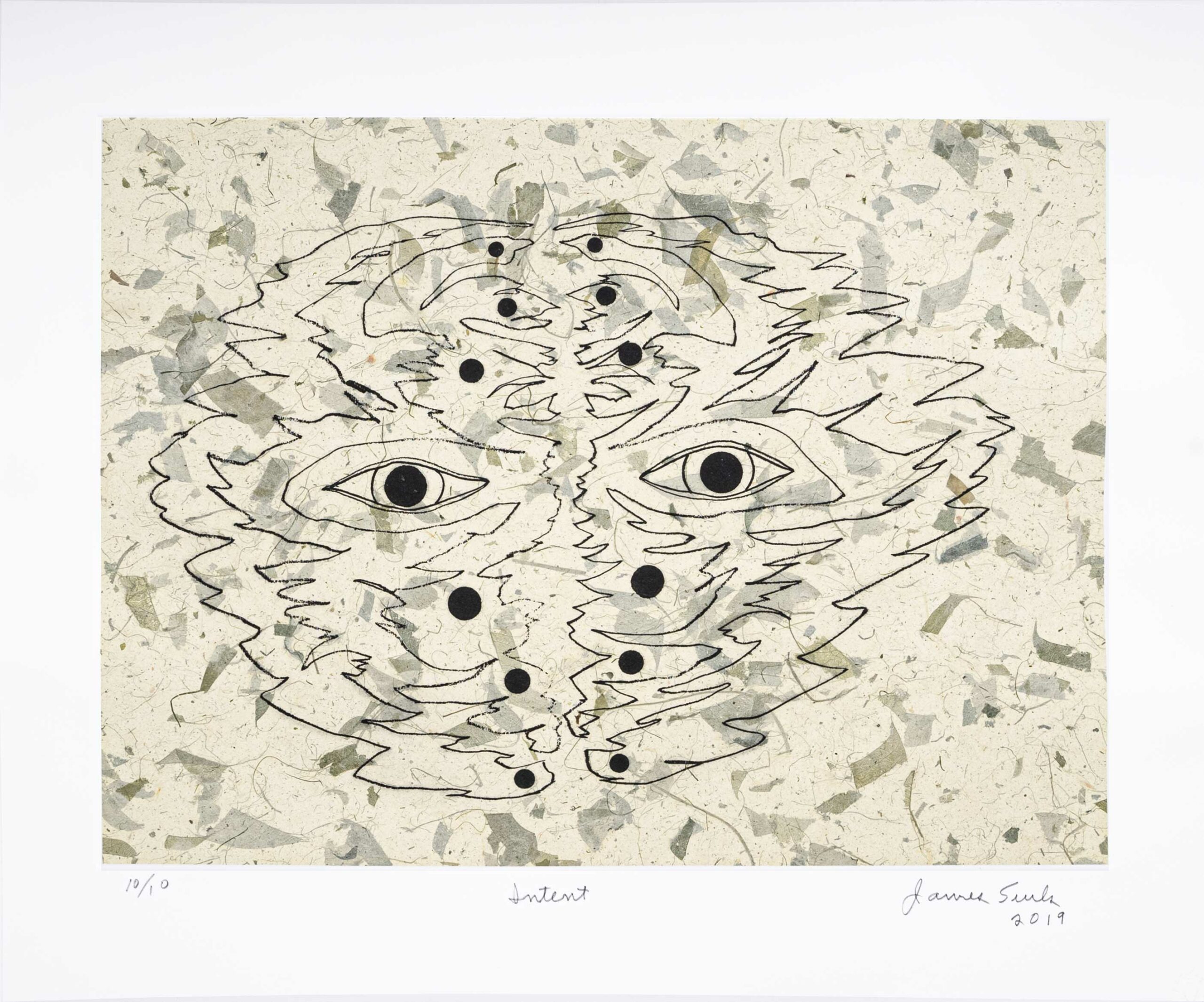
James Surls, Intent, 2019, Screenprint sugarlift etching, lhotka jute mounted on Magnani Pescia paper, edition 10/10, 20 x 24 inches, Courtesy of the artist
Laszlo Thorsen-Nagel, Untitled, 2021, Wood stain on claybord, 36 x 24 inches, Courtesy of the artist
Bruce Lee Webb, Bird, 2021, Ink on canvas, 54 1/2 X 51 1/2 inches, Courtesy of the artist and Webb Gallery, Waxahachie
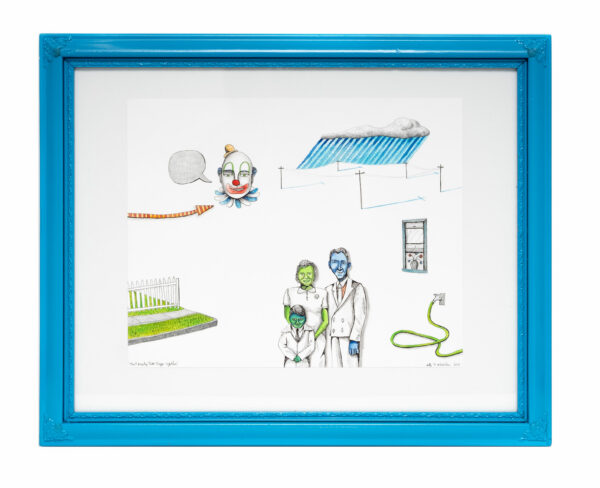
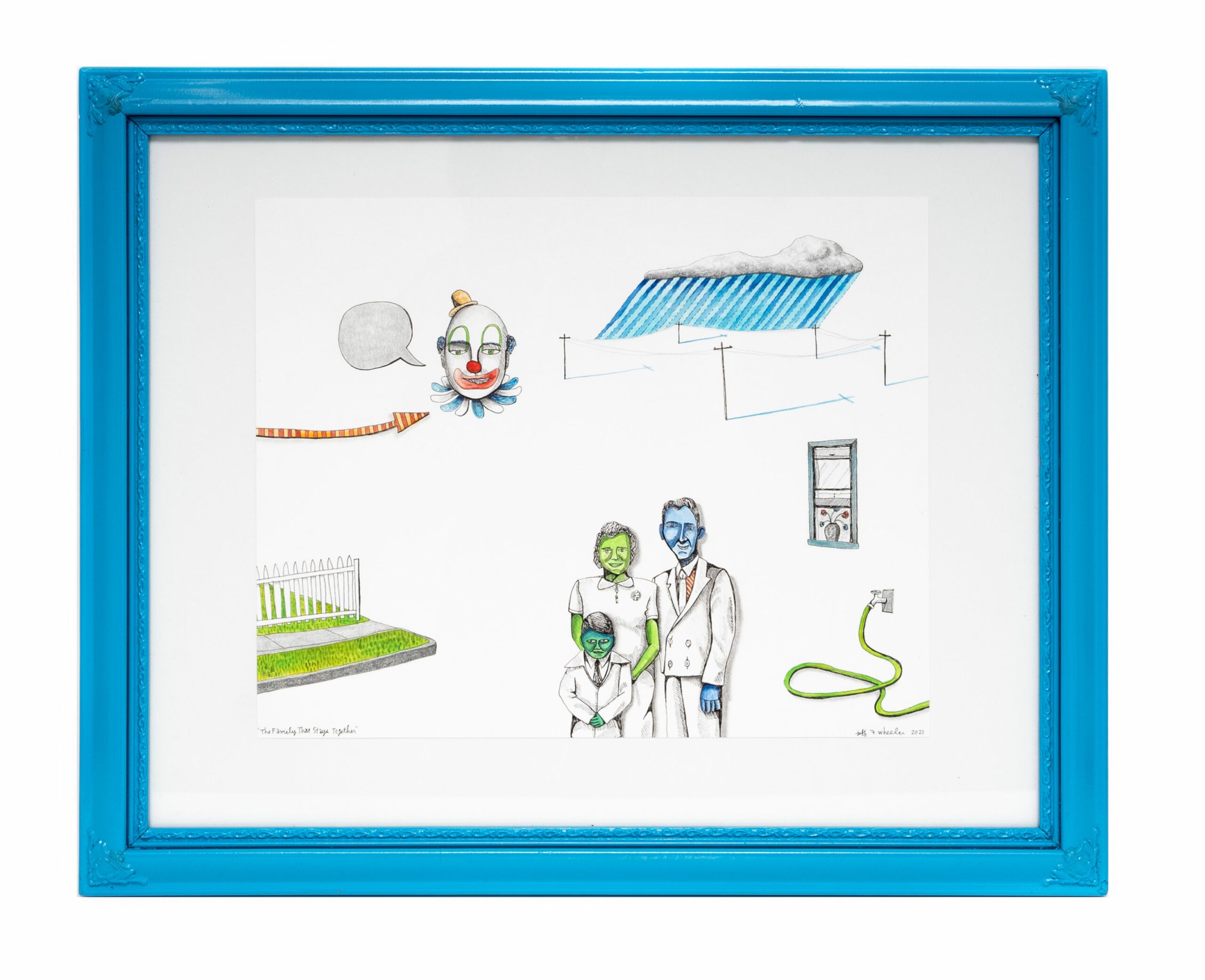
Jeff F. Wheeler, The Family That Stays Together, 2021, Ink and watercolor on paper in artist’s frame, Piece: 13 x 15 inches; framed: 18 x 23 inches, Courtesy of the artist and SPACE C7, San Antonio
Bill Willis, Untitled (Plant), 2015, Oil on canvas, 20 x 16 inches, Courtesy of the artist
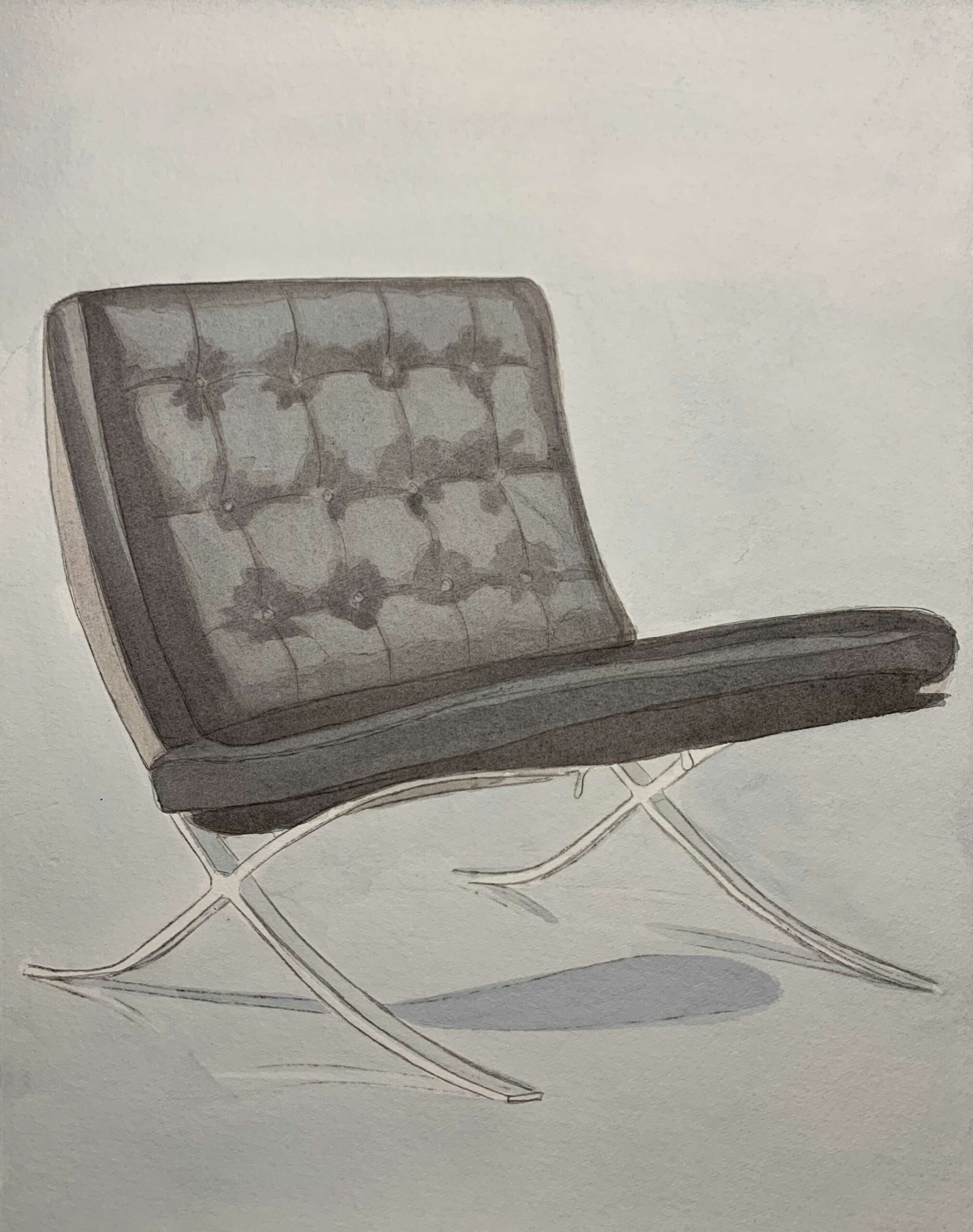
Bill Willis, Untitled (Couch), 2020, Watercolor on paper, 14 x 11 inches, Courtesy of the artist
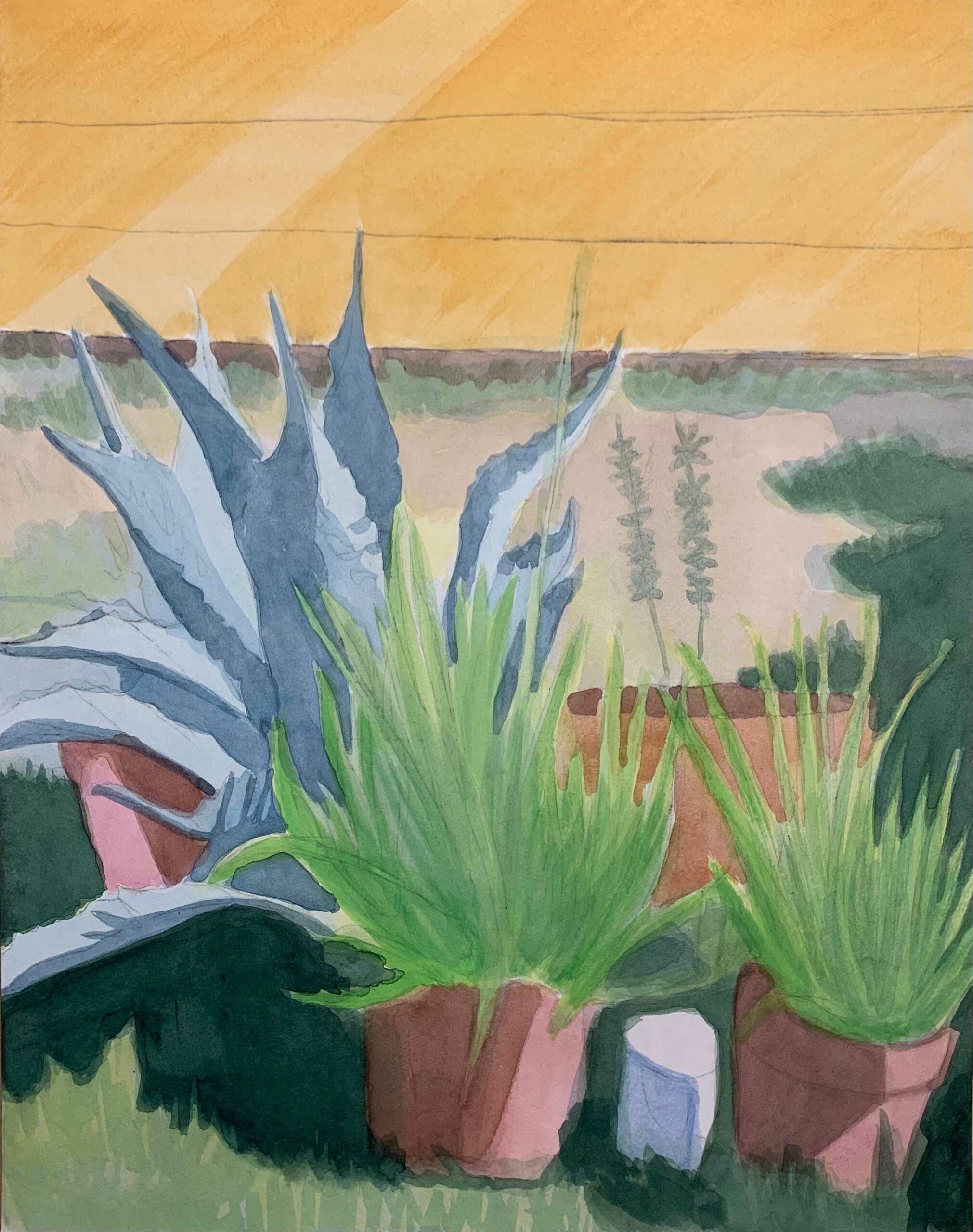
Bill Willis, Untitled (Agave and Aloe), 2020, Watercolor on paper, 14 x 11 inches, Courtesy of the artist
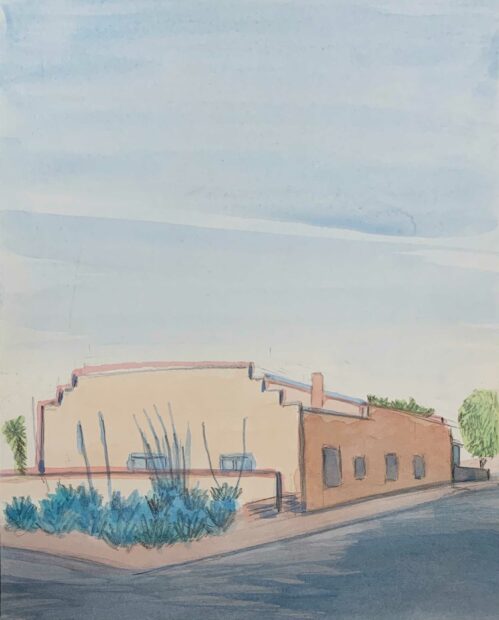
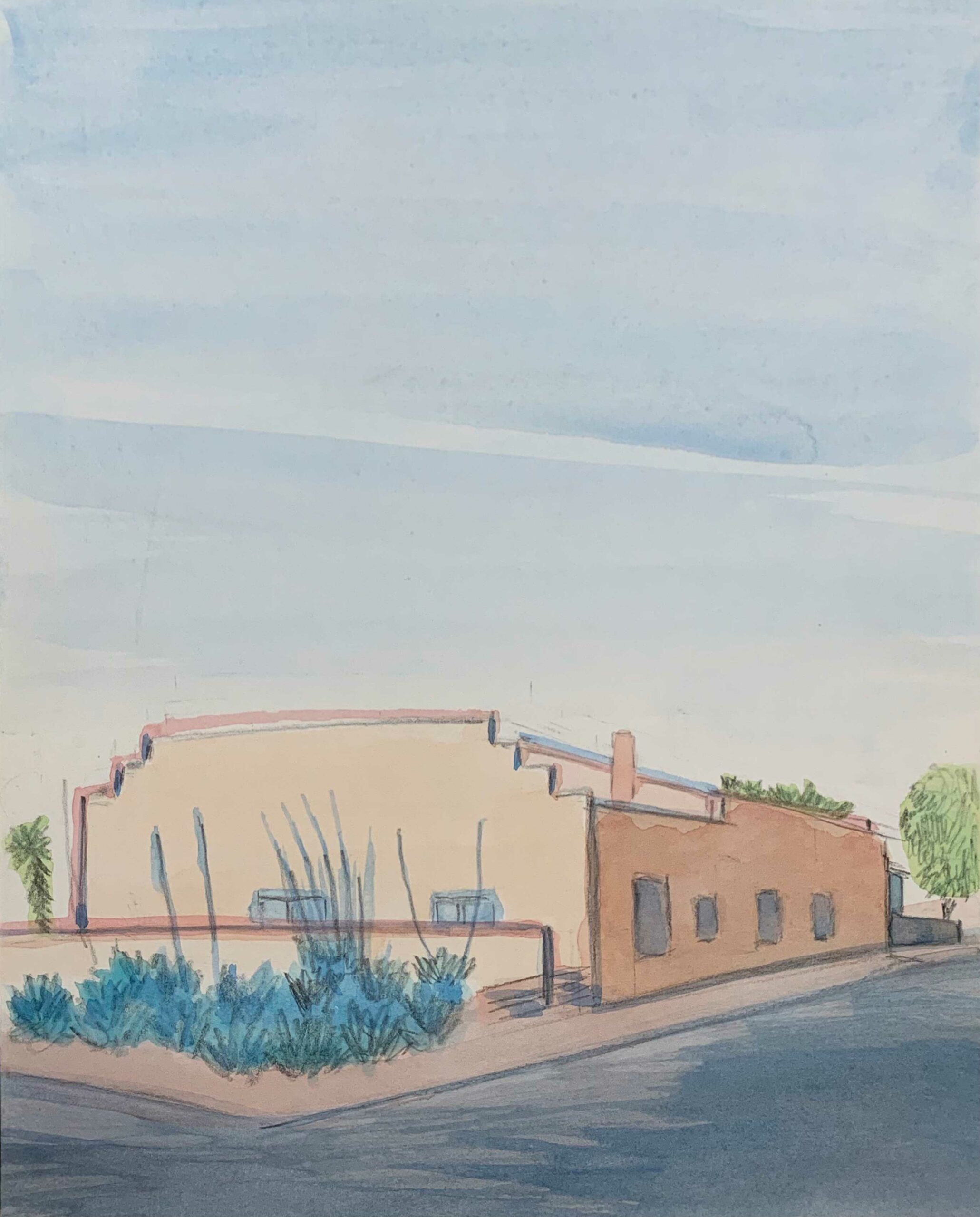
Bill Willis, Untitled (Chamberlain Building), 2019, Watercolor on paper, 10 x 8 inches, Courtesy of the artist
The year was 1997, when radio changed the face of narrative and literary culture in America.
GENE, STATION MANAGER: We knew they would become the voice of the new American story and our collective cultural narrative. We didn’t know they would do it with one particular broadcast.
EL FARTO, HOST: We decided to have an impromptu mud wrestling match between Monster Mike and Whiskey Pete, from our Butt Nugget Morning Dream Team. We did it inside the Hallmark store in The Galleria because Lynn booked us there for a live remote and we were mad.
MACHINE BOLT, HOST: It felt like a punishment for the Party Incident. Every other morning crew in Southern California was doing live remotes at concerts, bars, and clubs. But KPODD was sending us to a greeting card store that sold angel figurines.
LYNN, STAFF PRODUCER: It was my first job in commercial radio. I work in public radio now.
EL FARTO: We brought a kiddie pool and water and dirt. The deal was, whoever lost the mud wrestling match had to go by the name “Precious Keepsake” on the air for the next year. They were given a choice between that and “Emotional Greeting Card.”
MACHINE BOLT: Monster Mike lost. And Whiskey Pete was not a big guy! But he was lanky and deranged. And that combination always wins. In anything.
- - -
Documentary filmmaker Mills Baeyer once said that fame is a path lit only by flashbulbs — there is light by which to navigate, but it’s too bright, and too sudden.
GENE: Just like that we were no longer part of the zeitgeist, we were the zeitgeist.
LYNN: I remember the day they realized everything had changed forever. Machine Bolt looked at me, like a scared little kid, and said, “I can’t even go to the mall.”
MACHINE BOLT: Well, we couldn’t go to The Sherman Oaks Galleria. Because we were being sued by Annie’s Hallmark.
EL FARTO: If we tried to go to The Promenade in Woodland Hills, we’d get recognized and it would turn into an instant madhouse scene. Every time.
MACHINE BOLT: We had come a long way from sharing a studio apartment in the valley after Kath divorced El Farto for running up a bunch of credit card debt at Circuit City and The Good Guys.
- - -
But off the mic, things were getting difficult.
LYNN: You can only go so high before people start trying to bring you down— it’s been that way since the dawn of time. Greek mythology…. the Bible….
GENE: The FCC fined us. Two hundred thousand dollars — that’s the cost of speaking truth to power. That’s the cost of being brave in America.
EL FARTO: We got fined for doing drugs on the air. We had cocaine, a keg of Amstel Light, a latex Bill Clinton mask, a half-brick of M-80s, a maritime flare gun, stink bombs, and we just locked the door to the booth at the station and partied live on-air. KPODD 101.3 didn’t sign off on it.
MACHINE BOLT: I never understood the stink bombs. We were locked in a little room together. We were the only ones who would bear the brunt of the stink bombs.
GENE: Kurt Cobain had died three years prior. Princess Diana had died just three months prior.
EL FARTO: It was just a hella downer time. The Rock Mobile was broken down and stuck at the Van Nuys Auto Mall, so we hadn’t done a Butt Nugget Morning Prize Patrol for months. We were sad, we were angry. It was all building up and it just came out with the live party incident.
LYNN: We were grieving as a nation. Which is a tricky process.
- - -
They reached career highs that would carry them aloft well into the new millennium, where eventually, everything came crashing down around them.
MONSTER MIKE: I filed suit against them. This many years later, I still have people calling me “Precious Keepsake.” That name has made it impossible to make a living on my strength supplements. You try selling Precious Keepsake’s Ultra-Cut Strength and Testo Booster.
WHISKEY PETE: Give me a goddamn break. Precious is saying he would’ve made millions upon millions of dollars selling supplements? Pull your head out, PK.
LYNN: I’ve distanced myself from them enough to admit it: Our show changed the face of everything in FM.
MINI WANDA: Employing me as an infant, to be part of something called a Butt Nugget Dream Team? I don’t think you can call that “changing the face of everything.” Not in a good way, at least.
PRECIOUS KEEPSAKE: Their news reporter Wanda refused to come back after maternity leave. She had a much better offer from KROQ, I think, and she took it. So I guess the guys just thought, “Let’s at least hire her nanny and her baby to be on the Morning Prize Patrol.”
EL FARTO: I mean, Wanda was fine with the whole Mini Wanda thing, trust me. She didn’t have to pay her nanny for three years, and it paid for her daughter to go to UCLA once she wasn’t an infant anymore. (Long pause) There’s never going to be another time like that in broadcasting.
MACHINE BOLT: We had our fun, everyone got to buy houses, the end. Next!
GENE: Now you have these things called “podcasts,” where you can say and do whatever you want on the mic. Sound familiar? You tell me what could’ve influenced something called a podcast more than KPODD. We invented it, my friend.
LYNN: I have a hard out at eleven, so I need to wrap this up.
- - -
KPODD 101.3 is a new comedy podcast from McSweeney’s contributor Dan Kennedy and Greatest Generation’s Benjamin Harrison. They’re a ’90s FM alternative rock morning team on the right side of the dial and the wrong side of pop culture history, navigating their personal misadventures on the air, and trying to glimpse a future from the simpler times of 1997.
"First SolarWinds, now Kaseya. SaaS software heavily used by managed service providers (MSPs) has now been the target of two successful cyberattacks," writes Slashdot reader storagedude.
He shares a ChannelInsider article reporting the Kaseya ransomware attack compromised roughly 1,500 "downstream" businesses — and that now managed service providers "are reassessing their approaches to managing IT" after their own upstream vendors were breached:
In many cases, rather than assuming the platforms that MSPs employ are secure, end customers will now require them to prove it via an audit of their software supply chains, says James Shank, Chief Architect of Community Services for Team Cymru, a provider of threat intelligence tools employed to conduct such audits. Shank, who also served on the Ransomware Task Force Committee set up by The Institute for Security and Technology, notes that MSPs should also assume attacks will only get worse before they get any better. "This is not the end or the middle," he says. "It's only the beginning."
Others, however, don't think there will be any widespread mandate to audit IT supply chains in the absence of any government requirement. Most organizations are simply not going to conduct or require extensive audits because of the time, effort, money and expertise required, says Mike Hamilton, chief information security officer (CISO) for Critical Insight, a provider of a managed detection and response platform.
"American companies are not going to do that unless someone holds their feet to the fire," he says.
The challenge that creates for MSPs and their customers is it may force them to continue to place too much trust in IT platforms provided to them by a vendor, says Chris Grove, technology evangelist for Nozomi Networks, a provider of security tools for monitoring networks. "These platforms are over-trusted," he says.
The decision many MSPs are specifically wrestling with is the degree to which they should continue to rely on IT service management (ITSM) platforms from an IT vendor that might be compromised by malware versus building and securing their own custom platform. The latter approach is not immune to malware but might be less of a target as cybercriminals increasingly focus their efforts on platforms that enable them to wreck greater downstream havoc. Alternatively, MSPs could switch to IT service management platforms provided by vendors that don't have enough market share to attract the attention of cybercriminals... Building an IT service management platform from scratch naturally requires a level of investment many MSPs lack the funding or expertise to make, notes Eldon Sprickerhoff, chief innovation officer for eSentire, a provider of a managed detection and response platform. "It's a difficult situation," he says.BR>
The article points out that few small- to medium-sized businesses can afford their own internal IT security team.
Slashdot reader storagedude then suggests "on-premises installed and managed software could get another look as a result of the attacks," while vendors who can prove high levels of security "could gain a market advantage."
What’s going on? Third Planet Sci-Fi Superstore, a comic book store in Houston, filed a lawsuit against the nearby Crowne Plaza River Oaks, claiming that the hotel’s guests keep throwing objects such as fire extinguishers and dishes from balconies onto the store’s roof, necessitating costly repairs. But the weird part is what the pleading from the store looks like. Okay, I’ll bite. What does it look like? See for yourself, courtesy of the Houston Chronicle, which first reported the story (scroll down to page six): They filed the lawsuit as … a comic book? Sure enough. Artists Michael Charles, Maurice Terry Jr., Michael Brooks, and Benjamin Carbonero of Bad Cog Studios illustrated the 24-page comic at the request of Third Planet owner T.J. Johnson and…View Original Post
Well, the rains of last night didn’t get going until very late in any organized capacity. So the significant flooding feared last night southwest of Houston never materialized. That’s good news for sure. But that has changed this morning.
This morning
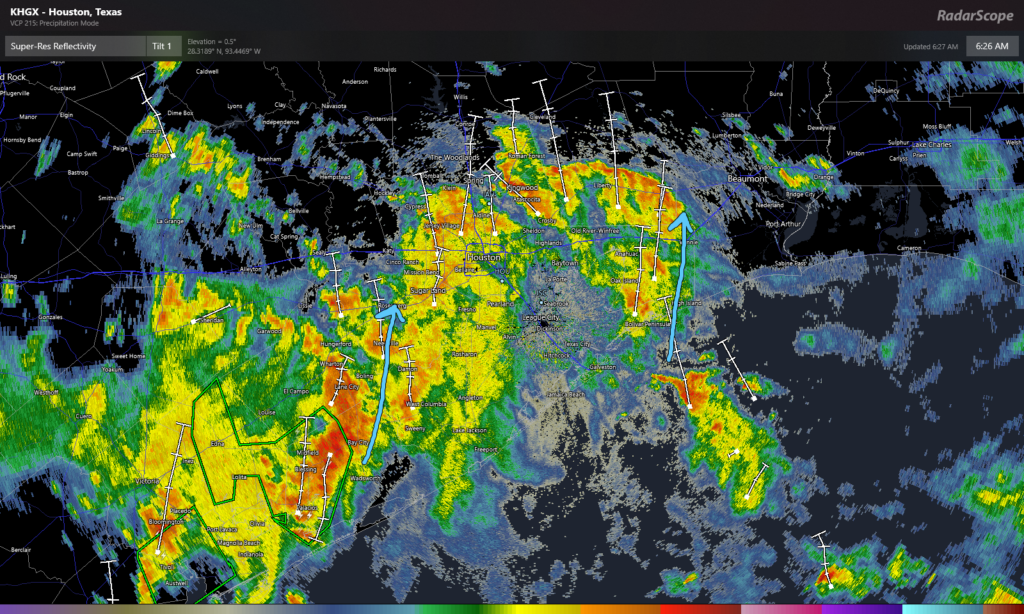
We have a pretty healthy area of rainfall this morning that extends from The Woodlands south to the coast. This started south of the area and has migrated north, and flood advisories are posted for Brazoria County, Brazos Bend State Park, and just east of Bay City in Matagorda County, as of 6:30 A.M. A new flood advisory was just hoisted for most of Houston inside the Beltway, Sugar Land, Kingwood, and Baytown as well. Also, a Flash Flood Warning is in effect for Jackson and Matagorda Counties (west of Bay City) through at least 9:30 AM.
As of 6:30 A.M., areas of heavy rain are lifting north across much of the area, most heavily concentrated southwest of the city. (RadarScope)
Rainfall is occurring right now at the rate of 2 to 3 inches an hour at its worst. Things are moving enough to keep the heaviest rain from falling over the same area for long enough to cause serious problems, but with wide areas of heavy rainfall around, it would seem that some street flooding is going to be likely in spots this morning, especially in the western half of the metro area. Additionally, heavy rain is clobbering western Matagorda County this morning, so folks down there and into Wharton County should expect areas of flooding over the next few hours. That particular area of rain may also get into Fort Bend County later this morning as well, so please be on the lookout for areas of street flooding.
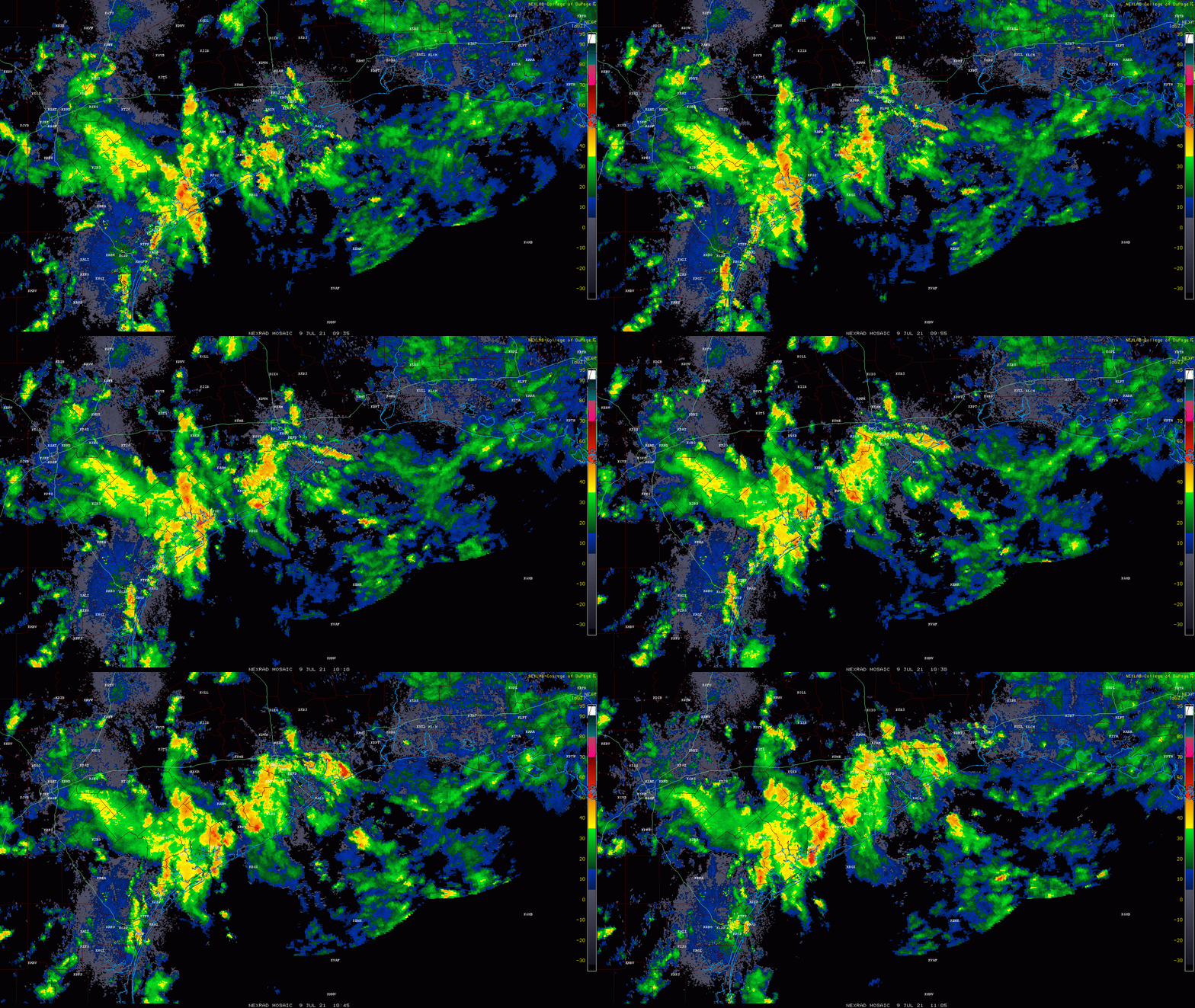
The rain is all lifting generally due north, with some “noise” within the overall rain. This should prevent the heaviest rain from settling over any one area for too, too long. Still, it will likely be enough for some street flooding in spots. (College of DuPage)
Everything is moving generally due north. Again, this setup should prevent any one area from seeing so much rain at one time to cause serious problems. We are going to refrain from invoking the Space City Weather Flood Scale this morning for that reason (and given a few radar trends here late). This is a ripe street flooding setup for scattered areas, but it shouldn’t be too out of the ordinary for us. Just please use caution and give yourself extra time if you are commuting or you must be out and about this morning.
Eric or I will have another update on the rainfall situation before Noon today.
Rest of today
Look for this mess to gradually begin to wind down. The rain may actually not so much exit as “thin out” in place today. Coverage of showers will probably diminish beginning early to mid-afternoon and by evening, just some isolated downpours should be expected. Highs will likely be in the 80s for most spots.
Total rainfall between now and evening will be 1 to 3 inches on average, with some smaller, highly localized areas perhaps seeing as much as 4 to 6 inches, especially southwest of Houston and Sugar Land. Areas east of Houston and down toward Galveston may see a bit less total rain.
Saturday
The good news is that the weekend should see things begin to finally unwind a bit over Texas. This doesn’t mean bone dry every day, but this does mean that showers will ease back appreciably and we should return to some element of “normal summer.” We will go from widespread showers and storms like we’ve been having to more scattered showers and storms tomorrow. Look for highs near 90° after morning lows in the 70s.
Sunday
There is a chance that the vast majority of the area stays dry on Sunday. It will probably be sunny and hot and humid, with highs back up into the low-90s. Sea breeze showers may be the only game in town and those may even be a bit spotty. The best chance for anything organized will likely be north of Huntsville as yet another front drops into Texas Sunday afternoon.
Next week
Sunday’s cold front will try to nudge closer to our area Monday, which means we should see more numerous showers and storms. This will be especially true north of I-10 I think. So be prepared for a wet start to the week. Fortunately, that front pretty much washes out over the state to our north by Tuesday, meaning we can resume “typical summer” for most of next week. I would expect sun, clouds, low-90s by day, mid to upper-70s by night, and the requisite 20 to 40 percent coverage of showers each afternoon with daytime heating and the sea breeze. Days with less rain coverage could be a little hotter, days with more a little cooler.
The tropics look quiet Gulf and Atlantic-wide for the next 7 to 10 days. Our first real Saharan dust event of the season may occur Monday and Tuesday, so be on the lookout for that. Additional dust may arrive late next week. We’ll update you more on Tuesday when our weekly Eye on the Tropics series resumes.
The Yellowstone disk controller’s whole reason for existence is its ability to control any type of Apple II disk drive, but for a few Apple II programs, this universality causes problems. Yellowstone handles standard 5.25 inch drives just fine, but some software gets confused when it doesn’t find the ROM for a standard Disk II Interface Card in slot 6. For these rare cases, Yellowstone has an option to enable a “compatibility mode” where it emulates a plain vanilla Disk II Interface Card without any extra bells and whistles. The question is how does the user enable compatibility mode?
In the current version of the Yellowstone prototype, the choice is determined by a DIP switch. But as I’ve been refining the design, I’ve developed a strong dislike of DIP switches. They’re big and awkward, and not at all user-friendly. I’ve already managed to find ways to eliminate two of the four DIP switches on the board, and if I can find another solution for enabling compatibility mode then I can eliminate a third DIP switch.
My first thought was to check the keyboard immediately after the computer is powered-on, before loading anything from the disk. If the ‘C’ key is held down (c for compatibility), I could enable compatibility mode, otherwise I could proceed normally. On the Apple II it’s easy to check for keypresses by examining memory address $C000. If there’s a keypress waiting, the MSB will be 1 and the lower seven bits will hold the ASCII value of the key. So I could check for the value $C3 ($80 plus $43) and everything would be peachy.
Unfortunately, I quickly discovered that one of the first things the Apple II ROM does after a reset is to clear the keyboard buffer. This happens before control is transferred to Yellowstone’s ROM, so by the time my code checks the keyboard buffer, it’s too late. What to do?
Rely on the Buffer’s Lower Bits
From testing on my Apple IIe, the keyboard buffer isn’t actually zeroed when it’s “cleared”. The MSB is set to 0, but the other seven bits still retain the ASCII value of the key. So perhaps my code could just check $C000 for $43 instead of $C3 to detect the ‘C’ key, and it would work as originally intended.
This seems slightly dubious, since I’m not sure if this is documented behavior, or if other models of Apple II will clear the keyboard buffer in the same way. There’s also a small bug this introduces: if ‘C’ was the last key typed, and you then turn off the computer and turn it on again within 1-2 seconds, $C000 will still hold the value $43 during power-up. This may lead to accidentally detecting non-existent keypresses and enabling compatibility mode when the user didn’t intend to.
Delay Booting and Poll the Buffer
Another option is for Yellowstone to sit in a busy loop after the computer is first powered-on, and continuously poll the keyboard buffer looking for the value $C3. If the keyboard has a key repeat behavior, then $C3 will appear in the buffer after roughly 0.75 seconds if the ‘C’ key is continuously held down. Or the user could be instructed to quickly tap-tap-tap the ‘C’ key when the computer is powered-on, instead of holding it continuously down. This would eliminate any dependency on the keyboard’s key repeat behavior. At least one modern Apple II peripheral card uses this method.
The main drawback of this approach is that it would introduce a busy-waiting delay every time the computer is turned on. To reliably detect a key repeat or a tap-tap-tap, Yellowstone would need to insert a startup delay of about one second, every time the computer powers-on or resets. It sounds like a small thing, but I think I’d find this delay very annoying. Furthermore, the key repeat behavior might not work on the original Apple II or Apple II+ keyboard, so tap-tap-tap is probably the only reliable solution.
Check the Open Apple Key
A third alternative is to check whether the Open Apple key is held down, instead of the ‘C’ key or any other standard key. The behavior of the Open Apple key is very different from the other keys. Open Apple is just a duplicate of the first button on the first game controller, and its current status can be read at memory address $C061. As long as Open Apple is held down, the MSB of $C061 will be 1.
The Closed Apple key works identically, and its state can be read at address $C062. But holding the Closed Apple key during power-up will trigger the Apple II’s built-in diagnostics, so that key isn’t a good candidate for triggering Yellowstone behavior changes.
For now I’ve implemented Yellowstone’s compatibility mode enable using the Open Apple key, and it works well on my Apple IIe. Unfortunately, earlier models of Apple II computers don’t have an Open Apple or Closed Apple key. Users with those computers would need to attach a game controller and press its button during power-on, which is far from ideal. There’s also a risk that some other third-party peripheral cards might use Open Apple in the same way, which would make it impossible to trigger Yellowstone’s compatibility mode without also affecting the other card. But I don’t know of any specific cards that use Open Apple, so maybe I shouldn’t be concerned.
Something Else
I could stick with the DIP switch, despite its awkwardness. Or I could ask users to perform some voodoo in the Apple II monitor, and write a magic value to a special address in the card’s memory to enable compatibility mode. Or some other solution I haven’t thought of yet. Opinions?
 Hippie Crafts: Creating a Hip New Look Using Groovy ’60s Crafts







/https://static.texastribune.org/media/files/cb11aa77570569236ce391f5ce67c4d0/Texas%20Right%20to%20Vote%20SP%20TT%2035.jpg)
 For thirty years, Sandra Lord all but lived in Houston’s tunnels. By day, she led tours of the six-and-a-half-mile underground system, a labyrinthine mall that connects City Hall with Discovery Green and the largest downtown office buildings. She bought the first of her two parakeets, Bonnie and Clyde, in a defunct pet store under the old Woolworth building (now a parking garage), ate Vietnamese dumplings almost every day for lunch in the Houston Center on McKinney Street, and got her hair done at Red’s Barber Shop under Fannin. Now in her eighties and in a wheelchair, she entered the tunnel loop last month for the first time in five years. Uncharacteristically, she was speechless. In the central connection of the entire tunnel system, at 919…View Original Post






















































 What’s going on? Third Planet Sci-Fi Superstore, a comic book store in Houston, filed a lawsuit against the nearby Crowne Plaza River Oaks, claiming that the hotel’s guests keep throwing objects such as fire extinguishers and dishes from balconies onto the store’s roof, necessitating costly repairs. But the weird part is what the pleading from the store looks like. Okay, I’ll bite. What does it look like? See for yourself, courtesy of the Houston Chronicle, which first reported the story (scroll down to page six): They filed the lawsuit as … a comic book? Sure enough. Artists Michael Charles, Maurice Terry Jr., Michael Brooks, and Benjamin Carbonero of Bad Cog Studios illustrated the 24-page comic at the request of Third Planet owner T.J. Johnson and…View Original Post