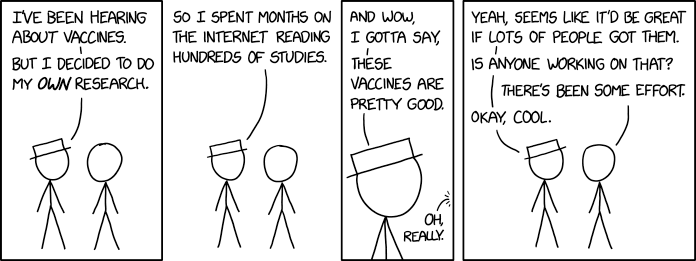
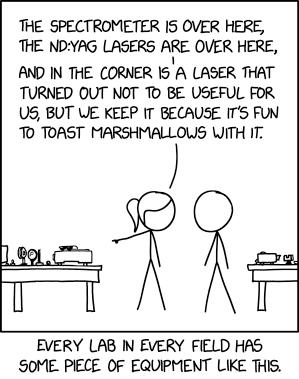
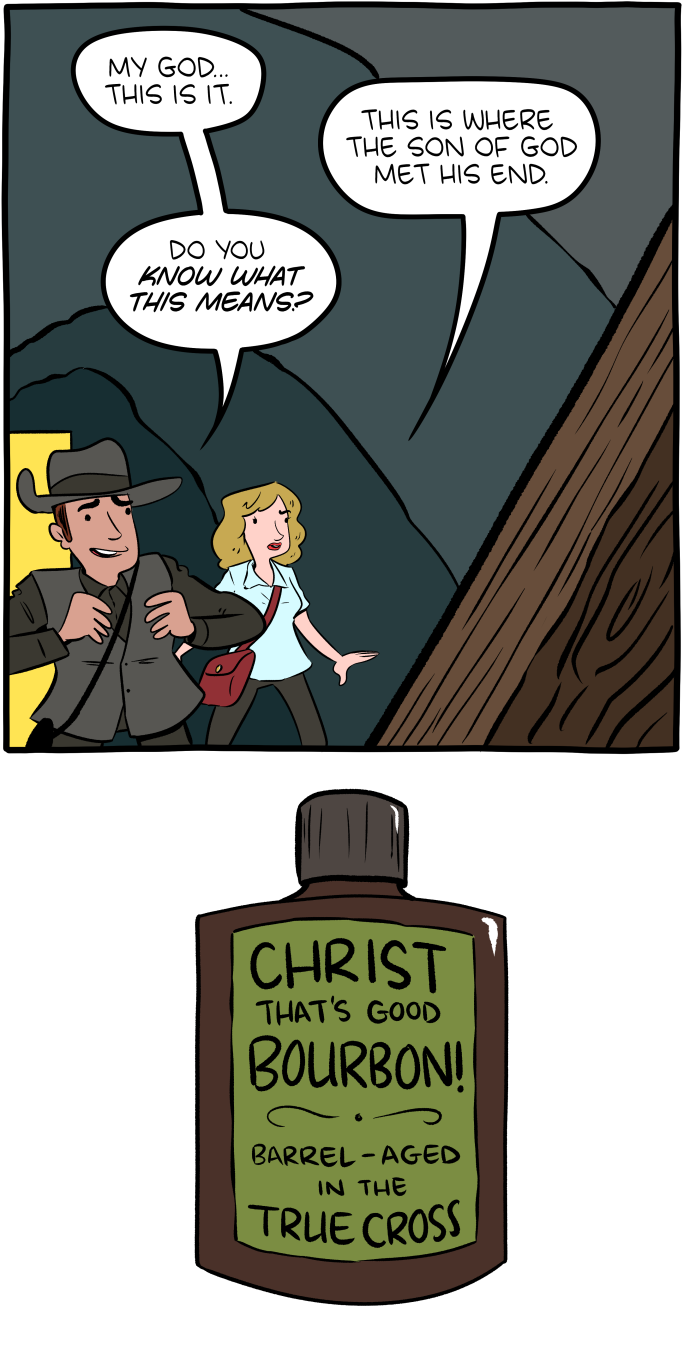
.gif)
Click here to go see the bonus panel!
Hovertext:
We'll be doing a virtual chat about Fuzz this evening - please check the below-comic blog for the link.
Today's News:
Hovertext:
We'll be doing a virtual chat about Fuzz this evening - please check the below-comic blog for the link.
Get a thing at PodShop.biz
Support the production of The Greatest Generation.
Friends of DeSoto for Democracy.
Friends of DeSoto for Justice.
Follow The Game of Buttholes: The Will of the Caretaker!
Music by Adam Ragusea & Dark Materia
Follow The Greatest Generation on Twitter, and discuss the show using the hashtag #GreatestGen!
The Greatest Generation is now regularly streaming on Twitch.
Facebook group | Subreddit | Discord | Wiki
 In 1833, a rebellious German college professor boarded a ship to North America. Ferdinand Lindheimer, who would eventually become known as the father of Texas botany, fled to the United States when his reformist political beliefs put him at odds with his family and the German government. Ever the political agitator, he eventually made his way to the battlefield at San Jacinto, where he enlisted in the Texas Army. Though Lindheimer was a little late to the Texas Revolution—according to several accounts, he joined the day after Santa Anna’s surrender—his real contribution to the state’s history would come from his dedication to the native plants and animals he found here.In the years following the war, Lindheimer began to make excursions out into the relative wilderness…View Original Post
The post A Guide to Texas’s Best Botanical Gardens appeared first on Texas Monthly.
This post, my boss is angry that I lied about the reason for my vacation , was originally published by Alison Green on Ask a Manager.
A reader writes:
At the beginning of the pandemic, I started a relationship with my now-boyfriend, who lives in another country. We met online and had been planning on taking a vacation together as soon as the borders of our countries, which were closed due to COVID restrictions, opened . During the summer, I had fallen and broken my foot, as well as had a cyst removed from my tailbone. Towards the end of the summer, when the borders reopened for tourism, I was feeling well enough again and was looking forward to finally meeting my boyfriend in person.
In July, I emailed my boss asking for the last week of August off to take a vacation, which was approved. I work as a librarian in a Catholic high school and have many coworkers who love to gossip and spread judgment, which can create a really negative atmosphere. Because of that, I made the decision to tell my boss that I was going on a family vacation.
A couple weeks before I left, my boss had told me that I was taking vacation at an inconvenient time and while she had approved it this time, I shouldn’t take off during that time period again. I made note of that statement, told my closest friend at work the true nature of my trip, made final plans, checked the COVID policy with my work, made sure I had full coverage, made my social media accounts private, and took my vacation.
Near the end of my vacation, my friend from work notified me that my boss had somehow figured out that I wasn’t actually on a family vacation. In order to get ahead of the issue, I emailed her to explain that I didn’t tell her the true nature of my vacation because I was trying to avoid gossip, and that I had multiple negative Covid tests which would approve me to return to work if that was her concern. She told me that we would discuss this matter when I returned.
Upon my return, my boss pulled me into a conference room and told me that she was angry with me for lying to her and breaking her trust, that if I were to have handled this situation better I would have made an attempt to discuss the reason for my vacation in person (even though I was injured and wasn’t working in person), was upset that I decided to take vacation during an inconvenient time, accused me of lying so that I would get those days approved because I was worried that she wouldn’t approve them, and questioned my dedication to the school and my position. She also mentioned that she didn’t believe that I was trying to avoid gossip and thought I had an ulterior motive. I apologized and said that I would be honest about my plans for time off from here on out, but that I was warranted privacy during my time off and what I do on my own time.
I am fully aware that lying was not the best course of action for this situation, but I strongly believe that what I choose to do on my own vacation time should not affect the approval of my vacation time. Was I fully in the wrong in this situation? Or was my boss’s reaction out of line?
Nah, your boss’s reaction was over-the-top.
In theory you’re right that what you plan to do on vacation shouldn’t affect whether or not it’s approved. In reality, though, it can be more complicated. Let’s say that you submit a vacation request and it’s a hard date to for your boss to accommodate (maybe other people will be out that day and she needs coverage, or it’s the day before a major event and she needs all hands on deck, or so forth). If you just want the day off to the go to the park, your boss might reasonably ask you to find a different day. But if it’s the day of your kid’s wedding, most of us would expect her to find a way to make that work. So we tend to accept that sometimes the reason for a specific set of dates matters.
It gets a lot more problematic, though, when the plans in question aren’t so obviously toward the “my kid’s getting married” end of that spectrum. And most of the time, people are rightly uncomfortable with managers deciding what’s “important enough” to accommodate and what isn’t … even as we also recognize exceptions like weddings.
But it’s possible that your boss considered a family trip closer to the wedding end of the spectrum than a trip to meet a boyfriend would be, and maybe she approved not-ideal dates for that reason. It’s possible that that’s why she’s pissed off now — maybe she went out of her way to accommodate difficult dates because you told her it was a family thing, and now she thinks you lied so she would do that. Her reaction was still over-the-top — this should have been a much calmer conversation — but she would have more of a basis for being bothered. (For the record, though, I don’t think managers should be adjudicating the importance of one trip vs. another like that unless it’s something more like the wedding vs. park example and the dates are difficult ones to approve.)
Or it might not be that at all. She might just be overly controlling and think she’s entitled to know more about your personal plans than she really is. She might be so focused on the lie that she’s not seeing that it didn’t really matter what you were using your time off for because it’s still your time off.
You can probably figure out which of these it is based on (a) what you know of your boss in general and (b) how inconvenient those particular dates really were. If they were seriously inconvenient for your team, it’s probably the first explanation. If they weren’t, it’s more likely the second.
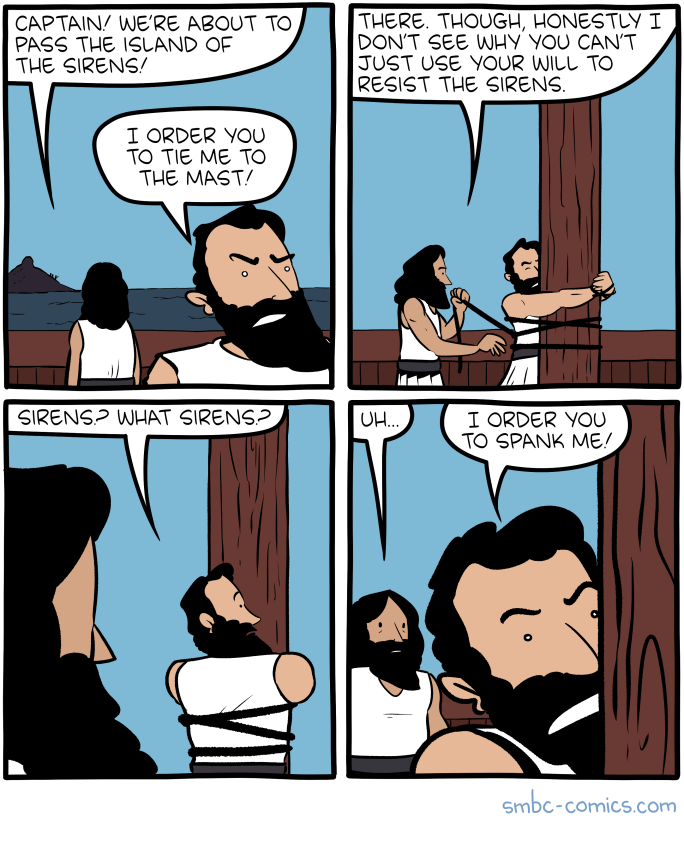
Hovertext:
If you look at the history of depictions of Sirens it goes from weird bird-ladies to sneaky fish ladies to naked chubby girls. This is progress we can believe in.
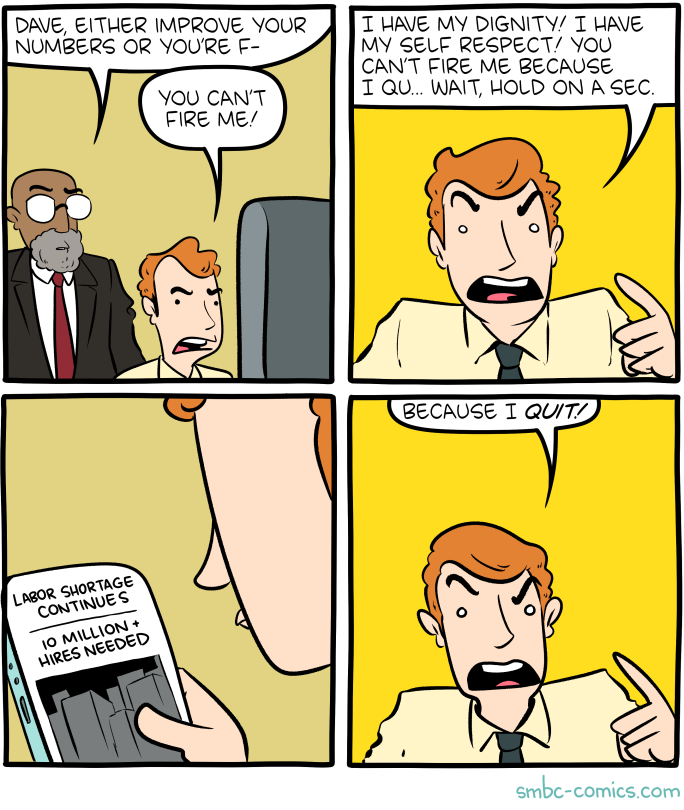
Hovertext:
I've had enough of your domineering, when considered in light of macroeconomic conditions!
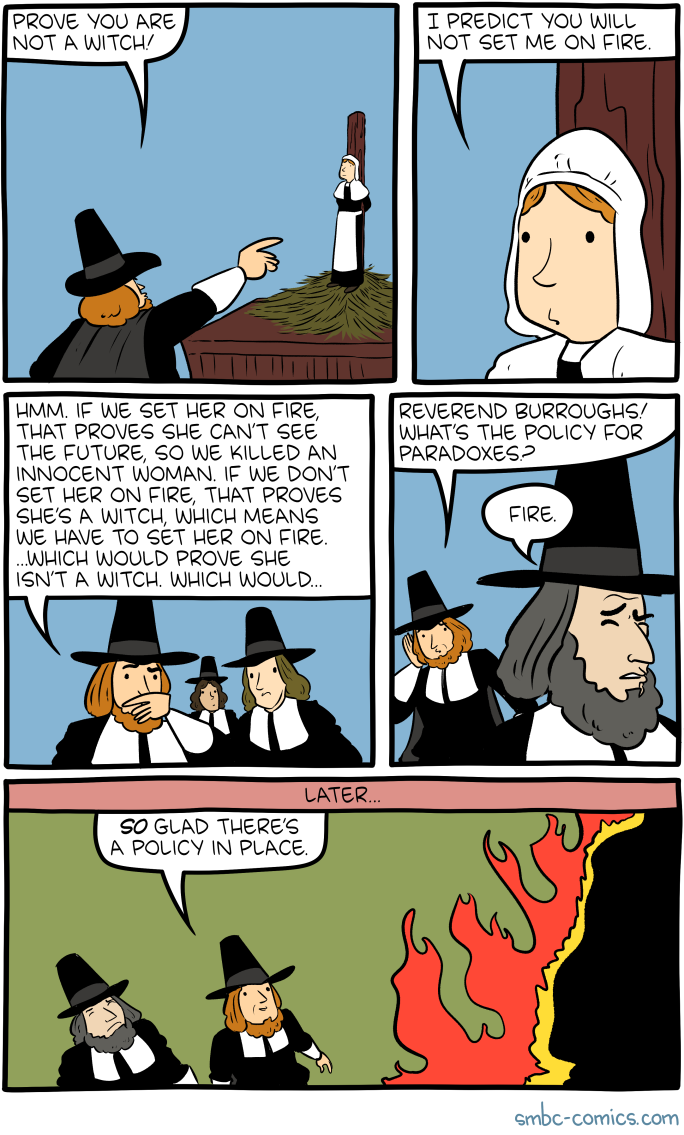
Hovertext:
Can we bring back the hats without bringing back the people-burning?
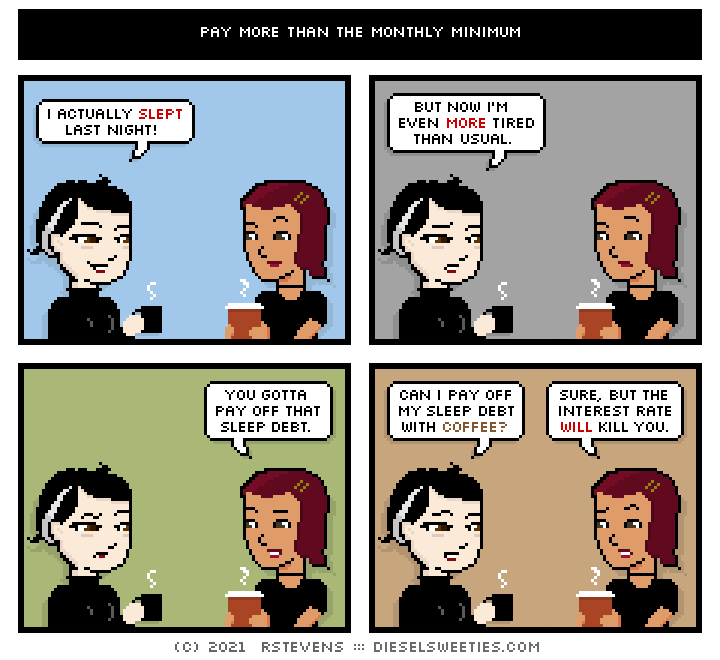
I'm going through one of those phases where I can't sleep more than six hours. IT'S GREAT!!!!!!!!!
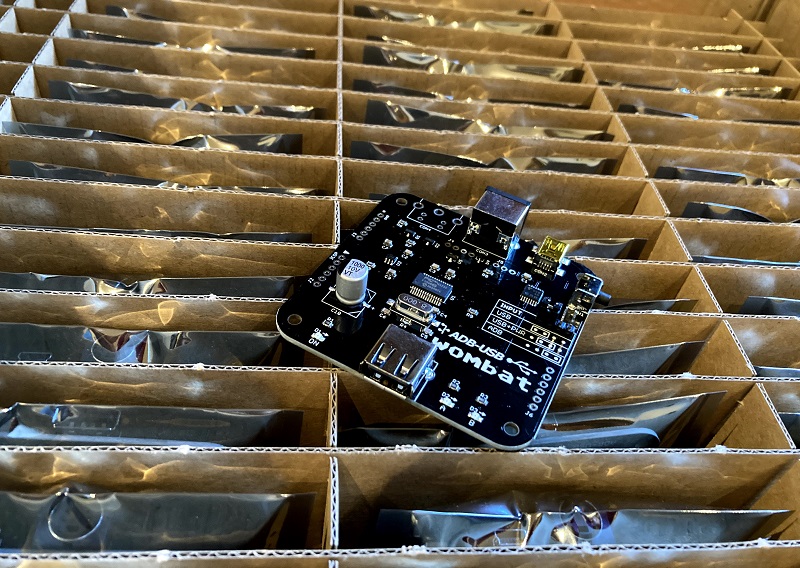
Firmware version 0.3.7 is now available for the Wombat ADB-to-USB input converter. This version fixes a compatibility problem with some ADB mice that use non-standard communication timing. You can download the new firmware here.
This was an interesting discovery. Apple only ever produced a few different ADB mice, with model numbers A9M0331, M2706, and G5431. You might think that mice with the same model number would be the same, but in fact there are several different versions of each model and they have very different internal parts. It may be possible to tell them apart by checking the country of manufacture printed on the mouse, which could be USA, China, Malaysia, Taiwan, or others.
Some of the “Made in Taiwan” ADB mice have a controller chip inside that’s made by Logitech rather than Apple. These mice communicate over ADB at 75 microseconds per bit, instead of at the normal rate of 100 microseconds per bit. A small change to the Wombat firmware was required to make it more flexible about the bit timing.
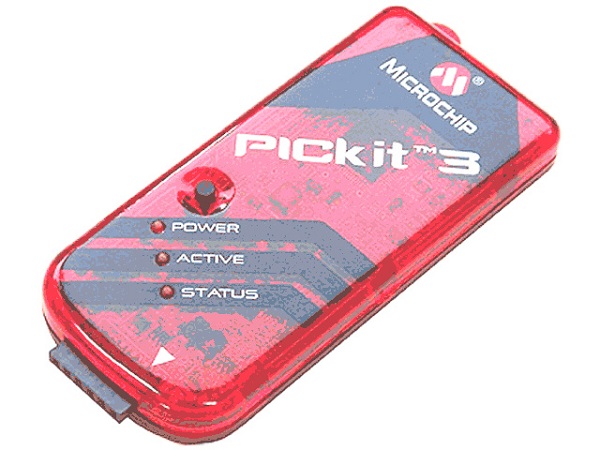
PICkit 3 R.I.P.
The Wombat is designed around a Microchip PIC32 microcontroller, and I use a Microchip PICkit 3 to program and debug. Somewhere within the last year or so, the PICkit 3 has basically stopped working. It gives every indication of being some kind of Windows 10 problem or USB driver issue, rather than a hardware problem with the PICkit 3. Searching the web turns up many similar complaints, but no solution.
Using Microchip’s MPLAB X IDE for development and debugging, the PICkit 3 doesn’t work at all. The IDE will detect that it’s there, but any attempt to actually use it just gets a “connection failed” error. This means that I can’t use the debugger, and I’m reduced to debugging using print statements over the serial port.
The PICkit 3 sort-of works with the MPLAB IPE, a stand-alone programming tool with no debugging capabilities. But it only works for a short window of time after rebooting my computer. After a few programming cycles, it falls back to the same “connection failed” behavior as the IDE. The only way I’ve found to fix it is to reboot… again. Unplugging and replugging the PICkit3 doesn’t help, nor does updating the PICkit 3’s firmware, restarting MPLAB, or anything else I can think of. The word from Microchip’s own support is basically “Oh, you bought one of THOSE? Ha ha ha. Yeah, those PICkit 3s don’t work very well and we’ve dropped support for them.”
After spending quite a long time trying to resolve this, I eventually gave up, and decided I won’t be using any PIC parts for any future projects. The tools are just too clunky and buggy, and there doesn’t seem to be nearly as large of a community using PIC32 parts as other options like STM32. That means that when something’s not working, there aren’t many people who can offer help, and you’re basically out of luck. Too bad.
Sorry for the delay: Groceries and kids and life get in the way sometimes! Eric and I spoke earlier this evening and agreed that we have enough evidence right now to upgrade to Stage 3 on the SCW Flood Scale.
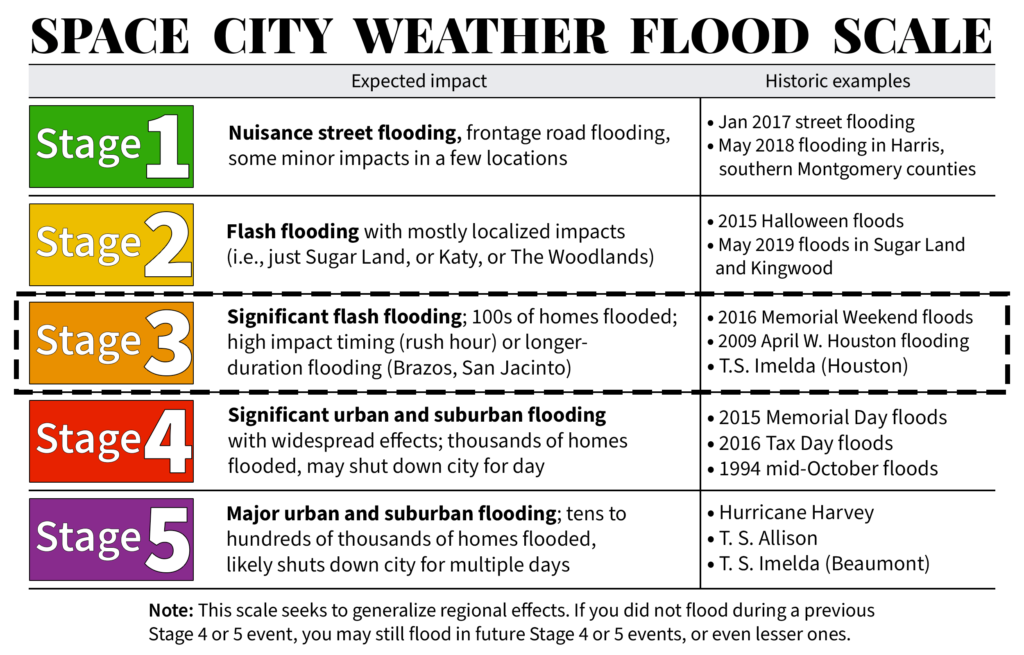
As we note on the SCW Flood Scale page, a stage 3 event:
Our third stage is probably the most difficult stage to define. These are storms that may be quite memorable for parts of the Houston area but not for the entire area. These are basically larger, more damaging versions of Stage 2 events. You could expect perhaps hundreds of homes flooding in multiple neighborhoods during Stage 3 events.
In this situation, we believe we have enough evidence in model data to support a decent risk for a stage 3 event somewhere in our area or region. We currently believe the highest odds of this type of level being achieved is to the south and east of Houston proper, but the frustrating reality is that flash flooding could occur virtually anywhere in the Houston area. We aren’t much closer this evening than we were earlier today to defining exactly where the highest totals will occur. But we do have some other clarity perhaps.
The rain we see tonight and Monday will be the appetizer to the main event, which should occur on Monday night into Tuesday and possibly Wednesday in our area. Expect scattered to numerous thunderstorms developing overnight and Monday morning along coastal sections, spreading inland tomorrow. Rain amounts by Monday evening will generally be on the order of 1 to 3 inches in Houston proper, lower amounts north of I-10 perhaps and higher amounts possible south of I-10 to the coast. Matagorda County may get into the core of the storm later tomorrow, which could bring additional rain totals in excess of 6 inches there. But for the most part, the rains tomorrow, though locally heavy and with localized flash flooding possible should be manageable.
I won’t dwell too much on Nicholas’s forecast in terms of tropical impacts, as we discussed that a bit in earlier posts and the flooding threat is of more concern for us. But the track and intensity forecast for Nicholas have remained fairly consistent, though with some risk that it could briefly attain hurricane status before landfall.
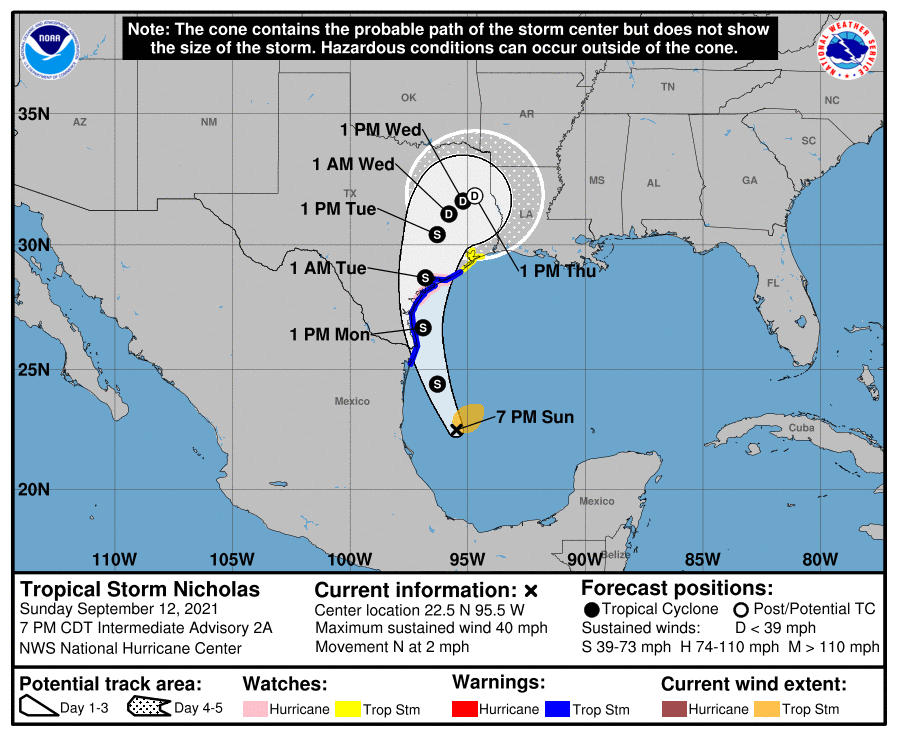
Onto the rain forecast. Many of you may have seen the European model today which printed a *lot* of rain for parts of the area. And while that certainly was a bit scary to see, it’s important to note that this model is an outlier, both in terms of track of Nicholas and in terms of the physical amount of rain it’s showing. While we aren’t discounting that model, I think it’s important to focus on the official forecast. Once you get up north of 15 inches of rain possible, it’s a serious flooding event potentially; we don’t need to make it scarier with outliers that show that. I have more issues with where the European model places the heavy rain (in and west of Houston) than how much it shows. With a track likely east of that specific model, I do believe the odds of the highest rain totals are highest east and south of Houston proper, similar to the official NWS rainfall forecast, which also increased today.
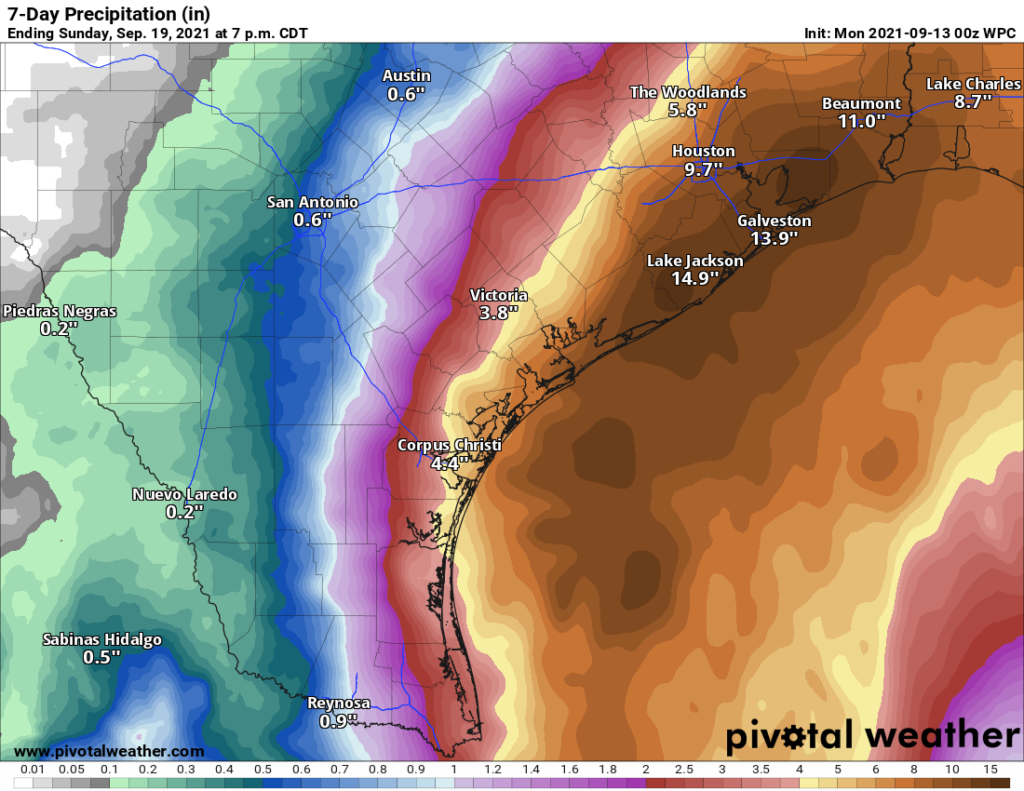
As of this evening, the outlook shows basically 5 to 10 inches of rain in the Houston metro area, with 10 to 15 inches in Galveston and Brazoria Counties. That seems reasonable right now, with the one caveat that higher amounts are likely depending on the exact track and speed of Nicholas as it comes through our area. A slow moving but steady outcome like most tropical models and the GFS model show would spread the rain out a bit more, keeping those higher totals somewhat in check. But a very slow, meandering outcome as the European model shows would potentially increase the max totals in spots. We want to see how the Euro goes overnight to see if it trends back to the consensus of tropical models and the GFS, which would further boost our confidence in worrying most about areas south and east of Houston. Regardless, rain will fall at the rate of 2 to 4 inches an hour at times. That can add up quickly.
A personal comment to close with here: This is an extremely difficult forecast because small changes in track outcomes will have big changes in impacts felt across a major metro area. If you live anywhere in the Houston metro area, north, south, east, or west, you should be preparing as if travel will be difficult to perhaps impossible on Monday night, Tuesday, and possibly Wednesday. We will hope for the best possible outcome here, but because of the uncertainty, you need to be ready. Folks east of Houston, particularly in Beaumont, Port Arthur, and Lake Charles: This bullseye could easily shift your way as well, so you need to be paying attention and prepared too.
Eric will have the latest in the morning on the flood threat, as well as tropical impacts from Nicholas, which will be minor in Galveston to moderate in Matagorda.

Good morning. Tropical Storm Nicholas has a better defined center of circulation this morning, and it has reformed north of where forecasters believed it to be earlier. This, combined with an expectation that Nicholas will now move a little bit more quickly once inland, have led to some changes in timing and rainfall amounts in the forecast. As a reminder, we’re continuing to predict Stage 3 flood conditions for some parts of the greater Houston area through Wednesday. Some, but not all, of our region will see prolonged heavy rainfall beginning later tonight.
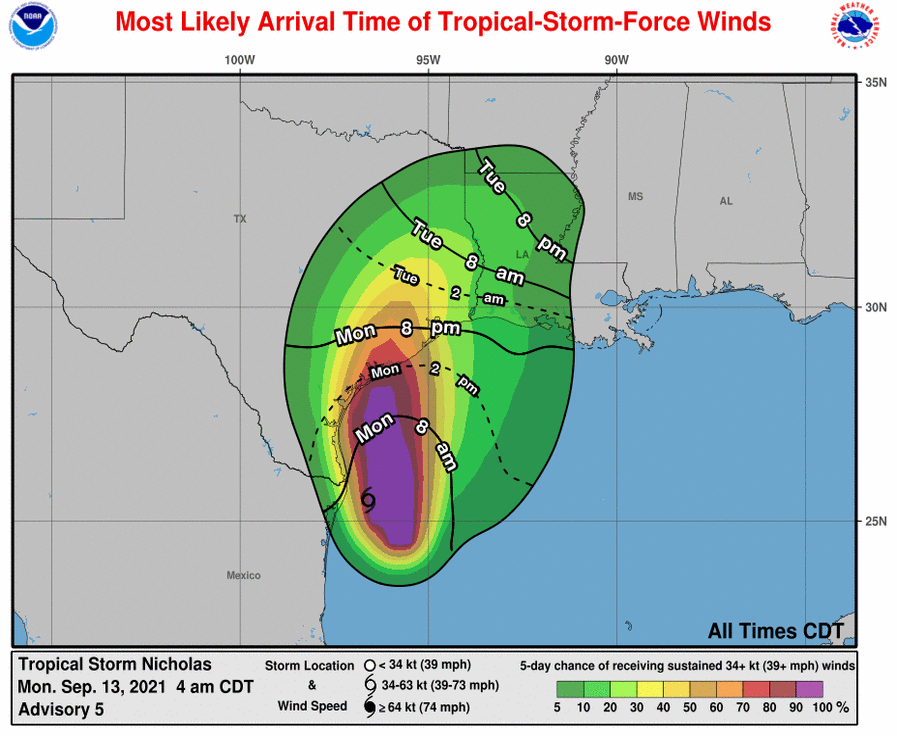
Tropical Storm Nicholas has strengthened to have maximum sustained winds of 60 mph this morning, as of 4am CT, and is moving to the north-northwest. The storm will likely make landfall this evening between Corpus Christi and Matagorda Bay.
This will bring tropical storm force winds to the Matagorda Bay region on Monday afternoon, and these could spread up the coast to Galveston Island on Monday evening. Tropical storm force wind gusts will spread inland into portions of Harris, Fort Bend, and Colorado Counties late Monday or early Tuesday before beginning to weaken during the afternoon hours. These winds should not be great enough to produce widespread power outages in the Houston metro area, but some local problems are definitely possible.
Storm surge values of 3 to 5 feet are possible from Port O’Connor to Sargent, and 2 to 4 feet from Sargent to Galveston to High Island. Some significant inundation is possible around Matagorda Bay.
For nearly all of us in the greater Houston metro area the biggest concern, by far, will be rainfall.
The Houston region should see scattered to numerous showers on Monday, but the heavier rainfall that is most concerning to us should fall between a 36-hour period from Monday evening into Tuesday night, or Wednesday morning. So this is the time when you should plan for the most significant impacts.
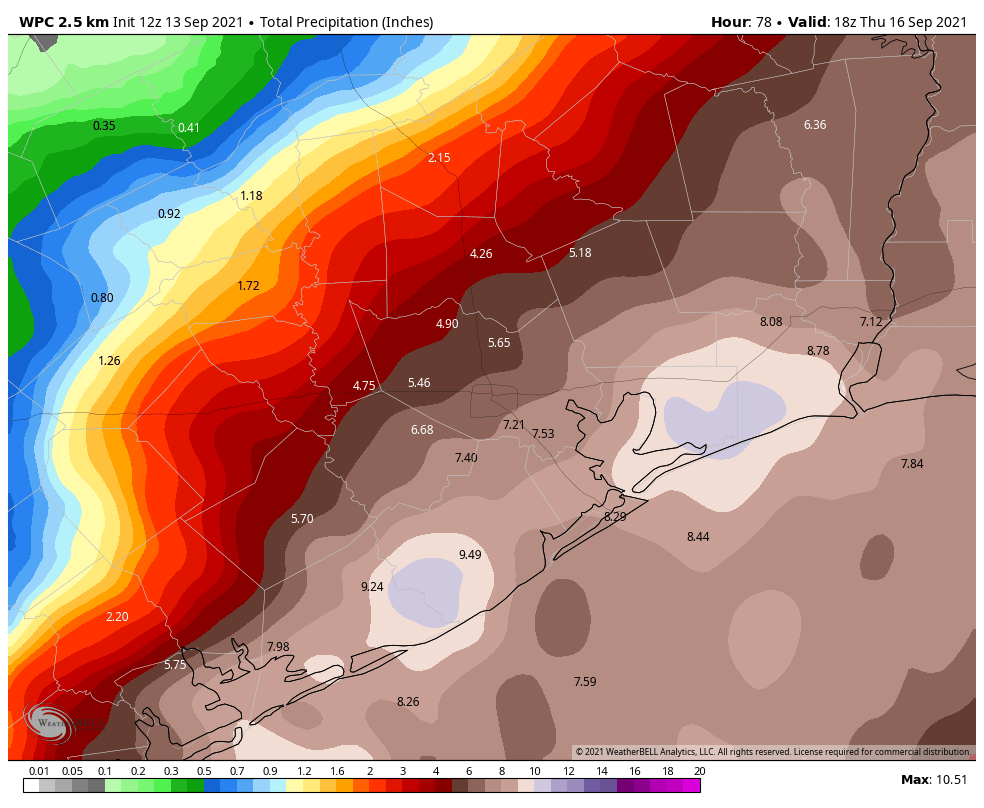
The flood threat is very real, but it is slightly mitigated by the fact that Nicholas is now expected to continue moving to the northeast after it reaches Houston, and seems less likely to slow down. This should, hopefully, bring down rain totals somewhat. To that end, the map below represents an average expectation of the rainfall your location will get from Nicholas. For much of our region, these should be mostly manageable totals.
However, it is important to note that we are most concerned about locally higher amounts, which are likely during a tropical system that produces training thunderstorms with extremely high rainfall rates. Therefore, some locations may see as much as 10 to 20 inches of rainfall from Monday evening through Wednesday morning. While these bullseyes are more likely near the coast, they are definitely possible as far inland as Harris, Montgomery, or Waller counties.
Please note that we have issued a Stage 3 flood alert, on the Space City Weather scale, in expectation of these bullseyes.
Nicholas will soon be here. While conditions across the region should be OK for much of today, they may deteriorate fairly quickly this evening or after midnight. In our next post we will try to provide a firmer time for the onset of heavier rain in the metro area—whether that’s 8 pm, midnight, or later. Our next post will come no later than 10:30 am CT.
Good afternoon. The purpose of this post is to emphasize that while we have a pretty good handle on the forecast for Tropical Storm Nicholas over the next 24 to 36 hours, after that many questions remain. And for this reason, we want readers to understand that while Houston may see heavy rain over the next three days, other parts of the state are very much at risk as well.
As of 1pm CT, Nicholas still has 40 mph winds, and it is moving north-northwest across the southern Gulf of Mexico. Winds from the storm may reach South Texas by Monday morning, and the upper Texas coast by around Monday night. It’s possible that Nicholas becomes a Category 1 hurricane, and there will be some effects from this wind and surge. However the greatest threat remains rainfall, so that’s what we’ll now discuss.
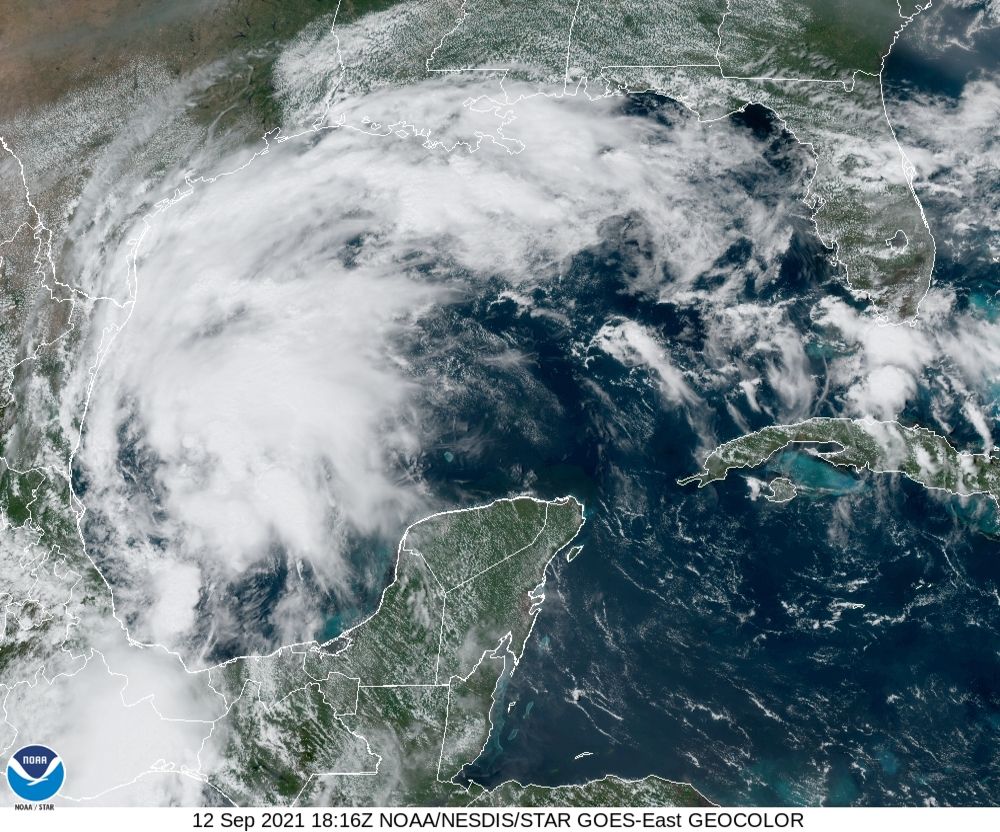
I know you’re tired of reading about “uncertainty,” but you’re going to have to bear with us for another 12 to 18 hours on that score. Why? Because Nicholas only now is beginning to develop a reasonably well defined center of circulation, and we’re starting to get better data from reconnaissance airplanes flying into the storm. This improved information will be fed into models. So the computer model outputs after 6pm today will be better, and then models released after midnight tonight should be pretty good. The bottom line: When you wake up on Monday, we should be able to give you a more precise forecast.
In the meantime, it’s important to stress that the greatest threat for heavy rainfall and flooding is not coming on Sunday night Monday, but rather Tuesday and Wednesday as the center of Nicholas moves into the Texas coast. After that, the rains will be largely dependent on the track of the storm—which again we should have a better handle on by tomorrow morning.
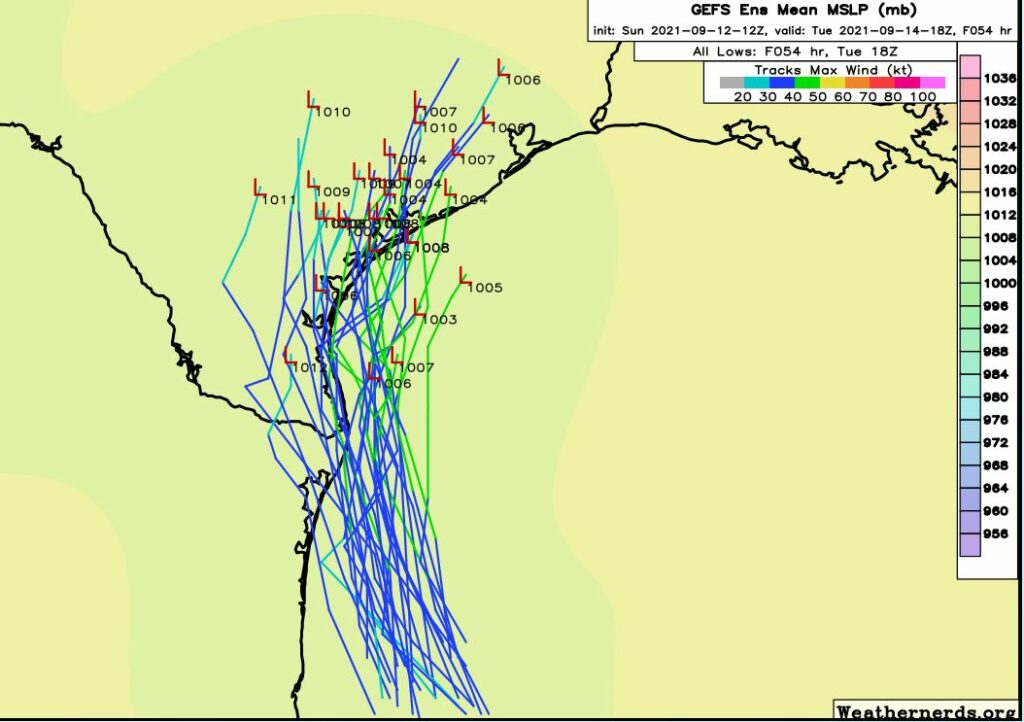
Put more explicitly, it is quite possible that some location in Texas inside a triangle from Austin to Corpus Christi to Beaumont sees 20 or more inches of rainfall on Tuesday or Wednesday. (Most areas, of course, will see considerably less). I still probably would favor the Houston, Galveston, or Beaumont regions for the heaviest rainfall, but we just cannot say for sure. So what should you do in the face of this uncertainty? Well, if it helps, you can blame us. But what I would advise is keeping an eye on the forecast, especially tomorrow, when we should have a better handle on things. And then be prepared for the potential of flooding on Tuesday or Wednesday.
Matt will have another update on the situation this evening, before 9pm.
| Piled Higher & Deeper by Jorge Cham |
www.phdcomics.com
|
|
 |
||
|
title:
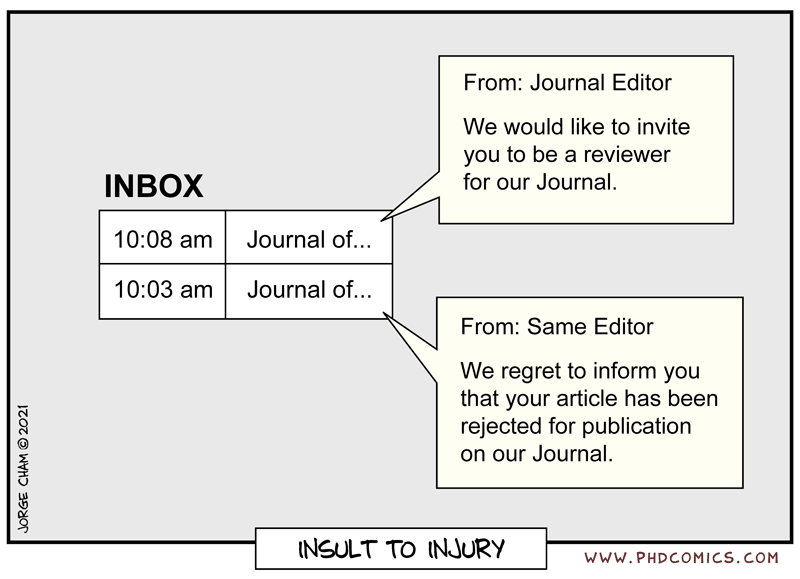
"Insult to injury" - originally published
9/10/2021
For the latest news in PHD Comics, CLICK HERE! |
||

We here at Boing Boing have long been fans of the Codex Seraphinianus, a mysterious surrealist cypher manuscript that first appeared in print in the early 1980s. We first covered it in The Happy Mutant Handbook and have been marveling at it ever since. — Read the rest
A month ago, we wrote about a perplexing (and dangerous) decision down in Australia ruling that an AI can be listed as the inventor of a patent. As we had explained, there was a concerted effort by a small group patent lawyers and this one dude, Stephen Thaler, to seek out patents for "inventions" that an AI created by Thaler called Dabus ("device for the autonomous bootstrapping of unified sentience"). As we explained in that and earlier posts, the entire point of the patent system is to provide incentives to humans to invent. An AI does not need such incentives. As we've highlighted in the past, the USPTO and the EU patent office have both rejected AI-generated patents. Australia's patent office had done the same, but a judge there rejected that and said an AI could be listed as an inventor.
All of these situations involve Thaler/DABUS, as did a new ruling in the US which... thankfully has rejected the idea that an AI deserves patents after Thaler filed a lawsuit because of the USPTO rejection. I think there's a separate issue here: which is what standing does Thaler have in the first place? If the argument is that "DABUS" is the inventor, it seems that... um... only DABUS should have the necessary standing to challenge the rejection of its patent application. The fact that Thaler thinks he has standing more or less shows how ridiculous the entire claim is in the first place.
After going through the background of the case, and discussing what level of deference the USPTO deserves, Judge Leonie Brinkema gets straight to the actual point, which is pretty simple: AI doesn't get a patent.
Even if no deference were due, the USPTO's conclusion is correct under the law. The question of whether the Patent Act requires that an "inventor" be a human is a question of statutory construction. Accordingly, the plain language of the statute controls.... As the Supreme Court has held: "The preeminent canon of statutory interpretation requires us to 'presume that [the] legislature says in a statute what it means and means in a statute what it says there.' Thus, our inquiry begins with the statutory text, and ends there as well if the text is unambiguous."...
Using the legislative authority provided by the Constitution's Patent Clause... Congress codified the Patent Act in 1952... and has amended the Patent Act a number of times in the ensuing sixty years. In 2011, Congress promulgated the America Invents Act, which, as relevant here, formally amended the Patent Act to provide an explicit statutory definition for the term "inventor" to mean "the individual, or, if a joint invention, the individuals who invented or discovered the subject matter of the invention."... The America Invents Act also added that "joint inventor" means "any one of the individuals who invented or discovered the subject matter of a joint invention."... Additionally, Congress has required that "[a]n application for patent shall be made, or authorized to be made, by the inventor . . . in writing to the Director."... "[E]ach individual who is the inventor or a joint inventor of a claimed invention in an application for patent shall execute an oath or declaration in connection with the application" which "shall contain statements that--... such individual believes himself or herself to be the original inventor or joint inventor of [the] claimed invention."
See where this is going?
As the statutory language highlights above, both of the definitions provided by Congress for the terms "inventor" and "joint inventor" within the Patent Act reference an "individual" or "individuals."... Congress used the same term--"individual"--in other significant provisions of the Patnet Act which reference an "inventor," including requiring that "each individual who is the inventor or a joint inventor" execute an oath or declaration...
The court then notes that in analyzing other laws, courts have long said that "individual" means human. And it also highlights that the language in the Patent Act makes it clear that it was intended to apply to humans -- humans who can make a declaration about their own beliefs.
Congress's use of the term "individual" in the Patent Act strengthens the conclusion that an "inventor" must be a natural person. Congress provided that in executing the oath or declaration accompanying a patent application, the inventor must include a statement "such individual believes himself or herself to be the original inventor or an original joint inventor of a claimed invention in the application."... By using personal pronouns such as "himself or herself" and the verb "believes" in adjacent terms modifying "individual," Congress was clearly reference a natural person.
Then there's a fun bit of judicial eye-rolling, stating: "having neither facts nor law to support his argument," the judge notes that Thaler's argument is basically "but this is good for innovation." But that's not going to fly (leaving aside the fact that allowing AI to get patents would be objectively terrible for innovation, it's also not how any of this works):
Plaintiff provides no support for his argument that these policy considerations should override the plain meaning of a statutory term.
It gets even worse for Thaler's arguments. He argued that the PTO hadn't properly considered the policy ramifications of not allowing AI to get patents, but as the judge notes, that's clearly not true. It had. And it rejected the dumb idea.
Specifically, the USPTO points to a conference on artificial intelligence policy it held in January 2019, and to requests for public comment "on a whole host of issues related to the intersection of intellectual property policy and artificial intelligence" it issued in August and October 2019. In October 2020, the USPTO issued a comprehensive report on those comments.
And... what did that report say?
Many commentators disagreed with plaintiff's view that artificial intelligence machines should be recognized as inventors...
Given how active Thaler and his lawyer friends have been around the globe, I imagine this is hardly the end of these campaigns. I imagine this ruling will be appealed, and how long will it be until some sucker of a Senator or Member of Congress, convinced by Thaler's nonsense, will introduce a bill to amend the Patent Act to enable AI patents?

After several days of extensive testing with the latest Yellowstone prototype, and several years of development work on this universal Apple II disk controller concept, I’m here to say that Yellowstone v2.2 is looking good. Looking very good. It’s the bee’s knees, the cat’s pajamas, the whole package; it’s a humdinger, a totally gnarly wave; it’s crackerjack, boffo, hella good, chezzar, d’shiznit, on point, and just plain bombdiggity. I’ve thrown a dumpster-load of assorted drives and disks at it, and it’s all working nicely. Finally everything has fallen into place, and I’m excited for what comes next. Here are some feature highlights:

Yellowstone supports basically every disk drive ever made for the Apple II or Macintosh, whether external or internal. The only exception is the single-sided 400K 3.5 inch drive used in the original 1984 Macintosh. The list of drives includes:
With these latest test results, we’re almost at the point where other people can start to get their hands on Yellowstone cards. There are surely still some minor bugs, quirks, and annoyances yet to be discovered, and maybe some larger problems too. I need to get a few Yellowstone prototypes to beta testers, so they can try the cards with their equipment, and help find any remaining issues.
My priority now is to finish the automated tester that I’ve been developing. As I hand-assemble a few more prototype boards, I’ll test them in the automated tester, proving both the tester and the board at the same time. That means delivery of boards to beta testers will proceed more slowly than if I weren’t developing an automated tester, but I think this is necessary so that I can eventually scale up manufacturing for a general public release. I’m guessing there may be four to six weeks needed to finish off the automated tester and build it, but hopefully I can squeeze out at least a couple of hand-verified prototype boards much sooner than that.
The last piece of this puzzle will be securing a large enough supply of DB-19 female connectors, and designing a detachable Yellowstone adapter for them. I have a couple of DB-19F adapters that I’ve been using for testing, but DB-19F connectors are rare and hard to find. The ones I have now use a DB-19F with solder cups, but the type with PCB pins seems to be more common, if you can find them at all. I’ve stashed a modest supply of DB-19F connectors that’s enough for an initial Yellowstone production run, but the outlook is uncertain beyond that. I may have to commission 10000 new ones like I did with the DB-19 male.
These are exciting times! Thanks for following along this journey with me.
I've been struck over the years by how much reporting on technology involves attacking companies for what they do -- even if for totally contradictory reasons. Everything is viewed through the lens of assuming the worst possible intentions. And, yes, sometimes perhaps that's deserved. Companies act badly and no one should give them the benefit of the doubt if they can't show reasons it ought not to be. But sometimes, it just gets ridiculous, as is clear in a recent ProPublica piece that attacked WhatsApp for its "report" feature. Now, I like ProPublica a lot and feel that they do some of the best investigative reporting around. But this was not that.
ProPublica itself has reported on how WhatsApp can be abused by those with nefarious intent -- criticizing the company for failing to do anything about it. But this new article is basically the opposite. It's attacking WhatsApp because it has a feature that allows users to "report" a message they received to WhatsApp. ProPublica dangerously incorrectly used this to claim that WhatsApp (which offers end-to-end encryption) is somehow bad about privacy. The title of the article reads -- incorrectly -- "How Facebook Undermines Privacy Protections for Its 2 Billion WhatsApp Users." The (since edited) article contains this bullshit section:
Zuckerberg’s vision centered on WhatsApp’s signature feature, which he said the company was planning to apply to Instagram and Facebook Messenger: end-to-end encryption, which converts all messages into an unreadable format that is only unlocked when they reach their intended destinations. WhatsApp messages are so secure, he said, that nobody else — not even the company — can read a word. As Zuckerberg had put it earlier, in testimony to the U.S. Senate in 2018, “We don’t see any of the content in WhatsApp.”
WhatsApp emphasizes this point so consistently that a flag with a similar assurance automatically appears on-screen before users send messages: “No one outside of this chat, not even WhatsApp, can read or listen to them.”
Those assurances are not true. WhatsApp has more than 1,000 contract workers filling floors of office buildings in Austin, Texas, Dublin and Singapore, where they examine millions of pieces of users' content. Seated at computers in pods organized by work assignments, these hourly workers use special Facebook software to sift through millions of private messages, images and videos. They pass judgment on whatever flashes on their screen — claims of everything from fraud or spam to child porn and potential terrorist plotting — typically in less than a minute.
The false implication here is that WhatsApp (and Facebook) are lying about end-to-end encryption. Except, that's bullshit. The people reviewing content are only reviewing content that has been reported. I don't understand why this is hard for people to comprehend, but even with end-to-end encryption one of those "ends" can forward the contents to someone else, and those people can see it. And that's all that's happening here. When you "report" content in Facebook, it is the functional equivalent of forwarding the message.
If it's "undermining" privacy (and it's not), then the person who is reporting the content is the one undermining privacy by forwarding the message and saying it might be problematic. This is actually quite a reasonable approach to dealing with questionable content on an encrypted messaging program, but ProPublica decides to spread a very misleading report suggesting that it's undermining privacy.
Alec Muffett does a nice job dismantling the argument. As he notes, it's really bad when journalists try to redefine end-to-end encryption to mean something it is not. It does not mean that recipients of messages cannot forward them or cannot share them. And, in fact, pretending that's true, or insisting that forwarding messages and reporting them is somehow an attack on privacy is dangerous. It actually undermines encryption by setting up false and dangerous expectations about what it actually entails.
Alex Stamos similarly has a great thread on the many problems in the article, but here's the key bit:
I know I'm going to get crap for this, because journalists always circle the wagons in these situations, but the tech-skeptical media really needs to consider what change they want to promote with their framing of these issues. You also have a responsibility to balance equities.
— Alex Stamos (@alexstamos) September 7, 2021
But, really, this gets back to a larger point that I keep trying to make with regards to reporting on "privacy" violations. People differ (greatly!) on what they think a privacy violation really entails, and because of that, we get very silly demands -- often from the media and politicians -- about "protecting privacy" when many of those demands would do tremendous harm to other important ideas -- such as harming competition or harming free speech.
And this is especially troubling when perfectly reasonable (and in fact, quite good) systems like WhatsApp "report" feature are portrayed incorrectly as "undermining privacy" when what it's actually trying to do is help deal with the other issue that the media keeps attacking WhatsApp for: enabling people to abuse these tools to spread hatred, disinformation, or other dangerous content.
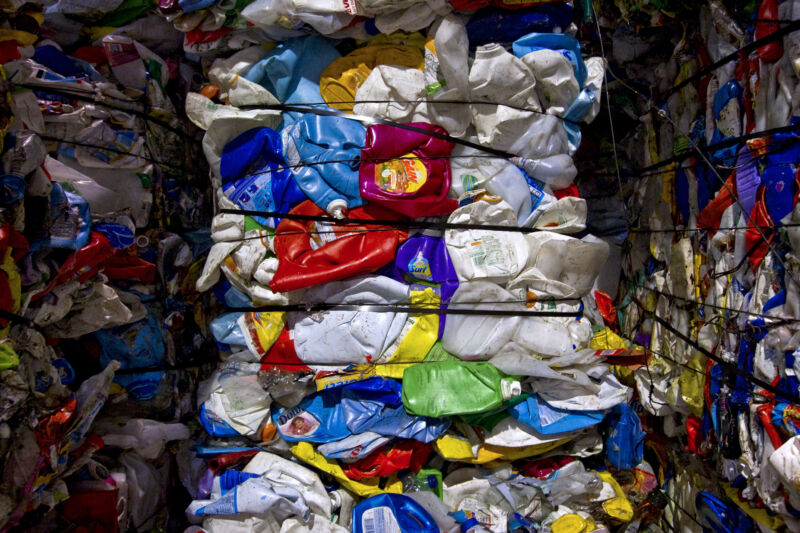
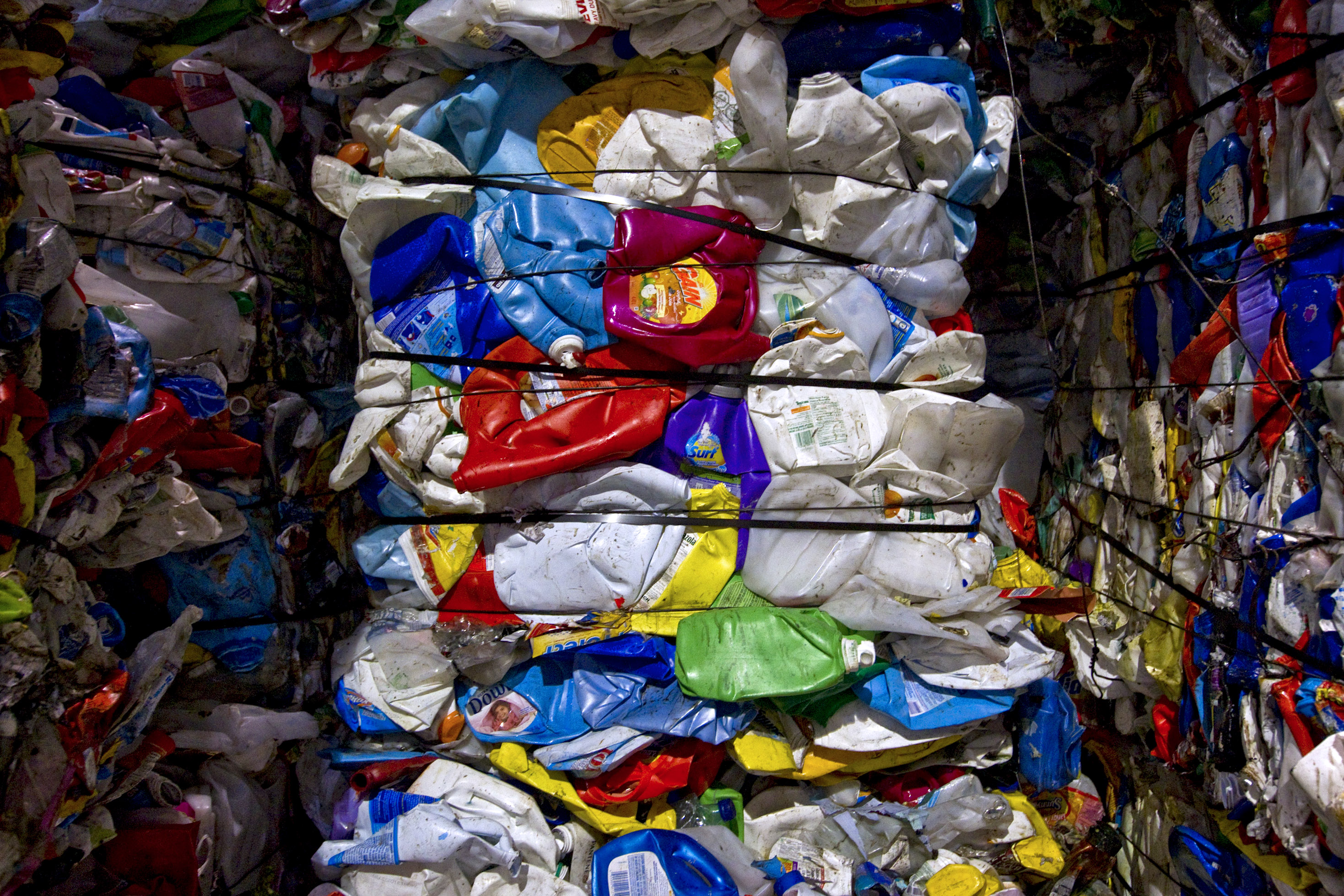
Enlarge / Discarded plastic bottles made of high-density polyethylene (HDPE) are bundled at a recycling center. (credit: Brent Lewin/Bloomberg)
The recycling symbol—those three arrows stamped on myriad plastic items—doesn’t mean what most people think it does, and a California bill wants to change that.
The California Legislature passed a bill yesterday that would ban companies from putting the recycling symbol on items that aren’t regularly recycled throughout the state. The bill is now awaiting Gov. Gavin Newsom’s signature, and if signed into law, it would end a labeling practice that has confused consumers for decades and created major headaches for the solid-waste industry.
The ubiquitous “chasing arrows” symbol wasn’t originally meant to appear on all plastics. Rather, it was designed by a college student for a contest in the early 1970s to symbolize paper recycling. The company that sponsored the contest released the symbol to the public domain. Confusion over the chasing arrows began in the late ’80s and early ’90s, when oil and plastic companies lobbied states to make resin identification codes—which included the arrows—mandatory on all plastic, even if it couldn’t be recycled easily.
Read 11 remaining paragraphs | Comments