Cowboy Who?
Shared posts
The Wheat Whisperer
15 Must-Watch Documentaries About Filmmaking

On its best day, filmmaking is alchemy. On the rest, it's an affront to the natural order. Forming something from nothing in any other medium is a fundamentally lonely pursuit. Movies, by contrast, are deceit as a team sport. Armies, anywhere from a handful to hundreds strong, must march in microscopic lockstep -- no matter the scope, scale, or genre, all films are made one shot at a time.
It's a miracle that Frank Capra considered a disease. "When it infects your bloodstream, it takes over as the number one hormone," he said. Those afflicted can't help themselves and wouldn't have it any other way. That makes for a fine line between passion and delusion, finer than any one documentary could possibly illuminate. The following 15 chart the agony and ecstasy of filmmaking, in macro and miniature, across many of its component processes. Spiraling budgets. Backyard sets. Shot on camcorders or CinemaScope. It's all the same madness on-screen.
Overnight

"Overnight" used to be a cautionary tale. Director Troy Duffy pulled the brass ring of all brass rings -- a $300,000 paycheck for his first script, a $15 million budget to direct it, a recording contract for his band, and the guidance of the powerbroker that personally mentored Quentin Tarantino. All the circumstances that made his meteoric rise possible are extinct or incarcerated. It might as well be a "Twilight Zone" episode now.
But despite the devil involved, there is no catch. Duffy's implosion is a staggeringly fast series of unforced errors. He ridicules every actor interested -- Brad Pitt, Keanu Reeves, Kenneth Branagh -- based on, at best, a meeting's worth of interaction. "Success has nothing to do with how you live your life and how you treat your friends," he says amidst B-roll footage of dwindling allies watching their shared success circle the drain.
The off-camera punchline is that he sets it all on fire to make "The Boondock Saints." Once upon a time, "Overnight" was a car crash for indie dreamers to gawk at on their way to work. Now, it's a cannon act with no net, even more fantastic, and even more violent.
Kid Icarus

"I don't want to be branded as the next Spielberg," admits 18-year-old film student Leigh Harkrider, "I want to be branded as the new Harkrider." It's the first point in a pattern. Harkrider credits filmmakers for his passion, but rarely films. He is, like so many listless film students before him, doomed before the word "Action."
Mike Ott, documentarian and community college professor of Harkrider, gives the fledgling director all the rope he needs to hang his career-making debut, "Enslavence." During the script meetings, Harkrider overrules his ghost-screenwriter to keep both sexual assault and drug addiction in the picture. Instead of asking for help, he invites cast and crew to "share this experience." Every mistake that can be made, every cliché that can be indulged is.
Ott lets the youthful megalomania self-destruct and zooms in on the beating, broken heart left in the ruins. "Kid Icarus" ultimately asks a simple question that too many wannabe filmmakers blow right past - Why do you want to do this, exactly?
American Movie
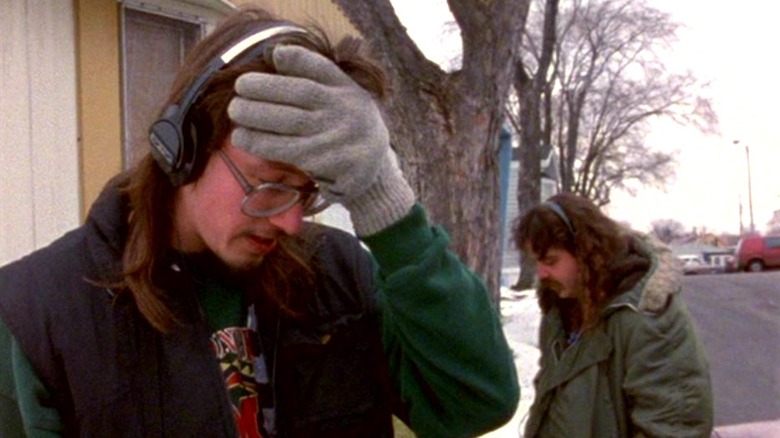
The human condition is captured between credits at a desk top-heavy with unopened bills. Aspiring filmmaker Mark Borchardt slits them one at a time and bemoans each fee like losing lottery numbers. In the last envelope, however, he finds a new Mastercard. "I don't believe it, man," he beams. "Life is kind of cool sometimes."
So it goes for Borchardt, though it doesn't take a Menomonee Falls mailing address to empathize. He lives shift to shift as a graveyard night janitor. What he doesn't accidentally blow on peppermint schnapps and long-distance calls to Morocco he sends to his three kids. Waking hours are spent with unfailingly supportive family and the usual local suspects, like amiably spacey best bud Mike Schank. But somehow, some way, he will complete his passion project, "Northwestern."
The method he settles on is shooting and selling another movie entirely. Production happens between delinquency notices, Burger King runs, and late-night loiters at the grocery store. It's the American Dream as a hang-out picture that just so happens to be non-fiction, enough to make anyone want to grab their friends and film something, credit cards be damned.
Shirkers

"Shirkers" is about an unforgivable sin. In the early '90s, when Singapore had the highest rate of movie-goers in the world, teenager Sandi Tan and her friends dreamed only of making their own. As soon as they did, their mentor-turned-director stole the footage and disappeared, turning their hopes, bonds, and careers into scarred hypotheticals.
"Shirkers" is Schrödinger's making-of. Surviving reels of the film tantalize as mirage. Missing a soundtrack, it is permanently imperfect, just like Tan's memories of production. But in reworking what's left, along with her notes and drawings, Tan reclaims the film for the women that put their childhoods into it, at long last.
Although the thief looms large over the investigation, he's not worth as much as the smoking crater he left behind. Without him, who knows where Tan and company's collective passion could've taken them. "Shirkers" is an irresistible reckoning, the shrapnel of What Could've Been mosaicked into What Can Be, both for Tan and any aspiring onlookers.
Hearts Of Darkness

Filmmaking is a confidence game. Decisions made are compounding wagers against the self, with wins or losses months, if not years, away. "Hearts of Darkness" takes Francis Ford Coppola, an unstoppable force fresh from "The Godfather Part II," and crashes him into an endless series of immovable objects until even his basest instincts are shot: "I tell you from the bottom of my heart that I am making a bad film."
Knowing "Apocalypse Now" is one of the greatest films ever made stains each doubt fatal; the crew worry about finishing a movie, but have no idea how narrowly they finish the movie. Typhoons flatten the sets. Marlon Brando falters on the schedule, then the script. Harvey Keitel is fired a few weeks into production and Martin Sheen, his replacement, suffers a severe heart attack not long after. 14 weeks of rolling cameras turn into, give or take, an entire year. The meter's always running and always on Coppola's dime.
In the midst of a historic disaster, Coppola asks the unaskable question that every filmmaker knows by heart: "Why can't I just have the courage to say, 'It's no good'?"
Corman's World: Exploits Of A Hollywood Rebel
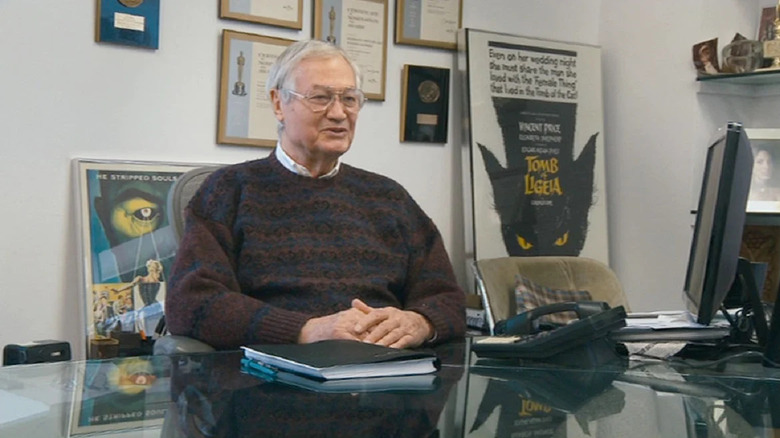
On the first official Roger Corman production, "Monster From The Ocean Floor," he personally transported and unloaded the camera equipment each day because he couldn't afford to pay the crew another hour. At the intersection of art and commerce, Corman is probably shooting a direct-to-video movie about a mutant snake for a buck-twenty-five.
"They weren't encumbered by having to deal with art," says Martin Scorsese with apparent warmth. He should know -- the "King of the Bs" gave him his first shot. In producing movies his way, on his take-no-prisoners bottom line, Corman founded a low-rent conservatory for budding filmmakers. Star pupils include Peter Bogdanovich, Jack Nicholson, Jonathan Demme, Joe Dante, Robert De Niro, and Ron Howard. They delivered and he kept his promise: "If you do a good job on this film, you'll never have to work for me again."
There will never be another pioneer like him -- blockbusters stole his act and the establishment wouldn't even let him out of the rain -- but this is tribute enough. Just try watching Nicholson fight tears and not do the same.
Burden Of Dreams

"If I abandon this project, I will be a man without dreams," says Werner Herzog, hiding behind a primal thicket of beard. This is not a documentary about the unmaking of a major motion picture, though the regular disasters are presented without varnish. "Burden of Dreams" is an unblinking stare at the inherent mania of filmmaking. Herzog knows that he's challenging all possible gods with the act of creation, but without daring to do it, he's less than human.
"Fitzcarraldo" is about a real-life dreamer, a rubber baron determined to haul an entire steamship over a mountain. The actual man did it piece by piece. His fictional counterpart, as written and directed by Herzog, saw no need for deconstruction. The agonizing drag transcends metaphor -- Herzog's impossible boat is Fitzcarraldo's and his, Herzog's. Why is he hellbent on beating the odds, in an environment he hates that he suspects hates him back?
Documentarian Les Blank doesn't offer any easy answers or apologies for his subject, but by the end, he finds something like understanding. It's as close as any documentary gets to defining the indefinable compulsion that keeps filmmakers making.
Dangerous Days: Making Blade Runner

Hampton Fancher, the originating screenwriter on what would become "Blade Runner," wanted Robert Mitchum for the leading man. Producers countered with a list: Dustin Hoffman, Peter Falk, Al Pacino, Nick Nolte, Burt Reynolds. IMDb is lousy with similar factoids. What sets "Dangerous Days" apart is the sweat in-between -- Hoffman met with the filmmakers for months and even appeared in concept art, but the production moved on when he insisted on giving the film a message.
At three-and-a-half hours long, "Dangerous Days" is a lot of sweat. Most decisions, from script to set to special edition salvage, get their due, turning the doc into an exhaustive checklist on how to make the definitive cinematic vision of the future. The working title is explained. The working working title is explained. There's a comprehensive featurette on miniature construction and photography hidden in the second hour.
Mileage may vary given your personal attachment to "Blade Runner," but its ambition does make for a broad education on the filmmaking process. Does that throwaway shot of a passing blimp seem easy? Maybe it is, maybe it isn't, but it looks like absolutely nothing else. Just like tears, sweat gets lost in rain.
Side By Side
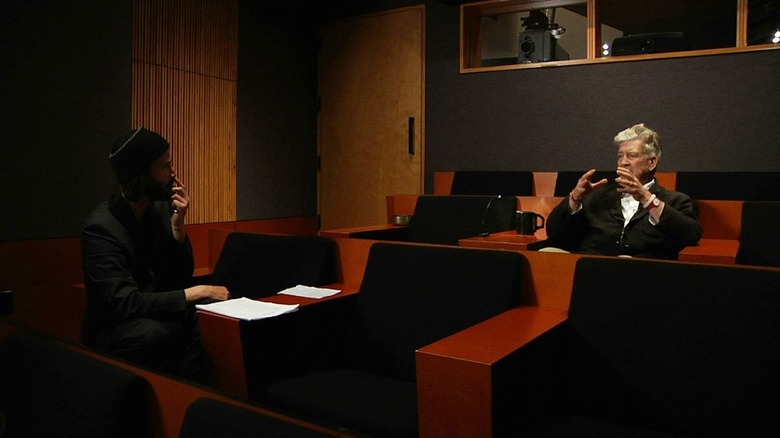
When Keanu Reeves asks David Lynch if he's done shooting on celluloid, the filmmaker weighs it like a life sentence: "Don't hold me to it, Keanu, but I think I am." Such is the appeal of "Side By Side," an eavesdropped montage of directors and cinematographers passionately disagreeing with each other about the most fundamental process of filmmaking.
For his pioneering work in digital cinematography, George Lucas is referred to alternately as an egalitarian messiah and a reckless philistine. Take it as the rule: Battle lines are drawn sharp and wide, with little dynamic range between them. "I'm not going to trade my oil paints for a set of crayons," says Wally Pfister, Christopher Nolan's long-time DP. Early adopters like Steven Soderbergh, David Fincher, and James Cameron are never turning back. Computers will improve, but film can't. Digital means democratization, but more noise. And what of all the jobs that can't, won't, and haven't made the leap between?
The war still rages. The celluloid faction has lost considerable ground. The doc doesn't crown a winner, but that's the beauty of it -- film or digital, "Side By Side" drags everyone into the fight.
Making Waves: The Art Of Cinematic Sound
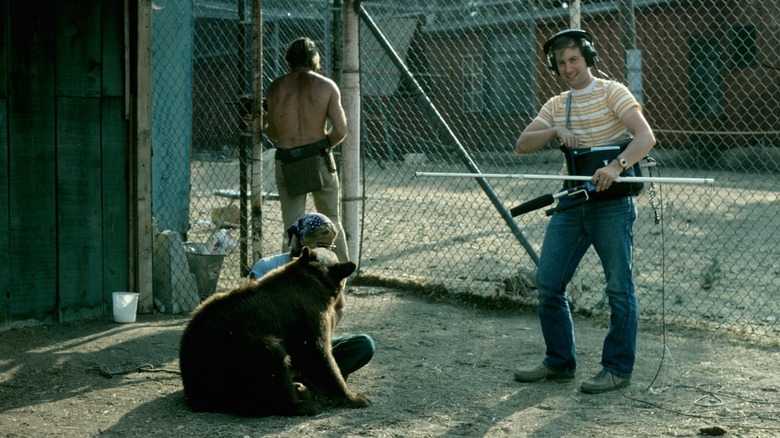
Veteran sound editor Midge Costin took her experience on films like "Days of Thunder" and "Armageddon" and turned it into a one-stop shop. Across 95 minutes, she provides both an A-to-B of the form and a step-by-step process of how it's done. "Your job," says composer Hans Zimmer, "is to come up with the unimaginable." What's shocking is how recently, in the grand scheme of cinema, the unimaginable became possible.
The sonic gold rush started in earnest when sound montage editor Walter Murch and Francis Ford Coppola realized that leaner, meaner recording equipment untethered them from the Hollywood system. It was microphones, not cameras, that gave filmmakers freedom. Murch would go on to become the first-ever credited sound designer, forming a holy trinity alongside Ben Burtt and Gary Rydstrom as the noisemakers of modern pop culture.
Costin taps deep into that joy of discovery. The field work that led to a smacked wire becoming the once and future sound of lasers. The delicately woven cacophony that made Robert Altman movies Robert Altman movies. Barbra Streisand risking "Funny Girl" to sing instead of lip-sync. It's just as adventurous as the rest of the process, and "Making Waves" proudly proves it.
The Cutting Edge: The Magic Of Movie Editing

Steven Spielberg fought Verna Fields in the editing room — also her pool house — over that darn shark. Every successful take cost him years of his life; the director wanted to see more of it. The editor, affectionately known as "Mother Cutter," wouldn't let him. Spielberg might've made "Jaws," but Fields made "Jaws" terrifying.
"The Cutting Edge" is both history and practicum. There are plenty of high-wattage anecdotes, like James Cameron learning the power of frames after disastrously removing one every second from "Terminator 2: Judgment Day," but the theory is the thing. Legendary editor Walter Murch defines his role as "the ombudsman for the audience," a band apart for their behalf. The Russian school of Kuleshov contradiction is celebrated alongside the softer emotional rules of the French New Wave. The only absolute is touch — every cut needs an artist holding the scissors.
Documentarian Wendy Apple sheds vital light on film's most invaluable, most invisible process. Editors spin straw into gold, even though their only reward might be Steven Seagal "playfully" demonstrating choke-out moves on them because they won't cut his fights the way he wants.
The Definitive Document Of The Dead
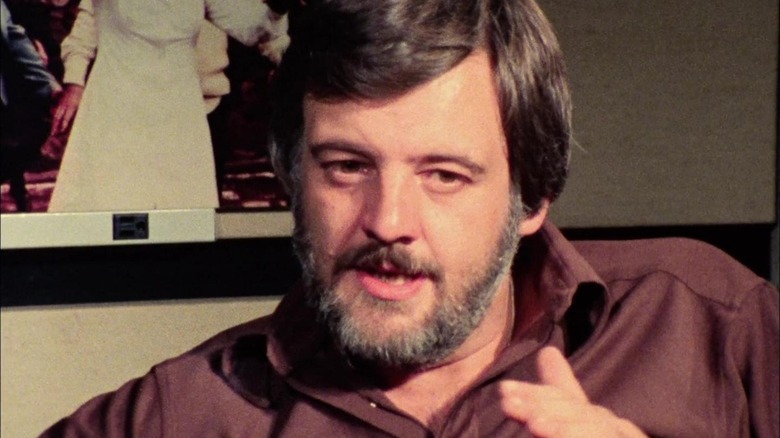
In its original 66-minute form, "Document of the Dead" was an accidental novelty, an overlong educational film about making movies that just so happened to cover one of the greatest horror films ever made. Expanded to 102 minutes with updates from the sets of "Two Evil Eyes" and "Diary of the Dead," it's a complete Master of Horror life cycle.
George Romero never got small, only the pictures did. "Dawn of the Dead" offered him about as much freedom as he'd ever taste. "Having that extra weight is a trip," he says, wandering the empty shopping mall like a peasant suddenly in charge of a kingdom. By the end of "Document," he's gritting his teeth on the con circuit and telling too much truth, "Trying to find an easier way to make a buck."
The "Definitive" cut is pure Frankenstein, with the shambling gait to match. There's altogether too much fan material. The director inserts himself a little more with each time warp to disastrous, accidentally revealing effect. But Romero's no-nonsense philosophy is bulletproof, even if it ultimately made him and Hollywood strange bedfellows.
Tales From The Script
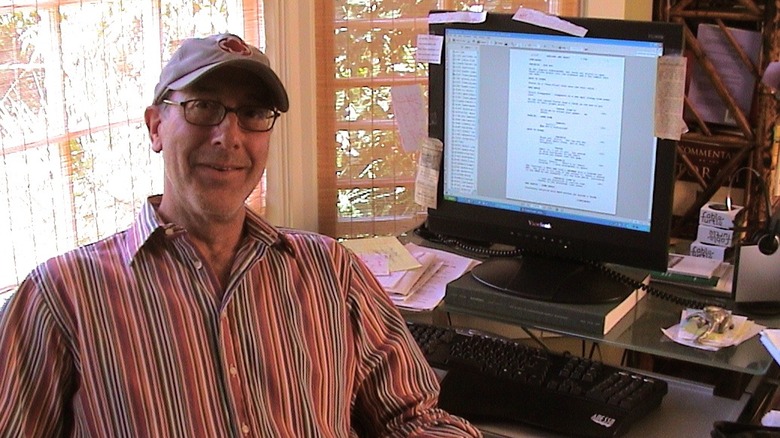
There's something perversely appropriate about a screenwriting documentary looking like a DVD extra buried three menus deep. With the exception of relevant film clips and B-roll footage trying to make the writing process look cinematic, it's wall-to-wall talking heads. The endless conversation is a feature, not a bug; nobody ever listens to screenwriters off the page.
"Tales from the Script" is equal parts frustrated tell-all and Scared Straight program. Viewers expecting a warm or poetic reflection on the form need not apply. This is about the Business with a capital-B. In the tough love words of "2010" director Peter Hyams: "If you're not prepared to do a lot of push-ups, don't enlist in the Marines."
There are few miracles here. There are only one or two accounts of the right script finding the right desk within the first hundred tries. The only thing more random than failure is success, something "Last Action Hero" scribe Zak Penn compares to "winning the lottery for something you actually did." Perspectives range from one-time wunderkinds to battle-hardened veterans. Acclimate to the despair in the air and there's a lesson for every screenwriter. The simplest comes from John Carpenter, the biggest pragmatist in any room: "Learn to love it."
Electric Boogaloo: The Wild, Untold Story Of Cannon Films

"Movies are an unreal environment at the best of times," says "Death Wish III" gang member Alex Winter, "and the Cannon movies were like that times a hundred."
The Cannon Film Group model, as masterminded by Israeli film moguls Menahem Golan and Yoram Globus, worked like this: paint a schlocky poster, attach a star who may or may not know they're attached, take it to Cannes, sell the rights to foreign markets, use the funds to actually make the movie. The vicious cycle meant only the most predictably lurid projects got funded (see: "Death Wish II," "III," "4: The Crackdown," and "V: The Face of Death").
Golan and Globus spent the 1980s chasing the zeitgeist at cut-race prices, only inflecting it by accident. In the hands of exploitation specialist Mark Hartley, the Cannon odyssey feels like being pleasantly stuck inside a pinball machine. But a warning about life in B-pictures lurks between chyrons. Unpaid crews. Gunpoint nudity. Sadistic directors. The most damning accusation of all comes during the end credits -- somewhere along the line, Cannon's Bs became Hollywood's As.
King Cohen

There are independent filmmakers, and then there's Larry Cohen.
"Larry Cohen is so much the invisible man in relation to mainstream Hollywood," diagnoses screenwriter and critic F.X. Feeney. From his earliest days toiling in the mines of live television, Cohen was a conceptual prophet. "The Invaders" foretold "The X-Files." "Coronet Blue" foretold Bourne. A spec script he wrote for "The Naked City" in 1961 was eventually sold to "NYPD Blue" in 1995. What makes him, and the doc, essential is his spirit.
Herzog gets all the credit for encouraging filmmakers to break the law, but it was Cohen who staged a shooting in the middle of a New York City police parade without warning and convinced Andy Kaufman to pull the trigger. No obstacle or threat of self-preservation ever got in his way. And what if somebody stops him? "Who cares? What do they know?"
With its stolen airport fistfights and printed apologies for raining shell casings off the Chrysler Building, "King Cohen" is an anarchist's cookbook read by the man who wrote it, still proud of his recipes all these years later.
Read this next: The Best Movies Of 2021 So Far
The post 15 Must-Watch Documentaries About Filmmaking appeared first on /Film.
I’m working 2 full-time remote jobs — is this unethical?
This post, I’m working 2 full-time remote jobs — is this unethical? , was originally published by Alison Green on Ask a Manager.
A reader writes:
The WSJ and other media outlets have been reporting on white-collar workers who work from home, working two full-time jobs at once. The thinking is, since you don’t have to be physically present in an office and can theoretically manage your own schedule, why not earn two incomes and fly under the radar?
I just started doing this a month ago. For background, I wasn’t happy at my old company, started job searching this summer, received two job offers relatively quickly, and accepted both. I now work remotely for two Silicon Valley-based companies (I live in a different western state). The companies are not competitors, suppliers, or customers of each other. Probably not the best idea to start two new jobs within a few weeks of each other, but that’s how the chips landed.
My former job was very similar to the new ones, and both new jobs have similar titles and job functions. At my old job I always received outstanding performance reviews despite being able to manage the position in a lot less than 40 hour/week. If it matters, the positions are director-level and bring in around $200k each.
A big part of this purported two-job strategy is to just “get by” and not be a superstar at any job. But I’m a very conscientious person, don’t accept mediocrity, and *intend* to do great work (albeit I’m only a month into this… we will see if that’s possible).
I’d love your perspective on this. Is this inherently unethical? I feel like the worst thing I’m doing is taking away a job from someone else, but there’s not exactly a shortage of jobs right now. I understand this is a likely fireable offense, but why? What’s your opinion of all this?
I wrote back: “I have so many questions. How will you handle it if both jobs need you for something time-sensitive at the same time? Are you not listed on both companies’ websites? What are you putting on your Linkedin?” The response:
So far I’ve been able to handle competing responsibilities. Regarding time-sensitive conflicts — both jobs are strategic, and in general I don’t have tactical, concrete work products with due dates, if that makes sense. I know what my goals are (corporate financial targets) and can plan activities well in advance. If there are crises going on with different companies’ customers at once, I treat it no differently than if I had time conflicts at one job — I prioritize and do what I can. This means working whatever hours are needed to take care of business, but so far am averaging ~50 hours/week.
My leadership is flexible and supportive, and stays off my back as long as I’m accomplishing my goals. I don’t have any direct reports, but have awesome teammates who dotted-line report to me and who I can rely on to accomplish day-to-day activities. I’m able to manage my own calendar and request new meeting times if there are conflicts. The hardest part is travel (both job postings stated about 25% travel each) but I communicate availability well in advance, and of course many people are open to Zoom meetings instead of face-to-face anymore.
Not saying this will always be the case, but I’m really just taking things as they come and hoping it continues to work out.
I’m not listed on either company’s website (only C-levels are listed at both), and I deleted my LinkedIn account (after finding both positions through that site!).
Well, I’m fascinated!
Truthfully, I’m skeptical that you can do really great work at two separate full-time jobs, at least not without burning out … which is no doubt why the strategy is supposed to be to just “get by” and not be a superstar at either job. But since you’re striving to do great work for both, I think it’s going to be a lot harder and maybe impossible. It depends on the job though; some jobs are so intense and/or rigorous that it would be impossible to do well under this plan, and others aren’t.
The part of your letter that worries me the most is this: “If there are crises going on with different companies’ customers at once, I treat it no differently than if I had time conflicts at one job — I prioritize and do what I can.” That’s a good strategy when you’re working for one company, but when your priorities are split between two, that prioritization is going to look very different. That could be a huge ethical issue — your company assumes they’re paying you for your full attention, and if they’re not getting it in times of crisis, that’s a big deal.
But for the sake of argument — and because it makes the question more interesting! — let’s say your jobs weren’t ones where you ever needed to field crises. What are the ethical ramifications then?
The biggest one is the deception. Your company thinks they’re getting your full focus for 40 hours a week, and they’re not. You’ve represented yourself as selling something different to them than what they’re actually getting. You don’t want them to find out, which indicates you know they wouldn’t be okay with the arrangement if they were aware of it. That’s a big deal.
On the other hand … there’s a societal shift going on right now where people are reconsidering what they owe to employers, and factoring in the reality that employers frequently haven’t upheld their own obligations to employees, and how the balance of power in employment can impact the obligations on each side. Two years ago, I never would have condoned what you’re doing. Hell, six months ago I wouldn’t have. But now … I still don’t condone it because of the deception, but I also can’t condemn it as strongly as I would have in the past.
The thing is, deception aside, if you’re meeting all your goals and getting good performance assessments and you’re not unavailable when you’re needed and you’re not violating any conflict of interest policy, is there any specific harm you’re causing? Certainly if I found out someone working for me were doing this, I’d have some serious concerns. But if they were an excellent employee with a track record of strong work (that part is crucial) and they didn’t have a pattern of being inaccessible, I’d also have to question my assumptions — and I might end up trying to have an honest conversation with you about how to make it work for both of us without any subterfuge.
I’m surprised to find myself there.
my husband has to discuss his eating habits with the CEO
This post, my husband has to discuss his eating habits with the CEO , was originally published by Alison Green on Ask a Manager.
A reader writes:
My husband started a new job about a month ago and things are going well. Yesterday, there was an online “wellness and energy” meeting conducted by an outside vendor that everyone in the (small, less than 100 employees) company had to attend. The context was about “reading energy” or so my husband thought.
Last night he wanted to get my opinion on it and said the meeting was focused heavily on nutrition and health. Note, this company is in the tech field. They were “educated” on fruits and vegetables and exercise and then broken off into randomly selected one-on-one groups to “discuss eating habits.”
The first person my husband was paired off with was the CEO. Barely four weeks in, he finds himself having to tell the CEO what “eating habits [he] would change.”
He was paired up with several other people after that too. He says he mainly deflected the questions and made an effort to steer each conversation away from food and exercise, and no one resisted. He didn’t know the other two coworkers he spoke with, but he said people seem relieved to discuss something other than the assigned topic and no one tried to get back to talking about health.
My husband said it was uncomfortable. He didn’t feel the topic was anyone’s business and wasn’t comfortable discussing his eating habits with people he didn’t know. He’s a very private person to begin with, so I’m not surprised he wasn’t on board with this. He’s wondering if this was intrusive or if he was overreacting.
A slew of thoughts went through my own head. What about people with eating disorders (past or present)? People with undisclosed diabetes or Crohn’s? People who don’t want to be judged because they like chili cheese fries? People who feel it is none of their boss’s damn business if they love pizza and brownies for dinner and don’t want to change?
Is the company trying to predict health-related issues as they relate to health insurance? Use it to make decisions related to promotions? (“We like Alex, but his favorite food is cheese in a can. Steve, on the other hand, loves avocados, so he may be around longer.”) Overall, what was the goal here and the point of this session?
The kicker is that these sessions on various “wellness and energy” topics are going to continue through next year. Being new, my husband is worried about opting out of these not-so-voluntary sessions. Is this normal for a company to do? What could be the motive? Are we both overreacting to this? If not, is there a good way for him to bail on it entirely and focus on the job instead?
There’s a trend of companies promoting “wellness” in ways that are intrusive and overstep the bounds of the employee/employer relationship.
Originally it stemmed from health insurance companies pushing employers to promote “wellness” because it can save them money on insurance costs. (Which is yet one more reason to decouple health insurance from employment.)
Now, though, part of it also comes from employers having a general sense that promoting wellness is good — and that they will have more engaged employees who feel the company cares about them as whole people.
The problem, of course, is that your “wellness habits” are none of their business. Your employer has no standing to probe into what you eat, how often you exercise, whether or how you cultivate mindfulness, or any of the other things these programs often dig into.
Your employer is not your doctor, your therapist, your nutritionist, or your spiritual counselor, and it’s wildly inappropriate for them to position themselves as anything remotely in that realm.
As for avoiding future sessions: If your husband weren’t brand new, I’d encourage him to find other coworkers who feel similarly (because I bet he’s not the only one) and push back as a group (using some of the ideas in this post). Since he’s new though, he doesn’t have a lot of capital to use that way. Instead, he could try simply opting out, saying something like, “Oh, I’m really private about that kind of thing (optional add-on: and prefer to manage that stuff with my doctor) so I’m going to skip this one and keep working on my X project.”
Saturday Morning Breakfast Cereal - Monopsony
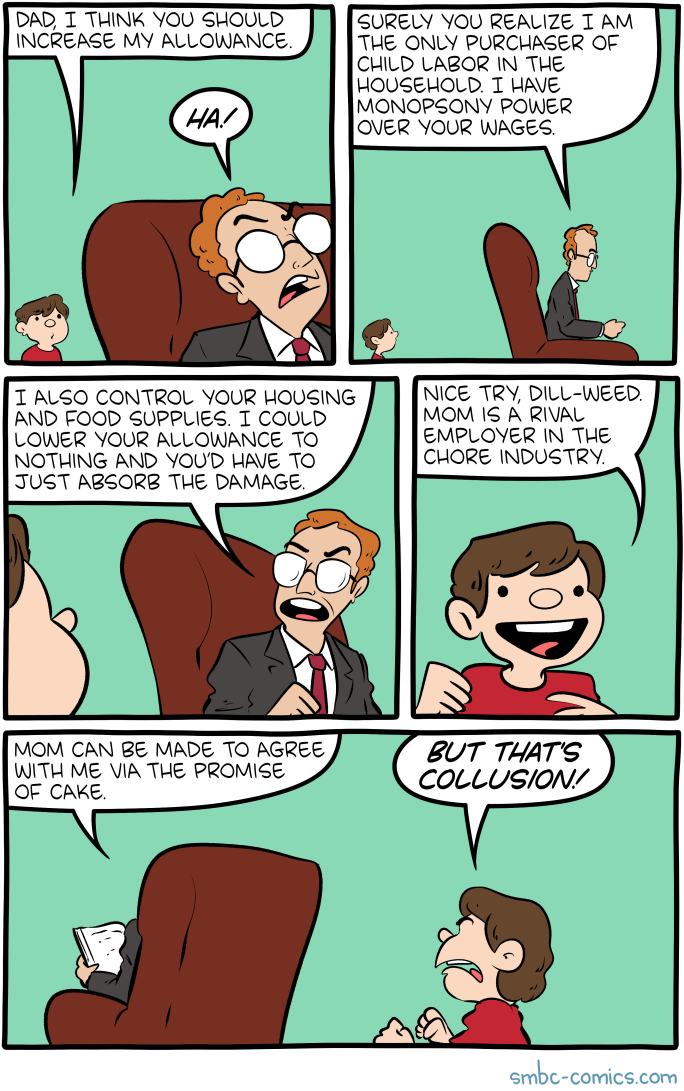
Click here to go see the bonus panel!
Hovertext:
Later when his parents get divorced, he will refer to it as an antitrust action.
Today's News:
The Shiba Inu dog behind the doge meme turns 16 - CNET

Nude Olympics
 The Olympic Spirit: 100 Years of the Games
Wels
1995
Submitter: Aside from being 26 years old, I also noticed this had quite an eye-catching image on the frontispiece. Was he performing a Rhythmic Ribbon routine and had a mishap? And what’s with the guy peering in from behind him ?
Notice that the publisher is none other than… Stop & Shop. Weeded from my middle school library.
Holly: I think the nude guy is doing rhythmic ribbon, and the creeper behind him is either waving a flag or checking out the backside. There’s another nude in the bottom left corner. Was nude Olympics a thing 100 years ago?


The post Nude Olympics appeared first on Awful Library Books.
employee got pulled over during a Zoom call, are firm offers a mistake, and more
This post, employee got pulled over during a Zoom call, are firm offers a mistake, and more , was originally published by Alison Green on Ask a Manager.
It’s five answers to five questions. Here we go…
1. My trainee got pulled over during a Zoom meeting
I train new employees and one of my trainees was just pulled over during a Zoom meeting. Before that, I could tell she was away from her desk, which is fine as we are all permanently WFH, but I didn’t realize she was driving (video was off). She didn’t mention being on the road at all. When she was pulled over, I could clearly hear the officer say it was for a minor traffic infraction and begin questioning her before she signed off.
I emailed to let her know we could meet another time and we could reschedule next time rather than have her driving while in a meeting. She must have missed my email, because she sent a separate email with a completely different reason for why she left our call (which didn’t mention she’d been pulled over at all).
To be fair, maybe some context wasn’t there for me, and I’m sympathetic that she is a Black woman in a notoriously racist state, so it’s as likely as anything that the cop stopped her without cause. But … she should have told me she needed to be away during our meeting or that she was driving, and then failing that she should be honest about what happened. Do you have any suggestions for handling this kindly but firmly?
Focus on what you want her to do going forward — which is to not schedule training calls while she’s driving. So: “You really can’t be driving on our training calls. You need to be able to devote your full attention to training, and we don’t want people taking that safety risk. Can we pick a time when you’ll be at your desk?”
That doesn’t get into the explanation she gave you because I’m not convinced you need to. Yes, people should be honest at work. Yes, it could be an integrity issue. But it could just as easily be that she panicked and thought she needed a more professional sounding excuse and/or was rattled by dealing with a cop. If you’re not seeing other issues with honesty, I’d cut her some slack and let that part go. (Especially since you’re not her boss, which is additional weight on the side of just focusing on what you need from her in the future.)
2. Are firm offers a mistake in this economy?
My employer has been moving from a wild west salary approach to a much more structured one. They have done a pay equity study, identified pay bands for different classifications, and have consistent cost-of-living factors that they apply for different cities. In general, I feel way less stressed making compensation decisions in this new framework, as it reduces my anxiety about guessing wrong or not having all the info about fair market compensation.
However, we are also being advised to make firm offers only, with no room for negotiation. That’s for good reasons — to reduce inequities around who negotiates. I support that goal and I understand the rationale. However, I also think that job seekers are being increasingly advised to always negotiate, and I think it may turn off good candidates if we demonstrate no interest in meeting them partway.
I know that theoretically people should make their decision based on the final offer, whether you get there through negotiation or through a non-negotiable offer but … I’m not sure human psychology works this way. And especially in this labor market, can we really afford to be the “we don’t negotiate” firm?
The other way to do this would be to under-offer compared to what you’re willing to pay, assuming they will negotiate. That’s nerve-wracking in its own way because they may be turned off by what looks like a lack of understanding about the market, but at least you can go up in response to their negotiation request.
If you under-offer because you expect negotiation, you’re going to get people who don’t negotiate or who ask for less than other candidates and, boom, you’re right back to having equity problems.
If you use a policy of firm offers only, the way to do it is to (a) explain the policy to candidates in advance, including that it stems from a commitment to salary equality, (b) explain why the offer falls where it does within the salary band, and (c) truly make your best offer. If candidates understand the policy and recognize that you’ve made a good offer, quite a few of them will be relieved. It gets a lot messier if you don’t explain the policy until they try to negotiate (at which point it feels a bit like a negotiating technique on your side) or if your offers are low. (If they are low, it’s extra important that you’re listing the salary range in the ad — and not just the entire band for the job, but the range you’re likely to offer to a new hire, which is often at the bottom of that band. Ideally you’d list salary in the ad regardless, but it’s especially important if you’re paying below market so that people know before they invest time in your process.)
3. I love my job but hate my boss
I’m at a crossroads with my job. I love the company I work for, our senior leadership, my boss and my team. Unfortunately, the head of my department is a mean, condescending jerk who ruins everything.
Nothing this person does is against company policy or the ethics guide, they are just rude and nitpick at every single mistake. They call out people on the team for making mistakes in front of everyone. The smallest error warrants a phone call and if you see their name come up on your phone, it makes your stomach drop. My boss is aware but tolerates it better than I do. She said she has told the department head that criticizing is not a way to motivate people, but nothing changes. I’ve been told senior leadership “sees the gaps in (department head’s) skill set” but nothing seems to be happening. My entire department is actively looking for work because they have made morale so miserable.
I’m not going to be humble—I’m a high performer who has exceeded expectations in my last two reviews. I want to go to someone and say, “You are going to lose a high performer if you don’t do something about this” but I don’t know who I can go to without fear of retaliation. I certainly wouldn’t go to the department head’s supervisor because I would then have a target on my own back.
I don’t want to leave this company, but I also can’t stand witness to the daily bullying any longer. Did I mention I am in HR? So talking to HR is not an option here either. Is looking for a new job my only course of action? Will they only know my dissatisfaction when I complete an exit interview?
They already know about people’s dissatisfaction. They just don’t care enough to do anything about it. It’s easy to think “they might care more if they realized they were going to lose good employees over it” … but it is rare for that to change anything. In cases where that really moves the needle, it usually takes multiple people actually leaving (not just threatening to leave) and citing the problem person as their reason … and often it still doesn’t change anything. More often what it does is spur some action around the edges (like getting the person a coach or sending them to management training) but rarely does it spur the kind of decisive management that truly resolves the issues, unless leaders above the person are willing to take a very hard line (meaning firing is on the table and the problem person knows that).
Now, maybe your situation could be one of those rare exceptions. But when the likelihood of change is already slim and there’s no one you can talk to without fear of retaliation and HR is part of the problem … you’re pretty much out of options. If there happened to be a higher-up who you think would listen and be willing to act, you could try that person … but it sounds like the “willing to act” part may simply be absent. I’m sorry :(
4. Does anyone ever want to see your actual diploma?
I recently started an MSW program at the same institution where I got my undergraduate degree in 2017. A few weeks after I picked up my student ID, I got an email about a financial hold on my account. It turns out that they charged me a replacement card fee, because I had had a student ID as an undergraduate and then got a new one as a grad student. I’m super annoyed and don’t want to pay on principle, and the fee is small enough that the school won’t prevent me from registering for classes, but I presumably won’t get an actual diploma when I finish my degree unless I pay up. It’s a relatively small fee, so it’s not like I can’t afford it, but I really want to be petty about it! Is it likely that an employer will hold it against me if I’ve finished all the coursework for a degree but don’t have a diploma because of a financial hold?
You could indeed be asked for a physical copy of your diploma, although more commonly when employers want to verify degrees, they do it by contacting the school directly or requesting transcripts (or they use a third party service that does that).
However, the financial hold could cause other issues. A lot of schools won’t confer a degree or even provide transcripts if you have a financial hold on your account, either of which could cause issues in future jobs searches. So I’d check that before you decide anything. It might also be worth seeing if you can appeal that fee to someone higher.
5. Being paid by debit card and without a paystub
My friend is working for a temporary staffing company. She is paid with a debit card and must pay a fee to use it (make a withdrawal, check a balance, etc.) She does not get any type of paystub or record of what hours the company has listed for her, which hours are considered overtime, how much is withheld for taxes, nothing. She was told that our state (Texas) recently passed legislation allowing this. How is an employee supposed to keep track of earnings or know if the employer is compensating correctly?
Texas did recently pass a law allowing employers to pay by debit card without first obtaining employees’ explicit consent — but they’re also required to allow employees to opt out and be paid by a different method. They’re required to provide your friend with a form allowing her to opt out so if she doesn’t have that form, she should request it.
Texas law also requires employers to provide an electronic or printed pay statement that includes the rate of pay, any deductions and their purpose, and the total number of hours worked in that pay period. She should ask her employer how to access those as well (it’s possible she can access them electronically and doesn’t realize it).
If they refuse to comply with either of these laws, the state department of labor should be her next stop.
Carole Baskin Sues Netflix Over Tiger King 2

I can't believe today is the day I'm going to agree with Carole Baskin about literally anything, but here we go!
While "Tiger King 2" will (supposedly) be hitting all of our collective Netflix queues on November 17 (just in time for a casual Thanksgiving binge-fest), Baskin is doing everything she can to get her piece of the pie ... Or perhaps stop the release of "Tiger King 2: The Squeakquel" altogether.
Baskin and her current husband, Howard Baskin, who were featured pretty heavily in the buck wild roller coaster ride that was the first "Tiger King" documentary, are officially suing Royal Goode Productions to be removed from the upcoming sequel.
According to a suit filed on November 1, 2021, in Tampa, Florida, Baskin is arguing that there has been a pretty big breach of contract. The lawsuit states that Baskin only signed release documents for footage of her to be used in the first film and that she has not signed any paperwork related to "Tiger King 2: Electric BoogaZoo." Apparently, the Baskins weren't even aware of their role in the sequel until they saw the trailer drop. If that is indeed true, I can't imagine what that day at the Baskin's household was like, but I'm sure pandemonium doesn't even cover it. The lawsuit uses some pretty strong language in regards to the sequel:
"Understanding that the Appearance Releases limited Royal Goode Productions' use of the footage of the Baskins and Big Cat Rescue to the single, initial documentary motion picture, the Baskins believed that any sequel – though odious – would not include any of their footage,"
Live Free Or Die Tiger King
Of course, the suit doesn't stop there. It also digs into the "Tiger King" series in general, with Baskin arguing that she was lead to believe the show would be the big cat version of the award-winning documentary "Blackfish," which centered on the captivity of killer whales. Instead, it dove into the drama around Joe Exotic and friends.
It's fascinating to me that Baskin (or any of the other weird private zoo owners) thought she wouldn't be seen as the SeaWorld of the big cat zoo game, but despite that, I'm on her side here. If she's right and her contract has been breached, that's a pretty big deal that needs to be resolved. Also, I would be pretty upset about the release of "2 Tiger 2 King," too, if the first documentary essentially called me a murderer. No matter how unreasonable she seems, that is a fairly understandable reaction.
Whatever happens with "I Still Know What You Did Last Tiger King," it's weird to know that for an hour or so, I really felt some sympathy for Carole Baskin. I quite literally never thought this would happen.
Read this next: 13 Box Office Bombs That Are Truly Worth A Watch
The post Carole Baskin Sues Netflix Over Tiger King 2 appeared first on /Film.
Saturday Morning Breakfast Cereal - Destiny

After a messy front, Houston looks set for another splendid fall weekend
Good morning. The overall forecast remains on track with a front moving in Wednesday night and cooler weather beyond. After a messy period of widespread rainfall, the weekend outlook once again looks absolutely gorgeous.
Tuesday
Patchy fog has formed across the area, as temperatures in some locations have dropped to dewpoint temperatures. This should burn off in fairly short order as air temperatures rise, with mostly sunny skies this afternoon and highs near 80 degrees. Tonight will be mild, with partly cloudy skies and lows dropping to around 60 degrees in the city of Houston, with slightly cooler conditions inland and warmer along the coast. This will be the warmest night of the week, with light southeasterly winds.
Wednesday
Clouds will start to form ahead of the front, so this should help to moderate highs a bit on Wednesday, perhaps to the upper 70s. It does not appear as though there will be a discrete line of showers with the front, but rather the rains on Wednesday and Wednesday night should be more spread out, and last a little bit longer. Overall, I think most of the area will see 0.5 to 2.5 inches of rain from Wednesday afternoon through early Thursday. (This will be something to keep in mind going to and from the ballpark if there’s a Game 7 of the World Series). The front itself pushes through the region later on Wednesday and early Thursday. Overnight lows should drop into the 50s.

Thursday
I’m expecting rain showers to end by around sunrise, or perhaps a little later, from northwest to southeast. In the front’s wake we’ll see mostly cloudy skies and cooler weather, with highs likely ranging from the upper 50s north of Houston to mid-60s right along the coast. With moderate northerly winds of 10 to 15 mph, this will be a chilly day. As skies clear later Thursday or overnight, temperatures will drop to around 50 degrees in Houston, with 40s outside of the city.
Friday, Saturday, and Sunday
This will be a splendid stretch of fall-like weather, with sunny skies and cooler weather. Highs will climb from the mid-60s on Friday to lower 70s on Sunday. Overnight lows will remain fairly cool as well, likely in the 50s for most, but colder in outlying areas.

Next week
We’ll see a gradual warm up next week, with highs likely reaching about 80 degrees by Wednesday or Thursday. After that point you can probably pencil in another front ahead of next weekend. Dare we dream of three lovely fall weekends in a row? Yes, we can dream of such.

ROM-inator Resurrections

Good news! Kay Koba at Kero’s Mac Mods store is now selling pre-packaged ROM-inator kits for the Macintosh Plus, Mac 512Ke, 512K, and 128K. This is a recreation of the original Mac ROM-inator kit that I designed in 2015. The design is open source, and Kay’s new version is called “ROM-inator Resurrections”.
The ROM-inator replaces the stock 64K or 128K of ROM in a compact Macintosh with a full 1 MB of flash memory. Once installed, the flash ROM’s contents can be updated via software from within the running Macintosh, allowing for extensive customization. The replacement ROM adds a bootable ROM disk to your Macintosh, provides built-in HD20 disk support, replaces the startup sound, changes the Happy Mac icon, and makes it possible to edit the ROM disk or even tweak the ROM toolbox code code.
- Startup beep is replaced by a glass “ping”
- Happy Mac icon is replaced by a Mac wearing sunglasses
- Pirate icon is displayed while waiting to load the ROM disk
- ROM disk image including System 6, Mac Write, Mac Draft, and eight games
- 128K ROM code turns a Mac 128K or 512K into a 128Ke or 512Ke
The ROM-inator is a descendant of Rob Braun’s original Mac Plus ROM Adapter and disk driver. More details about its inspiration and development are here.
When first powered on, the Macintosh will play a customized startup sound, and display a “pirate Macintosh” icon. To boot from the ROM disk, press and hold the R key on the keyboard for a few seconds. If R is not pressed, the Macintosh will boot normally from an attached SCSI disk, or wait for a floppy disk to be inserted.

The utility program Flash Tool can update the flash ROM from within the running Mac. Alternatively, the flash chips can be removed from their sockets and reprogrammed using a standard EPROM programmer.

You can buy a ROM-inator Resurrections kit from Kero’s Mac Mods store. Please refer to their store with any questions or tech support needs; BMOW does not provide any support for these.
Happy ROM hacking!
Are You Listening to a True Crime Podcast or Floundering at the Automated Supermarket Checkout?
1. Ambient beeps
2. Seems like it would be more fast-paced than the others
3. You get it, and then, all of a sudden, no, you don’t
4. Special codes are mentioned frequently
5. Who is talking?
6. There’s potential for larceny
7. Ineffectual bystander offers opinions
8. Is this the right order?
9. Unremitting suggestions of similar things you might like
10. Waiting for you to finish infuriates those around you
11. Lots of guessing
12. Plea for donations
13. Help is called
14. Your family does not want to hear anything about it
Listening to a true crime podcast: 1-14
Floundering at the automated supermarket checkout: 1-14
Hawaii School, Police Department On The Verge Of Being Sued For Arresting A Ten-Year-Old Girl Over A Drawing
Putting cops in schools is never a good idea. It only encourages school administrators to hand over discipline problems to the "proper authorities," which is what administrators used to be until the addition of law enforcement on campus.
Having cops on tap also appears to encourage parents to demand a law enforcement response to disciplinary problems. That's what happened at a school in Hawaii, where a 10-year-old student was arrested over a drawing another student's parent didn't like. The school -- and the police department that performed the arrest -- are on the verge of being sued by the student and the ACLU.
Here's a brief summary of the incident from the ACLU:
On the morning of January 10, 2020, a parent complained to school officials about a sketch N.B. and other students had drawn in response to another student bullying N.B. The parent unreasonably insisted that school officials call the police.
After arriving on school grounds, police interrogated 10-year-old N.B., handcuffed her with excessive force, arrested her without probable cause, and transported her to the police station—all without letting N.B. see or speak with her mother. The police and school officials took these traumatizing actions despite the fact that N.B. was cooperative and did not pose any danger to any person or herself—and without accommodating N.B.’s disability, which was documented with the school.
The demand letter [PDF] from the ACLU goes into greater detail about the incident, including police officers keeping N.B.'s mother, Tamara Taylor, from speaking to her daughter until after the 10-year-old had been cuffed and transported to the police station. The school did not notify Ms. Taylor that her daughter was being questioned by police and made no effort to ensure the student had any counsel (legal or otherwise) advocating for her or ensuring her rights weren't violated.
Everyone involved in this acted like it was out of their hands, an inevitable series of events stemming from one parent's complaint.
On January 10, 2020, Ms. Taylor received a phone call from Honowai Elementary Vice Principal, Ms. Terri Runge, at 8:42 am about N.B. being in a dispute with another student. N.B. had allegedly participated in drawing an offensive sketch of a student in response to that student bullying her. Ms. Runge asked Ms. Taylor to come to the school, because “they are thinking about calling the police.” Ms. Taylor implored Ms. Runge to not do so and told her she would be shortly on her way.
A Honowai staff member and Honolulu Police Officer Ford greeted Ms. Taylor when she arrived at Honowai Elementary and took her to the school office. Officer Ford then began explaining his presence at school by saying that “some parents take things out of proportion and make things bigger than what they are,” apparently referring to the parent who had insisted that the police be called that day.
Here's an inadvertent demonstration of how terrible law enforcement officers are at de-escalation. Rather than seek a resolution that didn't involve use of force, the officers acted like it was beyond their power to placate an angry parent without arresting a pre-teen over a drawing.
And we are still talking about a drawing -- one that targeted a student who had been bullying N.B. The drawing was apparently a collaborative effort with other students. N.B. did not want the drawing shown to the alleged bully, but another student decided to bring it to their attention. The "target" of the drawing was apparently unmoved by it. Neither were their parents. It was the parent of another child that had seen the drawing that had contacted the school and "asked the school to call 911 on N.B."
Meanwhile, as N.B. continued to be separated from her mother by police officers, everyone with the power to shut this down shrugged around the place bemoaning the apparent impossibility of the situation.
A female officer then entered the room and stated that the parent was going to press charges. Ms. Taylor then asked what the charges were for, explained that she would also stand behind her daughter, and that she did not understand what was going on. Instead of answering these questions, Officer Ford stated that he is a father to an 11-year-old and he did not understand why the parent was acting the way she was acting about the situation. The female officer stated that she has a 7- year-old and did not understand either. Vice Principal Runge appeared and described the complainant parent as being “difficult” and that she had never seen a parent act in such way.
No one could understand why a parent could act this way. Well, maybe the parent acted this way because they knew school administrators and police officers could be weaponized this way. So, instead of anyone stepping up to shut this down, N.B. and her mother found themselves surrounded by a bunch of people with a lot of power claiming they were powerless to do anything but what one parent demanded.
When Ms. Taylor asked why they had called the police when she had specifically asked that they not do so, Ms. Runge responded: “Well, it’s the parent’s right if she wants us to call the police for her.” When Ms. Taylor pushed back, arguing that the school had the discretion not to call the police, Ms. Runge simply reiterated that it was the parent’s right to ask the school to do so.
Yes, the parents have that right. And Ms. Taylor is right, the school has the discretion to reject their requests. No one felt like exercising their discretion that day. So, Taylor's daughter was cuffed, put in a police car, and taken to the PD for processing.
Then there's the racial element. Statements were made by administrators and officers that suggest they would have handled this differently if N.B. wasn't black.
Officer Ford confided to Ms. Taylor that they thought it was best for her not to see N.B. because they did not want Ms. Taylor to “beat [N.B.] at the school.”
[...]
Ms. Taylor also expressed dismay about being forced to stay in the room, to which Ms. Runge explained that they had to stop Ms. Taylor because they saw “fire in her eyes.”
[...]
Ms. Runge also explained that she had prevented Ms. Taylor from leaving the room that day because she was concerned that Ms. Taylor would get arrested for intervening and attacking the other parent or the police.
A bunch of powerful people violated rights because they were too powerless to deny a parent's demand for police involvement and too afraid of what an Angry Black Woman might do if allowed to see her child or confront another parent, despite both Ms. Taylor and her child being fully cooperative during this string of rights violations.
The end result was this:
Even assuming the complaining parent wanted to press charges—and assuming there were valid charges that could be brought against N.B.—N.B. could have easily been surrendered to her mother who was at the school. No one else involved in the drawing incident was arrested or interrogated. No charges were ever brought against N.B., who as a ten year old did not intend to commit a crime with a drawing she did not draw alone and did not even want to deliver. N.B.’s detention and false arrest without probable cause violated her rights to be free from unreasonable seizures under the Hawaiʻi and U.S. Constitutions.
[...]
Ms. Taylor and N.B. were singled out because of their race, both perceived and treated as “more dangerous,” less rational, and less worthy of respect for their rights than the non-Black students and parents involved.
Right now, the ACLU and Taylor are only demanding a raft of changes to school and PD policy when it comes to detaining, questioning, and arresting minors. They're also demanding $500,000 in damages. That demand will presumably increase if the city and PD decide they'd rather defend themselves in court rather than make some common sense changes to policy and put another $500k on the taxpayers' tab.
This all could have been avoided if any one of these very powerful people had actually used their power wisely and deployed the discretion they so often claim is necessary to prevent outcomes like this. If this parent really felt police should be involved, they should have made that call themselves. Instead, they chose to weaponize two bureaucracies to achieve their ends: the punishment of a 10-year-old for offending them with a drawing.
Publishers Want To Make Ebooks More Expensive And Harder To Lend For Libraries; Ron Wyden And Anna Eshoo Have Questions
Techdirt has noted in the past that if public libraries didn't exist, the copyright industry would never allow them to be created. Publishers can't go back in time to change history (fortunately). But the COVID pandemic, which largely stopped people borrowing physical books, presented publishers with a huge opportunity to make the lending of newly-popular ebooks by libraries as hard as possible.
A UK campaign to fight that development in the world of academic publishing, called #ebookSOS, spells out the problems. Ebooks are frequently unavailable to institutions to license as ebooks. When they are on offer, they can be ten or more times the cost of the same paper book. The #ebookSOS campaign has put together a spreadsheet listing dozens of named examples. One title cost £29.99 as a physical book, and £1,306.32 for a single-user ebook license. As if those prices weren't high enough, it's common for publishers to raise the cost with no warning, and to withdraw ebook licenses already purchased. One of the worst aspects is the following:
Publishers are increasingly offering titles via an etextbook model, via third party companies, licensing content for use by specific, very restricted, cohorts of students on an annual basis. Quotes for these are usually hundreds, or sometimes thousands, times more than a print title, and this must be paid each year for new cohorts of students to gain access. This is exclusionary, restricts interdisciplinary research, and is unsustainable.
Although #ebookSOS is a UK campaign, the problem is global, as publishers try to change the nature of ebook lending everywhere. Ron Wyden and Anna Eshoo have noticed that it's happening in the US, and seem unimpressed by the publishing industry's moves, as a letter to the CEO of Penguin Random House (pdf) makes clear:
Many libraries face financial and practical challenges in making e-books available to their patrons, which jeopardizes their ability to fulfill their mission. It is our understanding that these difficulties arise because e-books are typically offered under more expensive and limited licensing agreements, unlike print books that libraries can typically purchase, own, and lend on their own terms. These licensing agreements, with terms set by individual publishers, often include restrictions on lending, transfer, and reproduction, which may conflict with libraries' ability to loan books, as well as with copyright exceptions and limitations. Under these arrangements, libraries are forced to rent books through very restrictive agreements that look like leases.
The letter asks for answers to nine detailed questions about any restrictions imposed on ebook use, the pricing of both physical and digital books, as well as information about any legal actions that have been taken in response to things like multiple checkouts of digital texts, interlibrary loans, controlled digital lending, and institutions making digital copies of physical books they own.
This is a hugely important battle, since it's clear the publishing world sees it as a unique chance to redefine what libraries can do with ebooks. It's part of the much larger, very troubling trend to turn everyone into renters, and to bring about the end of ownership.
Alan Sharpley

Why Southwest’s Handling of ‘Let’s Go Brandon’ Pilot Is Correct
Over the weekend, a journalist working for the Associated Press, Colleen Long, reported that a Southwest Airlines pilot said “Let’s Go, Brandon” during his routine flight announcements.
Also in defense of airline I was asking them to open locked cock pit and probably sounded insane!
— Colleen Long (@ctlong1) October 30, 2021
The reaction on Twitter was predictable: Some people demanded that Southwest fire the pilot immediately, and some people praised Southwest and chimed in with “Let’s go, Brandon” tweets of their own.
This seemingly innocuous phrase comes from a time when an NBC reporter, interviewing NASCAR driver, Brandon Brown, and misinterpreted the crowd’s chant of “F*** Joe Biden” as “Let’s Go, Brandon!” and it’s become a replacement phrase for the crude attack on President Biden.
Southwest Airlines’s response was perfect, with numerous lessons for businesses
To keep reading, click here: Why Southwest’s Handling of ‘Let’s Go Brandon’ Pilot Is Correct
The post Why Southwest’s Handling of ‘Let’s Go Brandon’ Pilot Is Correct appeared first on Evil HR Lady.
Saturday Morning Breakfast Cereal - Ooooo
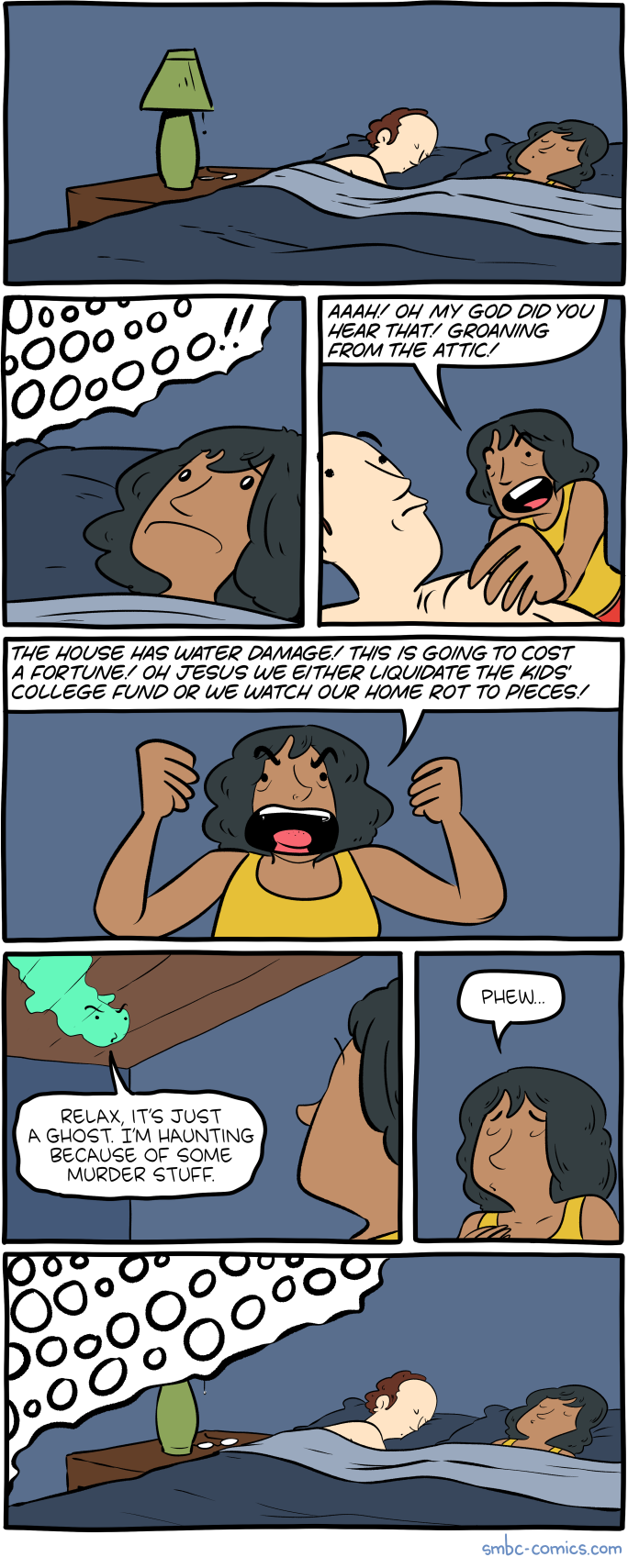
Click here to go see the bonus panel!
Hovertext:
Later the sound of wind blowing through a hole in the hose turns out to just be a werewolf or two.
Today's News:
Saturday Morning Breakfast Cereal - Chemicals
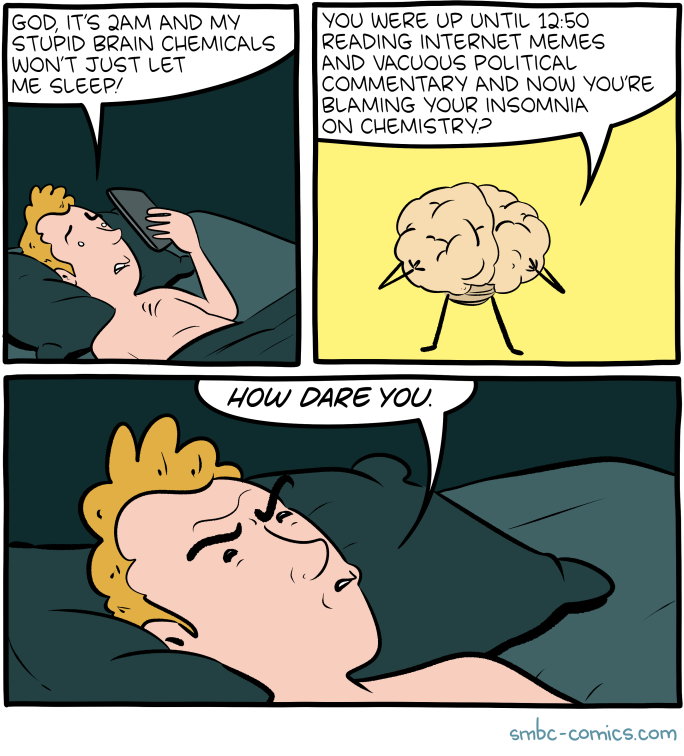
Click here to go see the bonus panel!
Hovertext:
This isn't a general observation, it's about you in particular.
Today's News:
Saturday Morning Breakfast Cereal - Angle

Click here to go see the bonus panel!
Hovertext:
If someone could get cracking on the CRISPR needed to do this, I'm gonna want it eventually.
Today's News:
Can Opener
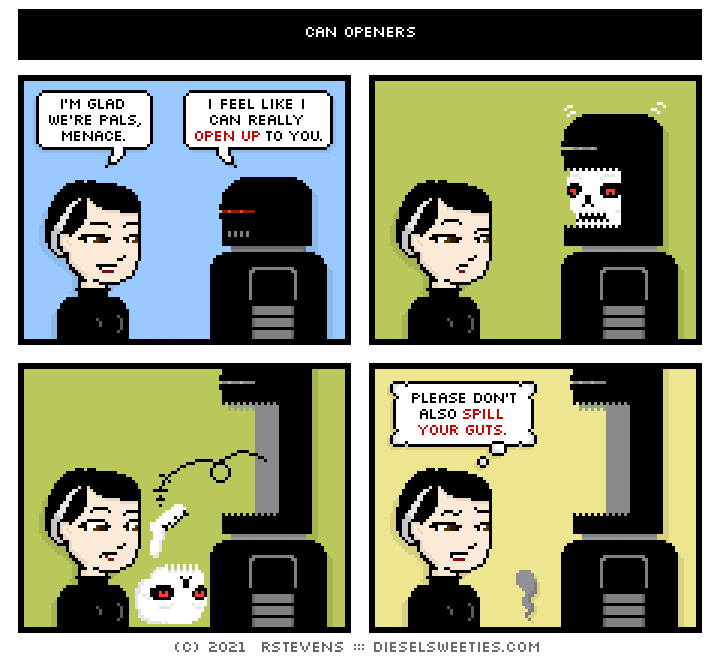
Tonight's comic is about the perils of opening up.