Click here to go see the bonus panel!
Hovertext:
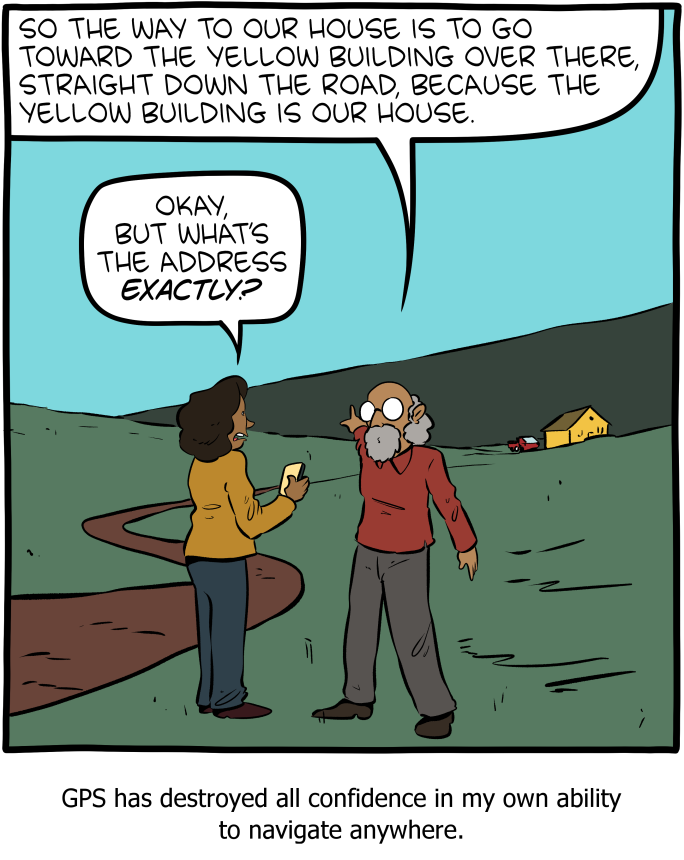
Just wait till we have the heads up display that tells you which children are yours without you having to remember.
Today's News:
Hovertext:
Just wait till we have the heads up display that tells you which children are yours without you having to remember.
In December 2022, I was removed from my role as dean of the Graduate College of Social Work at the University of Houston. The termination of my dean role was the result of my abolitionist views and my efforts to move the college toward incorporating an abolitionist perspective in social work since the summer of 2020.
The irony is that I was let go precisely for hewing to the ethos of my profession. Social work has been called to challenge injustice and fight oppression since its earliest origins in the late 19th century. This commitment was strengthened in 2021, when revisions to the National Association of Social Workers’ Code of Ethics added new language: “Social workers must take action against oppression, racism, discrimination, and inequities.” It is the only phrase in the code that uses the word must. If this is meant to be more than rhetoric, this call must include taking action against the systems and structures that perpetuate racism, discrimination, and inequality—among them policing, prisons, and child welfare.
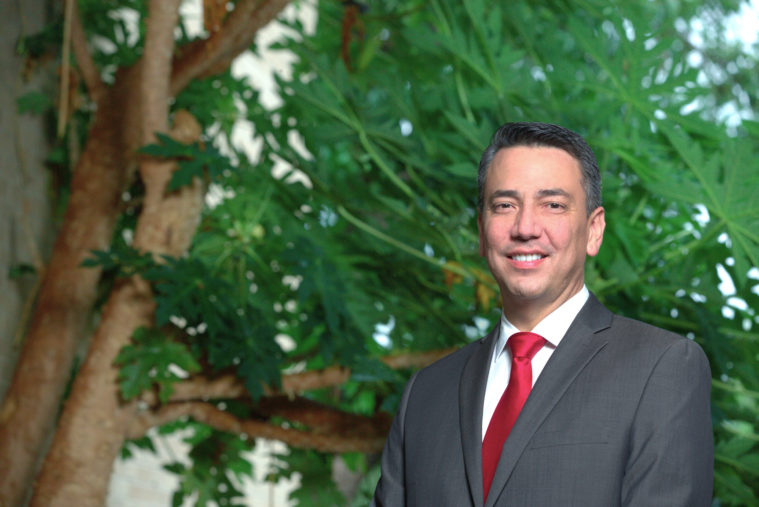
I began to identify as an abolitionist in the summer of 2020, though I had been deeply engaged in abolitionist inquiry for several years. My background is in the child welfare system; prior to entering academia I worked for several years as a child protective services caseworker and investigated allegations of child maltreatment. I witnessed the tremendous harm the system causes Black children and families, which led me to understand that the only solution was to completely eliminate family separation and foster care. I began studying the deep body of abolitionist theory and in 2020 worked with colleagues to launch the upEND movement, a collaborative effort dedicated to abolishing the child welfare system and building alternatives that focus on healing and liberation.
Too often, the idea of abolition is wrongly simplified to focus on “dismantling” an institution or system while its deeper meaning is erased. While abolition intends to end harmful, racist systems, its focus is on building a new, liberated society—a society free from violence and oppression where all members are truly equal. In applying this vision to policing and prisons, abolitionists seek to build a society where individuals have everything they need to thrive, where divesting from the police will not only reduce police violence, but will allow us to reinvest in the things that truly keep us safe—housing, jobs, well-funded public schools, access to mental health services, and other resources that families and communities need. Similarly, the movement to abolish the child welfare system seeks to build a society where all children and families have everything they need to experience safety in their homes and their communities, free from violence and harm and free of the societal conditions that create them. In this way, abolition is not simply about ending harmful, racist systems; it is about building a society where the need for harmful, racist systems is obsolete.
Too often, the idea of abolition is wrongly simplified to focus on “dismantling” an institution or system, while its deeper meaning is erased.
Concurrent to launching the upEND movement in 2020, the “defund the police” movement was rapidly gaining attention, and social work was thrust into the middle of these conversations. Seemingly overnight, politicians suggested that increased collaboration between social workers and police could serve as a potential solution to the racism and harm inherent in policing. This view was immediately endorsed by Angelo McClain, then president of the National Association of Social Workers, who wrote in a Wall Street Journal op-ed:
Strengthening social-worker and police partnerships can be an effective strategy in addressing behavioral health, mental health, substance use, homelessness, family disputes and other similar calls to 911 emergency-response lines. In fact, social workers are playing an increasingly integral role in police forces, helping officers do their jobs more effectively and humanely and become better attuned to cultural and racial biases.
I firmly believe this is not the right stance for social work. Rather, that time in our history presented an opportunity for social work to firmly disavow policing and to affirm that we would no longer be complicit in the harmful and racist outcomes this system produces. If our profession’s leaders were not willing to take this stance, others of us in leadership positions could. Along with my colleague Laura Abrams from UCLA, we penned an open letter to the National Association of Social Workers encouraging the organization to disassociate from policing, to call for divestment from policing, and to reinvest in families and communities. I penned an op-ed in the Houston Chronicle denouncing collaborations between social workers and police and calling on these collaborations to end. And most importantly, I wrote a letter to the students of the Graduate College of Social Work:
I’ve spoken often this summer about my support of efforts to defund the police. I believe in this movement because I believe it is not the police that keep us safe. In fact, as we’ve seen this summer and throughout our history, it is often the police who put us in danger. … But defunding the police is only a means to an end, and that end is abolition. … The harm that results from this system and others that operate under its auspices, and the oppression they perpetuate, will only end when these systems no longer exist.
This was followed by a multi-year series of conversations intended to educate our faculty, staff, and students on abolitionist principles and social work’s role in the abolitionist movement. We invited some of the nation’s leading abolitionist thinkers to help us consider our role in the movement and be prepared to educate our students on this rapidly emerging field of practice. I also made an important decision, in collaboration with our practicum faculty, to no longer place students in policing organizations for their internships.
These efforts were done to move our college into what I believe is the future of social work—a future where we live up to our values and work to end the harms that result from carceral systems. I knew there was some resistance among our faculty, but I believed this resistance was the result of a lack of understanding of abolitionist ideas, which could be addressed through continued conversations.
However, this resistance was too great among the four full professors in our college—the four who by nature of their titles and years of experience wield power in the eyes of our university. On December 13, I was informed by the interim provost that I had lost their confidence, and as a result, I was being removed as dean. I was told this was a culmination of my abolitionist views, in particular my decision to no longer place students in policing organizations, which these faculty believed had damaged our reputation. I was told these faculty had enlisted several alumni to write letters in support of this claim. I was further told these faculty feared my views would jeopardize their grant money. Perhaps most disappointing for me, I was told these faculty believed I had created an environment where, if someone did not identify as an abolitionist, they were presumed to be a racist. This was not true, but this perception among these faculty was enough for me to be fired.
In concluding this meeting, the provost shared his view that a dean should be neutral and not take stances on what some believe are controversial issues. On this point, I completely disagree. I believe it is the role of the dean to look toward the future and identify the emerging issues our profession should explore and embrace. When these issues are controversial or misunderstood, either in the profession or society, that should not deter us from exploring and advancing them.
Abolitionist ideas are ideas that must be advanced. If we truly wish to work toward a society free from racism and oppression, we can no longer continue to support the very systems that are responsible for perpetuating and maintaining them.
We also must continue these conversations to address the continued lack of understanding of the real promise of abolition. Ultimately, abolition is about hope. Hope for another world, and the belief that another world is possible. This is not an uninformed hope or a utopian dream. It is the hope for something we know is possible because the idea that it is impossible is not something we can accept. Those of us who share this hope know that it is within our power to bring about this new world.
Ultimately, abolition is about hope.
Although I was removed as dean, I know that the power to bring about change doesn’t come from a title or a position. Power comes from the collective of people who want to see the future of social work be something different than it is today. Power comes from the collective of people who want to see a society where we respond to problems in ways that prioritize healing and liberation. We hold the power to bring about the world we wish to see. And this power is greater than those who wish to oppress us.
The post An Abolitionist Gets Canned for Upholding the Values of Social Work appeared first on The Texas Observer.

The Orange Show Art Car Parade, 2022
The Orange Show Center for Visionary Art is seeking entries for its 36th Annual Art Car Parade, which will be held on Saturday, April 15, 2023, as well as volunteers to assist with an array of related events taking place that weekend.

The Orange Show Art Car Parade, 2022
The Parade features an array of types of cars, including art cars, painted cars, contraptions, lowriders, SLABs, performers on a decorated vehicle, and decorated skates or bikes. The deadline for individual/team artists, school/youth groups, and nonprofit 501(c)3 entries is Wednesday, February 15. Entry fees are $40 for individuals, artist teams, and school or youth groups, and vary based on annual budgets for nonprofits. Commercial entries that are promoting a business should contact Elaine Dillard at elaine@orangeshow.org for more information.

The Orange Show Art Car Parade, 2022
The organization asks that applicants read the following guidelines prior to submitting an entry:
– The Orange Show Art Car Parade Committee reserves the right to refuse any entry, including up until the start of the event.
– All entries must be suitable for family viewing.
– All entries must be decorated, embellished, augmented, or otherwise decked out, though entries cannot be taller than 13 feet.
– All entries must work. Please be sure your entry is in good working condition, has enough gas, fluids, etc. Your vehicle needs to be able to sit in the sun and idle for a few hours as the parade is slow moving and relatively long.
– If your entry is not street legal, you can tow it / bring it on a trailer and there will be a place at the parade to leave support cars and trailers.
– All motorized vehicles must have a fire extinguisher in the vehicle (at least 10BC). If there is fire/pyrotechnics involved, you must get prior approval from the Orange Show Center for Visionary Art.
– Entries must adhere to all laws, please note it is illegal to throw or launch anything from your entry, it is illegal to drink and drive, only licensed drivers are allowed to operate motorized vehicles, vehicles must have proper registration and insurance.
– All events are rain or shine, please plan accordingly.
– Please make sure you thoroughly read our Waiver & Indemnification Information, and check the box at the end of this form.

The Orange Show Art Car Parade, 2022
For more information and to apply, click here. Additionally, The Orange Show is seeking volunteers to assist with programming taking place from Thursday, April 13 through Sunday, April 16, including an artist luncheon, a family-friendly preview of the cars held at Discovery Green, and the Art Car awards ceremony. Click here to see these and other volunteer opportunities.
The post Last Call for Art Car Parade Entries appeared first on Glasstire.
The Late Late Show, hosted by James Corden, has reportedly been canceled after nearly 30 years of broadcasting, with CBS planning to reboot the Comedy Central series @midnight as a replacement. What do you think?
WASHINGTON—Releasing an involuntary sigh as she repeated what felt like the same conversation they had every month, an exasperated Vice President Kamala Harris reportedly explained her job to her aunt again Friday. “Come on, I’ve told you before—what about this is so confusing to you?” said Harris, who tried not to…
The following article contains spoilers for earlier Star Trek properties but doesn’t reveal specific spoilers about Star Trek: Picard season three, not that you should be watching it anyway.
It’s 2034 and Warner Bros. decides it needs to wring more cash out of Friends, the decade defining cultural juggernaut and sitcom behemoth. Imagine what that show would be like; A warm and cozy three-decades-later check-in on characters you know intimately well. After all, you probably spent your formative years watching them mature from young single New Yorkers to a series of families. Maybe it’ll tickle those nostalgia glands, reminding you of when you watched the show with your own family as a kid.
Unfortunately, the hotshot creator of the age decided they want to go in a different direction this time. This needs to be a dark and gritty miserycore grief orgy that better reflects our more rough-and-tumble times. After all, TV these days can’t be gentle or comforting, offer escapism or posit a better world, not since Trump, Brexit, Bolonosaro, January 6th and Ukraine. The creative team have got that quote on a poster in their office, the one about thetriumph of evil, and they’re not going to sit idly by, they’re taking a stand.
In the sequel, Rachel’s famous for her wellness TikTok that often makes allusions to “reclaiming” the US as a white ethnostate. Joey lost an arm while filming a movie and is now in prison after a failed heist to pay off his life-ruining medical debt. Monica’s got a crippling adderall addiction and slips away most nights to murder the neighborhood cats and dogs. Everything’s shot in ultra gloomy vision, and there’s no laugh track, jokes or a studio audience, just unrelenting misery.
This revival is dense with references to the Friends backstory as well as the broader Friends universe. Remember that Lisa Kudrow played Phoebe’s twin sister Ursula on Mad About You, right? If not, you better get yourself to Wikipedia to study up. I mean, it won’t be relevant to the plot, but it’s something you remember, so clap, go on, clap.
You might be wondering why such a project would be allowed to happen, given that it wouldn’t be fun for fans of the original series. Times change, characters age, but you can’t turn a cozy sitcom into Breaking Bad overnight and expect that to be satisfying. You’d hardly think it’d be a big pull for newbie viewers either, who’d probably steer clear if they weren’t already familiar with 236 episodes of intricate backstory. Nostalgia revivals don’t need to be slavish to their source material, but it’s hard to see the appeal for something so grim and unpleasant.
Apropos of nothing, let’s talk about the third and final season of Star Trek: Picard.
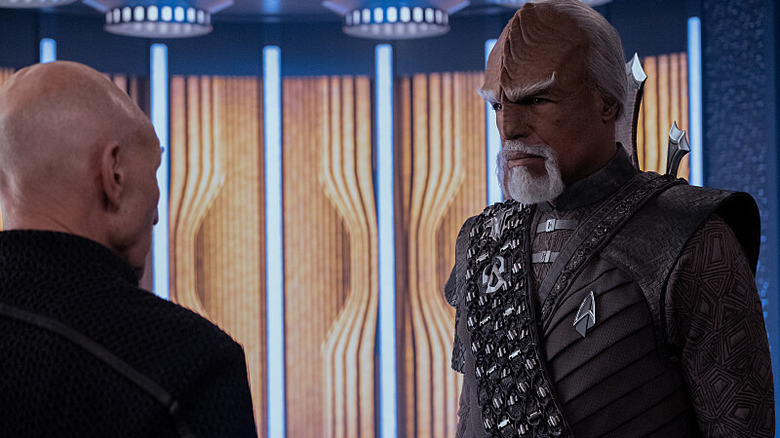
Season three was sold as something of a course correction for Picard after its first two deeply unpopular runs. It ditched all but Raffi from the roster of original characters created for it, and instead pulled in the stars from Star Trek: The Next Generation. As well as the returning Jonathan Frakes, Marina Sirtis and Brent Spiner, we’ll see LeVar Burton, Gates McFadden and Michael Dorn back in action. And, in the six of ten episodes I’ve been permitted to watch under strict embargo, I’d say only one of them feels like the character we know and love.
Unfortunately, while we have the other TNG stars, the creative team of Executive Producer Alex Kurtzman and showrunner Terry Matalas didn’t bother to grab any of that show’s lightness of tone. Picard remains a grimdark slog, shot on perpetually underlit sets and featuring a succession of increasingly-bleak setpieces. The plot is stretched so thin that the first four episodes turn out to be little more than an extended prologue for the rest. A prologue that could, I should add, have been an efficient, and possibly more enjoyable, hour. The story is so obvious, too, that you’ll be ahead of the characters pretty much non-stop as they stumble from one idiot plot to the next.
It’s maddening that we can see how much of the plot is blocking itself to ensure things can’t move forward too quickly. There’s a whole episode of gosh-isn’t-this-tense tension that could have been eliminated if anyone in Starfleet pulled out a tricorder and used it as God intended. In this utopian future, where science and technology really are advanced enough to look like magic, why does nobody employ the tools hanging from their waistband? Mostly because Paramount ordered ten episodes, and ten episodes is what we’re going to give them. Another episode has a time-filling punch fight runaround because it’s now somehow impossible for a serving officer to use a Federation ship’s intercom system to call the bridge and warn them of impending danger.
Picard is one of those series where you often find yourself shouting at the screen as the next stupid moment unfolds in front of you. Even worse is that the show’s creative team seem to think that it’s us, the audience, who are deficient in the thinking department. There is scene after scene in which characters repeat the same lines back to each other because the crew assume we’re not paying attention. Because of the limits on spoilers, I’ve re-written a scene to match the sentiment, if not the words verbatim, so you can get a sense of what to expect:
CREW 1: The ship is being pulled closer to the black hole’s gravity well.
CREW 2: We do not have enough power to pull ourselves away, sir.
RIKER: Are you saying that we’re dead in the water?
CREW 1: We will be passing the black hole’s event horizon in 17 minutes.
RIKER: We’re dead in the water and we’re sinking.
PICARD: We’re going to be dead in 17 minutes, Will, unless we can find a way to solve this.
RIKER: We’re sinking into quicksand, and there’s no time to grab a helping hand.
The irony is that this run is so thicket-dense with references that the show basically assumes that you’ve already seen pretty much everything produced during Trek’s gold, silver and bronze ages. But, to make sure nobody’s left behind, everyone has to speak in exposition so hamfisted that, now that this is over, I think Michelle Hurd deserves personal injury compensation. Raffi gets saddled with so many cringe-inducing lines where she states, and restates and re-restates the obvious that I started grasping fistfuls of my own hair to relieve some of my discomfort.
And as for the storyline, what can I say? It’s clear that Alex Kurtzman is only comfortable writing in a single register. His go-to is usually a militaristic, testosterone-fuelled paranoid Reaganite fantasy in which the real villain was our own government all along. He did it in Into Darkness, Discovery season two and even the first season of Picard – to the point where Starfleet is now so lousy with double agents that all of their schemes fail because the saboteurs are all too busy sabotaging each other’s plans instead of that of the wider Federation.
If Picard is nothing else, it’s nearly pornographic in its use and misuse of franchise iconography. I always felt that Jeff Russo’s Picard theme sounded more like the library music for a corporate advert than the makes-your-heart-soar theme a Star Trek deserves. And here, it’s been ditched in favor of Jerry Goldsmith’s sumptuous, nectar-for-the-ears score for First Contact. The first title card is a direct pull from Wrath of Khan, and pretty much every element therein is an elbow to the ribs, reminding you of older, better Star Trek movies and TV series.
An early scene has a character “hijacking a starship” under false pretenses while it’s in spacedock. You know, the mushroom-shaped megastation orbiting Earth from The Search for Spock onwards. And because we’re already going beat-for-beat for a sequence xeroxed from 1984, said starship even jumps to warp as soon as it’s past the exit doors. Despite the fact that the sort of hardcore Trek fans who would spot the reference would also note that you’re not meant to jump to warp while inside a solar system when there’s no urgent need to do so.
I’ll admit, this is postgraduate degree-level Star Trek nerdery, but you can’t have it both ways: If you’re trying to placate hostile viewers with the excessive fan service, you can’t then complain when they point out that you’re doing it all wrong.
The show’s teaser trailer already revealed we’re getting an overstuffed roster of villains to round out the run. Amanda Plummer’s captain of an enemy ship that shares a design with the Narada from Star Trek ‘09. Then there’s Daniel Davis’ holographic Professor Moriarty, as well as Data’s evil twin brother Lore. Both of these sorta make sense in the context, but there’s a hell of a lot of narrative scaffolding to explain away the fact that Brent Spiner is now 74 years old. (The dude looks good for it, but it’s hard to play an ageless android when time marches on and the de-aging CGI budget is spent on smoothing out Patrick Stewart’s face for a single flashback and the pointless needle-drops that open every episode.)
Now, before you scurry off to Memory Alpha to confirm that Moriartywas locked away in a holobox at the end of “Ship in a Bottle,” and Lorewas disassembled at the end of “Descent Part 2,” yes, they were. Try to remember that showrunner Terry Matalas and executive producer Alex Kurtzman treat Star Trek’s continuity less as something which informs storytelling and more as a series of shiny objects to keep us all amused when the plot sags or anyone has any time to think about what’s going on.
I’ll also add that the trailers and promotional material have very intentionally kept a lot of material back. There are more classic-era heroes and villains crowbarring their way into the story in the way that, if it were fanfiction, would seem excessive. But, if I’m honest, the second or third time someone, or something, familiar popped up, I wasn’t whooping and cheering, I was sighing. The Star Trek universe is vast and broad and deep, but Picard makes it feel like a puddle where everyone knows each other, and everyone under the age of 30 has grown up watching The Next Generation. If you’re serving in the US Navy, for instance, how likely is it that you’d know the ins and outs of every exploit of even the most well-traveled combat vessel?
Now, I don’t have the language or experience to discuss this properly, and I’m aware of others who do feel differently. This is just my opinion, but I think the depiction of drug and alcohol use in Picard has always felt off. And since I can’t talk about the third season, I’ll talk about the first, where something very similar happened and is just as vexing here as it was back then. Raffi deals with her son’s rejection by relapsing, but then mere hours later, she’s back at her station and advancing the plot. I don’t recall a sense that her use clouded her judgment and I don’t think it was discussed subsequently – so despite the portentiousness in the build-up, it was depicted almost like someone just having a bad day and knocking back some drinks. I’m not saying that’s a bad thing, because there are plenty of people who use drugs and it doesn’t impact their professional lives at all. (Read any Making-Of book about The Original Series and you'll notice more than a few references to the production team's drug use.) But if you’re going to write a plot where scenes hang on the will-she-or-won’t-she tension of relapse, but it all turns out to be hunky dory straight after, what was the point of depicting any of this in the first place?
Then there’s the violence, and the casual way that it’s doled out, especially in the show’s numerous interrogation scenes. I’m not advocating for forced confessions, but given Starfleet’s advanced science, and the Federation has a planet of literal telepaths at its disposal, why are we always punching people in the nose with a butt of a phaser pistol? I mean, I know why: It’s a nerdy sci-fi show play acting as a muscular basic-cable drama, but that doesn’t mean it works. I’ve often theorized that many modern-day Star Trek creators would much rather be over the hall making their own Star War instead. Maybe I’m wrong, and the Picard crew is really nostalgic for the hamfisted Bush-era politics of 24.
It was always going to be hard to pull Picard out of its creative slump that started back when the show was greenlit. If there was ever a character who we’d seen grow, change, mature and treat his own life with more kindness, it was Jean-Luc Picard. Some of TNG’s best episodes forced Picard to consider his own life, his history, his mortality, his motives, including the series’ grand finale. “All Good Things” isn’t just good Star Trek, it’s one of the best series finales ever made, encompassing the entire breadth and depth of The Next Generation in one glorious sweep. And between seven years of TV and four less essential but still important movies, he was done.
I wrote somewhere, I forget where, that a smarter idea would have been to center the action on a less-well served member of the Enterprise D crew. I’d have been second in line to watch a Geordi LaForge spin-off (behind uber fan Rihanna, of course), and there’s plenty to explore there. Or a Beverley Crusher spin-off, as she solves people’s problems as a simple country space doctor back on Earth or on some far-flung planet. Maybe a sci-fi version of In Treatment fronted by Marina Sirtis could have worked, and would have certainly cost less than this.
All of which would be preferable to what we got, which despite initially having a Pulitzer Prize-winning novelist at the helm, was two years of go-nowhere, do-nothing bore-a-thons. Its brief moments of cleverness drowned out by the baffling character decisions, tin-eared dialog and ligneous acting. And both had plots which would have struggled to fill a movie stretched out across a painfully slow ten hour runtime.
And that’s before we get to the moralizing, which had characters pointing at a bad thing and saying “thing bad.” I don’t think the second season’s 26 percent rating on Rotten Tomatoes is because the (inexplicably) conservative wing of Trek fandom was outraged that a show about happy space communists solving problems while remaining friends suddenly “got woke.” Good, old-fashioned Star Trek at least had the good grace to cloak its progressivism in allegory that could slide past the otherwise closed minds of some of its viewers. By comparison, Picard felt like the first draft of a high school theater production made the term after the teacher had explained agitprop.
Maybe that’s why I feel so annoyed by Picard, because all of the things that are wrong with the show, and its kin, are examples of amateurishness. Amateurish plotting, amateurish dialogue, a lack of thoughtfulness about the material, what it says, or what it’s doing. Just an endless parade of big, dumb, brash, po-faced melodrama used in place of some sort of maturity or integrity. I don’t expect Star Trek to be brilliant all the damn time, but I do expect a minimum standard of something to be upheld. And this falls so far below it, it’s hard to call it Star Trek. Some people will call that gatekeeping, but Star Trek can be anything it damn well wants to be, so long as it's competently made and halfway entertaining.
The constant callbacks got me thinking about the period when Nicholas Meyer was, directly or indirectly, the major creative force behind Star Trek. It’s been 32 years since his 1991 swansong, The Undiscovered Country, and it remains a high-water mark of cinematic Trek. Drawing to a close the story of The Original Series crew, Meyer didn’t go for nostalgia, but savaged his characters, exposing their flaws, their bigotries, their failings. There was redemption, and heart, and it never needed Meyer to stage endless close-quarters phaser-fu fights in unlight rooms.
But that was a filmmaker with a clear vision, and the good graces to really drag his characters in the dirt before washing them clean. Imagine what would happen if Picard encountered any of the same level of subtext – they’d probably spend an hour running from it before beating it over the head with the butt of a phaser rifle and then spend the next hour feeling glum about it. If nothing else, I’d say don’t even watch Picard for ironic kicks, lest Paramount think it’s somehow a runaway hit and continue to produce crap like this.
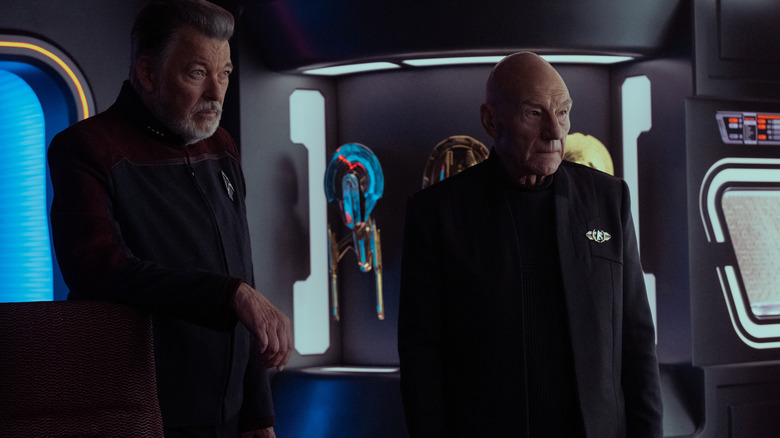
It's worth remembering, even with some of the franchise's better shows, that no "Star Trek" series started strong ("Strange New Worlds" perhaps notwithstanding). "Star Trek" might serve as the prime example of the old television criticism cliché "It doesn't get good until season three." Luckily, the characters and settings were typically strong enough to keep casual viewers interested until the shows improved.
As detailed in the documentary "Chaos on the Bridge," "Star Trek: The Next Generation" famously stumbled for two seasons as writers and producers jockeyed for power behind the scenes. It wasn't until the show underwent a massive restructuring at the start of its third year that it hit its stride. A new writing ethos dictated that "Next Generation" was going to be more character-focused, often centering individual episodes on a single member of its ensemble. Through such an approach, viewers saw how each character developed a unique working relationship with each other character. Cmdr. Riker (Jonathan Frakes) and Lt. Worf (Michael Dorn) are going to have different conversations than Counselor Troi (Marina Sirtis) and Lt. Cmdr. Data (Brent Spiner).
The individualized approach also gave viewers a better sense of how the U.S.S. Enterprise worked, allowing them to reside extensively in each department. It's also important to note that Trekkies are massive vehicle fetishists, and exploring the technical operation of a starship is just as important to fans as getting to know the characters.
"Star Trek: Picard" may now also be said to follow the unspoken "Star Trek" rule of threes. After two utterly abysmal seasons — seasons marked by inappropriate violence, terrible writing, and the introduction of weird, dumb technologies (there is a magical bottle that can summon Q) — "Picard" seems to have finally hit its stride as well.
The third season of "Picard" wisely flees into the arms of comfort, putting its characters in more familiar settings, reiterating their relationships, and drawing the story to a more intimate level. This season has famously been advertised as starring most of the "Next Generation" cast, reuniting on screen for the first time since "Star Trek: Nemesis" in 2002. "Picard" will catch up with each NextGen character one by one, explain where they have been for the past 20 years, and reunite them very gradually and in an organic way. It won't be until the show's sixth episode that all the characters will finally appear in the same episode. That restraint is greatly admired.
Previously, "Picard" has been a very violent show, with every single character regularly committing murder. Seven of Nine (Jeri Ryan) previously on "Star Trek: Voyager" had transformed into a violent bounty hunter who says things like "Never again will I kill someone just because they deserve it." Raffi (Michelle Hurd) was a miserable drug addict. Capt. Rios (Santiago Cabera) was a drinker left marked by murders in his past. Even the mild-mannered Dr. Jurati (Alison Pill) poisons an old boyfriend. The characters had no reason to relate on a one-to-one basis, there were no episodes devoted to any one department or field of expertise. Importantly, the character didn't have a centralized workplace where they would regularly convene, often fanning out into the galaxy, separated by circumstance. The first two seasons were sprawling, violent messes that had none of the hallmarks that make Trek Trek.
Season 3 of "Picard" takes place largely on a Federation starship, and most characters are in uniform, behaving professionally. It's astonishing how refreshing that feels to an old Trekkie like me.
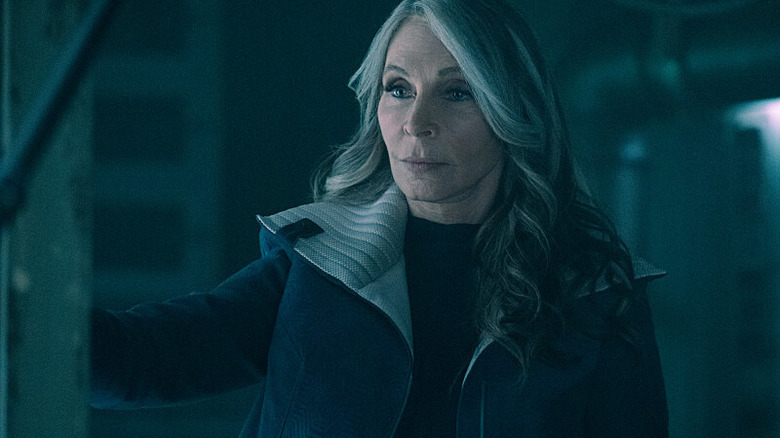
The ship in question is the U.S.S. Titan, Riker's old command, now captained by a new character named Capt. Shaw (Todd Stashwick). Shaw is a fascinating and wonderful new character, in that he's a rude, pushy jerk and self-described a-hole. His command style is curt, and he often berates his inferior officers. I wouldn't want to work for Capt. Shaw, but I admire a different look at starship command styles. One can tell that, once you are trusted, Shaw would soften a smidge.
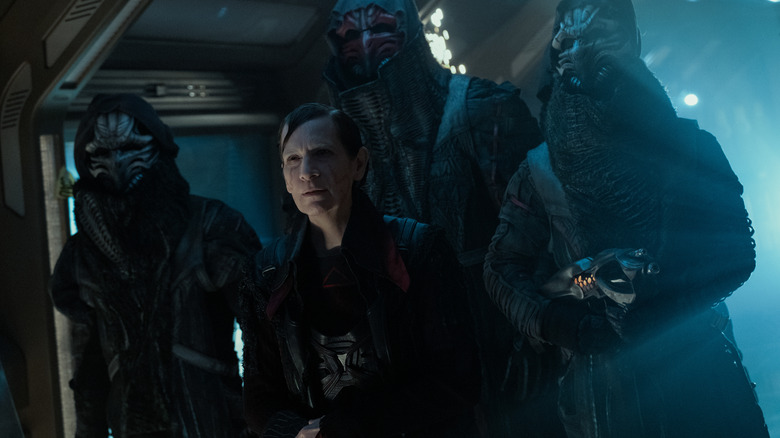
The third season doesn't begin promisingly. Dr. Crusher (Gates McFadden) has been on board a tiny vessel of her own, living with a mysterious young man named Jack (Ed Speelers). She is being hunted by mysterious aliens in masks and has to kill off a few of them when they intrude on her ship. She sends a distress call to Picard (Patrick Stewart), asking for help. One might immediately assume that the showrunners have transformed her and perhaps all her returning co-stars into violent murderers. Luckily, that will only prove to be true for one other character. The third season of "Picard" will not be about how everyone has devolved into bitter, angry death machines.
The elderly admiral Picard reunites with his old first officer Capt. Riker on the eve of a massive Federation anniversary (they are both to make speeches at an upcoming gala) to discuss how they might rescue Dr. Crusher. Thanks to subterfuge, and the help of the Titan's new first officer Seven of Nine, they will attempt to commandeer the ship. When they arrive at Dr. Crusher's remote location, they find her beset by a mysterious new murderous supervillain named Vadic (Amanda Plummer) who will chase them into a nebula and engage in battle.
In a subplot, Raffi is working by herself to investigate the theft of a powerful, portal-based weapon that has been stolen from a Federation storehouse. Who she's working with and the true nature of the storehouse will be revealed later in the series. She will also discover the presence of an old "Star Trek" antagonist that hasn't been seen in any series for many years.
This season of "Picard," perhaps eager to prove how Trek-like it can be when compared to its previous seasons, cribs very, very heavily from "Star Trek II: The Wrath of Khan" and "Star Trek: First Contact," the two most action-packed of the pre-Kelvin Trek films. In addition to the villain-who-wants-revenge trope (also used in "Nemesis," the 2009 Trek, "Star Trek Into Darkness" and "Star Trek Beyond"), there is an extended sequence inside of a space cloud where the two ships can't necessarily see each other. Additionally, a huge amount of Gerry Goldsmith's old scores are used, including his entire closing credits orchestration from "First Contact." "Picard" also employs a recognizable BWAAAM-like musical sting not heard in Trek since the 1980s.
Despite these obvious callbacks and familiar locales, however, "Picard" is not resting on its nostalgic laurels. It has, in its first six episodes, been quite ginger with its references and guest stars, meeting them out carefully and organically. This is not an Easter egg hunt like "Lower Decks."
Indeed, the fan-service Easter eggs might be this season's weakest element. In episode six -- perhaps the show's most unabashedly embarrassing -- the series will dive headlong into nostalgia, and attempt to milk emotions out of mere familiarity. There will be a sequence where some familiar vehicles make notable guest appearances, and several recognizable theme songs will play on the soundtrack. "Picard" has, until that point, not had many rib-poking "remember this??" moments. It seems that six hours into this "First Contact"-like movie, the showrunners couldn't help themselves. This episode also. has some references and background gags that will elicit more cynical eye-rolls than nostalgic exhilaration.
Luckily, it's only been a small moment in an otherwise striking solid season, full of great characters, good relationships, and blanket-like Trek comfort.
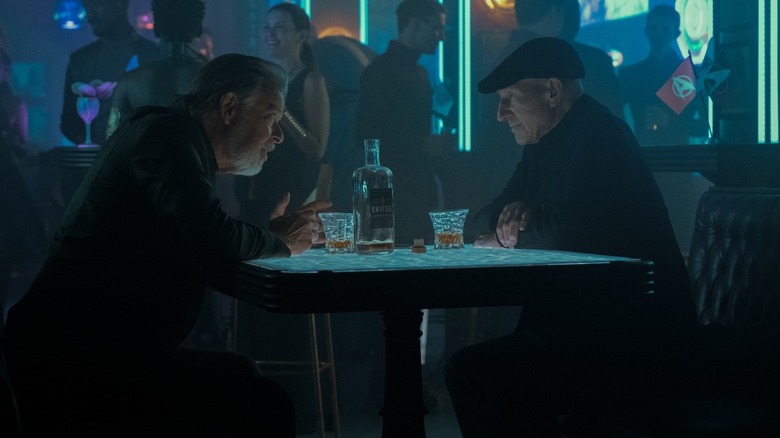
Additionally, the show knows Trekkies are ship fetishists, and spends a lot of time looking at ship exteriors, letting the audience memorize their lines and details. This is wise and also refreshing. After the first two seasons of "Picard," I still couldn't recall what the La Sirena looks like. Indeed, there is a scene early in the first episode of "Picard," called "The Next Generation," where Riker, sitting in a bar, notes that it is selling starship collectibles. The collectibles on screen are none other than the scale models currently being sold by the recently-shuttered collectible company Eaglemoss. It's rare that "Star Trek" will attempt to hawk its own merch.
Overall, the third season of "Picard" is a head and shoulders above its predecessors. It may be more predicated on action and mayhem than NextGen, but so was "First Contact," and, well, that film wasn't terrible. This is, essentially, the best NextGen movie that we never got. This old Trekkie is grateful for it.
"Star Trek: Picard" season 3 premieres February 16, 2023 on Paramount+.
Read this next: The Main Star Trek Captains Ranked Worst To Best
The post Star Trek: Picard Season 3 Review: The Best Next Generation Movie We Never Got appeared first on /Film.


Read more of this story at Slashdot.

Born, a candy company executive known as the "Father of Peeps" for mechanizing the process to make marshmallow chicks, has died. He was 98.
(Image credit: Just Born via AP)

A security vulnerability report claimed that a particular program did not store its saved passwords in the Windows Credential Manager securely:
Microsoft’s Contoso program does not encrypt user passwords before saving them in the Windows Credential Manager. As a result, any program that runs with the user’s credentials can read the passwords. The Contoso program should save encrypted passwords in the Credential Manager.
There was another report that put the blame on Credential Manager:
Credential Manager should require administrator privileges to read a user’s saved credentials.
The perceived issue here is that one program can read the passwords saved by another program, and that other program should encrypt its paswords so that they can be decrypted only by that program. Rogue programs enumerating the contents of the user’s saved credentials would be stymied because they don’t know how to decrypt the data.
But if you have gained the ability to execute code in the context of the victim, then you’ve already won. You can do anything the victim can do!
It’s like saying, “I am a bad guy from a 1960’s spy movie. I have successfully hypnotized the victim into obeying all of my commands, while nevertheless behaving perfectly normally. I tell the victim to go to the bank, withdraw all their money, and bring it to me. This is a security flaw in the bank. It should not allow hypnotized people to withdraw money!”
The bank did its job, which is to confirm the identity of the person withdrawing the money. The person at the counter did nothing to draw suspicion, and all the paperwork checked out, so they got their money.
The system sees that there is a process running as the user, and that process is asking for the password that the user had saved earlier. Now, certainly, users are permitted to access the passwords that they had saved (that being the point of saving the password), and the Credential Manager is correct in returning those saved passwords to that user. The information is not being disclosed to other users: Users can access their own saved passwords, but they cannot access the saved passwords of other users.
Encrypting the data before putting it in the password cache sounds like it would stop an attacker, but it doesn’t. Since the original program must be able to decrypt the data, the attacker can analyze the original program and re-run the decryption function. In the attacker is being lazy, they can just run the original program and set a breakpoint immediately after it decrypts the password.
You might think that you could protect yourself from hypnosis-induced bank withdrawal by telling the bank, “Before giving me any money, make sure to ask me this secret security question.” But that doesn’t help, because even though you’ve been hypnotized, you still know the answer to the secret security question. The hypnotized-you goes to the bank, the bank teller asks the security question, you answer it, get your money, and give it to the 1960’s evil bad guy.
And of course requiring administrator privileges to retrieve your own saved passwords would be a non-starter. Every time you want to use a saved password, you have to call your administrator to get it for you?
Allowing users to retrieve their own saved passwords is perfectly normal behavior. No security boundary is crossed, and the information is disclosed only to the user to put the information there in the first place.
If you let someone run arbitrary programs under your identity, you have handed over control of everything tied to your identity, and that includes your saved passwords.
Bonus bogus vulnerability: Suppose you create a shortcut to the command line runas /savecred /user:.\administrator someprogram.exe, and you run the shortcut, and an administrator comes over and types their password when prompted. A security vulnerability report claimed that there is an elevation of privilege vulnerability because an attacker can edit the shortcut to read runas /savecred /user:.\administrator cmd.exe and gain an administrative command prompt.
That’s true, but that’s also the whole point of /savecred.
The /savecred option means “Use the saved credentials from the Credential Manager, or prompt for credentials (and save them in the Credential Manager).” They are not saved in the shortcut at all. Not that saving them in the shortcut is even an option, because you can run runas from a command prompt, and in that case there’s no shortcut.
If you call over an administrator and get them to type their password into your system, then you found yourself a gullible administrator. In this case, what you tricked them into doing is adding their password to your password cache. It’s like calling an administrator to your Web browser and asking them to type their password into a Web site. That password is going to be saved in to your Web browser password cache, and you can now extract it from that cache and reuse it for anything you like.
The point of /savecred is to let you save your own credentials so you don’t have the hassle of typing them over and over into places you use often. If you can trick an administrator into putting their password into your saved credential cache, then more power to you (and shame on the administrator).
Don’t be a gullible administrator.
The post It rather involved being on the other side of this airtight hatchway: Reading the user’s saved passwords appeared first on The Old New Thing.
One of my friends worked on USB way back in the early days. As you would expect, things were rather unreliable back then, seeing as the entire platform was getting off the ground, and the specifications were still being written. I remember one email he sent me that said, simply, “Just letting you know, I had to reboot my mouse.”
Anyway, the committee members fell into three geographic areas: East Asia, Western United States, and Western Europe. If you check a globe, you’ll see that these three geographic areas are evenly spaced, almost exactly eight hours apart from each other.
The committee decided that their regular telephone conference calls¹ would be conducted at 8am local time for one geographic area, 4pm local time for the second, and midnight for the third. And to keep things fair, the meeting times would rotate, so that each group had the undesirable midnight meeting only one third of time.
It struck me as an odd quirk of fate that the major technology centers of the mid-1990’s were roughly equally spaced around the globe in terms of time zones.
¹ Neither VoIP nor video conferencing had yet been established, so these meetings were conducted via telephone.
The post The frustration of finding a suitable time to hold a meeting when the participants are evenly spaced around the globe appeared first on The Old New Thing.
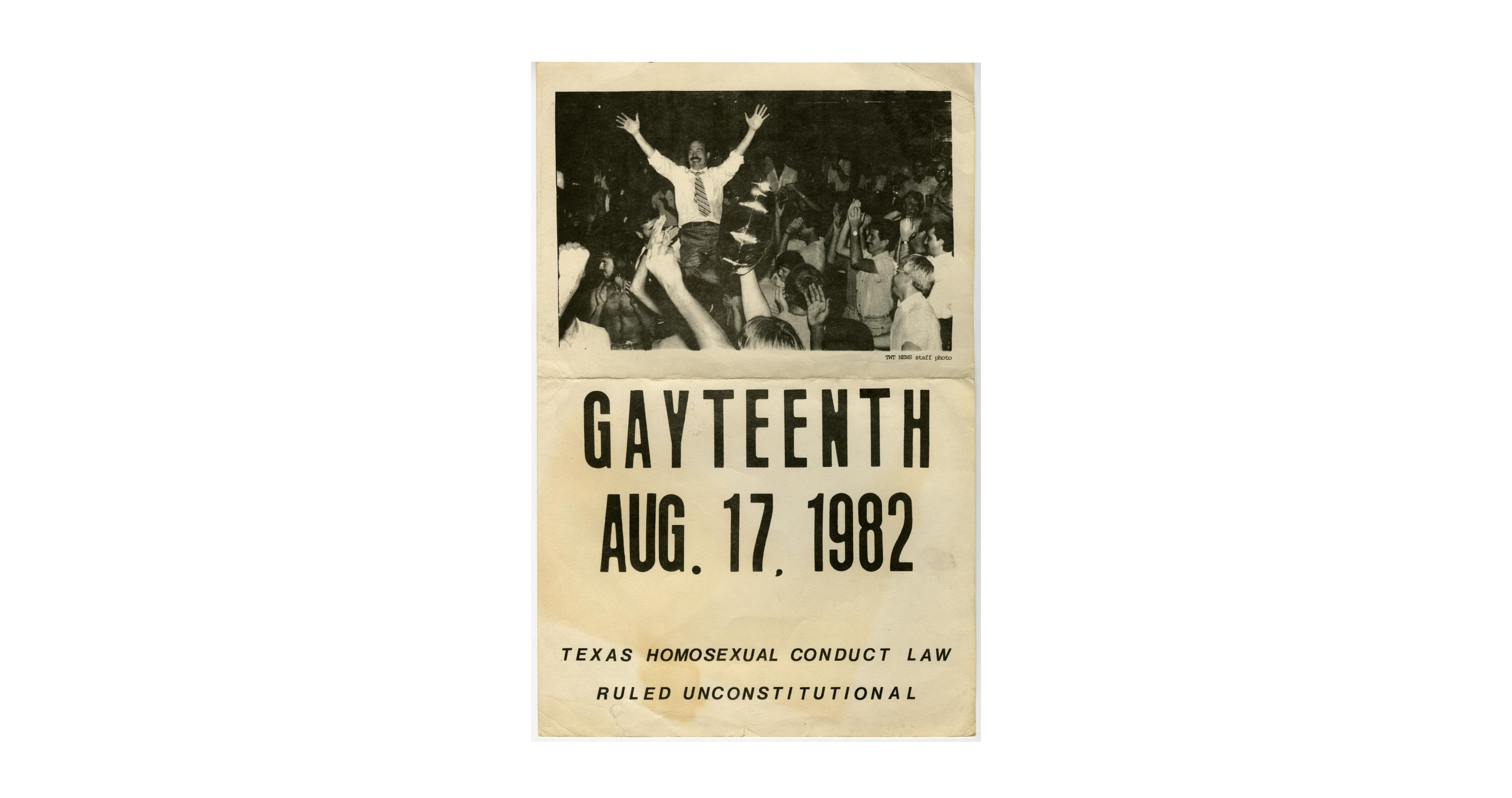
On August 17, 1982, LGBTQ+ Texans celebrated “Gayteenth,” as activists called it at the time—a reference to Juneteenth, which commemorates news of slavery’s end reaching Texas. On that day in Dallas, a district court judge ruled in favor of plaintiff Don Baker in Baker v. Wade, declaring our state’s sodomy law unconstitutional. Baker, who lost his job with the Dallas Independent School District after coming out on TV, had sued the state for violating his right to privacy and equal protection under the laws.
“I want gay people in Texas to understand that this is their victory—that they should internalize this and feel good about themselves,” declared Baker, who became a figurehead of the struggle to decriminalize queer relationships.
The Fifth Circuit Court of Appeals overturned the decision. The Supreme Court, which had recently ruled such laws constitutional in Bowers v. Harwick, declined to hear the case. Anti-sodomy laws in Texas and elsewhere would remain on the books and in effect until Lawrence v. Texas 21 years later.
The history of Lawrence represents LGBTQ+ people’s struggle to be fully seen as human rather than as criminals and deviants, argues Wesley G. Phelps in Before Lawrence v. Texas: The Making of a Queer Social Movement, to be published this February by the University of Texas Press. Phelps, an associate professor of history at the University of North Texas, links the legal saga to the human struggle that inspired it and in the process sketches out a path for civil rights battles to come.
In the June 26, 2003, ruling, the Supreme Court of the United States overturned Texas’ anti-sodomy law, thereby striking down all similar remaining laws around the country. This massive civil rights victory freed queer people from being presumed criminals simply because of their sexual practices—a proxy for queer identity itself. Phelps places that legal decision within a web of linked historic events, from the Stonewall riots to the AIDS crisis, from Roe v. Wade to more recent victories like Obergefell v. Hodges, which legalized same-sex marriage nationwide in 2015.
“While Lawrence marked a pivotal moment,” Phelps writes, “the case should be viewed as the culmination of a social and legal revolution that had been building for nearly three decades, rather than an unexpected development.”
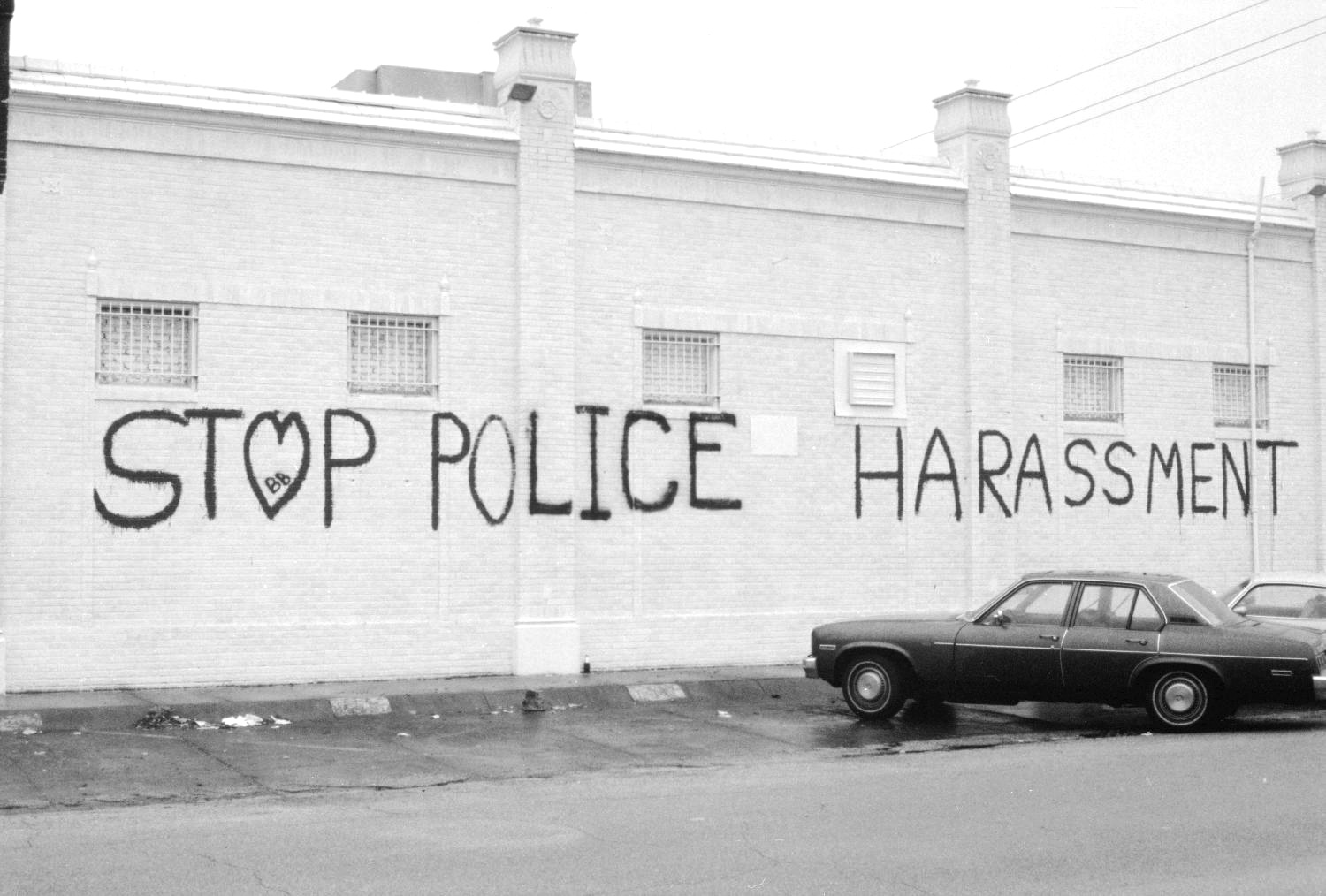
Phelps has a gift for connecting historic turning points to familiar places within our state, including foundational gay clubs like Dallas’ Village Station and Mary’s in Houston, which became hubs of community organizing during the fight for queer equality. He invokes other figures who will be recognizable to Texas readers, including Ray Hill, the iconic gay civil rights leader who died in 2018, and former Dallas District Attorney Henry Wade of Roe v. Wade, known for supporting high-profile raids on both abortion providers and LGBTQ+ gathering places. Phelps even explores the role Texas media played in advancing or limiting progress—the Dallas Morning News editorial page, for instance, warned that overturning sodomy laws would result in “the ‘normalization’ of a practice deeply opposed by society,” while the Texas Observer (naturally) advocated for repeal.
For Phelps, the story starts in the late 1960s, when the Texas Legislature impaneled a committee to modernize the legal code. In the preceding years, a combination of the nascent LGBTQ+ rights movement and the Kinsey Reports—landmark studies of human sexuality that revealed practices like masturbation, oral and anal sex were natural and commonplace among the human species—had put pressure on legislators to reform sodomy laws.
“The persecution of homosexuals dates to the inception of the Christian hegemony … If the antiquity of the persecution partially explains the resistance to change, it also gives some indication of an enormous amount of accumulated human suffering.”—David Morris, in the Texas Observer, March 1973
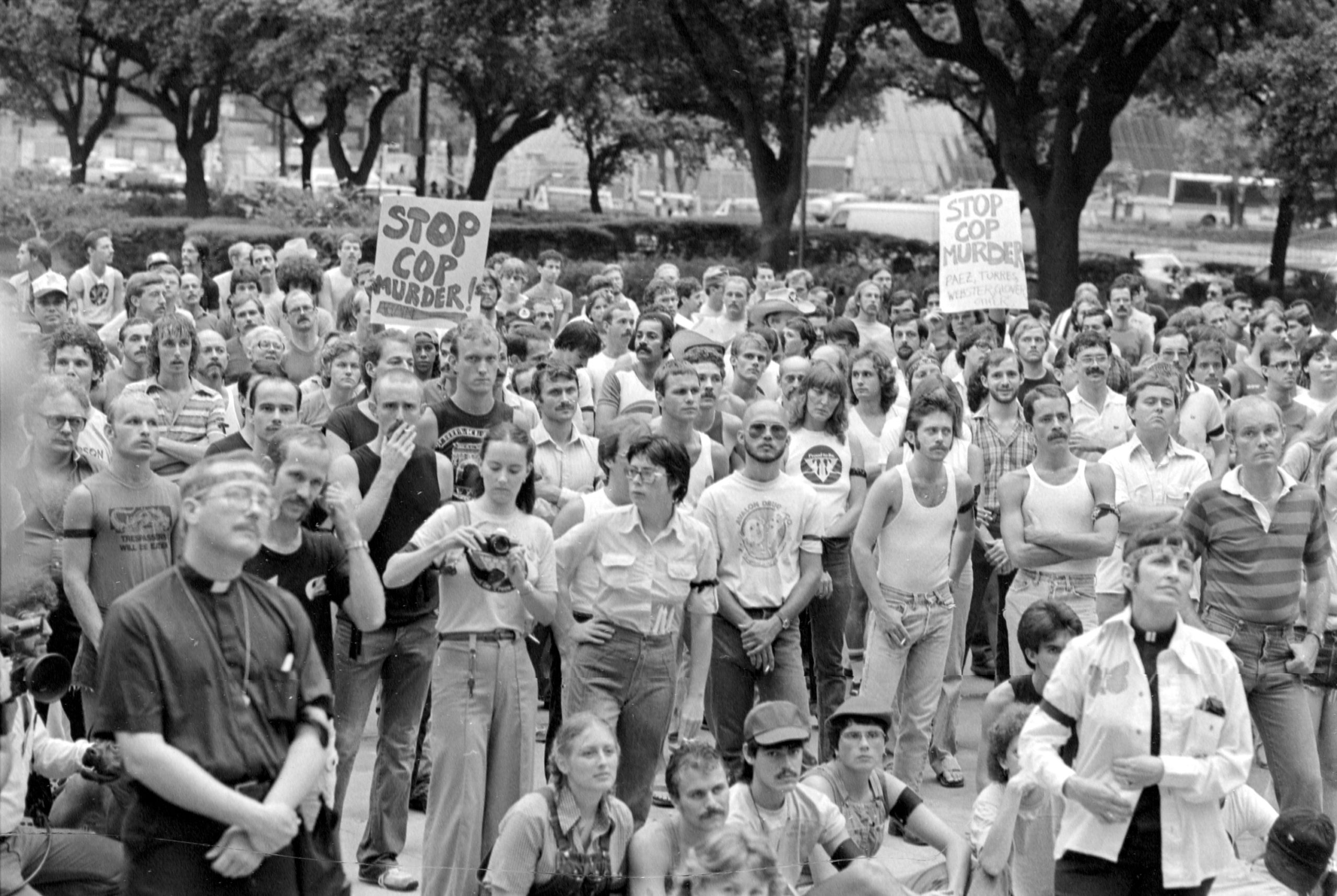
Although the law was rarely enforced, anyone—even married couples—could face a felony charge with a sentence of two to 10 years in prison if caught engaging in anything other than penile-vaginal intercourse. However, many politicians and police couldn’t stomach the idea of explaining to small-town constituents why they’d legalized “gay sex.” In 1968, Bexar County District Attorney James E. Barlow warned that loosening sodomy laws would lead to “every deviate in the United States coming to Texas.”
After multiple delays (some engineered by Wade) and years of negotiations, in 1973 the Legislature adopted a reformed penal code with far worse sodomy laws. The new version spared consenting heterosexuals, married or otherwise. Same-sex partners, meanwhile, faced a class C misdemeanor with a $200 fine for engaging in oral or anal sex.
With the 1973 changes, for the first time Texas law singled out LGBTQ+ people as a distinct class deserving opprobrium. Phelps documents the far-reaching effects of this change, which included an increase in brutal police raids, gay bashing, and murders while also inspiring community defense patrols, fundraising for court cases, and other activism.
Phelps closed the book with some cautionary notes for the next generation of civil rights heroes. “The struggle for equality waged by queer Americans … would not end with a revolutionary decision by a court of law,” he wrote. Instead, it will be an ongoing struggle fought simultaneously in the courts, legislative bodies, and the streets.
The post Before ‘Lawrence’: From Sodomy to Queer Liberation appeared first on The Texas Observer.
This post, my employee missed work after a night of drinking , was written by Alison Green and published on Ask a Manager.
A reader writes:
An employee I manage called out today due to being hospitalized over the weekend for alcohol poisoning. They went out to celebrate their birthday over the weekend and overdid it on the partying. I realize this is out of work conduct; however, it is affecting the employee’s job because they couldn’t come to work. Do I have a leg to stand on if I have a serious conversation with the employee about their judgment and how this type of behavior could negatively affect their employment with our company?
I answer this question — and three others — over at Inc. today, where I’m revisiting letters that have been buried in the archives here from years ago (and sometimes updating/expanding my answers to them). You can read it here.
Other questions I’m answering there today include:
This post, what’s up with this rude and entitled networker? , was written by Alison Green and published on Ask a Manager.
A reader writes:
A friend of mine works in community development and occasionally comes across young people who she thinks would do well to learn more about my field. She recently asked permission to put me in touch with a college sophomore. Mine is a high paying, prestigious, and extremely interesting field that most college students wouldn’t know about unless someone pointed them in that direction. It’s my second career; I’ve been in the field over 10 years and have worked my way fairly high up the ladder. Friend’s mentee reached out to me via text (I’m fine with texting) and the conversation went like this:
Him: Hi [name misspelled], I’m interested in your career. Here’s my number. Hope to hear from you soon.
Me: Hello, my name is actually [corrected]. What questions do you have? How can I help?
Him: I’d like an internship that would allow me to do [main thing my organization does]. Do you have anything like that?
Me: Yes! We have recently started offering paid internships. Here’s the link to the internships and fellowships page of our website.
Him: Ok, cool. But do they allow you to [do the thing]?
Me: I recommend you check out the link
Him: [cry laughing emoji] lol ok. Reading is fundamental!He disappeared for eight months and texted me again last week.
Him: Hi [once again misspells my easy, traditionally spelled name]. I’m still interested in internships and would like to talk more about what I can do for summer 2024.
Me: [Corrects him on my name again.] The link I sent last year is still active. Recommend checking out available opportunities there. Let me know if you have specific questions.And then he disappeared again.
I am irrationally put off by this exchange. Is this the norm now? I don’t mean to be all “kids these days,” but good grief. When I was in college 20 years ago (!), if my mentor had put me in touch with an executive in my desired field (and they did sometimes), it went nothing like this! Even a decade ago in my first career, students and candidates seemed to have it together. This guy wants something from me, but expects me to call him? He doesn’t have time to check a link with literally the exact info he requested, but thinks it’s a good use of my time to just give him an overview up-front? Emojis didn’t exist in my day, but there certainly wouldn’t have been any un-businesslike language in my communication. Continuing to address someone by the wrong name after you’ve been corrected? Are these things no longer common sense? Is it that students are so accustomed to the educational environment in which every adult they come across exists to support them in some way (so they assume random busy professionals should be at their beck and call?)
I want very much to see my field become more diverse, and I’ve read that that may mean allowing grace for candidates with a bit less polish due to lack of exposure to professional norms (though I’m not sure I’m comfortable with the general premise that minorities and low-income folks necessarily have no idea how to behave in white collar environments).
I told my friend that I’m happy to have her keep referring mentees to me, but that she should ensure that they know the basics of business communication, job-seeking behavior (do a little research up front, ask good questions, etc.), and general good manners (respect people’s time, address them correctly and professionally) before reaching out to me or anyone. I mean, she’s my friend so I didn’t choose to let it reflect poorly on her. But for someone else, it certainly could have. I suspect I am off-base in some way, so I’d be happy to know what I should be doing/thinking differently.
You’re not off-base that this guy’s messages were Not Good … but I do think you’re off-base that it’s something new! I’ve been getting messages like this from (and letters about) students/early-career folks for years now.
To be clear, most students/early-career folks don’t send messages like this! It’s a very small portion of them.
But there have always been people (often but not exclusively in the student era of their lives) who cavalierly request favors of strangers while simultaneously putting in no effort themselves to find information or narrow down for you what might be helpful and who expect an excessive level of hand-holding, all while providing no indication that they realize they’re asking a favor. (In fact, here are some letters about it from a decade ago.)
I do think you might be overreacting a little to the emoji. It’s true that I’d advise people on the student’s end of this exchange not to include them because it’s too casual, but on your end of things I’d say not to get hung up on that. And I bet it wouldn’t have landed the same way with you if the rest of his communications had been professional.
But otherwise, yeah, he’s coming across as if he wants you to do the basic groundwork for him and spend your time guiding him through info he could easily read without your help. You’re not obligated to spend your time with people who take this approach, even when a mutual contact connected you — it’s fine to handle it exactly the way you did. And passing along feedback to your friend was smart, since she’s in a better position to set these contacts up for success than you are, and she’s the one suggesting they ask you for the favor.
I do think it’s true that when you’re trying to open the door to your profession a little wider and especially when you’re dealing with young people, it makes sense to extend grace where you can — not everyone comes from situations where they’d have the chance to pick up professional norms from their families. But you didn’t shut this guy down; you told him where to find more information and offered to answer more questions, and you tipped off your mutual contact that he could use some coaching. Then he disappeared when you prompted him for specific questions! You’re not required to chase him down after that.
He’s not very good at this (yet — hopefully he’ll figure it out), but don’t read anything more into it than that — he’s not representing his whole generation. He’s just one person, and versions of him have always been around (and probably always will be).

Google's Bard, an answer to Microsoft's ChatGPT, delivered a factual error in a search demo that the company shared widely. That sent Alphabet's market value plummeting this week.
(Image credit: Dan Kitwood/Getty Images)

This post, office coffee wars: share your stories , was written by Alison Green and published on Ask a Manager.
One of my favorite “ask the readers” posts ever was one five years ago about office coffee wars (or tea/milk/etc. wars). It produced some amazing stories, including these:
“LastJob had a coffee club. I was not a member. There was one coffee maker. There were coffee wars over caffeinated vs. decaf coffee. Regular coffee vs. flavored coffee. Regular caffeinated vs. flavored decaf. This was slightly mitigated when the company expanded to another floor of the building and we gained a second break room and a second coffee maker. One floor’s coffee maker was designated for decaf only, and the other for caffeinated. The flavored vs. regular battle waged on.
Two employees ended up getting disciplined (separately) for spending too much time each day ‘making coffee.’ They were in the kitchen for hours, cleaning the carafe, waiting for coffee to brew, organizing the containers of coffee, walking around polling people about what flavor of coffee to try next.”
* * * * *
“My company provides coffee machines on every floor but charges 20 cents per cup (except for ‘meeting coffee’ which is free). There are lists. People on every floor whose responsibility it is to refill coffee, sugar, and milk. Deputy people for this job. Monthly bills. Cash boxes on every floor where you are supposed to pay your bill. People who manage the cash boxes. Somebody in housekeeping whose responsibility is to manage cash logistics. Some other person in sales who hands out coffee, sugar, and milk (but needs a receipt for everything). Probably substitutes for these people too, I don’t know – you get the idea.
At some time someone made an official ‘proposal for improvement’ to eliminate the charge for coffee, the lists, the cash boxes and the whole system. Have a single person whose job it is to refill the coffee machines daily and be done with it. There was a short calculation how much time and effort could be saved. (A lot.)
That proposal has gone through the improvements committee (yes, that’s a thing), the sales people, the union, the CEO and back to the improvements committee. It is still under consideration after 18 months.”
* * * * *
“Ok so there is this guy at my work who is a contractor, he develops this particular bespoke computer system that my organisation uses. He is kind of an asshole, doesn’t come to team meetings, doesn’t really consider himself one of us. For the past couple of years he has planted his personal espresso machine in the shared kitchen. With its own coffee grinder and shit. He also brings his own milk in (the organisation provides milk). But he gets very angry if someone uses his gear. Once someone used his milk and he hung the bottle in a noose from a shelf with a big sign DO NOT USE THIS MILK.
Anywho one day he really lets rip at a new guy who used his coffee machine, really balls him out in front of everyone. He puts up a sign saying THIS EXPRESSO (sic) MACHINE IS A PRIVATE APPLIANGE, DO NOT USE. This really pisses me off. So I bring in my own espresso machine from home and plonk it on the counter next to his with a big sign YOU ARE MOST WELCOME TO USE THIS ESPRESSO MACHINE. I even provided some coffee. People use it and leave a donation and I buy more coffee, it’s a great system.
So he puts up a little hand written note on his sign THE OWNER JUST WANTS HIS WISHES TO BE RESPECTED AND FOR PERMISSION TO BE ASKED BEFORE USING THIS MACHINE. Haha, what a baby.”
It’s been five years, so I’m putting out a new call for more of these. In the comment section, please share your stories about office coffee wars that have you have participated in or witnessed. Water club and tea war stories are also welcome.

LOS ANGELES—Presenting the final statuette long after all the others had been handed out, the 65th Annual Grammy Awards bestowed the honor for best hidden track Thursday, just as everyone believed the ceremony was over. “There was this long stretch of silence and static for days after the live broadcast seemed to cut…
Hovertext:
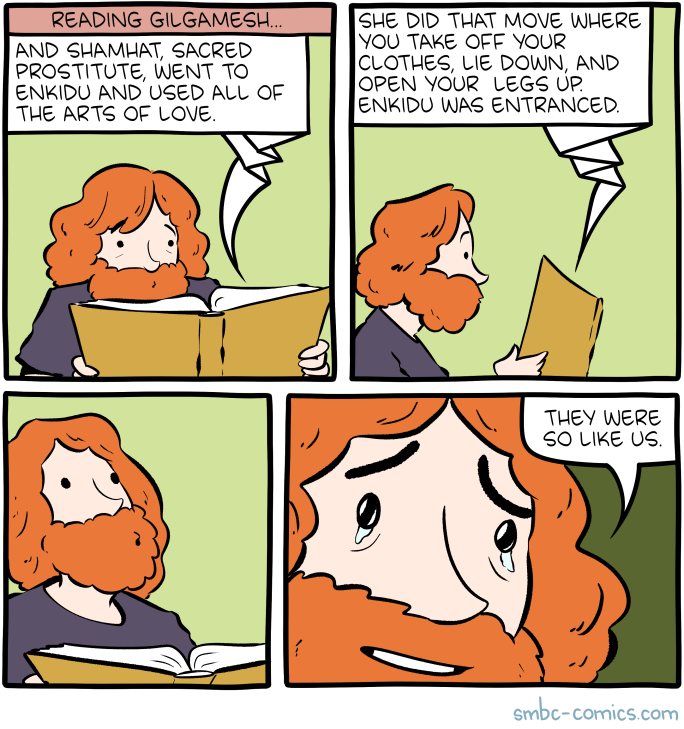
No really, read it. This is her number one move.
This week’s Feedback column (that I write) in New Scientist magazine has four segments. Here are bits of each of them:
It hasn’t been a great few weeks for CNET.
If you hadn’t seen, the company was busted using AI to generate dozens of stories without informing readers or the public. Despite newfound hype, the AI wasn’t particularly good at its job, creating content that had persistent issues with both accuracy and plagiarism. Of the 77 articles published, more than half had significant errors (Futurism’s Jon Christian’s coverage of the mess is essential reading).
It wasn’t particularly surprising if you’ve watched the outlet’s coverage over the last decade become increasingly inundated with affiliate blogspam and often toothless, corporate friendly stenography of company press releases. And who could forget that time former CNET owner CBS blocked the company from doling out a CES award to Dish Network as part of a petty legal dispute over cable box ad skipping.
A major reason for CNET’s more recent problems are thanks to its owner, private equity firm Red Ventures, which acquired CNET from CBS in 2020. Recently leaked internal communications and employee accounts from inside CNET indicate that Red Ventures was so excited by AI’s ability to generate content at scale cheaply, it didn’t really care if the resulting content was rife with inaccuracies:
“They were well aware of the fact that the AI plagiarized and hallucinated,” a person who attended the meeting recalls. (Artificial intelligence tools have a tendency to insert false information into responses, which are sometimes called “hallucinations.”) “One of the things they were focused on when they developed the program was reducing plagiarism. I suppose that didn’t work out so well.”
Amusingly, the whole point of doing this, lower costs, never materialized because editing the resulting AI content was more time consuming that editing human work:
The AI system was always faster than human writers at generating stories, the company found, but editing its work took much longer than editing a real staffer’s copy. The tool also had a tendency to write sentences that sounded plausible but were incorrect, and it was known to plagiarize language from the sources it was trained on.
But AI aside, insiders say the environment created by Red Ventures is one in which affiliate blogspam style coverage takes precedent, and the company is all too happy to obliterate editorial firewalls and soften coverage if it makes advertisers happy:
Multiple former employees told The Verge of instances where CNET staff felt pressured to change stories and reviews due to Red Ventures’ business dealings with advertisers. The forceful pivot toward Red Ventures’ affiliate marketing-driven business model — which generates revenue when readers click links to sign up for credit cards or buy products — began clearly influencing editorial strategy, with former employees saying that revenue objectives have begun creeping into editorial conversations.
Reporters, including on-camera video hosts, have been asked to create sponsored content, making staff uncomfortable with the increasingly blurry lines between editorial and sales. One person told The Verge that they were made aware of Red Ventures’ business relationship with a company whose product they were covering and that they felt pressured to change a review to be more favorable.
U.S. journalism is, if you hadn’t noticed, already in crisis. There’s a decided lack of creative new financing ideas. There are also endless layoffs, and homogenized, feckless content that’s increasingly afraid of challenging sources, advertisers, or event sponsors. Twice a year the entire United States tech press turns their front pages into glorified blogspam affiliates for Amazon, and nobody, in any position of editorial authority, ever seems to think that’s in any way gross, unethical, or problematic.
AI will likely help human beings in multitude of ways we can’t even begin to understand. But it’s also going to supercharge existing problems (like propaganda) in similarly complicated and unforeseen ways, whether that’s making it easier for corporations to run sleazy astroturf lobbying campaigns, or inexpensively slather the Internet with feckless clickbait and blogspam at unprecedented scale.