Shared posts

03 Feb 05:20

P53

by submission

Author : Alex Skryl

Jack Thompson carefully placed Roger into his cage as Patrick Hughes entered the lab.

“Hey Jack. Yuri missed our weekly. Any idea where he is?” asked the Director, looking concerned.

“What?! He didn’t tell you?” replied Thompson, grinning.

“Tell me what?” inquired Hughes, reaching for a chair.

“P53! It worked! It … more than worked!” said Thompson in an excited whisper. He pulled up a chair next to Hughes, taking his time to contrive an explanation.

“Pat, do you know why most living things don’t live forever?” Thompson asked.

Hughes pondered the question for a second. “Well Jack, assuming they don’t die of disease or some unfortunate accident, it’s because they get old. Their cells become less efficient with age, having to work just as hard only to get less done. Current science blames it on DNA degradation, isn’t that right?”

“Yes! It’s a fidelity problem!” exclaimed Thompson, his eyes widening with excitement. “With every copy, our genome’s signal to noise ratio decreases, causing the cellular machinery to alter its behavior slightly. Over time, these small errors accumulate, usually leading to what we perceive as aging, and on rare occasion causing disease, such as cancer. Now, let me ask you this,” Thompson continued, “considering how universal senescence is, why do you think that nature hasn’t come up with a fix?”

Hughes sighed, getting impatient. “It’s a diminishing returns problem if I remember correctly. Complex organisms die from predation, disease, hunger, and a myriad of other causes, making their chances of living to old age slim to none. There is no evolutionary pressure to extend lifespan because animals don’t die of old age, my friend. They die from being eaten by other animals.” Hughes reached for a pen and a piece of paper. “Look here. If the probability of some creature dying in the span of a single day is 1/1000, then the probability of them surviving for 20 years is (999/1000)^(365*20)=0.067%, which is negligible. So, as long as they reach maturity and reproduce well before then, evolution will consider them fit. No reason to fix what’s not broken. Right?”

“I’m very impressed Dr. Hughes!” said Thompson smiling. “Anyhow, this is where P53 comes in. It is a retroviral gene therapy that was intended to be a cancer vaccine. It improves transcription fidelity and adds new mutation-triggered apoptosis pathways. A few things that nature overlooked. Here’s the kicker though, after vaccination, our simulations show no sign of DNA degradation over millennia. That’s thousands of years, Pat!”

“Wait!” Hughes interrupted. “Am I to understand that the two of you inadvertently created an immortality drug?”

“Roger is our first living test subject,” Thompson replied, glancing at the white mouse on the other side of the room. “But if the simulations are accurate, then he will outlive us all.”

“Who else knows about this?” Hughes asked, reaching for his phone.

“Olovnikov, myself, and now you,” said Thompson. “Why?”

“Brian?” Hughes spoke into the handset, “Code 42, lock us down plea…” before he finished his sentence, Yuri Olovnikov walked into the room. There was fear in the man’s eyes but it was overshadowed by righteous determination.

“King of kings, Lord of lords; Who only hath immortality, dwelling in the light which no man can approach unto…” Olovnikov mumbled, his voice trembling. “Forgive me.” His fingers tensed into a fist and the lab was suddenly awash in a brilliant white light.

As the dust from the explosion settled, a small white mouse ran out of the rubble into the grassy underbrush nearby. He had a long life ahead of him.

Discuss the Future: The 365 Tomorrows Forums
The 365 Tomorrows Free Podcast: Voices of Tomorrow
This is your future: Submit your stories to 365 Tomorrows

02 Feb 22:38

Migrations

by submission

Author : Gray Blix

“Whoa, what’s that approaching Mars, a comet breaking apart?” he said as he excitedly examined the images. He realized it would be quite a find for an amateur astronomer — another Shoemaker-Levy 9 magnitude event. But to make sure it wasn’t just hot pixels or other phantom artifacts, he returned to his backyard telescope and took another hundred exposures with a different camera and filter. Satisfied, he submitted coordinates and photos for others to confirm his discovery. But what they confirmed was that the objects streaming toward the red planet were not cometary fragments.

“They are alien spaceships, Mr. President, hundreds of them, a fleet orbiting the planet, and several already on the surface.” NASA’s Administrator offered several photos, “These were taken by our Mars Reconnaissance Orbiter. All the ships are outwardly identical, over a mile long and about a third of a mile wide.”

“How far are they from Mars Colony?”

“Thousands of miles. And that may be deliberate. The Colony revealed itself by trying to contact them during their approach. The aliens could have landed near it, or on it, if they’d wanted to.”

It was always a stretch to call the half-buried habitat and the dozen scientists within a “colony.” It was more like an antarctic research station, whose nine surviving staff members were hunkered down against an environment hostile to life.

“Why aren’t they responding to our attempts at communication?”

“They may not communicate by radio or any other means we’re familiar with. Or they may not want to communicate.”

“So, what do you recommend that we do?”

“Nothing. The Colony can ration supplies to last two years. I urge you to put a hold on upcoming Mars missions and ask other nations to do likewise. The aliens are far ahead of us technologically and until we have established communication we should not do anything they might misinterpret as a threat. Meanwhile, we’ll keep an eye on them from our MRO.”

And that’s exactly what the president and his counterparts worldwide did for the next astonishing 16 months. Nothing. Nothing while the aliens somehow gave Mars a magnetic field and a breathable atmosphere. Nothing while they created oceans and fresh water lakes. Nothing while prairies of grass and forests of trees sprouted and grew remarkably fast.

Mars Colony survived the planetary transformation — the aliens apparently having taken pains to protect its inhabitants — and the day finally came when humans first braved the Martian atmosphere without pressure suits and oxygen supplies. Later that day, they transplanted vegetable seedlings to an outside garden and were seen by the MRO sunbathing in the nude.

But the aliens had not traveled across the galaxy to create an eden for nine humans. Scientists had concluded that the fleet was comprised of generation ships transporting lifeforms from their home planet to another suitable for colonization. Thankfully, the planet they chose was Mars, not Earth. It was expected that their ships would soon land en masse and disembark passengers. Mars Colony erected a welcome banner and waited anxiously — only to see the fleet depart shortly thereafter.

From their new position at Sun-Earth Lagrange point L2, the aliens transmitted their first message to Earth. It was to be the only one. Over every radio station, television channel, and internet website on the planet, in the six official languages of the United Nations, the following words were repeated for 24 hours:

WE HAVE PREPARED MARS TO YOUR SPECIFICATIONS. YOU WILL TRANSPORT YOURSELVES AND ANYTHING ELSE YOU REQUIRE FROM EARTH TO MARS. EXACTLY ONE YEAR FROM NOW, WE WILL BEGIN PREPARING EARTH TO OUR SPECIFICATIONS.

Discuss the Future: The 365 Tomorrows Forums
The 365 Tomorrows Free Podcast: Voices of Tomorrow
This is your future: Submit your stories to 365 Tomorrows

31 Jan 17:42

Too Many Coppers

by Jae Miles

Author : Jae Miles, Staff Writer

She’s screaming like her life is being dragged from her using blunt instruments. Occasionally she’ll stop, but after a series of ominous ‘thuds’, she’ll start again.

“We ‘ave control of zis street.” This from the blue-uniformed Avantacop.

“Rubbiz. The rezonink places this addrez within oor control perimeter.” Response from the black-and-orange uniformed Fourgeecop.

“City statutes give prioridee response t’us.” A riposte from a grey-uniformed Spartacop.

“How about we co-operate to cover the premises from all sides, achieve entry with precision and numbers, then use superior force to area-neutralise whatever threat is inside?” The suggestion comes from my partner, in Carabinieri black – just like me.

We’re one of the six official police forces that could be here, were it not for the mandated EU ‘open-market’ rulings on civil policing. Now, in addition to the five ‘resident’ national police forces and regional police forces, there are twenty-eight ‘guardian’ (corporate) police forces and countless franchise mobs. It used to be a nightmare with just five or six of us versus the Cosa Nostra and friends. This? This is a new ring of Dante’s hell in the guise of policing, and criminals rarely enter the equation – or get caught, for that matter.

The screams escalate again and Armand looks at me, his brows creasing. We both think back to the meeting we attended four days ago. This is it. The moment that was discussed and everyone agreed to.

He nods at me and we both cross-draw paired Webley & Scott Suppressors. Armand takes both of the Avantacops and I drop the standing Fourgee and Sparta. Their companions show their uselessness by trying to exit their cars and join the firefight, instead of securing their positions and calling for assistance.

Ignoring the downed pseudocops for a while, we retool with compressor-pulse shotguns and storm the building where screams continue. It seems that sudden, decisive action involving the direct application of violence was something that our little gang of drug-crazed torturers were not expecting. They were waiting for hostage negotiators and news crews. They continue waiting until their bodies hit the ground from three floors up. Some people are a waste of the judicial system’s time.

By the time the ambulances pull away and the coroner’s van is loading, the pseudocops are reclining in their neatly parked vehicles, in the car park of a local convenience store four blocks away.

Four days ago we agreed that we would be police, and any jurisdictional arguments from competing forces would be treated as interference with the execution of our duties, if co-operation was refused or ignored. The people deserve to be protected when the threat is nigh, not to wait until the bureaucracy is done.

Discuss the Future: The 365 Tomorrows Forums
The 365 Tomorrows Free Podcast: Voices of Tomorrow
This is your future: Submit your stories to 365 Tomorrows

30 Jan 19:30

All Right, Have It Your Way – You Heard a Seal Bark

by submission

Author : Theric Jepson

“Did you hear that?” Dave fiddled with these and those switches and dials and flung his hands across a dozen touchscreens. “Huh.”

Liz swallowed her water and let the bottle float across the cockpit. “Hear what?”

“I don’t know. Like a barking sound.”

“Like a dog.”

“No . . .” Dave frowned. “More like . . . a seal?”

“A seal.”

“Yeah. Kinda like a seal.”

Liz nodded. “Nope. No seals around here.”

Dave rolled his eyes and returned to the dash. “No kidding?” No seals in the asteroid belt? That’s why I love you.”

“Don’t be sarcastic. The bots are almost done with the extraction, then we’ll be full and we can detach and head home. Keep your seals till then.”

Dave flipped his visor and muttered, “I never said it was a seal.”

“And stop muttering.”

Dave exhaled and unlatched from his seat. He pushed himself through the cockpit locker and floated face up through the kitchen and into their sleeping quarters. He raised his head so his shoulders hit the padding, then pushed up into the machine room. From here he could pick up vibrations from the excavators. He listened carefully. Nothing. He opened the display to the molter—seemed to be running correctly—then shut it down again. He drummed his fingers on the wall and slipped back down and shot towards the cockpit.

“Any seals?”

“Hardy har.” Dave latched back in and, just following the click, there it was again. “There! There! You can’t tell me you didn’t hear that?”

“C’mon, Dave. You can’t gaslight me.”

“Can’t—what’s that?”

“Never mind.”

“There! Again!”

“Are you bored? Is that it? Should we break out the backgammon? Have some sex? Try to catch a signal?”

Dave paused and took a long look at Liz’s face. It showed mostly impatience. He strained for signs of amusement or even worry, but nothing. “You—you really think I’m messing with you?”

She rolled her eyes and scrolled up a book on her sleeve.

* * * * *

Five days later. Dave has held his ear to every surface of their ship. He’s floated absolutely still for ninety minutes at a time. Liz has ignored him.

He’d still only heard the sound in the cockpit, but Liz never gave any sign of hearing. Not that he’d ever been actually looking at her when the seal barked—because that’s exactly what it sounded like—but of course it wasn’t that—but nothing else made sense either. Nothing was coming from inside the ship and nothing could come from outside the ship. So why the hell not a seal?

* * * * *

Liz scrolled through the redundancy list. “You sure you checked all of these intentionally?”

“What kind of question is that? Of course I am!”

“Okay. Initializing countdown. Detach at eight minutes, launch at ten.”

“Sounds goo—” Dave felt the blood fall from his face. He couldn’t speak, but he shakily lifted a finger to the display. “S-s-s—”

Liz didn’t look up from the controls. “Okay. We’re set.”

Dave slammed a hand down, pausing the countdown. “Be right back. I’m going out for a sec.”

“What? Out? Dave! You can’t take our suits outside the ship! They’re barely rated for ten minutes! And were leaving! We’re leaving.”

“So five minutes won’t matter.”

“David! Gaaah!”

But he was gone. She heard him fumbling with the lock and closing it behind him. She waited until he’d closed the outer lock then restarted the countdown, bumping it up—detach in one, launch in two. She took the speaker from her hair and stashed it in a cubby, then attached her shoulder restraints. She glanced at the display to see David going over the edge, chasing nothing more than a carefully engineered trick of the light. She queued up his cord then popped it off.

“Hope I don’t get lonely,” she said to herself. “Too long alone in empty space can drive you mad.”

Discuss the Future: The 365 Tomorrows Forums
The 365 Tomorrows Free Podcast: Voices of Tomorrow
This is your future: Submit your stories to 365 Tomorrows

24 Jan 22:08

Lars Andersen Puts Legloas to Shame

by Don
Hqdefault

Lars Andersen has mastered ancient archery techniques allowing him to quickly fire arrows while performing various stunts. Archery trainers hate him.

24 Jan 18:02

How to fix copyright in two easy steps (and one hard one)

by Cory Doctorow

My new Locus column, A New Deal for Copyright, summarizes the argument in my book Information Doesn't Want to Be Free, and proposes a set of policy changes we could make that would help artists make money in the Internet age while decoupling copyright from Internet surveillance and censorship.

There are two small policy interventions that would make a huge differ­ence to the balance of commercial power in the arts, while safeguarding human rights and civil liberties.

1. Reform DRM law.

It should never be a crime to:

* Report a vulnerability in a DRM;

* Remove DRM to accomplish a lawful purpose.

With this simple reform, DRM would no longer turn our devices into long-lived reservoirs of pathogens (because bugs could be reported as soon as they were discovered), and would no longer give the whip-hand over publishing to tech companies (because re­moving DRM to do something legal, like moving a book between two different readers, would be likewise legal).

2. Reform intermediary liability.

* The DMCA ‘‘safe harbor’’ should require submission of evidence that the identified works are indeed infringing;

* If you file a DMCA takedown notice that ma­terially misrepresents the facts as you know them or should have known them, you should be liable to stiff, exemplary statutory damages, with both the intermediary and the creator of the censored work having a cause of action against you, and with the courts having the power to award costs to the victims’ lawyers.

By ensuring a minimum standard of care for censorship demands, and penalties for abuse, the practice of carelessly sending millions of slop­pily compiled takedowns would be stopped dead (last year, Fox perjured itself and had copies of my novel Homeland removed from sites that were authorized to host them, because it couldn’t be bothered to distinguish my novel from its TV show). Likewise, penalties for abuse with a loser-pays system of fees would give the victims of malicious censorship attempts grounds for punishing the wrongdoers who make a mockery of out the copyright holder’s toolkit to silence their opponents.

But so long as we’re making a wish-list, here’s the big policy change that would make all this stuff much less fraught: STOP APPLYING COPYRIGHT TO ANYONE EXCEPT THE ENTERTAINMENT INDUSTRY.

A New Deal for Copyright

Recommended article: Chomsky: We Are All – Fill in the Blank.
This entry passed through the Full-Text RSS service - if this is your content and you're reading it on someone else's site, please read the FAQ at fivefilters.org/content-only/faq.php#publishers.

23 Jan 22:21

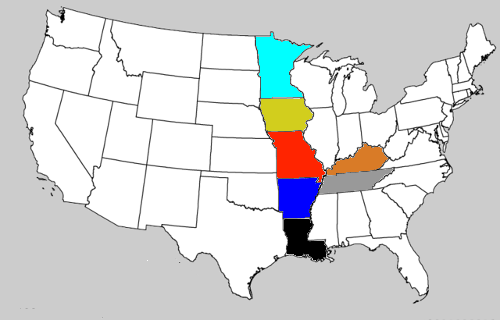
The map of the continental United States contains an elf making chicken

by Mark Frauenfelder

From Futility Closet: "He’s known as Mimal, after the states that make him up: Minnesota (hat), Iowa (head), Missouri (shirt), Arkansas (pants), and Louisiana (boots). Fittingly, the chicken is Kentucky and the tin pan is Tennessee."

The panhandle on Oklahoma is wasted.

Recommended article: Chomsky: We Are All – Fill in the Blank.
This entry passed through the Full-Text RSS service - if this is your content and you're reading it on someone else's site, please read the FAQ at fivefilters.org/content-only/faq.php#publishers.

23 Jan 22:19

“The Road to Superintelligence,” meaty long-read on future of artificial intelligence

by Xeni Jardin
Bewarethewumpus

Fascinating, although I think the author's ideas about how fast an AI can/will go from human level intelligence to not even on the charts anymore, is overblown. Seems to me that it would still be limited by the hardware, and I'm not aware of a computer or robot design that can perform its own physical upgrades.

Projections

Tim Urban has a great, longform post up on the future of artificial intelligence. “As I dug into research on Artificial Intelligence, I could not believe what I was reading,” he writes.

“It hit me pretty quickly that what’s happening in the world of AI is not just an important topic, but by far THE most important topic for our future. So I wanted to learn as much as I could about it, and once I did that, I wanted to make sure I wrote a post that really explained this whole situation and why it matters so much.”

From part one:

When we imagine the progress of the next 30 years, we look back to the progress of the previous 30 as an indicator of how much will likely happen. When we think about the extent to which the world will change in the 21st century, we just take the 20th century progress and add it to the year 2000. This was the same mistake our 1750 guy made when he got someone from 1500 and expected to blow his mind as much as his own was blown going the same distance ahead. It’s most intuitive for us to think linearly, when we should be thinking exponentially. If someone is being more clever about it, they might predict the advances of the next 30 years not by looking at the previous 30 years, but by taking at the current rate of progress and judging based on that. They’d be more accurate, but still way off. In order to think about the future correctly, you need to imagine things moving at a much faster rate than they’re moving now.

The AI Revolution: The Road to Superintelligence [Tim Urban]

Recommended article: Chomsky: We Are All – Fill in the Blank.
This entry passed through the Full-Text RSS service - if this is your content and you're reading it on someone else's site, please read the FAQ at fivefilters.org/content-only/faq.php#publishers.

23 Jan 20:55

It's All About the Artisanship

by Brad
A18
23 Jan 19:52

Verizon: We’re Not Two-Faced, We Just Like To Claim Mutually Exclusive Things Are Both True

by Kate Cox

Verizon has a long history of trying to have it both ways: alternately courting and rejecting regulation, depending on which will most benefit their bottom line. It’s disingenuous, but effective. But now that someone has asked the FCC to investigate Verizon for perjury, Verizon’s fighting back. Their theme? We’re not two-faced. We just like to say a lot of mutually-exclusive things based on who we think is listening.

Last week, two telecom consumer advocates filed a petition with the FCC saying that Verizon’s constant back-and-forth isn’t just dishonest, but criminal. Saying two oppositional things at once and claiming both are true, they say, is perjury, and the FCC needs to investigate.

The petitioners call Verizon “the Janus of telecom,” referring to the ancient Roman god with two faces, suggesting that the company is, “‘two-faced’ or duplicitous.”

They call their petition an open and shut case, explaining, “Verizon either did or did not tell the FCC that their entire current investment in fiber optics is based entirely on using the Title II classification. Or that the Verizon companies have made phone customers ‘de facto’ investors by using Title II… We allege that Verizon did deceive the FCC. These material misrepresentations taint every FCC decision and policy affecting Verizon’s regulatory status, but most importantly now the Open Internet Proceeding.”

They continue, “Verizon has claimed and continues to claim that Title II would harm [Verizon’s] investments. However, this is in direct contradiction to Verizon’s own filings, statements, SEC and state-based filings, the companies’ cable franchise agreement—every fiber optic wire appears to be Title II.”

That’s all well and good. This week, as Ars Technica reports, Verizon finally responded to the petition. In a filing to the FCC, Verizon counters that the petition is “frivolous,” and “[recycles] old, baseless, and inaccurate claims that have been previously addressed and dismissed.”

“Verizon’s position is and has been consistent throughout the inception of its fiber deployment,” Verizon concludes, “and NNI’s frivolous Petition should be denied outright.”

The original petitioners plan to file a response to the response next week.

But perjury or not, Verizon certainly is certainly on a streak of saying two things at once and hoping nobody notices.

For example, late last year, Verizon CFO Francis Shammo accidentally admitted that contrary to everything Verizon has been saying, Title II regulation of broadband won’t actually stop the company from investing in new and existing networks. As the Washington Post reports, Verizon is now desperately trying to claim that those words don’t mean what we think they do.

In a statement this week, Shammo — the same executive who last month said “I mean to be real clear, this does not influence the way we invest” — now says:

Title II is an extreme and risky path that will jeopardize our investment and the development of innovation in broadband Internet and related services. It will also tie up the industry in a very uncertain time and cause all types of litigation.

Shammo claimed his actual statements from last year, as recorded and transcribed, were “misquoted,” then concluded by endorsing Congress’s plan to do an end-run around the FCC.


23 Jan 19:20

Sexy, Sexy Butts

dogs,wtf,butts,booty,funny

Submitted by: Unknown

Tagged: dogs , wtf , butts , booty , funny
23 Jan 01:15

USA McDonald's fries have 14 ingredients. UK McDonald's fries have 4.

by Mark Frauenfelder

Here's a followup to my earlier post about McDonald's fries. In 2013 Food Babe posted the ingredients for McDonald's fries in the US and in the UK.

The US fries have 14 ingredients, while the UK fries are restricted to potatoes, two kinds of oil, and (sometimes) dextrose. Notably absent from the UK fries is methylpolysiloxane, a commonly used anti-foaming agent that's also an ingredient used to make Silly Putty.

When I compared the ingredient list of McDonald’s french fries in the US vs. the UK version, I was floored to witness the drastic differences. Europeans do not use dimethylpolysiloxane. Look closely at the ingredients in McDonald’s french fries [above]. Do you see how the french fries in the U.K. version are basically just potatoes, vegetable oil, a little sugar and salt? How can McDonald’s make french fries with such an uncomplicated list of ingredients all over Europe, but not over here? Why do McDonald’s french fries in the U.S. have to have an “anti-foaming” agent? Do the brits like extra foam? No, they don’t, Europe actually regulates this ingredient because they know this man-made chemical was never intended to be consumed by humans. This whole time McDonalds has known about this and chooses to continue to serve it’s US citizens silly putty.

Personally, I'm more concerned about the hydrolyzed wheat and hydrolyzed milk in the US fries than I am about methylpolysiloxane, because I avoid excitotoxins when possible.

UPDATE: As far as I can tell the ingredients list posted by Food Babe is correct. Here is a link to the UK McDonald's page for its fries. Many kind readers have commented that Food Babe is not generally to be trusted with food science, however.

Recommended article: Chomsky: We Are All – Fill in the Blank.
This entry passed through the Full-Text RSS service - if this is your content and you're reading it on someone else's site, please read the FAQ at fivefilters.org/content-only/faq.php#publishers.

22 Jan 18:04

Near-Impossible Super Mario World Glitch Done For First Time on SNES

by Evan Narcisse

Near-Impossible Super Mario World Glitch Done For First Time on SNES

It's something that most players wouldn't even think is possible: playing a game in a certain way that jumps you completely to the end, without beating its final battle. But there it is, just executed in Super Mario World.

A new video by YouTuber Minecraft SethBling shows him executing a set of moves, which as he explains it, effectively rewrites the game's code in real time as he plays. The fact that this is allegedly happening on a Super Nintendo console—and not on any kind of emulated software—makes it even more impressive. In addition to his speedrunning, SethBling is someone already known for an impressive depth of knowledge in the Minecraft world. The amount of knowledge needed to suss out this glitch and the exacting nature of its execution (discovered by Twitch streamer JeffW356 and explained in depth here) is simply incredible. It shows off just how important the work of speedrunning and hacking/modding communities can be insofar as opening up the possibilities of what's able to be done with video games. You need to know how the game was written and the effect that player actions have on the way that the console and the game talk to each other. Just amazing.

Note: SethBling's pulled off an even faster time of 4:49.8 with the glitch, making it an incredibly fast completion performance for SMW.

Recommended article: Chomsky: We Are All – Fill in the Blank.
This entry passed through the Full-Text RSS service - if this is your content and you're reading it on someone else's site, please read the FAQ at fivefilters.org/content-only/faq.php#publishers.

22 Jan 01:04

Bus Driver Walks the Walk After Roadside Feud

by Brad
37a

In this recently captured mobile video from Santiago, Chile, a fed-up city bus driver opens up a huge can of road rage during an argument over a fender-bender accident with a group of college students after one of them smashes a window.

22 Jan 00:54

“The Facebook” in a TV commercial from 1995 that never actually was

by Xeni Jardin

[unable to retrieve full-text content]

By comedian Brent Weinbach.

(more…)

21 Jan 23:24

Today In Terrible Arguments Against Net Neutrality: Monopoly Eras And Fees On Bills

by Kate Cox

2014.05.15-FCC-protestIt’s been a busy day for tech talk in Washington. Today, both the House and the Senate held hearings on net neutrality and a proposed bill to regulate it. A parade of former regulators, lobbyists, business representatives, lawyers, and consumer advocates sat on Capitol Hill and once again hashed through the debate, while elsewhere in the District, a current FCC commissioner was giving a lunchtime speech about why the FCC shouldn’t regulate at all.

The three events broke down into the same general sides we’ve been used to for the last year: those who wish to see the FCC regulate broadband carriers as Title II communications services, and those who want the FCC to leave the poor put-upon broadband industry alone so it can keep making money hand over fist. But today the anti-Title II side used two main arguments that just don’t add up.

In remarks he gave at the American Enterprise Institute (PDF), FCC commissioner Michael O’Rielly focused not on the business side of things, but on the consumer. The poor consumer, he said, will have to pay more for broadband if Title II happens because of something that almost nobody’s been focusing on: the Universal Service Fund.

Services defined statutorily as telecommunications carriers are required to pay into the FCC’s Universal Service Fund, it is true. The USF is where money for programs to expand connectivity to underserved populations — like the e-rate program that brings internet access to schools and libraries, or programs that expand broadband access in rural areas — comes from.

“If the commission decides to reclassify broadband as a telecommunications service, broadband providers (as telecommunications carriers) will be required by statute to pay into the Fund,” O’Rielly said. “And providers will undoubtedly pass those fees on to consumers just as telecommunications providers do today. That means consumer broadband rates will go up” (emphasis his).

But O’Rielly’s observation, while accurate, really only tells half the story.

actual_comcast_bill_2015This is the fees, surcharges, and taxes section of a current (January, 2015) Comcast bill for one of our very own Consumerist staffers.

It’s showing all of the fees and charges Comcast, one of the nation’s biggest ISPs, charges a triple-play customer. Some of these vary by state, obviously. But note the “UCC recurring” and “regulatory recovery fee” charges.

The “UCC recurring” charge is the fee Comcast levies to recoup its mandatory contributions to the USF. So that one, as O’Rielly has it, is a direct pass-through to consumers.

The “regulatory recovery fee,” however, is entirely of Comcast’s own invention. It is, as they note down below, “neither government mandated nor a tax, but is assessed by Comcast to recover the costs of certain federal, state, and local impositions related to voice services.”

Note that it does not in fact appear under “voice,” but under “other charges.” In fact, a bill from a year earlier — when the account in question was a double-play package and not triple-play, with no phone or voice service associated with it — still includes both the UCC Recurring charge and the regulatory recovery fee on it.

In other words: ISPs like Comcast are already charging consumers whatever pass-through fees they darn well want, whether or not they actually relate in any way to the current services a subscriber is connected to, and regardless of the regulatory scheme that applies to those.

To adopt a stance of, “oh no, what about the poor consumers’ bills, won’t anyone think of the poor consumers’ bills” as it relates to approximately a dollar’s worth of already imposed fees that might magically manifest or increase at some point in the future, when cable and internet bills are already both increasing at many times the rate of inflation is not an honest position.

And why do consumers’ bills keep jumping in leaps and bounds? Basically, because they can. In a landscape without real competition, businesses have no compulsion to operate in consumers’ interest and instead, act only in their own. And that means charging more money whenever they want, for whatever they want, because the market will bear it.

And that brings us to the other argument lawmakers kept repeating about Title II today, in both the House and Senate hearings: that because Title II was developed in years past, to deal with a monopoly telephone system, it does not apply to the landscape we have today.

Senator Thune, in his opening remarks (PDF), said “We have now reached an unfortunate point where both the President and the chairman of the FCC feel compelled to move forward using a tool box built 80 years ago to regulate a literal monopoly,”  and in Congress’s other chamber Rep. Upton said (PDF) the similar, “Our thoughtful solution provides a path forward that doesn’t involve the endless threat of litigation or the baggage of laws created for monopoly era telephone service.”

This was the recurring theme, from senators, representatives, and witnesses giving testimony: Title II was developed for a world with a phone monopoly. Since we do not currently have a broadband monopoly, monopoly rules are overbearing and harmful.

Except, of course, that when it comes to broadband, most of us are subject to a local monopoly. Whether or not you have any options basically depends on which city block you happen to live in, if you’re an urban customer. If you’re a rural customer, good luck getting any service at all. And report after report has shown that for actual high speed connections, the idea of competition remains entirely mythical for tens of millions of Americans.

For download speeds of 25 Mbps or higher — which the FCC is likely to approve as the new baseline minimum for “broadband” later this month — only 37% of Americans have a choice of even two providers to ping-pong between (a duopoly), and only 9% of us can choose from three or more players.

So for witnesses like Michael Powell to say that Title II is only “for a monopoly era” is wrong in two ways. Not only does the FCC’s ability to use forbearance mean that Title II is actually reasonably flexible… but also, sad to say, this is indeed still a monopoly era for the vast majority of consumers.

21 Jan 21:00

British spy agency intercepted emails of journalists, considers them 'threats' alongside terrorists and hackers

by Trevor Timm
Edward Snowden.


Edward Snowden.

Newly disclosed documents from Edward Snowden, revealed by the Guardian, show that the British spy agency (and close NSA partner) GCHQ intercepted emails from many of the US and UK’s most well-known news organizations, including the New York Times, Washington Post, BBC, Reuters, the Guardian, Le Monde, the Sun, and NBC.

As the Guardian reported:

The journalists’ communications were among 70,000 emails harvested in the space of less than 10 minutes on one day in November 2008 by one of GCHQ’s numerous taps on the fibre-optic cables that make up the backbone of the internet.

Perhaps even more disturbing, an internal GCHQ “security assessment” document reportedly listed “‘investigative journalists’ as a threat in a hierarchy alongside terrorists or hackers.”

Internal security advice shared among the intelligence agencies was often as preoccupied with the activities of journalists as with more conventional threats such as foreign intelligence, hackers or criminals.

One restricted document intended for those in army intelligence warned that “journalists and reporters representing all types of news media represent a potential threat to security”.

This is yet another outrageous violation of press freedom by the British government, which has increasingly shown contempt for newsgathering and the rights of journalists.

We know from previous Snowden documents that the GCHQ essentially has no barriers when scooping up the communications of virtually anyone they want, including news organizations. The Intercept previously reported that the spy agency conducted surveillance on WikiLeaks and its readers, and that it has the authority to target journalists and lawyers in many situations. In addition, the UK government detained David Miranda, partner to journalist Glenn Greenwald, under the Terrorism Act, and have an active criminal investigation open on the Guardian for its reporting on the Snowden documents. 

It was also recently revealed that the UK police have been regularly spying on journalists phone records. (More than 100 editors have signed a letter in protest.)

We hope every news organization named in the report today strongly condemns the GCHQ’s actions and that representatives in the UK parliament act quickly to rein in this deplorable behavior. Spying on journalists has no place in democracy, and the UK has increasingly been taking anti-free speech positions that are usually reserved for some of the world’s worst authoritarian regimes.

The fact that the GCHQ can so easily intercept journalists' emails is yet another reminder that news organizations must better protect their security. As technologist Chris Soghoian notes, many of the organizations listed in the Guardian’s report do not use STARTTLS encryption on their email servers, which makes surveillance trivially easy for large spy agencies. None of the news organizations named in the GCHQ documents have yet to switch their websites over the HTTPS encryption by default either.

Recommended article: Chomsky: We Are All – Fill in the Blank.
This entry passed through the Full-Text RSS service - if this is your content and you're reading it on someone else's site, please read the FAQ at fivefilters.org/content-only/faq.php#publishers.

21 Jan 20:17

Shaolin Monk "Runs on Water" for Almost 400 Feet

by Brian Ashcraft

Shaolin Monk

This week in Quanzhou, China, a Shaolin monk showed it was possible to do more than walk on water.

The Shaolin monastery is famous for its kung-fu monks that undergo rigorous training to pull off amazing acrobatic and physical feats.

Last October, Shi Liliang from Quanzhou Shaolin Temple ran on thin plywood planks floating in water for 118 meters (387 feet), breaking his previous record of 100 meters (328 feet). In the video below, you can see his 118-meter run.

On Saturday, the monk again broke his previous record, running for 120 meters (394 feet). Below is a photo from the recent run:

Shaolin Monk

"You need to be fast but you should take only small steps," Shi, who's been practicing this stunt since 2005, was quoted as saying last fall.

According to Livedoor News, the monk has his eye on a new record: 150 meters (492 feet).

To contact the author of this post, write to bashcraftATkotaku.com or find him on Twitter @Brian_Ashcraft.

Kotaku East is your slice of Asian internet culture, bringing you the latest talking points from Japan, Korea, China and beyond. Tune in every morning from 4am to 8am.

Recommended article: Chomsky: We Are All – Fill in the Blank.
This entry passed through the Full-Text RSS service - if this is your content and you're reading it on someone else's site, please read the FAQ at fivefilters.org/content-only/faq.php#publishers.

21 Jan 20:14

New Game's Trailer Is The Most 90s Thing Ever

by Patrick Klepek

New Game's Trailer Is The Most 90s Thing Ever

Blood! Guts! Angry brothers! Screaming parents who just don't understand! While there's some tangible Kickstarter fatigue in video games right now, a good pitch is a good pitch, and Strafe's making an awfully strong argument for why it should have your attention.

You should just watch the full Kickstarter video, honestly. It's great.

Strafe describes itself as the "fastest, bloodiest, deadliest, most adjective-abusing, action-packed first-person shooter of 1996," and has the Geocities-era official website to back up its claims.

I mean, look at this!

New Game's Trailer Is The Most 90s Thing Ever

The only thing the website's missing is a link to a webring and construction site GIFs.

We've written about Strafe before, back when it was little more than a violent tech demo.

Strafe is directly pulling from DOOM, Quake, and other fast-as-hell shooters from a bygone era. There might be a story buried somewhere in Strafe, but something tells me it doesn't matter. You're here to blow stuff up as much as possible and as fast as possible. Sounds good to me!

The game's looking to raise $185,096 in the next 29 days, and should release in "early" 2016.

Recommended article: Chomsky: We Are All – Fill in the Blank.
This entry passed through the Full-Text RSS service - if this is your content and you're reading it on someone else's site, please read the FAQ at fivefilters.org/content-only/faq.php#publishers.

21 Jan 20:01

The Four Horsies Of The 'Pocalpyse: The End Is Neigh

by Mike Fahey

The Four Horsies Of The 'Pocalpyse: The End Is Neigh

Hot on the hooves of last year's successful Little Maddie Cthulhu Pony campaign, Bigshot Toyworks prepare to unleash the most adorable instruments of destruction ever. Meet the Four Horsies of the 'Pocalypse.

The adorably squid-headed Little Maddie (as seen on io9) was just the opening act to Bigshot Toys' tongue-in-cheek My Little Pony parody, the mentor to the four pale horses (well, three and a friend) that aim to bring about the end of the world.

First up is Raven, the equine embodiment of Famine.

The Four Horsies Of The 'Pocalpyse: The End Is Neigh

Nothing says evil like purple and green. They're the official colors of evil in the Marvel Universe for good reason. I guess the exposed muscle and bone help too. What a cutie.

Next up is Calamity, which is the most pony-name possible for an apocalyptic horse-person.

The Four Horsies Of The 'Pocalpyse: The End Is Neigh

Calamity is the embodiment of Pestilence, hence the gas mask. The CDC has nothing on her. The gas mask is removable, by the way, revealing a tasteful skinless skull beneath.

The least pale of the pale riders, Clash signifies War, and by "signify" I mean "is."

The Four Horsies Of The 'Pocalpyse: The End Is Neigh

I love the spiked tail band, and that helmet is to die for. Speaking of which...

The Four Horsies Of The 'Pocalpyse: The End Is Neigh

Ghost, the only male character of the bunch, can kill with a touch, a handy power considering his role as Death, but no fun at parties. Ghost is an alicorn — a combination unicorn and pegasus — which technically makes him a princess. And what a pretty, pretty princess he is.

Bigshot just launched a Kickstarter to bring these four to life (or as to life as dead-looking horses can be). They're looking for $60,000 to get things started, with a $100 pledge securing a set of four cuddly vinyl harbingers of the apocalypse, which isn't bad for a set of four limited edition custom vinyl figures. Each figure stands about four inches tall (their mentor is six inches), with articulated jaws and ball-jointed heads.

The Four Horsies Of The 'Pocalpyse: The End Is Neigh

I love these little monsters. Finally a way to combine my appreciation of happy ponies with my love of all things dark and mildly evil. They're going to be my friends until the very end of days.

Recommended article: Chomsky: We Are All – Fill in the Blank.
This entry passed through the Full-Text RSS service - if this is your content and you're reading it on someone else's site, please read the FAQ at fivefilters.org/content-only/faq.php#publishers.

21 Jan 18:58

Planets Sing About the Meaning of Life

by Don
Hqdefault

These singing planets are here to give you a healthy dose of reality.

21 Jan 18:56

How It Feels to Chew Five Gum

by Brad
586
20 Jan 19:34

“Jones Big-Ass Truck Rental and Storage Facility,” a very special TV commercial

by Xeni Jardin

“Now friends, I know many of you may be asking yourself, Now how in the hell can he store all this stuff for such a cheap price?” [via reddit]

Recommended article: Chomsky: We Are All – Fill in the Blank.
This entry passed through the Full-Text RSS service - if this is your content and you're reading it on someone else's site, please read the FAQ at fivefilters.org/content-only/faq.php#publishers.

20 Jan 19:31

Stan Lee on "To Tell The Truth" game show (1970)

by David Pescovitz
Bewarethewumpus

"Remember, ghetto-dwellers, don't trust your local drug pusher! Excelsior!"

Here's Stan Lee on a 1970 episode of To Tell The Truth, a fun game show where a panel of celebrities had to identify an individual with an unusual profession (in this case, comic book creator) among a group of impostors. Stan Lee is in the second segment, starting around 14 minutes in. (via Dangerous Minds)

Recommended article: Chomsky: We Are All – Fill in the Blank.
This entry passed through the Full-Text RSS service - if this is your content and you're reading it on someone else's site, please read the FAQ at fivefilters.org/content-only/faq.php#publishers.

20 Jan 19:23

Announcing Apollo 1201: Eradicate DRM within a decade!

by Cory Doctorow


I have gone back to the Electronic Frontier Foundation to work on a project called Apollo 1201, which will use a combination of code, law, norms and markets to eradicate DRM within a decade: we choose to do this not because it is easy, but because it is hard.

The details of the project are still under wraps, but in broad strokes, we will use the incredible skills of EFF's lawyers, technologists, and policy specialists to challenge the law that protects DRM, section 1201 of the Digital Millennium Copyright Act, and, in so doing, set in motion a chain of events that will discredit the whole idea of designing computers to control their owners, for any purpose.

We're the resistance in the War on General Purpose Computing, and we'll be asking for your help, stay tuned.

In the meantime, as of January, and until further notice, I'm half-time on Boing Boing, and mostly focusing on larger investigative pieces. Please make sure that you don't send suggestions or queries about Boing Boing to me (use this form for suggestions; and see this list for other queries).

For many years, EFF has fought the use of DRM technologies, explaining that such technologies—as well as the laws that support them—impede innovation, security, and basic user rights and expectations, while failing to inhibit copyright infringement. One example of this lose-lose proposition is Section 1201 of the Digital Millennium Copyright Act (DMCA), which generally prohibits unlocking "access controls" like DRM. That ban was meant to deter illegal copying of software, but many companies have misused the law to chill competition, free speech, and fair use. Software is in all kinds of devices, from cars to coffee-makers to alarm clocks. If that software is locked down by DRM, tinkering, repairing, and re-using those devices can lead to legal risk.

Section 1201 has also put a dangerous chill on security researchers, who face potential legal penalties for finding and disclosing critical flaws in systems—from smartphones to home automation. As a result, the public gets to find out about compromising vulnerabilities too late, or not at all.

"We've seen DRM misused again and again, whether it's to thwart competition in printer-ink cartridges, to prevent videogame fans from modifying their consoles, or to block consumers from reading the parts' specifications on their own cars," said EFF Intellectual Property Director Corynne McSherry. "Cory has an unparalleled ability to show the public how bad copyright policy tramples on everyone's rights."

Doctorow worked for EFF for four years as its European Affairs Coordinator, and in 2007, he won EFF's Pioneer Award for his body of work on digital civil liberties. He's the originator of "Doctorow's Law," which has helped many around the world understand the dangers of DRM: "Anytime someone puts a lock on something you own, against your wishes, and doesn't give you the key, they're not doing it for your benefit."

Cory Doctorow Rejoins EFF to Eradicate DRM Everywhere

Recommended article: Chomsky: We Are All – Fill in the Blank.
This entry passed through the Full-Text RSS service - if this is your content and you're reading it on someone else's site, please read the FAQ at fivefilters.org/content-only/faq.php#publishers.

20 Jan 19:15

Please don't use these passwords. Sincerely, the Internet

by Steve Dent
You may have protected your personal data with strong passwords, but when hackers seize control of other computers, the resulting "botnets" can cause plenty of collateral damage. The depressing part is that one of the biggest holes is the easiest to ...

20 Jan 08:15

The DEA has been listening to Americans' phone calls for 15 years

by Mark Frauenfelder

The Drug Enforcement Administration, one of the least useful and most corrupt law enforcement agencies in the United States, has been eavesdropping on "essentially all international phone calls made by Americans to a select list of countries."

(The DEA won't say which countries are on the list.) The Unconstitutional spying took place without judicial review, and was not designed for national security; "rather, the information gathered was used in domestic court cases."

Image: Wikimedia Commons

Recommended article: Chomsky: We Are All – Fill in the Blank.
This entry passed through the Full-Text RSS service - if this is your content and you're reading it on someone else's site, please read the FAQ at fivefilters.org/content-only/faq.php#publishers.

20 Jan 08:10

"A sign at my school." - Nathan8tr


"A sign at my school." - Nathan8tr

19 Jan 16:58

Roman Atwood's Residential Ball Pit Makeover

by Brad
Bc5

Ohio’s most dedicated YouTube prankster Roman Atwood surprises his girlfriend-slash-mother of his two kids by transforming their entire house into a gigantic ball pit.

18 Jan 19:10

Another Way to Defeat Diamond Dog

by Mato
Bewarethewumpus

kind of a blink-and-you'll-miss-it deal, the strat was to get the boss under a confusion debuff so it'll attack itself, which it did with an insta-kill.

Supergamerk sent me this video of a battle with Diamond Dog in EarthBound. It starts out normal but ends in a silly way:

I wonder if this would be useful for speedrunners in some way, or if there’s a quicker way to beat Diamond Dog.