In the 1970s the US faced a serious shock to the supply of oil but the shortage of oil was caused by price controls. Today, California is facing a serious water drought but the shortage of water is caused by price controls, subsidies and the lack of water markets. In an excellent column, The Risks of Cheap Water, Eduardo Porter writes:
Water is far too cheap across most American cities and towns. But what’s worse is the way the United States quenches the thirst of farmers, who account for 80 percent of the nation’s water consumption and for whom water costs virtually nothing….
Farmers in California’s Imperial Irrigation District pay $20 per acre-foot, less than a tenth of what it can cost in San Diego….This kind of arrangement helps explain why about half the 60 million acres of irrigated land in the United States use flood irrigation, just flooding the fields with water, which is about as wasteful a method as there is.
Farmers use the subsidized water to transform desert into prime agricultural
land. But turning a California desert into cropland makes about as much sense
as building greenhouses in Alaska! America already has plenty of land on which
cotton can be grown cheaply. Spending billions of dollars to dam rivers and
transport water hundreds of miles to grow a crop that can be grown more cheaply
in Georgia is a waste of resources, a deadweight loss. The water used to grow California cotton, for example, has much higher value producing silicon chips in
San Jose or as drinking water in Los Angeles than it does as irrigation water.
The waste of subsidized water is compounded by over 100 years of rent-seeking and a resulting legal morass that makes trading water extremely difficult (see Aquanomics for a good analysis). A water trading system is slowly taking form in the American West but the political transaction costs are immense. Australia, however, faced similar difficulties but has managed to develop a good water trading system and Chile has long had a robust market in water. Subsidies to farmers are politically sustainable when everyone has as much water as they want but when faced with continued shortages and an ever-intrusive water Stasi consumers and industry may eventually demand a more rational, less wasteful system based on incentives, markets and prices.
FACTS • All pre-computer era information theft tactics still work, and are still used. • Most “computerized” information is available long before it is put into a computer. • Data theft is the low hanging fruit of the business espionage world. The real pros use ladders.
Murray's Holistic Approach to Information Security 1. Protect information while it is being generated (discussions, audio and video communications, strategy development). Conduct Technical Surveillance Countermeasures (TSCM) inspections of offices and conference rooms on a scheduled basis. Example: Ford Motors found voice recorders hidden in seven of their conference rooms this summer.
2. Protect information while it is in transit (phone, teleconference, Board meetings, off-site conferences). Wiretapping and Wi-Fi are still very effective spy tools. Check for wiretaps on a scheduled basis, and/or encrypt the transmissions. Conduct pre-meeting TSCM inspections. Tip: Never let presenters use old technology FM wireless microphones. The signal travels further than you think, and is easily intercepted.
3. Protect how information is stored. Unlocked offices, desk and file cabinets are a treasure trove of the freshest information. Print centers store a copy of all print jobs. Limit written distribution of sensitive information. Crosscut shred sensitive waste paper. All these vulnerabilities and more should be covered during the security survey portion of your TSCM inspection.
4. Educate the people to whom sensitive information is entrusted. Security briefings don’t have to be long and tedious. Establish basic rules and procedures. Explain the importance of information security in terms they can understand, e.g. “Information is business blood. If it stays healthy and in the system, your job, and chances for advancement, stay healthy.”
Effective information security requires a holistic protection plan. IT security is an important part of this plan, but it is only one door to your house of information.
There is more you need to know. Contact a TSCM specialist for further assistance. (counterespionage.com)
After going more than two years without an update, Apple's Mac mini was refreshed yesterday, adding Haswell processors, Intel HD 5000/Iris graphics, 802.11ac Wi-Fi, and PCI-based flash storage options for the higher-end models.
Unfortunately, the upgrade was disappointing to some Mac mini fans as Apple stopped offering a build-to-order quad-core processor upgrade and dual-drive storage options that exceed 1TB.
Many have speculated that the Mac mini also includes soldered RAM, which has now been confirmed by Macminicolo's Brian Stucki. According to Stucki, the RAM in the Mac mini is "not user accessible," which means those who purchase Mac minis are limited to 16GB of RAM that must be upgraded when purchasing the machine from Apple.
All three Mac mini models can be upgraded to a maximum of 16GB of RAM, with the upgrade priced at $300 for the base model and $200 for the mid and high-end models.
While the RAM is not upgradeable, Stucki says that it is possible to replace or upgrade the hard drive, but doing so may void the warranty.
Apple's new Mac mini starts at $499 and comes in three separate base configurations. On the low end, the Mac mini ships with a 1.4Ghz dual-core Core i5 processor, 4GB of RAM, a 500GB hard drive, and Intel HD Graphics 5000. At the middle tier, the Mac mini comes with a 2.6Ghz dual-core Core i5 processor, 8GB of RAM, and a 1TB hard drive, and Intel Iris Graphics. At the high end, the Mac mini ships with a 2.8Ghz dual-core Core i5, 8GB of RAM, a 1TB Fusion Drive, and Intel Iris Graphics.
Base configurations of the Mac mini are currently available for purchase from the online Apple Store and will ship in one to three days. Custom configurations ship within three to five days.
Reddit today acquiredAlien Blue, the popular iPhone and iPad app that many iOS users use to browse Reddit on their mobile devices, reports TechCrunch. According to Ellen Pao, Reddit's head of strategic partnerships, the company will keep the "Alien Blue" name and the app's developer, Jase Morrissey, will be joining the Reddit team.
"Our whole philosphy has been to give our users choice. We've got the reddit AMA app, and alienblue coming out... but we really want users to use whatever they want." says Ellen Pao, reddit's head of Strategic Partnerships. "We think Alienblue is great, and it's the most popular reddit app on iOS. We wanted to be able to offer it as a reddit app, and we wanted to help Jase with additional resources to do everything he wanted to do with it."
The app will, however, be gaining a new icon, and while Reddit focuses on merging the iPhone and iPad versions of the app into a single universal app, both versions are free. The iPad app normally costs $4 while the iPhone app is free with a $2 "Pro" in-app purchase.
Reddit has plans to get rid of the iPad app, so it is permanently free while work continues on a universal version, but the iPhone's "Pro" features will also be made available for free for the next week, as all Alien Blue users need to re-download the apps.
To celebrate and ease the move to reddit, everyone can get the Alien Blue Pro upgrade free for one week. The iPad app will also be free until we integrate it with the iPhone app and the two become one universal app.
The "Pro" features in the iPhone version of the app will extend to the iPad when it is transformed into a universal app, so all Alien Blue users should download the new version immediately while the upgraded features are available at no cost.
Reddit's new official Alien Blue app for the iPhone can be downloaded from the App Store for free. [Direct Link]
The Alien Blue app for the iPad can also be downloaded from the App Store for free until a universal version is available. [Direct Link]
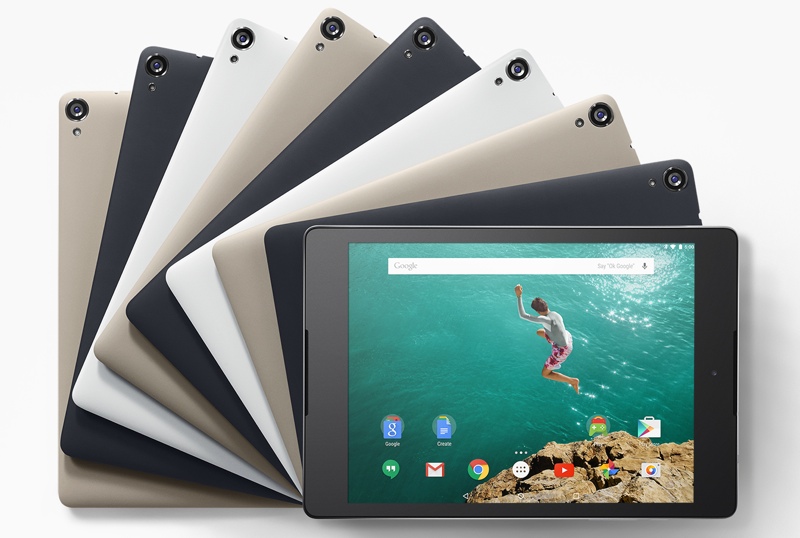
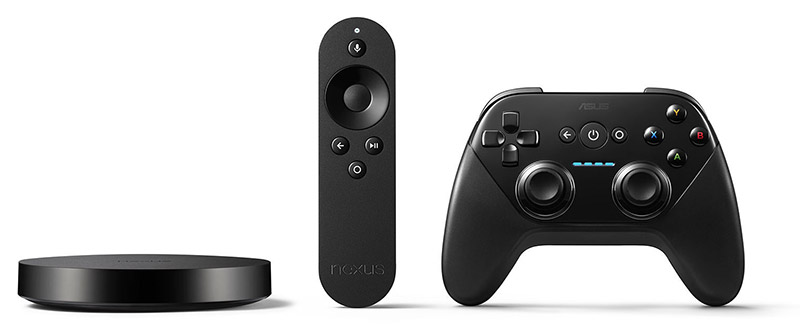
Just a day ahead of Apple's own iPad event that will see it introducing a range of new products including new iPads and a Retina iMac, Google has unveiled its next version of Android and three new Nexus devices, including the 5.9-inch Nexus 6 smartphone, the 8.9-inch Nexus 9 tablet, and the Nexus Player, an Apple TV-style set-top box that comes equipped with a gamepad (sold separately).
Google's new Nexus 6 will be one of the biggest "phablets" on the market, and at 5.96-inches, it's even larger than Apple's recently introduced iPhone 6 Plus, which measures in at 5.5-inches. The phone features a 493 ppi AMOLED Quad HD display and a 13-megapixel rear camera with optical image stabilization, a feature Apple offers with its larger iPhone 6 Plus.
It also includes a Quad-Core 2.7Ghz Snapdragon 805 processor, a 2-megapixel front facing camera, dual front facing speakers, and a 3220 mAh battery. The Nexus 6's battery can be recharged using Motorola's Turbo Charge technology, which provides up to six hours of battery life from a 15 minute charge. Available in midnight blue or cloud white for $649 unlocked, the phone comes equipped with 32 or 64GB of internal storage.
The Nexus 9 tablet, designed in collaboration with HTC, is Google's answer to the iPad Air and the Retina iPad mini. Coming in at 8.9-inches, it is sized between Apple's two tablets and features a thin bezel, brushed aluminum sides, and a nine hour battery life. Like Apple's iPhones, it comes in black, gold, and white, and it features a 64-bit NVIDIA Tegra K1 2.3Ghz processor.
It comes equipped with front-facing HTC speakers, an 8-megapixel rear camera with a 1.6-megapixel front facing camera, and an optional magnetic keyboard. It has a 6700 mAh battery and front facing HTC speakers.
Both the Nexus 6 smartphone and Nexus 9 tablet will ship with Android 5.0, aka Lollipop. Lollipop includes 5,000 new APIs and features "Material Design," to provide a consistent experience across a range of different devices. Lollipop lets users mute incoming calls and notifications with a new feature similar to Apple's built-in "Do Not Disturb" function, and there's a battery saver feature that can extend battery life by up to 90 minutes. Lollipop also supports multiple user accounts, a popular feature iOS users have hoped that Apple would implement.
Along with the Nexus 6 and the Nexus 9, Google has unveiled a new set-top box, the Nexus Player, which is the first device that runs Android TV. Designed in collaboration with ASUS, the round hockey puck-style Nexus Player is designed to compete with the Apple TV, serving as a streaming media player for movies, music, and videos.
It's also a gaming device, letting users play Android games on their TVs with a game controller, and it includes both Chromecast support and voice control. Apple too is said to be aiming to introduce an updated Apple TV with gaming capabilities and Siri integration, but it remains unclear when that device might debut.
Google's Nexus 6 smartphone will be available for preorder beginning on October 29, while the Nexus 9 tablet and the Nexus Player will be available for preorder beginning on October 17. Android 5.0 Lollipop will be available on all three devices and on the Nexus 4, 5, 7, 10, and Google Play edition devices "in the coming weeks."
Are you under 50 years old, willing to make daily trips to Medford, and have regular bowel movements? You, my friend, could be earning $40 a day—just for pooping.
All you have to do is visit OpenBiome, launched in 2012 as the only independent nonprofit stool bank in the country. The brainchild of MIT postdoctoral associate Mark Smith, OpenBiome collects, tests, and provides fecal samples to 122 hospitals in 33 states for one of the most interesting medical treatment innovations today: fecal microbiota transplantation.
Mark Smith packages the samples for shipment on dry ice with a colleague Laura Burns.
Carolyn Edelstein / OpenBiome
“Think of us as a blood bank, but for poop,” said Smith, who developed OpenBiome when he saw the gap in the medical structure to provide many patients with the life-saving fecal samples. “You shouldn’t have to fly across the country to get poop.”
Smith works with a team of full-time and part-time researchers, graduate students, gastroenterologists, and business minds to ensure that fecal samples are in every city and town and within a two-hour radius for every person who needs them. Smith said that they’ve hit the four-hour radius so far.
Wait, who wants someone else’s poop?
To keep your digestive and immune systems functioning properly, your body needs to maintain a natural balance of bacteria in your gut. But antibiotics taken to treat infections kill both “good” and “bad” bacteria indiscriminately. They kill it all, upsetting the balance and making the gastrointestinal tract susceptible to C. difficile, a “bad” bacteria. The resulting infection, according to the Centers for Disease Control and Prevention, affects more than 500,000 Americans per year, causing fever, nausea, abdominal pain, and serious diarrhea—and kills 14,000 Americans per year, especially in hospitals and long-term care facilities.
There are antibiotics that treat C. difficile, but as many as 20 percent of the infections return.
Our poop, it turns out, is a plentiful source of this good bacteria, and how do you get one person’s good-bacteria-filled poop into an ailing person? A fecal transplant.
“From the cost perspective, it’s a really efficient treatment for patients who aren’t responding to antibiotics,” said Smith. Including the donor screening costs, research has shown that fecal transplants save on average $17,000 per patient compared to treatment with antibiotics.
Here’s what a sample of fecal microbiota looks like .
Carolyn Edelstein / OpenBiome
While large hospitals and health systems have their own stool banks, many independent physicians and hospitals often do not. This is where OpenBiome comes in, selling them poop at $250 per sample. That’s one price point for a 250mL sample of fecal microbiota prepared for a lower transplant delivery (yep, that low) or a 30mL sample for an upper transplant delivery (through your nose).
While health insurance companies cover some of the cost, Smith said the price tag is key to paying for the processing and distribution of the samples, finding and screening the donors, while still keeping it affordable for patients paying out of pocket.
“The real challenges is that right now it’s still categorized as an explorational drug by the FDA. Until that changes it’s really not going to find universal adoption because there’s still challenges with how insurance companies reimburse it,” said Smith.
Unfortunately, the fecal transplantation process tends to be very uncomfortable and invasive. Physicians traditionally transplant the stool samples through a colonoscopy, enema, or a nasogastric tube that runs from the nose into the digestive tract.
Soon, however, poop may come in the form of a pill. The latest research by doctors at Massachusetts General Hospital, and published in JAMA Internal Medicine in October 2014 has shown frozen capsules of fecal material to be 90 percent effective in treating the C.diff infections. OpenBiome has collaborated with many hospitals across the country in developing and manufacturing these capsule-size samples for treatment.
Where do I sign up to donate?
To become a paid donor to OpenBiome, you have to undergo thorough screenings, from a 120-question health history with a physician to a travel history analysis and, of course, recent use of antibiotics. Once a donor’s sample dump is reviewed by the lab for any infectious agents and the health of the bacteria, the donor’s blood is tested for standard blood borne diseases as well as hepatitis A, B, C, syphilis, and HIV/AIDS. All of these screening costs (which total more than $1,000 per donor) are covered by OpenBiome, so the markup on the poop donations seems pretty reasonable.
Vladimir Pootin icon, a nickname for one of OpenBiome’s anonymous donors.
Carolyn Edelstein / OpenBiome
OpenBiome targets younger adults, since they tend to be a lot healthier, with the average donor’s age ranging from late 20s to early 30s. The company has also focused its recruitment efforts on nearby Tufts University’s student population.
Once a donor’s sample passes the medical exam, he or she is enrolled and scheduled to visit the Medford facility every day. Each visit takes 30 minutes, during which the donor produces a sample into a hat-shaped bowl that rests over an ordinary toilet. Then the donor walks out with $40.
The cold, hard cash is not, however, the only reward. To further encourage new donors to sign up, and current donors to donate more often, OpenBiome is turning pooping into a game, awarding Super Pooper nicknames—such as Vladimir Pootin, King of Poop, and Winnie the Poo—to those donors with the most samples. (These heroes remain anonymous.) The more doo you donate, the higher your Super Pooper character will climbs in the rankings. So eat your fiber!
“These donors may seem very mild-mannered and think going to the bathroom is a humble thing,” said Smith, “but each sample they bring in can treat four or five patients.”






 After going more than two years without an update, Apple's Mac mini was refreshed yesterday, adding Haswell processors, Intel HD 5000/Iris graphics, 802.11ac Wi-Fi, and PCI-based flash storage options for the higher-end models.


 Reddit today acquired Alien Blue, the popular iPhone and iPad app that many iOS users use to browse Reddit on their mobile devices, reports TechCrunch. According to Ellen Pao, Reddit's head of strategic partnerships, the company will keep the "Alien Blue" name and the app's developer, Jase Morrissey, will be joining the Reddit team.