Shared posts

06 Mar 10:01

Optical detection of radio waves through a nanomechanical transducer

by T. Bagci

Optical detection of radio waves through a nanomechanical transducer

Nature 507, 7490 (2014). doi:10.1038/nature13029

Authors: T. Bagci, A. Simonsen, S. Schmid, L. G. Villanueva, E. Zeuthen, J. Appel, J. M. Taylor, A. Sørensen, K. Usami, A. Schliesser & E. S. Polzik

Low-loss transmission and sensitive recovery of weak radio-frequency and microwave signals is a ubiquitous challenge, crucial in radio astronomy, medical imaging, navigation, and classical and quantum communication. Efficient up-conversion of radio-frequency signals to an optical carrier would enable their transmission through optical fibres instead of through copper wires, drastically reducing losses, and would give access to the set of established quantum optical techniques that are routinely used in quantum-limited signal detection. Research in cavity optomechanics has shown that nanomechanical oscillators can couple strongly to either microwave or optical fields. Here we demonstrate a room-temperature optoelectromechanical transducer with both these functionalities, following a recent proposal using a high-quality nanomembrane. A voltage bias of less than 10 V is sufficient to induce strong coupling between the voltage fluctuations in a radio-frequency resonance circuit and the membrane’s displacement, which is simultaneously coupled to light reflected off its surface. The radio-frequency signals are detected as an optical phase shift with quantum-limited sensitivity. The corresponding half-wave voltage is in the microvolt range, orders of magnitude less than that of standard optical modulators. The noise of the transducer—beyond the measured Johnson noise of the resonant circuit—consists of the quantum noise of light and thermal fluctuations of the membrane, dominating the noise floor in potential applications in radio astronomy and nuclear magnetic imaging. Each of these contributions is inferred to be when balanced by choosing an electromechanical cooperativity of with an optical power of 1 mW. The noise temperature of the membrane is divided by the cooperativity. For the highest observed cooperativity of , this leads to a projected noise temperature of 40 mK and a sensitivity limit of . Our approach to all-optical, ultralow-noise detection of classical electronic signals sets the stage for coherent up-conversion of low-frequency quantum signals to the optical domain.

06 Mar 10:01

A powerful narrative

by Yoshimi Rii

A powerful narrative

Nature 507, 7490 (2014). doi:10.1038/nj7490-131a

Author: Yoshimi Rii

Scientists should find engaging ways to present information to their target audience, says Yoshimi Rii.

06 Mar 09:42

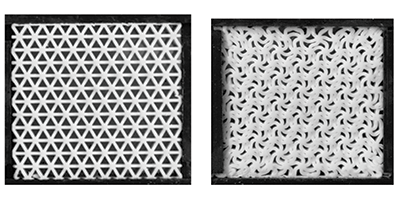
Synopsis: Geometrical Frustration Takes a Stretch

A large-scale triangular lattice made of elastic elements reveals how geometrical frustration can result in complex, but ordered, patterns.

Published Wed Mar 05, 2014
05 Mar 09:40

The use of silk-based devices for fracture fixation

by Gabriel S. Perrone

Article

Current bone fracture repair options include metallic and resorbable systems, both of which suffer from various issues and limitations. Here, the authors demonstrate resorbable and biocompatible silk bone screws, via in vivo testing.

Nature Communications doi: 10.1038/ncomms4385

Authors: Gabriel S. Perrone, Gary G. Leisk, Tim J. Lo, Jodie E. Moreau, Dylan S. Haas, Bernke J. Papenburg, Ethan B. Golden, Benjamin P. Partlow, Sharon E. Fox, Ahmed M. S. Ibrahim, Samuel J. Lin, David L. Kaplan

05 Mar 09:16

Far-Traveling Objects

by xkcd

Far-Traveling Objects

In terms of human-made objects, has Voyager 1 travelled the farthest distance? It's certainly the farthest from Earth we know about. But what about the edge of ultracentrifuges, or generator turbines that have been running for years, for example?

Matt Russell

Spacecraft go a lot faster than centrifuges.[1]With a few exceptions, as you'll see in the next footnote. Spacecraft travel at speeds measured in kilometers per second, and they maintain those speeds constantly. Machine parts rarely move faster than a few hundred meters per second, which means that they probably won't catch up.

But the precise answer to this question depends on what reference frame we're using. Let's go through a few of the options:

Measured relative to the Sun

As far as moving through the Solar System goes, Voyager 1 is one of the slowest manmade objects.[2]It's not the very slowest—that title might belong to the Galileo spacecraft. On September 6th, 1996 at 10:57 (UT), Galileo's speed relative to the Sun dropped to 276 meters per second (618 mph), making it possibly the slowest manmade object in Solar System history. It's moving at an average speed of about 16 km/s, which is barely half of the Earth's orbital speed around the Sun.

It might seem a little intuitively weird that Voyager 1, which went fast enough to escape the Solar System, is going slower than Earth, which didn't. But it makes more sense if you think of the Solar System as a furious whirlpool with the planets caught in it. Voyager 1 (partly by pushing off those planets) managed to go fast enough that it was flung from the whirlpool, and is now drifting sedately across the water's surface.[3]And will continue doing so forever, unless we go get it.

In other words, every 1977 Plymouth Voyager van has traveled farther than Voyager 1.

The longest-traveled manmade objects, by this measure, aren't spacecraft at all—they're whatever objects have been on the Earth the longest, and have thus traveled the farthest around the sun. The first known surviving manmade objects are 2.6-million-year-old stone tools from Ethiopia, which have traveled a total of about 250 light-years.

By comparison, the most well-traveled space probe (possibly the defunct Mariner 10, which has been in a relatively tight loop around the Sun for decades) has only traveled a couple of light-days, and the Voyagers have barely logged a dozen light-hours.

Measured relative to the Earth

By this measure, the Ethiopian stone tools win again. They were crafted relatively close to the Equator, so they've spent their millions of years traveling at about 460 meters per second as the Earth rotates, racking up 4 light-years on their odometers.

Speed over the Earth's surface

This rotating frame of reference effectively zeroes out the odometer on the stone tools. It also means that spacecraft far away from the Earth are sort of a weird case, since they "move" over the Earth's surface at the speed at which the planet spins. But that turns out not to matter, because the winner in this category is Vanguard 1, which has been in orbit since 1958, logging about 8.888 billion kilometers over the surface.

Normal speed, without any weird space stuff or Earth rotation or whatever

First, let's think about things that travel in a straight line. There are a lot of those, including a 1966 Volvo in Long Island which has driven 3 million miles. There are other vehicles that travel long distances—long-haul airliners, for example—but the winner in this category might actually be a human.

United Airlines flight attendant Ron Akana traveled about 20 million miles over his 63-year career, which might be the most of any human; even someone who sailed on steamships their whole life would have a hard time traveling that far.[4]It's not enough to beat the astronauts, though; cosmonaut Valeri Polyakov spent over a year in orbit, which adds up to a life odometer 10 times longer than Ron Akana's.​[5]You could argue that he doesn't qualify as a human-made object, but he was certainly made. And anyway, he may have an object he carried with him for most of those flights. The article mentions he was married, so perhaps his wedding ring qualifies.

Some train cars—or things used in trains—might push the total a little higher, but it seems unlikely that any kind of vehicle has traveled 100 million miles.

Things that rotate are a different matter.

We'll start with hard drive platters.[6]If you're reading this in the future, hard drive platters were these things that ... oh, never mind, it's not important. A 3.5" hard drive at 7200 rpm is moving at about 80 mph. Drives have a limited lifetime—especially if they're run constantly—but it's easy to imagine the edge of a platter somewhere logging millions of miles before it died.

The energy industry has some good candidates. The tips of wind turbines can move faster than cars, and turbines can run for decades. Even if the wind isn't constant, some of them have probably traveled tens of millions of miles.

The discs used in flywheel energy storage are even more promising than wind turbines. Flywheels are designed to spin (usually in a vacuum) for decades at a time, with rotor speeds above Mach 1. There's probably a flywheel somewhere whose rotor rim has traveled a nine-digit number of miles.[7]Hundreds of millions.

The edges of centrifuges, especially those used for uranium enrichment, can travel even faster—in fact, they push the very limits of how fast material can rotate.

There's an absolute limit to how fast anything can spin without breaking apart. For the very strongest materials, like carbon fiber and kevlar, the top speed that the outer edge of a spinning cylinder can travel is between 1 and 2 kilometers per second.[8]Units are weird: The maximum speed the edge of a cylinder of a given material can rotate is equal to the square root of its specific tensile strength (tensile strength over density). If we assume those materials and the precision techniques to produce them have only existed for the last half-century, then the greatest distance a centrifuge could possibly have traveled is about a billion kilometers—and the actual record is almost certainly much less. This is why uranium enrichment involves titanium centrifuges; the uranium needs to be spun very fast, and only specialized materials are strong enough to hold together at those speeds.

All in all, uranium enrichment centrifuges seem like a likely winner, with total lifetime odometer that might push into the hundreds of millions of miles.

How fast?

So, exactly how far has the longest-operating centrifuge traveled?

I don't know.

Normally I don't give up like this, but if I had a way to estimate exactly how fast and for how long the labs in different countries have been spinning their uranium enrichment centrifuges, I would probably not be blogging about it here.

In any case, the centrifuges have logged far less total distance than many manmade objects, including (by various measures) the Ethiopian stone tools, the ISS, Mariner 10, and the Voyagers.

And for what it's worth, based on the "every 3,000 miles" rule, the Voyagers have missed several million oil changes each.

Maybe it's best that we just leave them.
04 Mar 15:03

Aging Renewal Theory and Application to Random Walks

by Johannes H. P. Schulz, Eli Barkai, and Ralf Metzler

Author(s): Johannes H. P. Schulz, Eli Barkai, and Ralf Metzler


Creative Commons A normal renewal process is a sequence of independent events with the between-event time following the Poisson distribution. More complex renewal processes can “age,” characterized by non-Poissonian waiting-time distributions. A new theoretical approach dissects such aging renewal processes and offers many new insights, including how measurements on these processes should be unambiguously interpreted.

[Phys. Rev. X 4, 011028] Published Thu Feb 27, 2014

04 Mar 09:38

The mechanics of coins falling in water

by Marc Abrahams

If you like flipping coins, and you like water, and you like contemplating how you might combine those two interests, consider this line of approach:

newtonCoins falling in water,” Luke Heisinger, Paul K. Newton [pictured here, above]] and Eva Kanso [pictured here, below], Journal of Fluid Mechanics, vol. 742, March 2014, pp. 243-253. (Thanks to investigator Tom Gill for bringing this to our attention.) The authors, at the University of Southern California, Los Angeles, report:

“When a coin falls in water, its trajectory is one of four types, determined by its dimensionless moment of inertia I and Reynolds number Re: (A) steady; (B) fluttering; (C) chaotic; or (D) tumbling. The dynamics induced by the interaction of the water with the surface of the coin, however, makes the exact landing site difficult to predict a priori. Here, we describe a carefully designed experiment in which a coin is dropped repeatedly in water to determine the probability density functions (p.d.f.s) associated with the landing positions for each of the four trajectory types, all of which are radially symmetric about the centre drop-line…. For the steady and fluttering modes, the coin never flips, so the coin lands with the same side up as when it was dropped. The probability of heads or tails is close to 0.5 for the chaotic mode and, in the case of the tumbling mode, the probability of heads or tails is based on the height of the drop which determines whether the coin flips an even or odd number of times during descent.”

OLYMPUS DIGITAL CAMERA

A few details from the study:

coin-detail-1


coin-detail-2

The study cites several papers by 2007 Ig Nobel physics prize winner Mahadevan. It also cites the classic study: ”Dynamical bias in the coin toss,” Persi Diaconis, Susan Holmes, Richard Montgomery, 2007, SIAM Rev., 49, 211-235.


04 Mar 09:37

02/28/14 PHD comic: 'Open Sesame'

Piled Higher & Deeper by Jorge Cham
www.phdcomics.com
Click on the title below to read the comic
title: "Open Sesame" - originally published 2/28/2014

For the latest news in PHD Comics, CLICK HERE!

28 Feb 15:24

Revisiting the Bragg reflector to illustrate modern developments in optics

A series of thin layers of alternating refractive index are known to make a good optical mirror over certain bands of frequency. Such a device, often termed the Bragg reflector, is usually introduced to students in isolation from other parts of the curriculum. Here, we show that the basic physics of wave propagation through a stratified medium can be used to illustrate some more modern developments in optics and quantum physics, from transfer matrix techniques to the optical properties of cold trapped atoms and optomechanical cooling. We also show a simple example of how such systems exhibit an appreciable level of optical nonreciprocity.

28 Feb 15:23

Quantum computation: Model versus machine

by Dan Browne
Jacopo.bertolotti

Another chapter in the D-wave saga
(hint: I think D-wave is a fraud)

Nature Physics 10, 179 (2014). doi:10.1038/nphys2914

Author: Dan Browne

Comparisons between classically simulated models and the actual performance of a 100-qubit D-Wave processor stimulate, but do not settle, the debate about how quantum annealing really works.

28 Feb 15:23

Nonlinear dynamics: Multifractal mating

by Abigail Klopper
Jacopo.bertolotti

No, seriously: multifractal mating.

Nature Physics 10, 183 (2014). doi:10.1038/nphys2915

Author: Abigail Klopper

28 Feb 10:41

Points of significance: Comparing samples—part I

by Martin Krzywinski

Nature Methods 11, 215 (2014). doi:10.1038/nmeth.2858

Authors: Martin Krzywinski & Naomi Altman

Robustly comparing pairs of independent or related samples requires different approaches to the t-test.

28 Feb 10:36

Objective comparison of particle tracking methods

by Nicolas Chenouard

Nature Methods 11, 281 (2014). doi:10.1038/nmeth.2808

Authors: Nicolas Chenouard, Ihor Smal, Fabrice de Chaumont, Martin Maška, Ivo F Sbalzarini, Yuanhao Gong, Janick Cardinale, Craig Carthel, Stefano Coraluppi, Mark Winter, Andrew R Cohen, William J Godinez, Karl Rohr, Yannis Kalaidzidis, Liang Liang, James Duncan, Hongying Shen, Yingke Xu, Klas E G Magnusson, Joakim Jaldén, Helen M Blau, Perrine Paul-Gilloteaux, Philippe Roudot, Charles Kervrann, François Waharte, Jean-Yves Tinevez, Spencer L Shorte, Joost Willemse, Katherine Celler, Gilles P van Wezel, Han-Wei Dan, Yuh-Show Tsai, Carlos Ortiz de Solórzano, Jean-Christophe Olivo-Marin & Erik Meijering

28 Feb 10:23

Light interaction with multilayer arbitrary anisotropic structure: an explicit analytical solution and application for subwavelength imaging

by Yasaman Kiasat
Yasaman Kiasat, Zsolt Szabo, Xudong Chen, Erping Li
A systematic analytical approach to simulate the propagation of electromagnetic plane waves in multilayer anisotropic structures, where the layers can have arbitrary oriented optical axis, is presented. The explicit expressions for the vector polarizations of electric and magnetic fields inside a ... [J. Opt. Soc. Am. B 31, 648-655 (2014)]
28 Feb 10:18

Toxic Avoidance

by Female Science Professor
A reader e-mailed with an interesting question: If you are on the job market and interviewing for jobs, how can you find out whether a particular work environment would likely be toxic for you? Can you ask about this during a visit or interview? Can such environments be avoided?

My experiences as an interviewee may be too ancient to be relevant, although I will mention anyway that I accepted a job offer from a place that I had been warned was hostile to women (they had a terrible record of hiring, retaining, tenuring women); it turned out to be a great place for me. I think it is important to have up-to-date information about a department's work environment and to realize that how certain longtime faculty members interact with each other may or may not be relevant to the experiences of a new colleague. (It could be very relevant if everyone in a department hates each other and/or if the last n women faculty members quit or no one has gotten tenure there since 1989.)

Otherwise, if you feel that the department head is supportive and there are some likely faculty allies, that may be a good indication that you will do well in that department/unit. Or not, but maybe it is worth a try. If you do well and want to leave, you may have options.

Perhaps some of you have experiences to share about whether you had any inkling in advance about a hostile work environment or whether it was a complete surprise to find yourself in this predicament.

If you had information in advance, how did you learn this? Did you ask or was the information volunteered? If you did ask, how/whom/when did you ask?

Have any of you turned down a job offer because you learned in advance that the department (or company or whatever) would be a difficult place for you?

Probably it is better to ask some general leading questions such as "So, what's it like to work in this department?" than to ask "Hey, is this place totally toxic?"


27 Feb 11:25

High-precision measurement of the atomic mass of the electron

by S. Sturm

High-precision measurement of the atomic mass of the electron

Nature 506, 7489 (2014). doi:10.1038/nature13026

Authors: S. Sturm, F. Köhler, J. Zatorski, A. Wagner, Z. Harman, G. Werth, W. Quint, C. H. Keitel & K. Blaum

The quest for the value of the electron’s atomic mass has been the subject of continuing efforts over the past few decades. Among the seemingly fundamental constants that parameterize the Standard Model of physics and which are thus responsible for its predictive power, the electron mass me is prominent, being responsible for the structure and properties of atoms and molecules. It is closely linked to other fundamental constants, such as the Rydberg constant R∞ and the fine-structure constant α (ref. 6). However, the low mass of the electron considerably complicates its precise determination. Here we combine a very precise measurement of the magnetic moment of a single electron bound to a carbon nucleus with a state-of-the-art calculation in the framework of bound-state quantum electrodynamics. The precision of the resulting value for the atomic mass of the electron surpasses the current literature value of the Committee on Data for Science and Technology (CODATA) by a factor of 13. This result lays the foundation for future fundamental physics experiments and precision tests of the Standard Model.

27 Feb 11:21

Parallel lines

Parallel lines

Nature 506, 7489 (2014). doi:10.1038/506407b

A collaborative online mathematics project holds lessons for other disciplines.

27 Feb 10:22

Image transport through a disordered optical fibre mediated by transverse Anderson localization

by Salman Karbasi

Article

Anderson localization allows the transport of light through a transversely disordered medium. Here, Karbasi and colleagues demonstrate that this effect even allows the transmission of images through a disordered optical fibre.

Nature Communications doi: 10.1038/ncomms4362

Authors: Salman Karbasi, Ryan J. Frazier, Karl W. Koch, Thomas Hawkins, John Ballato, Arash Mafi

27 Feb 10:20

Coupling Functions Enable Secure Communications

by Tomislav Stankovski, Peter V. E. McClintock, and Aneta Stefanovska

Author(s): Tomislav Stankovski, Peter V. E. McClintock, and Aneta Stefanovska


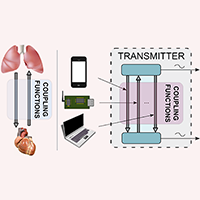
Creative Commons Secure encryption is essential in today’s world, and to beat illicit decryption, evermore secure schemes are needed. Inspired by cardiorespiratory coupling, a new scheme, radically different in concept from the existing encryption approaches, uses the coupling functions between two dynamical systems such as electronic oscillators to enable secure communications.

[Phys. Rev. X 4, 011026] Published Wed Feb 26, 2014

27 Feb 10:19

Synopsis: Packing Polyhedra

A computational study determines the maximum packing density of 55,000 different particle shapes, with potential applications in nanotechnology and biology.

Published Wed Feb 26, 2014
26 Feb 09:40

Complexity in Surfaces of Densest Packings for Families of Polyhedra

by Elizabeth R. Chen, Daphne Klotsa, Michael Engel, Pablo F. Damasceno, and Sharon C. Glotzer

Author(s): Elizabeth R. Chen, Daphne Klotsa, Michael Engel, Pablo F. Damasceno, and Sharon C. Glotzer


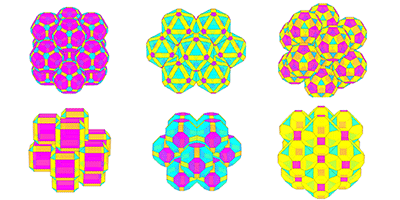
Selected for a Synopsis in Physics Creative Commons The maximum packing density of particles is greatly affected by their shape, an important issue in nanotechnology, biology, and industry that is nevertheless poorly understood mathematically. This comprehensive study takes an analytical and computational approach to calculating the highest-known packing density of over 55,000 related shapes, leading to new guidelines on how to prepare particles for maximum packing efficiency.

[Phys. Rev. X 4, 011024] Published Tue Feb 25, 2014

26 Feb 09:23

Rocket Golf

by xkcd

Rocket Golf

Assuming that you have a spaceship in orbit around the Earth, could you propel your ship to speeds exceeding escape velocity by hitting golf balls in the other direction? If so, how many golf balls would be required to reach the Moon?

—Dan (Kanata, Ontario)

It depends how good your swing is.

That sounds glib, but it's sort of true. The answer to this question hinges on exactly how fast you can hit a golf ball.

Sometimes, exact numbers don't matter that much. If my baseball, car, dog, or Zamboni goes a little faster than yours,[1]$20 says they will! it will go a little farther. But that's not how it works in rocket golf. The design of our spaceship turns out to involve an equation where the speed of the golf ball is in the exponent. That means a small change in speed can make a big difference.

The equation in question—which might be my favorite in all of physics—the Tsiolkovsky rocket equation:

\[ \Delta v = v_\text{exhaust} \ln \frac{m_\text{initial}}{m_\text{final}} \]

This equation comes up a lot in What If calculations. I like it both because it says something fundamental about our ability to explore the universe, and because you can use it to get really good at Kerbal Space Program.

With some rearranging, the equation can help us figure out how much of our ship's weight has to be golf balls:

\[ \frac{\text{Mass of ship plus golf balls}}{\text{Mass of ship alone}} = e ^ \left ( \frac{\text{Ship's change in speed}}{\text{Speed of golf ball}} \right ) \]

Someone who, like me, has never been golfing before, might—after swinging and missing a few times—manage to hit the ball at 120 mph (50 m/s).[2]See Trackman's page on ball speed To get to the Moon from low Earth orbit, you would need enough fuel to add 5,300 m/s to your ship's speed. By putting those numbers into the rocket equation, we can find out how large a sack of golf balls would have to be for the average golfer to reach the Moon. If we plug it in to Wolfram|Alpha ...

... we find that the bag of golf balls will have to be just about exactly 100 billion miles in diameter. That's much, much bigger than our Solar System.[3]As a Fermi rule of thumb, planets in the inner Solar System are 100 million kilometers away and planets in the outer Solar System are a billion kilometers away. Or miles; either one works.

It would also promptly and violently collapse into a black hole.

Fortunately, we should be able to avert that disaster by making relatively small changes to the "120" in that equation. If we increase the golf ball's speed from 120 mph to 150, it shrinks the answer dramatically, and the required number of golf balls would fit snugly between the Sun and Mars. Still too big to avoid a catastrophic collapse, but we're getting somewhere.

Tiger Woods can hit a golf ball at about 180 mph, which means that if he were powering our spaceship, the bag of golf balls would be only twice the diameter of the Sun!

According to the Guinness Book of World Records, the record for fastest golf drive is 211 mph, set by Maurice Allen in 2012. This corresponds to a bag of golf balls only 100,000 kilometers across—smaller than Jupiter, but still (obviously) not practical.

However, golfer Ryan Winther claims to have beaten this record, though without Guinness observers there.[4]And, obviously, it doesn't count unless it's overseen by people from a beer company. If you want to set a world record, hit a golf ball at a radar gun and get it certified by the Mike's Hard Lemonade people. His ball speed was measured by something called the "Titleist Performance Institute" to be 226.7 mph, and he claims a personal best of 237 mph. If he could consistently hit 237 mph, we could shrink our fuel container down to the size of Earth[5]Although it would still be large enough to partially collapse under its own gravity, similar to what happened to the mole of moles.

This still wouldn't work; even in a high orbit, the massive tides from your ship—which is much more massive than the Moon—would be highly disruptive.

We could probably shrink the fuel tank further by using "illegal" equipment. There are Superball-style balls and "trampoline face" clubs which can hit much farther, and which would not be permitted in tournament play.[6]On the other hand, we're talking about a sport that brought whites-only clubs with it into the 21st century, and Agusta, host of the Masters, admitted its first woman in 2012. So maybe we shouldn't worry too much about their traditional rules. A hypothetical 270 mph drive would allow a fuel tank the size of the Moon.

At this point, why are we even using a club?

According to research from the US Air Force Academy and BTG Research,[7]Oddly, both researchers have the name "Courtney". There are probably about 200,000 people in the US named Courtney (first or last); maybe we should recruit them to all build potato cannons. a potato cannon fueled by acetylene can launch a potato at 140 m/s (310 mph). If it were capable of launching golf balls at that speed,[8]We're not factoring in the weight of the acetylene—but then again, we also weren't factoring in the weight of the hamburgers the golfer would need to eat to keep hitting those drives. our ship would have a diameter of only 150 miles!

There's the small problem that manufacturing that many golf balls would cost quintillions of dollars. You could bring the size down further by making the potato cannon more and more powerful and efficient, but at that point you're simply building a rocket.

And the potato cannon scenario has an extra perk. If you somehow made the balls durable enough to survive atmospheric entry, and you set up your maneuver so the ejected golf balls covered the middle latitudes evenly, then over the course of this maneuver you would be statistically likely to hit a hole-in-one ... at every golf course in the world.

25 Feb 09:59

Scaling Green-Kubo Relation and Application to Three Aging Systems

by A. Dechant, E. Lutz, D. A. Kessler, and E. Barkai

Author(s): A. Dechant, E. Lutz, D. A. Kessler, and E. Barkai


Creative Commons The classical Green-Kubo formula, capturing the essential physics of particle diffusion, is one of the most fundamental important results in statistical physics, but has recently been found to be invalid for systems that never reach equilibrium. A generalization of the formula to such “aging” systems is provided here, laying down a new fundamental piece of contemporary statistical physics.

[Phys. Rev. X 4, 011022] Published Mon Feb 24, 2014

21 Feb 10:00

[Report] Discovery of a Three-Dimensional Topological Dirac Semimetal, Na3Bi

by Z. K. Liu
Angle-resolved photoemission spectroscopy is used to detect bulk Dirac cones in a three-dimensional analog of graphene. Authors: Z. K. Liu, B. Zhou, Y. Zhang, Z. J. Wang, H. M. Weng, D. Prabhakaran, S.-K. Mo, Z. X. Shen, Z. Fang, X. Dai, Z. Hussain, Y. L. Chen
20 Feb 18:10

Ha fatto anche cose buone

by Marco Cattaneo

Sì, lo so, c’è chi lo dice parlando di Mussolini, ma io francamente non ho ambizioni revisioniste. Parlo del Governo Letta. E nella fattispecie di Maria Chiara Carrozza, che ha praticamente chiuso la sua breve esperienza da ministro varando il Programma Nazionale per la Ricerca (PNR) 2014-2020.

Difficile che ne abbiate sentito parlare, in queste settimane. Anche perché ormai sembra che la politica, in questo paese, si sia ridotta a puro gioco di gestione del potere. E spesso l’informazione si limita al triste rendiconto degli scambi di slogan tra i protagonisti.

Ecco, invece il 31 gennaio scorso il governo ha approvato il PNR. Prima di scatenare un entusiasmo fuori luogo è meglio dire da subito che non ci sono miracoli in vista. Piccoli passi sì, però, nell’auspicio che il Comitato interministeriale per la programmazione economica lo approvi.

Tanto per cominciare c’è un dettaglio non da poco. Il precedente PNR era triennale. Questo invece diventa settennale, per essere in linea con il Programma Horizon 2020 dell’Unione Europea. Ma non solo. Un piano triennale per la ricerca non permette di guardare molto lontano, ci si limita alla gestione ordinaria. Poter guardare a un orizzonte (toh, che caso) di sette anni dà invece un po’ più di respiro.

Ma veniamo alla sostanza. Il piano previsto ha una dotazione complessiva di 6,3 miliardi di euro, vale a dire 900 milioni all’anno, suddivisi in numerose voci.
Tra le più interessanti vale la pena di segnalare le seguenti.

60 milioni di euro l’anno per il bando di almeno 1800 nuovi dottorati (sempre all’anno).
100 milioni all’anno per almeno 100 progetti riservati a chi ha conseguito il dottorato di ricerca da meno di sei anni (finanziamenti, insomma, che non si discostano di molto dagli starting grant dello European Research Council).
63 milioni all’anno riservati a chi ha conseguito il dottorato da meno di dieci anni e ha trascorso almeno un triennio all’estero oppure a vincitori di starting grant o advanced grant dell’ERC (e questo potrebbe garantire il cofinanziamento dei progetti, generalmente richiesto dall’Unione).
10 progetti della durata di 5-7 anni da circa 100 milioni a progetto, nell’ambito del programma Excellence with Impact.
200 milioni al’anno per progetti di ricerca triennali senza limiti di costi (programma RIDE, Ricerca Italiana d’Eccellenza).
185 milioni l’anno per finanziare il potenziamento del sistema di infrastrutture.

Ma ci sono anche 50-100 milioni l’anno in voucher in conto capitale per il supporto all’innovazione delle PMI, e altri 18 milioni in credito agevolato per finanziare progetti congiunti tra PMI e università o enti pubblci di ricerca.

(Per chi volesse leggere integralmente il PNR, lo si trova in calce al comunicato stampa del ministero del 31 gennaio.)

Non è un gran che, l’ho detto, ma non è nemmeno nulla. E forse è tutto quello che si potrebbe fare nella contingenza attuale, a meno che qualcuno non metta seriamente mano al ripartimento dei fondi della spesa pubblica. Ma per questo, per quanto mi riguarda, ci ho messo una pietra sopra. E mi limito a sperare che questo piccolo intervento non finisca in un cassetto del nuovo governo a fare la muffa per fare posto a velleitarie riforme epocali.
Se poi dovesse passare, staremo a vedere secondo quali criteri saranno distribuiti i finanziamenti. Perché non basta che ci siano. Devono andare anche a chi se li merita.

20 Feb 17:43

Fuel gain exceeding unity in an inertially confined fusion implosion

by O. A. Hurricane

Fuel gain exceeding unity in an inertially confined fusion implosion

Nature 506, 7488 (2014). doi:10.1038/nature13008

Authors: O. A. Hurricane, D. A. Callahan, D. T. Casey, P. M. Celliers, C. Cerjan, E. L. Dewald, T. R. Dittrich, T. Döppner, D. E. Hinkel, L. F. Berzak Hopkins, J. L. Kline, S. Le Pape, T. Ma, A. G. MacPhee, J. L. Milovich, A. Pak, H.-S. Park, P. K. Patel, B. A. Remington, J. D. Salmonson, P. T. Springer & R. Tommasini

Ignition is needed to make fusion energy a viable alternative energy source, but has yet to be achieved. A key step on the way to ignition is to have the energy generated through fusion reactions in an inertially confined fusion plasma exceed the amount of energy deposited into the deuterium–tritium fusion fuel and hotspot during the implosion process, resulting in a fuel gain greater than unity. Here we report the achievement of fusion fuel gains exceeding unity on the US National Ignition Facility using a ‘high-foot’ implosion method, which is a manipulation of the laser pulse shape in a way that reduces instability in the implosion. These experiments show an order-of-magnitude improvement in yield performance over past deuterium–tritium implosion experiments. We also see a significant contribution to the yield from α-particle self-heating and evidence for the ‘bootstrapping’ required to accelerate the deuterium–tritium fusion burn to eventually ‘run away’ and ignite.

20 Feb 17:43

Plasma physics: A promising advance in nuclear fusion

by Mark Herrmann

Plasma physics: A promising advance in nuclear fusion

Nature 506, 7488 (2014). doi:10.1038/nature13057

Authors: Mark Herrmann

Experiments conducted at the US National Ignition Facility have cleared a hurdle on the road to nuclear fusion in the laboratory, encouraging fusion scientists around the world. See Letter p.343

20 Feb 17:43

Not so neutral

Not so neutral

Nature 506, 7488 (2014). doi:10.1038/506265a

Switzerland’s science landscape is under threat after a narrow majority of citizens voted for tighter immigration rules that could restrict the number of foreign scientists who work in the country.

20 Feb 16:12

#altramatematica: ultima occasione

by .mau.
[cat: io] siete ancora in tempo ad acquistare a prezzo stracciato i librini della collana #altramatematica!
19 Feb 15:22

February 19, 2014


GULPO IS HERE! And, he's here in a limited quantity.


(Seriously, these were a little difficult to get made, so if you don't get one of this batch it might be tricky to get more for a while.)