Shared posts

06 Mar 14:37

Research confirms that lasers improve everything, including oscilloscopes

by Chris Lee

Just add lasers (credit: DOE)

I don't believe there is anything that can't be improved by adding a laser to it. And now a group of intrepid engineers has proven me right by making an oscilloscope. An oscilloscope with lasers.

Of course, not everyone shares my obsession with lasers—such people are strange and have sad little lives, but we forgive them. But it's a fair question to ask why we should bother adding lasers to oscilloscopes given that they are pretty well-established tech. The answer is speed. An oscilloscope is designed to display changes in voltage or current with respect to time. To do this, the oscilloscope needs to sample the voltage faster than it changes, which is problematic for today's modern, high-frequency electronics, where it's often easier to generate fast changes than it is to measure them.

This is where a laser may have some benefit. In principle, a light field can be modulated at a rate that is a large fraction of its base frequency (~600THz). Provided we can measure that modulation, we can measure time-varying voltages much faster than we could using any electronic method. But therein lies a conundrum: how do we measure the modulation of a light field? Using electrons. And what is the problem with electrons? They are too damn slow.

Read 8 remaining paragraphs | Comments

05 Mar 13:03

Europe rules e-books won't get tax breaks like paper books

by Daniel Cooper
Jacopo.bertolotti

Bad news for ebooks

Isn't it ironic that tiny nuances of tax law can often cause colossal results out in the real world? It's one of those judgments that has rocked Europe after its highest court ruled that e-books aren't actually goods at all. Currently, paper books so...
05 Mar 12:58

HIV: Tied down by its own receptor

by Nancy L. Haigwood
Jacopo.bertolotti

Might this be some light at the end of the tunnel?

HIV: Tied down by its own receptor

Nature 519, 7541 (2015). doi:10.1038/nature14205

Authors: Nancy L. Haigwood

An engineered protein that binds to the envelope of HIV viruses protects monkeys against infection with a simian–human virus that causes AIDS. This gene-therapy approach might provide an alternative to elusive HIV vaccines. See Letter p.87

05 Mar 12:58

Psychology journal bans P values

by Chris Woolston

Psychology journal bans P values

Nature 519, 7541 (2015). doi:10.1038/519009f

Author: Chris Woolston

Test for reliability of results ‘too easy to pass’, say editors.

05 Mar 12:46

Fatal fallout

Fatal fallout

Nature 519, 7541 (2015). doi:10.1038/519005b

The Ebola epidemic has had a dire effect on the health prospects of pregnant women.

04 Mar 10:33

Bittorrent Sync Pro lets employees share folders from their PCs

by Mariella Moon
Bittorrent's done beta testing its cloud-alternative Sync tool, so it's now releasing not just the stable version, but also a Pro one for businesses. Sync 2.0 still lets you share folders saved on your computer using web links, but it also comes with...
04 Mar 10:26

03/02/15 PHD comic: 'Giant Leap'

Jacopo.bertolotti

Life in perspective

Piled Higher & Deeper by Jorge Cham
www.phdcomics.com
Click on the title below to read the comic
title: "Giant Leap" - originally published 3/2/2015

For the latest news in PHD Comics, CLICK HERE!

03 Mar 17:54

Measurements on the reality of the wavefunction

by M. Ringbauer
Jacopo.bertolotti

No idea what it means, but it sounds interesting.

Nature Physics 11, 249 (2015). doi:10.1038/nphys3233

Authors: M. Ringbauer, B. Duffus, C. Branciard, E. G. Cavalcanti, A. G. White & A. Fedrizzi

03 Mar 17:54

Photon transport enhanced by transverse Anderson localization in disordered superlattices

by P. Hsieh
Jacopo.bertolotti

As far as I can see this paper contains exactly zero new physics. :-\

Nature Physics 11, 268 (2015). doi:10.1038/nphys3211

Authors: P. Hsieh, C. Chung, J. F. McMillan, M. Tsai, M. Lu, N. C. Panoiu & C. W. Wong

03 Mar 09:23

Viewpoint: X-Ray Imaging of a Single Virus in 3D

An x-ray laser has imaged the three-dimensional structure of the mimivirus by combining hundreds of measurements on single virus particles.


Published Mon Mar 02, 2015
03 Mar 09:12

Amici akbar [parte terza]

by stark
Jacopo.bertolotti

"Dal loro covo gli jihadisti dichiarano guerra a Twitter. Youporn resta un fedele alleato."

L’Isis minaccia Twitter. Anche loro non hanno più un cazzo da fare.

I terroristi: “Distruggeremo Twitter”. Che carini, si preoccupano del nostro Pil.

Dal loro covo gli jihadisti dichiarano guerra a Twitter. Youporn resta un fedele alleato.

Il vero nome del boia dell’Isis è Mohammed. E chi se lo sarebbe mai aspettato?

Il sanguinario boia dell’Isis ha lavorato a lungo come informatico. Prima di Windows 8 era un pacifista.

Cinque anni fa “Jihadi John” si sentiva inutile e pensava al suicidio. Chissà che cazzo gli avrà detto quello del Telefono amico.

(Mohammed Emwazi è laureato in ingegneria. Questo spiega il rapporto conflittuale con la figa)

L’ex capo di Jihadi John: “Era un dipendente modello”. Be’, considerate che veniva da Al Qaeda.

Il leghista Buonanno: “Vado in Libia”. Vuole riportare a casa i marò.

* * *

Atterraggio d’emergenza per Renzi. Si chiama “realtà”.

Problemi in volo per l’elicottero di Renzi. Bersani non vuole più pedalare.

(Guasto all’elicottero di Renzi. Ora il rischio è che ne ordiniamo altri 50)

Il premier costretto a un atterraggio d’emergenza su un campo di calcetto. Mancava il decimo.

L’Italia riconosce la Palestina per cinque minuti. “Scusa, ti avevo scambiata per Israele”.

La Camera approva due mozioni contrastanti sulla Palestina. Verrà riconosciuta solo nei giorni dispari.

Marianna Madia: “Sessismo morboso verso le donne ministro”. Poverina, è il suo primo lavoro.

Espulsi dall’Italia 21 pericolosi estremisti. Erano stati intercettati mentre dicevano “Se Renzi va avanti così, io non lo so”.

I terroristi dell’Isis vandalizzano un sito archeologico. Pensate che delusione quando arriveranno a Pompei.

L’Isis distrugge statue e reperti archeologici. Potrebbe essere l’inizio di una bella amicizia.

(Gli italiani sembrano più allarmati quando i terroristi distruggono reperti archeologici che quando tagliano le teste. Mi pare logico: nel primo caso abbiamo molto da perdere)

Gli estremisti islamici minacciano l’Europa: “Assalteremo i centri commerciali”. Che bastardi a prendersela con i luoghi di culto.

Gli jihadisti si scagliano con ferocia contro i centri commerciali. Vabbe’, considerate che sono pure poligami.

* * *

La nuova scuola di Renzi punterà molto su arte e musica. E si chiamerà “Amici”.

Renzi: “Basta giocare sulla pelle dei precari”. È il momento di accanirsi sugli organi interni.

Lo slogan del governo: “La scuola cambia, cambia l’Italia”. E ’stichiasmi!

Il ministro dell’Istruzione Giannini: “I nostri nemici sono stati l’ignoranza e la rassegnazione”. Non so perché, ma ormai è andata così.

Giannini: “Misurarsi con il lavoro durante il corso di studi è un’esperienza importante”. Che non si ripeterà mai più nella vita.

L’ex ministro Berlinguer: “A scuola non ci si deve annoiare”. Per questo le carte non mancano mai.

I fan di Renzi impediscono a un’orchestra di esibirsi. Ma lui la fa ripartire con un pugno.

* * *

Celebrata la Giornata mondiale delle malattie rare. Ma non era il primo maggio?

Maria Elena Boschi: “In un anno di governo ho messo su due chili”. I miei.

Mattarella in visita a Berlino, quindi a Bruxelles. Poi probabilmente saranno passati sette anni.

Il boss Cutolo: “Se parlo, crolla il Parlamento”. Non vuole prima un caffè?

La Svizzera dice addio al segreto bancario. “Va bene, va bene, abbiamo i vostri soldi”.

Berlusconi vuole comprare le torri Rai. La protesi non gli basta più.

La Rai scrive alla Consob: “L’offerta di Mediaset è irricevibile”. Non hanno spedito la mountain bike.

Berlusconi si frattura il malleolo scendendo dall’auto. Stava arrivando il marito.

Laura Boldrini: “Bisogna fare satira in un modo sostenibile”. Non si può perdere mezza redazione ogni volta.

Eurofestival, in gara anche una band di disabili. Ah, ci sono i Modà?

La Garnier sposta una fabbrica dalla Polonia a Torino. La forfora di Pirlo sta davvero peggiorando.

Gli inquirenti del caso Yara: “Bossetti spiava le vicine di casa su Facebook“. Quindi è una persona normale.

Sono 250 mila gli italiani colpiti dalla schizofrenia. E allora perché cazzo ce l’avete tutti con me?

Sarà possibile ricavare energia elettrica dalla masturbazione. Samantha Cristoforetti: “Guardate l’Italia come brilla!”

Sui social fa discutere la foto di Salvini con un ragazzo di colore. Ma è solo un curioso effetto ottico.

Killer di mafia prende la terza laurea. Ora è troppo qualificato.

Londra, al via la convention per poco dotati. “Mi sentite?”

[qui la prima parte]
[qui la seconda parte]

* * *

Autori: marcthulhu, stark, sodocaustico, luce so fusa, pirata21, brivido, giga, a.mazed, sofino, misterdonnie, frandiben, xanax, doctorc, robisanni, clementebrann, cricon, mastrochitarra, guli1979, dan11, quasicomefaber, vaitra, andrea cappellini, uge, ggv84, ‘lfoda, pol1000, il mago di floz, maryread, rocco gazzaneo, ostaggio del mondo e ordinary madness.

Illustrazioni: frandiben, feel-ice, sciscia.
02 Mar 16:21

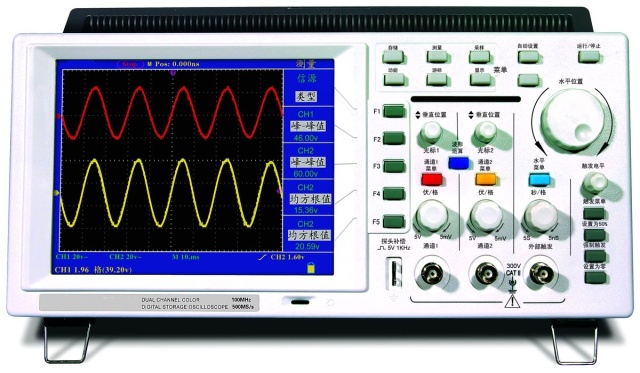
[Report] Spatially structured photons that travel in free space slower than the speed of light

by Daniel Giovannini
That the speed of light in free space is constant is a cornerstone of modern physics. However, light beams have finite transverse size, which leads to a modification of their wave vectors resulting in a change to their phase and group velocities. We study the group velocity of single photons by measuring a change in their arrival time that results from changing the beam’s transverse spatial structure. Using time-correlated photon pairs, we show a reduction in the group velocity of photons in both a Bessel beam and photons in a focused Gaussian beam. In both cases, the delay is several micrometers over a propagation distance of ~1 meter. Our work highlights that, even in free space, the invariance of the speed of light only applies to plane waves. Authors: Daniel Giovannini, Jacquiline Romero, Václav Potoček, Gergely Ferenczi, Fiona Speirits, Stephen M. Barnett, Daniele Faccio, Miles J. Padgett
02 Mar 16:20

[Report] Observation of optical polarization Möbius strips

by Thomas Bauer
Möbius strips are three-dimensional geometrical structures, fascinating for their peculiar property of being surfaces with only one “side”—or, more technically, being “nonorientable” surfaces. Despite being easily realized artificially, the spontaneous emergence of these structures in nature is exceedingly rare. Here, we generate Möbius strips of optical polarization by tightly focusing the light beam emerging from a q-plate, a liquid crystal device that modifies the polarization of light in a space-variant manner. Using a recently developed method for the three-dimensional nanotomography of optical vector fields, we fully reconstruct the light polarization structure in the focal region, confirming the appearance of Möbius polarization structures. The preparation of such structured light modes may be important for complex light beam engineering and optical micro- and nanofabrication. Authors: Thomas Bauer, Peter Banzer, Ebrahim Karimi, Sergej Orlov, Andrea Rubano, Lorenzo Marrucci, Enrico Santamato, Robert W. Boyd, Gerd Leuchs
02 Mar 16:18

[Perspective] Shape-shifting liquid crystals

by Rafael Verduzco
Liquid crystal displays (LCDs) contain tens of thousands of pixels filled with a birefringent fluid known as a liquid crystal, in which molecular orientations fluctuate (like a liquid) but still have an average alignment (like a crystal). The moving images we see on a display are created by controlling the net orientation of the molecules, which changes the optical polarization of the liquid so that it either blocks or transmits light. But what if instead of producing an image on a flat screen, your LCD television could transform into different three-dimensional (3D) objects, and then back to a flat screen? Is it possible for soft materials to reproduce shapes instead of images? On page 982 of this issue, Ware et al. (1) demonstrate this possibility with liquid crystal elastomers (LCEs). Author: Rafael Verduzco
02 Mar 16:16

[In Depth] Japan looks to instill global mindset in grads

by Dennis Normile
Fewer and fewer Japanese students are going abroad for study. The number of foreign students in Japan is trending downward. And non-Japanese professors are uncommon. To address these deficits, Japan's education ministry has just launched the Top Global University Project. Under the program, 13 research universities deemed by the ministry capable of attaining top-100 status worldwide will each receive $3.5 million a year for 10 years. And 24 smaller universities will get $1.4 million a year over that period. The funding is modest, but it should allow the universities to become more in sync with international norms by revamping tenure systems, for example, and overhauling curricula. Author: Dennis Normile
02 Mar 16:06

Almost quantum correlations

by Miguel Navascués

Article

Physical theories can be classified by the strength of the correlations that they allow to be generated between systems. Here, the authors introduce the set of almost quantum correlations that, despite being larger than strict quantum correlations, do not lead to operational contradictions.

Nature Communications doi: 10.1038/ncomms7288

Authors: Miguel Navascués, Yelena Guryanova, Matty J. Hoban, Antonio Acín

02 Mar 15:59

Interaction between light and highly confined hypersound in a silicon photonic nanowire

by Raphaël Van Laer

Nature Photonics 9, 199 (2015). doi:10.1038/nphoton.2015.11

Authors: Raphaël Van Laer, Bart Kuyken, Dries Van Thourhout & Roel Baets

02 Mar 15:41

Strange Nonchaotic Stars

by John F. Lindner, Vivek Kohar, Behnam Kia, Michael Hippke, John G. Learned, and William L. Ditto
Jacopo.bertolotti

Who ever thought that astrophysics could be interesting? :-P

Author(s): John F. Lindner, Vivek Kohar, Behnam Kia, Michael Hippke, John G. Learned, and William L. Ditto

Selected for a Synopsis in Physics The ratio of the frequencies of a pulsating star is approximately the golden mean, a clue that the pulsing is fractal in time.

[Phys. Rev. Lett. 114, 054101] Published Tue Feb 03, 2015

02 Mar 15:37

Weak Ergodicity Breaking of Receptor Motion in Living Cells Stemming from Random Diffusivity

by Carlo Manzo, Juan A. Torreno-Pina, Pietro Massignan, Gerald J. Lapeyre, Jr., Maciej Lewenstein, and Maria F. Garcia Parajo

Author(s): Carlo Manzo, Juan A. Torreno-Pina, Pietro Massignan, Gerald J. Lapeyre, Jr., Maciej Lewenstein, and Maria F. Garcia Parajo

Fundamental biological processes, including the capture of pathogens by membrane receptors, are regulated by molecular transport. Scientists show that receptor functioning is linked to nonergodic dynamics, which refers to the difference between the properties of a particle and an ensemble of particles.


[Phys. Rev. X 5, 011021] Published Wed Feb 25, 2015

02 Mar 15:26

Synopsis: When is Biology Quantum?

A new formalism determines whether quantum-mechanical effects are necessary for photoactivated biological processes to occur.

Published Tue Feb 24, 2015
02 Mar 15:02

Telling stories

Jacopo.bertolotti

They almost make the "Impact" frenzy that took the UK look like something positive. Almost.

Telling stories

Nature 518, 7538 (2015). doi:10.1038/518137a

The UK Research Excellence Framework’s focus on impact is a useful reminder of all the ways that science can help society — both economically and by other means.

02 Mar 15:01

Optics: Super vision

by Zeeya Merali

Optics: Super vision

Nature 518, 7538 (2015). http://www.nature.com/doifinder/10.1038/518158a

Author: Zeeya Merali

Using techniques adapted from astronomy, physicists are finding ways to see through opaque materials such as living tissue.

01 Mar 17:01

the Fork

by The Awkward Yeti

the Fork

28 Feb 17:54

Microwaves

by xkcd
Jacopo.bertolotti

Microwaves for dummies

Microwaves

I have had a particular problem for as long as I can remember. Any time I attempt to heat left over Chinese food in a microwave, it fails to heat completely through somewhere. Usually the center but not always and usually rice, but often it will be a small section of meat. It's baffling and has made me automatically adjust heating times to over 2 minutes. In most cases this tends to heat the bowl or plate more than the food. So I suppose the question is what is the optimal time to heat left over Chinese food in the microwave, how about an 800 watt microwave?

—James

This is a great question. Since the answer isn't too hard to find by Googling, normally I would skip it, but the answer is also something that I never really learned while growing up, so I'd like to try to answer it, for the sake of anyone else out there like me who spent years confused by microwaves.

First, the disclaimer: I am not an expert on food preparation or food safety. Actual experts on food safety can be found at US Department of Agriculture, which publishes a good FAQ page on microwave oven safety.

Now, on to James's question.

There are a couple of different effects that cause microwaves to heat food unevenly.

The first one is that microwaves have hot and cold spots. You can see this by filling a microwave with damp thermal paper, marshmallows, chocolate, or—possibly best of all—appalams.

The reason microwaves don't cook evenly comes straight from physics. When you continuously feed waves into a space—which is what microwaves do—you'll often have some "dead" spots:

In two dimensions, you get a similar but more complicated pattern.

These dead spots are the reason microwaves are designed with rotating platters—the idea is that each part of the food will pass through at least one hot spot. Microwave designers use a lot of tricks to try to vary the pattern to minimize dead spots, but no one does it perfectly; all microwaves will heat at least a little bit unevenly.

The second major reason for cold spots in microwaved food is something touched on in last week's article: Microwaves aren't absorbed very well by ice.

At first, this doesn't seem like a problem, right? It just means that if your food is partly or entirely frozen, you just need to microwave it longer. But when you do that, something interesting happens.

When ice melts, it turns to water,[citation needed] which does absorb microwaves very well. When the first pockets of ice turn to water, they start absorbing more microwaves and heating very quickly, even though the ice around them hasn't even melted. Those melted parts can easily heat enough to start cooking the food while other parts are still frozen.

This means that if you defrost frozen meat in your microwave, it could be hot to the touch over most of its surface, but still have a solid chunk of ice in it somewhere. If it does, when you plop it on the stove,[1]Or in a pan on the stove, or whatever. the thawed parts might finish cooking before the frozen parts have even started to warm up, giving you a large chunk of raw meat in the middle of your steak.

This starts to explain some of the weird instructions commonly seen on microwavable food.

When instructions say let stand for 1-2 minutes, it's not just to protect your mouth from hot food—it's giving the hot and cold spots time to equalize, so the whole thing will be sufficiently heated throughout. And if some part of the food doesn't conduct heat well (e.g. rice) or contains a lot of chunks of ice (e.g. frozen fruit or meat) they also might tell you to stir midway through cooking. This helps to transfer the heat more evenly into the food, move food away from cold spots, and also break up chunks of ice and mix them with warmer pockets of water to help melt them.

This helps us explain why James is so perplexed. He's adjusting the obvious variable—total cooking time—and no matter what value he chooses, he's getting bad results.

The solution is to mess with other variables. First, he can redistribute the heat by pausing halfway through microwaving to stir the food. Second, for things that are harder to stir, he can give the heat time to equalize on its own. If he microwaves his food for a short period, waits a moment, then zaps it again, the heat will have time to spread from the hot spots to the cold spots in between zaps, resulting in more evenly-heated food.

And that brings us to one last surprising[2]This was surprising to me, anyway; I used microwaves for almost 20 years before I realized it. aspect of microwaves: Power level.

It turns out that "turning the microwave off every so often to let the food cool" is exactly what the "power level" setting does! Choosing a lower power level doesn't actually change the strength of the microwaves; it just means that the microwave generator won't be running the whole time. When you cook something on 50% power, you may notice the microwave's sound changing every so often; that's the dynamo turning on and off.[3]The length of these on/off periods (duty cycle) is surprisingly long, partly because switching off and on is hard on the magnetron. This is also the reason why, if you normally cook something for 2 minutes on 50% power, cooking it for 1:30 won't necessarily deliver 75% as much heat like you'd expect. While it's on, the microwave is running at full power. In effect, the microwave is just automating the tedious task of zapping something a bunch of times on "high" for 10 seconds each and letting it sit for a while in between.

So my advice to James is simple: Use a lower power level, stir your food partway through microwaving, and let it sit for a few minutes before you eat it.

And FYI, if you cut a grape in almost in half and microwave it, you'll create bursts of plasma. (You also might damage your microwave, so do it at your own risk.)

This has nothing to do with your question. I just wanted you to know.

25 Feb 18:24

February 25, 2015


In case you missed it, thanks to our patreon subscribers, old comics are now getting voteys! If we raise a bit more, I'll increase the rate to 2 a day!
25 Feb 10:18

Il tabù dell'antisemitismo discrimina gli arabi? Una tesi ed un commento per discutere

by ne'elam
Sommario: 

La tesi è di Paolo Di Muccio che si chiede, riflettendo sul caso Charlie Hebdo ed altri eventi simili, se non sia venuto il tempo, per l'Europa, di fare a meno del "tabù" (legale) dell'antisemitismo. ne'elam prende in considerazione la tesi di Paolo e la discute, trovando argomenti a favore e contro sia nella discussione odierna sia in quella antica, riassunta attraverso alcuni passaggi del "Libro".

La tesi di Paolo di Muccio

Coautori: 
Data di pubblicazione: 
Mercoledì, 25 febbraio, 2015 - 23:59

leggi tutto

25 Feb 09:58

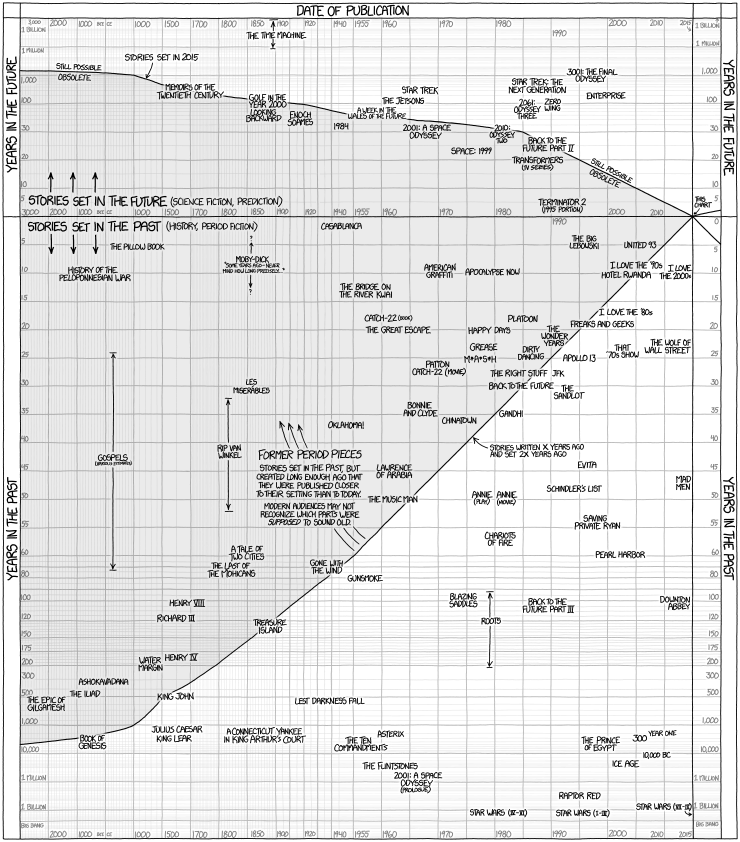
Stories of the Past and Future

Little-known fact: The 'Dawn of Man' opening sequence in 2001 cuts away seconds before the Flintstones theme becomes recognizable.
24 Feb 08:44

Dai commenti: le spese militari greche beneficiano la Germania?

by elmoro
Sommario: 

L'attento lettore avrà notato, fra i commenti all'articolo di Michele e Brighella,un dibattito acceso sulle spese militari greche, che, secondo qualcuno, beneficiano la Germania. Ipocritamente, sostengono alcuni, i tedeschi (e anche i francesi) han lasciato che i greci si indebitassero per fare acquisti di armi da lore ed ora sollecitano l'austerity ma non insistono troppo sul taglio delle spese effettuate al supermercato degli armamenti teutonico. 

Il dibattito ha un che di dejà-vu. Da anni infatti alcuni commentatori insistono che i trasferimenti di risorse da Nord a Sud (dell'Italia) non sono poi un costo per il Nord, visto che i consumatori del Sud poi spendono quei soldi per acquistare prodotti fabbricati al Nord. La retorica di Saviano, solo per nominare uno dei più seguiti fra costoro, è sostanzialmente questa. 

Coautori: 
Data di pubblicazione: 
Martedì, 24 febbraio, 2015 - 06:16

leggi tutto

23 Feb 18:02

Intel forges ahead to 10nm, will move away from silicon at 7nm

by Sebastian Anthony
Jacopo.bertolotti

Assuming that Intel is moving away from silicon in the next few years (and if Intel is doing it it means that this is a coordinate move between all the big players in the field) and go toward a III-V semiconductor, it will immediately mean that all the "CMOS compatibility" issues we have with nanolasers etc will vanish without a trace!

This week at the 2015 International Solid-State Circuits Conference (ISSCC), Intel will provide an update on its new 10nm manufacturing process and new research on how it's maintaining the march of Moore's law to 7nm and beyond. The first chips based on Intel's new 10nm process are expected in late 2016/early 2017, and the company says it's hoping to avoid the delays that haunted the belabored release of 14nm Broadwell. To hit 7nm, Intel says new materials will be required—as in, it looks like 10nm will finally be the end of the road for silicon. The most likely replacement for silicon is a III-V semiconductor such as indium gallium arsenide (InGaAs), though Intel hasn't provided any specific details yet.

ISSCC 2015, being held in San Francisco this week, is where all the big players in silicon (Intel, Samsung, TSMC, IBM, etc.) meet to talk about their latest manufacturing processes and how they might go about overcoming the current barriers to smaller, faster, and denser computer chips. It's not unusual for Intel to have one of the largest presences at the conference, and this year is no different: it will be presenting three papers on its 14nm technology, hosting sessions on a variety of topics, and Mark Bohr—one of Intel's most esteemed researchers—will be sitting on a panel that discusses Moore's law beyond 10nm.

Read 4 remaining paragraphs | Comments

20 Feb 16:40

Lowering the blinds

Jacopo.bertolotti

Double-blind peer review for everyone!

Nature Physics 11, 89 (2015). doi:10.1038/nphys3262

Nature Physics will soon offer the option of double-blind peer review, for which authors and referees are anonymous.