Shared posts

28 Sep 13:20

Swarming bacteria migrate by Lévy Walk

by Gil Ariel

Article

Lévy walks have been found in the motion of large animals such as birds and fish in search of sparsely and randomly distributed food. Here, Ariel et al . observe, by tracking long-duration trajectories of fluorescently labelled bacteria, similar walks in bacterial swarms for the first time.

Nature Communications doi: 10.1038/ncomms9396

Authors: Gil Ariel, Amit Rabani, Sivan Benisty, Jonathan D. Partridge, Rasika M. Harshey, Avraham Be'er

27 Sep 17:28

Saturday Morning Breakfast Cereal - Infernomics

by admin@smbc-comics.com

Hovertext: I await your check, Fritos people.


New comic!
Today's News:

 OH MAN, the presentations for this show are gonna be so good.

26 Sep 11:04

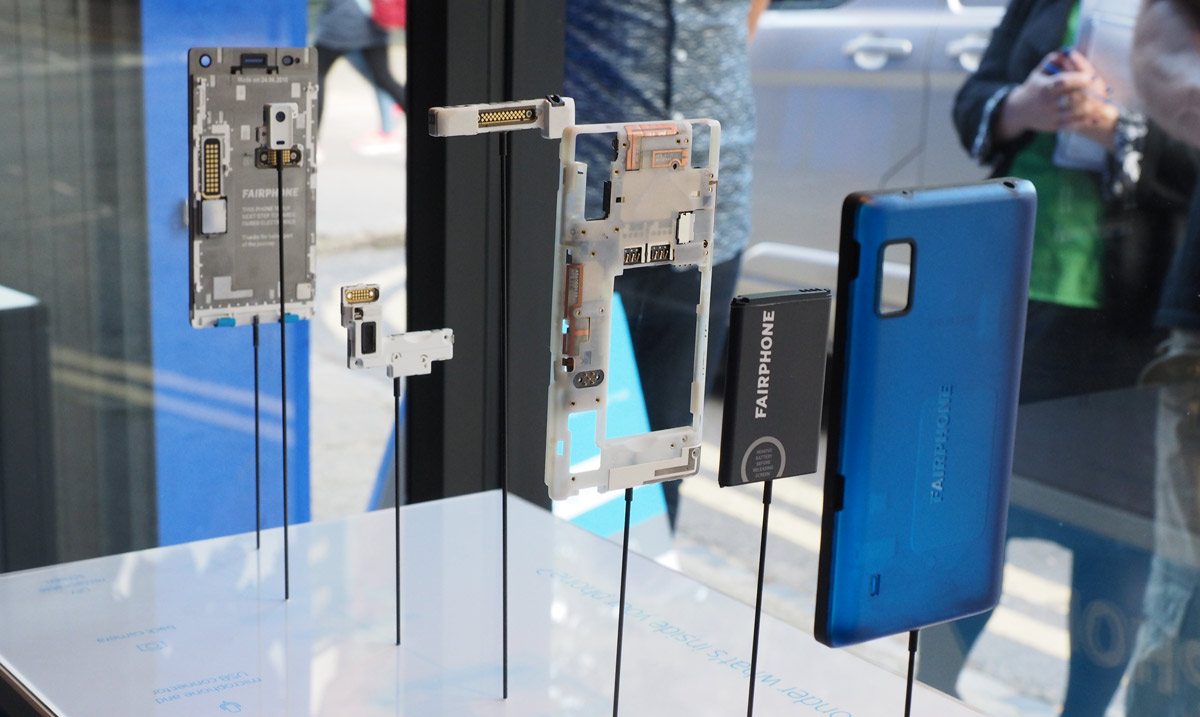
Fairphone delivers on its ethical, modular smartphone

by Jamie Rigg
Jacopo.bertolotti

The idea is nice, but 400£ for a telephone is way too much for me.

Fairphone is a slightly different kind of smartphone manufacturer. It's not out to make the prettiest or the most powerful handsets, but the most ethically responsible. The company bankrolled its first device through a pre-order program, and went o...
25 Sep 16:23

[Association Affairs] For kids with special learning needs, roadblocks remain

by Gavin Stern
Jacopo.bertolotti

"about 1 in 5 people suffer from dyslexia"

What?

Neuroscience has shed light on the struggle, but early intervention and cost remain challenges Author: Gavin Stern
25 Sep 14:31

AVG venderà i dati di navigazione degli utenti

by Paolo Attivissimo
L'articolo è stato aggiornato dopo la pubblicazione iniziale. Ultimo aggiornamento: 2015/10/09 22:30.

Usate AVG, il popolarissimo antivirus gratuito? Allora valutate se volete continuare a usarlo, perché dal 15 ottobre prossimo AVG cambierà le proprie condizioni di licenza in modo da consentire alla società che lo produce di raccogliere la vostra cronologia di navigazione e di ricerca e vendere queste informazioni a terzi.

L'annuncio del cambiamento è stato pubblicato qui da AVG: le nuove norme dicono, in particolare, che AVG raccoglierà “dati non personali per guadagnare sulle [sue] offerte gratuite in modo da mantenerle gratuite”. Questi dati comprenderanno un identificativo pubblicitario associato al dispositivo, la cronologia di navigazione e di ricerca, compresi i metadati, il provider o la rete mobile usata, e “informazioni riguardanti altre applicazioni che potreste avere sul vostro dispositivo”; inoltre “AVG raccoglierà e tratterà informazioni sulle applicazioni che trova sul computer o dispositivo di un utente”.

AVG dichiara che non verranno venduti dati personali come nomi, indirizzi di mail o carte di pagamento e che cercherà di anonimizzare e custodire i dati raccolti in modo da non consentire l'identificazione degli individui, e che alcuni dei suoi prodotti gratuiti includeranno “la possibilità di scegliere se partecipare o meno al [...] programma di raccolta di dati anonimizzati.” Dice inoltre AVG: “Nessuna condivisione di dati avrà luogo prima che i nostri clienti possano fare questa scelta”. Ma se questo genere di raccolta di dati non vi piace, vi conviene cambiare marca di antivirus oppure passare alla versione a pagamento di AVG.


Fonti aggiuntive: The Register, SiamoGeek.
Scritto da Paolo Attivissimo per il blog Il Disinformatico. Ripubblicabile liberamente se viene inclusa questa dicitura (dettagli). Sono ben accette le donazioni Paypal.
25 Sep 14:28

Lost generation looms as refugees miss university

by Declan Butler

Lost generation looms as refugees miss university

Nature 525, 7570 (2015). http://www.nature.com/doifinder/10.1038/525433a

Author: Declan Butler

Educational void risks hampering reconstruction in Middle East.

25 Sep 14:28

Make academic job advertisements fair to all

by Mathias Wullum Nielsen

Make academic job advertisements fair to all

Nature 525, 7570 (2015). http://www.nature.com/doifinder/10.1038/525427a

Author: Mathias Wullum Nielsen

Too many university posts are given to men without proper competition, says Mathias Wullum Nielsen.

24 Sep 16:51

Controlling transmission eigenchannels in random media by edge reflection

by Liyi Zhao, Chushun Tian, Yury P. Bliokh, and Valentin Freilikher
Jacopo.bertolotti

17 pages! I will never manage to read it :-(

Author(s): Liyi Zhao, Chushun Tian, Yury P. Bliokh, and Valentin Freilikher

When a wave is incident on an open random medium it is decomposed into a number of “partial waves” that propagate independently along natural channels, the so-called transmission eigenchannels, and are superposed again when they leave the medium. Here, the authors propose the use of asymmetric edge reflection (the asymmetry in the reflections of the sample edges) to control the perfectly transmitting eigenchannel in a quasi-one-dimensional diffusive medium.


[Phys. Rev. B 92, 094203] Published Mon Sep 21, 2015

24 Sep 09:41

Synopsis: Dance of the Wedding Rings

Wedding rings spinning on a surface can follow surprising boomeranglike trajectories.


[Physics] Published Tue Sep 22, 2015

23 Sep 10:26

Experimental observation of N00N state Bloch oscillations

by Maxime Lebugle

Article

Bloch oscillations consist of periodic spreading and relocalization of particle wave functions, but have been so far observed only in separable states. Here the authors observe them for two-photon N00N states in integrated photonic circuits, revealing transitions from particle bunching to anitbunching.

Nature Communications doi: 10.1038/ncomms9273

Authors: Maxime Lebugle, Markus Gräfe, René Heilmann, Armando Perez-Leija, Stefan Nolte, Alexander Szameit

23 Sep 09:44

Volkswagen: milioni di auto con malware iper-inquinante. Messo da Volkswagen. E da quanti altri?

by Paolo Attivissimo
Questo articolo vi arriva gratuitamente e senza pubblicità grazie alle gentili donazioni di “patriziadal*” e “letizia.2*”. Se vi piace, potete incoraggiarmi a scrivere ancora (anche con un microabbonamento, come ha fatto “biemmic*”). Ultimo aggiornamento: 2015/09/24 7:45.

Lo scandalo della Volkswagen che ha truccato il software di circa undici milioni delle proprie auto diesel in tutto il mondo per barare durante i test sulle emissioni inquinanti è su tutti i giornali. È un disastro per l'azienda, con miliardi di euro persi in borsa e altri da accantonare per risarcimenti e riparazioni, ma è soprattutto un disastro ambientale per tutti noi.

Secondo le stime del Guardian, l'inganno mondiale perpetrato dalla casa automobilistica rischia di aver prodotto ogni anno quasi un milione di tonnellate di emissioni di ossidi di azoto (NOx), grosso modo quanto ne producono tutte le centrali elettriche, le auto, le industrie e l'agricoltura del Regno Unito.

Il trucco è banalissimo, stando a Consumer Reports: quando l'elettronica di bordo (prodotta dalla Bosch) rileva che le ruote di trazione (anteriori, nelle auto VW) si muovono ma quelle posteriori sono ferme, ossia quando l'auto è presumibilmente su un banco di prova, le prestazioni del motore vengono degradate in modo da produrre emissioni nei limiti di legge.

Fra l'altro, questa scelta inequivocabilmente intenzionale di Volkswagen ridefinisce drasticamente il concetto di malware. Siamo abituati a malware che ruba password, inietta pubblicità o altera il funzionamento dei computer o dei telefonini; non era ancora capitato che del malware inserito intenzionalmente dal costruttore consentisse di nascondere un inquinamento atmosferico su vasta scala.

Il problema è che probabilmente questo trucco è stato adottato anche in Europa, e non solo da Volkswagen ma anche da altre case automobilistiche: lo indicano anche le analisi dell'atmosfera, che continuano a rilevare livelli di NOx più alti di quelli attesi. E di certo cose di questo genere vanno avanti da oltre vent'anni, grazie anche alle leggi idiote sul copyright. Non sto scherzando.

Infatti Volkswagen non ha inventato nulla di nuovo. Ricordo che una persona esperta del settore mi confidava in dettaglio, già a fine anni Novanta, che un trucco sostanzialmente identico (una routine nel software delle centraline di controllo dei motori, che riconosce quando è in corso un test sulle emissioni inquinanti e degrada appositamente le prestazioni e quindi le emissioni) veniva utilizzato da una nota marca europea di auto ad alte prestazioni (di cui conosco il nome) per superare i test americani sulle emissioni nocive.

Questo suggerisce una domanda: oltre a Volkswagen (e quindi Audi, Bentley, Bugatti, Lamborghini, Porsche, SEAT, Škoda), quante altre case automobilistiche stanno barando e inquinando ben oltre i limiti di legge?

Ce ne sarebbe anche un'altra: come mai nessuna delle case automobilistiche concorrenti, che comprano regolarmente le auto dei rivali per analizzarle e studiarle in ogni minimo dettaglio e che avrebbero molto da guadagnare nel denunciare una violazione gravissima come questa da parte di un concorrente, ha denunciato questo trucco?

La scoperta dell'inganno si deve infatti a dei ricercatori della West Virginia University che stavano cercando tutt'altro: avevano l'incarico, per conto di una società senza scopo di lucro europea, di raccogliere dati per convincere i normatori europei a emulare i severi standard americani sulle emissioni di NOx. La loro sperimentazione sul campo ha rilevato valori di NOx assolutamente fuori misura e incomprensibili, e l'ente per l'ambiente americano lo ha saputo quasi per caso, come spiegano gli stessi ricercatori qui su IEEE Spectrum.

Questo disastro è andato avanti per così tanto tempo anche grazie al fatto che il software di gestione dei motori degli autoveicoli non è liberamente ispezionabile dai ricercatori indipendenti: anzi, è considerato illegale farlo, secondo l'interpretazione dominante delle norme sul copyright previste dal Digital Millennium Copyright Act (DMCA) specificamente per il software automobilistico. Spiega la Electronic Frontier Foundation:

I fabbricanti di automobili dicono che è illegale che i ricercatori indipendenti esaminino il codice che controlla i veicoli senza il permesso dei costruttori. Abbiamo già spiegato che questo consente ai fabbricanti di impedire la concorrenza nei mercati delle tecnologie per accessori e riparazioni. Rende anche più difficile la ricerca di problemi di sicurezza da parte degli enti di tutela [...]. L'incertezza legale creata dal Digital Millennium Copyright Act rende anche più facile per i costruttori nascondere illeciti intenzionali. Abbiamo chiesto [...] un'esenzione al DMCA che renda chiaro che la ricerca indipendente sul software degli autoveicoli non viola le leggi sul copyright. Nell'opporsi a questa richiesta, i costruttori hanno affermato che se le persone avessero avuto acceso al codice, avrebbero violato le norme antinquinamento. Ma ora abbiamo appreso che secondo la Environmental Protection Agency [PDF] la Volkswagen aveva già programmato un'intera flotta di veicoli in modo da nascondere quanto inquinamento generavano, producendo un impatto reale e quantificabile sull'ambiente e sulla salute umana.

Se il software fosse stato liberamente ispezionabile, anche se non modificabile (per evitare manipolazioni pericolose), Volkswagen probabilmente non ci avrebbe nemmeno provato. Se c'è una dimostrazione potente dei pregi dell'approccio open source, è questa.

Come al solito, quando non c'è vigilanza si commettono abusi, e quando si invoca la segretezza in nome della sicurezza, spesso la vera ragione è che si vuole carta bianca per commettere questi abusi o per nasconderli. La trasparenza serve proprio per evitarli. Anche nel software, che non è una cosa astratta, ma ha conseguenze dannatamente reali: il malware intenzionale di Volkswagen le ha permesso di inquinare impunemente l'aria che respiriamo. È ora di togliere a questi criminali la loro burocratica foglia di fico.


Forza, giornalisti: invece di fare il copiaincolla dei comunicati stampa e le recensioncine all'acqua di rose, andate a chiedere alle altre case produttrici di dichiarare, nero su bianco, che non usano e non hanno mai usato trucchi software per barare sui test sulle emissioni. Vediamo un po' cosa rispondono.

E se qualcuno nel settore dell'assistenza automobilistica riceve richieste confidenziali di aggiornare con discrezione il software delle centraline per far sparire le tracce del malware, me lo dica. Sapete come contattarmi in modo riservato, se conoscete le basi della crittografia.
Scritto da Paolo Attivissimo per il blog Il Disinformatico. Ripubblicabile liberamente se viene inclusa questa dicitura (dettagli). Sono ben accette le donazioni Paypal.
23 Sep 08:26

windows crashing


windows crashing

22 Sep 14:46

Photo


22 Sep 10:08

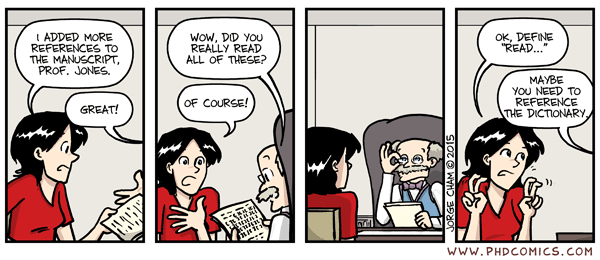
09/21/15 PHD comic: 'Define read'

Piled Higher & Deeper by Jorge Cham
www.phdcomics.com
Click on the title below to read the comic
title: "Define read" - originally published 9/21/2015

For the latest news in PHD Comics, CLICK HERE!

22 Sep 09:05

Galilean invariance in Lagrangian mechanics

by J. R. Mohallem

The troublesome topic of Galilean invariance in Lagrangian mechanics is discussed in two situations: (i) A particular case involving a rheonomic constraint in uniform motion and (ii) the general translation of an entire system and the constants of motion involved. A widespread impropriety in most textbooks is corrected, concerning a condition for the equality h = E to hold.

22 Sep 09:05

Asymmetric wave functions from tiny perturbations

by T. Dauphinee and F. Marsiglio

The quantum mechanical behavior of a particle in a double well defies our intuition based on classical reasoning. Not surprisingly, an asymmetry in the double well will restore results more consistent with the classical picture. What is surprising, however, is how a very small asymmetry can lead to essentially classical behavior. In this paper, we use the simplest version of a double-well potential to demonstrate these statements. We also show how this system accurately maps onto a two-state system, which we refer to as a “toy model.”

22 Sep 09:05

The physics of musical scales: Theory and experiment

by Dallin S. Durfee and John S. Colton

The theory of musical scales involves mathematical ratios, harmonic resonators, beats, and human perception and provides an interesting application of the physics of waves and sound. We first review the history and physics of musical scales, with an emphasis on four historically important scales: twelve-tone equal temperament, Pythagorean, quarter-comma meantone, and Ptolemaic just intonation. We then present an easy way for students and teachers to directly experience the qualities of different scales using MIDI synthesis.

21 Sep 14:32

Provable quantum advantage in randomness processing

by Howard Dale

Article

Although quantum alternatives of various classical tasks are considered advantageous, this is typically extremely difficult to concretely prove. Here, the authors show that a quantum approach to randomness processing provides a reduction in resources and a larger class of solvable problems.

Nature Communications doi: 10.1038/ncomms9203

Authors: Howard Dale, David Jennings, Terry Rudolph

21 Sep 12:37

I FANTASTICI 4. la recensione. la sofferenza.

by leo ortolani

Ci ho messo un po’, a realizzare la recensione, perchè ho sempre fatto recensioni di film, e questo non è un film. E bisognava spiegare “come siamo arrivati fino a questo punto”, giusto per citare una frase che avevano messo nel primo teaser , quello alla Interstellar, e che poi è sparita dal film. Facendo finta che ci sia, un film. Abbiate pazienza, se siete andati a vederlo. Almeno capirete meglio questa cosa qui.

Engiòi!

f4 01

f4 02

f4 03

f4 04

f4 05

f4 06

f4 07

f4 08

f4 09

f4 10

f4 11

f4 12

f4 13

f4 15

f4 14

f4 16

f4 17

f4 18

f4 19

f4 20


21 Sep 07:48

Proton Earth, Electron Moon

by xkcd

Proton Earth, Electron Moon

What if the Earth were made entirely of protons, and the Moon were made entirely of electrons?

—Noah Williams

This is, by far, the most destructive What-If scenario to date.

You might imagine an electron Moon orbiting a proton Earth, sort of like a gigantic hydrogen atom. On one level, it makes a kind of sense; after all, electrons orbit protons, and moons orbit planets. In fact, a planetary model of the atom was briefly popular (although it turned out not to be very useful for understanding atoms.[1]This model was (mostly) obsolete by the 1920s, but lived on in an elaborate foam-and-pipe-cleaner diorama I made in 6th grade science class.)

If you put two electrons together, they try to fly apart. Electrons are negatively charged, and the force of repulsion from this charge is about 20 orders of magnitude stronger than the force of gravity pulling them together.

If you put 1052 electrons together—to build a Moon—they push each other apart really hard. In fact, they push each other apart so hard, each electron would be shoved away with an unbelievable amount of energy.

It turns out that, for the proton Earth and electron Moon in Noah's scenario, the planetary model is even more wrong than usual. The Moon wouldn't orbit the Earth because they'd barely have a chance to influence each other;[2]I interpreted the question to mean that the Moon was replaced with a sphere of electrons the size and mass of the Moon, and ditto for the Earth. There are other interpretations, but practically speaking the end result is the same. the forces trying to blow each one apart would be far more powerful than any attractive force between the two.

If we ignore general relativity for a moment—we'll come back to it—we can calculate that the energy from these electrons all pushing on each other would be enough to accelerate all of them outward at near the speed of light.[3]But not past it; we're ignoring general relativity, but not special relativity. Accelerating particles to those speeds isn't unusual; a desktop particle accelerator can accelerate electrons to a reasonable fraction of the speed of light. But the electrons in Noah's Moon would each be carrying much, much more energy than those in a normal accelerator—orders of magnitude more than the Planck energy, which is itself many orders of magnitude larger than the energies we can reach in our largest accelerators. In other words, Noah's question takes us pretty far outside normal physics, into the highly theoretical realm of things like quantum gravity and string theory.

So I contacted Dr. Cindy Keeler, a string theorist with the Niels Bohr Institute. I explained Noah's scenario, and she was kind enough to offer some thoughts.

Dr. Keeler agreed that we shouldn't rely on any calculations that involve putting that much energy in each electron, since it's so far beyond what we're able to test in our accelerators. "I don't trust anything with energy per particle over the Planck scale. The most energy we've really observed is in cosmic rays; more than LHC by circa 106, I think, but still not close to the Planck energy. Being a string theorist, I'm tempted to say something stringy would happen—but the truth is we just don't know."

Luckily, that's not the end of the story. Remember how we're ignoring general relativity? Well, this is one of the very, very rare situations where bringing in general relativity makes a problem easier to solve.

There's a huge amount of potential energy in this scenario—the energy that we imagined would blast all these electrons apart. That energy warps space and time just like mass does.[4]If we let the energy blast the electrons apart at near the speed of light, we'd see that energy actually take the form of mass, as the electrons gained mass relativistically. That is, until something stringy happened. The amount of energy in our electron Moon, it turns out, is about equal to the total mass and energy of the entire visible universe.

An entire universe worth of mass-energy—concentrated into the space of our (relatively small) Moon—would warp space-time so strongly that it would overpower even the repulsion of those 1052 electrons.

Dr. Keeler's diagnosis: "Yup, black hole." But this is no an ordinary black hole; it's a black hole with a lot of electric charge.[5]The proton Earth, which would also be part of this black hole, would reduce the charge, but since an Earth-mass of protons has much less charge than a Moon-mass of electrons, it doesn't affect the result much. And for that, you need a different set of equations—rather than the standard Schwarzschild equations, you need the Reissner–Nordström ones.

In a sense, the Reissner-Nordström equations compare the outward force of the charge to the inward pull of gravity. If the outward push from the charge is large enough, it's possible the event horizon surrounding the black hole can disappear completely. That would leave behind an infinitely-dense object from which light can escape—a naked singularity.

Once you have a naked singularity, physics starts breaking down in very big ways. Quantum mechanics and general relativity give absurd answers, and they're not even the same absurd answers. Some people have argued that the laws of physics don't allow that kind of situation to arise. As Dr. Keeler put it, "Nobody likes a naked singularity."

In the case of an electron Moon, the energy from all those electrons pushing on each other is so large that the gravitational pull wins, and our singularity would form a normal black hole. At least, "normal" in some sense; it would be a black hole as massive as the observable universe.[6]A black hole with the mass of the observable universe would have a radius of 13.8 billion light-years, and the universe is 13.8 billion years old, which has led some people to say "the Universe is a black hole!" (It's not.)

Would this black hole cause the universe to collapse? Hard to say. The answer depends on what the deal with dark energy is, and nobody knows what the deal with dark energy is.

But for now, at least, nearby galaxies would be safe. Since the gravitational influence of the black hole can only expand outward at the speed of light, much of the universe around us would remain blissfully unaware of our ridiculous electron experiment.


18 Sep 15:34

scarligamerluss: via I nostri Marò

18 Sep 12:08

[In Depth] Skintight invisibility cloak radiates deception

by Adrian Cho
In J. K. Rowling's blockbuster novel Harry Potter and the Philosopher's Stone, the young wizard Harry receives an invisibility cloak: a silky garment that makes him disappear. Now, researchers in the budding field of invisibility cloaking have made an ultrathin cloak of their own. It won't hide Harry; it conceals objects just a few micrometers in size. But compared with earlier, bulkier cloaks, such a device might be more easily scaled up to hide larger things. The original invisibility cloaks smoothly funnel light or longer wavelength electromagnetic waves around an object so that it can't be seen. That means they must be thick compared with the wavelength of light and big compared with the object. In contrast, the new cloak changes light waves bouncing off an object on a surface to erase the distortions the object would otherwise imprint on the waves, effectively hiding the thing from view. To do that, the researchers apply a "metasurface"—a skintight layer of transparent insulator decorated with rectangles of gold of different sizes—that act like little antennas radiating in concert. To prove the "skin cloak" works, they built one to hide a landscape of micrometer-sized hills and valley and make it appear mirror flat. Author: Adrian Cho
18 Sep 12:00

I picchi immaginari

by peppe liberti

C’era una volta un esperimento che poteva cambiare il volto della Fisica Nucleare

Continue reading on Through the optic glass »

18 Sep 11:14

Windows 10, scaricamento imposto e nascosto anche a chi non lo vuole

by Paolo Attivissimo
L'articolo è stato aggiornato dopo la pubblicazione iniziale. Ultimo aggiornamento: 2015/09/18 17:20.

Avete notato che ultimamente il vostro PC Windows è particolarmente pieno di dati e lo è anche la vostra connessione a Internet? La colpa potrebbe essere di Windows 10. Anche se non state usando Windows 10.

Infatti Microsoft, nell'intento di offrire a tutti gratuitamente la nuova versione del proprio sistema operativo, ha usato Windows Update per scaricare Windows 10 sui computer di tutti gli utenti delle versioni precedenti aggiornabili. Lo scaricamento, con conseguente occupazione di spazio su disco (fino a 6 gigabyte) e rallentamento della connessione, avviene che l'utente lo voglia o no. Tutti gli utenti che hanno attivato gli aggiornamenti automatici di sicurezza della propria versione di Windows, ossia la norma, si ritrovano così un “aggiornamento” che in realtà è un'intera versione nuova del sistema operativo. Una versione che magari non vogliono o non possono usare.

Con le capienze e le velocità di connessione medie di oggi qualche giga da scaricare solitamente non è un problema, ma immaginate la gioia che prova invece chi ha un PC portatile con disco a stato solido da poche decine di gigabyte (per esempio un Surface o altro tablet Windows), una connessione a Internet non veloce (per esempio cellulare, alberghiera o peggio ancora a consumo) oppure ha molti computer che tentano contemporaneamente e ripetutamente di scaricare gigabyte di dati. E se lo scaricamento non va a buon fine a causa dell'eccessivo volume di dati, viene ritentato all'infinito, creando un circolo vizioso.

A molti utenti quest'imposizione sta dando fastidio per il modo in cui viene fatta: Windows 10 viene scaricato in una cartella nascosta, per cui l'utente normalmente non può vedere cosa gli sta occupando spazio, e non c'è un'opzione facile che consenta di dire “No, grazie, non voglio installare o scaricare Windows 10”. Siamogeek ha pubblicato le istruzioni in italiano per bloccare questo scaricamento massiccio: non sono una passeggiata. Nei commenti qui sotto trovate altre varianti delle istruzioni. Buona fortuna.
Scritto da Paolo Attivissimo per il blog Il Disinformatico. Ripubblicabile liberamente se viene inclusa questa dicitura (dettagli). Sono ben accette le donazioni Paypal.
18 Sep 08:50

Announcing the 2015 Ig Nobel Prize winners

by Marc Abrahams

The 2015 Ig Nobel Prizes were awarded to the winners tonight in a gala ceremony at Harvard’s Sanders Theatre, with a sold-out audience of 1100 in the theatre, and many more watching the live webcast.

The ten new winners and their achievements are now included in the list of all Ig Nobel Prize winners. Here’s recorded video of the ceremony:

Here’s a photo of the Physics Prize acceptance speech being terminated at the persistent request of an eight-year-old girl (photo by Mike Benveniste / Improbable Research):

2015-IgNobel ceremony-MIke-Benveniste photo

Here’s video of the Biology Prize-winning experiment:

18 Sep 08:45

Drought balls and emergent properties

by Douglas Natelson
There has been a lot of interest online recently about the "drought balls" that the state of California is using to limit unwanted photochemistry and evaporation in its reservoirs.  These are hollow balls each about 10 cm in diameter, made from a polymer mixed with carbon black.  When dumped by the zillions into reservoirs, don't just help conserve water:  They spontaneously become a teaching tool about condensed matter physics.

As you can see from the figure, the balls spontaneously assemble into "crystalline" domains.  The balls are spherically symmetric, and they experience a few interactions:  They are buoyant, so they float on the water surface; they are rigid objects, so they have what a physicist would call "hard-core, short-ranged repulsive interactions" and what a chemist would call "steric hindrance"; a regular person would say that you can't make two balls occupy the same place.  Because they float and distort the water surface, they also experience some amount of an effective attractive interaction.  They get agitated by the rippling of the water, but not too much.  Throw all those ingredients together, and amazing things happen:  The balls pack together in a very tight spatial arrangement.  The balls are spherically symmetric, and there's nothing about the surface of the water that picks out a particular direction.  Nonetheless, the balls "spontaneously break rotational symmetry in the plane" and pick out a directionality to their arrangement. There's nothing about the surface of the water that picks out a particular spatial scale or "origin", but the balls "spontaneously break continuous translational symmetry", picking out special evenly-spaced lattice sites.  Physicists would say they preserve discrete rotational and translational symmetries.  The balls in different regions of the surface were basically isolated to begin with, so they broke those symmetries differently, leading to a "polycrystalline" arrangement, with "grain boundaries".  As the water jostles the system, there is a competition between the tendency to order and the ability to rearrange, and the grains rearrange over time.  This arrangement of balls has rigidity and supports collective motions (basically the analog of sound) within the layer that are meaningless when talking about the individual balls.  We can even spot some density of "point defects", where a ball is missing, or an "extra" ball is sitting on top.

What this tells us is that there are certain universal, emergent properties of what we think of as solids that really do not depend on the underlying microscopic details.   This is a pretty deep idea - that there are collective organizing principles that give emergent universal behaviors, even from very simple and generic microscopic rules.  Knowing that the balls are made deep down from quarks and leptons does not tell you anything about these properties.

17 Sep 13:15

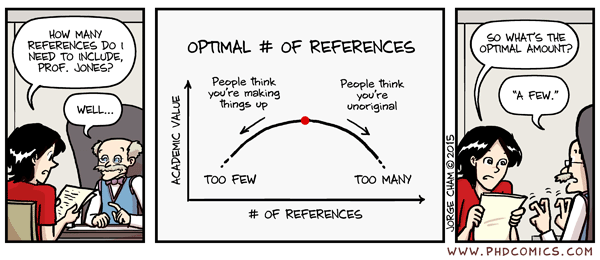
09/16/15 PHD comic: 'Optimal Number of References'

Piled Higher & Deeper by Jorge Cham
www.phdcomics.com
Click on the title below to read the comic
title: "Optimal Number of References" - originally published 9/16/2015

For the latest news in PHD Comics, CLICK HERE!

17 Sep 09:13

Bloch-like waves in random-walk potentials based on supersymmetry

by Sunkyu Yu

Article

Various approaches based on the iterative search have failed in the deterministic creation of bandgaps in random networks. Here Yu et al . reveal a deterministic pathway to bandgaps in random-walk potentials by applying the notion of supersymmetry to the wave equation.

Nature Communications doi: 10.1038/ncomms9269

Authors: Sunkyu Yu, Xianji Piao, Jiho Hong, Namkyoo Park

17 Sep 08:34

Photo


17 Sep 08:33

The Great Game

by Leonardo T
Ai lettori di Libero che in stragrande maggioranza si sono detti favorevoli a un "blitz militare" in India per liberare i marò vorrei esprimere i sensi della mia commozione, accompagnati alla speranza che una così meravigliosa fiducia nelle capacità delle forze armate italiane non sia mal riposta.

La mia obiezione non riguarda tanto i dettagli del piano (un po' vecchiotto), né l'eventualità di una crisi diplomatica che in caso di intervento militare non potrebbe che portare a un conflitto con una nazione di un miliardo e alcune centinaia di milioni di abitanti - del resto, immagino che lettori e redattori di Libero non si nascondano l'entità dalla sproporzione tra noi e l'Unione Indiana. Forse però non hanno riflettuto con la dovuta attenzione sul vecchio adagio che dice: il nemico del mio nemico è mio amico. Senz'altro possiamo muovere guerra a una potenza nucleare popolosa come venti Italie - per il nostro onore questo e altro - ma così facendo non rischiamo di farci... degli amici? Pensiamoci bene. Chi è l'eterno rivale dell'Unione Indiana? Chi ha combattuto contro di essa praticamente sin dal giorno dell'indipendenza, trascinando una disputa territoriale e religiosa per più di settant'anni?

Il Pakistan.

La seconda nazione musulmana più popolosa del mondo - l'unica nazione islamica membra ufficiale del club nucleare. Sul serio vogliamo averla come amica? Quelli che hanno ospitato Bin Laden mentre Bush lo cercava sotto ogni singolo sasso dell'Afganistan. Sul serio vogliamo allearci con loro? Eppure è chiaro che se attacchiamo l'India, spezzandole inevitabilmente le reni, i pakistani non esiteranno ad approfittare del collasso del suo apparato difensivo e ad occupare il Kashmir. Sul serio gli stimati lettori di Libero vogliono questo? Le mani degli islamici sulle pregiate capre da maglione?

Io credo di no.

Con questo non voglio dire che un blitz militare contro l'India non vada portato a termine: ma va calato in un preciso contesto geopolitico. Vale a dire: se attacchiamo l'India bisogna che attacchiamo anche il Pakistan. Par condicio. Del resto la nazione che può permettersi di muovere guerra a una potenza nucleare di un miliardo di abitanti, che difficoltà dovrebbe avere contro un'altra potenza nucleare di appena 180 milioni? Facciamo trenta, tanto vale far trentuno. Tanto più che a Suez hanno appena aperto la seconda corsia. Da lì è tutto dritto fino ad Aden, poi si divide la flotta in due spezzoni. La Cavour col grosso dei sottomarini procede spedita verso il golfo di Bengala; la Garibaldi con un po' di cacciatorpediniere si attarda nel Mar d'Arabia, finché nell'ora x -

Un momento.

Non credo che a Libero ignorino la cosa. Se spezziamo le reni all'India e pugnaliamo contestualmente le spalle al Pakistan, se davvero decidiamo di umiliare i due storici litiganti... c'è il grosso rischio che il terzo goda. E sappiamo tutti qual è il terzo, no?

Il Bangladesh. Appena 156 milioni di abitanti, su un territorio più piccolo dell'Italia e prevalentemente paludoso - pane fradicio per i denti dei nostri Lagunari. E va bene.

Ricapitolando: si passa per Suez, si sbarca in Pakistan, si marcia spediti verso l'Indo - nel frattempo la Folgore potrebbe occupare Sri Lanka e Maldive per prevenire eventuali interferenze nello spazio aereo. Se abbiamo un tris di carte si può fare, io non temporeggerei. E se i dadi ci dicono bene, si può anche provare ad attaccare il Siam.

Con tre carri armati.