Shared posts

10 Mar 19:55

New blood test predicts onset of Alzheimer's disease with 90% accuracy

by Brian Dodson

Alzheimer's disease gradually destroys the brain and its function (Photo: US National Inst...

US medical researchers have developed a blood test which predicts with 90 percent accuracy if an individual will develop Alzheimer's disease or mild cognitive impairment within three years. The test, which looks for a set of ten lipid markers, will allow treatments to be sought that may be effective during this early, asymptomatic stage of the disease... Continue Reading New blood test predicts onset of Alzheimer's disease with 90% accuracy

Section: Health and Wellbeing

Tags: Alzheimer's Disease, Brain, Dementia, Diagnosis, Disease, Georgetown University

Related Articles:
10 Mar 19:53

Mars One Way: Meet the people who want to go to Mars and never come back

by Stella Striegel

Would you want to travel to Mars and never come back? Mars One Way introduces us to five hopefuls who want to be part of project Mars One.

There were 200,000 people who applied to participate in a project called Mars One. It’s a private enterprise to establish a permanent human settlement on Mars and film a reality show along the way. The idea is to go in crews of four starting in 2024. The thing is, right now the technology can only get them there. “Mars One Way” documents the thoughts and theories of Five hopeful Mars One astronauts as they contemplate the reality of leaving planet Earth forever, for a new home on Mars.

Read more.

10 Mar 19:41

A telescope that’s bigger than a galaxy?!? #astronomy

by Jessica

NASA Science News has the scoop on a telescope that, believe it or not, is bigger than a galaxy.

… At the January 2014 meeting of the American Astronomical Society, researchers revealed a patch of sky seen through a lens more than 500,000 light years wide.

The “lens” is actually a massive cluster of galaxies known as Abell 2744. As predicted by Einstein’s Theory of General Relativity, the mass of the cluster warps the fabric of space around it. Starlight passing by is bent and magnified, much like an ordinary lens except on a vastly larger scale.

Lately, the Hubble Space Telescope, along with the Spitzer Space Telescope and the Chandra X-ray Observatory, has been looking through this gravitational lens as part of a program called “Frontier Fields.”

“Frontier Fields is an experiment to explore the first billion years of the Universe’s history,” says Matt Mountain from the Space Telescope Science Institute in Baltimore, Maryland. The question is, “Can we use Hubble’s exquisite image quality and Einstein’s theory of general relativity to search for the first galaxies?”

The answer seems to be “yes.” At the AAS meeting, an international team led by astronomers from the Instituto de Astrofísica de Canarias and La Laguna University discussed Hubble and Spitzer observations of the Abell 2744 cluster. Among the results was the discovery of one of the most distant galaxies ever seen—a star system 30 times smaller yet 10 times more active than our own Milky Way. Bursting with newborn stars, the firebrand is giving astronomers a rare glimpse of a galaxy born not long after the Big Bang itself.

Overall, the Hubble exposure of Abell2744 revealed almost 3,000 distant galaxies magnified as much as 10 to 20 times larger than they would normally appear. Without the boost of gravitational lensing, almost all of those background galaxies would be invisible.

Abell 2744 is just the beginning. Frontier Fields is targeting six galaxy clusters as gravitational lenses. Together, they form an array of mighty telescopes capable of probing the heavens as never before.

Read more.

08 Mar 23:46

Hanging Table Makes Room for Activities

by James Hobson
Bunker.jordan

Hey Lindsay... yes? Make working from bed even easier?

F2N02EOHS18CAZE.MEDIUM

[Matt Silver] usually enjoys a cup of tea in the evening. Unfortunately, this habit can be frustrating and dangerous while sitting in bed. He rectified the problem by building this awesome space-saving table, which can be stored on the ceiling of all places! Depending on the supplies you might already have, this could be a relatively cheap build of about $40 or less. [Matt's] using pine board for everything, but notes you could save time and money by re-purposing an existing coffee table. You will, however, need to make the ceiling frame to support it.

At the heart of this build is our favorite rope—Paracord 550. [Matt] used a single piece to tie the whole thing together, which can cause the table to lower crooked, but [Matt] found he can keep it level by putting a hand on it while it descends. You also get mechanical advantage from the pulleys this way! If you’re not crazy about the potential unevenness, you could redesign the pulley and eyelet layout to allow for four ropes to ensure a reliably horizontal surface.

Why not pair this idea with the portable electronics lab we shared a few days ago? You could have a full series of drop-down tool labs in your workshop. Think of all the space saving opportunities!


Filed under: home hacks
08 Mar 23:40

Stewart Brand’s Reading List: 76 Books to Sustain and Rebuild Humanity

by Maria Popova

From Homer to home health, by way of Shakespeare, conceptual physics, and a gender-imbalance lament.

On the heels of Brian Eno’s reading list comes another installment in the Long Now Foundation’s effort to assemble 3,500 books most essential for sustaining or rebuilding humanity, as part of their collaboratively curated library for long-term thinking, the Manual for Civilization. Here, futurist, environmentalist, and Long Now co-founder Stewart Brand — best-known for authoring the era-defining Whole Earth Catalog and originating the commonly (mis-)quoted aphorism that “information wants to be free” — offers his 76-book contribution to the cumulative library of 3,500, including Brain Pickings favorites like Nobel-winning behavioral economist Daniel Kahneman’s Thinking, Fast and Slow, Bill Bryson’s magnificent illustrated edition of A Short History of Nearly Everything, and Lewis Hyde’s modern manifesto for the creative life, The Gift.

  1. Dirt: The Erosion of Civilizations by David R. Montgomery
  2. Meditations by Marcus Aurelius
  3. The Odyssey by Homer translated by Robert Fagles
  4. The Iliad by Homer translated by Robert Fagles
  5. The Memory of the World: The Treasures That Record Our History from 1700 BC to the Present Day by UNESCO
  6. The History of the World in 100 Objects by Neil MacGregor
  7. The Landmark Herodotus: The Histories edited by Robert B. Strassler
  8. The Landmark Thucydides: A Comprehensive Guide to the Peloponnesian War edited by Robert B. Strassler
  9. The Complete Greek Tragedies, Volumes 1-4 edited by David Grene and Richmond Lattimore
  10. The Prince by Machiavelli, translated by George Bull, published by Folio Society
  11. The Nature of Things by Lucretius
  12. The Art of the Long View: Planning for the Future in an Uncertain World by Peter Schwartz
  13. The Way Life Works: The Science Lover’s Illustrated Guide to How Life Grows, Develops, Reproduces, and Gets Along by Mahlon Hoagland and Bert Dodson
  14. Venice, A Maritime Republic by Frederic Chapin Lane
  15. The Western Canon: The Books and School of the Ages by Harold Bloom
  16. The Map Book by Peter Barber
  17. Conceptual Physics by Paul G. Hewitt
  18. The Encyclopedia of Earth: A Complete Visual Guide by Michael Allaby and Dr. Robert Coenraads
  19. The Foundation Trilogy by Isaac Asimov
  20. Star Maker by Olaf Stapledon
  21. The Gift: Imagination and the Erotic Life of Property by Lewis Hyde
  22. Powers of Ten: About the Relative Size of Things in the Universe by Philip Morrison and Phylis Morrison
  23. The Elements: A Visual Exploration of Every Known Atom in the Universe by Theodore Gray
  24. The History of the Decline and Fall of the Roman Empire (6 Volumes) by Edward Gibbon
  25. The Complete Guide to Trail Building and Maintenance by Carl Demrow and David Salisbury
  26. Collapse: How Societies Choose to Fail or Succeed by Jared Diamond
  27. A Pattern Language: Towns, Buildings, Construction by Christopher Alexander, Sara Ishikawa and Murray Silverstein
  28. Thinking, Fast and Slow by Daniel Kahneman
  29. The Better Angels of Our Nature: Why Violence Has Declined by Steven Pinker
  30. Triumph of the City: How Our Greatest Invention Makes Us Richer, Smarter, Greener, Healthier, and Happier by Edward L. Glaeser
  31. The Causes of War by Geoffrey Blainey
  32. Military Misfortunes: The Anatomy of Failure in War by Eliot A. Cohen and John Gooch
  33. A Short History of Nearly Everything: Special Illustrated Edition by Bill Bryson
  34. The Past From Above: Aerial Photographs of Archaeological Sites edited by Charlotte Trümpler
  35. Turing’s Cathedral: The Origins of the Digital Universe by George Dyson
  36. Why the West Rules–for Now: The Patterns of History, and What They Reveal About the Future by Ian Morris
  37. The Rise of the West: A History of the Human Community by William H. Mcneill
  38. A History of Civilizations by Fernand Braudel
  39. The Pattern on the Stone: The Simple Ideas that Make Computers Work by Daniel Hillis
  40. Imagined Worlds by Freeman Dyson
  41. The Story of Writing: Alphabets, Hieroglyphs & Pictograms by Andrew Robinson
  42. Brave New World (The Folio Society) by Aldous Huxley and illustrated by Leonard Rosoman
  43. Dune by Frank Herbert
  44. The Singularity is Near: When Humans Transcend Biology by Ray Kurzweil
  45. Infinite in All Directions: Gifford Lectures Given at Aberdeen, Scotland April–November 1985 by Freeman J. Dyson
  46. What Technology Wants by Kevin Kelly
  47. The Player of Games by Iain M. Banks
  48. Consider Phlebas by Iain M. Banks
  49. Look to Windward by Iain M. Banks
  50. State of the Art by Iain M. Banks
  51. Use of Weapons by Iain M. Banks
  52. Excession by Iain M. Banks
  53. Across Realtime by Vernor Vinge
  54. The Discoverers: Volumes I and II Deluxe Illustrated Set by Daniel J. Boorstin
  55. Governing the Commons: The Evolution of Institutions for Collective Action by Elinor Ostrom
  56. The Clash of Civilizations and the Remaking of World Order by Samuel P. Huntington
  57. The Idea of Decline in Western History by Arthur Herman
  58. Thinking in Time: The Uses of History for Decision Makers by Richard E. Neustadt and Ernest R. May
  59. Finite and Infinite Games: A Vision of Life as Play and Possibility by James P. Carse
  60. One True God: Historical Consequences of Monotheism by Rodney Stark
  61. The Future of Life by Edward O. Wilson
  62. The Coming Population Crash: And Our Planet’s Surprising Future by Fred Pearce
  63. Gaia: A New Look at Life on Earth by James Lovelock
  64. The Long Summer: How Climate Changed Civilization by Brian Fagan
  65. Medieval Civilization by Jacques Le Goff
  66. The Civilization of the Middle Ages: A Completely Revised and Expanded Edition of Medieval History by Norman F. Cantor
  67. Guns, Germs, and Steel: The Fates of Human Societies by Jared Diamond
  68. The Eternal Frontier: An Ecological History of North America and Its Peoples by Tim Flannery
  69. The Epic of Gilgamesh translated by Andrew George
  70. Beowulf: A New Verse Translation by Seamus Heaney
  71. How Buildings Learn: What Happens After They’re Built by Stewart Brand
  72. Grand Design: The Earth from Above by Georg Gerster
  73. The Complete Oxford Shakespeare: Histories, Comedies, Tragedies (Three volume set)
  74. The Merck Manual Home Health Handbook by Robert Porter
  75. Lao Tzu’s Te-Tao Ching — A New Translation Based on the Recently Discovered Ma-wang-tui Texts by Lao Tzu and translated by Robert G. Henricks
  76. The King and the Corpse: Tales of the Soul’s Conquest of Evil by Heinrich Zimmer edited by Joseph Campbell

Only one lament: One would’ve hoped that a lens on rebuilding human civilization would transcend the hegemony of the white male slant and would, at minimum, include a more equal gender balance of perspectives — of Brand’s 76 books, only one is written by a woman, one features a female co-author, and one is edited by a woman. It’s rather heartbreaking to see that someone as visionary as Brand doesn’t consider literature by women worthy of representing humanity in the long run. Let’s hope the Long Now balances the equation a bit more fairly as they move forward with the remaining entries in their 3,500-book collaborative library.

Complement with the reading lists of Carl Sagan, Alan Turing, Nick Cave, and David Bowie,* then join me in supporting the Manual for Civilization.

* I realize these are all male reading lists. I have been unable to find a published reading list by a prominent female public figure — if you know of one, please do get in touch.

Donating = Loving

Bringing you (ad-free) Brain Pickings takes hundreds of hours each month. If you find any joy and stimulation here, please consider becoming a Supporting Member with a recurring monthly donation of your choosing, between a cup of tea and a good dinner.


♥ $7 / month♥ $3 / month♥ $10 / month♥ $25 / month


You can also become a one-time patron with a single donation in any amount.


Brain Pickings has a free weekly newsletter. It comes out on Sundays and offers the week’s best articles. Here’s what to expect. Like? Sign up.

Brain Pickings takes 450+ hours a month to curate and edit across the different platforms, and remains banner-free. If it brings you any joy and inspiration, please consider a modest donation – it lets me know I'm doing something right. Holstee

08 Mar 01:29

Custom prosthetic arm turns student into a bionic drummer

by Paul Ridden
Bunker.jordan

I love it when people design their own prostheses!

Jason Barnes and Professor Gil Weinberg demonstrate the robotic prosthesis

In 2012, Jason Barnes lost the lower part of his right arm after being electrocuted. Though he could have pursued his dream of becoming a professional drummer using only his remaining limb (like Def Leppard's Rick Allen, for example), he decided to build his own stick-wielding prosthesis. The attachment certainly allowed him to make some noise, but it wasn't flexible enough to give the speed or bounce control he was looking for. Now, thanks to the work of Georgia Tech's Professor Gil Weinberg, Barnes is preparing for a gig later this month where a novel robot drumming prosthetic arm will help him pound out precision rhythms with a live band... Continue Reading Custom prosthetic arm turns student into a bionic drummer

Section: Science

Tags: Bionic, Drums, Georgia Tech, Percussion, Prosthetics

Related Articles:
08 Mar 01:22

Optomec awarded new patent on Aerosol Jet print head for 3D printing electronics

Bunker.jordan

Super interesting! I obviously haven't been keeping up with tech.

Industrial 3D printer manufacturer, Optomec was awarded a new U.S. patent, titled Miniature Aerosol Jet and Aerosol Jet Array, patent # 8,640,975. The patented miniaturized Aerosol Jet print head geometry is significantly smaller, lighter weight and lower cost than preceding generations.

This article Optomec awarded new patent on Aerosol Jet print head for 3D printing electronics is first published at 3ders.org.

08 Mar 01:19

The Art of Watchmaking

by Alan Parekh
Bunker.jordan

*note* I have not yet watched this, but I totally want to.

The Art of Watchmaking


Wrist watches seem to be loosing their grasp on our wrists with the popularity of smart phones but I think the beauty of a well crafted watch will never die. You can buy a digital watch at the dollar store which would have been churned out in a factory in China or you can purchase one for hundreds of thousands of dollars. Mechanical watches require very detailed manufacturing and tolerances that are incredibly tight. The super high end watches also require lots of human interaction to finish and assemble the watch. When you think of the complexity it is amazing that you can get years of solid use out of them.


Watchmaking Part 1


Watchmaking Part 2


Watchmaking Part 3

 Making of a Glashütte

07 Mar 23:20

Gipsy Danger and Cherno Alpha Costumes

by Amy Ratcliffe
Bunker.jordan

*want*

gipsy danger and cherno alpha

The Jaegers in Pacific Rim were destined to be epic costumes at conventions. RPF user dbsamurai and his friend Hailee decided to make seven feet tall Gipsy Danger and Cherno Alpha suits. They started last year and though they’re still making improvements, I’d say their costumes are already in good shape. They used Pepakura files to create the foam suits and posted step by step photos on The RPF. The pic below is of Gipsy’s muscles; Gipsy’s hands were a little challenging, but here’s how dbsamurai handled it:

I actually finished my hands earlier in the week, but I fiddled back and forth with making the left hand movable so I could mimic Gipsy’s “Neural Handshake” pose. Unfortunately there wasn’t enough tension to return them to their default positions, which left the fingers too floppy so I glued them down for two fists.

in progress jaegers

Read more at The RPF.

07 Mar 23:04

1884: The Stevens Bicycle Rifle

by Amanda

Stevens-Bicycle-Rifle

07 Mar 20:06

A Fence of Mirrors Reflects the Changing Landscape

by Christopher Jobson

A Fence of Mirrors Reflects the Changing Landscape mirrors installation fences

A Fence of Mirrors Reflects the Changing Landscape mirrors installation fences

A Fence of Mirrors Reflects the Changing Landscape mirrors installation fences

A Fence of Mirrors Reflects the Changing Landscape mirrors installation fences

A Fence of Mirrors Reflects the Changing Landscape mirrors installation fences

A Fence of Mirrors Reflects the Changing Landscape mirrors installation fences

Created by artist Alyson Shotz, this reflective picket fence is made entirely of mirrors and has been installed in several locations since 2003. The iteration shown here was on view through 2012 at the Storm King Art Center in New York. The fence has the uncanny ability to reflect its surroundings resulting in a barrier that is at times almost completely camouflaged, or, depending on your perspective, in stark contrast to the nearby landscape. (via Designboom)

07 Mar 16:51

The Miraculous in the Mundane: Richard Feynman Explains How Rubber Bands Work

by Maria Popova

“The world is a dynamic mess of jiggling things, if you look at it right.”

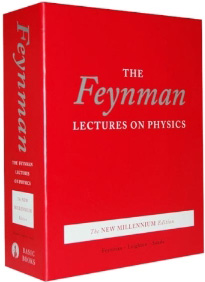
When you see an ordinary rubber band stretched around and holding together a stack of stuff over a long period of time, you’re actually witnessing a miraculous force of physics at work — a perpetual pounding of the atoms as they struggle to hold these chains together against the outward push of the stack, vibrating with extraordinary vigor just to accomplish this seemingly mundane task. That peeling away of the mundane to reveal the magnificent is the greatest gift and most lasting legacy of Richard Feynmanchampion of scientific culture, graphic novel hero, crusader for integrity, secret artist. Indeed, it was this very talent that earned Feynman the moniker “the Great Explainer” and his lectures, eventually collected in The Feynman Lectures on Physics (public library), went on to become a cultural classic, brimming with his signature fusion of accessible, enthralling explanations of complex scientific phenomena and poignant meditations on the broader meaning of life.

In this short clip from the 1983 BBC series Fun to Imagine, Feynman unleashes his singular gift on the humble rubber band to illuminate its surprisingly awe-worthy embodiment of the laws of physics:

The world is a dynamic mess of jiggling things, if you look at it right.

Complement with Feynman on the key to science in 63 seconds, the one sentence to be passed on to the next generation and his little-known sketches, collected by his daughter.

Donating = Loving

Bringing you (ad-free) Brain Pickings takes hundreds of hours each month. If you find any joy and stimulation here, please consider becoming a Supporting Member with a recurring monthly donation of your choosing, between a cup of tea and a good dinner.


♥ $7 / month♥ $3 / month♥ $10 / month♥ $25 / month


You can also become a one-time patron with a single donation in any amount.


Brain Pickings has a free weekly newsletter. It comes out on Sundays and offers the week’s best articles. Here’s what to expect. Like? Sign up.

Brain Pickings takes 450+ hours a month to curate and edit across the different platforms, and remains banner-free. If it brings you any joy and inspiration, please consider a modest donation – it lets me know I'm doing something right. Holstee

07 Mar 16:33

1896: The Herzog Teleseme

by Amanda

Teleseme Herzog 3 Teleseme Herzog 2 Teleseme Herzog 1
Be it known that we, FELIX BENEDICT HERZOG and SCHUYLER S. WHEELER, citizens of the United States, residing in the city of New York, State of New York, have invented new and useful Improvements in Electric Signaling Apparatus, Circuits, and Methods, of which the following is aspecification.

Letters Patent No. 289,834, issued to said Herzog December 11, 1883, describe an automatic signaling apparatus applicable to many different uses, such as telephone-exchange systems, district-telegraph and private circuits, hotel service.

Patented-Dec. 22, 1896.

-Google Patents

07 Mar 16:33

Floating sphere records and replays public space sounds

by Stu Robarts
Bunker.jordan

This thing looks positively evil. I want one.

Space Replay is a floating sphere that records and replays the sounds around it

A floating sphere called Space Replay has been created that explores unusual sound signatures from transitional public spaces, moving around its space and replaying the sounds it picks up after a short delay... Continue Reading Floating sphere records and replays public space sounds

Section: Electronics

Tags: Arduino, Art, Floating, Royal College of Art, Sound

Related Articles:
06 Mar 23:52

Video

Bunker.jordan

MORE OF THIS. LESS OF PEOPLE BEING SHITTY.


06 Mar 22:40

The Miracle Machine turns water (and a few added ingredients) into wine

by Dave Parrack
Bunker.jordan

Now we all can be Jesus! Hooray!

The Miracle Machine is named thanks to its promised ability to turn water into wine

A certain historical figure is reputed to have once turned water into wine, and whether you believe this event actually happened or not, the idea is a compelling one. Now, a wine expert and an entrepreneur claim that they have created a device that turns this concept into a reality. Just to ensure the connection is made, they have called the device the Miracle Machine. .. Continue Reading The Miracle Machine turns water (and a few added ingredients) into wine

Section: Good Thinking

Tags: Arduino, Kickstarter, Wine

Related Articles:
06 Mar 20:59

3D Printed BMO with LED Matrix Face

by Noe Ruiz
Bunker.jordan

Gosh, I really need a 3d printer again...

Make your own BMO with 3D Printing and DIY electronics. This adorable robot features a mini 8×8 LED matrix and GEMMA, adafruit’s tiny arduino-compatible micro-controller.

3D Print the parts, solder the components and assembly this cute video game robot to have an awesome adventure time!


Grab the files on thingiverse and 3d print the parts in your favorite color.


The Mini 8×8 LED matrix powers 64 LEDs to display bright and super cute animations. Here’s what the complete circuit looks like. The push button should also have enough slack for it to move around in the enclosure. Gemma acts as BMO’s brains, while the LED matrix+backpack is his face. We can assume the battery is his heart ;-)


You can print BMO’s buttons in different colored ABS or paint each piece.

Want to 3D Print and build your own BMO? We have a easy to follow tutorial and the STL files are available for free on Thingiverse!

Full Tutorial
Download STLs

3D Printed and build BMO? Be sure to share it on thingiverse as a make! Built your own adorable robot? Let us know in the comments below and join our Show n Tell on google+!

06 Mar 20:54

The Father Of 3D Printing Is Being Inducted Into The National Inventors Hall Of Fame #3DThursday #3DPrinting

by Matt

Pasted Image 3 6 14 8 49 AM

The Father Of 3D Printing Is Being Inducted Into The National Inventors Hall Of Fame. From Techcrunch:

With all the hubbub surrounding 3D printing as of late, it’s easy to think of it as something new. Something that, before 5 or 6 years ago, only existed in Sci-Fi novels.

Surprise! 3D printing has actually been around for decades. In fact, the first kinda-sorta functional 3D printer prototype was built way back in 1984. This year, its inventor, Chuck Hull, is being inducted into the National Inventors Hall Of Fame.

This puts him up in the ranks, in the U.S. Patent Office’s eyes, with folks like Thomas Edison, Jobs/Woz, the Wright Brothers, Einstein, and Eli Whitney.

In 1984, Hull had a realization: if you pointed a highly focused UV light at a special, goopy material (called a “photopolymer” ), the material would instantly turn solid wherever the light would touch. If you did this repeatedly, layer by layer, you could “print” an object into existence. He dubbed it “stereolithography“, and bam! 3D printing was born….

Read More.


649-1
Every Thursday is #3dthursday here at Adafruit! The DIY 3D printing community has passion and dedication for making solid objects from digital models. Recently, we have noticed electronics projects integrated with 3D printed enclosures, brackets, and sculptures, so each Thursday we celebrate and highlight these bold pioneers!

Have you considered building a 3D project around an Arduino or other microcontroller? How about printing a bracket to mount your Raspberry Pi to the back of your HD monitor? And don’t forget the countless LED projects that are possible when you are modeling your projects in 3D!

The Adafruit Learning System has dozens of great tools to get you well on your way to creating incredible works of engineering, interactive art, and design with your 3D printer! If you’ve made a cool project that combines 3D printing and electronics, be sure to let us know, and we’ll feature it here!

06 Mar 19:09

A Hand-Cranked Automaton That Mimics the Effect of a Raindrop Hitting Water

by Christopher Jobson

A Hand Cranked Automaton That Mimics the Effect of a Raindrop Hitting Water wood water kinetic automata

A Hand Cranked Automaton That Mimics the Effect of a Raindrop Hitting Water wood water kinetic automata

This little wood automaton is meant to mimic the effect of a water drop hitting a body of water, all using concentric rings cut from wood that are manipulated by a hand crank. The piece was created by UK-based designer Dean O’Callaghan, inspired by the work of Reuben Margolin (most likely his round wave sculpture). (via The Automata Blog)

06 Mar 17:29

Shipping container community center services Shanghai's migrant workers

by Adam Williams

The Community Cube center was built to service Shanghai's migrant workers (Photo: Jennifer...

Non-profit organization INCLUDED has produced a new community center for Shanghai's migrant worker community. Dubbed Community Cube, the two-storey 150 sq m (1,614 sq ft) structure was completed in 2013 and comprises a number of used shipping containers as a primary building material. .. Continue Reading Shipping container community center services Shanghai's migrant workers

Section: Architecture

Tags: Housing, Shanghai, Shipping Container

Related Articles:
14 Mar 21:57

Happy Pi Day!

by Dan
Bunker.jordan

I only know it to 16 digits :-/

Indeed, Pi day (3/14, March 14th) is upon us once more. Last year I had the fortune of being the first person to recite many digits of Pi at our college’s celebrations, and this year I have worked on remember additional decimal places.

In doing so, I remembered a javascript my friend made in junior high school that would check Pi digits, and with his permission I have embedded it below (or download it.)

Practice your Pi here! (Refresh if it didn’t load.)

14 Mar 21:49

"The master in the art of living makes little distinction between his work and his play, his labor..."

“The master in the art of living makes little distinction between his work and his play, his labor and his leisure, his mind and his body, his information and his recreation, his love and his religion. He hardly knows which is which. He simply pursues his vision of excellence at whatever he does, leaving others to decide whether he is working or playing. To him he’s always doing both.”

- James A. Michener (via drewdennison)