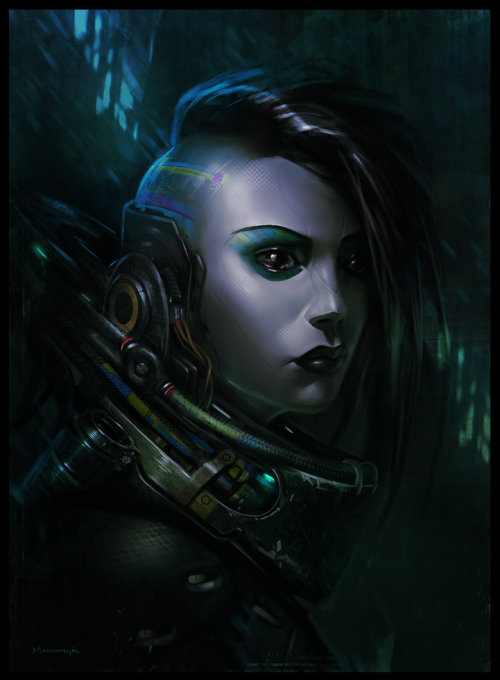
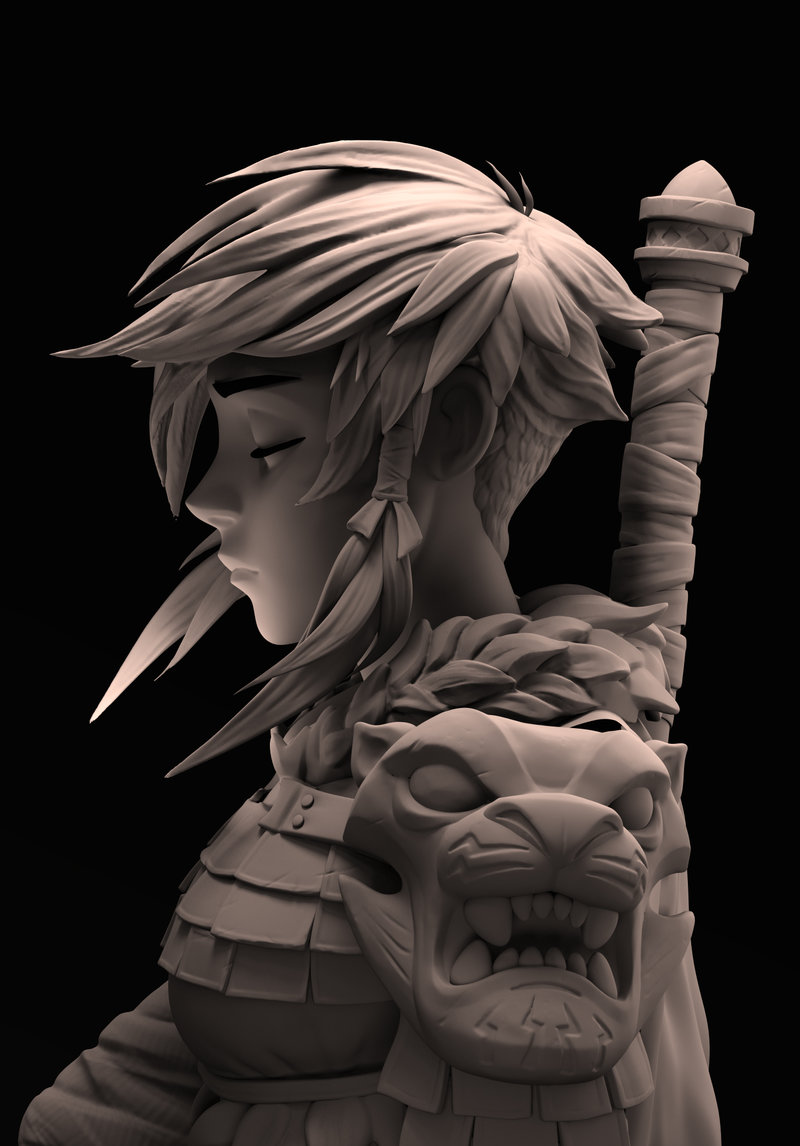
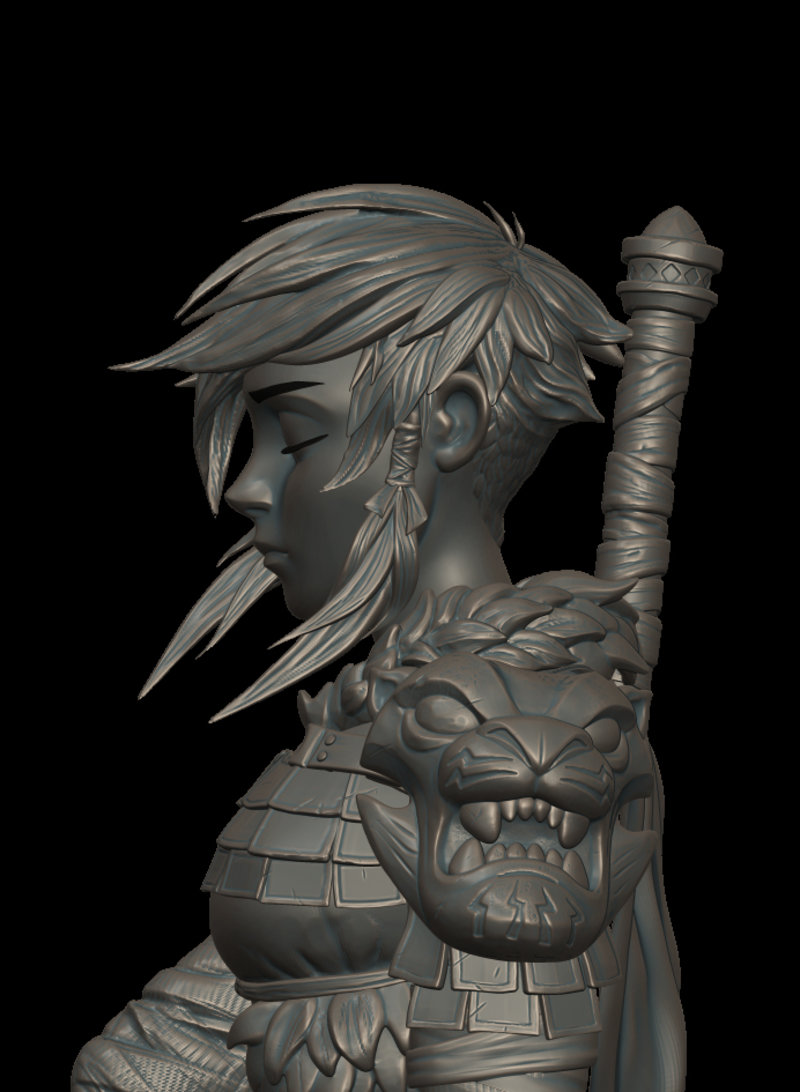
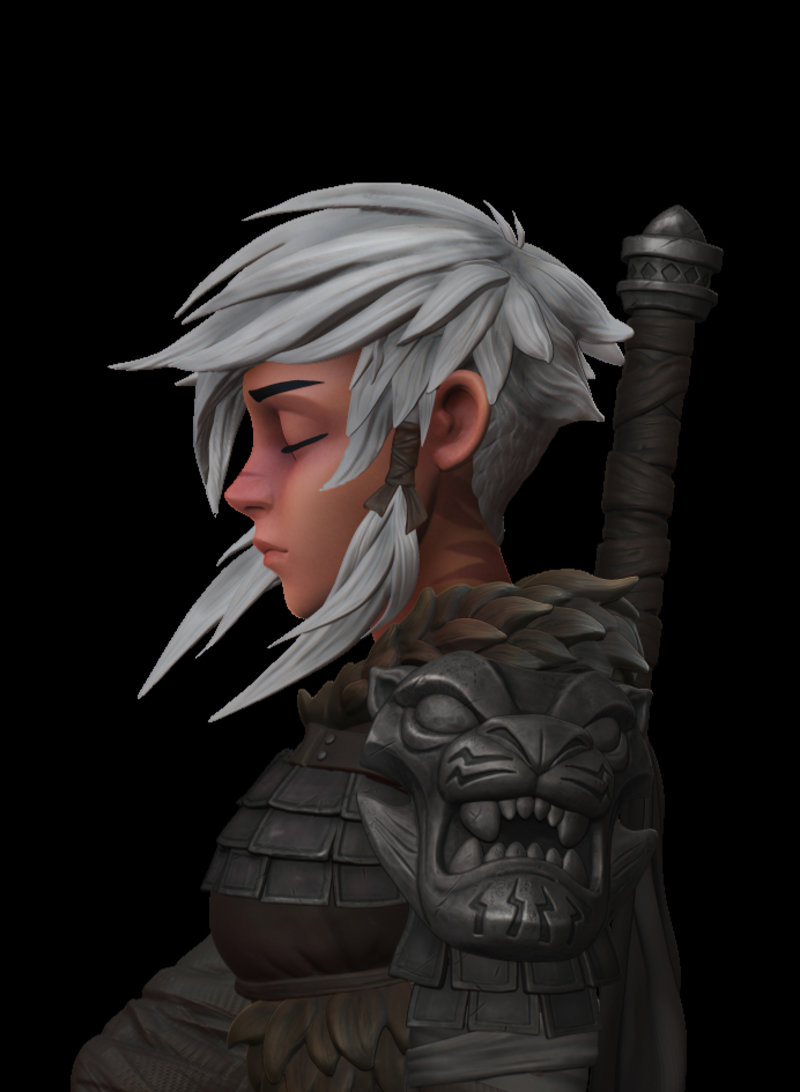
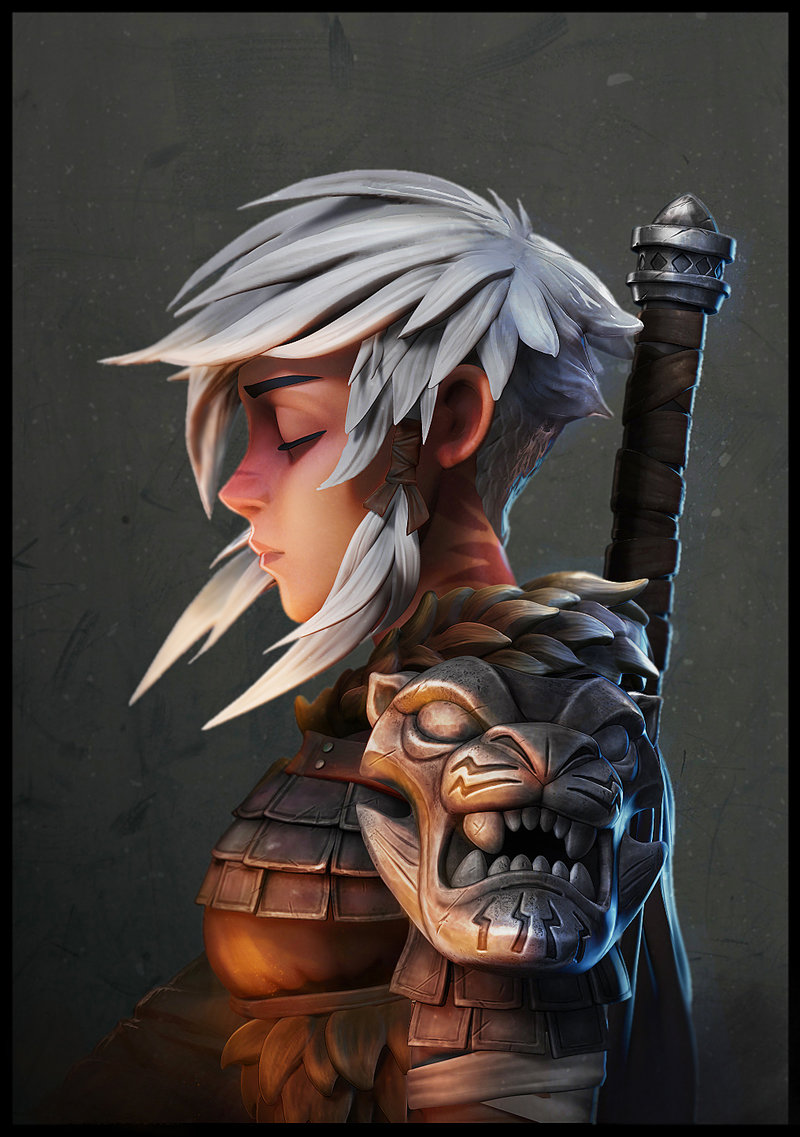
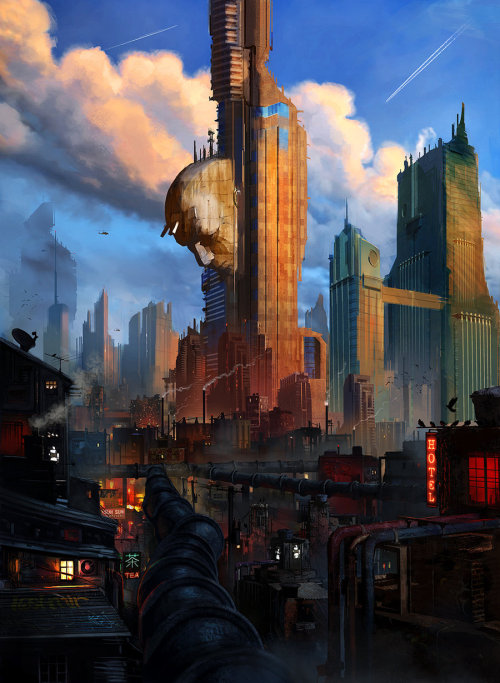
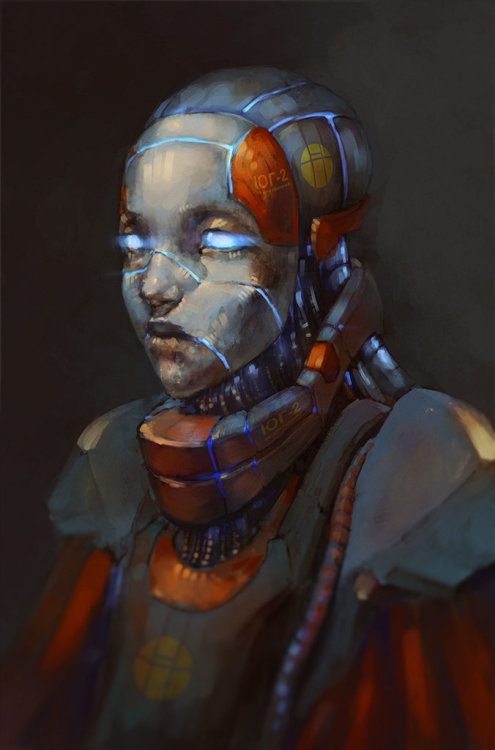
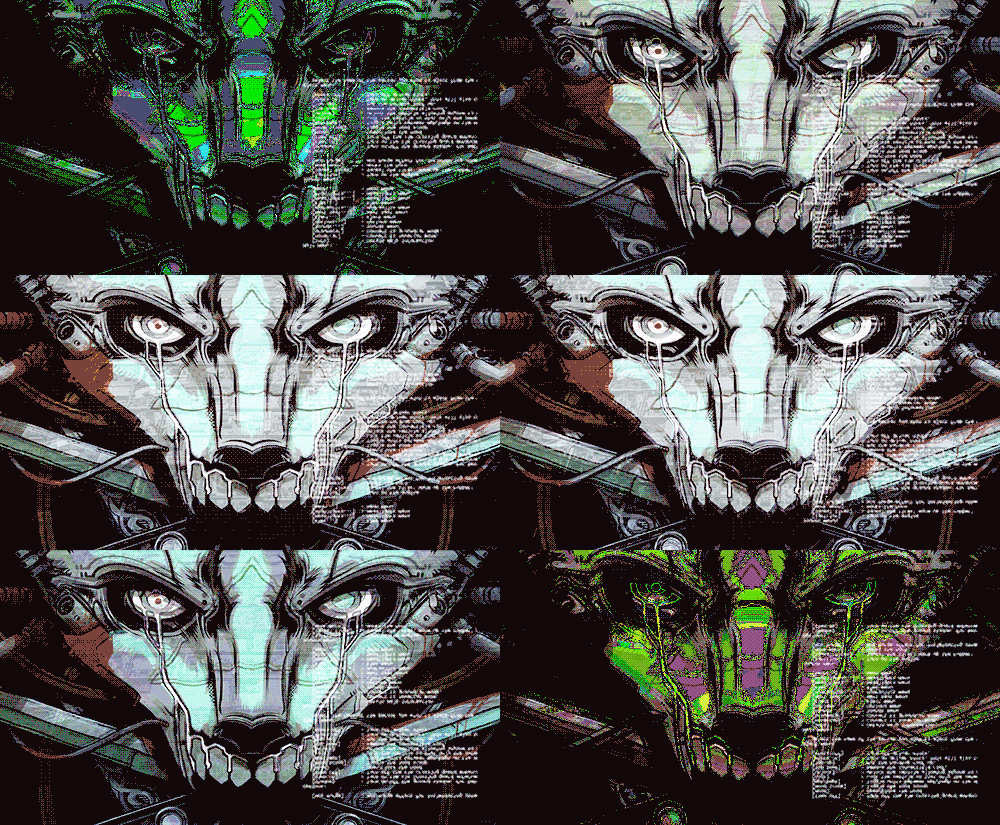
Based on Johannes Helgeson's amazing "Warrior" Sketch...done as a practice in Zbrush..hope you like..:D
Link to original sketch : https://www.artstation.com/artwork/warrior-6256a537-d7d4-4a08-822a-2b9033ddeb58View this on ArtStation Ahmad Samy on ArtStation
Jutting out of the peak of Kronplatz mountain in Italy's South Tyrol region like a futuristic Bond baddie's lair, the Messner Mountain Museum Corones is classic Zaha Hadid with its curved concrete and striking glazing. Three sections exit the mountain at 2,275 m (7,463 ft) above sea level, but the greater part of the building is actually hidden from view. Here, embedded into the rock, an exhibition that promotes the traditions, history and discipline of mountaineering can be found.
Space travel is a constant exercise in forward planning, with mission control thinking years and sometimes decades in advance. A case in point is NASA's InSight Mars lander, which is scheduled to touchdown on the Red Planet on September 26, 2016. This may be more than a year away, but the space agency is already moving its Mars Reconnaissance Orbiter (MRO) into a new orbit to provide communications support during the landing.
It uses eeonyx stretch fabric as stretch sensor to detect the movement of one’s stomach when breathing in. On this corset, there are 3 strips to take different part of the stomach. This is due to the fit of the corset, it changes which part of the corset stretches the most when breathing.
I have tried with one long stretch fabric on the entire front stretch part, but as you get a lot of parallel resistance, it does not detect good. It was the best when I cut the eeonyx fabric into small pieces and apply as few separate sensors.
Then the sensor was read with arduino lilypad and sent to Helix controller Arduino via xbee.
The main part of the corset is made with fake leather I found at Modulor. To prevent the corset pieces to tear a part (which was the case for the first prototype), I used extra fabric between the seam to enforce the sewing connection.
Every Wednesday is Wearable Wednesday here at Adafruit! We’re bringing you the blinkiest, most fashionable, innovative, and useful wearables from around the web and in our own original projects featuring our wearable Arduino-compatible platform, FLORA. Be sure to post up your wearables projects in the forums or send us a link and you might be featured here on Wearable Wednesday!
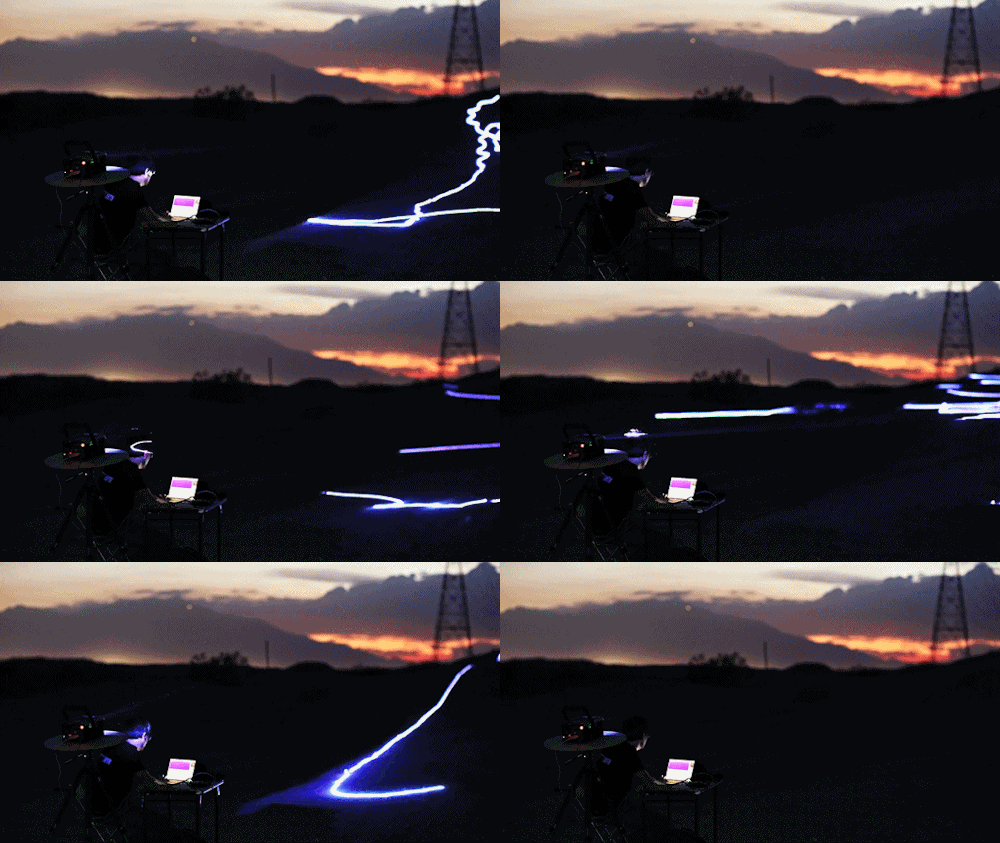
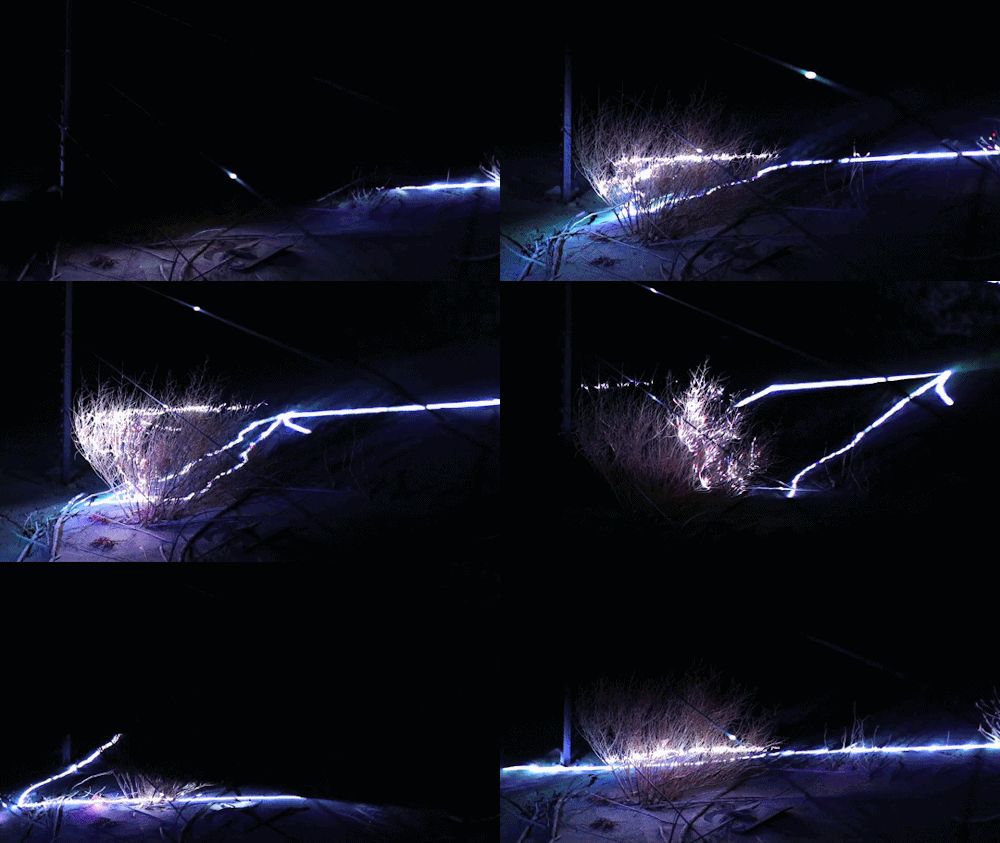
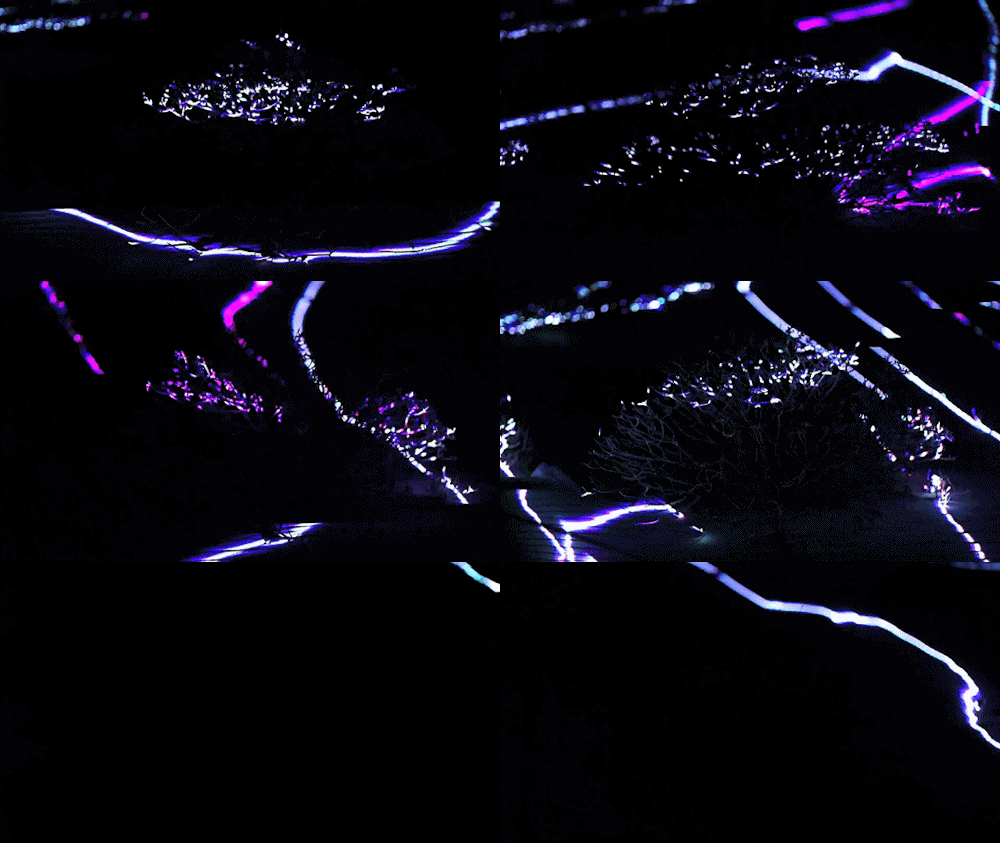
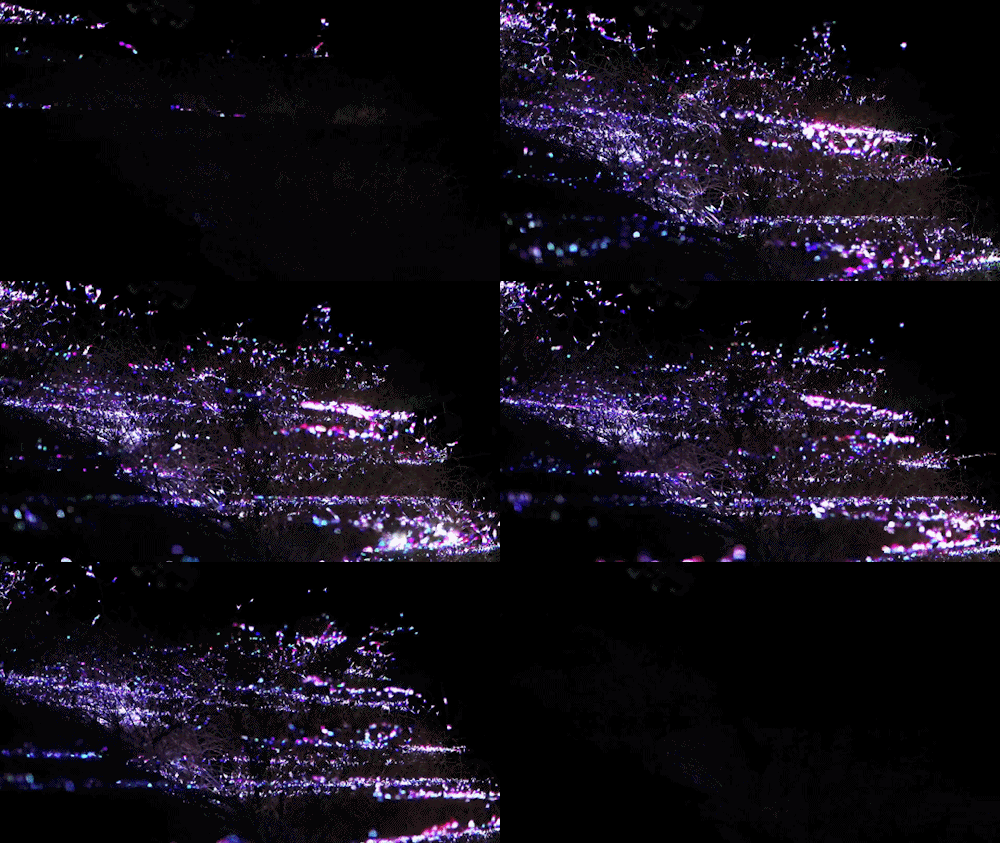
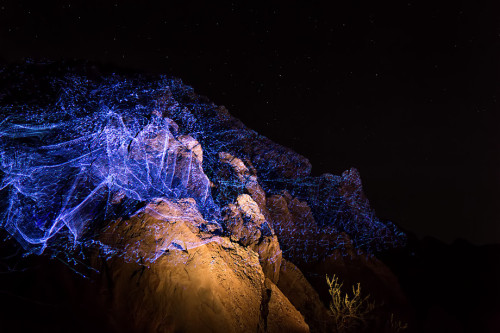
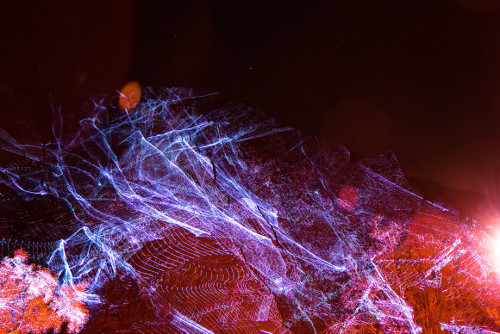
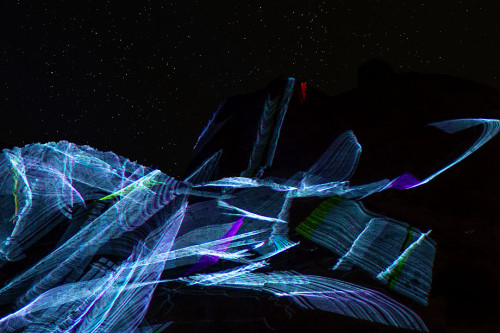
Project from artist Robert Seidel projects ‘laser drawings’ onto the San Andreas Fault to produce long exposure photographs:
This online exhibition showcases long
exposure photographs of Robert Seidel’s “environmental laser drawings”
captured in collaboration with Epicenter Projects curator Cristopher
Cichocki. Spanning from the Coachella Valley to the edge of the Imperial
Valley’s Salton Sea, this series of time-based laser drawings was
developed alongside the mountain terrain of the San Andreas Fault. To
begin, Seidel derived each laser pattern from creating digital line
drawings: gestural markings suggestive of curve progressions seen within
the Richter Scale or tectonic deformations. These minimalist sketches
are manipulated into complex transformational sequences scribed by the
laser onto the desert’s topology.
This fleeting yet precise gesture of the laser choreography becomes a
visual spectacle at the intersection of seismology, performative drawing
and laser interferometry extending upon the historic trajectory of Land
Art in the American deserts. The inherently shifting San Andreas Fault
line becomes fragmented and redefined through the laser’s ephemeral
distortion of light and, virtually, space as well. As a true
collaboration with the geology of the desert environment, “Magnitude”
offers perceptual insights through the documentation of these
performative actions. Here, from one minute to the next, the San Andreas
Fault becomes a geomorphic intersection both reflective and refractive,
tracing a portrait of a highly unpredictable landscape.
I wonder if some of these are bootlegged 3d models of actual products made in China...
We found a large repository of free 3D models, but there’s one catch: its pages appear in Chinese. But that’s not a problem.
The site is dayin.la, and it appears to be more or less a Thingiverse clone. It may even have Thingiverse content in it, but during our inspection we noted models that didn’t seem to be in Thingiverse.
In fact, there seemed to be quite a few very interesting models we hadn’t seen elsewhere. All of them are available for download at no charge. We’re not certain how many 3D models are in this repository, but some of the categories have hundreds of pages of results, so it’s a big number.
The site must have many users as well, as many of the items have download counts in the thousands. It may be that this site is busier than Thingiverse!
As we said, the site is in Chinese, which is fine if you read the language. But if you don’t, Google is your friend. By using the Chrome browser, you can set it to automatically translate the pages to English as it loads.
You’ll need to enter a code to prove you’re not a robot on each download, but otherwise the process of using dayin.la is pretty seamless.
Modern technologies have opened the door for a new era of veterinary medicine, according to a dedicated team of animal-lovers in Santos, São Paulo, who recently used 3D printing technology to save a tortoise’s life. The team, consisting of a veterinary surgeon, a dentist, and a graphic designer, spent three months designing and printing an entirely 3D printed prosthetic as a complete replacement for the original.
Creepy cool sculpture by Brooklyn artist Kate Clark. From her bio:
Kate Clark is a sculptor who lives and works in Brooklyn, NY. Her sculptures synthesize the human face and the body of wild animals, exploring the overlap that exists across our cultures, and within our histories.
Kate had her first solo exhibit at Claire Oliver Gallery in New York in 2008. Since then she has been included in solo and group museum exhibitions at the Aldrich Museum of Contemporary Art, The Islip Art Museum, and The Bellevue Arts Museum, the Mobile Museum of Art, MOFA: Florida State University, Cranbrook Art Museum, Frist Center for the Visual Arts, The Winnepeg Art Gallery, the Glenbow Museum, the Musée de la Halle Saint Pierre, Paris, The Art Gallery at Cleveland State University, and the Hudson Valley Center for Contemporary Art. She is currently working on a commissioned sculpture for the Nevada Museum of Art.
Her work is collected internationally and is in public collections such as the JP Morgan Chase Art Collection, the 21c Collection, the David Roberts Art Foundation in London, and the C-Collection in Switzerland. Clark attended Cornell University for her BFA and Cranbrook Academy of Art for her MFA and has been awarded fellowships from the Jentel Artists Residency in Wyoming, The Fine Arts Work Center Residency in Provincetown, MA., and the Marie Walsh Sharpe Studio Program in New York. Clark was nominated for a Louis Comfort Tiffany Award and an American Academy of Arts and Letters award. Clark was awarded a grant from The Virginia Groot Foundation in 2013 and a New York Foundation For the Arts (NYFA) Fellowship Award in 2014.
Clark’s sculptures have been featured in the Wall Street Journal, New York Times, New York Magazine, Art21:Blog, The Village Voice, PAPERmag, The Atlantic, NYArts, Huffington Post, Hi Fructose, the BBC World News Brazil, Hey! Magazine, Time Out, ID Paris, Cool Hunting, Wallpaper, and many other publications. Kate’s work is the cover image for art ltd. magazine, November/December 2014.
Artist Statement
When encountering my sculptures, the viewer is faced with a lifelike fusion of human and animal that investigates which characteristics separate us within the animal kingdom, and more importantly, which unite us. The sculptures visually, emotionally and intellectually explore this overlap that exists across cultures, along histories, and within societies.
Our current lifestyle does not necessitate physical interaction with wild animals. Yet we revere the natural world and are seduced by characteristics we no longer see in ourselves, such as fierceness, instinctiveness, purity. I work with hide to create traditionally mounted animal bodies, utilizing the impetus for taxidermy: our endless curiosity to see animals, and our desire to celebrate their unique features.
The unexpectedness of the human face on these animals also evokes curiosity. They are obviously reconstructed yet they are not monstrous, they are approachable, natural, calm, innocent, dignified. The facial features are believable and the skin, which is the animal’s skin, has been shaved to reveal porous and oily features that we recognize as our own. The viewer has an intimate relationship with the face and then identifies with the animal, acknowledging the animalistic inheritance within the human condition.





 Every Wednesday is Wearable Wednesday here at Adafruit! We’re bringing you the blinkiest, most fashionable, innovative, and useful wearables from around the web and in our own original projects featuring our wearable Arduino-compatible platform, FLORA. Be sure to post up your wearables projects in the forums or send us a link and you might be featured here on Wearable Wednesday!