
Sophianotloren
Shared posts
24 Apr 00:11


#Occupotty and the Gender Politics of Bathrooms
by TBridges
Originally posted at Feminist Reflections.
The floor plan of the White House recently made headlines because of a subtle change that’s caused a bit of a stir: it now features a gender-neutral restroom. Just one. But one was enough to make headlines. Many people don’t think twice about which restroom to use in public. Some people’s choice, however, is more of a dilemma than you might assume. Many transgender individuals struggle with the restroom issue in public settings. And this is an issue that forces cis-gender folks to confront deeply held beliefs about a gender-segregated setting—beliefs some may not fully realize they hold and many may be ill-equipped to discuss.
Making use of a public restroom is not often understood as a political act. Yet, a group of transgender folks in the U.S. and Canada are participating in a bit of digital activism by doing just that. It’s a quiet social movement, but it’s already gained some media attention. Pictures posted alongside the hashtags #Occupotty, #WeJustNeedToPee, and less often #LetMyPeoplePee on all manner of social media are starting a much-needed conversation about gender in and around public restrooms.
Brae Carnes, a transwoman in Victoria, depicted here using a men’s public restroom to raise awareness about what discriminatory legislation associated with “bathroom bills” would actually look like in practice.
Brae Carnes is a transgender woman living in Victoria, Canada whose photo-activism went viral when she posted an image of herself applying lipstick in a public restroom with a line of urinals against the wall behind her (see left). Brae told reporters at the Times Colonist, “I’m giving them what they want… I’m actively showing them what it would look like if that became law and how completely ridiculous it is” (here). And Brae is not alone. Michael Hughes, a transgender man living in Minnesota, also caused some digital waves when he posted a series of pictures of himself in women’s restrooms with captions like: “Do I look like I belong in women’s facilities?” (see below). Brae and Michael are part of a vocal group of trans* rights activists opposing legislation that would force transgender people to use the public restroom facilities associated with their birth gender (the sex they were assigned at birth). So-called “bathroom bills” are being introduced in the U.S. and abroad, and #Occupotty is an important challenge to the proposed legislation.
 Those introducing bathroom bills most often justify them as being about “protection,” “public safety,” and as attempts to reduce violence and assault. The bills rely on the transphobic myth that transgender individuals are sexually perverse and that they are likely to be sexual predators. Thus, defenders of these bills often claim that they are about protecting cis-gender people. This avoids the troubling truth that transgender individuals are far more likely to have violence committed against them than they are to commit this kind of violence against others. Indeed, Media Matters found no evidence to substantiate the claim that restroom sexual assaults were higher in trans-inclusive jurisdictions. One survey of transgender and gender non-conforming individuals in Washington D.C. found that 70% of respondents reported having been either harassed in, assaulted in, or denied access to public restrooms (see here). It’s an important issue and Brae Carnes and Michael Hughes are helping to draw more attention to the lives that hang in the balance.
Bathroom bills portray trans* persons as sneaky and deviant and as attempting to trick the rest of us into using a restroom with them. But, as Mic.com reported, there have been zero reported attacks on cis-gender people by transgender people in public bathrooms. All of the documented attacks victimized trans* persons. So, why is the conversation about transgender people committing violence rather than about protecting transgender folks from cis-gender violence?
This is an instance of what Laurel Westbrook and Kristen Schilt call a “gender panic”—situations in which people collectively react to challenges to biology-based ideologies about what gender is and where it comes from by attempting to reassert those ideologies. Bathroom bills produce just this type of ideological collision where biology-based ideologies and identity-based ideologies are pitted against each other in public discourse. Inside this ideological discord, we gain new information about the gender binary, gender inequality, and how our beliefs about gender difference take a lot more work to uphold than we may assume.
Bathrooms are intensely gendered spaces. The belief that men and women, boys and girls, ought to relieve themselves in separate rooms is a powerful illustration of our collective investment in gender differences. But, sex-segregated bathrooms are a matter of social preference and organization rather than being recommended by our biology. And when we attempt to resolve this gender panic by resorting to biology (such as introducing legislation mandating the criteria of “birth gender” for public restroom use), we continue an awful tradition of putting transgender people at risk of violence under the guise of protecting “us” from “them.” But, social scientific research shows that we are in far greater need of policies that protect “them” from “us.”
Bathroom segregation is a political issue and one that deserves academic and public feminist support. The proposed legislation relies on myths associated with cis-gender and transgender people alike. Whether motivated by hate or misunderstanding, these laws fail to acknowledge well-documented facts about violence against transgender people, and in doing so, play a role in perpetuating continued violence and discrimination against transgender people. #Occupotty is a political statement and a request for recognition and rights. But these brave digital activists are doing more than that, too. They are exposing a set of myths that also work to justify gender and sexual inequality. Whether openly acknowledged or not, it is for this reason that #Occupotty meets resistance and it is for this reason that it deserves more support.
#TransLivesMatter
Sophianotloren likes this
24 Apr 00:11




What Happens When a Feminist Artist Interviews a Pickup Artist
by Ben Valentine
Installation view of Angela Washko’s solo exhibition ‘A Monopoly on Truth’ at San Diego Art Institute (all images courtesy the artist)
Tired of the one-sided and often misogynistic narrative of the pickup artist (PUA), visual artist Angela Washko wanted to provide a more complex understanding of PUAs by recasting their stories from women’s perspectives. Washko chose to focus on prolific PUA Roosh V after reading his book BANG. Roosh blogs and has written a series of books outlining tactics for seducing women in different countries, and he stands out among other PUAs as especially anti-feminist and anti-“progressive” women. Rather than rehash the two dominant narratives — that PUAs are sinister, misogynistic swindlers who prey on women or that it’s all fun and games and women are easily manipulated and clueless — Washko wanted to complicate them.
With the help of an Internet Art Microgrant from Rhizome at the New Museum, Washko started BANGED, a project through which she aimed to create a web-based platform to tell the stories of women who’ve had relationships with Roosh V. As a research component, she began by compiling online testimonies from women who’d had exchanges with any pickup artists.
“I wanted to know what might lead someone to frame their entire worldview and existence in opposition to women not relying exclusively on men,” Washko told me over email at the very beginning of the project. “Ultimately, because Roosh makes so much of himself, his process, and his politics blatantly clear and available for all to see, it became more interesting to me to imagine who he sleeps with, what they are like, why they were interested in him, and how they perceived his seduction practice.”
Eventually, in a shift toward a deeper investigation into Roosh and his work, Washko managed to interview him in an epic, two-hour-long conversation that’s well worth a watch. But the interview also scattered the focus of the project in many different directions, and Washko found herself becoming one of the subjects of the work, facing unwarranted scrutiny from Roosh and his community online. Unsure of how to present the interviews without Roosh feeling exploited, worried about protecting her sources from the negative attention she was receiving, and paralyzed from thinking about the problems of the initial impulses for the project, she decided to put BANGED on hold temporarily. I reached out over email to ask why, and to hear what she learned during the process.
* * *
Ben Valentine: You gathered a number of women’s experiences with pickup artists, which were insightful, but you also sought out an interview with Roosh V. This was very compelling because I’ve learned from people like Susan Benesch, founder of the Dangerous Speech Project, that sincere and prolonged engagement is much more productive for countering trolls than the popular adage “don’t feed the trolls” suggests. Sincere engagement with trolls, misogynists, sexists, etc. is an ongoing theme throughout your work. If I, as a white, straight, able-bodied male, can’t find the courage or energy to engage with these individuals, how to you continue to do so?
Angela Washko: Well, I think that being able to engage Roosh V with empathy and respect is kind of my default way of operating and became important once I realized Roosh was aware of my project. But it certainly also came out of three years of working inside World of Warcraft (as “The Council on Gender Sensitivity and Behavioral Awareness in World of Warcraft”).
Angela Washko at work inside ‘World of Warcraft’ (click to enlarge)
In that project I started out with a goal — to try to make the communal game space more inclusive for women and create safe spaces to discuss the issues women and other minorities face in the public social spaces of the game. As I realized how colonial operating with that aim alone was, the project ultimately transformed into having an even less quantifiable aim: to try to figure out how many of the servers I played on had become so misogynistic and homophobic by talking with anyone who had the time and interest to engage with me about my “research project.”
When I started BANGED, I began with a similarly overly ambitious and aggressive goal — to try to find women who have had relationships with the notorious author of “strategy guides for getting laid at home and abroad” in an effort to create a parallel narrative to his conquest stories (which often allude to specific-but-anonymous women). I wanted to hear their sides of the stories. So there wasn’t really any “courage” or intent to engage with him or his community in the beginning, but rather a more activism-oriented tactical media plan involving distributing a call for these women as far as I could (largely through mainstream media, Craigslist, and physical posting in cities he had been in, to broaden the reach) to solicit the women’s perspectives on their exchanges with him as a response to his perspective, which is present in his blog and books like BANG, Bang Iceland, Don’t Bang Denmark, etc.
It occurred to me that I should interview Roosh V himself after he tweeted about the project’s presence as a finalist for the Rhizome at the New Museum Internet Art Microgrant. It was after his tweet that I realized that broad visibility was necessary to distribute my call for women, but at the same time this widespread distribution would also mean that the project would be in conversation with Roosh himself (something I should have perhaps anticipated).
This prompted me to interview him (see the text transcript, explanatory text, and video here), as I started to realize that nuance was something that was missing from my initial impulsive project and the work would only have more depth if I was able to have a conversation about how he ended up constructing his world in radical opposition to feminism and “progressive” women (1, 2, and 3, to start). Most people that interview Roosh from mainstream news sources tend to frame their conversations to highlight the most extreme aspects of what he does (which is quite easy to do). So I thought I could try to provide a platform to let him speak in a way that didn’t immediately dismiss what he said (though we almost always disagree) and present the interview unedited and in its entirety to make it clear that I didn’t aim to just make a quick hate piece as so many others have. My initial plan, pre-interview, had been way too simple and gestural, and had to be recalibrated (similarly to what happened with The Council on Gender Sensitivity and Behavioral Awareness in World of Warcraft). As I moved further with the project, I wanted to move away from the quick, knee-jerk, reactive activism toward a deeper and more ethnographic investigation into motive.
BV: But now Roosh is no longer only a public figure to you. What has he become and how has this complicated the project?
AW: I think that I initially imagined Roosh as a public figure — a sort of mythological figure — and that definitely impacted the original project proposal (the search for women on the receiving end of Roosh’s game). After a month of emailing with Roosh and him ultimately agreeing to do an interview with me, Roosh appeared amused by my project, though not willing to provide me with any of the women he’d had relationships with to do testimonials. After the call started to receive some press I started to see Roosh framing my project as obsessive and stalker-ish for his community (over Twitter and within his forum) and his community framed me as desperate to have sex with Roosh.
One of the many posts about Washko from the Roosh V Forum (click to enlarge)
A lot of people have said to me, ‘you should have expected this,’ and they are probably right, but I didn’t and I wasn’t ready to be examined in the way the 200+ posts of his forum examined me — and I especially didn’t mean to exploit my collaborator who helped me shoot the interview (I should have edited out the portion of the video in which he expresses anger at the way I was addressed by Roosh throughout the interview). This was a horrible mistake, and I left it in as part of the radical transparency process I had tried to set up between Roosh and me within the conditions for the interview itself, but in retrospect it was a dumb call. I also understand that he underestimated my reach and at the time of the interview claimed to be unfamiliar with my work/press history. He never thought that I might legitimately be able to access women that he’s had relationships with from within my “academic, feminist, online art bubble.” So when he did see the call distributed and the possibility that I might gain access to some of the women he’s had relationships with, he acted defensively — by framing me as crazy/obsessed/stalker-like, he was attempting to discredit any of my future interviews with these women. After being frustrated by the discord between our mostly pleasant non-public exchanges and the way he presented what I was doing to his community, I decided to ask him whether he was starting to feel as though this was really invasive to him. His answer made me unsure of how to proceed, as he told me that he didn’t like the tabloid/sensationalized element of it and that it was disconcerting that women would publicly share the details of the sexual experiences they had with him. Part two of that response … oof.
So, I became caught between wanting to be respectful of someone I’ve been trying to understand and interview fairly by trying to create a scenario in which we were able to have a conversation across polarized positions and online communities (digifeminists and manosphere participants) … but at the same time still wanting to seek some form of justice — some form of visibility — for those who are accounted for as receptacles for Roosh’s actions but never given a voice. Also, I feel like at some point in the project rabbit hole, I lost a vision of what the work would ultimately become. It is currently in a state of collection, archiving, conversation, collaboration, performance, media management, drawing, mapping, and critical self-analysis.
GIF from Washko’s interview with Roosh V
BV: You wrote that you wanted to do this piece to “break down his performance on the Internet and challenge the myth of objectivity that much of his community clings to, destabilizing his carefully crafted narratives by introducing other complicating voices.” This introduction of complicating voices is a really important tactic for intellectual growth, and one that Roosh and his community seem completely disinterested in. While you’re well-versed now in engaging with trolls, bringing in other voices, even anonymously — putting those perhaps unwilling or scared of this scrutiny into the limelight — is trickier. When did you realize you didn’t want to risk their involvement?
AW: So, after seeing that forum post pop up (it was actually Animal NY who alerted me to it after they’d discovered a lot of activity on the interview redirected from there), what became interesting to me about the introduction of complicating voices is that when questioning or dissenting voices are introduced into Roosh’s community, they are squashed. If someone says something Roosh disagrees with on his forum, he will ban them. If you go through the forum thread I mentioned earlier, there are a number of banned members (not necessarily banned for their contribution on that thread, but it is indicative of an ongoing practice of forum exile). In terms of social media and news, anyone who disagrees with him is subject to harassment and defamation. For the most part I don’t really respond to the trolling and harassment on Twitter. (I mean, I barely use Twitter at all and I’m certainly not going to use it exclusively answer to people united by an online forum debating whether or not they will have sex with me.)
When Elizabeth Stoker Bruenig wrote an article which featured Roosh, he and his community’s response had been to go on a sustained social media campaign to discredit, insult, and bully her. I think this kind of emotional reaction to criticism is especially frustrating coming from someone who said this to me in our interview:
[Angela]: Can you tell me more about your use of logic and science for your arguments? Can you tell me about the logic and science behind sort of your worldview?
[Roosh]: Yeah. I use logic and science.
[Angela]: I mean, but can you elaborate? Because I mean, it’s easy to just say…I mean I could sit here and say ‘I know science! Science! Science! Science!’
[Roosh]: Ok. Ok. Sure. The only thing is this: I believe that the only way to really use logic is to ignore the feelings that you have for one outcome or the other. If you have an emotional investment into a lifestyle and to a way of life that you’ve been taught for four years in school, getting a contradictory piece of information will cause your brain to either accept or reject. And what people do to accept something that goes against what they’ve learned for a long time, it’s really hard because that means for thousands of days they believed in the wrong thing. But me, I don’t know. I have a filter. I’d rather be right than feel good. I don’t need to feel good. I don’t need to feel warm and fuzzy on the inside that my belief system is ok. I don’t care. If I’ve been believing in something wrong for 35 years and new evidence tells me that, so be it. You know, many times in human history scientists they believed one thing but a new experiment has shown: holy shit we were wrong. But people nowadays, they go crazy if you show them a fact that goes against what they’ve been fed for years and years. So that’s all.
[Angela]: So you’re not emotionally invested in the arguments that you’re making?
[Roosh]: No.
When realizing Roosh knew about my project, I felt like I had the opportunity to conduct an interview with him to be published through a mainstream news source that would not set him up for failure, as other interviews have done. So I went to great lengths to be fair with my questions, and to design questions that would allow him to explain himself fully. One of my biggest frustrations has been that Roosh asks the people he’s frustrated with (most often feminists, “social justice warriors,” and “cultural Marxists”) to operate more “logically” and not “emotionally,” but the very thing he and his community does when someone writes that they disagree with him is to create an emotionally motivated campaign to embarrass that person. It is very disappointing. It also made me realize that if I did publish these interviews, these women, though anonymous, may still be subjected to the attention and harassment of his community. Which is something I don’t feel comfortable doing, having been scrutinized myself in that way. I am still trying to figure out what the future of the project is, but I don’t think it will take place across news media. I of course want to be able to include conversations with the women that have reached out to me as a part of the project, but I want to do it in a way that doesn’t put them at risk and isn’t “tabloid-y” … which was something Roosh was concerned about.
Another post from the Roosh V Forum (click to enlarge)
BV: Going forward, what lessons have you learned for engaging with these types of communities?
AW: I am not sure. I mean, I wouldn’t tell anyone to just go make a project about a community like this one unless they were very invested, well-researched, and ready to have their own lives examined. I think one of my biggest failures in the project was that I forgot that I was a subject in the work as well, and as such would end up scrutinized for the impulse to do this work in the first place. Reading Sophie Calle’s The Address Book recently has been really helpful, as she experienced this quite similarly — this kind of turn of the project being about someone else to also being about oneself within the investigation.
Also, I think I learned to be a little bit less naive, which is unfortunate because it was a part of myself and my work which leads me into more interesting and unexpected territories. I assumed that, despite self-identifying as a feminist artist, by taking a more generous approach to interviewing Roosh than he receives from feminist media members, I would have a positive working relationship with him and his community. I assumed that this gesture would be enough for him and his community to accept that I was going to interview women and create this parallel narrative, but as the potential for this to be realized increased, so did the foreseeable impact on Roosh’s mythology. I stupidly did not anticipate the amount of disconcerting responses I got to it. I am used to criticism, but this was something much different. I should have expected this, especially given the polarizing nature of my initial pursuit (the interviews with women). There was some interesting discussion about my approach — some appreciation that I didn’t outright shame him or argue during the interview, and also many questions about whether what I was doing was exploitative to Roosh (certainly fair and hopefully an interesting part of the project) … but it should not be surprising that I was not psyched about the conversations within the forum centered around whether or not forum participants would bang me.


More posts from the Roosh V Forum (click each one to enlarge)
Roosh says, “WB [would bang] with long natural hair.” Foolsgo1d says, “If she grew her hair longer and didn’t talk so much I WB.” Shortest Straw (now banned from the forum) says, “WB as is. I just plain like her. I wonder if she realizes just how likable she is.” Turkish candy also says, “WB with long natural hair.” AnonymousBosch says “If you can pop a chub for a masculine, short-haired woman with an annoying voice like that, you’re a stronger player than I am.” I mean, this is obviously part of the culture of the forum and Roosh’s community, but it wasn’t intended to be “part of the project.” It has become part of the project because it’s an important consequence of what I set out to do … but I guess if I did something like this again, I would better brace myself for that byproduct of interviewing someone like Roosh V.
Sophianotloren likes this
24 Apr 00:06
Hippie Tour
by Erik Loomis

In 1967, a company was giving bus tours of the Haight for squares wondering what this whole hippie thing was about. Here’s a story and some photos taken on one of these tours by a reporter interested in the phenomenon. Cool stuff.
Sophianotloren likes this
24 Apr 00:06


The Elite Poor
by John Scalzi
Here’s an interesting story in the Boston Globe about poor students attending Ivy League schools and very often struggling with their new environment, not in the least because they are often the first in their families to attend college at all, and thus have little guidance from family and friends on how to navigate the academic surroundings. I found it interesting because their story is in many ways my story: I was the first of my family to go to college (indeed, I was the only one of my immediate family to finish high school), and I went to the University of Chicago, which is not an Ivy but is certainly an elite school (currently #4 in the US News “national university” ranking, tied with Columbia and Stanford). And I was poor when I went to school there.
That said, I had an advantage that many first generation college students don’t — for high school I attended a private boarding school (scholarship kid), which gave me four years to work out my class angst — and there was some — and also learn how to navigate issues of privilige, of which not the least was accepting the fact that I was starting the journey away from poverty, and the worldview it engenders, and toward privilege, and that worldview. I’ve said before that when one has been poor one never forgets what that’s like, and that remains true. But by the time I got to college, most of my really difficult battles on that score were settled. I was decently well assimilated into the elite world view.
And as it happens I think the elite world view — essentially, the belief that one of the people behind the levers of the world will be you — is not always a bad one to have. But it needs to be tempered by awareness of a world outside privilege, so one is not oblivious to the fact that the world outside your door is filled with people who don’t benefit from the same easy connection to power that you now have, thanks to networks and name brand recognition. This is where first-generation students at elite schools can make a difference. They can be a bridge between two worlds in a way few others can.
They have to make it through the transition first, however. And sometimes that’s hard.
Rosalind, Sophianotloren likes this
24 Apr 00:05

The Washington Post (h/t @Shoq)
Here's the headline:
The Right has conducted a relentless, 30 year campaign to destroy political comity in this country, on purpose, to win elections.
Period.
Conservative have made such a wasteland of the Middle -- on purpose, to win elections -- that just touching Barack Obama or whispering the word "compromise" can kill a Republican political career overnight. And floating high above this toxic cesspit, the "Both Siderists" have built an entire new, entirely imaginary Center into which they insist Democrats must ascend if they want to be taken seriously by the Very Serious People.
That is The Story.
The rest is just pretty pictures.
And The Burying The Lede Award Goes To...
by driftglass

The Washington Post (h/t @Shoq)
Here's the headline:
A stunning visualization of our divided CongressHere's the lead paragraph:
Political polarization is on the rise, and with it come lots of clever new waysto visualize that polarization. I've even taken a crack at it myself. A group of researchers recently gave it another go in a paper published in PLOS One, and while it doesn't tell us anything we don't already know, it's nonetheless one of the more effective visualizations of rising partisanship that I've seen.And waaaay down at the bottom, in the second to last sentence of the article, the patient reader will find this:
And while this visualization is effective at showing the parties peel away from each other, it misses some other nuances about polarization -- for instance, that current trends are largely driven by Republicans moving away from the center."Nuance"?
The Right has conducted a relentless, 30 year campaign to destroy political comity in this country, on purpose, to win elections.
Period.
Conservative have made such a wasteland of the Middle -- on purpose, to win elections -- that just touching Barack Obama or whispering the word "compromise" can kill a Republican political career overnight. And floating high above this toxic cesspit, the "Both Siderists" have built an entire new, entirely imaginary Center into which they insist Democrats must ascend if they want to be taken seriously by the Very Serious People.
That is The Story.
The rest is just pretty pictures.
driftglass
Will Harden, Sophianotloren likes this
24 Apr 00:05


NoYouCantWriteABriefLikeThisToGetAroundTheWordLimit
by Kevin
People sometimes ask where I find "all this stuff" as if there were a limited amount of such material. There is not. It is endless. The well is deep, my friends. Nay, do not seek the bottom, for it cannot be found.
Here is yet another small example.
Almost every court imposes a page or word limit on briefing, and frankly the limits are not that restrictive. For example, the Federal Rules of Appellate Procedure give you 14,000 words, which comes out to about 50 pages, depending. That's a lot of pages, and it should be enough for any case. Some have claimed that at least in certain high-stakes cases, hundreds of pages may be required. I've never found that convincing. If people are forced to comply with the limit, they are generally able to do it, and what gets cut is stuff you didn't need anyway. Sure, you may have to get creative. Here's a guy who wanted 55 pages but got five: he filed it in comic-book form, and good for him.
But there's creativity and there's creativity. Comic-book form is the good kind. Deleting all the spaces and then claiming it is one big "word" is the bad kind.
These people didn't go quite that far, but they did indeed try to get around the word limit by using cryptic abbreviations, leaving out some necessary words, and deleting spaces in citations and other phrases in order to further reduce the number of "words." And this was in a corrected brief they filed after the court had already told them not to do that.
The well is indeed bottomless. Gropeth not its abyssal depths, for thou shalt grope in vain.
The brief (again, this is the corrected brief) was filed by attorney William Weidner on behalf of Dr. Lakshmi Arunachalam and her company Pi-Net International. I don't know if they technically fit the definition of "patent trolls," but I'm going to use that term because they have sued more than 80 defendants in the past three years over patents supposedly covering "online transactions." (This suit was against JP Morgan, for example). So the subject matter is complicated and probably BS to begin with, and the brief certainly clarifies nothing.
It is 67 pages long and the authors say it includes 13,862 words. It probably would, if HWTech.,supr(citingExxonResearch&Eng’gCo.v.UnitedStates,265F.3d1371,1376(Fed.Cir.2001).Nautilus,Inc.v.BiosigInstruments,Inc.134S.Ct.2120,2124,2128(2014).GeneralElec.Co.v.WabashApplianceCorp.,304U.S.364,371(1938).UnitedStatesv.Adams,383U.S.39,48(1966);FestoCorp.v.ShoketsuKinzokuKogyoKabushikiCo.,535U.S.722,741(2002) were one word.
But it isn't.
Not all the citations are like that, but most of them are, and quite a few other "words" are too. Then they took out other words that you and I might consider necessary or at least helpful, such as, for example, "a," "an," and "the":
Judge Andrews, after two years, transferred case to Judge Robinson. Markman conducted a week later. DDC ruled. Two days later, Notice of Appeal filed, against client instructions. Judges failed to recuse despite financial and relationship conflicts of interest. 60(d)(3) Motion is pending in DDC.
It sounds breathless, as though the author only had time to dash off a quick note to the Federal Circuit, but in fact it goes on like that (and worse) for another 66 pages. Apparently rather than just edit the brief like they should have, they went through and deleted spaces and individual words until they were under 14,000. Doing that may have taken longer than editing the brief would have, but it increased the chance that the court would dismiss the appeal without even reading the brief (order via How Appealing) to 100 percent.
Again, the best thing to do in situations like this would be to cut a hole in the middle of the brief, stick the writer's head through it and parade him around the courthouse for a while, but unfortunately we are more civilized than that now.
Related Stories
Rosalind, Sophianotloren likes this
24 Apr 00:04


"To F— This Court and Everything That It Stands For"
by Kevin
What was I just saying about the bottomless well of human stupidity? (That's the well I was talking about.) The examples are both endless and varied. Here's another brief, for example. At only nine pages, this one is well within the relevant page limit, and would be even if we included the 13-page appendix, which includes what one might call legal argument (it's bogus tax/"sovereign citizen" arguments of the kind I warned about here). It's also much, much easier to read than the Pi-Net brief. It flows quite well, actually.
The only problem is all of its content.
It goes downhill from there. Way downhill.
Here are just a few examples of sentences that, in my professional opinion, I would not advise directing toward any judicial officer:
- "That's right—I had a cocked and fully loaded AK-47 assault rifle, as well as a .45 caliber pistol. What's your point?"
- "Look here, old man, when I told you I AM Justice—I meant it."
- "I will educate the People, and hopefully one day, if we are lucky, they will rise up against you oppressive, lying traitors and hang you all...."
- "[Y]ou suck nuts. Lol."
- "[The Court] runs and cowers like a panic-stricken hoe that has stolen money from her back-handing pimp. Just for the record: you are a hoe. This court is a hoe. And I will backhand you both, should you continue to waste my time."
- "Die."
I didn't quote any of the sentences that involve more serious profanity, which is almost all of them.
This screed was filed on April 20, and I'm about to check the docket but I'm guessing somebody is probably in jail already.
Update: Nothing new on the docket, but I'm sure it's on the way. Here's the order to which Ms. Justice was responding, if you're interested.
Related Stories
Sophianotloren likes this
24 Apr 00:03
Vicki Chase V for Vicki
by admin


Originally posted 2015-04-23 16:34:30. Republished by Blog Post Promoter
Vicki Chase V for Vicki source: droolingfemme.
Sophianotloren likes this
24 Apr 00:02


A Warhol-Inspired Performance Pops in the Wrong Ways
by Alexander Cavaluzzo
A scene from Raja Feather Kelly’s “Andy Warhol’s 15 (Color Me, Warhol)” at Dixon Place (all images courtesy Dixon Place)
In general, it’s very difficult to assume the mantle of a Warholian legacy. You can either do it interestingly, with great skill, such as Deborah Kass’s work, or do it in a confused, immature style that either randomly invokes Warhol’s name/aesthetic or just simply misses the point. Raja Feather Kelly’s new performance piece Andy Warhol’s 15 (Color Me, Warhol) falls somewhere in between.
The piece begins in a laid-back, fourth-wall-breaking manner that will more or less continue throughout the performance. One performer repeats a monologue about death as someone dresses him like a toddler, and another is on the phone ordering pizza for the audience, all against an aesthetic of multi-colored lights and black-and-white checkerboard projection. This mixture of haphazard thesis and performance quality coupled with brash histrionics and elementary art direction aren’t necessarily detriments, but they drag the piece down to a sophomoric level. Yes, it was nice that they ordered a pizza for us and the campy, recurring fights between one of the dancers and the choreographer were maybe amusing (albeit for the wrong reasons), but they drew away from the stronger facets of the two-hour piece.
Kelly’s strengths lie in manipulating and contorting the body — the blocking of “readymade” choreography (by borrowing a dance from one of his other pieces) and new moves alike are beautiful in their own right. And more so, they’re an interesting interpretation of Warhol’s signature repetition and mass imagery.
Punctuated with book report-style monologues of Merce Cunningham and Warhol’s diary entries, choreography, video pieces (such as of performers reading fan letters to the idols), and pop music samplings, Kelly’s piece has its highs and lows, but it’s ultimately a haughtily strung together and misleading piece. As its description reads,
COLOR ME, WARHOL is a provocative interpretation of Warhol’s vision of the iconic musical A Chorus Line as he would have imagined it. Fifteen dancers bring to life Warhol’s ideas, philosophy & iconic visuals through Kelly’s compelling dance-theater style, simultaneously radical & accessible.
Raja Feather Kelly headshot for “Andy Warhol’s 15 (Color Me, Warhol)”
It is really none of those things, as you should surmise. The bait and switch would be cheekily appreciated if there was more substance — some focus and paring down would have likely improved the evening’s performance.
The core concept is a restaging of Andy Warhol’s unrealized revival of A Chorus Line, which never happens, and that could be a superb Warholian backhand to the audience, though we saw it coming at about the actors’ second mention that they would perform it soon. The backsplash video montages of Miley Cyrus, Ariana Grande, OJ Simpson’s White Bronco, and SMPTE color bars are an interesting, updated Warholian vision. The dance interpretations of Disney’s version of the Three Little Pigs, complete with day-glo body paint and a well-built, big, bad wolf (who’d be better described by gay men as a bear), skewer nostalgic pop culture in a way that puts us on the same level while making us realize something new. There are shades of the Warhol vision, but they’re few and far between to warrant a holistic Warholian performance.
I was reminded of two past pieces upon viewing Kelly’s Andy Warhol’s 15 (Color Me, Warhol): Gob Squad’s Kitchen, a play/performance piece that recreates Andy Warhol’s film “Kitchen” with some surprising changes, and Drella, a vogue ballet conceived by Kelly and staged this past summer in Brooklyn. Upon seeing Drella, I was left confused and bereft, quite honestly offended that an incoherent ballet advertised heavily as an interpretation of Warhol’s drag personas would deign to have little relevance to his work aside from the costuming.
Gob Squad’s Kitchen, on the other hand, was a unique performative experience that referenced and reinterpreted Warhol’s oeuvre skillfully. Utilizing screen tests, Warholian vernacular, and updated aesthetics, Gob Squad brought Warhol into the 21st century. The audience participation here was not derogatory or used to illustrate subjugation as it was in Andy Warhol’s 15 (Color Me, Warhol); instead, audience members were part of a “factory made” search for new superstars, if only for one night.
A scene from Raja Feather Kelly’s “Andy Warhol’s 15 (Color Me, Warhol)” at Dixon Place
Kelly’s piece misses those nuances and well-handled interpretations of Warhol’s work. And I only make the comparison because, when a piece is entitled and ostensibly about Andy Warhol, it has to live up to the legacy. It shouldn’t be a haphazard melange of dance, video, and music that shoves Warhol into somebody else’s unrelated vision.
Having intently witnessed two performance pieces staged by Kelly under the shadow of Warhol, I can say he’s finding his footing. His own skill in dance and ideas on contemporary pop culture and reality television seem promising in the small flashings he’s allowed them to manifest. It may behoove the artist to drop the Warhol mask and refine his individual vision to eradicate the more cringe-worthy aspects of his work, like false confrontations (in addition to the aforementioned backstage drama shown onstage here, there was an odd smackdown in Drella) and histrionic displays to allow for a more sophisticated, meaningful work to surface.
Andy Warhol’s 15 (Color Me, Warhol) by Raja Feather Kelly continues at Dixon Place (161 Chyrstie Street, Lower East Side, Manhattan) through April 25.
Sophianotloren likes this
24 Apr 00:01

From The Department of Unforced Errors
by driftglass
How some people on what's left of Liberal Teevee continue to screw thing up for the rest of us.
Here's a fun fact! The amount which MSNBC's Touré "Touré!" Neblett owed in taxes last year is greater than my total gross income for the last two years.
Here's another fun fact! The first Fun Fact wouldn't bother me in the slightest, were it not for the additional fact that Touré decided he did not need to pay his taxes last year.
And neither did MSNBC's Melissa Harris-Perry, Al Sharpton and Joy-Ann Reid (from [shudder] Politico, citing The National Review [double shudder]):
4 MSNBC hosts plagued by tax debtIt turns out Al Sharpton and Melissa Harris-Perry aren't the only MSNBC hosts who have outstanding tax debts.The National Review reports that Touré Neblett, the co-host of MSNBC’s The Cycle, owes more than $59,000 in taxes, according to public records. New York issued a state tax warrant to Neblett and his wife for $46,862.68 in September 2012 and an additional warrant for $12,849.87 six months later.The National Review also notes that New York last month filed a $4,948.15 tax warrant against former daytime host Joy-Ann Reid and her husband. Reid recently hosted an afternoon program on MSNBC and now serves as managing editor of theGrio.com....
First, let me say that Al Sharpton should have been sacked years ago.
Make me president of MSNBC on a Monday, and by Tuesday at the latest he and Joe Scarborough would be "special correspondents" doing one-minute movie reviews at 2 AM on weekend slot between episodes of "Prison".
Period.
That said, I generally like the rest of this bunch and have a great deal of respect for Joy-Ann and MHP. I really expected better of them, if for no other reason than the existence of actual Liberals on national teevee talking about things that actually matter -- like, say, tax policy and the plight of the dying middle class -- is already such a rare and precarious thing, handing the bad guys a hammer this big is inexcusable.
driftglass
Sophianotloren likes this
24 Apr 00:00
Reader "t shorter" sent these comments via email which by a fluke of timing pair perfectly with bad taste which the previous post left my mouth:
The Mushy Apple Consortium
by driftglass
Reader "t shorter" sent these comments via email which by a fluke of timing pair perfectly with bad taste which the previous post left my mouth:
I think I'm done with "TV" liberals altogether. Rachel Maddow especially. Are these people worth our time anymore? When "TV Liberals" are on TV arguing any issue they have to spot the conservative half of the floor as if every issue have equal merit. This is like watching a pet gerbil being sold with a free rattlesnake.... and yes you have to take both cause you know both sides. And if one ends up dead you blame equally the gerbil and the rattlesnake. I believe I have to stop watching if I can come up with better liberal counterpoints that start with "this lying asshole who receiving money from x group is being intentionally deceitfully" with the help of the "insert host name". The conundrum, stop watching they will say liberalism does sell well, keep watching and continue to temporarily give life to this extremely flawed medium. Who knew in a free country we would have a few limited choices. Have a nice one.
What "t shorter" is describing is the Apple Paradox from Taxi.
See also, "Why we can't have nice things."
I used to think that if we could just reach the Apple Man directly and tell him that we'd like fresh apples eventually we might get a fresh apple or two. That maybe he just didn't realize how bad things had gotten.
But I have come to understand that the Apple Man works on the top of a tall, tall building behind all kinds of screens and baffles designed to keep people like me out for a reason. See, the Apple Man actually works for the Mushy Apple Consortium and very much like the owners of the Chicago Cubs, has discovered he can make a ton of cash selling an cheap, inferior product, so why not?
Also he doesn't really give a fuck what I think about anything anyway.
See also, "Why we can't have nice things."
I used to think that if we could just reach the Apple Man directly and tell him that we'd like fresh apples eventually we might get a fresh apple or two. That maybe he just didn't realize how bad things had gotten.
But I have come to understand that the Apple Man works on the top of a tall, tall building behind all kinds of screens and baffles designed to keep people like me out for a reason. See, the Apple Man actually works for the Mushy Apple Consortium and very much like the owners of the Chicago Cubs, has discovered he can make a ton of cash selling an cheap, inferior product, so why not?
Also he doesn't really give a fuck what I think about anything anyway.
driftglass
Will Harden, Sophianotloren likes this

23 Apr 23:57


Liberating the Anonymous Figures in Old Master Paintings
by Laura C. Mallonee
(screen grab via Instagram)
In the past year, obscure figures from master paintings in museums around the world have been moonlighting as street art, thanks to a project called Outings.
It began last August, after the French artist Julien de Casabianca visited the Louvre and noticed a bored-looking girl in one painting’s corner. “I had a ‘Prince Charming’ impulse,” he recently told Slate. “I wanted to free her from the castle to give her a second life.”
Casabianca snapped a phone pic of the young woman, printed out her image, and wallpapered it on a building in Paris, where she now looks out on passersby. After that first one, friends and acquaintances began following suit, and their actions soon turned into what Casabianca calls a “world participative project.”
People have since liberated unknown figures in paintings at their local museums in 18 cities far and wide, including Barcelona, Rome, Warsaw, Belo Horizonte, London, Chicago, and New Orleans. Anyone who wants to participate can visit Casabianca’s website, which provides careful instructions on how to do so (in some cases, he even provides small grants, with the help of partners, for those who can’t afford the cost of printing).
In an email to Hyperallergic, Casabianca explained that he’s now touring 12 cities in the United States bringing the anonymous people from paintings to the anonymous people on the streets. He said he tries to put the figures up in poor neighborhoods “where people need beauty.”
“Our mission is not to repair the world, but we can help,” he said. “And we always have great moments putting these works up, interacting with inhabitants and seeing how they love these great paintings.”
(screen grab via Instagram)
(screen grab via Instagram)
(screen grab via Instagram)
(screen grab via Instagram)
(screen grab via Instagram)
(screen grab via Instagram)
(screen grab via Instagram)
(screen grab via Instagram)
(screen grab via Instagram)
(screen grab via Instagram)
Cary Renquist, Sophianotloren likes this
23 Apr 23:55

Help keep this sink empty like a lost soul
Help keep this sink empty like a lost soul
Rosalind and -1 others like this

23 Apr 23:31

buy this comic as a print!
Or share on: facebook
 reddit
If you enjoy the comic, please consider supporting A Softer World on Patreon
A Softer World: 1225
buy this comic as a print!
Or share on:
facebookreddit If you enjoy the comic, please consider supporting A Softer World on Patreon
chau, Shortfatsteve and 5 others like this
23 Apr 23:31

5 Mètres 80: An Absurd Animation Depicting a Herd of Giraffes Leaping Off a High Dive by Nicolas Deveaux
by Christopher Jobson
OK, this is ridiculous, but in the best way possible. Spending too much time describing this short film by French animator Nicolas Deveaux would ruin it, so it’s probably best to just watch it. Created over a period of 1.5 years 5 Mètres 80 is a follow-up to a shorter animation he made 10 years ago about an elephant on a trampoline. Deveaux is widely known for his realistic animation of animals for both film and commercials, many more of which he shares on Vimeo. 5 Mètres 80 has toured film festivals around the world since 2013 picking up numerous awards and nominations including the Best in Show Award at SIGGRAPH Asia. (via Vimeo Staff Picks)
Adam Victor Brandizzi, Brittafroehling and 3 others like this
23 Apr 23:28
 If you wanted to explain the dilemma of privacy versus security to a curious relative, the Protecting Cyber Networks Act would be a good place to start. The bill has just been passed by the House of representatives (voting 307-116 in favor), and is d...
House passes bill allowing corporations to share your data
by James Trew
SophianotlorenPlus ça change...
If you wanted to explain the dilemma of privacy versus security to a curious relative, the Protecting Cyber Networks Act would be a good place to start. The bill has just been passed by the House of representatives (voting 307-116 in favor), and is d...
Sophianotloren likes this
23 Apr 23:27
Me & My Ball #michfest
by helenboyd
SophianotlorenCan't say I'm sad to see them go. When you work that hard to make bigotry part of your core values... there's really only viable outcome.
Lisa Vogel announced yesterday that the Michigan Womyn’s Music Festival, now in its 40th year, will depart the stage this year; the 40th will be the last.
An event that has empowered so many women, one of the last amazing coming-to-consciouness feminist events, is shutting down because they can’t just take the one tiny leap of admitting trans women openly and willingly.
Trans women will no doubt be blamed for the end of this event, when really, as Autumn Sandeen put it, “…trans womyn have attended MichFest for many years — trans womyn who identify themselves as womyn-born-womyn. She doesn’t have to change the change the womyn-born-womyn intention, she just needs to say ‘Trans womyn who identify as womyn-born-womyn are welcome at MichFest.’”
But they couldn’t, and didn’t: If me and my ball don’t pitch, me and my ball don’t play.
Heartbreaking that after all these years and all this dialogue, their answer was to give up and shut the doors.
Sophianotloren, bernot likes this
23 Apr 23:25
jephjacques: Alice is very principled maybe this will work?

Sophianotloren, Cary Renquist and one other like this
23 Apr 23:24

Want to know why more women aren’t doing xxx profession? THIS....
Want to know why more women aren’t doing xxx profession? THIS. IS. WHY.
From mic.com:
A 2013 poll by Pew Research Center illustrated the fact that while fathers have begun pitching in more on thankless tasks like household chores and child care relative to their peers in 1965, they still lag far behind mothers in both areas.
This bad attitude toward mothers hits home — hard. One recent survey released by Penn Mutual Life Insurance Company found men tend to overestimate the value of their contributions to the home outside of work, while women underestimate. The survey estimated that mothers of a minor child put in an average of $44,913 hours’ worth of unpaid labor a year, and over half of those women underestimated their contribution to the household by at least $10,000.
Read more…

23 Apr 23:23
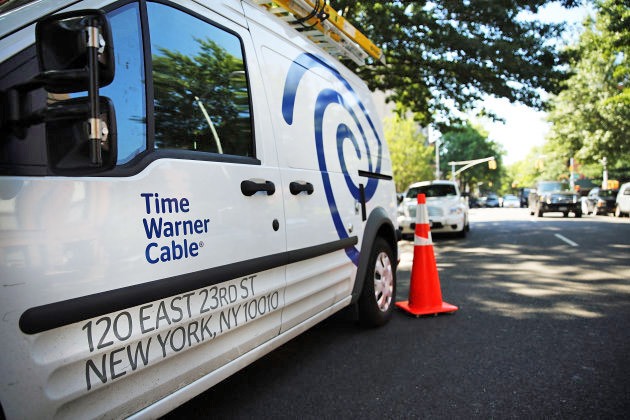 That heavily-criticized $45 billion Comcast and Time Warner Cable merger? Well, it looks like it's not going to happen after all. Bloomberg reports that the former company is dropping its bid to acquire the latter, with an official announcement expec...
Comcast will reportedly drop its bid for Time Warner Cable
by Billy Steele
That heavily-criticized $45 billion Comcast and Time Warner Cable merger? Well, it looks like it's not going to happen after all. Bloomberg reports that the former company is dropping its bid to acquire the latter, with an official announcement expec...
Randy Laue, Sophianotloren and one other like this
23 Apr 23:23
annanymousss: welcome to tumblr yessss

Sophianotloren, Tertiarymatt and one other like this
23 Apr 23:22

Goodbye, cruller world: the first doughnut in space is surprisingly tragic
by Phil Edwards
On April 9, 2015, a couple of Swedes made history by sending a doughnut into space.
The video shows how they attached both a camera and a doughnut to a weather balloon, and then sent the balloon 20 miles up (32 kilometers). That took the doughnut beyond the stratosphere — though, technically, this isn't considered outer space, which starts 62 miles (100 km) above Earth. The balloon later landed in the water, where the pastry was recovered by the Swedish Sea Rescue Society and returned it to the group.
The beautiful journey shows the blue magnificence of Earth's oceans, the haze of light playing upon the atmosphere's edge, and the incredible endurance of the doughnut's colorful sprinkles. Yet somehow, it's bittersweet. Though the video shows the beauty of both the doughnut and this blue marble we call home, it also serves as a poignant farewell from pastry to planet.
But then it fell back to Earth, so the Swedes ate it:
Putting novel foods into space — and recording these historic achievements — has become an odd fixation of people with weather balloons and GoPro cameras. Natural Light made a video of beer in space, Andy Shovel sent a burger and chips to space, and some Harvard students floated up a hamburger.
So why balloons? In part because it's extremely difficult to get these foods into space via regular spaceship. As Mary Roach described in Packing for Mars, conventional foods aren't very well-suited to space travel. On March 23, 1965, a corned beef sandwich was brought aboard the Gemini III capsule. But before astronaut Jim Young could eat it, he had to stash it — the sandwich broke apart too easily and risked spreading crumbs around the ship (which in low gravity are almost impossible to extract).
Since then, astronauts have been limited in what treats they can take to space. NASA says that thanks to vacuum-sealed packaging, astronauts can now bring brownies aboard the International Space Station. Someday, a doughnut may leave Spaceship Earth again.
Maybe next time, it won't be a tragedy.
WATCH: 'A time lapse of Earth from the International Space Station'
firehose, Sophianotloren and 2 others like this
23 Apr 23:21
simonjadis:I dare you to find a scene that better embodies...


Sophianotloren, firehose likes this
23 Apr 23:21

melaniesgone: rootandrock: I am reblogging this because of...
I am reblogging this because of totally mature, grown-up, scientific reasons. I am a mature adult. I am not giggling.
Butts!
Bunker.jordan, Sophianotloren and 2 others like this
23 Apr 23:20


The real side effect of a gluten-free diet: scientific illiteracy
by Julia Belluz
Walk into any grocery store or coffee shop and you'll find gluten-free muffins, gluten-free chips, and gluten-free bread. Gluten has replaced fat as the ingredient we love to shun.
The Gluten Lie by A. J. Levinovitz
And yet, scientists can't find any good evidence to support this fad. Gluten is a protein composite that gives shape to grains like wheat, rye, and barley. And it's true that a very small fraction of people have celiac disease, a real medical condition that causes their bodies to violently reject gluten. But that's only a small fraction of people, and it's not enough to explain the craze. The rest of us are going gluten-free without any real scientific basis for doing so.
It's exactly because the gluten-free diet has surged in popularity recently, despite the science, that Alan Jay Levinovitz, a professor of philosophy and religion at James Madison University, became fascinated by it. I talked to him about his new book, The Gluten Lie, to better understand why we've gone against this grain to the tune of more than $10 billion this year.
Julia Belluz: You are an academic specializing in Chinese philosophy and religion. Why did you end up looking at diet?
Alan Jay Levinovitz: The most famous myth in the world is the dietary fall from grace. Adam and Eve go into the garden, eat the wrong food, and become mortal. So it makes sense to us intuitively that everything that’s wrong with us can be traced to a mistake we make with that we eat.
These myths are based on really powerful narratives, stories about how we construct our identities. So throwing facts at a narrative of paradise past isn’t going to do anything. It’s not established on facts to begin with. You have to deconstruct the narrative. Facts are great, but if you don’t acknowledge the power of the narrative you have to throw up your hands in frustration.
JB: How did the gluten-free narrative become the dominant one in diet now?
AJL: There was already the popularity of low-carb diets for people who want to lose weight. The arguments against gluten hooked up with the fear of carbs. [It also connects to] this myth that there was a healthier time in the past, different from modernity, when we didn’t have gluten in our diets. People saw gluten as part of a modern engineered agriculture that took us away from a paradise past associated with Paleolithic man and natural eating habits.
One of the things you need for a good diet narrative is to suggest that foods you must avoid are not just high in calories but are wrong, bad. Gluten fit that narrative well.
JB: But was there a tipping point? Because it seemed like overnight, gluten-free products were in stores everywhere.
AJL: It was slow and steady progress. [Alternative medicine proponent] Joe Mercola started talking about evils of gluten pretty early on. Jenny McCarthy started talking about it in the early 2000s. The book Dangerous Grains came out in 2002. This was a solid 12 years before Wheat Belly and Grain Brain [two popular books that promoted the gluten-free way].
The success of Wheat Belly really played up this narrative of a fallen present — that we now have [genetically modified] "Frankenwheat." William Davis [the author of Wheat Belly] is a master of the idea that there are all these engineered foods making us sick. That book appealed to these timeless myths and won over the general public.
These themes recur again and again. They are appealing to the same myth: there are a lot of mysterious [health] conditions we don’t understand, and it must be that there’s something wrong with our conventional diet. They come up with this idea of a past before agriculture where everyone was happy because they avoided eating grains.
Bread is now seen as a dietary enemy. (Universal Images Group.)
JB: What’s the potential fallout from our obsession with gluten-free?
AJL: The biggest danger is that the kinds of rationales that people like William Davis [author of Wheat Belly] and David Perlmutter [author of The Grain Brain] contribute to scientific illiteracy.
If you read Davis or Perlmutter and go gluten-free and feel better, it makes you believe the way these men think is right. Going gluten-free might make you feel better, but [it could be] because you’re more careful about what you eat or because you're cooking at home more. In the same way, if you watch Dr. Oz and feel empowered, you think Oz actually represents science. That is a real danger because it’s not true.
JB: So what do real scientists say about the health benefits of a gluten-free diet?
AJK: The real scientists, people who are actually researching this stuff, happily admit that right now we just don't know. The state of science right now, as best we know is this: the vast majority of people who think they react to gluten don’t. That much we can be sure of. There may be a small segment of the population sensitive to gluten and who don’t have celiac disease, and only time will tell if that really is something. That’s where we are right now.
Sophianotloren likes this
23 Apr 23:19
"I will ask you to educate me and spend your energies in finding ways of saying things so that I can..."
“
-
I will ask you to educate me and spend your energies in finding ways of saying things so that I can understand. I will not do the same for you.
“Instead of using your resources to advance your causes, I will see you like a rat in a cage running around trying to find ways to explain the cage to me, while I hold the key to open the door.
“At the same time, I will convince you that I have no ill intentions toward you or those like you. I am simply not informed.
“The claim of ignorance is one of my most powerful weapons because, while you spend your time trying to enlighten me, everything
remains the same.
-
Aida Hurtado
The Pendejo Game provides a context for understanding group dynamics and the inauthenticity of interactions between elites and less powerful groups. Using the Pendejo Game, people in power claim ignorance to issues of inequality and privilege by asking for further education on the issue. For example, elites in power may use the game to claim they “had no idea this problem existed” or that hey have already made significant changes and “do not see what else can be changed,” (Limbert & Bullock, 2005).
Limbert and Bullock (2005) state, “Successful Pendejo players are able to distance themselves from injustices by denying their own culpability” When hearing of this professed ignorance, agents of change feel compelled to spend time, resources, and effort to “educate” people in power while at the same time people in power retain control of detrimental institutional systems, such as policies and programs.
A Pendejo Game player’s strategic moves ensure that blame is not placed on them or the institutions they represent, which consequently makes the issue invisible and the efforts of the oppressed ineffective.
The Pendejo Game metaphor attempts to raise awareness by pointing out that the burden is placed on the oppressed “rat” to continually explain its oppression to the lab worker who has already heard this plea several times before.
The lab worker in turn claims ignorance of the rat’s plight. Instead, he professes feelings of benevolence towards the rat and asks the rat to continue to educate him.
The lab worker has little incentive to actually listen to the rat. At the same time, the rat knows that if he does not speak, the lab worker will not move at all.
The rat continues to plead his case, expending energy and resources, hoping that correcting the lab worker’s ignorance will compel the worker to move, even if the worker may never plan to do so.
(via racebending)
Sophianotloren, Tertiarymatt and 2 others like this