Shared posts

02 Jun 23:41

A Painter Who Left New York and Abstraction Behind, and Never Looked Back

by John Ros
ros_BAERcamden007

Jo Baer, “Shrine of the Piggies (The Pigs Hog it All and Defacate and Piss on Where From They Get It and With Whom They Will not Share. That s It)” (2000) (all photos by Valerie Bennett, all images courtesy Camden Arts Centre)

LONDON — Once an artist is written about, curated, collected, and fitted within a neat framework, there is this sense that the artist has somehow been “figured out.” We like categories, in part because they are easier to understand. The career of Josephine “Jo” Baer (b. 1929), however, has resisted this black-and-white way of thinking and compartmentalization.

Baer’s journey from the West Coast to New York City in 1960 brought her to great prominence. It was especially her intense and prolific research in so-called hardedge, non-objective painting that was applauded. As she furthered her practice, however, Baer could sense that her research in paint as a minimalist was shifting, as were her ideas of the modern art movement in general. Baer stated in a 1995 interview with Linda Boersma that the modern avant-garde art “died of old age”:

The world changed in the Sixties. We understood that revolution was no longer possible in 1968, that multi-nationals ran things, that Marxism as we had understood it did not work, that social justice was not imminent, that the optimism, which was the whole thrust of the twentieth century, was no longer current. The work in the Sixties was utopian. We already knew it was over and we were saying, ‘Yes, but…’ I think that was what characterized minimalist work.

With this sense that the times were changing, Baer moved to the countryside of County Louth, Ireland, in 1975. There, she opened and explored all possibilities. The country suited her, as she told me over the phone, and allowed her to reach new levels of research that nagging New York could never have allowed. Baer needed to get away from the suffocation of being a drone in the city’s art bubble. She, like many before her, became an ex-pat to experience the world, to explore differences among cultures and expand her curiosity in the studio. Not an easy decision for someone growing in fame, and sales, as she was at the time.

Jo_Baer_Camden_Arts_©Valerie_Bennett_2015_080_800_532_80_c1

Installation view of ‘Jo Baer: Towards the Land of the Giants’ at Camden Arts Centre

Baer is an optimist. At 86, she is vibrant and maintains an enthusiastic and playful studio practice, even as she continues to struggle to show this more recent, and amazing, body of work, which is too often is compared to her earlier minimalist paintings.

Her current exhibit, Jo Baer: Towards the Land of the Giants, at the Camden Arts Centre, features works from 1960 to 2013. Though there is actually an equal amount of works represented for each phase of her work, her latest paintings occupy more gallery space and are more prominently displayed. In general, the galleries are well-hung. All too often it feels that curators decide to cram in as much as possible into a space, overwhelming the viewer in an unnecessary and unintended way. Luckily, this exhibit, like much of the work in it, allows for contemplative space.

The first gallery presents Baer’s earliest (“Untitled,” 1960) and latest (“Heraldry [Posts and Spreads],” 2013) works in the exhibit. One of the most striking first impressions is the way the canvases are stretched directly on the wall, almost like wallpaper or a subway advertisement — not to compare them visually with such mundanity, but rather to comment on the paintings’ ability to blend in and become part of the wall. Baer has always been more interested in painting as a surface rather than as an object; she never considered a four-inch stretcher bar to necessarily create an object in the first place. Even when Baer paints the edges of the canvases, like in the wraparounds of the late ‘60s and early ‘70s, she is solely intrigued by the painted surface, even though she agrees they are interpreted as “tak[ing] part too much in object-hood.”

The newer paintings almost become portals or fragments of time, displayed floating in front of us. This effect is so important in the viewing of the work — the unencumbered paintings become more scene, more memory, or fragment, than object. They seem fleeting, yet they are permanent and firm. They’re grounded, while hovering between the cement floor and ceiling. In “Heraldry (Posts and Spreads)” (2013), coats of arms and skulls trace and record family histories. The cement-like surface is curved at either end. An intricate radiant web of cracks radiate outward from the painting’s center casting all the way to the canvas edge. It is subtle, but the wall becomes part of the painting. This blip acts like a grounding tool, as a way of reminding us of our own placement in space.

Jo_Baer_Camden_Arts_©Valerie_Bennett_2015_015_800_532_80_c1

Installation view of ‘Jo Baer: Towards the Land of the Giants,’  left: “In the Land of the Giants (Spirals and Stars)” (2012), right: “Heraldry (Posts and Spreads)” (2013)

The paintings are more than a compilation of fragments and collaged materials — they are vast collections of information. They draw from the past, not simply for discovery’s sake, or even to better understand the past, but as a way to look to the future. Baer is fascinated by land, civilization, and how the two go together. In Ireland at the Smarmore Castle, the manor and working farm where she resided, had a Norman keep and was surrounded by ancient remnants like the Hurlstone, along with other stone structures, tombs, and graves. Baer became interested in how her “Neolithic neighbors actually placed their holy sites to bring Orion the Warrior down to earth — each star and nebulae site was built on the ground as it was located in heaven.” Jo Baer, painter, has become a sociologist, archaeologist, and spiritualist.

Baer’s paintings are willfully reflective and open-ended, as they seem to tell stories about possible pasts and likely futures. In “Time Line (Spheres, Angles and the Negative of the 2nd Derivative)” (2012), we are cast into a layered dream. Floating island rock formations that appear neither here nor there are surrounded by an active landscape: air travels above a simple building structure or bridge that connects the corners of the canvas — sky, land, and air all tangible. Though we may not know the specifics, “Timeline” takes us on a mysterious journey. Once we somehow manage to inhabit the image, we realize we struggle to find our footing.

Mysterious connections between works unravel before us as if a hidden message will reveal itself beneath the paintings’ layers the longer we look. Baer actually collages the layers digitally; the very experience of flipping and floating happens in the studio as she gathers an arsenal of tracings, photos from books, magazines, newspapers, as well as charts and maps — anything that can be digitized and then played with on the computer. To her own account, she is “getting very handy with Google search.”

Jo_Baer_Camden_Arts_©Valerie_Bennett_2015_053_800_532_80_c1

Jo Baer, “Time-Line (Spheres, Angles and the Negative of the 2nd Derivative)” (2012)

In showing the newest paintings first, the show places appropriate emphasis on Baer’s current studio practice. Rather than delving too deeply in the past, the second gallery, which showcases work from her earlier days in New York, seems to hint at Baer’s impassioned trajectory, making the viewer privy to works as notes, or moments within her larger life of research.

There’s a shift in the third and final gallery of the exhibition as natural light floods the space and the flooring goes from concrete to herringbone wood. The surrounding elements become more exaggerated. This is true of the work too. There is a more visceral feel to these images as we move from the archaeological and historical to the sociological and physiological. While “Shrine of the Piggies (The Pigs Hog it All and Defacate and Piss on Where From They Get It and With Whom They Will not Share. That’s It)” (2000) deals with bodily fluids and the acts of retaining and draining, “Testament of the Powers That Be (Where Trees Turn to Sand, Residual Colours Stain the Lands)” (2001) depicts migration and the settlement of land. To the left, “Memorial for an Art World Body (Nevermore)” (2009) alludes to the mythical night sky and astronomy as related to humans.

There is an ethereal and celestial quality to these works, as if we are mapping time by clues in the sky. From the mystical we move to the mythical; it appears we are now working within the boundaries of our own stories. We take from our own histories and project our futures. Sometimes abstractly, Baer lays out the possibilities as she reflects on civilization and time.

Jo Baer: Towards the Land of the Giants represents the unending journey that is Jo Baer’s research into humanity. Her thirst for discovery and adventure are laid bare on canvas with paint. These explorations are universal — a developed outline of lived and imagined experiences that are approachable. It is up to us to match her generosity and humility in order to fully experience the messages she has eloquently laid out for us.

Jo Baer: Towards the Land of the Giants continues at the Camden Arts Centre (Arkwright Road, London NW3 6DG) through June 21. 

02 Jun 23:41

Down The Throat 3 Sabrina Banks

by admin

Down_The_Throat_3_2015-03-04-09_27_30Down_The_Throat_3_2015-03-04-09_27_41Down_The_Throat_3_2015-03-04-09_27_55Down_The_Throat_3_2015-03-04-09_28_22

Originally posted 2015-06-02 09:53:25. Republished by Blog Post Promoter

Down The Throat 3 Sabrina Banks source: droolingfemme.

02 Jun 23:40

thumb suckers

by tinylotuscult


this is....well....Uuummm... GHEEESH...its...
the whole world loves little girls. Its just become silly anymore, its whats called an "Open secret"
This video (this woman/child) is nothing more then a naked 11 year old; prancing around on front of people. Everyone loves a naked  11 year old if shes (he) is really cute. These videos have like
  3-quarters of  a Billion views. Thats billion with a B . Even little girls love little girls. Society should just drop the pretense; simply go with it. T\We all wanna see naked 11 year olds sucking their thumb.
the hypocrisy of it is.... just.... just a fucking joke anymore.
men ,woman and children all love these videos because its a really cute , naked; 11 year old.
(as close as we can get , anyhow)
There is a reason why, for decades, Ice skaters and gymnists have been Little girls. People LIKE little girls. Its very different for woman , why they like these girls (the reason why men like them are well , ...simple) but its true
men , woman and children like little girls. ----They bring in good TV  ratings


this post isnt really about thumb sucking but if you wanna see adult female celeb thumb suckers

http://www.diversehearts.com/female-celebrities-who-suck-their-thumb

02 Jun 23:39

Flipping Houses

by Erik Loomis

Pittsburgh

The expansion of extreme house flipping and rapidly rising housing prices to cities like Pittsburgh is not a positive development for those of us who value affordable and diverse cities with stable growth. Unfortunately, smaller scale versions of what has happened to New York and San Francisco can be replicated in cities around the country. Still, I don’t know what the long-term market is in many cities for people able to turn enormous short-term profits on housing.

02 Jun 23:38

Considering the Immigrant Experience through Political Posters

by Laura C. Mallonee
political-poster-4

A poster included in the show ‘No Human Being is Illegal’ (Image courtesy the Center for the Study of Political Graphics)

It often feels like the loudest voices in the immigration debate belong to the most xenophobic among us. Conservative media pundit Anne Coulter recently stated, for instance, that “Americans should fear immigrants more than ISIS.”

Holding down the other end of the ring is Carol Wells, an immigrant rights activist and founding executive director of the Center for the Study of Political Graphics in Los Angeles. Since 1989, her nonprofit has amassed some 85,000 political posters, including many revolving around immigration issues in the United States and Europe. She has now organized a timely show featuring 75 of them that she hopes will speak to people who remain indifferent.

No Human Being is Illegal — Posters on the Myths & Realities of the Immigrant Experience revisits major episodes in immigration history over the past four decades, from the mass deportations of the 1980s and ’90s to the recent 2011 Arizona law that allowed for racial profiling. “While repression, racism, discrimination, and unemployment profoundly affect all of us, immigrants are the most vulnerable,” Wells told Hyperallergic. “Fortunately, many are fighting back, and as always, posters are central to educational and organizing efforts.”

One made in 1981 by artist Yolanda Lopez features an indigenous chief assuming Uncle Sam’s iconic army recruiting posture, this time asking Americans of European descent, “Who’s the Illegal Alien, Pilgrim?” Another printed in Greece in 2003 borrows the immigrant crossing “CAUTION” sign first created by the California Department of Transportation in 1990, which has since become an internationally recognized icon for immigrant rights. “I think the European immigrant rights posters are especially surprising, as they use the same slogans and reveal the same crisis that is happening in the US,” Wells explained.

Though the center usually display original posters in its exhibitions, the current show features laminated reproductions that can travel to community centers like Mercado La Paloma in Los Angeles that might not have adequate security or climate control. Wells mostly just wants the images to be seen by as many people as possible.

“The artists, activists, and organizations making these posters know the important connection between art and social action,” she said. “There have never been successful movements for social change without the arts being essential to conveying the ideas and passions of these movements.”

political-poster-1

A poster included in the show ‘No Human Being is Illegal’ (Image courtesy the Center for the Study of Political Graphics)

political-poster-3

A poster included in the show ‘No Human Being is Illegal’ (Image courtesy the Center for the Study of Political Graphics)

political-poster-7

A poster included in the show ‘No Human Being is Illegal’ (Image courtesy the Center for the Study of Political Graphics)

political-poster-8

A poster included in the show ‘No Human Being is Illegal’ (Image courtesy the Center for the Study of Political Graphics)

political-poster-5

A poster included in the show ‘No Human Being is Illegal’ (Image courtesy the Center for the Study of Political Graphics)

political-poster-6

A poster included in the show ‘No Human Being is Illegal’ (Image courtesy the Center for the Study of Political Graphics)

Posters on the Myths & Realities of the Immigrant Experience runs at Mercado La Paloma (3655 South Grand Avenue, Los Angeles) through June 28.

02 Jun 23:32

crossroadsbela:The old gods are deadZeus sits at the bar, he’ll buy a thousand and one drinks and...

crossroadsbela:

The old gods are dead

Zeus sits at the bar, he’ll buy a thousand and one drinks and the girls who he smiles at will raise their eyebrows and think of the pepper spray tucked into their sleeves.

Hera waits at home. She knows the numbers of all the girls and she has their facebooks open on the computer. Her hands hover over the keyboard., She wants to tell them that men will always lie. She wants to take her own advice. She never will.

Apollo and Artemis travel the world. They are chasing the sun. Chasing the moon. They will never catch up. Their hand are curled around each others hip bones. Never in public though. They look too similar for that now. Society has learned judgement and so they keep their caresses safe in the shadows.

Poseidon wanders the shore. He wears a plastic poncho and carries a bag of trash. His tears mix with the salt water. No one can tell the difference. A girl with hair that moves like serpents trails after him, retribution in her eyes.

Hades lies in bed, his wife curled around him. He smiles because people will always believe in death and finally, finally he has beaten his brothers at something.

Athena paces through college campuses, handing out pamphlets on architecture. She scoffs at professors who are simply going through the motions. She carries signs in her hands as she marches through the streets with the students, screaming about the newest problem. She laughs wild, these children, these fearless children are her people.

Hestia wants her family to come home. She waits in the doorway, arms outstretched and a smile like forgiveness waiting to embrace the siblings whom she knows will never return.

Demeter counts down the days until her daughter returns. She smiles when children cheer over the snow days she gives them. There was a time when she had a child like that.

Persephone kisses her husband and grins when people tremble. She is vengeful and wears flowers in her hair and she will make damn sure that the world will never forget her name.

Ares walks through the Middle East, picking his way around the ruins of an elementary school. He stopped understanding war a long time ago. This was not brave, this was not heroic. This was senseless.

Aphrodite narrows her eyes at boys in cars who yell obscene things. She’s long since stopped romanticizing love. She is gaunt and over worked but sometimes she sees a teenage girl handing her baby over to an older couple who had tried for years and she feels young again. Sometimes, she sees Ares from across the room as soldiers embrace their loved ones and they smile at each other. 

 Hephaestus limps through his shop, his hands are worn down, his back is still twisted but people don’t seem to notice anymore. He makes their furniture, their toys and trinkets and they thank him, they pay him.

 Hermes runs through the streets of New York, Tokyo, London. He is young in this time, young and beautiful and slipping between business men, his hands finding their way into their pockets. He never stops laughing. 

 Dionysus mixes Zeus his drinks. He watches his family grin and cry and get sick in the back room of the bar. He holds back their hair and hands them another drink before they even ask. He’s been here a long time. He’s seen them drunk more often then he’s seen them sober. He is watching them flicker out and fade. 

 The gods are dying. The gods are dead. The gods are us.

-L.D.

02 Jun 23:29

Please Stand By: Fallout 4 Announcement Tomorrow?

by Alice O'Connor

Okay, sure.

Please let Fallout 4 have green. Let it be set somewhere with trees, or somewhere with colours, or at least let it not have that ‘orrible murk filter Bethesda seem so fond of. Let it have trees and let it, somehow, stack up well against The Witcher 3.

It seems the E3 festivities begin earlier each year, as Bethesda have knocked up a Fallout teaser site counting down to 3pm tomorrow. What oh what could it be? I don’t feel I’m going out too far on a limb by declaring it’s obviously the new Fallout game they’ve clearly been working on for years.

… [visit site to read more]

02 Jun 23:27

noobtheloser: Make peace with all and pass with dignity, for...


noobtheloser:

Make peace with all and pass with dignity, for when the tide comes in, the age of man will be at an end. 

I do a lot of these. So do other people. 

02 Jun 23:27

Chipotle debuts chorizo in KC test market

Chipotle Mexican Grill has picked Kansas City as the test market for its newest protein option, The Kansas City Star reports. The Denver-based restaurant chain will begin serving chorizo to Kansas Citians on Tuesday at its 33 metro locations. "Kansas City is probably a really good barometer of how people will respond to the chorizo anywhere," Chris Arnold, Chipotle's communications director, told the Star.
02 Jun 23:26

Where Should Poor People Live?

by Alana Semuels
Image Jim Fitzgerald / AP
Jim Fitzgerald / AP

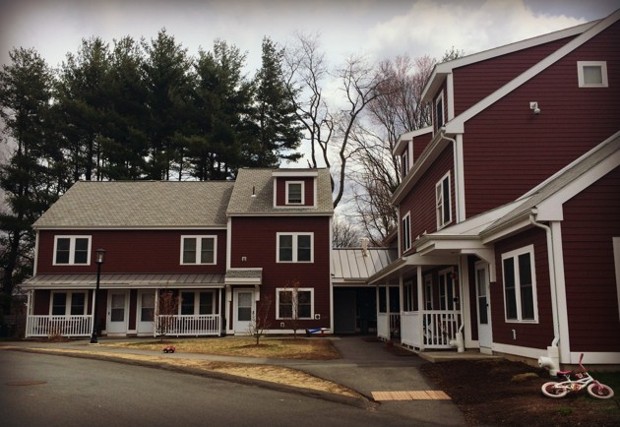
AMHERST, Mass. — When Peter Gagliardi first heard about an owner looking to sell an old farmhouse in this college town, he thought it seemed like an ideal place for an affordable housing complex. The property was across the street from a bus stop, near a bike path, and had access to two different sewer lines. What’s more, the city of Amherst, concerned with rising housing prices, had made a commitment to developing more affordable housing for residents in the town and region.

So Gagliardi’s nonprofit, HAPHousing, hired an architecture firm that would convert the farmhouse into 26 affordable units, a development that would blend into the bucolic landscape of ramshackle barns and rolling hills.

But when the plan for the development, called Butternut Farms, ended up in front of the community, opposition was vociferous.

“People basically said, ‘We’re in favor of affordable housing, but it shouldn’t be in a residential neighborhood,’” Gagliardi told me.

In a zoning meeting about the development, some people said their children had been bullied when they lived in rental developments and didn’t want that to happen again. Others said there would be too much traffic if the development was built. Still others worried  that they would no longer be able to go into their backyards in their underwear. A young boy complained that the residents of the affordable-housing complex would run over the turtles that sometimes appeared in the neighborhood. Another resident complained that he used the property—which was private—to pick blueberries or race ATVs, and the development would put an end to all of that.

“Some of the things that were said were on the hateful side,” Gagliardi said. “It happens often, it’s the Not In My Backyard Syndrome.”

For more than a century, municipalities across the country have crafted zoning ordinances that seek to limit multi-family (read: affordable) housing within city limits. Such policies, known as exclusionary zoning, have led to increased racial and social segregation, which a growing body of work indicates limits educational and employment opportunities for low-income households.

But Massachusetts has a work-around: A state statute, called 40B, allows developers to get around exclusionary zoning and build affordable housing in communities where only a small percentage of units are considered affordable. (A few other states have similar policies.) The statute, passed in 1969 and upheld by the state’s Supreme Judicial Court in 1973, has led to the construction of 1,300 developments throughout the state, containing a total of 34,000 units of affordable housing, according to Citizens’ Housing and Planning Association, or CHAPA.

Projects built under 40B are almost always controversial: The statute was enacted in the first place because most communities outside of big cities didn’t permit multi-family housing, said Ann Verrilli, director of research at CHAPA. Even with the statute, communities often spend millions of dollars in legal fees to try and stop the projects, Verrilli told me.

“There’s real resistance to change, resistance to development of any kind that may have school-aged kids,” she said.

Butternut Farms, in Amherst, took 10 years to build. (Alana Semuels)

The experience of developers trying to build affordable housing in Massachusetts takes on added significance now, as housing advocates wait for a decision on a landmark case in front of the Supreme Court that concerns where low-income housing projects are placed. The case, Texas Department of Housing and Community Affairs v. The Inclusive Communities Project, arose when a nonprofit housing group sued Texas, arguing that the state primarily distributed tax credits for low-income housing projects in minority-dominated areas. Inclusive Communities argued that doing so perpetuated segregation and violated the Fair Housing Act, which was passed in 1968 to prevent landlords, municipalities, banks and other housing providers from discriminating on the basis of race. The Supreme Court case centers on whether this discrimination has to be intentional in order to be illegal, or whether the Fair Housing Act also seeks to prevent policies that may not be intentionally discriminatory, but that have a “disparate impact” on minorities.

Few states have policies that try and integrate communities or develop affordable housing in so-called “high opportunity” areas.

Housing advocates say the parts of the Fair Housing Act being challenged in this case are important tools in ensuring the country does not become even more deeply segregated. As things are now, few states have policies in place that try and integrate communities or develop affordable housing in so-called “high opportunity” areas. And the process of bringing discrimination claims to court under the Fair Housing Act is a difficult and expensive one. The Supreme Court may yet make it even more difficult to build housing for poorer families in anywhere besides the poorest places.

“This decision will have a very profound impact on millions of Americans going forward at a time when we need every tool we can use in the arsenal of civil rights actions to make sure we live up to the aspiration of providing equal opportunity and ending discrimination in this country,” said Dennis Parker, director of the Racial Justice Program at the ACLU, which filed an amicus brief on behalf of Inclusive Communities.

To be sure, there are reasons—besides pure racism—why a wealthy community might resist the placement of affordable housing within city limits. Many municipalities already have trouble funding schools. With more houses and families but not much more of a tax base, their budget problems could get even worse. The small Massachusetts town where I grew up, and where my brother is a public-school teacher, has been enmeshed in debate over a 40B proposal at the same time voters were asked to increase taxes so the town could continue funding schools at adequate levels.

But people who oppose 40B projects and other affordable housing developments often don’t have any complaints after the projects are built, according to research. A study out of Tufts University, “On The Ground: 40B Controversies Before and After looked at some of the most controversial 40B projects in Massachusetts that were completed before June 2006. It found that the concerns of residents expressed before construction were usually not realized, and that controversy evaporated after construction wrapped up.

“This study provides significant evidence that the fears of new affordable housing development are far more myth than reality,” the study concluded.

Similarly, Princeton professor Douglas Massey studied an affordable housing development in Mount Laurel, New Jersey, that local residents had complained would lower home values, increase crime rates, and cause local taxes to rise.

He found that the development did none of those things. Many surrounding neighbors didn’t even know there was a housing project nearby.

“The market is going to work to de facto disadvantage lower-income residents.”

What’s more, the lives of residents in the housing development improved markedly after they moved to the affluent suburb. An increasing amount of data seems to show that location matters just as much as income in determining a child’s likelihood of escaping poverty. As I’ve written about before, children from low-income families who move to more affluent suburbs are more likely to graduate from high school, attend four-year colleges, and have jobs than their peers who stayed in the city. And cities that have made an effort to keep schools desegregated have enjoyed less race-based strife than peer cities.

Still, affluent cities and towns often resist low-income housing projects: Despite 40B in Massachusetts, many areas of the state are falling back into the same segregation patterns that the Fair Housing Act sought to remedy nearly 50 years ago. Recent research showed, for example, that the Boston metro area has more racially concentrated areas of affluence (census tracts where 90 percent is white and wealthy) than any of America’s 20 biggest cities.

There are few states or municipalities that have laws targeted at exclusionary zoning. Three states—Massachusetts, Rhode Island, New Jersey—have “exemplary interventions” to address exclusionary zoning, according to a paperby Rachel G. Bratt and Abigail Vladeck of Tufts University. Montgomery County Maryland also has a similar intervention. Other states, such as Oregon and Texas, prohibit mandatory inclusionary zoning requirements. In places that don’t strive to promote integration, segregation is likely to be prevalent.

“The market is going to work to de facto disadvantage lower-income residents,” Bratt told me. “The theory is that in order to deal with segregated patterns, you need to have proactive policies to deal with it.”

Many affordable housing units in the suburbs are a direct result of court cases, and even enforcement of those programs are lax. In 2009, Westchester County in New York signed a desegregation agreement and agreed to build and market hundreds of apartments for moderate-income minorities after a court found it had misled HUD by applying for funds that it said it would use to integrate housing, and then did the opposite. Four years later, the county had not complied with the provisions.

New Jersey is one of the few states that bars wealthy towns from excluding affordable housing, largely because of court decisions relating to the Mount Laurel case, but even those have been under attack. Governor Chris Christie attempted to disassemble the state agency overseeing affordable housing and wanted to allow municipalities to decide how much affordable housing to allow. A state appeals court blocked these attempts, but the instance points to the fact that affordable housing programs are being challenged in the few states that have them.

In Massachusetts, a group put an initiative on the ballot in 2010 that sought to repeal 40B. The coalition for repealing the law said that the statute “has destroyed communities in rural, suburban and urban neighborhoods alike, while lining the pockets of out-of-state speculators.”

“Some people just do not want low-income housing in their communities.”

The repeal effort failed, 58 percent to 42 percent, and Marc Draisen, the executive director of the Metropolitan Area Planning Council, a state planning group, says he thinks the law now has widespread support. But that doesn’t mean it has gotten any easier to build affordable housing.

Most developers don’t want to do mixed-income developments, and prefer to build market-rate buildings where they won’t have to face any community resistance or years of legal wrangling. That’s even in a state that’s seen by many as a leader in encouraging the construction of affordable housing in communities that don’t really want it.

“40B is a legal tool but it doesn’t eliminate prejudice,” Draisen told me.  “Some people just do not want low-income housing in their communities.”

This prejudice won’t likely change soon, no matter what the Supreme Court decides in Texas v. Inclusive Communities. Housing advocates see some hope in an impending HUD rule, which may make it harder for communities to show this prejudice. HUD wants to stipulate that all areas receiving federal funds for low-income housing show that they are proactively promoting integration, housing experts say.

Still, the government currently lacks the resources to ensure that every community promotes integrated housing. It may be up to developers like Peter Gagliardi to continue to keep fighting to do so. And he can hold up Butternut Farms as an example of how it can work.

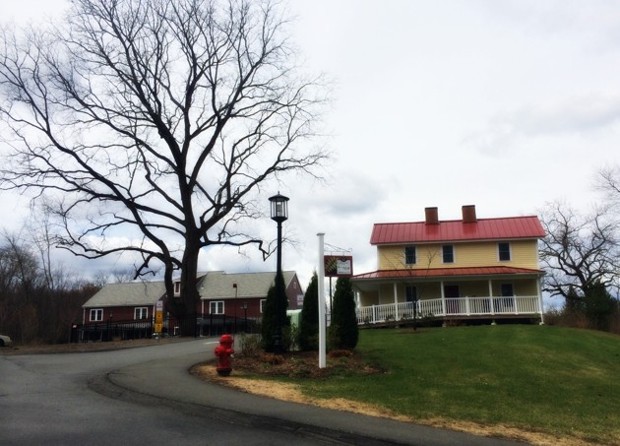
The development is located off a two-lane road near Hampshire College, a campus with rolling green hills, barns, and unobtrusive brick buildings. The 26 units blend right in: They are distributed in a few red barn-like structures and one yellow multi-family house, surrounded by trees and set back from the road, located up a sloping driveway.

Butternut Farms, from the road (Alana Semuels)

Gagliardi first set foot on this property in 2000. The homes opened to tenants in 2011. The intervening decade was threaded with court cases, appeals, and $150,000 worth of legal costs for HAP, despite pro bono legal assistance.

The project, which involved the construction of three detached buildings of eight units of housing each and renovating the farmhouse to include two new units, violated parts of Amherst’s zoning bylaws regarding parking and housing density in residential areas. But that's the point of 40B—it allows developers to get around those laws if the housing they are building is affordable.

The local zoning board approved HAP’s application to build a 26-unit rental development in 2002, but neighbors immediately filed suit to annul the approval. When a Land Court judge upheld the permit, neighbors appealed. When the case went to the state Supreme Judicial Court, justices decided on behalf of HAP, in 2007.

“Our conclusion does not ‘needlessly infringe’ on the ‘settled property rights of abutters,’” the justices wrote. “Rather, our conclusion takes into account that the Legislature ‘has clearly delineated that point where local interests must yield to the general public need for housing.’”

A few weeks before the first tenants moved into the apartments in 2011, a rare tornado blew through nearby Springfield, destroying dozens of affordable housing units there.

“I pointed out the irony it took us 10 years to get 26 units built here, but at the same time, many times that number of units of affordable housing were destroyed in a brief time of a tornado,” Gagliardi said.

It’s a happy ending, but the problems that face Peter Gagliardi now face the nation. The country will have to grapple with how to house low-income residents in areas of opportunity, or bear more racial strife. After all, if Gagliardi had so much trouble in a liberal town in Massachusetts, a state with some of the strongest affordable-housing laws in the country, is there any reason to believe developers will be able to build affordable housing in affluent areas in the rest of the country, especially without the benefit of the Fair Housing Act?

This post originally appeared at The Atlantic.


02 Jun 23:25

Paying People Not To Be Violent

by Brentin Mock
Image sakhorn/Shutterstock.com
Baltimore, Maryland, just suffered its most murderous month in 40 years. (sakhorn/Shutterstock.com)

Terrence McCoy recently offered up an interesting solution to Baltimore’s homicide crisis in The Washington Post: A program like one in Richmond, California, that identifies residents with the most violent histories of criminal behavior and pays them to stay out of trouble. Under Richmond’s Office of Neighborhood Safety Initiative, participants receive monthly stipends up to $1,000 for refraining from violence and following a “life map” regimen of GED classes, job training, anger-management counseling and other forms of criminal-conversion therapy.

So far, the program appears effective. In less than eight years of existence, the number of killings per year there dropped from 47 in 2007 to just 11 last year. Of course, that drop can’t be credited totally to the program. As pointed out in Mother Jones last year, the declines have also coincided with the arrival of a new police chief who has dramatically reformed policing practices in Richmond. Still, McCoy reports that some in California believe that the Richmond model could have a positive impact in Baltimore, which just suffered its most murderous month in 40 years.

Program participants receive monthly stipends up to $1,000 for refraining from violence and following a “life map” regimen.

Let’s take a look at ”the Richmond Model.” First, it’s not novel. It’s not even the first of its kind. As Mother Jones points out, Boston employed a similar program in the 1990s. In Pittsburgh, the One Vision, One Life initiative, which began in 2004, was closer to an apples-to-apples version of what Richmond started three years later. Murders continued to escalate in the first few years of One Vision, peaking in 2008 with 120 homicides, but then made a precipitous drop in 2009 down to 88 murders the following year, then dropping even lower in 2011 (check out this graphic from the Pittsburgh Post-Gazette).  And then there’s the Chicago Ceasefire program, made popular in the award-winning documentary The Interrupters.

None of those other cities’ programs lasted long, though. Boston’s seemed to end rather disastrously. Pittsburgh’s One Vision, One Life ended in 2012. And Chicago’s Ceasefire is currently in flux, or at least overshadowed by escalating homicide numbers this year. All of these programs have petered out for different reasons, but in the Pittsburgh and Chicago cases, losing city funding has played a major part.

Richmond’s program relies on city funding—$1.2 million in 2013 alone. And the program certainly has its detractors, one of whom sits on Richmond’s city council. For a program like this to last in Richmond—much less Baltimore—it would need a long-term, sustained stream of funding. This would mean that investors couldn’t pull the plug at the first spike of crime, the threat of recession, or due to changes in political administrations. Ending these programs before giving them a chance to bear out is one thing, but the message sent to the young men banking their lives on these programs could be devastating.

To be clear, the participants in these programs aren’t banking that much, financially. The $1,000 a month offered in Richmond would put participants just above the federal poverty line, but would barely meet the burden for those with children. This makes it all the more necessary to keep the funding behind these programs stable. For a program like this to truly be effective—especially in a city like Baltimore, with six times the population of Richmond—a substantial private-capital investment would be needed.

Financially incentivizing good behavior is the way of corporate America. But how much would it cost to pay police to stop being violent?  

In theory, corporations should want to finance such programs. If CEOs are worried about violence occurring near (or aimed at) their businesses, better to pay prior offenders to stay out of trouble than pay for trouble that halts business later.   

Financially incentivizing good behavior is the way of corporate America. However, there will probably come a time in each of these young men’s lives when the cost-benefit of doing something illegal will outweigh that of staying legit. It may not take long to arrive at that point when you’re pulling in only $250 a week. An individual needs to bring in at least twice that amount each week to live on in Baltimore.

Whether Richmond or anywhere else, though, a program that leans too heavily on paying people to fly right seems incomplete if it’s still not dealing with root causes. Cities like Richmond identify violence as a public health issue: The Centers for Disease Control and Prevention lists attention-deficit problems, learning disorders, drug addiction, and emotional distress among the top risk factors for youth violence. Stipends and life-skills training won’t resolve those things, especially in cities where youth have been over-exposed to violent trauma, such as in Baltimore and New Orleans. Perhaps if participation in these programs came with access to free, quality healthcare, they could offer more promise.

A big question not answered in any of these scenarios: How much would it cost to pay police to stop being violent?  

Top image: sakhorn/Shutterstock.com.


02 Jun 23:24

Rob Gronkowski’s Brother Recounts The Time The Family Did A ‘Sword Fight’ In The Bathroom

by christmasape
Rob Gronkowski Birthday Celebration

Getty Image


Chris Gronkowski, one of Rob’s football-playing brothers, went on a Boston radio show with Wes Welker to discuss many things, such as Welker’s health and desire to get on an NFL roster this year. They also talked about how Rob didn’t enjoy going to the Kentucky Derby for the first time because there wasn’t enough loud music and dancing. Seems like an understandable objection for Gronk. There was also a local hair restoration doctor who counts both Welker and Chris Gronkowski as clients because sports radio ain’t give a damn.

They also mentioned the time that the Gronkowski clan got in a bathroom “sword fight” at the 2012 ESPYs, an episode that has been mentioned before, though only through secondhand witness accounts. Chris just dives right in, even though he was being asked about a different Gronkowski bathroom incident. I get the feeling there are more than a few bathroom stories in the Gronkowski family.

“I think we were at the ESPYs, and at the bathroom the line was taking forever, you do what every normal family would do: you go and have a sword fight with all of us. I think there was all five brothers,” Chris said.

“A sword fight? So you guys are just all in there peeing on each other, basically?” Welker asked in astonishment.

“I mean, you don’t pee on each other. But then, what kind of reporter actually comes in there and then writes a story about that? Come on. That was crazy. I couldn’t believe that article. I thought it was fake,” Gronkowski said.

I love how insulted Chris is by Welker’s question. “What’s wrong with you? You and four other dudes never crowded into a single urinal before? You think you’re all high and mighty or something?”

02 Jun 23:23

Commission to consider designating Stonewall Inn a New York City landmark

by Associated Press
Stonewall Inn, New York.Designation would grant recognition to a powerful symbol of the gay rights movement. The Greenwich Village tavern would be the first landmark honored specifically for its role in the city's gay history.
02 Jun 23:23

nenetlavril: I fucking love Seattle.


nenetlavril:

I fucking love Seattle.

02 Jun 23:23

nevver: Immortan Joe x Seuss

02 Jun 23:23

seananmcguire: skerples:kingsofcyberspace:prisonwithnobars:Donut...


seananmcguire:

skerples:

kingsofcyberspace:

prisonwithnobars:

Donuts!

galaxy doughnuts

This is some Steven Universe shit right here.


02 Jun 23:20

Photo


02 Jun 23:20

Photo


02 Jun 23:20

phiphiohara: themelmoshow: lacigreen: dama3: baelor: Trans...


phiphiohara:

themelmoshow:

lacigreen:

dama3:

baelor:

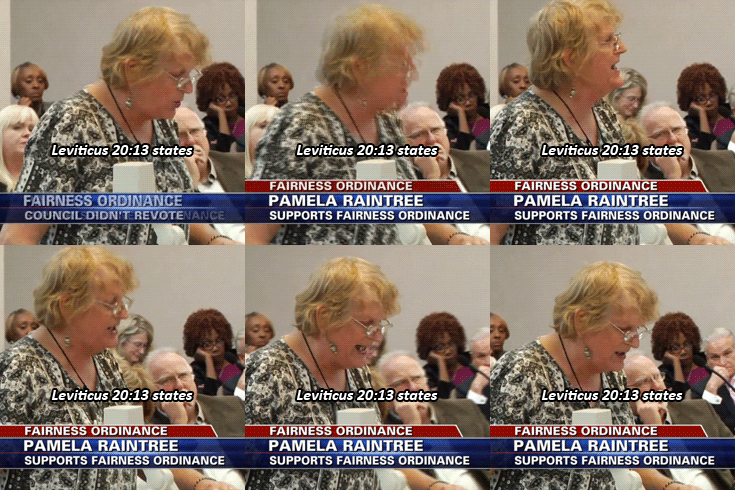
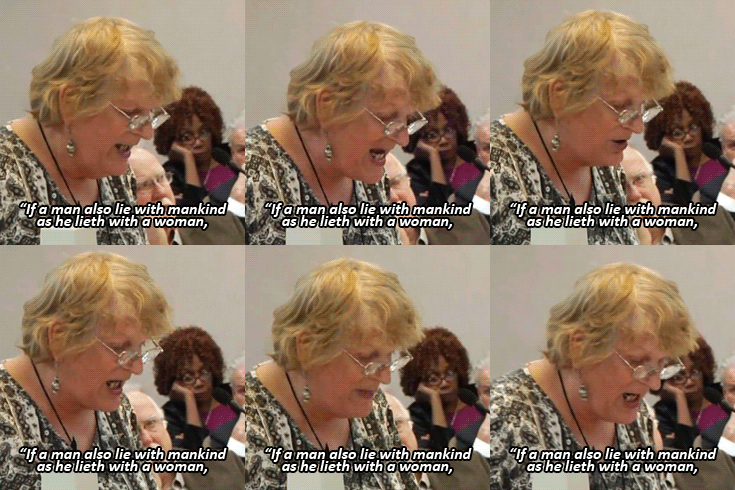
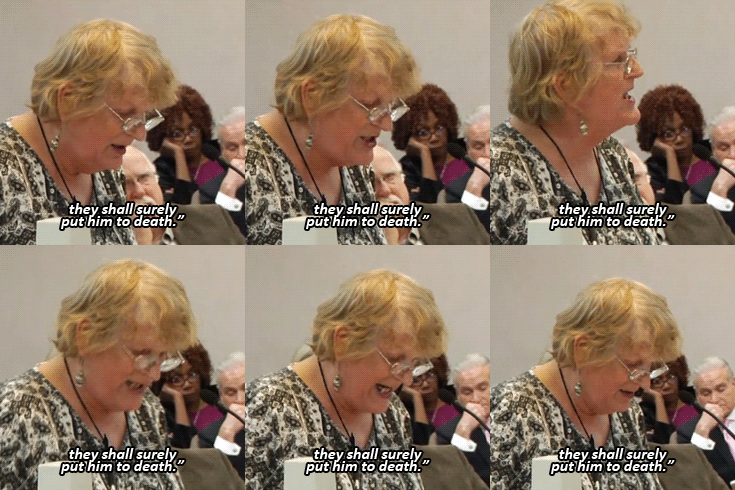
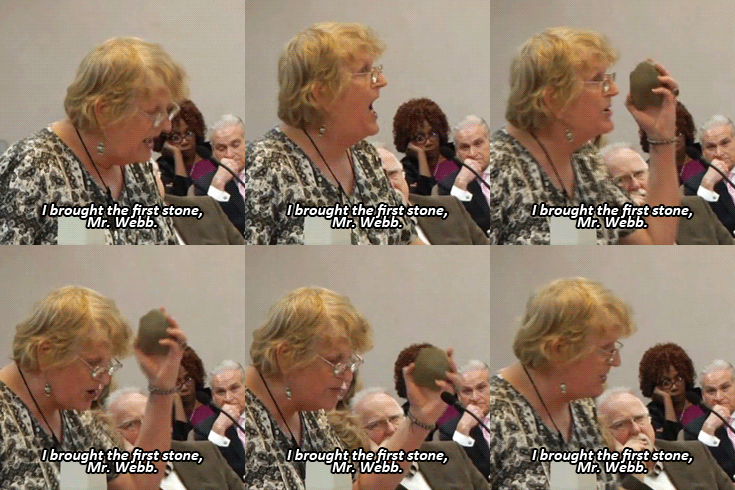
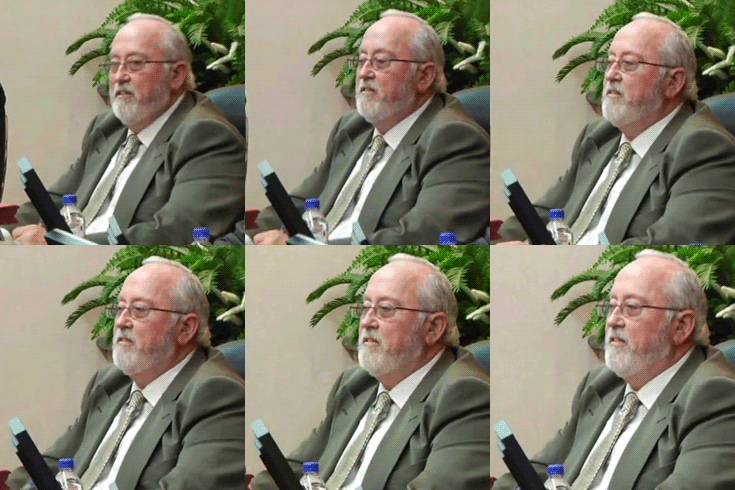
Trans Woman Dares Bible-Quoting Councilman to Stone Her to Death

that’s fucking hardcore

!!!!

This will never be overshared

Amazing!

And she won him over, too. RISE, LADIES, RISE.

02 Jun 23:20

salon: Last week, a white man named Jim Cooley visited the...


salon:

Last week, a white man named Jim Cooley visited the Hartsfield-Jackson International Airport with an AR-15 rifle strapped to his back. That white man became angry because he was unfairly stopped and questioned by law enforcement authorities while he walked around that international airport. It was his right under Georgia’s open-carry law to visibly display his weapon, he correctly argued, and he should not have been detained even one time.

Spoiler alert: Nothing!

Fuck the NRA, and fuck this guy.

02 Jun 23:19

misandry-mermaid: I think misogynists are constantly saying “I’m a nice guy.“  “I’m such a nice...

misandry-mermaid:

I think misogynists are constantly saying “I’m a nice guy.“  “I’m such a nice guy.“  "I’m not like that, I’m a nice guy!” for the same reason that Fox News feels compelled to remind their viewers that they are “fair and balanced” literally every 3 minutes.

02 Jun 23:19

New Earbuds Let You Manipulate Sounds in the World Around You

Nothing kills the experience of a five-star dinner like the shrieks of a crying baby at a nearby table. But imagine if, rather than wincing with frustration, you could simply turn down the baby’s volume? That's the promise behind Doppler Labs' latest invention: earbuds that serve as your personal audio mixer to control real-time sounds in your environment. Adjust the bass levels at a live concert. Turn your coworker’s voice up — or down. Add reverb in a small room to get a concert hall ef
02 Jun 23:19

Can’t Wait Until Friday Toon

by Juanita Jean

sc150601

Reminder:  Top Ten Results of Electing a Libertarian President

1.  Your new favorite charitable cause? Meat inspection.

2.  Cheerfully decorated tip jars at stop signs to pay for roads.

3.  The National Weather Service to be replaced by your Uncle Buster’s rain gauge.

4.  The Texas lottery will now handle sewage disposal. You win the lottery, we take your sewage.

5.  New research reveals that clean water flowing into your house is unnecessary and likely to be the cause of obesity, bad breath, and the disco craze.

6.  Mugging victims must now dial Call-a-Bubba. You call Bubba, and he comes over and shoots something.

7.  Juanita’s Fried Pies will proudly provide the ingredients for some heartwarming s’mores if your house catches on fire.

8.  Elections will now be run by Guy Fieri of the Cooking Channel.

9.  In case of another attack on U.S. soil, you will be given a complimentary Trailways bus ticket to a foreign country of your choice.

10.  U.S. motto “E Pluribus Unum” will be replaced with “Get the Hell Off My Lawn!”

02 Jun 23:18

Kenyan model Yaya Deng | photography by Cybele Malinowski 


Kenyan model Yaya Deng | photography by Cybele Malinowski 

02 Jun 23:18

comicsbabe: gingermous: comicsbabe: Faith Herbert (Zephyr) is...


comicsbabe:

gingermous:

comicsbabe:

Faith Herbert (Zephyr) is so important to me.

THERE’S A FAT FUCKING SUPERHEROINE WHO I NEED TO COSPLAY ASAP GODBLESS U @COMICSBABE 

:)

02 Jun 23:17

gradientlair:bigbeautifulblackgirls: NEW POST ON THE BLOG: Shop...

02 Jun 23:15

Photo


02 Jun 12:15

Forbidden City Palace Museum condemns art nude photographer WANIMAL

by Violet Blue

Chinese photographer WANIMAL is causing a stir right now in Chinese papers (and a bit in the UK and US) for a couple of art nudes he took in the Forbidden City palace in Bejiing, China. The photos are lovely, though erotic, and the Palace Museum is not happy about it. In a statement issued on Monday, the Museum said that such behavior should be “condemned by society” and “violates the public order and social morals.”

China’s Global Times writes,

According to the museum, security camera footage shows that at 8:30 am on May 17, four visitors ran ahead of other visitors into the museum. Among them was a woman wearing long grey clothing.

At 8:50, staff at the museum discovered the group taking inappropriate photos at The Hall of Supreme Harmony (taihe dian) during a patrol and stopped them.

Based on previous posts on Wang’s Sina Weibo, he began scouting the museum as early as May 13. The museum denied that it had any knowledge of the shoot beforehand.

In an interview with guancha.com on Thursday, Wang said that taking photos at tourist attractions “is not something new” for him and that he feels his behavior hasn’t affected anyone. He added that if people wish to take offense at his work then so be it.

Wang is a graduate from the Central Academy of Drama and received further education in the US. In addition to the recent controversial nude photos in the Forbidden City, he has also photographed nude models in the streets of Hong Kong and at the Museum of Fine Arts in Boston.

He should put the Palace’s statement in his bio under “accomplishments.” He’s a hell of an artist — do hop over to WANIMAL’s Tumblr and feast on miles of gorgeous art nudes brimming with skin, tattoos, and highly condemnable behavior.

The post Forbidden City Palace Museum condemns art nude photographer WANIMAL appeared first on Violet Blue ® :: Open Source Sex - Journalist and author Violet Blue's site for sex and tech culture, accurate sex information, erotica and more..

02 Jun 12:13

Photo


02 Jun 11:32

Updated: Hola VPN Already Exploited By “Bad Guys”, Security Firm Says

by Andy

After a flurry of reports, last week the people behind geo-unblocking software Hola were forced to concede that their users’ bandwidth is being sold elsewhere for commercial purposes. But for the Israel-based company, that was the tip of the iceberg.

Following an initial unproofed report that the software operates as a botnet, this weekend researchers published an advisory confirming serious problems with the tool.

“The Hola Unblocker Windows client, Firefox addon, Chrome extension and Android application contain multiple vulnerabilities which allow a remote or local attacker to gain code execution and potentially escalate privileges on a user’s system,” the advisory reads.

Yesterday and after several days of intense pressure, Hola published a response in which it quoted Steve Jobs and admitted that mistakes had been made. Hola said that it would now be making it “completely clear” to its users that their resources are being used elsewhere in exchange for a free product.

Hola also confirmed that two vulnerabilities found by the researchers at Adios-Hola had now been fixed, but the researchers quickly fired back.

“We know this to be false,” they wrote in an update. “The vulnerabilities are *still* there, they just broke our vulnerability checker and exploit demonstration. Not only that; there weren’t two vulnerabilities, there were six.”

With Hola saying it now intends to put things right (it says it has committed to an external audit with “one of the big 4 auditing companies”) the company stood by its claims that its software does not turn users’ computers into a botnet. Today, however, an analysis by cybersecurity firm Vectra is painting Hola in an even more unfavorable light.

In its report Vectra not only insists that Hola behaves like a botnet, but it’s possible it has malicious features by design.

“While analyzing Hola, Vectra Threat Labs researchers found that in addition to behaving like a botnet, Hola contains a variety of capabilities that almost appear to be designed to enable a targeted, human-driven cyber attack on the network in which an Hola user’s machine resides,” the company writes.

“First, the Hola software can download and install any additional software without the user’s knowledge. This is because in addition to being signed with a valid code-signing certificate, once Hola has been installed, the software installs its own code-signing certificate on the user’s system.”

If the implications of that aren’t entirely clear, Vectra assists on that front too. On Windows machines, the certificate is added to the Trusted Publishers Certificate Store which allows *any code* to be installed and run with no notification given to the user. That is frightening.

Furthermore, Vectra found that Hola contains a built-in console (“zconsole”) that is not only constantly active but also has powerful functions including the ability to kill running processes, download a file and run it whilst bypassing anti-virus software, plus read and write content to any IP address or device.[see update]

“These capabilities enable a competent attacker to accomplish almost anything. This shifts the discussion away from a leaky and unscrupulous anonymity network, and instead forces us to acknowledge the possibility that an attacker could easily use Hola as a platform to launch a targeted attack within any network containing the Hola software,” Vectra says.

Finally, Vectra says that while analyzing the protocol used by Hola, its researchers found five different malware samples on VirusTotal that contain the Hola protocol. Worryingly, they existed before the recent bad press.

“Unsurprisingly, this means that bad guys had realized the potential of Hola before the recent flurry of public reports by the good guys,” the company adds.[see update]

For now, Hola is making a big show of the updates being made to its FAQ as part of its efforts to be more transparent. However, items in the FAQ are still phrased in a manner that portrays criticized elements of the service as positive features, something that is likely to mislead non-tech oriented users.

“Since [Hola] uses real peers to route your traffic and not proxy servers, it makes you more anonymous and more secure than regular VPN services,” one item reads.

How Hola will respond to Vectra’s latest analysis remains to be seen, but at this point there appears little that the company can say or do to pacify much of the hardcore tech community. That being said, if Joe Public still can’t see the harm in a free “community” VPN operating a commercial division with full access to his computer, Hola might settle for that.

Update: Vectra have not only published an update to their analysis but have also made a few quiet edits which appear to put Hola in a better light.

They also appear to have retracted their advice to uninstall Hola and are now suggesting that organizations should “determine if Hola is active in their network and decide whether the risks highlighted in this blog are acceptable.”

Following the edits, Hola emailed TF to offer yet more clarity.

“One of the pieces that we wanted to clarify as it relates to your article is that even though there is evidence Hackers has been on the network, there is no evidence that the network was exploited before the 8chan attack,” Hola told TF. “[Vectra] compare it to proof that burglars were trying to copy your key, but not that they got in the house.”

Hola also says that the vulnerabilities in Zconsole have now been fixed.

Source: TorrentFreak, for the latest info on copyright, file-sharing, torrent sites and anonymous VPN services.