Shared posts

07 Jun 08:49

New New WightAn online virtual gallery exhibition from ucladma...


New New Wight

An online virtual gallery exhibition from ucladma featuring works from familiar Tumblr-based net artists such as kyttenjanae and adamferriss :

New New Wight is a virtual exhibition space based on the New Wight Gallery located at UCLA. It is conceived as a space for art-making liberated from institutional limitations such as the prohibition of food and plants inside the gallery, but also from the inherent limitations of our material world. The NNW is a space where the only portal required to enter is the internet and where the laws of physics no longer apply.

The exhibition is built using the game engine Unity - you can find out more as well as download the exhibition from the exhibition website here

07 Jun 08:49

Real-Time Hyperlapse Creation via Optimal Frame...


Real-Time Hyperlapse Creation via Optimal Frame Selection

Research demonstration from Microsoft Research explains how their hyperlapse technology works - for steadier results, frames are picked and collated through a smarter algorithm:

Long videos can be played much faster than real-time by recording only one frame per second or by dropping all but one frame each second, i.e., by creating a timelapse. Unstable hand-held moving videos can be {\em stabilized} with a number of  recently described methods. Unfortunately, creating a stabilized timelapse, or hyperlapse, cannot be achieved through a simple combination of these two methods. Two hyperlapse methods have been previously demonstrated: one with high computational complexity and one requiring special sensors. We present an algorithm for creating hyperlapse videos that can handle significant high-frequency camera motion and runs in real-time on HD video.  Our approach does not require sensor data, thus can be run on videos captured on any camera.  We optimally select frames from the input video that best match a desired target speed-up while also resulting in the smoothest possible camera motion. We evaluate our approach using several input videos from a range of cameras and compare these results to existing methods. 

You can find out more technical details here, or download the app via here

07 Jun 07:49

A Clickhole into Conceptual Video Art

by Benjamin Sutton
(gif by Hrag Vartanian)

(GIF by Hrag Vartanian/Hyperallergic)

Clickhole, the Onion‘s clickbait-parodying spin-off, is producing some of the best video art on the internet. The site’s administrators seem to have integrated the tricks and aesthetics of conceptual and video art, from matter-of-fact performance videos like Bruce Nauman’s “Walking in a Exaggerated Manner Around the Perimeter of a Square” (1967–68) to the deadpan humor of John Baldessari’s “I Am Making Art” (1971) and “Baldessari Sings LeWitt” (1972). Witness, for instance, Clickhole’s “You Can Write Whatever You Want On A Baby … And Here’s The Proof.”

The site’s video artists have also incorporated the tactics of more mainstream fodder. For instance, I found it impossible to watch “Get The Tissues Ready: Watch These People React To The First 10 Minutes Of ‘Up!’” without being reminded of Arnold Schwarzenegger’s viral stream-of-consciousness live commentary on Conan the Barbarian. The futility of responding to a film by simply describing what is happening on screen is a bottomless well of comedy — Schwarzenegger inadvertently stumbled into it, and now Clickhole has tapped it.

Recently, Clickhole ventured into self-reflexive territory pioneered by Douglas Gordon in his installation “24 Hour Psycho” with the maddeningly jumpy “Sorry, We Slowed Down This Video Of A Hummingbird Too Much.” There are even nods to Andy Warhol’s appropriations of advertising and mass-produced packaging in Clickhole videos like “Don’t Believe The Hype: This Can Has No Peas In It” and “Yes! Ham Goes Up An Escalator.”

So take note, curators: If Clickhole isn’t included in the 2017 Whitney Biennial or 2018 New Museum Triennial, I will write a scathing takedown — on a baby.

07 Jun 07:49

acongressofravens: tastefullyoffensive: “Mine.” (photo by...


acongressofravens:

tastefullyoffensive:

“Mine.” (photo by se7enone)

Gulls are assholes.

My favorite flavor!

07 Jun 07:48

"You've Got to Be Kidding!" With Arthur

by Brad
63b
07 Jun 07:47

Watch RoboSimian prepare for DARPA's Robotics Challenge finals

by Mariella Moon
I've got to be honest: the moment I saw the robot above straighten its torso like some sort of a human-arachnid hybrid, I felt a tinge of fear. Good thing NASA JPL designed it to help humans in times of need, eh? This is RoboSimian, one of the few no...
07 Jun 07:47

California senate wants warrants to be required for phone searches

by Mariella Moon
The California State Senate has passed the "Leno bill," which aims to protect residents' digital privacy. Officially called Senate Bill 178, it would require authorities to secure a warrant whenever they want to search phones, laptops or other device...
07 Jun 07:47

Photo


07 Jun 07:47

Cartoon: Police Shootings, or Oh The Tragedy!

by Ampersand

police-shootings-1200
Transcript of cartoon

Each panel of this cartoon shows the same white dude in an armchair, from the same angle, watching the news on TV. Small details change throughout the cartoon – his hairline recedes, his drink changes, he switches from watching an old-fashioned thick TV to watching on a laptop to watching on a flatscreen – but the essential scene never changes. The man doesn’t seem very interested in the news, and in one panel he even dozes off.

Panel 1
TV: In today’s news, Prince Jones, an unarmed Black man, was shot to death when police mistook him for another man.

Panel 2
TV: Alberta Sprull, an unarmed Black woman, was killed by a concussion grenade thrown during a police raid.

Panel 3
TV: …almost ten percent of young black men are in prison, most often for non-violent drug offenses.

Panel 4
TV: …police say that Stansbury, age 19, was shot “by accident.” The officer was suspended for 30 days.

Panel 5
TV: …judge acquitted three officers who fired fifty shots into the car of Sean Bell, the night before Bell’s wedding.

Panel 6
TV: …despite economic growth, Black unemployment remains nearly twice as high as unemployment for whites…

Panel 7
TV: Deaunta Farrow, age 12, was shot when… Tarika Wilson, age 26…

Panel 8
This panel is divided into 17 sub-panels, getting smaller and smaller as they go on, implying a potentially endless number of panels. In each panel, the TV is speaking.
TV: …Oscar Grant was handcuffed face-down when police… Shem Walker… Kiwane Carrington… Manuel Loggins Jr…. Rekia Boyd… Reynaldo Cuevas… Kimani Gray… Eric Garner… Freddie Gray….

Panel 9
Suddenly the white dude looks engaged and outraged, leaping up from the armchair and pointing furiously at the TV.
TV: Private Property was damaged today when a protest turned into a riot…
DUDE: OH THE TRAGEDY!

* * *

If you’d like to support these political cartoons, please share them on social media or become a Patron. Thanks!

07 Jun 07:46

The one-cable future of gadgets: simpler, but still confusing

by Mat Smith
For such a quiet tech show, this week's Computex in Taiwan may have been a watermark moment that will affect nearly every PC, phone and tablet you'll see in the next few years, if not decade. The new USB Type-C port may have debuted on flagship devic...
07 Jun 07:45

FBI surveillance planes flying over US cities linked to fake companies

by Billy Steele
Thanks to an Associated Press report, we now know more about the FBI's fleet of small surveillance planes that are flying over US cities. It's no secret the aircraft have been used for years to aid the Bureau's efforts on the ground, but recent fligh...
07 Jun 07:45

Photo


07 Jun 07:45

Why Ag-Gag Bills Exist

by Erik Loomis

image1

Above: Pig waste lagoon

While Out of Sight is primarily about international production and how the global race to the bottom protects companies from accountability for their sourcing practices because consumers don’t see them, I have a chapter on food that makes the point that a lot of agriculture can’t leave the U.S. for a variety of reasons, including that some crops only grow in certain places, the cost of shipping meat around the world, freshness issues, etc. But agribusiness still tries to conceal the costs of their production. The most heavy-handed way they have tried to do this in recent years is through ag-gag bills that make it a crime to record the treatment of animals in factory farms, which has been a method animal rights activists have used to publicize the horrors of animal treatment. It’s an extremely dangerous precedent because if agribusiness can make it a crime to have evidence of what happens in their facilities, why can’t every employer do the same?

Anyway, as you might guess, the leaders behind these efforts are not nice people. One is Andy Holt, a farmer and representative in the Tennessee legislature who sponsored that state’s failed attempt to pass an ag-gag bill, a bill which I am sure will be reintroduced in some form. Why would he support such a bill? To protect himself from his own bad behavior.

Tennessee representative Andy Holt, former hog farmer and sponsor of the state’s failed ag-gag bill, created quite a stink when he dumped 800,000 gallons of pig manure into the streams and fields surrounding his hog farm. Holt’s lagoons were apparently overflowing with waste and Holt’s response was simply to dump the waste in the waters and lands nearby, with no regard for the environment or the law.

The U.S. Environmental Protection Agency recently sent a letter to Holt indicating that absent good cause it would take formal civil enforcement action against him. According to a Memphis news source, Tennessee state officials were considering taking action against Holt at the time this happened, but were “discouraged by upper management” from doing so.

Shocking that the state would fail to prosecute one of their own…. It’s examples just like this why corporations prefer state-level regulation to federal. The states are just easier to buy off and control.

07 Jun 07:45

Somebody's already making a movie about the Sony hack

by Daniel Cooper
Mere months after a series of red lights began flashing in Sony's IT department, a film covering the event has already been greenlit. The Hollywood Reporter believes that a documentary about the studio-toppling event is to be helmed by the creators o...
07 Jun 07:44

Photo


07 Jun 07:44

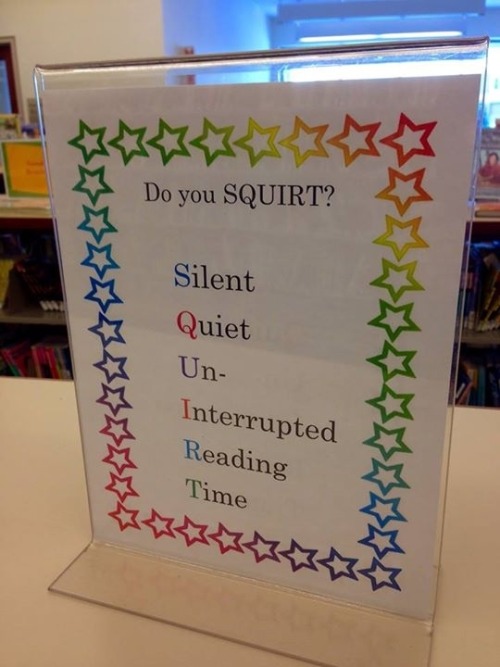
memeguy-com: Found in the childrens section of my local library


memeguy-com:

Found in the childrens section of my local library

07 Jun 07:44

Photo


07 Jun 07:43

Bechdel on Broadway

by Phillip Garcia

Part of what’s fascinating about the Broadway adaptation, with its script and lyrics by Lisa Kron and music by Jeanine Tesori, is how closely it adheres to the outline and details of Bechdel’s story—yet so differs from the book that it seems to be a related but entirely original work.

For the New York Review of Books blog, Francine Prose reviews the Broadway adaptation of Alison Bechdel’s Fun Home and discusses how a change of genre can change the art.

Related Posts:

07 Jun 07:43

lord-kitschener:halcyon-ia: break the rules no gods no kings no...


lord-kitschener:

halcyon-ia:

break the rules

no gods no kings no masters

07 Jun 07:43

We're not doomed: A supercut of robots falling down

by Richard Lawler
Today's action at the DARPA Robotics Challenge has been interesting, but if there's one takeaway so far it's this: the robot apocalypse is not here yet. If you've been warily looking on as robots run, jump, wield swords and even fold themselves up or...
07 Jun 07:43

Today In Calm, Measured Analysis of Same-Sex Marriage

by Scott Lemieux

grandpa-simpson

Roy finds Dreher predictably beside himself over the SSM vote in Ireland. This led me to a particularly perverse entertainment from the Irish version of Dreher. To borrow a wonderful Edroso phrase I plan on later originating, every graf is, “in every sense, the nut graf.” A sample:

This has been the most comprehensive betrayal of democratic principles by an establishment in living memory. And it is not that most politicians actually care one way or another – many have simply either caved in to the bullying or are playing to the “cool” vote, perhaps thinking that they’ll be safely over the line to their pensions before the consequences kick in. But the consequences will come, and sooner rather than later, devastating families and individual citizens in thousands of tragedies played out in the courts, in proceedings in which neither nature nor biology will any longer feature as a criterion of parenthood.

[…]

One acute difficulty is that the discussion is so surreal that most people are unable to see how serious the danger is, or even get their heads around why we are having this conversation at all. How did a tiny minority manage to impose its will on the entire political establishment, when most causes and grievances don’t rate a Dáil question?

The “betrayal” of democracy, as you’ve probably guessed, is that when some people oppose same-sex marriage, others will disagree with them vociferously. And then, there might be a public vote, which will involve a “tiny minority” ramming its rights right down the throats of the 62% of the public that agrees with them! And then one can imagine will result in apocalyptic consequences that there is no reason to believe will happen and have not happened in any of the many jurisdictions that have already legalized same-sex marriage.

There is in this nonsense a lesson worth keeping in mind for when the Supreme Court rules later this month. Some people will argue that opponents would accept a negative result as long as it isn’t announced by courts. In fact, to opponents there is never any right way of legalizing same-sex marriage. A nearly two-to-one referendum vote in favor can still be characterized as elitists imposing same-sex marriage on the country while destroying free speech.

Why, I wonder, did the Irish people disagree with Waters’s compelling, rational arguments by a nearly 2-to-1 margin?

We find ourselves asking each other questions that in a million years we’d never have dreamt of wasting a moment on – like, does a child really need his father and mother or might not the schoolmistress and the milkman, or the fireman and the milkman, be just as good? People are dizzy with this because when you try to answer an absurd question you come up only with absurdities.

“And next thing you know people will ask whether a lamp trimmer and a soda jerk can raise a child, and the answer will make you dizzy. I am not a crackpot.”

Clearly, the only reason Waters’s side could have lost is a massive establishment conspiracy.

07 Jun 07:41

Bjork out-Bjorks herself with wild 360 degree VR music video

by Andrew Tarantola
Y'all know Bjork. Besides being the sound that the Muppets' Swedish Chef makes, Bjork is also a super-talented Icelandic pop diva. She made a name for herself with off-the-wall outfits and over-the-top pageantry (looking at you, 1995's It's Oh So Qui...
07 Jun 07:41

Photo


07 Jun 07:41

Femdom ‘Blue Velvet’ fantasy: April Flores shines as Kink’s first BBW performer

by Violet Blue


Thanks to Jiz Lee for mentioning this on Twitter: It looks like Kink shot its first glorious scene with a BBW performer — none other than friend and award-winning adult performer, April Flores!

The shoot is a treatment of David Lynch’s iconic Blue Velvet scene where Dennis Hopper menaces Isabella Rossellini while huffing through a gas mask, and it looks compelling. In Baby Wants to Fuck, Flores joins forces with Mistress Mona Wales to turn the tables on “Frank Booth” and they top the living daylights out of lucky Will Havoc. Kink’s set and atmosphere for the shoot lends it a “Black Lodge” (the “Red Room”) vibe that really works. The commenters are loving it, with at least one female viewer praising the sexy scene. Another commenter adds, “Plz more BBW on Divine Bitches!”

Here is Kink’s scene description for the scene, Baby Wants To Fuck:

Divine Bitches is proud to introduce 2x AVN BBW performer of the year, April Flores! She shines as the ULTIMATE DIVINE goddess alongside Mistress Mona Wales. In this surrealist femdom porn flick, every curve and every inch of her creamy white flesh is worshipped. (…) Goddess April Flores is the embodiment of what every Divine Bitch strives to be. She is the archetype. Will Havoc begs to be penetrated by both goddesses at the same time until he sprays his load all over Goddess April’s round belly and licks her clean!

Hope you enjoy this pornographic femdom homage to David Lynch’s Blue Velvet. Soundtrack sung and recorded by resident Divine Bitch, Mistress Mona Wales.


Honored 2b first! "@jizlee: Is @TheAprilFlores the first BBW performer on a @kinkdotcom site? http://t.co/5tKeV06wkM pic.twitter.com/zV4hW44wWp"

— AprilFlores (@TheAprilFlores) June 6, 2015

The post Femdom ‘Blue Velvet’ fantasy: April Flores shines as Kink’s first BBW performer appeared first on Violet Blue ® :: Open Source Sex - Journalist and author Violet Blue's site for sex and tech culture, accurate sex information, erotica and more..

07 Jun 07:40

Perchance to Dream

by kittystryker

“I can almost touch the soil beneath your whisper
I can almost feel the hopes you left behind
I can almost touch the soil beneath your whisper
I can almost feel the hopes you left behind
Words that fall like distant rain
Words that echo with your eyes”
-Nostalgia, Nitin Sawhney

I am haunted by some terrible dreams. I wake up from them like falling, my pillow sometimes wet with tears, sometimes with sweat. Sometimes I have been locked onto a hospital gurney and am waiting for the medics to come and drug me while I scream that I’m not crazy. Sometimes all my teeth have fallen out, and I am worried about how I’m going to afford the care. My dreams are filled with navigating bureaucracy, having emotional crises, and trying to balance my finances. I’m not always sure if it was, in fact, just a dream.

I wish I had dreams of flying like normal people do, but when I fly in dreams it is always an escape. I am frantically trying to learn how to control my flight so I don’t crash and burn, or get captured, or something unspoken but dreaded in my gut. Even in my dreams I can’t give up control, I still have the sinking feeling that there’s things I need to do, that people are depending on me to behave correctly.

My family, I think, has the impression that I’m a wild child, partying it up a lot and generally reckless. Little do they know, really KNOW, how much of my time is spent carefully calculating next steps for myself, balancing my checkbook, or frozen in place on my bed because a wrong move could mean a total lack of stability. For all that I give the impression of being devil may care, I spend a lot of my time trying to overcome emotionally exhausting amounts of severe anxiety. I am so accustomed to sitting, feeling bile rise into my throat and my gut clenching tight, without any particular reason, that it’s just part of daily life and not a medical concern anymore.

I am reasonably good at juggling responsibilities, and capable of survival under some pretty rough circumstances, but god, how I wish I could just let go sometimes. I wish I could give up all these feelings, all this compassion, all this heart pain I carry around. I long to have control taken from me, but am too wounded to give it up. I don’t really know how to relax, even when asleep. I’m always doing something, always frantically trying to hold my shit together.

Last night I dreamed that my lover dumped me and got back together with an ex. I tried my damnedest to smile and be gracious, happy for them, even though I felt like I was being ripped apart by wolves on the inside. In the dream we lived in the same apartment complex, and seeing them together was unavoidable… so I spent much of my dream in my tiny studio, fixing the plumbing which kept bursting over and over again, a lump in my throat.

I didn’t cry in the dream but I woke up teary and sad. It was just a dream, I knew it was just a dream, and yet I still felt shaken and lost and abandoned. And it was hard to let it go. I FELT it, so strongly, the loss, the strain to feel compersion that someone I loved was happy, my own disappointment in myself for just not having the strength.

I feel so flooded with feelings. I want sleep to be restful but I don’t know how to turn my brain off even then. Why does my subconscious feel the need to force me to confront such dark yet mundane fears every night, leaving me tossing and turning? It’s frustrating, especially after a particularly heartwrenching night when I can’t find myself capable of leaving my room because cobwebs of the night before are holding me back. I worry it impacts my relationships, that these horrible processing sessions lead me to miss ex lovers who were toxic, or to suspect current lovers who have done nothing wrong.

I don’t have any stability in my life, not really. I suspect that’s part of why I’m so haunted by the past and the possible futures… if I drop one plate, the impact on the rest of my life could be devastating. I am afraid, always, that sometime I’ll misstep and everything will come crashing down. I want to cling to something, like a barnacle, while the floods of emotions crash around me- I could weather them then- but to cling to a person is codependent, and to cling to a job is absurd in this climate. I feel like I live my life as honestly and as vulnerably as I can, but sometimes I feel laid bare, still alive as ravens peck at my entrails. But I don’t know how else to be.

So instead, I drift, both awake and asleep, unsettled, unprepared, ungrounded. I hope that one day I will find some safe space to curl up in, even just for a night, where my mind and heart can be at rest. Sometimes I just want to be loved, and love, and for it to be easy for a minute, for me not to feel like I have to fight or run. I wonder if I will feel lonely until I die, but then isn’t that human existence?

I just want to trust and I worry that I may never really again.

It has been a day, and a lifetime, of too many feelings, and I am tired. I am afraid of being tired, of admitting my weariness, because being present is what I’m good at, being a place of stability for so many others is what I do, and to admit I feel lost is perhaps the dropping of that first plate.

But I want to lay this burden down. And I am falling asleep alone tonight, and wish I wasn’t.

07 Jun 07:40

Bourbon!

by Robert Farley

The second in my series on Kentucky and the APAC takes a look at the bourbon industry:

People in the bourbon industry know that things could still turn around. Demand for spirits has a faddish quality, and interest in bourbon has collapsed before. Attacking the Chinese market will be key; bourbon exports to China have increased dramatically over the last decade, but thus far export to China represent only about a tenth of exports to Japan. Moreover, word has it that sales of all premium liquors have dropped in China over the past two years, apparently because of changes in gift-giving culture. And U.S. producers (not to mention Suntory) may also find ceilings on the demand for bourbon in Korea and Japan (although thepotentially lucrative North Korean market remains available)


07 Jun 07:40

Lighter than Air: Desire Across Millennia

by Thomas Micchelli

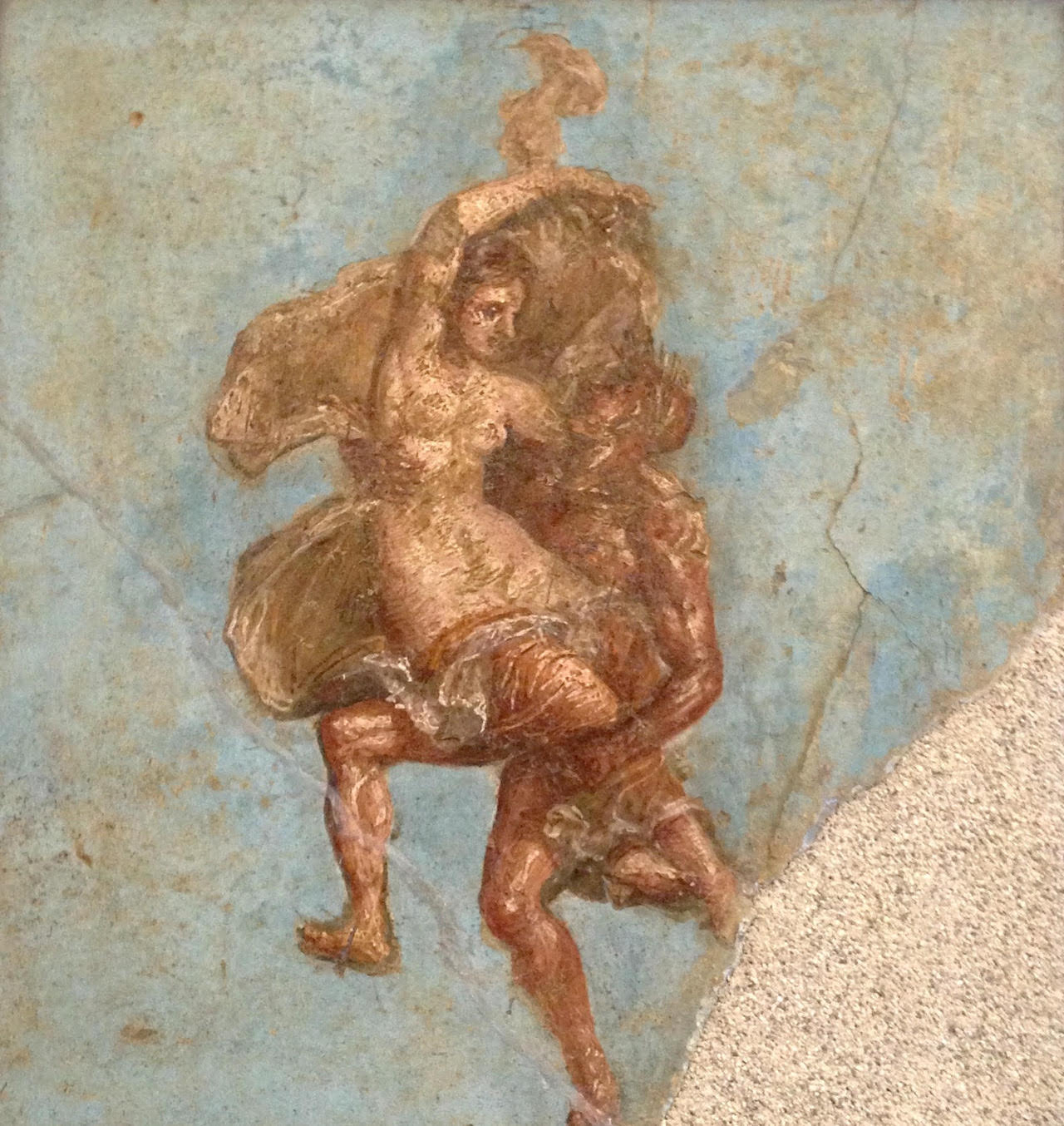
Roman fresco fragment. Museo Archeologico Nazionale di Napoli (photo by the author for Hyperallergic)

NAPLES — In the Museo Archeologico Nazionale di Napoli, there’s a tiny Roman fresco, about a foot square, of a semi-nude woman and man floating against an azure sky, one of many such fragments you’ll find there.

But this one jumped out at me for the symmetry of the design and the solidity of the painting. Although the lower right corner is broken off, taking with it the woman’s left foot, the upwardly spiraling composition is nearly complete: the intertwined, angled lower limbs that erupt into a riot of encircling robes, then consolidate into the arc of the woman’s torso and arm, with a twist of fabric at the top.

The color of the figures shimmers against the bejeweled blue sky; virtually monochromatic, it offers a minimal range of raw to burnt sienna (her pale complexion indicates purity, while he’s endowed with the bronzed skin of a warrior), and the pigmentation feels so dense that the figures come across almost as a bas-relief, an illusion augmented by the scalloped edges of the garments and the finely articulated musculature of the limbs.

The joyful abandon of the woman’s upthrown arm, the jaunty uptick of the man’s right knee and ankle, the pillowy softness of her flesh, the sweaty sinuousness his muscles, and the locked, blinkered gaze they share all bespeak a euphoric eroticism. Because the man’s left foot is cut off at the toe by the painting’s frame, we can’t be certain whether the couple is meant to be planted on terra firma or floating on air. Nevertheless, the welling of emotion they generate and the ecstatic buoyancy of their connection seem designed to upend the law of gravity.

Francisco José de Goya y Lucientes, “Mirth” (c. 1819-23), brush and black and grey ink with traces of red chalk and scraping, 237 x 148 mm. The Hispanic Society of America, New York. The work was recently featured as part of the Courtauld Gallery’s “Goya: The Witches and Old Women Album” exhibition (photo © and courtesy the Courtauld Gallery) (click to enlarge)

While looking at this painting fragment, my mind kept returning to “Mirth,” the most well-known drawing of Francisco José de Goya y Lucientes’ Witches and Old Women album (ca. 1819–1823). There are uncanny similarities between the two artworks, done 1800 years apart: the upper sections of the figures create similarly stacked, swelling forms, while the lower halves terminate in triangular constellations of feet. And, like the Roman lovers, they’re magically afloat.

But there are also inversions — in the Goya, the man is above the woman (whose kicking right foot is an eerie match for the Roman warrior’s) and while he appears to be looking at her, she seems to have trained a sidelong glance on us. Most significantly, the couple in Goya’s drawing, though apparently as ecstatic as the pair of Roman lovers, are in advanced old age, their toothless mouths twisted into unsettlingly grotesque, weirdly innocent grins.

The man in the Goya is wearing a monk’s cowl and robe, imparting the sense that his bond with the woman is a form of forbidden love. Still, there seems to be no guilt or surreptitiousness tainting their relationship; for them, there’s nothing to be ashamed of. Another way of looking at the image is as a paean to platonic love, a condition necessitated by the couples’ age and social positions, but an idealistic take doesn’t fit the historical circumstances.

The sheets of the so-called Witches and Old Women album were done toward the end of Goya’s life, when he was pushing 80 and had already seen the world go to hell in a hand-basket. The visions he conjured in his paintings, drawings and prints constitute an indelible record of the failure of the Enlightenment, which had invested most of its intellectual capital in the Apollonian ideals of Ancient Rome.

But those ideals were the flip side of a Dionysian urge toward madness and savagery, expressed in gladiatorial games and a virulent pursuit of empire. What’s remarkable about the Roman fresco and the Goya drawing is the resolution they manage to achieve between the warring impulses at work in their respective cultures.

The fresco is beautifully sublimated in its careful geometry, and exquisitely carnal in its depiction of flesh. Goya’s drawing, with its light-filled pools of brushed ink wash, feels completely non-judgmental, a testament of tolerance and acceptance from someone who knew firsthand the idiocy of kings, wars and inquisitors. His monk and old woman, united in midair, radiate both joy and folly; they’ve found their shred of happiness and, despite the opprobrium that is likely heading their way, are unabashed about latching onto it.

07 Jun 07:40

elizabeth bentley slurpy throatsluts

by admin

slurpy-throatsluts-elizabet-bentley-082slurpy-throatsluts-elizabet-bentley-084slurpy-throatsluts-elizabet-bentley-085slurpy-throatsluts-elizabet-bentley-087slurpy-throatsluts-elizabet-bentley-086slurpy-throatsluts-elizabet-bentley-088slurpy-throatsluts-elizabet-bentley-089slurpy-throatsluts-elizabet-bentley-090

Originally posted 2015-06-06 09:01:01. Republished by Blog Post Promoter

elizabeth bentley slurpy throatsluts source: droolingfemme.

07 Jun 07:39

Sexy, Satin Surfaces: Paintings from the Dawn of the Dutch Golden Age

by Natasha Seaman
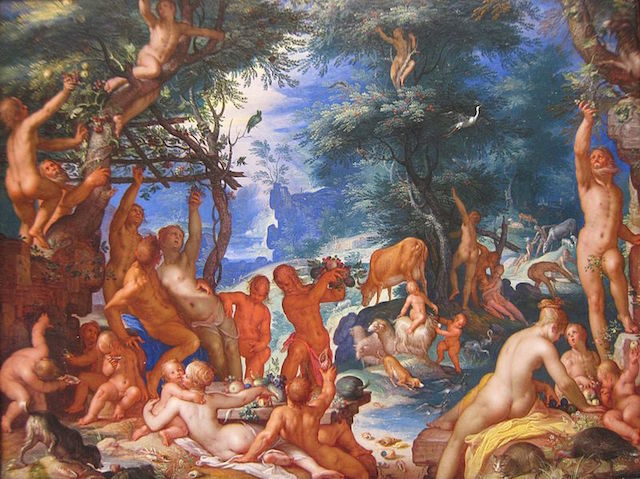
Joachim Wtewael, "Golden Age" (1605), oil on copper, 22.5 x 30.5 cm. Metropolitan Museum of Art, New York (via Wikipedia)

Joachim Wtewael, “Golden Age” (1605), oil on copper, 22.5 x 30.5 cm. Metropolitan Museum of Art, New York (via Wikipedia)

On its own, a painting by Joachim Wtewael can seem like a two-dimensional manifestation of an absurdly complex gâteau — gorgeous, delicious, but perhaps best taken in in small servings. Gathered together in critical mass in the exhibition, Pleasure and Piety: The Art of Joachim Wtewael (Utrecht, Centraal Museum, traveling this year to Washington, DC and Houston, Texas), however, the paintings’ immaculate surfaces and fervid sensuality make an intoxicating but satisfying meal.

Wtewael (1566–1638) lived in Utrecht, the Netherlands in the early part of the seventeenth century when it was a hotbed, along with Haarlem, of a belated Northern interpretation of Italian Mannerism. Wtewael (imagine an “o” in front of the first W for an approximation of the pronunciation) reveled in the style’s artifice and intricacy for his entire career, long after the frank naturalism influenced by Caravaggio took over in Utrecht. His paintings certainly found patrons, but Wtewael’s whole buoyant enterprise was also kept afloat by his family’s lucrative trade in flax.

Wtewael often painted on copper, mostly on pieces about the size of a half a sheet of office paper. Copper doesn’t expand or contract with heat or humidity like wood or canvas, which means the painted surfaces can remain pristinely free of cracks or crazing. The metallic support, though invisible, also seems to give a special enameled richness to the paint, which Wtewael applies without visible brushstrokes. The painter wields this meticulous effect in Christian, mythological, and secular subjects, favoring scenes with multiple figures, the more nudes the better.

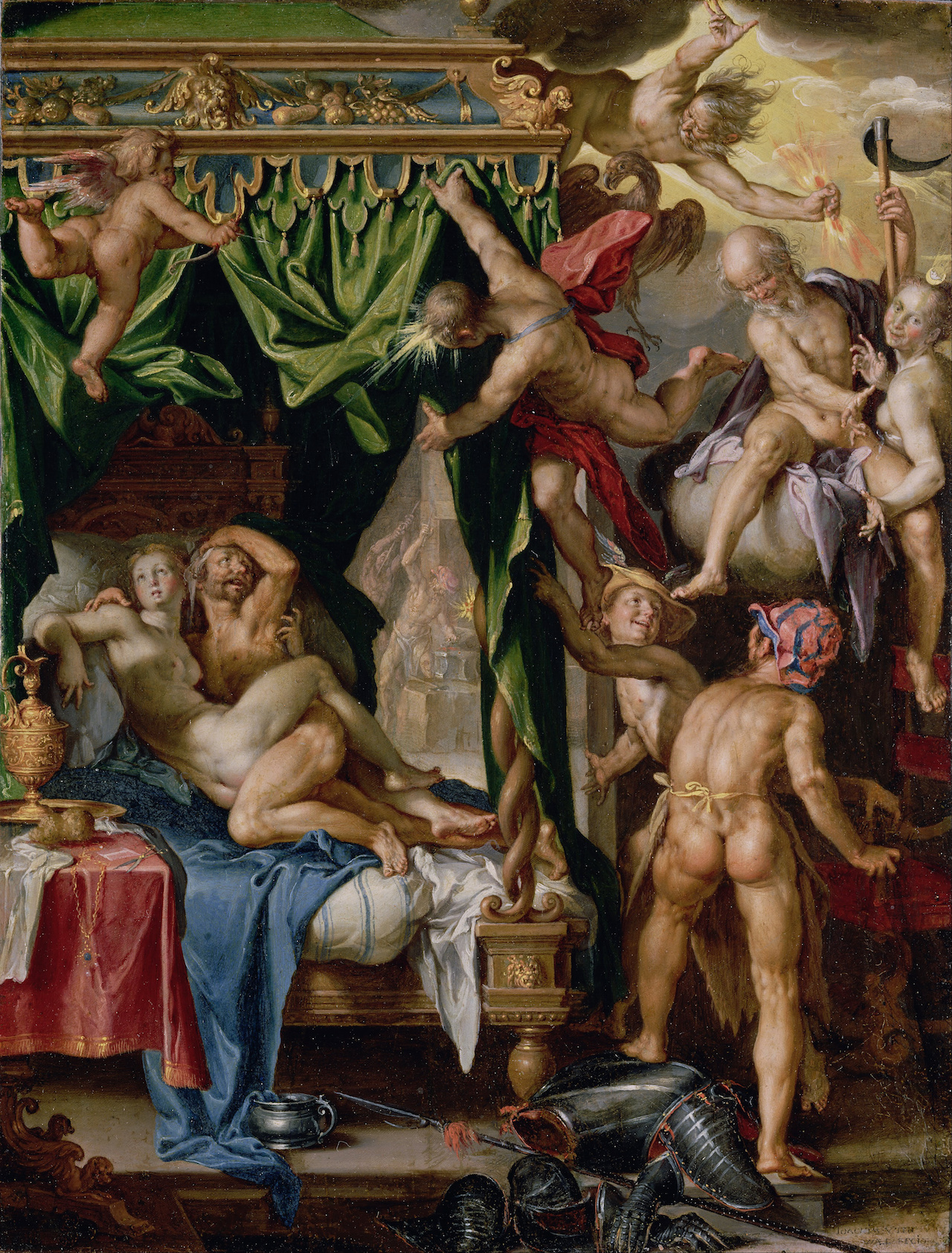
Joachim Wtewael, ​”Mars and Venus Surprised by Vulcan” (1601), oil on copper, 21 x 15.5 cm. Mauritshuis, the Hague (via wikimedia.org)

Painting some subjects repeatedly but not repetitively, Wtewael juggles variables like setting, costume, and pose to create novel compositions with different inflections of meaning. A favorite motif was the love triangle of Venus, Mars, and Vulcan. In one version (Mauritshuis, 1601), the dynamic is about vision and exposure. In a richly appointed bedroom, Mars is wedged between Venus’s marmoreal loins. He looks up and shakes an angry finger at Mercury, who betrayed their affair to the other gods. Mercury stares back, as he lifts the acid-green canopy of their bed of passion, his watermelon pink hat flaring with the righteous indignation of a tattletale. From airy vantage points to the left, Jupiter, Minerva, Diana, Luna, and Saturn get their glimpse at the entrapped lovers. The wronged Vulcan enters from the viewer’s space, his leather apron flapping, his bare buttocks clenched and blushing with effort and pique. He is about to throw an immobilizing magical net over the pair, and as such stands for both artist and viewer, freezing the couple in time to gaze at their betrayal.
WtewaelMarsVenusGetty

Joachim Wtewael, “Mars and Venus Surprised by Vulcan” (1604-1608), oil on copper 20.3 x 15.9 cm. Getty Museum (via Wikipedia)

In the version from the Getty collection (1604–08), the theme has become more salty and corporeal. The central dynamic of the painting is now the juxtaposition of Mars’ and Venus’ tangled limbs and, in a gap between the curtains of the bed, a view into Vulcan’s workshop. Vulcan is depicted twice; once in the foreground, again preparing to toss his net, and once in his workshop, the striking of his hammer on the hot metal evoking the couple’s copulation. To confirm the dirtier inflection, a spilling water jug under the bed in the Mauritshuis painting is replaced with a chamber pot, into which has dropped a corner of the bedspread.

Whatever the subject, Wtewael seems intent upon maximizing the illusion of three dimensionality. Compositions drill deep into pictorial space through carefully orchestrated shifts in value: foregrounds, often strewn with telling objects (such Mars’ discarded armor or Vulcan’s dropped hammer), are darkened with bands of shadow. The middle ground is brightly illuminated; this is followed by another swath of shadow, and then views, painted in filmy pastels, into the far distance. This effect is particularly strong in “The Adoration of the Shepherds” (1601, Staatsgalerie, Stuttgart), where Wtewael pierces the dark stone wall of the crumbling barn behind the grouping around Christ with three windows, revealing scenes in the far distance, such as tiny shepherds receiving the news of Christ’s birth from an angel the size of a mosquito.

Along with these compositional techniques, the figures themselves seem to be creating space with their gestures, pushing outwards as if against a clear but confining film. Again, in the “Adoration”: with the exception of the Christ child, who reclines serenely in the center of the painting, everyone’s limbs seem to be in a state of hyperextension: Joseph, giving water to his donkey, balances on one knee and the ball of his foot, arms tracing an elliptical C, and Mary, gazing at the baby, splays her arms and fingers in a spasm of devotion. Two beefcake shepherds, their clinging rustic clothing exposing their shoulders, chest, and back, appear to have just completed a tumbling run to land in adoration beside Christ.

Wtewael also painted big, such as his “Perseus and Andromeda,” (1611, Louvre) — though surely, for this depiction of the myth, that habitual order of names should be reversed: Andromeda luminesces in most of the right foreground while Perseus and the dragon float in the middle distance like a pair of fighting betta fish. The transition of Wtewael’s technique from tiny sheets of copper to large-scale canvas is frictionless; the pictorial elements simply enlarge but lose no delicacy. There is, however, room to reveal yet more descriptive detail, such as the blue network of veins in Andromeda’s breasts, the sprinkle of water from the dragon’s snout, or the meticulous reportage on the features of the exotic shells that fill the foreground.
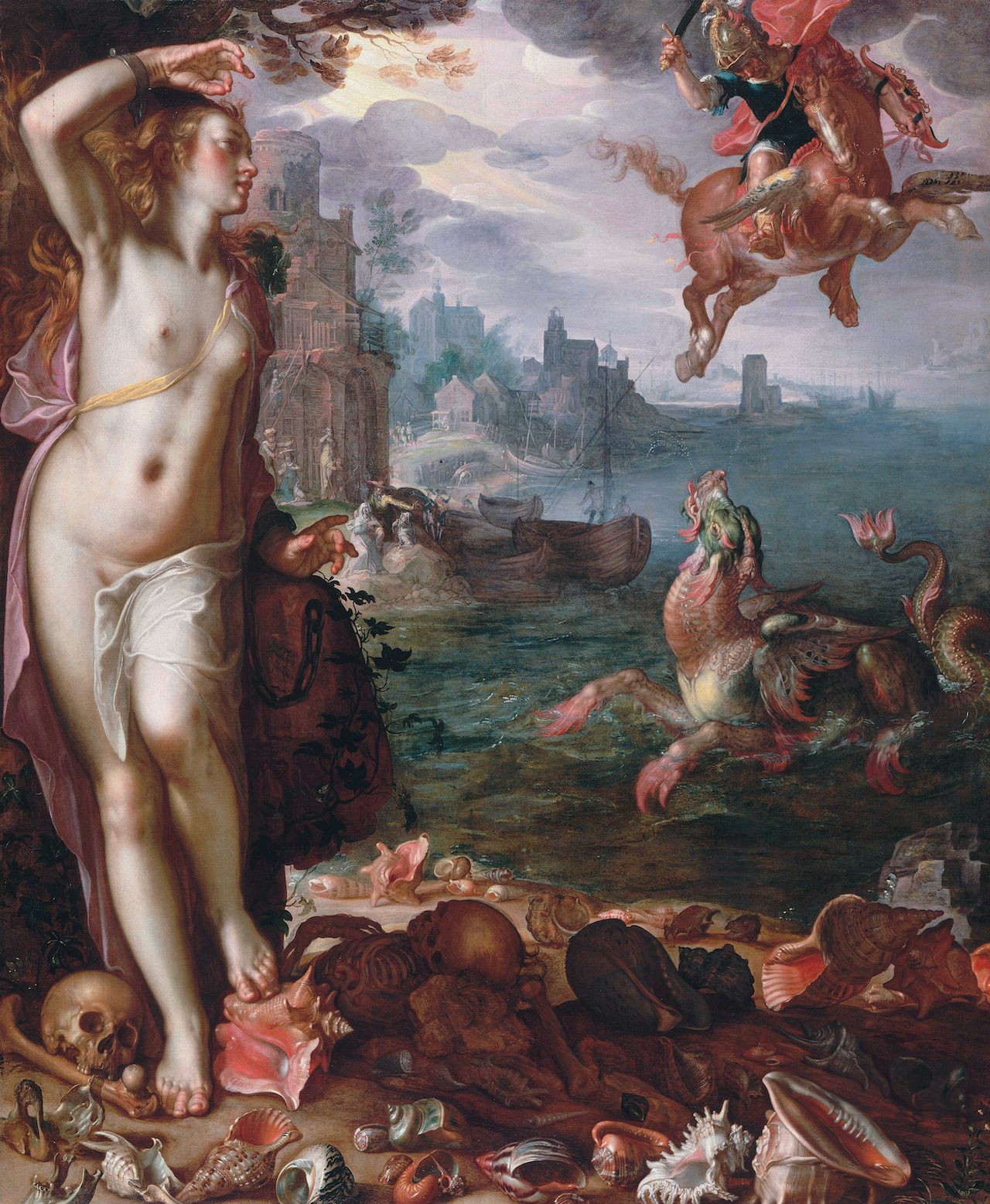
Perseus and Andromeda, by Joachim Wtenwael

Joachim Wtewael, “Perseus and Andromeda” (1611), oil on Canvas, 180 x 150 cm. Louvre, Paris (via wikimedia.org)

Looking at his facture on a large scale, it is also possible to appreciate that, despite their satisfying volumetric solidity, there is no hard linear edge to his forms. The edges don’t resolve in a tight line, but modulate into a dark blur, as if the figures were made of a dense mist. Rather than circumscribed contours, it is their satiny sheen that lends them their startling sense of physical presence. Returning to the copper panels with new attention, one sees the same effect there, miniaturized.

Most stunning, perhaps, is the sheer copiousness within the images. The clear winner in this category is the different versions of “The Wedding of Peleus and Thetis,” which each present more than a hundred gods and goddesses in as many different poses. The subject gets competition from such paintings as “The Golden Age,” (1605, Metropolitan) a depiction of the idyllic life of the always-lost past, where satiny-bottomed women tend to babies while well-muscled men pluck food from trees. When he turns to a scene more connected to daily life, such as “Kitchen Scene with the Parable of the Great Supper,” (1605, Berlin), the many figures are replaced with just as many slithering piles of fish, dead game strung from shelves, and heaps of vegetables, all of which manage to radiate only marginally less sensuality than the nudes.
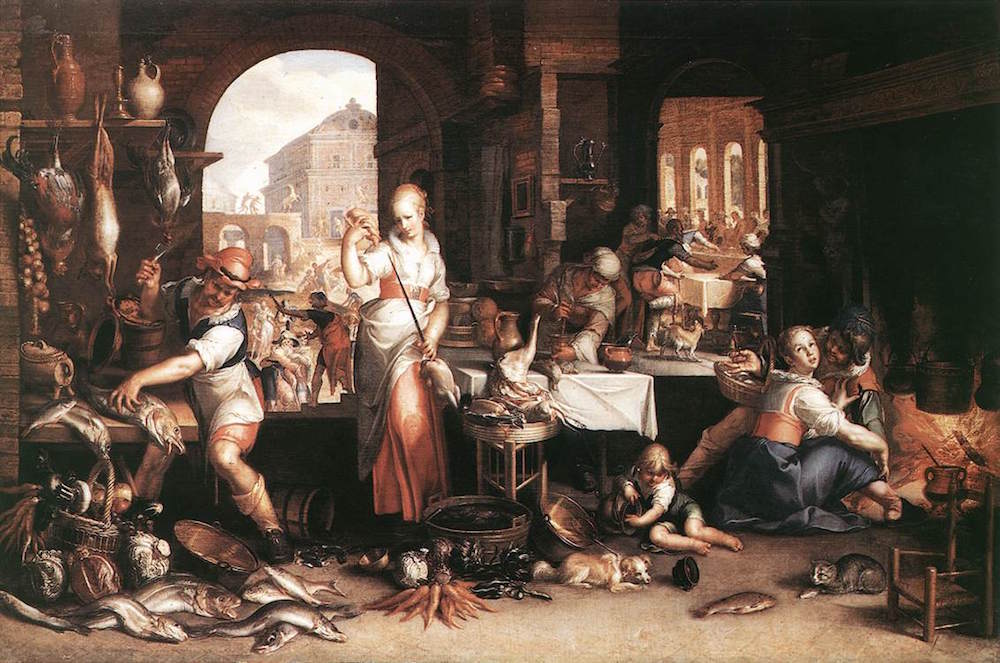
WtewaelKitchenScene

Joachim Wtewael, “Kitchen Scene with the Parable of the Great Supper” (1605), oil on canvas, 65 x 98 cm, Staatliche Museen zu Berlin, Gemäldegalerie (via web gallery of art)

Despite the paintings’ charms, this is the first major museum exhibition of Wtewael’s works. It is not just the intimidating pair of consonants that begins his last name that has hindered his appreciation in the art world. From the perspective of evolutionist art history, Wtewael’s stylistic consistency looks like a fatal lack of engagement with the art of his time, like a society lady clinging to her bouffant hairdo after shags have become the norm. Recent art history has also viewed artistic angst as a marker of authentic creation. Wtewael’s only dilemma seems to have been to decide which mythological figure gets the most outlandish hat, or on which cast-of-thousands historical scene to spill his talent. This luscious show is as good a reason as any to ignore that perspective. Bring your magnifying glasses and your appetite.

Pleasure and Piety: The Art of Joachim Wtewael opens at the National Gallery of Art (National Mall between Third and Ninth Streets, along Constitution Avenue NW, Washington, DC) on June 28 and continue through October 4; from there it will travel to the Museum of Fine Arts, Houston, where it will run from November 1, 2015 to January 31, 2016.


07 Jun 07:38

Photo