The Galata Tower by Moonlight (1845)
Ivan Aivazovsky -

Artist Matthew Rangel hikes cross-country and through the mountains, exploring and drawing along the way. He then mixes his drawings with maps and photos from history for unique results and perspective.
My location drawings of large expanses throughout my journey serve to reinforce our land-based visual codes by the activity of transcribing the land through yet another system of careful measurements. This practice deepens my personal connection with the land, lending a sense of embodied awareness of its natural and/or unnatural characteristics. I allow the process of discovery from gathering extensive research to play out in the final compositions, where maps I have gathered are combined with my location drawings to set the stage to depict personal encounters and experiences that re-present the land through a framework that speaks of the constructs humans place on the land which, in turn, inform our experience.
[via Socks]
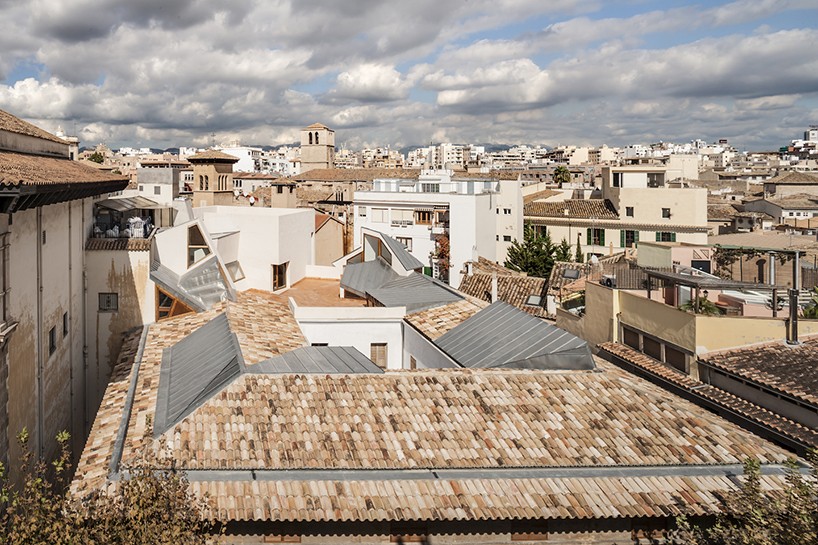
in the heart of palma de mallorca, light and new circulation has given the 14th century building a new lease of life.
The post flores & prats + duch-pizà transforms aristocratic house into cultural center appeared first on designboom | architecture & design magazine.
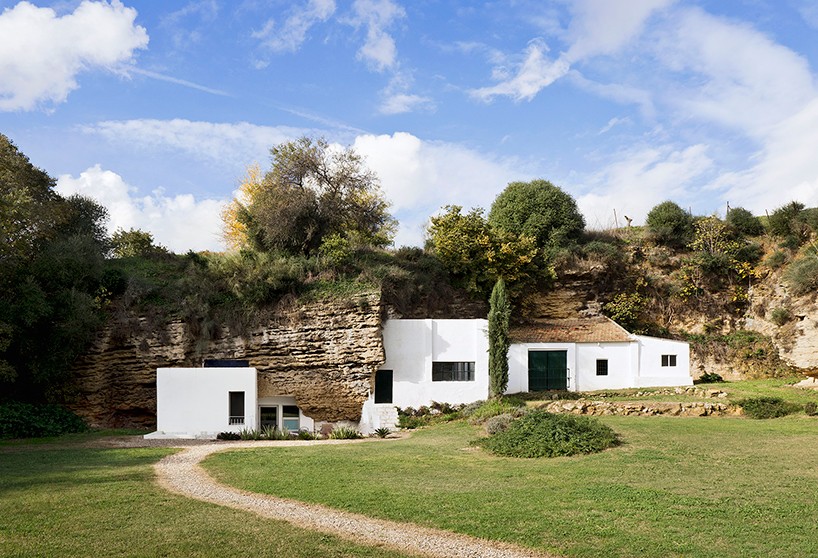
the interior is sculpted around the natural formation, creating a strong sense of enclosure combined with spacious and light filled spaces.
The post ummo estudio embeds cave home into limestone rock appeared first on designboom | architecture & design magazine.

Film Review
Back to the Future

Infographics devolved a bit in recent years, but there was a time the term wasn’t immediately associated with content marketing. (And there is still plenty of good infographic work that actually informs.) National Geographic is one such source of inspiration, and now you can get a best-of collection in book form that spans over a century.
With an essay by Nigel Holmes, charting the evolution of National Geographic over the decades and its pioneering use of graphics, as well as four fold-outs mimicking original pull-outs or inserts in the magazine, the book stands as a defining record of one of the world’s best-known publications as much as it is a beautifully presented repository of discovery and learning.
Tags: book, National Geographic

There was a time when the best way to get a view from above was to hop into a hot air balloon, which eventually led to the so-called “balloon map.” Cara Giaimo for Atlas Obscura starts the story with a ballooner named Thomas Baldwin.
In an age of transatlantic flights and Google Earth, Baldwin’s suggestions seem a bit quaint. But in his time, when almost everyone was stuck on the ground, Baldwin’s attempts to pin down an accurate sky-view were heroic. Over the following century, entrepreneurs, military spies, and tourist boards alike would follow his lead, transforming some of the world’s most vital views into lovely, quirky “balloon maps.”
Hand-drawn, detailed maps and graphics like this — before computers — always blows my mind.

Rhinoceros, 1515 - Alberto Durero
Durero drew this Rhinoceros without even seen the animal before and using a written description from Valentim Fernandes

Astonishing Saturn, observed by the Cassini space probe on April 29, 2014.


Colombia-based artist Diana Beltran Herrera (previously here and here) has been fascinated by birds since she was a child, however it wasn’t until four years ago that she started working with their forms. Her incredibly lifelike depictions are built entirely out of cut paper and imitate a variety of bird species from all over the world. Each iteration of her work we have followed with intrigue, including one of her latest projects which incorporates her sculptural pieces into oversized postage stamps from countries which she has always admired.
“I always felt inspired by postage stamps as they are little windows of the world,” said Herrera to Colossal, “specifically those that contain birds which are often traveling around the word. I have collected a few and I felt that I wanted to open those stamps to a much more realistic scale to learn more about that particular animal and its landscape.”
Interested in wildlife far beyond its aesthetics, Herrera is also concerned with the ethical treatment of animals, especially when it comes to the illegal wildlife trade of birds happening in her country and abroad. You can see more of her paper sculptures of birds, fruits, and flowers on her Instagram and Facebook.


Airstage ha construido este enorme avión de helio, controlado a distancia, que es una réplica en miniatura de un Airbus A320. Tiene una envergadura de 5 metros y pesa menos de medio kilo.

Es espectacular verlo volar por el interior del pabellón de esta feria de modelismo de Stuttgart, en Alemania.
Visto en LaughingSquid