Another year, another set of incredible designs from the A’ Design Awards and Competition! The winners this year set a benchmark for the years to come. We’ve mentioned before how winning a design competition puts a feather in your cap, but winning the A’ Design Award can propel not just your career, but even your designs forward, helping them reach a larger audience of patrons and design enthusiasts (and a lot more!).
We’ve hand-picked ten of our favorites from this year’s list of winners spanning categories such as Product Design, Lighting Design, Architecture, Transportation, Medical, and Social Design. Scroll down below to have a look at what’s making the waves this year in the design circuit! And don’t forget to register below to participate in the Competition next year! You can even nominate your favorite designs and help them secure an A’ Design Award!
YD Handpicks: 10 Winning Designs from A’ Design Awards 2016-17
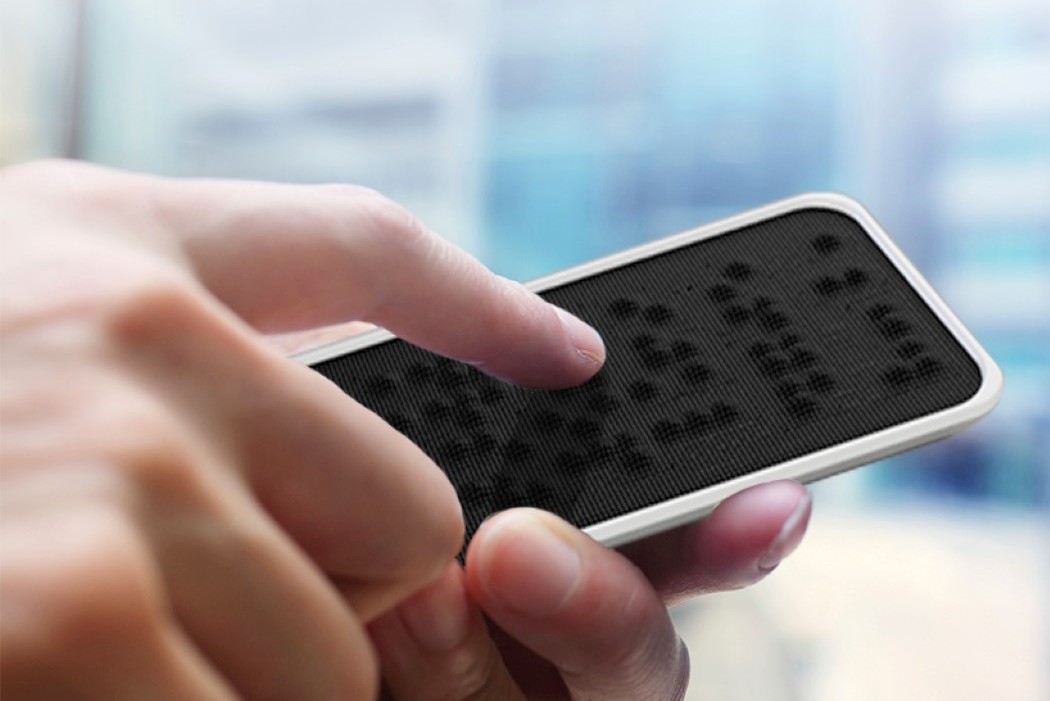
The Textura Braille Smartphone by Isa Verde didn’t just win a prize, but it also won our hearts a while back when we first covered it. Read more about it here!
Say hello to this shape-shifting chandelier. The inMOOV Adjustable movable lamp by Studio Lieven is a marine-life inspired ornate origami lighting that can be adjusted to take on different avatars, just with a slight push!
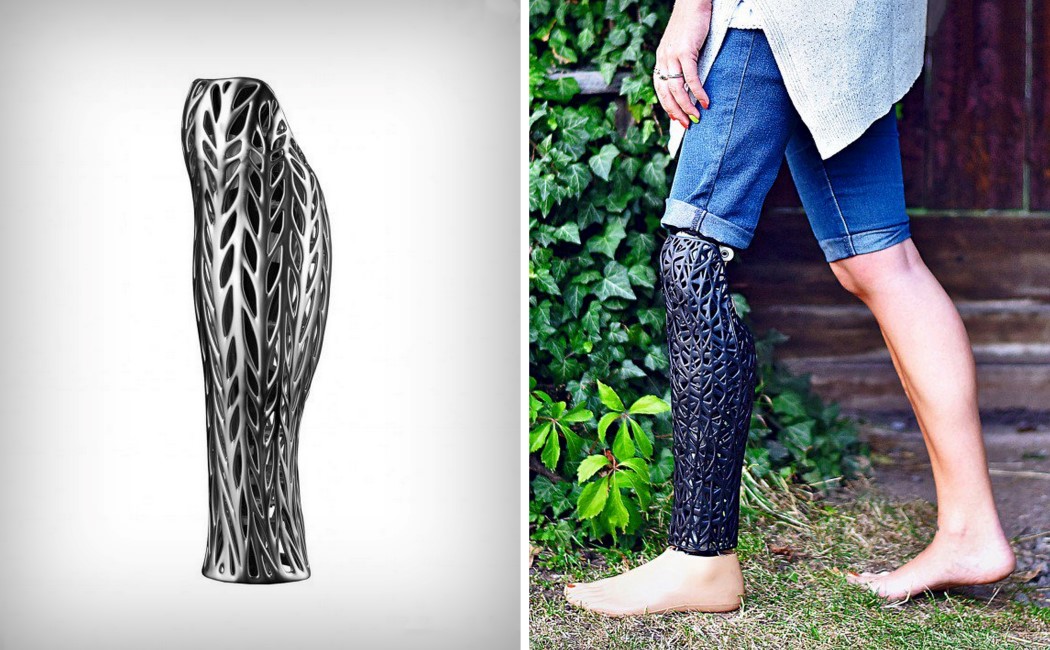
It was a no-brainer that the Art4leg 3D printed prosthetic by Tomas Vacek would make it to this list. I kind of like it more than the leg I already have! Plus, the leg’s pattern is designed to look pretty while staying light and taking a lot of vertical stress.
The Only Clock by Vadim Kibardin is rather simple. It combines the beauty of a frame with the functionality of the clock. Not only can you read the time in a simple format, you can even look through the clock at the wonderful cityscape!
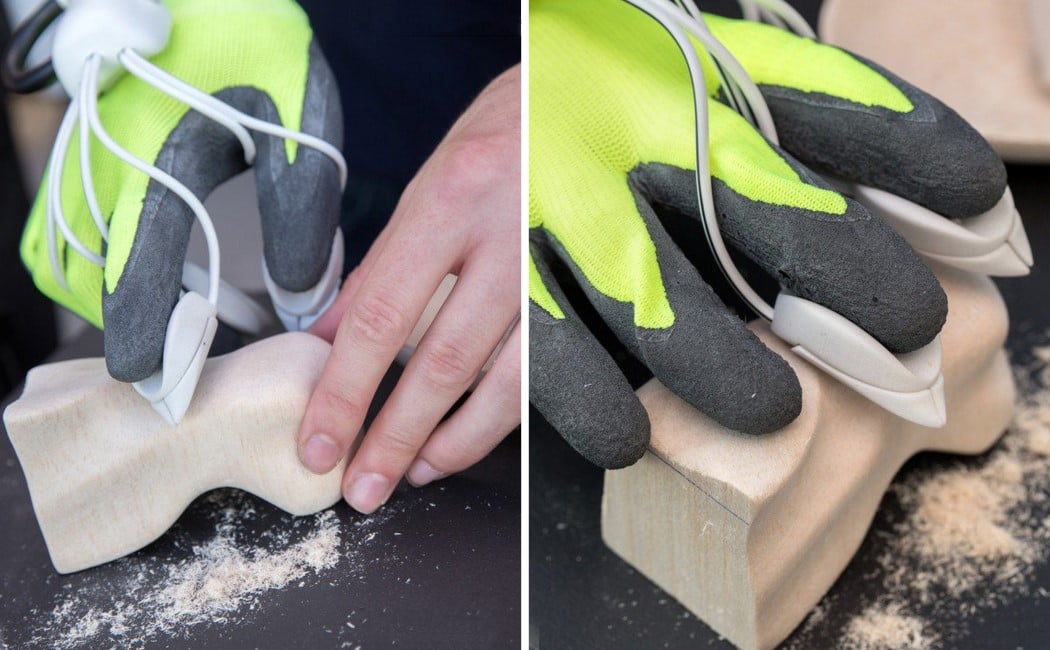
If 3D printing is revolutionizing manufacturing, the Happaratus sculpture tool by Morten Grønning is rapidly changing model-making. Imagine being able to sculpt with your fingers. That’s what the Happaratus does. Small grinding and sanding machines strap to your fingers, allowing you to sculpt unbelievably complex and organic surfaces by just running your fingers across a material.
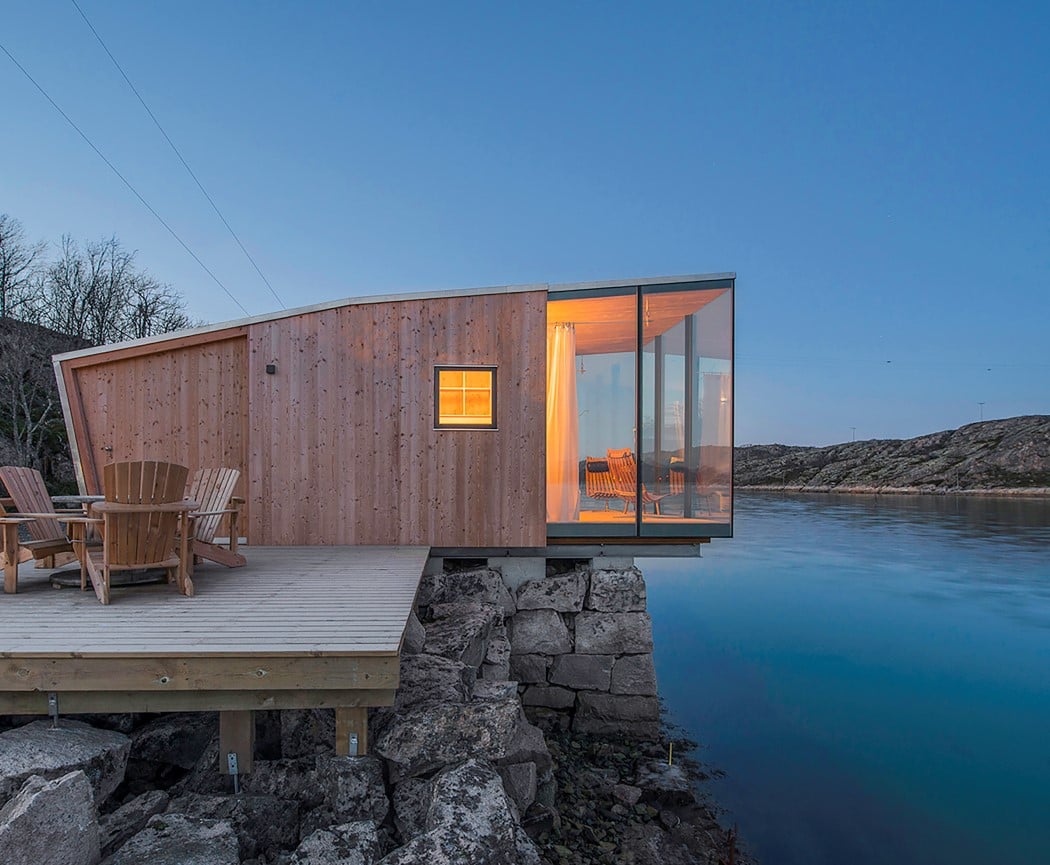
You don’t require much therapy at the Manshausen Wellness Spa by Snorre Stinessen. It cantilevers over a precipice, giving you an unconditionally beautiful look at the vast and calming sea. That’s pretty much all the therapy you’d need!
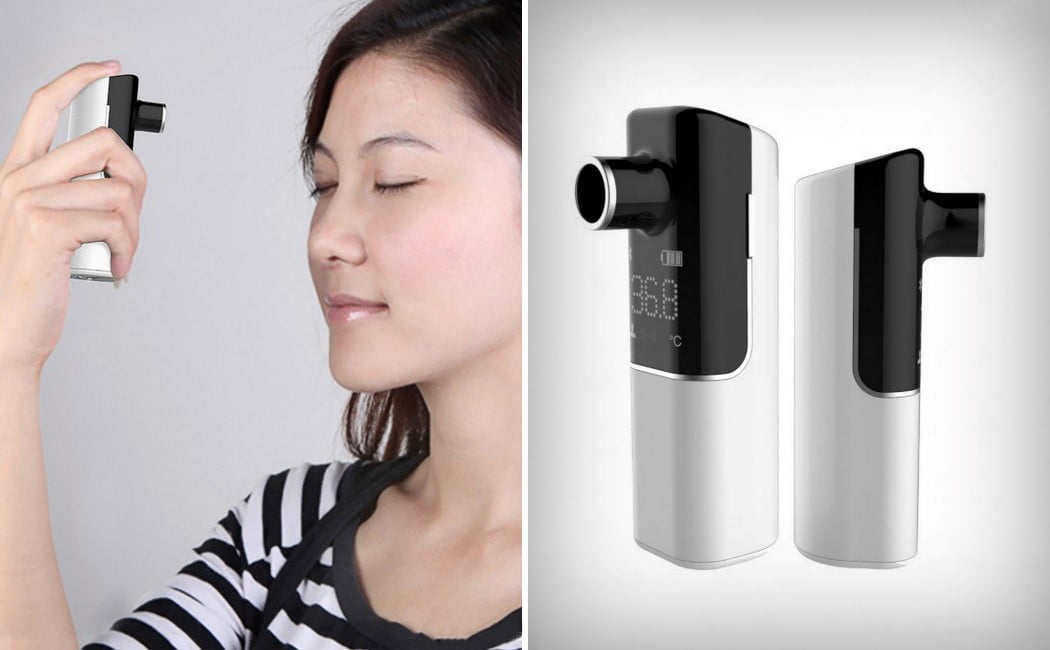
Forget what you knew about thermometers. This Non Contact Thermometer by Tobia Repossi can actually measure your body temperature accurately to 1/10th of a degree… without even touching you!
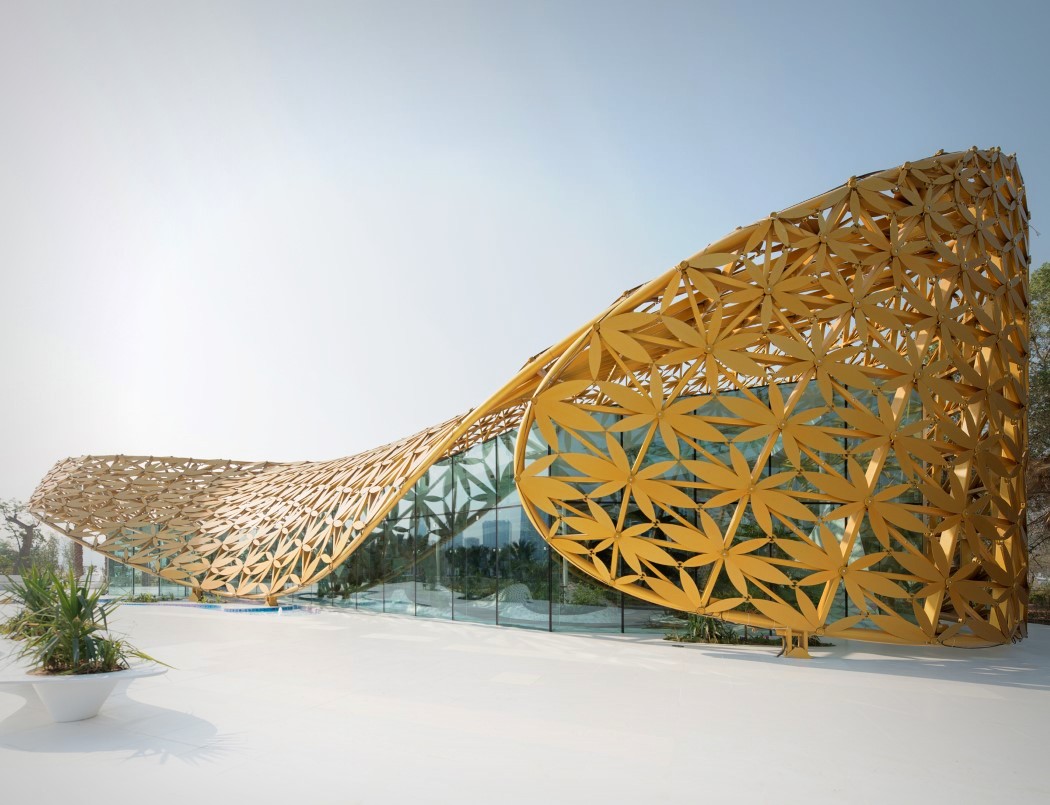
This sheet-metal ‘blanket’ on the Noor Island Park by 3deluxe architecture combines intricate Arabian ornamentation along with parametric surfacing. The result? A beautiful, organic, hypnotic piece of architecture!
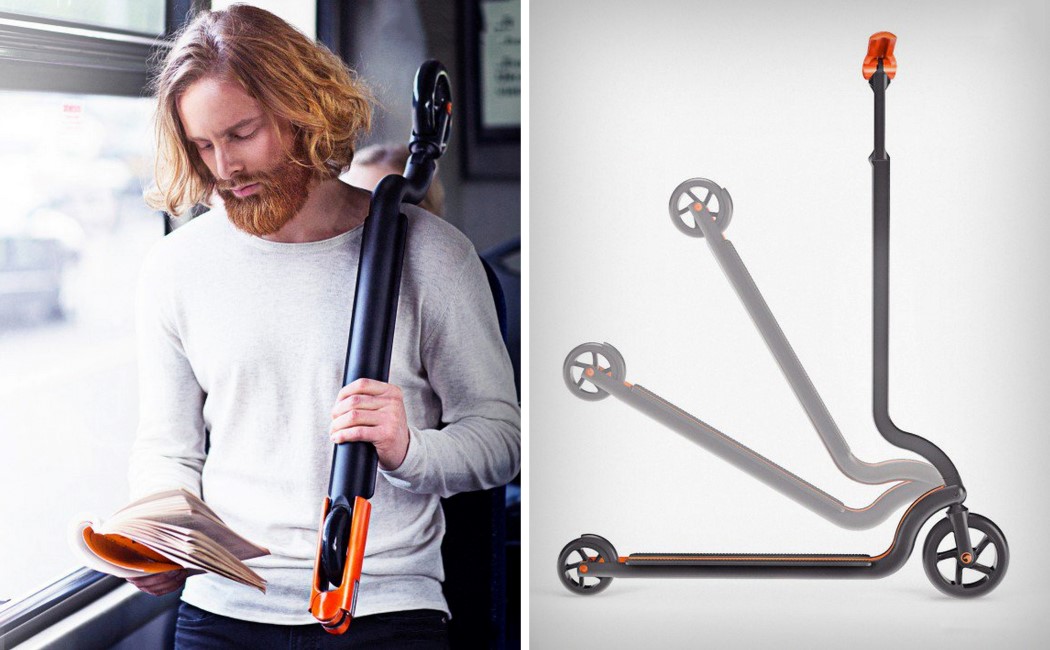
The Raven Kick scooter by Ignas Survila may look familiar. That’s because we wrote about it right here after it won the Red Dot! Now armed with an A’ Design Award, this ultra-portable scooter is ready to set your streets on fire!
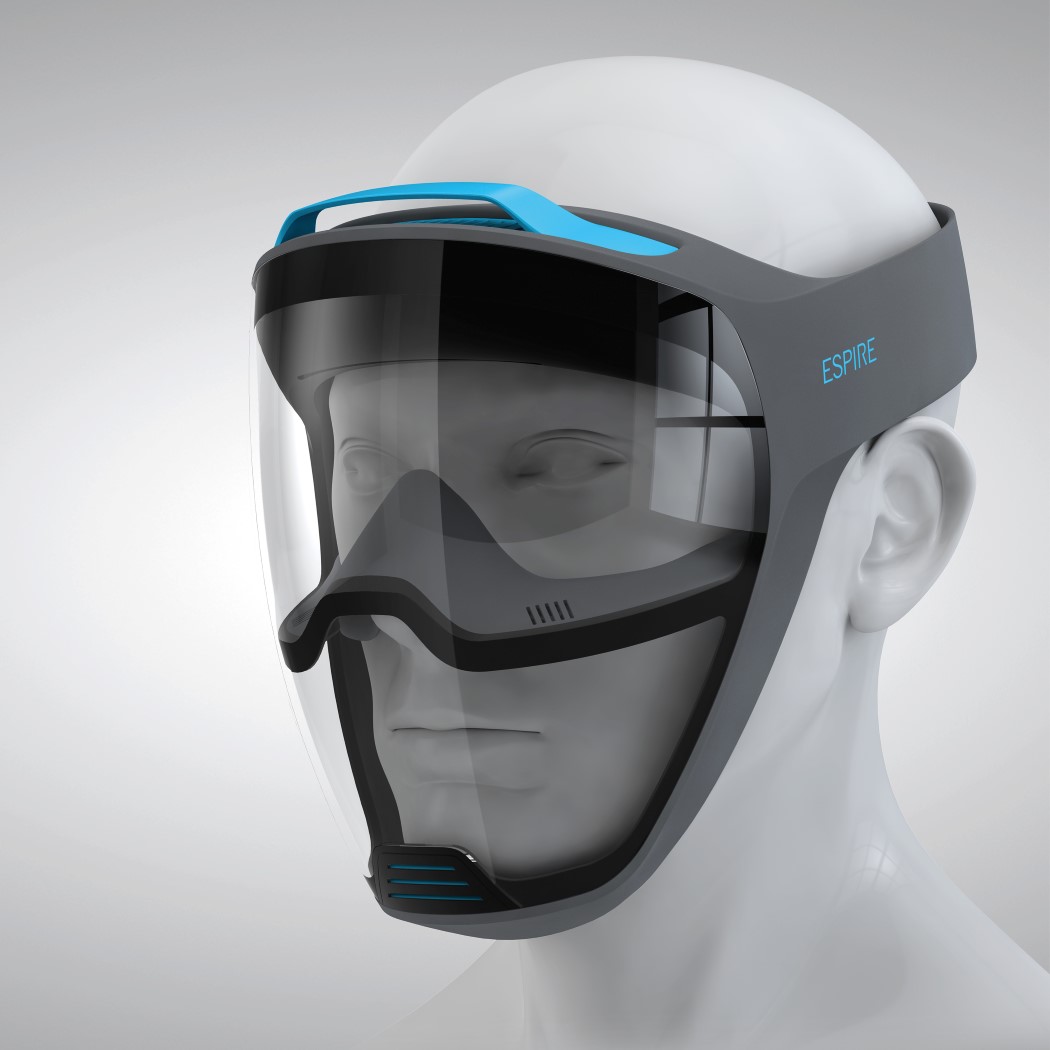
The Espire Full Face Gas Mask by Carlos Schreib is exactly what safety masks should look like. Not only does it purify the air going into your nose and mouth, it even guards your eyes from smoke, dust, and harmful chemicals. What’s more, it cleverly creates a wall between the breathing zone and the viewing zone so you don’t have to worry about your visor fogging up with your breath!
L’artiste japonais Takahiro Iwasaki réalise ces étonnantes constructions architecturales miniatures. Spécialiste de l’infiniment petit, il avait précédemment sculpté des villes microscopiques dans des rouleaux de ruban adhésif. S’inspirant de l’histoire industrielle du Japon, la série Out of Disorder (Brushes of World) reproduit des tours de radios, des pylônes électriques, des grues et autres engins de chantier. Chaque création est composée de poils de brosses à dents donnant ainsi vie à des structures minuscules à l’équilibre précaire.
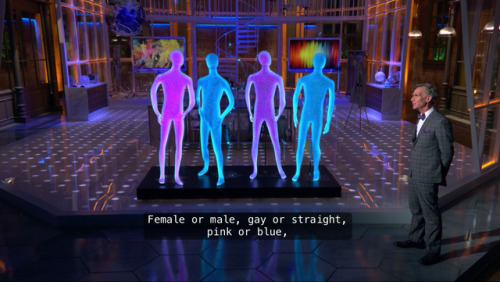
The best part though is all the rage and confusion in the notes from conservatives who are now convinced that Bill Nye is a liberal brainwashing puppet.
And all constantly harping on the fact that “his degree is in ENGINEERING” as if this actual limits someone’s understanding of any other sciences.
Also, Bill Nye doesn’t write 100% of his own scripts- he consults with other scientists. If he doesn’t know something, he asks someone who does. Yeah, his degree is in engineering- but it’s not his degree that makes him an effective producer, it’s his stage presence, his carefully crafted Science Guy persona, his enthusiasm, and his ability to communicate complicated topics in an approachable way. I have sat through talks by multi-PhDs in several fields, and virtually none of them have the charisma Bill Nye brings to the screen. That’s SO important when you’re a science educator.
This L.A. based family owns a property of 1/10 acre where they grow over 400 species of plants, raise their own poultry, and even have their own beehive. Growing your own food means saving a lot of money and knowing where your food comes from and how it is grown. Would you redesign your yard like this? 🌽🥒🎃🐔🍯
Carson Davis Brown’s “Mass” project puts site-specific, color-based installations in big box stores and other “places of mass” without permission. These visual disruptions take otherwise disparate objects and groups them into temporary sculptures. The project has taken the artist to stores across the U.S. A primary charge for the project is to make passers-by more aware of their environment by recontextualizing the items around them.
“Mass is a site specific installation project about creating visual disruptions in places of mass (to date: big-box stores, super-centers, etcetera.). At an intersection between Street Art and Land Art, installations are made without permission, using found materials within the retail landscape. The works are made, photographed, then left to be experienced by passersby and ultimately dissembled by location staff. Mass works are also initially exhibited in a consumer landscape. Printed, framed and exhibited in-stores all without permission.”
IKEA have issued a hilarious advert for its $0.99 shopping bag so its customers can rest assured they’ve bought the real deal. The amusing ad is in response to French luxury fashion house Balenciaga’s new handbag which looks suspiciously similar to the iconic Ikea FRAKTA bag.
This was too much comedy for Ikea to process silently. In Sweden, at the urging of its agency partner Acne, Ikea (via in-house shop Ikea Creative Shop) whipped up a print ad and a social post comically explaining to readers how to tell the difference between Balenciaga’s bag and Ikea’s.
The print ad reads:
How to identify an original Ikea Frakta bag
1) Shake it. If it rustles, it’s the real deal.
2) Multifunctional. It can carry hockey gear, bricks, and even water.
3) Throw it in the dirt. A true Frakta is simply rinsed off with a garden hose when dirty.
4) Fold it. Are you able to fold it to the size of a small purse? If the answer is yes, congratulations.
5) Look inside. The original has an authentic Ikea tag.
6) Price tag. Only $0.99.
They added: “Nothing beats the versatility of a great big blue bag!”
I tried to visualize how a disinformation becomes a post-truth by the people who subscribed in a network. We can think this network as a social media such as Facebook or Twitter. The nodes (points) in the map represent individuals and the edges (lines) shows the relationships between them in the community. The disinformation will be forwarded to their audience by the unconscious internet (community) members.
Set the “consciousness” parameter and select a node to run.
Today is Earth Day, celebrated annually on April 22. The first Earth Day occurred in 1970, a little more than a year after this photograph - “Earthrise" - was captured by Apollo 8 astronaut, Bill Anders. The crew was the first to travel beyond Earth’s orbit, yet it was Anders description of the mission that says it all: “We went to the moon, but we actually discovered Earth.” /// As you might imagine, this day means quite a lot to us at Daily Overview. Our project was created with the purpose to inspire greater appreciation for our planet and greater awareness of what we are doing to it and how urgent it is to protect it. Today is an opportunity to reflect on our shared home, this place we all inhabit, floating in an infinite sea of darkness. How grateful are we to occupy such a remarkable place. Wherever you are and whatever you do, we hope it is a beautiful day. Instagram: http://bit.ly/2p35wE0 Image courtesy of NASA
In case you didn’t hear, California had a bit of a drought problem for the past few years. We complained about not enough rain constantly, and we finally got a lot of it this year. Now we complain that there’s too much rain (because you know, we have to restore balance). On the upside, the state looks a lot greener and less barren these days. David Yanofsky for Quartz has got your satellite imagery right here.
The sound of a rover riding over a jagged Martian rock is similar to the racket of slowly crunching soda cans. How do we know? NASA engineers have rolled wheels across terrains similar to those that have been found on Mars.
At NASA Jet Propulsion Laboratory (JPL) in Pasadena, California, engineers have constructed an elaborate arena called the Mars Yard, a 21 by 22 meter sand lot filled with obstacles that simulate the Red Planet. This is all to test what makes the rover on the Mars2020 mission physically rove: the wheels.
JPL engineers Patrick DeGrosse and Chris Salvo are working to create rover wheels that can endure the diverse range of terrain on the Red Planet. SciFri visited JPL and witnessed the sights and sounds of rover wheel destruction. Learn more here.