

    
|
|
|

by uaiHebert
 The whole point of Windows 8 was to make Microsoft's aging OS easier to use on touchscreen devices. Mission accomplished, we'd say (more or less). But now the folks in Redmond have a new challenge afoot: Make Windows 8 equally easy to use on tablets...
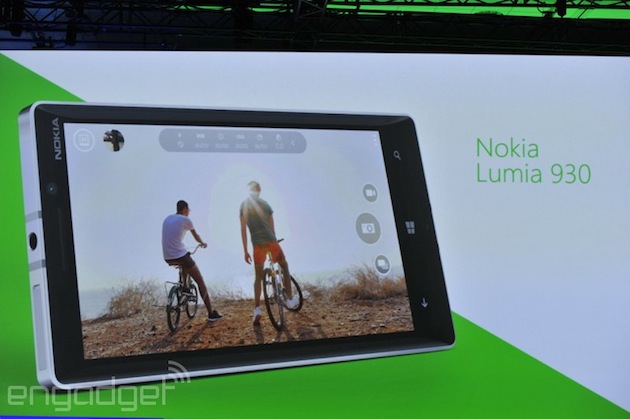 It appears that Nokia isn't coming to Microsoft's developer conference empty-handed. A proposed merger between the two companies is still pending, but Nokia decided to bring in some new hardware regardless. This time, the phone maker has announced...
 Anyone who's played Halo, the iconic first-person shooter based 500 years in the future, knows where Microsoft came up with the name of Cortana, its new voice recognition program on Windows Phone 8.1. Master Chief might be the star of the video game...
 We came away relatively impressed with the Fire TV during our brief hands-on. But we all know that units set up specifically for press demonstrations are hardly the best indicator of how a device will function in the real world. So we immediately...
 Blizzard hasn't really had a presence in mobile gaming... not unless you think the Battle.net Authenticator is rip-roaring entertainment, anyway. However, the developer is giving the category an honest try today by releasing Hearthstone for the iPad....
 Those who visited our Expand events in San Francisco and New York last year already know that Intuitive Surgical's da Vinci robot allows for minimally invasive surgery while still giving doctors the kind of dexterity and control they need to do the...
 Samsung has just taken a big step in its home automation plans by launching its Smart Home service in the US and Korea. That means you can now download an Android app that, in conjunction with Samsung's cloud service, will give you control over...
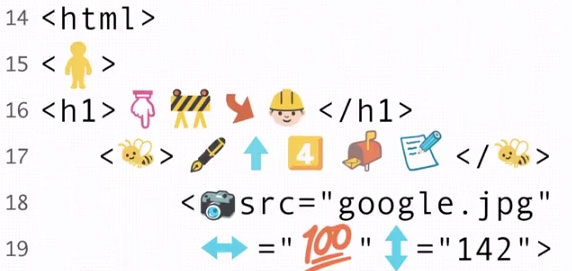 For the last 24 hours (and likely the next 12), excitable company execs have been barraging our inbox, YouTube and your social media networks with their best shenanigans. Love it or loathe it (and you're probably starting to loathe it by now), the...

I’ll take one extra extra extra large pugperoni. No, not the whole pizza, just a slice. Come on bro, I’m on a diet.
 Trust no one.
 Internet security was turned on its ear in December when leaks revealed that the NSA had inserted a back door into a common encryption method from the RSA, a big security provider for remote work access and other major parts of the corporate web....
 Last week Mozilla appointed former CTO Brendan Eich as its new CEO, but the response to that move has centered on something other than its focus on mobile. In 2008 Eich donated $1,000 to support Proposition 8, a ban on gay marriage in California, and...
 When Facebook said it would buy Oculus VR, many eyes turned to Oculus CTO John Carmack. Would Quake's co-creator be happy with the deal when Facebook sees virtual reality gaming as just the beginning? Thankfully, it looks like he's staying put. In a...

Samsung smartphones are all about the features, but one unique capability we didn't hear about at the Galaxy S5's Barcelona launch event is its apparent ability function as a baby monitor. Tracked down by Malaysian site SoyaCincau, the feature, dubbed "Baby crying detector" lives under the Accessibility menu and lets you alert a paired Samsung Gear smartwatch if the phone picks up the sound of a child crying.

|
|
 While Pluto might have been stripped of its full planetary status, thanks to a shift in official definitions, a newly discovered planetoid could actually hint at the existence of a "super-Earth" in the far reaches of our solar system. The ball of...
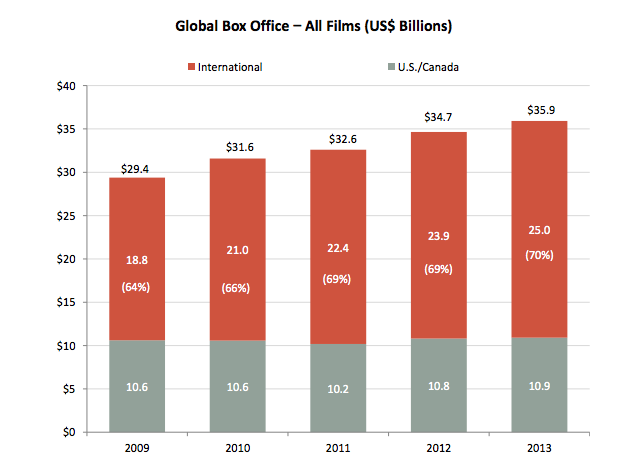
Once again, the "piracy-stricken" motion picture association has had a banner year, with box office revenue breaking all records (as they've done in most recent years). The biggest gains this year come from China -- a market condemned by the studios as a hive of piracy.
Some of the best news in the report is that American movies are seeing success in China, which has become the first international market to reach more than $3 billion in movie sales. The Chinese enthusiasm for US-produced movies comes despite the fact that China continues to restrict the number of foreign-made films that can be released in theaters to 34 imports a year.
But the country at the top of the MPAA's sales charts is also at the top of its piracy target list. Last year, the MPAA placed China on the list of the “most notorious” markets for distributing pirated movies and TV shows. As reported by the LA Times, MPAA spokesperson Michael O’Leary has explained:
The criminals who profit from the most notorious markets through the world threaten the very heart of our industry and in doing so threaten the livelihoods of the people who give it life. These markets are an immediate threat to legitimate commerce, impairing legitimate markets' viability and curbing US competitiveness.
Despite prolific piracy, China's increase in sales has been positively "meteoric," MPAA chief Chris Dodd said at a press conference yesterday, noting a 27 percent increase.
Piracy notwithstanding, MPAA enjoys a “very strong year”—again [Joe Silver/Ars Technica] 
|
|
These days, fans expect a sequel to a film to be at least as good as the first installment, forget about better than the original. And it looks like the latest Captain America film is at least as good, if not better, than the first.

|
|
 Who wants a 3D printer for just candy when you can have one that prints a five-course dinner instead? That's the idea behind Foodini, a new 3D printer that takes fresh ingredients and turns them into a culinary masterpiece. The device can do things...
 Internet providers in Europe may soon have little choice but to filter out pirate sites. In resolving an Austrian case, the European Court of Justice has ruled that EU countries can ask carriers to block copyright infringers, whether or not the...

New research found that most goats tested could quickly figure out how to solve a "mechanical puzzle" that yielded a delicious piece of fruit. In this case they had to pull on and then lift up a lever, a "highly novel cognitive task." Completing this two-step process caused a box to open, within which was a piece of fruit. Of the 12 goats tested, nine of them got it within fewer than a dozen trials on average. Two of them were disqualified for trying to pry open the fruit-box with their horns, which actually might have been a smart idea (and it's not like the goats knew they'd be DQ'ed), and one was dismissed as hopeless upon not showing signs of learning the task after 22 trials.
The scientists re-tested the goats 10 months later, and this time they solved the puzzle much more quickly, within two minutes. "The speed at which the goats completed the task at 10 months compared to how long it took them to learn indicates excellent long-term memory," co-author Dr Elodie Briefer, at ETH Zurich, said in a statement.
The study, published this week in Frontiers in Zoology, shows that goats can learn rather quickly, and can also store these lessons in long-term memory. Researchers had suspected that goats are intelligent, based on their ability to colonize new and harsh environments, to find and remember the location of hard-to-reach foods (for example Moroccan goats are known to climb trees to reach sprigs), and their relatively long lifespans, during which time they can build up a repertoire of memories and skills, as reported by Smithsonian.

|
|
 If you're currently in Turkey, get ready to fire up that VPN. The Turkish government has just added YouTube to its list of banned websites, which as of last week also included Twitter (that site is reportedly back online). According to Webrazzi, the...
A woman with a rare bone disorder has had much of the top of her skull replaced with a 3-D printed plastic piece, Wired U.K. reports. Three months later, she's symptom-free and back to work.
The woman's condition made her skull increase in thickness, giving her severe headaches and affecting her eyesight. The surgery, performed at the University Medical Center Utrecht in the Netherlands, gave the woman a replacement that closely matched the original shape of her skull. "It is almost impossible to see that she's ever had surgery," her lead surgeon, Bon Verweij, said in a statement from the university.
Verweij's team has used 3-D printing to replace some portions of skulls before, but never to this extent, Wired U.K. reports.
You might see more such stories in the near future. While researchers are still working on 3-D printing soft tissues that are safe for transplants, 3-D-printed bony parts have already shown up in specific surgeries. As in the Utrecht case, doctors often emphasize how personalized such replacements can be.
Three years ago, a British man who had much of his pelvis removed got a replacement 3-D printed in titanium, the Ottawa Citizen reports. Printed titanium implants are made by spitting out titanium powder that's then fused by a laser beam. The man's doctor thought a printed replacement would fit better than a standard, handmade one. The man now walks with a cane, the Citizen reports.
In June 2011, a patient in Belgium received a 3-D printed titanium jawbone replacement. This was the first total lower jawbone replacement made to match a specific patient, the BBC reports.
And just last year, Livescience reported a Connecticut-based company received U.S. Food and Drug Administration approval to market a plastic replacement for 75 percent of the skull.

|
|