Shared posts

18 Jul 08:14

This Grill Packs Power

by Lindsey Kratochwill

BioLite BaseCamp
Ralph Smith

BioLite BaseCamp

Energy output: 5 watts 
Weight: 20 pounds
Cooktop diameter: 13.25 inches (fits eight burgers)
Price: $299

Two years ago, BioLite introduced its CampStove, the first portable cooker to convert waste heat into electricity. The stove produced enough power to recharge a phone—perfect for an overnight in the woods—but lacked the juice to allow a whole campsite to go off the grid. The new BaseCamp generates more than double the electricity of its compact predecessor—enough to power strings of lights, charge GoPros, and furnish other comforts. Engineers overhauled the unit’s thermo-electric generator (TEG), incorporating a new fan design that delivers more hot air, increasing the TEG’s output. The electricity created powers the fan while charging a device plugged in via USB (or an onboard 2,200-milliampere battery). A side door lets campers feed the flame, so the lights will last as deep into the night as the campers do. 

Four Ways To Supercharge A Barbecue

Bison Airlighter

With this souped-up lighter, coals will be ready five times faster—no lighter fluid needed. It’s battery-powered and jets a four-inch flame onto coals; an internal fan stokes the fire. The embers will be ready for burgers in about five minutes. $100

iGrill2

Mom wants her steak well done,Dad prefers his bloody, and the kids like theirs slightly pink? No problem. The iGrill2 lets the chef track the progress of four cuts at once. Temperature probes relay data to a smartphone app over Bluetooth, so you’ll know when your food is cooked without having to babysit it. $100

BakerStone Pizza Oven Box

Using a combination of convective, conductive, and radiant heat, the Pizza Oven Box turns a grill into a makeshift wood-fired oven. Place the cooking chamber on the grill surface, and in 15 to20 minutes, it will heat to as high as 800°F. Once at full force, the box will bake a pizza in two to four minutes. From $129

Grillbot

Scrubbing a grill isn’t nearly as appealing as cooking on one, but this robotic brush does the dirty work for you. After dinner, drop the nine-inch bot on the cooled cooktop, and set it for 10-, 20-, or 30-minute cycle, depending on how grimy the surface is. It will scurry back and forth like a Roomba until the job’s done. From $120

This article originally appeared in the August 2014 issue of Popular Science.


18 Jul 08:13

What Sort Of Weapon Shot Down Flight MH-17?

by Kelsey D. Atherton

Slovenian Soldiers With MANPADS
These are SA-18 Igla Man Portable Air Defense Systems.
MORS, via Wikimedia Commons

Earlier today, Malaysia Airlines flight MH-17, flying from Amsterdam to Kuala Lumpur, was shot down over Eastern Ukraine, killing all 295 people on board. Following Ukraine's ouster of Russian-backed President Viktor Yanukovich, and the subsequent seizure of Crimea from Ukraine by Russia, a violent and armed separatist movement emerged in Eastern Ukraine, centered around the city of Donetsk. These Donetsk rebels, with help from a certain foreign backer, have successfully shot down several Ukrainian military aircraft. Now, it looks like intentionally or not, they destroyed a civilian aircraft.

Previously, the Donetsk rebels used Man Portable Air Defense Systems (MANPADS) to shoot down Ukrainian military attack helicopters, surveillance aircraftmilitary cargo planes, and other aircraft. But in this case, instead of a MANPADS, it's likely a larger anti-air missile shot down the airliner. The cargo plane was shot down near an airport. The Hind helicopters shot down can't fly above 15,000 feet, and typically operate at less than half that altitude. The An-30 surveillance plane can fly higher than both, but at the time it was hit still flying low enough for the small anti-air missile to get it.

Infantry firing at airplanes is as old as using airplanes in war, but anti-air missiles for infantry really got their start in the 1950s, with the United States' Red Eye missile. The Red Eye could hit targets almost 3 miles away, but only if they were below 9000 feet in elevation. Since then, countries developed many newer and better MANPADS systems, but the fundamental constraint remained: there is only so high a shoulder-fired missile can go. The SA-18 Igla, one of the more advanced MANPADS in existence and one the Donetsk separatists likely have, can only hit targets at an altitude of 11,500 feet.

MANPADS are still a deadly small weapon. The Federation of American Scientists estimates there are over 500,000 in the world today, and if fired near an airport they can cause tremendous damage and loss of life. But there are limits to MANPADS, and one of them is limited altitude. When shot down, MH-17 was flying at 33,000 feet, well beyond the reach of a man-carried missile.

Early information comes from an advisor to the Ukrainian interior minister, Anton Gerashenko. In a Facebook post he says the plane was "hit by a missile fired from a Buk launcher."

The Buk missile and launcher (these things tend to be paired) entered Soviet service in 1979. It's 18 feet long, carried on the back of an armored, tracked vehicle, and can hit targets at almost 50,000 feet in the air. The Buk missile could certainly shoot down an airliner, though there is no confirmation yet of any Buk missile systems in Donetsk. That said, in late June  Russian state-owned radio news service Voice of Russia claimed Donetsk rebels captured a Ukrainian base containing many Buk missile launchers. If it was a ground missile that shot down flight MH-17, it's likely it was a Buk or something similar.

Ground-to-air missiles aren't the only way to shoot down an airliner. In 1983, when Korean Airlines Flight 007 from New York to Seoul by way of Anchorage drifted a little from its flight path into possible Russian airspace, Soviet jets shot it down. While the Donetsk separatists are unlikely to have any aircraft of their own, a Russian fighter could easily shoot down an airplane. Without Cold War tensions behind it, though, it's unlikely this is the case.

Buk Missile System
Stanislav Kozlovskiy, via Wikimedia Commons


18 Jul 08:11

'State Of The Climate' Report: Continued Disruption

by Emily Gertz

Wrecked bus, building in aftermath of Super Typhoon Haiyan in Philippines
Cover Of The 'State of the Climate in 2013' Report
Super Typhoon Haiyan's deadly impact on the Philippines was a standout indicator of climate disruption in 2013.

The cover image of "State of the Climate in 2013," makes the impact of the report, which was released today, clear. Taken in late November on the island of Leyte, Philippines during the aftermath of Super Typhoon Hainan, it shows a wrecked mini-bus sits askew in a debris-scattered field, its front hood curved like a sneering lip, beneath a sky half-full of bruise-colored clouds. Just beyond, a shirt flutters on a clothesline tangled in the jagged remains of a collapsed building.

The global data and analysis compiled in "State of the Climate in 2013" show that last year the Earth's surface continued to warm beyond the historic norms found in records going back hundreds or even thousands of years, sometimes with catastrophic results. Among the notable indicators of climate disruption noted in the report:

  • Globally, the Earth's combined land and sea surface temperature was between the second and sixth warmest since record-keeping began in 1880. But 2013 saw a plateau in the cooling effect of cyclical “La Nina” conditions over the Pacific Ocean.  Scientists are now on watch for the start of “El Nino,” the cyclical warming trend that could further intensify the rate of global temperature increases.
  • CO2 levels hit 400 ppm on May 9, 2013, for the first time in the history of monitoring at the Mauna Loa Observatory (the famous-to-climate-geeks Keeling project)

  • Temperatures:
    • Australia had its hottest year since record-keeping began in 1910, while some parts of North America saw lower than average temperatures.
    • Fairbanks, Alaska saw a record-breaking 36 days with temperatures at 80°F or higher. “I can tell you that that many days at such high temperature is not a pleasant experience,” said Martin Jeffries, a scientist with the Office of Naval Research, “not the least because there is not a lot of air conditioning in Alaska.”
    • Some permafrost monitoring stations in Alaska's North Slope and Brooks Range recorded the highest temperatures ever documented.
  • Snow and ice cover: Globally, 2013 saw no change in the overall trend. Snow cover at the end of winter is dropping by nearly 20 percent per decade compared to the the 1981-2010 average.
    • Global glaciers receded without gaining back snow or ice for the 23rd consecutive year.
    • In Eurasia, may saw a new record low of snow cover of 27 percent below the 1981-2010 average; June's extent was the second lowest since 1967.
    • In North America, the April extent hit a 16 percent high above the 1981-2010 average, but in June snow cover extent hit 34 percent below average.
  • Sea level:
    • Global average sea level hit a record 1.5 inches above the 1993-2010 average.
    • The change was unevenly distributed thanks to factors like ocean currents and trade winds, with Australia and Southeast Asia seeing higher levels and parts of the North American and Japan coasts seeing lower.
  • Flooding:
    • Intense rainfall in Central Europe led to flooding along the Danube, Elba and Rhine rivers that killed at least 24 people and caused billions of dollars in damages to infrastructure and croplands.
    • Passau, a city in Germany, saw the highest river levels in over half a century, while Budapest experienced a 100-year flood.
  • At the poles, seemingly contradictory phenomena are making for exciting times for polar scientists:
    • Arctic summer sea ice extent shrunk down to 2.0 million square miles in September 2013, 18 percent below the 1981-2010 average, but greater than 2012's record low.
    • Arctic winter ice extent was 5.8 million square miles, about 3 percent below the 1981-2010 average, with about 80 percent of it first-year ice, which is thinner and weaker than multi-year ice.
    • In Antarctica sea ice continued its overall 1 percent increase a year over the 1981-2010 average.
    • This is not to be confused with conditions on the Antarctic continent itself, however, where surface summer melting was more “extensive and intensive” than in the previous seven years, and almost doubled the rate of the previous year.

2013's record high sea level may have contributed to Super Typhoon Haiyan's devastating force. The storm, which made landfall on November 8, 2013, is the deadliest in Philippines history, with around 6,300 people killed and over 1,000 yet missing. Haiyan also left 4 million people homeless, and affected 16 million people overall.

The Category 5 storm is likely to go down as the strongest-at-landfall tropical cyclone ever recorded, with one-minute sustained winds at 170 knots (196 mph) when it first hit islands in the southern Philippines. The low-lying coastal city of Tacloban was destroyed by the storm's 24.6-foot sea surge. 

Sea level around the central Philippines has risen 7.9 inches since 1970, according to NOAA.

NOAA has put the report's highlights online at climate.gov, and the full report is up at the National Climate Data Center.


17 Jul 13:27

Microsoft announces 18,000 job cuts with Nokia to bear the brunt

by Carly Page
Microsoft announces 18,000 job cuts with Nokia to bear the brunt

Satya Nadella announces biggest staff cull in the company's history


17 Jul 11:26

Ubisoft enlists 'Chief Parkour Officer' for Assassin's Creed

by Earnest Cavalli
To cement its place as the leading purveyor of acrobatic yet physically implausible action games, Ubisoft has hired famed freerunner Michael "Frosti" Zernow as its new Chief Parkour Officer. "Ubisoft's new Chief Parkour Officer will serve in a...
16 Jul 10:34

Tool - Explain New Album Delay

by BloodTears
<a href=/bands/band.php?band_id=495&bandname=Tool>Tool</a>'s latest album was <i>10,000 Days</i> released back in 2006. The band has been working on new material but contrary to some rumours (a misunderstanding between the band's guitarist and a fan led to speculation that the group had completed the album and intended to release it this year), they haven't completed the new album yet. In a new interview with <a href="http://www.rollingstone.com/music/news/tool-explain-why-they-havent-put-out-a-new-album-since-2006-20140715">Rolling Stone</a>, guitarist Adam Jones and drummer Danny Carey confirm that the new <a href=/bands/band.php?band_id=495&bandname=Tool>Tool</a> record is far from completion. An ongoing lawsuit has weighed on all of the group members but the band has continued to write new music. <a href="/events/news_comments.php?news_id=23961>Read more...</a>
16 Jul 09:17

Ultra-Fast 5G Wireless Is Coming And Will Be Totally Different

by Business Insider
Ericsson CEO says that ultra-fast 5G mobile networks will be vastly different to 4G.


16 Jul 08:21

Google Plus finally lets you use any name you like (update: well, almost)

by Nicole Lee
When Google+ first debuted, it insisted that you use your real name on your profile in an effort to "create a community made of up real people" and reduce the trollish behavior often associated with the anonymous internet. As you might expect, it's...
16 Jul 08:21

High-tech cat feeder uses facial recognition to save all nine lives

by Billy Steele
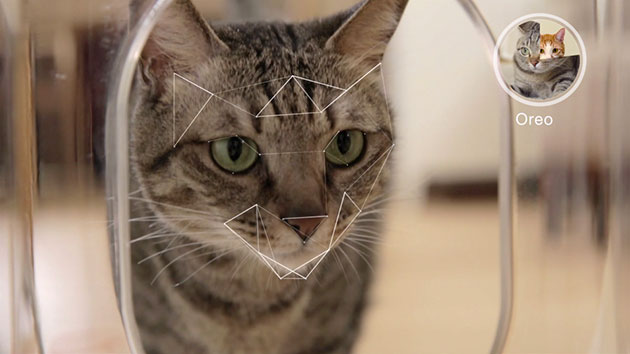
Our four-legged friends have a habit of not eating when something ails them. However, if you're at work all day, you may not pick up on the lack of appetite until it's too late. Well, there's a smart cat feeder with built-in facial recognition that's...
15 Jul 20:43

Lab-grown 'real' cheese made without milk

by Mat Smith
Real vegan cheese. An oxymoron, but maybe not for long. A group of biohackers, which is a thing now, reckon they can make cheese without milk. Better still, it apparently tastes like proper, legitimate cheese, and not some vegan-friendly substitute...
15 Jul 10:36

Couple Sells Kids To Buy In-Game Items

There is a special place in hell for people like this. "[A Hui] likes buying items in online games, and he likes staying out all night at internet cafes," A Mei told reporters. So many of their collective resources were going into A Hui's gaming that the two felt, again, that they wouldn't be able to support the child. So, once again, they sold him to traffickers. Comments
15 Jul 10:14

Mobile phone cell towers used for accurate weather forecasts

by Chris Merriman
Mobile phone cell towers used for accurate weather forecasts

If it's wet, it's probably raining


15 Jul 10:11

Apple's iPhone 6 "phablet" delayed: so what?

by Joe Jejune
The problem seems to be in manufacturing of the case and glass, problems that don't seem to be impacting the "rumored" 4.7 inch iPhone 6.


15 Jul 10:03

The United Kingdom can manipulate major communication services, from Facebook to phone calls

by Ben Gilbert
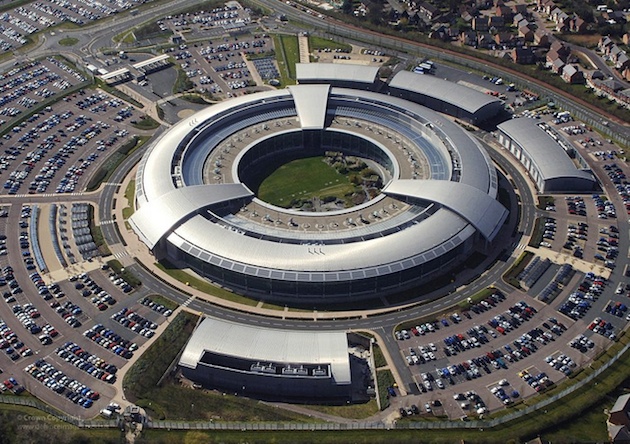
British intelligence agency GCHQ is able to not just monitor, but also modify many of the world's most widely-used communications services: Facebook, YouTube, and phone calls are just a few of the services affected. The Intercept revealed the...
15 Jul 10:02

US government says online storage isn't protected by the Fourth Amendment

by Nicole Lee
A couple months ago, a New York judge ruled that US search warrants applied to digital information even if they were stored overseas. The decision came about as part of an effort to dig up a Microsoft user's account information stored on a server in...
15 Jul 10:00

Watch an AlphaDog robot venture into (simulated) battle for the first time

by Jon Fingas
They grow up so fast, don't they? It seems like only yesterday that Boston Dynamics' AlphaDog (aka LS3) robot was finding its legs, and yet it has already gone out on training exercises with the US Marine Corps for the first time. The cargo-hauling...
15 Jul 10:00

Google strikes smart contact lens deal to track diabetes and fix farsightedness

by Matt Brian
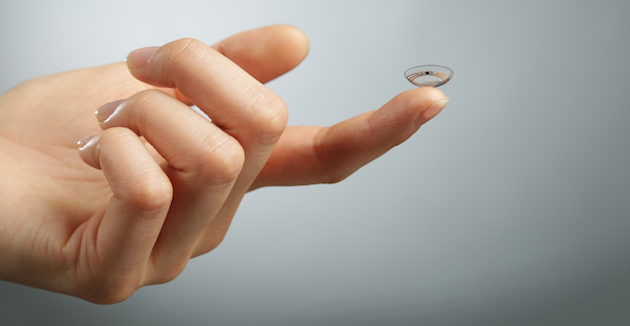
With Glass and Android Wear, Google has already invested a lot of time and resources into developing the next-generation of wearables, but it's another of its eye-focused projects that has today received its first major boost. The search giant's...
14 Jul 11:29

Про центр обеспечения мобильности пассажиров московского метро

by tema@tema.ru
Процитирую письмо полностью:
Я сегодня воспользовалась новой услугой метрополитена, о которой почему-то мало кто знает.

Так что может пригодится.

Теперь можно позвонить по телефону 8 (495) 622-73-41 или обратиться по интернету http://mosmetro.ru/about/mob_pass/z_mob/ и попросить сопровождать Вас в метро. Выбирать можно абсолютно все станции, правда сопровождение только с 8:30 до 19:30. И звонить нужно за три часа до поездки. Помогают они тоже всем, кто маломобилен в метро: пожилым, инвалидам, мамам с детьми, многодетным семьям, даже беременным с багажом - операторы по описанию ситуации сами подбирают количество человек и их "качество".

Качество оказалось просто отличное. Оценка 5+

Мне на двух детей, коляску-трость и рюкзак с пакетом прислали сразу двоих, высоких молодых мужчин при галстуках (!) под фирменным жилетом, которые ждали нас на улице перед входом очень задолго до назначенного времени.

Их вежливость и сноровка просто поразила, я такого не ожидала. Они могут проводить через турникеты, переходы, выводить на улицу по лестницам и эскалаторам, вести ребенка за руку, катить и поднимать по лестницам коляски, сумки, поднимать ребенка, куда нужно, а так же показывать дорогу и следить, чтобы дети не растерялись, не уехали, не убежали и никуда не попрыгали, а также, чтобы вас не обокрали при таком количестве всего в руках.

Еще я выяснила, что пока это экспериментальный проект и вопрос, оставят ли эту услугу в дальнейшем, пока открыт. Все зависит от востребованности услуги и адекватности происходящего.
А пока они есть, можно ездить и отдыхать в метро. Мы сегодня проехали всю Москву.

Услуга бесплатная.


Все охуенное всегда рекламирую бесплатно.
14 Jul 11:24

ktempest: totallynotagentphilcoulson: I’ve been waiting for...


ktempest:

totallynotagentphilcoulson:

I’ve been waiting for Phil Tippett to respond to this joke

Bless you, Phil!

14 Jul 11:19

releasings: hobbitdragon: ddollley: I just made the most...


releasings:

hobbitdragon:

ddollley:

I just made the most inhuman noise

WHEN IT REALIZES THE PERSON IS STILL THERE AND GOES BACK TO BEING ‘DEAD’

oh my god
14 Jul 11:15

Sins of a Solar Empire dev discusses 'Rebellion' lawsuit

by Earnest Cavalli
Following two years of legal battles, Ironclad Studios has been granted the right to use the word "Rebellion" in the title of its latest space exploration epic, a decision it hopes will set a precedent for the increasingly litigious gaming...
14 Jul 10:36

SpaceX Gets A-OK from FAA to Build Spaceport

Getting into outer space might be easier than getting permission to build a privately-owned spaceport, but Elon Musk's SpaceX has passed the last hurdle from the federal government. Construction on the 56 acre spaceport near Brownsville, Texas will begin as soon as local licenses are approved. The FAA's decision is a monumental step forward on the path to making the long-planned spaceport a reality. This is major win for SpaceX, since the proposed spaceport will allow the company to launch from private property, rather than from Air Force facilities it currently uses. Comments
14 Jul 10:00

Russia's new tram is a Batmobile on the outside, tech hub on the inside

by Jon Fingas
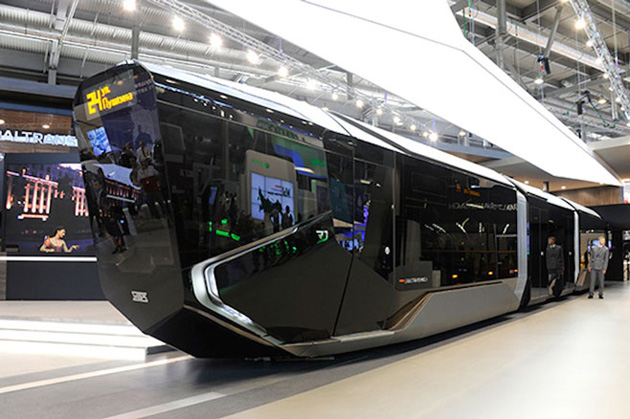
Many trams are memorable, but they tend to evoke nostalgia rather than embrace the future. You can't accuse UralVagonZavod (UVZ) of being behind the times with its new Russia One, though. To begin with, it looks like the Batmobile on a closed track...
14 Jul 09:57

Scientists Develop Material So Dark That You Can't See It

Okay, the first question that pops into your mind is if it can't be seen, how do you find it and the other question is didn't the Weasley brothers already market this as Peruvian Instant Darkness Powder? The actual material absorbs almost all visual light and when viewed, by the human eye, it confuses the brain by the absence of light. A British company has produced a "strange, alien" material so black that it absorbs all but 0.035 per cent of visual light, setting a new world record. Comments
13 Jul 10:39

4K TV channels on the way as DVB-UHDTV standard is approved

by James Rivington
4K TV channels on the way as DVB-UHDTV standard is approved

4K TV channels in the UK took a step closer to reality over the weekend after a new Ultra HD TV broadcast specification was approved for Europe by the DVB Steering Board.

The new DVB-UHDTV Phase 1 specification allows for the over-the-air transmission of 3840x2160 resolution pictures at 60Hz and promises much improved colour depth with 10 bits per pixel rather than 8.

Once officially standardised, this specification will surely open the floodgates for 4K TV services to launch both on satellite and over-the-air platforms across Europe.

It will be a huge step forward in TV picture quality, offering a whole new range of colours, higher frame rates, double the horizontal and vertical resolution and four times the number of pixels. That's nine times as many pixels as an 'HD Ready' 720p picture.

How it works

The standard uses HEVC, the same compression system that's being used for Netflix's 4K Ultra HD internet streams, which offers double the data compression ratio compared to MPEG-4/H.264.

It effectively means that while the number of pixels quadruples, they'll only need double the bandwidth.

"HEVC is the most recently-developed compression technology and, among other uses, it is the key that will unlock UHDTV broadcasting," said Phil Laven, DVB Steering Board Chairman. "This new DVB–UHDTV Phase 1 specification not only opens the door to the age of UHDTV delivery but also potentially sets the stage for Phase 2, the next level of UHDTV quality, which will be considered in upcoming DVB work."

While great news for 4K enthusiasts, there are some caveats to all this excitement. The main one being that the new specification is completely incompatible with any of today's TV tuners, even the ones inside brand new 4K TVs with HEVC decoding built-in.

So if you've bought a 4K TV already, you'll need to splash out on a set-top box as and when. If all goes to plan, we would expect compatible TVs to start shipping in 2015.

The new DVB-UHDTV Phase 1 specification has been delivered to the European Telecommunications Standards Institute, a not-for-profit body which is expected to formally standardise the specification in due course.

Phase 2, on the other hand, could well deliver even higher frame rates, HDR pictures and possibly even 8K resolutions - we just don't know.

More standards

At the same meeting, the DVB Steering Board also ratified a couple of other new standards.

One relates to the synchronisation of broadcasts with second screens like phones and tablets and will enable the development of more advanced second screen functionality. This could be as simple as delivering 'live' scores for sports events without spoiling big moments if you're behind the live broadcast, but could also be used for viewer interaction for example in live TV quizzes.

And the final standard is a new MPEG-DASH profile for streaming adaptive bitrate media over the internet. The idea is that by creating an industry standard for detecting your bandwidth and delivering the best possible picture and sound quality, the number of different options for doing so will decrease, simplifying the business of delivering 4K video over the internet, accelerating growth.


13 Jul 10:37

In Depth: Shooting for the future: the hidden challenge of the World Cup final

by Gareth Beavis
In Depth: Shooting for the future: the hidden challenge of the World Cup final

Shooting for the cup

Today one of the most famous stadia in the world – the Maracana in Rio de Janeiro, Brazil – hosts the biggest game in football, the World Cup final.

This significance of this event isn't just about the action that's on the pitch; from the secrecy of past lurking beneath the surface to landmark advances in technology attached, this game has a huge significance that many won't even notice.

From the comfort of your sofa, it seems like any other match, with a few cameras beaming pictures into your lounge in a very similar way to the weekly sporting action.

4K World Cup

But in reality it's a huge endeavour which requires hundreds of staff working just to show you 22 sweaty men sprinting around a patch of grass.

"[Broadcasting the World Cup final] is different to a run of the mill football match, because there we're only servicing one customer, maybe two if it's split," said Jeff Coleman, technology manager for Host Broadcast Services (HBS), which provides the TV pictures to the world.

"Here we're servicing the whole planet, and we've got the world's broadcasters here in the compound and at the International Broadcast Centre."

4K World Cup

Most will take the main feed from HBS, connecting into a huge buzzing server to get pictures from dozens of cameras and a helicopter – 40 cameras in all, which this year will include Ultra HD (4K) recording for the first time too, all to bring the World Cup final from the iconic Maracana to millions of global eyeballs.

The past supporting the future

This historic stadium looks like many others, a cathedral of plastic seating and clean walkways befitting a modern football ground. But underneath this façade live the old terraces, once home the largest attendance for a single football match: the 1950 World Cup final, when Brazil last hosted the tournament.

4K World Cup

These hallowed platforms are being used for this year's final too: they provide the ground over which hundreds of metres of cabling is run below the current stands (stumbled upon by engineers one day who realised the logistical potential of the space), playing a vital role in helping run one of the most complex broadcasting events.

It feels sad to such an historic part of work football reduced to being a cable dumping ground – but at the same time there's a sense of continuity that such an iconic part of the old stadium (which couldn't have been used on health and safety grounds) is still being used in some capacity to entertain millions across the globe.

The Cup in numbers

When walking around the Maracana, even when empty save for a few engineers strolling around, there's an overwhelming sense of the enormous job ahead of this crucial game, one that simply cannot be subject to power outages or other catastrophes.

The commentator you hear will be surrounded by 149 doing the same thing in a special media zone, each with power leads, internet connection, lamps and monitors to allow them to beam across the globe.

4K World Cup

But problems do arise – for instance, there was a fire in one of the centres in a warm up game – so how do broadcasters cope?

"Nobody noticed [that we had a fire]," said Coleman. "We always have a plan B so that if something catastrophic happens I can get pictures to the world.

"For instance, we have an incorruptible power supply; we've got four generators running but even if three fail we've got enough power to service what we need.

"In fact we only need one camera at the minimum. As long as we've got one, with audio and commentary, you wouldn't really know the difference."

The key is in the redundancy, with backup cameras on the main platforms surrounded by backup cables, making sure there's always something being beamed out from the match.

"Seriously, if we lose one camera out of 40 it would be tough to see it's gone," said Coleman.

But there's an extra challenge here: one where the next generation of TV viewing is being experimentedon, and doing so at one of the most critical sporting events in the world presents its own challenges too, so we took a look to see how that can fit into this well-oiled machine.

The next generation challenge

The next generation of TV is already with us: 4K or Ultra HD is slowly creeping its way into our living rooms, although there's hardly any content to watch on these gargantuan sets yet.

This is why Sony is risking an experiment at an event such as this, proving that it can shoot this pivotal game in 4K and broadcast it back in real time to TV networks around the globe.

There are a number of local broadcasters taking the UHD feed, such as the BBC in the UK, but most are using it to see how whether 4K live TV can actually work, such is the technical step up in bringing the crystal clear pictures across.

4K World Cup

That explains why there's a separate control centre dedicated just to the 4K signal – a cramped air-conditioned van in the car park outside the stadium.

It might be a tight fit, but inside it will be putting out proof that UHD broadcasting can work from this control centre.

The team might have a wealth of high end equipment to help create the show, but they also have to slip alongside the main broadcasters in the stadium to use the next generation cameras.

And while they'll get help from HBS, Coleman told us that trialling a new tech was understandably far from the main worry: "The world's feed is my priority and I treat 4K as a welcome guest, but low on the list."

Not that that bothers Robert Thorne, Sony's business development engineer. "From Sony's point of view, 4K and HD are equally important. It's on the same level. HBS are providing the HD feed, so that's their priority."

4K World Cup

He seems relaxed about the trial despite the enormous importance on the game, and that's partly because he's been here before: Sony filmed the Confederations Cup, a warm-up tournament for the World Cup, last year in 4K too.

"Compared to what we did in Belo Horizonte [for the Confederations Cup] this is a finished product we're producing. That was more of a trial, and was only used internally."

Why can't I watch it too?

But if this show is being produced like any other live event, and TVs capable of showing it are appearing in living rooms across the world, why is it being kept behind closed doors?

"No-one is showing it because there's no mechanism," said Thorne. "The issue is the set top boxes; the encoders [to transmit 4K] exist, but it's the global distribution of the content to the home that the tricky part, slowing [adoption] down.

"That's why events like this are needed, as it allows broadcasters – like the BBC – to do tests."

4K World Cup

The good news for those itching for a new level of clarity on their TV is there are other ways of getting the content. Netflix is starting to produce some of its shows in Ultra HD, and while it doesn't show live TV it's still an option for broadcasters in the future.

Thorne confirmed it was something Sony had looked at, but said that it still depended on a number of factors.

"There's just so much data, and [viewers would] need a stable bandwidth" he said, before explaining why it wasn't used at this tournament. "With an event like this you start planning four years ago, so not knowing what the technology is going to be like at the cutting edge."

4K World Cup

If you want to see the World Cup in 4K, your options are limited. You could have caught the highlights that were sent back to the UK for retailers to show on the new TVs, or you can wait for the official film of the World Cup, which will be shown in 4K.

This mirrors what was done with HD filming a few years ago, and even if 4K does go the way of 3D and fizzle out, this trial will still make the pictures on your current hi-def screen look much better.

Both Coleman and Thorne confirmed that the new lenses and systems trialled for UHD quickly filter down to making the 'normal' HD picture look even crisper.

And don't think 4K is the only advanced trial here: Japanese broadcasters are filming in 8K, which some believe will be an even more futuristic standard, and Fifa is also shooting the World Cup final in 360 degrees, with the intention of using that experience for tablets and phones to give an integrated feel.

So when you're watching the final, remember you're not just seeing another botched penalty decision or welcome offside flag, you're seeing the fruits of years of labour... and quite possibly a pivotal moment in the future of TV.


12 Jul 16:19

Core Truths: 10 Common GMO Claims Debunked

by Brooke Borel

Genetically modified apples may soon hit the market
Photograph by Travis Rathbone; Stylist: Sarah Guido for Halley Resources

Later this year, the U.S. Department of Agriculture may approve the Arctic Granny and Arctic Golden, the first genetically modified apples to hit the market. Although it will probably be another two years before the non-browning fruits appears in stores, at least one producer is already scrambling to label its apples GMO-free.

The looming apple campaign is just the latest salvo in the ongoing war over genetically modified organisms (GMOs)—one that's grown increasingly contentious. Over the past decade, the controversy surrounding GMOs has sparked worldwide riots and the vandalism of crops in Oregon, the United Kingdom, Australia, and the Philippines. In May, the governor of Vermont signed a law that will likely make it the first U.S. state to require labels for genetically engineered ingredients; more than 50 nations already mandate them. Vermont State Senator David Zuckerman told Democracy Now!, "As consumers, we are guinea pigs, because we really don't understand the ramifications."

But the truth is, GMOs have been studied intensively, and they look a lot more prosaic than the hype contends. To make Arctic apples, biologists took genes from Granny Smith and Golden Delicious varieties, modified them to suppress the enzyme that causes browning, and reinserted them in the leaf tissue. It's a lot more accurate than traditional methods, which involve breeders hand-pollinating blossoms in hopes of producing fruit with the desired trait. Biologists also introduce genes to make plants pest- and herbicide-resistant; those traits dominate the more than 430 million acres of GMO crops that have already been planted globally. Scientists are working on varieties that survive disease, drought, and flood.

So what, exactly, do consumers have to fear? To find out, Popular Science chose 10 of the most common claims about GMOs and interviewed nearly a dozen scientists. Their collective answer: not much at all.

1) Claim: Genetic engineering is a radical technology.

Humans have been manipulating the genes of crops for millennia by selectively breeding plants with desirable traits. (A perfect example: the thousands of apple varieties.) Virtually all of our food crops have been genetically modified in some way. In that sense, GMOs are not radical at all. But the technique does differ dramatically from traditional plant breeding.

Here's how it works: Scientists extract a bit of DNA from an organism, modify or make copies of it, and incorporate it into the genome of the same species or a second one. They do this by either using bacteria to deliver the new genetic material, or by shooting tiny DNA-coated metal pellets into plant cells with a gene gun. While scientists can't control exactly where the foreign DNA will land, they can repeat the experiment until they get a genome with the right information in the right place.

That process allows for greater precision. "With GMOs, we know the genetic information we are using, we know where it goes in the genome, and we can see if it is near an allergen or a toxin or if it is going to turn [another gene] off," says Peggy G. Lemaux, a plant biologist at the University of California, Berkeley. "That is not true when you cross widely different varieties in traditional breeding."

2) Claim: GMOs are too new for us to know if they are dangerous.

It depends on how you define new. Genetically engineered plants first appeared in the lab about 30 years ago and became a commercial product in 1994. Since then, more than 1,700 peer-reviewed safety studies have been published, including five lengthy reports from the National Research Council, that focus on human health and the environment. The scientific consensus is that existing GMOs are no more or less risky than conventional crops.

3) Claim: Farmers can't replant genetically modified seeds.

So-called terminator genes, which can make seeds sterile, never made it out of the patent office in the 1990s. Seed companies do require farmers to sign agreements that prohibit replanting in order to ensure annual sales, but Kent Bradford, a plant scientist at the University of California, Davis, says large-scale commercial growers typically don't save seeds anyway. Corn is a hybrid of two lines from the same species, so its seeds won't pass on the right traits to the next generation. Cotton and soy seeds could be saved, but most farmers don't bother. "The quality deteriorates—they get weeds and so on—and it's not a profitable practice," Bradford says.

4) Claim: We don't need GMOs—there are other ways to feed the world.

GMOs alone probably won't solve the planet's food problems. But with climate change and population growth threatening food supplies, genetically modified crops could significantly boost crop output. "GMOs are just one tool to make sure the world is food-secure when we add two billion more people by 2050," says Pedro Sanchez, director of the Agriculture and Food Security Center at Columbia University's Earth Institute. "It's not the only answer, and it is not essential, but it is certainly one good thing in our arsenal."

5) Claim: GMOs cause allergies, cancer, and other health problems.

Many people worry that genetic engineering introduces hazardous proteins, particularly allergens and toxins, into the food chain. It's a reasonable concern: Theoretically, it's possible for a new gene to express a protein that provokes an immune response. That's why biotech companies consult with the Food and Drug Administration about potential GMO foods and perform extensive allergy and toxicity testing. Those tests are voluntary but commonplace; if they're not done, the FDA can block the products.

One frequently cited study, published in 2012 by researchers from the University of Caen in France, claimed that one of Monsanto's corn GMOs caused tumors in lab rats. But the study was widely discredited because of faulty test methods, and the journal retracted it in 2013. More recently, researchers from the University of Perugia in Italy published a review of 1,783 GMO safety tests; 770 examined the health impact on humans or animals. They found no evidence that the foods are dangerous.

6) Claim: All research on GMOs has been funded by Big Ag.

This simply isn't true. Over the past decade, hundreds of independent researchers have published peer-reviewed safety studies. At least a dozen medical and scientific groups worldwide, including the World Health Organization and the American Association for the Advancement of Science, have stated that the GMOs currently approved for market are safe.


7) Claim: Genetically modified crops cause farmers to overuse pesticides and herbicides.

This claim requires a little parsing. Two relevant GMOs dominate the market. The first enables crops to express a protein from the bacterium Bacillus thuringiensis (Bt), which is toxic to certain insects. It's also the active ingredient in pesticides used by organic farmers. Bt crops have dramatically reduced reliance on chemical insecticides in some regions, says Bruce Tabashnik, a University of Arizona entomologist.

The second allows crops to tolerate the herbicide glyphosate so that farmers can spray entire fields more liberally yet kill only weeds. Glyphosate use has skyrocketed in the U.S. since these GMOs were introduced in 1996. But glyphosate is among the mildest herbicides available, with a toxicity 25 times less than caffeine. Its use has decreased reliance on more toxic alternatives, such as atrazine.

8) Claim: GMOs create super-insects and super-weeds.

If farmers rely too heavily on Bt or glyphosate, then pesticide resistance is inevitable, says Tabashnik. That's evolution at work, and it's analogous to antibiotics creating hardier bacteria. It is an increasing problem and could lead to the return of harsher chemicals. The solution, he says, is to practice integrated pest management, which includes rotating crops. The same goes for any type of farming.


9) Claim: GMOs harm beneficial insect species.

This has been been partly debunked. Bt insecticides attach to proteins found in some insects' guts, killing select species. For most insects, a field of Bt crops is safer than one sprayed with an insecticide that kills indiscriminately. But monarch butterflies produce the same proteins as one of Bt's target pests, and a 1999 Cornell University lab experiment showed that feeding the larvae milkweed coated in Bt corn pollen could kill them. Five studies published in 2001, however, found that monarchs aren't exposed to toxic levels of Bt pollen in the wild.

A 2012 paper from Iowa State University and the University of Minnesota suggested glyphosate-tolerant GMOs are responsible for monarchs' recent population decline. The herbicide kills milkweed (the larvae's only food source) in and near crops where it's applied.

10) Claim: Modified genes spread to other crops and wild plants, upending the ecosystem.

The first part could certainly be true: Plants swap genetic material all the time by way of pollen, which carries plant DNA—including any genetically engineered snippets.

According to Wayne Parrott, a crop geneticist at the University of Georgia, the risk for neighboring farms is relatively low. For starters, it's possible to reduce the chance of cross-pollination by staggering planting schedules, so that fields pollinate during different windows of time. (Farmers with adjacent GMO and organic fields already do this.) And if some GMO pollen does blow into an organic field, it won't necessarily nullify organic status. Even foods that bear the Non-GMO Project label can be 0.5 percent GMO by dry weight.

As for a GMO infiltrating wild plants, the offspring's survival partly depends on whether the trait provides an adaptive edge. Genes that help wild plants survive might spread, whereas those that, say, boost vitamin A content might remain at low levels or fizzle out entirely. 

The Rise of GMO Crops

In the U.S., farmers have been planting increasing amounts GMO crops since the seeds became commercially available in 1996. Corn, cotton, and soy—which together occupy about 40 percent of U.S. cropland—are the three crops with the highest GMO fraction by area, each more than 90 percent in 2013.


The GMO fraction by area of corn, cotton, and soy in the top states that grow those crops. Data from the U.S. Department of Agriculture. Graphic by Rebecca Lantner.

Dinner, Dissected

Very few genetically modified crops end up on plates, but the ones that do can be found in roughly two-thirds of processed foods sold in the U.S. Genetically modified bacteria and yeasts are also critical to the production of some foods, including many wines and cheeses.

Cheese

Rennet is key in making firm cheeses—specifically, an enzyme called chymosin in the rennet helps harden cheese. Traditional rennet comes from the lining of calf stomachs, but an estimated 80 to 90 percent of hard cheeses in the U.S. are made with bacteria modified with the rennet-producing cow gene.

Corn

Trait: Tolerates herbicides; resists insects
Total U.S. crop, by acreage:  85% herbicide-tolerant; 76% insect-resistant
Found in: Processed foods, such as crackers and cereals; corn on the cob; livestock feed

Cotton

Trait: Tolerates herbicides; resists insects
Total U.S. crop, by acreage: 82% herbicide-tolerant; 75% insect-resistant
Found in: Processed foods, including salad dressings; livestock feed

Papaya

Trait: Resists ringspot virus           
Total U.S. crop, by acreage: More than 50%     
Found in: Whole fruit and other products

Rapeseed

Trait: Tolerates herbicides 
Total U.S. crop, by acreage: More than 50%     
Found in: Canola oil; processed foods

Soy

Trait: Tolerates herbicides
Total U.S. crop, by acreage: 93%
Found in: Processed foods, such as cereals and breads; food additives, such as lecithin; livestock feed

Squash

Trait: Resists various viruses
Total U.S. crop, by acreage: 12%
Found in: Whole vegetables and other products

Sugar beets*

Trait: Tolerates herbicides
Total U.S. crop, by acreage: 95%
Found in: Refined sugar

Wine

Certain wine yeasts have been modified to remove histamines that can trigger migraines. One example is yeast strain ML01 in the U.S., which also boosts taste and color.

*No modified proteins remain in the final product.

The Future Of GMOs: Gene Editing

Today's most common GMO technology, recombinant DNA, inserts genes into a plant's cells via bacteria or specialized delivery tools, but it involves some trial and error. A new method called gene editing uses enzymes to snip out a specific bit of DNA to either delete it or replace it. This allows for more precise changes to a plant's genome. Scientists at the University of California, Berkeley are already working with it to create virus-resistant cassava.

Gene editing may also provide fodder for fresh controversy. Current GMO methods leave a trace behind—for example, a bit of the DNA from bacterium used to insert new genes. The enzymes used in gene editing don't leave such a fingerprint, so future genetically modified plants will be harder to detect with tests.

This article originally appeared in the July 2014 issue of Popular Science.


12 Jul 16:13

A rocket scientist at Oxford University is designing better cookware

by Sean Buckley
What do rocket scientists do in their spare time? Design cookware, apparently. A Oxford University professor has created a new kind of saucepan that heats up 30-percent faster than traditional cookware. He calls it "Flare," and it borrows from the...

12 Jul 15:57

brownie ice cream sandwiches

by deb

brownie ice cream sandwiches

Within reason, I think if you’re craving something, you should go for it, although this theory is mostly born of my own poor logic. I’ve all too many times craved, say, a brownie but thought I shouldn’t eat a brownie and so instead snacked on (just for a completely random example) 12 almonds, 1 slice of cheese, half an apple, 1 banana and then, oops, a handful of chocolate chips, amounting roughly 3x the calories of a brownie, a brownie that I craved exactly as much as I did 500 calories ago. And so, when I really want a brownie, I make my favorite brownies and we each eat one and then I stash the rest in the freezer, so they are not out on the counter, calling to me that we haven’t been cut in a straight line and you should really even us out or we’re going to go bad soon and you don’t want us to go to waste or any of those things that brownies tell me when we’re alone together.

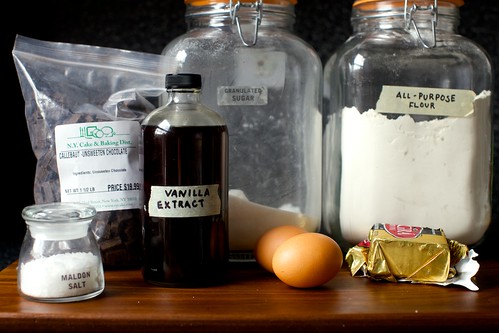
salt, chocolate, vanilla, eggs, butter, flour and sugar

[Hm, here I should probably interject some sort of "sure, okay, brownies talk to me but I'm not like crazy or anything; it's not weird. Brownies talk to everyone, right? Haha?" reassurance but I'm not going to. I'm going to make this as awkward as possible.]

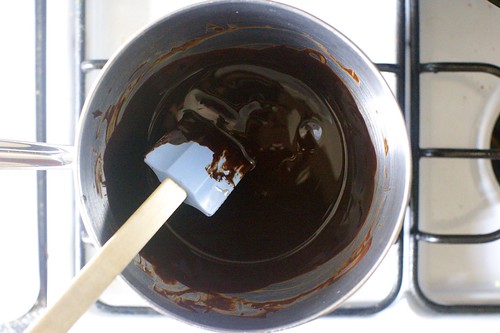
melt the chocolate and butter

... Read the rest of brownie ice cream sandwiches on smittenkitchen.com


© smitten kitchen 2006-2012. | permalink to brownie ice cream sandwiches | 166 comments to date | see more: Chocolate, Ice Cream/Sorbet, Photo, Summer

10 Jul 10:46

Video: Kimi Raikkonen dominates at lawnmower racing

by Daljinder Nagra