
Shared posts
12 Sep 15:09
‘Star Wars': First ‘Episode VII’ glimpse might be in ‘Rebels’
by James Hibberd
Attention Star Wars fans: Want to see the new ships, locations, characters and weapons that will be in Episode VII? 
12 Sep 15:08
Benedict Cumberbatch and Martin Freeman crack up in ‘Sherlock’ outtake
by Clark Collis
Emmy-winning Sherlock actors Benedict Cumberbatch and Martin Freeman usually play their respective roles of Holmes and Watson with admirably straight 

Roumen.ganeff likes this
12 Sep 11:15
OK Go Claims Apple Stole Its Music Video Concept
The level Apple stooped to in this case is pretty sad. You reject the band's original pitch and then hire the same production company behind OK Go's video and used the same director to make a knock-off video for your iPhone event. Stay classy Apple.
Comments
12 Sep 11:12

What You Need To Know About The Solar Storm Headed For Earth
by Loren Grush
Solar Flare Eruption
An intense, X-class solar flare erupted from sun spot AR2518 on Wednesday afternoon.
NASA / GSFC / SDO
The sun has been regurgitating a lot of solar flares these days, and now, a couple will be knocking at Earth’s door this weekend.
The originator of these flares is a particularly complex sunspot called AR2518, which is currently facing our planet. Late Monday night, the spot produced a minor solar flare (class R1) that lasted for six hours, but then on Wednesday at 1:45 p.m. EST, it upchucked a whopping X1.6-class solar flare, which is pretty darn strong.
Both flares have launched large outbursts of magnetic fields, known as coronal mass ejections – or CMEs – at high velocity straight toward Earth, according to NOAA’s Space Weather Prediction Center. The CME associated with Monday’s flare is expected to hit tonight, while the more intense CME is expected to arrive Friday afternoon to evening. Earth experiences CMEs all the time without issue, but if they're strong enough, CMEs can cause geomagnetic storms and sometimes, extreme radio blackouts.
Although Wednesday’s solar flare was somewhat strong, the magnitudes of these incoming CMEs aren’t that intense, historically speaking. (Although, as the Sun is nearing peak activity on its 11-year solar cycle, we may be seeing more -- and stronger -- storms soon.) What makes this event so unique, however, is that Earth will experience two CMEs in close succession to one another – a situation that is pretty rare. That means scientists are being cautious about what to expect. “The two CMEs could be interacting on their way to Earth’s orbit, or beyond Earth’s orbit,” says Thomas Berger, director of NOAA's Space Weather Prediction Center (SWPC), meaning the flares could potentially amplify each other in some way.
Ultimately, no one really knows how these storms will impact each other. Given this uncertainty, NOAA has issued a moderate to strong G3 geomagnetic storm watch for Friday. The rating indicates that the incoming magnetic fields may cause some problems with radio communications, as well as voltage irregularities in northern latitudes of the United States. Grid operators and even FEMA have been notified, just in case.
Fortunately, NOAA doesn’t expect the impacts of the CMEs to be unmanageable. “There’s really no concern for electronics down here on the ground,” says William Murtagh, program coordinator of the Space Weather Prediction Center. Murtagh notes that some studies have implied that electronics at higher altitudes and higher latitudes, such as planes flying near the poles, might be more vulnerable to geomagnetic storms. The biggest concern with electronics on the ground would be a loss of power, but Murtagh says the storms aren't strong enough to cause such a blackout.
Still, they’ll be watching the events closely. Additionally, Wednesday’s eruption also produced an Earth-bound solar radiation storm, but that has only amounted to an S1 rating (the lowest on the NOAA scale). When solar radiation storms reach a level of S3 or above, NOAA will advise the FAA to start rerouting flights away from the poles to avoid radiation exposure. NASA mission control will also direct astronauts into more hardened portions of the International Space Station.
Meanwhile, there is one pretty awesome byproduct of these two solar flares. The storms could produce some pretty intense auroras, which may be visible in northern parts of the United States tonight and tomorrow. So if you living in Maine or the Dakotas (or even New York), make sure you have your camera handy. Chances are your DSLR will work just fine.
To learn more about solar storms, check out our previous coverage:
12 Sep 11:04
 LG just announced its first two curved 4K OLED TVs, perfect for high-end buyers that don't want to compromise on contrast or resolution, and now we know when they're going on sale in the US. The 65-inch version will start shipping next month, with a...
LG's first 4K OLED TV comes to the US next month for $10k
by Richard Lawler
LG just announced its first two curved 4K OLED TVs, perfect for high-end buyers that don't want to compromise on contrast or resolution, and now we know when they're going on sale in the US. The 65-inch version will start shipping next month, with a...
Roumen.ganeff likes this
12 Sep 11:03
 The Court of Justice of the European Union (CJEU) has ruled that libraries have the right to digitize books and distribute them to dedicated reading terminals without first obtaining the publisher's permission. The decision rests on exceptions built...
EU court rules libraries can digitize books without permission
by Terrence O'Brien
The Court of Justice of the European Union (CJEU) has ruled that libraries have the right to digitize books and distribute them to dedicated reading terminals without first obtaining the publisher's permission. The decision rests on exceptions built...
Paul, Roumen.ganeff likes this
12 Sep 11:02
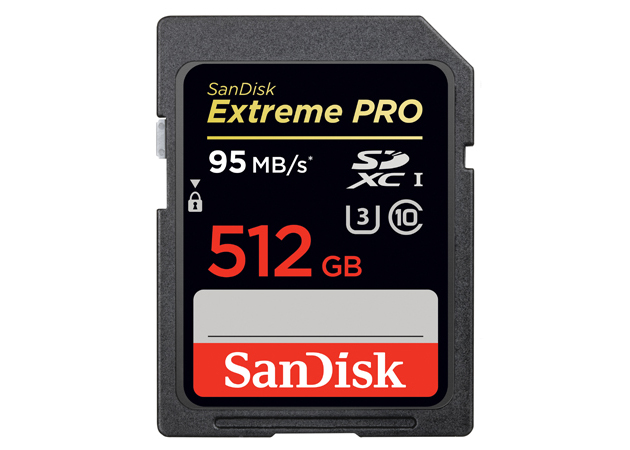 If you've been dabbling in 4K video recording, you probably know that most SD cards won't cut it; you'll be thankful if you have enough space for a wedding video, let alone a magnum opus. SanDisk may have a solution for that space problem in its new,...
SanDisk's 512GB SD card will hold all the 4K video you can handle
by Jon Fingas
If you've been dabbling in 4K video recording, you probably know that most SD cards won't cut it; you'll be thankful if you have enough space for a wedding video, let alone a magnum opus. SanDisk may have a solution for that space problem in its new,...
Cooper Griggs and -1 others like this
12 Sep 11:02
 Bang & Olufsen advertised the Avant 55, its first 4K TV, with the phrase "the one that moves." By the same logic, the Avant 85 should be titled "the, er, bigger one that also moves." Naturally, the colossal set comes with the usual Danish video...
Bang & Olufsen's 85-inch 4K TV is competitively priced (for millionaires)
by Daniel Cooper
Bang & Olufsen advertised the Avant 55, its first 4K TV, with the phrase "the one that moves." By the same logic, the Avant 85 should be titled "the, er, bigger one that also moves." Naturally, the colossal set comes with the usual Danish video...
Roumen.ganeff likes this
11 Sep 09:04

First-Ever Human Trial Of An Induced Pluripotent Stem Cell Treatment Set To Begin
by Francie Diep
Human Eye
Cassi Saari
A Japanese patient with severe eye disease is set to become the first person to be treated with induced pluripotent stem cells, Nature News reports. Cells of this type have been considered promising for future treatments since their creation eight years ago, which was itself a milestone. This human test is set to be a historic moment in biotechnology.
It's also an anxious one. Stem cell therapies carry the risk of creating tumors, although Nature News reports the scientists in charge of the Japanese trial found their treatment did not cause tumors in mice and monkeys. In addition, there might be other risks to the treatment that scientists aren't yet aware of; stem cell therapies of all types are only just being tried in humans.
Induced pluripotent stem cells are special because they're not made from embryos. Instead, they come from harvesting skin cells from people, then treating those cells with genes that reverse the cell's life stage back to its stem cell state. That means scientists are able to make induced pluripotent stem cells from cells taken from a patient's own body. The resulting cells should be well matched to the patient's own genetics, although it's possible the "induction" part of the process introduces genetic aberrations into the cells.
The patient in this Japanese trial has macular degeneration, a progressive disease in which people lose the light-detecting cells in the retinas in their eyes. Scientists have also tried embryonic stem cells as a treatment for the disease. (Here's an update on that effort.)
The induced pluripotent stem cell trial will test a treatment developed by Masayo Takahashi, an opthamologist with a Japanese research institute called RIKEN. Takahashi has been making induced pluripotent stem cells and growing those cells into a sheet of replacement retinal cells. He then surgically attaches the sheet onto the retina. He and his colleagues have previously demonstrated that this treatment works in monkeys.
Roumen.ganeff likes this
11 Sep 07:25
 A new technology's joining those diabetes-monitoring contact lenses at Google X's Life Science division, one that'll make eating a lot easier for people with Parkinson's or essential tremor. This technology takes the form of a spoon that vibrates to...
After balloons and robots, Google's next moonshot is a vibrating spoon
by Mariella Moon
A new technology's joining those diabetes-monitoring contact lenses at Google X's Life Science division, one that'll make eating a lot easier for people with Parkinson's or essential tremor. This technology takes the form of a spoon that vibrates to...
Rtersieva, Roumen.ganeff likes this
11 Sep 07:25
 While Google already had been offering an extended two-hour window for app and game returns, the outfit has officially acknowledged the change. Before the switch, Android users had 15 minutes to decide whether or not they wanted to keep software...
Google Play officially extends return window to two hours
by Billy Steele
While Google already had been offering an extended two-hour window for app and game returns, the outfit has officially acknowledged the change. Before the switch, Android users had 15 minutes to decide whether or not they wanted to keep software...
Roumen.ganeff likes this
10 Sep 12:03


HGST unveils its final non-helium drive and the first 10TB hard drive
by Chris Merriman
Uses shingle magnetic recording
10 Sep 08:21
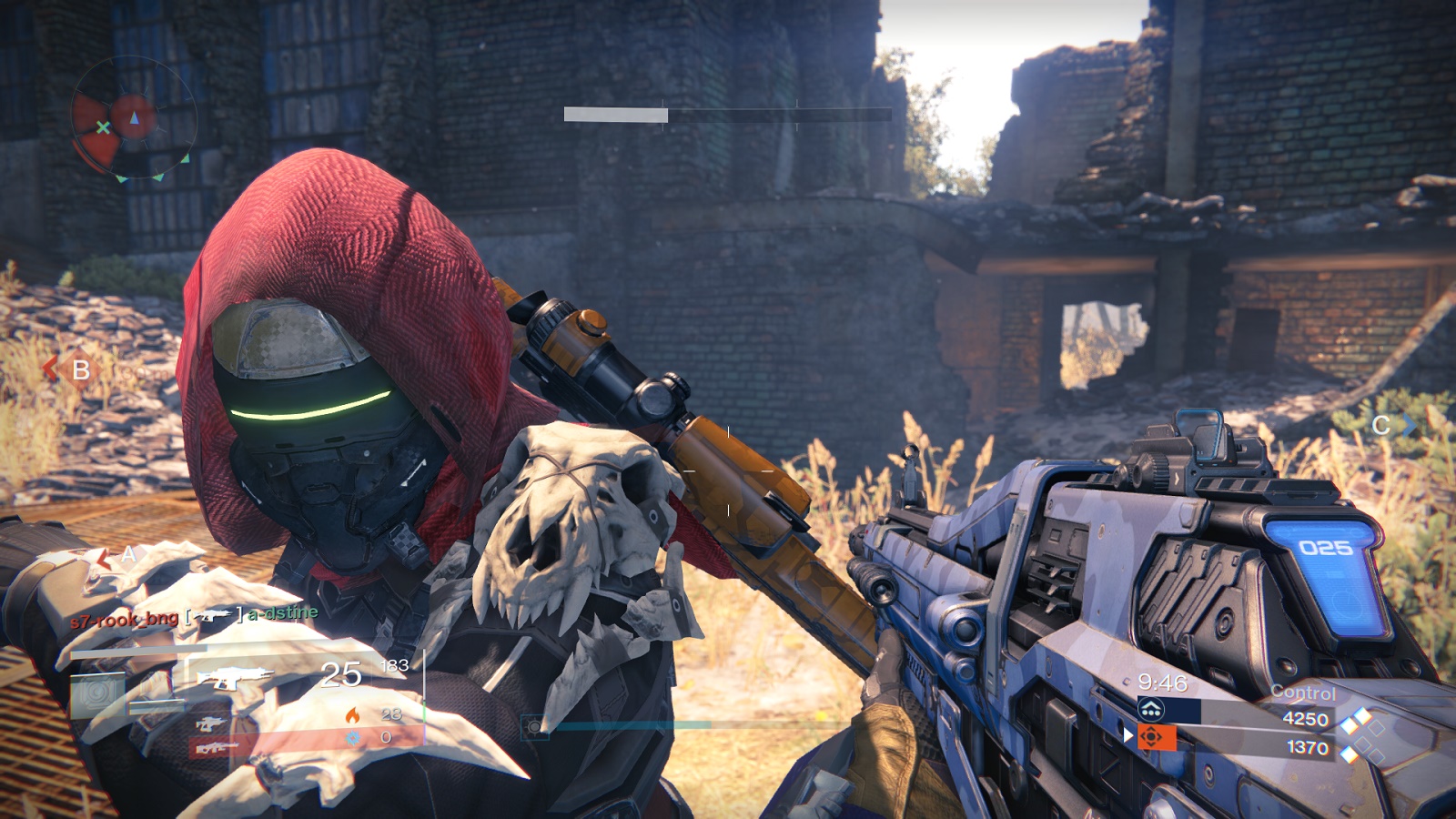
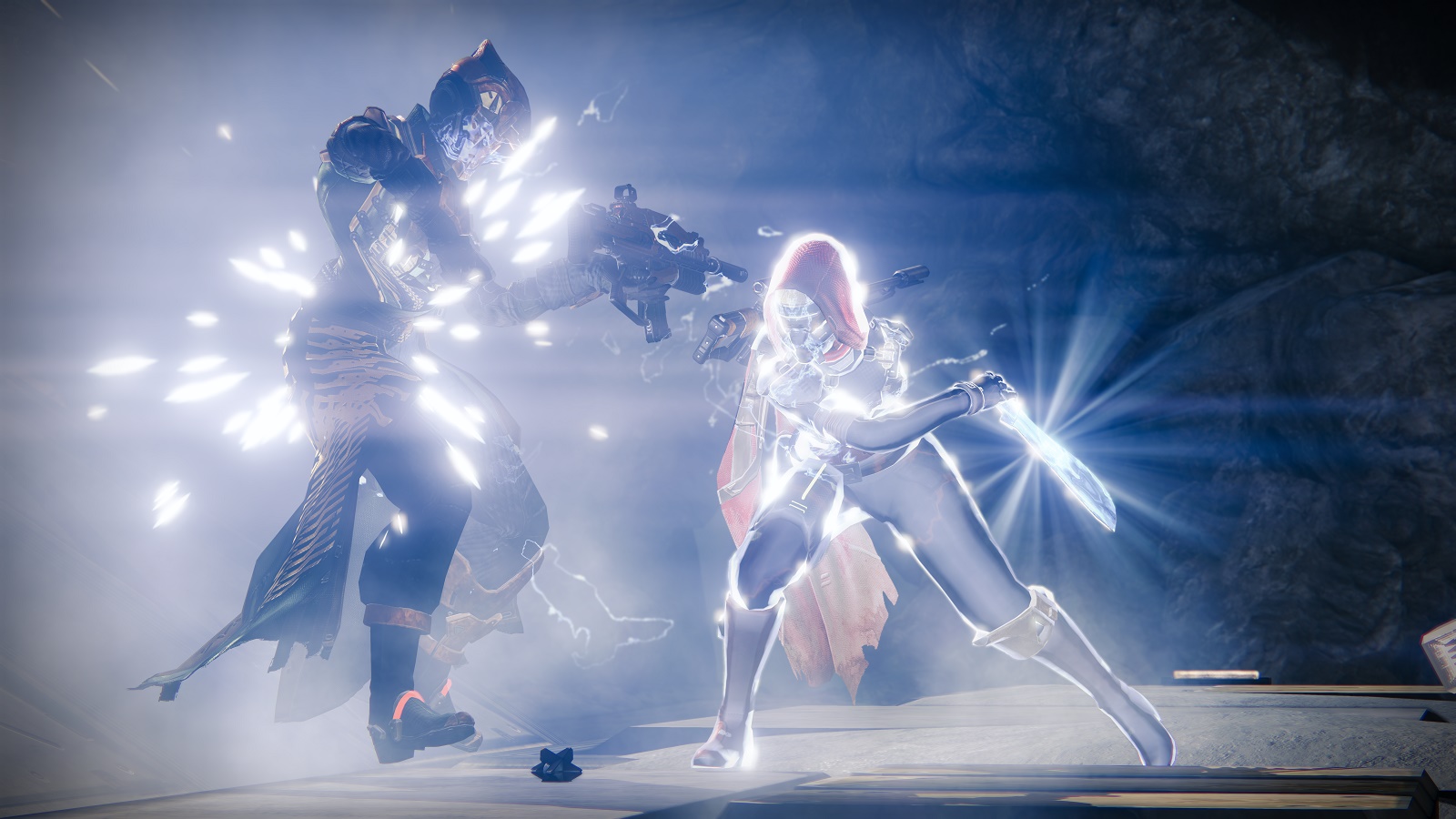
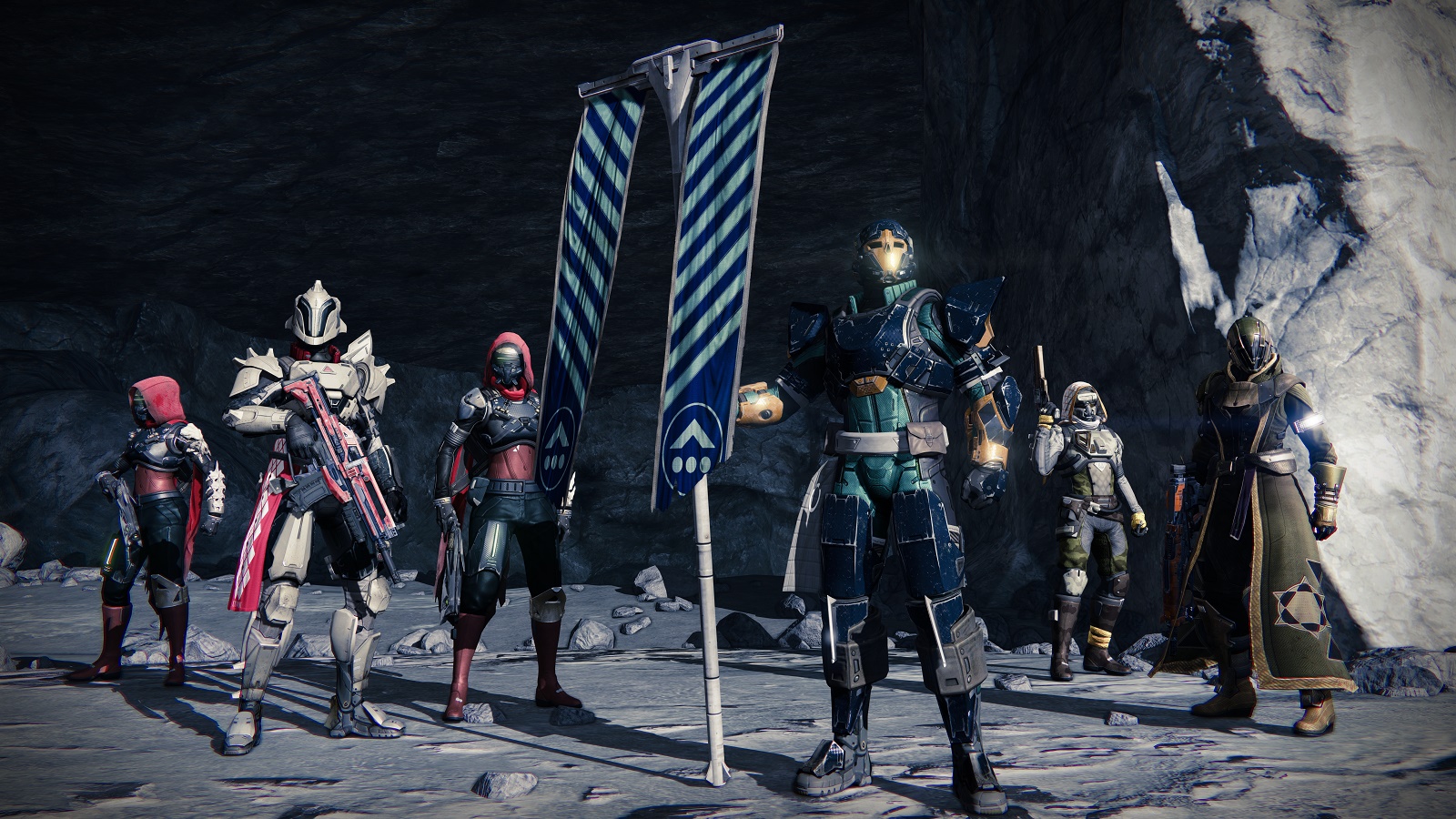
Opinion: Why Destiny matters
by Ozzie Mejia
It's been ages since Destiny was first revealed to be Bungie's next big project, the product of the studio's 2010 contract with publisher Activision. If certain easter eggs are to be believed, Bungie has had this franchise in mind for far longer than that. Tomorrow is the day that Bungie's latest labor of love finally sees the light of day in its finalized form.
There's no secret that Destiny has been lined up to not only be one of the biggest games of the year, but the next great video game franchise. The aim isn't solely to be a great game, it's to be a gaming phenomenon, not unlike Bungie's last major series. So it's safe to say that a lot is riding on Destiny becoming a success. So on the eve of the game's arrival, Shacknews examines Bungie's latest from several perspectives, analyzing exactly what Destiny means to them.
The publisher
To say Activision has put a lot of eggs in the Destiny basket would be a massive understatement. It's hard to forget that CEO Bobby Kotick famously put the game's budget at a cool $500 million, making it the most expensively-produced game ever made. It definitely shows, between the big-budget trailers (including the live-action launch trailer from the director of Tron: Legacy and the other live-action CG trailer produced by Jon Favreau), the top secret data center, the Google Maps-powered Planet View, the Paul McCartney soundtrack, the insane marketing tie-ins, and all the work that went into both the alpha and the beta. Activision wants to get their money's worth and anything short of a video game culture-changing blockbuster will be considered a failure.
They'll never admit it, but Activision is standing at a crossroads. The Call of Duty franchise that has sustained them for well over a decade continues to show decline, the result of the law of diminishing returns. A large number of the publisher's most reliable developers have been shuttered, including Neversoft, Bizarre Creations, and Radical Entertainment. A handful of others, like the remnants of Neversoft and High Moon Studios (who had suffered their own employment apocalypse), have been shifted to helping keep Call of Duty afloat. Their other successful franchise, Skylanders, remains hot, but is facing its greatest threat to date in the form of the Disney Infinity machine.
It'd be slightly hyperbolic to suggest that Destiny represents Activision's future, but look at the lengths they're going to in order to ensure its success. If Destiny falls short, it stands to be one of the company's biggest failures ever. It would mean they still wouldn't have a successor to Call of Duty. More than that, it could lead to the publisher (as well as all AAA publishers, in general) re-thinking their entire approach to games across all facets. Many consider Destiny to be a sure-fire success, but the thought of anything less most likely has Activision sweating.
The developer
There's a lot of pressure on Bungie. It goes beyond Activision's massive expectations and its bloated budget, which the developer has since gone on to try and downplay as much as possible. When one thinks of Bungie, one naturally thinks of the Halo franchise. These are the people that changed online multiplayer gaming on consoles as gaming audiences knew it. They single-handedly helped make Xbox Live and online console gaming services, in general, what it is today. They defined an entire console gaming generation.
For Bungie, Destiny is their chance to prove that they have more in them than Master Chief.
Bungie's ambitions for Destiny have been laid out before. They don't want this to solely be a futuristic sci-fi shooter. They want it to be a social experience, in which friends can get together and explore vast environments, finding new adventures every day. Even in single-player, Bungie wants players to feel like they're connected to a larger world, one that surprises them with every new session. In short, Bungie wants to re-define the genre completely.
Many games enter the gaming landscape with an aim to re-define the way games are played. Only few are ever successful. Even the most hyped releases suffer from short attention spans, as Titanfall players on PC will attest to. If Destiny fails to meet its lofty expectations, it pigeonholes Bungie into the role of 'the studio that once made Halo.' And with 343 capably carrying the Halo flag into the future, even that label doesn't carry as much weight as it used to.
With all that's been put behind its development, Bungie is aiming for Destiny to be their magnum opus.
The console makers
Even with new console sales through the roof, those that have adopted an Xbox One or PlayStation 4 are noticing a distinct lack of must-own games. Software sales have declined over the summer, with both Microsoft and Sony waiting for a blockbuster to help boost both hardware and software sales. Destiny looks to be that title.
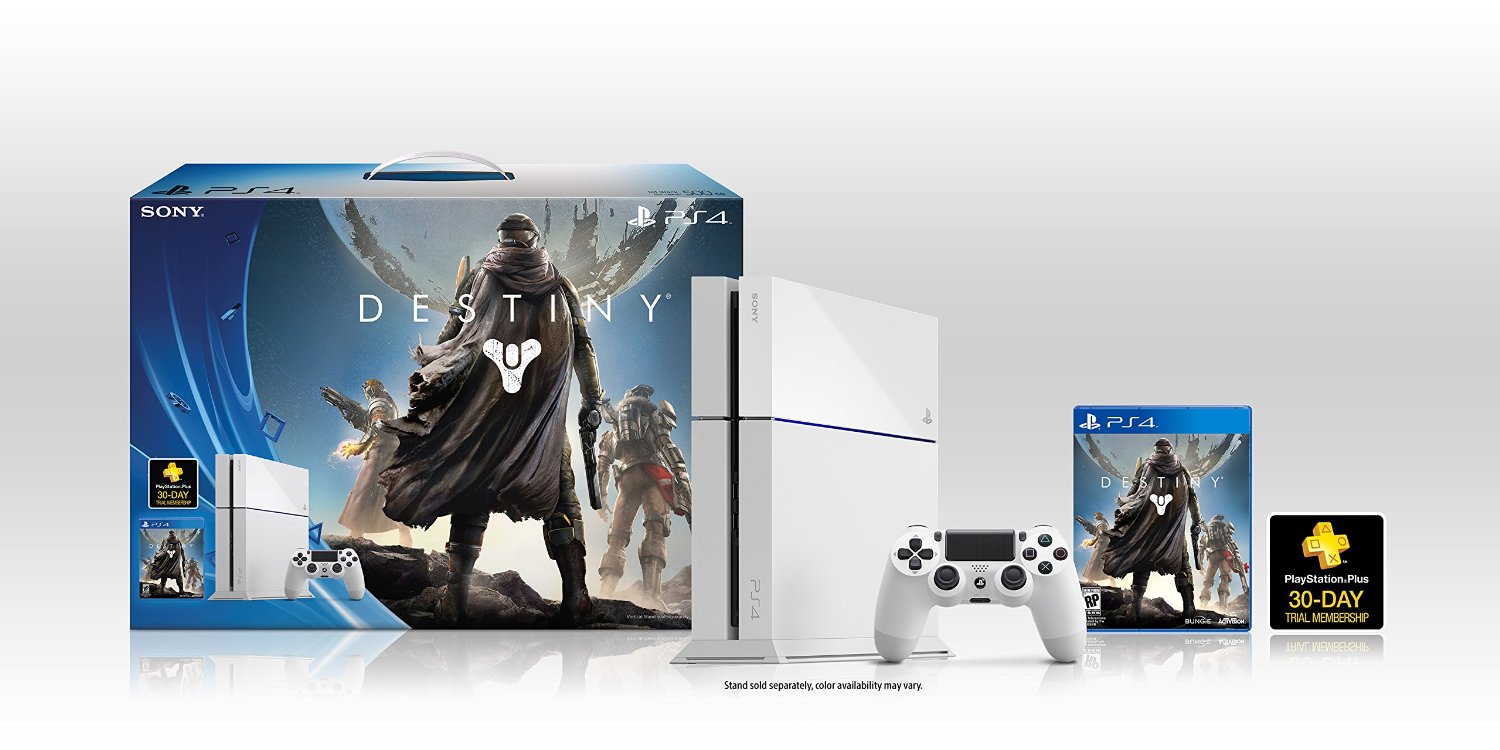
Sony has invested heavily in Destiny, as indicated by the number of PlayStation-only gear, the console bundle, and timed-exclusive content. They already have a handy lead in the console wars, but they're hoping Destiny gives them a major push. Given that many of their first-party exclusives, like The Order: 1886, won't hit the console until 2015, Sony is banking on Destiny to be a big success.
Microsoft should be far more concerned with Destiny, given how much Sony-centric marketing the game has received. There's a good chance the average consumer doesn't even know that Destiny's coming to their consoles. In fact, they've had to resort to phony fragarance ads (that have since been removed) just to get the word out there. With Xbox One continuing to lag behind PS4 in sales, Microsoft is hopeful that its audience (many of whom purchased Titanfall, Destiny's closest competitor) will pick up Bungie's latest and help give them a shot in the arm.
Regardless, Destiny is one of the few games this holiday season that will carry a console-exclusive designation. Without the Steam beast to push them around, it's a chance for the next-gen consoles to prove what they're truly capable of. It goes farther than technical capabilities, but also the social aspects Xbox Live and PlayStation Network. Most importantly, however, Destiny is also yet another test of those services' infrastructure. If Destiny sputters out of the gate due to network issues from either XBL or PSN, it stands to be another black eye to a pair of services that have already seen their share of issues over the past few years. Given that even single-player needs an online connection, Microsoft and Sony had better have their services ready, lest they face a major customer backlash.
The gaming public
We save the most important one for last. Why does Destiny matter to the average video game user?
Video games are undoubtedly at their best when there's something new to get excited about. It's been difficult to generate excitement with AAA publishers have pushed out insipid sequels, uninspired rehashes, boring reboots, or worn-out trends. For better or worse, Bungie is trying to create something fresh with Destiny, even if it does look like a run-of-the-mill futuristic sci-fi shooter. And if some of our community threads are any indication, this looks to be far from the usual 'space marine' shooter.
Games that transcend genre are ones that pave the way for future game developers. They're games like Super Mario Bros., Halo: Combat Evolved, Call of Duty 4: Modern Warfare, Minecraft, Grand Theft Auto, and Journey. They're ones that make developers stand up and say, "I want my next game to be inspired by that." Destiny stands to be more than a fun experience with friends. If it succeeds, it could be influential to future developers. That could be the greatest reward of them all for anyone that plays video games.
At the end of the day, that's what everyone that's ever picked up a video game should root for. Destiny represents something new, something different, and the potential for change. Remember the earlier points of what would happen if this game fell short? The points about Activision's introspection, Bungie's pigeonholing, and Microsoft and Sony's sales? Those all pale in comparison to what would happen to the gaming public if Destiny doesn't perform to expectations or if it fails to live up to its potential. Destiny's failure would let a lot of people down and turn the gaming landscape into a more cynical place.
Tomorrow, the gaming world finds out if Destiny can live up to its potential and become the game-changer that everyone hopes it can be.
10 Sep 08:01

NIH Lab Search Yields 100-Year-Old Ricin Sample
by Francie Diep
Biological samples in a freezer.
Nick Smith/ALSPAC via Wikimedia Commons
Remember last week when the U.S. National Institutes of Health asked American scientists, "Pls check yer vials!"? (We're paraphrasing.) Apparently, the agency has taken its own advice to heart. In a search of its own facilities, they found forgotten bottles containing ricin--a potent poison--as well as vials of organisms that cause botulism, plague and other illnesses, the Associated Press reports. The ricin sample is estimated to be 85 to 100 years old.
The AP reports the NIH sent out a memo saying the vials were all found sealed and intact. That suggests there's nearly no risk anybody could have gotten sick from them. Still, the discovery underscores the likelihood that labs around the U.S. and the world are holding onto dangerous biological agents without knowing it.
The NIH launched its agency-wide freezer search after federal scientists discovered forgotten vials of smallpox virus in a Food and Drug Administration lab refrigerator in July. Since the start of the campaign, officially called National Biosafety Stewardship Month, federal labs have undergone elaborate-sounding searches. The White House Office of Science and Technology Policy also sent out a memo to university scientists, asking them to participate. There's no legal mandate to participate, but perhaps the NIH's discoveries will spur them to.
NIH scientists destroyed the antique samples they found, the AP notes.
10 Sep 07:17
 If you haven't heard yet, Cupertino just launched a digital wallet called Apple Pay that randomizes your credit cards' numbers. The one responsible for generating those fake numbers for Visa cards in particular, is Visa itself, through its new Token...
Visa's Token Service generates fake CC numbers to keep your real ones safe
by Mariella Moon
If you haven't heard yet, Cupertino just launched a digital wallet called Apple Pay that randomizes your credit cards' numbers. The one responsible for generating those fake numbers for Visa cards in particular, is Visa itself, through its new Token...
10 Sep 05:41
ISIS Declares War On Twitter
You closed my Twitter account? I KEEL YOU! It would have been funny if Twitter locked them out of their accounts and posted this guy's videos instead.
An ISIS-affiliated group has threatened to assassinate Twitter employees that close down their accounts. Users linked to the extremists tweeted a series of messages on Sunday urging 'lone wolves' in the US and Europe to make the firm their target. A specific warning was directed at staff at the Silicon Valley headquarters, warning they would 'bring the war' to San Francisco.
Comments
10 Sep 05:40
Microsoft May Buy Minecraft Studio For $2B
Did they just says $2 billion for Mojang!?!? Holy hell, we need a price check on isle #3 please.
Microsoft is in serious discussions to buy Mojang, the independent Swedish studio responsible for Minecraft, in a deal estimated at more than $2 billion, The Wall Street Journal reports. An agreement could be signed this week, the site says.
Comments
09 Sep 21:18
Amaranthe - Release New Single, Available For Streaming
by BloodTears
Your favourite guilty pleasure <a href=/bands/band.php?band_id=4907&bandname=Amaranthe>Amaranthe</a> just released a new single today called <i>Drop Dead Cynical</i>. You are in luck because the band is also streaming it online which means you can listen to it here! <i>Massive Addictive</i> is the name of their upcoming new album. So, enjoy the new song and tell us, is it addictive? <a href="/events/news_comments.php?news_id=24409>Read more...</a>
Roumen.ganeff likes this
09 Sep 21:04
Apple Announces the Apple Watch; Available Next Year
by Joshua Ho
Apple has thrown their hat into the wearable ring with the Apple watch, which tries to bring a better user experience to the watch without trying to adapt iOS to the watch with multi-touch gestures that we're familiar with on the iPhone.
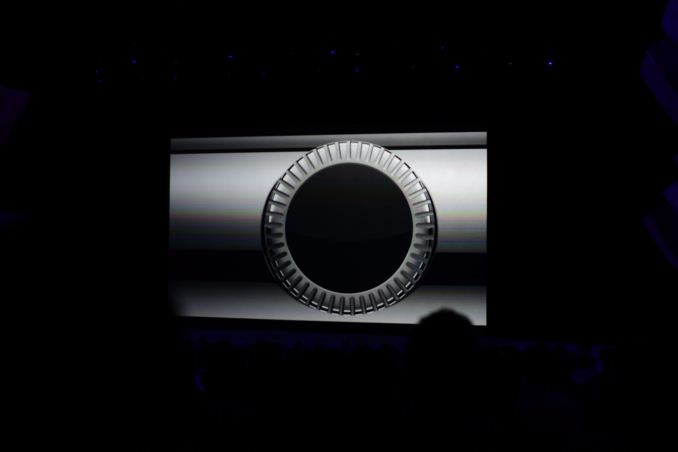
There's a single crystal sapphire display, a digital dial crown that acts as a home button and a scroll system. There's also a strong emphasis on haptic feedback which allows for linking of watches to share notifications by sending taps in any possible pattern. This is done by using a force sensitive touchscreen, which is a method of navigating along with the scrolling dial. This allows for subtle communication that doesn't rely on obvious sound or gestures. It's also possible to send taps based upon pulse/heart beat.
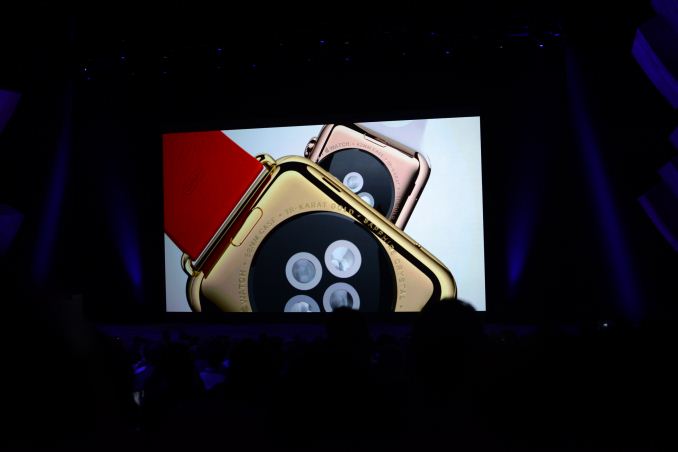
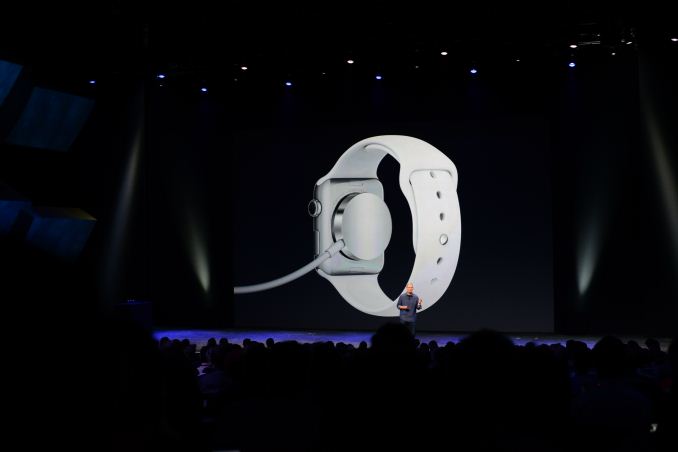
There are IR lights and sapphire lenses on the back of the watch for heart rate and serves as a magnetic alignment wireless charging system. The accuracy of the watch is no more than 50 milliseconds off at any time.
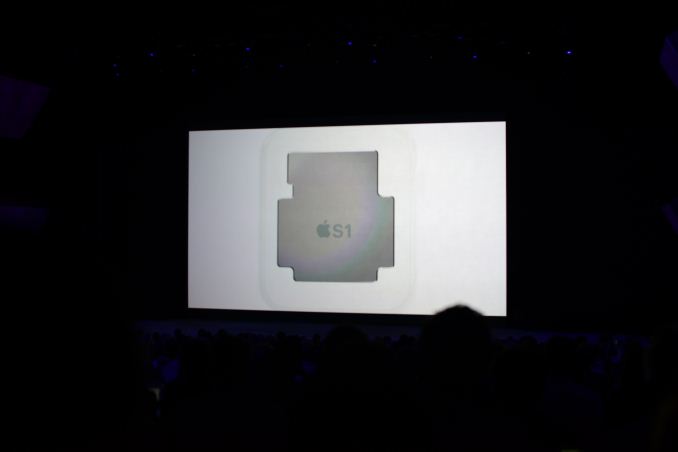
In order to support this watch, Apple has also designed a custom SoC called S1, likely for battery life and sensor integration and reduction of board area.

There are six different straps that are easily exchanged. The sport band has multiple colors and is some kind of rubber. There's a leather sports strap which has multiple magnets to ensure that the fit works correctly. There's also a traditional leather strap and a stainless steel link bracelet. There's also a stainless steel mesh band that is infinitely adjustable. There are also two versions of each watch edition, one larger and one smaller.
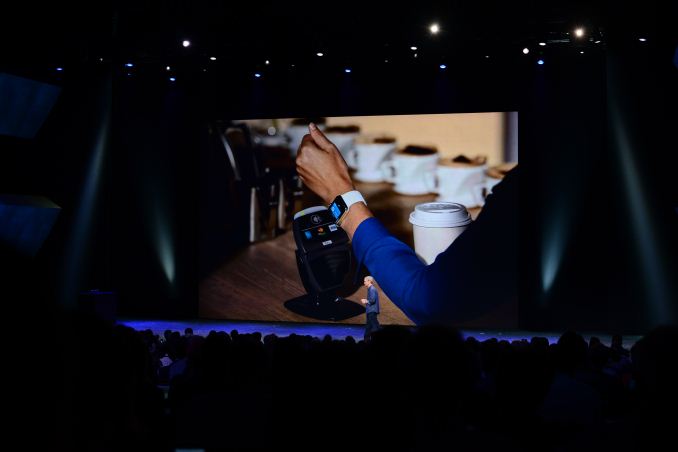
The Apple Watch also has NFC and will work with Apple Pay.
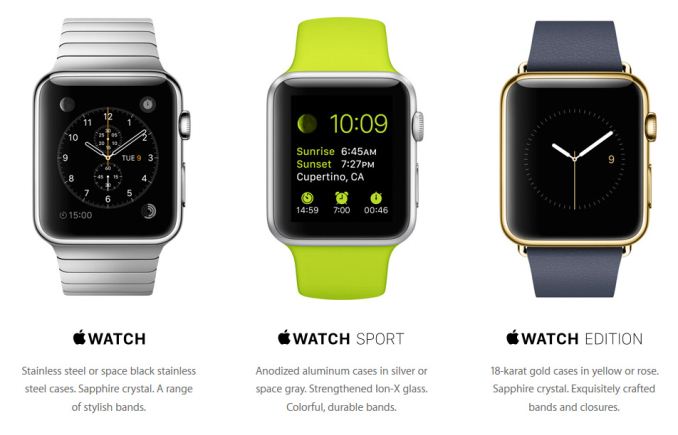
There are actually three variants though, which include the standard Apple Watch, Watch Sport, and the Watch Edition which has 18 karat gold for the casing. The sport edition has a anodized aluminum casing.
Furthermore the watch will also come in two different case sizes to account for different wrist sizes (essentially his & her watch sizes). These sizes are 38mm and 42mm tall respectively.
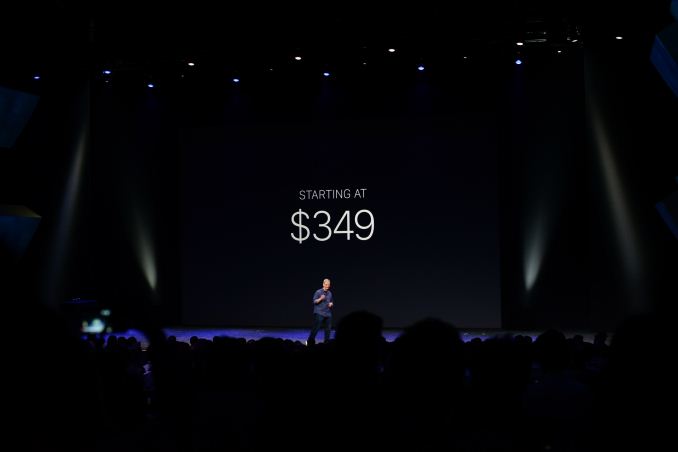
The Apple Watch must be paired with an iPhone to work properly. It starts at $349 USD and will go on sale early 2015.
Ronald.phillips likes this
09 Sep 18:10
Apple Announces A8 SoC
by Ryan Smith

As expected from this year’s iPhone keynote, Apple has announced a new member of their internally developed family of ARM SoCs.
The latest SoC, dubbed A8, is Apple’s first SoC built on the 20nm process, and among the first SoCs overall to be built on this process. Apple notes that it has 2 billion transistors and is 13% smaller than the A7, which would give it upwards of twice as many transistors as the A7 and would put the die size at about 89mm2.
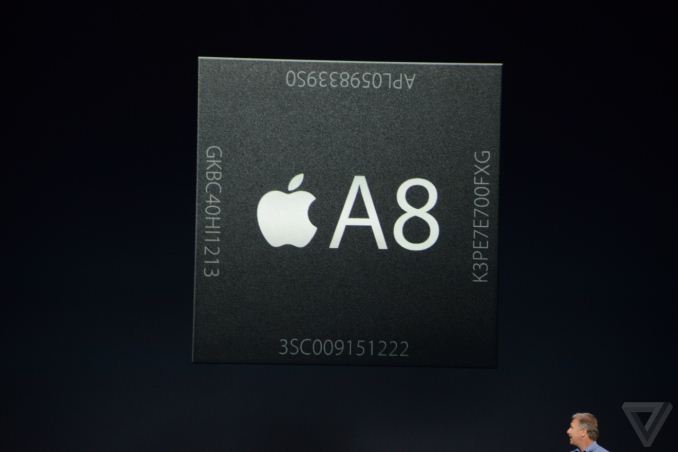
Image courtesy The Verge
From a performance perspective Apple is promising 25% faster CPU performance than A7. As is usually the case with Apple, they aren’t talking about the underlying CPU core – though this is a problem we’re working to rectify – so it remains to be seen how much of this is due to CPU architectural upgrades and how much is from clockspeed improvements afforded by the 20nm process. Apple just introduced their 64bit Cyclone core last year, so it stands to reason that just a year later and with the transition to 64bit already completed, A8 packs a CPU that is similar to Cyclone.
| Apple SoC Evolution | |||||
| CPU Perf | GPU Perf | Die Size | Transistors | Process | |
| A5 | ~13x | ~20x | 122m2 | <1B | 45nm |
| A6 | ~26x | ~34x | 97mm2 | <1B | 32nm |
| A7 | 40x | 56x | 102mm2 | >1B | 28nm |
| A8 | 50x | 84x | 89mm2 | ~2B | 20nm |
Meanwhile Apple is being even less specific about the GPU, but from their published baseline performance comparisons against the iPhone 1, the A8 is said to be 84x faster on graphics. This compares to a published figure of 56x for the A7, which implies that the A8’s GPU is 1.5x faster than the A7’s. Given Apple’s conservative stance on clockspeeds for power purposes and the die space gains from the 20nm process, it seems likely that Apple has upgraded from a 4 core PowerVR GPU to a 6 core PowerVR GPU, likely the flagship GX6650, which would account for the 50% performance gain right there.
Finally, Apple notes that the A8 is designed to be 50% more energy efficient than the A7. Some of these efficiency gains would come from gains due the 20nm process, however this large of a gain would indicate that Apple has done additional work at the architectural level to improve efficiency, as smaller manufacturing nodes alone do not see these kinds of gains.
Update: We have posted our initial A8 analysis here
Ronald.phillips likes this
09 Sep 18:10
Apple Announces iPhone 6 and iPhone 6 Plus; Available September 19th
by Joshua Ho
Today, Apple is launching the new iPhone 6 and iPhone 6 Plus. One of first changes is that the new iPhone 6 has a 4.7" 1334x750 display, and the iPhone 6 Plus has a 5.5" 1920x1080 (1080p) display. The thickness of of the 4.7" model is 6.6mm and the 5.5" model is 7.1mm.


The displays will have higher contrast, better peak brightness, and better viewing angles according to Apple. This suggests that the iPhone display has a chevron shape to its subpixels to improve viewing angles. The glass also has a 2.5D curve similar to the HTC One X and Samsung Galaxy S3 for a smooth feel when swiping off the edge of the phone.


iOS is also adapted to the new larger iPhone 6 Plus' display by adding landscape views for many native applications that are two pane. In addition, in order to work with the differing resolutions Apple has added a "desktop-class scaler" to avoid incompability issues with applications that aren't aware of the new displays. This in turn implies that Apple is not doing integer scaling/doubling in all cases, and that we'll see fractional scaling used. These displays are known as Retina HD. There's also a one-hand mode for the iPhone 6 Plus in order to deal with the larger display size.
The new A8 powers both of these iPhones, and has 2B transistors compared to 1B the A7. It's also built on 20nm but it's unclear whether this is TSMC, Samsung, or both.

Apple also claims 25% higher CPU performance on the A8 and is also emphasizing that this new SoC can do better sustained performance over time compared against other smartphones. The GPU is supposed to be a GX6650.
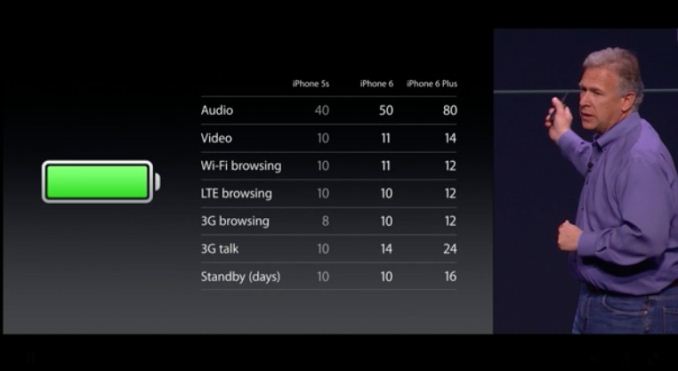
Image Courtesy Engadget
Apple is also emphasizing that battery life on the iPhone 6 and how it compares to the iPhone 5s. WiFi browsing battery life is slightly increased over the 5s while LTE browsing battery life is unchanged, meanwhile the iPhone 6 Plus improves to 12 hours for both WiFi and LTE.

There's also a new M8 coprocessor which makes use of a new barometer sensor to measure relative air pressure and compute distance and elevation for better fitness tracking, which is used for the health application in iOS 8.


Apple is also finally introducing MDM9x25 with carrier aggregation and VoLTE. This means that there's a dual transceiver solution in the iPhone 6 devices. On the same line, Apple is finally adding 802.11ac to its smartphones and has worked on enabling seamless WiFi calling that goes from WiFi to cellular networks.


On the camera side, we see a new 8MP sensor which adds phase detection auto focus for faster autofocus, which is touted to be able to focus at up to 2x speed. There's also better local tone map and better noise reduction in addition to the PDAF system that was first seen in the Samsung Galaxy S5. Panoramas can now be up to 43MP in total resolution and a better gyroscope reduces stitching errors.


There's a brand new ISP in the A8 SoC as well, which is likely to be named the H7 ISP if we follow from the A7. Furthermore there's one feature that the iPhone 6 Plus does have that the iPhone 6 doesn't have for the camera, which is optical image stabilization (OIS) to reduce shaking. It appears that the entire module is floating instead of just a VCM-based lens stabilization system. There's also a timelapse feature. The PDAF also helps with continuous AF in video that avoids all of the breathing effects that come with conventional contrast-based focus.

The front facing camera also has a better sensor, f/2.2 aperture, single photo HDR, HDR video, and burst shot on the front facing camera.
Both will launch with iOS 8, which has QuickType that we've talked about at the WWDC keynote in addition to Extensibility which allows for TouchID auth in third party apps.


Also new to the iPhone 6 family is Near Field Communication (NFC) hardware, which is being used to power Apple's new payment system, Apple Pay. The iPhone 6 family utilizes an encrypted secure element (likely on the NFC chip itself) and credit cards are added through Passbook and validation for a purchase can be done using TouchID.
Apple has reassured security concerns by saying that Apple cannot know what is purchased and the cashier cannot see the credit card number or any information to ensure security. Online payment is also handled by Apple Pay which is a one-touch solution using TouchID and one time number from the secure element. Groupon, Uber, Target, Panera, MLB, and Apple store applications are all already supporting this system. Another example cited was OpenTable which allows for one to pay for a dinner check through an app. The system launches in the US in October as an update and will have an API open to all developers to implement in their applications.
| Apple iPhone 5s | Apple iPhone 6 | Apple iPhone 6 Plus | |
| SoC | Apple A7 | Apple A8 | Apple A8 |
| Display | 4-inch 1136 x 640 LCD | 4.7-inch 1334 x 750 LCD | 5.5-inch 1920 x 1080 LCD |
| WiFi | 2.4/5GHz 802.11a/b/g/n, BT 4.0 | 2.4/5GHz 802.11a/b/g/n/ac, single stream, BT 4.0, NFC | |
| Storage | 16GB/32GB/64GB | 16GB/64GB/128GB | 16GB/64GB/128GB |
| I/O | Lightning connector, 3.5mm headphone | ||
| Size / Mass | 123.8 x 58.6 x 7.6 mm, 112 grams | 138.1 x 67 x 6.9 mm, 129 grams | 158.1 x 77.8 x 7.1 mm, 172 grams |
| Camera |
8MP iSight with 1.5µm pixels Rear Facing + True Tone Flash 1.2MP f/2.4 Front Facing |
8MP iSight with 1.5µm pixels Rear Facing + True Tone Flash 1.2MP f/2.2 Front Facing |
8MP iSight with 1.5µm pixels Rear Facing + True Tone Flash + OIS 1.2MP f/2.2 Front Facing |
| Price | $99 (16GB), $149 (32GB) on 2 year contract | $199 (16GB), $299 (64GB), $399 (128GB) on 2 year contract | $299 (16GB), $399 (64GB), $499 (128GB) on 2 year contract |
There are new silicone and leather cases with gold, silver, and space gray. The iPhone 6 starts at the usual $199 for 16GB, $299 for 64GB and $399 for 128GB. The iPhone 6 Plus comes in the same colors at $299 for 16GB, $399 for 64GB and $499 for 128GB. The iPhone 5s is now $99 on 2 year contrast, and the iPhone 5c is free. The new phone will ship on September 19th and preorders begin on September 12th.

Ronald.phillips likes this
09 Sep 14:09

The War Of Zeros And Ones
by Peter W. Singer
Who is really at risk in this new type of warfare?
Dan Saelinger
Like so many stories in the world of digital security, this one began with simple human carelessness. In 2006, a senior official in the Syrian government brought his computer with him on a visit to London. One day, he stepped out of the hotel and left the laptop behind. While he was out, agents from Mossad, the Israeli intelligence agency, snuck into his room and installed a Trojan horse onto the machine, which allowed them to monitor any communications.
For the Syrians, that would have been bad enough, but when the Israelis began to examine the official’s files, a photo caught their attention. It showed an Asian man in a blue tracksuit standing next to an Arab man in the middle of the desert. It could have been an innocuous meeting of friends, even a vacation photo. But Mossad identified the two men as Chon Chibu, a leader of North Korea’s nuclear program, and Ibrahim Othman, director of the Syrian Atomic Energy Commission. When they paired the image with other documents lifted from the hard drive, such as construction plans and photos of a type of pipe used for work on fissile material, the Israelis came to a disturbing conclusion: With aid from North Korea, the Syrians were secretly constructing a facility at al Kibar to process plutonium, a crucial step in assembling a nuclear bomb. An International Atomic Energy Agency investigation would later confirm their suspicions.
Troubled by this revelation about their openly hostile neighbors, the Israelis mounted Operation Orchard. Just after midnight on September 6, 2007, seven Israeli F-15I fighter jets crossed into Syrian airspace. They flew hundreds of miles into enemy territory and dropped several bombs, leveling the Kibar complex. The Syrian air-defense network never fired a shot.
The security failure wasn’t because all Syrian radar officers turned traitor that night. Rather, their technology did. If planting the Trojan horse into the Syrian official’s laptop was an act of cyberespionage—uncovering secret information by digital means—Operation Orchard was its armed cousin. Prior to the bombing, the Israelis had penetrated the Syrian military’s computer network in such a way that they could monitor their adversaries’ actions. More importantly, the Israelis were able to direct their own data streams into the air-defense network. Once inside, the Israelis introduced a false image of a radar screen, misleading Syrian radar operators into believing all was well—even as enemy jets flew deep into their airspace. By effectively turning off Syria’s air defenses for the night, the Israelis gave the world a chilling glimpse of the future of cyberwar.
A New Type of Warfare
The mainstream media uses the term “cyberwarfare” to describe everything from large-scale Web-based crime to the latest online maneuverings in places like Ukraine, but few outlets have explained how it applies to actual military operations. When nations develop the ability to unleash their armed forces onto a digital battlefield, they carry the potential to reshape warfare much as they did a century ago when they opened the sky with rockets and planes.
Today, more than 100 of the world’s militaries have some sort of organization in place for cyberwarfare. The Fort Meade complex in Maryland, which is home to the National Security Administration (NSA) and Cyber Command, contains more personnel than the Pentagon, while Datong Road in Shanghai is the reported home of Unit 61398, a Chinese group linked to hacks on everything from U.S. military communications to the New York Times’s internal email. These organizations’ size, scale, training, and budgets differ, but they share the same goals: to “destroy, deny, degrade, disrupt, [and] deceive,” in the words of the U.S. Air Force. At the same time, they aim to defend against the enemy’s use of cyberspace for the same purpose. Among military planners, the paradigm is known as the “five D’s plus one.”
Interest in this type of capacity is skyrocketing. In the 2012 U.S. defense budget, for instance, the word “cyber” appeared 12 times. This year, it showed up 147 times. New funding included everything from work on covert infiltrations similar to Israel’s Operation Orchard to broader efforts like Plan X, a $110 million program that, according to one published report, will help war planners rapidly assemble and launch online strikes and make cyberattacks a more routine part of U.S. military operations. Officials are also engaging in broader debates, such as how such units should be organized. One proposal is to place them under entirely new military services, similar to how the U.S. war department a century ago organized air-based units under the Signal Corps (and later the Army Air Corps) before forming the Air Force.
No matter how those debates play out, what many call a new type of warfare actually has much in common with traditional combat operations. The computer is just another weapon in the arsenal. As with the spear or the airplane, it’s a tool to help achieve the goals of any given operation.
Before battle begins, a smart commander starts by gathering intelligence. In World War II, the Allies’ ability to crack Axis radio codes proved crucial to victory. As the Israelis showed with Operation Orchard, intercepting digital communications is still the first step in modern warfare because infiltrating networks and gathering information is so useful in laying groundwork for more aggressive action. Military officials have used these tactics in the Pacific as tensions have escalated in recent years. Chinese hackers have reportedly targeted U.S. armed forces networks for intelligence on anything from unit-deployment schedules to the logistics status of American bases in the Pacific. And as the NSA documents leaked by Edward Snowden showed, U.S. cyberunits are working equally hard to gather information about their potential adversaries in China.
Unlike World War II code breaking, cyberattacks offer the potential to not just read the enemy’s radio, but to seize control of the radio itself.
What makes digital warfare different from past intelligence programs is how operations can fluidly transform from merely collecting information into taking aggressive action. Unlike World War II code breaking, cyberattacks offer the potential to not just read the enemy’s radio signals, but to seize control of the radio itself.
As the Israelis demonstrated, if war planners can compromise an enemy’s networked communications, they move from knowing an adversary’s actions, which is a major advantage on its own, to potentially changing them. Hackers could disrupt an enemy’s command and control, barring officers from sending out orders and units from talking to each other, or they could prevent individual weapons systems from sharing critical information. More than 100 American defense systems, from aircraft carriers to individual missiles, rely on GPS coordinates during operations. In 2010, a software glitch knocked 10,000 military GPS receivers offline for more than two weeks, meaning everything from trucks to the Navy’s X-47 prototype robotic fighter jet suddenly couldn’t determine their locations. Cyberwarfare would make such a software error into a deliberate act, causing mass confusion and miscommunication. Earlier this year, for example,
Ukrainian forces in Crimea found themselves cut off electronically from their commanders during the Russian occupation. Isolated, outgunned, and unsure what to do next, they surrendered without a fight.
But disabling or jamming an adversary’s networked communications is “loud,” to use cyberterminology. In other words, the effect of the attack is obvious, so a victim knows the system is compromised. A subtler attacker might instead seek to corrupt information within his targets, sewing erroneous reports that appear to come from inside the organization. The military has traditionally used the term “information warfare” to describe operations that aim to influence an enemy’s decision-making. The objectives might be highly strategic, such as planting false orders that appear to come from top leaders, or more tactical insertions, like when the Israelis co-opted the Syrian air-defense network.
Such attacks on the data itself, rather than just the flow of it, could have immediate battlefield consequences—but they could have even more impact in the long term. Military communications rely on trust. By corrupting that trust, a hacker compromises not only computer networks but also the faith of those who rely on them. Only a relatively small percentage of attacks would need to succeed in order to plant seeds of doubt about any electronic information. Users would begin to question and double-check everything, slowing decision-making and operations to a creep. In the most extreme scenario, a breach of confidence could lead militaries to abandon networked computers for any critical information, setting their capacity back decades. According to one military planner, “It could take forces back to a pre-electronic age.”
Such technological abstinence sounds unthinkable, especially when computers have proven so useful in modern war. But imagine if you had a memo you needed to get to your boss at the risk of losing your job. Would you email it if there were a 50 percent risk \ of it being lost or changed en route? Or would you just hand-deliver it? What if the risk were 10 percent? How about even 1 percent? Now, apply the same risks to a situation in which it’s not your job at stake, but your life. How would your behavior change?
Digital Battles of Persuasion
In 2012, a surveillance drone cruised over a stadium in Austin, Texas, following a GPS-guided course on what appeared to be a typical operation. Without warning, the unmanned vehicle swerved off its pre-programmed route, banking hard to the east of its destination. Not long after that the drone made another errant course adjustment, hurtling south, before finally altering its flight so that it was headed straight toward the ground.
Fortunately, this was a test, not a real-life catastrophe. The Department of Homeland Security had recruited a team of engineers from the University of Texas’s Radionavigation Laboratory to see if it could hack an airborne drone’s flight computer, and the group proved up to the challenge.
Drones, or unmanned aerial vehicles, have become one of the most important technologies in war. They provide surveillance and deliver supplies, and they can unleash missiles on unsuspecting targets. The U.S. military has more than 8,000 such aircraft, including the famous Predator and Reaper, and another 80-plus nations now have military robotics programs. Yet removing humans from aircraft has created new and unforeseen vulnerabilities. Every robotic system links to a computer network that provides operating instructions and its GPS location. The same technology that allows drones to strike targets thousands of miles away also opens up avenues for disruption or even co-option. Consequently, we’re entering an era of what could be called digital battles of persuasion.
In one 2013 Pentagon war game, players explored how they might use a stuxnet-virus-type weapon to send an enemy navy on what they jokingly called a “Carnival cruise line experience.”
No one can co-opt the flight of a bullet, nor has anyone ever been able to brainwash a bomber pilot in midair. But if hackers can compromise robotic weapons systems, they could “persuade” them to do the opposite of what their owners intended. The result would be an entirely new type of combat, in which the goal is not merely to destroy the enemy’s tanks but to make them drive in circles—or even attack each other. In the best-known real-world example of this, the U.S. and Israel used the Stuxnet virus to sabotage computer-directed Iranian centrifuges. The virus caused the machines to malfunction, setting the Iranian nuclear-weapons program back for months. In one 2013 Pentagon war game, players explored how they might use the same kind of weapon to send an enemy Navy on what they jokingly called a “Carnival Cruise Line experience.” Instead of launching missiles to destroy the fleet, a Stuxnet-style attack on warships’ engine systems would set a threatening fleet adrift without power.
The potential for these types of attacks is nearly limitless. In 2009, an employee at the Shushenskaya dam in Siberia turned on an unused turbine with a few mistaken keystrokes, leading to a massive water release that destroyed the plant and killed 75 people. The disaster was an accident, but an enemy could recreate something like it deliberately—just as when Allied planes in World War II and Korea dropped bombs on dams, creating floods that decimated miles of enemy targets. The difference in cyberwarfare is that no aircraft would ever have to leave the ground.
Cyberwar Is Civilian War
As in traditional war, what sounds easy in planning can prove hard in execution. Target systems are complicated, and so are the operations needed to exploit them—especially because every battle has at least two sides. As described by the great thinkers of war Sun Tzu and Clausewitz, for every tactic and strategy, a savvy foe is developing a counter.
These challenges drive adversaries to pursue what are known as “soft targets.” In theory, war is a contest among warriors. In reality, more than 90 percent of conflict casualties in the last two decades have been civilians. It would not be surprising to see the same dynamic in cyberwar.
The most conventional approach would be to attack any civilian networks and operators that support the military. Those could be private contractors, who provide much of the supply and logistics support to modern armies (about half of the American force in places like Afghanistan and Iraq were actually hired hands), or basic infrastructure such as ports and railroads. Just as merchant ships typically made easier targets than warships in past conflicts, civilian computer networks tend to not have the same levels of security as military ones. That makes them particularly appealing marks. In one 2012 Pentagon-sponsored war game, a simulated enemy force hacked a contractor that coordinated and delivered supplies for a U.S. military force. The goal was to transpose bar codes on shipping containers. Had it been a real attack, American field troops would have opened a shipping pallet expecting ammunition only to find toilet paper.
History shows that it’s not just the civilians who provide support for the armed forces who might land in the line of fire. When new technologies like the airplane and long-range missiles expanded military reach beyond the front lines, planners gradually expanded who and what they considered legitimate targets. By the end of World War II, all sides were engaging in strategic bombing against the broader populace, arguing that the best way to end the war was to drive home its costs to civilians. As cyberwarfare becomes a reality, the same grim calculus will likely hold true.
With cyberweaponry still in its infancy, it’s still too early to map its full impact. In the early days of aircraft, military planners laid down a number of predictions. Some proved right, like the idea that planes would bomb cities, while others proved woefully wrong—for example, the notion that the craft would render all other forms of war obsolete.
Yet for all the ways it could change how we engage in military operations, cyberwarfare’s greatest legacy may not be any single capability or function. More likely, it will be how this new form of engagement mixes with other battlefield technologies and tactics to create something unexpected. The airplane, tank, and radio all appeared during World War I, but it wasn’t until the Germans brought them together into the devastating blitzkrieg in the next global conflict that they made their lasting mark.
As we watch the situation develop, we’ll be left to ponder a tragic irony. The Internet may have started out as a Defense Department project, but it has since become one of the world’s greatest forces for political, economic, and social change. That dual history should make it unsurprising that cyberspace will play a central role in the future of global conflict, but it should also make us a bit sad. War, even one fought with zeros and ones, will still remain a bitter waste of resources.
This article originally appeared in the September 2014 issue of Popular Science.
Spursfan123 likes this
08 Sep 11:24
 Following up their Game Boy vid, the Fine Brothers introduce teens the now 30-something NES, and once again we feel old. These... young people, including Maisie Williams AKA Arya Stark, do show plenty of respect for perhaps the most important home...
'Is this a projector?' - Teens, Maisie Williams meet the NES
by Sinan Kubba
Following up their Game Boy vid, the Fine Brothers introduce teens the now 30-something NES, and once again we feel old. These... young people, including Maisie Williams AKA Arya Stark, do show plenty of respect for perhaps the most important home...
Roumen.ganeff likes this
08 Sep 07:22
 There's a different kind of two-seater roaming the sidewalks of the University of New South Wales (UNSW) in Australia: a motorized couch. Thanks to the efforts of a few engineering students, what started as a joke amongst friends is now a Xbox...
Robocouch takes students to class without all of that exercise nonsense
by Billy Steele
There's a different kind of two-seater roaming the sidewalks of the University of New South Wales (UNSW) in Australia: a motorized couch. Thanks to the efforts of a few engineering students, what started as a joke amongst friends is now a Xbox...
Randy Laue, Sofía Henao and 4 others like this
07 Sep 08:15


‘X-Men Apocalypse’ Will Shoot in Montreal Next Year
by Germain Lussier

With the summer of 2015 all but set, eyes have quickly turned to the summer of 2016. Most of the talk has been about Batman v Superman and Captain America 3, but don’t forget there’s another major superhero film coming mere weeks after those. It’s X-Men Apocalypse, the sequel to the massive hit X-Men Days of Future Past, which was the #4 movie of the summer grossing over $230 million domestic and $745 million worldwide.
The sequel is currently slated for release May 27, 2016 and the script has been in progress all summer. Now, a report in a Canadian newspaper confirms filming will commence in April 2015 in Montreal, Quebec, Canada. Read more about X-Men Apocalypse filming below.
Journal De Montreal (via CJAD and Coming Soon) confirm set construction for the film will begin at the end of this year at Mel’s Studio, where Days of Future Past also shot, with cameras set to roll in April.
Since other 2016 releases such as Batman v Superman, Tarzan and Alice in Wonderland 2 are all already shooting, this news was certainly coming. April gives Bryan Singer (who we think will direct, but still hasn’t been confirmed due to his now dwindling legal troubles) less than a year to complete the film, which will surely have lots of effects and a huge cast.
No one has officially signed to star in the film yet but as it’s a follow up to X-Men: Days of Future Past set in the ’80s, the smart money is on the First Class cast coming back. So Jennifer Lawrence, Michael Fassbender, James McAvoy and Nicholas Hoult will all likely return. Producer/co-writer Simon Kinberg has also said the sequel will feature some of the original cast (Hugh Jackman, Patrick Stewart, etc.) but it sounds like this time, their inclusion will be more on a story basis.
What is that story? We don’t know specifically but we know it’ll center around the ultra-powerful mutant Apocalypse, who we saw in the post-credits scene of Days of Future Past. Singer and others have talked about how the idea of “Ancient Mutants” would be a driving force, too. You can read much more about that here.
So X-Men Apocalypse filming is on the way. Slowly but surely. Do you think it will compete with the DC and Marvel Studios films in 2016?
- Batman v Superman Teaser Trailer Description [Comic Con 2014]
- Kevin Feige Says to Expect a Three-Year Wait Between ‘Avengers’ Movies
- Fox Still Wants Bryan Singer for ‘X-Men: Apocalpyse’
- Superhero Bits: Namor, Guardians of the Galaxy, Daredevil, Avengers: Age of Ultron, Thor, Batman
- Gambit Could Debut in Solo Movie First, Says Channing Tatum
- Cool Stuff: “Hail Caesar” Dawn of the Planet of the Apes Illustrated Poster
The post ‘X-Men Apocalypse’ Will Shoot in Montreal Next Year appeared first on /Film.
Roumen.ganeff, Spursfan123 likes this
07 Sep 08:10


Recent ‘Star Wars 7′ Rumors Line Up With Spoiler Post From March
by Germain Lussier

One of the first rules of reporting is that if you can’t get a primary source, get corroborating sources. Let’s say you’re trying to figure out what happens in Star Wars Episode VII. J.J. Abrams or Harrison Ford would be a primary source because they are directly involved. Since they can’t or won’t speak on the record about it, the best thing to do is find multiple unrelated people can who give you the same information. If you can get three people to corroborate something, that’s usually considered a fact.
We might now have two sources to push some big rumors toward fact.
Latino Review has been one of a handful of sources for the myriad Star Wars 7 rumors in the past few months. In a new column, they reveal almost everything they’ve reported was initially reported back in March on 4Chan. That seems to mean two independent sources have corroborated some of the biggest Star Wars 7 rumors/spoilers out there today.
Below, we’ll show you that original report and trace the links between the sites. Beware of massive spoilers.
The original rumors on 4Chan can be seen in this Archive post. Latino Review was smart enough just to put a screenshot.

I’m going to put all the black text below, but in white. Highlight if you want to read. Then I’ll break down some of it.
MAJOR SPOILERS BELOW. Highlight to view them.
>Leia is made leader of the Republic after her predecessor’s death
>Han is a retired veteran of the Republic fleet
>Luke hasn’t been seen in nearly 30 years
>the lead character is Han and Leia’s daughter
>the other lead is the child of Lando, and either a male or female depending on who is cast
>the other lead is a Stormtrooper, also either a male or female depending on who is cast
>dialogue for these two characters is very rough in the second draft
>Luke has no known offspring
>The Empire still exists in the form of a number of loyal galaxies and are in a state of cold war with the Republic
>The Empire is simply referred to as the “Empire,” and the Republic is referred to formally only once, as the “Galactic Republic;” no “New” anywhere
>There are no Jedi whatsoever, and people still speak as if they are extinct, with Luke being “the last of his kind”
>The main antagonists are an older student of the Emperor, and his apprentice
>The apprentice takes control of the power dynamic between the two pretty quickly…
>The Republic are excavating ruins on a neutral world for a weapon; the world factors into tense negotiations the Empire have had with the Republic, and is referred to as the “Sith Homeworld”
>Loredump: In the script, the Sith are a couple thousand years old, founded by an ancestor of Palpatine called Ruin; the apprentice in this film also goes by that name
>the ruins within the Sith Homeworld are a control station; the planet itself is the weapon
>Luke saves the day at the end, but in a bad way; he has changed
We’re back. I’m now going to discuss those potentially major spoilers in relation to what we’ve already been discussing. So, again, major spoilers below.
Solo’s daughter and the Stormtrooper as two main characters point to Daisy Ridley and John Boyega. Ridley sitting between Harrison Ford and Carrie Fisher in the first photo originally lead to that speculation, and subsequent rumors said Boyega was some kind of defecting Stormtrooper. Lando’s child could possibly be Crystal Clarke, an actress officially cast who we haven’t heard much from since. Of course the Luke missing thing has long been a rumor, reported by both Latino Review and Badass Digest among others.
It’s the villain stuff that’s the most striking. There’s the link to the Emperor, which was a rumor from just a few days ago, as well as the idea of the Sith Homeworld playing a role and the fact that a planet acts a weapon. All of that we’d heard before. We even heard the name “Ruin” as a villain in a recent Latino Review report. Almost everything matches.
The one thing that’s new in this report is that last line about Luke saving the day, but in a bad way. “He has changed.” Does Luke Skywalker become the villain for the next two movies? That would be incredible. Or, maybe, Han Solo or the younger generation takes care of him. Either way, it sounds appropriately epic… if its true.
Are either of these sources reporting facts? Who knows? It’s always possible the 4Chan user “Mizzlewump” is just Latino Review’s source running an awesome long con. That’s absolutely possible. It might even be likely. If you wanted to fool the Internet into believing these things, planting a seed and then letting it sprout later would be genius.
Then again, the simplest explanation is usually the right one and a person who just wants to be credited with being THE person to post all the information seems as likely as anything.
Anyway, lots of food for thought. What do you think about these latest Star Wars 7 rumors? And do you think a Mizzlewump could also be a Star Wars Episode VII reference?
- Watch Kevin Smith Talk For 11 Minutes About His Star Wars Episode 7 Set Visit
- Matt Reeves Reveals One Reason JJ Abrams Cast Andy Serkis in ‘Star Wars’
- Rumor: ‘Star Wars Episode VII’ Plot Details Revealed
- Matt Reeves and Michael Giacchino Reddit AMA: Apes 3, Star Wars, Jurassic World, and Fun Trivia
- Star Wars 7 Villain Rumor Update: Possible Actors and Design Choices Revealed
- Daisy Ridley Reportedly Returning For ‘Star Wars Episode VIII’ and ‘IX’
The post Recent ‘Star Wars 7′ Rumors Line Up With Spoiler Post From March appeared first on /Film.
Spursfan123 likes this
07 Sep 08:08


Paramount Sets Dates for Two More ‘Terminator’ Sequels
by Russ Fischer

We’ve seen almost nothing official from Terminator: Genisys at this point, but the new Terminator movie has two more siblings set to debut in 2017 and 2018. Paramount Pictures just set dates for two more Terminator sequels, inking a plan to put killer robots into theaters during three of the next four years.
Terminator: Genisys, which stars Arnold Schwarzenegger, Emilia Clarke, Jason Clarke, Jai Courtney, Dayo Okeniyi, Matt Smith, Byung-hun Lee and J. K. Simmons, is set to open on July 1, 2015. Alan Taylor is directing from a script by Laeta Kalogridis and Patrick Lussier.
Now Paramount has set additional Terminator films for May 19, 2017, and June 29, 2018. Deadline reports that Paramount is calling the films Terminator 2 and Terminator 3, but those probably won’t be the actual titles. (They’ve been used!) But the new films are expected to comprise a not-quite-standalone trilogy.
As for competition on those dates, nothing else is set on the 2017 spot, though it is two weeks after one of Marvel’s currently-untitled films, and a week before The Lego Movie 2. The third film also arrives within a week of a Marvel movie.
In non-Terminator scheduling news, Paramount also set the Mark Wahlberg remake The Gambler for an Oscar-qualifying run with a limited release on December 19 before a January 1 expansion. Jessica Lange also stars in the film directed by Rupert Wyatt, and scripted by William Monahan.
- ‘Terminator Genisys’ Is Official Title of Terminator 5; Arnold Schwarzenegger Tweets Announcement Photo
- Kevin Feige Says to Expect a Three-Year Wait Between ‘Avengers’ Movies
- Batman v Superman Teaser Trailer Description [Comic Con 2014]
- ‘Teenage Mutant Ninja Turtles’ Sequel Could Feature Casey Jones and Dimension X
- Will The ‘Transformers’ Movies Ever Be Short? Plus Who Could Take Over For Michael Bay?
- ‘GI Joe 3′ Hires A New Screenwriter For Dwayne Johnson-Focused Sequel
The post Paramount Sets Dates for Two More ‘Terminator’ Sequels appeared first on /Film.
07 Sep 07:50
Kamara reveals Ebola devastation
Sierra Leone captain Kei Kamara likens the devastation caused by the Ebola outbreak in his country to "a sci-fi zombie movie".
07 Sep 07:32
Porn Sites Join The Internet Slowdown Campaign
Don't care about net neutrality? You will when "slow lanes" start taking a toll on your porn viewing experience.
On September 10th next week, several websites are planning to take part in an "Internet Slowdown" in which they'll post symbolic "loading" icons on their sites to demonstrate what will happen to them if the FCC goes through with its plan to sanction Internet "fast lanes" that would completely kill off net neutrality. And now it looks like the campaign has just grabbed its most important contributors yet: Popular porn sites.
Comments
06 Sep 21:39
 The US Federal Bureau of Investigation may have seized the Silk Road and sold off its horde of ill-gotten Bitcoin, but the case isn't over yet -- the dark web site's creator still has to face trial. The defense of Ross Ulbricht, the man allegedly...
FBI says it located the Silk Road by exploiting an error with the server's login page
by Sean Buckley
The US Federal Bureau of Investigation may have seized the Silk Road and sold off its horde of ill-gotten Bitcoin, but the case isn't over yet -- the dark web site's creator still has to face trial. The defense of Ross Ulbricht, the man allegedly...