Shared posts

07 Sep 07:43

Cotton Vs. Polyester: Which Gym Clothes Trap The Most Body Odor?

by Nsikan Akpan

Spinning class
Working out burns calories, while making smelly skin microbes.
Frederiek-Maarten Kerckhof

Chris Callewaert wants to solve body odor, starting with your gym clothes.

He and a team of European microbiologists have tackled a stifling mystery that permeates locker rooms and laundry hampers across the world: Why does gym gear reek even days after a workout?

A fair assumption would be that some fabrics trap more sweat than others, but perspiration on its own is sterile and does not produce foul odors.

Instead, pungent bacteria from our skin grow more readily on certain workout shirts, namely those made from synthetic textiles like polyester, according to new research from Callewaert and his colleagues at Ghent University in Belgium.

The scientists had 26 healthy individuals – 13 men and 13 women – participate in a spinning class, while wearing T-shirts made from natural or synthetic fibers. After the exercise, the shirts were stuffed into plastic bags and stored in the dark, akin to tossing gym clothes into a musty locker. After 28 hours, an independent panel of odor connoisseurs judged that the polyester shirts stank worse than cotton-based ones.

Skin germs feast on chemicals in sweat, turning them into pungent odor compounds, which the bacteria subsequently “fart” out.

Next, the researchers swabbed the shirts’ armpit regions for bacteria. Skin bacteria produce many of the scents connected to bad body odor -- and armpits are microbe havens.

To understand just how prolific bacteria are on our bodies, grab a ruler and pen. Draw a square one centimeter by one centimeter on your forearm. Around 100 bacteria live inside that square. In contrast, an identical square on your armpit, navel, or toe web spaces carries 10 million bacteria.

The most common known cause of malodor is a family of skin microbes in the genus Corynebacterium; however, the scientists couldn’t spot any on sweaty gym gear.

Rather they found that soiled polyester shirts wound up harboring more Micrococci bacteria, a type of odiferous germ, than cotton shirts. The result was surprising because Micrococci don’t generally grow in pits.

“As part of a separate, ongoing study, we’ve screened over 200 people, and found very low levels of Micrococci present on armpit skin,” says Callewaert. “Something about sweat-filled polyester enriches these sour-smelling bacteria.”

Micrococcus luteus
Micrococci bacteria, a type of odiferous germ, were found in soiled polyester shirts.
Skin germs feast on chemicals in sweat, turning them into pungent odor compounds, which the bacteria subsequently “fart” out. While natural textiles absorb this stench-filled water, Callewaert and his colleagues suspect that the funky juice pools in the microscopic spaces in between synthetic fibers, creating a great environment for bacteria to flourish.

To explore this idea, the team took a few pungent species of bacteria and tried growing them in Petri dishes coated with seven different fabrics: polyester, acryl, nylon, fleece, viscose, cotton, and wool.

The results were mixed. Cotton grew very few smelly germs, akin to earlier findings, while the microbes continued to swarm over polyester.

Synthetic nylon was a great refuge for Propionibacterium acnes, a species of bacteria that causes acne and foot odor. Natural wool supported every germ tested, while the scientists found one fabric – viscose – where bacteria didn’t grow.

This preliminary study could help inform clothing makers on how to create less smelly apparel.

“Many manufacturers have started adding antimicrobials, like nanosilver, to their clothes,” says coauthor Nico Boon, a microbial ecologist at Ghent University.

Such chemicals eliminate germs indiscriminately, meaning the good germs disappear with the bad. “This could potentially throw off our immune systems,” Boon continues. “We should manage and control the existing microbial community, so that we steer the germs in the way that we want, instead of killing everything,”

To keep garb from trapping workout odor, he and Callewaert recommend clothing hybrids, where the fabric coming in contact with armpits is made from cotton. The rest of the shirt could be synthetic fabric, which accumulates less heat and feels more comfy.

The researchers published their work in the journal Applied and Environmental Microbiology.

07 Sep 07:38

Your Vote Can Give This Electric Racecar Driver A Big Speed Boost

by Popular Science Staff

Formula E Racecar

KatherineLegge.com/Amlin Aguri

In the April 2014 issue of Popular Sciencewe exploded the view of the racecar designed for Formula E -- the first fully electric, global racing championship. Back then the first round seemed so distant. But now drivers are only a week away from hitting the track inside shockingly quiet vehicles that can top 60 mph in about 3 seconds.

One of those drivers is British auto racer Katherine Legge, the first woman confirmed for Formula E. Popular Science is happy to report that we've partnered with Legge for her inaugural race -- which means we’ll be going along for the ride. At the launch of the Formula E series in Beijing on Saturday, September 13, Legge's helmet will be emblazoned with our logo as she competes against 19 other drivers. She also plans to post exclusive, on-the-ground reports here at PopSci.com. (Look for those starting next week.)

Why are we fans of Legge? Because she’s a fan of science, technology, engineering, and mathematics. For example, Legge is a STEM ambassador for the Girl Scouts to remind young girls that they can succeed in any field if they work hard and believe in themselves.

We couldn’t agree more, which is why we’re hoping to give Legge a little extra boost out on the racetrack. And that's where you come in.

Formula E gives its fans an unprecedented chance to help out a driver through a system called FanBoost. In short, the three drivers with the most votes from registered fans get more speed. More specifically, they each get a 5-second, 30-kilowatt boost, ramping up their cars' 150 kilowatts of power to 180 kilowatts just before the race begins.

Fans can vote for only one driver, and voting closes on the day of the race. So be sure to cast yours before September 13. (Go Legge, go!)

Visit FanBoost to give Legge a leg up on the track.

Hero Shot
Katherine Legge stands in front of her Formula E racecar.

KatherineLegge.com/Amlin Aguri

05 Sep 10:59

Motorola Launches the Moto 360: Hands On and First Impressions

by Joshua Ho

The Moto 360 at this point is one of the most hyped products I've seen this year. However, in my time with the product it seems to be a mostly standard Android Wear watch, but with a few major differences.

At the most basic level, this watch has a TI OMAP 3 for the main application processor. From a performance perspective the OMAP 3 is a solid and simple choice, packing a Cortex-A8 CPU alongside a PowerVR SGX 530 GPU, reflecting the fact that wearables don't require anything near cutting edge performance. However this choice in SoC is oddly out of date on the manufacturing side as OMAP 3 was produced on a now dated 45nm process. Though the Moto 360 doesn't need the performance benefits from from newer 28nm or 20nm processes, these newer processes can deliver similar performance with lower power consumption, which would seem to be a boon for a space and power constrained device such as a watch.

Otherwise, the specs are mostly within expectation. The LCD display is a 1.56" size with 320x290 resolution, and is 46mm in diameter and 11.5mm thick. The leather strap model we've been sampled weighs 49 grams, and the battery has 320 mAh in capacity. Although the nominal voltage isn't given it's likely that it's 3.8V. There's 4 GB of internal storage and 512MB of RAM, a pedometer, heart rate monitor, two microphones, and the watch is rated for IP67 immersion protection, which means it is dust tight and submergable up to 1m of water for half an hour.

Motorola wanted to emphasize that this was a modern timepiece rather than a smartwatch, and they’ve implemented a great deal of new technologies in order to support the intended industrial/material design and user experience. The most obvious of these is the round display, which has no bezel except for the bottom of the watch. Unfortunately, it appears that this area at the bottom is necessary in order to fit the display driver and provide an area where ribbon cables can come out and meet the logic board.

In addition, we see custom antennas that are in the metal housing but don’t require any antenna lines. Unfortunately, there was no real disclosure on how this worked so it was hard to say how they pulled this off but there are noticeable patterns on the inside of the metal casing. New RF techniques were also used to make custom metal wristbands that don’t interfere with the antennas of the watch itself.

Motorola has also equipped the Moto 360 with dual microphones and custom noise cancellation profiles to handle different acoustics from being strapped to an arm, and it should be able to handle noisy environments better than most other Android Wear devices. The work done to enable this level of noise cancellation was done at Motorola's main office in Chicago.

There's also a recessed strap to improve comfort and better hug the wrist, and a custom heart rate sensor that should have better performance and reliability when compared to competing solutions.

The watch also only has wireless charging, and charging is as simple as placing the watch on the included dock. Putting the watch on the dock also automatically puts it into a custom charging mode that allows it to function as an alarm clock. It's currently too early to judge battery life or the actual utility of the watch, but the watch was comfortable, with solid aesthetics and design.

It will start at 249.99 USD and will be available on the Motorola site, Google Play, Best Buy stores and the Best Buy website. The two metal band options will be available later this fall for 299.99 USD and the metal band will be available separately for 79.99 USD. Leather bands will also be available for 29.99 USD.

05 Sep 09:19

Twitter CFO hints at big changes to how your timeline works

by Chris Velazco
Twitter has already started to look more like Facebook, and it might soon start acting more like it too. You see, company CFO Anthony Noto hinted yesterday that the reverse-chronological firehose of tweets that some users hold so dear may give way to...

05 Sep 09:19

Twitter trademark turmoil forces Twitpic to shut down

by Chris Velazco
It's the end of an era, folks: Twitpic, one of the first sites that let users upload and share photos to Twitter, will go dark on September 25. Unlike other shuttered startups though, Twitpic hasn't run out of cash or been pushed out of the spotlight...
05 Sep 09:17

​NVIDIA aims its first patent lawsuit at Samsung and Qualcomm

by Sean Buckley
It's true, Samsung is about to find itself back in the courtroom facing another round of patent litigation -- but this time, the lawsuit isn't coming from a direct competitor. NVIDIA just filed its first patent lawsuit in the company's 21 year...

05 Sep 09:16

'The Sims 4' turns into a pixelated mess if you pirate it

by Timothy J. Seppala
Media piracy likely isn't going away anytime soon, but a few game developers have designed clever ways to deal with it as of late. Take the newly released The Sims 4, for example. In series tradition, just before your virtual people shed their...
05 Sep 09:15

Kickstarter and Mozilla join internet slowdown day

by Chris Merriman
Kickstarter and Mozilla join internet slowdown day

It's not slower, it's just a peaceful protest


04 Sep 15:53

Apple fans start lining up for the iPhone 6, attention

by Dave Neal
Apple fans start lining up for the iPhone 6, attention

Time is on their side, apparently


04 Sep 15:46

How Samsung's VR headset convinced John Carmack to join Oculus VR

by Ben Gilbert
John Carmack's name isn't synonymous with virtual reality just yet. He's still "the guy who led programming on Doom and Wolfenstein" to most folks; the co-founder of acclaimed development studio id Software. And that's exactly why it was such a big...
04 Sep 12:19

Vest And Scarf Made From Spider Silk

by Francie Diep
Roumen.ganeff

GMO spiders.. we know where that leads..

photo ofa pale blue silk scarf and vest
0.4 Percent Spider Silk, 99.6 Percent Silkworm Silk
Yoshihiko Kuwana et al., PLOS One, 2014. CC BY 2.5

This silk scarf and vest have a nice drape and pretty color, but that's not why everyone here at Popular Science covets them. No, we're wishing they were ours because they're made of super-strong, transgenic spider silk. Functional and good-looking! Our favorite.

The clothes were woven from silk produced by silkworms with a spider gene engineered into them. A mix of spider and silkworm proteins actually emerges from the spinners in the silkworms' mouths. The resulting hybrid material is made up of less than 1 percent spider proteins, yet it's 53 percent tougher than regular silk, according to the research team, five scientists from Japan's National Institute of Agrobiological Sciences and Shinshu University.

Scientists have long known spider-silk proteins are exceptionally strong. Dragline silk, the stuff spiders use to make the spokes of their webs and to dangle creepily from ceilings, is five times stronger than an equal-sized thread of steel would be. Researchers have thought about using spider silk for everything from surgical thread to bulletproof vests. There's no reason to make a cute scarf from spider silk, of course, but the Japanese team members wanted to demonstrate they could harvest their product and feed it into the same machines silk factories use.

The resulting hybrid material is made up of less than 1 percent spider proteins, yet it's 53 percent tougher than regular silk.

Why not get the silk directly from spiders, instead of it putting it through a silkworm first? Spiders don't make a lot of silk at once and they're cannibalistic, so it's hard to maintain a spider farm. Silkworms, on the other hand, have been domesticated over thousands of years. They produce voluminous silk cocoons and they're easy to raise indoors. A silkworm that makes spider proteins could be a gentle little biological silk factory, spinning out a super-strong product.

In recent years, a number of labs have created genetically engineered silkworms that spin part-spider silk. However, this is the first time we've seen anybody produce and harvest enough of the material to weave it into something wearable.

In this research, scientists made copies of the genetic code for one dragline protein from Araneus ventricosus spiders. The researchers inserted the copies into the DNA of Japanese silkworms. They performed genetic tests on their worms to show the caterpillars truly did have spider genes and they performed strength tests on the raw silk.

Eventually, they made enough engineered silkworms that they were ready to kill the worms in their cocoons, harvest the silk, dye the silk threads, and knit the threads into cloth, just like silk factories do.

The researchers are now planning to try to raise their genetically engineered silkworms at commercial farms, the Japan Times reports. They published their scientific work last week, in the journal PLOS One.

04 Sep 12:17

A Prosthetic Leg That Plugs Directly Into The Skeleton

by Sarah Fecht

Classic Leg Prostheses.
If a new technique can prove its worth, it could send these clunky ball-and-socket prostheses the way of the dinosaurs.
Cpl Richard Cave RLC (Phot)/MOD

There are a lot of fancy, high-tech prosthetics out there. Some can read electrical signals from the nerves and muscles of the remaining tissue, while others even interface with the brain to read a person’s intentions when she, say, wants to reach for a chocolate bar. There are also computerized exoskeletons that can turn a quadriplegic into a soccer player.

Those concepts are super cool, but they’re also super futuristic. As in, they probably won’t be available to regular people for a few decades. For now, the most common leg prosthetic is essentially a peg leg with a simple cup-shaped socket placed over the stump (or “residual limb," if you want to get technical). Those types of limbs tend to be uncomfortable; they cause chafing and alter the biomechanics of walking in ways that put strain on the back and other body parts.

A group of researchers at University College London has developed what may turn out to be a better idea. In a clinical trial that just wrapped, they implanted 20 amputees with prosthetics that interface directly with the patient’s skeleton. Voilà, the chafing disappears, and patients get a lot more tactile feedback than regular prosthetics.

"[M]y ability to know where [my foot] is improved dramatically because you can feel it through the bone,” Mike O’Leary, an above-the-knee amputee who participated in the trial, told the Guardian. “A textured road crossing, I can feel that. You essentially had no sensation with a socket and with Itap you can feel everything." (“Itap” is the name of the prosthetic, standing for Intraosseous Transcutaneous Amputation Prosthesis.)

What’s really neat is how the researchers prevent infections from developing between the metal and the flesh. The prosthetic limbs are modeled after deer antlers, which have porous bone beneath their surface; the pores help soft tissue invade the bone and seal off the interface between skin and bone, so dirt and bacteria can’t get in. Itap uses a similar porous design in the area where the skin and prosthetic meet, allowing soft tissue to invade the metal.

If the data from the trial looks good, the limb could be deployed soon in specialist clinics across the U.K., and hopefully the U.S.

However, the latter may prove to be a particular challenge, according to a 2013 paper by Mark Pitkin from Tufts University. “The DSA [Direct Skeletal Attachment] procedure is still not allowed by the Food and Drug Administration in the United States,” he writes, “even though there are a substantial number of amputees, including US Veterans, who would benefit and whose quality of life would improve from DSA.”

If they expect to get past the FDA, the researchers will have to show that their prosthetic attaches safely to the bone and keeps out infections. 

04 Sep 12:15

Game Your Kid's Education With These 10 Cool Kits

by Neel V. Patel

Exo Labs Model 2 Camera attached to a light microscope
Exo Labs
Exo Labs Model 2 Camera

The Model 2 camera attaches to any standard microscope and captures high-res images of the field of view. An app streams images to an iPhone or iPad so that students can annotate and measure the object they’re observing. 

littleBits Popular Science Super Bundle

The mini circuit boards made by littleBits snap together with magnets. The Popular Science Super Bundle, available this fall, includes the company’s new cloud module, which allows users to connect projects to the Web, plus an Arduino. 

ThingLink

This platform provides tools that allow users to create interactive experiences for images and videos. Both teachers and students can design features like clickable notes, links to resources, and even online “exit” quizzes and assignments.

LEGO Mindstorms Education EV3

A color-sorting robot, created through LEGO's EV3 kit.
LEGO
Teachers can use this EV3 robotics kit to help students learn the fundamentals of subjects like electrical engineering and computer programming. It includes design projects that follow the process used by many scientists and engineers.

Scratch 2.0

Students young and old can develop animated visualizations and simulations that illustrate a wide variety of different scientific and technology concepts. Along the way, users get a good understanding of basic programming and coding.

SimCityEDU: Pollution Challenge

The first game in the SimCity-EDU series turns middle school kids into urban planners. Six missions challenge them to balance a city’s environmental concerns with the economic needs of its citizens. Teachers get a related lesson plan.

Raspberry Pi

A credit-card sized computer comprised of a single board, Raspberry Pi is a way for tech-novices to grasp computer science -- both hardware and software. Just hook it up to a monitor and keyboard start working on any kind of electronics project. 

MaKey MaKey Invention Kit

Using MaKey MaKey to play Super Mario using a Play-Doh controller
MaKey MaKey
With MaKey MaKey, everyday objects like bananas and Play-Doh become interactive touchpads for games and apps. A circuit board detects the faint electrical signal they convey and tricks a computer into thinking they’re a keyboard.

Hummingbird

This particular robotics kit eschews cold, lifeless metal for soft and colorful cartoony looks. Kids who might be too wild to handle delicate equipment can still enjoy the wonders of robotics with Hummingbird's durable kit and common crafts materials.   

Printrbot

3D printers are making their way into classrooms everywhere. Printrbot goes one step further and offers lesson plans and project designs that helps teachers get their students excited and motivated about mathematics, physics, and technology.

A version of this article originally appeared in the September 2014 issue of Popular Science.

Read the rest of Popular Science’s education feature.

04 Sep 12:15

German Boars Are Too Radioactive To Eat

by Loren Grush

Wild Boar

In Germany, boar meat is considered a delicacy, consumed in various forms such as salami and boar leg. But now, German restaurant-goers may want to rethink ordering boar the next time they dine out (and it’s not because of boar taint).

According to the Telegraph, recent testing in the state of Saxony has revealed that more than one-in-three wild boar in Germany are so radioactive that they're considered unfit for human consumption. Boar carcasses are not supposed to exceed radiation levels of 600 becquerels per kilogram, but in the past year, 297 out of 752 boar tested in Saxony have su this safe amount. Some boars have even tested dozens of times over.

The illuminating trend is thought to be a lingering effect of the 1986 Chernobyl disaster, one of the worst nuclear power plant accidents in history. More than 28 years ago, a reactor exploded at the Chernobyl Nuclear Power Plant in Soviet-run Ukraine, releasing radioactive particles into the atmosphere. The contamination was so widespread that experts have estimated between 4,000 and 93,000 extra cancer deaths have occurred as a result of Chernobyl, though the actual tally may never be known.

Saxony is approximately 700 miles away from the Chernobyl site, but various weather conditions helped the radioactive particles spread far into Western Europe, contaminating much of the ground soil. And, since wild boar dig through soil for food, they are particularly affected by this contamination. They also eat underground mushrooms and deer truffles, which are known to store radiation.

Apparently, researchers have been cataloguing this pattern of boar radioactivity for some time, and they don’t believe it’ll go away any time soon. Experts predict it may be another 50 years before boar radiation levels return to normal, the Telegraph notes.

In the meantime, Germans should keep an eye out for any boars exhibiting super powers.

04 Sep 12:13

The GOOD State’s Attorney?! We’ve Got Your First Look at THE GOOD WIFE Season 6

by theTVaddict
Since Sunday September 21st is far too long to wait for the much-anticipated return of our favorite network drama, we thought fellow you might enjoy a first look at THE GOOD WIFE’s sixth season premiere. Ominiously titled “The Line,” Alicia is adamant in her refusal to run for State’s Attorney despite Eli’s attempts to persuade […]
04 Sep 12:12

Penny Pulls a Felicity: Your First Look at THE BIG BANG THEORY Season 10!

by theTVaddict
Full disclosure: We would have had these first look photos from THE BIG BANG THEORY’s Monday September 22nd season premiere posted earlier, but we spent the better part of the past forty-five minutes debating what we wanted to title this post. Candidates included “We Need to Talk About Penny,” “Sheldon Cooper Cell Phone Hack Exposed” […]
04 Sep 11:57

Windows Phone's Cortana assistant now predicts NFL football games

by Jon Fingas
Windows Phone's Cortana assistant raised some eyebrows during the World Cup, when it accurately predicted all but one of the knockout matches (that Germany-Brazil upset caught nearly everyone off-guard). Microsoft was clearly happy with that result,...
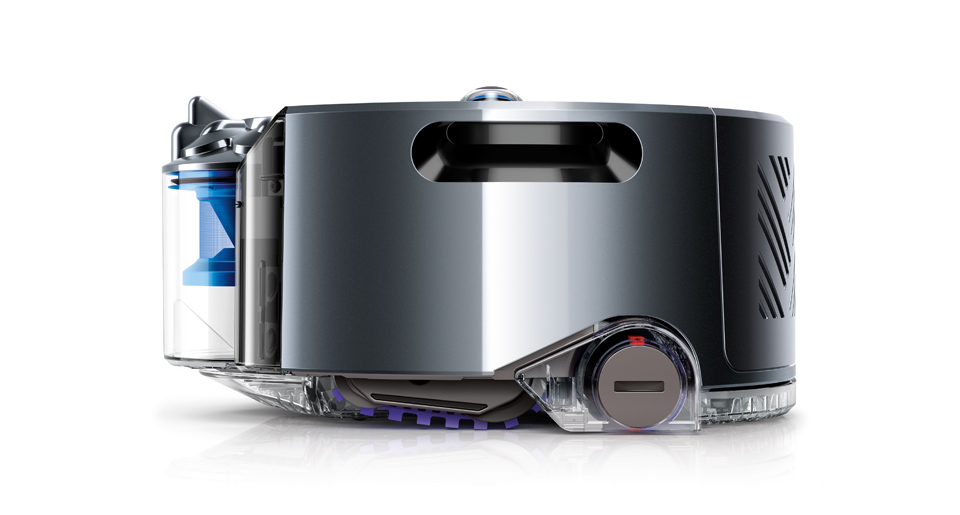
04 Sep 11:25

Dyson's first robot vacuum promises more suction than the competition

by Mat Smith
Sixteen years and nearly $47 million in the making, Dyson's unveiled its first robot vacuum cleaner: the 360 Eye. The company says it's packing more cleaning power than any other robot vacuum currently on the market, but you'll have probably noted...

04 Sep 11:20

Quick Note: NYC Residents Are Already Waiting in Line for Apple's Next iPhone

by Brandon Hill
We hope the long wait is worth it for these folks
03 Sep 13:38

Quick Note: ASUS Brings Stylish, Curved Screen ZenWatch to IFA 2014

by Brandon Hill
The Android Wear device will be priced at €199
03 Sep 10:54

Logitech's new keyboard can dock your smartphone and tablet

by Edgar Alvarez
Wireless keyboards are a dime a dozen nowadays, but every now and then we come across one that manages to stand out from the rest of the pack. And that's the case with the new K480 from Logitech, a Bluetooth keyboard that's capable of doubling as a...
02 Sep 13:18

This ‘Game of Thrones’ special effects reel shows the magic behind Westeros

by Darren Franich
Beloved blood opera Game of Thrones was shut out of the major Emmy Awards this week, but at least it justifiably
01 Sep 15:24

What you need to know about the world's most popular game-streaming service, Twitch

by Ben Gilbert
Twitch was an accident. The live video-streaming service, which boasts over 55 million unique users each month, began life in 2007 as "Justin.tv": an all-hours video livestream of co-founder Justin Kan's life. That wasn't the whole point of the...
31 Aug 06:35

Looks Like Lizard Squad was Busted Today

The group that claimed they were behind the DDoS attacks on several gaming platforms and networks appears to have been taken down. Just in time for you to work on your Season 1 Leapquake Crusader build in Diablo 3! The DDoS attacks started back on 23 August and the situation got more serious when SOE's John Smedley's flight was diverted after a bomb threat. Attacks continued for a few more days with both Twitch and League of Legends being hit. There was also a threat of an attack of some kind during PAX during an AMA session. Comments
30 Aug 21:38

Big Pic: Stunning Images From The World's Sharpest Commercial Satellite

by Sarah Fecht

Madrid From Space.
DigitalGlobe

The WorldView-3 satellite, which launched on August 13, has sent back its first images. They’re gorgeous, and kind of creepy.

The new satellite can see to a resolution of 31 centimeters. That means each pixel of the camera captures one square foot of land, which is sharp enough to see home plate at Yankee Stadium, to map crops by pattern and type, to identify the type and speed of cars and trucks, and measure population density, all from 383 miles above the Earth’s surface. 

WV-3 isn’t the sharpest satellite ever--some military satellites have a resolution of 15 to 20 centimeters--but it does have the highest resolution of any commercial satellite in the world. (The previous record-holder, GeoEye-1, had a resolution of 46 centimeters.) 

But WV-3 is important for another reason. Up until now, U.S. regulations prevented companies from selling images with resolutions finer than 50 centimeters to anyone but the military. But WV-3’s maker, DigitalGlobe, has been granted tentative permission to break that rule. Starting six months from now, they’ll be able to sell images with a 30-centimeter resolution to anyone who’s willing to buy.

The images shown here have a resolution to 40 centimeters, because the company isn’t allowed to start showing the 30-centimeter images until the six-month waiting period is over.

Bayan Obo Mine, China
DigitalGlobe

Airport in Madrid, From Space
DigitalGlobe
Madrid.
You can even see the people in the swimming pool.
DigitalGlobe


30 Aug 21:35

Spiders prompt Suzuki recall

by Daljinder Nagra


30 Aug 21:33

Google Already Testing Delivery Robots In Australia

by Kelsey D. Atherton

Project Wing Drone Delivers
Google

In rural Australia, a drone delivers dog treats to a farmer. The robot is a proof of concept, part of Project Wing by Google X. The program is designed to show that delivery drones are possible, and it seems to be doing just that. Next for Google: figuring out the path from proven prototype to everyday utility.

The drone is a tail-sitter, taking off vertically with its body perpendicular to the ground. At rest, it looks like a tiny spaceship from a 1930s comic book. It’s a type of Vertical Takeoff or Landing (VTOL) rarely done with humans on board, because that transition, from vertical to horizontal and back again, is difficult for onboard human pilots to manage. For the drone it works fine, and the design lets the wing fly fast like a plane. It also means the drone can hover, and that’s where the delivery mechanism of Project Wing shines:

Mechanical engineer Joanna Cohen, trained at Cal Tech and MIT, designed the contraption. It consists of a few key parts. The first is the winch itself, which spools out the hi-grade fishing line. The second is the “egg,” the little gadget that goes down with the package, detects that it has reached the ground, releases the delivery, and signals that it should be cranked back up to the hovering UAV. If something goes wrong, there is an emergency release mechanism at the top of the line—“basically a razor blade,” Cohen told me—that allows the UAV to cut and fly.

A working delivery mechanism is the first step for the service. With the prototype in place, the next challenge is creating an infrastructure for drones so that they can travel safely through skies without hitting other vehicles. Google’s driverless car program is an obvious touchstone for this project, but it’s a limited one. Cars on roads travel in close proximity and only move in two dimensions. Aircraft operate in vast, empty skies, and do so on three axes. Training a car to sense and avoid other cars is simpler than doing the same for an aircraft. Still, Google’s development and prior experience with cars is a strong sign that this work will continue and ultimately yield fruit. Michael Toscano, CEO of the Association for Unmanned Vehicle Systems International, said that

Google’s announcement of its planned UAS delivery service further demonstrates the potential of UAS technology. It also highlights how this technology will revolutionize industries and the importance of the FAA keeping the integration process on track.

It’s worth noting that Google tested this technology in Australia first. While the FAA clearly wants drones to sense and avoid other aircraft, its been slow to implement changes and create a regulatory framework that lets innovation like this happen stateside. If the drone industry wants to change the world, it’ll need an FAA that lets it deliver. Watch the drone in action below, and read more about Project Wing at The Atlantic.


29 Aug 07:44

Leaked Draft Reveals Hollywood's Anti-Piracy Plans

Suing individuals is a bust. Going after overseas websites doesn't work. I have an idea, why not go after ISPs instead! A leaked draft prepared for government submission has revealed Hollywood's Australian anti-piracy strategy. Among other things, the paper says that providers should be held liable for infringing customers even when they only "reasonably suspect" that infringement is taking place. Comments
29 Aug 07:32

Putin says he's not invading Ukraine. Here's a video of Putin's tanks invading Ukraine.

by Max Fisher

On Tuesday, several days after Russian self-propelled artillery moved into eastern Ukraine in what was clearlyhostile invasion that Vladimir Putin insists is not occurring, someone took a video of some very heavy tanks crashing around an eastern Ukrainian town near the rebel-held city of Luhansk. While they look suspiciously like Russian tanks sent as part of the invasion, Moscow and the pro-Russia rebels have all insisted that any heavy equipment was stolen from or abandoned by the Ukrainian military.

But now military analysts have taken a look at the video and say that at least one of the tanks could only come from the Russian military, apparently settling the issue of whether these are in fact Russian military forces.

Joseph Dempsey, an analyst with the International Institute for Strategic Studies, told the BBC that one of the tanks is something called a T-72BM, a modern variant identifiable by its special "Kontakt-5 Explosive Reactive" armor, and one that Russia has not exported but uses heavily in its own military. That is a new development, and one that suggests not just that Russia is invading, but being increasingly brazen about it.

Dempsey told the BBC, "The Soviet-era tanks operated by the separatists have until now represented those that could have been potentially acquired internally within Ukraine, providing a degree of plausible deniability to any suspected third-party supplier." That degree of plausible deniability is now gone.

28 Aug 14:32

US 'soccer moms' sue over concussion

Roumen.ganeff

The land of lawsuits for all

A group of young American football players and their parents have sued Fifa and US football groups over the risks from concussions.