When Dan Weiss and David Benioff adapted George R.R. Martin's A Song of Ice and Fire series into the HBO show "Game of Thrones," they also decided to bring the language spoken by the Dothraki in the books to life. David J. Peterson, a linguist and language creator, was brought on to build an entire language out of the few words shown in Martin's books. Now, whether you wish to be prepared for marathon viewing parties or travels through the steppes of Essos, there's Peterson's new Living Language Dothraki course, complete with a book and CD packed with Dothraki phrases and grammar, to make sure you can converse with the locals. Below, we've excerpted a few key phrases to ensure at least your greetings and farewells go smoothly.
GREETINGS AND PARTING EXPRESSIONS
To begin with, you should know how to greet a person in Dothraki. We’ll learn more about how some of these individual expressions work grammatically later in this course; for now, just memorize these as set expressions.
M’athchomaroon!
Hello! (lit.: With respect!)
M’ath!/M’ach!
Hi! (short for M’athchomaroon!)
Athchomar chomakaan!
Hello! (to a non-Dothraki, singular) (lit.: Respect to one that is respectful!)
Athchomar chomakea!
Hello! (to non-Dothraki, plural) (lit.: Respect to those that are respectful!)
Aena shekhikhi!
Good morning! (lit.: Morning of light!)
To ask how someone is doing in Dothraki, say:
Hash yer dothrae chek?
How are you? (lit.: Do you ride well?)
To answer this question, you can say:
Anha dothrak chek.
I’m fine. (lit.: I ride well.)
To say goodbye in Dothraki, use one of the following expressions:
Fonas chek!
Goodbye! (lit.: Hunt well!)
Hajas!
Goodbye! (lit.: Be strong!)
Dothras chek.
Be cool. (lit.: Ride well.)
CULTURE NOTE
GREETINGS
The Dothraki are notoriously mistrusting of outsiders, and so they have different greetings for fellow Dothraki and for greeting foreigners, or ifaki. (The word ifaki is considered derogatory in Dothraki.) When greeting fellow riders in their own khalasar, Dothraki will use the expression m’athchomaroon meaning respect. For ifaki, they will use the expression Athchomar chomakaan/chomakea! which literally means Respect to one that is respectful! This greeting serves as a warning to outsiders: respect us, and you will be treated with respect. Otherwise, watch out.
Excerpted from Living Language Dothraki: A Conversational Language Course by David J. Peterson.
Shared posts

14 Oct 10:31

This Woman Sees 100 Times More Colors Than The Average Person
by Alexandra Ossola
To tetrachromatic artist Concetta Antico, the world is, "like a mosaic of color."
When Concetta Antico looks at a leaf, she sees much more than just green. “Around the edge I’ll see orange or red or purple in the shadow; you might see dark green but I’ll see violet, turquoise, blue,” she said. “It’s like a mosaic of color.”
Antico doesn’t just perceive these colors because she’s an artist who paints in the impressionist style. She’s also a tetrachromat, which means that she has more receptors in her eyes to absorb color. The difference lies in Antico's cones, structures in the eyes that are calibrated to absorb particular wavelengths of light and transmit them to the brain. The average person has three cones, which enables him to see about one million colors. But Antico has four cones, so her eyes are capable of picking up dimensions and nuances of color—an estimated 100 million of them—that the average person cannot. “It’s shocking to me how little color people are seeing,” she said.
"You might see dark green but I’ll see violet, turquoise, blue. It’s like a mosaic of color.”
Although tetrachromats have more receptors in their eyes, their brains are wired the same way as a person with normal vision. So how can a brain like Antico’s change to see more colors? Like anything else, practice makes perfect, even when it comes to neural pathways.
For years, researchers weren’t sure tetrachromacy existed. If it did, they stipulated, it could only be found in women. This is because of the genes behind color vision. People who have regular color vision have three cones, tuned to the wavelengths of red, green, and blue. These are connected to the X chromosome—men have one, but women have two. Mutations in the X chromosome cause a person to perceive more or less color, which is why men more commonly have congenital colorblindness than women (if their one X chromosome has a mutation). But the theory stood that if a woman received two mutated X chromosomes, she could have four cones instead of the usual three.
This is the case with Antico; researchers confirmed that she is a tetrachromat in 2012. One percent of the world’s population is thought to be tetrachromatic, but it’s not easy to demonstrate empirically. “The difference between [the color dimensions perceived by] a tetrachromat and someone with normal vision is not as dramatic as the difference between someone who is colorblind and someone with normal vision,” according to Kimberly Jameson, a cognitive scientist at the Institute for Mathematical Behavioral Sciences at the University of California in Irvine. She and her colleague Alissa Winkler at the University of Nevada in Reno have been studying Antico for about a year to better understand tetrachromacy. The differences in color perception are hard to detect because they’re small, Jameson said, but the tests that are currently used are not designed for more than three pigments--red, green and blue.
Based on Antico's genes, Jameson has determined that Antico's fourth cone absorbs wavelengths that are "reddish-orangey-yellow, but what it appears to Concetta is uncertain at the moment," she added. Since the tests aren't calibrated for this wavelength, empirically demonstrating tetrachromacy is still really difficult.

Jameson and Winkler are on the hunt for more tetrachromats in order to better understand how their brains work. Jameson became fascinated with how people are able to form and communicate concepts, especially when the way they perceive the world can vary so widely. “If you have an extra cone class in the retina, that greatly complicates how that signal might be taking shape as it leaves the retina. We want to understand how that’s happening,” she said. This likely has to do with how the brain wires itself when it receives certain signals frequently over time—a concept called neuroplasticity. Lots of studies about neuroplasticity in animals and some in humans have shown that two individuals with the same capacity for visual perception can have drastically different vision later in life just based on what they were exposed to early on. Researchers still aren’t totally sure why this is the case. “One possibility is that the system learns how to use these signals—the wiring creates the proper code so they can be used in the cortex,” Jameson said.
So even though many more tetrachromats may exist in the world, they may not have exceptional color perception, because they haven’t trained their brains to pay attention. Antico, in this case, presents a rare exception. “I was different than a regular 5-year-old — I was painting at age 7, I was so fascinated with color,” she said. For years, she was exposed to exceptional color, so her brain became wired to take advantage of her tetrachromacy.

Antico has a personal stake in the continued research of tetrachromacy. Five years ago, when Antico’s daughter was 7 years old, the family learned that she was colorblind. “I didn’t think it had anything to do with me, but she’s colorblind because of me. I have a mutation,” Antico said. The more she helps scientists understand tetrachromacy, she figures, the better they will be able to help people like her daughter. “If we understand genetic potential for tetrachromacy and how their perception differs, we can understand quite a lot about visual processing of color that we currently don’t understand,” Jameson agreed.
But Antico may have stumbled upon a different way to help those who are color deficient. She is a professional artist who has been teaching painting for over 20 years, and she has a number of students who are colorblind. “One of the things that has been made apparent by looking at their artwork is that they have a good appreciation for color, unlike any other individual who I’ve ever seen that is color deficient,” Jameson said. “It’s very possible that by being tuned in from a very early age to color differences, [Antico] may have acquired some understanding and articulation for how to help them do that.” This hypothesis still needs to be proven empirically, of course, but Jameson is intrigued by the prospect of improving people’s perception of color through the training that neuroplasticity allows.
In addition to spending her time helping researchers better understand tetrachromacy, Antico hopes to open an art school for the colorblind and create an online platform for people around the world to discover if they are tetrachromatic. “I want to be sure before I die that I’m able to define tetrochromatism,” she said. “There have to be more tetrachromats out there. Maybe I can lead the way for that.”
KS, Spursfan123 and -1 others like this
14 Oct 09:21
 Samsung has revealed that by 2015 it may be selling WiFi devices that use unlicensed, 60GHz spectrum to transfer data at 575MB/s -- five times faster than current tech. If that sounds familiar, it's also the WiGig Alliance's 802.11ad WiFi standard,...
Samsung readying crazy fast next-gen WiFi devices
by Steve Dent
Samsung has revealed that by 2015 it may be selling WiFi devices that use unlicensed, 60GHz spectrum to transfer data at 575MB/s -- five times faster than current tech. If that sounds familiar, it's also the WiGig Alliance's 802.11ad WiFi standard,...
14 Oct 09:21
 Starting tomorrow, any French resident with a bank account and Twitter handle will be able to transfer money simply by tweeting it. The new service, dubbed S-money, was launched last month by French mega-bank BPCE and Twitter. It differs from...
You can now tweet money to friends, if you live in France
by Steve Dent
Starting tomorrow, any French resident with a bank account and Twitter handle will be able to transfer money simply by tweeting it. The new service, dubbed S-money, was launched last month by French mega-bank BPCE and Twitter. It differs from...
14 Oct 08:33
 If you haven't activated two-factor authentication on Dropbox yet, you may want to do so now, just in case you end up finding your credentials posted on the internet. A document posted on pastebin earlier contains 400 Dropbox usernames and passwords,...
Dropbox passwords posted online and millions more might follow
by Mariella Moon
If you haven't activated two-factor authentication on Dropbox yet, you may want to do so now, just in case you end up finding your credentials posted on the internet. A document posted on pastebin earlier contains 400 Dropbox usernames and passwords,...
14 Oct 08:12
Ireland to Close Loophole Apple and Google Used to Evade EU Taxes
by Jason Mick
Threat of fines against Irish government and corporate partners like Apple prods Irish officials to take action
13 Oct 09:08
Ballmer, Gates No Longer on Speaking Terms
Vanity Fair recently ran a long piece on the decaying friendship of former CEO Steve Ballmer and Microsoft founder Bill Gates. So, what would it take to break up decades long best friends? The short version consists of two words: Nokia and Vista.
The problems started right around 2001, when an apparent power struggle Ballmer was the new CEO at the time, but Gates was still around led them to a strained relationship.
Comments
13 Oct 08:47
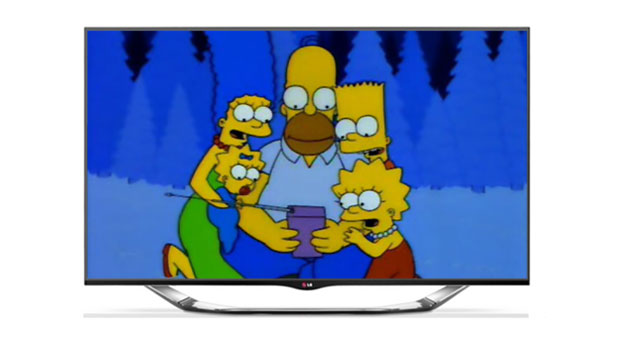 Fist the bad news: No, Firefly isn't coming back. But, if you've ever felt like the ratings system didn't accurately represent the popularity of your favorite show, this might be something to take note of. Today The Nielsen Company issued a statement...
Nielsen admits a software glitch has been screwing up recent TV ratings
by Richard Lawler
Fist the bad news: No, Firefly isn't coming back. But, if you've ever felt like the ratings system didn't accurately represent the popularity of your favorite show, this might be something to take note of. Today The Nielsen Company issued a statement...
10 Oct 15:12
 The Brown Wood Owl has a special place in Sri Lankan folklore, known as the devil bird. So when filmmaker Thivanka Perera came across a pair in the crevice of a tree trunk he decided to monitor their progress. The resulting short film tells the story of survival against all the odds and while the ending is not a completely one, this reflects the way that nature operates. This film officially selected for the 2014 Wildlife Conservation Film Festival in New York.
Brown Wood Owl: The Juvenile’s Journey
by RJ Evans
Roumen.ganeff likes this
10 Oct 14:14
Amazon Workers Want To Be Paid For Waiting In Line
It seems silly to me that this had to go all the way to the Supreme Court. There were dozens of way to remedy this situation before it got to this point.
Amazon.com (AMZN) warehouses are full of stuff people like. To cut down on theft, workers who box and ship it are required to pass through security checkpoints after their shifts, waiting in lines that can take almost 30 minutes to get through.
Comments
10 Oct 12:11


Microsoft's Satya Nadella backpedals after saying women shouldn't ask for pay rises
by Carly Page
Brendan Eich likely has a spring in his step today
10 Oct 12:09


Mike Judge Tweaks Silicon Valley
by David Konow
Mike Judge Bringing More Women to Tech in Season Two
10 Oct 12:07
 The direction of your rooftop solar panels benefits your wallet more than the environment, according to multiple energy officials interviewed by The New York Times.
America's Rooftop Solar Panels Are Probably Facing The Wrong Direction
by Michael Tabb
Rooftop solar panels
Wikimedia Commons
Virtually all homes point their solar panels south, where they can best capture rays from the sun when it rises in the southeast and sets in the southwest. That way, residents collect the most power possible throughout the day, which they can use in their own homes or sell to the grid (if they have any power leftover). But critics say the panels would actually do more good facing west, where they could capture sunlight during the midday and afternoon when energy is most needed.
While south-facing solar panels are the most profitable for panel owners, they actually raise the demand for other power sources that they simultaneously put out of business. Relying on morning and evening sunlight means that solar panels aren’t producing as much as they could during the middle of the day, when communities need the bulk of their power. Therefore, homes with solar panels continue to rely on other power sources to support them during the middle of the day.
But here's where things get funky. Plants that depend on selling electricity around the clock suffer, because all solar panels are producing energy during the same non-peak hours. Nuclear power plants in particular don’t have the ability to produce energy only at certain times of the day, and solar power sources often drive them out of business, according to The Times. That leaves natural gas power plants, which are cheaper and have more flexibility in terms of production, to pick up the slack during the middle of the day.
So in essence, homeowners who installed rooftop solar panels to promote sustainable energy are actually bolstering the natural gas industry. Probably not what they had in mind.
10 Oct 07:27
 Tesla's "D" unveiling might have got a little early reveal thanks to USA Today (update: the article has been removed) but we've had a chance to see it for ourselves. As rumored, Tesla is rolling out new all-wheel drive equipped versions of its Model...
Riding shotgun in Tesla's fastest car ever
by Richard Lawler
Tesla's "D" unveiling might have got a little early reveal thanks to USA Today (update: the article has been removed) but we've had a chance to see it for ourselves. As rumored, Tesla is rolling out new all-wheel drive equipped versions of its Model...
Roumen.ganeff and -1 others like this
09 Oct 15:45
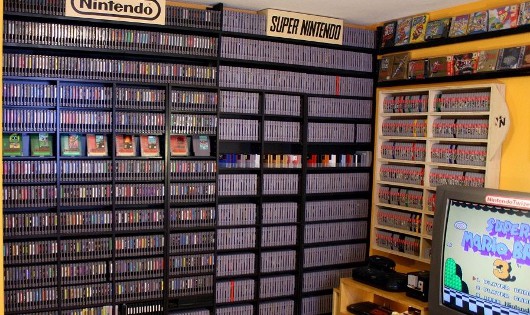 Do you have $164,000 handy? If so, you can snag nearly every retro console game since the beginning of the NES era. Ebay seller "reel.big.fish," also known as Nintendo Twizer, is selling a positively massive collection of games and consoles, spanning...
This guy wants $164,000 for his gigantic video game collection
by Richard Mitchell
Do you have $164,000 handy? If so, you can snag nearly every retro console game since the beginning of the NES era. Ebay seller "reel.big.fish," also known as Nintendo Twizer, is selling a positively massive collection of games and consoles, spanning...
Roumen.ganeff likes this
09 Oct 14:33
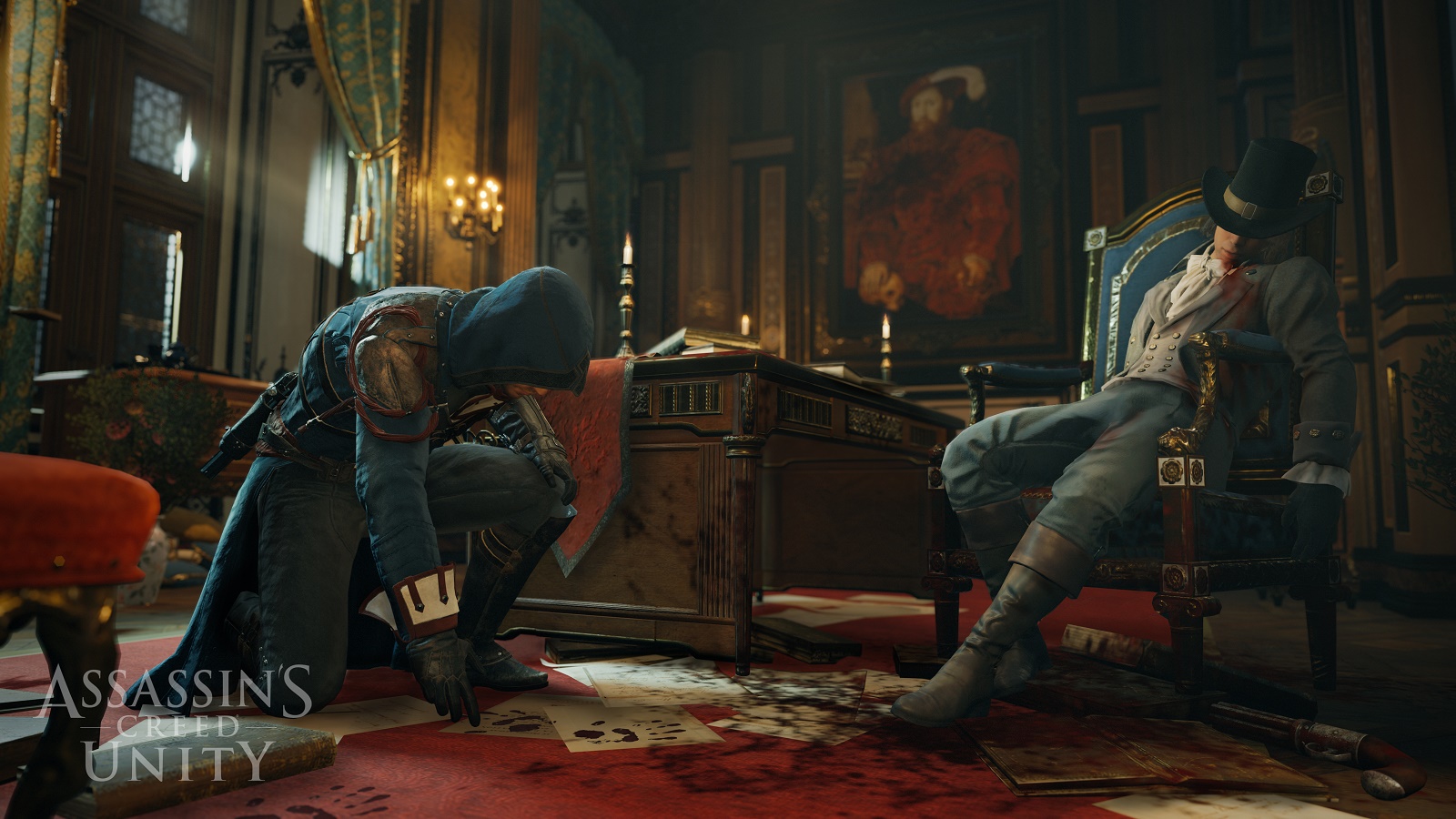

Assassin's Creed Unity: How Ubisoft is approaching the historical French Revolution
by Ozzie Mejia
A big part of the reason that the Assassin's Creed series has maintained as much steam as it has is because of its fascinating interpretation of human history. Though it's obviously taken its fictional turns, many of the historical figures and events in the franchise are indeed based in reality.
Assassin's Creed Unity's peek into the French Revolution is just as faithful in its approach to history as its predecessors. The common folk are in an uproar, the monarchy is on its way down, the age of Enlightenment is at hand, and both the Assassins and the Templars are caught right in the middle of the conflict. To learn more about Ubisoft's approach to this important time in history, Shacknews spoke to the development team's historian, Maxime Durand. Off the bat, we see that Unity's single-player story will be addressing the dawn of the Revolution, while the game's co-op missions go a little bit beyond.
"Most of [the story] is 1789 through 1794," Durand told Shacknews. "It's really the beginning of the French Revolution. 1794 is the end of the Terror period, when Robespierre is executed. But we actually go, with the co-op missions, a little bit further than that. With the side content, we go to around 1800. And to see a character like Napoleon, you have to go a little bit later."
The French Revolution saw society overhauled from the bottom up. Fed up with economic strife caused by numerous wars, as well as corruption from the monarchy and the church, the common folk rose up to march against France's royal family and the clergy. There's civil unrest and a sense of righteous anger and fury, one that Unity seeks to capture fully.
History is the backdrop in this game for Arno, but every interaction with the Assassins and the Templars that you see with other characters, it's always involving the French Revolution and the different ways the Revolution unfolds.
"The whole idea of the French Revolution is driving this game," Durand continued. "On every level, it's very important. It's a very important event in mankind's history and Western history, because it's the founding of our modern societies. It's very political and because we can use the Assassins and the Templars' visions of the same event, we can actually show the facts and show the players the different ideas of the time period. So that's really driving the narrative. History is the backdrop in this game for Arno, but every interaction with the Assassins and the Templars that you see with other characters, it's always involving the French Revolution and the different ways the Revolution unfolds.
"So again, the beginning of the Revolution is very merry… everyone is trying to find a good solution: create the [Declaration of the] Rights of Man, the abolition of nobles' rights, the church. But the more that the Revolution goes on, the more people realize that it's really hard… The city of Paris is that cluster where people get very afraid of every idea that's not the Revolution, so you really have that feeling in the game. You have that feeling on the streets when you walk by. You see life events that are driven by the Revolution, people getting robbed, people getting killed on the streets on a daily basis, and you can decide to interact or not as Arno. He's just a guy in the Revolution."
Durand goes on to describe how the differing philosophies of the Assassins and the Templars affect the player's outlook on the ongoing events of this volatile time period. The Assassins are anarchists at heart, believing that mankind should be free of rules. They see the onset of Enlightenment principles as an opportunity to free the people from the structure of corrupt rulers. The Templars likewise see the Revolution as a necessity, feeling that the old system has failed the people and must be done away with. However, the outlooks on how the Revolution should unfold is where the two factions are at odds, with the Assassins feeling that the people should take the future into their hands, while the Templars believe a new system of order must be instilled. In keeping with the themes of the series, both factions continue to come across as complex entities, rather than black-and-white depictions of good and evil.
That's how Unity ends up with the tenuous alliance between Arno and Elise, one that's illustrated in the trailer from late July. Elise's role in the game appears to illustrate another interesting aspect of the French Revolution and that's the idea of modern feminism. During this time period, women's rights became a hot topic amidst the outcry for social reform. Though the movement was momentarily crushed in the Revolution's later years, women were actively fighting for a voice during the time that Unity takes place. However, Durand points out that while the feminist movement was an important aspect of the Revolution, Elise's role points to a slightly different telltale reality of the time period. She represents the fall of France's nobility, as she quickly goes from respected nobleman's daughter to second-class citizen.
"The [March on Versailles] is one of the events that talks about women's rights during the French Revolution," Durand added. "This is when they marched to Versailles, though half of them were actually men dressed as women. But they went to Versailles and asked the king to come back to the city. They had actually still hoped the king was going to save them. The French Revolution changed a lot, but it wasn't yet a moment where women were granted rights. That was more in the beginning of the 20th century. Elise is the daughter of a noble, so the way she's struggling with the French Revolution is more her relationship with the old regime, like her losing her rights. But you mention that Assassins and Templars can work together and that's the whole idea of the French Revolution. Nobles, the clergy, the middle class people, they all tried to work together at first, but they realized at some point that they couldn't always get along. That's why the Revolution unfolded into a very chaotic moment, because there was so much to lose and it just got crazy."
While the single-player narrative will explicitly deal with the beginning of the French Revolution within Paris, Durand notes that there are ample story opportunities beyond the city's borders. That's where the game's co-op mode comes in, offering a look at the Napoleonic era of the Revolution, as well as interpretations of other historical figures during the time period that didn't necessarily see their stories unfold in Paris.
Assassin's Creed Unity is set to release for PC, Xbox One, and PlayStation 4 on November 11. For more with Durand, including whether certain callbacks to some earlier Assassin's Creed games are in the cards, check out our video interview below, in which our own Greg Burke asks a few more questions.
Roumen.ganeff likes this
09 Oct 12:13
 Unsurprisingly, Windows 10 will be shipping with DirectX 12.
Windows 10 Will Ship With DirectX 12
Unsurprisingly, Windows 10 will be shipping with DirectX 12.
09 Oct 12:03
Twitter Sues U.S. Government
Damn, this is going to be good. Pass the popcorn please.
Twitter, the world's largest microblogging platform, on Tuesday sued the U.S. government, alleging that the Justice Department's restrictions on what the company can say publicly about the government's national security requests for user data violate the firm's First Amendment rights.
Comments
Roumen.ganeff likes this
09 Oct 12:03
Ebola Killing Robot Developed In Texas
While we are on the subject of killer robots, this little robot is honing his homicidal techniques by killing Ebola (at least for now).
A local invention may turn out to be a key piece of technology in the fight against Ebola. It's a robot used by hospitals to disinfect and destroy bacteria and viruses. Meet "Little Moe" the germ-zapping robot. "What's inside here is a xenon bulb," said Mark Stibich, PH.D.
Comments
09 Oct 10:48
 Visiting a large desert in person can be difficult. Roads will only take you so far, and you probably aren't used to navigating gigantic sand dunes. Thankfully, you no longer have to plan a whole adventure just to see this austere beauty at ground...
Tour one of Earth's grandest deserts in Google Street View
by Jon Fingas
Visiting a large desert in person can be difficult. Roads will only take you so far, and you probably aren't used to navigating gigantic sand dunes. Thankfully, you no longer have to plan a whole adventure just to see this austere beauty at ground...
Roumen.ganeff likes this
09 Oct 10:48
 Ever wanted to recreate the speeder chase in Return of the Jedi, or pod racing in The Phantom Menace? There's apparently an easy way to do it that doesn't involve sci-fi technology. France's Airgonay club recently raced flying drones through a forest...
Drone racing in the woods evokes more than a few Star Wars memories
by Jon Fingas
Ever wanted to recreate the speeder chase in Return of the Jedi, or pod racing in The Phantom Menace? There's apparently an easy way to do it that doesn't involve sci-fi technology. France's Airgonay club recently raced flying drones through a forest...
Roumen.ganeff and -1 others like this
09 Oct 10:47
 Remember NuSTAR, the specialized space telescope NASA designed specifically to study black holes? It just found something much, much brighter. Astronomers at NASA have stumbled upon what appears to be the most luminous pulsar ever discovered, but...
Astronomers accidentally discovered the brightest pulsar on record
by Sean Buckley
Remember NuSTAR, the specialized space telescope NASA designed specifically to study black holes? It just found something much, much brighter. Astronomers at NASA have stumbled upon what appears to be the most luminous pulsar ever discovered, but...
Sofía Henao, Cooper Griggs likes this
09 Oct 10:46

HTC Desire Eye has 13MP selfie camera, S801 chipset
There was a lot of speculation what the Eye will be, well it turns out it's the new Desire flagship. The HTC Desire Eye can be seen as an upgrade over the HTC One (E8) as it takes the 13MP camera with dual-LED flash from the back and brings it around the front too. That give the Desire Eye a unique face - a much larger than usual front-facing camera is positioned above the screen and it gets a dedicated dual-LED flash and a microphone. It's getting the same treatment as the back camera, which has a dual-LED flash and a microphone too. There's another microphone on the bottom of the device for a total of three mics used for better audio through noise cancellation. HTC Desire Eye in Blue Both cameras can record 1080p@30fps video. The one on the back has an f/2.0 aperture and a 28mm lens, while the one on the front has a wider 20mm lens but a smaller f/2.2 aperture. HTC's trademark BoomSound speakers are harder to see but still on board. They flank the larger 5.2" screen of the HTC Desire Eye, an LCD with 1080p resolution. Besides selfie camera and screen size, the Eye also trumps the One (E8) with an IPX7 rating - water resistance up to 1m of water for half an hour. The Desire Eye carries much better specs than most of the Desire family. It's powered by a Snapdragon 801 chipset with 2GB RAM and runs Android 4.4 with the latest Sense software and two camera-centric apps - Eye Experience and the new Zoe. HTC Desire Eye in Red Anyway, the phone also boasts LTE connectivity, dual-band Wi-Fi a/b/g/n/ac, Bluetooth 4.0 with aptX, NFC and a microUSB port. The port is left uncovered while maintaining the IPX7 rating, just like the HTC Butterfly 2. The Desire Eye has 16GB of built-in storage, expandable by microSD cards (up to 128GB) and a 2,400mAh Li-Po battery. With front-facing stereo speakers, a large front-facing camera and a larger screen, the Eye is not the most compact device around, measuring 151.7 x 73.8 x 8.5 mm. The HTC Desire EYE will be offered by AT&T exclusively at launch. Further availability and pricing details will be available later on. The HTC Eye Experience app will help you use the two 13MP cameras to the fullest. Split Capture divides the photo 50/50 between front and back cameras, while Crop-Me-In creates a single photo with you photoshopped into the back camera image. The impressive front-facing camera on the Desire Eye also targets high-quality video calls. To make things easier it can track up to four faces and keep them in place so people can relax and not worry about positioning while they chat. This even works with third-party video call apps like Skype. HTC EYE Experience will roll out to the following models (full feature list to be confirmed at roll-out): HTC One (M7), HTC One (M8), HTC One (E8), HTC One mini, HTC One mini 2, HTC One Remix, HTC One Max, HTC Desire 612, and HTC Desire 816 in the coming months. Then there's the new Zoe. Recent HTC phones came with just a promise for a new app for months on end but the wait is over. The new version offers collaborative video editing and it integrates with RE - HTC's new action camera. Zoe is not completely done even after all this wait, the new content engine will launch later this year. HTC Zoe app will be available for all Android devices Zoe is not just for HTC phones - not even just for Android. HTC will release Zoe apps to the general Android population and even iOS later this year. iOS...
09 Oct 08:14

This Gun Makes And Fires Paper Airplanes
by Kelsey D. Atherton
A6 V1.0 Paper Airplane Gun
Papierfliegerei, screenshot from YouTube
Sometimes, a person accomplishes something so great, so revolutionary, that all they can do is smile as wide as humanly possible and show off the thing. This paper airplane gun, crafted by a 3-D printing and paper airplane enthusiast, is such a device. Wordlessly, the operator fires a series of paper airplanes. Then, with the top of the device removed, he reveals the assembly line inside the weapon. The gun folds the paper and then shoots it out the end -- at a rate of almost one a second.
Watch this ridiculous coolness below:
[via Joe Hanson]
Roumen.ganeff and -1 others like this
07 Oct 14:53


Bill Gates applauds Apple Pay, hints at Windows NFC payments service
by Carly Page
Microsoft co-founder says mobile banking will become ubiquitous
07 Oct 14:49
Breaking TV News: Showtime To Reboot TWIN PEAKS as a Limited Series
by theTVaddict
Press Release: Dig into some cherry pie and rejoice! Today, SHOWTIME announced that the critically-acclaimed Golden Globe® and Peabody Award-winning series TWIN PEAKS will return as a new limited series. Series creators and executive producers David Lynch and Mark Frost are on board to write and produce all nine episodes of the limited series. Four-time […]
07 Oct 12:05
 The French Revolution! The only part of history class you didn't sleep through, thanks to the drama, intrigue and of course, Reign of Terror. Paris circa 1790 is undoubtedly the star of Unity, Ubisoft's next Assassin's Creed chapter. Sure, the game...
Exploring modern Paris to find the roots of Assassin's Creed Unity
by Steve Dent
Roumen.ganeffMost of the stuff I know about Italy comes from Assasin's Creed history lessons :)
The French Revolution! The only part of history class you didn't sleep through, thanks to the drama, intrigue and of course, Reign of Terror. Paris circa 1790 is undoubtedly the star of Unity, Ubisoft's next Assassin's Creed chapter. Sure, the game...
Roumen.ganeff likes this

07 Oct 11:53
magicalnaturetour: Learning climbing Rob Janné (via Learning...

Roumen.ganeff, Sofía Henao and one other like this