The party conference season in the UK has finally ground to a halt, and all parties have grounds for both hope and despair. Even Labour, beset by fears over their new hard-left leader seem to have found a few crumbs of comfort, and the opinion polls show that the British public are prepared to give Jeremy Corbyn the benefit of the doubt.
Personally I find this a little strange, because the behaviour and the language of Labour activists is generally quite intolerant. I hold no brief for Conservative policies, but I am absolutely prepared to believe that Conservatives are just as sincere in their beliefs as Labour supporters. That is to say that I disagree with their ideas, but I do not believe that either Labour or Conservatives are necessarily malevolent.
However if I listen to Labour not only should I disagree with most Tory policies, but I should also generally regard Tories as an evil and selfish breed.
Except they are not, or at least they are no worse than Labour in their self-serving log rolling. In fact, after Tom Watson has continued to hound Leon Brittan even on his death bed, I am getting rather irritated with the sanctimonious cant that Labour continues to serve as a personal and wounding critique of the government.
The fall in popularity of politics in recent years, in my view, is precisely because one party or another pretends to moral standards that they simply cannot uphold. Whether back to basics or any other moral panic, politicians, whatever their views, are no more moral than anyone else and it is the hypocrisy of pretense that backfires over all politics.
So the intolerance and bigotry of the left, whether Socialist or Nationalist, is a poison that corrodes public trust and even public interest. Wherever we stand on the political spectrum, we our it to ourselves to treat the debate with respect and not attempt to play the man instead of the ball by impugning the motives of others. Most politicians are perfectly sincere in their motives, even if they are often wrong in their policy ideas.
It is time we were all adult enough to recognize this. Listening to Labour over the last few days has been unedifying- and when even the Guardian has to point out that the Conservatives are perfectly sincere in what they say, it suggests that Labour are engaged in a dialogue of the deaf which will indeed lead to their defeat.
As Corbyn refuses to accept the constitutional niceties over the privy council, and continues to issue public statements that seem to support Putin, it may not be too long before the boot is on the other foot- and the left gets a taste of its own, rather unpleasant, medicine.
Andrew Hickey
Shared posts
22 Oct 13:56

The various endings of the Gospel of Mark (part 2)
by Fred Clark
The Bibles we read are the product of countless acts of transcription and translation. This was human labor and, like everything we humans do, it involved plenty of missteps and mistakes.
You may have heard of some of the more famous, or infamous, examples of that, such as the so-called “Wicked Bible” of 1631, which accidentally omitted a key word in the seventh of Moses’ ten commandments, so that Exodus 20:14 wound up reading “Thou shalt commit adultery.” That reversal of the verse’s meaning was a simple, obvious, and easily corrected mistake — unlike the deliberate mistranslation that completely reverses the meaning of a passage in the following chapter of Exodus because of partisan American politics.
Wikipedia offers a long and amusing list of “Biblical errata” — misprints, mistranslations, scribal errors, typos and printing errors that resulted in all sorts of bungled Bibles. There’s the “Blasphemous comma” — a missing comma in several King James editions that puts Jesus on a cross between “two other malefactors” instead of between “two others, malefactors.” And the 1718 edition of the KJV that renders the “sin no more” of Jeremiah 31:34 as “sin on more.” And the earlier 1562 Geneva Bible that garbled a Beatitude into “Blessed are the placemakers.”
The Rev. Jason Bray recently found this first-edition of the 1611 King James Bible in a cupboard at St. Giles Church, Wexham. (Click pic for link to article.)
Our friends who insist that the Bible is “inerrant” are aware of things like this, and they try to account for it in two ways. First, they clarify that this claim of “biblical inerrancy” doesn’t apply to every copy or edition ever printed, but “only to the autographic text of Scripture” (that’s from the “Chicago Statement on Biblical Inerrancy,” which established this ancient inerrantist tradition in CE 1978).
By the “autographic text” they mean the original documents on which the original texts were first written. That makes sense. This is, after all, how we go about validating the legitimacy of most texts or quotations. We want to know what was originally said. We consider the original thing authentic and legitimate and any variation from it to be inauthentic and illegitimate.
“Because I could not stop for Death — / He kindly stopped for me.” That’s Emily Dickinson. If a printer’s error misrenders that “Because I could stop for Death …” then we would say it’s no longer really Emily Dickinson, but something else. Likewise, our inerrantist friends say, reasonably, the commandment to commit adultery in the misprinted “Wicked Bible” isn’t really the Bible, but something else. The real Bible is the original that preceded any such errors of transcription and translation.
The tricky bit here, though, is that the books of the Bible are far, far older than Emily Dickinson’s poems and so we don’t actually have any of the original manuscripts. Our earliest biblical manuscripts come from long after most of the “autographic texts” were written. Those originals are long lost and what we have is a copy of a copy of a copy, and a translation of a translation of a translation.
It seems a bit slippery, then, to put so much emphasis on the perfection and inerrancy of original “autographic texts” that no living person has ever seen and that none of us is able to consult.
Our inerrantist friends recognize this, too, which is why they assert this emphatic denial*:
We deny that any essential element of the Christian faith is affected by the absence of the autographs. We further deny that this absence renders the assertion of Biblical inerrancy invalid or irrelevant.
It’s perfectly fine that these inerrant original “autographs” no longer exist, they say, because of the second part of their accounting for the problem of transcription and translation errors. The claim of perfection and inerrancy, they say, “applies only to the autographic text of Scripture, which in the providence of God can be ascertained from available manuscripts with great accuracy.”
The heavy lifting there is done by the subtle enormity of this appeal to “the providence of God.” Nevermind all the many examples of scribal errors, transcription mistakes, mistranslations in or out of Hebrew, Greek, Latin, German or English. God has been intervening, providentially ensuring that our copies of copies of copies and our translations of translations of translations still allow us access to the original perfection of those long-lost inerrant autographs.
This is the logic that gives us the kooky American phenomenon of “KJV-only” fundamentalism. If you’re reading this somewhere in America, then somewhere not far from where you’re sitting there’s a small nondenominational church of “Bible-believing” fundamentalist white Christians who believe that the King James Version (1611 authorized edition) is the only true and legitimate Word of God. They think the much-larger white evangelical church on the other side of town is full of heresy and apostasy because those heathens over there read from the NIV. (The New International Version and all other such more contemporary translations might as well be the Book of Mormon as far as the KJV-only folks are concerned.)
KJV-only folks aren’t really all that different from the rest of the “biblical inerrancy” crowd — they just follow the logic of the idea a bit farther down the road. And they don’t realize they’re not supposed to say the quiet parts loud. They take the logic of the active “providence of God” in preserving the Bible’s purported inerrancy as the centerpiece of their faith. They believe God acts and intervenes to ensure that the English-language Bibles in their pews and in their hands have been shielded from human frailty and from the wiles of the devil and his servants.
Thus, they believe, God has ensured that we have precisely the form of the Bible that we have. And in doing so God has intervened to protect us from being led astray by any other possible form of the Bible.
Which brings us back to the Gospel of Mark and its many various endings. The King James Version doesn’t include all of those endings, nor does it even acknowledge their existence. It includes the longer ending of Mark — continuing past verse 8, where our oldest and most-reliable manuscripts stop, to include what it offers as verses 9 through 20, an interpolation composed and appended many years after the original “autograph” was first written.
What’s perversely fun here is how this idea of divine providence and divine protection relates to the possibility of an original, “lost” ending to Mark’s Gospel.** If, indeed, the original ending of Mark was lost and much later replaced with the addendum we have in verses 9-20 of the King James Version, and if, indeed, this version is the product of God’s providence and protection, then we must conclude that the original ending originally written by the evangelist Mark must have been something God needed to get rid of — something that God had to step in to protect us from reading.
What horrors or heresies or errors do you suppose Mark might have originally written? It must have been something spectacularly awful to require Almighty God to providentially intervene to prevent us from being led astray by it.
As I said in part 1, this is where “biblical inerrancy” overlaps with Da Vinci Code conspiracy theories. The possibility of a “lost” ending to Mark’s Gospel has long led to fevered speculation that it might actually be a suppressed ending — that Mark continued on after what we have as verse 8 to write something They didn’t want us to read. (Who are “They”? Take your pick — the Knights Templar, the Illuminati, the Jesus Seminar …)
This makes for a fun exercise in storytelling, or in joke-writing. If the lost ending of Mark was, indeed, something that God’s providence needed to protect us from reading, then what did that original, too-dangerous-to-be-allowed-to-endure ending say?
We can only speculate. So let’s do that.
I’ll start. Here are some possible lost endings to Mark’s Gospel gleaned from other more recent sources and manuscripts:
• Jesus meets two disciples on the road to Emmaus but they do not recognize him. They arrive at an inn and sit down to break bread together. Journey’s “Don’t Stop Believing” starts to play, then abruptly stops as the screen goes black for seven minutes.
• Tom Sawyer arrives and hijinks ensue, mostly at Jim’s expense, which seems like a violation of everything we’d previously read.
• The first 13 chapters of Mark are presented out of order, after which the rest of the Gospel is abruptly canceled by the Fox network.
• A terse message informs readers that the Kickstarter campaign for a crowd-sourced 17th chapter failed to meet its goal.
• After Jesus’ crucifixion and burial, Mark introduces two new disciples, played by Robert Patrick and Annabeth Gish.
• “… e dure questo pistolenza fino a …“
• Mary Magdalene awakens and hears the shower running in the other room. It’s Jesus. She realizes the past three years were all a dream.
• Instead of continuing the story of Jesus and his followers, Mark waits 20 years, then presents a trilogy of disappointing prequels focusing on the childhood and adolescence of Judas Iscariot.
• “How’s Annie? How’s Annie?”
- – - – - – - – - – - -
* As we discussed here last month, if you want to understand “biblical inerrantists,” you should read all the “We Deny” statements in this Chicago Statement replacing “We deny …” with “We fear …” or “We Have a Terrifying, Gnawing Suspicion that …” Hence the denial above would read:
We fear that essential elements of the Christian faith may be affected by the absence of the autographs. We further have a terrifying, gnawing suspicion that this absence renders the assertion of Biblical inerrancy invalid or irrelevant.
** It’s entirely possible that there is no such “lost” ending. The original version of Mark’s Gospel may have simply stopped abruptly at Mark 16:8. “And they said nothing to anyone, for they were afraid.” The End. Many very smart biblical scholars argue that this is the likeliest explanation — even though it would’ve been a very strange choice for the author. That theory leads to another realm of speculation: Why would Mark choose such a strange and abrupt ending? Was there some intervening circumstance (his death or arrest, perhaps) that forced him to stop so abruptly?
That’s not as much fun as speculating about the possible content of a possible lost ending, but it’s still grounds for more intriguing speculation than the sadly pedestrian theory toward which I lean — which is that Mark’s original ending was likely copied and adapted in either Matthew or Luke, so we probably already have it elsewhere in the New Testament.

20 Oct 18:58


The perils of ignoring physical health of people with mental ill health
by caronlindsay
This story first appeared here on Liberal Democrat Voice.
I feel a bit sad this morning.
The reason for that is this story on the BBC which outlines how the physical health of people with mental ill health can be ignored as GPs assume that the reason for all their symptoms is related to their mental state. In a study of medical records over a five year period, researchers found that just a fifth of emergency admissions to hospital among patients with mental ill health were for their mental state.
In the final year, for every 1,000 people with mental health problems there were 628 emergency admissions, compared with 129 among those without – five times the rate.
Visits to A&E units were also three times higher, with more than 1,300 attendances for every 1,000 patients with mental health problems.
The researchers said many of these could have been prevented with better care.
Report author Holly Dorning said: “It is striking that people with mental ill health use so much more emergency care than those without and that so much of this isn’t directly related to their mental health needs.
“This raises serious questions about how well their other health concerns are being managed.
“It is clear that if we continue to treat mental health in isolation, we will miss essential care needs for these patients.”
This is very real to me. We have to go back almost three decades to see why. At that point, my mother-in-law started to experience very distressing symptoms. For a long time, she had real problems keeping food down and her weight was dropping like a stone. She went to her GP multiple times and was basically told that it was all to do with her long-standing problems with anxiety and to go away. After almost a year of this, she was admitted to hospital as an emergency as she was so weak and dehydrated. It didn’t take them too long to discover that she had a massive malignant tumour in her stomach and at that point said she had about six weeks to live. In fact, she lived for fourteen weeks from that point – just long enough to sign the publishing contract for her only book, but not long enough to see it published.
But that was thirty years ago, I hear you say. Well, actually, that sort of attitude prevails. Only the other week, I heard that someone’s psychiatric consultant had asked for blood tests to rule out an underlying physical cause of their symptoms. The GP refused to do it, saying that it was obvious that the symptoms were mental health related. As it happened, they got the tests in the end and all was well, but this experience underlines how such unhelpful attitudes still exist amongst health professionals. Time to change, I think. I hope Norman Lamb will comment on this research.
20 Oct 15:53
The Universe Never Expands Faster Than the Speed of Light
by Sean Carroll
Breaking my radio silence here to get a little nitpick off my chest: the claim that during inflation, the universe “expanded faster than the speed of light.” It’s extraordinarily common, if utterly and hopelessly incorrect. (I just noticed it in this otherwise generally excellent post by Fraser Cain.) A Google search for “inflation superluminal expansion” reveals over 100,000 hits, although happily a few of the first ones are brave attempts to squelch the misconception. I can recommend this nice article by Tamara Davis and Charlie Lineweaver, which tries to address this and several other cosmological misconceptions.
This isn’t, by the way, one of those misconceptions that rattles around the popular-explanation sphere, while experts sit back silently and roll their eyes. Experts get this one wrong all the time. “Inflation was a period of superluminal expansion” is repeated, for example, in these texts by by Tai-Peng Cheng, by Joel Primack, and by Lawrence Krauss, all of whom should certainly know better.
The great thing about the superluminal-expansion misconception is that it’s actually a mangle of several different problems, which sadly don’t cancel out to give you the right answer.
1.The expansion of the universe doesn’t have a “speed.” Really the discussion should begin and end right there. Comparing the expansion rate of the universe to the speed of light is like comparing the height of a building to your weight. You’re not doing good scientific explanation; you’ve had too much to drink and should just go home.The expansion of the universe is quantified by the Hubble constant, which is typically quoted in crazy units of kilometers per second per megaparsec. That’s (distance divided by time) divided by distance, or simply 1/time. Speed, meanwhile, is measured in distance/time. Not the same units! Comparing the two concepts is crazy.
Admittedly, you can construct a quantity with units of velocity from the Hubble constant, using Hubble’s law, v = Hd (the apparent velocity of a galaxy is given by the Hubble constant times its distance). Individual galaxies are indeed associated with recession velocities. But different galaxies, manifestly, have different velocities. The idea of even talking about “the expansion velocity of the universe” is bizarre and never should have been entertained in the first place.
2. There is no well-defined notion of “the velocity of distant objects” in general relativity. There is a rule, valid both in special relativity and general relativity, that says two objects cannot pass by each other with relative velocities faster than the speed of light. In special relativity, where spacetime is a fixed, flat, Minkowskian geometry, we can pick a global reference frame and extend that rule to distant objects. In general relativity, we just can’t. There is simply no such thing as the “velocity” between two objects that aren’t located in the same place. If you tried to measure such a velocity, you would have to parallel transport the motion of one object to the location of the other one, and your answer would completely depend on the path that you took to do that. So there can’t be any rule that says that velocity can’t be greater than the speed of light. Period, full stop, end of story.
Except it’s not quite the end of the story, since under certain special circumstances it’s possible to define quantities that are kind-of sort-of like a velocity between distant objects. Cosmology, where we model the universe as having a preferred reference frame defined by the matter filling space, is one such circumstance. When galaxies are not too far away, we can measure their cosmological redshifts, pretend that it’s a Doppler shift, and work backwards to define an “apparent velocity.” Good for you, cosmologists! But that number you’ve defined shouldn’t be confused with the actual relative velocity between two objects passing by each other. In particular, there’s no reason whatsoever that this apparent velocity can’t be greater than the speed of light.
Sometimes this idea is mangled into something like “the rule against superluminal velocities doesn’t refer to the expansion of space.” A good try, certainly well-intentioned, but the problem is deeper than that. The rule against superluminal velocities only refers to relative velocities between two objects passing right by each other.
3. There is nothing special about the expansion rate during inflation. If you want to stubbornly insist on treating the cosmological apparent velocity as a real velocity, just so you can then go and confuse people by saying that sometimes that velocity can be greater than the speed of light, I can’t stop you. But it can be — and is! — greater than the speed of light at any time in the history of the universe, not just during inflation. There are galaxies sufficiently distant that their apparent recession velocities today are greater than the speed of light. To give people the impression that what’s special about inflation is that the universe is expanding faster than light is a crime against comprehension and good taste.
What’s special about inflation is that the universe is accelerating. During inflation (as well as today, since dark energy has taken over), the scale factor, which characterizes the relative distance between comoving points in space, is increasing faster and faster, rather than increasing but at a gradually diminishing rate. As a result, if you looked at one particular galaxy over time, its apparent recession velocity would be increasing. That’s a big deal, with all sorts of interesting and important cosmological ramifications. And it’s not that hard to explain.
But it’s not superluminal expansion. If you’re sitting at a stoplight in your Tesla, kick it into insane mode, and accelerate to 60 mph in 3.5 seconds, you won’t get a ticket for speeding, as long as the speed limit itself is 60 mph or greater. You can still get a ticket — there’s such a thing as reckless driving, after all — but if you’re hauled before the traffic judge on a count of speeding, you should be able to get off scot-free.
Many “misconceptions” in physics stem from an honest attempt to explain technical concepts in natural language, and I try to be very forgiving about those. This one, I believe, isn’t like that; it’s just wrongity-wrong wrong. The only good quality of the phrase “inflation is a period of superluminal expansion” is that it’s short. It conveys the illusion of understanding, but that can be just as bad as straightforward misunderstanding. Every time it is repeated, people’s appreciation of how the universe works gets a little bit worse. We should be able to do better.
Javier Santiago Mesa likes this
20 Oct 15:49
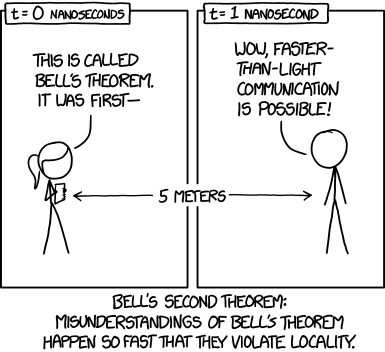
this comic does assume our previous comic, "how to always avoid small talk forever", has somehow failed you
| archive - contact - sexy exciting merchandise - search - about | |||
 |
|||
| ← previous | October 9th, 2015 | next | |
|
October 9th, 2015: It's gotten so cold that I've been forced to conclude that summer is indeed over, and I didn't even go watersliding once :( :( D: – Ryan | |||
20 Oct 15:48
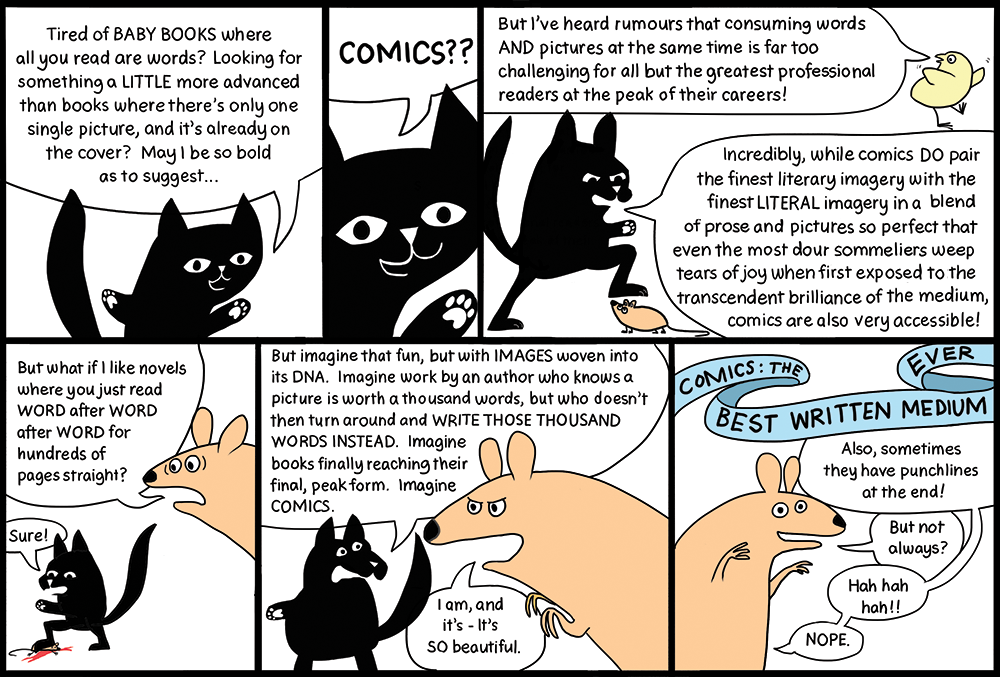
special MICE comics with guest artist Mitra Farmand!
| archive - contact - sexy exciting merchandise - search - about | |||
 |
|||
| ← previous | October 14th, 2015 | next | |
|
October 14th, 2015: This weekend (October 17th-18th) I'll be at MICE: the Massachusetts Independent Comics Expo! It's totally free, totally great, and if you're anywhere around Cambridge, you should come. They asked if I'd do some comics themed around mice, comics, or expos, and that's what I did! I wrote out regular Dinosaur Comics scripts (I do actual scripts, now you know!) and instead of me laying them out, some of the terrific artists at MICE drew them instead. And they're super great! This comic is by Mitra Farmand who I have never met in real life before, but here we are, collaborating, thanks to the internet! Check out her comic Fuffernutter, it is extremely cute and I like it. She also likes Star Trek, so clearly we're going to be fast friends when we meet at MICE! – Ryan | |||
20 Oct 15:45


10 Downsides Kids With Autism Get From Bullying (because apparently it isn’t obvious…)
by feministaspie
Autism Daily Newscast has published an article by an ABA practitioner entitled “Ten Perks Kids With Autism Get From Bullying”. Yep, really. That’s a thing that now exists. (I won’t link, but I like Wandering Autistic’s “honest version” if you want a quick summary…) So, in the interests of balance, and because it apparently isn’t obvious, here are just some of the negative effects bullying has on autistic children:
- The physical and emotional abuse. Honestly, the list could just end here. No ~important skill~ or ~valuable life lesson~ is worth that. Ever.
- You learn, very quickly, not to trust anyone. If you are your honest self, they might turn against you. If they seem friendly, they might be using you or laughing at you behind your back.
- You get the impression that everyone hates you and/or thinks you’re whatever the bullies call you, it becomes so ingrained that those thoughts begin automatically wherever you are and whoever you’re with. In other words, the foundations of an anxiety disorder.
- The realisation that the adults who are supposed to help you just agree with the bullies, even if they use more technically-polite words to express it. Everyone seems to be taking the same victim-blaming stance – if you could just “act normal” you wouldn’t get bullied, and because you won’t or can’t, you must deserve it.
- Low self-esteem – because if everyone constantly tells you that your way of being is wrong, you start to believe it, and you start to believe that it’s your fault for being who you are.
- All of the above is likely to be detrimental to engaging in social activity and making friends in the future.
- The fact that we have to justify not being abused by saying it’s detrimental to social skills, because our social skills (often used just as shorthand for “passing for neurotypical”) are seen as more important than our humanity.
- Other people deciding that everything’s fine because they can use your pain for their ~inspiration~ or ~teamwork~ or ~awareness~.
- The frustration of adults telling you “we can’t stop bullies” when they’re not even trying; treating bullying as if it were a natural disaster they are powerless to stop, when in fact it’s a product of a society they created. Where do you think bullies learn their prejudices from?
- Knowing that the bullying of people like you never totally goes away even in the adult world. We just stop calling it bullying and refer to it as what it is – ableism.
20 Oct 14:53
Activism & the Overton Window. You're welcome.
by Neurodivergent K
I'm going to tell you something frustrating about being me:
I will say something, and people will act like it's completely outlandish. Something like, oh, disabled people deserve civil rights. Making everywhere an epilepsy nightmare is violence. Things need to be more cognitively accessible. Autistic rights are human rights, even if we never pass. That compliance training is by it's very nature abusive.
And then you'd think that I said that babies are delicious and we should burn down everything and start over! The way people react to these things I posit that are direct extensions of "we're people, dammit"...they're the reactions of people who are threatened. It isn't laughing or blowing off, no, it's more like actual threats of violence. It's a good time. Like I said something that is dangerous and absurd.
Then, about 6 months later, maybe a year later, someone else will say it. Someone whiter, or someone male, or someone with relative class privilege, someone considered more "respectable". And suddenly this thing I've been saying for ages sounds reasonable. Maybe we should consider that! Sure, I've moved on to something even more ridiculous, like that bodily autonomy means everyone or something, but the thing that got me death threats and called a crazy bitch or whatever is now being seriously considered.
That's because a function of activists is to shift the Overton Window. It's a thankless and scary function, but it is a thing we do.
What is the Overton Window? It's the fancy pants rhetorical term for the ideas that humans will consider. Anything outside this idea is seen as extreme, reactionary, outlandish. You can see the Overton Window in practice if you have followed 20th-21st century USA politics. The Tea Party in particular dragged the Overton Window way to the right, while supposed progressives have been trying to be 'moderate'. The thing is...being 'moderate' and presented as an extreme means the window shifts. You never have actual extremes, and you see the ideas and policies that are tolerated shifting according to what people see as the reasonable range.
So. I fulfill the function of saying "Actually, that isn't even a little bit extreme, let me show you some extreme you can't even handle this shit", and we lose somewhat less ground to people who are hell bent on curtailing our rights, because I am not a sellout like the US Democrats, for example. And there are always a few people willing to say "that's not unthinkable, really". And so the range of discourse shifts & maybe some day the idea that autism isn't all about our parents will be considered a reasonable position.
I will say something, and people will act like it's completely outlandish. Something like, oh, disabled people deserve civil rights. Making everywhere an epilepsy nightmare is violence. Things need to be more cognitively accessible. Autistic rights are human rights, even if we never pass. That compliance training is by it's very nature abusive.
And then you'd think that I said that babies are delicious and we should burn down everything and start over! The way people react to these things I posit that are direct extensions of "we're people, dammit"...they're the reactions of people who are threatened. It isn't laughing or blowing off, no, it's more like actual threats of violence. It's a good time. Like I said something that is dangerous and absurd.
Then, about 6 months later, maybe a year later, someone else will say it. Someone whiter, or someone male, or someone with relative class privilege, someone considered more "respectable". And suddenly this thing I've been saying for ages sounds reasonable. Maybe we should consider that! Sure, I've moved on to something even more ridiculous, like that bodily autonomy means everyone or something, but the thing that got me death threats and called a crazy bitch or whatever is now being seriously considered.
That's because a function of activists is to shift the Overton Window. It's a thankless and scary function, but it is a thing we do.
What is the Overton Window? It's the fancy pants rhetorical term for the ideas that humans will consider. Anything outside this idea is seen as extreme, reactionary, outlandish. You can see the Overton Window in practice if you have followed 20th-21st century USA politics. The Tea Party in particular dragged the Overton Window way to the right, while supposed progressives have been trying to be 'moderate'. The thing is...being 'moderate' and presented as an extreme means the window shifts. You never have actual extremes, and you see the ideas and policies that are tolerated shifting according to what people see as the reasonable range.
So. I fulfill the function of saying "Actually, that isn't even a little bit extreme, let me show you some extreme you can't even handle this shit", and we lose somewhat less ground to people who are hell bent on curtailing our rights, because I am not a sellout like the US Democrats, for example. And there are always a few people willing to say "that's not unthinkable, really". And so the range of discourse shifts & maybe some day the idea that autism isn't all about our parents will be considered a reasonable position.
19 Oct 10:37
Intellectual Fortitude
by Peter Watts
In 1971, barely into my teens, I went to a movie with my dad: The Andromeda Strain, based on Michael Crichton’s bestseller, and one of the more faithful adaptations of an SF novel put to film. It’s not a perfect movie. Even back then I could see it wasn’t great on character development. There was a lot of expository dialog in which scientists told each other things they would already have known, if not for the need to fill the average movie-goer in on what amino acids are. But there was one way in which the movie stood out from others of its kind, in which it continues to stand out even today:
It portrayed scientists doing science.
Admittedly, depending on how low you set your standards you can see that all the time. Tony Stark invents Strong AI overnight, all by himself. Some goofball biologist hooks himself up to a brain in a vat and intuits the genetic complexities of Pacific Rim‘s monstrous Kaiju. Anne Hathaway’s character in Interstellar witters on about the transcendent properties of Love as a Universal Force. A thousand movies portray scientists either as goofy caricatures or charismatic lone wolves, pulling conceptual breakthroughs from their asses through the sheer force of their own intellect.
Of course, these characters were invented by screenwriters who have no clue how science works, and who couldn’t care less. Their goal was to provide mindless entertainment to hordes of popcorn-munchers. The Andromeda Strain, with its average-looking everyday researchers and their plodding scientific method, would never get made today. (If you don’t believe me, just look at what Robert Schenkkan did to Crichton’s story when A&E rebooted it as a miniseries back in 2008).
At least, that’s what I thought before I watched the first season of Fortitude. I mentioned that show back when I was complaining about the (significantly inferior) Humans, but I couldn’t go into detail until a certain overseas embargo had expired. And here we are.
Fortitude is an offbeat British/Norwegian co-production which made it to North America this year, despite the fact that its glacial pacing and delayed payoffs should have been a death sentence in any demographic raised on instant gratification. Set in the Norwegian arctic, it begins with a man being mauled by a polar bear. It begins with two children finding a mammoth carcass, barely frozen in melting ice, and a short-tempered Russian facing off against a Norwegian sheriff with poor impulse control. It begins with a woman in a hotel room, aiming a rifle at the closed door while a man on the other side raises a tentative knocking hand. It begins with infidelity and fever, with a plan to carve a hotel from the heart of a glacier, with a scientist being hacked to death by a mysterious assailant wielding a potato peeler.
That’s some of what happens in the first episode. None of it is explained in that first hour. The characters are ciphers, their motives hidden from the viewer. If you want everything spelled out in nice bite-sized chunks— if you prefer Transformers to 2001— this is not your movie. Hell, Fortitude doesn’t even tell you what genre you’re in until almost the end of the season.
Don’t go to Wikipedia for help on that score. It classifies Fortitude as “Psychological Thriller/Drama/Mystery”. In fact, it’s science fiction— but the science elements, while speculative, are so utterly plausible that I feel as if I’m misusing the term. It hinges on science, yes: on speculative biology, on events that have not yet happened but which could. Isn’t that the very definition of hard SF? And yet, having watched all those cryptic pieces coming together over eleven hypnotic hours, “SF” still doesn’t do it justice to my mind. Fortitude is more immediate than that label suggests, as if I were to describe a story about an Ebola epidemic as “science fiction” six months before an outbreak happened in the real world.
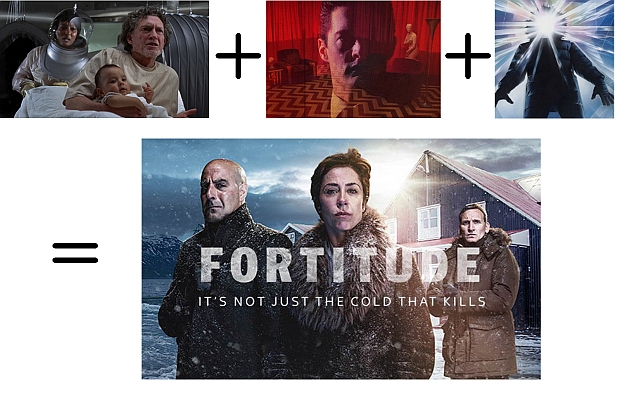
Not quite the exact recipe, but you get the idea.
If I had to sum it up in thirty words or less, I’d describe Fortitude as a cross between Twin Peaks and John Carpenter’s The Thing, as written by Michael Crichton. Ostensibly a crime drama revolving around a series of brutal murders in a small town— “fortitude” might be exactly what you need when they show the bodies, by the way— it mixes in subplots involving cancer, infidelity, politics, shamanism, climate change, rape, mob justice, wildlife biology, and food-related sexual obsession. (Also a pig in a hyperbaric chamber— still not sure what that was doing there.) Everyone has dangerous secrets to hide, and you can’t shake a creepy sense of something supernatural in this icebound berg. But the payoff, when it comes, is far more down to earth. The season’s almost over before you see the science behind the fiction— and even then, with that element revealed, you might mistake it for just one thread in a messy tapestry.
Tug on it, though; you’ll see a whole web of connections.
All of which would be enough to give Fortitude my personal seal of approval. But it goes one step further, serving up perhaps the most understated and accurate portrayal of working scientists that I’ve seen in a genre show. Blind alleys abound. In contrast to Tony Stark’s infallible intuition, hypotheses— when tested— turn out to be wrong. Researchers worry out loud about confirmation bias. Unexpected findings inspire literature searches for real-world precedents. And Fortitude‘s scientists are more than delivery platforms for exposition, they’re people as well as professionals. The local wildlife biologist, at ease in a world of hungry polar bears, delights in mocking a visiting biologist brought in for his first-hand experience with “apex predators” (turns out he did his thesis on badgers); she uses her lab equipment to cut up reindeer steaks. The characters muse over beers on Darwin’s thoughts about God.
It’s not to everyone’s taste. A friend of mine threw up his hands in confusion after the first episode, plaintively wondered if it got better. I’ll tell you what I told him: no, it does not get better. It pays off. It demands more patience than the average eyeball bait, and it rewards that patience more richly.
For all its crypsis and glacial pacing, that strategy seems to have worked— well enough to get Fortitude renewed for a second season, at least. I don’t know where they’ll go from here. The central mystery has been resolved, and besides, half the cast is dead. Then again, the solution to that mystery turned out to be just one manifestation of an environmental meltdown that contains within it the seeds of myriad disasters. Perhaps the next season will explore one of those. Perhaps it will go in some other direction entirely.
I hope we’re still around to see what that is.
Serafin.shane and -1 others like this
16 Oct 15:05
It Was You Who Made My Blue Eyes Blue
by Scott Alexander
[Content note: suicide]
Day Zero
It all started with an ignorant white guy.
His name was Alonzo de Pinzon, and he’d been shipwrecked. We heard him yelling for help on the rocks and dragged him in, even though the storm was starting to get really bad. He said that his galleon had gone down, he’d hung on to an oar and was the only survivor. Now he was sitting in our little hunting lodge, shivering and chattering his teeth and asking us questions in the Polynesian traders’ argot which was the only language we all shared.
“How big is this island? How many of you are there?”
Daho answered first. “11.8 miles from the easternmost point to the westernmost point, 3.6 miles from the northernmost to the southernmost. Total area is 14.6 square miles, total coastline is dependent on how deeply you want to go into the fractal nature of the perimeter but under some reasonable assumptions about 32 miles long. Last census said there were 906 people, but that was two years ago, so assuming the 5.1% rate of population growth continues, there should be closer to 1000 now. Everyone else is back at the village, though. The five of us were out hunting and got caught in the storm. We figured we’d stay at this old hunting lodge until it cleared up, since it’s 5.5 miles back to the village and given the terrain and factoring in a delay because of the storm it would probably take at least 9.5 hours to get back.”
Pinzon blinked.
“Problem?” asked Daho.
“But – ” he said. “That is the sort of answer I should expect from a natural philosopher. Not from a savage.”
“Savage?” Calkas hissed. “Really? We rescue you, and the first thing you do is call us savages?”
The sailor looked around, as if anxious. Finally, almost conspiratorially: “But I heard about your island! I heard you eat people!”
Calkas smiled. “Only as a deterrent. Most of the time when European explorers land somewhere, they kill all the men and enslave all the women and convert the children to Christianity. The only places that escape are the ones that get a reputation for eating said European explorers. So we arranged to give ourselves that reputation.”
“And then we had to go through with it a few times in order to make the deterrent credible,” added Bekka, my betrothed. “And you guys do taste really good with ketchup.”
“It’s a savage thing to do!” Pinzon said “And you even look like savages. You wear bones in your hair”
“Just Enuli,” I said. “She’s going through a Goth phase.”
“My name is Morticia now,” said Enuli, “and it’s not a phase!” She did have a bone in her hair. She also had white face paint and black eyeliner.
“More roast pig?” Bekka asked Pinzon. The sailor nodded, and she re-filled his plate.
“I just don’t get it,” he told us. “Everyone else in this part of the world lives in thatched huts and counts ‘one, two, many’. We tried to trade with the Tahitians, and they didn’t understand the concept of money! It was a mess!”
Bekka rolled her eyes at me, and I smiled. Calkas was a little more tolerant. “The sacred plant of our people is called sparkroot,” he said. “When we eat it, we get – more awake, I guess you could say. We try to have some every day, and it helps us keep track of things like the island size and the population, and much more.”
Alonzo de Pinzon looked interested. “How come you haven’t done more with your intellect? Invented galleons, like we Spaniards? Set off to colonize Tahiti or the other islands? If you are as smart as you seem, you could conquer them and take their riches.”
“Maybe,” said Calkas. “But that’s not why the Volcano God gave us the sparkroot. He gave us sparkroot to help us comply with his complicated ritual laws.”
“You need to be smart to deal with your ritual laws?”
“Oh yes. For example, the Tablets of Enku say that we must count the number of days since Enku The Lawgiver first spoke to the Volcano God, and on days whose number is a Mersenne prime we can’t eat any green vegetables.”
“What’s a Mersenne prime?” asked the sailor.
“Exactly my point,” said Calkas, smiling.
“That’s not even the worst of it!” Daho added. “The Tablets say we have to bathe in the waterfall any day x such that a^n + b^n = x^n where n is greater than two. We got all confused by that one for a while, until Kaluhani gorged himself on a whole week’s worth of sparkroot in one night and proved that it would never apply to any day at all.”
“The Volcano God’s yoke is light,” Calkas agreed.
“Although poor Kaluhani was vomiting for the next three days after that,” Bekka reminded us, and everybody laughed remembering.
“Oh!” said Daho. “And remember that time when Uhuako was trying to tattoo everyone who didn’t tattoo themselves, and he couldn’t figure out whether he had to tattoo himself or not, so he ended up eating a whole sparkroot plant at once and inventing advanced set theory? That was hilarious.”
Everyone except Alonzo de Pinzon giggled.
“Point is,” said Calkas, “that’s why the Volcano God gives us sparkroot. To follow the rituals right. Any other use is taboo. And I’m okay with that. You Europeans may have your big ships and your guns and your colonies across half the world. And you might think you’re smart. But you guys couldn’t follow the Volcano God’s rituals right for a day without your brains exploding.”
Pinzon scowled. “You know what?” he said. “I don’t think you’re Polynesians at all. I think you must be descended from Europeans. Maybe some galleon crashed on this island centuries ago, and you’re the descendants. That would explain why you’re so smart.”
“You know what else we’ve invented with our giant brains?” Bekka asked. “Not being racist.”
“It’s not racism!” said Pinzon. “Look, there’s one more obvious reason to think you’re descended from Europeans. You may have dark skin, but this is the first place I’ve been in all of Polynesia where I’ve seen even one native with blue eyes.”
Bekka gasped. Calkas’ eyes went wide. Daho’s hands started curling into fists. Enuli started to sob.
I looked at them. They looked at me. Then, as if synchronized, we grabbed Alonzo de Pinzon and crushed his throat and held him down until he stopped breathing.
He tasted delicious with ketchup.
Day One
The next morning dawned, still grey and cold and stormy.
“So,” I said when the other four had awoken. “I guess we’re all still here.”
I said it glumly. It wasn’t that I wanted any of my friends to commit suicide. But if one of them had, the horror would have stopped there. Of course, I knew it couldn’t really be over that easily. But I couldn’t have admitted I knew. I couldn’t even have suggested it. That would have made me as bad as the Spanish sailor.
“Wait,” said Enuli. “I don’t get it. Why wouldn’t we still be here?”
The other four stared at her like she was mad.
“Enuli,” Calkas suggested, “did you forget your sparkroot last night?”
“First of all, my name is Morticia. And – ”
“Shut it. Did you forget your sparkroot?”
Finally she nodded bashfully. “I was so upset about that awful man making fun of my hair-bone,” she said. “I guess it slipped my mind. I’ll have some now.” She took some raw sparkroot from our bag, started to crush it with the mortar and pestle. “In the meantime, tell me what’s going on.”
“Alonzo de Pinzon said at least one of us had blue eyes. We all know what the Tablets of Enku say. If anybody has blue eyes, and knows that they have blue eyes, they must kill themselves.”
“So what? I see people with blue eyes all the time. Of course at least one of us has blue eyes.”
Concerned looks from the others. I reflected for a second, the sparkroot smoothing the thoughts’ paths through my brain. No, she hadn’t revealed anything extra by saying that, although she would have if she had said it before the sailor had spoken, or last night before we woke up this morning. She hadn’t made the problem worse. Still, it had been a slip. This was the sort of thing that made forgetting your sparkroot so dangerous. Had it been a different time, even Enuli’s comment could have doomed us all.
“It’s like this,” I told Enuli. “Suppose there were only the two of us, and we both had blue eyes. Of course, you could see me and know that I had blue eyes. So you would know that at least one of us had blue eyes. But what you wouldn’t know is that I also knew it. Because as far as you know, you might have eyes of some other color, let’s say brown eyes. If you had brown eyes, and I of course don’t know my own eye color, then I would still think it possible that both of us have brown eyes. So if I in fact know for sure that at least one of us has blue eyes, that means you have blue eyes. So you know at least one of us has blue eyes, but you don’t know that I know it. But if Alonzo de Pinzon shows up and says that at least one of us has blue eyes, now you know that I know it.”
“So?” Enuli poured the ground-up root into a cup of boiling water.
“So the Tablets say that if anyone knows their own eye color, they must commit suicide at midnight of that night. Given that I know at least one of us has blue eyes, if I see you have brown eyes, then I know my own eye color – I must be the blue-eyed one. So the next morning, when you wake up at see me not dead, you know that you don’t have brown eyes. That means you must be the blue-eyed one. And that means you have to kill yourself on midnight of the following night. By similar logic, so do I.”
Enuli downed her sparkroot tea, and then her eyes lit up. “Oh, of course,” she said. Then “Wait! If we follow the situation to its logical conclusion, any group of n blue-eyed people who learn that at least one of them has blue eyes have to kill themselves on the nth night after learning that!”
We all nodded. Enuli’s face fell.
“I don’t know about the rest of you,” said Daho, “but I’m not just going to sit around and wait to see if I die.” There were murmurs of agreement.
I looked out at my friends. Four pairs of blue eyes stared back at me. Everybody else either saw four pairs of blue eyes or three pairs of blue eyes, depending on what color my own eyes were. Of course, I couldn’t say so aloud; that would speed up the process and cost us precious time. But I knew. And they knew. And I knew they knew. And they knew I knew I knew. Although they didn’t know I knew they knew I knew. I think.
Then I looked at Bekka. Her big blue eyes stared back at me. There was still hope I was going to survive this. My betrothed, on the other hand, was absolutely doomed.
“This sucks,” I agreed. “We’ve got to come up with some kind of plan. Maybe – Enuli wasn’t thinking straight yesterday. So her not committing suicide doesn’t count. Can we work with that?”
“No,” said Calkas. “Suppose Enuli was the only one with blue eyes, and all the rest of us had brown eyes. Then she would realize that and commit suicide tonight. If she doesn’t commit suicide tonight, then we’re still screwed.”
“Um,” said Daho. “I hate to say this, but we get rid of Enuli. There’s a canoe a little ways down the beach hidden underneath the rocks. She can set off and row for Tahiti. We’ll never know if she killed herself tonight or not. Remember, right now for all we know Enuli might be the only one with blue eyes. So if there’s any question in our mind about whether she killed herself, we can’t be sure that the rest of us aren’t all brown-eyed.”
We all thought about that for a moment.
“I’m not going to row to Tahiti,” said Enuli. “In this storm, that would be suicide.”
The rest of us glared at her.
“If you don’t get off this island, then for all we know all five of us are going to have to die,” I said. “You included.”
“Well Ahuja, if you’re so big on making sacrifice why don’t you go to Tahiti?”
“First of all,” I said, “because I’m not leaving my betrothed. Second of all, because it doesn’t work for me. I knew what was going on last night. We already know that I’m not the only blue-eyed person here. And we know we know it, and know we know we know it, and so on. You’re the only one who can help us.”
“Yeah?” said Enuli. “Well, if two of you guys were to row to Tahiti, that would solve the problem too.”
“Yes,” said Daho patiently. “But then two of us would be stuck in exile. If you did it, only one of us would be stuck.”
Enuli gave a wicked grin. “You know what?” she said. “I’ll say it. I’m not the only blue-eyed person here. At least one of the rest of you has blue eyes.”
And there it was.
“Ha. Now I’m no worse off than any of the rest of you.”
“Kill her,” said Bekka. “She broke the taboo.” The rest of us nodded.
“So she did,” said Calkas. “And if we had a court here, led by the high priest, and an executioner’s blade made to exactly the right standard, kill her we would. But until those things happen, it is taboo for us to convict and kill her without trial.”
Calkas’ father was the high priest. He knew the law better than any of us. The five of us sat quietly and thought about it. Then he spoke again:
“But her soul may well burn in the caldera of the Volcano God forever.”
Enuli started to cry.
“And,” Calkas continued, “there is nevertheless a flaw in our plan. For all we know, three out of five of us have brown eyes. We cannot tell the people who have blue eyes that they have blue eyes without breaking the taboo. So we cannot force blue-eyed people in particular to sail to Tahiti. But if two of the brown-eyed people sail to Tahiti, then we do not lose any information; we know that they would not have committed suicide, because they could not have figured out their own eye color. So sailing to Tahiti won’t help.”
The rest of us nodded. Calkas was right.
“Let’s wait until dinner tonight,” I suggested. “We’ll all have some more sparkroot, and maybe we’ll be able to think about the problem a little more clearly.”
Day Two
The sun rose behind angry storm clouds. The five of us rose with it.
“Well, I guess we’re all still here,” I said, turning the morning headcount into a grim tradition.
“Look,” said Bekka. “The thing about sailing to Tahiti would work a lot better if we knew how many blue-eyed versus brown-eyed people were here. If we all had blue eyes, then we could be sure that the Tahiti plan would work, and some of us could be saved. If some of us had brown eyes, then we could choose a number of people to sail to Tahiti that had a good probability of catching enough of the blue-eyed ones.”
“We can wish all we want,” said Enuli, “but if we explicitly knew how many people had blue versus brown eyes, we’d all have to kill ourselves right now.”
“What about probabilistic knowledge?” I asked. “In theory, we could construct a system that would allow us to have > 99.99% probability what color our eyes were without being sure.”
“That’s stupid,” Enuli said, at precisely the same time Calkas said “That’s brilliant!” He went on: “Look, just between the five of us, everybody else back at the village has blue eyes, right?”
We nodded. It was nerve-wracking to hear it mentioned so casually, just like that, but as far as I could tell it didn’t break any taboos.
“So,” said Calkas, “We know that, of the island population, at least 995 of the 1000 of us have blue eyes. Oh, and since nobody committed suicide last night, we know that at least three of the five of us have blue eyes, so that’s 998 out of 1000. Just probabilistically, by Laplace’s Law of Succession and the like, we can estimate a >99% chance that we ourselves have blue eyes. Nothing I’m saying is taboo. It’s nothing that the priests don’t know themselves. But none of them have killed themselves yet. So without revealing any information about the eye color composition of the current group, I think it’s reasonable to make a first assumption that all of us have blue eyes.”
“I’m really creeped out at you talking like this,” said Daho. I saw goosebumps on his arms.
“I do not believe that the same Volcano God who has endowed us with reason and intellect could have intended us to forego their use,” said Calkas. “Let’s assume we all have blue eyes. In that case, the Tahiti plan is still on.”
“Waaiiiiit a second – ” Bekka objected. “If probabilistic knowledge of eye color doesn’t count, then no information can count. After all, there’s always a chance that the delicious sailor could have been lying. So when he said at least one of us had blue eyes, all we know is that there’s a high probability that at least one of us has blue eyes.”
“Yes!” said Daho. “I’ve been reading this book that washed ashore from a shipwrecked galleon. Off in Europe, there is this tribe called the Jews. Their holy book says that illegitimate children should be shunned by the congregation. Their leaders thought this was unfair, but they weren’t able to contradict the holy book. So instead they declared that sure, illegitimate children should be shunned, but only if they were sure they were really illegitimate. Then they declared that no amount of evidence would ever suffice to convince them of that. There was always a possibility that the woman had secretly had sex with her husband nine months before the birth and was simply lying about it. Or, if apparently unmarried, that she had secretly married someone. They decided that it was permissible to err on the side of caution, and from that perspective nobody was sufficiently certainly illegitimate to need shunning. We could do the same thing here.”
“Yes!” I said. “That is, even if we looked at our reflection and saw our eye color directly, it might be that a deceiving demon is altering all of our experience – ”
“No no NO,” said Calkas. “That’s not right. The Tablets of Enku say that because people must not know their own eye color, we are forbidden to talk about the matter. So the law strongly implies that hearing someone tell us our eye color would count as proof of that eye color. The exact probability has nothing to do with it. It’s the method by which we gain the information.”
“That’s stupid,” Bekka protested.
“That’s the law,” said Calkas.
“Let’s do the Tahiti plan, then,” I said. I gathered five stones from the floor of the lodge. Two white, three black. “White stones stay. Black stones go to Tahiti. Close your eyes and don’t look.”
Bekka, Calkas, Daho, and Enuli all took a stone from my hand. I looked at the one that was left. It was black. Then I looked around the lodge. Calkas and Enuli were smiling, white stones in their hands. Bekka and Daho, not so much. Daho whined, looked at me pleadingly.
“No,” I said. “It’s decided. The three of us will head off tonight.”
Calkas and Enuli tried to be respectful, to hide their glee and relief.
“You guys will tell our families what happened?
They nodded gravely.
We began packing our things.
* * *The dark clouds frustrated any hope of moonlight as Bekka, Daho and I set off to the nearby cove where two canoes lay hidden beneath the overhanging rocks. The rain soaked our clothes the second we crossed the doorway. The wind lashed at our faces. We could barely hear ourselves talk. This was a bad storm.
“How are we going to make it to the canoes in this weather?!” Bekka shouted at me, grabbing my arm. I just squeezed her hand. Daho might have said something, might not have. I couldn’t tell.Between the mud and the rain and the darkness it took us two hours to travel less than a mile. The canoes were where we had left them a few days before. The rocks gave us brief shelter from the pelting rain.
“This is suicide!” Daho said, once we could hear each other again. “There’s no way we can make it to Tahiti in this! We won’t even be able to make it a full mile out!” Bekka nodded.
“Yes,” I said. I’d kind of known it, the whole way down to the cove, but now I was sure. “Yes. This is suicide. But we’ve got to do it If we don’t kill ourselves tonight, then we’ve just got to go back to the lodge. And then we’ll all end up killing ourselves anyway. And Calkas and Enuli will die too.”
“No!” said Daho. “We go back, we tell them that we can’t make it to Tahiti. Then we let them decide if we need to commit suicide or not. And if they say yes, we draw the stones again. Four black, one white. One chance to live.”
“We already drew the stones,” I said. “Fair is fair.”
“Fair is fair?” Bekka cried. “We drew stones to go to Tahiti. We didn’t draw stones to commit suicide. If the stone drawing obliged us to commit suicide, they should have said so, and then maybe we would have spent more time thinking about other options. Why do we have to die? Why can’t the other ones die? Why not Enuli, with that stupid bone in her hair? I hate her so much! Ahuja, you can’t just let me die like this!”
That hurt. I was willing to sacrifice my life, if that was what it took. But Bekka was right. To just toss ourselves out to sea and let her drown beneath those waves would break the whole point of our betrothal bond.
“Well, I – ”
“Ahuja,” said Bekka. “I think I’m pregnant.”
“What?”
“I missed my last period. And I got sick this morning, even though I didn’t eat any extra sparkroot. I think I’m pregnant. I don’t want to die. We need to save me. To save the baby.”
I looked at the horrible waves, watched them pelt the shore. A few moments in that, and there was no doubt we would capsize and die.
“Okay,” I said. “New plan. The three of us go back. We tell them that we couldn’t get to Tahiti. They point out that another night has passed. Now four of us have to die. The three of us vote for everybody except Bekka dying. It’s 3-2, we win. The rest of us die, and Bekka goes back to the village and the baby lives.”
“Hold on,” said Daho. “I’m supposed to vote for me to die and Bekka to live? What do I get out of this deal?”
The Tablets of Enku say one man must not kill another. So I didn’t.
“You get an extra day!” I snapped. “One extra day of life for saving my betrothed and unborn child. Because we’re not going back unless you agree to this. It’s either die now, or die tomorrow night. And a lot of things can happen in a day.”
“Like what?”
“Like I don’t know. We might think of some clever way out. Enku the Lawgiver might return from the dead and change the rules. Whatever. It’s a better deal than you’ll get if you throw yourself into that water.”
Daho glared at me, then weighed his options. “Okay,” he snapped. “I’ll vote for Bekka. But you had better be thinking really hard about those clever ways out.”
Day Three
“So,” said Calkas the next morning. “I guess all of us are still here.” He didn’t really sound surprised.
I explained what had happened the night before.
“It’s simple,” Calkas declared. “The Volcano God is punishing us. He’s saying that it’s wrong of us to try to escape his judgment by going to Tahiti. That’s why he sent the storm. He wants us all to stay here until the bitter end and then, if we have to, we die together.”
“No!” I protested. “That’s not it at all! The taboo doesn’t say we all have to die. It just says we all have to die if we figure out what our eye color is! If some of us kill ourselves, we can prevent that from happening!”
“The Volcano God loathes the needless taking of life,” said Calkas. “And he loathes his people traveling to other lands, where the sparkroot never grows and the taboos are violated every day. That’s what he’s trying to tell us. He’s trying to close off our options, so that we stay pure and our souls don’t have to burn in his caldera. You know, like Enuli’s will.” He shot her a poison glance.
“My name is – ” she started.
“I don’t think that’s it at all,” I said. “I say the four of us sacrifice ourselves to save Bekka.”
“You would say that, as her betrothed,” said Enuli.
“Well yes,” I said. “Yes, I would. Forgive me for not wanting the love of my life to die for a stupid reason. Maybe I should just throw myself in the caldera right now. And she’s carrying an unborn child? Did you miss that part?”
“People, people,” said Calkas. “Peace! We’re all on the same side here.”
“No we’re not,” I said. “So let’s vote. Everyone in favor of saving Bekka, say aye.”
“And everyone in favor of not sacrificing anyone to the waves, and letting the Volcano God’s will be done, say nay.” Calkas added.
“Aye,” I said.
“Aye,” said Bekka.
“Nay,” said Calkas.
“Nay,” said Enuli.
“Nay,” said Daho.
“What?!” I protested.
“Nay,” Daho repeated.
“But you said – ” I told him.
“You promised me one extra day,” Daho said. “Think about it. Calkas is promising me two.”
“No!” I protested. “You can’t do this! Seriously, I’ll kill you guys if I have to!”
“Then your soul will burn in the caldera forever,” said Calkas. “And it still won’t help your betrothed or your child.”
“You can’t do this,” I repeated, softly, more of a mutter.
“We can, Ahuja” said Calkas.
I slumped back into my room, defeated.
Day Four
I gave them the traditional morning greeting. “So, I guess we’re all still here.”
We were. It was our last day. We now had enough information to prove, beyond a shadow of a doubt, that all of us had blue eyes. At midnight, we would all have to commit suicide.
“You know what?” said Enuli. “I’ve always wanted to say this. ALL OF YOU GUYS HAVE BLUE EYES! DEAL WITH IT!”
We nodded. “You have blue eyes too, Enuli,” said Daho. It didn’t matter at this point.
“Wait,” said Bekka. “No! I’ve got it! Heterochromia!”
“Hetero-what?” I asked.
“Heterochromia iridum. It’s a very rare condition where someone has two eyes of two different colors. If one of us has heterochromia iridum, then we can’t prove anything at all! The sailor just said that he saw someone with blue eyes. He didn’t say how many blue eyes.”
“That’s stupid, Bekka,” Enuli protested. “He said blue eyes, plural. If somebody just had one blue eye, obviously he would have remarked on that first. Something like ‘this is the only island I’ve been to where people’s eyes have different colors.'”
“No,” said Bekka. “Because maybe all of us have blue eyes, except one person who has heterochromia iridum, and he noticed the other four people, but he didn’t look closely enough to notice the heterochromia iridum in the fifth.”
“Enuli just said,” said Calkas, “that we all have blue eyes.”
“But she didn’t say how many!”
“But,” said Calkas, “if one of us actually had heterochromia iridum, don’t you think somebody would have thought to mention it before the fifth day?”
“Doesn’t matter!” Bekka insisted. “It’s just probabilistic certainty.”
“It doesn’t work that way,” said Calkas. He put an arm on her shoulder. She angrily swatted it off. “Who even decides these things!” she asked. “Why is it wrong to know your own eye color?”
“The eye is the organ that sees,” said Calkas. “It’s how we know what things look like. If the eye knew what it itself looked like, it would be an infinite cycle, the eye seeing the eye seeing the eye seeing the eye and so on. Like dividing by zero. It’s an abomination. That’s why the Volcano God, in his infinite wisdom, said that it must not be.”
“Well, I know my eyes are blue,” said Bekka. “And I don’t feel like I’m stuck in an infinite loop, or like I’m an abomination.”
“That’s because,” Calkas said patiently, “the Volcano God, in his infinite mercy, has given us one day to settle our worldly affairs. But at midnight tonight, we all have to kill ourselves. That’s the rule.”
Bekka cried in my arms. I glared at Calkas. He shrugged. Daho and Enuli went off together – I guess they figured if it was their last day in the world, they might as well have some fun – and I took Bekka back to our room.
* * *“Listen,” I said. “I’m not going to do it.”
“What?” she asked. She stopped crying immediately.
“I’m not going to do it. And you don’t have to do it either. You should have your baby, and he should have a mother and father. We can wait here. The others will kill themselves. Then we’ll go back to the village on our own and say that the rest of them died in the storm.”
“But – aren’t you worried about the Volcano God burning our souls in his caldera forever?”
“To be honest, I never really paid much attention in Volcano Church. I – I guess we’ll see what happens later on, when we die. The important thing is that we can have our child, and he can grow up with us.”
“I love you,” said Bekka.
“I know,” I said.
“I know you know,” she said. “But I didn’t know that you knew I knew you knew. And now I do.”
“I love you too,” I said.
“I know,” she said.
“I know you know,” I said. I kissed her. “I love you and your beautiful blue eyes.”
The storm darkened from gray to black as the hidden sun passed below the horizon.
Day Five
“So,” I said when the other four had woken up, “I guess all of us are atheists.”
“Yeah,” said Daho.
“The world is empty and void of light and meaning,” said Enuli. “It’s the most Goth thing of all.”
Calkas sighed. “I was hoping all of you would kill yourselves,” he said, “and then I could go home, and my father the high priest would never have to know what happened. I’m sorry for pushing the rest of you. It’s just that – if I looked lax, even for a second, he would have suspected, and then I would have been in so much trouble that an eternity in the Volcano God’s caldera would look pretty good compared to what would happen when I got back home.”
“I think,” said Bekka, “that I realized it the first time I ate the sparkroot. Before I’d even finished swallowing it, I was like, wait a second, volcanoes are probably just geologic phenomenon caused by an upwelling of the magma in the Earth’s mantle. And human life probably evolved from primitive replicators. It makes a lot more sense than some spirit creating all life and then retreating to a dormant volcano on some random island in the middle of the nowhere.”
“This is great,” said Bekka. “Now even if it’s a Mersenne prime day I can eat as many green vegetables as I want!”
“You know Mersenne prime days only come like once every couple of centuries, right?” I asked her.
“I know. It’s just the principle of the thing.”
“We can’t tell any of the others,” Daho insisted. “They’d throw us into the volcano.”
“You think?” I said. “Calkas was saying before that 99% of us had blue eyes, so probably we all had blue eyes. Well, think about it. The five of us are a pretty random sample of the island population, and all five of us are atheist. That means there’s probably a lot more. Maybe everybody’s atheist.”
“Everybody?”
“Well, I thought Calkas was like the most religious of anybody I knew. And here we are.”
“I told you, I was just trying to behave so that I didn’t get in trouble with my father.”
“What if everyone’s doing that? Nobody wants to get in trouble by admitting they don’t believe, because if anybody else found out, they’d get thrown into the volcano. So we all just put on a mask for everybody else.”
“I figured Ahuja was atheist,” said Bekka.
“You did?!” I asked her.
“Yeah. It was the little things. When we were hanging out. Sometimes you’d forget some rituals. And then you’d always shoot these guilty glances at me, like you were trying to see if I’d noticed. I thought it was cute.”
“Why didn’t you tell me?”
“You’d have freaked out. You’d have had to angrily deny it. Unless you knew I was atheist. But I couldn’t have told you that, because if I did then you might feel like you had to throw me in the volcano to keep up appearances.”
“Bekka!” I said. “You know I would never – ”
“I kind of suspected Calkas was atheist,” said Daho. “He got so worked up about some of those little points of law. It had to be overcompensating.”
“Hold on hold on hold on!” said Calkas. “So basically, we were all atheists. We all knew we were all atheists. We just didn’t know that we knew that we were all atheists. This is hurting my brain. I think I’m going to need more sparkroot.”
A sunbeam peeked through the wall of the lodge.
“Storm’s over!” Bekka shouted gleefully. “Time to go back home!” We gathered our things and went outside. The sudden sunlight felt crisp and warm upon my skin.
“So,” said Daho, “we don’t mention anything about the sailor to anyone else back at the village?”
“Are you kidding?” said Calkas. “I say we stand in the middle of town square, announce everybody’s eye colors, and then suggest that maybe they don’t believe in the Volcano God as much as they thought. See what happens.”
“YOU ALL HAVE BLUE EYES!” Enuli shouted at the jungle around us. “DEAL WITH IT!” We laughed.
“By the way,” I told Enuli. “While we’re airing out things that everybody knows in order to make them common knowledge, that bone in your hair looks ridiculous.”
“He’s right,” Daho told her.
“It really does,” Calkas agreed.
“You watch out,” said Enuli. “Now that we don’t have to reserve the sparkroot for interpreting taboos, I’m going to invent a death ray. Then you’ll be sorry.”
“Hey,” said Daho, “that sounds pretty cool. And I can invent a giant aerial dreadnaught to mount it on, and together we can take over Europe and maybe the next sailor who gets shipwrecked on our island will be a little less condescending.”
“Ha!” said Enuli. “That would be so Goth.”
Sun on our backs, we took the winding road into the village.
15 Oct 21:15
Labour’s headbangers: rebels without a cause
by James Graham
There’s a curious subset of democratic reform campaigners who maintain that the number one most significant reform we could make to our voting system would be to introduce a “none of the above” option. Apparently, at a stroke, this would solve all our problems as politicians face up to their massive unpopularity.
I am, it is fair to say, sceptical. But one thing I will give them is that this does seem to be the theme of our age. Opting out is what we do in modern society. We are all Pontius Pilate now.
This, it would appear, now extends to the significant elements of the Labour Party. After getting themselves into a mess at the start of the summer, agreeing to abstain on the welfare bill and thus expose the moral vacuum at the party’s heart which Jeremy Corbyn was more than happy to fill, 21 Labour MPs decided to do exactly the same thing in response to the government’s ridiculous Charter for Budget Responsibility.
(As an aside, John Major’s government was obsessed with “charters“; what does it say about modern politics that something that resembles a desperate gimmick during the fag end of the last Tory government is now something that Labour can tie themselves into knots over?)
None of this is to suggest that Jeremy Corbyn and John McDonnell have exactly covered themselves in glory over the last few days. McDonnell’s u-turn over the charter is possibly the most inept act I’ve ever seen by a major party leader in British politics, and I’m including Nick Clegg, Gordon Brown and Iain Duncan Smith in that (feel free to list more inept actions in the comments below). It is perfectly understandable why the Labour Parliamentary Party was as angry as it was at the beginning of the week.
But anger doesn’t justify anything, and nor does “well Corbyn and McDonnell used to be serial rebels so I can be too,” unless you never took their rebellions seriously in the first place. Not everyone agrees with Corbynomics, but pretty much everyone understands the charter to be a gimmick and a political trap. The fact that McDonnell got caught in it is a reason to not leap into it yourself. All the Labour rebels did last night was make themselves look stupid and angry.
I hesitate to call them Blairites, but it is a better term than their apparently preferred label, “moderates”. They are anything but. The brigade within Labour that are fixated on bringing Corbyn down as quickly as possible have, for a long time, resemble the headbanger mindset, albeit a group of headbangers without a cause. At least you can quickly tick off a list of what the Tory headbangers believe in; it is hard to discern what the Labour headbangers actually want to achieve.
Perhaps that isn’t entirely fair, because at times it seems that whenever David Cameron manages to leave the house without forgetting to put his trousers on, there’s a throng of Labour right wingers who are quick to lavish praise on his latest act of political cunning and guile. Last week, Cameron made a few vaguely leftish comments in his conference speech. Completely ignoring the week in which the party defended its policies to cut the income of the working poor and make some blood curdling comments about immigration, Dan Hodges and John Rentoul could not have been more delighted.
Nor is this a new, post-Corbyn change of heart. Throughout the Ed Miliband era, Labour’s headbangers spent their time nursing perceived grievance after perceived grievance. Even after Miliband moderated his approach to appease his own right flank, the highly vocal attacks and grumblings persisted. What we never saw during that era was any kind of positive vision for what a “moderate”, “centrist” Labour might look like. All we heard was sneering.
And then there was Liz Kendall. Initially hailed as a potential game changer, Kendall’s leadership bid quickly ran out of steam. The reason? Because her vision for Labour was about as constructive and coherent as a typical Hodges or Rentoul whinge-fest. She had literally nothing to say beyond “we’re all doomed unless we sign up to all of the Tories’ most popular policies”. A more coherent Blairite might have challenged Corbyn; as it stood Kendall helped Corbyn hoover up more votes every time she opened her mouth.
I’ve yet to see an ounce of contrition by the headbangers over this. The constant anti-Corbyn refrain is that it is no good having principles if you can’t win a general election. This is true. But it is equally true that it is no good being a moderate if you can’t carry your own party with you. If you expect people to give up a serious amount of their time and income supporting your bid to win an election, not being able to offer even the most paltry vision of how you would do things different from your political opponents is a fundamental deal breaker. Yet somehow this fairly mundane idea escapes the so-called Labour moderates, and they don’t seem to be in any hurry to examine how they might to anything different any time soon.
As Zoe Williams wrote during the leadership contest, in terms of offering hope, Corbyn is more Blairite than the Blairites. What’s really odd is that with Corbyn’s leadership set to potentially end as soon as the elections next May end, you’d think that the headbangers would be more focused on finding and building up a potential replacement rather than toxifying themselves in the eyes of their colleagues. As it stands, if Corbyn does go down in a blaze of glory, what we’re likely to see is him replaced by a candidate who does at better job at bridging the divide between the parliamentary party and membership, only for the headbangers to spend all their time attempting to bring that leader down as well.
It is an odd form of political nihilism. While cast out in the political wilderness, the hard left at least had an agenda. The hard right complain about moves within the party to oust them; but shouldn’t they find a purpose before complaining about plots?
The post Labour’s headbangers: rebels without a cause appeared first on Quaequam Blog!.
15 Oct 08:18
Fickle About Finger
by evanier
As we mentioned back here, Bob Kane was voted a posthumous star on the Hollywood Walk of Fame. As has just been announced, the ceremony will be a week from today — on Wednesday, October 21, 2015 at 11:30 in the morning. The location is in front of the Guinness World Record Museum which is located at 6764 Hollywood Blvd. and the guest speakers will include filmmaker Zack Snyder and DC Entertainment Co-Publisher Jim Lee. The Batmobile from the new Batman v Superman movie will be also be there.
Anyone who wants to attend can do so, just by getting there early and finding a place to stand behind the barriers. The event will be live-streamed on the Hollywood Walk of Fame website. More details can be found on this page.
When the star was first announced, a number of folks were threatening to picket it with signs saying things like WHAT ABOUT BILL FINGER? As you probably know, Finger was the writer of the first Batman story and most of the formative ones and there seems to be a widespread belief that he was as much the creator of the property as Kane, if not more so. Kane himself in his autobiography said he should have given his old friend and collaborator a co-credit…but the fact is, he didn't. As far as I know, DC and its corporate overlords are still contractually obligated to credit Kane as the sole creator. The press release for Kane's star describes Kane as the creator but does include the following…
Batman's first adventure was called "The Case of the Chemical Syndicate," and was written by Kane's frequent collaborator, Bill Finger, who over the years would make many significant contributions to the Batman universe.
The press release also says, "Bob Kane continued to illustrate Batman's comic book adventures until his retirement in 1968," which of course is not true.

Last month, DC announced some sort of agreement with the family of Bill Finger (I assume that means his granddaughter) by which Finger will receive increased recognition for his contributions, including credit on the TV series Gotham and in the Batman v Superman movie. That is not the same as acknowledging Finger as co-creator but it is a major step.
Before that, I had been thinking that when Kane's star was unveiled, I'd round up a posse and make some signs and go protest the injustice to the late Mr. Finger. But the new arrangement to credit Finger in some ways wherever possible makes me a lot less militant on the matter…and the fact that I just had a new knee installed makes me unable to do all the walking and standing that a demonstration would involve. ..so I won't be there protesting. I still think though that if Kane deserves one, Finger deserves one. Maybe the next time a Batman movie is to be released, Time-Warner can use its considerable clout to arrange that.
The post Fickle About Finger appeared first on News From ME.
15 Oct 08:16
Science Notes / There Are No Corkscrew Orbits
See why the claims that there are "Corkscrew Orbits" around binary stars are empty hype.
Jdinoto likes this
14 Oct 20:07
8.10 In the Forests of the Night
by Andrew Rilstone
Signs are taken for wonders. “We would see a sign”: | |
The word within a word, unable to speak a word, | |
Swaddled with darkness. In the juvescence of the year | |
|
Came Christ the tiger
T.S Eliot
|
|
The whole wide world has been covered by a great big forest. A great big flame proof forest. Which grew up overnight. A little girl in a red anorak is lost in it. Some wolves and tigers have got out of London Zoo. Nelson’s Column falls over. It turns out that this is okay. They are friendly fire proof trees. Earth was about to be destroyed by a solar flare, so the fire proof trees grew up to protect it. A bit like in Edge of Darkness, only that time it was tulips. The grown ups are going to burn down the fire proof trees; so the children of Clara’s school phone up everyone in the whole wide world and ask them not to. So they don’t. The girl in the red anorak's sister comes home. The end.
It’s never been exactly clear to me what William Blake meant by “the forests of the night”. That sentence is also true if you leave out the last six words. The red striped tiger is like fire; so I suppose it is lighting up a dark forest. “The tiger is so bright it makes everything else seem dark" is the take-away idea. Of course, the poem isn’t about the tiger, or indeed the tyger, but about God. Blake wrote a companion piece about a Lamb. The Lamb represents God. The Tiger doesn’t represent anything. Blake's message is more “woooooo what must God be like if he can think up a creature like that?”.
When the stars threw down their spears
And watered heaven with their tears
Did He smile his work to see?
Did He that made the Lamb make thee?
Bob Dylan wrote a fabulous lyric about his friend John Lennon, who he also sees as illuminating the world around him.
Shine your light
move it on
you burned so bright
roll on John.
As everyone knows, C.S Lewis wrote a book in which a Lion represented Jesus. His friend Roger Green wrote one in which He was represented by Tiger. Lewis graciously said that Green's book came first.
For the third week running, the explanation of what is going on in this story is inaudible. I take it from the pictures that fairies or glowworms magicked the forest big. I am sure this is deliberate. I keep moaning that Doctor Who “doesn’t make sense”, so Moffat is placing explanation shaped holes in the narratives to indicate that it doesn’t need to. There is some sense in this. I would much rather that the answer to “How exactly does the Doctor change from one body into another” were “He just does, okay?” than “Because there are special Time Lord midichlorians in his blood stream”. Old Who was good at bamboozling us with totally meaningless pseudoscience. The story works perfectly well without knowing what the glowbuzzers said.
I honestly do wonder if this is a rejected Sarah-Jane script re-purposed for Doctor Who. It’s about a school. The Doctor is in it, but he really doesn’t do much. The jiggory pokery could have been handled by Luke and several of the perky streetwise kids lines could have done better by Clyde. The final summation, spoken by Danny, is pure S.J. What have we learned today? That the universe is brilliant, that staying where you are is also brilliant; that family is the most important thing; that there's no place like home.
“I don't want to see more things. I want to see the things in front of me more clearly. There are wonders here, Clara Oswald. Bradley saying please, that's a wonder. One person is more amazing, harder to understand, but more amazing than universes.”
Sarah-Jane episodes were mostly about something. An alien doohickey makes Clyde invisible to his closest friends: that's a scary kid-sci-fi idea, but it also into a gentle metaphor about how we choose not to see the beggars and homeless people on our streets. There is no sign that this story is about anything.
It’s quite nice to see Danny and Clara with some kids. As expected, Danny is entirely believable as a teacher and Clara is entirely not. The kids have been kept in suspended animation since Grange Hill finished. The kids say things like “When I get stressed, I forget my anger management.” Danny says things like “Is the Doctor CRB checked?” There is some incredibly patronizing stuff about how being scared and being angry and being allergic to nuts are not problems but superpowers; and how we shouldn’t give schizophrenics medication but listen to what the voices are telling them, and hey, aren’t I lucky that I have the special ability to see everything more blurry than everyone else, certainly not going anywhere near Specsavers. The problem class pulls together quite well during the crisis, so there is sort of a message about adversity bringing out the best in people.
There’s also some stuff about how forests and wolves appear in fairy tales as symbols of fear; but that’s gestured towards rather than explored. I am not sure that “every few thousand years the whole earth gets turned into a giant forest” is needed as an explanation for why fairy tales have forests in them. I think “they were made up by German peasants who lived near, er, forests” does the job very well.
The tiger doesn't represent anything, and has nothing to do with William Blake. The poor beast just escaped from London Zoo, along with some big bad wolves. Danny scares it away with a torch.
There used to be wolves in London Zoo. You could see them from Regents Park. There is a film in which the Great Intelligence is living with the Seventh Doctor in Camden Town. It finishes with the Great Intelligence shouting lines from Shakespeare at the wolves. The wolves were removed to Whipsnade in the 1990s. In the Sarah-Jane Adventures, the International Gallery appears to occupy the space that the National Gallery does in the real world; and while the kids are obviously having their sleepover in the Natural History Museum, it’s referred to as the London Zoological museum, which does not exist. So maybe the wolves escaped from a fictitious London Zoo.
Last week the Doctor and Clara decided to lie to Danny. This week, Danny finds out that the Doctor and Clara have been lying to him. This will lead to one of three outcomes:
1: Clara dumps Danny;
2: Clara dumps the Doctor;
3: The Doctor invites Danny to join them on the TARDIS and they all live happily ever after at least until part 6 of Season 9.
Since Danny spent this week being so absolutely clear that he didn’t want to see the universe and was perfectly happy seeing the earth in a grain of sand, I would place my money on 3.
When Blake said “forest” he presumably meant “jungle”. Which makes me think that the “forest of the night” is probably a bit racist. Dark continent and all that.
My mother bore me in the southern wilds
And I am black, but oh my soul is white
White as an angel is the English child
But I am black, as if bereft of light
Auguries of Innocence I quite like. Jeremy Bentham used it as the epigram to one of his Doctor Who fan books.
To see a world in a grain of sand
Heaven in a wild flower
Hold infinity in the palm of your hand
And eternity in an hour
Anyone who thinks I haven't got anything to say about this episode is entirely correct.

STILL AVAILABLE

14 Oct 20:07
 This afternoon Stephen Tall ran down Whitehall naked (or very nearly). He is pictured here with an impressively large rosette.
He was doing it for charity, and you can still donate to Médecins Sans Frontières (UK) via his JustGiving page.
Commendable though his charitable efforts are, there is a little more to it than that.
Appearing on the Daily Politics in 2013, Stephen announced airily that he would "run naked down Whitehall" if the Liberal Democrats won as few as 24 seats at the general election.
As it turned out, we won a lot fewer than that.
The Daily Politics would not let him forget his pledge, and Kelvin MacKenzie offered a generous donation if he would honour it. Hence this afternoon's events.
Stephen's streak has led me to look at how accurate my own predictions for the general election were.
I wrote a post in January 2015, which made various tentative forecasts. I was right that the Ukip and the Green Party would be disappointed, but woefully underestimated how well the SNP would do.
My suggestion that the Liberal Democrats might outpoll Ukip proved way too optimistic.
The following month I rightly argued that we had made too much of Mike Thornton's victory in the Eastleigh by-election. But I was comforted by Lord Ashcroft's faulty constituency polls and did not draw the depressing conclusion that my arguments warranted.
I seem to have avoided forecasting which party would win the election altogether.
Today I have a feeling that, in the words of the late Yogi Berra, it's deja vu all over again. Politics in 2015 seems just like a rerun of the 1980s.
I have seen this movie before and I know who wins. (Clue: It's not Labour.)
My overwhelming instinct is that Jeremy Corbyn cannot possibly last until 2020, and that if he does Labour will suffer a catastrophic defeat.
But maybe, like the SNP, he will prove me completely wrong.
So be wary of making politics predictions. We could all be running naked down Whitehall soon.
We could all be running naked down Whitehall soon
by Jonathan Calder

He was doing it for charity, and you can still donate to Médecins Sans Frontières (UK) via his JustGiving page.
Commendable though his charitable efforts are, there is a little more to it than that.
Appearing on the Daily Politics in 2013, Stephen announced airily that he would "run naked down Whitehall" if the Liberal Democrats won as few as 24 seats at the general election.
As it turned out, we won a lot fewer than that.
The Daily Politics would not let him forget his pledge, and Kelvin MacKenzie offered a generous donation if he would honour it. Hence this afternoon's events.
Stephen's streak has led me to look at how accurate my own predictions for the general election were.
I wrote a post in January 2015, which made various tentative forecasts. I was right that the Ukip and the Green Party would be disappointed, but woefully underestimated how well the SNP would do.
My suggestion that the Liberal Democrats might outpoll Ukip proved way too optimistic.
The following month I rightly argued that we had made too much of Mike Thornton's victory in the Eastleigh by-election. But I was comforted by Lord Ashcroft's faulty constituency polls and did not draw the depressing conclusion that my arguments warranted.
I seem to have avoided forecasting which party would win the election altogether.
Today I have a feeling that, in the words of the late Yogi Berra, it's deja vu all over again. Politics in 2015 seems just like a rerun of the 1980s.
I have seen this movie before and I know who wins. (Clue: It's not Labour.)
My overwhelming instinct is that Jeremy Corbyn cannot possibly last until 2020, and that if he does Labour will suffer a catastrophic defeat.
But maybe, like the SNP, he will prove me completely wrong.
So be wary of making politics predictions. We could all be running naked down Whitehall soon.
14 Oct 10:55
Tom Watson and the mob
by James Graham
Tom Watson has been mired in controversy recently, following last week’s Panorama documentary raising doubts about the Dolphin Square paedophile ring allegations. The allegation is that he abused his position using parliamentary privilege to highlight rape allegations being made against Leon Brittan. Following an intervention by David Cameron, Watson has now hit back swinging, arguing that the people who deserve an apology are the victims of abuse.
There’s a risk that the issue has now become so hopelessly politicised that we may never see any justice coming out of it. I agree with Watson, up to a point. The focus really needs to be on helping the victims of abuse, not the reputations of politicians.
Where I depart from Watson’s analysis is that I’m not convinced the victims’ interests have been best served by Exaro and Watson’s intervention. There appears to have been pressure on child abuse victims to identify Leon Brittan, Harvey Proctor et al despite a paucity of actual evidence. Getting them justice is one thing; using them to target VIPs, using fallout from the Jimmy Savile atrocity as cover is quite another. Using survivors of child abuse to advance your political agenda and career is a pretty egregious act. So excuse me if I resist the temptation to pick Watson’s side in this latest row (or any side at all for that matter).
The thing with Tom Watson is that he has form. In 2004, Watson ran Liam Byrne’s by-election campaign in Birmingham Hodge Hill. The “pro-technology” MP ran a campaign attacking the Lib Dem candidate for being too pro-phone masts. Somewhat more notoriously, his England flag-adorned, anti-immigrant leaflets managed the feat of uniting both Nick Cohen and the Socialist Worker Party in condemnation.
As a party activist at the time, one of the most striking aspects of the Tom Watson era of by-election campaigning was the practice of following rival candidates around with mobs. It reached the point where candidates had to be surrounded by an entourage at all times ready to protect the candidate. It may be Jeremy Corbyn who is identified with the sort of behaviour we saw outside the Conservative Party conference last week, but Watson has been a keen proponent of this tactic in the past – except in his case this had nothing to do with keeping an issue in the public eye but a more straightforward form of intimidation and bullying.
The thing is, if you follow his career, Watson is quite partial to the mob. Whether it is the hacking scandal or child abuse, wherever there is a large amount of righteous moral outrage, Watson unfailingly places himself at the centre of it. With his more recent campaigns, we can at least console ourselves that the targets tend to be the powerful, but his practice remains the same; stoking up anger and hyperbole rather than being the voice of reason.
Like a lot of people, I suspect Tom Watson’s affinity for moral indignation has a little bit too much to do with what he gets out of it than the issues themselves, and it is fair to say that he has done very well out of the campaigns he has tied himself to. But it is reasonable to question whether demagogues really have the people they are superficially championing at heart.
The post Tom Watson and the mob appeared first on Quaequam Blog!.
14 Oct 09:14
Harper Voyager Open Submissions Begin November 2
by Mike Glyer
Harper Voyager will host an open call for submission from November 2 to November 6. Their submissions portal is: http://harpervoyagersubmissions.com/. Associate publicist Caroline Perny says — While we’re always on the lookout for full-length fantasy, science fiction, and horror, we’re … Continue reading →
13 Oct 12:12
21st Century: a complaint
by Charlie Stross
I want to complain to the studio execs who commissioned the current season of "21st century"; your show is broken.
I say this as a viewer coming in with low expectations. Its predecessor "20th century" plumbed the depths of inconsistency with the frankly silly story arc for world war II. It compounded it by leaving tons of loose plot threads dangling until the very last minute, then tidied them all up in a blinding hurry in that bizarre 1989-92 episode just in time for the big Y2K denouement (which then fizzled). But the new series reboot is simply ridiculous! It takes internal inconsistency to a new low, never before seen in the business: the "21st century" show is just plain implausible.
The series got off to a flying start with the epic wide-screen disaster story "9/11", guest-scripted by Tom Clancy, in which a steely-eyed two-fisted Republican president is confronted by a crisis; but to have him respond by reading a talking goats story book to pre-teens and then invading the wrong country is just a little bit bathetic, don't you think? The lead scriptwriter was either taking the piss or he just didn't care. And then the story line drove into a ditch. First we're fighting a shadowy James Bond terror organization called Al Qaida, the next minute we're propping them up while yelling at the Russians for bombing them! That's the Russians who were supposed to have suddenly become our best buddies in 1992 and joined the good guys team, at the end of the last season. But look, that whole BFFs twist has been retconned out of the show and they brought in a new Bond villain—a former KGB agent turned president of Russia, how cheesy is that?—who rides bare-backed across rivers while dropping oligarchs in piranha tanks and threatening to de-fund the international space station in order to burnish his villain credentials. Meanwhile there's another villain on screen, a South African dude who's trying to colonize Mars, while building electric cars. Why hasn't 007 assassinated him yet?
Oh, and speaking of villains: there's this American guy, he defects to Russia (despite the role reversal) and blows the gaff on a gigantic international conspiracy called the Five Eyes who are spying on literally everyone—including you, personally, yes, they're tapping everyone's phones and reading all the email and browser histories in the world, and their boss sends invisible flying killer robots after people his targeting committee disapproves of—their logo is even a giant globe-hugging evil octopus—only it turns out nobody gives a shit. Talk about dropping the ball!
There were a couple of good disaster movies buried in the mess as sub-plots. The Boxing Day Tsunami in the Indian Ocean was an excellent tear-jerker. And the Great Tohoku Earthquake started promisingly—but wasn't it a bit excessive to throw in three nuclear melt-downs? Why not stick to two and throw in a Kaijū, just for variety? (Also, the bit where the reactor buildings exploded wasn't a patch on 1988's "Chernobyl" episode.)
More consistency and continuity flaws: apparently China is now hyper-Capitalist, only nobody noticed the change and they're still called Communists. There were revolutions against tyrants all over the Middle East in the first decade, the whole "Arab Spring" sequence, but no, that's been airbrushed out and they're all dictatorships again except for Syria, which is this story arc's Bad Place where horrible things happen. (Although they've still got a dictator because plot, I guess.)The global economy crashes a couple of times and goes into a period of hyperinflation as all the central banks run the printing presses until they smoke, but the money ends up in bank vaults and nobody's too worried. Oh, and the whole "running out of oil" thing? You forgot to deal with that, too.
Even the technology background makes no sense. Apple, ferchrissakes, have toppled Microsoft and IBM and dominate the computer business! Volkswagen are apparently building self-propelled gas chambers, and airliners are getting slower! What the hell is going on? And whose idea was it to hire the ghosts of Philip K. Dick and George Orwell as showrunners anyway? Frankly, even Doctor Who makes more sense at a story level than this so-called future we're expected to believe in.
Anyway, I just wanted you to know that this viewer, for one, is deeply disappointed with "21st century" so far. And I'm betting I'm not the only one. I'm sure my readers can spot lots of other continuity flaws, or come up with better ideas for how this century should have proceeded!
Erectlocution and -1 others like this
13 Oct 10:47


#1165; In which Alternates are considered
by David Malki

Starflier, personal responsibility likes this
12 Oct 15:38
How to Tune People Out
by Scott Meyer

The corporate office in which I worked had a break area. It was a small office. Everybody knew everybody. If I tried to read a book I usually ended up having a conversation about the book instead. Later I worked at Walt Disney World, in areas so large that nobody in the breakroom knew me. I could read anything I wanted with no interruption. I ask you, which environment was more “friendly”?
You can comment on this comic on Facebook.
As always, thanks for using my Amazon Affiliate links (US, UK, Canada).
12 Oct 15:27
Worried by the In campaign
by Nick
 Britain Stronger In Europe (formerly known as The In Campaign) officially launched itself today, ready for the referendum on Europe whose date we still don’t know. The fifteen members of the campaign’s board were also announced and I have to admit that the names they’ve released don’t fill me with too much confidence.
I’m not saying that they’re unimpressive names, as they all have a strong record of achievement in their respective fields, and they’d make a very impressive board for a national charity. The problem is that this isn’t a charity, or a networking event for the great and the good, but one of the most important political campaigns of my lifetime. There are fifteen members of the board and only one of them – Peter Mandelson has run a successful national political campaign. The others may make great spokespeople for the cause, but in terms of being on the board – the group that are meant to be leading and giving strategic direction to the campaign – how do their talents fit with that? If the campaign team brought them a strategy as bad as that used by Yes To Fairer Votes, would they be able to recognise it and demand changes, or will they just nod it through? Indeed, what is the actual campaign strategy, and how can people not invited to be on the board get involved?
Stronger In appears to be heading towards a lot of the same problems previous pro-EU campaigns have run into. It’s attempting to create a national campaign from the top down, and assuming everyone will want to come along and be part of it. As far as I can tell, there’s been no serious attempt at creating a grassroots infrastructure for the campaign as yet. Given that there’s a massive informal anti-EU network of people out there, just waiting for the Leave side to motivate and activate them, this is an area the Remain side can’t just leave to the last minute and hope to botch together. Having a range of people who can write comment pieces and tour the TV studios is fine, but if there’s no one on the ground out talking to people and delivering leaflets with at lest some of the fervour the Leavers will manage, then the In campaign is hamstringing itself from the start.
What we have instead is a campaign that’s getting people to sign up, but then not offering them even a local contact for the campaign, just a few bits of Facebook content to share. Supporters appear to be being kept in a very passive role, not being organised into any active and useful. This is supposed to be a campaign for everyone’s future, but the people appear to be being kept at arms length from it. The launch of a campaign like this should be a time to champion the people you’ve got backing you, not shoving them behind a curtain in order to wheel out the great and the good.
Hopefully, there’s still time and motivation for the campaign to open itself up and get people involved in it. If not, then maybe we’ll just have to ignore them and go and win the campaign ourselves.
(Disclaimer: I applied for a job with the campaign and didn’t get it, so feel free to dismiss this as bitter ranting from a reject)
12 Oct 10:22
New Who 9.4 Before the Flood
Right, I'm ready to write about Doctor Who now. So, basically I liked this episode. I liked the self-referentially paradoxical time-travel stuff; I liked the Doctor breaking the fourth wall to narrate his own story at the start of the episode; I liked that it was actually the TARDIS which stopped the Doctor from trying to change time even when he'd decided to break the rules; I liked the character-driven drama and the creeping sense of tension and the visual realisation of it all. Fundamentally, I feel we've now had four strong episodes in a row - which hasn't happened for a long time.
But!
But.
There is a trope in SF and horror stories which has annoyed me for a long time, which involves a woman being told to stay somewhere safe by the male characters, her refusing to follow their advice and going off on her own into danger anyway, and then her getting into danger and / or compromising the success of whatever mission they are all involved in as a result. I've complained about it multiple times in reviews of such stories, for example here in relation to Isobel in the Second Doctor story, The Invasion (1968) or here in relation to Jessica Van Helsing in The Satanic Rites of Dracula (1973), and it's now occurred to me to check whether or not it has an entry in TV Tropes. Sure enough, it seems to be a sub-type of Stay In The Kitchen, which in its simplest sense just involves men telling women to stay in the (metaphorical) kitchen, but here is extended to 'prove' that such advice should be heeded in the first place by acting out the negative consequences of women ignoring such advice.
The TV Tropes article claims that "Nowadays, when this trope is invoked, this character [i.e. the man telling the woman to Stay In The Kitchen] is unlikely to be treated sympathetically for his opinion." But there seems to be no 'nowadays' about it in Doctor Who. What we saw in this episode was exactly in line with the examples I've mentioned above - O'Donnell being told by the Doctor and Bennett (both male) to stay on board the TARDIS for her own safety, her responding with scorn and derision and coming with them anyway, and then her dying horribly about two minutes later. It doesn't matter that we learn later that the Doctor had a good reason for telling that particular character to stay somewhere safe, since he knew from the message left by his own hologram-ghost that she was going to be the next person in their party to die. Writer Toby Whithouse had a choice about which character he was going to put in that position, and it could equally easily have been the male character Bennett without making any other different to the plot. But he chose a female character.
Meanwhile, we can now also confirm that the black character who appeared to die first in last week's episode really did die - just like the one at the beginning of the previous story. That, too, was a choice, both times. I also find it pretty disquieting that this is now the second story in a row when the Doctor's actions have been motivated by Clara's death. Last time, Clara wasn't really dead, but the Doctor's belief that she was drove him towards reckless confrontation with Davros and the Daleks. This time, he deliberately tricks himself, programming his hologram to make his earlier self believe she is about to die, again in order to make himself put aside his fears of his own death and confront the Fisher King. I'm sure this is all just meant to convey how strong the emotional bond between Twelve and Clara now is, but to me it has much darker undertones. I'd like to think the Doctor is capable of doing good / strong / difficult things without needing that motivation, and I fear for what it's going to mean for Clara later in the season, too.
In short, then, we've got three really crappy discriminatory tropes in full, unproblematised flow here: Women in Refrigerators, Black Dude Dies First and Stay In The Kitchen. And what makes all this even more bizarre is how hard the Doctor Who production team is obviously trying to introduce diversity into this season's stories. We had black faces in a 12-century crowd in The Magician's Apprentice, a nearly gender-balanced cast in this story, an actual deaf actress cast to play a deaf character in this story, and (later in the season) trans actress Bethany Black - though apparently she won't be playing a trans person. All that, and yet falling face-first into obvious discriminatory tropes which anyone who has spent five minutes on internet forums discussing SF, fantasy and horror ought to be familiar with? What's going on, Doctor Who? And when can it stop?
So I feel like this is hardly a 'review' of the story at all, and just a massive rant about diversity and -isms in TV shows instead. Let me go back to the beginning - the story, as a story, was good. I liked it - I really did. Its narrative arc, its characterisation and its ideas were all good. But having tropish fails at work in the same story throws me off what would otherwise have been a very enjoyable experience, and ends up making all the actually-good drama fade away into the background. I'd really like to not have to keep being distracted from a show and character I otherwise love by all this.
Click here if you would like view this entry in light text on a dark background.
But!
But.
There is a trope in SF and horror stories which has annoyed me for a long time, which involves a woman being told to stay somewhere safe by the male characters, her refusing to follow their advice and going off on her own into danger anyway, and then her getting into danger and / or compromising the success of whatever mission they are all involved in as a result. I've complained about it multiple times in reviews of such stories, for example here in relation to Isobel in the Second Doctor story, The Invasion (1968) or here in relation to Jessica Van Helsing in The Satanic Rites of Dracula (1973), and it's now occurred to me to check whether or not it has an entry in TV Tropes. Sure enough, it seems to be a sub-type of Stay In The Kitchen, which in its simplest sense just involves men telling women to stay in the (metaphorical) kitchen, but here is extended to 'prove' that such advice should be heeded in the first place by acting out the negative consequences of women ignoring such advice.
The TV Tropes article claims that "Nowadays, when this trope is invoked, this character [i.e. the man telling the woman to Stay In The Kitchen] is unlikely to be treated sympathetically for his opinion." But there seems to be no 'nowadays' about it in Doctor Who. What we saw in this episode was exactly in line with the examples I've mentioned above - O'Donnell being told by the Doctor and Bennett (both male) to stay on board the TARDIS for her own safety, her responding with scorn and derision and coming with them anyway, and then her dying horribly about two minutes later. It doesn't matter that we learn later that the Doctor had a good reason for telling that particular character to stay somewhere safe, since he knew from the message left by his own hologram-ghost that she was going to be the next person in their party to die. Writer Toby Whithouse had a choice about which character he was going to put in that position, and it could equally easily have been the male character Bennett without making any other different to the plot. But he chose a female character.
Meanwhile, we can now also confirm that the black character who appeared to die first in last week's episode really did die - just like the one at the beginning of the previous story. That, too, was a choice, both times. I also find it pretty disquieting that this is now the second story in a row when the Doctor's actions have been motivated by Clara's death. Last time, Clara wasn't really dead, but the Doctor's belief that she was drove him towards reckless confrontation with Davros and the Daleks. This time, he deliberately tricks himself, programming his hologram to make his earlier self believe she is about to die, again in order to make himself put aside his fears of his own death and confront the Fisher King. I'm sure this is all just meant to convey how strong the emotional bond between Twelve and Clara now is, but to me it has much darker undertones. I'd like to think the Doctor is capable of doing good / strong / difficult things without needing that motivation, and I fear for what it's going to mean for Clara later in the season, too.
In short, then, we've got three really crappy discriminatory tropes in full, unproblematised flow here: Women in Refrigerators, Black Dude Dies First and Stay In The Kitchen. And what makes all this even more bizarre is how hard the Doctor Who production team is obviously trying to introduce diversity into this season's stories. We had black faces in a 12-century crowd in The Magician's Apprentice, a nearly gender-balanced cast in this story, an actual deaf actress cast to play a deaf character in this story, and (later in the season) trans actress Bethany Black - though apparently she won't be playing a trans person. All that, and yet falling face-first into obvious discriminatory tropes which anyone who has spent five minutes on internet forums discussing SF, fantasy and horror ought to be familiar with? What's going on, Doctor Who? And when can it stop?
So I feel like this is hardly a 'review' of the story at all, and just a massive rant about diversity and -isms in TV shows instead. Let me go back to the beginning - the story, as a story, was good. I liked it - I really did. Its narrative arc, its characterisation and its ideas were all good. But having tropish fails at work in the same story throws me off what would otherwise have been a very enjoyable experience, and ends up making all the actually-good drama fade away into the background. I'd really like to not have to keep being distracted from a show and character I otherwise love by all this.
Click here if you would like view this entry in light text on a dark background.

11 Oct 13:19
The Revolting Left
by James Graham
I’ve been thinking a lot this week about the protests outside the Conservative Party conference and direct action more generally. This has coincided with the release of a new film about the Suffragette movement, which I haven’t seen yet.
It strikes me that much of the debate surrounding direct action and protest exists inside of a bubble in which neither side is especially interested in the truth. We’ve had a week in which journalists and Tory delegates have been acting mortally offended at being called “Tory scum” and spat at and have rushed to draw a direct link between these protests and Jeremy Corbyn. Meanwhile, Corbyn supporters have been downplaying the connection between the two and talking about how these protests reflect genuine anger at Conservative austerity measures.
Both sides are full of it.
While I doubt that the protesters have exactly improved Corbyn’s public image, they have probably not done him any harm either. Both sides are simply too entrenched. Swing voters, watching it from afar, might well not exactly be impressed by the actions but it is unlikely to make them form a strong opinion of a party leader who has publicly called for a “kinder, gentler” politics the other week. The connection between the two can be made, but it is the political class who will make it, not floating voters.
Meanwhile, the people who claim this is some spontaneous outpouring of outrage are downplaying the fact that this is a deliberate strategy. And it is a strategy which, broadly speaking, has worked. It is hard to believe that the pressure on Cameron and Osborne about tax credits would have been anything like as intense if the conference hadn’t had a backdrop of angry protest. Yes, journalists complained about being spat at – but they also went out and spoke to the protestors, who had plenty to say about tax credits, benefits, housing and poverty more generally. It might be pretty unpleasant to be have to endure, and you can ask questions about what motivates someone to spend a week shouting angrily at passers by, but the fact is that it kept the issue they wanted on the agenda. If they hadn’t been there, Cameron et al would have had a much easier time of it.
The Westminster circus has a vested interest in dismissing the effectiveness of direct action, but the fact is that this sort of protest time and again simply works. The problem is that its most keen proponents all too often believe it is the only thing that works, and that all you need to do to win any campaign is get into a punch up outside Downing Street. I remember talking at a People and Planet conference a few years ago in which my fellow speaker extolled precisely this position. Among other things, he claimed, the woman’s right to vote was solely won because of the Suffragettes’ hunger strikes, damage to property and self-sacrifice.
He has a point. The suffrage movement had reached an impasse in 1906 due to the perfidy of the Liberal government. They managed to keep the issue alive at a time when decades of patient political action had reached an impasse. Here’s the thing though: the came after decades of political action, and it didn’t actually lead to women getting the vote. That happened later, after World War I and four years after the Suffragettes had ceased their actions. And it was another decade after that before we had universal suffrage.
This isn’t to disparage the Suffragettes, merely to point out that the heart of their success was rooted in the fact that their actions slotted into a wider political movement. One of the most frustrating things over the last five years has been watching the modern protest “movement” attempting to make similar progress without any interest in conventional political lobbying. UK Uncut is widely credited for pushing tax avoidance up the pole, but again there was already a political movement making waves about that topic (and it’s both low-hanging fruit and a political El Dorado which seldom delivers because it doesn’t look at the more structural problems with tax; but that’s another topic). Other than that, protestors have made a lot of noise but very little substantial progress over the past half decade.
The rise of Corbyn, in theory at least, could bridge that divide. If both Labour and the protest movement are both pushing in the same direction, then it could prove effective. My problem with this however, is that I think Corbyn represents a leap too far in the opposite direction. While it is great for the protest movement to have “one of their own” leading Labour, the benefits for Labour are less clear. And Corbyn has seldom demonstrated much interest in the boring work of actually persuading people inside his party – let alone across the Commons floor. At this stage I’m not ruling anything out, but I struggle to see how the optimism currently rippling through the hard left has much basis in reality.
If the hard left is going to really make progress, I suspect it will need to meet the centre left halfway rather than simply bypassing it altogether. A bit of pragmatism all round would be helpful.
09 Oct 22:21
It could be worse
by Charlie Stross
So this week the usual folks have been all over China's proposal to use big data techniques to assign every citizen a Citizen Score. And while a tiny ethics-free part of my soul weeps for joy (hey, I never expected parts of Glasshouse to come true!) the rest of me shudders and can't help thinking how much worse it could get.
So, let's start by synopsizing the Privacy Online News report. It's basically a state-run universal credit score, where you're measured on a scale from 350 to 950. But it's not just about your financial planning ability; it also reflects your political opinions. On the financial side, if you buy products the government approves of your credit score increases: wastes of time (such as video games) cost you points. China's main social networks feed data into it and you can lose points big-time by expressing political opinions without prior permission, talking about history (where it diverges from the official version—e.g. the events of 1989 in Tiananmen Square—hey, I just earned myself a negative credit score there!), or saying anything that's politically embarrassing.
The special social network magic comes into play when you learn that if your friends do this, your score also suffers. You can see what they just did to you: are you angry yet? Social pressure is a pervasive force and it's going to be exerted on participants whether they like it or not, by friends looking for the goodies that come from having a high citizen score: goodies like instant loans for online shopping, car rentals without needing a deposit, or fast-track access to foreign travel visas. Also, everyone's credit score is visible online, making it easy to ditch those embarrassingly ranty cocktail-party friends who insist on harshing your government credit karma by not conforming.
The gamification of social conformity, overseen by an authoritarian government and mediated by nudge theory, is a thing of beauty and horror; who needs cops with nightsticks to beat up dissidents when their friends and family will give them a tongue-lashing on behalf of the government for the price of a discount off a new fridge?
But don't worry, I could make it a whole lot worse.
The first notable point about this system is that it's an oppressive system that runs at a profit. Consider the instant no-colateral loans for online shopping: the Chinese system only grants these to folks who are a good credit bet. The debt will be repayed. Meanwhile it goes into providing a Keynsian stimulus for the productive side of the economy. And it rewards people for political right-thinking. What's not to like?
Governments love nudge theory because it offers a cheap shortcut to enforcing social policy, even when the social policy in question is utterly broken. Paying a cop costs money—not just their salary and the cost of their uniform, but the station they work out of, the support personnel who keep the police force operating (janitors, human resources, vehicle maintenance), and the far less tangible political cost of being seen to wield a big stick and force people not to do what they want to do (or to do things that you want them to). Using big data to give folks a credit score, then paying them bright and shiny but essentially cost-free bonuses if they do what you want? That's priceless. You may not be able to track folks who like to toke up directly (if it's illegal in your jurisdiction), but you can penalize them for hanging out with known cannabis users and buying paraphernalia. More to the point, you can socially isolate users and get their family to give them grief without the unpalatable excesses (and negative headlines) of no-knock raids and cops kicking down the wrong door and shooting children by mistake. One may ask whether the medical marijuana movement and decriminalization pressure would have got off the ground in the United States if a citizenship scoring system with downvotes for pot users was in place. Or whether emancipatory rights movements could exist at all in a society that indirectly penalizes people for "wrong lifestyle choices" rather than relying on imperfectly applied but very visible and hateful boots and nightsticks.
Let's look at some other pooled-risk areas.
Take car insurance. Traditionally your premium is reduced if you don't make any claims against it, and if you avoid racking up any tickets for speeding or bad driving that happens to be spotted by a traffic cop. Historically, claims might be made for having a window broken, or being in a fender bender. Insurance is supposed to pool risk, but some market segmentation is permitted—otherwise those of us who drive responsibly would be forced to carry the irresponsible minority.
More recently, we've met insurance policies that give us a discount for good driving, as monitored by in-car black boxes with GPS and accelerometers that determine whether we're accelerating too hard or breaking speed limits. These systems are always on—they don't depend on you misbehaving in front of a traffic officer. Rather than rewarding good behaviour directly coupled to the system (you don't make any claims on your insurance so you can buy it at a discount) they actively punish bad behaviour—even if you don't make an insurance claim or get ticketed for speeding your premium goes up if you habitually drive too fast. Being a safe, fast, driver is not measurable, so we settle for measuring the trait that usually correlates with risk and extrapolate from there.
Now take health insurance. (Or, if you live, like me, in a country with a national healthcare system that has a single comprehensive payer, the health system.) There are periodic suggestions that we should punish bad behaviour, behaviour that increases medical costs: Scotland has an alcoholism problem so we get the Alcohol (Minimum Pricing)(Scotland) Act, 2012. Obesity comes with its own health risks, and where resource scarcity exists (for example, in surgical procedures), some English CCGs are denying patients treatment for some conditions if they are overweight.
It should be argued that these are really stupid strategies, likely to make things worse. Minimum alcohol pricing is regressive and affects the poor far more than the middle-class: it may cause poor alcoholics to turn the same petty criminality observed among drug addicts, to fund their habit. And denying hip replacements to overweight people isn't exactly going to make it easier for them to exercise and improve their health. But because we can measure the price of alcohol, or plot someone's height/weight ratio on a BMI chart, these are what will be measured.
It's the classic sylogism of the state: something must be controlled, we can measure one of its paramenters, therefore we will control that parameter (and ignore anything we can't measure directly).
Now, what else can governments do with this tech?
First a micro-example: The Chinese government could conceivably to abolish it's Great Firewall once the citizen score is enacted. Instead, it could require ISPs to log all outgoing internet connections; the UK's GCHQ already does this via the KARMA POLICE program (and that name could be a big hint about where this is going). By monitoring what people are looking at, you can then reward or punish their habits. The 50 Cent Party demonstrates that they've got the human resources to actively track internet activities; members could be rewarded for identifying hostile foreign web sites, and non-members could then earn penalty points on their citizen scores for looking at those sites. By rendering the firewall transparent they could paradoxically improve enforcement: looking at dodgy sites on the internet would get you shunned by family, friends, and workmates out of self-interest.
So a committed government program could apply deep social pressure towards conformity while giving the appearance of lightening up on oppression and encouraging transparency.
But maybe you don't need a travel visa or a cheap loan for a new iPad. What leverage does our system retain over you?
Back to healthcare, because it's a solid lever—we all need it sooner or later. So here's another micro-example: It's believed that owning a pet improves happiness and life expectancy, but some pets may have deleterious side-effects. Buying products indicative of a pregnancy at the same time as feline care items (cat litter, cat food) could therefore get you a big negative citizenship score, or a visit from the local community nurse and some advice about re-homing your pet. Buying too much chocolate and too little kale? Ditto, only with advice about healthy eating and a warning about your access to healthcare being cut back if you don't comply.
Healthcare so obviously stands beside Mom and Apple Pie in the good citizenship stakes that tying it into your citizenship score is a no-brainer. And it can be fed not only from your medical records and the costs you have incurred in healthcare provisioning, but by using data from your cloud-mediated smart lifestyle monitors. your Fitbit could snitch on you to the Party (or, if you want to sugar-free-sweeten the pill, reward you with a point on your citizenship score every time you hit your recommended daily activity target).
Pollution is not only a social evil, but a personal and direct threat to your health, and your health is a pillar of your good citizenship. So I think it's inevitable that smart electricity meters and the internet of things will be deployed in an anti-pollution/consumption mode: it would be trivial to punish folks for leaving light bulbs or heaters on in rooms that they don't occupy. Less obviously, they can be deployed to enforce personal hygeine—or at least to cost you karma for not showering daily (or for slothfully lazing around in the bath).
But so far I've only considered the prospects for authoritarian but relatively modern regimes that are trying to enforce the sort of behaviour we don't really disagree with.
It'd be interesting (in a gruesome sort of way) to see what Da'esh (or the government of Saudi Arabia) could do with a citizen score. Currently enforcement of public morality in hardcore Salafi muslim states is carried out by the Committee for the Promotion of Virtue and the Prevention of Vice in Saudi Arabia, and other religious police in other states. As with all police forces, there is a cost associated with putting boots on the ground. If you have, for example, a modest dress code, you could go some way towards enforcement by feeding purchases of garments into the citizen's score. (Buy too much of the wrong kind of underwear and you could be singled out for an in-person check by the mutaween. And heaven forbid they catch you streaming music from a western cloud service.) Signs of non-conformity could be punished indirectly: it's a lot harder to resist ubiquitous peer pressure than it is to dodge external resource-limited law enforcement.
In The Handmaid's Tale, Margaret Atwood's Republic of Gilead subordinates women rapidly by taking control over the financial system. But that's a comparatively crude mechanism. The more data you've got, the more tightly you can constrain your reward/punish metrics and the more accurately you can focus your oppression—and micro-focussed oppression minimizes the risk of generating wide-scale resistance. Everybody's experience is different, isolated, locked inside an invisible cell with asymmetric walls that their neighbors can't see. And if you can't see the invisible walls locking your neighbours in, you can't establish solidarity and exert collective pressure against them.
We are heading towards a situation where we all carry smartphones, all the time; where we need them to call a cab, or check a bus timetable, or unlock our cars, or pay for something. Your smartphone knows who you are, knows where you've been, reads all your correspondence, and hears everything you say. The discrete activity of placing a voice phone call is in the process of replaced by barking "phone, put me through to Sandy in Sales", followed by rapid connectivity (unless Sandy is in do-not-disturb mode or talking to someone else, in which case their phone will take a message for you). With always-on recognition, your phone (without which you can't really exist in an internet-of-things world) will track your mood and your pulse rate and possibly award you citizenship points or penalties if you respond to the wrong stimuli.
But that's the nightmarish, dystopian grim-meathook-future version of citizenship scoring: a system that facilitates the pervasive enforcement of mandated behavioural standards and punishes quantifiable expressions of individuality. Nobody would vote for (or buy into) that! So it's going to be even more gamified, to make it fun. You can see your score in real time, get helpful tips on what to do (or not to do) to grind for points, and if you're thinking about doing something a bit naughty a handy app will give you a chance to exercise second thoughts and erase your sin before it is recorded. But that's not all. Obviously you didn't really want to date that manic pixie dream girl (she'll murder your citizenship score with her quirky and unpredictable fun transgressions) but we can apply the magic of Affinity Analysis to look for someone more suitable for you—similar preferences, similar tastes, and most importantly a similar attitude to social improvement and good citizenship.
Now eat your greens; your phone says you haven't been getting your five a day this week and if you keep it up we're going to have to dock you a point.
Erectlocution, Brian and one other like this
09 Oct 15:29
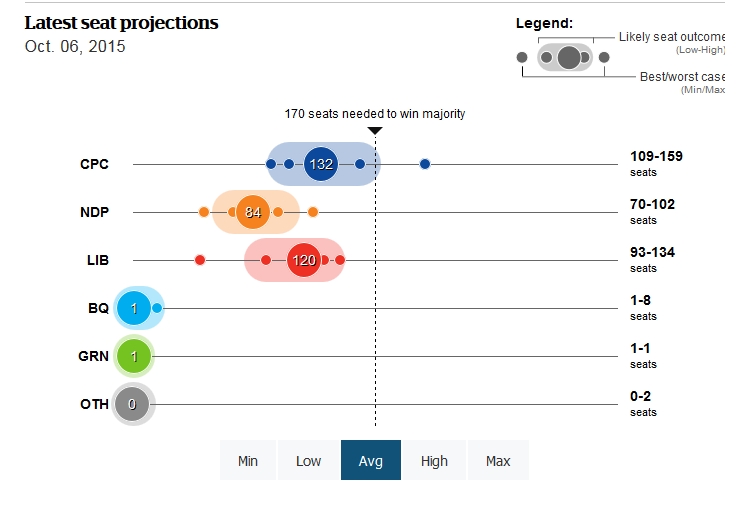
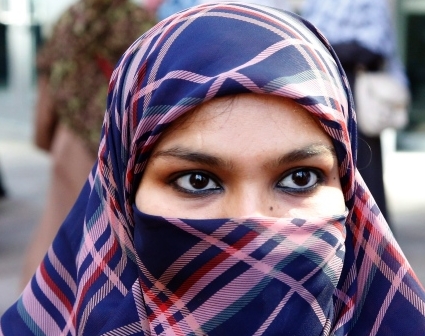
Squirrel!
by Peter Watts
So that thing I can’t talk about is looking more likely to happen, and the rest of my 2015 is looking increasingly hectic, so (with the exception of the occasional Nowa Fantastique reprint) any blog posts I’m likely to make for the next little while will be short on deeply researched science and long on opinion.
Fortunately, I have a lot of opinion. Unfortunately, much of it is wrong. Like, for example, my intermittent belief— although perhaps “faint hope” would be a better term— that we Canadians are not, after all, such a profoundly stupid people.
What galls me is that this particular belief was so hard-won. It had to fight upstream against years of evidence to the contrary. After all, we were the nation that voted for the government of Stephen Harper— not once, not twice, but three times, ending in a majority. The administration that quit Kyoto; that muzzles Elections officials and gags scientists, that shuts down the collection of new data and destroys archives of old, that literally burns books. The government that audits birdwatching groups if they have the temerity to speak out about protecting bees; that presided over the greatest violation of civil rights, the greatest mass arrest in Canadian History; that suppressed voter turnout in unfriendly ridings through the use of faked robocalls. The government that describes anyone opposed to warrantless online surveillance as pro-pedophile. A government dissolved after being found to be literally in Contempt of Parliament, a government so corrupt that even Brian Mulroney— Brian Goddamn Mulroney— excoriated it.
That government.
And if my hopes have been raised and dashed in the past— if, for example, I begin to take heart in the Tories’ occasional inability to ram through whatever rights-corroding Bill they’ve introduced this week, only to discover how many Canadians actually believe that “if you’re not a terrorist you have nothing to fear“— well, that’s the price I pay for being a perennial optimist. And when the writ was dropped this past summer, the polls gave me such cause for hope. Recession and senate scandals and endless corruption all seemed to be taking their toll. The NDP— the NDP!— was leading in the polls, and the Conservatives were sinking like a bag of shit to the bottom of a swamp. Maybe we weren’t the brightest bunch of vertebrates on the planet, thought I; but if we’re not quite smart enough to turn against the guy who’s been beating us with a stick after five years, at least we seem to be catching on after nine. So I dared to hope again.
Look at us now. Just look at us now:
From Éric Grenier’s Poll Tracker, via the CBC.
What caused the turnaround? The niqab. A bit of cloth draped across the face in deference, apparently, to the demands of one of our more prudish Sky Fairies.
Really? This is the hill we’re gonna die on? (Patrick Doyle/Canadian Press)
Yes, of course it’s dumb. So’s the rosary, the crucifix— all the myriad beads and rattles shaken in thrall to invisible masters of any stripe. (Of course, if you simply dig the iconography as pure fashion statement, more power to you.) So what? Does anyone seriously think that Zunera Ishaq is going to pull a gun at her citizenship ceremony? Does anyone think her religious garb would disguise her, help her escape justice, if she did? You can’t even invoke the argument that she’s being oppressed by a misogynistic culture (actually you can, but it’s irrelevant in this case) because this is pretty obviously something she wants. The mind boggles, to reflect on the sheer idiocy required to think of it as a security issue— more fundamentally, to think that it’s anyone’s fucking business, much less the government’s.
The mind boggles, to see how many Canadians think exactly that.
In a flash, we forget it all: the tar sands, the long-form census, the flouting of electoral laws and the gutting of environmental ones, a foreign policy that has reduced us to an international laughingstock on every front from human rights to the environment to the Middle East. Warrantless surveillance, a dismal economy, rising unemployment. The criminalisation of free speech and the unsupervised expansion of police powers. A Minister of Science and Technology who describes evolution as a “religious belief”. The evisceration of the CBC. Secret trade deals. Harper waves a colored rag in our faces and right on cue we bark—
Squirrel!
—completely forgetting that we’re chest-deep in quicksand.
My goddamned country. (Modified from “Liza_Tigress”.)
It’s worked so well, in fact, that Harper is now musing about passing legislation to ban niqabs from the federal workplace. It doesn’t matter that the federal court has told him to fuck off, that just this week that same court even turned down his lackey’s request for a stay on that verdict, pending appeal. Hell, that all probably helped his cause. And now— now they’re promising to institute an actual honest-to-God fink line to encourage neighbors can snoop on each other and report “barbaric cultural practices.”
Now Muslim women are being physically attacked on the street (not that there’s anything especially new about this, I suspect, beyond the sudden attendant publicity) and Justin Trudeau ineffectually bleats “This is not Canada!” But he’s wrong: this is exactly Canada. Harper’s ploy wouldn’t stand a chance if this wasn’t Canada. And Trudeau should know: he was right there helping Harper build the damn thing when he cravenly supported a panopticon bill redefining “terrorist” as anyone who expresses support for someone the government doesn’t like. And because this is Canada, the only major political party with the ‘nads to vote against C-51 is now trailing badly in the polls.
Don’t talk to me about percentages. Don’t tell me that I’m being too harsh, that two thirds of Canada’s population wouldn’t spit on Harper if he was on fire, that he owes his power entirely to gerrymandered riding boundaries and vote-splitting on the left. That shouldn’t matter. Harper’s contempt for empirical fact, his evangelical devotion to ideology over evidence— his ongoing campaign to actively destroy evidence when it doesn’t accord with said ideology— is so blatant that gerrymandering every riding in the whole damn country shouldn’t be enough to save him in any nation whose mean IQ rises above room temperature. It’s like trying to claim that the USA is not populated by scientific illiterates; you’re not gonna make that case by pointing out that hey, when you give them a multiple-choice question about how long it takes the Earth to circle the sun, only half of them get it wrong.
We’ve learned nothing. Our dalliance with the center wasn’t a considered decision, empirically derived, after all. It was just another distraction— a sparkly thing pounced upon and then forgotten by an electorate with the attention span of a gnat. And once again, my hard-won opinionated optimism proves to be so much shit.
I don’t know whats going to happen in two weeks. I hope conventional wisdom is wrong, that we don’t after all get the government we deserve. But at least you can fly to Iceland now for ninety bucks. Iceland’s nice. They live on geothermal, they jailed their bankers after the meltdown of 2008, and their pop stars sing the praises of biology.
I wonder if their citizenship requirements include a dress code.
09 Oct 15:27
Slouching towards post-democracy
by Nick
Amidst the blizzard of tasteful words hiding monstrous schemes that made up David Cameron’s speech yesterday, there was one part that felt out of place with the rest of the recent Tory rhetoric. When he was talking about schools, he said this:
So my next ambition is this: 500 new Free Schools, every school an academy…and yes – Local Authorities running schools a thing of the past.
(emphasis added) And yes, it got a round of applause from the audience, which is odd, as the rhetoric from the Tories the rest of the time has been proclaiming devolution and talking about how they’re handing power down from Whitehall. Yet here, Cameron is declaring – and the audience applauding – the end of any semblance of local control over education. As is already the case with most health services, the first democratically accountable person in the chain of management and control over your local school will be the Secretary of State for Education.
Sure, there are lots of efforts to make it look like they are accountable, but at every point that accountability is trumped by someone else holding the real power, who can ignore anything they don’t like. The pretence is that having choice gives people power, but how much of that power remains after the choice is made? Like democracy, real accountability has to be part of a ongoing process, not just a single event.
This, of course, is the usual modus operandi for the Tories. Big, bold claims about opening up services, providing choice, freedom and everything else, while actually instituting systems that take power further away from the people than it was before. There’s a huge illusionary trick being pulled off as Cameron and Osborne dazzle the crowd with language that sounds as though they’re giving away power when in reality they’re doing anything but. Under the guise of devolution, power is actually being pulled away from the people, insulated from any direct accountability and the possibility of any real local control.
Consider Osborne’s much-vaunted city regions. How will they be run? Through a board where almost all of the members are indirectly elected and the one that is (the regional mayor) won’t have any structures around them to provide checks and balances or to scrutinise them. Just as we’ve seen with PCCs, you’ll get to vote for someone once every four years and hope that they’re doing what you voted for during that time. Meanwhile, we’ve already been told that any decision to approve an increase in business rates will need to be approved by the unelected Local Enterprise Partnership. LEPs have already been given massive amounts of money to spend outside of any democratic control, and how long before the usual steady creep gives them even more unaccountable power over local decisions?
 To me, it feels like the institutions of post-democracy are being assembled around us, and the key part of post-democracy is that while democratic forms still exist for the public face of the system, they have little say over the operation of power within it. The rhetoric of democracy is being used to introduce systems that hollow out the practice of it, telling people that they are free while gradually removing any of the tools they may have used to exercise that freedom and make power accountable. That’s the prospect being laid out in front of us – no sudden change from one system to another, just a gradual whittling away of power – and if we’re going to confront it, then we need to get comfortable talking abour power.
09 Oct 15:27
Momentum and the future of political parties
by Nick
 There have been some very odd reactions to the announcement that the Jeremy Corbyn leadership campaign has now regenerated itself into a new organisation called Momentum. Some appear to think that because it starts with an M, it must be harking back to Militant while others appear to have decided that it’s clearly a front group for the Trotskyite takeover of the Labour Party. It’s a good example of another political irregular verb: I promote internal debate, you’re a factionalist, they’re creating a party within a party.
Aside from all the arguments about what an organisation that’s existed for about 48 hours will do in the future, I think it shows an interesting development in people’s perceptions of the Labour Party (and perhaps political parties more widely) and how party structures might develop in the future. Until recently, Labour had become what Katz and Mair call a ‘cartel party‘, an essentially technocratic organisation that reinforced the political system. However, the surge in its membership since the general election (especially during and after the leadership election) appears to be turning Labour back into a mass-membership party, though potentially unlike any we’ve seen before. Previous iterations of parties as mass-membership organisations developed over long periods of time with strong community structures that sustained and institutionalised that membership. This current surge is not just rapid, it comes into party structures that have been reduced and hollowed out over the years as the mass membership withered away.
What Labour reminds me of now more than anything is the major parties in American politics. One mistake Europeans often make in looking at US politics is to assume that the Democrats and Republicans are similar to our political parties, when their function is quite different. They work much more as empty shells, waiting to be filled at each election cycle with the candidate and their supporters, with the permanence of any version of the party – nationally and locally – dependent solely on electoral success. The candidate is more important than the party, and networks are just as likely to be built around individuals than they are around the party. The party becomes just a framework for candidate organisations to work in and populate, only giving it permanence after they’re successful and need it to remain in place for re-election.
This, I think, fits more with what people are expecting of political parties today and explains the need for organisations like Momentum. The old mass-membership structures were based around political parties as social organisations as much as they were political ones, but with so many other social opportunities available to fill people’s time, the desire now is much more for the political. Groups that will cut away all the rigmarole and bureaucracy of running a political party are much more likely to arise in order to allow people to engage solely with the politics and the campaigning side.
Indeed, I wouldn’t be surprised to see similar organisations emerge around the Tories as well, especially in the wake of the EU referendum. it’s easy to see someone like Boris Johnson trying to draw together assorted Eurosceptics into a movement to support his bid for the leadership, perhaps with the same surprising result as happened with Labour. Conservative Party structures and membership have been hollowed out just as much as Labour’s (perhaps even more so), and those seeking to rely on insider campaigns for the leadership could find themselves in the same position as Burnham, Kendall and Cooper.